virtual reality

vision-pro-m5-review:-it’s-time-for-apple-to-make-some-tough-choices

Vision Pro M5 review: It’s time for Apple to make some tough choices


A state of the union from someone who actually sort of uses the thing.

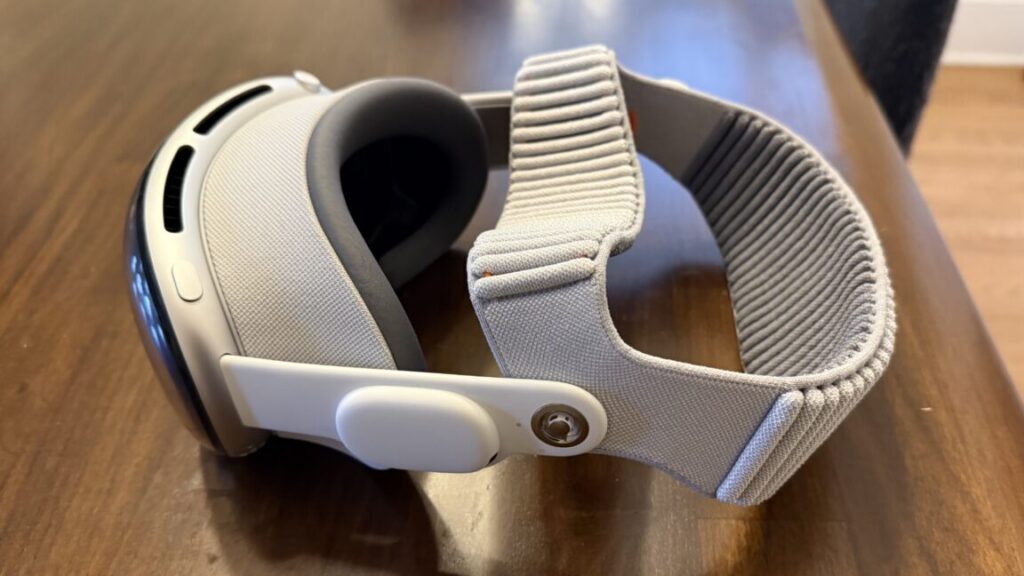
The M5 Vision Pro with the Dual Knit Band. Credit: Samuel Axon

With the recent releases of visionOS 26 and newly refreshed Vision Pro hardware, it’s an ideal time to check in on Apple’s Vision Pro headset—a device I was simultaneously amazed and disappointed by when it launched in early 2024.

I still like the Vision Pro, but I can tell it’s hanging on by a thread. Content is light, developer support is tepid, and while Apple has taken action to improve both, it’s not enough, and I’m concerned it might be too late.

When I got a Vision Pro, I used it a lot: I watched movies on planes and in hotel rooms, I walked around my house placing application windows and testing out weird new ways of working. I tried all the neat games and educational apps, and I watched all the immersive videos I could get ahold of. I even tried my hand at developing my own applications for it.

As the months went on, though, I used it less and less. The novelty wore off, and as cool as it remained, practicality beat coolness. By the time Apple sent me the newer model a couple of weeks ago, I had only put the original one on a few times in the prior couple of months. I had mostly stopped using it at home, but I still took it on trips as an entertainment device for hotel rooms now and then.

That’s not an uncommon story. You even see it in the subreddit for Vision Pro owners, which ought to be the home of the device’s most dedicated fans. Even there, people say, “This is really cool, but I have to go out of my way to keep using it.”

Perhaps it would have been easier to bake it into my day-to-day habits if developer and content creator support had been more robust, a classic chicken-and-egg problem.

After a few weeks of using the new Vision Pro hardware refresh daily, it’s clear to me that the platform needs a bigger rethink. As a fan of the device, I’m concerned it won’t get that, because all the rumors point to Apple pouring its future resources into smart glasses, which, to me, are a completely different product category.

What changed in the new model?

For many users, the most notable change here will be something you can buy separately (albeit at great expense) for the old model: A new headband that balances the device’s weight on your head better, making it more comfortable to wear for long sessions.

Dubbed the Dual Knit Band, it comes with an ingeniously simple adjustment knob that can be used to tighten or loosen either the band that goes across the back of your head (similar to the old band) or the one that wraps around the top.

It’s well-designed, and it will probably make the Vision Pro easier to use for many people who found the old model to be too uncomfortable—even though this model is slightly heavier than its predecessor.
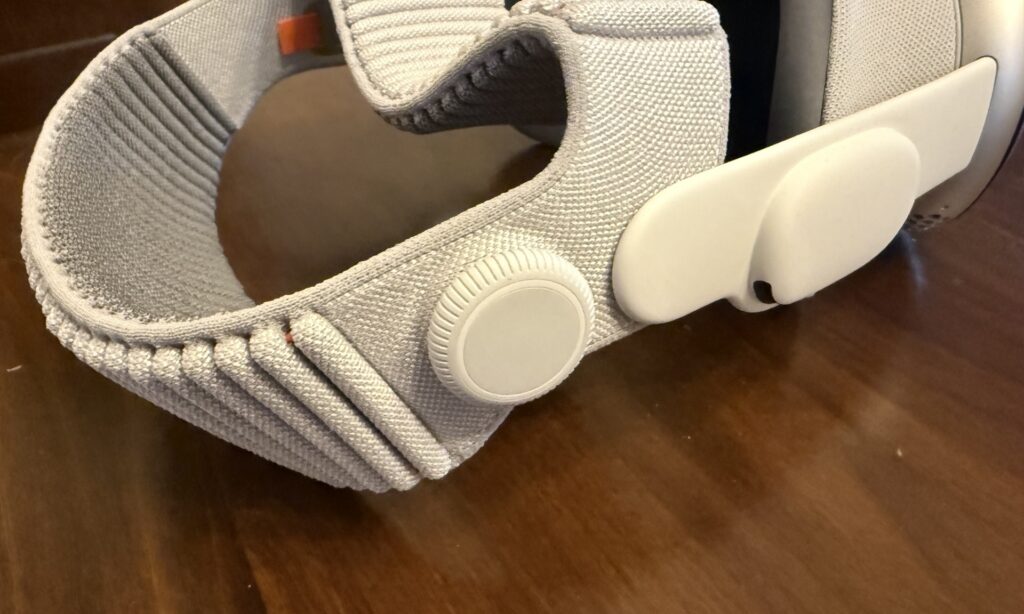
The band fit is adjusted with this knob. You can turn it to loosen or tighten one strap, then pull it out and turn it again to adjust the other. Credit: Samuel Axon

I’m one of the lucky few who never had any discomfort problems with the Vision Pro, but I know a bunch of folks who said the pressure the device put on their foreheads was unbearable. That’s exactly what this new band remedies, so it’s nice to see.

The M5 chip offers more than just speed

Whereas the first Vision Pro had Apple’s M2 chip—which was already a little behind the times when it launched—the new one adds the M5. It’s much faster, especially for graphics-processing and machine-learning tasks. We’ve written a lot about the M5 in our articles on other Apple products if you’re interested to learn more about it.

Functionally, this means a lot of little things are a bit faster, like launching certain applications or generating a Persona avatar. I’ll be frank: I didn’t notice any difference that significantly impacted the user experience. I’m not saying I couldn’t tell it was faster sometimes. I’m just saying it wasn’t faster in a way that’s meaningful enough to change any attitudes about the device.

It’s most noticeable with games—both native mixed-reality Vision Pro titles and the iPad versions of demanding games that you can run on a virtual display on the device. Demanding 3D games look and run nicer, in many cases. The M5 also supports more recent graphics advancements like ray tracing and mesh shading, though very few games support them, even in terms of iPad versions.

All this is to say that while I always welcome performance improvements, they are definitely not enough to convince an M2 Vision Pro owner to upgrade, and they won’t tip things over for anyone who has been on the fence about buying one of these things.

The main perk of the new chip is improved efficiency, which is the driving force behind modestly increased battery life. When I first took the M2 Vision Pro on a plane, I tried watching 2021’s Dune. I made it through the movie, but just barely; the battery ran out during the closing credits. It’s not a short movie, but there are longer ones.

Now, the new headset can easily get another 30 or 60 minutes, depending on what you’re doing, which finally puts it in “watch any movie you want” territory.

Given how short battery life was in the original version, even a modest bump like that makes a big difference. That, alongside a marginally increased field of view (about 10 percent) and a new 120 Hz maximum refresh rate for passthrough are the best things about the new hardware. These are nice-to-haves, but they’re not transformational by any means.

We already knew the Vision Pro offered excellent hardware (even if it’s overkill for most users), but the platform’s appeal is really driven by software. Unfortunately, this is where things are running behind expectations.

For content, it’s quality over quantity

When the first Vision Pro launched, I was bullish about the promise of the platform—but a lot of that was contingent on a strong content cadence and third-party developer support.

And as I’ve written since, the content cadence for the first year was a disappointment. Whereas I expected weekly episodes of Apple’s Immersive Videos in the TV app, those short videos arrived with gaps of several months. There’s an enormous wealth of great immersive content outside of Apple’s walled garden, but Apple didn’t seem interested in making that easily accessible to Vision Pro owners. Third-party apps did some of that work, but they lagged behind those on other platforms.

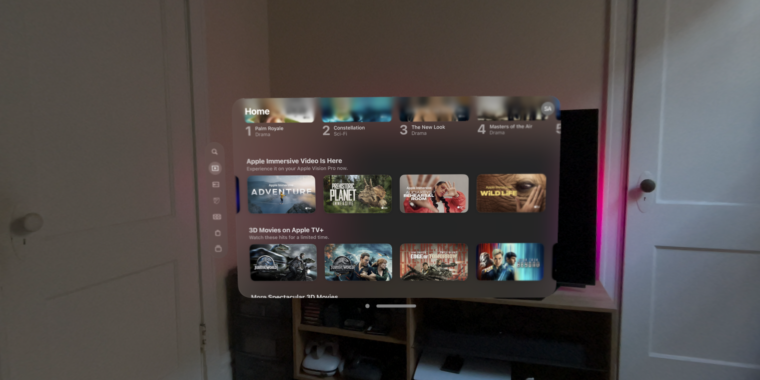
The first-party content cadence picked up after the first year, though. Plus, Apple introduced the Spatial Gallery, a built-in app that aggregates immersive 3D photos and the like. It’s almost TikTok-like in that it lets you scroll through short-form content that leverages what makes the device unique, and it’s exactly the sort of thing that the platform so badly needed at launch.
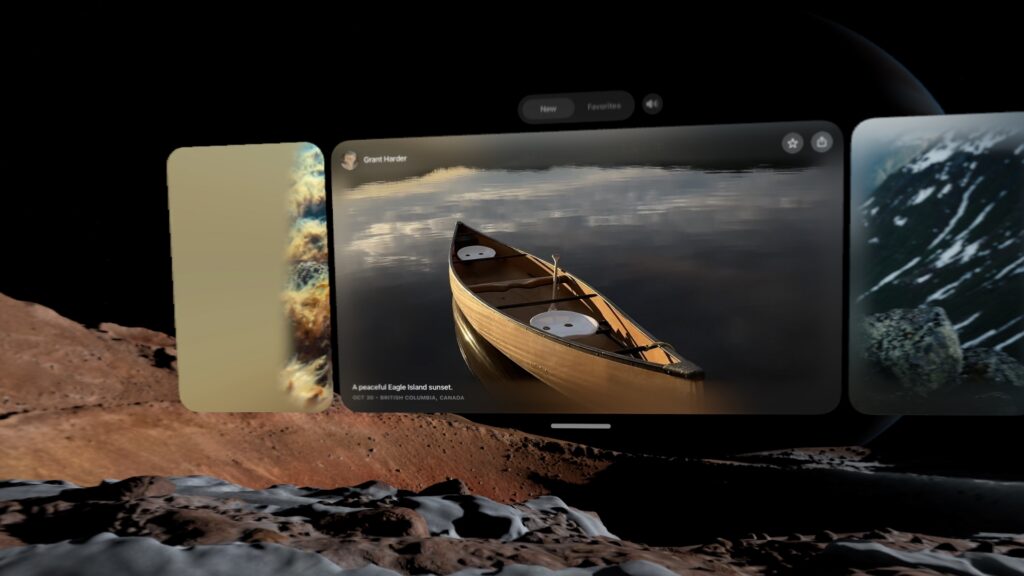
The Spatial Gallery is sort of like a horizontally-scrolling TikTok for 3D photos and video. Credit: Samuel Axon

The content that is there—whether in the TV app or the Spatial Gallery—is fantastic. It’s beautifully, professionally produced stuff that really leans on the hardware. For example, there is an autobiographical film focused on U2’s Bono that does some inventive things with the format that I had never seen or even imagined before.

Bono, of course, isn’t everybody’s favorite, but if you can stomach the film’s bloviating, it’s worth watching just with an eye to what a spatial video production can or should be.

I still think there’s significant room to grow, but the content situation is better than ever. It’s not enough to keep you entertained for hours a day, but it’s enough to make putting on the headset for a bit once a week or so worth it. That wasn’t there a year ago.

The software support situation is in a similar state.

App support is mostly frozen in the year 2024

Many of us have a suite of go-to apps that are foundational to our individual approaches to daily productivity. For me, primarily a macOS user, they are:

  • Firefox
  • Spark
  • Todoist
  • Obsidian
  • Raycast
  • Slack
  • Visual Studio Code
  • Claude
  • 1Password

As you can see, I don’t use most of Apple’s built-in apps—no Safari, no Mail, no Reminders, no Passwords, no Notes… no Spotlight, even. All that may be atypical, but it has never been a problem on macOS, nor has it been on iOS for a few years now.

Impressively, almost all of these are available on visionOS—but only because it can run iPad apps as flat, virtual windows. Firefox, Spark, Todoist, Obsidian, Slack, 1Password, and even Raycast are all available as supported iPad apps, but surprisingly, Claude isn’t, even though there is a Claude app for iPads. (ChatGPT’s iPad app works, though.) VS Code isn’t available, of course, but I wasn’t expecting it to be.

Not a single one of these applications has a true visionOS app. That’s too bad, because I can think of lots of neat things spatial computing versions could do. Imagine browsing your Obsidian graph in augmented reality! Alas, I can only dream.

You can tell the native apps from the iPad ones: The iPad ones have rectangular icons nested within circles, whereas the native apps fill the whole circle. Credit: Samuel Axon

If you’re not such a huge productivity software geek like me and you use Apple’s built-in apps, things look a little better, but surprisingly, there are still a few apps that you would imagine would have really cool spatial computing features—like Apple Maps—that don’t. Maps, too, is just an iPad app.

Even if you set productivity aside and focus on entertainment, there are still frustrating gaps. Almost two years later, there is still no Netflix or YouTube app. There are decent-enough third-party options for YouTube, but you have to watch Netflix in a browser, which is lower-quality than in a native app and looks horrible on one of the Vision Pro’s big virtual screens.

To be clear, there is a modest trickle of interesting spatial app experiences coming in—most of them games, educational apps, or cool one-off ideas that are fun to check out for a few minutes.

All this is to say that nothing has really changed since February 2024. There was an influx of apps at launch that included a small number of show-stoppers (mostly educational apps), but the rest ranged from “basically the iPad app but with one or two throwaway tech-demo-style spatial features you won’t try more than once” to “basically the iPad app but a little more native-feeling” to “literally just the iPad app.” As far as support from popular, cross-platform apps, it’s mostly the same list today as it was then.

Its killer app is that it’s a killer monitor

Even though Apple hasn’t made a big leap forward in developer support, it has made big strides in making the Vision Pro a nifty companion to the Mac.

From the start, it has had a feature that lets you simply look at a Mac’s built-in display, tap your fingers, and launch a large, resizable virtual monitor. I have my own big, multi-monitor setup at home, but I have used the Vision Pro this way sometimes when traveling.

I had some complaints at the start, though. It could only do one monitor, and that monitor was limited to 60 Hz and a standard widescreen resolution. That’s better than just using a 14-inch MacBook Pro screen, but it’s a far cry from the sort of high-end setup a $3,500 price tag suggests. Furthermore, it didn’t allow you to switch audio between the two devices.

Thanks to both software and hardware updates, that has all changed. visionOS now supports three different monitor sizes: the standard widescreen aspect ratio, a wider one that resembles a standard ultra-wide monitor, and a gigantic, ultra-ultra-wide wrap-around display that I can assure you will leave no one wanting for desktop space. It looks great. Problem solved! Likewise, it will now transfer your Mac audio to the Vision Pro or its Bluetooth headphones automatically.

All of that works not just on the new Vision Pro, but also on the M2 model. The new M5 model exclusively addresses the last of my complaints: You can now achieve higher refresh rates for that virtual monitor than 60 Hz. Apple says it goes “up to 120 Hz,” but there’s no available tool for measuring exactly where it’s landing. Still, I’m happy to see any improvement here.

This is the standard width for the Mac monitor feature… Samuel Axon

Through a series of updates, Apple has turned a neat proof-of-concept feature into something that is genuinely valuable—especially for folks who like ultra-wide or multi-monitor setups but have to travel a lot (like myself) or who just don’t want to invest in the display hardware at home.

You can also play your Mac games on this monitor. I tried playing No Man’s Sky and Cyberpunk 2077 on it with a controller, and it was a fantastic experience.

This, alongside spatial video and watching movies, is the Vision Pro’s current killer app and one of the main areas where Apple has clearly put a lot of effort into improving the platform.

Stop trying to make Personas happen

Strangely, another area where Apple has invested quite a bit to make things better is in the Vision Pro’s usefulness as a communications and meetings device. Personas—the 3D avatars of yourself that you create for Zoom calls and the like—were absolutely terrible when the M2 Vision Pro came out.

There is also EyeSight, which uses your Persona to show a simulacrum of your eyes to people around you in the real world, letting them know you are aware of your surroundings and even allowing them to follow your gaze. I understand the thought behind this feature—Apple doesn’t want mixed reality to be socially isolating—but it sometimes puts your eyes in the wrong place, it’s kind of hard to see, and it honestly seems like a waste of expensive hardware.

Primarily via software updates, I’m pleased to report that Personas are drastically improved. Mine now actually looks like me, and it moves more naturally, too.

I joined a FaceTime call with Apple reps where they showed me how Personas float and emote around each other, and how we could look at the same files and assets together. It was indisputably cool and way better than before, thanks to the improved Personas.

I can’t say as much for EyeSight, which looks the same. It’s hard for me to fathom that Apple has put multiple sensors and screens on this thing to support this feature.

In my view, dropping EyeSight would be the single best thing Apple could do for this headset. Most people don’t like  it, and most people don’t want it, yet there is no question that its inclusion adds a not-insignificant amount to both the price and the weight, the product’s two biggest barriers to adoption.

Likewise, Personas are theoretically cool, and it is a novel and fun experience to join a FaceTime call with people and see how it works and what you could do. But it’s just that: a novel experience. Once you’ve done it, you’ll never feel the need to do it again. I can barely imagine anyone who would rather show up to a call as a Persona than take the headset off for 30 minutes to dial in on their computer.

Much of this headset is dedicated to this idea that it can be a device that connects you with others, but maintaining that priority is simply the wrong decision. Mixed reality is isolating, and Apple is treating that like a problem to be solved, but I consider that part of its appeal.

If this headset were capable of out-in-the-world AR applications, I would not feel that way, but the Vision Pro doesn’t support any application that would involve taking it outside the home into public spaces. A lot of the cool, theoretical AR uses I can think of would involve that, but still no dice here.

The metaverse (it’s telling that this is the first time I’ve typed that word in at least a year) already exists: It’s on our phones, in Instagram and TikTok and WeChat and Fortnite. It doesn’t need to be invented, and it doesn’t need a new, clever approach to finally make it take off. It has already been invented. It’s already in orbit.

Like the iPad and the Apple Watch before it, the Vision Pro needs to stop trying to be a general-purpose device and instead needs to lean into what makes it special.

In doing so, it will become a better user experience, and it will get lighter and cheaper, too. There’s real potential there. Unfortunately, Apple may not go that route if leaks and insider reports are to be believed.

There’s still a ways to go, so hopefully this isn’t a dead end

The M5 Vision Pro was the first of four planned new releases in the product line, according to generally reliable industry analyst Ming-Chi Kuo. Next up, he predicted, would be a full Vision Pro 2 release with a redesign, and a Vision Air, a cheaper, lighter alternative. Those would all precede true smart glasses many years down the road.

I liked that plan: keep the full-featured Vision Pro for folks who want the most premium mixed reality experience possible (but maybe drop EyeSight), and launch a cheaper version to compete more directly with headsets like Meta’s Quest line of products, or the newly announced Steam Frame VR headset from Valve, along with planned competitors by Google, Samsung, and others.

True augmented reality glasses are an amazing dream, but there are serious problems of optics and user experience that we’re still a ways off from solving before those can truly replace the smartphone as Tim Cook once predicted.

All that said, it looks like that plan has been called into question. A Bloomberg report in October claimed that Apple CEO Tim Cook had told employees that the company was redirecting resources from future passthrough HMD products to accelerate work on smart glasses.

Let’s be real: It’s always going to be a once-in-a-while device, not a daily driver. For many people, that would be fine if it cost $1,000. At $3,500, it’s still a nonstarter for most consumers.

I believe there is room for this product in the marketplace. I still think it’s amazing. It’s not going to be as big as the iPhone, or probably even the iPad, but it has already found a small audience that could grow significantly if the price and weight could come down. Removing all the hardware related to Personas and EyeSight would help with that.

I hope Apple keeps working on it. When Apple released the Apple Watch, it wasn’t entirely clear what its niche would be in users’ lives. The answer (health and fitness) became crystal clear over time, and the other ambitions of the device faded away while the company began building on top of what was working best.

You see Apple doing that a little bit with the expanded Mac spatial display functionality. That can be the start of an intriguing journey. But writers have a somewhat crass phrase: “kill your darlings.” It means that you need to be clear-eyed about your work and unsentimentally cut anything that’s not working, even if you personally love it—even if it was the main thing that got you excited about starting the project in the first place.

It’s past time for Apple to start killing some darlings with the Vision Pro, but I truly hope it doesn’t go too far and kill the whole platform.

Photo of Samuel Axon

Samuel Axon is the editorial lead for tech and gaming coverage at Ars Technica. He covers AI, software development, gaming, entertainment, and mixed reality. He has been writing about gaming and technology for nearly two decades at Engadget, PC World, Mashable, Vice, Polygon, Wired, and others. He previously ran a marketing and PR agency in the gaming industry, led editorial for the TV network CBS, and worked on social media marketing strategy for Samsung Mobile at the creative agency SPCSHP. He also is an independent software and game developer for iOS, Windows, and other platforms, and he is a graduate of DePaul University, where he studied interactive media and software development.

Vision Pro M5 review: It’s time for Apple to make some tough choices Read More »
valve-rejoins-the-vr-hardware-wars-with-standalone-steam-frame

Valve rejoins the VR hardware wars with standalone Steam Frame

Valve also tells Ars that streaming to the Steam Frame will be “as efficient as possible,” maximizing battery life from the included 21.6 Wh battery. “Standalone battery life will be much more variable, depending on the game and its settings,” Valve Engineer Jeremy Selan and Designer Lawrence Yang told Ars via email.

While a wired PC connection would go a long way toward addressing those battery-life and extra latency concerns, Valve said the Steam Frame won’t even support it as an option. “We’re focused on a robust wireless streaming experience, which is why we included a dedicated wireless adapter, have a dedicated radio on the headset just for streaming, and invented a new streaming technology to optimize the streaming experience (Foveated Streaming),” Selan and Yang told Ars.

A low-weight modular “core”

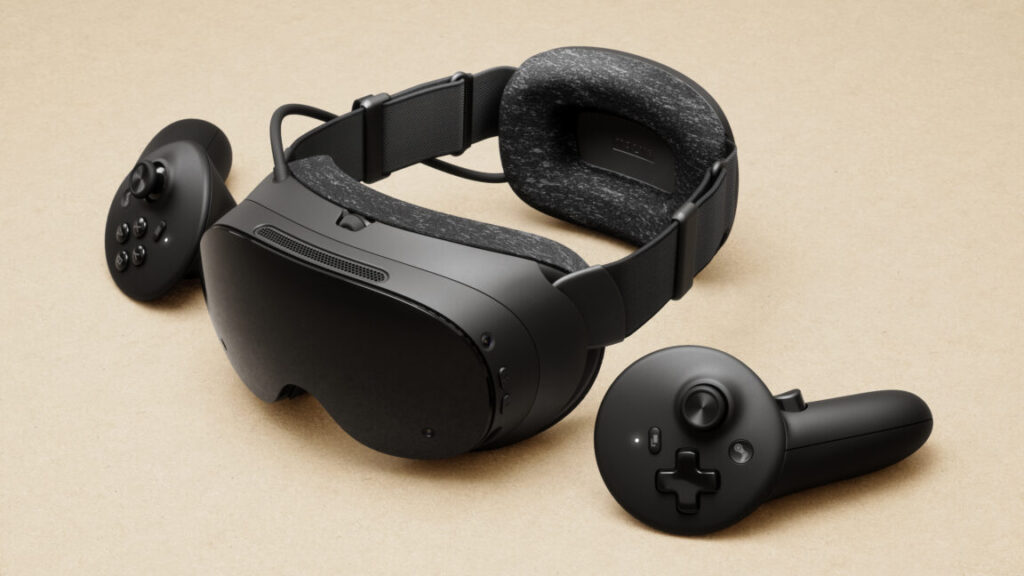
All told, the Steam Frame comes in at just 440 grams, a welcome and sizable reduction from the 515 grams of the Quest 3. Interestingly, Valve’s spec sheet also specifically calls out the 185 gram “core” of the headset hardware, which comprises all the main components besides the battery, headstrap, and speakers (e.g., lenses, displays, motherboard, cooling, processor, RAM, tracking system, etc).

That core weight is important, Selan and Yang told Ars, because “it’s designed to be modular so one could imagine other headsets connecting to this core module that bring different features.” So tinkerers or third-party headset makers could theoretically build modified versions of the Steam Frame with lighter batteries or streamlined headstrap/speaker combos, for instance. The Steam Frame’s monochrome passthrough cameras can also be accessed via a front expansion port with a standardized Gen 4 PCIe interface, Valve said.

It’s an interesting potential direction for new hardware that will launch into a more niche, less irrationally exuberant VR market than Valve’s previous virtual reality headsets. But with companies like Apple and Meta pivoting toward augmented reality and/or mixed-reality hardware of late, it’s nice to see Valve continuing to cater to the small but dedicated market of gamers who are still interested in playing in fully immersive VR environments.

Valve rejoins the VR hardware wars with standalone Steam Frame Read More »

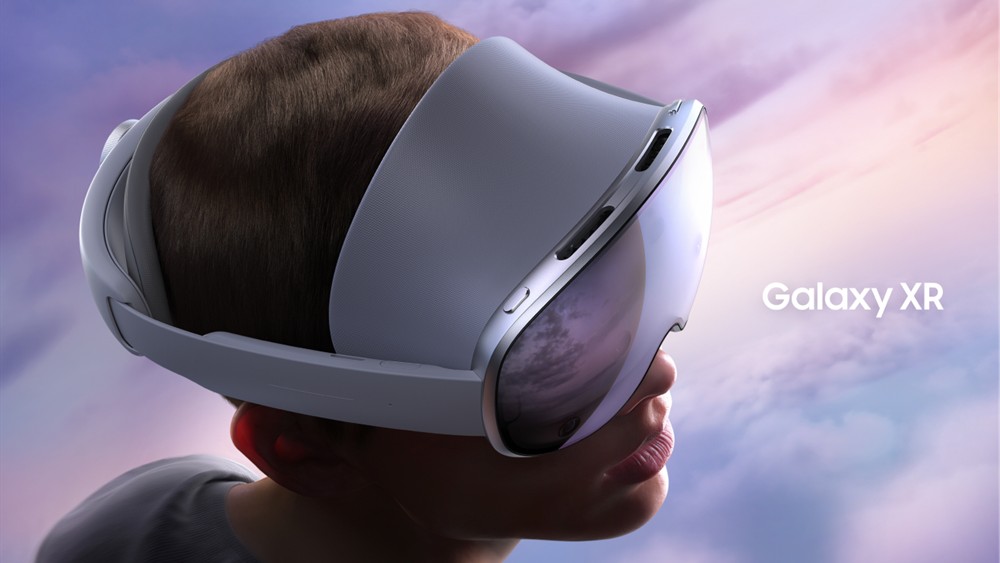
samsung-galaxy-xr-is-the-first-android-xr-headset,-now-on-sale-for-$1,800

Samsung Galaxy XR is the first Android XR headset, now on sale for $1,800

Android-XR

Credit: Google

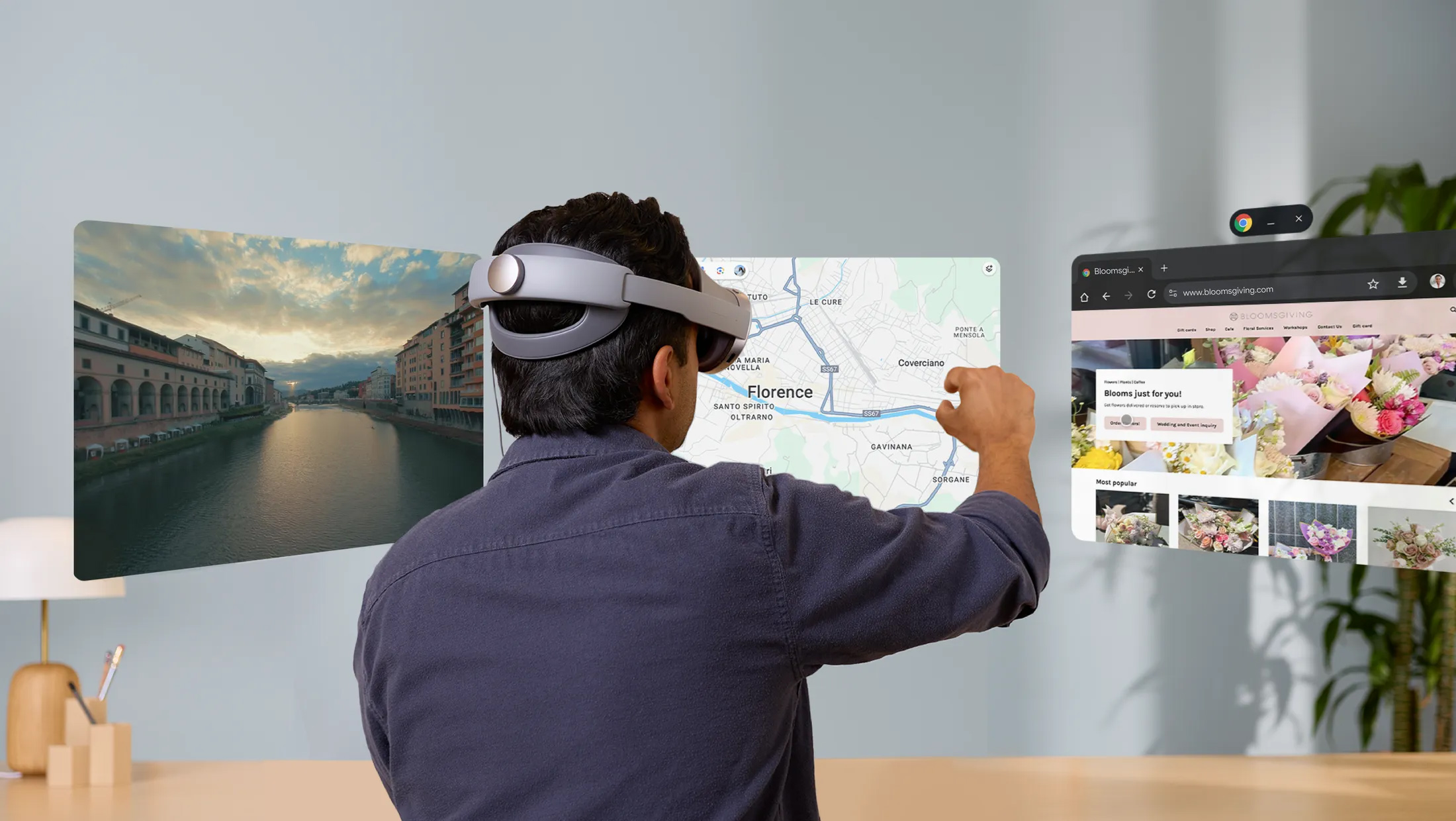
Android XR is Google’s most ambitious take on Android as a virtual environment. The company calls it an “infinite screen” that lets you organize floating apps to create a custom workspace. The software includes 3D versions of popular Google apps like Google Maps, Google Photos, and YouTube, along with streaming apps, games, and custom XR experiences from the likes of Calm and Adobe.

Google says that its support of open standards for immersive experiences means more content is coming. However, more than anything else, Android XR is a vehicle for Gemini. The Gemini Live feature from phones is available in Android XR, and it’s more aware of your surroundings thanks to all the cameras and orientation sensors in Galaxy XR. For example, you can ask Gemini questions about what’s on the screen—that includes app content or real objects that appear in passthrough video when you look around. Gemini can also help organize your floating windows

While more Android XR hardware is planned, Galaxy XR is the only way to experience it right now, and it’s not cheap. Samsung’s headset is available for purchase at $1,800. If hand gesture control isn’t enough, you’ll have to pay another $175 for wireless controllers (discounted from the $250 retail price). Galaxy XR also supports corrective lenses if you need them, but that’s another $99.

Buyers get a collection of freebies to help justify the price. It comes with a full year of Google AI Pro, YouTube Premium, and Google Play Pass. Collectively, that would usually cost $370. Owners can also get three months of YouTube TV for $3, and everyone with Galaxy XR will get access to the 2025–2026 season of NBA League Pass in the US.

Samsung Galaxy XR is the first Android XR headset, now on sale for $1,800 Read More »

meta’s-$799-ray-ban-display-is-the-company’s-first-big-step-from-vr-to-ar

Meta’s $799 Ray-Ban Display is the company’s first big step from VR to AR

Zuckerberg also showed how the neural interface can be used to compose messages (on WhatsApp, Messenger, Instagram, or via a connected phone’s messaging apps) by following your mimed “handwriting” across a flat surface. Though this feature reportedly won’t be available at launch, Zuckerberg said he had gotten up to “about 30 words per minute” in this silent input mode.

The most impressive part of Zuckerberg’s on-stage demo that will be available at launch was probably a “live caption” feature that automatically types out the words your partner is saying in real time. The feature reportedly filters out background noise to focus on captioning just the person you’re looking at, too.

A Meta video demos how live captioning works on the Ray-Ban Display (though the field-of-view on the actual glasses is likely much more limited).

Credit: Meta

A Meta video demos how live captioning works on the Ray-Ban Display (though the field-of-view on the actual glasses is likely much more limited). Credit: Meta

Beyond those “gee whiz” kinds of features, the Meta Ray-Ban Display can basically mirror a small subset of your smartphone’s apps on its floating display. Being able to get turn-by-turn directions or see recipe steps on the glasses without having to glance down at a phone feels like genuinely useful new interaction modes. Using the glasses display as a viewfinder to line up a photo or video (using the built-in 12 megapixel, 3x zoom camera) also seems like an improvement over previous display-free smartglasses.

But accessing basic apps like weather, reminders, calendar, and emails on your tiny glasses display strikes us as probably less convenient than just glancing at your phone. And hosting video calls via the glasses by necessity forces your partner to see what you’re seeing via the outward-facing camera, rather than seeing your actual face.

Meta also showed off some pie-in-the-sky video about how future “Agentic AI” integration would be able to automatically make suggestions and note follow-up tasks based on what you see and hear while wearing the glasses. For now, though, the device represents what Zuckerberg called “the next chapter in the exciting story of the future of computing,” which should serve to take focus away from the failed VR-based metaverse that was the company’s last “future of computing.”

Meta’s $799 Ray-Ban Display is the company’s first big step from VR to AR Read More »

the-playstation-vr2-will-get-a-drastic-price-cut,-but-that-might-not-be-enough

The PlayStation VR2 will get a drastic price cut, but that might not be enough

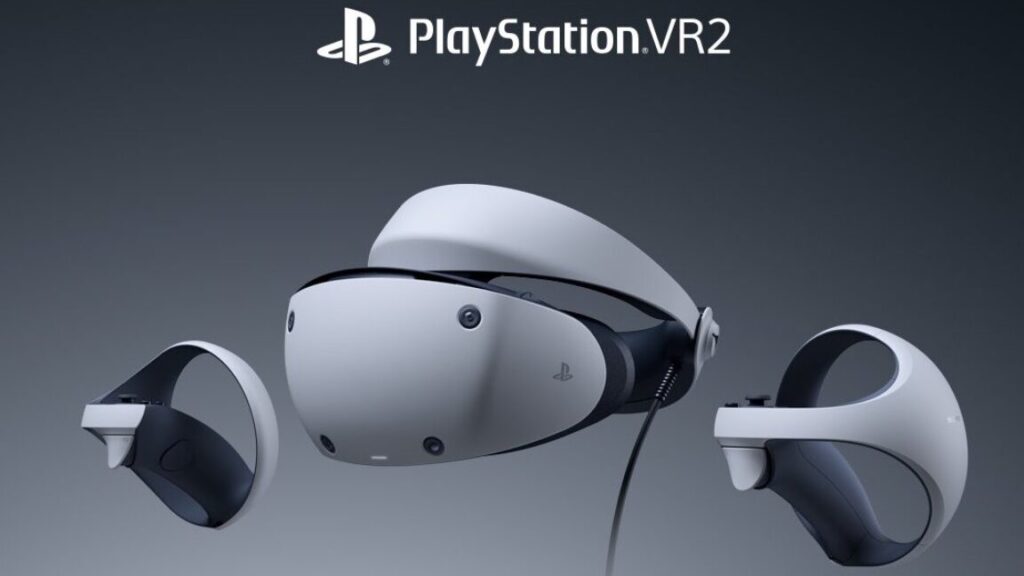
Sony’s first PlayStation VR for the PlayStation 4 hit stores at the right price at the right time and ended up being one of VR’s biggest hits. The PlayStation 5’s PlayStation VR2? Not so much, unfortunately. In either an effort to clear unsold inventory, an attempt to revitalize the platform, or both, Sony has announced it’s dropping the price of the headset significantly.

Starting in March, the main SKU of the headset will drop from $550 to $400 in the US. Europe, the UK, and Japan will also see price cuts to 550 euros, 400 pounds, and 66,980 yen, respectively, as detailed on the PlayStation Blog. Strangely, the bundle that includes the game Horizon: Call of the Mountain (originally $600) will also drop to the same exact price. That’s welcome, but it’s also a little bit difficult not to interpret that as a sign that this is an attempt to empty inventory more than anything else.

The headset launched in early 2023 but has suffered from weak software support ever since—a far cry from the first PSVR, which had one of the strongest libraries of its time. It didn’t help that unlike the regular PlayStation 5, the PSVR2 was not backward-compatible with games released for its predecessor.

About a year ago, there were reports that Sony was temporarily pausing production because it wasn’t able to move the inventory it already had. Later, the company released an adapter and some software for getting it running on PCs. That made it one of the most attractive PC VR headsets, at least on paper. However, setup was clunky, and some features that were supported on the PS5 weren’t supported on PC.

PSVR2 games are still getting announced and released, but the VR market in general has slowed down quite a bit in recent years, and most of the remaining action (such as it is) is on Meta’s Quest platform.

The PlayStation VR2 will get a drastic price cut, but that might not be enough Read More »

licking-this-“lollipop”-will-let-you-taste-virtual-flavors

Licking this “lollipop” will let you taste virtual flavors

Demonstrating lollipop user interface to simulate taste in virtual and augmented reality environments. Credit: Lu et al, 2024/PNAS

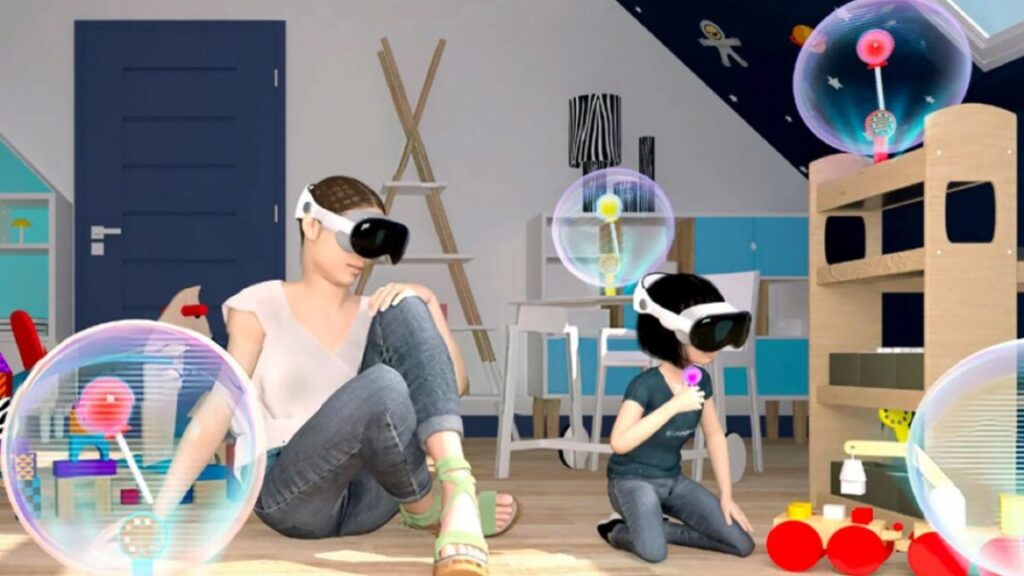
Virtual reality (VR) technology has long sought to incorporate the human senses into virtual and mixed-reality environments. In addition to sight and sound, researchers have been trying to add the sensation of human touch and smell via various user interfaces, as well as taste. But the latter has proved to be quite challenging. A team of Hong Kong scientists has now developed a handheld user interface shaped like a lollipop capable of re-creating several different flavors in a virtual environment, according to a new paper published in the Proceedings of the National Academy of Sciences (PNAS).

It’s well established that human taste consists of sweet, salty, sour, bitter, and umami—five basic flavors induced by chemical stimulation of the tongue and, to a lesser extent, in parts of the pharynx, larynx, and epiglottis. Recreating those sensations in VR has resulted in a handful of attempts at a flavor user interface, relying on such mechanisms as chemical, thermal, and electrical stimulation, as well as iontophoresis.

The chemical approach usually involves applying flavoring chemicals directly onto the tongue, but this requires room for bulk storage of said chemicals, and there is a long delay time that is not ideal for VR applications. Thermal variations applied directly to the tongue can stimulate taste sensations but require a complicated system incorporating a cooling subsystem and temperature sensors, among other components.

The most mainstream method is electrical stimulation, in which the five basic flavors are simulated by varying the frequency, intensity, and direction of electrical signals on the tongue. But this method requires placing electrode patches on or near the tongue, which is awkward, and the method is prone to taste biases.

So Yiming Liu of City University of Hong Kong and co-authors opted to work with iontophoresis, in which stable taste feedback is achieved by using ions flowing through biologically safe hydrogels to transport flavor chemicals. This method is safe, requires low power consumption, allows for precise taste feedback, and offers a more natural human-machine interface. Liu et al. improved on recent advances in this area by developing their portable lollipop-shaped user interface device, which also improves flavor quality and consistency.

Licking this “lollipop” will let you taste virtual flavors Read More »

meta-quest-3s-is-a-disappointing-half-step-to-carmack’s-low-cost-vr-vision

Meta Quest 3S is a disappointing half-step to Carmack’s low-cost VR vision


Significant visual and comfort compromises make last year’s Quest 3 a better VR investment.

Look at all those dots. Credit: Kyle Orland

It’s been just over two years now since soon-to-depart CTO John Carmack told a Meta Connect audience about his vision for a super low-end VR headset that came in at $250 and 250 grams. “We’re not building that headset today, but I keep trying,” Carmack said at the time with some exasperation.

On the pricing half of the equation, the recently released Quest 3S headset is nearly on target for Carmack’s hopes and dreams. Meta’s new $299 headset is a significant drop from the $499 Quest 3 and the cheapest price point for a Meta VR headset since the company raised the price of the aging Quest 2 to $400 back in the summer of 2022. When you account for a few years of inflation in there, the Quest 3S is close to the $250 headset Carmack envisioned.

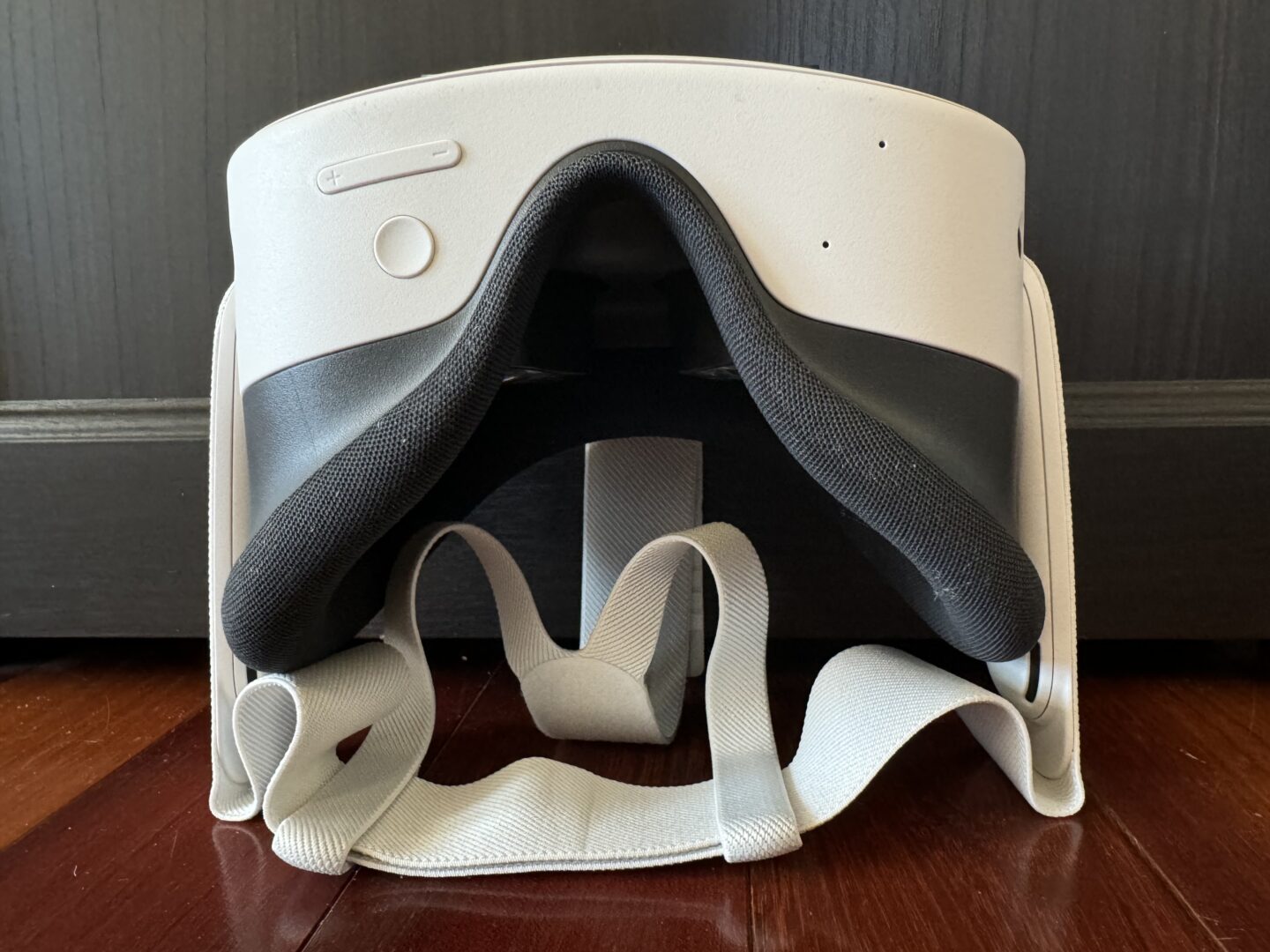
A new button on the underside of the Quest 3S lets you transition to pass-through mode at any time.

Credit: Kyle Orland

A new button on the underside of the Quest 3S lets you transition to pass-through mode at any time. Credit: Kyle Orland

Unfortunately, Meta must still seriously tackle the “250 grams” part of Carmack’s vision. The 514g Quest 3S feels at least as unwieldy on your face as the 515g Quest 3, and both are still quite far from the “super light comforts” Carmack envisioned. Add in all the compromises Meta made so the Quest 3S could hit that lower price point, and you have a cheap, half-measure headset that we can only really recommend to the most price-conscious of VR consumers.

Meta Quest 2 Plus

iFixit’s recent teardown of the Quest 3S shows that the new headset is more than just a spiritual successor to the cheap and popular Quest 2. On the contrary, iFixit found the Quest 3S optical stack uses the exact same parts as the Quest 2, right down to the LCD panels and fresnel lenses.

In 2020, the 1832×1920 per-eye resolution offered by that visual stack represented a significant upgrade from what had come before, especially at such a low price point. Today, though, that dated display technology invites direct comparisons to the 2604×2208 per-eye display on last year’s Quest 3. With the displays sitting just inches from your eyes, that difference represents a very noticeable 20 percent drop in apparent clarity, down from 25 pixels per degree to a mere 20.

Going back to the 3S after a year spent in the Quest 3 is a bit like walking around in glasses that suddenly have a thin layer of Vaseline smeared on them. Everything looks quite a bit fuzzier, especially near the borders of the display, and edges of objects look distinctly more jagged than on the Quest 3. The difference is especially noticeable when trying to read small text in VR or make out fine details in the real world through the headset’s array of passthrough cameras.

It’s not quite a retreat to the days of the infamous “screen door effect” that plagued early Oculus-era headsets, but the distinct visual downgrade makes virtual reality experiences that much less convincing and engrossing on the 3S.

It’s the little things

The visual downgrades on the Quest 3S extend to the field of view, which narrows from 110 horizontal degrees on the Quest 3 to a mere 97 degrees on the 3S (the vertical field of view sees a smaller reduction from 97 degrees to 93 degrees). This difference isn’t as apparent as the drop in resolution between the two headsets, but it does lead to a few more “tunnel vision” moments at the margins. In a game like Beat Saber, for instance, I noticed many of my swings were rendered effectively invisible by the larger black void taking up much of my peripheral vision.

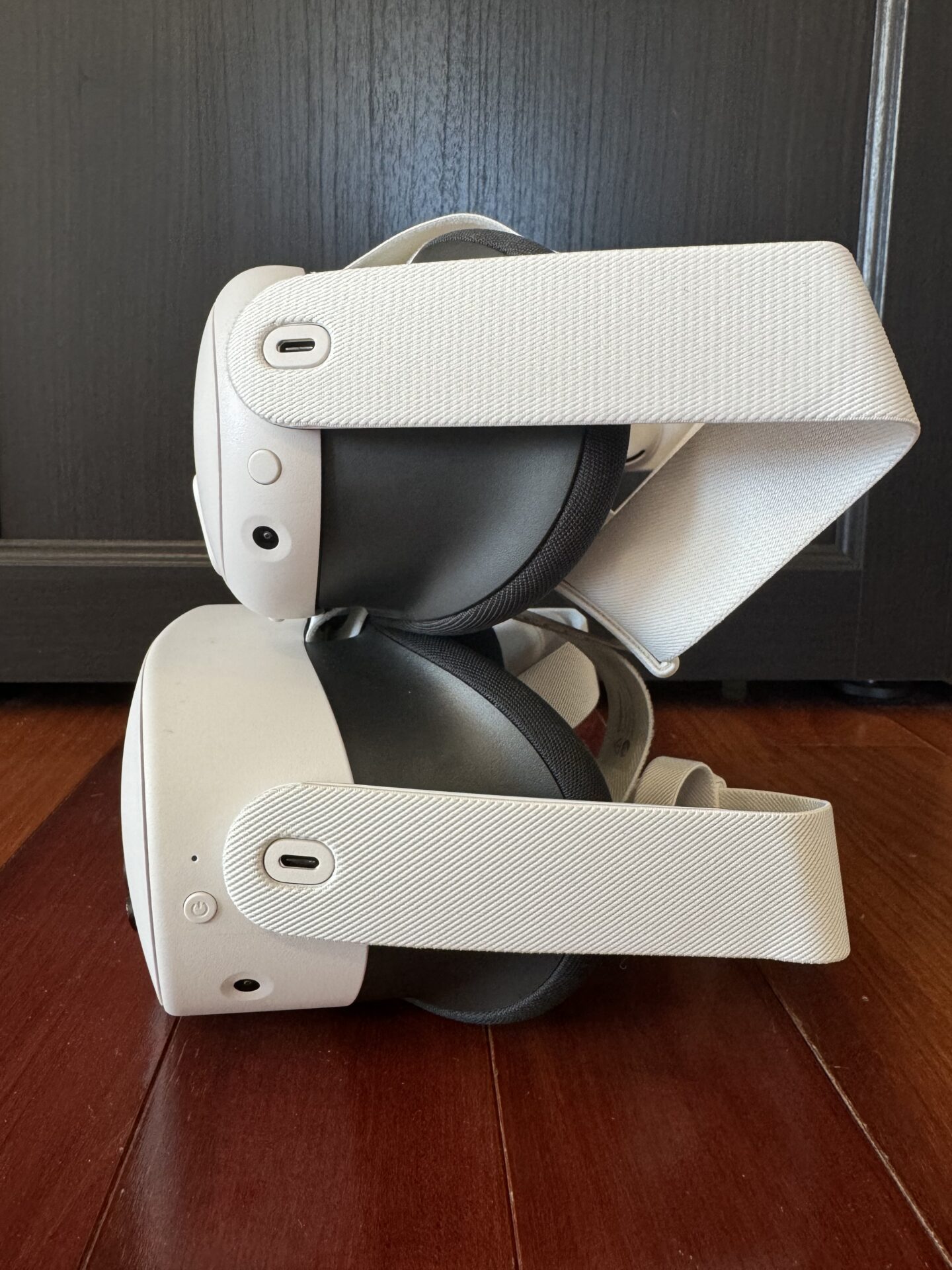
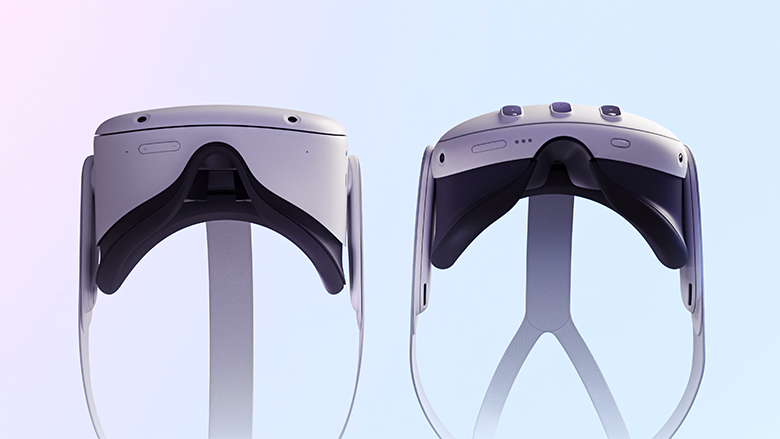
A comparative side view shows the reduced depth of the pancake lens housing on the Quest 3 (top) compared to the Quest 3S (bottom).

Credit: Kyle Orland

A comparative side view shows the reduced depth of the pancake lens housing on the Quest 3 (top) compared to the Quest 3S (bottom). Credit: Kyle Orland

Going back to the fresnel-lens-based Quest 2 visual stack also means doing without the thinner pancake lenses introduced on the Quest 3. The result is an eyebox on the 3S that extends about an inch farther from your face than on the Quest 3. That might not sound like much, but having the lens’ center of gravity farther from your face makes the headset feel a bit heavier and the fit a bit less secure as you move your head around in VR.

Then there are the compromises when it comes to fine-tuning the distance between the Quest 3S’ lenses. On the Quest 3, an adjustment wheel on the bottom of the headset lets you adjust this interpupillary distance (IPD) continuously, down to the millimeter precision. On the Quest 3S, you instead manually shift the lenses into three preset grooves that are a full 5 millimeters apart. If your face’s actual IPD falls in the middle of those 5 mm windows, the result can be the kind of eye strain and trouble focusing that we complained about in our original Quest 2 review.

Meta has also done away with quite a few Quest 3 creature comforts in an apparent effort to keep the Quest 3S price down. The lack of an external depth sensor, for instance, can make things like pass-through video and hand tracking feel a bit more wonky than on the Quest 3. The Quest 3S is missing a standard headphone jack, too, for those still using wired headphones. And the new headset also lacks any automatic face detection, adding the small annoyance of physically tapping the power button to return from sleep mode when you put it back on.

Spend the extra money

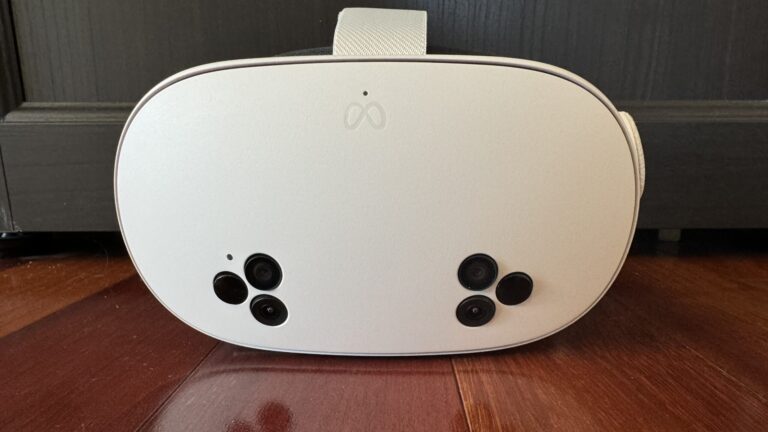
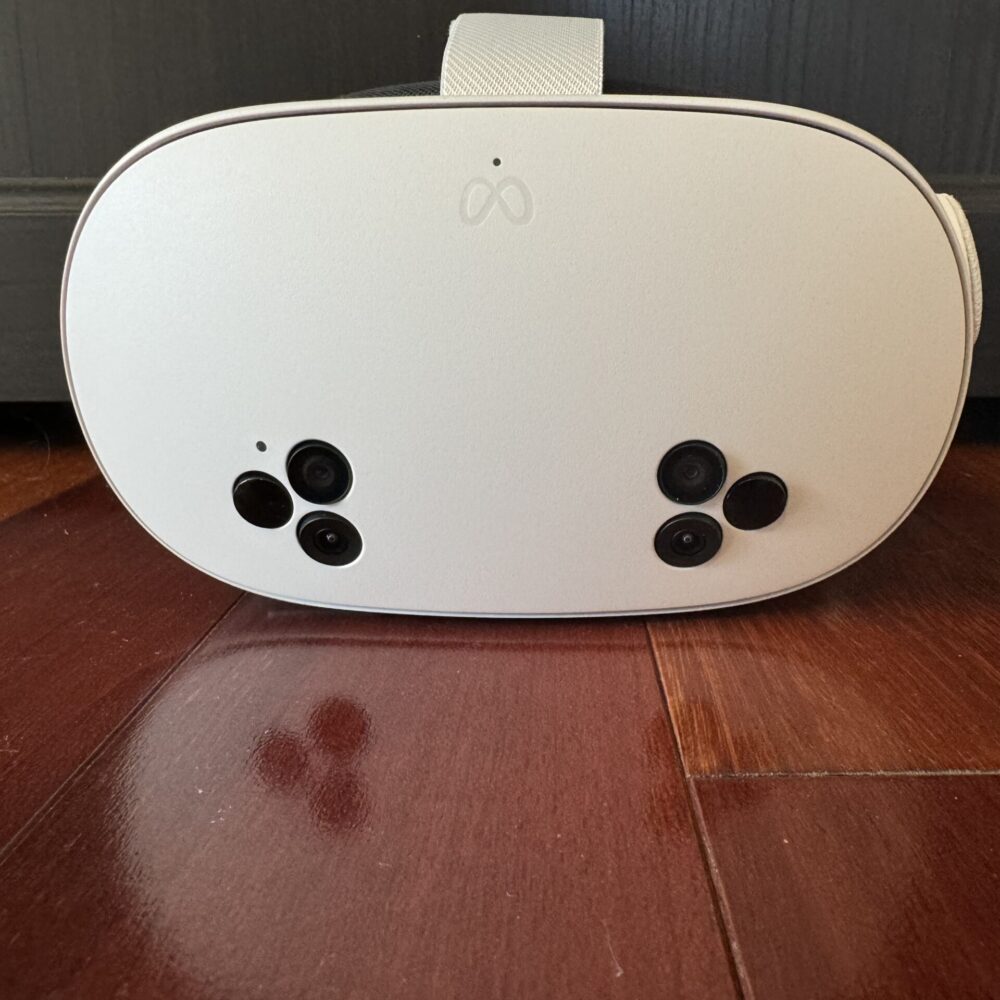
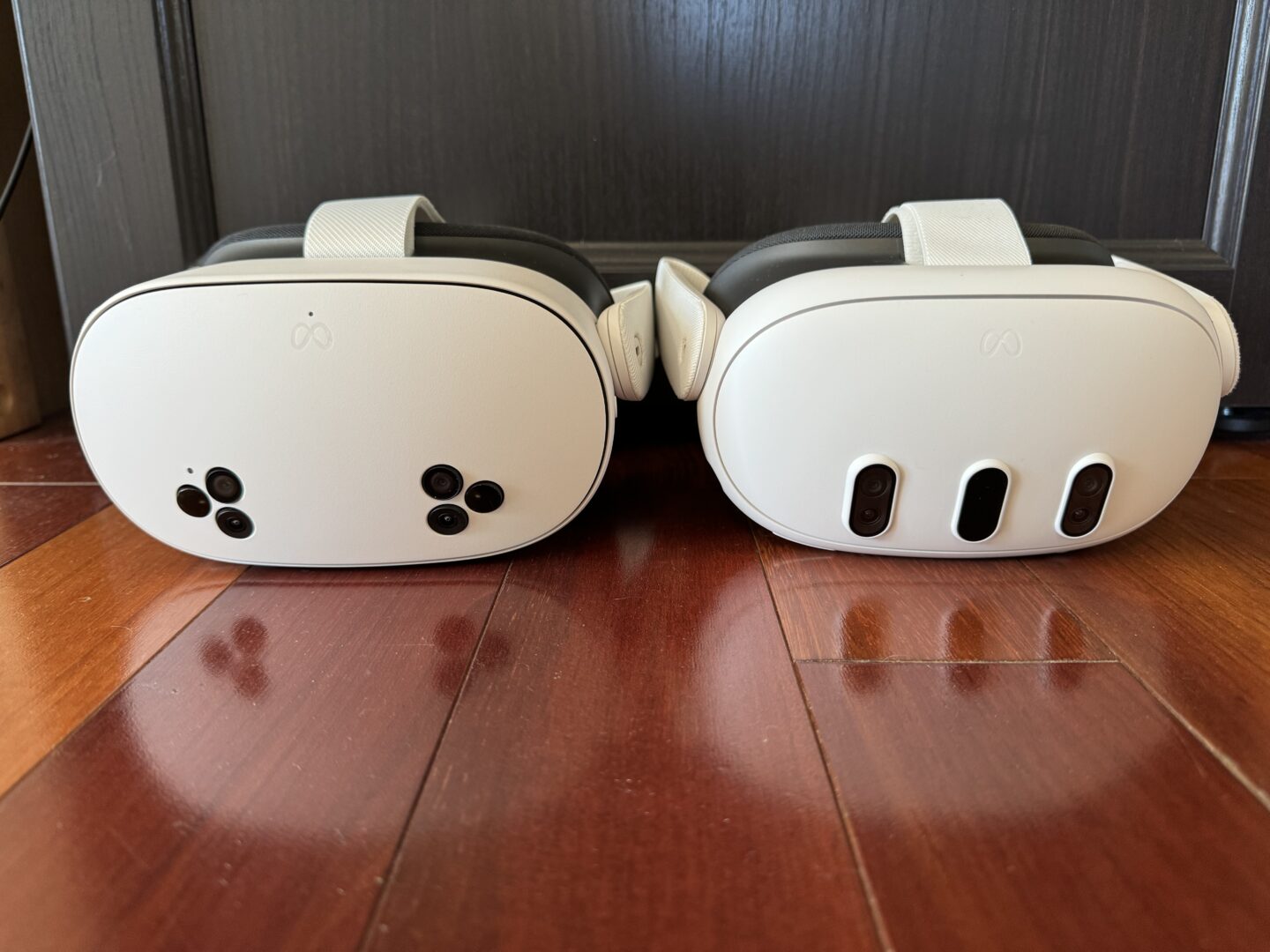
From the front, the external cameras are the easiest way to tell the difference between the Quest 3S (left) and the Quest 3.

From the front, the external cameras are the easiest way to tell the difference between the Quest 3S (left) and the Quest 3.

I’ve been comparing the Quest 3S to the Quest 3 because that’s the decision consumers considering a Meta headset will face today (if they can get over the need for a Meta account to use the headset in the first place). But Meta’s discontinuation of the aging Quest 2 means millions of current Quest 2 owners will soon be faced with the prospect of upgrading or abandoning Meta’s VR ecosystem for good, just as original Quest owners did last year.

For those current Quest 2 owners, the Quest 3S represents the cheapest way to maintain continued access to Meta’s library of VR games and apps. And that library continues to expand with everything from mind-bending indie games to quirky multiplayer arenas to single-player adventures like Batman: Arkham Shadow, which now comes free with every Quest 3 or 3S headset.

But the move from a Quest 2 to a Quest 3S is relatively small, considering the four-year gap between the similarly priced headsets. Yes, you’ll notice some significant improvements in the newer headset’s full-color pass-through cameras and the headset’s maximum frame rate (up from 90 Hz to 120 Hz). The 3S also offers a slightly more future-proofed Qualcomm XR Gen 2 processor (over the Quest 2’s original XR processor) and slightly more precise Touch Plus controllers (which are missing the annoying tracking ring on the original Quest 2 controllers).

All told, though, the Quest 3S is far from the generational upgrade from the Quest 2 you might hope for. For that kind of apparent jump, you’re much better off shelling out a bit more money for the full-fledged Quest 3. The improvements in form factor, field of view, IPD adjustment, and especially resolution make the higher-end set well worth the extra money. That’s especially true if you can manage to track down the now-discontinued 128GB Quest 3, which is currently being closed out for just $430 (compared to $500 for the new 528GB version).

If you simply want the cheapest way to access Meta’s library of virtual reality games, the Quest 3S certainly fills that hole in the market. If you want a more robust VR experience that’s likely to suffice further into the future, though, the extra investment in a Quest 3 headset is probably worth it.

Photo of Kyle Orland

Kyle Orland has been the Senior Gaming Editor at Ars Technica since 2012, writing primarily about the business, tech, and culture behind video games. He has journalism and computer science degrees from University of Maryland. He once wrote a whole book about Minesweeper.

Meta Quest 3S is a disappointing half-step to Carmack’s low-cost VR vision Read More »

apple-vision-pro’s-content-drought-improves-with-new-3d-videos

Apple Vision Pro’s content drought improves with new 3D videos

Immersive Video —

It’s still not the weekly cadence we expected, but it’s something.

  • Boundless premieres tonight, taking Vision Pro users on a hot air balloon ride in Turkey.

  • Submerged will be Apple’s first fictional short film for Vision Pro.

  • Users will get a glimpse into the 2024 NBA All-Star Weekend.

  • This cryptic image teases The Weeknd’s Vision Pro “experience.”

  • The new series Elevated will tour places of interest around the world from above.

  • Apple is partnering with Red Bull for a surfing documentary.

  • Wild Life returns with an episode about elephants in a wildlife preserve.

Today, Apple announced a slate of more than a dozen upcoming Immersive Videos for its Vision Pro spatial reality headset. The first, titled Boundless, launches tonight at 9 pm ET. More will follow in the coming weeks and months.

The announcement follows a long, slow period for new Vision Pro-specific video content from Apple. The headset launched in early February with a handful of Immersive Video episodes ranging from five to 15 minutes each. Since then, only three new videos have been added.

On March 28, Apple released a highlight reel of Major League Soccer plays from the season that had ended months prior. A second episode of Prehistoric Planet, Apple’s Immersive Video dinosaur nature documentary, went live on April 19. Likewise, a new episode of the Adventure series titled “Parkour” landed on May 24.

The MLS video played more like a short ad for Apple’s MLS programming than anything else, but other Immersive Videos have impressed with their quality if not their creative ambition. They’re all short videos that put the viewer inside a moment in space and time with either animals or people doing their thing. The videos are high-resolution, and the 3D is generally well done. The production values are high, even if the narratives are light. They come across as tech demos, as much as anything, but they are impressive.

Tonight’s Boundless episode will allow viewers to see what it’s like to ride in a hot air balloon over sweeping vistas. Another episode titled “Arctic Surfing” will arrive this fall, Apple says. Sometime next month, Apple will publish the second episode of its real wildlife documentary, simply titled Wild Life. The episode will focus on elephants in Kenya’s Sheldrick Wildlife Trust. Another episode is in the works, too. “Later this year,” Apple writes in its newsroom post, “viewers will brave the deep with a bold group of divers in the Bahamas, who come face-to-face with apex predators and discover creatures much more complex than often portrayed.”

More on the way

In September, we’ll see the debut of a new Immersive Video series titled Elevated. Apple describes it as an “aerial travel series” in which viewers will fly over places of interest. The first episode will take viewers to Hawaii, while another planned for later this year will go to New England.

Apple is additionally partnering with Red Bull for a look at surfing called Red Bull: Big-Wave Surfing.

In addition to those documentary episodes, there will be three short films by year’s end. One will be a musical experience featuring The Weeknd, and another will take basketball fans inside the 2024 NBA All-Star Weekend. There will also be Submerged, the first narrative fictional Immersive Video on the platform. It’s an action short film depicting struggles on a submarine during World War II.

It’s good to see Apple finally making some movement here; the drought of content after the launch didn’t inspire confidence in the platform. Many people with mixed reality headsets use them a bunch for a few weeks but either fail to find ways to fit them into their daily habits or run out of compelling content and taper off before long. To keep people invested in visionOS, Apple needs to keep a rapid cadence of new content that users look forward to at least every week. Otherwise, some users will see their headsets sit on shelves, forgotten.

When I reviewed the Vision Pro, I assumed that the Immersive Video episodes would roll out weekly. That hasn’t proven the case, and it still doesn’t look like it will. Apple is going to have to invest more in content (and take more risks with that content, moving beyond short tech demo documentaries) to make the Vision Pro stick with customers.

Listing image by Apple

Apple Vision Pro’s content drought improves with new 3D videos Read More »

apple’s-vision-pro-goes-on-sale-outside-the-us-for-the-first-time

Apple’s Vision Pro goes on sale outside the US for the first time

Spatial computing —

Since February, the headset has only been available in the United States.

A mixed reality headset over a table in an Apple Store

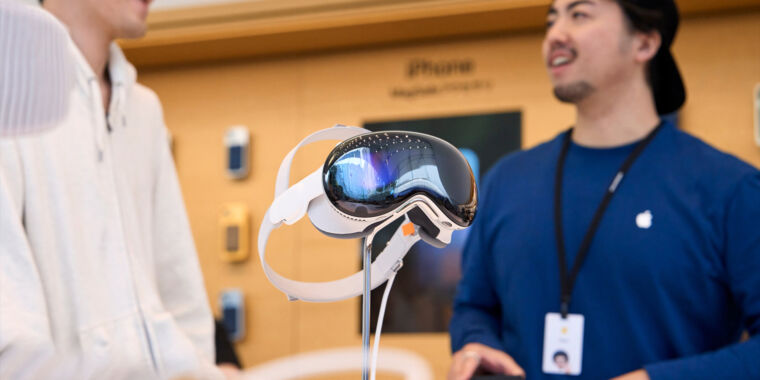
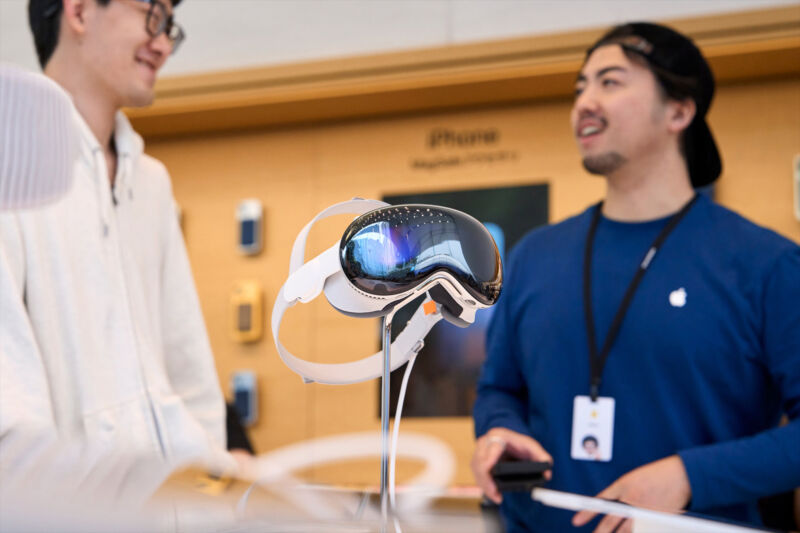
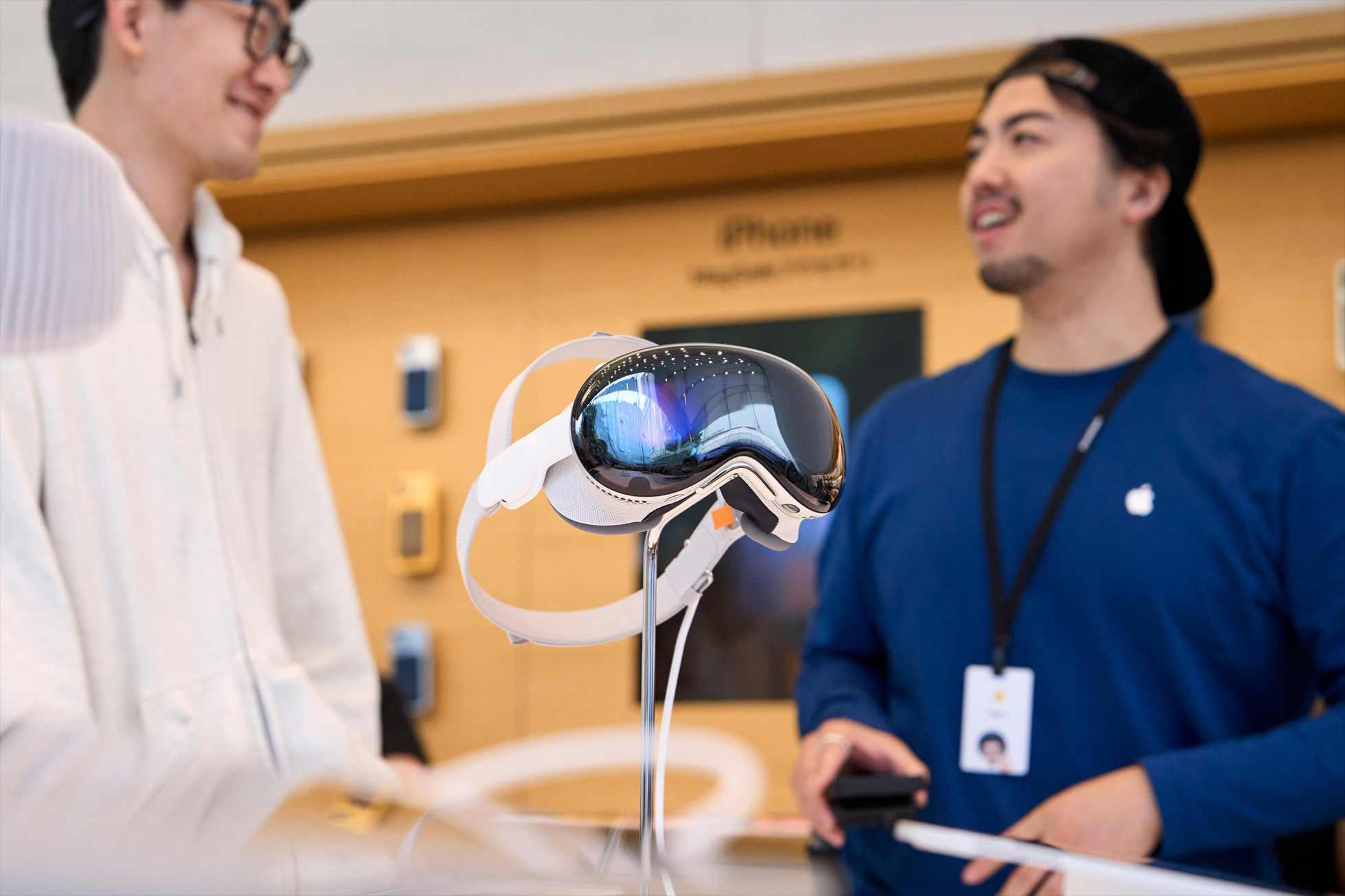
Enlarge / A Vision Pro on display at an Apple Store in Tokyo.

Apple

Apple’s Vision Pro headset went on sale outside the United States for the first time today, in the first of two waves of expanded availability.

The $3,499 “spatial computing” device launched back in February in the US, but it hasn’t taken the tech world by storm. Part of that has been its regional launch, with some of the biggest markets still lacking access.

Apple announced that the product would be sold internationally during its keynote at the Worldwide Developers Conference earlier this month.

The first new markets to get Vision Pro shipments are China, Japan, and Singapore—those are the ones where it went on sale today.

A second wave will come on July 12, with the headset rolling out in Australia, Canada, France, Germany, and the United Kingdom.

When we first tested the Vision Pro in February, we wrote that it was a technically impressive device with a lot of untapped potential. It works very well as a personal entertainment device for frequent travelers, in particular. However, its applications for productivity and gaming still need to be expanded to justify the high price.

Of course, there have been conflicting rumors of late about just how expensive Apple plans to keep its mixed reality devices. One report claimed that the company put the brakes on a new version of the Vision Pro for now, opting instead to develop a cheaper alternative for a 2025 launch.

But another report in Bloomberg suggested that’s an overstatement.  It simply noted that the Vision Pro 2 has been slightly delayed from its original target launch window and reported that the cheaper model will come first.

In any case, availability will have to expand and the price will ultimately have to come down if augmented reality can become the major computing revolution that Apple CEO Tim Cook has predicted. This international rollout is the next step to test whether there’s a market for that.

Apple’s Vision Pro goes on sale outside the US for the first time Read More »

meta’s-new-$199-quest-2-price-is-a-steal-for-the-vr-curious

Meta’s new $199 Quest 2 price is a steal for the VR-curious

Bargain basement —

Move comes as support winds down for the original Quest headset.

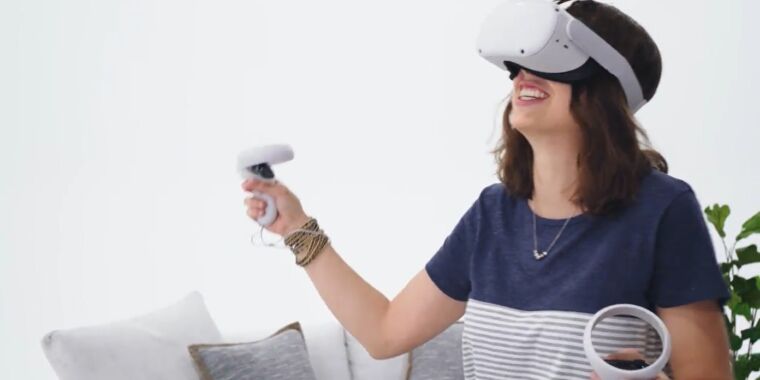
For just $199, you could be having as much fun as this paid model.

Enlarge / For just $199, you could be having as much fun as this paid model.

Meta has announced it’s permanently lowering the price of its aging Quest 2 headset to $199 for a 128GB base model, representing the company’s lowest price yet for a full-featured untethered VR headset.

The Quest 2, which launched in 2020 at $299, famously defied tech product convention by increasing its MSRP to $399 amid inflation and supply chain issues in mid-2022. Actual prices for the headset at retail have fallen since then, though; Best Buy offered new units for $299 as of last October and for $250 by the 2023 post-Thanksgiving shopping season, for instance.

And the Quest 2 is far from the company’s state-of-the-art headset at this point. Meta launched the surprisingly expensive Quest Pro in late 2022 before dropping that headset’s price from $1,499 to $999 less than five months later. And last year’s launch of the Quest 3 at a $499 starting price brought some significant improvements in resolution, processing power, thickness, and full-color passthrough images over the Quest 2.

But for how long?

Those looking to get the Quest 2 at its new bargain MSRP should keep in mind that Meta may not be planning to support the aging headset for the long haul. Meta is currently winding down support for the original Quest headset, which launched in 2019 and no longer has access to important online features, security updates, and even new apps. The Quest 2 is just 18 months younger than the original Quest, and the new price might represent an effort to clear out defunct stock in favor of newer, more powerful Quest options.

The Quest 2 (left) has a 40 percent thicker profile than the pancake-optics on the Quest 3 (right).

Enlarge / The Quest 2 (left) has a 40 percent thicker profile than the pancake-optics on the Quest 3 (right).

Meta

Then again, plenty of developers are still targeting apps and games at the comparatively large audience on the Quest 2, which sold an estimated 15 million units through mid-2022, roughly on par with the Xbox Series S|X in roughly the same time period. But there are some signs that Quest 2 software is selling relatively slower than those hardware numbers might suggest amid reports that many Quest purchasers are no longer active users. And Meta continues to lose massive amounts of money on the VR segment, while Sony is reportedly halting production of the PS5-tethered PSVR2 headset amid weaker than expected demand.

The Quest 2’s new price is the first time Meta has offered a headset below the “$250 and 250 grams” target former Meta CTO John Carmack once envisioned for a “super cheap, super lightweight headset” that could bring in the mass market (the Quest 2 weighs in at 503 grams). The new price is also stunningly cheap when you consider that, just six or seven years ago, VR-curious consumers could easily end up paying $1,500 or more (in 2024 dollars) for a high-end tethered headset and the “VR-ready” computer needed to power it.

If you’ve waited this long to see what virtual reality gaming is all about, this price drop is the perfect opportunity to indulge your curiosity for a relative pittance. Heck, it might be worth it even if your headset ends up, like mine, a Beat Saber machine most of the time.

Meta’s new $199 Quest 2 price is a steal for the VR-curious Read More »

apple’s-first-new-3d-vision-pro-video-since-launch-is-only-a-few-minutes-long

Apple’s first new 3D Vision Pro video since launch is only a few minutes long

Immersive Video —

Major League Soccer highlight reel is the first Immersive Video since launch.

  • All the available Immersive Video launch content fit on a small strip in the TV app.

    Samuel Axon

  • Initial videos were labeled as episodes in a series, but subsequent episodes haven’t come.

Tonight, Apple will debut some new Immersive Video content for the Vision Pro headset—the first sports content for the device. It doesn’t seem like much after two months of no new content, though.

Starting at 6 pm PT/9 pm ET, Vision Pro users will be able to watch a sports film captured for the platform’s Immersive Video format. The video will be a series of highlights from last year’s Major League Soccer (MLS) playoffs, and according to Six Colors, it will run just five minutes. It will be free for all Vision Pro users.

On February 2, Apple released what appeared to be the first episodes of three Immersive Video series: Adventure, Prehistoric Planet, and Wildlife. Each debuted alongside the Vision Pro’s launch with one episode labeled “Episode 1” of “Season 1.”

However, it’s been almost two months, and none of those series have received new episodes. The only other piece of Immersive Video content available is an Alicia Keyes performance video that also debuted on February 2. Most of these videos were only a few minutes long.

That means that this short soccer video depicting sports moments from 2023 will be the only new piece of Immersive Video content Apple has put out since the device launched at the beginning of February.

When I reviewed the Vision Pro as an entertainment device, I lauded its capabilities for viewing 2D films and videos, but I also talked a bit about its 3D video capabilities. I said the first pieces of original 3D content from Apple seemed promising and that I looked forward to future episodes. Given that they were labeled just like Apple TV+ series in the TV app, I assumed they would arrive at a weekly cadence. Further episodes haven’t come.

Notably, Apple didn’t include a first-party app for playing 3D videos downloaded from the web with the Vision Pro, though an independent developer filled that gap with an app called Reality Player. There are a few 3D video streaming or downloading services in the visionOS App Store, but the selection is very anemic compared to what you have access to with other headsets.

Apple hasn’t been calling the Vision Pro a VR headset, opting instead for the term “spatial computing”—and that’s understandable because it does a lot more than most VR headsets.

But if you’re looking for new examples of the sorts of passive viewing content you can enjoy on other headsets, the Vision Pro is still far behind the competition two months in.

The device can display a wealth of 2D video content, but this drives home the initial impression that the Vision Pro is meant for viewing flat, 2D content as windows in 3D space. The situation isn’t quite as dire with apps and games, with a handful of new spatial apps in those categories rolling out in recent weeks.

Most apps behave just like iPad apps, with 2D viewports at the content; you can position those viewports wherever you want in the room around you. Most video content is also 2D.

There are situations where that’s neat to have, but it’s surprising Apple hasn’t invested more in actual 3D content yet. In terms of new stuff, this short soccer video debuting tonight is all we have right now.

Listing image by Samuel Axon

Apple’s first new 3D Vision Pro video since launch is only a few minutes long Read More »

report:-sony-stops-producing-psvr2-amid-“surplus”-of-unsold-units

Report: Sony stops producing PSVR2 amid “surplus” of unsold units

Too many too late? —

Pricy tethered headset falters after the modest success of original PSVR.

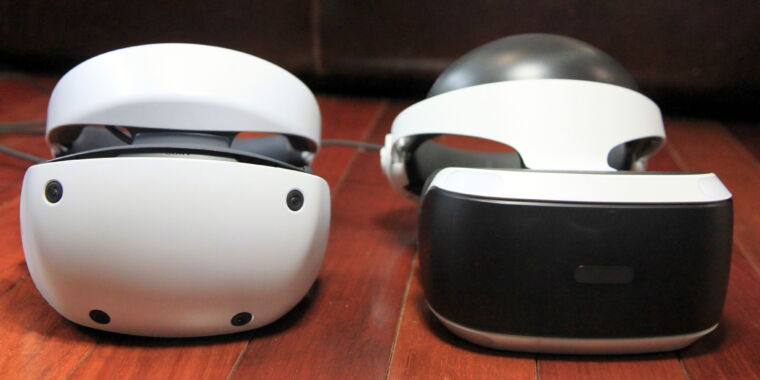
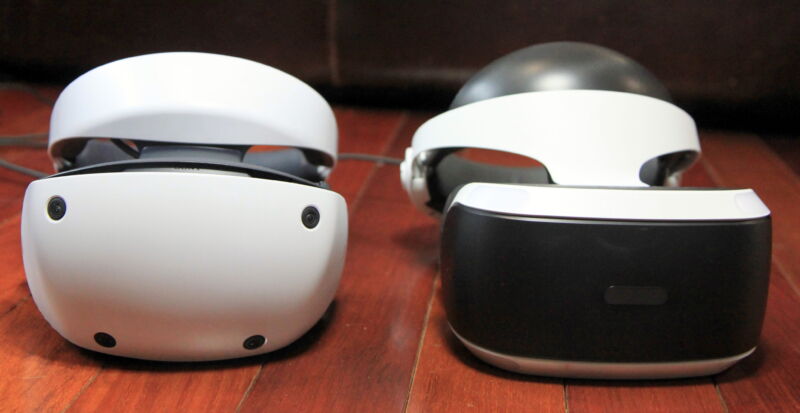
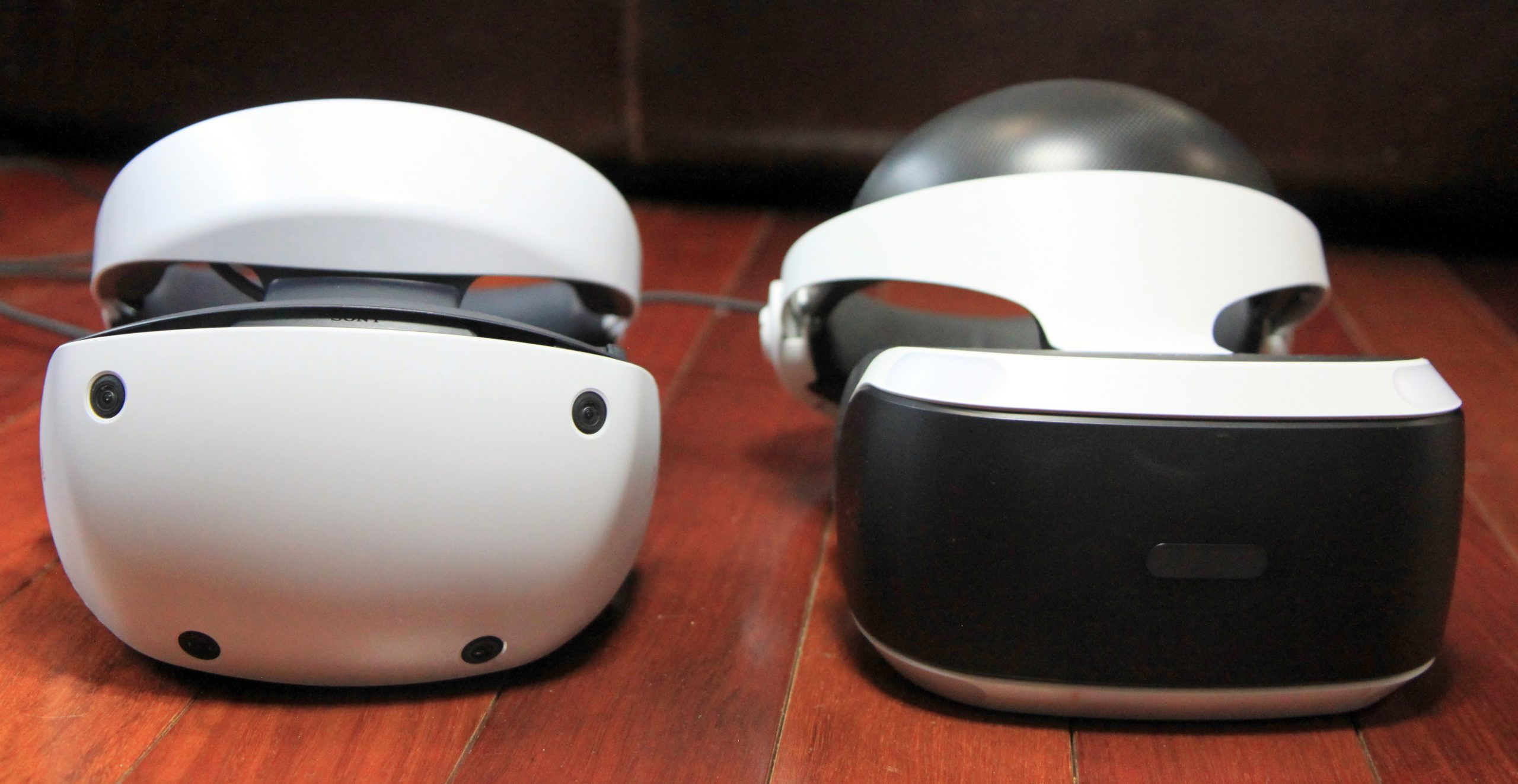
PSVR2 (left) next to the original PSVR.

Enlarge / PSVR2 (left) next to the original PSVR.

Kyle Orland / Ars Technica

It looks like Sony’s PlayStation VR2 is not living up to the company’s sales expectations just over a year after it first hit the market. Bloomberg reports that the PlayStation-maker has stopped producing new PSVR2 units as it tries to clear out a growing backlog of unsold inventory.

Bloomberg cites “people familiar with [Sony’s] plans” in reporting that PSVR2 sales have “slowed progressively” since its February 2023 launch. Sony has produced “well over 2 million” units of the headset, compared to what tracking firm IDC estimates as just 1.69 million unit shipments to retailers through the end of last year. The discrepancy has caused a “surplus of assembled devices… throughout Sony’s supply chain,” according to Bloomberg’s sources.

IDC estimates a quarterly low of 325,000 PSVR2 units shipped in the usually hot holiday season, compared to a full 1.3 million estimated holiday shipments for Meta’s then-new Quest 3 headset, which combined with other Quest products to account for over 3.7 million estimated sales for the full year.

The last of the tethered headsets?

The reported state of affairs for PSVR2 is a big change from the late 2010s when the original PlayStation VR became one of the bestselling early VR headsets simply by selling to the small, VR-curious slice of PS4 owners. At the time, the original PSVR was one of the cheapest “all-in” entry points for the nascent market of tethered VR headsets, in large part because it didn’t require a connection to an expensive, high-end gaming PC.

In the intervening years, though, the VR headset market has almost completely migrated to untethered headsets, which allow for freer movement and eliminate the need to purchase and stay near external hardware. The $550 PlayStation VR2 is also pricier than the $500 Meta Quest 3 headset, even before you add in the $500 asking price for a needed PS5. Sony’s new headset also isn’t backward compatible with games designed for the original PSVR, forcing potential upgraders to abandon most of their existing VR game libraries for the new platform.

Even before the PSVR2 launched, Sony was reportedly scaling back its ambitions for the headset (though the company denied those reports at the time and said it was “seeing enthusiasm from PlayStation fans”). And since its launch, PSVR2 has suffered from a lack of exclusive titles, featuring a lineup mostly composed of warmed-over ports long available on other headsets. An Inverse report from late last year shared a series of damning complaints from developers who have struggled to get their games to run well on the new hardware.

Put it all together, and PSVR2 seems like a too-little-too-late upgrade that has largely squandered the company’s early lead in the space. We wouldn’t be shocked if this spells the end of the line for Sony’s VR hardware plans and for mass-market tethered headsets in general.

Report: Sony stops producing PSVR2 amid “surplus” of unsold units Read More »