spacex

rocket-report:-firefly-delivers-for-nasa;-polaris-dawn-launching-this-month

Rocket Report: Firefly delivers for NASA; Polaris Dawn launching this month

No holds barred —

The all-private Polaris Dawn spacewalk mission is set for launch no earlier than July 31.
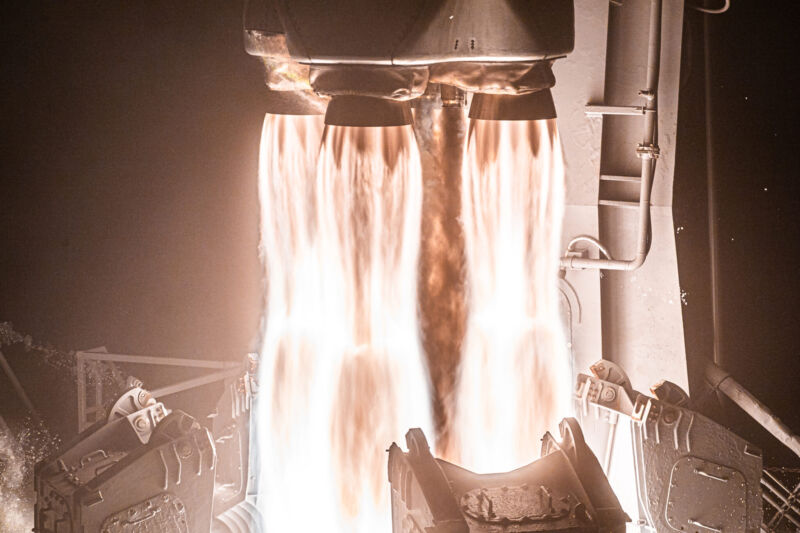
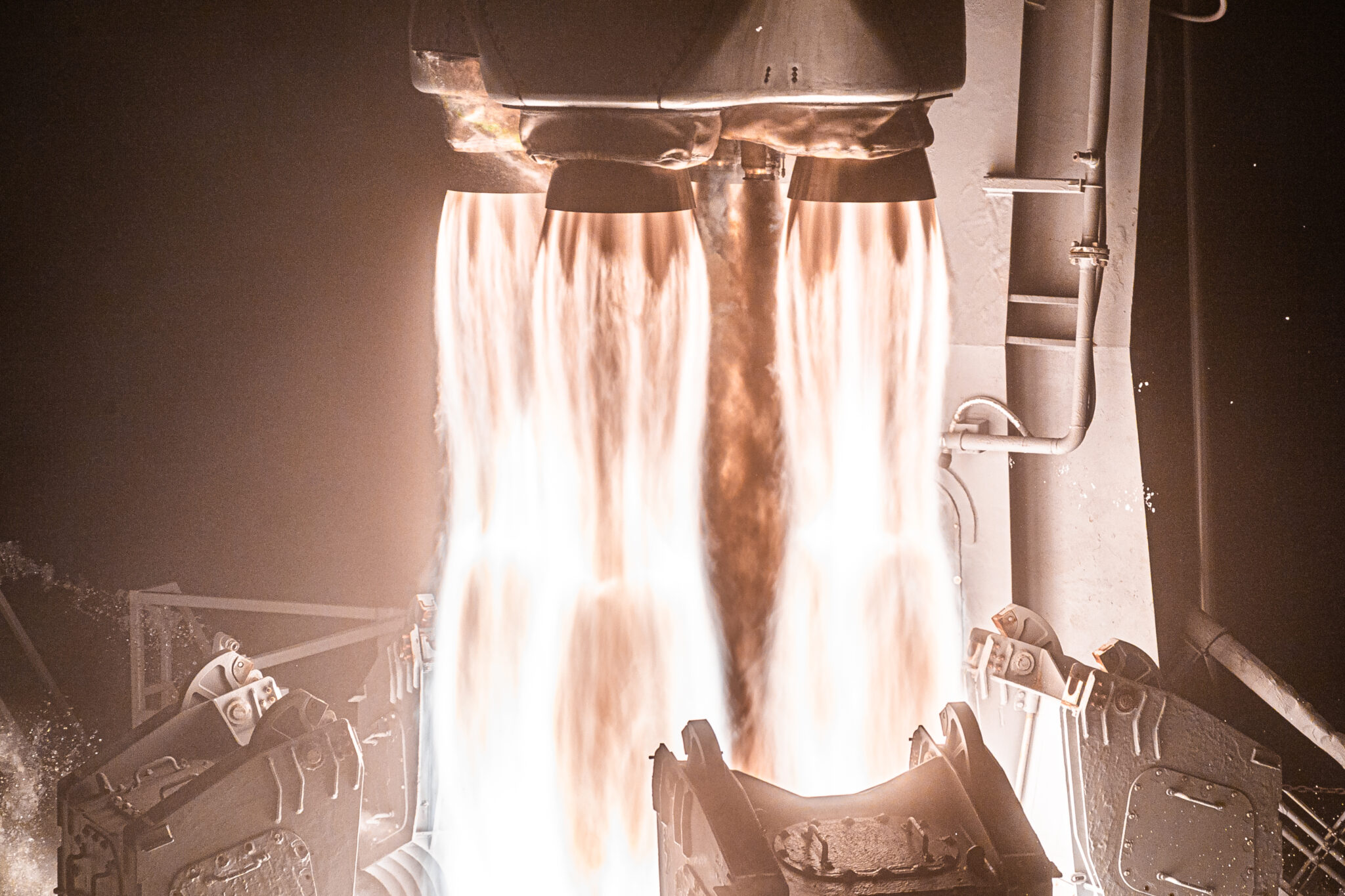
Four kerosene-fueled Reaver engines power Firefly's Alpha rocket off the pad at Vandenberg Space Force Base, California.

Enlarge / Four kerosene-fueled Reaver engines power Firefly’s Alpha rocket off the pad at Vandenberg Space Force Base, California.

Welcome to Edition 7.01 of the Rocket Report! We’re compiling this week’s report a day later than usual due to the Independence Day holiday. Ars is beginning its seventh year publishing this weekly roundup of rocket news, and there’s a lot of it this week despite the holiday here in the United States. Worldwide, there were 122 launches that flew into Earth orbit or beyond in the first half of 2024, up from 91 in the same period last year.

As always, we welcome reader submissions, and if you don’t want to miss an issue, please subscribe using the box below (the form will not appear on AMP-enabled versions of the site). Each report will include information on small-, medium-, and heavy-lift rockets as well as a quick look ahead at the next three launches on the calendar.

Firefly launches its fifth Alpha flight. Firefly Aerospace placed eight CubeSats into orbit on a mission funded by NASA on the first flight of the company’s Alpha rocket since an upper stage malfunction more than half a year ago, Space News reports. The two-stage Alpha rocket lifted off from Vandenberg Space Force Base in California late Wednesday, two days after an issue with ground equipment aborted liftoff just before engine ignition. The eight CubeSats come from NASA centers and universities for a range of educational, research, and technology demonstration missions. This was the fifth flight of Firefly’s Alpha rocket, capable of placing about a metric ton of payload into low-Earth orbit.

Anomaly resolution … This was the fifth flight of an Alpha rocket since 2021 and the fourth Alpha flight to achieve orbit. But the last Alpha launch in December failed to place its Lockheed Martin payload into the proper orbit due to a problem during the relighting of its second-stage engine. On this week’s launch, Alpha deployed its NASA-sponsored payloads after a single burn of the second stage, then completed a successful restart of the engine for a plane change maneuver. Engineers traced the problem on the last Alpha flight to a software error. (submitted by Ken the Bin)

Two companies added to DoD’s launch pool. Blue Origin and Stoke Space Technologies — neither of which has yet reached orbit — have been approved by the US Space Force to compete for future launches of small payloads, Breaking Defense reports. Blue Origin and Stoke Space join a roster of launch companies eligible to compete for launch task orders the Space Force puts up for bid through the Orbital Services Program-4 (OSP-4) contract. Under this contract, Space Systems Command buys launch services for payloads 400 pounds (180 kilograms) or greater, enabling launch from 12 to 24 months of the award of a task order. The OSP-4 contract has an “emphasis on small orbital launch capabilities and launch solutions for Tactically Responsive Space mission needs,” said Lt. Col. Steve Hendershot, chief of Space Systems Command’s small launch and targets division.

An even dozen … Blue Origin aims to launch its orbital-class New Glenn rocket for the first time as soon as late September, while Stoke Space aims to fly its Nova rocket on an orbital test flight next year. The addition of these two companies means there are 12 providers eligible to bid on OSP-4 task orders. The other companies are ABL Space Systems, Aevum, Astra, Firefly Aerospace, Northrop Grumman, Relativity Space, Rocket Lab, SpaceX, United Launch Alliance, and X-Bow. (submitted by Ken the Bin and brianrhurley)

The easiest way to keep up with Eric Berger’s space reporting is to sign up for his newsletter, we’ll collect his stories in your inbox.

Italian startup test-fires small rocket. Italian rocket builder Sidereus Space Dynamics has completed the first integrated system test of its EOS rocket, European Spaceflight reports. This test occurred Sunday, culminating in a firing of the rocket’s kerosene/liquid oxygen MR-5 main engine for approximately 11 seconds. The EOS rocket is a novel design, utilizing a single-stage-to-orbit architecture, with the reusable booster returning to Earth from orbit for recovery under a parafoil. The rocket stands less than 14 feet (4.2 meters) tall and will be capable of delivering about 29 pounds (13 kilograms) of payload to low-Earth orbit.

A lean operation … After it completes integrated testing on the ground, the company will conduct the first low-altitude EOS test flights. Founded in 2019, Sidereus has raised 6.6 million euros ($7.1 million) to fund the development of the EOS rocket. While this is a fraction of the funding other European launch startups like Isar Aerospace, MaiaSpace, and Orbex have attracted, the Sidereus’s CEO, Mattia Barbarossa, has previously stated that the company intends to “reshape spaceflight in a fraction of the time and with limited resources.” (submitted by EllPeaTea and Ken the Bin)

Rocket Report: Firefly delivers for NASA; Polaris Dawn launching this month Read More »
here’s-why-spacex’s-competitors-are-crying-foul-over-starship-launch-plans

Here’s why SpaceX’s competitors are crying foul over Starship launch plans

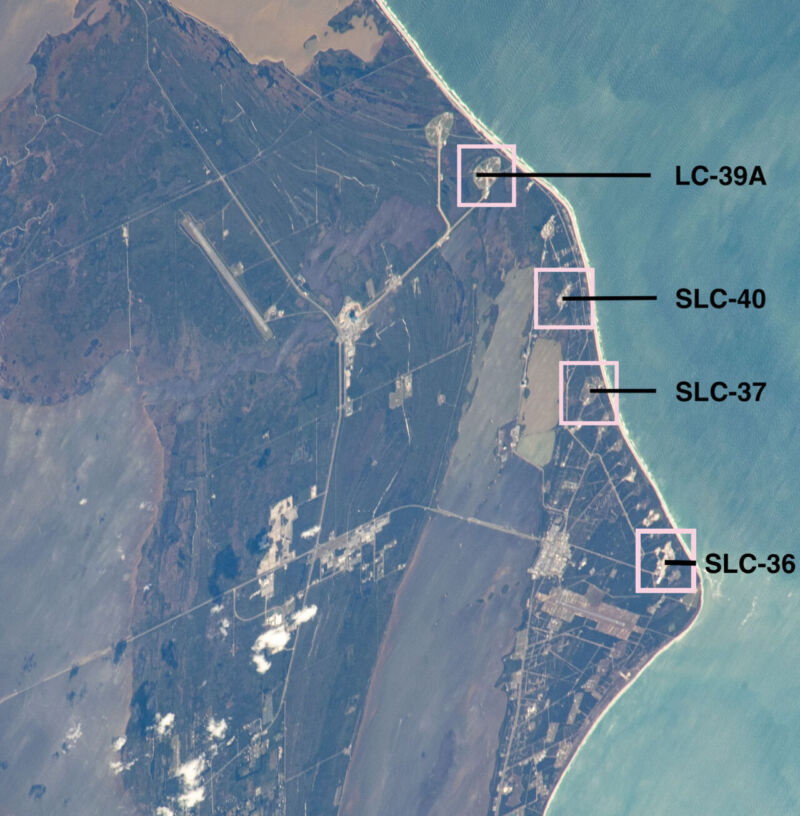
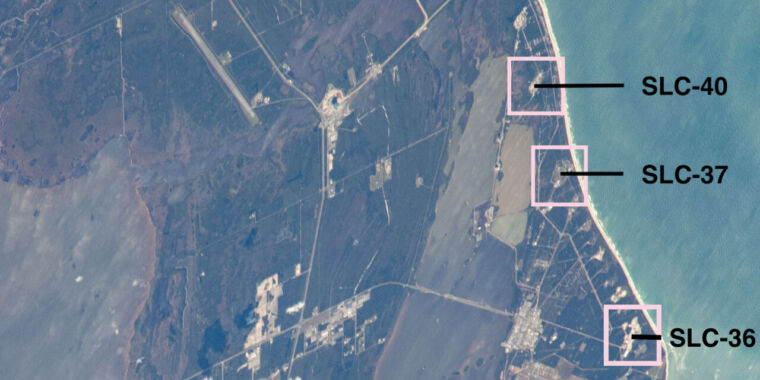
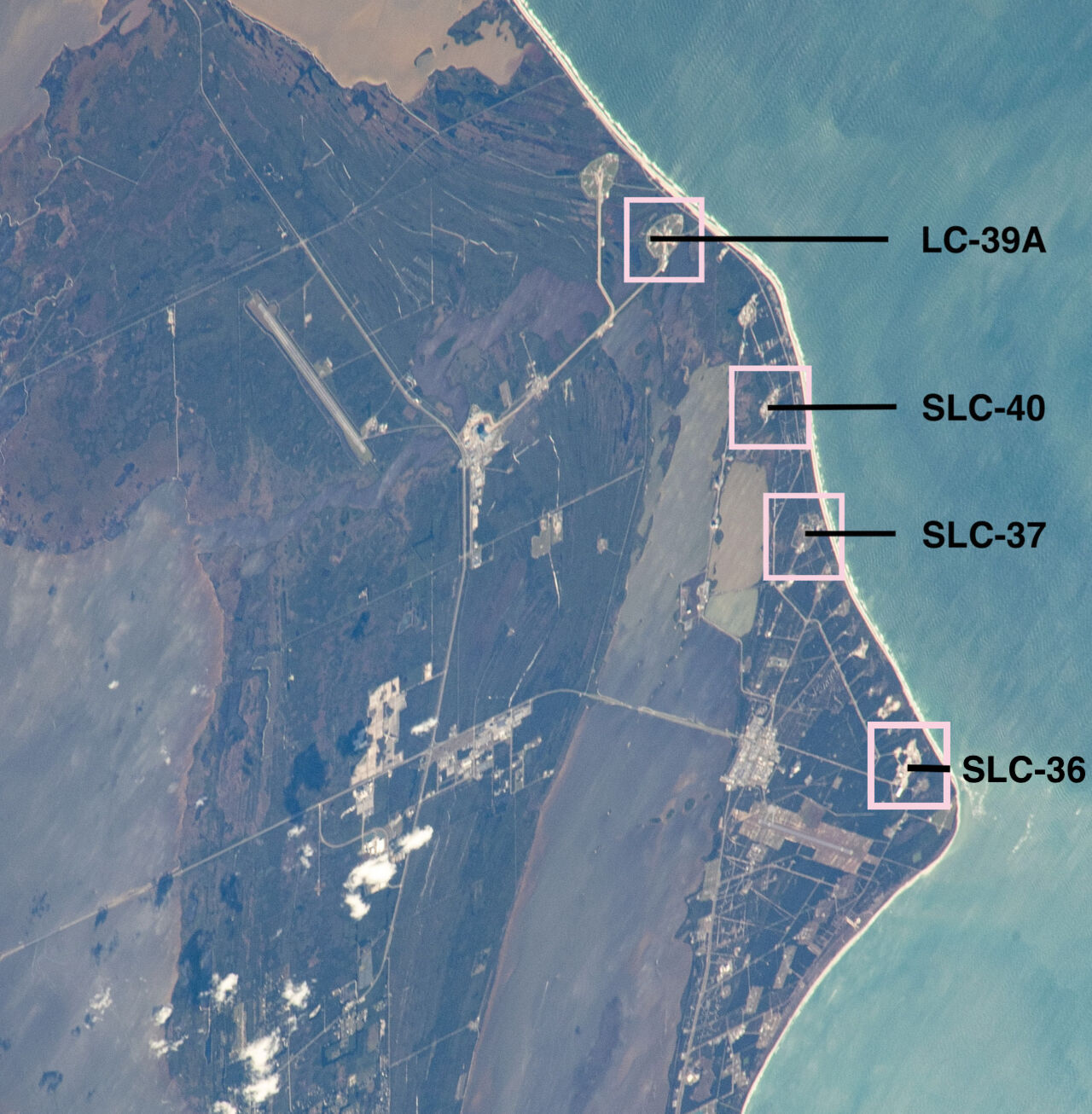
SpaceX launches Falcon 9 rockets from Pad 39A at NASA's Kennedy Space Center and from Pad 40 at Cape Canaveral Space Force Station. The company plans to develop Starship launch infrastructure at Pad 39A and Pad 37. United Launch Alliance flies Vulcan and Atlas V rockets from Pad 41, and Blue Origin will base its New Glenn rocket at Pad 36.

Enlarge / SpaceX launches Falcon 9 rockets from Pad 39A at NASA’s Kennedy Space Center and from Pad 40 at Cape Canaveral Space Force Station. The company plans to develop Starship launch infrastructure at Pad 39A and Pad 37. United Launch Alliance flies Vulcan and Atlas V rockets from Pad 41, and Blue Origin will base its New Glenn rocket at Pad 36.

NASA (labels by Ars Technica)

United Launch Alliance and Blue Origin are worried about SpaceX’s plans to launch its enormous Starship rocket from Florida.

In documents submitted to the Federal Aviation Administration last month, ULA and Blue Origin raised concerns about the impact of Starship launch operations on their own activities on Florida’s Space Coast. Blue Origin, Jeff Bezos’ space company, urged the federal government to consider capping the number of Starship launches and landings, test-firings, and other operations, and limiting SpaceX’s activities to particular times.

Elon Musk, founder and CEO of SpaceX, called Blue Origin’s filing with the FAA “an obviously disingenuous response. Not cool of them to try (for the third time) to impede SpaceX’s progress by lawfare.” We’ll get to that in a moment.

The FAA and SpaceX are preparing an environmental impact statement for launches and landings of the Super Heavy booster and Starship rocket at Launch Complex 39A at NASA’s Kennedy Space Center (KSC), while the US Space Force is working with SpaceX on a similar environmental review for Starship flights from Space Launch Complex 37 at nearby Cape Canaveral Space Force Station (CCSFS).

These reviews likely won’t be complete until late 2025, at the earliest, and only then will SpaceX be cleared to launch Starship from Florida. SpaceX also must construct launch infrastructure at both sites, which could take a couple of years. This is already underway at Launch Complex 39A.

Big rocket with a big footprint

During the environmental review process, the FAA should weigh how regular flights of the reusable Starship—as many as 120 launches per year, according to TechCrunch—will affect other launch providers operating at Cape Canaveral, ULA and Blue Origin said. SpaceX’s final proposed launch cadence from each site will be part of draft environmental assessments released for public comment as soon as the end of this year.

SpaceX plans to launch Starlink satellites, customer payloads, and missions to support NASA’s Artemis lunar landings from the launch pads in Florida. Getting a launch pad up and running in Florida is one of several schedule hurdles facing SpaceX’s program to develop a human-rated lunar lander version of Starship, alongside demonstrating orbital refueling.

Starship-Super Heavy launches and landings “are expected to have a greater environmental impact than any other launch system currently operating at KSC or CCSFS,” Blue Origin wrote. In its current configuration, Starship is the most powerful rocket in history, and SpaceX is developing a larger version standing 492 feet (150 meters) tall with nearly 15 million pounds (6,700 metric tons) of propellant. This larger variant is the one that will fly from Cape Canaveral.

“It’s a very, very large rocket, and getting bigger,” wrote Tory Bruno, ULA’s CEO, in a post on X. “That quantity of propellant requires an evacuation zone whenever fueled that includes other people’s facilities. A (weekly) launch has injurious sound levels all the way into town. The Cape isn’t meant for a monopoly.”

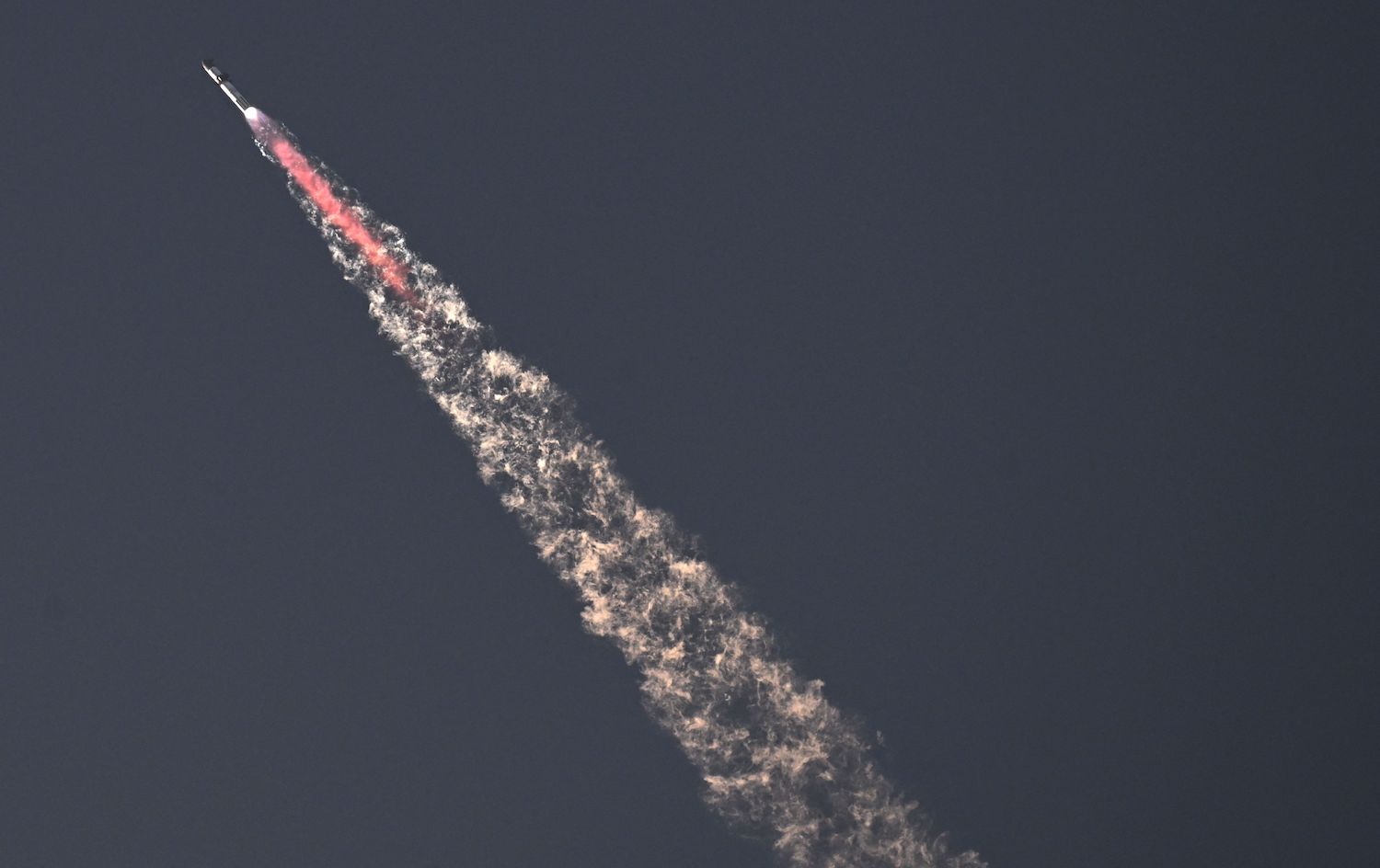
SpaceX's Starship rocket launches from Starbase during its second test flight in Boca Chica, Texas, on November 18, 2023.

Enlarge / SpaceX’s Starship rocket launches from Starbase during its second test flight in Boca Chica, Texas, on November 18, 2023.

At SpaceX’s privately owned Starbase launch site in South Texas, the evacuation zone is set at 1.5 miles (2.5 kilometers) when Starship and Super Heavy are filled with methane and liquid oxygen propellants. During an actual launch, the checkpoint is farther back at more than 3 miles (5 kilometers) from the pad.

“The total launch capacity of the Cape will go down if other providers are forced to evacuate their facilities whenever a vehicle is fueled,” Bruno wrote.

We don’t yet know the radius of the keep-out zones for Starship operations in Florida, but Blue Origin wrote that the impact of Starship activities in Florida “may be even greater than at Starbase,” presumably due to the larger rocket SpaceX plans to launch from Cape Canaveral. If this is the case, neighboring launch pads would need to be evacuated during Starship operations.

Purely based on the geography of Cape Canaveral, ULA seems to have the bigger worry. Its launch pad for the Vulcan and Atlas V rocket is located less than 2.2 miles (3.5 kilometers) from Launch Complex 39A (LC-39A). SpaceX’s proposal for up to 44 launches from LC-39A “will result in significant airspace and ground closures, result in acoustic impacts felt at nearby operations, and potentially produce debris, particulates, and property damage,” ULA said.

ULA said these hazards could prevent it from fulfilling its contracts to launch critical national security satellites for the US military.

“As the largest rocket in existence, an accident would inflict serious or even catastrophic damage, while normal launch operations would have a cumulative impact on structures, launch vehicle hardware, and other critical launch support equipment,” ULA said.

Here’s why SpaceX’s competitors are crying foul over Starship launch plans Read More »
spacex-video-teases-potential-starship-booster-“catch”-on-next-flight

SpaceX video teases potential Starship booster “catch” on next flight

A strong grip —

A booster landing would be a calculated risk to SpaceX’s launch tower infrastructure.

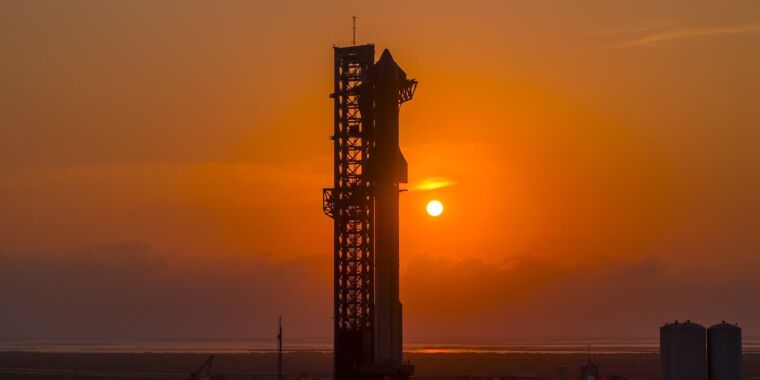
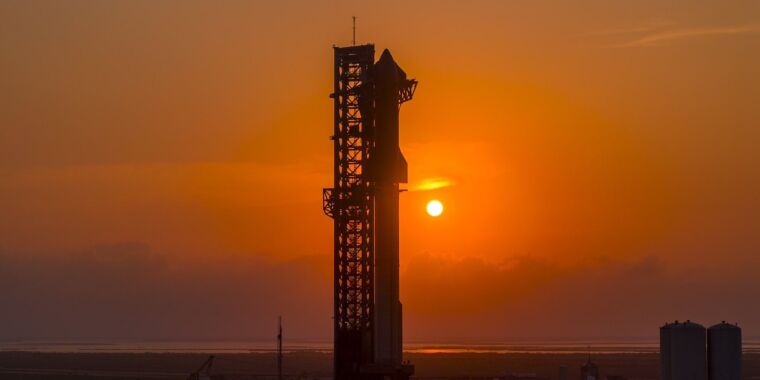
In early June, the rocket for SpaceX's fourth full-scale Starship test flight awaits liftoff from Starbase, the company's private launch base in South Texas.

Enlarge / In early June, the rocket for SpaceX’s fourth full-scale Starship test flight awaits liftoff from Starbase, the company’s private launch base in South Texas.

SpaceX

In a short video released Thursday, possibly to celebrate the US Fourth of July holiday with the biggest rocket’s red glare of them all, SpaceX provided new footage of the most recent test of its Starship launch vehicle.

This test, the fourth of the experimental rocket that NASA is counting on to land its astronauts on the Moon, and which one day may launch humans to Mars, took place on June 6. During the flight, the first stage of the rocket performed well during ascent and, after separating from the upper stage, made a controlled reentry into the Gulf of Mexico. The Starship upper stage appeared to make a nominal flight through space before making a controlled—if fiery—landing in the Indian Ocean.

The new video focuses mostly on the “Super Heavy” booster stage and its entry into the Gulf. There is new footage from a camera on top of the 71-meter-tall first stage as well as a nearby buoy at water level. The video from the buoy, in particular, shows the first stage making an upright landing into the ocean.

Starship fourth flight test.

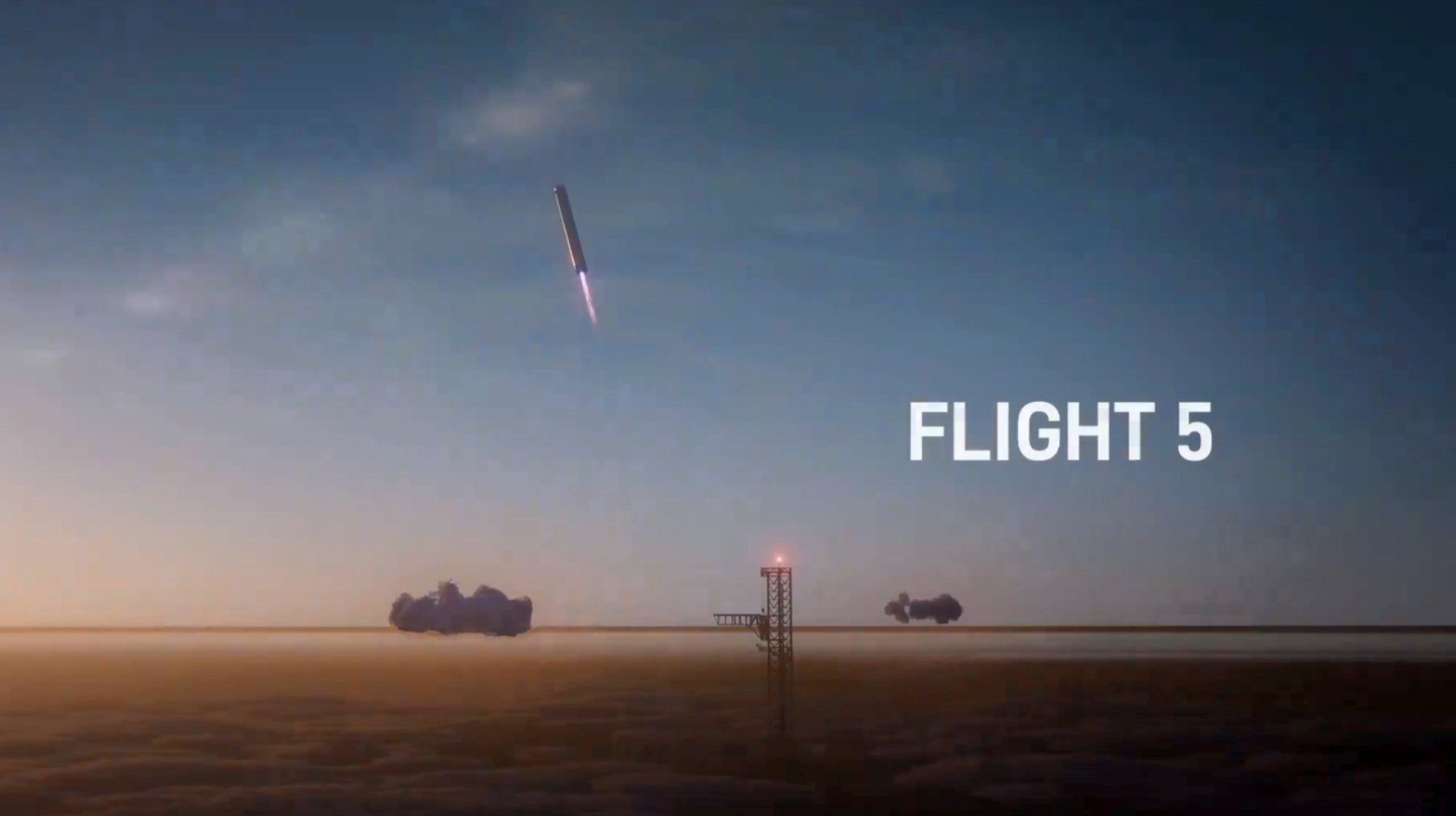
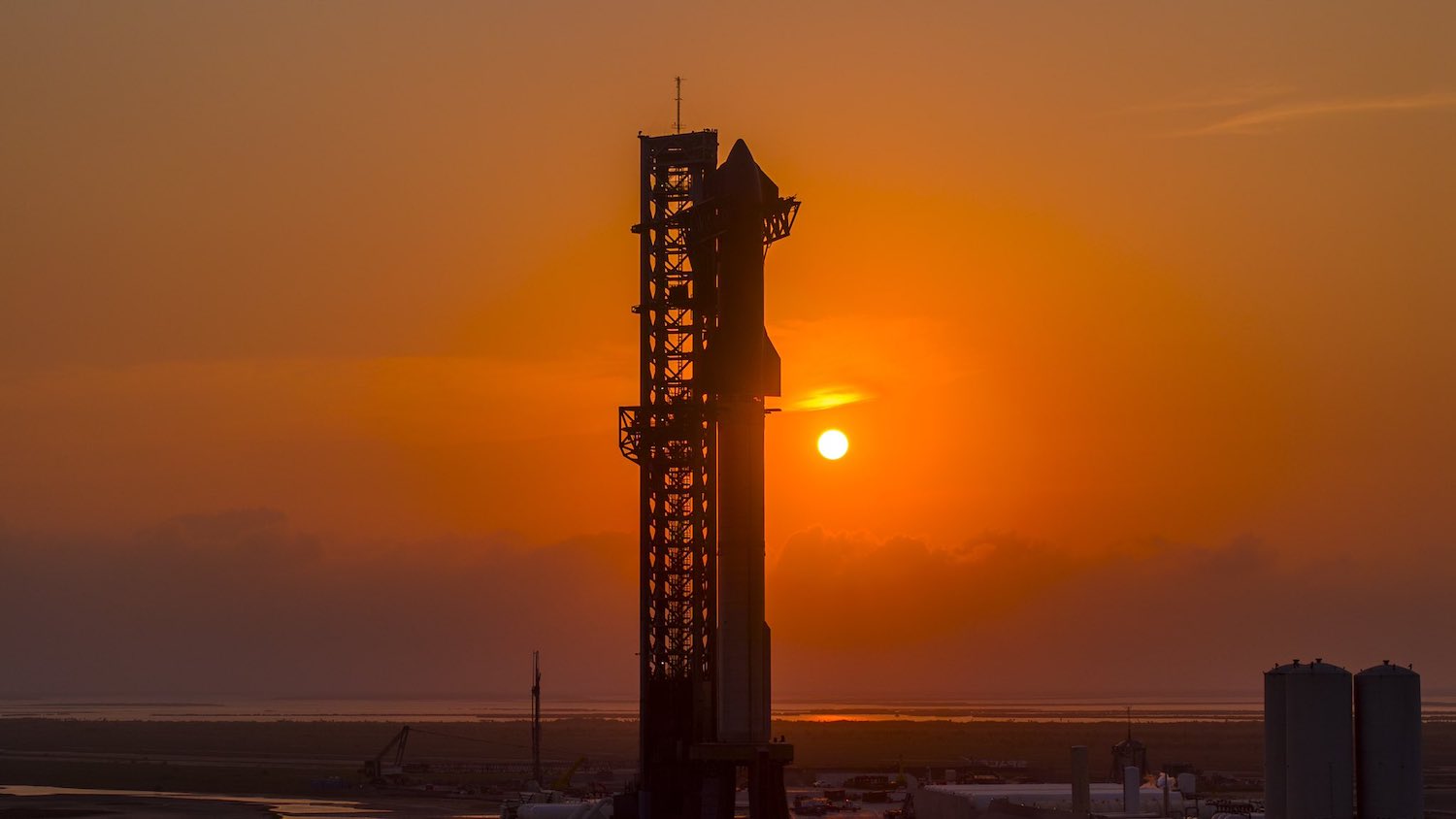
Perhaps most intriguingly, at the end of the video, SpaceX teases an image of Starship’s large launch tower in South Texas at the Starbase facility. Prominently featured are the two “chopsticks,” large arms intended to catch the first stage booster as it slowly descends back toward its launch pad.

Then, in simulated footage, the video shows Starship’s first stage descending back toward the launch tower with the title “Flight 5.” And then it fades out.

To land, or not to land?

This supports the idea that SpaceX is working toward attempting a Starship booster catch on its next flight test, which likely will occur later this summer. Doubtless, the company still has both technical and regulatory work before this can happen.

In the days immediately following the fourth flight test, SpaceX founder Elon Musk said it was the company’s goal to make such a landing attempt on the next launch. However, during a talk last week with local residents in south Texas, Starbase General Manager Kathy Lueders said this attempt might not occur on Flight 5.

However, the new video released Thursday indicates that a catch attempt is still on the table as a possibility, and perhaps even a likelihood. Such a landing would be both stunning visually, as well as a calculated risk to SpaceX’s launch tower infrastructure, as the booster likely would be landing with a few spare tons of methane and liquid oxygen propellant in its tanks.

If SpaceX decides to press ahead with the attempt, it must still obtain a launch and reentry license from the Federal Aviation Administration, which is tasked with ensuring the safety of people and property on the ground. It seems probable that the next test flight will not occur before August.

Flight 5 tease.

Enlarge / Flight 5 tease.

SpaceX

Meanwhile, activities at the South Texas launch site may well be curtailed for a couple of days as Hurricane Beryl enters the Gulf of Mexico later on Friday and then tracks toward the Texas coast early next week. The center of Beryl is expected to pass near or north of the launch site late on Sunday night or Monday, bringing winds and surges.

However, because Beryl is not expected to be a major hurricane in terms of wind speed, these impacts should not prove catastrophic to SpaceX facilities. Heavy rainfall and inland flooding in the low-lying Starbase area is also a possibility on Monday and Tuesday before the storm pulls away.

SpaceX video teases potential Starship booster “catch” on next flight Read More »
nasa-selects-spacex-to-launch-a-gamma-ray-telescope-into-an-unusual-orbit

NASA selects SpaceX to launch a gamma-ray telescope into an unusual orbit

Plane change —

The Falcon 9 rocket is pretty much the only rocket available to launch this mission.

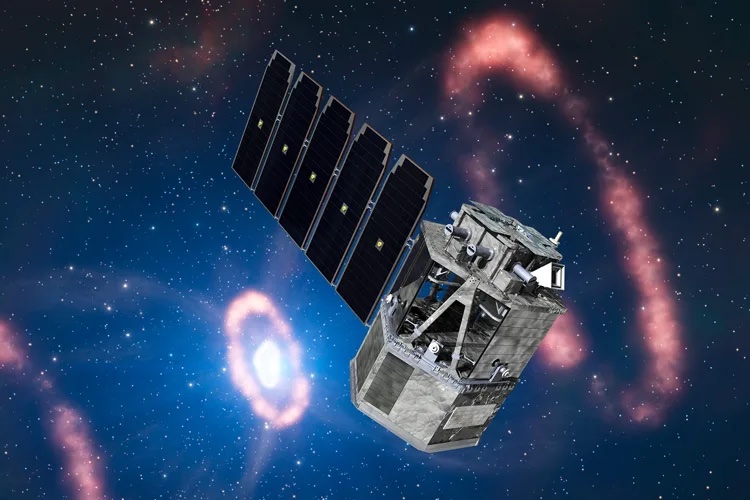
Artist's illustration of the COSI spacecraft.

Enlarge / Artist’s illustration of the COSI spacecraft.

A small research satellite designed to study the violent processes behind the creation and destruction of chemical elements will launch on a SpaceX Falcon 9 rocket in 2027, NASA announced Tuesday.

The Compton Spectrometer and Imager (COSI) mission features a gamma-ray telescope that will scan the sky to study gamma-rays emitted by the explosions of massive stars and the end of their lives. These supernova explosions generate reactions that fuse new atomic nuclei, a process called nucleosynthesis, of heavier elements.

Using data from COSI, scientists will map where these elements are forming in the Milky Way galaxy. COSI’s observations will also yield new insights into the annihilation of positrons, the antimatter equivalent of electrons, which appear to be originating from the center of the galaxy. Another goal for COSI will be to rapidly report the location of short gamma-ray bursts, unimaginably violent explosions that flash and then fade in just a couple of seconds. These bursts are likely caused by merging neutron stars.

The COSI mission will be sensitive to so-called soft gamma rays, a relatively unexplored segment of the electromagnetic spectrum. The telescope is based on a design scientists have flown on research balloon flights.

NASA selected COSI in a competition for funding to become the next mission in the agency’s Explorers program in 2021. Earlier this year, NASA formally approved the mission to proceed into development for launch in August 2027, with an overall budget in the range of $267 million to $294 million, according to NASA budget documents.

From Florida to the equator

COSI is a relatively small spacecraft, built by Northrop Grumman and weighing less than a ton, but it will ride alone into orbit on top of a Falcon 9 rocket. That’s because COSI will operate in an unusual orbit about 340 miles (550 kilometers) over the equator, an orbit chosen to avoid interference from radiation over the South Atlantic Anomaly, the region where the inner Van Allen radiation belt comes closest to Earth’s surface.

SpaceX’s Falcon 9 will deliver COSI directly into its operational orbit after taking off from Cape Canaveral, Florida, then will fire its upper stage in a sideways maneuver to make a turn at the equator. This type of maneuver, called a plane change, takes a lot of energy, or delta-V, on par with the delta-V required to put a heavier satellite into a much higher orbit.

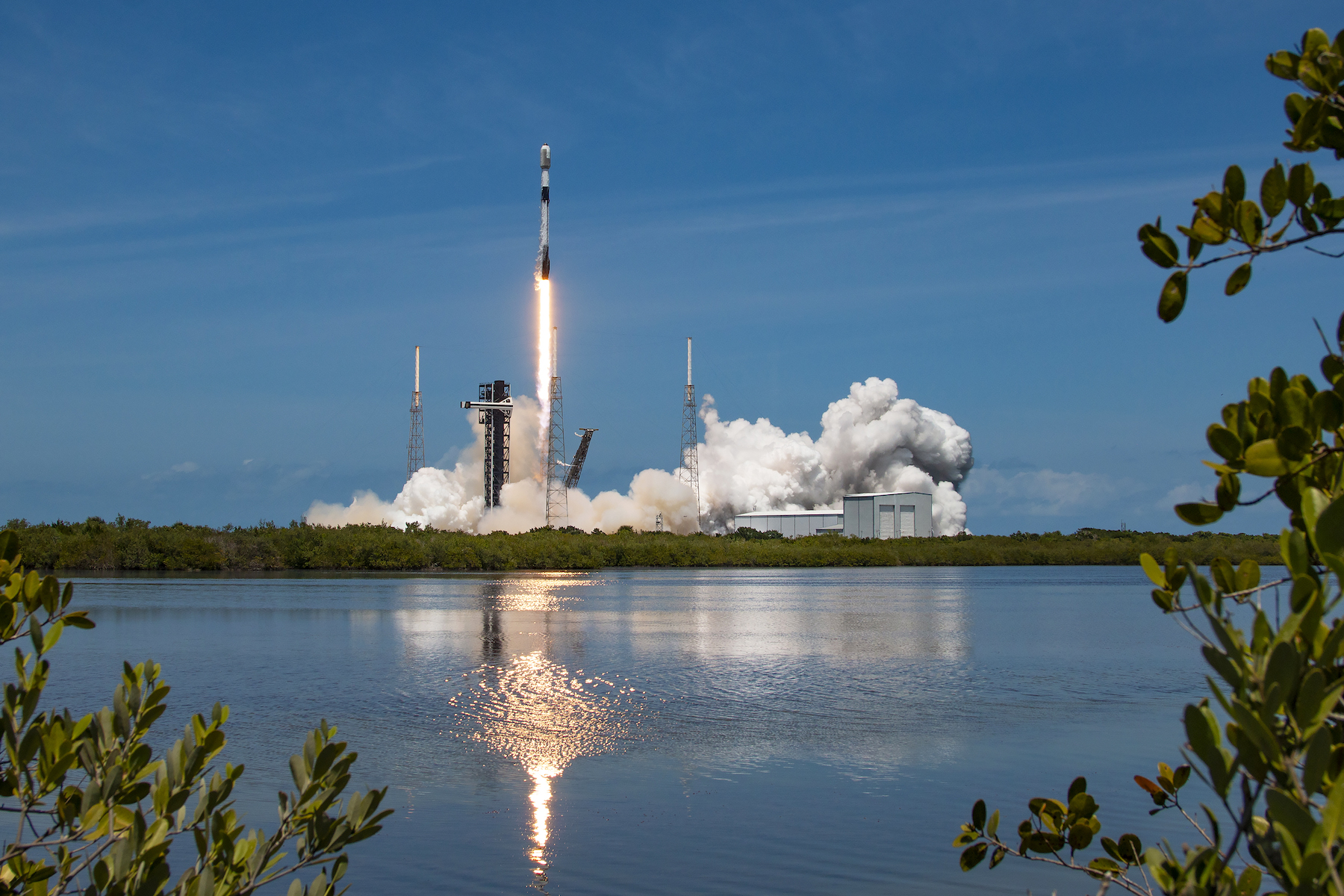
File photo of a Falcon 9 launch on May 6 from Cape Canaveral Space Force Station, Florida.

Enlarge / File photo of a Falcon 9 launch on May 6 from Cape Canaveral Space Force Station, Florida.

SpaceX

NASA awarded SpaceX a firm-fixed-price contract valued at $69 million to launch the COSI mission. This is about a 37 percent increase in the price NASA paid SpaceX in a 2019 contract for launch of the similarly sized IXPE X-ray telescope into a similar orbit as COSI. The higher price is at least partially explained by inflation.

The space agency didn’t have much of a decision to make in the COSI launch contract. The Falcon 9 is the only rocket certified by NASA that can launch a satellite with the mass of COSI into its equatorial orbit.

In the next couple of years, NASA hopes United Launch Alliance’s Vulcan rocket and Blue Origin’s New Glenn launcher will be in the mix to compete for launch contracts for missions like COSI. All of ULA’s remaining Atlas V rockets are already booked by other customers.

NASA selects SpaceX to launch a gamma-ray telescope into an unusual orbit Read More »
chinese-space-firm-unintentionally-launches-its-new-rocket

Chinese space firm unintentionally launches its new rocket

What goes up must come down —

Space Pioneer had been prepping the vehicle for its debut launch later this summer.

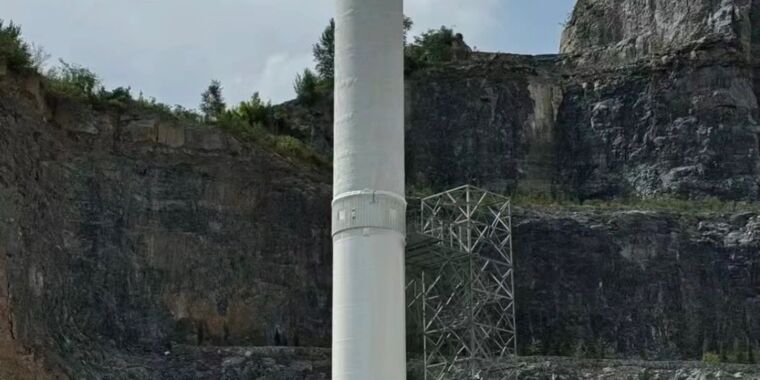
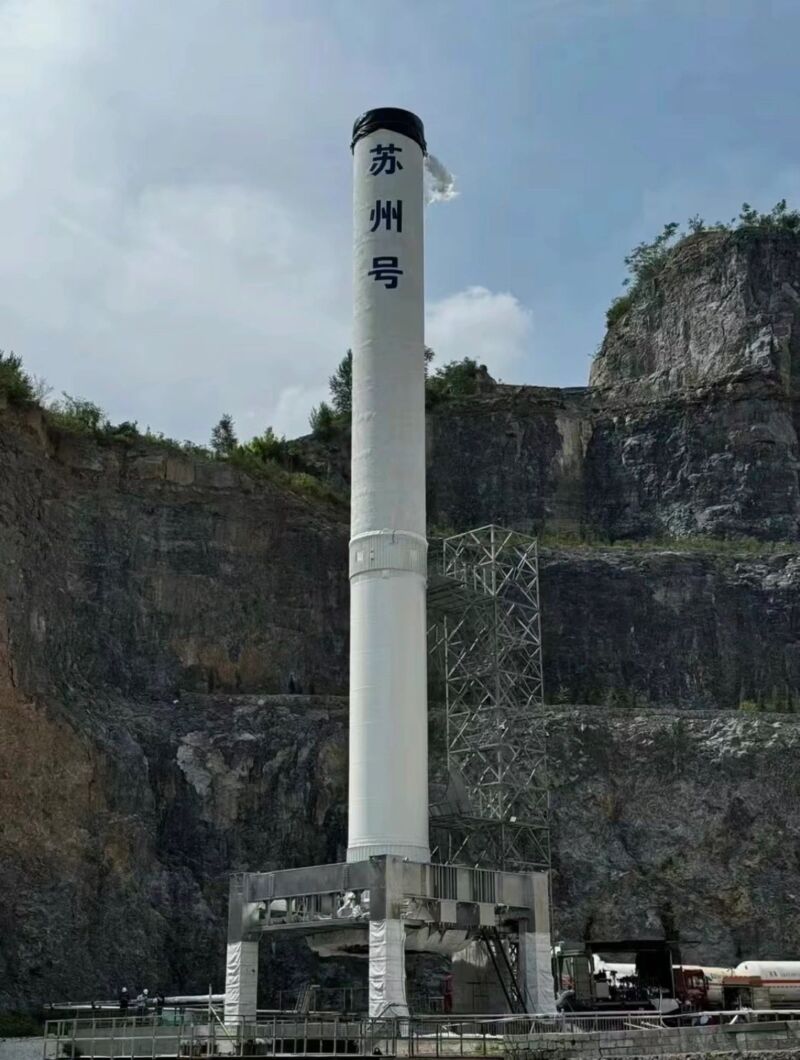
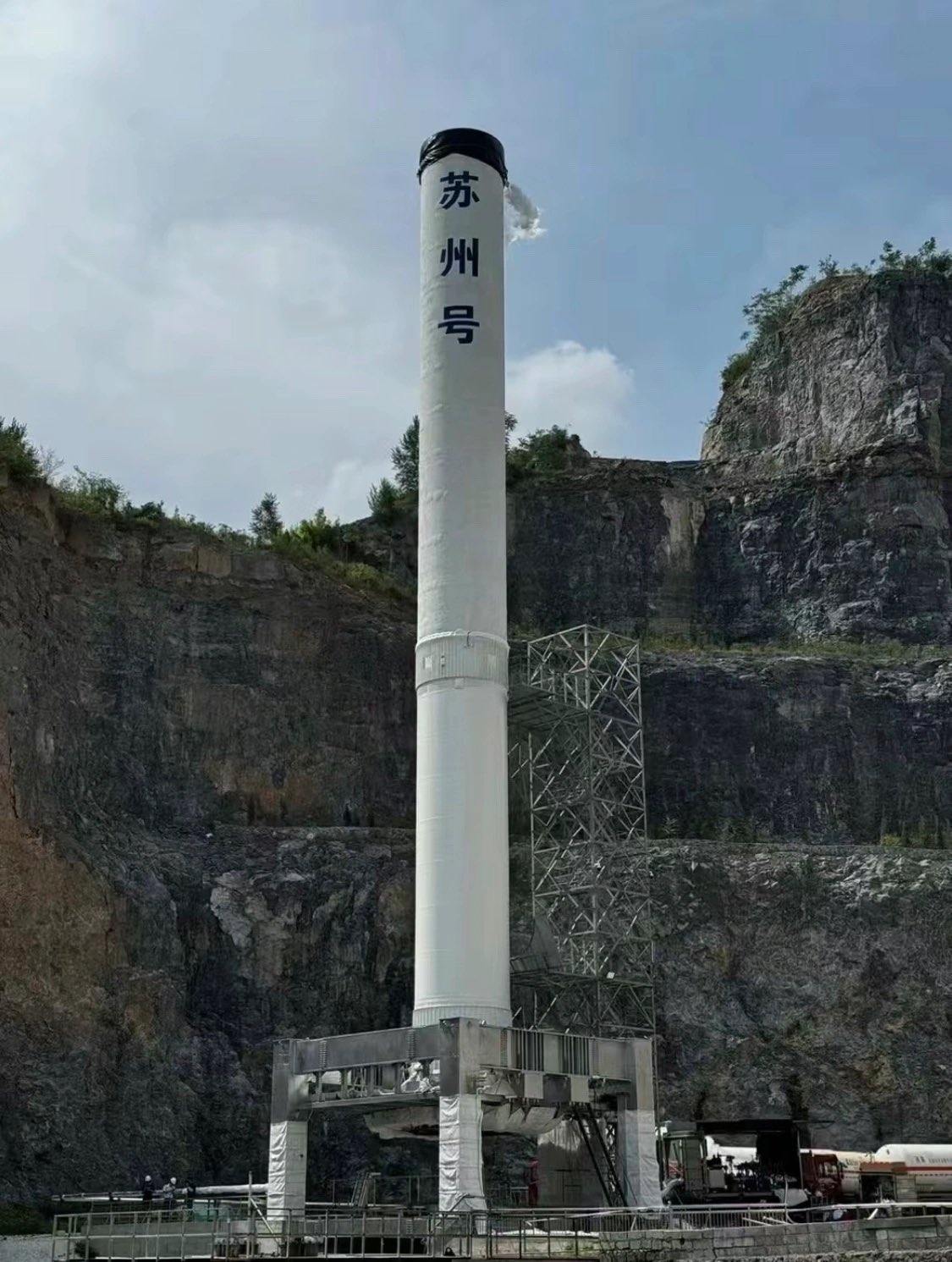
The Tianlong-3 rocket as seen on its test stand before the anomaly.

Enlarge / The Tianlong-3 rocket as seen on its test stand before the anomaly.

Space Pioneer

One of the most promising Chinese space startups, Space Pioneer, experienced a serious anomaly this weekend while testing the first stage of its Tianlong-3 rocket near the city of Gongyi.

The rocket was undergoing a static fire test of the stage, in which a vehicle is clamped to a test stand while its engines are ignited, when the booster broke free. According to a statement from the company, the rocket was not sufficiently clamped down and blasted off from the test stand “due to a structural failure.”

Video of the accidental ascent showed the rocket rising several hundred meters into the sky before it crashed explosively into a mountain 1.5 km away from the test site. (See various angles of the accident here, on the social media site X, or on Weibo.) The statement from Space Pioneer sought to downplay the incident, saying it had implemented safety measures before the test, and there were no casualties as a result of the accident. “The test site is far away from the urban area of ​​Gongyi,” the company said.

This is not entirely true, however. Located in the Henan province in eastern China, alongside the Yellow River, Gongyi has a population of about 800,000 people. The test stand is only about 5 km away from the city’s downtown and less than a kilometer from a smaller village.

Such accidents are rare in the launch industry but not unprecedented. Typically, during a static fire test, the mass of propellant on board a vehicle combined with strong clamps hold a rocket down. However, in 1952, a US Viking rocket broke loose of its moorings at White Sands Missile Range in New Mexico. It crashed 6 km downrange of the launch site without casualties.

How big of a setback?

It is unclear how big of a setback this will be for Space Pioneer, a quasi-private company founded in 2019. A little more than a year ago, Space Pioneer became the first Chinese company to reach orbit with a liquid-fueled rocket. It did so, impressively, on the first attempt of its small Tianlong-2 rocket. This was a notable achievement, but the rocket’s engines were provided by a Chinese state-operated firm, the Academy of Aerospace Liquid Propulsion Technology, rather than the private company.

For the larger Tianlong-3 rocket, Space Pioneer says it is manufacturing its own kerosene-fueled engines, known as TH-12. (They appear to have performed as expected this weekend.) Nine of these engines will power the Tianlong-3 rocket, which is intended to have a thrust of 17 tons to low-Earth orbit. The rocket’s design and the planned reuse of its first stage mimic the Falcon 9 rocket developed by SpaceX.

Space Pioneer had been prepping the vehicle for its debut launch later this summer or fall—and first-stage static-fire tests are indicative of a rocket’s final testing phase before liftoff. The company’s statement did not set a new timeline for a launch attempt but said it would complete the fault analysis “as soon as possible.”

China has the most vibrant commercial space industry in the world after the United States. Nearly a decade ago, the country’s leadership committed to sharing state-owned technology with companies that raised private funding, seeking to emulate the commercial success of SpaceX and other US companies.

Today, there are dozens of Chinese firms developing rockets, satellites, and other spaceflight products. Space Pioneer has been among the most promising, having raised more than $400 million since its inception five years ago.

Chinese space firm unintentionally launches its new rocket Read More »
nasa-and-spacex-misjudged-the-risks-from-reentering-space-junk

NASA and SpaceX misjudged the risks from reentering space junk

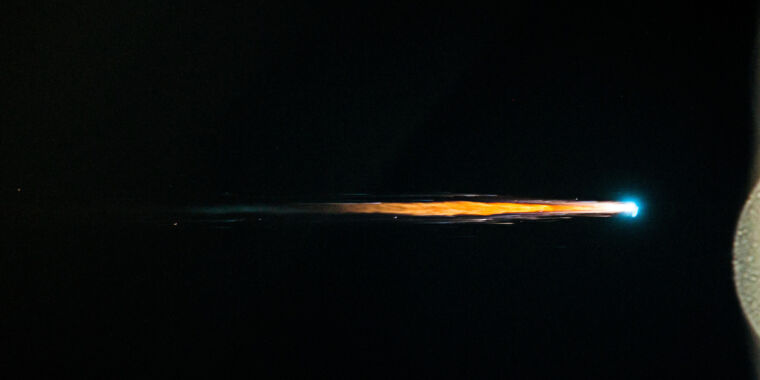
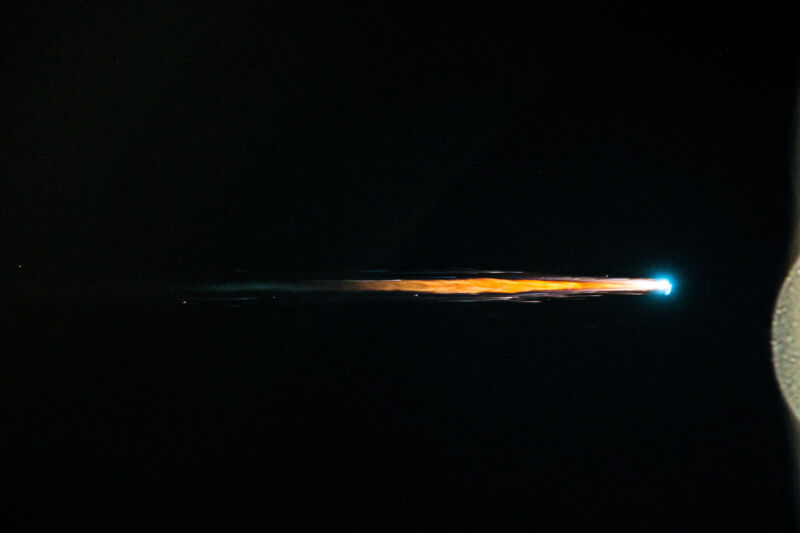
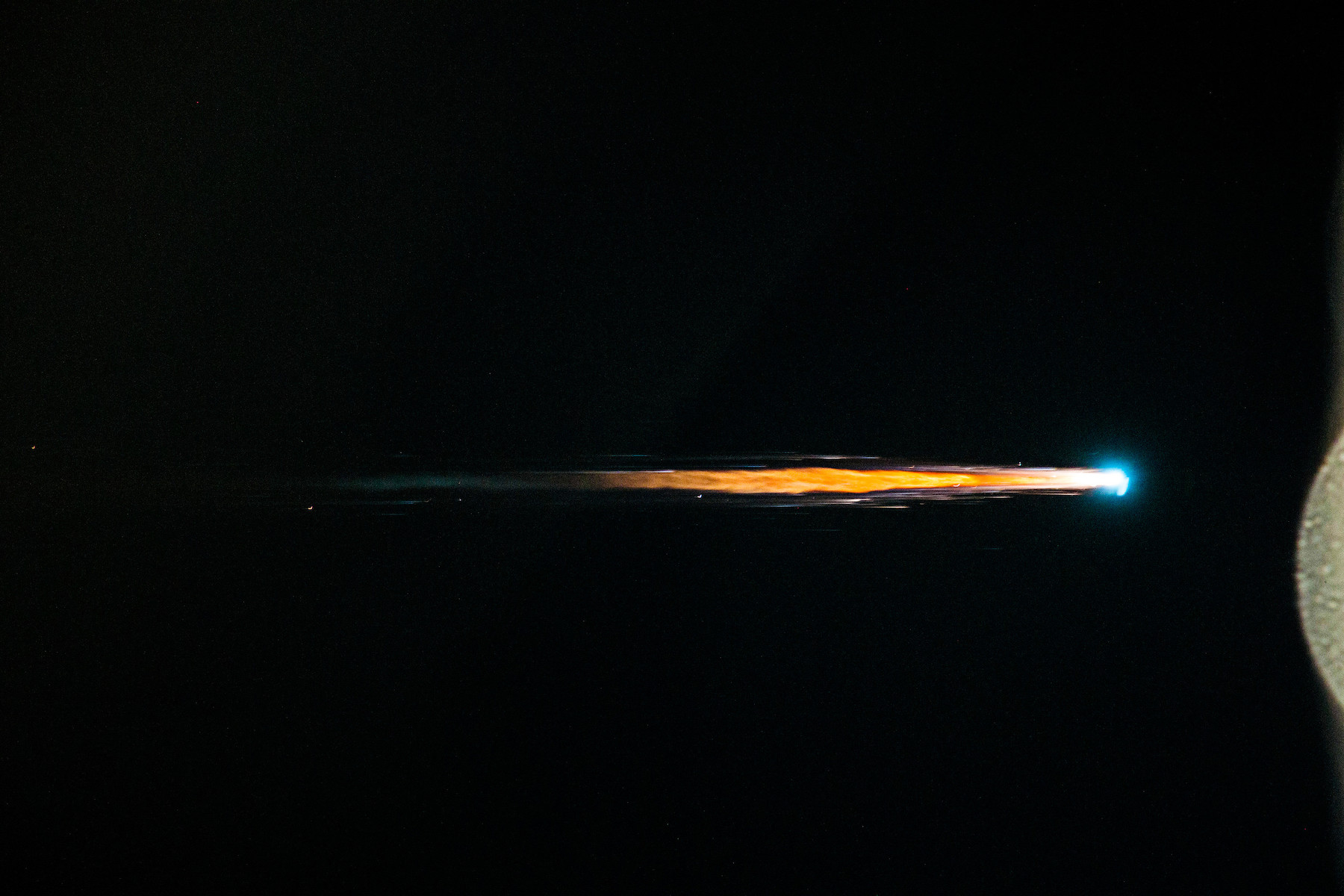
A European ATV cargo freighter reenters the atmosphere over the Pacific Ocean in 2013.

Enlarge / A European ATV cargo freighter reenters the atmosphere over the Pacific Ocean in 2013.

Since the beginning of the year, landowners have discovered several pieces of space junk traced to missions supporting the International Space Station. On all of these occasions, engineers expected none of the disposable hardware would survive the scorching heat of reentry and make it to Earth’s surface.

These incidents highlight an urgency for more research into what happens when a spacecraft makes an uncontrolled reentry into the atmosphere, according to engineers from the Aerospace Corporation, a federally funded research center based in El Segundo, California. More stuff is getting launched into space than ever before, and the trend will continue as companies deploy more satellite constellations and field heavier rockets.

“The biggest immediate need now is just to do some more work to really understand this whole process and to be in a position to be ready to accommodate new materials, new operational approaches as they happen more quickly,” said Marlon Sorge, executive director of Aerospace’s Center for Orbital and Reentry Debris Studies. “Clearly, that’s the direction that spaceflight is going.”

Ideally, a satellite or rocket body at the end of its life could be guided to a controlled reentry into the atmosphere over a remote part of the ocean. But this is often cost-prohibitive because it would require carrying extra fuel for the de-orbit maneuvers, and in many cases, a spacecraft doesn’t have any rocket thrusters at all.

In March, a fragment from a battery pack jettisoned from the space station punched a hole in the roof of a Florida home, a rare instance of terrestrial property damage attributed to a piece of space junk. In May, a 90-pound chunk of a SpaceX Dragon spacecraft that departed the International Space Station fell on the property of a “glamping” resort in North Carolina. At the same time, a homeowner in a nearby town found a smaller piece of material that also appeared to be from the same Dragon mission.

These events followed the discovery in April of another nearly 90-pound piece of debris from a Dragon capsule on a farm in the Canadian province of Saskatchewan. NASA and SpaceX later determined the debris fell from orbit in February, and earlier this month, SpaceX employees came to the farm to retrieve the wreckage, according to CBC.

Pieces of a Dragon spacecraft also fell over Colorado last year, and a farmer in Australia found debris from a Dragon capsule on his land in 2022.

NASA and SpaceX misjudged the risks from reentering space junk Read More »
rocket-report:-china-flies-reusable-rocket-hopper;-falcon-heavy-dazzles

Rocket Report: China flies reusable rocket hopper; Falcon Heavy dazzles

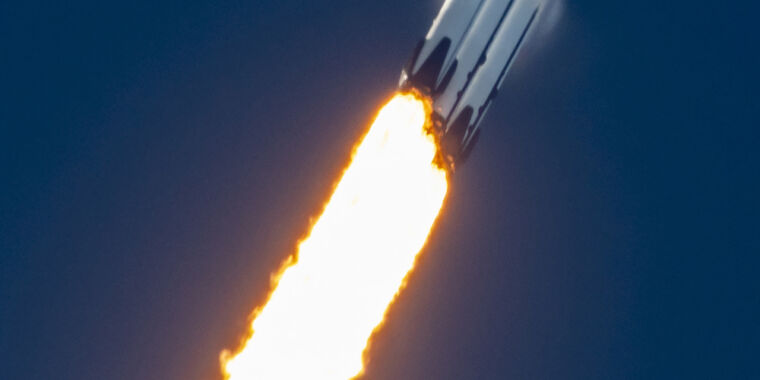
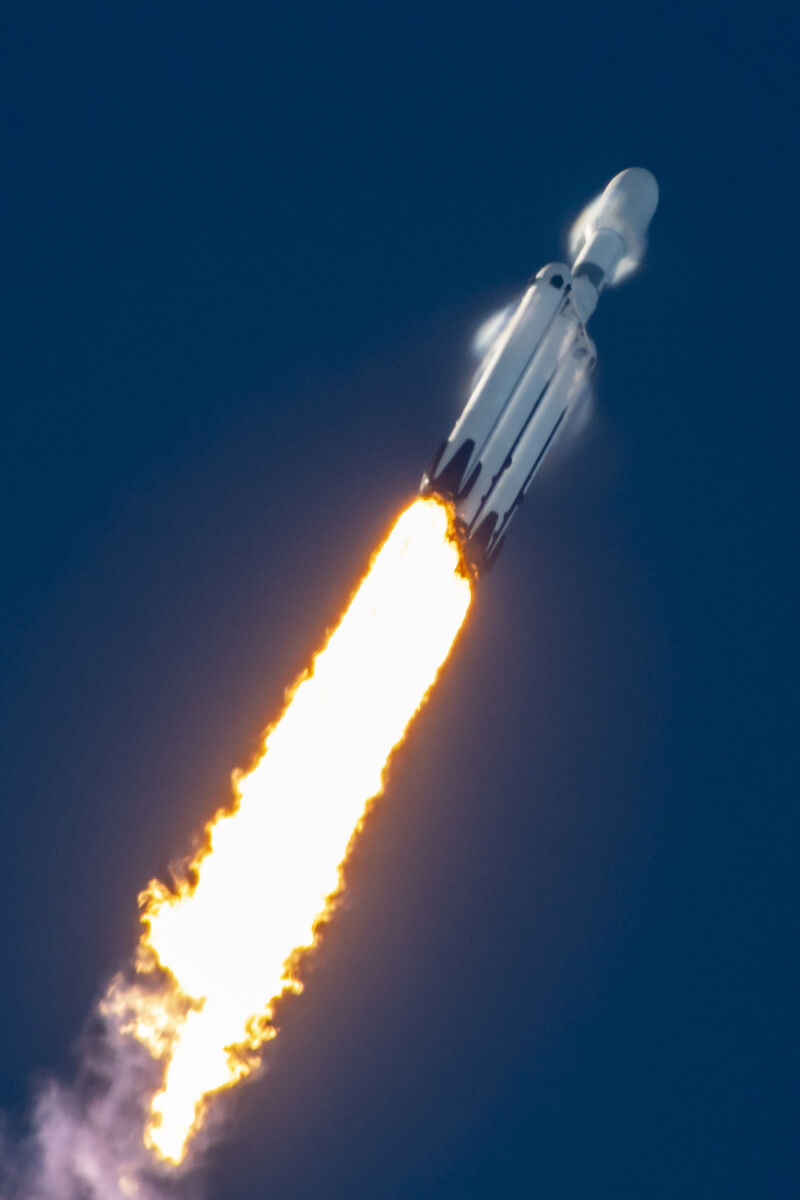
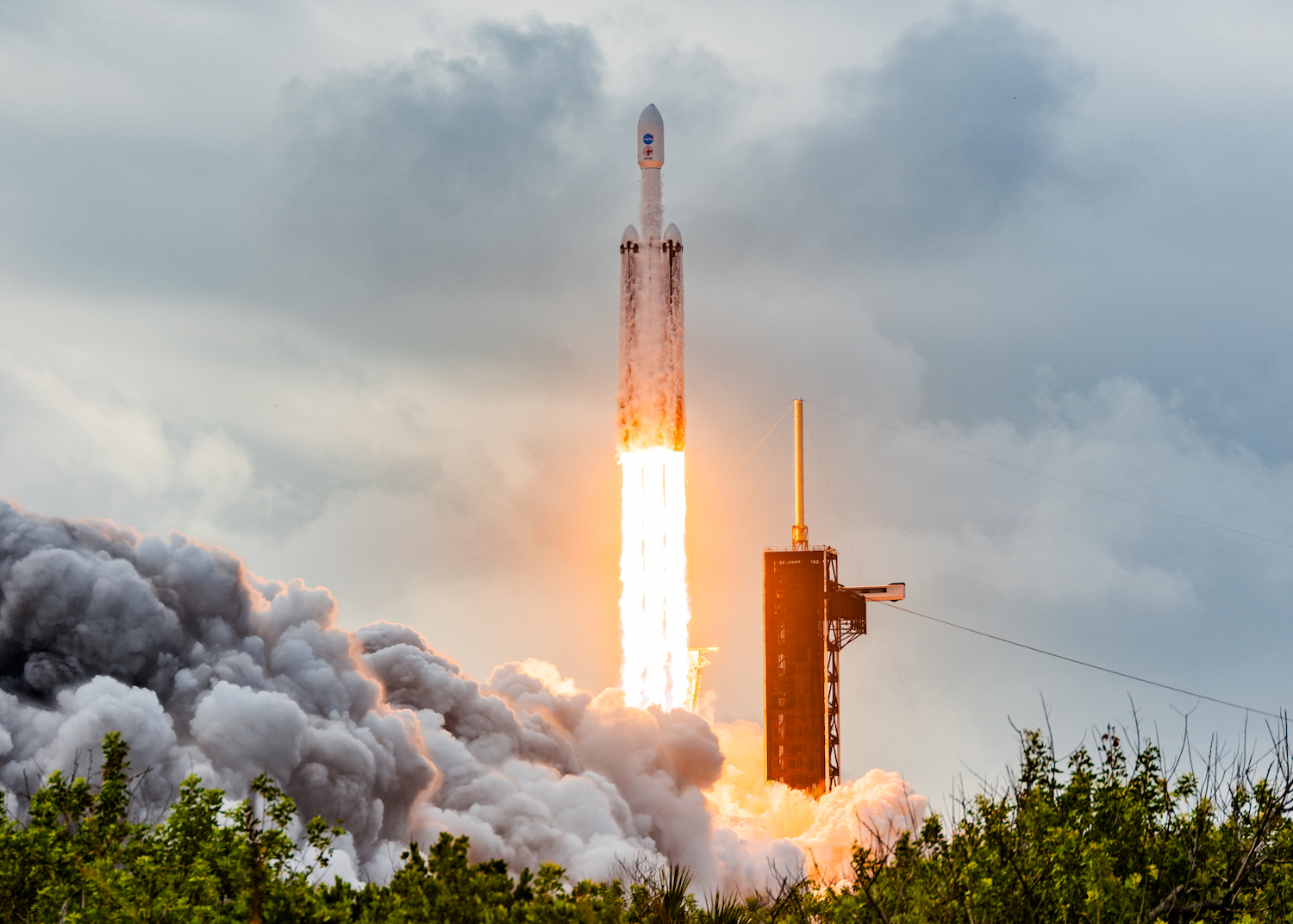
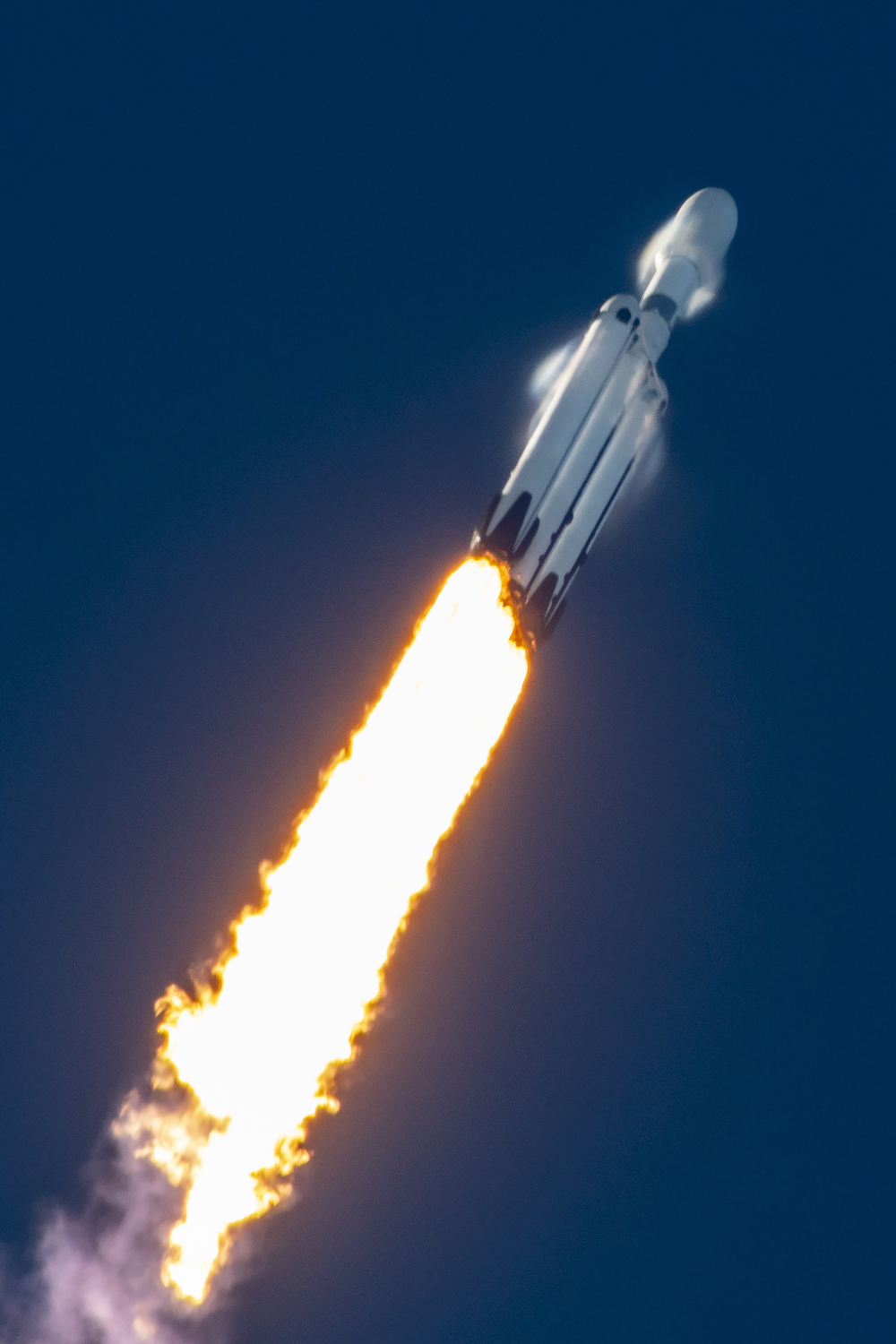
SpaceX's 10th Falcon Heavy rocket climbs into orbit with a new US government weather satellite.

Enlarge / SpaceX’s 10th Falcon Heavy rocket climbs into orbit with a new US government weather satellite.

Welcome to Edition 6.50 of the Rocket Report! SpaceX launched its 10th Falcon Heavy rocket this week with the GOES-U weather satellite for NOAA, and this one was a beauty. The late afternoon timing of the launch and atmospheric conditions made for great photography. Falcon Heavy has become a trusted rocket for the US government, and its next flight in October will deploy NASA’s Europa Clipper spacecraft on the way to explore one of Jupiter’s enigmatic icy moons.

As always, we welcome reader submissions, and if you don’t want to miss an issue, please subscribe using the box below (the form will not appear on AMP-enabled versions of the site). Each report will include information on small-, medium-, and heavy-lift rockets as well as a quick look ahead at the next three launches on the calendar.

Sir Peter Beck dishes on launch business. Ars spoke with the recently knighted Peter Beck, founder and CEO of Rocket Lab, on where his scrappy company fits in a global launch marketplace dominated by SpaceX. Rocket Lab racked up the third-most number of orbital launches by any US launch company (it’s headquartered in California but primarily assembles and launches rockets in New Zealand). SpaceX’s rideshare launch business with the Falcon 9 rocket is putting immense pressure on small launch companies like Rocket Lab. However, Beck argues his Electron rocket is a bespoke solution for customers desiring to put their satellite in a specific place at a specific time, a luxury they can’t count on with a SpaceX rideshare.

Ruthlessly efficient … A word that Beck returned to throughout his interview with Ars was “ruthless.” He said Rocket Lab’s success is a result of the company being “ruthlessly efficient and not making mistakes.” At one time, Rocket Lab was up against Virgin Orbit in the small launch business, and Virgin Orbit had access to capital through billionaire Richard Branson. Now, SpaceX is the 800-pound gorilla in the market. “We have a saying here at Rocket Lab that we have no money, so we have to think. We’ve never been in a position to outspend our competitors. We just have to out-think them. We have to be lean and mean.”

Firefly reveals plans for new launch sites. Firefly Aerospace plans to use the state of Virginia-owned launch pad at NASA’s Wallops Flight Facility for East Coast launches of its Alpha small-satellite rocket, Aviation Week reports. The company plans to use Pad 0A for US military and other missions, particularly those requiring tight turnaround between procurement and launch. This is the same launch pad previously used by Northrop Grumman’s Antares rocket, and it’s the soon-to-be home of the Medium Launch Vehicle (MLV) jointly developed by Northrop and Firefly. The launch pad will be configured for Alpha launches beginning in 2025, according to Firefly, which previously planned to develop an Alpha launch pad at Cape Canaveral Space Force Station in Florida. Now, Alpha and MLV rockets will fly from the same site on the East Coast, while Alpha will continue launching from the West Coast at Vandenberg Space Force Base, California.

Hello, Sweden… A few days after the announcement for launches from Virginia, Firefly unveiled a collaborative agreement with Swedish Space Corporation to launch Alpha rockets from the Esrange Space Center in Sweden as soon as 2026. Esrange has been the departure point for numerous suborbital and sounding rocket for nearly 50 years, but the spaceport is being upgraded for orbital satellite launches. A South Korean startup named Perigee Aerospace announced in May it signed an agreement to be the first user of Esrange’s orbital launch capability. Firefly is the second company to make plans to launch satellites from the remote site in northern Sweden. (submitted by Ken the Bin and brianrhurley)

The easiest way to keep up with Eric Berger’s space reporting is to sign up for his newsletter, we’ll collect his stories in your inbox.

China hops closer to reusable rockets. The Shanghai Academy of Spaceflight Technology (SAST), part of China’s apparatus of state-owned aerospace companies, has conducted the country’s highest altitude launch and landing test so far as several teams chase reusable rocket capabilities, Space News reports. A 3.8-meter-diameter (9.2-foot) test article powered by three methane liquid-oxygen engines lifted off from the Gobi Desert on June 23 and soared to an altitude of about 12 kilometers (7.5 miles) before setting down successfully for a vertical propulsive touchdown on landing legs at a nearby landing area. SAST will follow up with a 70-kilometer (43.5-mile) suborbital test using grid fins for better control. A first orbital flight of the new reusable rocket is planned for 2025.

Lots of players … If you don’t exclusively follow China’s launch sector, you should be forgiven for being unable to list all the companies working on new reusable rockets. Late last year, a Chinese startup named iSpace flew a hopper rocket testbed to an altitude of several hundred meters as part of a development program for the company’s upcoming partially reusable Hyperbola 2 rocket. A company named Space Pioneer plans to launch its medium-class Tianlong 3 rocket for the first time later this year. Tianlong 3 looks remarkably like SpaceX’s Falcon 9, and its first stage will eventually be made reusable. China recently test-fired engines for the government’s new Long March 10, a partially reusable rocket planned to become China’s next-generation crew launch vehicle. These are just a few of the reusable rocket programs in China. (submitted by Ken the Bin)

Spanish launch startup invests in Kourou. PLD Space says it is ready to start construction at a disused launch complex at the Guiana Space Center in Kourou, French Guiana. The Spanish launch startup announced this week a 10 million euro ($10.7 million) investment in the launch complex for its Miura 5 rocket, with preparations of the site set to begin “after the summer.” The launch pad was previously used by the French Diamant rocket in the 1970s and is located several miles away from the launch pads used by the European Ariane 6 and Vega rockets. PLD Space is on track to become the first fully commercial company to launch from the spaceport in South America.

Free access to space … Also this week, PLD Space announced a new program to offer space aboard the first two flights of its Miura 5 rocket for free, European Spaceflight reports. The two-stage Miura 5 rocket will be capable of delivering about a half-ton of payload mass into a Sun-synchronous orbit. PLD Space will offer free launch services aboard the first two Miura 5 flights, which are expected to take place in late 2025 and early 2026. The application process will close on July 30, and winning proposals will be announced on November 30. (submitted by Ken the Bin and EllPeaTea)

Rocket Report: China flies reusable rocket hopper; Falcon Heavy dazzles Read More »
nasa-will-pay-spacex-nearly-$1-billion-to-deorbit-the-international-space-station

NASA will pay SpaceX nearly $1 billion to deorbit the International Space Station

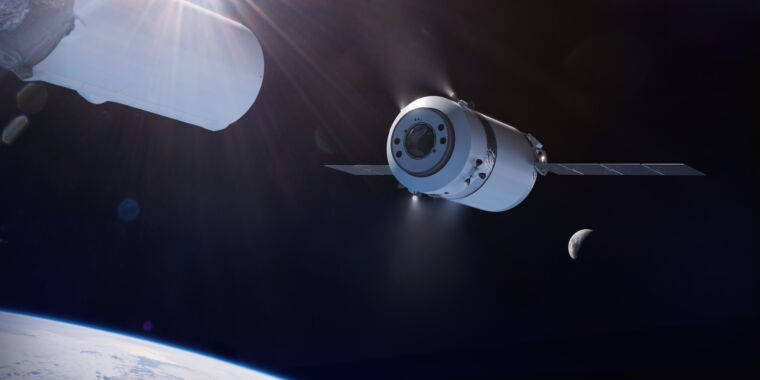
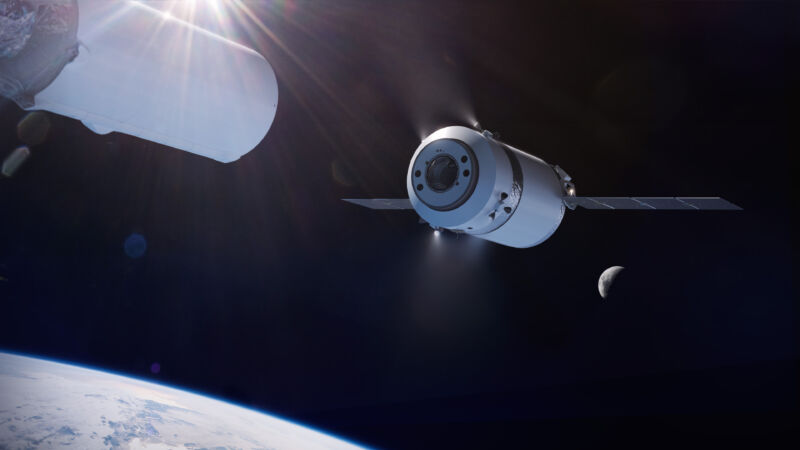
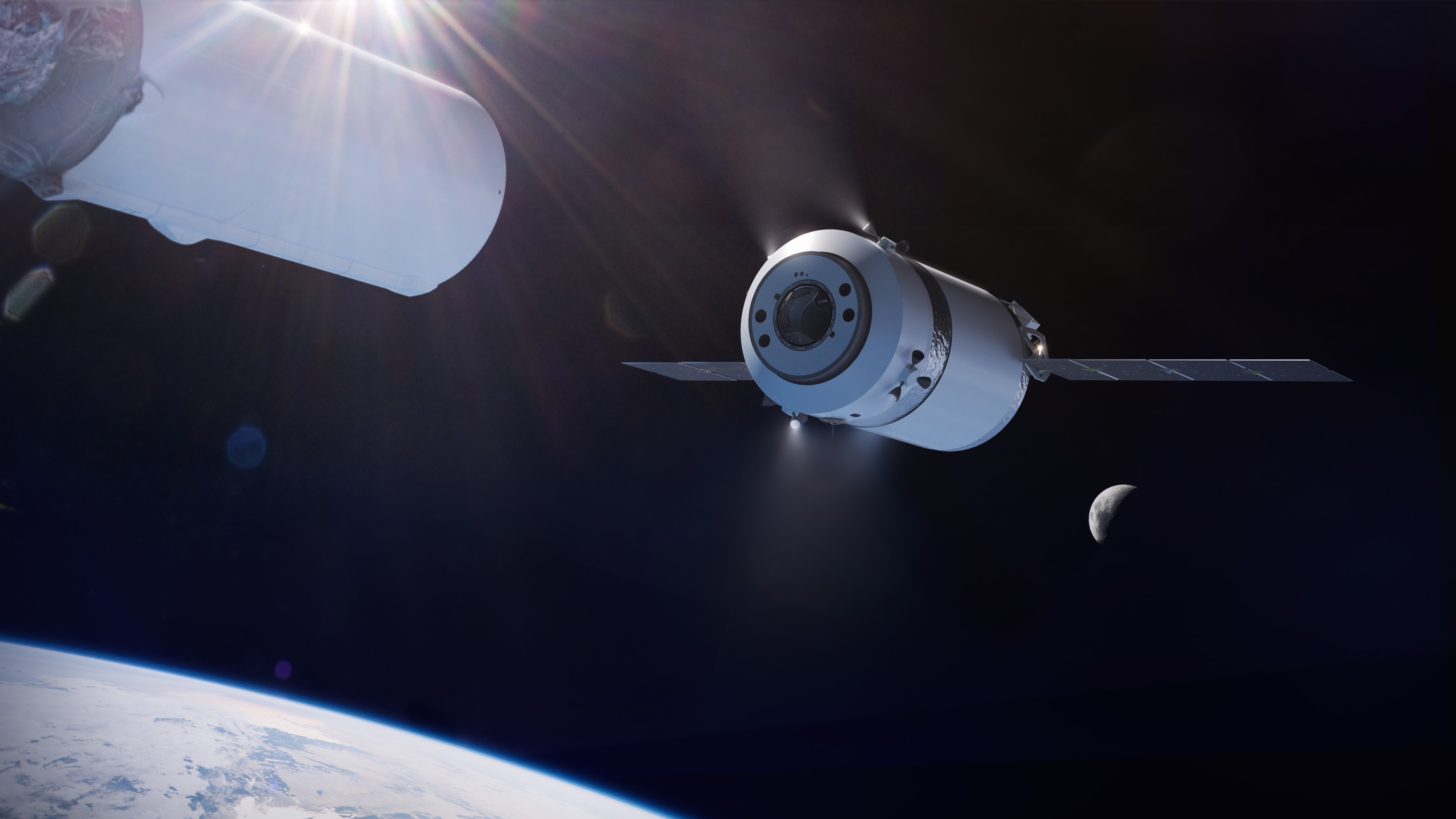
Illustration of the SpaceX Dragon XL as it is deployed from the Falcon Heavy's second stage in high Earth orbit on its way to the Gateway in lunar orbit.

Enlarge / Illustration of the SpaceX Dragon XL as it is deployed from the Falcon Heavy’s second stage in high Earth orbit on its way to the Gateway in lunar orbit.

SpaceX

NASA has awarded an $843 million contract to SpaceX to develop a “US Deorbit Vehicle.” This spacecraft will dock to the International Space Station in 2029 and then ensure the large facility makes a controlled reentry through Earth’s atmosphere before splashing into the ocean in 2030.

“Selecting a US Deorbit Vehicle for the International Space Station will help NASA and its international partners ensure a safe and responsible transition in low Earth orbit at the end of station operations,” said Ken Bowersox, NASA’s associate administrator for Space Operations, in a statement. “This decision also supports NASA’s plans for future commercial destinations and allows for the continued use of space near Earth.”

NASA has a couple of reasons for bringing the space station’s life to a close in 2030. Foremost among these is that the station is aging. Parts of it are now a quarter of a century old. There are cracks on the Russian segment of the space station that are spreading. Although the station could likely be maintained beyond 2030, it would require increasing amounts of crew time to keep flying the station safely.

Additionally, NASA is seeking to foster a commercial economy in low-Earth orbit. To that end, it is working with several private companies to develop commercial space stations that would be able to house NASA astronauts, as well as those from other countries and private citizens, by or before 2030. By setting an end date for the station’s lifetime and sticking with it, NASA can help those private companies raise money from investors.

Do we have to sink the station?

The station, the largest object humans have ever constructed in space, is too large to allow it to make an uncontrolled return to Earth. It has a mass of 450 metric tons and is about the size of an American football field. The threat to human life and property is too great. Hence the need for a deorbit vehicle.

The space agency considered alternatives to splashing the station down into a remote area of an ocean. One option involved moving the station into a stable parking orbit at 40,000 km above Earth, above geostationary orbit. However, the agency said this would require 3,900 m/s of delta-V, compared to the approximately 47 m/s of delta-V needed to deorbit the station. In terms of propellant, NASA estimated moving to a higher orbit would require 900 metric tons, or the equivalent of 150 to 250 cargo supply vehicles.

NASA also considered partially disassembling the station before its reentry but found this would be much more complex and risky than a controlled deorbit that kept the complex intact.

The NASA announcement did not specify what vehicle SpaceX would use to perform the deorbit burn, but we can draw some clues from the public documents for the contract procurement. For example, NASA will select a rocket for the mission at a later date, but probably no later than 2026. This would support a launch date in 2029, to have the deorbit vehicle docked to the station one year before the planned reentry.

NASA will pay SpaceX nearly $1 billion to deorbit the International Space Station Read More »
blue-origin-joins-spacex-and-ula-in-new-round-of-military-launch-contracts

Blue Origin joins SpaceX and ULA in new round of military launch contracts

Playing with the big boys —

“Lane 1 serves our commercial-like missions that can accept more risk.”

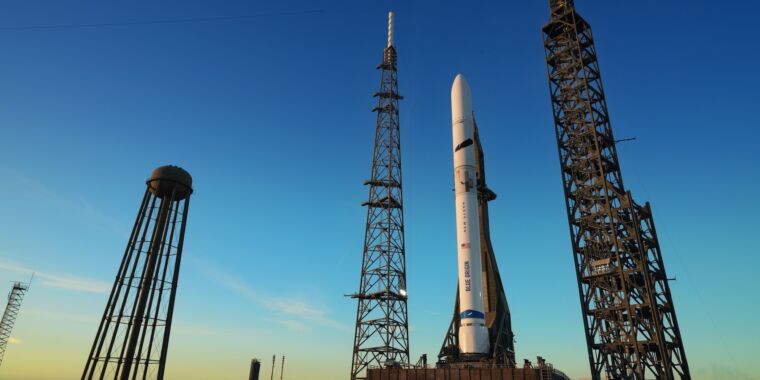
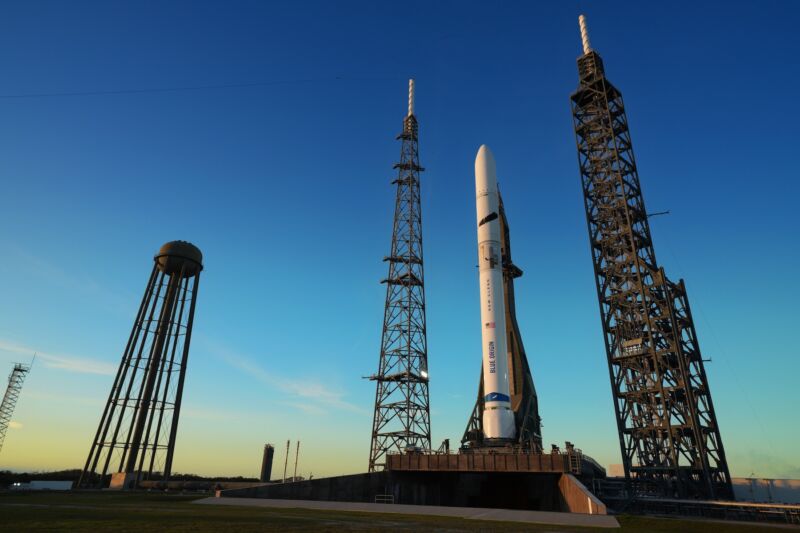
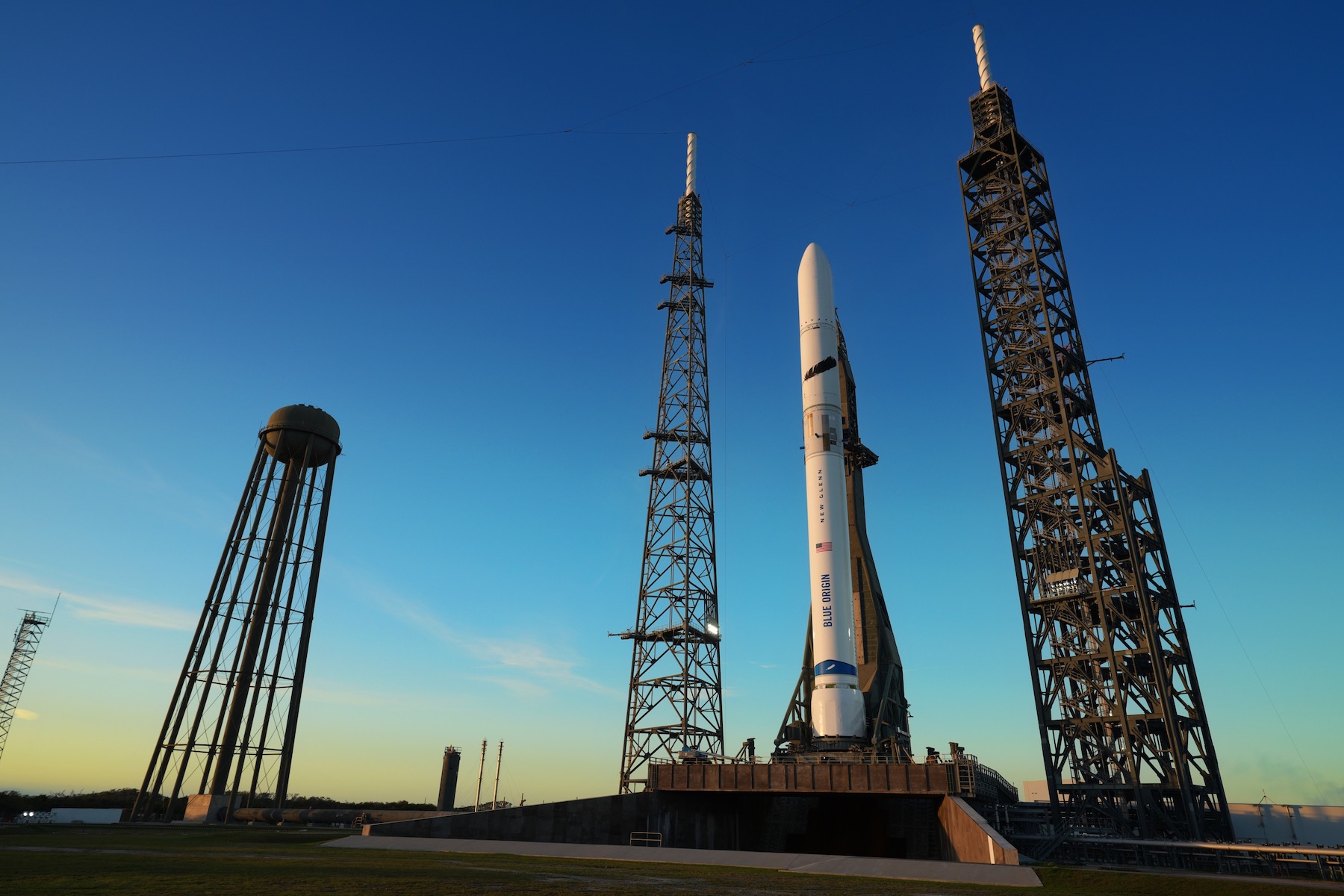
Blue Origin's New Glenn rocket on the launch pad for testing earlier this year.

Enlarge / Blue Origin’s New Glenn rocket on the launch pad for testing earlier this year.

After years of lobbying, protests, and bidding, Jeff Bezos’s space company is now a military launch contractor.

The US Space Force announced Thursday that Blue Origin will compete with United Launch Alliance and SpaceX for at least 30 military launch contracts over the next five years. These launch contracts have a combined value of up to $5.6 billion.

This is the first of two major contract decisions the Space Force will make this year as the military seeks to foster more competition among its roster of launch providers and reduce its reliance on just one or two companies.

For more than a decade following its formation from the merger of Boeing and Lockheed Martin rocket programs, ULA was the sole company certified to launch the military’s most critical satellites. This changed in 2018, when SpaceX started launching national security satellites for the military. In 2020, despite protests from Blue Origin seeking eligibility, the Pentagon selected ULA and SpaceX to continue sharing launch duties.

The National Security Space Launch (NSSL) program is in charge of selecting contractors to deliver military surveillance, navigation, and communications satellites into orbit.

Over the next five years, the Space Force wants to tap into new launch capabilities from emerging space companies. The procurement approach for this new round of contracts, known as NSSL Phase 3, is different from the way the military previously bought launch services. Instead of grouping all national security launches into one monolithic contract, the Space Force is dividing them into two classifications: Lane 1 and Lane 2.

The Space Force’s contract announced Thursday was for Lane 1, which is for less demanding missions to low-Earth orbit. These missions include smaller tech demos, experiments, and launches for the military’s new constellation of missile-tracking and data-relay satellites, an effort that will eventually include hundreds or thousands of spacecraft managed by the Pentagon’s Space Development Agency.

This fall, the Space Force will award up to three contracts for Lane 2, which covers the government’s most sensitive national security satellites, which require “complex security and integration requirements.” These are often large, heavy spacecraft weighing many tons and sometimes needing to go to orbits thousands of miles from Earth. The Space Force will require Lane 2 contractors to go through a more extensive certification process than is required in Lane 1.

“Today marks the beginning of this innovative, dual-lane approach to launch service acquisition, whereby Lane 1 serves our commercial-like missions that can accept more risk and Lane 2 provides our traditional, full mission assurance for the most stressing heavy-lift launches of our most risk-averse missions,” said Frank Calvelli, assistant secretary of the Air Force for space acquisition and integration.

Meeting the criteria

The Space Force received seven bids for Lane 1, but only three companies met the criteria to join the military’s roster of launch providers. The basic requirement to win a Lane 1 contract was for a company to show its rocket can place at least 15,000 pounds of payload mass into low-Earth orbit, either on a single flight or over a series of flights within a 90-day period.

The bidders also had to substantiate their plan to launch the rocket they proposed to use for Lane 1 missions by December 15 of this year. A spokesperson for Space Systems Command said SpaceX proposed using their Falcon 9 and Falcon Heavy rockets, and ULA offered its Vulcan rocket. Those launchers are already flying. Blue Origin proposed its heavy-lift New Glenn rocket, slated for an inaugural test flight no earlier than September.

“As we anticipated, the pool of awardees is small this year because many companies are still maturing their launch capabilities,” said Brig. Gen. Kristin Panzenhagen, program executive officer for the Space Force’s assured access to space division. “Our strategy accounted for this by allowing on-ramp opportunities every year, and we expect increasing competition and diversity as new providers and systems complete development.”

A SpaceX Falcon Heavy rocket lifts off from NASA's Kennedy Space Center in Florida.

Enlarge / A SpaceX Falcon Heavy rocket lifts off from NASA’s Kennedy Space Center in Florida.

Trevor Mahlmann/Ars Technica

The Space Force plans to open up the first on-ramp opportunity for Lane 1 as soon as the end of this year. Companies with medium-lift rockets in earlier stages of development, such as Rocket Lab, Relativity Space, Firefly Aerospace, and Stoke Space, will have the chance to join ULA, SpaceX, and Blue Origin in the Lane 1 pool at that time. The structure of the NSSL Phase 3 contracts allow the Pentagon to take advantage of emerging launch capabilities as soon as they become available, according to Calvelli.

In a statement, Panzenhagen said having additional launch providers will increase the Space Force’s “resiliency” in a time of increasing competition between the US, Russia, and China in orbit. “Launching more risk-tolerant satellites on potentially less mature launch systems using tailored independent government mission assurance could yield substantial operational responsiveness, innovation, and savings,” Panzenhagen said.

More competition, theoretically, will also deliver lower launch prices to the Space Force. SpaceX and Blue Origin rockets are partially reusable, while ULA eventually plans to recover and reuse Vulcan main engines.

Over the next five years, Space Systems Command will dole out fixed-price “task orders” to ULA, SpaceX, and Blue Origin for groups of Lane 1 missions. The first batch of missions up for awards in Lane 1 include seven launches for the Space Development Agency’s missile tracking mega-constellation, plus a task order for the National Reconnaissance Office, the government’s spy satellite agency. However, military officials require a rocket to have completed at least one successful orbital launch to win a Lane 1 task order, and Blue Origin’s New Glenn doesn’t yet satisfy this requirement.

The Space Force will pay Blue Origin $5 million for an “initial capabilities assessment” for Lane 1. SpaceX and ULA, the military’s incumbent launch contractors, will each receive $1.5 million for similar assessments.

ULA, SpaceX, and Blue Origin are also the top contenders to win Lane 2 contracts later this year. In order to compete in Lane 2, a launch provider must show it has a plan for its rockets to meet the Space Force’s stringent certification requirements by October 1, 2026. SpaceX’s Falcon 9 and Falcon Heavy are already certified, and ULA’s Vulcan is on a path to achieve this milestone by the end of this year, pending a successful second test flight in the next few months. A successful debut of New Glenn by the end of this year would put the October 2026 deadline within reach of Blue Origin.

Blue Origin joins SpaceX and ULA in new round of military launch contracts Read More »
spacex-is-about-to-launch-starship-again—the-faa-will-be-more-forgiving-this-time

SpaceX is about to launch Starship again—the FAA will be more forgiving this time

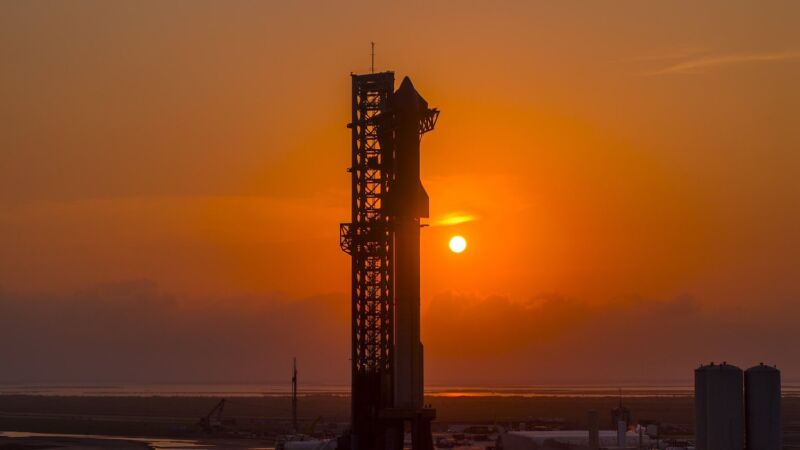
The rocket for SpaceX's fourth full-scale Starship test flight awaits liftoff from Starbase, the company's private launch base in South Texas.

Enlarge / The rocket for SpaceX’s fourth full-scale Starship test flight awaits liftoff from Starbase, the company’s private launch base in South Texas.

SpaceX

The Federal Aviation Administration approved the commercial launch license for the fourth test flight of SpaceX’s Starship rocket Tuesday, with liftoff from South Texas targeted for just after sunrise Thursday.

“The FAA has approved a license authorization for SpaceX Starship Flight 4,” the agency said in a statement. “SpaceX met all safety and other licensing requirements for this test flight.”

Shortly after the FAA announced the launch license, SpaceX confirmed plans to launch the fourth test flight of the world’s largest rocket at 7: 00 am CDT (12: 00 UTC) Thursday. The launch window runs for two hours.

This flight follows three prior demonstration missions, each progressively more successful, of SpaceX’s privately developed mega-rocket. The last time Starship flew—on March 14—it completed an eight-and-a-half minute climb into space, but the ship was unable to maneuver itself as it coasted nearly 150 miles (250 km) above Earth. This controllability problem caused the rocket to break apart during reentry.

On Thursday’s flight, SpaceX officials will expect the ascent portion of the test flight to be similarly successful to the launch in March. The objectives this time will be to demonstrate Starship’s ability to survive the most extreme heating of reentry, when temperatures peak at 2,600° Fahrenheit (1,430° Celsius) as the vehicle plunges into the atmosphere at more than 20 times the speed of sound.

SpaceX officials also hope to see the Super Heavy booster guide itself toward a soft splashdown in the Gulf of Mexico just offshore from the company’s launch site, known as Starbase, in Cameron County, Texas.

“The fourth flight test turns our focus from achieving orbit to demonstrating the ability to return and reuse Starship and Super Heavy,” SpaceX wrote in an overview of the mission.

Last month, SpaceX completed a “wet dress rehearsal” at Starbase, where the launch team fully loaded the rocket with cryogenic methane and liquid oxygen propellants. Before the practice countdown, SpaceX test-fired the booster and ship at the launch site. More recently, technicians installed components of the rocket’s self-destruct system, which would activate to blow up the rocket if it flies off course.

Then, on Tuesday, SpaceX lowered the Starship upper stage from the top of the Super Heavy booster, presumably to perform final touch-ups to the ship’s heat shield, composed of 18,000 hexagonal ceramic tiles to protect its stainless-steel structure during reentry. Ground teams were expected to raise the ship, or upper stage, back on top of the booster sometime Wednesday, returning the rocket to its full height of 397 feet (121 meters) ahead of Thursday morning’s launch window.

The tick-tock of Starship’s fourth flight

If all goes according to plan, SpaceX’s launch team will start loading 10 million pounds of super-cold propellants into the rocket around 49 minutes before liftoff Thursday. The methane and liquid oxygen will first flow into the smaller tanks on the ship, then into the larger tanks on the booster.

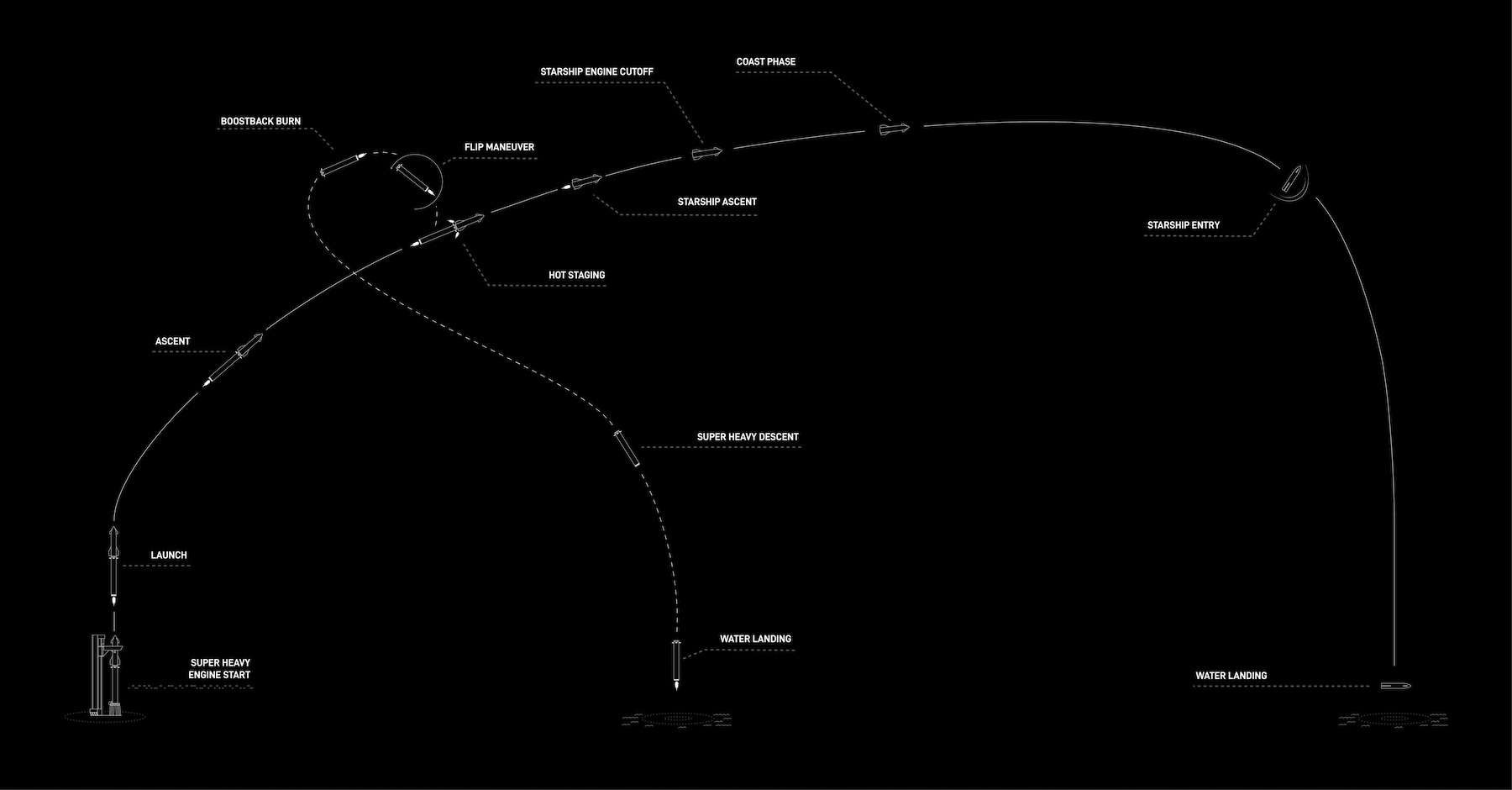
The rocket should be fully loaded about three minutes prior to launch, and, following a sequence of automated checks, the computer controlling the countdown will give the command to light the booster’s 33 Raptor engines. Three seconds later, the rocket will begin its vertical climb off the launch mount, with its engines capable of producing more than 16 million pounds of thrust at full power.

Heading east from the Texas Gulf Coast, the rocket will exceed the speed of sound in about a minute, then begin shutting down its 33 main engines around 2 minutes and 41 seconds after liftoff. Then, just as the Super Heavy booster jettisons to begin a descent back to Earth, Starship’s six Raptor engines will ignite to continue pushing the upper portion of the rocket into space. Starship’s engines are expected to burn until T+ 8 minutes, 23 seconds, accelerating the rocket to near-orbital velocity with enough energy to fly an arcing trajectory halfway around the world to the Indian Ocean.

All of this will be similar to the events of the last Starship launch in March. What differs in the flight plan this time involves the attempts to steer the booster and ship back to Earth. This is important to lay the groundwork for future flights, when SpaceX wants to bring the Super Heavy booster—the size of the fuselage of a Boeing 747 jumbo jet—to a landing back at its launch pad. Eventually, SpaceX also intends to recover reusable Starships back at Starbase or other spaceports.

This infographic released by SpaceX shows the flight profile for SpaceX's fourth Starship launch.

Enlarge / This infographic released by SpaceX shows the flight profile for SpaceX’s fourth Starship launch.

SpaceX

Based on the results of the March test flight, SpaceX still has a lot to prove in these areas. On that flight, the engines on the Super Heavy booster could not complete all the burns required to guide the rocket toward the splashdown zone in the Gulf of Mexico. The booster lost control as it plummeted toward the ocean.

Engineers traced the failure to blockage in a filter where liquid oxygen flows into the Raptor engines. Notably, a similar problem occurred on the second Starship test flight last November. The Super Heavy booster awaiting launch Thursday has additional hardware to improve propellant filtration capabilities, according to SpaceX. The company also implemented “operational changes” on the booster for the upcoming test flight, including to jettison the Super Heavy’s staging ring, which sits between the booster and ship during launch, to reduce the rocket’s mass during descent.

SpaceX has a lot of experience bringing back its fleet of Falcon 9 boosters. The company now boasts a streak of more than 240 successful rocket landings in a row, so it’s reasonable to expect SpaceX will overcome the challenge of recovering the larger Super Heavy booster.

SpaceX is about to launch Starship again—the FAA will be more forgiving this time Read More »
here’s-why-a-japanese-billionaire-just-canceled-his-lunar-flight-on-starship

Here’s why a Japanese billionaire just canceled his lunar flight on Starship

No Moon —

“I feel terrible making the crew members wait longer.”

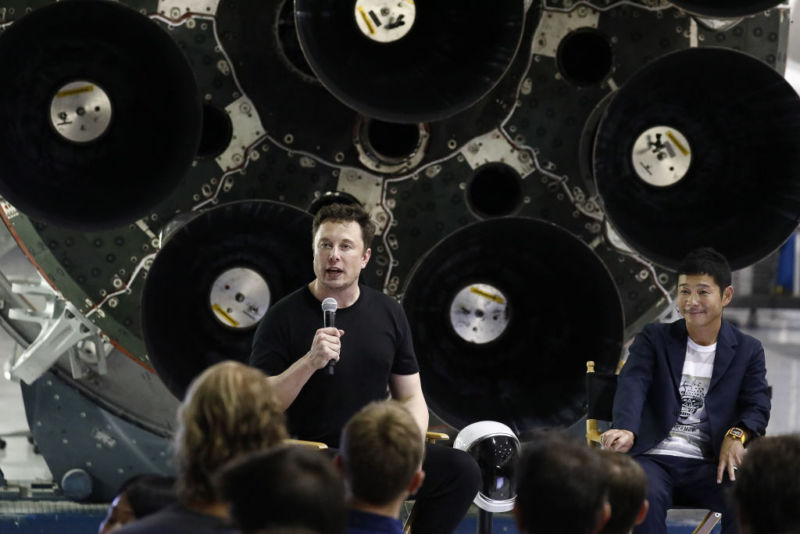
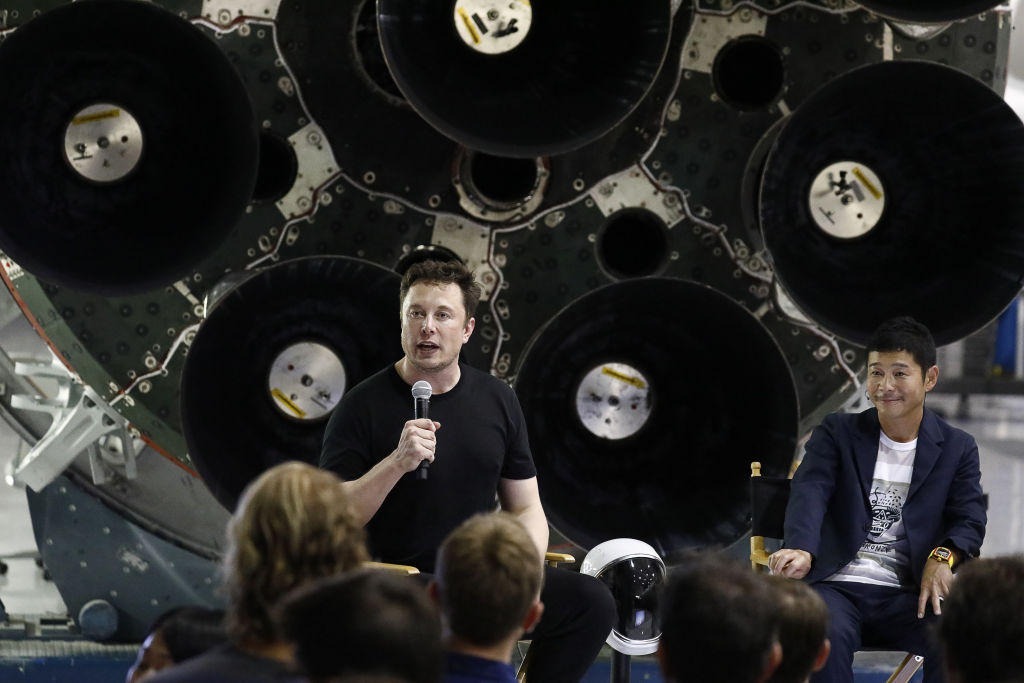
Elon Musk speaks as Yusaku Maezawa, founder and president of Start Today Co., looks on at an event at the SpaceX headquarters in Hawthorne, California, in 2018.

Enlarge / Elon Musk speaks as Yusaku Maezawa, founder and president of Start Today Co., looks on at an event at the SpaceX headquarters in Hawthorne, California, in 2018.

Patrick T. Fallon/Bloomberg via Getty Images

On Friday night the dearMoon project—a plan to launch a Japanese billionaire and 10 other ‘crew members’ on a circumlunar flight aboard SpaceX’s Starship vehicle—was abruptly canceled.

“It is unfortunate to be announcing that ‘dearMoon’, the first private circumlunar flight project, will be cancelled,” the mission’s official account on the social media site X said. “We thank everyone who has supported us and apologize to those who have looked forward to this project.”

Shortly afterward the financial backer of the project and its ‘crew leader,’ Yusaku Maezawa, explained this decision on X. When Maezawa agreed to the mission in 2018, he said, the assumption was that the dearMoon mission would launch by the end of 2023.

“It’s a developmental project so it is what it is, but it is still uncertain as to when Starship can launch,” he wrote. “I can’t plan my future in this situation, and I feel terrible making the crew members wait longer, hence the difficult decision to cancel at this point in time. I apologize to those who were excited for this project to happen.”

The mission was to be Starship’s first human spaceflight to launch from Earth, fly around the Moon, and come back. Now, it’s not happening. Why did this happen, and what does it mean?

Origins of the mission

Maezawa and Musk made the announcement, side by side, at SpaceX’s rocket factory in Hawthorne in September 2018. It was something of an odd but important moment. It seemed significant that SpaceX was signing its first commercial contract for the massive Starship rocket. And while the value was not disclosed, Maezawa was injecting something on the order of the low hundreds of millions of dollars into the program.

Maezawa, however, always came off as a bit non-serious. He said he would hold a competition to fill 10 other seats on board the vehicle. “I did not want to have such a fantastic experience by myself,” he said. “I would be a little lonely.” Later, he did select a crew of creative people.

Initially, however, Maezawa did take the project seriously. When I watched the very first Starship hop test in July 2019, there were only a handful of visitors on hand to view the brief flight of “Starhopper.” One of them was a representative of Maezawa who was keeping close tabs on the progress of Starship.

As big space projects do—and to the surprise of no one—Starship ran behind in its development. The first test flight did not occur until April 2023, and that was just the beginning. The dearMoon mission lay at the very end of a long line of tests that the vehicle must complete: safe launch, controlled flight in space, safe landing of the Starship upper stage, in-space refueling, habitability in space, and much more.

With the fourth test flight of Starship coming in a few days, as early as June 5, SpaceX has so far demonstrated the ability to safely launch Starship. So it remains at the beginning of a challenging technical journey.

A turning point

One of the biggest impacts to the dearMoon project came in April 2021, when NASA selected the Starship vehicle as the lunar lander for its Artemis Program. This put the large vehicle on the critical path for NASA’s ambitious program to land humans on the surface of the Moon. It also offered an order of magnitude more funding, $2.9 billion, and the promise of more if SpaceX could deliver a vehicle to take humans down to the Moon’s surface from lunar orbit, and back.

Since then SpaceX has had two clear priorities for its Starship program. The first of these is to become operational, and begin deploying larger Starlink satellites. And the second is to use these flights to test technologies needed for NASA’s Artemis Program, such as in-space propellant storage and refueling.

As a result other aspects of the program, including dearMoon, were deprioritized. In recent months it became clear that if Maezawa’s mission happened, it would not occur until at least the early 2030s—at least a decade after the original plan.

Changing fortunes

In the meantime, Maezawa’s priorities also likely changed. According to Forbes, when the plan was announced in 2018, the entrepreneur had a net worth of about $3 billion. Today he is estimated to be worth only half of that. Additionally, he scratched his itch to go to space in 2021, flying aboard a Russian Soyuz vehicle for a 12-day trip to the International Space Station.

The writing has been on the wall for a while about Maezawa, since SpaceX founder Elon Musk unfollowed the Japanese entrepreneur on X earlier this year. (This is a sure sign of his disfavor. Musk has unfollowed me twice on Twitter/X after stories or interactions he did not like.) It is probable that the combination of developmental delays and Maezawa’s personal fortunes led the parties to disband the project.

This all leaves a clearer road ahead for Starship: Become operational, start flying Starlink satellites, and begin ticking off the technical challenges for Artemis. Then, several years from now, the company will turn its attention toward the challenging prospect of launching humans inside Starship from Earth, and then landing back on the planet. The first of these people will be another billionaire, Jared Isaacman, who has already flown on Crew Dragon and plans at least two more such flights before the pioneering Starship mission.

Here’s why a Japanese billionaire just canceled his lunar flight on Starship Read More »

rocket-report:-north-korean-rocket-explosion;-launch-over-chinese-skyline

Rocket Report: North Korean rocket explosion; launch over Chinese skyline

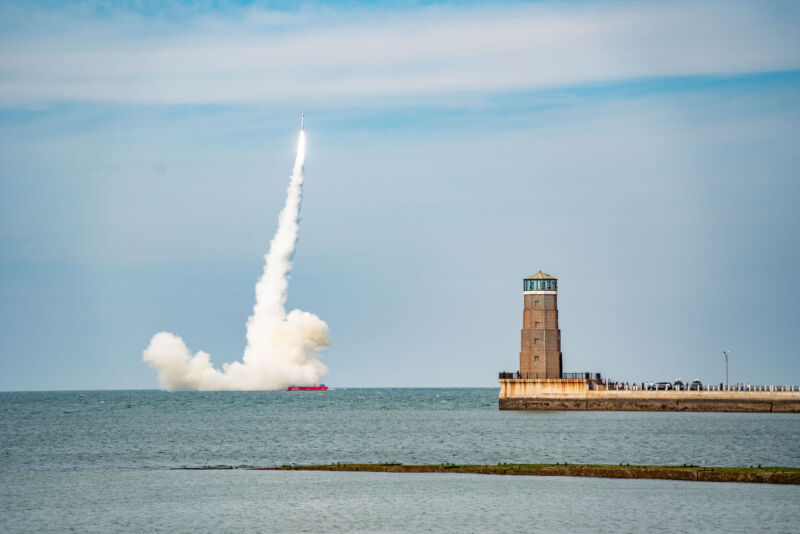
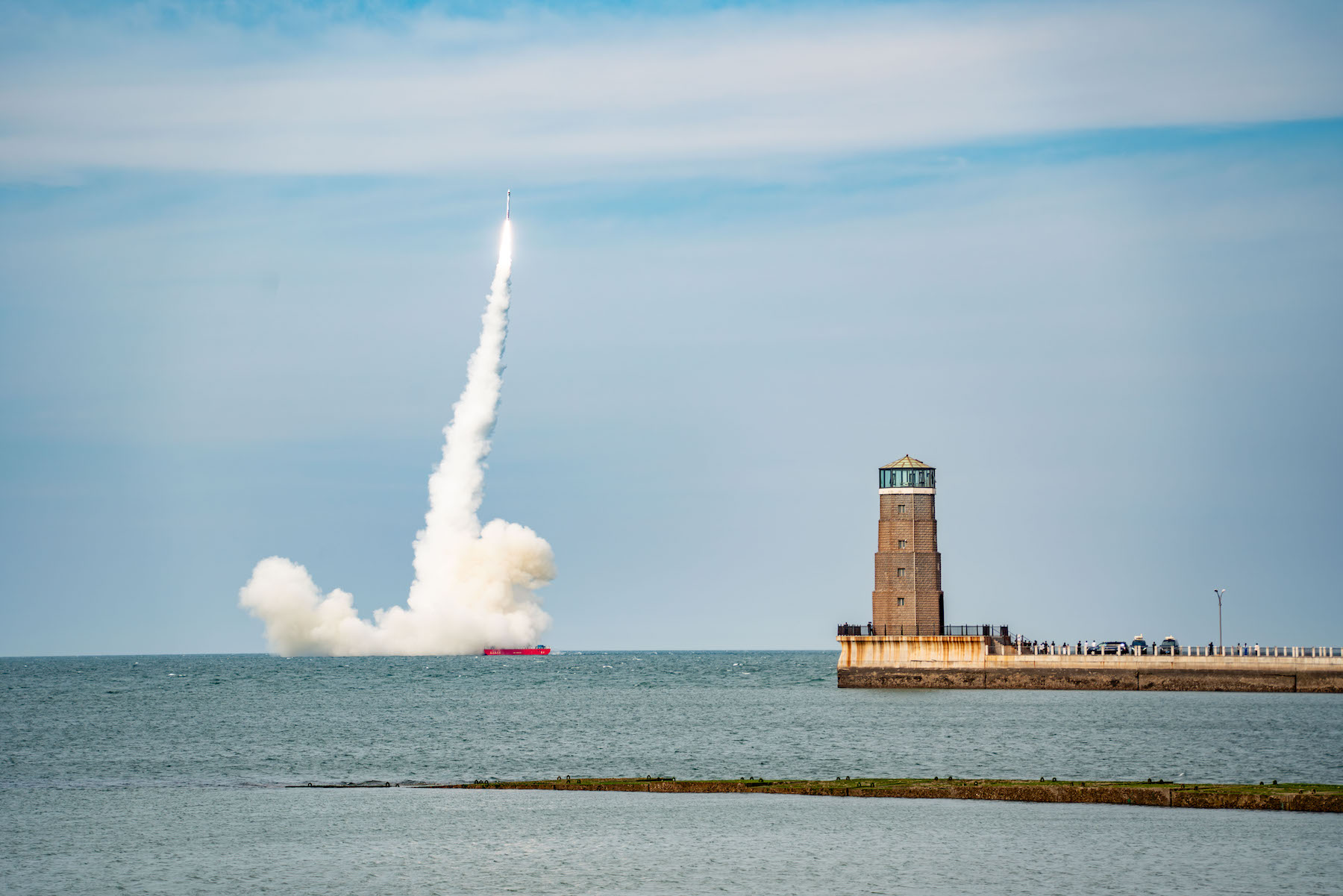
A sea-borne variant of the commercial Ceres 1 rocket lifts off near the coast of Rizhao, a city of 3 million in China's Shandong province.

Enlarge / A sea-borne variant of the commercial Ceres 1 rocket lifts off near the coast of Rizhao, a city of 3 million in China’s Shandong province.

Welcome to Edition 6.46 of the Rocket Report! It looks like we will be covering the crew test flight of Boeing’s Starliner spacecraft and the fourth test flight of SpaceX’s giant Starship rocket over the next week. All of this is happening as SpaceX keeps up its cadence of flying multiple Starlink missions per week. The real stars are the Ars copy editors helping make sure our stories don’t use the wrong names.

As always, we welcome reader submissions, and if you don’t want to miss an issue, please subscribe using the box below (the form will not appear on AMP-enabled versions of the site). Each report will include information on small-, medium-, and heavy-lift rockets as well as a quick look ahead at the next three launches on the calendar.

Another North Korean launch failure. North Korea’s latest attempt to launch a rocket with a military reconnaissance satellite ended in failure due to the midair explosion of the rocket during the first-stage flight this week, South Korea’s Yonhap News Agency reports. Video captured by the Japanese news organization NHK appears to show the North Korean rocket disappearing in a fireball shortly after liftoff Monday night from a launch pad on the country’s northwest coast. North Korean officials acknowledged the launch failure and said the rocket was carrying a small reconnaissance satellite named Malligyong-1-1.

Russia’s role? … Experts initially thought the pending North Korean launch, which was known ahead of time from international airspace warning notices, would use the same Chŏllima 1 rocket used on three flights last year. But North Korean statements following the launch Monday indicated the rocket used a new propulsion system burning a petroleum-based fuel, presumably kerosene, with liquid oxygen as the oxidizer. The Chŏllima 1 rocket design used a toxic mixture of hypergolic hydrazine and nitrogen tetroxide as propellants. If North Korea’s statement is true, this would be a notable leap in the country’s rocket technology and begs the question of whether Russia played a significant role in the launch. Last year, Russian President Vladimir Putin pledged more Russian support for North Korea’s rocket program in a meeting with North Korean leader Kim Jong Un. (submitted by Ken the Bin and Jay500001)

Rocket Lab deploys small NASA climate satellite. Rocket Lab is in the midst of back-to-back launches for NASA, carrying identical climate research satellites into different orbits to study heat loss to space in Earth’s polar regions. The Polar Radiant Energy in the Far-InfraRed Experiment (PREFIRE) satellites are each about the size of a shoebox, and NASA says data from PREFIRE will improve computer models that researchers use to predict how Earth’s ice, seas, and weather will change in a warming world. “The difference between the amount of heat Earth absorbs at the tropics and that radiated out from the Arctic and Antarctic is a key influence on the planet’s temperature, helping to drive dynamic systems of climate and weather,” NASA said in a statement.

Twice in a week… NASA selected Rocket Lab’s Electron launch vehicle to deliver the two PREFIRE satellites into orbit on two dedicated rides rather than launching at a lower cost on a rideshare mission. This is because scientists want the satellites flying at the proper alignment to ensure they fly over the poles several hours apart, providing the data needed to measure how the rate at which heat radiates from the polar regions changes over time. The first PREFIRE launch occurred on May 25, and the next one is slated for May 31. Both launches will take off from Rocket Lab’s base in New Zealand. (submitted by Ken the Bin)

The easiest way to keep up with Eric Berger’s space reporting is to sign up for his newsletter, we’ll collect his stories in your inbox.

A rocket launch comes to Rizhao. China has diversified its launch sector over the last decade to include new families of small satellite launchers and new spaceports. One of these relatively new small rockets, the solid-fueled Ceres 1, took off Wednesday from a floating launch pad positioned about 2 miles (3 km) off the coast of Rizhao, a city of roughly 3 million people in China’s Shandong province. The Ceres 1 rocket, developed by a quasi-commercial company called Galactic Energy, has previously flown from land-based launch pads and a sea-borne platform, but this mission originated from a location remarkably close to shore, with the skyline of a major metropolitan area as a backdrop.

Range safety … There’s no obvious orbital mechanics reason to position the rocket’s floating launch platform so near a major Chinese city, other than perhaps to gain a logistical advantage by launching close to port. The Ceres 1 rocket has a fairly good reliability record—11 successes in 12 flights—but for safety reasons, there’s no Western spaceport that would allow members of the public (not to mention a few million) to get so close to a rocket launch. For decades, Chinese rockets have routinely dropped rocket boosters containing toxic propellant on farms and villages downrange from the country’s inland spaceports.

Rocket Report: North Korean rocket explosion; launch over Chinese skyline Read More »