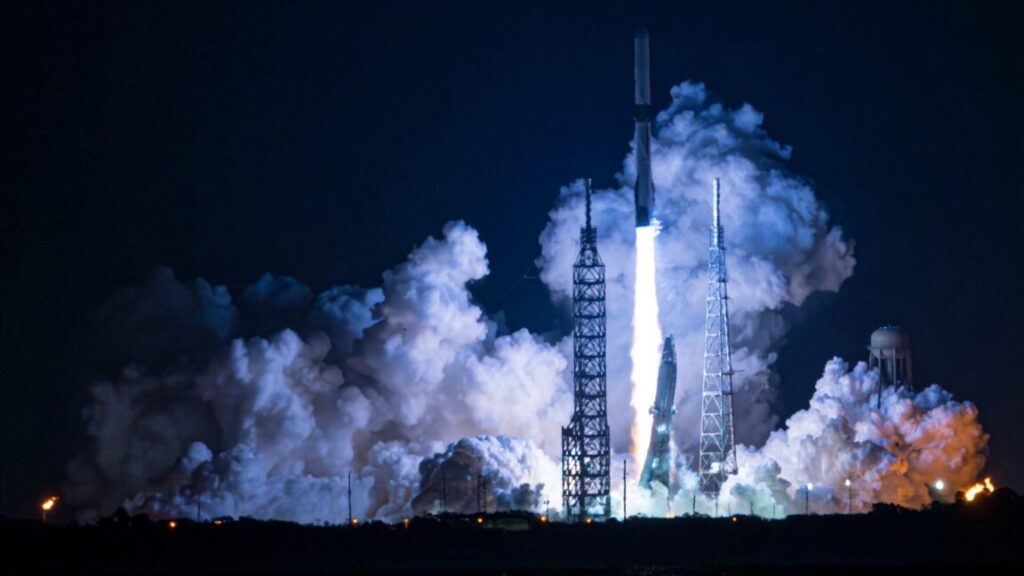
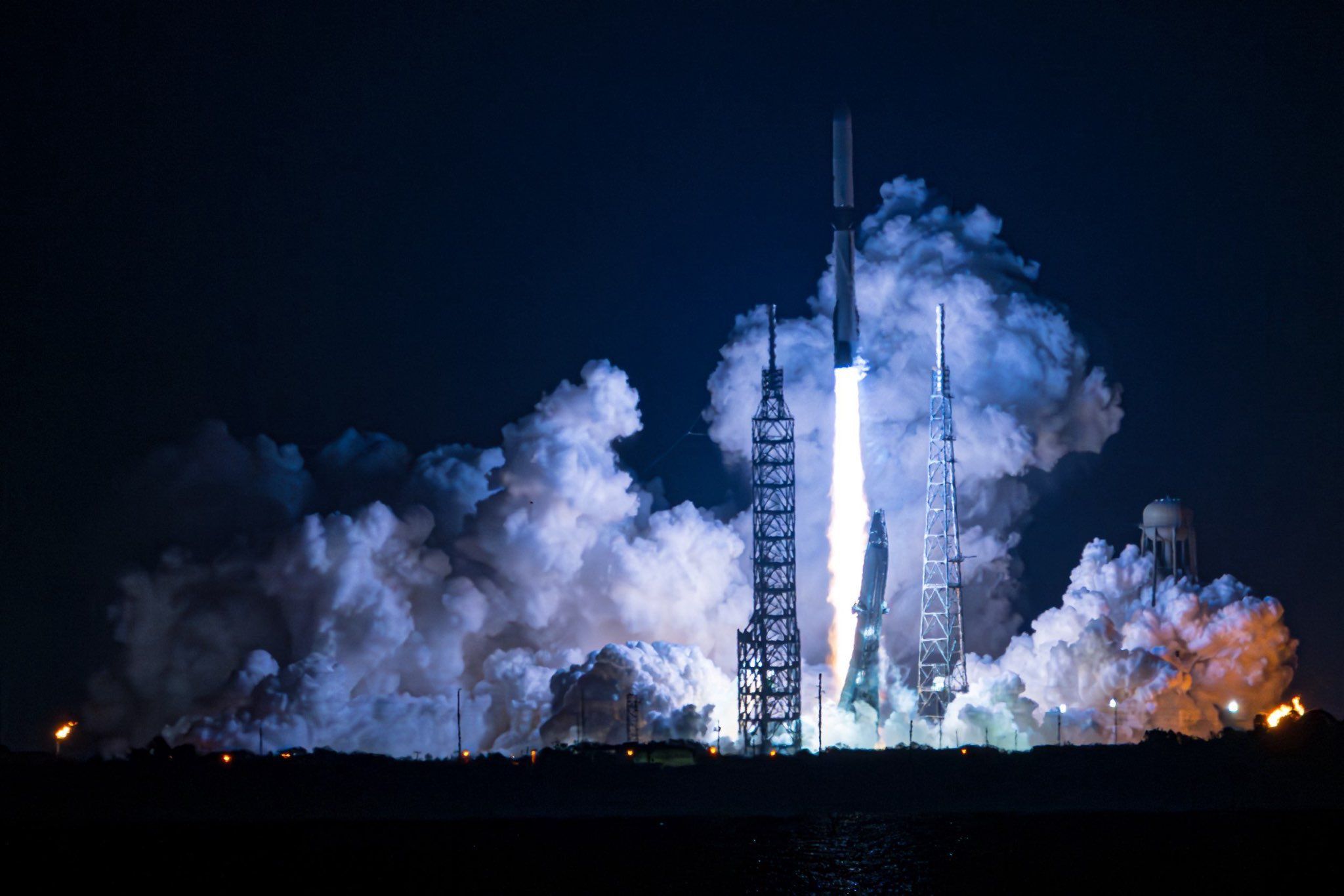
For reasons that were not immediately clear, SpaceX founder Elon Musk took to his social media site X on Tuesday evening to make a perplexing space-based pronouncement.
“The @POTUS has asked @SpaceX to bring home the 2 astronauts stranded on the @Space_Station as soon as possible. We will do so,” Musk wrote. “Terrible that the Biden administration left them there so long.”
Now generally, at Ars Technica, it is not our policy to write stories strictly based on things Elon Musk says on X. However, this statement was so declarative, and so consternation-inducing for NASA, it bears a bit of explication.
First of all, the most plausible explanation for this is that Elon is being Elon. “He’s trolling,” said one of my best space policy sources shortly after Musk’s tweet. After all, the tweet was sent at 4: 20 pm in the central time zone, where SpaceX now has its headquarters.
Even if it is trolling, it will still cause headaches within NASA.
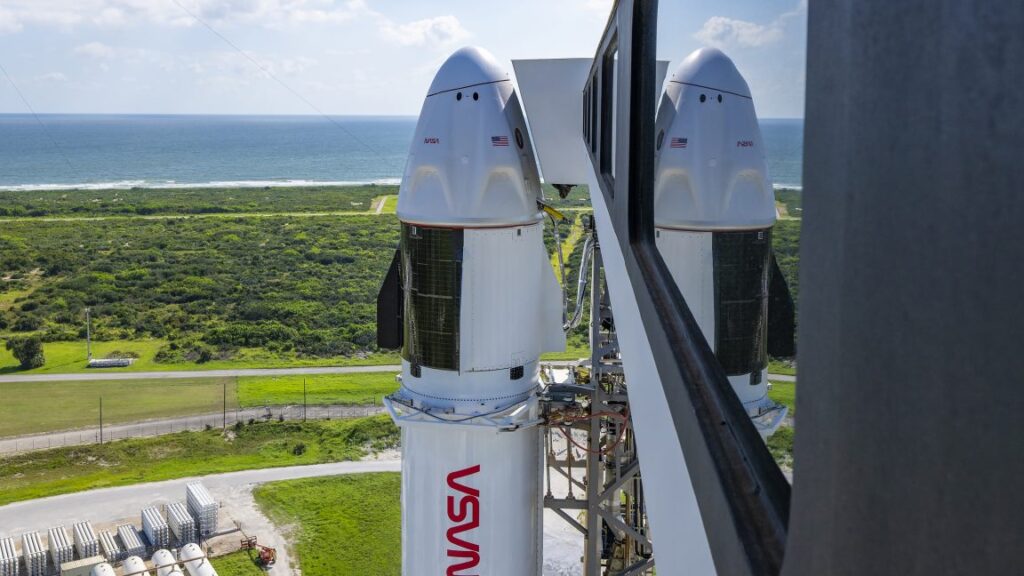
Foremost, NASA has gone to great lengths to stress that the two astronauts referenced here—Butch Wilmore and Suni Williams—are not stranded on the International Space Station. There is some debate about whether there was a period last summer when the pair, who flew to the space station on a Boeing Starliner vehicle in early June, were briefly stranded. That mission was hobbled by technical issues, including problems with Starliner’s propulsion system. (Ultimately, Starliner flew home without its crew.) However, since the arrival of SpaceX’s Crew-9 mission with two empty seats in late September, Wilmore and Williams have had a safe ride home. The Dragon vehicle is presently docked to the space station.
Rocket Lab announced it will soon launch a batch of eight German-owned wildfire-detection satellites.
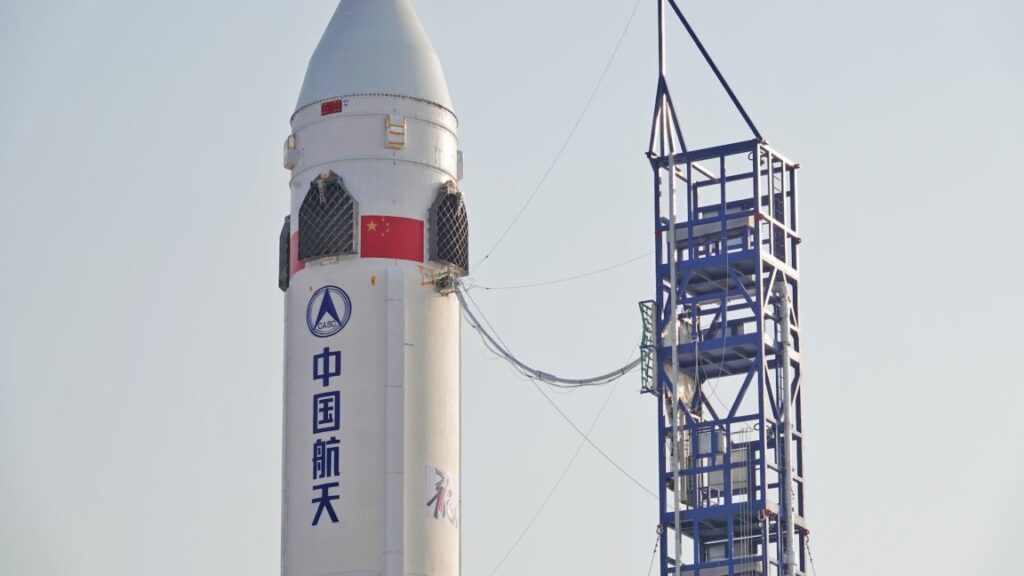
The Chinese Longxing-2 rocket is erected at Haiyang Dongfang Spaceport in Shandong province on January 13, 2025. This single stage booster lifted off January 19 on a high-altitude demonstration flight to test reusable rocket technology, but the outcome of the test remains unclear. Credit: Costfoto/NurPhoto via Getty Images
Welcome to Edition 7.28 of the Rocket Report! After last week’s jam-packed action in the launch business, things are a bit quieter this week. Much of the space world’s attention has turned to Washington as the Trump administration takes the helm of the federal government. Some of the administration’s policy changes will likely impact the launch industry, with commercial spaceflight poised to become a beneficiary of actions over the next four years. As for the specifics, Ars has reported that NASA is expected to review the future of the Space Launch System rocket. Investments in the military space program could bring in more business for launch companies. And regulatory changes may reduce government oversight of commercial spaceflight.
As always, we welcome reader submissions. If you don’t want to miss an issue, please subscribe using the box below (the form will not appear on AMP-enabled versions of the site). Each report will include information on small-, medium-, and heavy-lift rockets as well as a quick look ahead at the next three launches on the calendar.
What happened to China’s reusable rocket testbed? A Chinese state-owned company performed a rocket flight on January 18 (US time) aimed at testing reusable launch vehicle technology without announcing the outcome, Space News reports. The Longxing-2 test article lifted off from a makeshift launch area near Haiyang, Shandong province. The methane-fueled rocket was expected to fly to an altitude of 75 kilometers (about 246,000 feet) before performing a reentry burn and a landing burn to guide itself to a controlled splashdown in the Yellow Sea, replicating the maneuvers required to recover a reusable booster like the first stage of SpaceX’s Falcon 9. This was China’s most ambitious reusable rocket demonstration flight to date.
State-sanctioned silence … Amateur footage near the launch area showed the rocket rise slowly from the tower and perform an ascent phase with no apparent anomalies. But the video ended before the rocket descended to Earth, and there have been no official updates on the results of the test flight from the Shanghai Academy of Spaceflight Technology (SAST), the state-owned enterprise responsible for the demonstration. SAST published results and video footage of a previous reusable rocket demonstration to an altitude of 12 kilometers last year. The lack of official updates this time raises questions about the success of the test, which could indicate challenges during reentry or landing phases. (submitted by EllPeaTea)
A timely launch for Rocket Lab. A dedicated flight of Rocket Lab’s Electron launcher will soon deploy eight small spacecraft for a German company building a constellation of wildfire-monitoring satellites. Rocket Lab announced the deal Wednesday, saying the mission will launch from the company’s spaceport in New Zealand. The eight satellites are owned by the German startup OroraTech. Rocket Lab said the launch will take place within “just a few weeks,” representing a relatively quick turnaround from contract signing to liftoff. This schedule will allow OroraTech to “meet the season-sensitive requirements of its wildfire-detection mission,” Rocket Lab said.
Infrared eyes … OroraTech’s satellites will host thermal infrared cameras to provide 24/7 monitoring of wildfires globally, supporting better and faster wildfire response to protect forests, people, and infrastructure, according to Rocket Lab. These eight satellites follow the launch of OroraTech’s first three prototype wildfire-detection spacecraft since 2022. The company plans to expand its constellation with up to 100 satellites by 2028. While this launch isn’t directly tied to the ongoing wildfire crisis in Southern California, OroraTech’s mission highlights the role of space-based detection for future firefighters. (submitted by EllPeaTea)
The easiest way to keep up with Eric Berger’s and Stephen Clark’s reporting on all things space is to sign up for our newsletter. We’ll collect their stories and deliver them straight to your inbox.
US green-lights space-related exports to Norway. The United States and Norway have signed an agreement to allow the export of American space hardware to Norway for launches there, Space News reports. The Technology Safeguards Agreement, or TSA, ensures the protection of US space technology exported to Norway. It allows for American satellites and potentially launch vehicles to operate from Andøya Spaceport, located on an island above the Arctic Circle in Norway.
A valuable alliance … There are no US companies with publicly known plans to launch from Andøya, but the US military has touted the value of allies in funding, launching, and operating space-based platforms for communications, navigation, and reconnaissance. This agreement, announced on January 16 in the final days of the Biden administration, follows similar space tech transfer agreements with New Zealand, the United Kingdom, Australia, and Canada. The German rocket startup Isar Aerospace is scheduled to launch its first Spectrum rocket from the Norwegian spaceport as soon as this year. (submitted by EllPeaTea)
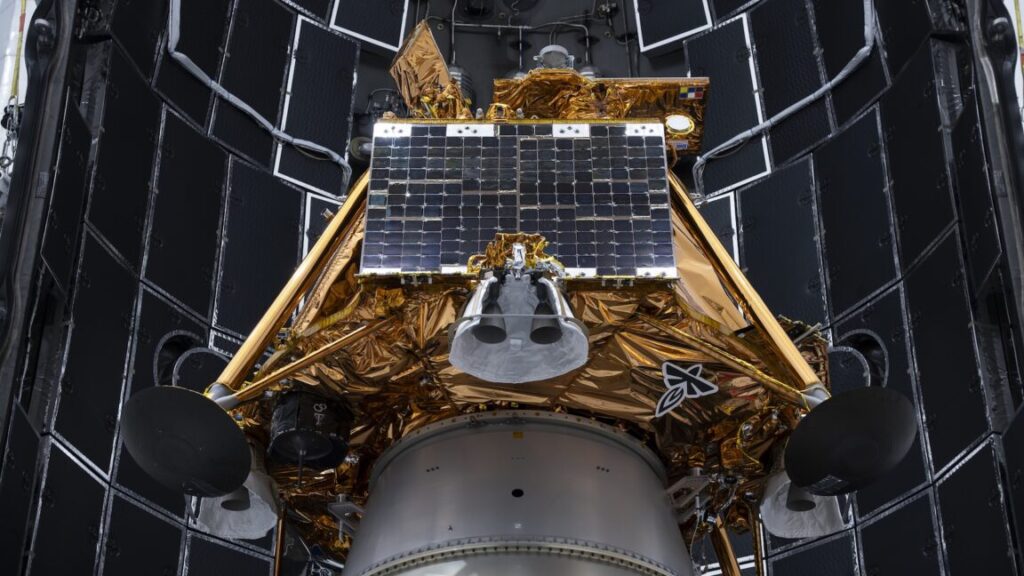
Lunar lander test-fires uprated rocket engine. The Leros 4 rocket engine, developed by Nammo UK in Buckinghamshire, has successfully ignited in space, powering the Firefly Aerospace Blue Ghost lunar lander, European Spaceflight reports. This is a higher-thrust version of Nammo’s flight-proven Leros engine design that has provided propulsion for NASA probes to the planets and for numerous telecommunications satellites. Like other engines in the Leros line, the Leros 4 consumes a bipropellant mix of hydrazine and nitrogen tetroxide, which combust when coming into contact with one another.
Thrusting toward the Moon … Firefly announced the successful main engine burn Sunday to begin raising the Blue Ghost spacecraft’s orbit around the Earth. Subsequent burns will further raise the craft’s altitude before eventually attaining enough speed to reach the Moon for a landing in early March. This is the first time a Leros 4 engine has fired in space. The variant flying on Blue Ghost is known as the “Leros 4-Extra Thrust” version, and it provides approximately 294 pounds of thrust (1,310 newtons), roughly double the power of Nammo’s next-largest engine. It’s designed specifically for interplanetary missions and is particularly well-suited for lunar landers because it can sustain thrust for lengthy burns or pulse at high frequency to control a spacecraft’s descent rate toward the Moon’s surface.
Trump’s DOT nominee says he’ll review FAA’s SpaceX fines. President Donald Trump’s nominee to lead the US Transportation Department said he’d review penalties aviation regulators have proposed against SpaceX if confirmed for the role, Bloomberg reports. Transportation Secretary nominee Sean Duffy told senators during a hearing on January 15 that he’d also look into “what’s been happening at the FAA with regard to launches.” Last year, the FAA proposed more than $633,000 in fines on SpaceX due to alleged violations of the company’s launch license associated with two flights of the company’s Falcon 9 rocket from Florida. It is rare for the FAA’s commercial spaceflight division to fine launch companies.
It’s about more than the money … In addition to the proposed fines related to SpaceX’s workhorse Falcon 9 rocket, Elon Musk’s space company has also criticized regulators for taking too much time to review applications for launch licenses for the Starship mega-rocket. Some of the regulatory reviews were triggered by environmental concerns rather than public safety, which the FAA is responsible for ensuring during commercial rocket launches and reentries. Musk’s close relationship with Trump has led to speculation that the FAA will now have a lighter touch with SpaceX. So far, there’s no clear evidence of this happening, but it warrants observation. The FAA ordered a grounding of SpaceX’s Starship rocket after a failure of a test flight on January 16, and there’s been no announcement of a change in the agency’s posture regarding this test flight.
Falcon 9 flexes its muscles. SpaceX launched its latest batch of Starlink satellites from Vandenberg Space Force Base, California, on Tuesday, and this time, the company set a new record by deploying 27 second-generation Starlinks on the same rocket, Spaceflight Now reports. The mission was delayed from Sunday after an aircraft strayed into a keep-out zone near the launch site. This launch included a new type of Starlink spacecraft bus, or chassis, called the Starlink V2 Mini Optimized version. These satellites are considerably lighter than the previous V2 Mini design but also debut upgrades, such as a new backhaul antenna with a SpaceX-designed and built dual-band chip and improved avionics, propulsion, and power systems.
29 at a time … This means SpaceX can launch up to 29 Starlink V2 Mini Optimized satellites on a single Falcon 9 rocket. Before now, SpaceX never launched more than 24 V2 Mini satellites on a single flight. SpaceX has launched the V2 Mini satellite design since 2023. Initially, this design was supposed to be a stopgap until SpaceX began launching much larger Starlink V3 satellites on the Starship rocket. However, SpaceX has now launched more than 3,000 V2 Mini satellites, and the debut of the optimized version suggests SpaceX plans to keep the V2 Mini around for a while longer.
Coming together in Kourou. ArianeGroup has shared that the core stage and two solid-fueled boosters for the second flight of the Ariane 6 rocket have been assembled on the ELA-4 launch pad at the Guiana Space Center in South America, European Spaceflight reports. At the same time, the flight’s payload, the French military CSO-3 spy satellite, arrived at Félix Eboué airport in French Guiana aboard an Antonov transport plane. With the launch campaign in full swing in French Guiana, it’s likely that the liftoff of the second Ariane 6 flight is just a few weeks away. The most recent publicly available schedule showed the launch is slated for February 25, but this information is now a couple of months old.
What it was made for … This launch follows the largely successful inaugural flight of Europe’s Ariane 6 rocket last July, in which the launcher deployed multiple CubeSats into an on-target orbit, but faltered before completing a deorbit burn to maneuver the upper stage toward reentry. Nevertheless, European officials are confident the issue that caused the upper-stage problem last year will not affect the upcoming launch of the French military’s newest surveillance satellite. This is the kind of mission the often-criticized Ariane 6 rocket was made for—launching a sensitive and costly European government payload to orbit with a European rocket from European territory. (submitted by EllPeaTea)
Next three launches
Jan. 24: Falcon 9 | Starlink 11-6 | Vandenberg Space Force Base, California | 14: 07 UTC
Jan. 25: Long March 8A | Demo Flight | Wenchang Space Launch Site, China | 10: 00 UTC
Jan. 27: Falcon 9 | Starlink 12-7 | Cape Canaveral Space Force Station, Florida | 19: 21 UTC
Stephen Clark is a space reporter at Ars Technica, covering private space companies and the world’s space agencies. Stephen writes about the nexus of technology, science, policy, and business on and off the planet.
NASA’s acting administrator is moving swiftly to remove diversity, equity, inclusion, and accessibility—or DEIA—programs from the space agency.
In an email sent to agency employees on Wednesday afternoon, acting administrator Janet Petro wrote, “We are taking steps to close all agency DEIA offices and end all DEIA-related contracts in accordance with President Trump’s executive orders titled Ending Radical and Wasteful Government DEI Programs and Preferencing and Initial Rescissions of Harmful Executive Orders and Actions.”
During his run for a second term as president, Trump campaigned on ending programs in the federal government that promote diversity, equity, and inclusion. He signed executive orders to that effect shortly after his inauguration on Monday.
Programs seen as divisive
These programs had their roots in affirmative action but exploded in popularity half a decade ago amid Trump’s first presidency and the #MeToo and Black Lives Matter movements. DEI programs and officers became commonplace in academia and major US corporations. However, even before the election of Trump, the DEI movement appeared to have crested. For example, last year the Massachusetts Institute of Technology ended the use of diversity statements for faculty hiring.
In explaining NASA’s position, Petro said of the agency’s existing DEIA activities, “These programs divided Americans by race, wasted taxpayer dollars, and resulted in shameful discrimination.”
Petro’s email is notable for its suggestion that some civil servants at NASA may have sought to shroud DEIA programs from the Trump administration since the presidential election in early November.
“We are aware of efforts by some in government to disguise these programs by using coded or imprecise language,” she wrote. “If you are aware of a change in any contract description or personnel position description since November 5, 2024 to obscure the connection between the contract and DEIA or similar ideologies, please report all facts and circumstances.”
Although the price of this satellite bus is proprietary, various estimates place the cost at between $100 million and $150 million. One reason for the expense is that Lockheed Martin buys most of the satellite’s elements, such as its reaction wheels, from suppliers.
“Lockheed is amazing at doing those missions with really complex requirements,” Kunjur said. “But they just have not changed the way they build these larger, more complex spacecraft in the last 15 or 20 years.”
Vertical integration is the way?
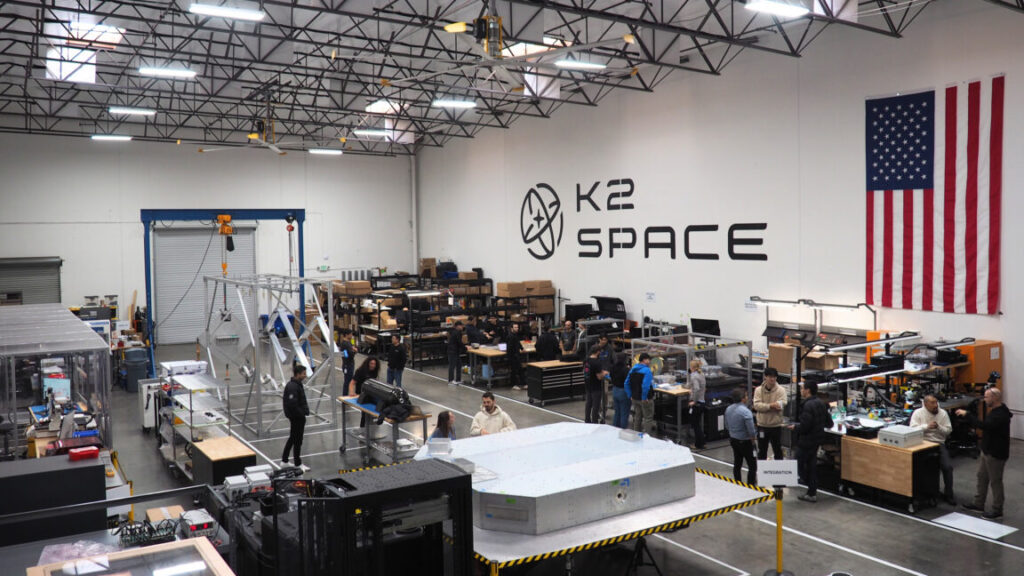
K2 aims to disrupt this ecosystem. For example, the reaction wheels that Honeywell Aerospace sells to Lockheed cost approximately $500,000 to $1 million apiece. K2 is now on its fourth iteration of an internally built reaction wheel and has driven the cost down to $35,000. Kunjur said about 80 percent of K2’s satellite production is vertically integrated.
The company is now building its first “Mega Class” satellite bus, intended to have similar capabilities to Lockheed’s LM2100: 20 kW of power, 1,000 kg of payload capacity, and propulsion to move between orbits. But it’s also stackable: Ten will fit within a Falcon 9 payload fairing and about 50 within Starship’s fairing. The biggest difference is cost. K2 aims to sell its satellite bus for $15 million.
The US government is definitely interested in this capability. About a month ago, K2 announced that it had signed a contract with the US Space Force to launch its first Mega Class satellite in early 2026. The $60 million contract for the “Gravitas” mission will demonstrate the ability of K2’s satellite bus to host several experiments and successfully maneuver from low-Earth orbit to middle-Earth orbit (several thousand km above the surface of Earth).
Although the Mega Class satellite is attractive to government and commercial customers—its lower cost could allow for larger constellations in middle- and geostationary orbits—Kunjur said he and his brother, Neel Kunjur, founded K2 to enable more frequent science missions to other planets in the Solar System.
“We looked at the decadal studies and saw all the mission concept studies that were done,” Kunjur said. “There were maybe 50 studies over a 10-year period. And we realized that if NASA funding remains level, we’ll be able to do one or maybe two of these. So we decided to go after one of the big problems.”
So, if we’re moving into an era of launch abundance, K2 might just solve the problem of affordable science satellites to launch on all these rockets—if it all works, of course.
“The computed numbers below prove that this is quite feasible with margins to spare.”
Blue Origin’s New Glenn rocket launches from Cape Canaveral Space Force Station early on Thursday morning. Credit: Blue Origin
Blue Origin’s New Glenn rocket launches from Cape Canaveral Space Force Station early on Thursday morning. Credit: Blue Origin
Welcome to Edition 7.27 of the Rocket Report! Thursday was an eventful day in super heavy lift launch, with Blue Origin’s New Glenn rocket having a highly successful debut launch before dawn in Florida, at Cape Canaveral Space Force Station. Then, on Thursday afternoon, an upgraded Starship took flight from South Texas. The first stage performed well, but the Starship upper stage experienced a rapid unscheduled disassembly during its ascent. Ars will, of course, have full and ongoing coverage.
As always, we welcome reader submissions, and if you don’t want to miss an issue, please subscribe using the box below (the form will not appear on AMP-enabled versions of the site). Each report will include information on small-, medium-, and heavy-lift rockets, as well as a quick look ahead at the next three launches on the calendar.
RFA receives launch license. The UK Civil Aviation Authority has issued Rocket Factory Augsburg a vertical launch license to conduct the inaugural flight of its RFA ONE rocket from SaxaVord Spaceport in Scotland, European Spaceflight reports. The license is for the launch of the company’s RFA One rocket, which has an advertised payload of 1.3 metric tons to low-Earth orbit. RFA said it intends to complete the launch sometime this year.
A new era for BritSpace… The company might have launched sooner, but last year, a fire during testing destroyed the rocket’s first stage, forcing RFA to build a replacement before proceeding with the initial launch attempt. An orbital-class rocket has never launched in a vertical configuration before from the United Kingdom, and no rocket has ever successfully reached orbit from there. “This is a new era for aerospace, and granting the first vertical launch license from UK soil builds toward a historic milestone for the nation,” said Rob Bishton, chief executive of the civil authority. (submitted by EllPeaTea)
Chinese rocket launches from sea platform. China launched a Jielong-3 solid rocket from a mobile sea platform late Sunday, successfully placing 10 Centispace navigation enhancement satellites into orbit, Space News reports. This was the fifth Jielong-3 (or Smart Dragon-3) solid propellant rocket, and it lifted off from a specially converted sea barge off the coast of Haiyang city in the Eastern province of Shandong.
Seeking to scale up quickly… The launch was carried out using facilities belonging to the Haiyang Eastern spaceport for sea launches. The spaceport plans more than 10 for 2025, having conducted six sea launches in 2024. The launch was China’s second orbital launch attempt of 2025 and the second success in as many tries.
The easiest way to keep up with Eric Berger’s and Stephen Clark’s reporting on all things space is to sign up for our newsletter. We’ll collect their stories and deliver them straight to your inbox.
Utah considering a spaceport. State Sen. Jerry Stevenson has introduced a bill to form a committee that would investigate whether Utah should invest in a spaceport and what benefits it could bring to the state, KUTV Salt Lake City reports. The legislation would provide $500,000 for a committee to study the potential benefits of a launch site. Stevenson said the committee would look into both scientific uses and opportunities to expand Utah’s tourism industry, but questions remain over whether such a taxpayer-funded investment makes financial sense.
Something to build on… When asked how the state would get a return on its investment, Stevenson said the spaceport would align with Utah’s current industries and infrastructure. “We think that this fits very well into what’s going on in the state of Utah and what’s already here and what we can build on,” Stevenson said. Still, critics wondered if the state should focus on space tourism, especially given the potential costs, possibly on the order of hundreds of millions of dollars.
Stoke Space goes nova in fundraising round. The Washington-based launch company announced Wednesday that it had raised $260 million in Series C funding, a significant capital raise at a time when it has become more difficult for some space companies to attract funding, Ars reports. “The market is tough, but I think what we’re doing is poised to go straight to the end state of the industry, and I think investors recognize that,” said Andy Lapsa, Stoke Space’s co-founder and chief executive officer.
Full reuse right out of the gate… By “end state of the industry,” Lapsa means that Stoke is developing a fully reusable medium-lift rocket named Nova. The vehicle’s first stage will land vertically, similar to a Falcon 9 rocket, and the second stage, which has a novel metallic heat shield and engine design, will also land back on Earth. Historically, it is unlikely for a company to move from engine testing to a first orbital launch attempt in the same year, so a Nova debut in 2026 seems more likely. Nevertheless, the new funding from investors signals confidence that Stoke is making credible technical progress on its vehicle development. (submitted by EllPeaTea)
The initial launch plan for Neutron. Rocket Lab is closing in on the completion of its Neutron rocket, and the company plans to launch the medium-lift booster for the first time later this year. With a capacity of 13 metric tons to low-Earth orbit, the rocket will be sold at a cost of $50 million to undersell SpaceX’s Falcon 9 rocket for megaconstellation launches. Falcon 9 can launch 17.5 metric tons to LEO in a reusable configuration, which is often a higher capability than the customer needs, Payload reports. So on a price-per-launch basis, if Neutron can deliver, it could provide credible competition.
A slow ramp-up… Rocket Lab intends to launch a single Neutron this year, followed by three rockets in 2026 and five in 2027. This may not be as flashy as saying the company will ramp up to a dozen rockets next year, but I appreciate the realism in launch cadence. Companies never increase their launch cadence as quickly as they say they will. However, speaking of realism, it’s realistic to question whether Neutron will actually make it to the launch pad this year. I’d bet no, but I’d love to be proven wrong.
Two lunar landers launch on Falcon 9. A SpaceX Falcon 9 rocket lifted off from NASA’s Kennedy Space Center in Florida early Wednesday and deployed two commercial lunar landers on separate trajectories to reach the Moon in the next few months, Ars reports. It took about an hour and a half for the Falcon 9 rocket to release both payloads into two slightly different orbits, ranging up to 200,000 and 225,000 miles (322,000 and 362,000 kilometers) from Earth.
A lunar double shot… The two robotic lunar landers—one from Firefly Aerospace based near Austin, Texas, and another from the Japanese space company ispace—will use their own small engines for the final maneuvers required to enter orbit around the Moon in the coming months. Firefly and ispace reported that their landers, each about the size of an SUV, were healthy as ground teams in Texas and Japan activated the spacecraft soon after their separation from the Falcon 9 launch vehicle.
ArianeGroup completes Prometheus engine test. Although it was not revealed until January 9, ArianeGroup completed a successful hot fire test of the Prometheus rocket engine in late December 2024, European Spaceflight reports. European Space Agency Director General Josef Aschbacher referred to the “very important” test during his annual press briefing. Afterward, an ESA spokesperson confirmed that the test had taken place on December 19 on the PF20 test bench at the ArianeGroup facilities in Vernon, France.
A nominal test… The test of the liquid oxygen and biomethane engine lasted for 41 seconds, with the engine reaching 100 percent of its thrust. Prometheus is slated to initially power the Themis reusable booster demonstrator, a project also being developed by ArianeGroup under an ESA contract. In addition to its use by Themis, Prometheus will also be utilized by ArianeGroup subsidiary MaiaSpace to power its partially reusable Maia rocket. (submitted by EllPeaTea)
The hidden MVP of SpaceX’s high cadence. On any given day, SpaceX is probably launching a Falcon 9 rocket, rolling one out to the launch pad, or bringing one back into port. With three active Falcon 9 launch pads and an increasing cadence at the Starbase facility in Texas, SpaceX’s teams are often doing all three. The company achieved another milestone last Friday with the 25th successful launch and landing of a single Falcon 9 booster. This rocket, designated B1067, launched a batch of 21 Starlink Internet satellites from Cape Canaveral Space Force Station, Florida. Ars has reported on these rocket reuse milestones before, but SpaceX is breaking its own records so often that we’ve dialed back our coverage.
Building a lot of upper stages… SpaceX’s accomplishment of 25 flights offers an opportunity to step back and take in some context. Although everyone focuses on reuse, SpaceX is still building new second stages for every launch. The task of building so many spaceships in a year is a tall order. While SpaceX’s competency with reusing Falcon 9 boosters gets a lot of attention—landing a rocket is still incredible, even after seeing it nearly 400 times—the high-rate manufacturing of Falcon 9 upper stages is the secret MVP. It also suggests that the company’s goal to build 100 Starships a year is not crazy.
New Glenn makes a triumphant first flight. For the first time since its founding nearly a quarter of a century ago, Blue Origin has reached orbit. The long-awaited debut launch of the New Glenn rocket, a super-heavy lift vehicle developed largely with private funding, was a smashing success in its debut launch early on Thursday morning, Ars reports. The launch occurred a little more than one hour into the launch window. Liftoff was delayed, at first, by an unspecified issue with properly chilling the BE-4 engines ahead of launch. Then there was a wayward boat.
No landing, no problem… Ultimately, the rocket launched at 2: 03 am in the morning, local time, at Florida’s Cape Canaveral Space Force Station. The first and second stages both appeared to perform nominally, and the Blue Ring pathfinder was put into its intended orbit. The only downer came a bit later when Blue Origin’s Ariane Cornell confirmed that the first stage did not successfully return to a drone ship in the Atlantic Ocean. But no one who really understands the difficulties of launching and landing rockets believed that Blue Origin would succeed in catching its first orbital booster, and the company deserves credit for making the attempt rather than criticism for failing to stick the landing.
How to do Artemis without SLS or Starship. There has been a lot of discussion about potential changes to the Artemis Program under the incoming Trump administration, including on Ars. In The Space Review, engineer Ajay Kothari offers an architecture that is based on the Falcon Heavy rocket rather than NASA’s Space Launch System or SpaceX’s Starship rocket. “The computed numbers below prove that this is quite feasible with margins to spare,” Kothari wrote about using Falcon Heavy to get Orion to the Moon. “Although three dockings in LEO would be required for the Orion, there is no refueling need and it is a much smaller number than the Starship HLS refueling estimates.”
There is a catch… Because there is always a catch, right? Kothari writes: “The lander would have to be built by NASA. It would be like the Apollo 17 Lunar Module, called Challenger, which carried two astronauts to the surface from LLO. It had a mass of 16.5 tons, so the new one here is bookkept at 18 tons wet mass, including higher consumable for a 6.5-day stay.” If we’re being realistic, if NASA were to put out a call for bids for a lunar lander tomorrow, it would not have one in hand before the end of the decade at the very earliest. So if NASA is going to the lunar surface in the 2020s, it’s likely Starship or bust.
Upgraded Ariane booster to undergo tests. The European Space Agency will begin testing the P160 solid-fuel booster in March 2025, European Spaceflight reports. The booster, which is to be strapped onto the Ariane 6 rocket, will replace the current P120 booster and will be a key element in enabling Arianespace to deliver on an 18-launch contract for Amazon. For 16 of its 18 missions for Amazon to launch Project Kuiper satellites, the Ariane 6 rocket will launch with four of the more powerful boosters.
Don’t forget about Vega… The P160 motor will replace the P120 booster currently in service. The upgraded boosters will increase the capacity of the Ariane 6 rocket by about 2 tons to low-Earth orbit. In addition to Ariane 6, the P160 boosters will also be utilized by Avio aboard the upgraded Vega C+ and the company’s next-generation Vega E rocket. (submitted by EllPeaTea)
Next three launches
Jan. 18: Falcon 9 | Starlink 11-8 | Vandenberg Space Force Base, Calif. | 15: 57 UTC
Jan. 21: Falcon 9 | Starlink 13-1 | Kennedy Space Center, Florida | 05: 13 UTC
Jan. 22: Falcon 9 | Starlink 11-6 | Vandenberg Space Force Base, Calif. | 14: 38 UTC
Eric Berger is the senior space editor at Ars Technica, covering everything from astronomy to private space to NASA policy, and author of two books: Liftoff, about the rise of SpaceX; and Reentry, on the development of the Falcon 9 rocket and Dragon. A certified meteorologist, Eric lives in Houston.
This launch debuted a more advanced, slightly taller version of Starship, known as Version 2 or Block 2, with larger propellant tanks, a new avionics system, and redesigned feed lines flowing methane and liquid oxygen propellants to the ship’s six Raptor engines. SpaceX officials did not say whether any of these changes might have caused the problem on Thursday’s launch.
SpaceX officials have repeatedly and carefully set expectations for each Starship test flight. They routinely refer to the rocket as experimental, and the primary focus of the rocket’s early demo missions is to gather data on the performance of the vehicle. What works, and what doesn’t work?
Still, the outcome of Thursday’s test flight is a clear disappointment for SpaceX. This was the seventh test flight of SpaceX’s enormous rocket and the first time Starship failed to complete its launch sequence since the second flight in November 2023. Until now, SpaceX has made steady progress, and each Starship flight has achieved more milestones than the one before.
On the first flight in April 2023, the rocket lost control a little more than two minutes after liftoff, and the ground-shaking power of the booster’s 33 engines shattered the concrete foundation beneath the launch pad. Seven months later, on Flight 2, the rocket made it eight minutes before failing. On that mission, Starship failed at roughly the same point of its ascent, just before the cutoff of the vehicle’s six methane-fueled Raptor engines.
Back then, a handful of photos and images from the Florida Keys and Puerto Rico showed debris in the sky after Starship activated its self-destruct mechanism due to an onboard fire caused by a dump of liquid oxygen propellant. But that flight occurred in the morning, with bright sunlight along the ship’s flight path.
This time, the ship disintegrated and reentered the atmosphere at dusk, with impeccable lighting conditions accentuating the debris cloud’s appearance. These twilight conditions likely contributed to the plethora of videos posted to social media on Thursday.
Starship and Super Heavy head downrange from SpaceX’s launch site near Brownsville, Texas. Credit: SpaceX
The third Starship test flight last March saw the spacecraft reach its planned trajectory and fly halfway around the world before succumbing to the scorching heat of atmospheric reentry. In June, the fourth test flight ended with controlled splashdowns of the rocket’s Super Heavy booster in the Gulf of Mexico and of Starship in the Indian Ocean.
In October, SpaceX caught the Super Heavy booster with mechanical arms at the launch pad for the first time, proving out the company’s audacious approach to recovering and reusing the rocket. On this fifth test flight, SpaceX modified the ship’s heat shield to better handle the hot temperatures of reentry, and the vehicle again made it to an on-target splashdown in the Indian Ocean.
Most recently, Flight 6 on November 19 demonstrated the ship’s ability to reignite its Raptor engines in space for the first time and again concluded with a bullseye splashdown. But SpaceX aborted an attempt to again catch the booster back at Starbase due to a problem with sensors on the launch pad’s tower.
With Flight 7, SpaceX hoped to test more changes to the heat shield protecting Starship from reentry temperatures up to 2,600° Fahrenheit (1,430° Celsius). Musk has identified the heat shield as one of the most difficult challenges still facing the program. In order for SpaceX to reach its ambition for the ship to become rapidly reusable, with minimal or no refurbishment between flights, the heat shield must be resilient and durable.
The seventh test flight of Starship is scheduled for launch Thursday afternoon.
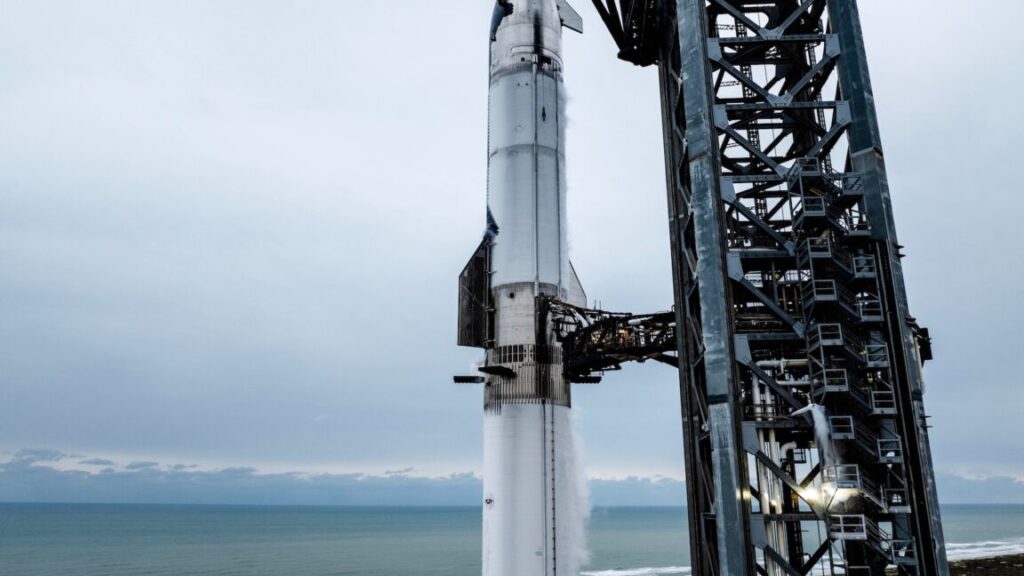
SpaceX’s upgraded Starship rocket stands on its launch pad at Starbase, Texas. Credit: SpaceX
SpaceX plans to launch the seventh full-scale test flight of its massive Super Heavy booster and Starship rocket Thursday afternoon. It’s the first of what might be a dozen or more demonstration flights this year as SpaceX tries new things with the most powerful rocket ever built.
There are many things on SpaceX’s Starship to-do list in 2025. They include debuting an upgraded, larger Starship, known as Version 2 or Block 2, on the test flight preparing to launch Thursday. The one-hour launch window opens at 5 pm EST (4 pm CST; 22: 00 UTC) at SpaceX’s launch base in South Texas. You can watch SpaceX’s live webcast of the flight here.
SpaceX will again attempt to catch the rocket’s Super Heavy booster—more than 20 stories tall and wider than a jumbo jet—back at the launch pad using mechanical arms, or “chopsticks,” mounted to the launch tower. Read more about the Starship Block 2 upgrades in our story from last week.
You might think of next week’s Starship test flight as an apéritif before the entrées to come. Ars recently spoke with Lisa Watson-Morgan, the NASA engineer overseeing the agency’s contract with SpaceX to develop a modified version of Starship to land astronauts on the Moon. NASA has contracts with SpaceX worth more than $4 billion to develop and fly two Starship human landing missions under the umbrella of the agency’s Artemis program to return humans to the Moon.
We are publishing the entire interview with Watson-Morgan below, but first, let’s assess what SpaceX might accomplish with Starship this year.
There are many things to watch for on this test flight, including the deployment of 10 satellite simulators to test the ship’s payload accommodations and the performance of a beefed-up heat shield as the vehicle blazes through the atmosphere for reentry and splashdown in the Indian Ocean.
If this all works, SpaceX may try to launch a ship into low-Earth orbit on the eighth flight, expected to launch in the next couple of months. All of the Starship test flights to date have intentionally flown on suborbital trajectories, bringing the ship back toward reentry over the sea northwest of Australia after traveling halfway around the world.
Then, there’s an even bigger version of Starship called Block 3 that could begin flying before the end of the year. This version of the ship is the one that SpaceX will use to start experimenting with in-orbit refueling, according to Watson-Morgan.
In order to test refueling, two Starships will dock together in orbit, allowing one vehicle to transfer super-cold methane and liquid oxygen into the other. Nothing like this on this scale has ever been attempted before. Future Starship missions to the Moon and Mars may require 10 or more tanker missions to gas up in low-Earth orbit. All of these missions will use different versions of the same basic Starship design: a human-rated lunar lander, a propellant depot, and a refueling tanker.
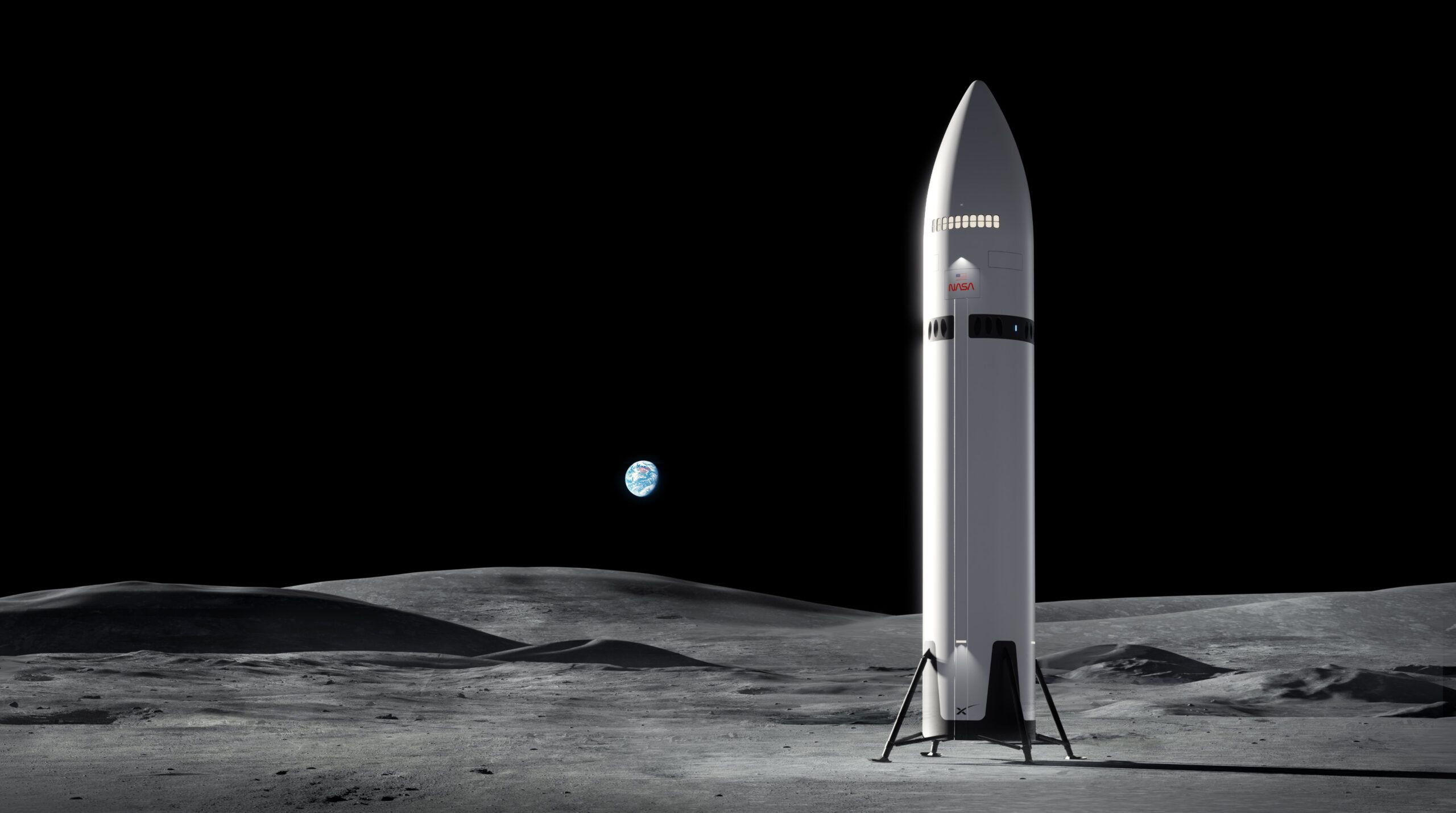
Artist’s illustration of Starship on the surface of the Moon. Credit: SpaceX
Questions for 2025
Catching Starship back at its launch tower and demonstrating orbital propellant transfer are the two most significant milestones on SpaceX’s roadmap for 2025.
SpaceX officials have said they aim to fly as many as 25 Starship missions this year, allowing engineers to more rapidly iterate on the vehicle’s design. SpaceX is constructing a second launch pad at its Starbase facility near Brownsville, Texas, to help speed up the launch cadence.
Can SpaceX achieve this flight rate in 2025? Will faster Starship manufacturing and reusability help the company fly more often? Will SpaceX fly its first ship-to-ship propellant transfer demonstration this year? When will Starship begin launching large batches of new-generation Starlink Internet satellites?
Licensing delays at the Federal Aviation Administration have been a thorn in SpaceX’s side for the last couple of years. Will those go away under the incoming administration of President-elect Donald Trump, who counts SpaceX founder Elon Musk as a key adviser?
And will SpaceX gain a larger role in NASA’s Artemis lunar program? The Artemis program’s architecture is sure to be reviewed by the Trump administration and the nominee for the agency’s next administrator, billionaire businessman and astronaut Jared Isaacman.
The very expensive Space Launch System rocket, developed by NASA with Boeing and other traditional aerospace contractors, might be canceled. NASA currently envisions the SLS rocket and Orion spacecraft as the transportation system to ferry astronauts between Earth and the vicinity of the Moon, where crews would meet up with a landing vehicle provided by commercial partners SpaceX and Blue Origin.
Watson-Morgan didn’t have answers to all of these questions. Many of them are well outside of her purview as Human Landing System program manager, so Ars didn’t ask. Instead, Ars discussed technical and schedule concerns with her during the half-hour interview. Here is one part of the discussion, lightly edited for clarity.
Ars: What do you hope to see from Flight 7 of Starship?
Lisa Watson-Morgan: One of the exciting parts of working with SpaceX are these test flights. They have a really fast turnaround, where they put in different lessons learned. I think you saw many of the flight objectives that they discussed from Flight 6, which was a great success. I think they mentioned different thermal testing experiments that they put on the ship in order to understand the different heating, the different loads on certain areas of the system. All that was really good with each one of those, in addition to how they configure the tiles. Then, from that, there’ll be additional tests that they will put on Flight 7, so you kind of get this iterative improvement and learning that we’ll get to see in Flight 7. So Flight 7 is the first Version 2 of their ship set. When I say that, I mean the ship, the booster, all the systems associated with it. So, from that, it’s really more just understanding how the system, how the flaps, how all of that interacts and works as they’re coming back in. Hopefully we’ll get to see some catches, that’s always exciting.
Ars: How did the in-space Raptor engine relight go on Flight 6 (on November 19)?
Lisa Watson-Morgan: Beautifully. And that’s something that’s really important to us because when we’re sitting on the Moon… well, actually, the whole path to the Moon as we are getting ready to land on the Moon, we’ll perform a series of maneuvers, and the Raptors will have an environment that is very, very cold. To that, it’s going to be important that they’re able to relight for landing purposes. So that was a great first step towards that. In addition, after we land, clearly the Raptors will be off, and it will get very cold, and they will have to relight in a cold environment (to get off the Moon). So that’s why that step was critical for the Human Landing System and NASA’s return to the Moon.
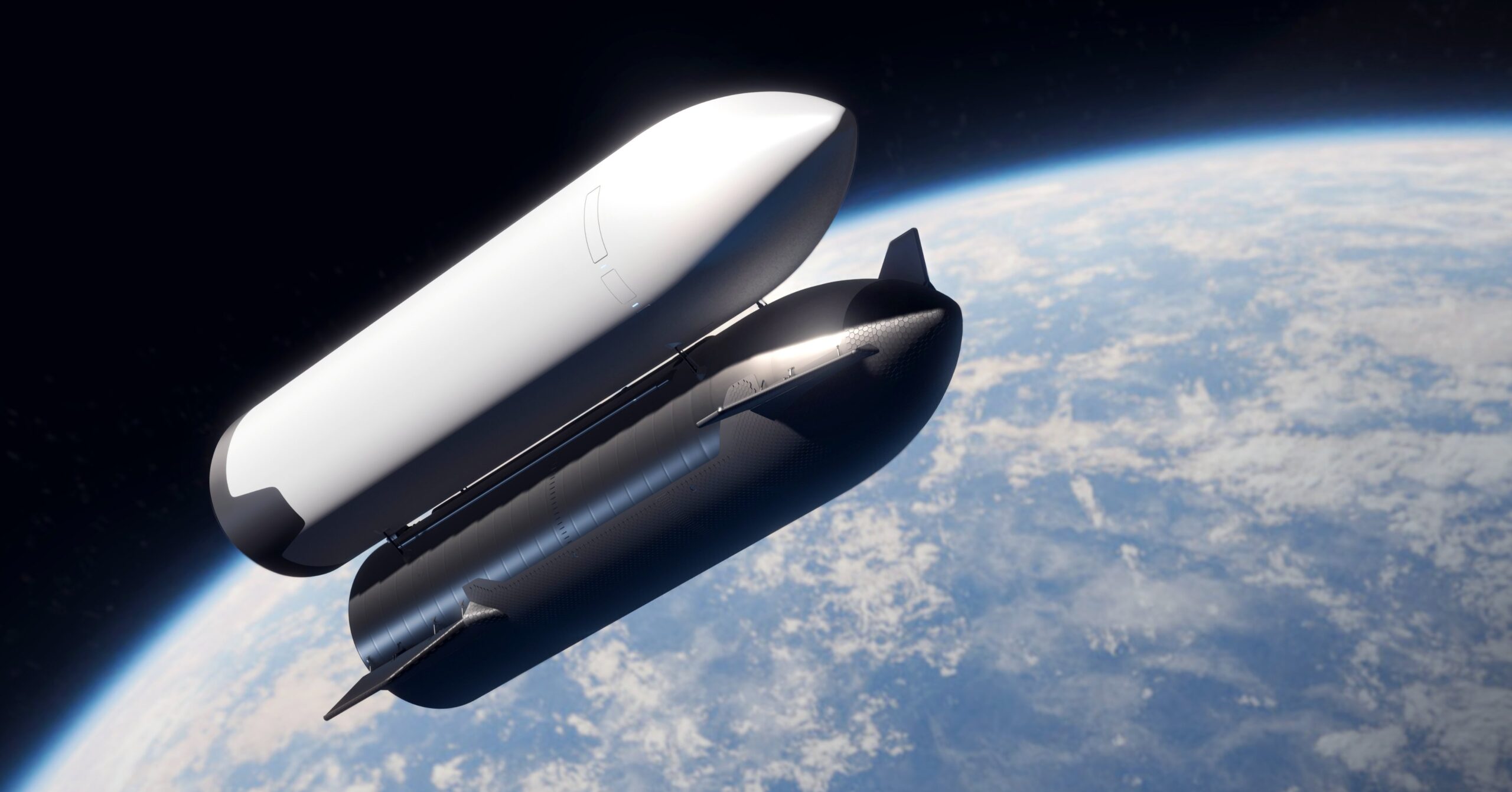
A recent artist’s illustration of two Starships docked together in low-Earth orbit. Credit: SpaceX
Ars: Which version of the ship is required for the propellant transfer demonstration, and what new features are on that version to enable this test?
Lisa Watson-Morgan: We’re looking forward to the Version 3, which is what’s coming up later on, sometime in ’25, in the near term, because that’s what we need for propellant transfer and the cryo fluid work that is also important to us… There are different systems in the V3 set that will help us with cryo fluid management. Obviously, with those, we have to have the couplers and the quick-disconnects in order for the two systems to have the right guidance, navigation, trajectory, all the control systems needed to hold their station-keeping in order to dock with each other, and then perform the fluid transfer. So all the fluid lines and all that’s associated with that, those systems, which we have seen in tests and held pieces of when we’ve been working with them at their site, we’ll get to see those actually in action on orbit.
Ars: Have there been any ground tests of these systems, whether it’s fluid couplers or docking systems? Can you talk about some of the ground tests that have gone into this development?
Lisa Watson-Morgan: Oh, absolutely. We’ve been working with them on ground tests for this past year. We’ve seen the ground testing and reviewed the data. Our team works with them on what we deem necessary for the various milestones. While the milestone contains proprietary (information), we work closely with them to ensure that it’s going to meet the intent, safety-wise as well as technically, of what we’re going to need to see. So they’ve done that.
Even more exciting, they have recently shipped some of their docking systems to the Johnson Space Center for testing with the Orion Lockheed Martin docking system, and that’s for Artemis III. Clearly, that’s how we’re going to receive the crew. So those are some exciting tests that we’ve been doing this past year as well that’s not just focused on, say, the booster and the ship. There are a lot of crew systems that are being developed now. We’re in work with them on how we’re going to effectuate the crew manual control requirements that we have, so it’s been a great balance to see what the crew needs, given the size of the ship. That’s been a great set of work. We have crew office hours where the crew travels to Hawthorne [SpaceX headquarters in California] and works one-on-one with the different responsible engineers in the different technical disciplines to make sure that they understand not just little words on the paper from a requirement, but actually what this means, and then how systems can be operated.
Ars: For the docking system, Orion uses the NASA Docking System, and SpaceX brings its own design to bear on Starship?
Lisa Watson-Morgan: This is something that I think the Human Landing System has done exceptionally well. When we wrote our high-level set of requirements, we also wrote it with a bigger picture in mind—looked into the overall standards of how things are typically done, and we just said it has to be compliant with it. So it’s a docking standard compliance, and SpaceX clearly meets that. They certainly do have the Dragon heritage, of course, with the International Space Station. So, because of that, we have high confidence that they’re all going to work very well. Still, it’s important to go ahead and perform the ground testing and get as much of that out of the way as we can.
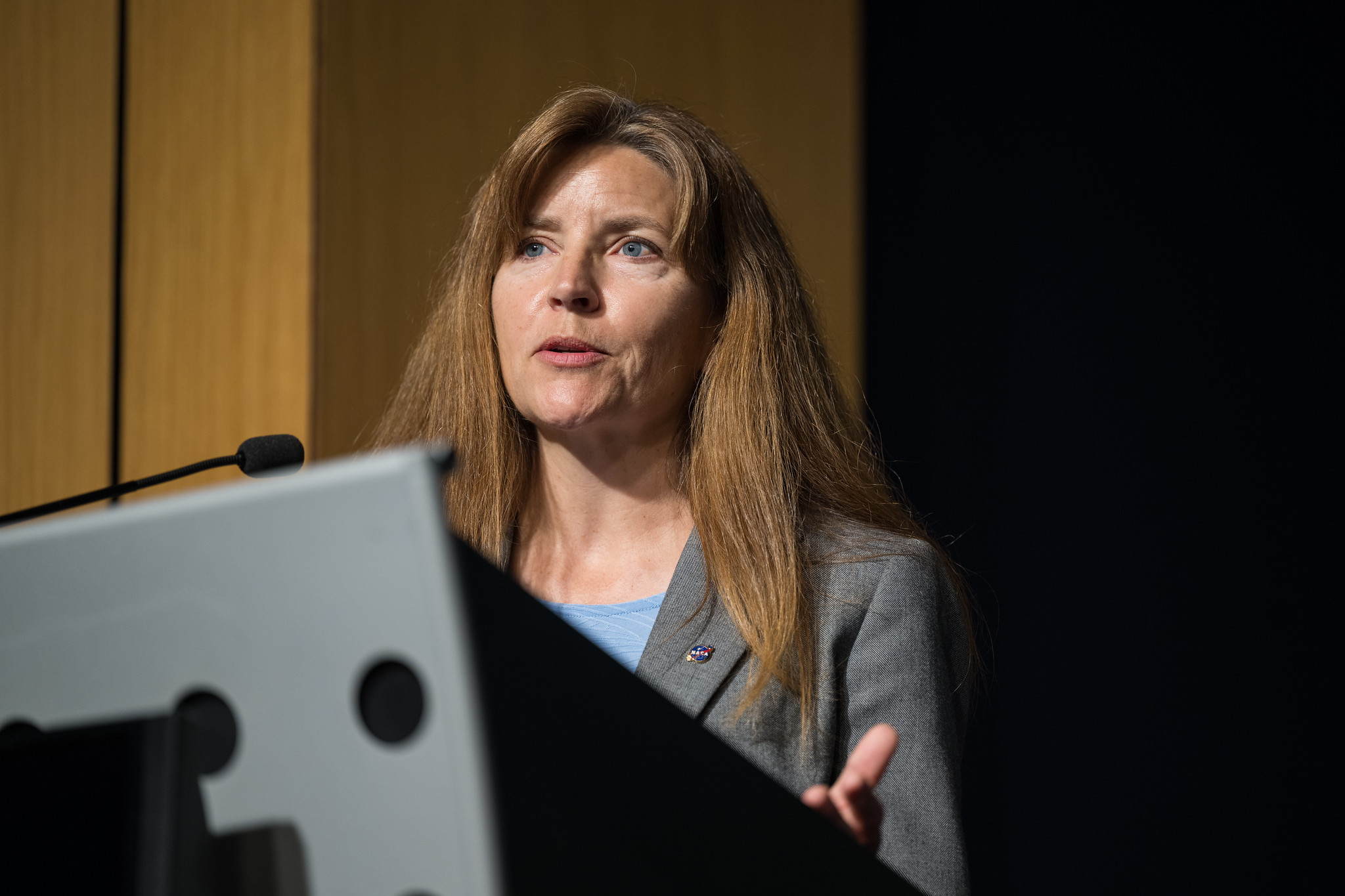
Lisa Watson-Morgan, NASA’s HLS program manager, is based at Marshall Space Flight Center in Huntsville, Alabama. Credit: ASA/Aubrey Gemignani
Ars: How far along is the development and design of the layout of the crew compartment at the top of Starship? Is it far along, or is it still in the conceptual phase? What can you say about that?
Lisa Watson-Morgan: It’s much further along there. We’ve had our environmental control and life support systems, whether it’s carbon dioxide monitoring fans to make sure the air is circulating properly. We’ve been in a lot of work with SpaceX on the temperature. It’s… a large area (for the crew). The seats, making sure that the crew seats and the loads on that are appropriate. For all of that work, as the analysis work has been performed, the NASA team is reviewing it. They had a mock-up, actually, of some of their life support systems even as far back as eight-plus months ago. So there’s been a lot of progress on that.
Ars: Is SpaceX planning to use a touchscreen design for crew displays and controls, like they do with the Dragon spacecraft?
Lisa Watson-Morgan: We’re in talks about that, about what would be the best approach for the crew for the dynamic environment of landing.
Ars: I can imagine it is a pretty dynamic environment with those Raptor engines firing. It’s almost like a launch in reverse.
Lisa Watson-Morgan: Right. Those are some of the topics that get discussed in the crew office hours. That’s why it’s good to have the crew interacting directly, in addition to the different discipline leads, whether it’s structural, mechanical, propulsion, to have all those folks talking guidance and having control to say, “OK, well, when the system does this, here’s the mode we expect to see. Here’s the impact on the crew. And is this condition, or is the option space that we have on the table, appropriate for the next step, with respect to the displays.”
Ars: One of the big things SpaceX needs to prove out before going to the Moon with Starship is in-orbit propellant transfer. When do you see the ship-to-ship demonstration occurring?
Lisa Watson-Morgan: I see it occurring in ’25.
Ars: Anything more specific about the schedule for that?
Lisa Watson-Morgan: That’d be a question for SpaceX because they do have a number of flights that they’re performing commercially, for their maturity. We get the benefit of that. It’s actually a great partnership. I’ll tell you, it’s really good working with them on this, but they’d have to answer that question. I do foresee it happening in ’25.
Ars: What things do you need to see SpaceX accomplish before they’re ready for the refueling demo? I’m thinking of things like the second launch tower, potentially. Do they need to demonstrate a ship catch or anything like that before going for orbital refueling?
Lisa Watson-Morgan: I would say none of that’s required. You just kind of get down to, what are the basics? What are the basics that you need? So you need to be able to launch rapidly off the same pad, even. They’ve shown they can launch and catch within a matter of minutes. So that is good confidence there. The catching is part of their reuse strategy, which is more of their commercial approach, and not a NASA requirement. NASA reaps the benefit of it by good pricing as a result of their commercial model, but it is not a requirement that we have. So they could theoretically use the same pad to perform the propellant transfer and the long-duration flight, because all it requires is two launches, really, within a specified time period to where the two systems can meet in a planned trajectory or orbit to do the propellant transfer. So they could launch the first one, and then within a week or two or three, depending on what the concept of operations was that we thought we could achieve at that time, and then have the propellant transfer demo occur that way. So you don’t necessarily need two pads, but you do need more thermal characterization of the ship. I would say that is one of the areas (we need to see data on), and that is one of the reasons, I think, why they’re working so diligently on that.
Ars: You mentioned the long-duration flight demonstration. What does that entail?
Lisa Watson-Morgan: The simple objectives are to launch two different tankers or Starships. The Starship will eventually be a crewed system. Clearly, the ones that we’re talking about for the propellant transfer are not. It’s just to have the booster and Starship system launch, and within a few weeks, have another one launch, and have them rendezvous. They need to be able to find each other with their sensors. They need to be able to come close, very, very close, and they need to be able to dock together, connect, do the quick connect, and make sure they are able, then, to flow propellant and LOX (liquid oxygen) to another system. Then, we need to be able to measure the quantity of how much has gone over. And from that, then they need to safely undock and dispose.
Ars: So the long-duration flight demonstration is just part of what SpaceX needs to do in order to be ready for the propellant transfer demonstration?
Lisa Watson-Morgan: We call it long duration just because it’s not a 45-minute or an hour flight. Long duration, obviously, that’s a relative statement, but it’s a system that can stay up long enough to be able to find another Starship and perform those maneuvers and flow of fuel and LOX.
Ars: How much propellant will you transfer with this demonstration, and do you think you’ll get all the data you need in one demonstration, or will SpaceX need to try this several times?
Lisa Watson-Morgan: That’s something you can ask SpaceX (about how much propellant will be transferred). Clearly, I know, but there’s some sensitivity there. You’ve seen our requirements in our initial solicitation. We have thresholds and goals, meaning we want you to at least do this, but more is better, and that’s typically how we work almost everything. Working with commercial industry in these fixed-price contracts has worked exceptionally well, because when you have providers that are also wanting to explore commercially or trying to make a commercial system, they are interested in pushing more than what we would typically ask for, and so often we get that for an incredibly fair price.
Stephen Clark is a space reporter at Ars Technica, covering private space companies and the world’s space agencies. Stephen writes about the nexus of technology, science, policy, and business on and off the planet.
Julianna Scheiman, director of NASA science missions for SpaceX, said it made sense to pair the Firefly and ispace missions on the same Falcon 9 rocket.
“When we have two missions that can each go to the Moon on the same launch, that is something that we obviously want to take advantage of,” Scheiman said. “So when we found a solution for the Firefly and ispace missions to fly together on the same Falcon 9, it was a no-brainer to put them together.”
SpaceX stacked the two landers, one on top of the other, inside the Falcon 9’s payload fairing. Firefly’s lander, the larger of the two spacecraft, rode on top of the stack and deployed from the rocket first. The Resilience lander from ispace launched in the lower position, cocooned inside a specially designed canister. Once Firefly’s lander separated from the Falcon 9, the rocket jettisoned the canister, performed a brief engine firing to maneuver into a slightly different orbit, then released ispace’s lander.
This dual launch arrangement resulted in a lower launch price for Firefly and ispace, according to Scheiman.
“At SpaceX, we are really interested in and invested in lowering the cost of launch for everybody,” she said. “So that’s something we’re really proud of.”
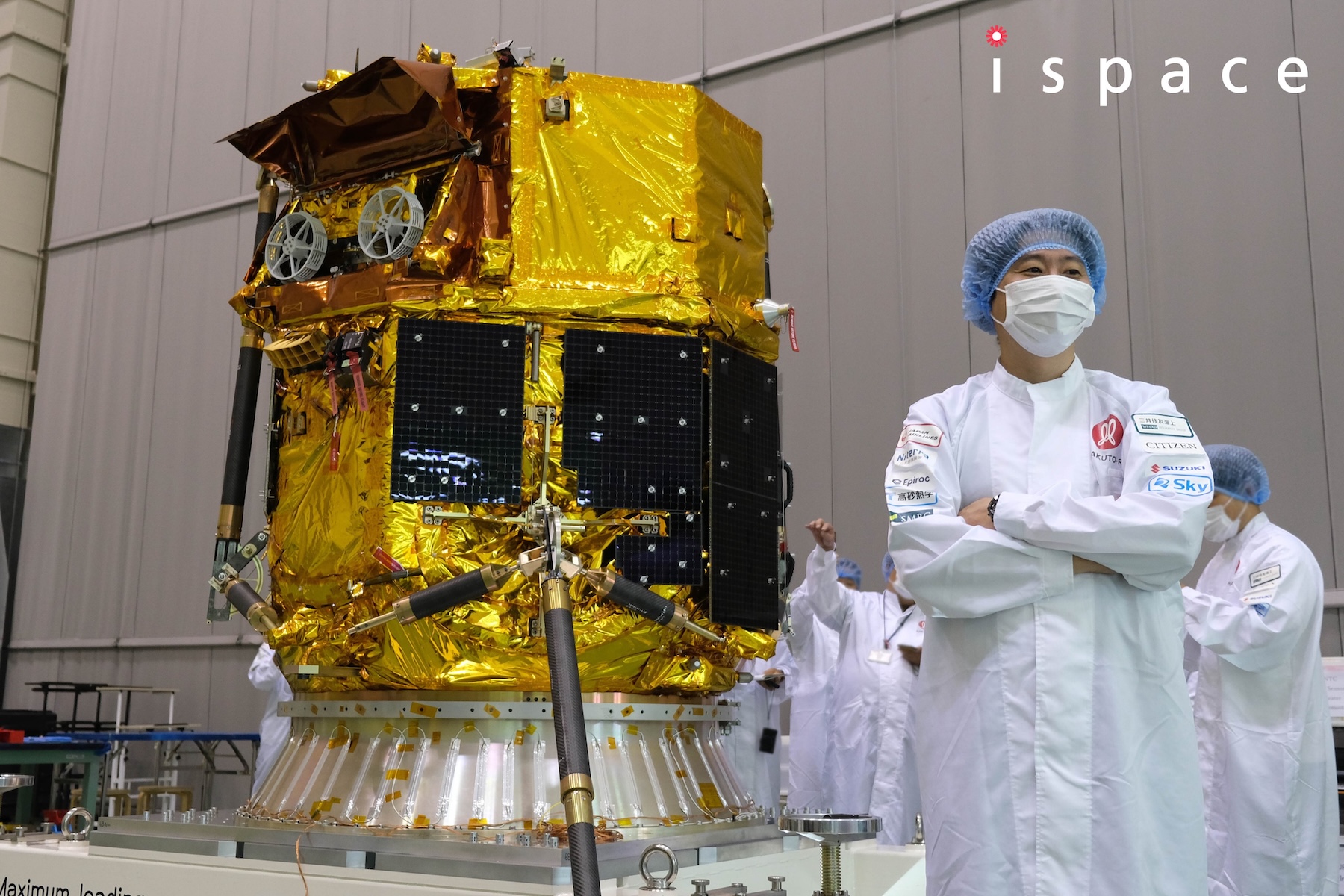
The Resilience lunar lander is pictured at ispace’s facility in Japan last year. The company’s small Tenacious rover is visible on the upper left part of the spacecraft. credit: ispace Credit: ispace
The Blue Ghost and Resilience landers will take different paths toward the Moon.
Firefly’s Blue Ghost will spend about 25 days in Earth orbit, then four days in transit to the Moon. After Blue Ghost enters lunar orbit, Firefly’s ground team will verify the readiness of the lander’s propulsion and navigation systems and execute several thruster burns to set up for landing.
Blue Ghost’s final descent to the Moon is tentatively scheduled for March 2. The target landing site is in Mare Crisium, an ancient 350-mile-wide (560-kilometer) impact basin in the northeast part of the near side of the Moon.
After touchdown, Blue Ghost will operate for about 14 days (one entire lunar day). The instruments aboard Firefly’s lander include a subsurface drill, an X-ray imager, and an experimental electrodynamic dust shield to test methods of repelling troublesome lunar dust from accumulating on sensitive spacecraft components.
The Resilience lander from ispace will take four to five months to reach the Moon. It carries several intriguing tech demo experiments, including a water electrolyzer provided by a Japanese company named Takasago Thermal Engineering. This demonstration will test equipment that future lunar missions could use to convert the Moon’s water ice resources into electricity and rocket fuel.
The lander will also deploy a “micro-rover” named Tenacious, developed by an ispace subsidiary in Luxembourg. The Tenacious rover will attempt to scoop up lunar soil and capture high-definition imagery of the Moon.
Ron Garan, CEO of ispace’s US-based subsidiary, told Ars that this mission is “pivotal” for the company.
“We were not fully successful on our first mission,” Garan said in an interview. “It was an amazing accomplishment, even though we didn’t have a soft landing… Although the hardware worked flawlessly, exactly as it was supposed to, we did have some lessons learned in the software department. The fixes to prevent what happened on the first mission from happening on the second mission were fairly straightforward, so that boosts our confidence.”
The ispace subsidiary led by Garan, a former NASA astronaut, is based in Colorado. While the Resilience lander launched Wednesday is not part of the CLPS program, the company will build an upgraded lander for a future CLPS mission for NASA, led by Draper Laboratory.
“I think the fact that we have two lunar landers on the same rocket for the first time in history is pretty substantial,” Garan said. I think we all are rooting for each other.”
Investors need to see more successes with commercial lunar landers to fully realize the market’s potential, Garan said.
“That market, right now, is very nascent. It’s very, very immature. And one of the reasons for that is that it’s very difficult for companies that are contemplating making investments on equipment, experiments, etc., to put on the lunar surface and lunar orbit,” Garan said. “It’s very difficult to make those investments, especially if they’re long-term investments, because there really hasn’t been a proof of concept yet.”
“So every time we have a success, that makes it more likely that these companies that will serve as the foundation of a commercial lunar market movement will be able to make those investments,” Garan said. “Conversely, every time we have a failure, the opposite happens.”
The company continues to make technical progress, Lapsa said.
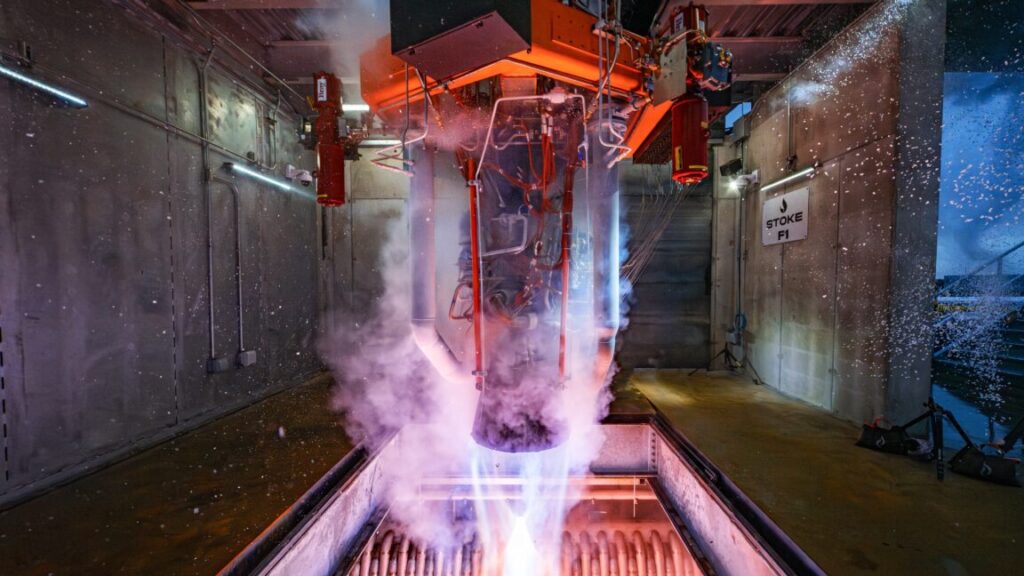
A few weeks ago, Stoke successfully tested the Nova rocket’s main engine, Zenith, in a vertical position. Lapsa said the company will probably make one more iterative block change on the Zenith engine before it gets into a “nice, tight” flight configuration. Similarly, the second stage engine has gone through a design upgrade to get it ready for flight. After the engines are complete, the company will assemble a flight vehicle and put it through the final phases of testing.
Pads and permitting
At the same time, Stoke is working to complete construction at Launch Complex 14 at Cape Canaveral Space Force Station in Florida and finalize environmental permitting for launches from there.
“We’re pushing really hard to have the pad ready, and it will be activated well before the end of the year,” Lapsa said. “And the vehicle will be right there with it.”
Historically, it’s unlikely for a company to move from engine testing to a first orbital launch attempt in the same year, so a Nova debut in 2026 seems more likely. Nevertheless, the new funding from investors signals confidence that Stoke is making credible technical progress on its vehicle development.
The space capital market has changed significantly since Stoke was founded by Lapsa and Tom Feldman in 2020. At the time, there were dozens of US launch companies at work on small- and medium-lift vehicles. Today, arguably, there are just half a dozen credible US-based entities developing medium-lift rockets.
“It’s a very different conversation with investors than it was five years ago,” Lapsa said.
The winnowing of competitors is also a stark reminder of both the technical and financial challenges of operating a launch company.
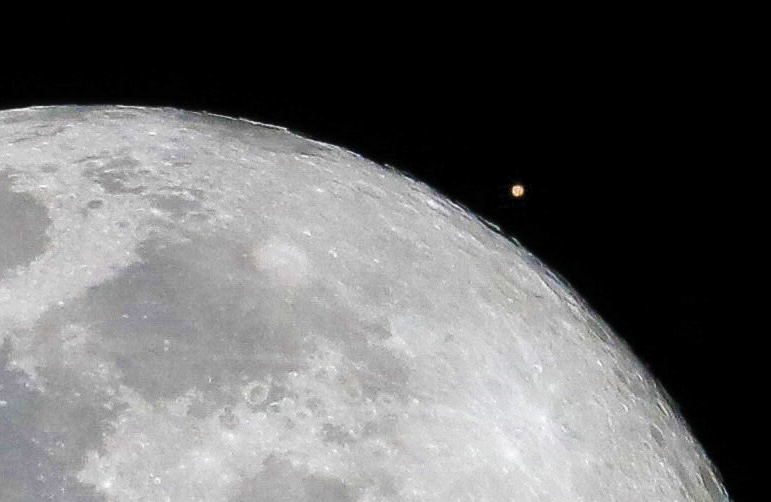
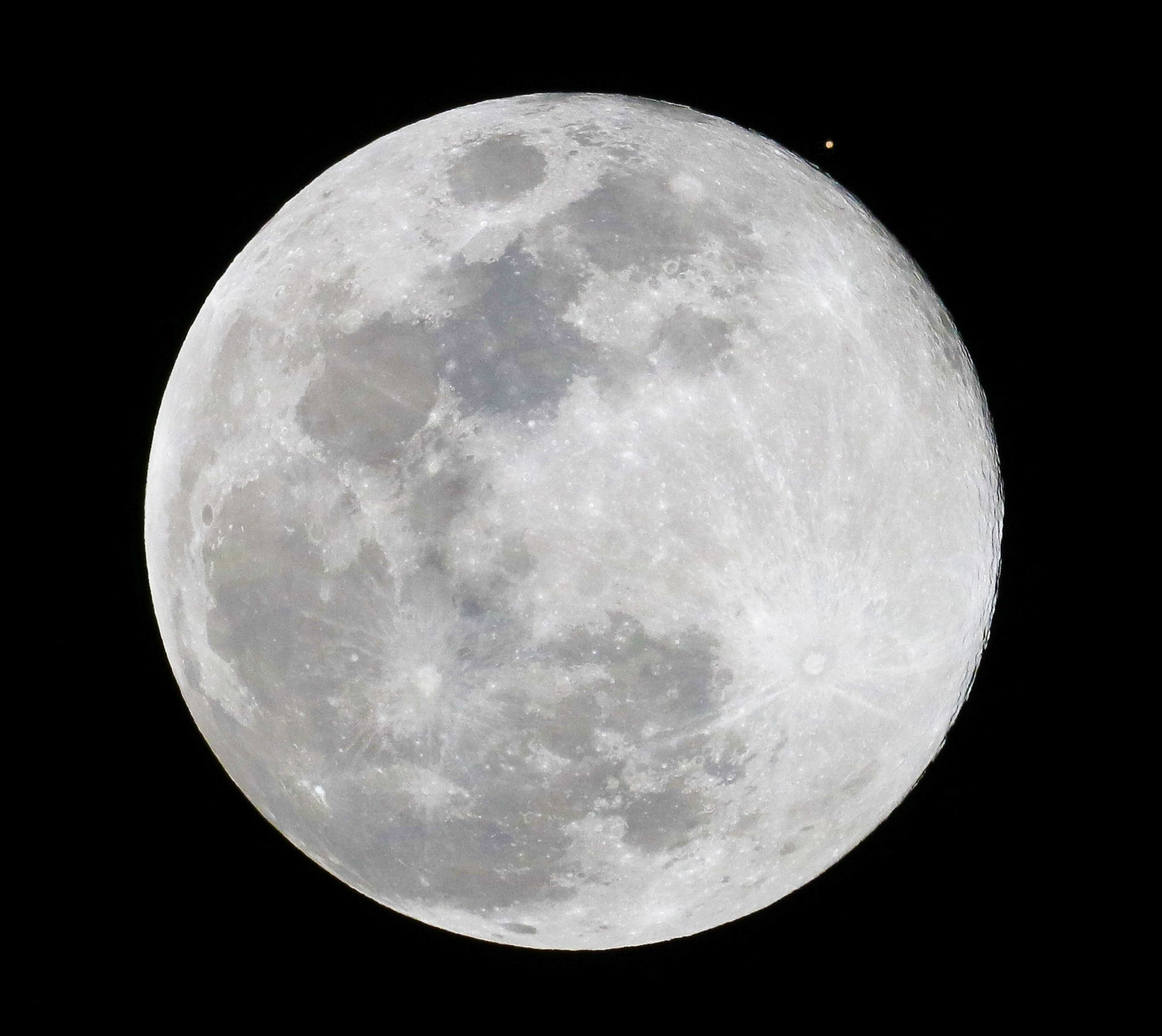
The most recent lunar occultation of Mars that was visible from the United States occurred on December 7, 2022. A handful of these events occur every few years around each Martian opposition, but they are usually only visible from a small portion of Earth, often over the ocean or in polar regions. The next lunar occultation of Mars visible across most of the United States will happen on the night of February 4–5, 2042. There are similar occultations of Mars in 2035, 2038, and 2039 visible in narrow swaths of South Florida and the Pacific Northwest.
This photo was taken with a handheld Canon 80D and a 600 mm lens. Settings were 1/2000 sec, f/8, ISO 400. The image was cropped and lightly edited in Adobe Lightroom.
The Moon also periodically covers Venus, Jupiter, Saturn, and the Solar System’s more distant planets. A good resource on lunar occultations is In-The-Sky.org, which lists events where the Moon will block out a planet or a bright star. Be sure you choose your location on the upper right corner of the page and toggle year by year to plan out future viewing opportunities.
Viewing these kinds of events can be breathtaking and humbling. In 2012, I was lucky enough to observe the transit of Venus in front of the Sun, something that only happens twice every 121 years.
Seeing Mars, twice the size of the Moon, rising above the lunar horizon like a rusty BB pellet next to a dusty volleyball provided a perfect illustration of the scale and grandeur of the Solar System. Similarly, viewing Venus dwarfed by the Sun was a revealing moment. The worlds accompanying Earth around the Sun are varied in size, shape, color, and composition.
In one glance, an observer can see the barren, airless lunar surface and a cold, desert planet that once harbored rivers, lakes, and potentially life, all while standing on our own planet, an oasis in the cosmos. One thing that connects them all is humanity’s quest for exploration. Today, robots are operating on or around the Moon and Mars. Governments and private companies are preparing to return astronauts to the lunar surface within a few years, then moving on to dispatch human expeditions to the red planet.
Plans to land astronauts on the Moon are already in motion, but significant financial and technological hurdles remain for a crew mission to put humans on Mars. But for a short time Monday night, it looked like there was a direct path.
However, weather at the launch site remained a concern. According to forecasters at the 45th Space Wing, at Cape Canaveral Space Force Station, there was a 70 percent chance unfavorable launch conditions. Concerns include cumulus clouds, thick clouds, and liftoff winds.
For one or both of these reasons, shortly after 8 pm ET on Monday the company waved off a launch attempt for later that night. This necessitated a 48-hour delay because a Falcon 9 rocket carrying two private lunar landers, one built by Firefly and the other ispace, is due to launch during a similar early morning window on Wednesday.
Therefore Blue Origin is now targeting a window from 1 am ET (06: 00 UTC) to 4 am ET on Thursday for the much-anticipated debut of the New Glenn rocket. Blue Origin again plans to provide a webcast carrying live coverage of New Glenn’s launch attempt on the company’s website.
Note: This story was updated after Blue Origin’s decision to forego a Tuesday morning launch attempt.
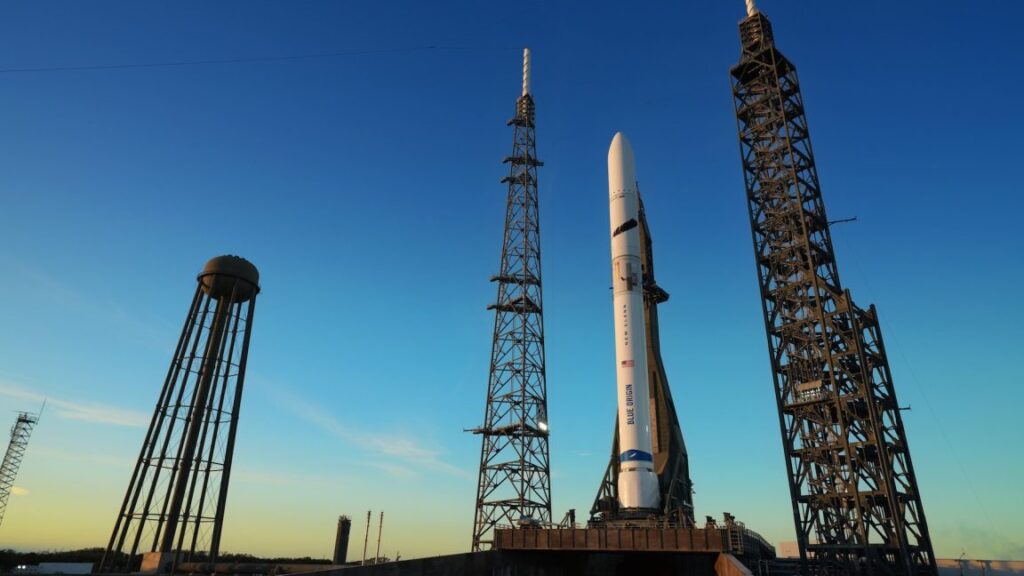
COCOA BEACH, Fla.—As it so often does in the final days before the debut of a new rocket, it all comes down to weather. Accordingly, Blue Origin is only awaiting clear skies and fair seas for its massive New Glenn vehicle to lift off from Florida.
After the company completed integration of the rocket this week, and rolled the super heavy lift rocket to its launch site at Cape Canaveral, the focus turned toward the weather. Conditions at Cape Canaveral Space Force Base have been favorable during the early morning launch windows available to the rocket, but there have been complications offshore.
That’s because Blue Origin aims to recover the first stage of the New Glenn rocket, and sea states in the Atlantic Ocean have been unsuitable for an initial attempt to catch the first stage booster on a drone ship. The company has already waived one launch attempt set for 1 am ET (06: 00 UTC) on Friday, January 10.
Conditions have improved a bit since then, but on Saturday evening the company’s launch officials canceled a second attempt planned for 1 am ET on Sunday. The new launch time is now 1 am ET on Monday, January 13, when better sea states are expected. There is a three-hour launch window. The company will provide a webcast of proceedings at this link beginning one hour before liftoff.
Seeking a nominal flight
According to a mission timeline shared by Blue Origin on Saturday, it will take several hours to fuel the New Glenn rocket. Second stage hydrogen loading will begin 4.5 hours before liftoff, followed by the booster stage and second stage liquid oxygen at 4 hours, and methane for the booster stage at 3.5 hours to go. Fueling should be complete about an hour before liftoff.