Science

measles-is-“growing-global-threat,”-cdc-tells-doctors-in-alert-message

Measles is “growing global threat,” CDC tells doctors in alert message

Alert —

Since December, there have been 23 measles cases in the US, including two outbreaks.

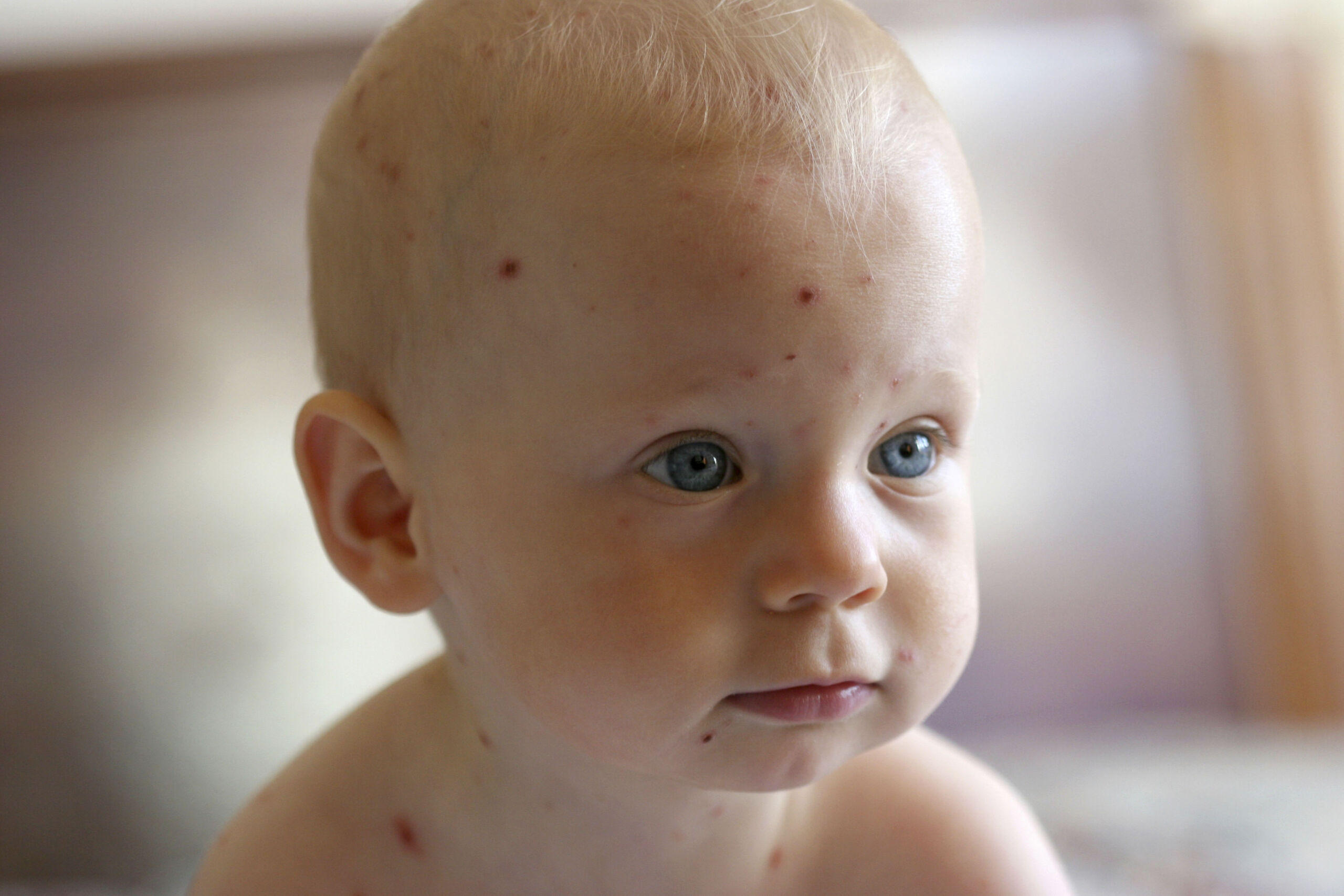
A baby with measles.

Enlarge / A baby with measles.

The Centers for Disease Control and Prevention is putting clinicians on alert about the growing risk of measles cases and outbreaks amid a global surge in transmission.

In an outreach message sent Thursday, the CDC told clinicians to look out for patients who have a rash accompanied by a fever and other symptoms of measles, as well as patients who have recently traveled to countries with ongoing measles outbreaks.

Between December 1, 2023, and January 23, 2024, there have been 23 confirmed measles cases in the US, including seven direct importations by international travelers and two outbreaks with more than five cases each, the CDC noted. Most of the cases were in unvaccinated children and teens.

Measles outbreaks in the US are typically sparked by unvaccinated or undervaccinated US residents who pick up the infection abroad and then, when they return, transmit the disease to pockets of their communities that are also unvaccinated or undervaccinated.

Globally and in the US, vaccination rates against measles—via the measles, mumps, and rubella vaccine (MMR)—have fallen in recent years due to pandemic-related health care disruption and vaccine hesitancy fueled by misinformation.

“The increased number of measles importations seen in recent weeks is reflective of a rise in global measles cases and a growing global threat from the disease,” the CDC’s outreach message, titled “Stay Alert for Measles Cases,” read.

According to data from the World Health Organization, the European region saw an over 40-fold rise in measles cases in 2023 as compared with 2022. The region tallied over 42,200 measles cases last year, compared with just 941 in 2022.

This week, the WHO reported a rapid escalation of measles cases in Kazakhstan (which the WHO considers part of the European region). Kazakhstan has recorded the highest incidence of measles cases in the region, with 13,677 cases in 2023. That corresponds to over 639 cases per million in the population. In the news release Tuesday, Kazakhstan’s health minister reported that there are “currently 2,167 children in hospital with measles, 27 of them in a serious condition.”

The outbreak is largely spurred by unvaccinated children who missed their routine immunizations during the pandemic. Sixty-five percent of the reported measles cases are in children under age 5, the WHO noted. The country is now trying to catch children up on their vaccines to curb the outbreak.

“Measles is highly infectious, but fortunately, can be effectively prevented through vaccination,” WHO’s Regional Director for Europe, Hans Henri P. Kluge, said in the news release. “I commend Kazakhstan for the urgent measures being taken to stop the spread of this dangerous disease.”

Meanwhile, measles is flaring up in many other places. Last week, the UK Health Security Agency warned of the potential for an ongoing measles outbreak to spread. As of January 18, there were 216 confirmed cases and 103 probable cases in the West Midlands region since October 2023. Authorities warned that any areas with low MMR vaccination rates are at risk of an outbreak.

The vast majority of Americans have received their MMR vaccines on schedule. In this case, the two standard, recommended doses are considered 97 percent effective against measles, and the protection is considered for life. But anyone who is unvaccinated or undervaccinated is at high risk of infection in the event of an exposure. The virus can linger in air space for up to two hours after an infected person leaves the area, the CDC notes, and is highly infectious—up to 90 percent of unvaccinated people exposed will fall ill. Once infected, people are infectious from four days before the telltale measles rash develops to four days afterward.

Measles is “growing global threat,” CDC tells doctors in alert message Read More »

tens-of-thousands-of-pregnancies-from-rape-occurring-in-abortion-ban-states

Tens of thousands of pregnancies from rape occurring in abortion-ban states

Outraging —

States with bans logged 10 or fewer legal abortions per month, despite rape exceptions.

Pro-choice protesters march in Texas, carrying signs that say

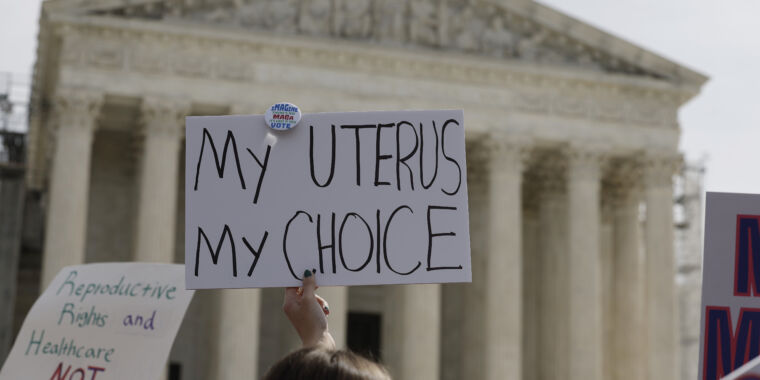
Enlarge / Pro-choice protesters march outside the Texas State Capitol on Sept. 1, 2021, in Austin, Texas.

Getty Images | The Washington Post

Fourteen states have banned abortions at any gestational age since the Supreme Court overruled Roe v. Wade in 2022. Since the enactment of those abortion bans, an estimated 64,565 people became pregnant as a result of rape in those states. But, while five of the 14 states have exceptions for rape, all of the states logged only 10 or fewer legal abortions per month since their respective bans were enacted.

The finding, published this week in JAMA Internal Medicine, is a stark look at the effects of such bans on reproductive health care. The study did not assess how many of the estimated 64,565 pregnancies resulted in births, but it makes clear that tens of thousands of pregnant rape survivors, including children, were forced to turn to illegal procedures, self-managed abortions, or burdensome travel to states where abortion is legal—cost-prohibitive to many—as an alternative to carrying a rape-related pregnancy to term.

It also showed that legal exceptions for rape don’t work. The states with those exceptions apply stringent time limits on the pregnancy and require victims to report their rapes to law enforcement, which likely disqualifies most. The US Department of Justice estimates that only 21 percent of victims report their rape to police, for myriad reasons.

In an editor’s note accompanying the study, a trio of JAMA Internal Medicine editors—who are also medical researchers at the University of California, San Francisco, Harvard, and NYC Health and Hospitals—note the findings “demonstrate the scope of the problem,” as the number of rape-related pregnancies is “exponentially larger” than the number of legal abortions in those states.

“As physicians, we do not see abortion as a political, religious, or legal issue. Rather we see access to safe abortions as a necessary part of reproductive health services to protect the physical and mental well-being of patients. The best solution to this problem is a national law protecting the right of all people to choose to terminate pregnancy,” they write.

Study design

The study, led by a researcher at Planned Parenthood of Montana, is only an estimate because hard, state-level numbers are impossible to come by. The researchers pulled rape data from the DOJ’s Bureau of Justice Statistics, the FBI, and the Centers for Disease Control and Prevention’s National Intimate Partner and Sexual Violence survey, a specially designed survey to ascertain reported and unreported rapes.

With national data from various sources, the researchers estimated the proportion of rape survivors that are female individuals ages 15 to 45, and they further adjusted for the number of rapes that are vaginal. To estimate state-level rapes, they proportioned the rapes by states based on the FBI’s 2022 crime data, which includes rapes. They then multiplied each state’s rapes by the fraction of rapes likely to result in pregnancy. And finally, adjusted for the months between July 1, 2022 and January 1, 2024 that an abortion ban was in effect in each of the 14 states. Among the 14 states, the number of months in which a ban was in effect ranged from four to 18 months.

In all, the researchers estimated 519,981 completed vaginal rapes in the 14 abortion ban states which resulted in a collective total of 64,565 pregnancies during the four to 18 months that bans were in effect. Of the rape-related pregnancies, an estimated 5,586 (9 percent) were in states with rape exceptions, and 58,979 (91 percent) were in states with no exception.

Texas, the abortion-ban state with the largest population, had an estimated 26,313 (41 percent) of all rape-related pregnancies under its ban, which was enacted for 16 months during the study time frame. The state’s large number drew outrage from Democratic state lawmakers, particularly in light Gov. Greg Abbott’s vow to “eliminate rape” in Texas after a 2021 six-week abortion ban took effect (the state enacted a total ban in August 2022).

“Women and girls across our state are enduring unwanted pregnancies, suffering from life-endangering complications in desired pregnancies and fleeing the state for medical care,” the 13 Democratic state senators said in a Thursday news release, as reported by the Houston Chronicle. “We cannot allow this to be the new norm.”

Tens of thousands of pregnancies from rape occurring in abortion-ban states Read More »
what-would-the-late-heavy-bombardment-have-done-to-the-earth’s-surface?

What would the late heavy bombardment have done to the Earth’s surface?

Under fire —

Early in Earth’s history, bombardment by enormous asteroids was common.

Image of a projection of the globe, with multi-colored splotches covering its surface.

Enlarge / Each panel shows the modeled effects of early Earth’s bombardment. Circles show the regions affected by each impact, with diameters corresponding to the final size of craters for impactors smaller than 100 kilometers in diameter. For larger impactors, the circle size corresponds to size of the region buried by impact-generated melt. Color coding indicates the timing of the impacts. The smallest impactors considered in this model have a diameter of 15 kilometers.

Simone Marchi, Southwest Research Institute

When it comes to space rocks slamming into Earth, two stand out. There’s the one that killed the dinosaurs 65 million years ago (goodbye T-rex, hello mammals!) and the one that formed Earth’s Moon. The asteroid that hurtled into the Yucatan peninsula and decimated the dinosaurs was a mere 10 kilometers in diameter. The impactor that formed the Moon, on the other hand, may have been about the size of Mars. But between the gigantic lunar-forming impact and the comparatively diminutive harbinger of dinosaurian death, Earth was certainly battered by other bodies.

At the 2023 Fall Meeting of the American Geophysical Union, scientists discussed what they’ve found when it comes to just how our planet has been shaped by asteroids that impacted the early Earth, causing everything from voluminous melts that covered swaths of the surface to ancient tsunamis that tore across the globe.

Modeling melt

When the Moon-forming impactor smashed into Earth, much of the world became a sea of melted rock called a magma ocean (if it wasn’t already melted). After this point, Earth had no more major additions of mass, said Simone Marchi, a planetary scientist at the Southwest Research Institute who creates computer models of the early Solar System and its planetary bodies, including Earth. “But you still have this debris flying about,” he said. This later phase of accretion may have lacked another lunar-scale impact, but likely featured large incoming asteroids. Predictions of the size and frequency distributions of this space flotsam indicate “that there has to be a substantial number of objects larger than, say, 1,000 kilometers in diameter,” Marchi said.

Unfortunately, there’s little obvious evidence in the rock record of these impacts before about 3.5 billion years ago. So scientists like Marchi can look to the Moon to estimate the number of objects that must have collided with Earth.

Armed with the size and number of impactors, Marchi and colleagues built a model that describes, as a function of time, the volume of melt this battering must have produced at the Earth’s surface. Magma oceans were in the past, but impactors greater than 100 kilometers in diameter still melted a lot of rock and must have drastically altered the early Earth.

Unlike smaller impacts, the volume of melt generated by objects of this size isn’t localized within a crater, according to models. Any crater exists only momentarily, as the rock is too fluid to maintain any sort of structure. Marchi compares this to tossing a stone into water. “There is a moment in time in which you have a cavity in the water, but then everything collapses and fills up because it’s a fluid.”

The melt volume is much larger than the amount of excavated rock, so Marchi can calculate just how much melt might have spilled out and coated parts of the Earth’s surface with each impact. The result is an astonishing map of melt volume. During the first billion years or so of Earth’s history, nearly the entire surface would have featured a veneer of impact melt at some point. Much of that history is gone because our active planet’s atmospheric, surface, and tectonic processes constantly modify much of the rock record.

Balls of glass

Even between 3.5 and 2.5 billion years ago, the rock record is sparse. But two places, Australia and South Africa, preserve evidence of impacts in the form of spherules. These tiny glass balls form immediately after an impact that sends vaporized rock skyward. As the plume returns to Earth, small droplets begin to condense and rain down.

Spherule bed from impact S3 in drill core. Here, S3’s spherule beds were deposited in deep enough water to not be diluted by other detritus.” data-height=”2560″ data-width=”1735″ href=”https://cdn.arstechnica.net/wp-content/uploads/2024/01/Image2-IMG_1552-scaled.jpg”><span class=Spherule bed from impact S3 in drill core. Here, S3’s spherule beds were deposited in deep enough water to not be diluted by other detritus.” height=”1446″ src=”https://cdn.arstechnica.net/wp-content/uploads/2024/01/Image2-IMG_1552-980×1446.jpg” width=”980″>

Enlarge / Spherule bed from impact S3 in drill core. Here, S3’s spherule beds were deposited in deep enough water to not be diluted by other detritus.

Nadja Drabon, Harvard

“It’s remarkable that we can find these impact-generated spherule layers all the way back to 3.5 billion years ago,” said Marchi.

What would the late heavy bombardment have done to the Earth’s surface? Read More »
ligo-goes-to-space:-esa-to-proceed-with-lisa-gravitational-wave-detector

LIGO goes to space: ESA to proceed with LISA gravitational wave detector

Let’s go LISA —

A gravitational wave detector in space will be sensitive to unexplored phenomena.

Image of three spacecraft with red lines connecting them.

Enlarge / The LISA project will consist of three spacecraft in a triangular configuration, exchanging lasers.

On Thursday, the European Space Agency’s Science Programme Committee gave the go-ahead to the Laser Interferometer Space Antenna, or LISA project. This would mean the construction of the mission’s three spacecraft could begin as early as a year from now. While the interferometer would follow the same basic principles as the ground-based LIGO (Laser Interferometer Gravitational-Wave Observatory) experiment that first detected gravitational waves, the hardware would be placed 2.5 million kilometers apart, making it sensitive to an entirely new range of astronomical phenomena.

Proven tech

Existing gravitational wave detectors rely on bouncing lasers back and forth between distant mirrors before recombining them to produce an interference pattern. Anything that alters the position of the mirrors—from the rumble of a large truck to the passing of gravitational waves—will change the interference pattern. Having detectors at distant sites helps us eliminate cases of local noise, allowing us to detect astronomical events.

The detectors we’ve built on Earth have successfully picked up gravitational waves generated by the mergers of compact objects like neutron stars and black holes. But their relatively compact size means that they can only capture high-frequency gravitational waves, which are only produced in the last few seconds before a merger takes place.

To capture more of the process, we need to detect low-frequency gravitational waves. And that means a much larger distance between the interferometer’s mirrors and an escape from the seismic noise of Earth. It means going to space.

The LISA design consists of an outer shell of a spacecraft that absorbs the jostling of the dust and cosmic rays that tear through our Solar System and powers a laser strong enough to reach 2.5 million kilometers. It will also house a telescope to focus incoming laser light, which will spread from its normal tight beam over these distances. Floating freely within is a mass that, isolated from the rest of the Universe, should provide a stable platform to pick up any changes in the laser. Three spacecraft trail the Earth in its orbit around the Sun, each sending lasers to two others in a triangular configuration.

That may sound like science fiction, but ESA has already sent a pathfinder mission to space to test the technology. And it performed 20 times better than planned, providing three times the sensitivity needed for LISA to work. So there’s no obvious sticking point.

Going supermassive

Once it gets to space, it should immediately pick up the impending collisions that have resulted in LIGO detections. But it will spot them as much as a full year in advance and allow us to track where the event horizons touch. This would allow us to track the physics of their interactions over time and to potentially point optical telescopes in the right direction ahead of collisions so that we can determine whether any of these events produce radiation. (This may allow us to assign causes to some classes of events we’ve already detected via the photons.)

But that’s only part of the benefit. Due to their far larger size, supermassive black hole mergers are only detectable at lower frequencies. Since these are expected to happen following many galaxy mergers, it’s hoped we’ll be able to capture them.

Perhaps the most exciting prospect is that LISA could pick up the early gravitational fluctuations formed in the immediate aftermath of the Big Bang. That has the potential to provide a new view into the earliest history of the Universe, one that’s completely independent of the cosmic microwave background.

Now that I have you all as excited as I am, I regret to inform you that the launch date isn’t planned until 2034. So, hang in there for a decade—I promise it will be worth it.

LIGO goes to space: ESA to proceed with LISA gravitational wave detector Read More »

the-amazing-helicopter-on-mars,-ingenuity,-will-fly-no-more

The amazing helicopter on Mars, Ingenuity, will fly no more

The greatest —

Ingenuity has spent more than two hours flying above Mars since April 2021.

A close-up view of <em>Ingenuity</em> on Mars, as seen by the <em>Perseverance</em> rover.” src=”https://cdn.arstechnica.net/wp-content/uploads/2021/11/PIA24549-800×450.jpg”></img><figcaption>
<p><a data-height=Enlarge / A close-up view of Ingenuity on Mars, as seen by the Perseverance rover.

NASA/JPL-Caltech/ASU

Something has gone wrong with NASA’s Ingenuity helicopter on the surface of Mars. Although the US space agency has not made any public announcements yet, a source told Ars that the plucky flying vehicle had an accident on its last flight and broke one of its blades. It will not fly anymore. (Shortly after this article was published, NASA confirmed the end of Ingenuity‘s mission).

When it launched to Mars more than three years ago, the small Ingenuity helicopter was an experimental mission, a challenge to NASA engineers to see if they could devise and build a vehicle that could make a powered flight on another world.

This was especially difficulty on Mars, which has a very thin atmosphere, with a pressure of less than 1 percent that of Earth’s. The solution they landed on was a very light 4-lb helicopter with four blades. It was hoped that Ingenuity would make a handful of flights and provide NASA with some valuable testing data.

But it turns out that Ingenuity had other ideas. Since its deployment from the Perseverance rover in April 2021, the helicopter has flown a staggering 72 flights. It has spent more than two hours—128.3 minutes, to be precise—flying through the thin Martian air. Over that time, it flew 11 miles, or 17 km, performing invaluable scouting and scientific investigations. It has been a huge win for NASA and the Jet Propulsion Laboratory, one of the greatest spaceflight stories of this decade.

Getting on in Martian years

The vehicle has been showing signs of aging recently, however. And that’s not surprising. The fragile little flying machine has been exposed to the harsh Martian atmosphere for more than two and a half years, including bruising radiation, dust storms, and wide swings in temperature from very, very cold to sort of warm.

One week ago, during a simple hover test flight, NASA lost contact with Ingenuity for several hours. This is when it apparently broke one of its four blades. Later, mission operators restored communications by asking the Perseverance rover to perform long-duration listening sessions for Ingenuity’s signal.

Before that flight, on the helicopter’s 71st flight in early January, the helicopter was supposed to traverse a long distance of nearly 1,200 feet (358 meters), reaching an altitude of 40 feet (12 meters) and spending nearly 125 seconds airborne. NASA had sought to reposition the helicopter for future flights to survey new areas of the Martian surface. However, during that flight, Ingenuity made an unplanned early landing.

Now, the ingenious Ingenuity helicopter will fly no more. But just as the 1903 Wright Flyer is remembered for its first sustained, powered flight on Earth, Ingenuity will be long remembered for its contributions as humans sought to fly on worlds beyond our own.

The amazing helicopter on Mars, Ingenuity, will fly no more Read More »

aluminum-mining-waste-could-be-a-source-of-green-steel

Aluminum mining waste could be a source of green steel

Upcycling —

After the extraction, the remaining waste is less harmful to the environment.

Image of a largely green landscape with a large, square area of red much in the center.

Enlarge / A red mud retaining pond in Germany.

The metals that form the foundation of modern society also cause a number of problems. Separating the metals we want from other minerals is often energy-intensive and can leave behind large volumes of toxic waste. Getting them in a pure form can often require a second and considerable energy input, boosting the associated carbon emissions.

A team of researchers from Germany has now figured out how to handle some of these problems for a specific class of mining waste created during aluminum production. Their method relies on hydrogen and electricity, which can both be sourced from renewable power and extracts iron and potentially other metals from the waste. What’s left behind may still be toxic but isn’t as environmentally damaging.

Out of the mud

The first step in aluminum production is the isolation of aluminum oxide from the other materials in the ore. This leaves behind a material known as red mud; it’s estimated that nearly 200 million tonnes are produced annually. While the red color comes from the iron oxides present, there are a lot of other materials in it, some of which can be toxic. And the process of isolating the aluminum oxide leaves the material with a very basic pH.

All of these features mean that the red mud generally can’t (or at least shouldn’t) be returned to the environment. It’s generally kept in containment ponds—globally, these are estimated to house 4 billion tonnes of red mud, and many containment pods have burst over the years.

The iron oxides can account for over half the weight of red mud in some locations, potentially making it a good source of iron. Traditional methods have processed iron ores by reacting them with carbon, leading to the release of carbon dioxide. But there have been efforts made to develop “green steel” production in which this step is replaced by a reaction with hydrogen, leaving water as the primary byproduct. Since hydrogen can be made from water using renewable electricity, this has the potential to eliminate a lot of the carbon emissions associated with iron production.

The team from Germany decided to test a method of green steel production on red mud. They heated some of the material in an electric arc furnace under an atmosphere that was mostly argon (which wouldn’t react with anything) and hydrogen (at 10 percent of the mix).

Pumping (out) iron

The reaction was remarkably quick. Within a few minutes, metallic iron nodules started appearing in the mixture. The iron production was largely complete by about 10 minutes. The iron was remarkably pure, at about 98 percent of the material by weight in the nodules being iron.

Starting with a 15-gram sample of red mud, the process reduced this to 8.8 grams, as lots of the oxygen in the material was liberated in the form of water. (It’s worth noting that this water could be cycled back to hydrogen production, closing the loop on this aspect of the process.) Of that 8.8 grams, about 2.6 (30 percent) was in the form of iron.

The research found that there are also some small bits of relatively pure titanium formed in the mix. So, there’s a chance that this can be used in the production of additional metals, although the process would probably need to be optimized to boost the yield of anything other than iron.

The good news is that there’s much less red mud left to worry about after this. Depending on the source of the original aluminum-containing ore, some of this may include relatively high concentrations of valuable materials, such as rare earth minerals. The downside is that any toxic materials in the original ore are going to be significantly more concentrated.

As a small plus, the process also neutralizes the pH of the remaining residue. So, that’s at least one less thing to worry about.

The downside is that the process is incredibly energy-intensive, both in producing the hydrogen required and running the arc furnace. The cost of that energy makes things economically challenging. That’s partly offset by the lower processing costs—the ore has already been obtained and has a relatively high purity.

But the key feature of this is the extremely low carbon emissions. Right now, there’s no price on those in most countries, which makes the economics of this process far more difficult.

Nature, 2024. DOI: 10.1038/s41586-023-06901-z  (About DOIs).

Aluminum mining waste could be a source of green steel Read More »

the-puzzling-case-of-a-baby-who-wouldn’t-stop-crying—then-began-to-slip-away

The puzzling case of a baby who wouldn’t stop crying—then began to slip away

A studio portrait of a crying baby.

Enlarge / A studio portrait of a crying baby.

It’s hard to imagine a more common stressor for new parents than the recurring riddle: Why is the baby crying? Did she just rub her eyes—tired? Is he licking his lips—hungry? The list of possible culprits and vague signs, made hazier by brutal sleep deprivation, can sometimes feel endless. But for one family in New England, the list seemed to be swiftly coming to an end as their baby continued to slip away from them.

According to a detailed case report published today in the New England Journal of Medicine, it all started when the parents of an otherwise healthy 8-week-old boy noticed that he started crying more and was more irritable. This was about a week before he would end up in the pediatric intensive care unit (PICU) of the Massachusetts General Hospital.

His grandmother, who primarily cared for him, noticed that he seemed to cry more vigorously when the right side of his abdomen was touched. The family took him to his pediatrician, who could find nothing wrong upon examination. Perhaps it was just gas, the pediatrician concluded—a common conclusion.

Rapid decline

But when the baby got home from the doctor’s office, he had another crying session that lasted hours, which only stopped when he fell asleep. When he woke, he cried for eight hours straight. He became weaker; he had trouble nursing. That night, he was inconsolable. He had frantic arm and leg movements and could not sleep. He could no longer nurse, and his mother expressed milk directly into his mouth. They called the pediatrician back, who directed them to take him to the emergency room

There, he continued to cry, weakly and inconsolably. Doctors ordered a series of tests—and most were normal. His blood tests looked good. He tested negative for common respiratory infections. His urinalysis looked fine, and he passed his kidney function test. X-rays of his chest and abdomen looked normal, ultrasound of his abdomen also found nothing. Doctors noted he had high blood pressure, a fast heart rate, and that he hadn’t pooped in two days. Throughout all of the testing, he didn’t “attain a calm awake state,” the doctors noted. They admitted him to the hospital.

Four hours after he first arrived at the emergency department, he began to show signs of lethargy. Meanwhile, magnetic resonance imaging of his head found nothing. A lumbar puncture showed possible signs of meningitis—high red-cell count and protein levels—and doctors began courses of antibiotics in case that was the cause.

Six hours after his arrival, he began losing the ability to breathe. His oxygen saturation had fallen from an initial 97 percent to an alarming 85 percent. He was put on oxygen and transferred to the PICU. There, doctors noted he was difficult to arise, his head bobbed, his eyelids drooped, and he struggled to take in air. His cry was weak, and he made gurgling and grunting noises. He barely moved his limbs and couldn’t lift them against gravity. His muscles went floppy. Doctors decided to intubate him and start mechanical ventilation.

The puzzling case of a baby who wouldn’t stop crying—then began to slip away Read More »

the-white-house-has-its-own-pharmacy—and,-boy,-was-it-shady-under-trump

The White House has its own pharmacy—and, boy, was it shady under Trump

yikes —

It wasted $750K during the Trump years and freely handed out Ambien and Provigil.

The White House seen in the early evening.

The White House has its own pharmacy that, until recently, could perhaps best be described as a hot mess, according to a recent investigation report from the Department of Defense’s Office of the Inspector General.

For years, the White House Medical Unit, run by the White House Military Office, provided the full scope of pharmaceutical services to senior officials and staff—it stored, inventoried, prescribed, dispensed, and disposed of prescription medications, including opioids and sleep medications. However, it was not staffed by a licensed pharmacist or pharmacy support staff, nor was it credentialed by any outside agency.

The operations of this pseudo-pharmacy went as well as one might expect, according to the DoD OIG’s alarming investigation report. The investigation was prompted by complaints in May 2018 alleging that an unnamed “senior military medical officer” was engaged in “improper medical practices.” This resulted in the OIG’s investigation, which included 70 interviews of military office officials who worked in the White House between 2009 and 2018 and covers the office’s activity until early 2020. However, the investigation heavily focused on prescription drug records and care between 2017 and 2019 during the Trump administration.

During that time, staff at the White House pharmacy kept handwritten records of prescriptions, the OIG found. The records frequently contained errors in medication counts, illegible text, crossed-out text, and lacked medical provider and mandatory patient information. The pharmacy let White House staff pick up over-the-counter drugs from open bins, in violation of Navy medical regulations. It didn’t dispose of controlled substances properly, increasing the risk of diversion. Staff provided prescriptions without verifying patients’ identities, and provided prescriptions to people who were ineligible for care. And it dispensed pricey brand name products freely, rather than generic equivalents that are considerably cheaper—also a violation of regulations.

In one interview, a White House pharmacy staff member said an unnamed doctor asked “if I could hook up this person with some Provigil as a parting gift for leaving the White House.”

Provigil is a drug that treats excessive tiredness and is typically used for patients with narcolepsy, sleep apnea, and other sleep disorders. Brand-name Provigil is 55 times more expensive than the generic equivalent. Between 2017 and 2019, the White House pharmacy spent an estimated $98,000 for Provigil. In that same time frame, it also spent an estimated $46,500 for Ambien, a prescription sedative, which is 174 times more expensive than the generic equivalent. Even further, the White House Medical Unit spent an additional $100,000 above generic drug cost by having Walter Reed National Military Medical Center fill brand-name prescriptions.

White House baggies

Another White House pharmacy staff member gave clues as to what the staff was doing with those brand name prescriptions. The staffer told OIG investigators that ahead of overseas trips, the staff would prepare packets of controlled medications to be handed out to White House staff. “And those would typically be Ambien or Provigil and typically both, right. So we would normally make these packets of Ambien and Provigil, and a lot of times they’d be in like five tablets in a zip‑lock bag. And so traditionally, too, we would hand these out. . . . But a lot of times the senior staff would come by or their staff representatives . . . would come by the residence clinic to pick it up. And it was very much a, ‘hey, I’m here to pick this up for Ms. X.’ And the expectation was we just go ahead and pass it out.”

In addition to the excessive costs of Ambien and Provigil, the White House Medical Office may have spent hundreds of thousands of dollars on health care for ineligible staff members. White House Medical Unit senior officials estimated that its Executive Medicine clinic has 60 enrolled patients, but it provided care for 6,000 employees, potentially billing the DoD. Between 2017 and 2019, officials also offered senior government officials a patient category code for care at Walter Reed, such that the facility was unable to properly bill them. In the three years, Walter Reed waived over $496,000 in outpatient fees because of these patient categories.

Overall, the OIG concluded that “all phases of the White House Medical Unit’s pharmacy operations had severe and systemic problems due to the unit’s reliance on ineffective internal controls to ensure compliance with pharmacy safety standards.”

The report does not mention Rear Admiral Ronny Jackson, who served as the physician to the president from 2013 to 2018 under both Barack Obama and Donald Trump. Stat, which first reported on the OIG’s new report, noted that Jackson had been accused of fostering a toxic work environment, engaging in alcohol-fueled misconduct, and misusing Ambien, specifically. OIG received those allegations during the first part of 2018, around the same time when the pharmacy complaints came in. And some of the allegations against Jackson were confirmed by a separate OIG investigation released in 2021.

Though a draft of the new report on the White House pharmacy was completed in 2020, it sat under review in the White House Military Office until July 2023.

The OIG laid out a series of recommendations for establishing oversight of the White House pharmacy, create policy to determine staff eligibility, and pharmaceutical oversight. DoD officials have agreed to the recommendations and are working to implement them, the OIG report noted.

The White House has its own pharmacy—and, boy, was it shady under Trump Read More »

urban-agriculture’s-carbon-footprint-can-be-worse-than-that-of-large-farms

Urban agriculture’s carbon footprint can be worse than that of large farms

Greening your greens —

Saving on the emissions associated with shipping doesn’t guarantee a lower footprint.

Lots of plants in the foreground, and dense urban buildings in the background

A few years back, the Internet was abuzz with the idea of vertical farms running down the sides of urban towers, with the idea that growing crops where they’re actually consumed could eliminate the carbon emissions involved with shipping plant products long distances. But lifecycle analysis of those systems, which require a lot of infrastructure and energy, suggest they’d have a hard time doing better than more traditional agriculture.

But those systems represent only a small fraction of urban agriculture as it’s practiced. Most urban farming is a mix of local cooperative gardens and small-scale farms located within cities. And a lot less is known about the carbon footprint of this sort of farming. Now, a large international collaboration has worked with a number of these farms to get a handle on their emissions in order to compare those to large-scale agriculture.

The results suggest it’s possible that urban farming can have a lower impact. But it requires choosing the right crops and a long-term commitment to sustainability.

Tracking crops

Figuring out the carbon footprint of urban farms is a challenge, because it involves tracking all the inputs, from infrastructure to fertilizers, as well as the productivity of the farm. A lot of the urban farms, however, are nonprofits, cooperatives, and/or staffed primarily by volunteers, so detailed reporting can be a challenge. To get around this, the researchers worked with a lot of individual farms in France, Germany, Poland, the UK, and US in order to get accurate accounts of materials and practices.

Data from large-scale agriculture for comparison is widely available, and it includes factors like transport of the products to consumers. The researchers used data from the same countries as the urban farms.

On average, the results aren’t good for urban agriculture. An average serving from an urban farm was associated with 0.42 kg of carbon dioxide equivalents. By contrast, traditional produce resulted in emissions of about 0.07 kg per serving—six times less.

But that average obscures a lot of nuance. Of the 73 urban farms studied, 17 outperformed traditional agriculture by this measure. And, if the single highest-emitting farm was excluded from the analysis, the median of the urban farms ended up right around that 0.7 kg per serving.

All of this suggests the details of urban farming practices make a big difference. One thing that matters is the crop. Tomatoes tend to be fairly resource-intensive to grow and need to be shipped quickly in order to be consumed while ripe. Here, urban farms came in at 0.17 kg of carbon per serving, while conventional farming emits 0.27 kg/serving.

Difference-makers

One clear thing was that the intentions of those running the farms didn’t matter much. Organizations that had a mission of reducing environmental impact, or had taken steps like installing solar panels, were no better off at keeping their emissions low.

The researchers note two practical reasons for the differences they saw. One is infrastructure, which is the single largest source of carbon emissions at small sites. These include things like buildings, raised beds, and compost handling. The best sites the researchers saw did a lot of upcycling of things like construction waste into structures like the surrounds for raised beds.

Infrastructure in urban sites is also a challenge because of the often intense pressure on land, which can mean gardens have to relocate. This can shorten the lifetime of infrastructure and increase its environmental impact.

Another major factor was the use of urban waste streams for the consumables involved with farming. Composting from urban waste essentially eliminated fertilizer use (it was only 5 percent of the rate of conventional farming). Here, practices matter a great deal, as some composting techniques allow the material to become oxygen-free, which results in the anaerobic production of methane. Rainwater use also made a difference; in one case, the carbon impact of water treatment and distribution accounted for over two-thirds of an urban farm’s emissions.

These suggest that careful planning could make urban farms effective at avoiding some of the carbon emissions of conventional agriculture. This would involve figuring out best practices for infrastructure and consumables, as well as targeting crops that can have high carbon emissions when grown on conventional farms.

But any negatives are softened by a couple of additional considerations. One is that even the worst-performing produce seen in this analysis is far better in terms of carbon emissions than eating meat. The researchers also point out that many of the cooperative gardens provide a lot of social functions—things like after-school programs or informal classes—that can be difficult to put an emissions price on. Maximizing these could definitely boost the societal value of the operations, even if it doesn’t have a clear impact on the environment.

Nature Cities, 2019. DOI: 10.1038/s44284-023-00023-3  (About DOIs).

Urban agriculture’s carbon footprint can be worse than that of large farms Read More »

novel-camera-system-lets-us-see-the-world-through-eyes-of-birds-and-bees

Novel camera system lets us see the world through eyes of birds and bees

A fresh perspective —

It captures natural animal-view moving images with over 90 percent accuracy.

A new camera system and software package allows researchers and filmmakers to capture animal-view videos. Credit: Vasas et al., 2024.

Who among us hasn’t wondered about how animals perceive the world, which is often different from how humans do so? There are various methods by which scientists, photographers, filmmakers, and others attempt to reconstruct, say, the colors that a bee sees as it hunts for a flower ripe for pollinating. Now an interdisciplinary team has developed an innovative camera system that is faster and more flexible in terms of lighting conditions than existing systems, allowing it to capture moving images of animals in their natural setting, according to a new paper published in the journal PLoS Biology.

“We’ve long been fascinated by how animals see the world. Modern techniques in sensory ecology allow us to infer how static scenes might appear to an animal,” said co-author Daniel Hanley, a biologist at George Mason University in Fairfax, Virginia. “However, animals often make crucial decisions on moving targets (e.g., detecting food items, evaluating a potential mate’s display, etc.). Here, we introduce hardware and software tools for ecologists and filmmakers that can capture and display animal-perceived colors in motion.”

Per Hanley and his co-authors, different animal species possess unique sets of photoreceptors that are sensitive to a wide range of wavelengths, from ultraviolet to the infrared, dependent on each animal’s specific ecological needs. Some animals can even detect polarized light. So every species will perceive color a bit differently. Honeybees and birds, for instance, are sensitive to UV light, which isn’t visible to human eyes. “As neither our eyes nor commercial cameras capture such variations in light, wide swaths of visual domains remain unexplored,” the authors wrote. “This makes false color imagery of animal vision powerful and compelling.”

However, the authors contend that current techniques for producing false color imagery can’t quantify the colors animals see while in motion, an important factor since movement is crucial to how different animals communicate and navigate the world around them via color appearance and signal detection. Traditional spectrophotometry, for instance, relies on object-reflected light to estimate how a given animal’s photoreceptors will process that light, but it’s a time-consuming method, and much spatial and temporal information is lost.

Peacock feathers through eyes of four different animals: (a) a peafowl; (b) humans; (c) honeybees; and (d) dogs. Credit: Vasas et al., 2024.

Multispectral photography takes a series of photos across various wavelengths (including UV and infrared) and stacks them into different color channels to derive camera-independent measurements of color. This method trades some accuracy for better spatial information and is well-suited for studying animal signals, for instance, but it only works on still objects, so temporal information is lacking.

That’s a shortcoming because “animals present and perceive signals from complex shapes that cast shadows and generate highlights,” the authors wrote. ‘These signals vary under continuously changing illumination and vantage points. Information on this interplay among background, illumination, and dynamic signals is scarce. Yet it forms a crucial aspect of the ways colors are used, and therefore perceived, by free-living organisms in natural settings.”

So Hanley and his co-authors set out to develop a camera system capable of producing high-precision animal-view videos that capture the full complexity of visual signals as they would be perceived by an animal in a natural setting. They combined existing methods of multispectral photography with new hardware and software designs. The camera records video in four color channels simultaneously (blue, green, red, and UV). Once that data has been processed into “perceptual units,” the result is an accurate video of how a colorful scene would be perceived by various animals, based on what we know about which photoreceptors they possess. The team’s system predicts the perceived colors with 92 percent accuracy. The cameras are commercially available, and the software is open source so that others can freely use and build on it.

The video at the top of this article depicts the colors perceived by honeybees watching fellow bees foraging and interacting (even fighting) on flowers—an example of the camera system’s ability to capture behavior in a natural setting. Below, Hanley applies UV-blocking sunscreen in the field. His light-toned skin looks roughly the same in human vision and honeybee false color vision “because skin reflectance increases progressively at longer wavelengths,” the authors wrote.

Novel camera system lets us see the world through eyes of birds and bees Read More »

top-harvard-cancer-researchers-accused-of-scientific-fraud;-37-studies-affected

Top Harvard Cancer researchers accused of scientific fraud; 37 studies affected

Lazy —

Researchers accused of manipulating data images with copy-and-paste.

The Dana-Farber Cancer Institute in Boston.

Enlarge / The Dana-Farber Cancer Institute in Boston.

The Dana-Farber Cancer Institute, an affiliate of Harvard Medical School, is seeking to retract six scientific studies and correct 31 others that were published by the institute’s top researchers, including its CEO. The researchers are accused of manipulating data images with simple methods, primarily with copy-and-paste in image editing software, such as Adobe Photoshop.

The accusations come from data sleuth Sholto David and colleagues on PubPeer, an online forum for researchers to discuss publications that has frequently served to spot dubious research and potential fraud. On January 2, David posted on his research integrity blog, For Better Science, a long list of potential data manipulation from DFCI researchers. The post highlighted many data figures that appear to contain pixel-for-pixel duplications. The allegedly manipulated images are of data such as Western blots, which are used to detect and visualize the presence of proteins in a complex mixture.

DFCI Research Integrity Officer Barrett Rollins told The Harvard Crimson that David had contacted DFCI with allegations of data manipulation in 57 DFCI-led studies. Rollins said that the institute is “committed to a culture of accountability and integrity,” and that “Every inquiry about research integrity is examined fully.”

The allegations are against: DFCI President and CEO Laurie Glimcher, Executive Vice President and COO William Hahn, Senior Vice President for Experimental Medicine Irene Ghobrial, and Harvard Medical School professor Kenneth Anderson.

The Wall Street Journal noted that Rollins, the integrity officer, is also a co-author on two of the studies. He told the outlet he is recused from decisions involving those studies.

Amid the institute’s internal review, Rollins said the institute identified 38 studies in which DFCI researchers are primarily responsible for potential manipulation. The institute is seeking retraction of six studies and is contacting scientific publishers to correct 31 others, totaling 37 studies. The one remaining study of the 38 is still being reviewed.

Of the remaining 19 studies identified by David, three were cleared of manipulation allegations, and 16 were determined to have had the data in question collected at labs outside of DFCI. Those studies are still under investigation, Rollins told The Harvard Crimson. “Where possible, the heads of all of the other laboratories have been contacted and we will work with them to see that they correct the literature as warranted,” Rollins wrote in a statement.

Despite finding false data and manipulated images, Rollins pressed that it doesn’t necessarily mean that scientific misconduct occurred and the institute has not yet made such a determination. The “presence of image discrepancies in a paper is not evidence of an author’s intent to deceive,” Rollins wrote. “That conclusion can only be drawn after a careful, fact-based examination which is an integral part of our response. Our experience is that errors are often unintentional and do not rise to the level of misconduct.”

The very simple methods used to manipulate the DFCI data are remarkably common among falsified scientific studies, however. Data sleuths have gotten better and better at spotting such lazy manipulations, including copied-and-pasted duplicates that are sometimes rotated and adjusted for size, brightness, and contrast. As Ars recently reported, all journals from the publisher Science now use an AI-powered tool to spot just this kind of image recycling because it is so common.

Top Harvard Cancer researchers accused of scientific fraud; 37 studies affected Read More »

megalodon-wasn’t-as-chonky-as-a-great-white-shark,-experts-say

Megalodon wasn’t as chonky as a great white shark, experts say

Still a pretty impressive size —

Fresh evidence points to megalodon being longer, more slender than previous depictions.

These are the kinds of shark teeth discovered in burial sites and other ceremonial remains of the inland Maya communities. From left to right, there's a fossilized megalodon tooth, great white shark tooth, and bull shark tooth.

Enlarge / These are the kinds of shark teeth discovered in burial sites and other ceremonial remains of the inland Maya communities. From left to right, there’s a fossilized megalodon tooth, great white shark tooth, and bull shark tooth.

Antiquity

The megalodon, a giant shark that went extinct some 3.6 million years ago, is famous for its utterly enormous jaws and correspondingly huge teeth. Recent studies have proposed that the megalodon was robust species of shark akin to today’s great white sharks, only three times longer. And just like the great white shark inspired Jaws, the megalodon has also inspired a 1997 novel and a blockbuster film (2018’s The Meg)—not to mention a controversial bit of “docu-fiction” on the Discovery Channel.  But now a team of 26 shark experts are challenging the great white shark comparison, arguing that the super-sized creature’s body was more slender and possibly even longer than researchers previously thought in a new paper published in the journal Paleontologia Electronica.

“Our study suggests that the modern great white shark may not necessarily serve as a good modern analogue for assessing at least certain aspects of its biology, including its size,” co-author Kenshu Shimada, a palaeobiologist at DePaul University in Chicago, told The Guardian. “The reality is that we need the discovery of at least one complete megalodon skeleton to be more confident about its true size as well its body form.” Thus far, nobody has found a complete specimen, only fossilized teeth and vertebrae.

As previously reported, the largest shark alive today, reaching up to 20 meters long, is the whale shark, a sedate filter feeder. As recently as 4 million years ago, however, sharks of that scale likely included the fast-moving predator megalodon (formally Otodus megalodon). Due to incomplete fossil data, we’re not entirely sure how large megalodons were and can only make inferences based on some of their living relatives, like the great white and mako sharks.

Thanks to research published last year on its fossilized teeth, we’re now fairly confident that it shared something else with these relatives: it wasn’t entirely cold-blooded and apparently kept its body temperature above that of the surrounding ocean. Most sharks, like most fish, are ectothermic, meaning that their body temperatures match those of the surrounding water. But a handful of species, part of a group termed mackerel sharks, are endothermic: They have a specialized pattern of blood circulation that helps retain some of the heat their muscles produce. This enables them to keep some body parts at a higher temperature than their surroundings. A species called the salmon shark can maintain a body temperature that’s 20° C warmer than the sub-Arctic waters that it occupies.

Megalodon is also a mackerel shark, and some scientists have suggested that it, too, must have been at least partially endothermic to have maintained its growth rates in the varied environments that it inhabited. The 2023 study measured isotope clumping—which can provide an estimate of the temperature at which a material formed—in mastodon teeth. They confirmed that the megalodon samples were consistently warmer, with an average temperature difference of about 7° C compared to cold-blooded samples.

Megalodon wasn’t as chonky as a great white shark, experts say Read More »