reusable rocket

this-chinese-company-could-become-the-country’s-first-to-land-a-reusable-rocket

This Chinese company could become the country’s first to land a reusable rocket


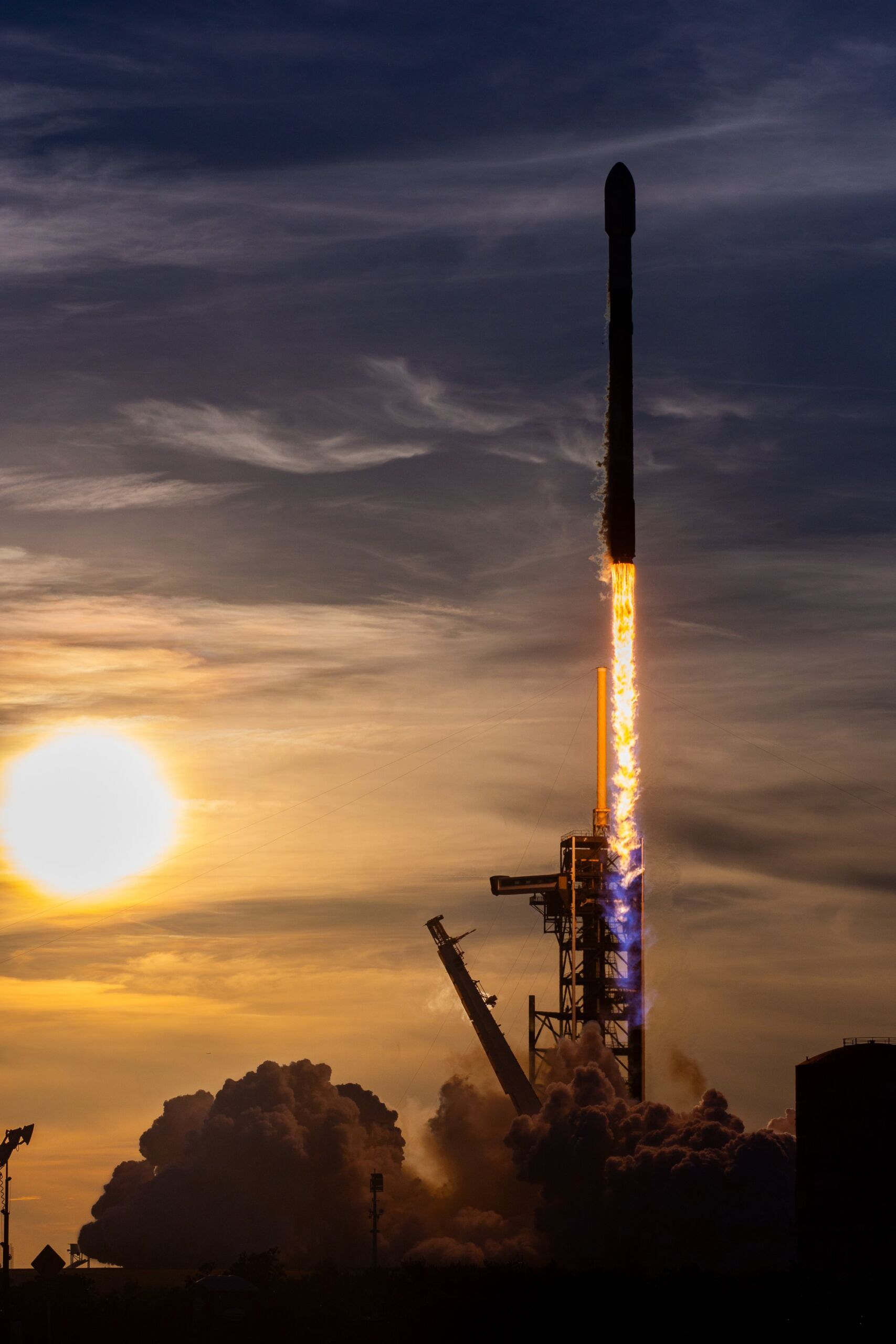
From the outside, China’s Zhuque-3 rocket looks like a clone of SpaceX’s Falcon 9.

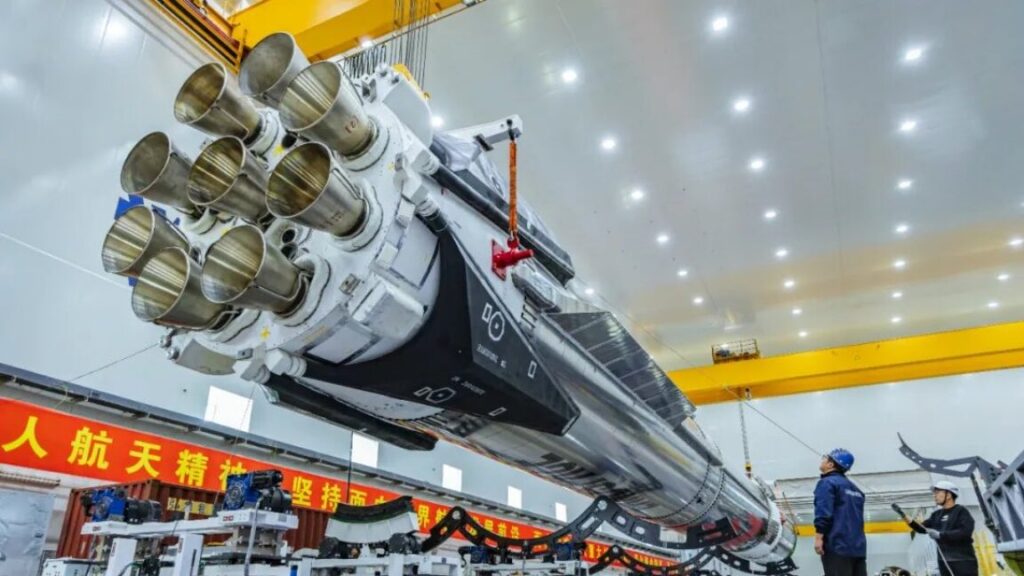
LandSpace’s Zhuque-3 rocket with its nine first stage engines. Credit: LandSpace

There’s a race in China among several companies vying to become the next to launch and land an orbital-class rocket, and the starting gun could go off as soon as tonight.

LandSpace, one of several maturing Chinese rocket startups, is about to launch the first flight of its medium-lift Zhuque-3 rocket. Liftoff could happen around 11 pm EST tonight (04: 00 UTC Wednesday), or noon local time at the Jiuquan Satellite Launch Center in northwestern China.

Airspace warning notices advising pilots to steer clear of the rocket’s flight path suggest LandSpace has a launch window of about two hours. When it lifts off, the Zhuque-3 (Vermillion Bird-3) rocket will become the largest commercial launch vehicle ever flown in China. What’s more, LandSpace will become the first Chinese launch provider to attempt a landing of its first stage booster, using the same tried-and-true return method pioneered by SpaceX and, more recently, Blue Origin in the United States.

Construction crews recently finished a landing pad in the remote Gobi Desert, some 240 miles (390 kilometers) southeast of the launch site at Jiuquan. Unlike US spaceports, the Jiuquan launch base is located in China’s interior, with rockets flying over land as they climb into space. When the Zhuque-3 booster finishes its job of sending the rocket toward orbit, it will follow an arcing trajectory toward the recovery zone, firing its engines to slow for landing about eight-and-a-half minutes after liftoff.
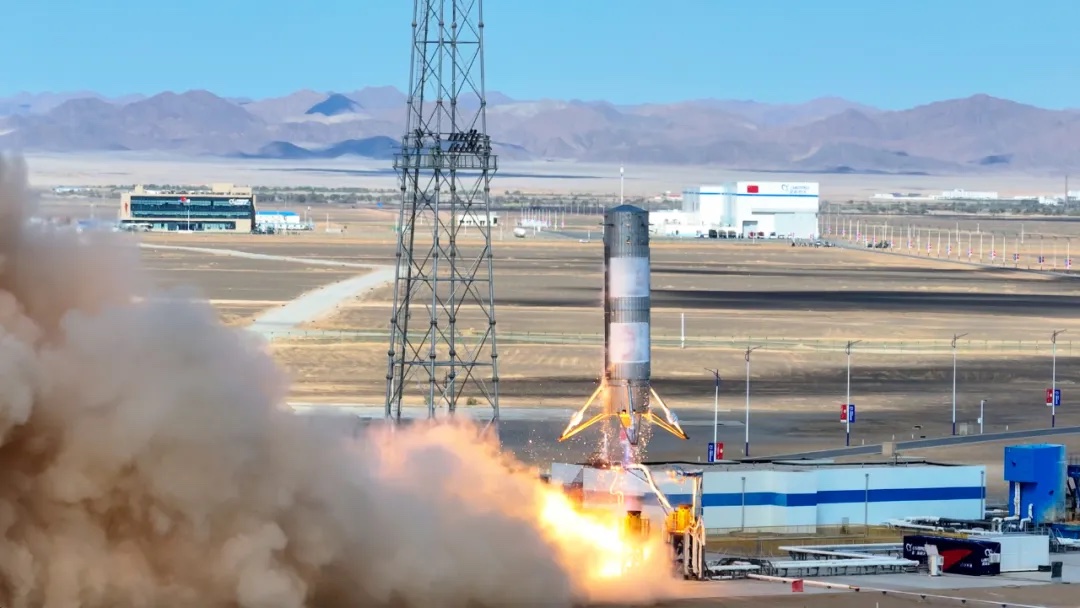
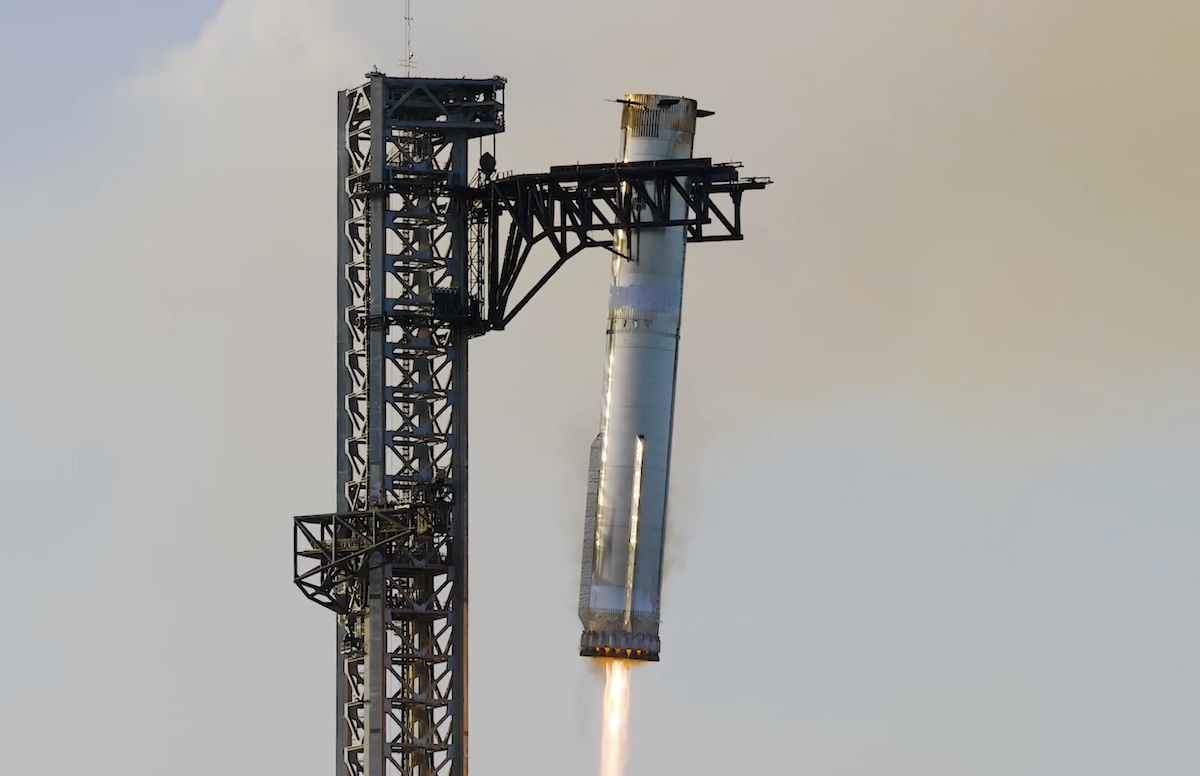
LandSpace’s reusable rocket test vehicle lifts off from the Jiuquan Satellite Launch Center for a high-altitude test flight on Wednesday, September 11, 2024. Credit: Landspace

A first step for China

At least, that’s what is supposed to happen. LandSpace officials have not made any public statements about the odds of a successful landing—or, for that matter, a successful launch. It took Blue Origin, a much larger enterprise than LandSpace backed by Amazon founder Jeff Bezos, two tries to land its New Glenn booster on a floating barge after launching from Cape Canaveral, Florida. A decade ago, SpaceX achieved the first of its now more than 500 rocket landings after many more attempts.

LandSpace was established in 2015, soon after the Chinese government introduced space policy reforms, opening the door for private capital to begin funding startups in the satellite and launch industries. So far, the company has raised more than $400 million from venture capital firms and investment funds backed by the Chinese government.

With this money, LandSpace has developed its own liquid-fueled engines and a light-class launcher named Zhuque-2, which became the world’s first methane-burning launcher to reach orbit in 2023. LandSpace’s Zhuque-2 has logged four successful missions in six tries.

But the Beijing-based company’s broader goal has been the development of a larger, partially reusable rocket to meet China’s growing appetite for satellite services. LandSpace finds itself in a crowded field of competitors, with China’s legacy state-owned rocket developers and a slate of venture-backed startups also in the mix.
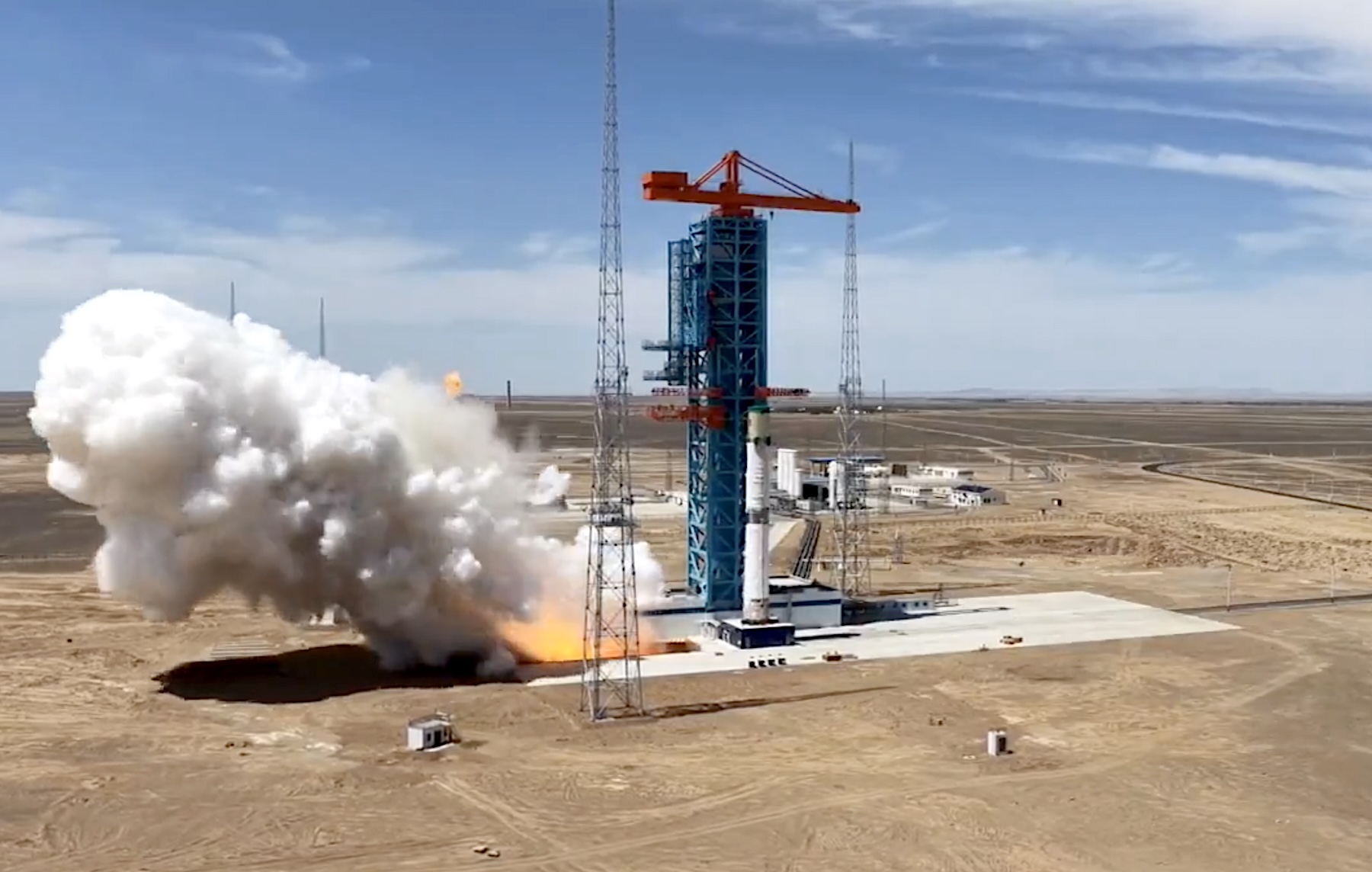
The first stage of the Zhuque-3 rocket underwent a test-firing of its nine engines in June. Credit: LandSpace

China needs reusable rockets to keep up with the US launch industry, dominated by SpaceX, which flies more often and hauls heavier cargo to orbit than all Chinese rockets combined. There are at least two Chinese megaconstellations now being deployed in low-Earth orbit, each with architectures requiring thousands of satellites to relay data and Internet signals around the world. Without scaling up satellite production and reusing rockets, China will have difficulty matching the capacities of SpaceX, Blue Origin, and other emerging US launch companies.

Just three months ago, US military officials identified China’s advancements in reusable rocketry as a key to unlocking the country’s ability to potentially threaten US assets in space. “I’m concerned about when the Chinese figure out how to do reusable lift that allows them to put more capability on orbit at a quicker cadence than currently exists,” said Brig. Gen. Brian Sidari, the Space Force’s deputy chief of space operations for intelligence, at a conference in September.

Without reusable rockets, China has turned to a wide variety of expendable boosters this year to launch less than half as often as the United States. China has made 77 orbital launch attempts so far this year, but no single rocket type has flown more than 13 times. In contrast, SpaceX’s Falcon 9 is responsible for 153 of 182 launches by US rockets.

That’s no Falcon 9

The Chinese companies that master reusable rocketry first will have an advantage in the Chinese launch industry. A handful of rockets appear to be poised to take this advantage, beginning with LandSpace’s Zhuque-3.

In its first iteration, the Zhuque-3 rocket will be capable of placing a payload of up to 17,600 pounds (8 metric tons) into low-Earth orbit after accounting for the fuel reserves required for booster recovery. The entire rocket stands about 216 feet (65.9 meters) tall.

The first stage has nine TQ-12A engines consuming methane and liquid oxygen, producing more than 1.6 million pounds of thrust at full throttle. The second stage is powered by a single methane-fueled TQ-15A engine with about 200,000 pounds of thrust. These are the same engines LandSpace has successfully flown on the smaller Zhuque-2 rocket.

LandSpace eventually plans to debut an upgraded Zhuque-3 carrying more propellant and using more powerful engines, raising its payload capacity to more than 40,000 pounds (18.3 metric tons) in reusable mode, or a few tons more with an expendable booster.

From the outside, LandSpace’s new rocket looks a lot like the vehicle it is trying to emulate: SpaceX’s Falcon 9. Like the Falcon 9, the Zhuque-3 booster’s nine-engine design also features four deployable landing legs and grid fins to help steer the rocket toward landing.

But LandSpace also incorporates elements from SpaceX’s much heavier Starship rocket. The primary structure of the Zhuque-3 is made of stainless steel, and its engines burn methane fuel, not kerosene like the Falcon 9.
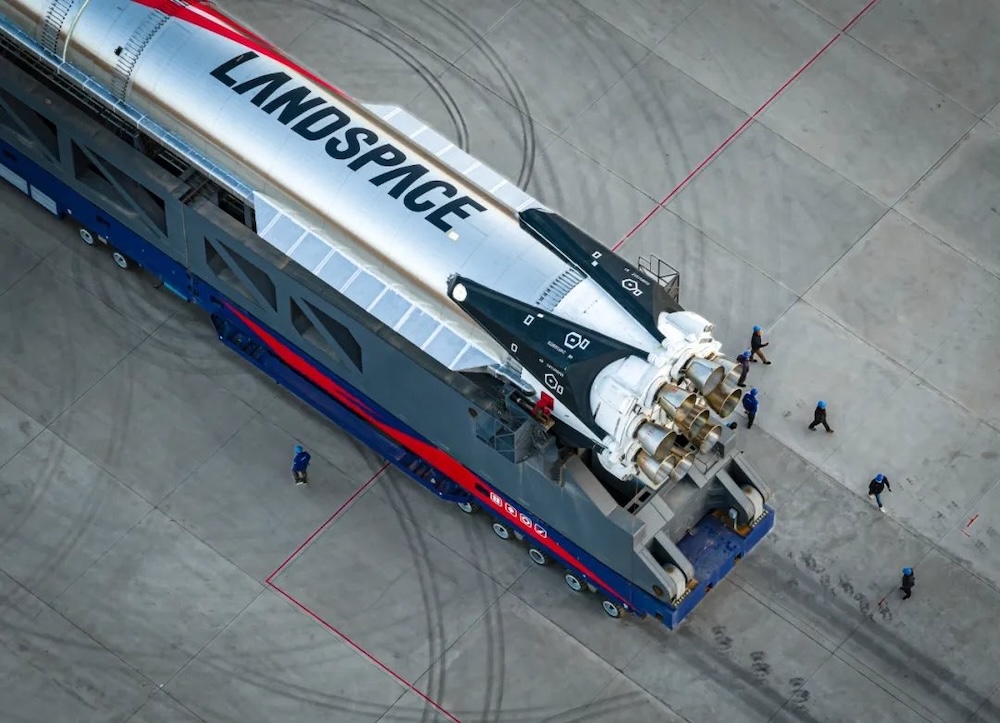
The Zhuque-3 booster’s landing legs are visible here, folded up against the rocket’s stainless steel fuselage. Credit: LandSpace

In preparation for the debut of the Zhuque-3, LandSpace engineers built a prototype rocket for launch and landing demonstrations. The testbed aced a flight to 10 kilometers, or about 33,000 feet, in September 2024 and descended to a pinpoint vertical landing, validating the rocket’s guidance algorithms and engine restart capability.

The first of many

Another reusable booster is undergoing preflight preparations not far from LandSpace’s launch site at Jiuquan. This rocket, called the Long March 12A, comes from one of China’s established government-owned rocket firms. It could fly before the end of this year, but officials haven’t publicized a schedule.

The Long March 12A has comparable performance to LandSpace’s Zhuque-3, and it will also use a cluster of methane-fueled engines. Its developer, the Shanghai Institute of Spaceflight Technology, will attempt to land the Long March 12A booster on the first flight.

Several other companies working on reusable rockets appear to be in an advanced stage of development.

One of them, Space Pioneer, might have been first to flight with its new Tianlong-3 rocket if not for the thorny problem of an accidental launch during a booster test-firing last year. Space Pioneer eventually completed a successful static fire in September of this year, and the company recently released a photo showing its rocket on the launch pad.

Other Chinese companies with a chance of soon flying their new reusable boosters include CAS Space, which recently shipped its first Kinetica-2 rocket to Jiuquan for launch preps. Galactic Energy completed test-firings of the second stage and first stage for its Pallas-1 rocket in September and November.

Another startup, i-Space, is developing a partially reusable rocket called the Hyperbola-3 that could debut next year from China’s southern spaceport on Hainan Island. Officials from i-Space unveiled an ocean-going drone ship for rocket landings earlier this year. Deep Blue Aerospace is also working on vertical landing technology for its Nebula-1 rocket, having conducted a dramatic high-altitude test flight last year.

These rockets all fall in the small- to medium-class performance range. It’s unclear whether any of these companies will try to land their boosters on their first flights—like the Zhuque-3 and Long March 12Abut all have roadmaps to reusability.

China’s largest rocket developer, the China Academy of Launch Vehicle Technology, is not as close to fielding a reusable launcher. But the academy has far greater ambitions, with a pair of super-heavy rockets in its future. The first will be the Long March 10, designed to fly with reusable boosters while launching China’s next-generation crew spacecraft on missions to the Moon. Later, perhaps in the 2030s, China could debut the fully reusable Long March 9 rocket similar in scale to SpaceX’s Starship.

Photo of Stephen Clark

Stephen Clark is a space reporter at Ars Technica, covering private space companies and the world’s space agencies. Stephen writes about the nexus of technology, science, policy, and business on and off the planet.

This Chinese company could become the country’s first to land a reusable rocket Read More »
spacex-has-a-few-tricks-up-its-sleeve-for-the-last-starship-flight-of-the-year

SpaceX has a few tricks up its sleeve for the last Starship flight of the year

This particular booster, numbered Booster 15, launched in March and was caught by the launch tower at Starbase after returning from the edge of space. SpaceX said 24 of the 33 methane-fueled Raptor engines launching on the booster next month are “flight-proven.”

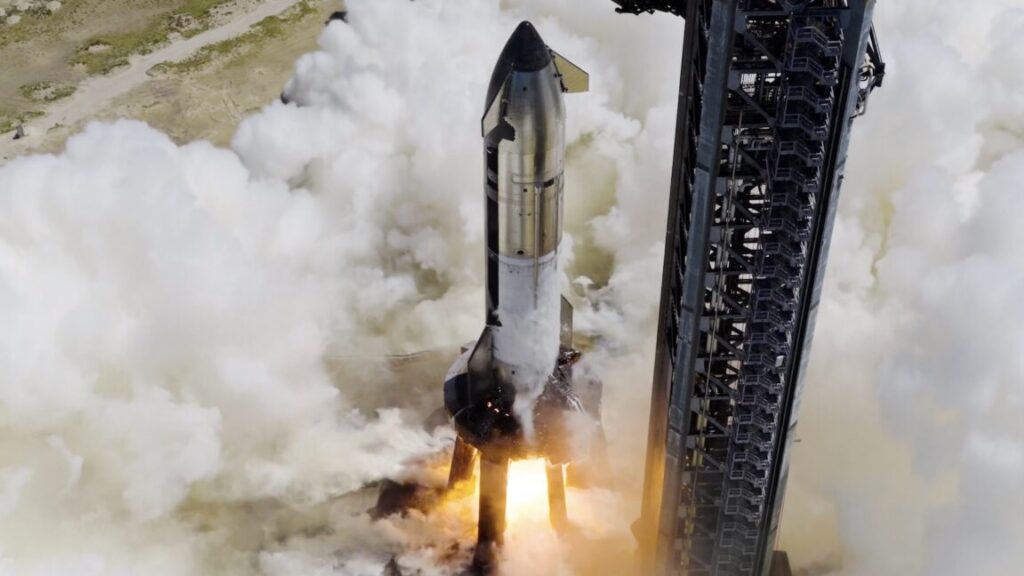
The Super Heavy booster flying next month previously launched and was recovered on Flight 8 in March. Credit: SpaceX

Similar to the last Starship flight, the Super Heavy booster will guide itself to a splashdown off the coast of South Texas instead of returning to Starbase.

“Its primary test objective will be demonstrating a unique landing burn engine configuration planned to be used on the next-generation Super Heavy,” SpaceX said.

The new booster landing sequence will initially use 13 of the rocket’s 33 engines, then downshift to five engines before running just the three center engines for the final portion of the burn. The booster previously went directly from 13 engines to three engines. Using five engines for part of the landing sequence provides “additional redundancy for spontaneous engine shutdowns,” according to SpaceX.

“The primary goal on the flight test is to measure the real-world vehicle dynamics as engines shut down while transitioning between the different phases,” SpaceX said.

Stepping stone to Version 3

After Flight 11, SpaceX will focus on the next-generation Starship design: Starship V3. This upgraded configuration will be the version that will actually fly to orbit, allowing SpaceX to begin deploying its new fleet of larger, more powerful Starlink Internet satellites.

Starship V3 will also be used to test orbital refueling, something never before attempted between two spacecraft with cryogenic propellants. Refueling in space is required to give Starship enough energy to propel itself out of Earth’s orbit to the Moon and Mars, destinations it must reach to fulfill the hopes of NASA and SpaceX founder Elon Musk.

The first flight of Starship V3 is likely to occur in early 2026, using a new launch pad undergoing final outfitting and testing a short distance away from SpaceX’s original launch pad at Starbase. Gerstenmaier, SpaceX’s vice president of build and flight reliability, told a crowd at a space industry conference earlier this month that the company will likely attempt one more suborbital flight with Starship V3. If that goes well, Flight 13 could launch all the way to low-Earth orbit sometime later next year.

SpaceX has a few tricks up its sleeve for the last Starship flight of the year Read More »

after-a-very-slow-start,-europe’s-reusable-rocket-program-shows-signs-of-life

After a very slow start, Europe’s reusable rocket program shows signs of life

No one could accuse the European Space Agency and its various contractors of moving swiftly when it comes to the development of reusable rockets. However, it appears that Europe is finally making some credible progress.

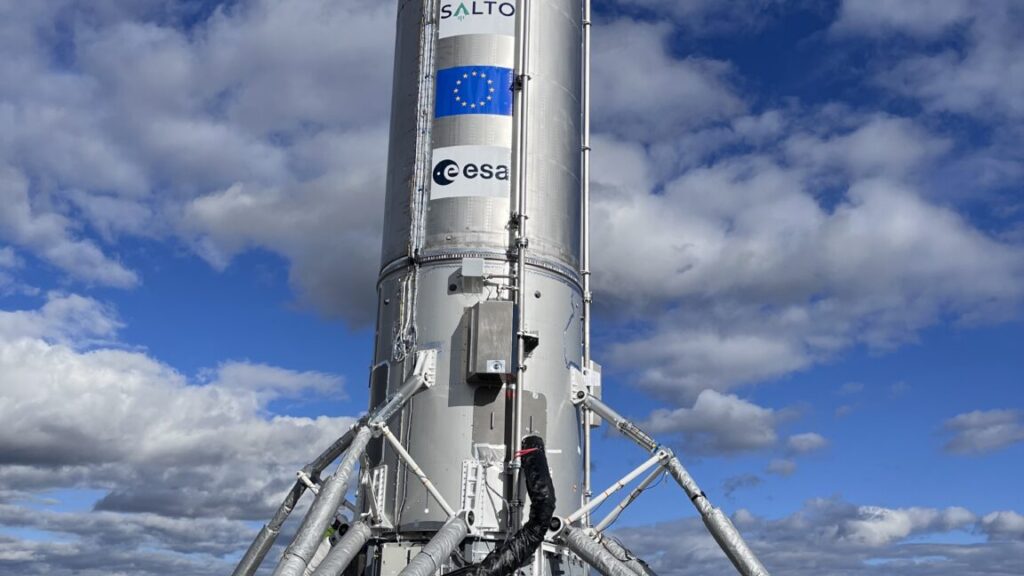
This week, the France-based ArianeGroup aerospace company announced that it had completed the integration of the Themis vehicle, a prototype rocket that will test various landing technologies, on a launch pad in Sweden. Low-altitude hop tests, a precursor for developing a rocket’s first stage that can vertically land after an orbital launch, could start late this year or early next.

“This milestone marks the beginning of the ‘combined tests,’ during which the interface between Themis and the launch pad’s mechanical, electrical, and fluid systems will be thoroughly trialed, with the aim of completing a test under cryogenic conditions,” the company said.

Finally getting going

The advancement of the Themis program represents a concrete step forward for Europe, which has had a delayed and somewhat confusing response to the rise of reusable rockets a decade ago.

After several years of development and testing, including the Grasshopper program in Texas to demonstrate vertical landing, SpaceX landed its first orbital rocket in December 2015. Weeks earlier, Blue Origin landed the much smaller New Shepard vehicle after a suborbital hop. This put the industry on notice that first stage reuse was on the horizon.

At this point, the European Space Agency had already committed to a new medium-lift rocket, the Ariane 6, and locked in a traditional design that would not incorporate any elements of reuse. Most of its funding focused on developing the Ariane 6.

However, by the middle of 2017, the space agency began to initiate programs that would eventually lead to a reusable launch vehicle. They included:

After a very slow start, Europe’s reusable rocket program shows signs of life Read More »

spacex’s-most-flown-reusable-rocket-will-go-for-its-20th-launch-tonight

SpaceX’s most-flown reusable rocket will go for its 20th launch tonight

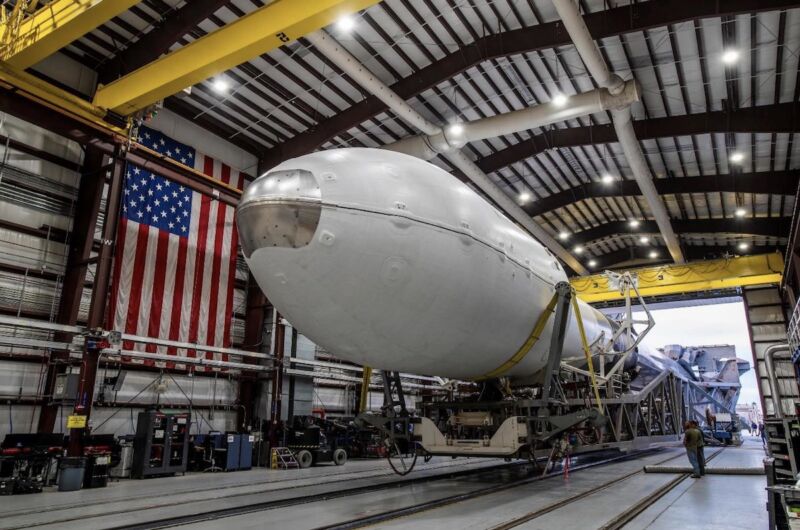
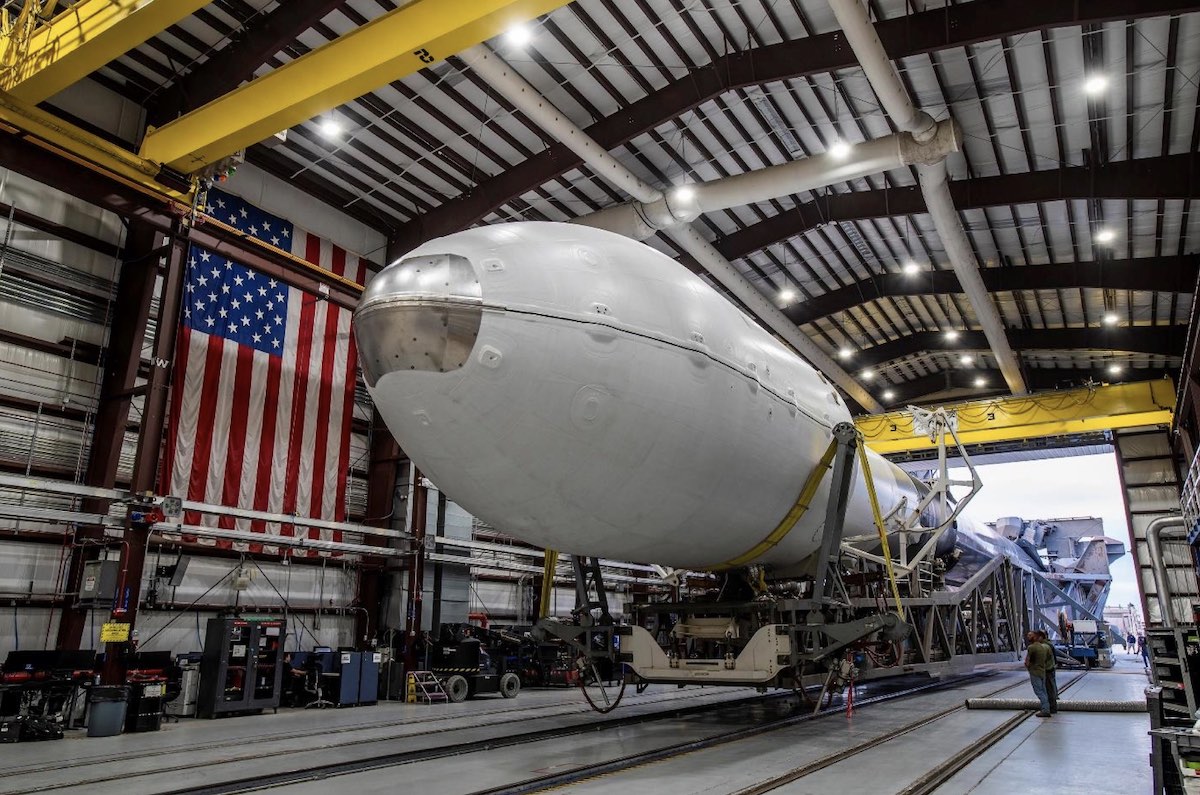
File photo of a Falcon 9 rocket rolling out of its hangar at Cape Canaveral Space Force Station, Florida.

Enlarge / File photo of a Falcon 9 rocket rolling out of its hangar at Cape Canaveral Space Force Station, Florida.

For the first time, SpaceX will launch one of its reusable Falcon 9 boosters for a 20th time Friday night on a flight to deliver 23 more Starlink Internet satellites to orbit.

This milestone mission is scheduled to lift off at 9: 22 pm EDT Friday (01: 22 UTC Saturday) from Space Launch Complex 40 (SLC-40) at Cape Canaveral Space Force Station, Florida. Forecasters from the US Space Force predict “excellent” weather for the primetime launch.

Falcon 9 will blaze a familiar trail into space, following the same profile as dozens of past Starlink missions.

The rocket’s first-stage booster will shut off its nine kerosene-fueled Merlin engines about two-and-a-half minutes into the flight, reaching a top speed of more than 5,000 mph (8,000 km per hour). The first stage will detach from the Falcon 9’s upper stage, which will continue firing into orbit. The 15-story-tall Falcon 9 booster, meanwhile, will follow an arcing trajectory before braking for a vertical landing on a drone ship floating in the Atlantic Ocean near the Bahamas.

The 23 flat-packed Starlink spacecraft will deploy from the upper stage a little more than an hour after liftoff, bringing the total number of Starlinks in low-Earth orbit to more than 5,800 spacecraft.

A hunger for launch

Pretty much every day, SpaceX is either launching a rocket or rolling one out of the hangar to the launch pad. At this pace, SpaceX is redefining what is routine in the space industry, but the rapid-fire launch rate also means the company is continually breaking records, mostly its own.

Friday night’s launch will break another one of those records. This first-stage booster, designated by the tail number B1062, has flown 19 times since its first flight in November 2020. The booster will now be the first in SpaceX’s inventory to go for a 20th flight, breaking a tie with three other rockets as the company’s fleet leader.

When SpaceX debuted the latest version of its Falcon 9 rocket, the Falcon 9 Block 5, officials said the reusable first stage could fly 10 times with minimal refurbishment and perhaps additional flights with a more extensive overhaul. Now, SpaceX is certifying Falcon 9 boosters for 40 flights.

This particular rocket has not undergone any extended maintenance or long-term grounding. It has flown an average of once every two months since debuting three-and-a-half years ago. So the 20-flight milestone SpaceX will achieve Friday night means this rocket has doubled its original design life and, at the same time, has reached the halfway point of its extended service life.

In its career, this booster has launched eight people and 530 spacecraft, mostly Starlinks. The rocket’s first two flights launched GPS navigation satellites for the US military, then it launched two commercial human spaceflight missions with Dragon crew capsules. These were the all-private Inspiration4 mission and Axiom Mission 1, the first fully commercial crew flight to the International Space Station.

A SpaceX Falcon 9 rocket lifts off Sunday, April 7, on the Bandwagon 1 rideshare mission.

Enlarge / A SpaceX Falcon 9 rocket lifts off Sunday, April 7, on the Bandwagon 1 rideshare mission.

Remarkably, this will be the sixth Falcon 9 launch in less than eight days, more flights than SpaceX’s main US rival, United Launch Alliance, has launched in 17 months.

It will be the 38th Falcon 9 launch of the year and the 111th flight of a Falcon 9 or Falcon Heavy rocket—the 114th launch by SpaceX overall—in the last 365 days. More than a third of SpaceX’s Falcon 9 or Falcon Heavy missions, a number that will stand at 332 after Friday night’s flight, have launched in the past year.

This month, for the first time, SpaceX demonstrated it could launch two Falcon 9 rockets in less than five days from the company’s launch pad at Vandenberg Space Force Base, California. SpaceX has also cut the turnaround time between Falcon 9 rockets at Launch Complex 39A at NASA’s Kennedy Space Center. The company’s most-used launch pad, SLC-40, can handle two Falcon 9 flights in less than four days.

It’s not just launch pad turnaround. SpaceX uses its drone ships—two based in Florida and one in California—for most Falcon 9 landings. In order to meet the appetite for Falcon 9 launches, SpaceX is getting rockets back to port and re-deploying drone ships back to sea at a faster rate.

SpaceX’s most-flown reusable rocket will go for its 20th launch tonight Read More »