starship

rocket-report:-firefly’s-ceo-steps-down;-artemis-ii-core-stage-leaves-factory

Rocket Report: Firefly’s CEO steps down; Artemis II core stage leaves factory

Vaya con dios —

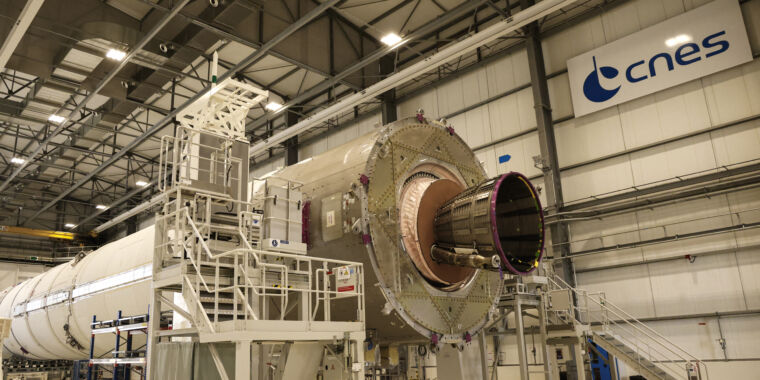
Rocket Factory Augsburg completed qualification of its upper stage for a first launch this year.
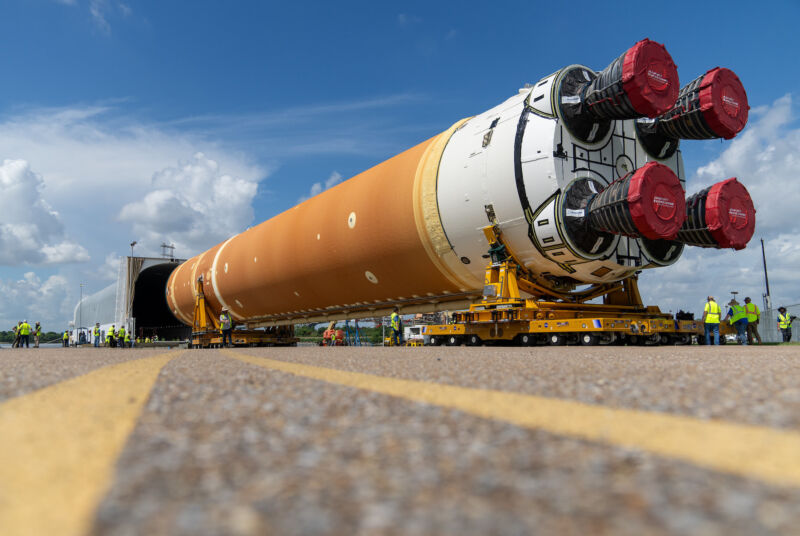
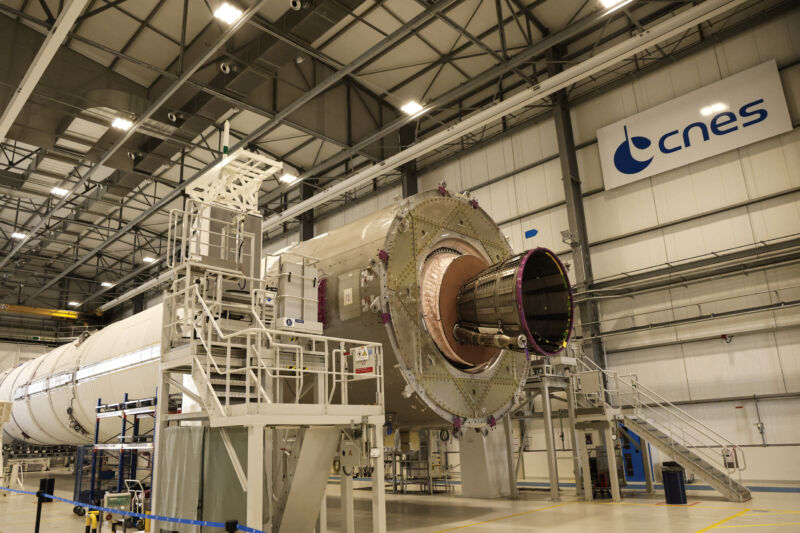
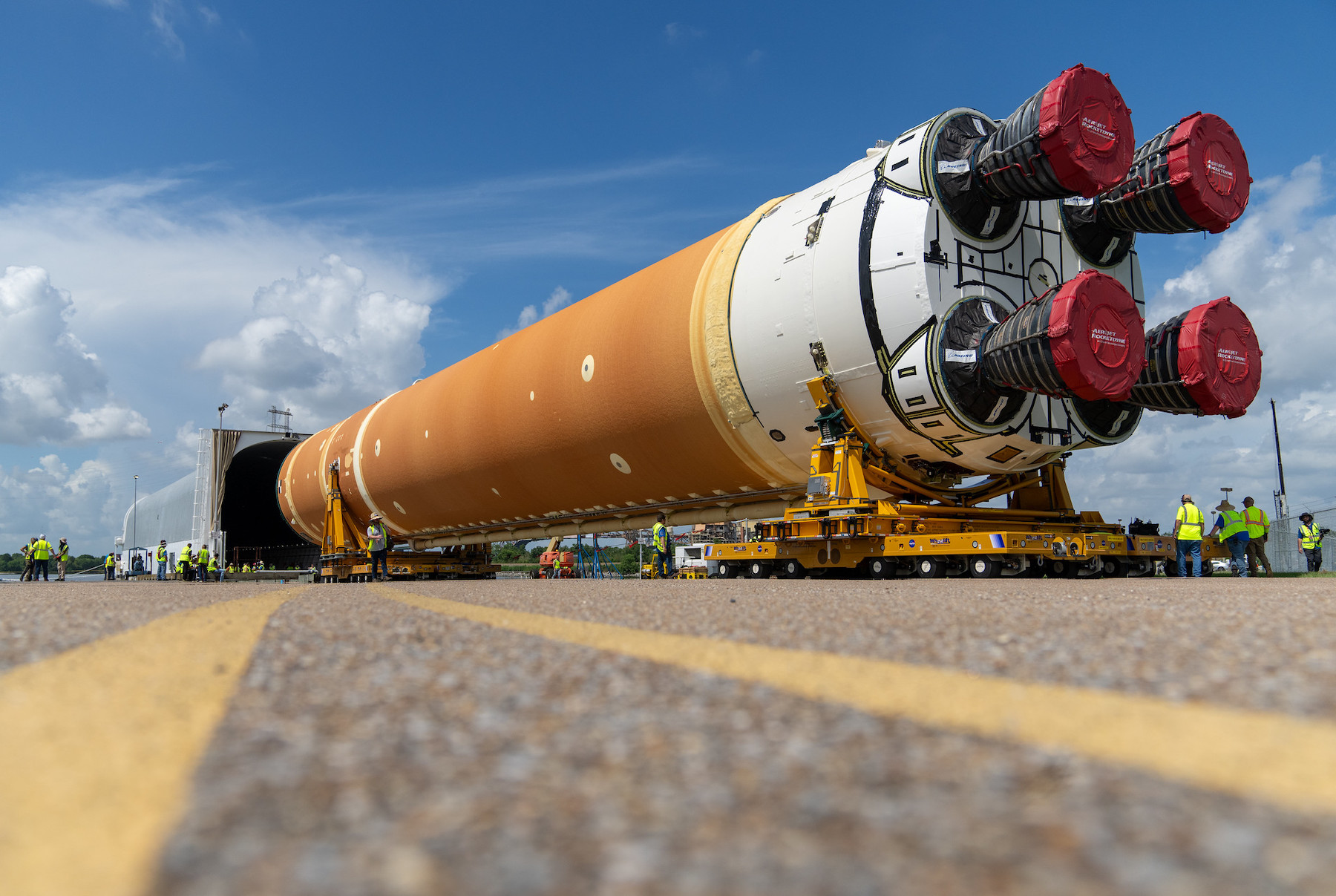
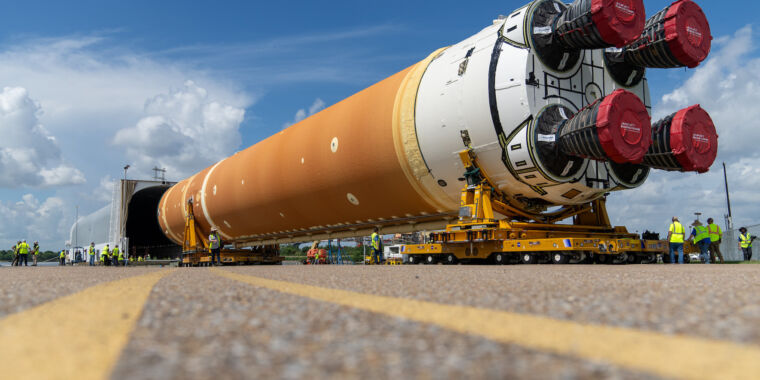
The core stage for NASA's second Space Launch System rocket rolls aboard a barge that will take it from New Orleans to Kennedy Space Center in Florida.

Enlarge / The core stage for NASA’s second Space Launch System rocket rolls aboard a barge that will take it from New Orleans to Kennedy Space Center in Florida.

Welcome to Edition 7.03 of the Rocket Report! One week ago, SpaceX suffered a rare failure of its workhorse Falcon 9 rocket. In fact, it was the first time the latest version of the Falcon 9, known as the Block 5, has ever failed on its prime mission after nearly 300 launches. The world’s launch pads have been silent since the grounding of the Falcon 9 fleet after last week’s failure. This isn’t surprising, but it’s noteworthy. After all, the Falcon 9 has flown more this year than all of the world’s other rockets combined and is fundamental to much of what the world does in space.

As always, we welcome reader submissions. If you don’t want to miss an issue, please subscribe using the box below (the form will not appear on AMP-enabled versions of the site). Each report will include information on small-, medium-, and heavy-lift rockets as well as a quick look ahead at the next three launches on the calendar.

Astra finally goes private, again. A long-simmering deal for Astra’s founders to take the company private has been finalized, the company announced Thursday, capping the rocket launch company’s descent from blank-check darling to delisting in three years, Bloomberg reports. The launch company’s valuation peaked at $3.9 billion in 2021, the year it went public, and was worth about $12.2 million at the end of March, according to data compiled by Bloomberg. Astra’s chief executive officer, Chris Kemp, and chief technology officer, Adam London, founded the company in 2016 with the goal of essentially commoditizing launch services for small satellites. But Astra’s rockets failed to deliver and fell short of orbit five times in seven tries.

Spiraling … Astra’s stock price tanked after the spate of launch failures, drying up its funding spigot as Kemp tried to pivot toward a slightly larger, more reliable rocket. Astra acquired a company named Apollo Fusion in 2021, entering a new business segment to produce electric thrusters for small satellites. But Astra’s launch business faltered, and last November Kemp and London submitted an offer to retake ownership of the company. Astra announced the closure of the take-private deal Thursday, with Kemp and London acquiring the company’s outstanding shares for 50 cents per share in cash, below the stock’s final listing price of 53 cents. “We will now focus all of our attention on a successful launch of Rocket 4, delivering satellite engines to our customers, and building a company of consequence,” Kemp said. (submitted by EllPeaTea and Ken the Bin)

Firefly chief leaves company. Launch startup Firefly Aerospace parted ways with CEO Bill Weber, Payload reports. The announcement of Weber’s departure late Wednesday came two days after Payload reported Firefly was investigating claims of an alleged inappropriate relationship between him and a female employee. “Firefly Aerospace’s Board of Directors announced that Bill Weber is no longer serving as CEO of the company, effective immediately,” the company said in a statement Wednesday night. Peter Schumacher takes over as interim CEO while Firefly searches for a new permanent chief executive. Schumacher was an interim CEO at Firefly before Weber’s hiring in 2022.

Two days and gone … Payload published the first report of Weber’s alleged improper relationship with a female employee Monday. Two days later, Weber was gone. Payload reported an executive brought his concerns about the alleged relationship to Firefly’s board and resigned because he lost confidence in leadership at the company. Citing four current and former employees, Payload reported Firefly’s culture became “chaotic” since Weber took the helm in 2022 after its acquisition by AE Industrial Partners. The Texas-based company achieved some success during Weber’s tenure, with four orbital launches of its Alpha rocket, although two of the flights ended up in lower-than-planned orbits. (submitted by Ken the Bin)

The easiest way to keep up with Eric Berger’s space reporting is to sign up for his newsletter, we’ll collect his stories in your inbox.

Themis hop tests delayed to next year. The initial hop tests of the European Themis reusable booster, developed by ArianeGroup and funded by ESA, won’t start until next year, European Spaceflight reports. The Swedish Space Corporation, which operates the space center in Sweden where Themis will initially fly, confirmed the schedule change. Once ArianeGroup moves on to higher altitude flights, the testing will be moved to the Guiana Space Center. ESA awarded the first development contract for the Themis booster in 2019, and the first hop tests were then scheduled for 2022. Themis’ hops will be similar to SpaceX’s Grasshopper rocket, which performed a series of up-and-down atmospheric test flights before SpaceX started recovering and reusing Falcon 9 boosters.

Fate of Themis … The Themis booster is powered by the methane-fueled Prometheus engine, also funded by ESA. A large European reusable rocket is unlikely to fly until the 2030s, but a subsidiary of ArianeGroup named MaiaSpace is developing a smaller partially reusable two-stage rocket slated to debut as soon as next year. The Maia rocket will use a modified Themis booster as its first stage. “As a result, for MaiaSpace, the continued and rapid development of the Themis program is essential to ensure it can hit its projected target of an inaugural flight of Maia in 2025,” European Spaceflight reports. (submitted by Ken the Bin)

Rocket Report: Firefly’s CEO steps down; Artemis II core stage leaves factory Read More »
rocket-report:-firefly-delivers-for-nasa;-polaris-dawn-launching-this-month

Rocket Report: Firefly delivers for NASA; Polaris Dawn launching this month

No holds barred —

The all-private Polaris Dawn spacewalk mission is set for launch no earlier than July 31.

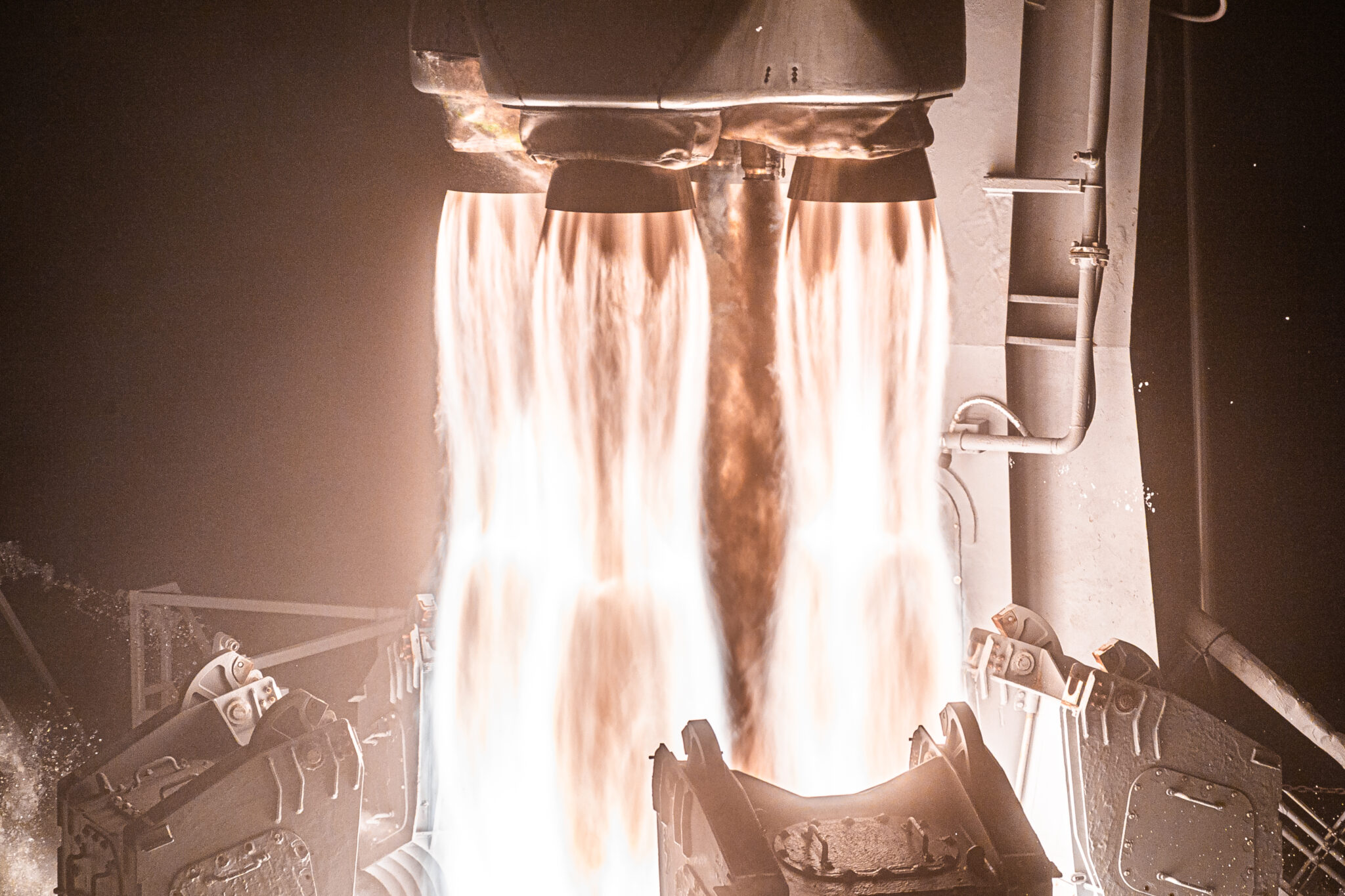
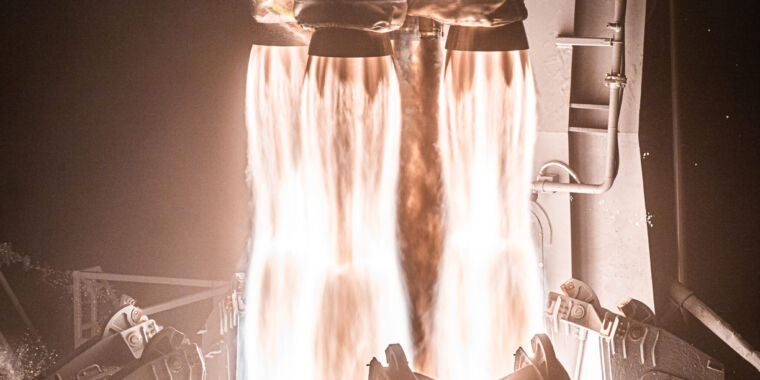
Four kerosene-fueled Reaver engines power Firefly's Alpha rocket off the pad at Vandenberg Space Force Base, California.

Enlarge / Four kerosene-fueled Reaver engines power Firefly’s Alpha rocket off the pad at Vandenberg Space Force Base, California.

Welcome to Edition 7.01 of the Rocket Report! We’re compiling this week’s report a day later than usual due to the Independence Day holiday. Ars is beginning its seventh year publishing this weekly roundup of rocket news, and there’s a lot of it this week despite the holiday here in the United States. Worldwide, there were 122 launches that flew into Earth orbit or beyond in the first half of 2024, up from 91 in the same period last year.

As always, we welcome reader submissions, and if you don’t want to miss an issue, please subscribe using the box below (the form will not appear on AMP-enabled versions of the site). Each report will include information on small-, medium-, and heavy-lift rockets as well as a quick look ahead at the next three launches on the calendar.

Firefly launches its fifth Alpha flight. Firefly Aerospace placed eight CubeSats into orbit on a mission funded by NASA on the first flight of the company’s Alpha rocket since an upper stage malfunction more than half a year ago, Space News reports. The two-stage Alpha rocket lifted off from Vandenberg Space Force Base in California late Wednesday, two days after an issue with ground equipment aborted liftoff just before engine ignition. The eight CubeSats come from NASA centers and universities for a range of educational, research, and technology demonstration missions. This was the fifth flight of Firefly’s Alpha rocket, capable of placing about a metric ton of payload into low-Earth orbit.

Anomaly resolution … This was the fifth flight of an Alpha rocket since 2021 and the fourth Alpha flight to achieve orbit. But the last Alpha launch in December failed to place its Lockheed Martin payload into the proper orbit due to a problem during the relighting of its second-stage engine. On this week’s launch, Alpha deployed its NASA-sponsored payloads after a single burn of the second stage, then completed a successful restart of the engine for a plane change maneuver. Engineers traced the problem on the last Alpha flight to a software error. (submitted by Ken the Bin)

Two companies added to DoD’s launch pool. Blue Origin and Stoke Space Technologies — neither of which has yet reached orbit — have been approved by the US Space Force to compete for future launches of small payloads, Breaking Defense reports. Blue Origin and Stoke Space join a roster of launch companies eligible to compete for launch task orders the Space Force puts up for bid through the Orbital Services Program-4 (OSP-4) contract. Under this contract, Space Systems Command buys launch services for payloads 400 pounds (180 kilograms) or greater, enabling launch from 12 to 24 months of the award of a task order. The OSP-4 contract has an “emphasis on small orbital launch capabilities and launch solutions for Tactically Responsive Space mission needs,” said Lt. Col. Steve Hendershot, chief of Space Systems Command’s small launch and targets division.

An even dozen … Blue Origin aims to launch its orbital-class New Glenn rocket for the first time as soon as late September, while Stoke Space aims to fly its Nova rocket on an orbital test flight next year. The addition of these two companies means there are 12 providers eligible to bid on OSP-4 task orders. The other companies are ABL Space Systems, Aevum, Astra, Firefly Aerospace, Northrop Grumman, Relativity Space, Rocket Lab, SpaceX, United Launch Alliance, and X-Bow. (submitted by Ken the Bin and brianrhurley)

The easiest way to keep up with Eric Berger’s space reporting is to sign up for his newsletter, we’ll collect his stories in your inbox.

Italian startup test-fires small rocket. Italian rocket builder Sidereus Space Dynamics has completed the first integrated system test of its EOS rocket, European Spaceflight reports. This test occurred Sunday, culminating in a firing of the rocket’s kerosene/liquid oxygen MR-5 main engine for approximately 11 seconds. The EOS rocket is a novel design, utilizing a single-stage-to-orbit architecture, with the reusable booster returning to Earth from orbit for recovery under a parafoil. The rocket stands less than 14 feet (4.2 meters) tall and will be capable of delivering about 29 pounds (13 kilograms) of payload to low-Earth orbit.

A lean operation … After it completes integrated testing on the ground, the company will conduct the first low-altitude EOS test flights. Founded in 2019, Sidereus has raised 6.6 million euros ($7.1 million) to fund the development of the EOS rocket. While this is a fraction of the funding other European launch startups like Isar Aerospace, MaiaSpace, and Orbex have attracted, the Sidereus’s CEO, Mattia Barbarossa, has previously stated that the company intends to “reshape spaceflight in a fraction of the time and with limited resources.” (submitted by EllPeaTea and Ken the Bin)

Rocket Report: Firefly delivers for NASA; Polaris Dawn launching this month Read More »
here’s-why-spacex’s-competitors-are-crying-foul-over-starship-launch-plans

Here’s why SpaceX’s competitors are crying foul over Starship launch plans

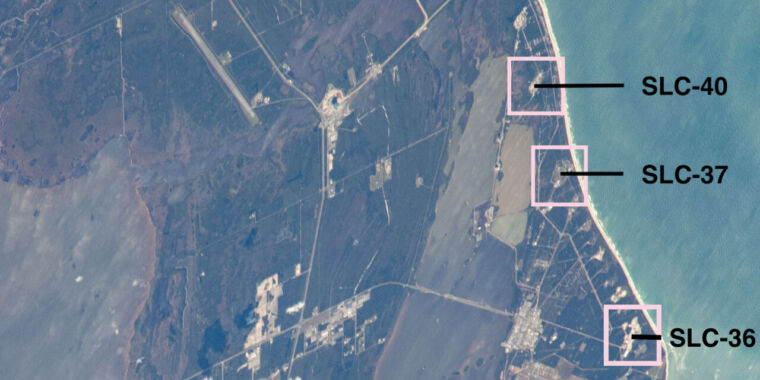
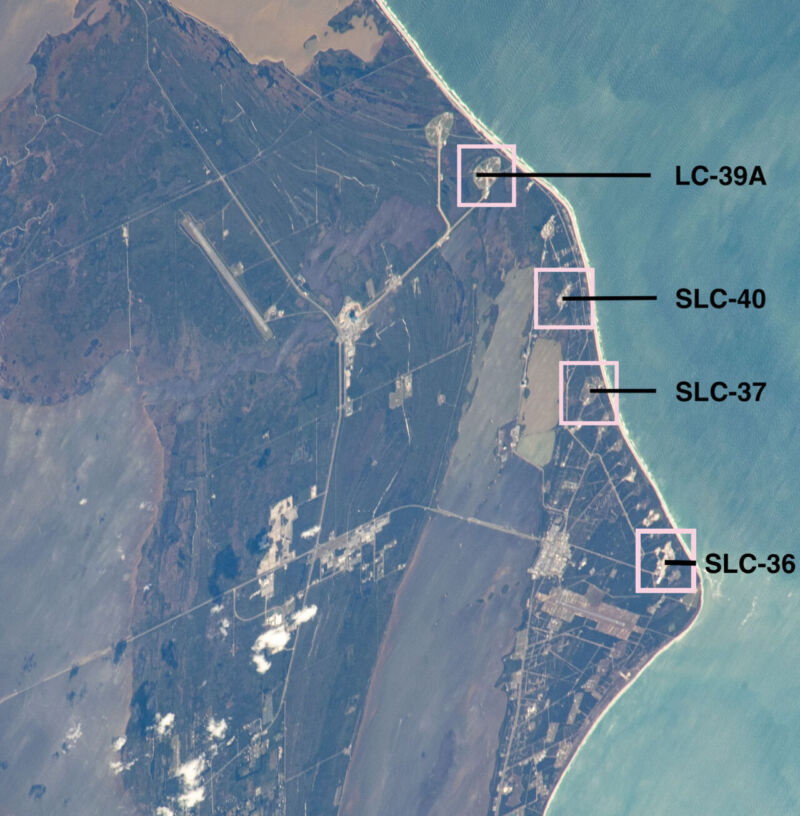
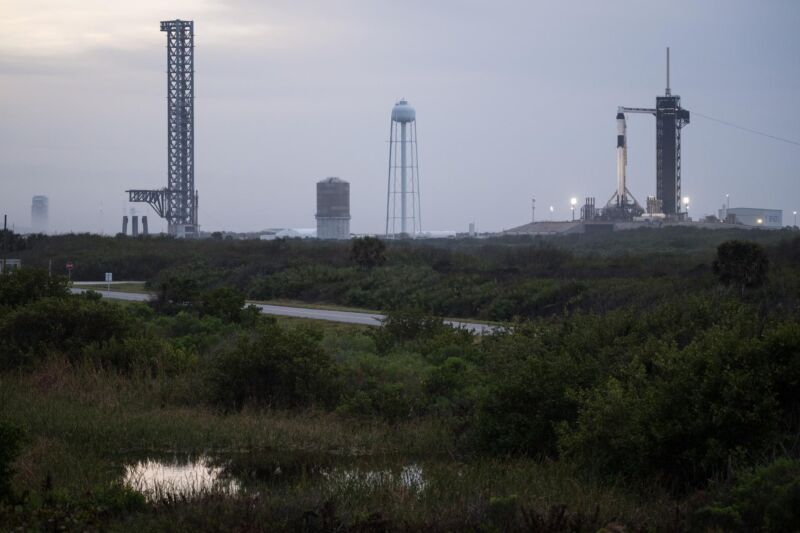
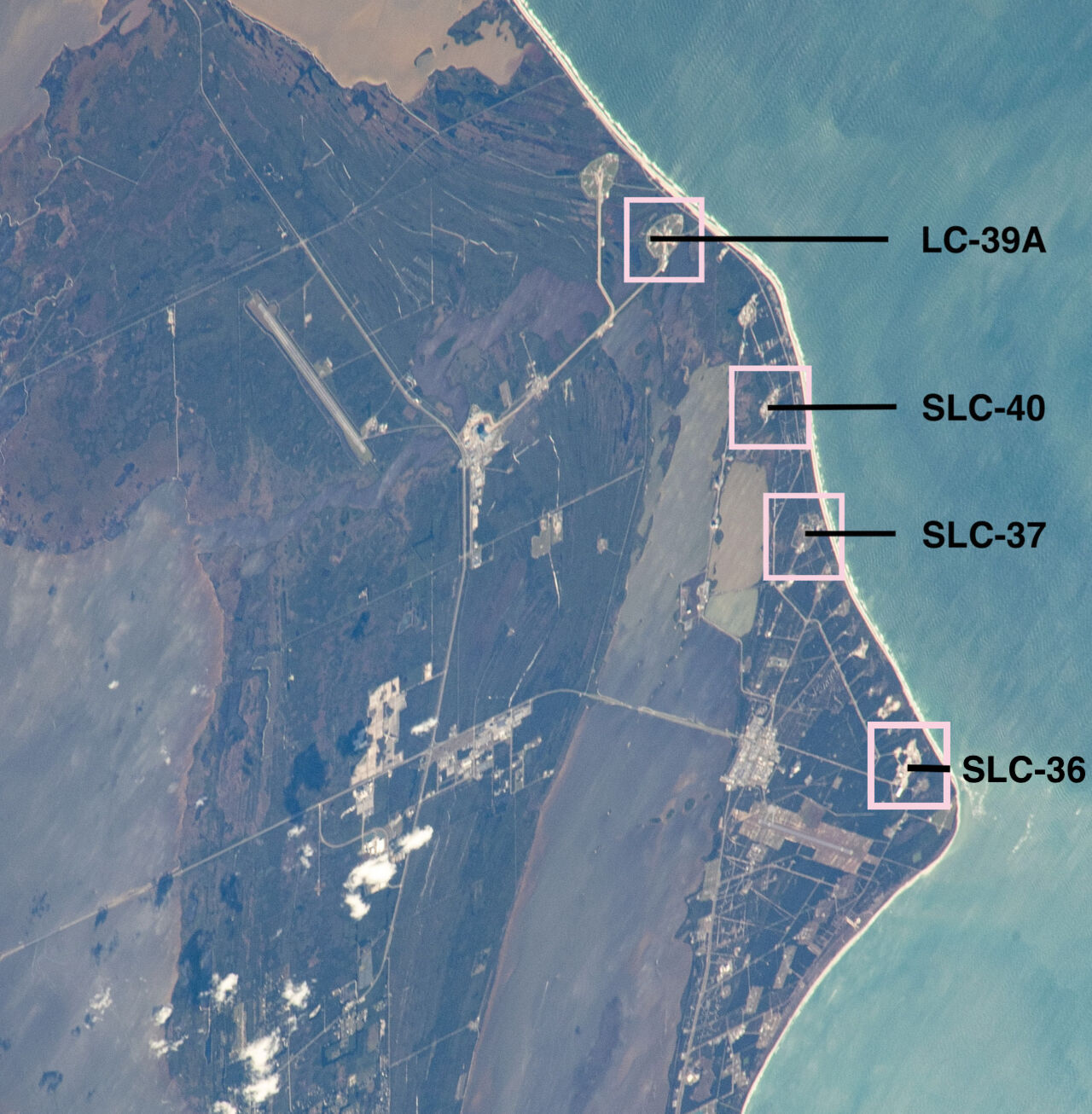
SpaceX launches Falcon 9 rockets from Pad 39A at NASA's Kennedy Space Center and from Pad 40 at Cape Canaveral Space Force Station. The company plans to develop Starship launch infrastructure at Pad 39A and Pad 37. United Launch Alliance flies Vulcan and Atlas V rockets from Pad 41, and Blue Origin will base its New Glenn rocket at Pad 36.

Enlarge / SpaceX launches Falcon 9 rockets from Pad 39A at NASA’s Kennedy Space Center and from Pad 40 at Cape Canaveral Space Force Station. The company plans to develop Starship launch infrastructure at Pad 39A and Pad 37. United Launch Alliance flies Vulcan and Atlas V rockets from Pad 41, and Blue Origin will base its New Glenn rocket at Pad 36.

NASA (labels by Ars Technica)

United Launch Alliance and Blue Origin are worried about SpaceX’s plans to launch its enormous Starship rocket from Florida.

In documents submitted to the Federal Aviation Administration last month, ULA and Blue Origin raised concerns about the impact of Starship launch operations on their own activities on Florida’s Space Coast. Blue Origin, Jeff Bezos’ space company, urged the federal government to consider capping the number of Starship launches and landings, test-firings, and other operations, and limiting SpaceX’s activities to particular times.

Elon Musk, founder and CEO of SpaceX, called Blue Origin’s filing with the FAA “an obviously disingenuous response. Not cool of them to try (for the third time) to impede SpaceX’s progress by lawfare.” We’ll get to that in a moment.

The FAA and SpaceX are preparing an environmental impact statement for launches and landings of the Super Heavy booster and Starship rocket at Launch Complex 39A at NASA’s Kennedy Space Center (KSC), while the US Space Force is working with SpaceX on a similar environmental review for Starship flights from Space Launch Complex 37 at nearby Cape Canaveral Space Force Station (CCSFS).

These reviews likely won’t be complete until late 2025, at the earliest, and only then will SpaceX be cleared to launch Starship from Florida. SpaceX also must construct launch infrastructure at both sites, which could take a couple of years. This is already underway at Launch Complex 39A.

Big rocket with a big footprint

During the environmental review process, the FAA should weigh how regular flights of the reusable Starship—as many as 120 launches per year, according to TechCrunch—will affect other launch providers operating at Cape Canaveral, ULA and Blue Origin said. SpaceX’s final proposed launch cadence from each site will be part of draft environmental assessments released for public comment as soon as the end of this year.

SpaceX plans to launch Starlink satellites, customer payloads, and missions to support NASA’s Artemis lunar landings from the launch pads in Florida. Getting a launch pad up and running in Florida is one of several schedule hurdles facing SpaceX’s program to develop a human-rated lunar lander version of Starship, alongside demonstrating orbital refueling.

Starship-Super Heavy launches and landings “are expected to have a greater environmental impact than any other launch system currently operating at KSC or CCSFS,” Blue Origin wrote. In its current configuration, Starship is the most powerful rocket in history, and SpaceX is developing a larger version standing 492 feet (150 meters) tall with nearly 15 million pounds (6,700 metric tons) of propellant. This larger variant is the one that will fly from Cape Canaveral.

“It’s a very, very large rocket, and getting bigger,” wrote Tory Bruno, ULA’s CEO, in a post on X. “That quantity of propellant requires an evacuation zone whenever fueled that includes other people’s facilities. A (weekly) launch has injurious sound levels all the way into town. The Cape isn’t meant for a monopoly.”

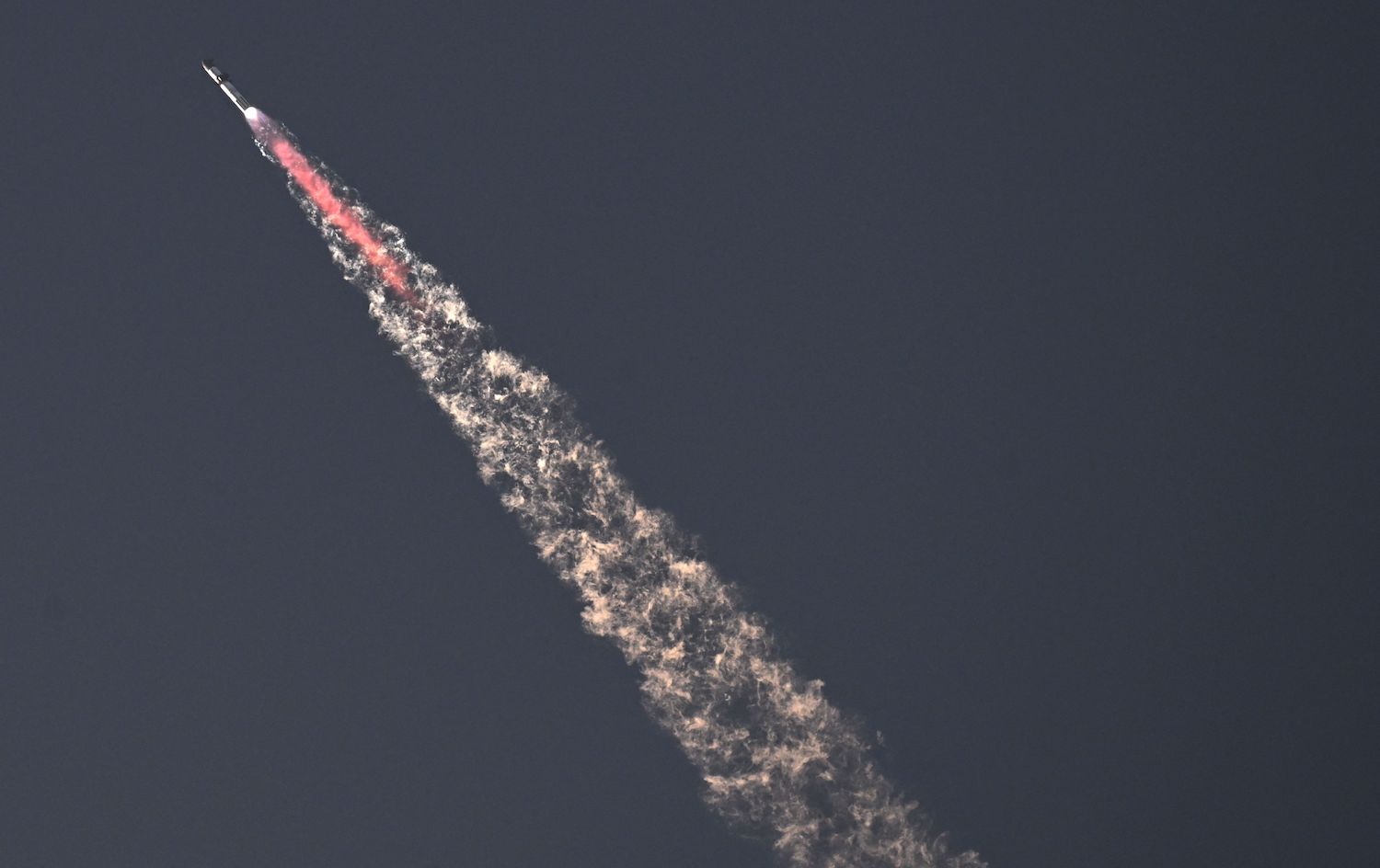
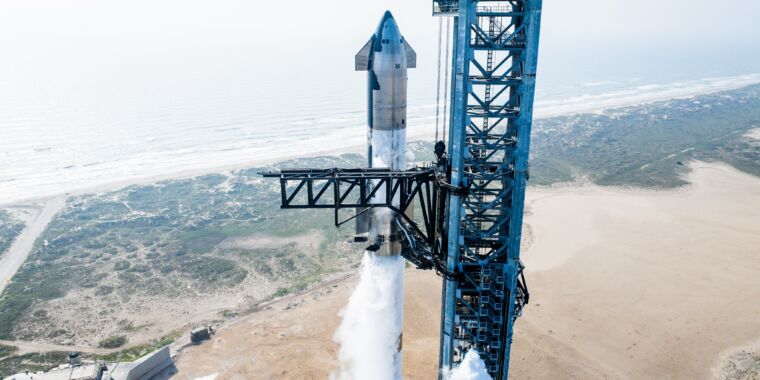
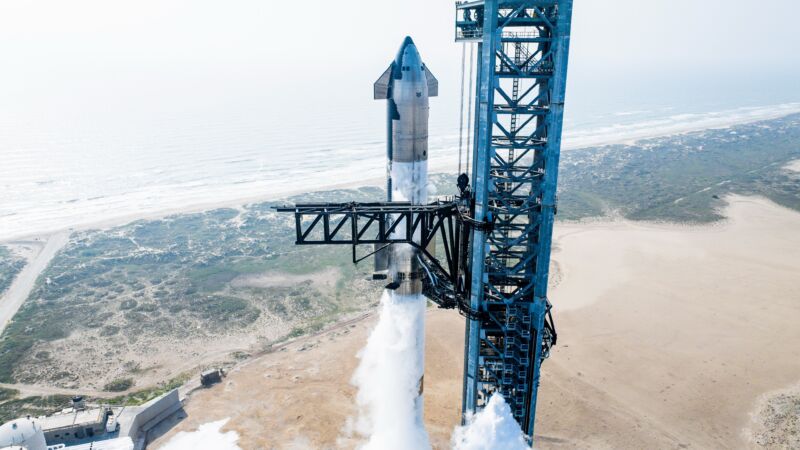
SpaceX's Starship rocket launches from Starbase during its second test flight in Boca Chica, Texas, on November 18, 2023.

Enlarge / SpaceX’s Starship rocket launches from Starbase during its second test flight in Boca Chica, Texas, on November 18, 2023.

At SpaceX’s privately owned Starbase launch site in South Texas, the evacuation zone is set at 1.5 miles (2.5 kilometers) when Starship and Super Heavy are filled with methane and liquid oxygen propellants. During an actual launch, the checkpoint is farther back at more than 3 miles (5 kilometers) from the pad.

“The total launch capacity of the Cape will go down if other providers are forced to evacuate their facilities whenever a vehicle is fueled,” Bruno wrote.

We don’t yet know the radius of the keep-out zones for Starship operations in Florida, but Blue Origin wrote that the impact of Starship activities in Florida “may be even greater than at Starbase,” presumably due to the larger rocket SpaceX plans to launch from Cape Canaveral. If this is the case, neighboring launch pads would need to be evacuated during Starship operations.

Purely based on the geography of Cape Canaveral, ULA seems to have the bigger worry. Its launch pad for the Vulcan and Atlas V rocket is located less than 2.2 miles (3.5 kilometers) from Launch Complex 39A (LC-39A). SpaceX’s proposal for up to 44 launches from LC-39A “will result in significant airspace and ground closures, result in acoustic impacts felt at nearby operations, and potentially produce debris, particulates, and property damage,” ULA said.

ULA said these hazards could prevent it from fulfilling its contracts to launch critical national security satellites for the US military.

“As the largest rocket in existence, an accident would inflict serious or even catastrophic damage, while normal launch operations would have a cumulative impact on structures, launch vehicle hardware, and other critical launch support equipment,” ULA said.

Here’s why SpaceX’s competitors are crying foul over Starship launch plans Read More »
spacex-video-teases-potential-starship-booster-“catch”-on-next-flight

SpaceX video teases potential Starship booster “catch” on next flight

A strong grip —

A booster landing would be a calculated risk to SpaceX’s launch tower infrastructure.

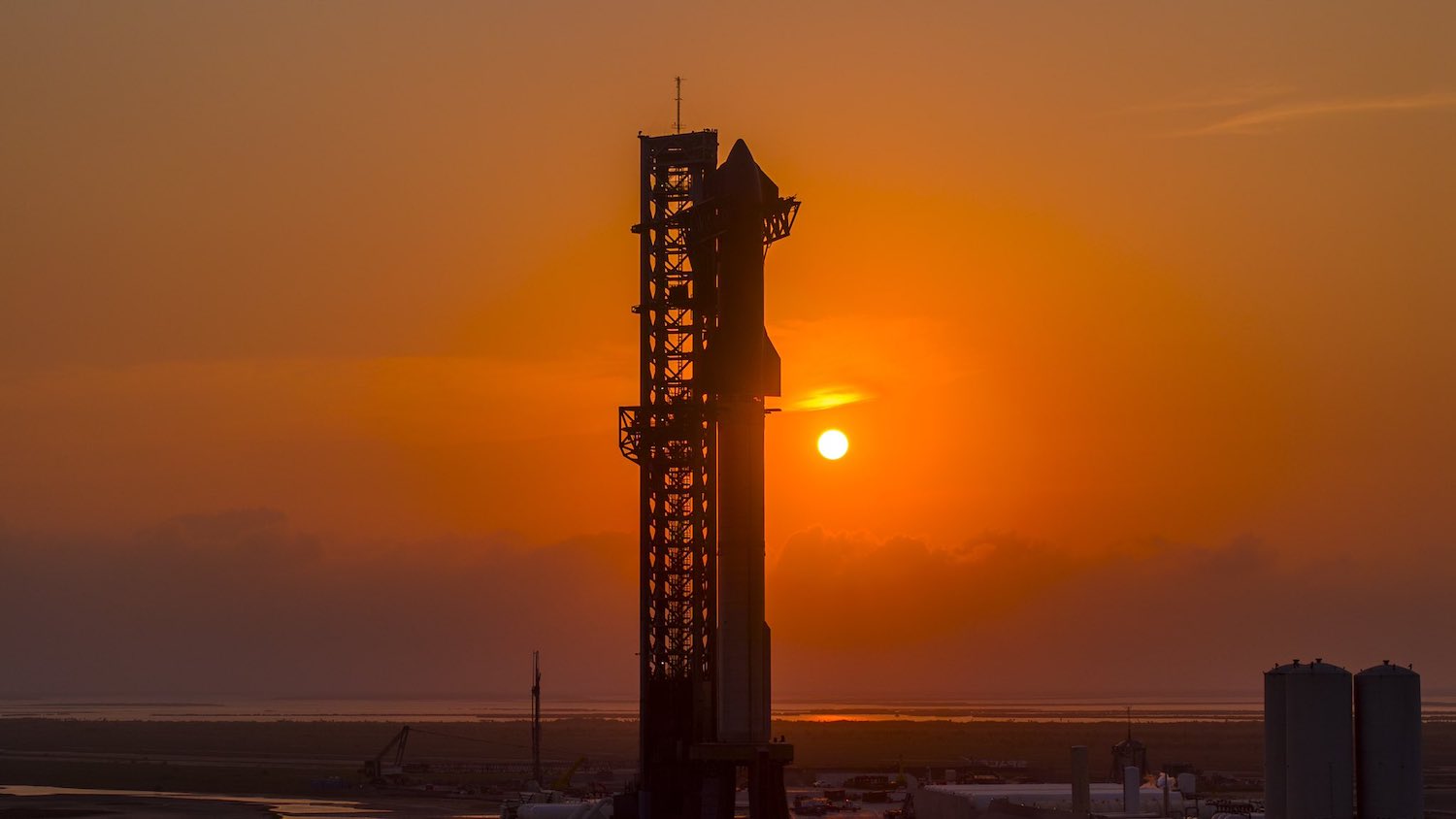
In early June, the rocket for SpaceX's fourth full-scale Starship test flight awaits liftoff from Starbase, the company's private launch base in South Texas.

Enlarge / In early June, the rocket for SpaceX’s fourth full-scale Starship test flight awaits liftoff from Starbase, the company’s private launch base in South Texas.

SpaceX

In a short video released Thursday, possibly to celebrate the US Fourth of July holiday with the biggest rocket’s red glare of them all, SpaceX provided new footage of the most recent test of its Starship launch vehicle.

This test, the fourth of the experimental rocket that NASA is counting on to land its astronauts on the Moon, and which one day may launch humans to Mars, took place on June 6. During the flight, the first stage of the rocket performed well during ascent and, after separating from the upper stage, made a controlled reentry into the Gulf of Mexico. The Starship upper stage appeared to make a nominal flight through space before making a controlled—if fiery—landing in the Indian Ocean.

The new video focuses mostly on the “Super Heavy” booster stage and its entry into the Gulf. There is new footage from a camera on top of the 71-meter-tall first stage as well as a nearby buoy at water level. The video from the buoy, in particular, shows the first stage making an upright landing into the ocean.

Starship fourth flight test.

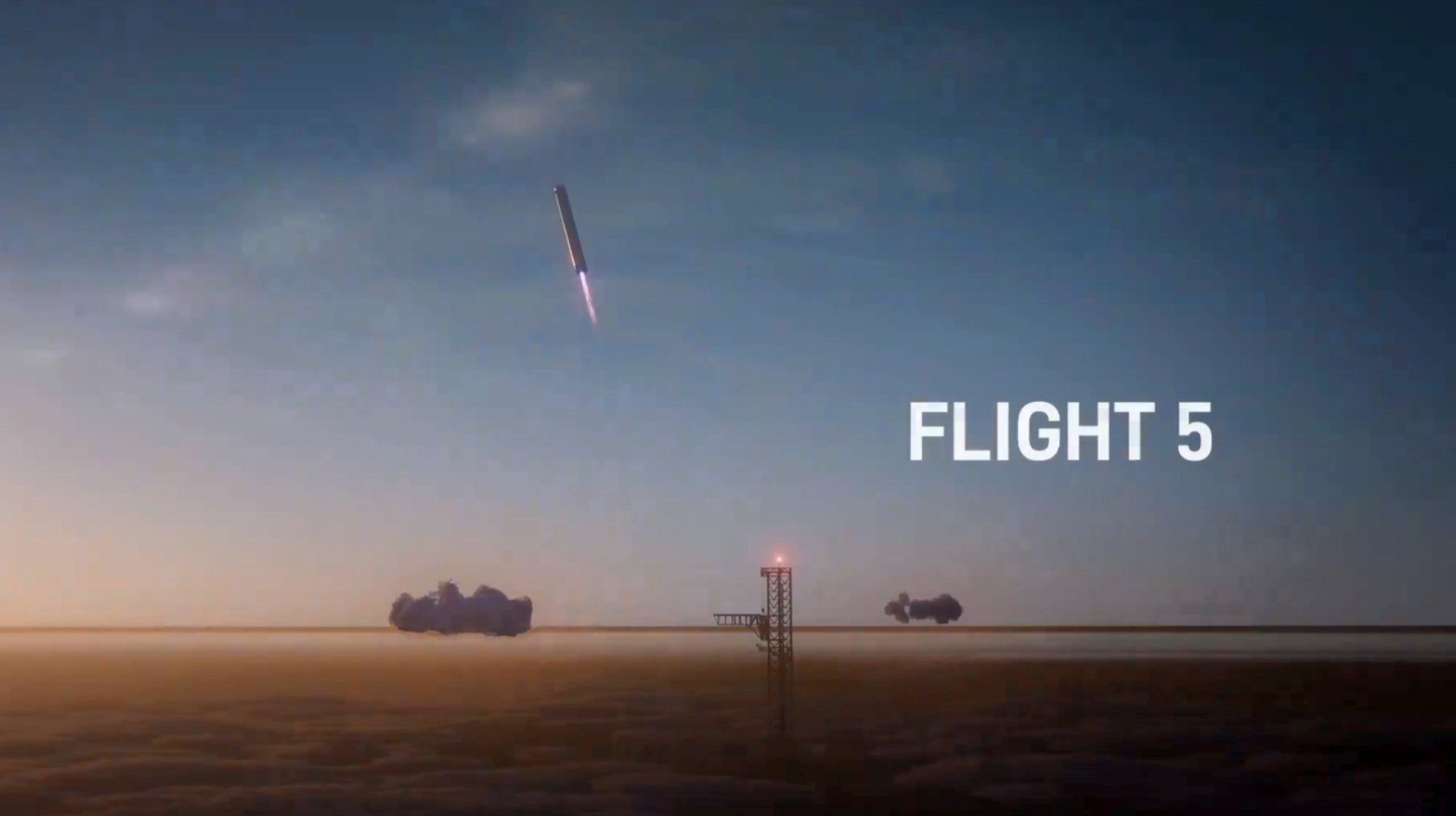
Perhaps most intriguingly, at the end of the video, SpaceX teases an image of Starship’s large launch tower in South Texas at the Starbase facility. Prominently featured are the two “chopsticks,” large arms intended to catch the first stage booster as it slowly descends back toward its launch pad.

Then, in simulated footage, the video shows Starship’s first stage descending back toward the launch tower with the title “Flight 5.” And then it fades out.

To land, or not to land?

This supports the idea that SpaceX is working toward attempting a Starship booster catch on its next flight test, which likely will occur later this summer. Doubtless, the company still has both technical and regulatory work before this can happen.

In the days immediately following the fourth flight test, SpaceX founder Elon Musk said it was the company’s goal to make such a landing attempt on the next launch. However, during a talk last week with local residents in south Texas, Starbase General Manager Kathy Lueders said this attempt might not occur on Flight 5.

However, the new video released Thursday indicates that a catch attempt is still on the table as a possibility, and perhaps even a likelihood. Such a landing would be both stunning visually, as well as a calculated risk to SpaceX’s launch tower infrastructure, as the booster likely would be landing with a few spare tons of methane and liquid oxygen propellant in its tanks.

If SpaceX decides to press ahead with the attempt, it must still obtain a launch and reentry license from the Federal Aviation Administration, which is tasked with ensuring the safety of people and property on the ground. It seems probable that the next test flight will not occur before August.

Flight 5 tease.

Enlarge / Flight 5 tease.

SpaceX

Meanwhile, activities at the South Texas launch site may well be curtailed for a couple of days as Hurricane Beryl enters the Gulf of Mexico later on Friday and then tracks toward the Texas coast early next week. The center of Beryl is expected to pass near or north of the launch site late on Sunday night or Monday, bringing winds and surges.

However, because Beryl is not expected to be a major hurricane in terms of wind speed, these impacts should not prove catastrophic to SpaceX facilities. Heavy rainfall and inland flooding in the low-lying Starbase area is also a possibility on Monday and Tuesday before the storm pulls away.

SpaceX video teases potential Starship booster “catch” on next flight Read More »
some-european-launch-officials-still-have-their-heads-stuck-in-the-sand

Some European launch officials still have their heads stuck in the sand

This is fine —

“Starship will not eradicate Ariane 6 at all.”

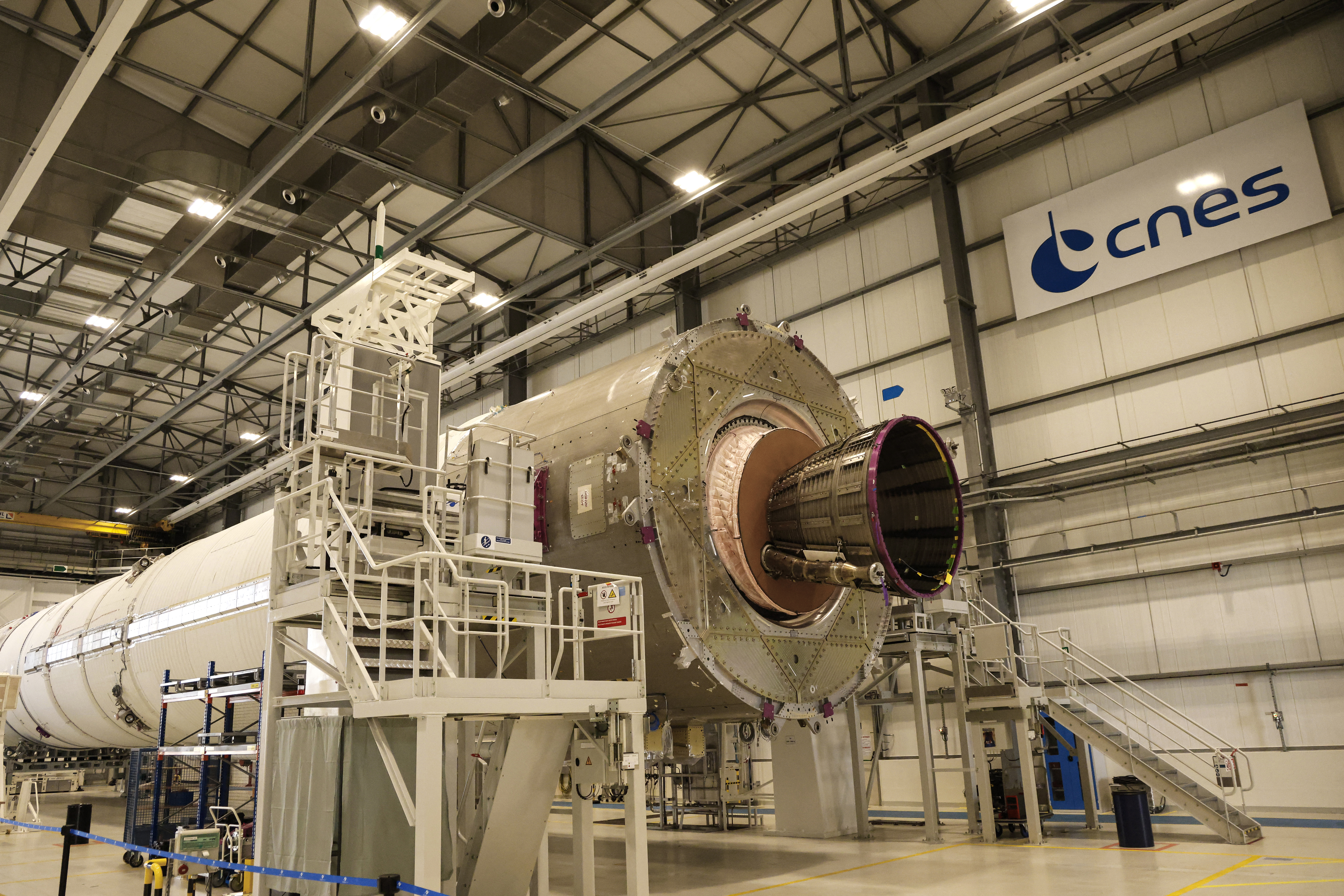
The first stage of Ariane 6 rocket Europe's Spaceport in Kourou in the French overseas department of Guiana, on March 26, 2024.

Enlarge / The first stage of Ariane 6 rocket Europe’s Spaceport in Kourou in the French overseas department of Guiana, on March 26, 2024.

LUDOVIC MARIN/AFP via Getty Images

There was a panel discussion at a space conference in Singapore 11 years ago that has since become legendary in certain corners of the space industry for what it reveals about European attitudes toward upstart SpaceX.

The panel included representatives from a handful of launch enterprises, including Europe-based Arianespace, and the US launch company SpaceX. At one point during the discussion, the host asked the Arianespace representative—its chief of sales in Southeast Asia, Richard Bowles—how the institutional European company would respond to SpaceX’s promise of lower launch costs and reuse with the Falcon 9 rocket.

“What I’m discovering in the market is that SpaceX primarily seems to be selling a dream, which is good. We should all dream,” Bowles replied. “I think a $5 million launch or a $15 million launch is a bit of a dream. Personally, I think reusability is a dream. How am I going to respond to a dream? My answer to respond to a dream is, first of all, you don’t wake people up.”

To be fair to Bowles, at the time of his remarks, SpaceX had only launched the Falcon 9 five times by the middle of 2013. But his condescension was nevertheless something to behold.

Later in the discussion, Bowles added that he did not believe launching 100 times a year, something that SpaceX was starting to talk about, was “realistic.” Then, in a moment of high paternalism, he turned to the SpaceX official on the panel and said, “You shouldn’t present things that are not realistic.”

In response, Barry Matsumori, a senior vice president at SpaceX, calmly said he would let his company’s response come through its actions.

Actions do speak louder than words

Eleven years later, of course, SpaceX is launching more than 100 times a year. The company’s internal price for launching a Falcon 9 is significantly less than $20 million. And all of this is possible through the reuse of the rocket’s first stage and payload fairings, each of which have now proven capable of flying 20 or more times.

One might think that, in the decade since, European launch officials would have learned their lesson. After all, last year, the continent had to resort to launching its valuable Euclid Space Telescope on a Falcon 9 rocket. This year, because the new European Ariane 6 rocket was not yet ready after myriad delays, multiple Galileo satellites have been launched and will be launched on the Falcon 9 rocket.

Some officials have taken note. In a candid commentary last year, European Space Agency chief Josef Aschbacher acknowledged that the continent faced an “acute” launcher crisis amid the Ariane 6 delays and the rise of SpaceX as a launch competitor. “SpaceX has undeniably changed the launcher market paradigm as we know it,” Aschbacher wrote. “With the dependable reliability of Falcon 9 and the captivating prospects of Starship, SpaceX continues to totally redefine the world’s access to space, pushing the boundaries of possibility as they go along.”

But not everyone got the message, it seems.

Next month, the Ariane 6 rocket should finally make its debut. It will probably be successful. Europe has excellent technical capabilities in regard to launch. But from day one, the Ariane 6 launch vehicle will cost significantly more than the Falcon 9 rocket, which has similar capabilities, and offer no provision for reuse. Certainly, it will meet Europe’s institutional needs. But it likely will not shake up the market, nor realistically compete with a fully reusable Falcon 9.

Who really needs to be woken up?

And what about Starship? If and when SpaceX can deliver it to the market, the next-generation rocket will offer a fully reusable booster with five times the lift capacity of the Ariane 6 rocket for half its cost or less. How can Europe hope to compete with that? The European Space Agency’s director of space transportation, Toni Tolker-Nielsen—who works for Aschbacher, it should be noted—said he’s not concerned.

“Honestly, I don’t think Starship will be a game-changer or a real competitor,” he said in an interview with Space News. “This huge launcher is designed to fly people to the Moon and Mars. Ariane 6 is perfect for the job if you need to launch a four- or five-ton satellite. Starship will not eradicate Ariane 6 at all.”

In one sense, Tolker-Nielsen is correct. Starship will not change how Europe gets its small and medium-sized satellites into space. Made and launched in Europe, the Ariane 6 rocket will be a workhorse for the continent. Indeed, some European officials are going so far as to press for legislation mandating that European satellites launch on European rockets.

But to say Starship will not be a game-changer represents the same head-in-the-sand attitude displayed by Bowles a decade ago with his jokes about not waking the deluded dreamers up. In hindsight, it’s clear that the dreamers were not SpaceX or its customers. Rather, they were European officials who had lulled themselves into thinking their dominance in commercial launch would persist without innovation.

While they slumbered, these officials ignored the rise of reusability. They decided the Ariane 6 rocket should look like its expendable predecessors, with solid rocket boosters. Meanwhile, following the rise of the Falcon 9, nearly all new rocket projects have incorporated a significant reusability component. It’s no longer just SpaceX founder Elon Musk saying companies need to pursue reuse or perish. Almost everyone is.

Perhaps someone should wake Tolker-Nielsen up.

Some European launch officials still have their heads stuck in the sand Read More »
spacex-is-about-to-launch-starship-again—the-faa-will-be-more-forgiving-this-time

SpaceX is about to launch Starship again—the FAA will be more forgiving this time

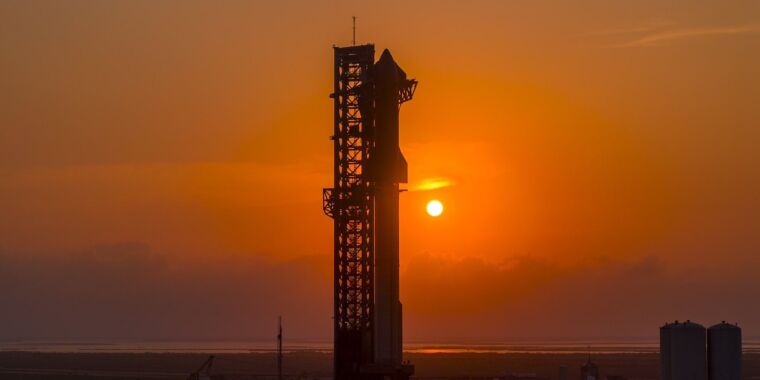
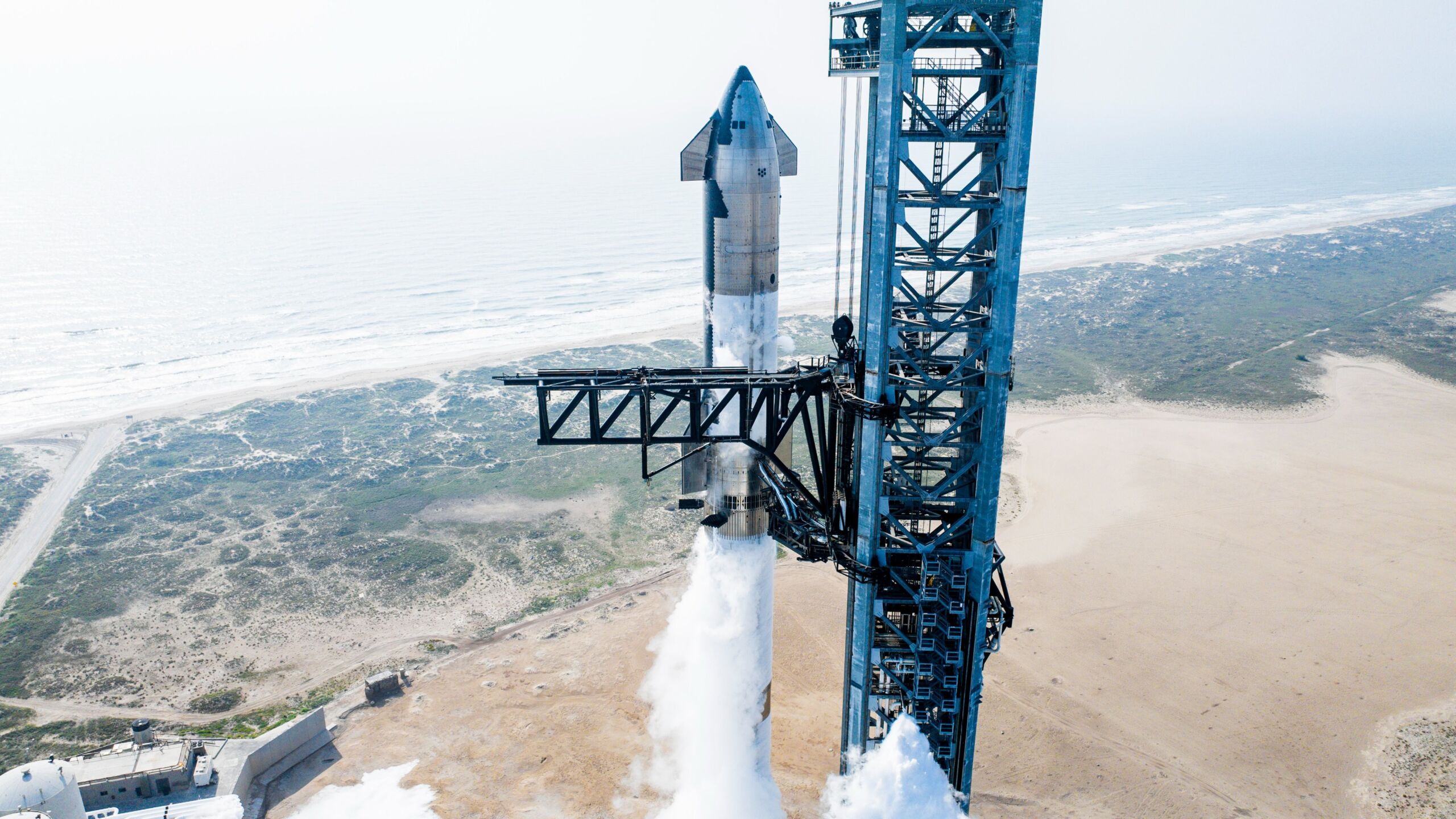
The rocket for SpaceX's fourth full-scale Starship test flight awaits liftoff from Starbase, the company's private launch base in South Texas.

Enlarge / The rocket for SpaceX’s fourth full-scale Starship test flight awaits liftoff from Starbase, the company’s private launch base in South Texas.

SpaceX

The Federal Aviation Administration approved the commercial launch license for the fourth test flight of SpaceX’s Starship rocket Tuesday, with liftoff from South Texas targeted for just after sunrise Thursday.

“The FAA has approved a license authorization for SpaceX Starship Flight 4,” the agency said in a statement. “SpaceX met all safety and other licensing requirements for this test flight.”

Shortly after the FAA announced the launch license, SpaceX confirmed plans to launch the fourth test flight of the world’s largest rocket at 7: 00 am CDT (12: 00 UTC) Thursday. The launch window runs for two hours.

This flight follows three prior demonstration missions, each progressively more successful, of SpaceX’s privately developed mega-rocket. The last time Starship flew—on March 14—it completed an eight-and-a-half minute climb into space, but the ship was unable to maneuver itself as it coasted nearly 150 miles (250 km) above Earth. This controllability problem caused the rocket to break apart during reentry.

On Thursday’s flight, SpaceX officials will expect the ascent portion of the test flight to be similarly successful to the launch in March. The objectives this time will be to demonstrate Starship’s ability to survive the most extreme heating of reentry, when temperatures peak at 2,600° Fahrenheit (1,430° Celsius) as the vehicle plunges into the atmosphere at more than 20 times the speed of sound.

SpaceX officials also hope to see the Super Heavy booster guide itself toward a soft splashdown in the Gulf of Mexico just offshore from the company’s launch site, known as Starbase, in Cameron County, Texas.

“The fourth flight test turns our focus from achieving orbit to demonstrating the ability to return and reuse Starship and Super Heavy,” SpaceX wrote in an overview of the mission.

Last month, SpaceX completed a “wet dress rehearsal” at Starbase, where the launch team fully loaded the rocket with cryogenic methane and liquid oxygen propellants. Before the practice countdown, SpaceX test-fired the booster and ship at the launch site. More recently, technicians installed components of the rocket’s self-destruct system, which would activate to blow up the rocket if it flies off course.

Then, on Tuesday, SpaceX lowered the Starship upper stage from the top of the Super Heavy booster, presumably to perform final touch-ups to the ship’s heat shield, composed of 18,000 hexagonal ceramic tiles to protect its stainless-steel structure during reentry. Ground teams were expected to raise the ship, or upper stage, back on top of the booster sometime Wednesday, returning the rocket to its full height of 397 feet (121 meters) ahead of Thursday morning’s launch window.

The tick-tock of Starship’s fourth flight

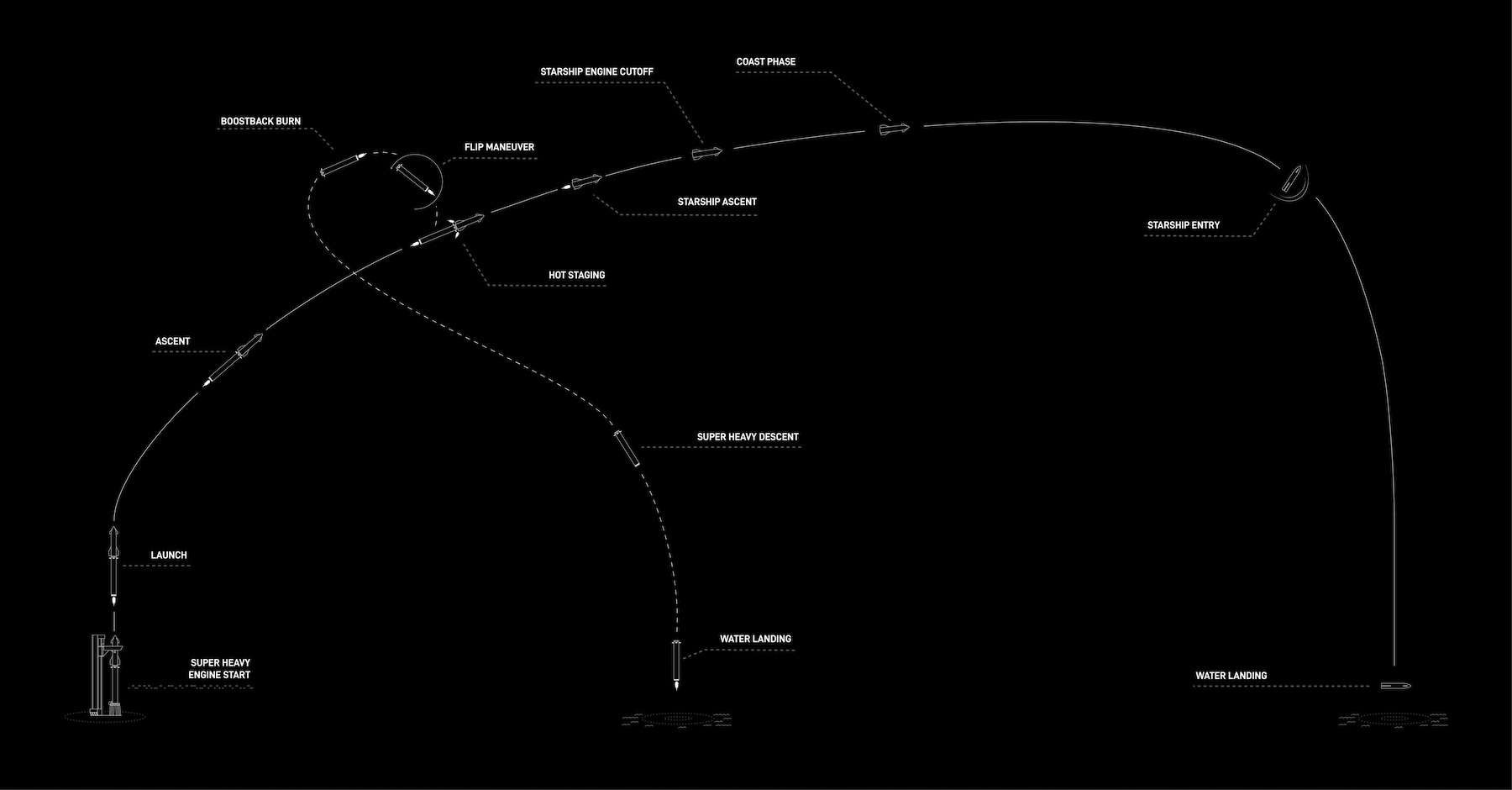
If all goes according to plan, SpaceX’s launch team will start loading 10 million pounds of super-cold propellants into the rocket around 49 minutes before liftoff Thursday. The methane and liquid oxygen will first flow into the smaller tanks on the ship, then into the larger tanks on the booster.

The rocket should be fully loaded about three minutes prior to launch, and, following a sequence of automated checks, the computer controlling the countdown will give the command to light the booster’s 33 Raptor engines. Three seconds later, the rocket will begin its vertical climb off the launch mount, with its engines capable of producing more than 16 million pounds of thrust at full power.

Heading east from the Texas Gulf Coast, the rocket will exceed the speed of sound in about a minute, then begin shutting down its 33 main engines around 2 minutes and 41 seconds after liftoff. Then, just as the Super Heavy booster jettisons to begin a descent back to Earth, Starship’s six Raptor engines will ignite to continue pushing the upper portion of the rocket into space. Starship’s engines are expected to burn until T+ 8 minutes, 23 seconds, accelerating the rocket to near-orbital velocity with enough energy to fly an arcing trajectory halfway around the world to the Indian Ocean.

All of this will be similar to the events of the last Starship launch in March. What differs in the flight plan this time involves the attempts to steer the booster and ship back to Earth. This is important to lay the groundwork for future flights, when SpaceX wants to bring the Super Heavy booster—the size of the fuselage of a Boeing 747 jumbo jet—to a landing back at its launch pad. Eventually, SpaceX also intends to recover reusable Starships back at Starbase or other spaceports.

This infographic released by SpaceX shows the flight profile for SpaceX's fourth Starship launch.

Enlarge / This infographic released by SpaceX shows the flight profile for SpaceX’s fourth Starship launch.

SpaceX

Based on the results of the March test flight, SpaceX still has a lot to prove in these areas. On that flight, the engines on the Super Heavy booster could not complete all the burns required to guide the rocket toward the splashdown zone in the Gulf of Mexico. The booster lost control as it plummeted toward the ocean.

Engineers traced the failure to blockage in a filter where liquid oxygen flows into the Raptor engines. Notably, a similar problem occurred on the second Starship test flight last November. The Super Heavy booster awaiting launch Thursday has additional hardware to improve propellant filtration capabilities, according to SpaceX. The company also implemented “operational changes” on the booster for the upcoming test flight, including to jettison the Super Heavy’s staging ring, which sits between the booster and ship during launch, to reduce the rocket’s mass during descent.

SpaceX has a lot of experience bringing back its fleet of Falcon 9 boosters. The company now boasts a streak of more than 240 successful rocket landings in a row, so it’s reasonable to expect SpaceX will overcome the challenge of recovering the larger Super Heavy booster.

SpaceX is about to launch Starship again—the FAA will be more forgiving this time Read More »

rocket-report:-north-korean-rocket-explosion;-launch-over-chinese-skyline

Rocket Report: North Korean rocket explosion; launch over Chinese skyline

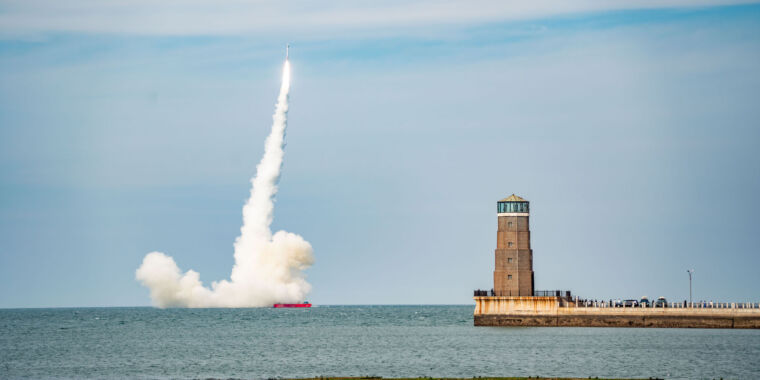
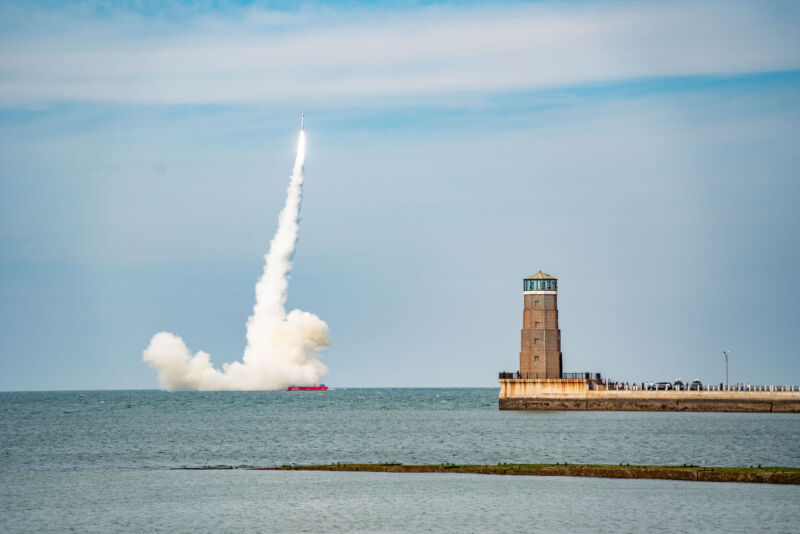
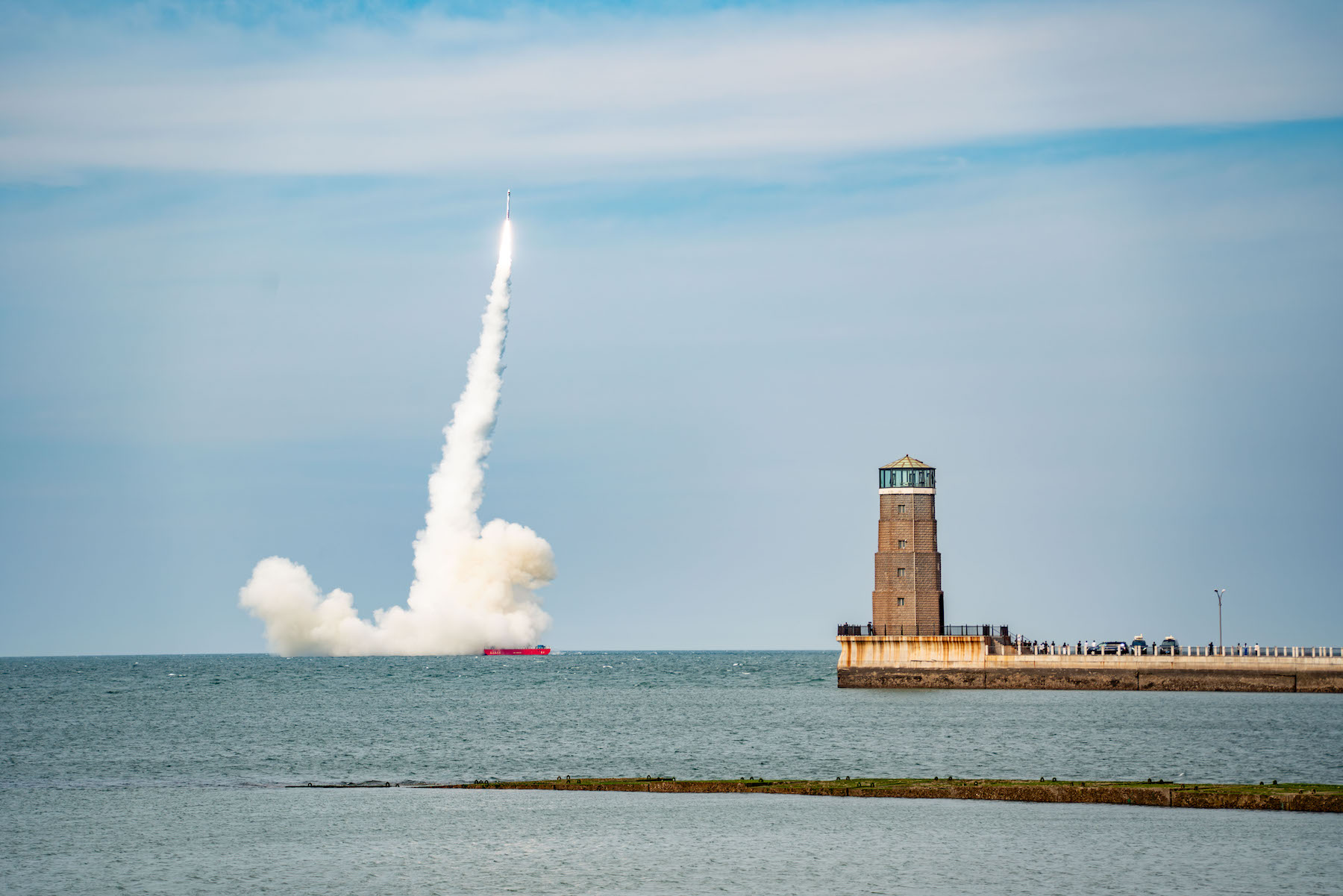
A sea-borne variant of the commercial Ceres 1 rocket lifts off near the coast of Rizhao, a city of 3 million in China's Shandong province.

Enlarge / A sea-borne variant of the commercial Ceres 1 rocket lifts off near the coast of Rizhao, a city of 3 million in China’s Shandong province.

Welcome to Edition 6.46 of the Rocket Report! It looks like we will be covering the crew test flight of Boeing’s Starliner spacecraft and the fourth test flight of SpaceX’s giant Starship rocket over the next week. All of this is happening as SpaceX keeps up its cadence of flying multiple Starlink missions per week. The real stars are the Ars copy editors helping make sure our stories don’t use the wrong names.

As always, we welcome reader submissions, and if you don’t want to miss an issue, please subscribe using the box below (the form will not appear on AMP-enabled versions of the site). Each report will include information on small-, medium-, and heavy-lift rockets as well as a quick look ahead at the next three launches on the calendar.

Another North Korean launch failure. North Korea’s latest attempt to launch a rocket with a military reconnaissance satellite ended in failure due to the midair explosion of the rocket during the first-stage flight this week, South Korea’s Yonhap News Agency reports. Video captured by the Japanese news organization NHK appears to show the North Korean rocket disappearing in a fireball shortly after liftoff Monday night from a launch pad on the country’s northwest coast. North Korean officials acknowledged the launch failure and said the rocket was carrying a small reconnaissance satellite named Malligyong-1-1.

Russia’s role? … Experts initially thought the pending North Korean launch, which was known ahead of time from international airspace warning notices, would use the same Chŏllima 1 rocket used on three flights last year. But North Korean statements following the launch Monday indicated the rocket used a new propulsion system burning a petroleum-based fuel, presumably kerosene, with liquid oxygen as the oxidizer. The Chŏllima 1 rocket design used a toxic mixture of hypergolic hydrazine and nitrogen tetroxide as propellants. If North Korea’s statement is true, this would be a notable leap in the country’s rocket technology and begs the question of whether Russia played a significant role in the launch. Last year, Russian President Vladimir Putin pledged more Russian support for North Korea’s rocket program in a meeting with North Korean leader Kim Jong Un. (submitted by Ken the Bin and Jay500001)

Rocket Lab deploys small NASA climate satellite. Rocket Lab is in the midst of back-to-back launches for NASA, carrying identical climate research satellites into different orbits to study heat loss to space in Earth’s polar regions. The Polar Radiant Energy in the Far-InfraRed Experiment (PREFIRE) satellites are each about the size of a shoebox, and NASA says data from PREFIRE will improve computer models that researchers use to predict how Earth’s ice, seas, and weather will change in a warming world. “The difference between the amount of heat Earth absorbs at the tropics and that radiated out from the Arctic and Antarctic is a key influence on the planet’s temperature, helping to drive dynamic systems of climate and weather,” NASA said in a statement.

Twice in a week… NASA selected Rocket Lab’s Electron launch vehicle to deliver the two PREFIRE satellites into orbit on two dedicated rides rather than launching at a lower cost on a rideshare mission. This is because scientists want the satellites flying at the proper alignment to ensure they fly over the poles several hours apart, providing the data needed to measure how the rate at which heat radiates from the polar regions changes over time. The first PREFIRE launch occurred on May 25, and the next one is slated for May 31. Both launches will take off from Rocket Lab’s base in New Zealand. (submitted by Ken the Bin)

The easiest way to keep up with Eric Berger’s space reporting is to sign up for his newsletter, we’ll collect his stories in your inbox.

A rocket launch comes to Rizhao. China has diversified its launch sector over the last decade to include new families of small satellite launchers and new spaceports. One of these relatively new small rockets, the solid-fueled Ceres 1, took off Wednesday from a floating launch pad positioned about 2 miles (3 km) off the coast of Rizhao, a city of roughly 3 million people in China’s Shandong province. The Ceres 1 rocket, developed by a quasi-commercial company called Galactic Energy, has previously flown from land-based launch pads and a sea-borne platform, but this mission originated from a location remarkably close to shore, with the skyline of a major metropolitan area as a backdrop.

Range safety … There’s no obvious orbital mechanics reason to position the rocket’s floating launch platform so near a major Chinese city, other than perhaps to gain a logistical advantage by launching close to port. The Ceres 1 rocket has a fairly good reliability record—11 successes in 12 flights—but for safety reasons, there’s no Western spaceport that would allow members of the public (not to mention a few million) to get so close to a rocket launch. For decades, Chinese rockets have routinely dropped rocket boosters containing toxic propellant on farms and villages downrange from the country’s inland spaceports.

Rocket Report: North Korean rocket explosion; launch over Chinese skyline Read More »
spacex-sets-date-for-next-starship-flight,-explains-what-went-wrong-the-last-time

SpaceX sets date for next Starship flight, explains what went wrong the last time

IFT-4 on June 5 —

Clearing blocked filters and clogged valves is the order of the day.

SpaceX's Starship vehicle undergoes a wet dress rehearsal prior to its fourth launch attempt.

Enlarge / SpaceX’s Starship vehicle undergoes a wet dress rehearsal prior to its fourth launch attempt.

SpaceX

SpaceX is targeting June 5 for the next flight of its massive Starship rocket, the company said Friday.

The highly anticipated test flight— the fourth in a program to bring Starship to operational readiness and make progress toward its eventual reuse—will seek to demonstrate the ability of the Super Heavy first stage to make a soft landing in the Gulf of Mexico and for the Starship upper stage to make a controlled reentry through Earth’s atmosphere before it falls into the Indian Ocean.

This mission will carry no payloads as SpaceX seeks additional flight data about the performance of the complex Starship vehicle. It is simultaneously the largest and most powerful rocket ever built and the first launch system ever intended to be fully and rapidly reusable.

As part of its announcement of the flight date, SpaceX provided some information about its learnings from the most recent flight test, Flight 3, which launched on March 14, 2024.

Dissecting Flight 3

During that flight, SpaceX also attempted a soft landing of the Super Heavy first stage. After its separation from the Starship upper stage, as intended, 13 of Super Heavy’s 33 Raptor engines successfully relit to make a controlled flight through the lower atmosphere. During this boostback burn, however, six of these engines shut down early. Later in the descent, as the rocket neared the sea surface, the rocket was supposed to use the same 13 engines to make a final landing burn.

“The six engines that shut down early in the boostback burn were disabled from attempting the landing burn startup, leaving seven engines commanded to start up with two successfully reaching mainstage ignition,” the company said in its recap of the flight. “The booster had lower than expected landing burn thrust when contact was lost at approximately 462 meters in altitude over the Gulf of Mexico and just under seven minutes into the mission.”

The cause of this failure was traced to blockage in a filter where liquid oxygen flows into the Raptor engines. Notably, a similar problem occurred during the second test flight of Starship in November 2023. SpaceX says it implemented “hardware changes” to address this blockage issue for the third test flight. Now, the company said, “Super Heavy boosters for Flight 4 and beyond will get additional hardware inside oxygen tanks to further improve propellant filtration capabilities.” It will be interesting to see whether the company’s engineers have successfully addressed this issue.

As for the Starship upper stage, the vehicle began losing the ability to control its attitude during its coast phase in space. This was found to be due to clogged valves used by reaction control thrusters on the upper stage. The company’s update notes that “SpaceX has since added additional roll control thrusters on upcoming Starships.” But it is not clear that they will be available for Flight 4. Indeed, the fact that SpaceX is not attempting an in-flight relight of Raptor engines on the Starship upper stage suggests these new roll control thrusters are not yet in place.

Ultimately this lack of attitude control during Flight 3 resulted in a non-nominal reentry to Earth’s atmosphere. SpaceX was able to maintain contact with the vehicle down to 65 km in altitude before telemetry was lost due to excess heating.

Back to the basics

On Flight 3, SpaceX achieved some important milestones, including the opening of the Starship payload bay door in space and a small propellant transfer demonstration. Due to the loss of attitude control, however, a planned Raptor rocket engine re-light test was not conducted. This is an important test, as Raptor ignition is needed to perform a controlled reentry—essentially to ensure that Starship returns to a remote section of ocean rather than land.

For the next flight, SpaceX is focused on solving the technical issues observed on Flight 3: the filter blockages observed during Super Heavy’s boostback and landing burns, Starship’s attitude control during its coast phase, and managing reentry of that vehicle from orbital velocity.

Once these issues are resolved, the company can proceed to more advanced tests, including landing the Super Heavy booster back at the South Texas launch site, deployment of Starlink satellites, and additional tests of propellant transfer essential for NASA’s Artemis Program to land humans on the Moon.

SpaceX sets date for next Starship flight, explains what went wrong the last time Read More »
we-take-a-stab-at-decoding-spacex’s-ever-changing-plans-for-starship-in-florida

We take a stab at decoding SpaceX’s ever-changing plans for Starship in Florida

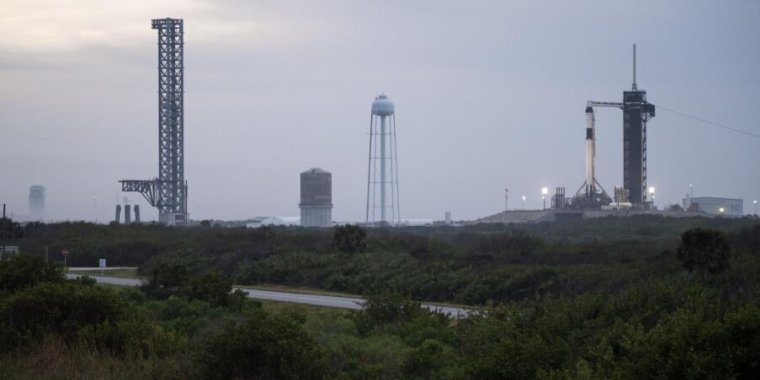
SpaceX's Starship tower (left) at Launch Complex 39A dwarfs the launch pad for the Falcon 9 rocket (right).

Enlarge / SpaceX’s Starship tower (left) at Launch Complex 39A dwarfs the launch pad for the Falcon 9 rocket (right).

There are a couple of ways to read the announcement from the Federal Aviation Administration that it’s kicking off a new environmental review of SpaceX’s plan to launch the most powerful rocket in the world from Florida.

The FAA said on May 10 that it plans to develop an Environmental Impact Statement (EIS) for SpaceX’s proposal to launch Starships from NASA’s Kennedy Space Center in Florida. The FAA ordered this review after SpaceX updated the regulatory agency on the projected Starship launch rate and the design of the ground infrastructure needed at Launch Complex 39A (LC-39A), the historic launch pad once used for Apollo and Space Shuttle missions.

Dual environmental reviews

At the same time, the US Space Force is overseeing a similar EIS for SpaceX’s proposal to take over a launch pad at Cape Canaveral Space Force Station, a few miles south of LC-39A. This launch pad, designated Space Launch Complex 37 (SLC-37), is available for use after United Launch Alliance’s last Delta rocket lifted off there in April.

On the one hand, these environmental reviews often take a while and could cloud Elon Musk’s goal of having Starship launch sites in Florida ready for service by the end of 2025. “A couple of years would not be a surprise,” said George Nield, an aerospace industry consultant and former head of the FAA’s Office of Commercial Space Transportation.

Another way to look at the recent FAA and Space Force announcements of pending environmental reviews is that SpaceX finally appears to be cementing its plans to launch Starship from Florida. These plans have changed quite a bit in the last five years.

The environmental reviews will culminate in a decision on whether to approve SpaceX’s proposals for Starship launches at LC-39A and SLC-37. The FAA will then go through a separate licensing process, similar to the framework used to license the first three Starship test launches from South Texas.

NASA has contracts with SpaceX worth more than $4 billion to develop a human-rated version of Starship to land astronauts on the Moon on the first two Artemis lunar landing flights later this decade. To do that, SpaceX must stage a fuel depot in low-Earth orbit to refuel the Starship lunar lander before it heads for the Moon. It will take a series of Starship tanker flights—perhaps 10 to 15—to fill the depot with cryogenic propellants.

Launching that many Starships over the course of a month or two will require SpaceX to alternate between at least two launch pads. NASA and SpaceX officials say the best way to do this is by launching Starships from one pad in Texas and another in Florida.

Earlier this week, Ars spoke with Lisa Watson-Morgan, who manages NASA’s human-rated lunar lander program. She was at Kennedy Space Center this week for briefings on the Starship lander and a competing lander from Blue Origin. One of the topics, she said, was the FAA’s new environmental review before Starship can launch from LC-39A.

“I would say we’re doing all we can to pull the schedule to where it needs to be, and we are working with SpaceX to make sure that their timeline, the EIS timeline, and NASA’s all work in parallel as much as we can to achieve our objectives,” she said. “When you’re writing it down on paper just as it is, it looks like there could be some tight areas, but I would say we’re collectively working through it.”

Officially, SpaceX plans to perform a dress rehearsal for the Starship lunar landing in late 2025. This will be a full demonstration, with refueling missions, an uncrewed landing of Starship on the lunar surface, then a takeoff from the Moon, before NASA commits to putting people on Starship on the Artemis III mission, currently slated for September 2026.

So you can see that schedules are already tight for the Starship lunar landing demonstration if SpaceX activates launch pads in Florida late next year.

We take a stab at decoding SpaceX’s ever-changing plans for Starship in Florida Read More »
rocket-report:-starship-stacked;-georgia-shuts-the-door-on-spaceport-camden

Rocket Report: Starship stacked; Georgia shuts the door on Spaceport Camden

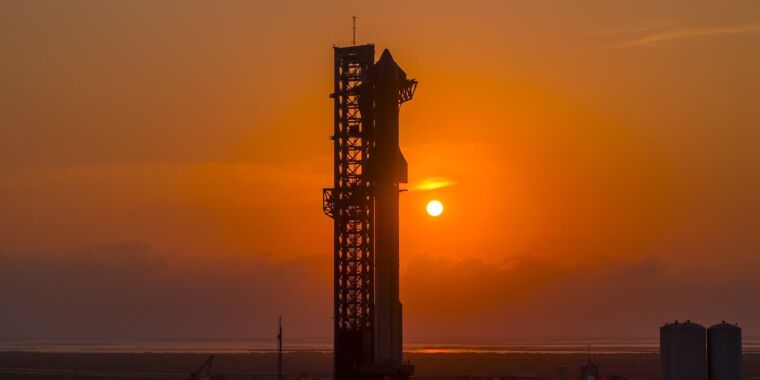
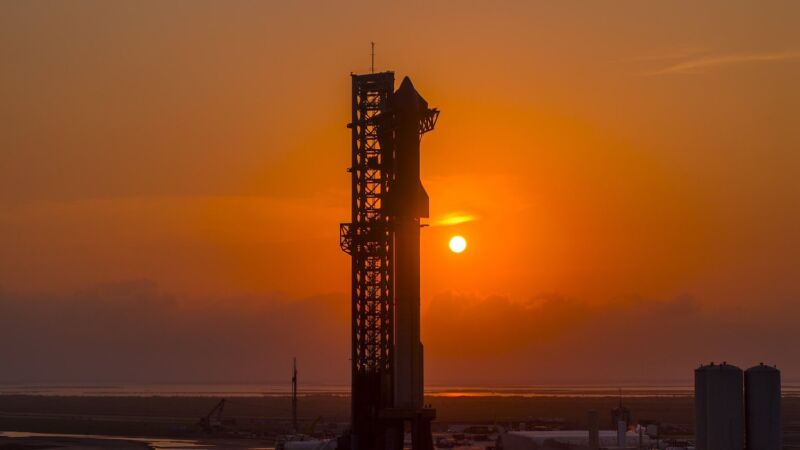
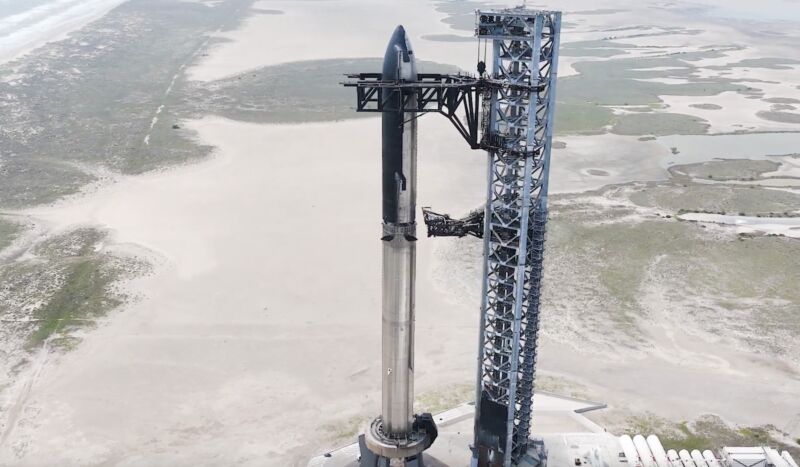
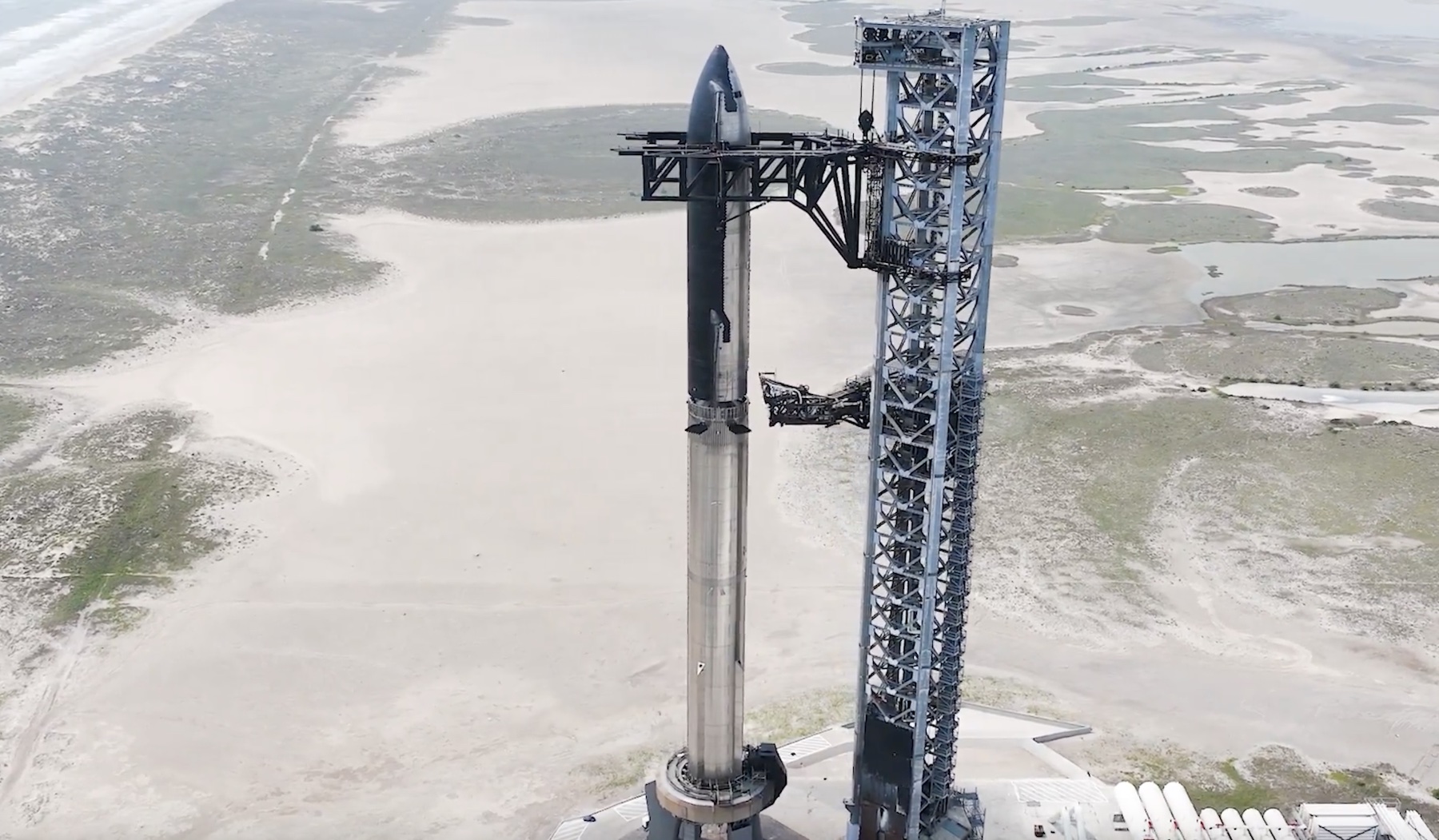
On Wednesday, SpaceX fully stacked the Super Heavy booster and Starship upper stage for the mega-rocket's next test flight from South Texas.

Enlarge / On Wednesday, SpaceX fully stacked the Super Heavy booster and Starship upper stage for the mega-rocket’s next test flight from South Texas.

Welcome to Edition 6.44 of the Rocket Report! Kathy Lueders, general manager of SpaceX’s Starbase launch facility, says the company expects to receive an FAA launch license for the next Starship test flight shortly after Memorial Day. It looks like this rocket could fly in late May or early June, about two-and-a-half months after the previous Starship test flight. This is an improvement over the previous intervals of seven months and four months between Starship flights.

As always, we welcome reader submissions, and if you don’t want to miss an issue, please subscribe using the box below (the form will not appear on AMP-enabled versions of the site). Each report will include information on small-, medium-, and heavy-lift rockets as well as a quick look ahead at the next three launches on the calendar.

Blue Origin launch on tap this weekend. Blue Origin plans to launch its first human spaceflight mission in nearly two years on Sunday. This flight will launch six passengers on a flight to suborbital space more than 60 miles (100 km) over West Texas. Blue Origin, Jeff Bezos’s space company, has not flown people to space since a New Shepard rocket failure on an uncrewed research flight in September 2022. The company successfully launched New Shepard on another uncrewed suborbital mission in December.

Historic flight … This will be the 25th flight of Blue Origin’s New Shepard rocket, and the seventh human spaceflight mission on New Shepard. Before Blue Origin’s rocket failure in 2022, the company was reaching a flight cadence of about one launch every two months, on average. The flight rate has diminished since then. Sunday’s flight is important not only because it marks the resumption of launches for Blue Origin’s suborbital human spaceflight business, but also because its six-person crew includes an aviation pioneer. Ed Dwight, 90, almost became the first Black astronaut in 1963. Dwight, a retired Air Force captain, piloted military fighter jets and graduated test pilot school, following a familiar career track as many of the early astronauts. He was on a short list of astronaut candidates the Air Force provided NASA, but the space agency didn’t include him. Dwight will become the oldest person to ever fly in space.

Spaceport Camden is officially no more. With the stroke of a pen, Georgia Governor Brian Kemp signed a bill that dissolved the Camden County Spaceport Authority, Action News Jax reported. This news follows a referendum in March 2022 where more than 70 percent of voters rejected a plan to buy land for the spaceport on the Georgia coastline between Savannah and Jacksonville, Florida. County officials still tried to move forward with the spaceport initiative after the failed referendum, but Georgia’s Supreme Court ruled in February that the county had to abide by the voters’ wishes.

$12 million for what?… The government of Camden County, with a population of about 55,000 people spent $12 million on the Spaceport Camden concept over the course of a decade. The goal of the spaceport authority was to lure small launch companies to the region, but no major launches ever took place from Camden County. State Rep. Steven Sainz, who sponsored the bill eliminating the spaceport authority, said in a statement that the legislation “reflects the community’s choice and opens a path for future collaborations in economic initiatives that are more aligned with local needs.” (submitted by zapman987)

The easiest way to keep up with Eric Berger’s space reporting is to sign up for his newsletter, we’ll collect his stories in your inbox.

Polaris Spaceplanes moves on to bigger things. German startup Polaris Spaceplanes says it is progressing with construction of its MIRA II and MIRA III spaceplane prototypes after MIRA, a subscale test vehicle, was damaged earlier this year, European Spaceflight reports. The MIRA demonstration vehicle crash-landed on a test flight in February. The incident occurred on takeoff at an airfield in Germany before the vehicle could ignite its linear aerospace engine in flight. The remote-controlled MIRA prototype measured about 4.25 meters long. Polaris announced on April 30 that will not repair MIRA and will instead move forward with the construction of a pair of larger vehicles.

Nearly 16 months without a launch … The MIRA II and MIRA III vehicles will be 5 meters long and will be powered by Polaris’s AS-1 aerospike engines, along with jet engines to power the craft before and after in-flight tests of the rocket engine. Aerospike engines are rocket engines that are designed to operate efficiently at all altitudes. The MIRA test vehicles are precursors to AURORA, a multipurpose spaceplane and hypersonic transporter Polaris says will be capable of delivering up to 1,000 kilograms of payload to low-Earth orbit. (submitted by Jay500001 and Tfargo04)

Rocket Report: Starship stacked; Georgia shuts the door on Spaceport Camden Read More »

rocket-report:-astroscale-chases-down-dead-rocket;-ariane-6-on-the-pad

Rocket Report: Astroscale chases down dead rocket; Ariane 6 on the pad

RIP B1060 —

Rocket Factory Augsburg, a German launch startup, nears a test-firing of its booster.

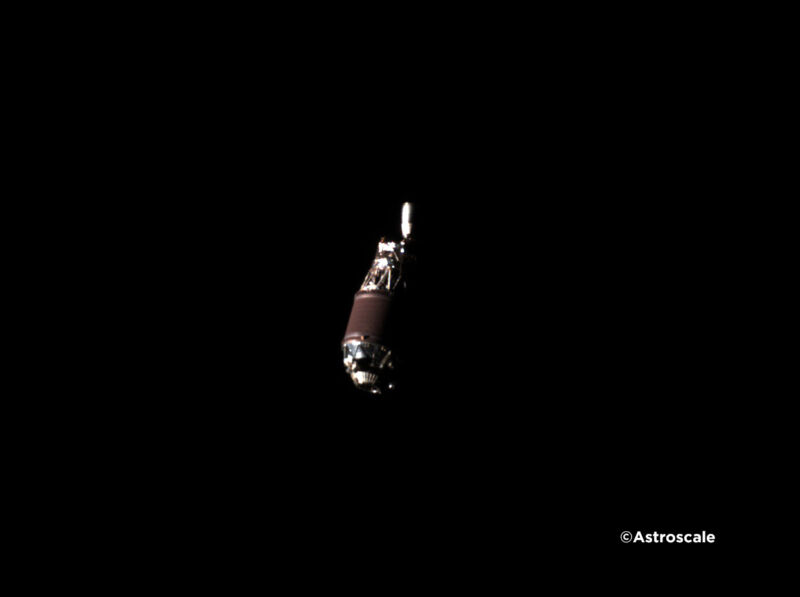
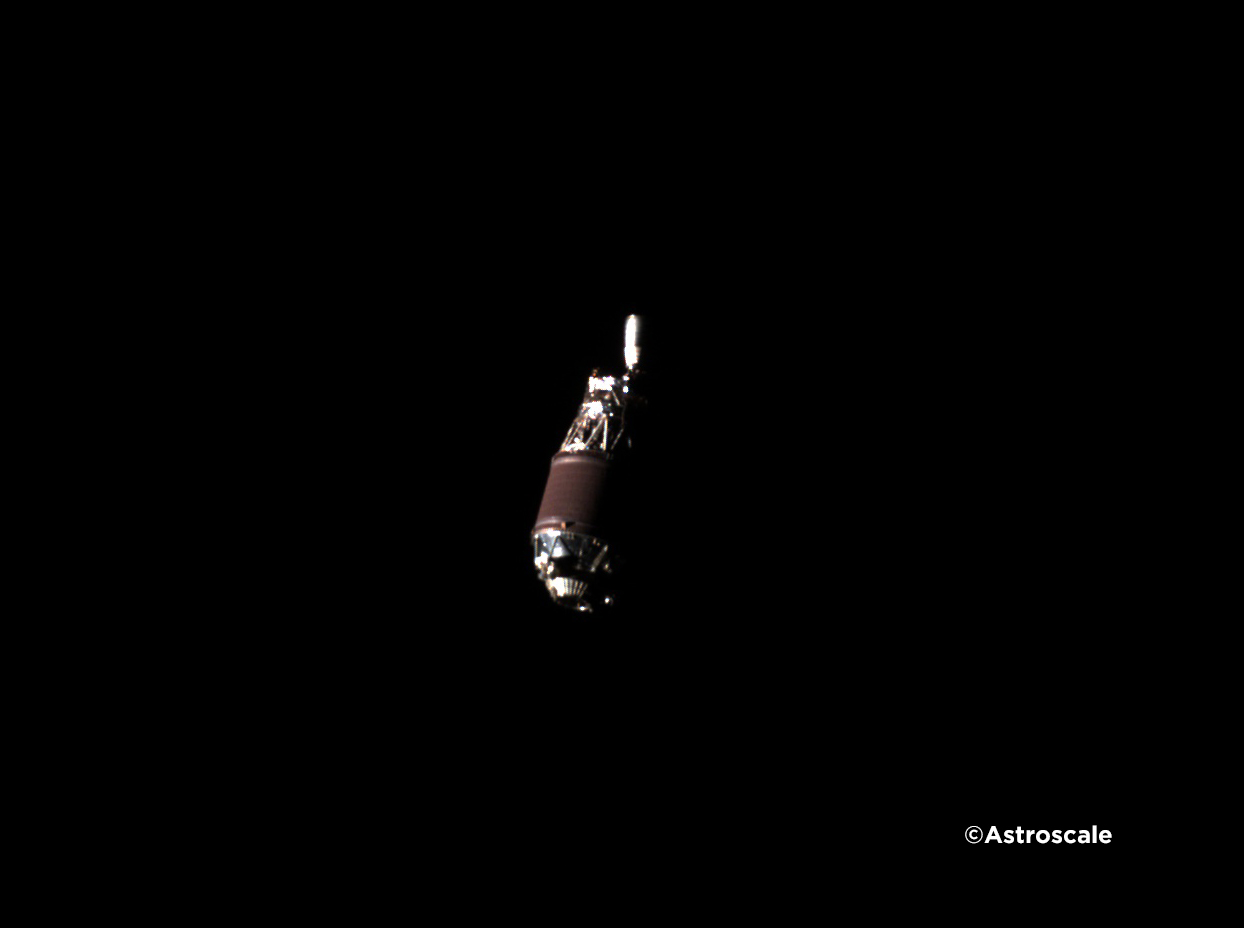
This image captured by Astroscale's ADRAS-J satellite shows the discarded upper stage from a Japanese H-IIA rocket.

Enlarge / This image captured by Astroscale’s ADRAS-J satellite shows the discarded upper stage from a Japanese H-IIA rocket.

Welcome to Edition 6.42 of the Rocket Report! Several major missions are set for launch in the next few months. These include the first crew flight on Boeing’s Starliner spacecraft, set for liftoff on May 6, and the next test flight of SpaceX’s Starship rocket, which could happen before the end of May. Perhaps as soon as early summer, SpaceX could launch the Polaris Dawn mission with four private astronauts, who will perform the first fully commercial spacewalk in orbit. In June or July, Europe’s new Ariane 6 rocket is slated to launch for the first time. Rest assured, Ars will have it all covered.

As always, we welcome reader submissions, and if you don’t want to miss an issue, please subscribe using the box below (the form will not appear on AMP-enabled versions of the site). Each report will include information on small-, medium-, and heavy-lift rockets as well as a quick look ahead at the next three launches on the calendar.

German rocket arrives at Scottish spaceport. Rocket Factory Augsburg has delivered a booster for its privately developed RFA One rocket to SaxaVord Spaceport in Scotland, the company announced on X. The first stage for the RFA One rocket was installed on its launch pad at SaxaVord to undergo preparations for a static fire test. The booster arrived at the Scottish launch site with five of its kerosene-fueled Helix engines. The remaining four Helix engines, for a total of nine, will be fitted to the RFA One booster at SaxaVord, the company said.

Aiming to fly this year… RFA hopes to launch its first orbital-class rocket by the end of 2024. The UK’s Civil Aviation Authority last month granted a range license to SaxaVord Spaceport to allow the spaceport operator to control the sea and airspace during a launch. RFA is primarily privately funded but has won financial support from the European Space Agency, the UK Space Agency, and the German space agency, known as DLR. The RFA One rocket will have three stages, stand nearly 100 feet (30 meters) tall, and can carry nearly 2,900 pounds (1,300 kilograms) of payload into a polar Sun-synchronous orbit.

Arianespace wins ESA launch contract. The European Space Agency has awarded Arianespace a contract to launch a joint European-Chinese space science satellite in late 2025, European Spaceflight reports. The Solar wind Magnetosphere Ionosphere Link Explorer (SMILE) is a 4,850-pound (2,200-kilogram) spacecraft that will study Earth’s magnetic environment on a global scale. The aim of the mission is to build a more complete understanding of the Sun-Earth connection. On Tuesday, ESA officially signed a contract for Arianespace to launch SMILE aboard a Vega C rocket, which is built by the Italian rocket-maker Avio.

But it may not keep it … In late 2023, ESA member states agreed to allow Avio to market and manage the launch of Vega C flights independent of Arianespace. When the deal was initially struck, 17 flights were contracted through Arianespace to be launched aboard Vega vehicles. While these missions are still managed by Arianespace, Avio is working with the launch provider to strike a deal that would allow the Italian rocket builder to assume the management of all Vega flights. The Vega C rocket has been grounded since a launch failure in 2022 forced Avio to redesign the nozzle of the rocket’s solid-fueled second-stage motor. Vega C is scheduled to return to flight before the end of 2024. (submitted by Ken the Bin)

The easiest way to keep up with Eric Berger’s space reporting is to sign up for his newsletter, we’ll collect his stories in your inbox.

Update on ABL’s second launch. ABL Space Systems expected to launch its second light-class RS1 rocket earlier this year, but the company encountered an anomaly during ground testing at the launch site in Alaska, according to Aria Alamalhodaei of TechCrunch. Kevin Sagis, ABL’s chief engineer, said there is “no significant delay” in the launch of the second RS1 rocket, but the company has not announced a firm schedule. “During ground testing designed to screen the vehicle for flight, an issue presented that caused us to roll back to the hangar,” Sagis said, according to Alamalhodaei. “We have since resolved and dispositioned the issue. There was no loss of hardware and we have validated vehicle health back out on the pad. We are continuing with preparations for static fire and launch.”

Nearly 16 months without a launch … ABL’s first RS1 test flight in January 2023 ended seconds after liftoff with the premature shutdown of its liquid-fueled engines. The rocket crashed back onto its launch pad in Alaska. An investigation revealed a fire in the aft end of the RS1 booster burned through wiring harnesses, causing the rocket to lose power and shut off its engines. Engineers believe the rocket’s mobile launch mount was too small, placing the rocket too close to the ground when it ignited its engines. This caused the hot engine exhaust to recirculate under the rocket and led to a fire in the engine compartment as it took off.

Rocket Report: Astroscale chases down dead rocket; Ariane 6 on the pad Read More »

nasa-lays-out-how-spacex-will-refuel-starships-in-low-earth-orbit

NASA lays out how SpaceX will refuel Starships in low-Earth orbit

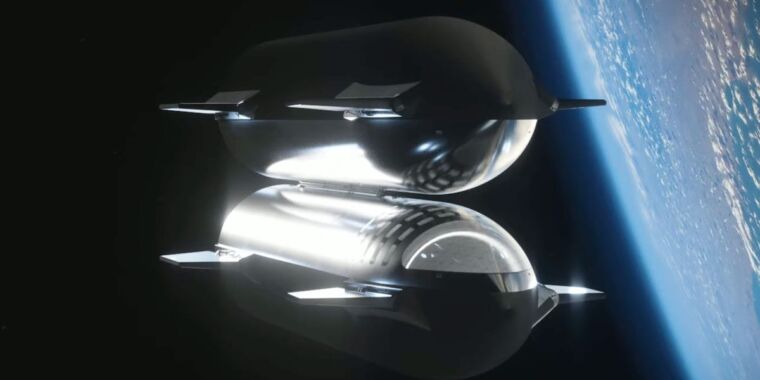
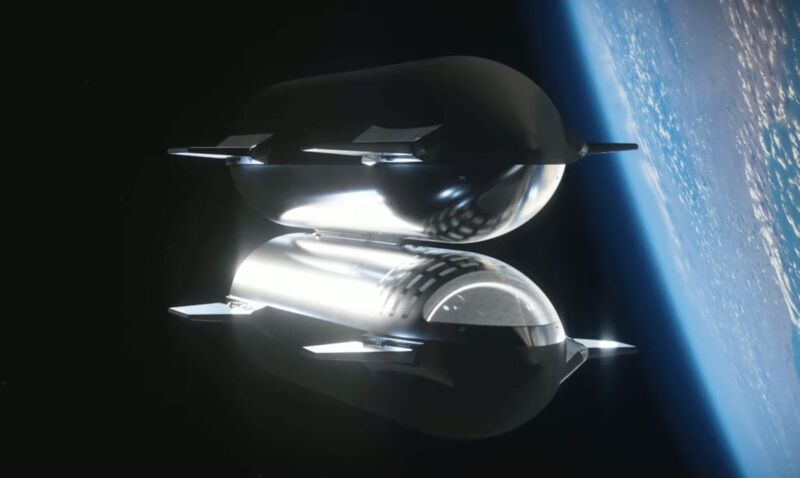
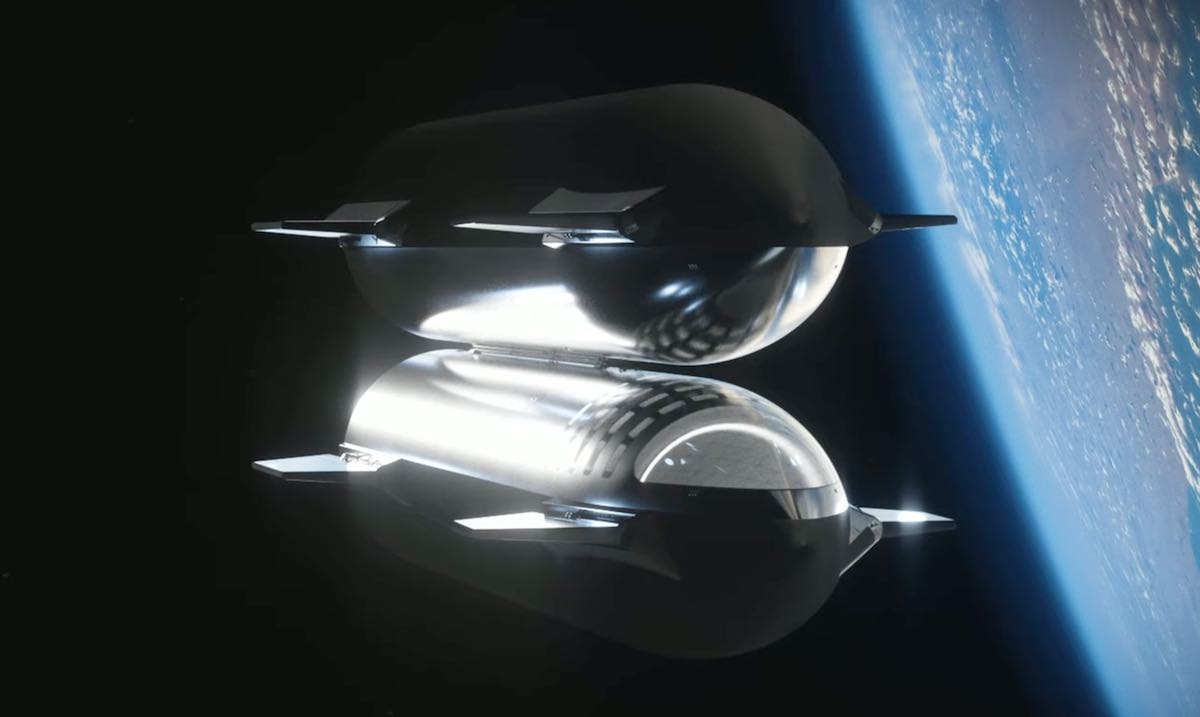
Artist's illustration of two Starships docked belly-to-belly in orbit.

Enlarge / Artist’s illustration of two Starships docked belly-to-belly in orbit.

SpaceX

Some time next year, NASA believes SpaceX will be ready to link two Starships in orbit for an ambitious refueling demonstration, a technical feat that will put the Moon within reach.

SpaceX is under contract with NASA to supply two human-rated Starships for the first two astronaut landings on the Moon through the agency’s Artemis program, which aims to return people to the lunar surface for the first time since 1972. The first of these landings, on NASA’s Artemis III mission, is currently targeted for 2026, although this is widely viewed as an ambitious schedule.

Last year, NASA awarded a contract to Blue Origin to develop its own human-rated Blue Moon lunar lander, giving Artemis managers two options for follow-on missions.

Designers of both landers were future-minded. They designed Starship and Blue Moon for refueling in space. This means they can eventually be reused for multiple missions, and ultimately, could take advantage of propellants produced from resources on the Moon or Mars.

Amit Kshatriya, who leads the “Moon to Mars” program within NASA’s exploration division, outlined SpaceX’s plan to do this in a meeting with a committee of the NASA Advisory Council on Friday. He said the Starship test program is gaining momentum, with the next test flight from SpaceX’s Starbase launch site in South Texas expected by the end of May.

“Production is not the issue,” Kshatriya said. “They’re rolling cores out. The engines are flowing into the factory. That is not the issue. The issue is it is a significant development challenge to do what they’re trying to do … We have to get on top of this propellant transfer problem. It is the right problem to try and solve. We’re trying to build a blueprint for deep space exploration.”

Road map to refueling

Before getting to the Moon, SpaceX and Blue Origin must master the technologies and techniques required for in-space refueling. Right now, SpaceX is scheduled to attempt the first demonstration of a large-scale propellant transfer between two Starships in orbit next year.

There will be at least several more Starship test flights before then. During the most recent Starship test flight in March, SpaceX conducted a cryogenic propellant transfer test between two tanks inside the vehicle. This tank-to-tank transfer of liquid oxygen was part of a demonstration supported with NASA funding. Agency officials said this demonstration would allow engineers to learn more about how the fluid behaves in a low-gravity environment.

Kshatriya said that while engineers are still analyzing the results of the cryogenic transfer demonstration, the test on the March Starship flight “was successful by all accounts.”

“That milestone is behind them,” he said Friday. Now, SpaceX will move out with more Starship test flights. The next launch will try to check off a few more capabilities SpaceX didn’t demonstrate on the March test flight.

These will include a precise landing of Starship’s Super Heavy booster in the Gulf of Mexico, which is necessary before SpaceX tries to land the booster back at its launch pad in Texas. Another objective will likely be the restart of a single Raptor engine on Starship in flight, which SpaceX didn’t accomplish on the March flight due to unexpected roll rates on the vehicle as it coasted through space. Achieving an in-orbit engine restart—necessary to guide Starship toward a controlled reentry—is a prerequisite for future launches into a stable higher orbit, where the ship could loiter for hours, days, or weeks to deploy satellites and attempt refueling.

In the long run, SpaceX wants to ramp up the Starship launch cadence to many daily flights from multiple launch sites. To achieve that goal, SpaceX plans to recover and rapidly reuse Starships and Super Heavy boosters, building on expertise from the partially reusable Falcon 9 rocket. Elon Musk, SpaceX’s founder and CEO, is keen on reusing ships and boosters as soon as possible. Earlier this month, Musk said he is optimistic SpaceX can recover a Super Heavy booster in Texas later this year and land a Starship back in Texas sometime next year.

NASA lays out how SpaceX will refuel Starships in low-Earth orbit Read More »