spacex

spacex-sets-date-for-next-starship-flight,-explains-what-went-wrong-the-last-time

SpaceX sets date for next Starship flight, explains what went wrong the last time

IFT-4 on June 5 —

Clearing blocked filters and clogged valves is the order of the day.
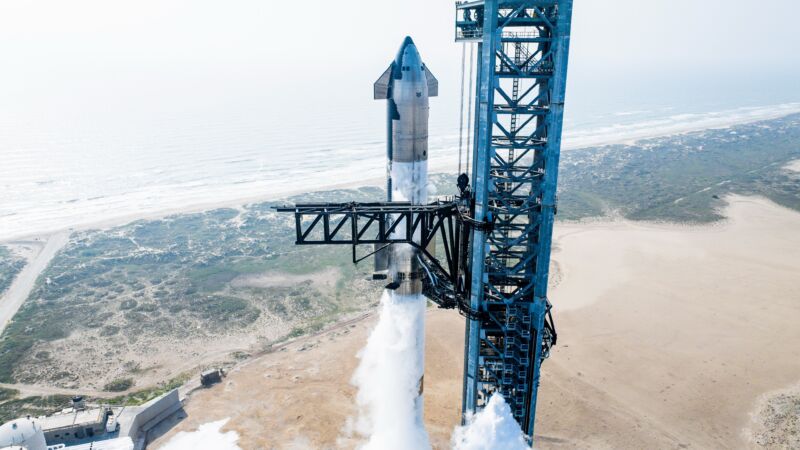
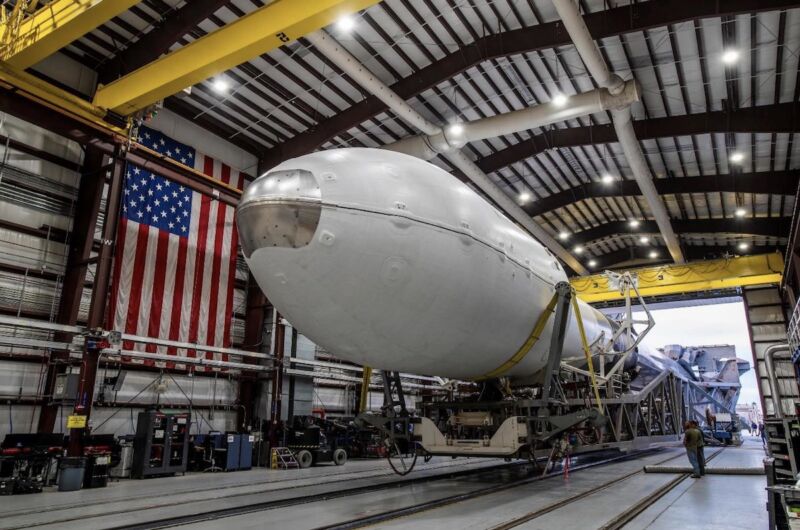
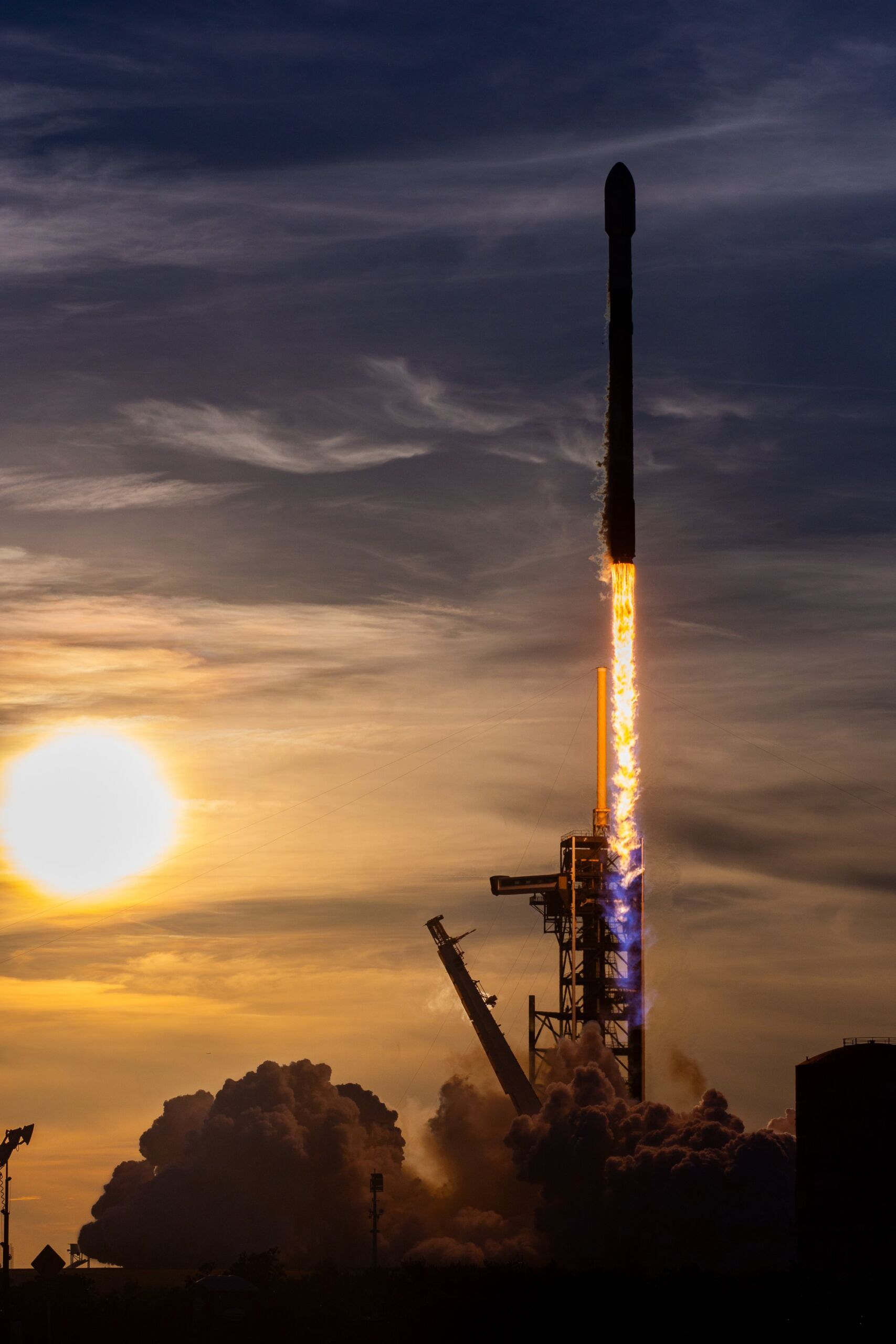
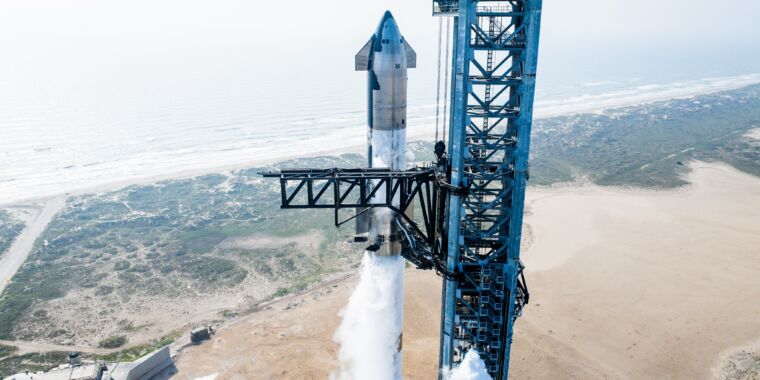
SpaceX's Starship vehicle undergoes a wet dress rehearsal prior to its fourth launch attempt.

Enlarge / SpaceX’s Starship vehicle undergoes a wet dress rehearsal prior to its fourth launch attempt.

SpaceX

SpaceX is targeting June 5 for the next flight of its massive Starship rocket, the company said Friday.

The highly anticipated test flight— the fourth in a program to bring Starship to operational readiness and make progress toward its eventual reuse—will seek to demonstrate the ability of the Super Heavy first stage to make a soft landing in the Gulf of Mexico and for the Starship upper stage to make a controlled reentry through Earth’s atmosphere before it falls into the Indian Ocean.

This mission will carry no payloads as SpaceX seeks additional flight data about the performance of the complex Starship vehicle. It is simultaneously the largest and most powerful rocket ever built and the first launch system ever intended to be fully and rapidly reusable.

As part of its announcement of the flight date, SpaceX provided some information about its learnings from the most recent flight test, Flight 3, which launched on March 14, 2024.

Dissecting Flight 3

During that flight, SpaceX also attempted a soft landing of the Super Heavy first stage. After its separation from the Starship upper stage, as intended, 13 of Super Heavy’s 33 Raptor engines successfully relit to make a controlled flight through the lower atmosphere. During this boostback burn, however, six of these engines shut down early. Later in the descent, as the rocket neared the sea surface, the rocket was supposed to use the same 13 engines to make a final landing burn.

“The six engines that shut down early in the boostback burn were disabled from attempting the landing burn startup, leaving seven engines commanded to start up with two successfully reaching mainstage ignition,” the company said in its recap of the flight. “The booster had lower than expected landing burn thrust when contact was lost at approximately 462 meters in altitude over the Gulf of Mexico and just under seven minutes into the mission.”

The cause of this failure was traced to blockage in a filter where liquid oxygen flows into the Raptor engines. Notably, a similar problem occurred during the second test flight of Starship in November 2023. SpaceX says it implemented “hardware changes” to address this blockage issue for the third test flight. Now, the company said, “Super Heavy boosters for Flight 4 and beyond will get additional hardware inside oxygen tanks to further improve propellant filtration capabilities.” It will be interesting to see whether the company’s engineers have successfully addressed this issue.

As for the Starship upper stage, the vehicle began losing the ability to control its attitude during its coast phase in space. This was found to be due to clogged valves used by reaction control thrusters on the upper stage. The company’s update notes that “SpaceX has since added additional roll control thrusters on upcoming Starships.” But it is not clear that they will be available for Flight 4. Indeed, the fact that SpaceX is not attempting an in-flight relight of Raptor engines on the Starship upper stage suggests these new roll control thrusters are not yet in place.

Ultimately this lack of attitude control during Flight 3 resulted in a non-nominal reentry to Earth’s atmosphere. SpaceX was able to maintain contact with the vehicle down to 65 km in altitude before telemetry was lost due to excess heating.

Back to the basics

On Flight 3, SpaceX achieved some important milestones, including the opening of the Starship payload bay door in space and a small propellant transfer demonstration. Due to the loss of attitude control, however, a planned Raptor rocket engine re-light test was not conducted. This is an important test, as Raptor ignition is needed to perform a controlled reentry—essentially to ensure that Starship returns to a remote section of ocean rather than land.

For the next flight, SpaceX is focused on solving the technical issues observed on Flight 3: the filter blockages observed during Super Heavy’s boostback and landing burns, Starship’s attitude control during its coast phase, and managing reentry of that vehicle from orbital velocity.

Once these issues are resolved, the company can proceed to more advanced tests, including landing the Super Heavy booster back at the South Texas launch site, deployment of Starlink satellites, and additional tests of propellant transfer essential for NASA’s Artemis Program to land humans on the Moon.

SpaceX sets date for next Starship flight, explains what went wrong the last time Read More »
we-take-a-stab-at-decoding-spacex’s-ever-changing-plans-for-starship-in-florida

We take a stab at decoding SpaceX’s ever-changing plans for Starship in Florida

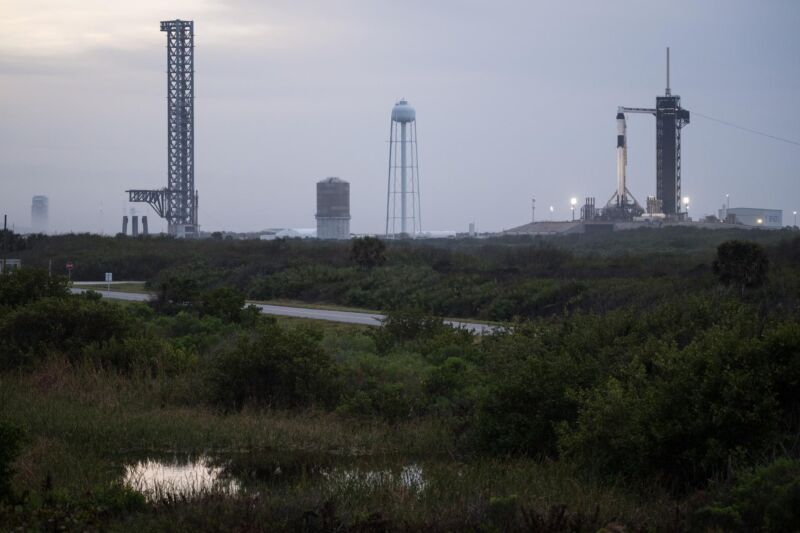
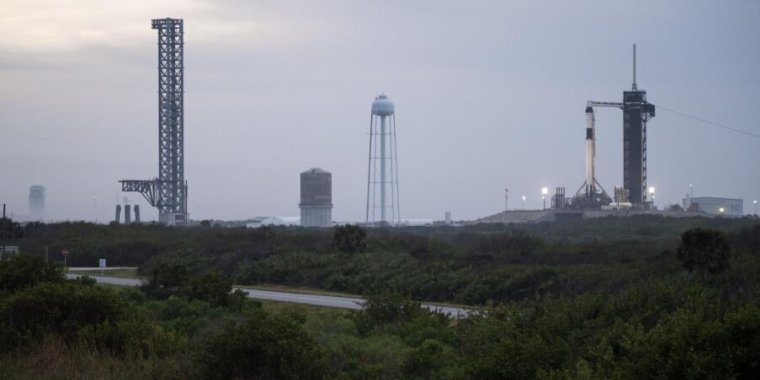
SpaceX's Starship tower (left) at Launch Complex 39A dwarfs the launch pad for the Falcon 9 rocket (right).

Enlarge / SpaceX’s Starship tower (left) at Launch Complex 39A dwarfs the launch pad for the Falcon 9 rocket (right).

There are a couple of ways to read the announcement from the Federal Aviation Administration that it’s kicking off a new environmental review of SpaceX’s plan to launch the most powerful rocket in the world from Florida.

The FAA said on May 10 that it plans to develop an Environmental Impact Statement (EIS) for SpaceX’s proposal to launch Starships from NASA’s Kennedy Space Center in Florida. The FAA ordered this review after SpaceX updated the regulatory agency on the projected Starship launch rate and the design of the ground infrastructure needed at Launch Complex 39A (LC-39A), the historic launch pad once used for Apollo and Space Shuttle missions.

Dual environmental reviews

At the same time, the US Space Force is overseeing a similar EIS for SpaceX’s proposal to take over a launch pad at Cape Canaveral Space Force Station, a few miles south of LC-39A. This launch pad, designated Space Launch Complex 37 (SLC-37), is available for use after United Launch Alliance’s last Delta rocket lifted off there in April.

On the one hand, these environmental reviews often take a while and could cloud Elon Musk’s goal of having Starship launch sites in Florida ready for service by the end of 2025. “A couple of years would not be a surprise,” said George Nield, an aerospace industry consultant and former head of the FAA’s Office of Commercial Space Transportation.

Another way to look at the recent FAA and Space Force announcements of pending environmental reviews is that SpaceX finally appears to be cementing its plans to launch Starship from Florida. These plans have changed quite a bit in the last five years.

The environmental reviews will culminate in a decision on whether to approve SpaceX’s proposals for Starship launches at LC-39A and SLC-37. The FAA will then go through a separate licensing process, similar to the framework used to license the first three Starship test launches from South Texas.

NASA has contracts with SpaceX worth more than $4 billion to develop a human-rated version of Starship to land astronauts on the Moon on the first two Artemis lunar landing flights later this decade. To do that, SpaceX must stage a fuel depot in low-Earth orbit to refuel the Starship lunar lander before it heads for the Moon. It will take a series of Starship tanker flights—perhaps 10 to 15—to fill the depot with cryogenic propellants.

Launching that many Starships over the course of a month or two will require SpaceX to alternate between at least two launch pads. NASA and SpaceX officials say the best way to do this is by launching Starships from one pad in Texas and another in Florida.

Earlier this week, Ars spoke with Lisa Watson-Morgan, who manages NASA’s human-rated lunar lander program. She was at Kennedy Space Center this week for briefings on the Starship lander and a competing lander from Blue Origin. One of the topics, she said, was the FAA’s new environmental review before Starship can launch from LC-39A.

“I would say we’re doing all we can to pull the schedule to where it needs to be, and we are working with SpaceX to make sure that their timeline, the EIS timeline, and NASA’s all work in parallel as much as we can to achieve our objectives,” she said. “When you’re writing it down on paper just as it is, it looks like there could be some tight areas, but I would say we’re collectively working through it.”

Officially, SpaceX plans to perform a dress rehearsal for the Starship lunar landing in late 2025. This will be a full demonstration, with refueling missions, an uncrewed landing of Starship on the lunar surface, then a takeoff from the Moon, before NASA commits to putting people on Starship on the Artemis III mission, currently slated for September 2026.

So you can see that schedules are already tight for the Starship lunar landing demonstration if SpaceX activates launch pads in Florida late next year.

We take a stab at decoding SpaceX’s ever-changing plans for Starship in Florida Read More »
rocket-report:-starship-stacked;-georgia-shuts-the-door-on-spaceport-camden

Rocket Report: Starship stacked; Georgia shuts the door on Spaceport Camden

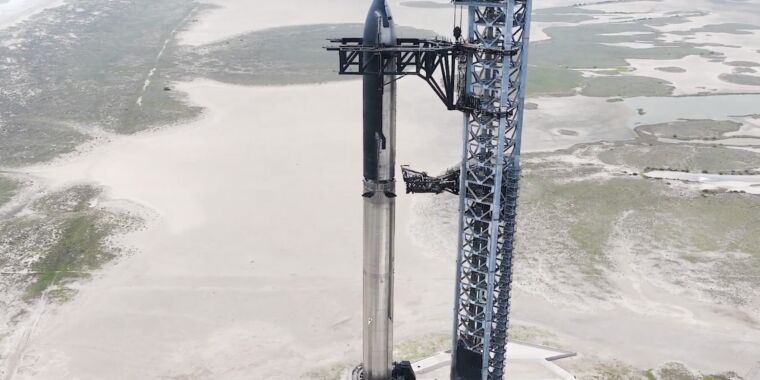
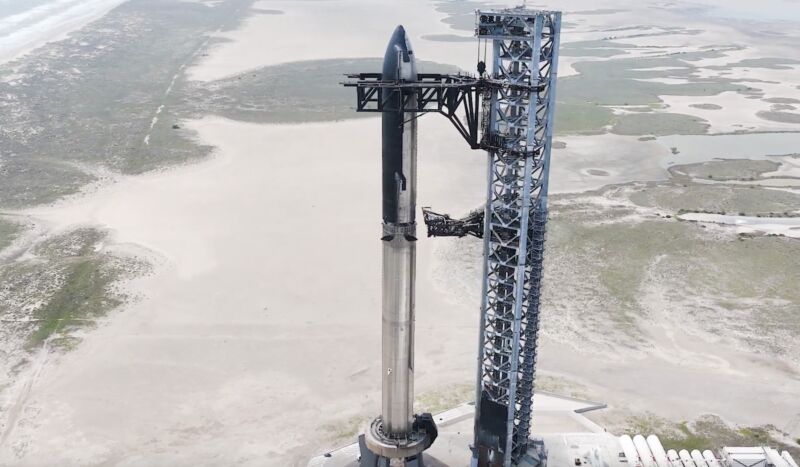
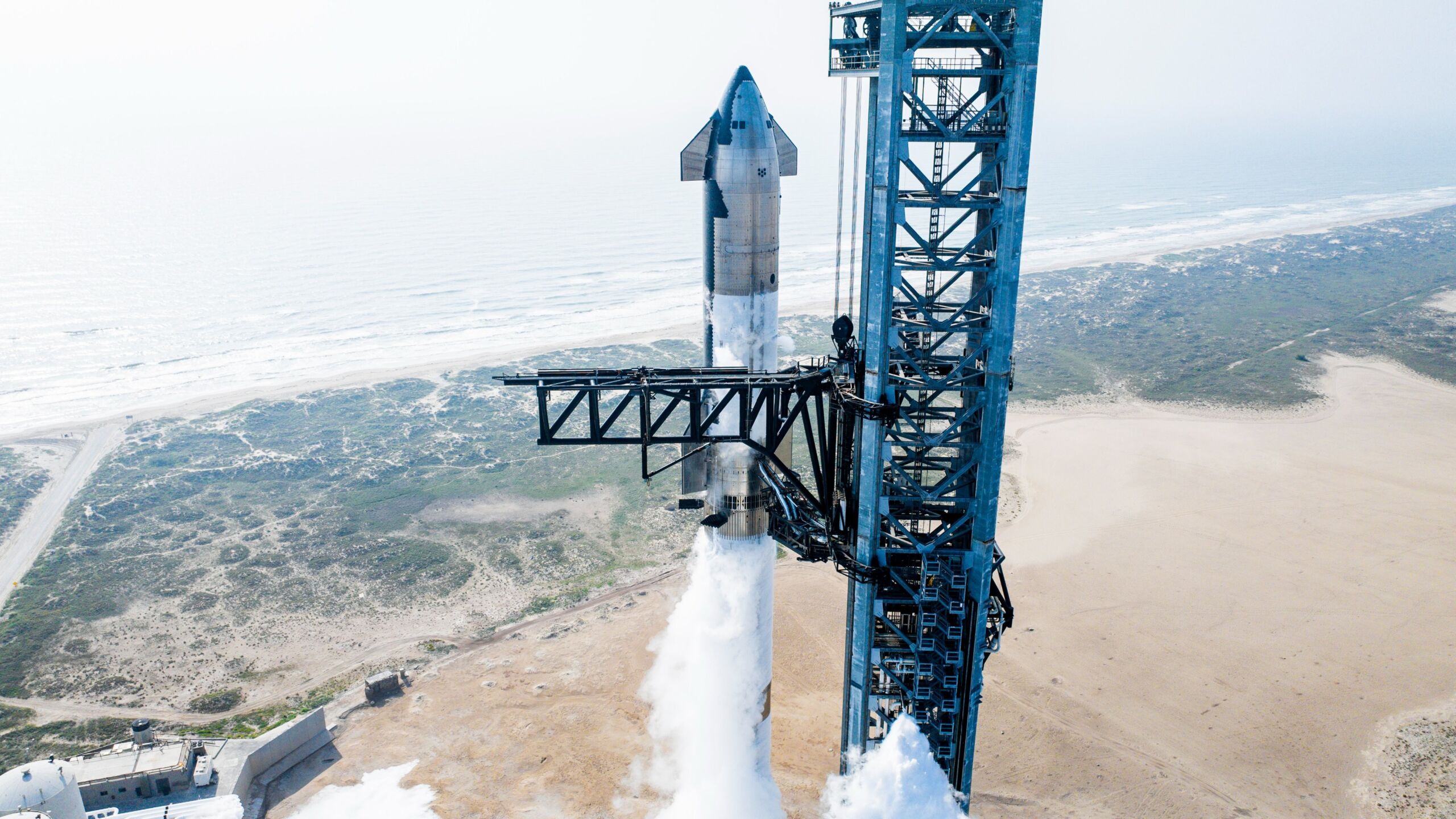
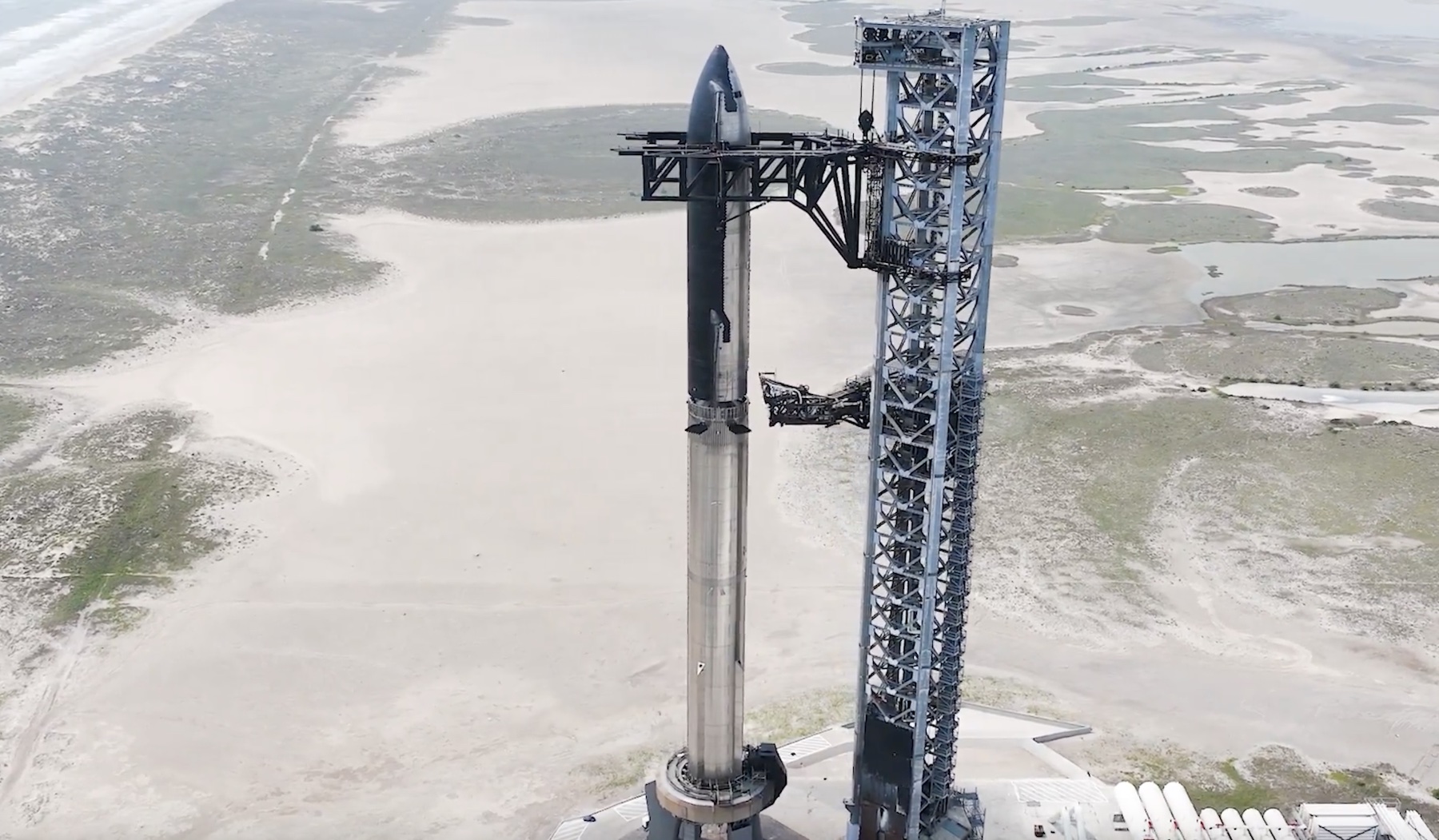
On Wednesday, SpaceX fully stacked the Super Heavy booster and Starship upper stage for the mega-rocket's next test flight from South Texas.

Enlarge / On Wednesday, SpaceX fully stacked the Super Heavy booster and Starship upper stage for the mega-rocket’s next test flight from South Texas.

Welcome to Edition 6.44 of the Rocket Report! Kathy Lueders, general manager of SpaceX’s Starbase launch facility, says the company expects to receive an FAA launch license for the next Starship test flight shortly after Memorial Day. It looks like this rocket could fly in late May or early June, about two-and-a-half months after the previous Starship test flight. This is an improvement over the previous intervals of seven months and four months between Starship flights.

As always, we welcome reader submissions, and if you don’t want to miss an issue, please subscribe using the box below (the form will not appear on AMP-enabled versions of the site). Each report will include information on small-, medium-, and heavy-lift rockets as well as a quick look ahead at the next three launches on the calendar.

Blue Origin launch on tap this weekend. Blue Origin plans to launch its first human spaceflight mission in nearly two years on Sunday. This flight will launch six passengers on a flight to suborbital space more than 60 miles (100 km) over West Texas. Blue Origin, Jeff Bezos’s space company, has not flown people to space since a New Shepard rocket failure on an uncrewed research flight in September 2022. The company successfully launched New Shepard on another uncrewed suborbital mission in December.

Historic flight … This will be the 25th flight of Blue Origin’s New Shepard rocket, and the seventh human spaceflight mission on New Shepard. Before Blue Origin’s rocket failure in 2022, the company was reaching a flight cadence of about one launch every two months, on average. The flight rate has diminished since then. Sunday’s flight is important not only because it marks the resumption of launches for Blue Origin’s suborbital human spaceflight business, but also because its six-person crew includes an aviation pioneer. Ed Dwight, 90, almost became the first Black astronaut in 1963. Dwight, a retired Air Force captain, piloted military fighter jets and graduated test pilot school, following a familiar career track as many of the early astronauts. He was on a short list of astronaut candidates the Air Force provided NASA, but the space agency didn’t include him. Dwight will become the oldest person to ever fly in space.

Spaceport Camden is officially no more. With the stroke of a pen, Georgia Governor Brian Kemp signed a bill that dissolved the Camden County Spaceport Authority, Action News Jax reported. This news follows a referendum in March 2022 where more than 70 percent of voters rejected a plan to buy land for the spaceport on the Georgia coastline between Savannah and Jacksonville, Florida. County officials still tried to move forward with the spaceport initiative after the failed referendum, but Georgia’s Supreme Court ruled in February that the county had to abide by the voters’ wishes.

$12 million for what?… The government of Camden County, with a population of about 55,000 people spent $12 million on the Spaceport Camden concept over the course of a decade. The goal of the spaceport authority was to lure small launch companies to the region, but no major launches ever took place from Camden County. State Rep. Steven Sainz, who sponsored the bill eliminating the spaceport authority, said in a statement that the legislation “reflects the community’s choice and opens a path for future collaborations in economic initiatives that are more aligned with local needs.” (submitted by zapman987)

The easiest way to keep up with Eric Berger’s space reporting is to sign up for his newsletter, we’ll collect his stories in your inbox.

Polaris Spaceplanes moves on to bigger things. German startup Polaris Spaceplanes says it is progressing with construction of its MIRA II and MIRA III spaceplane prototypes after MIRA, a subscale test vehicle, was damaged earlier this year, European Spaceflight reports. The MIRA demonstration vehicle crash-landed on a test flight in February. The incident occurred on takeoff at an airfield in Germany before the vehicle could ignite its linear aerospace engine in flight. The remote-controlled MIRA prototype measured about 4.25 meters long. Polaris announced on April 30 that will not repair MIRA and will instead move forward with the construction of a pair of larger vehicles.

Nearly 16 months without a launch … The MIRA II and MIRA III vehicles will be 5 meters long and will be powered by Polaris’s AS-1 aerospike engines, along with jet engines to power the craft before and after in-flight tests of the rocket engine. Aerospike engines are rocket engines that are designed to operate efficiently at all altitudes. The MIRA test vehicles are precursors to AURORA, a multipurpose spaceplane and hypersonic transporter Polaris says will be capable of delivering up to 1,000 kilograms of payload to low-Earth orbit. (submitted by Jay500001 and Tfargo04)

Rocket Report: Starship stacked; Georgia shuts the door on Spaceport Camden Read More »

apple,-spacex,-microsoft-return-to-office-mandates-drove-senior-talent-away

Apple, SpaceX, Microsoft return-to-office mandates drove senior talent away

The risk of RTO —

“It’s easier to manage a team that’s happy.”

Someone holding a box with their belonging in an office

A study analyzing Apple, Microsoft, and SpaceX suggests that return to office (RTO) mandates can lead to a higher rate of employees, especially senior-level ones, leaving the company, often to work at competitors.

The study (PDF), published this month by University of Chicago and University of Michigan researchers and reported by The Washington Post on Sunday, says:

In this paper, we provide causal evidence that RTO mandates at three large tech companies—Microsoft, SpaceX, and Apple—had a negative effect on the tenure and seniority of their respective workforce. In particular, we find the strongest negative effects at the top of the respective distributions, implying a more pronounced exodus of relatively senior personnel.

The study looked at résumé data from People Data Labs and used “260 million résumés matched to company data.” It only examined three companies, but the report’s authors noted that Apple, Microsoft, and SpaceX represent 30 percent of the tech industry’s revenue and over 2 percent of the technology industry’s workforce. The three companies have also been influential in setting RTO standards beyond their own companies. Robert Ployhart, a professor of business administration and management at the University of South Carolina and scholar at the Academy of Management, told the Post that despite the study being limited to three companies, its conclusions are a broader reflection of the effects of RTO policies in the US.

“Taken together, our findings imply that return to office mandates can imply significant human capital costs in terms of output, productivity, innovation, and competitiveness for the companies that implement them,” the report reads.

For example, after Apple enacted its RTO mandate, which lets employees work at home part-time, the portion of its employee base considered senior-level decreased by 5 percentage points, according to the paper. Microsoft, which also enacted a hybrid RTO approach, saw a decline of 5 percentage points. SpaceX’s RTO mandate, meanwhile, requires workers to be in an office full time. Its share of senior-level employees fell 15 percentage points after the mandate, the study found.

“We find experienced employees impacted by these policies at major tech companies seek work elsewhere, taking some of the most valuable human capital investments and tools of productivity with them,” one of the report’s authors, Austin Wright, an assistant professor of public policy at the University of Chicago, told the Post.

Christopher Myers, associate professor of management and organization health at Johns Hopkins University, suggested to the Post that the departure of senior-level workers could be tied to the hurt morale that comes from RTO mandates, noting that “it’s easier to manage a team that’s happy.”

Debated topic

Since the lifting of COVID-19 restrictions, whether having employees return to work in an office is necessary or beneficial to companies is up for debate. An estimated 75 percent of tech companies in the US are considered “fully flexible,” per a 2023 report from Scoop. As noted by the Post, however, the US’s biggest metro areas have, on average, 51 percent office occupancy, per data from managed security services firm Kastle Systems, which says it analyzes “keycard, fob and KastlePresence app access data across 2,600 buildings and 41,000 businesses.”

Microsoft declined to comment on the report from University of Chicago and University of Michigan researchers, while SpaceX didn’t respond. Apple representative Josh Rosenstock told The Washington Post that the report drew “inaccurate conclusions” and “does not reflect the realities of our business.” He claimed that “attrition is at historically low levels.”

Yet some companies have struggled to make employees who have spent months successfully doing their jobs at home eager to return to the office. Dell, Amazon, Google, Meta, and JPMorgan Chase have tracked employee badge swipes to ensure employees are coming into the office as often as expected. Dell also started tracking VPN usage this week and has told workers who work remotely full time that they can’t get a promotion.

Some company leaders are adamant that remote work can disrupt a company’s ability to innovate. However, there’s research suggesting that RTO mandates aren’t beneficial to companies. A survey of 18,000 Americans released in March pointed to flexible work schedules helping mental health. And an analysis of 457 S&P 500 companies in February found RTO policies hurt employee morale and don’t increase company value.

Apple, SpaceX, Microsoft return-to-office mandates drove senior talent away Read More »
rocket-report:-astroscale-chases-down-dead-rocket;-ariane-6-on-the-pad

Rocket Report: Astroscale chases down dead rocket; Ariane 6 on the pad

RIP B1060 —

Rocket Factory Augsburg, a German launch startup, nears a test-firing of its booster.

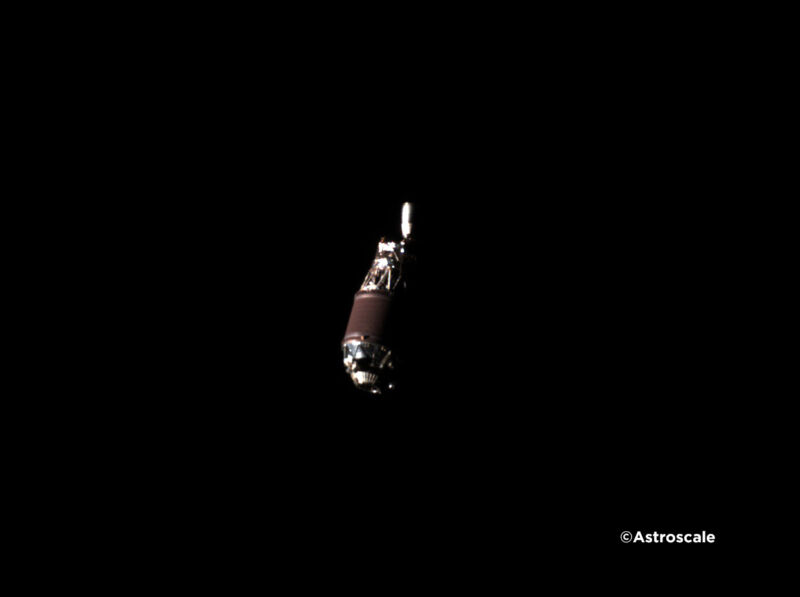
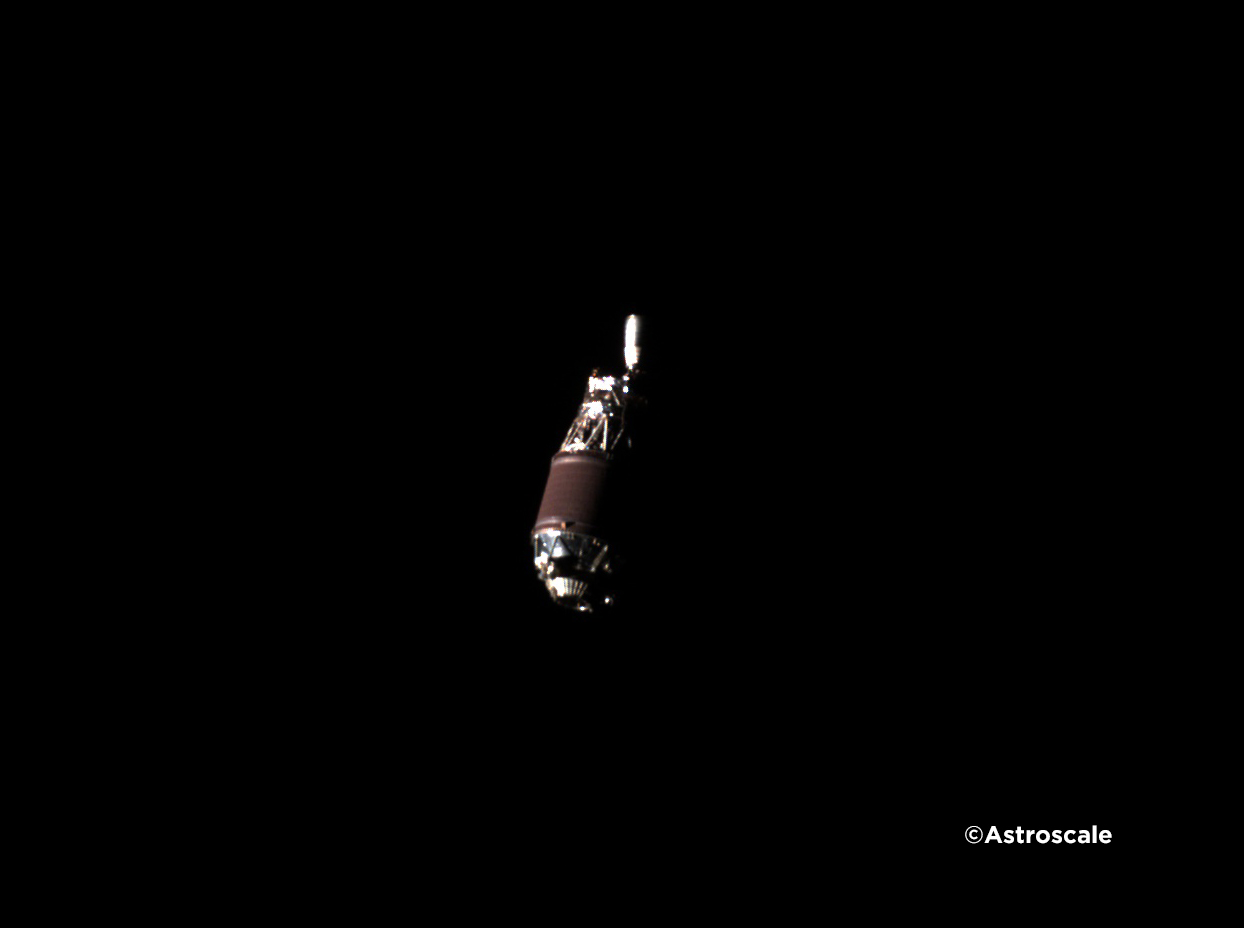
This image captured by Astroscale's ADRAS-J satellite shows the discarded upper stage from a Japanese H-IIA rocket.

Enlarge / This image captured by Astroscale’s ADRAS-J satellite shows the discarded upper stage from a Japanese H-IIA rocket.

Welcome to Edition 6.42 of the Rocket Report! Several major missions are set for launch in the next few months. These include the first crew flight on Boeing’s Starliner spacecraft, set for liftoff on May 6, and the next test flight of SpaceX’s Starship rocket, which could happen before the end of May. Perhaps as soon as early summer, SpaceX could launch the Polaris Dawn mission with four private astronauts, who will perform the first fully commercial spacewalk in orbit. In June or July, Europe’s new Ariane 6 rocket is slated to launch for the first time. Rest assured, Ars will have it all covered.

As always, we welcome reader submissions, and if you don’t want to miss an issue, please subscribe using the box below (the form will not appear on AMP-enabled versions of the site). Each report will include information on small-, medium-, and heavy-lift rockets as well as a quick look ahead at the next three launches on the calendar.

German rocket arrives at Scottish spaceport. Rocket Factory Augsburg has delivered a booster for its privately developed RFA One rocket to SaxaVord Spaceport in Scotland, the company announced on X. The first stage for the RFA One rocket was installed on its launch pad at SaxaVord to undergo preparations for a static fire test. The booster arrived at the Scottish launch site with five of its kerosene-fueled Helix engines. The remaining four Helix engines, for a total of nine, will be fitted to the RFA One booster at SaxaVord, the company said.

Aiming to fly this year… RFA hopes to launch its first orbital-class rocket by the end of 2024. The UK’s Civil Aviation Authority last month granted a range license to SaxaVord Spaceport to allow the spaceport operator to control the sea and airspace during a launch. RFA is primarily privately funded but has won financial support from the European Space Agency, the UK Space Agency, and the German space agency, known as DLR. The RFA One rocket will have three stages, stand nearly 100 feet (30 meters) tall, and can carry nearly 2,900 pounds (1,300 kilograms) of payload into a polar Sun-synchronous orbit.

Arianespace wins ESA launch contract. The European Space Agency has awarded Arianespace a contract to launch a joint European-Chinese space science satellite in late 2025, European Spaceflight reports. The Solar wind Magnetosphere Ionosphere Link Explorer (SMILE) is a 4,850-pound (2,200-kilogram) spacecraft that will study Earth’s magnetic environment on a global scale. The aim of the mission is to build a more complete understanding of the Sun-Earth connection. On Tuesday, ESA officially signed a contract for Arianespace to launch SMILE aboard a Vega C rocket, which is built by the Italian rocket-maker Avio.

But it may not keep it … In late 2023, ESA member states agreed to allow Avio to market and manage the launch of Vega C flights independent of Arianespace. When the deal was initially struck, 17 flights were contracted through Arianespace to be launched aboard Vega vehicles. While these missions are still managed by Arianespace, Avio is working with the launch provider to strike a deal that would allow the Italian rocket builder to assume the management of all Vega flights. The Vega C rocket has been grounded since a launch failure in 2022 forced Avio to redesign the nozzle of the rocket’s solid-fueled second-stage motor. Vega C is scheduled to return to flight before the end of 2024. (submitted by Ken the Bin)

The easiest way to keep up with Eric Berger’s space reporting is to sign up for his newsletter, we’ll collect his stories in your inbox.

Update on ABL’s second launch. ABL Space Systems expected to launch its second light-class RS1 rocket earlier this year, but the company encountered an anomaly during ground testing at the launch site in Alaska, according to Aria Alamalhodaei of TechCrunch. Kevin Sagis, ABL’s chief engineer, said there is “no significant delay” in the launch of the second RS1 rocket, but the company has not announced a firm schedule. “During ground testing designed to screen the vehicle for flight, an issue presented that caused us to roll back to the hangar,” Sagis said, according to Alamalhodaei. “We have since resolved and dispositioned the issue. There was no loss of hardware and we have validated vehicle health back out on the pad. We are continuing with preparations for static fire and launch.”

Nearly 16 months without a launch … ABL’s first RS1 test flight in January 2023 ended seconds after liftoff with the premature shutdown of its liquid-fueled engines. The rocket crashed back onto its launch pad in Alaska. An investigation revealed a fire in the aft end of the RS1 booster burned through wiring harnesses, causing the rocket to lose power and shut off its engines. Engineers believe the rocket’s mobile launch mount was too small, placing the rocket too close to the ground when it ignited its engines. This caused the hot engine exhaust to recirculate under the rocket and led to a fire in the engine compartment as it took off.

Rocket Report: Astroscale chases down dead rocket; Ariane 6 on the pad Read More »
two-giants-in-the-satellite-telecom-industry-join-forces-to-counter-starlink

Two giants in the satellite telecom industry join forces to counter Starlink

M&A —

SES is buying Intelsat, the world’s first commercial satellite operator, for $3.1 billion.

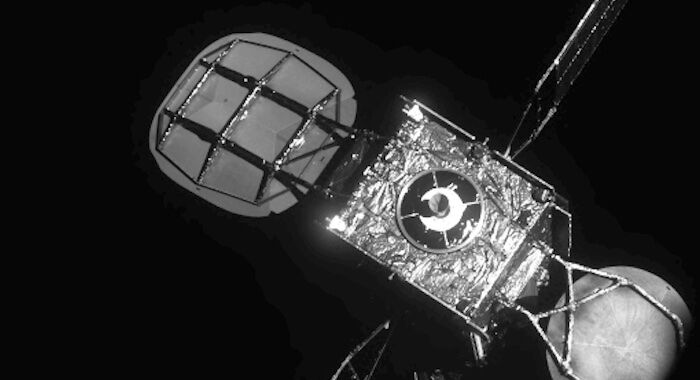
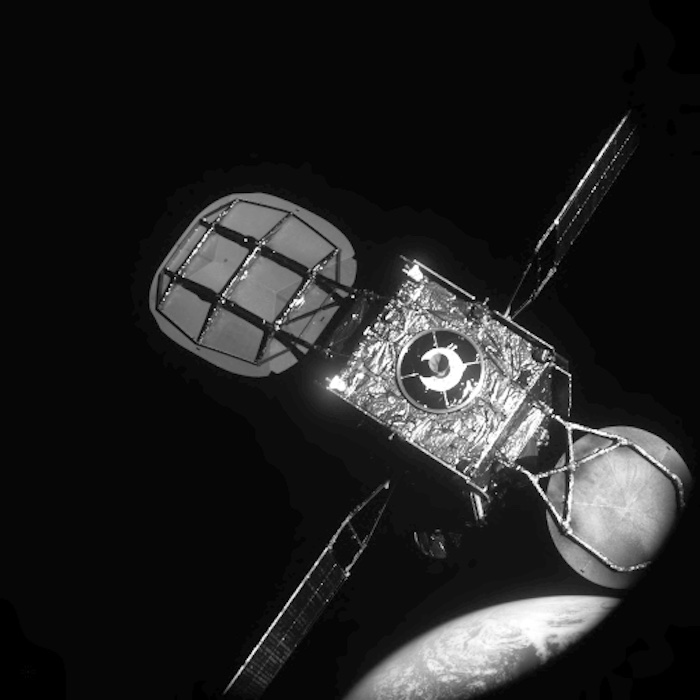
The Intelsat 901 satellite is seen by a Northrop Grumman servicing vehicle in 2020.

Enlarge / The Intelsat 901 satellite is seen by a Northrop Grumman servicing vehicle in 2020.

Facing competition from Starlink and other emerging satellite broadband networks, the two companies that own most of the traditional commercial communications spacecraft in geostationary orbit announced plans to join forces Tuesday.

SES, based in Luxembourg, will buy Intelsat for $3.1 billion. The acquisition will create a combined company boasting a fleet of some 100 multi-ton satellites in geostationary orbit, a ring of spacecraft located more than 22,000 miles (nearly 36,000 kilometers) over the equator. This will be more than twice the size of the fleet of the next-largest commercial geostationary satellite operator.

The problem is that demand is waning for communication services through large geostationary (GEO) satellites. There are some large entrenched customers, like video media companies and the military, that will continue to buy telecom capacity on geostationary satellites. But there’s a growing demand among consumers, and some segments of the corporate and government markets, for the types of services offered by constellations of smaller satellites flying closer to Earth.

The biggest of these constellations, by far, is SpaceX’s Starlink network, with more than 5,800 active satellites in its low-Earth orbit fleet a few hundred miles above Earth. Each of the Starlink satellites is smaller than a conventional geostationary platform, but linked together with laser communication terminals, thousands of these spacecraft pack enough punch to eclipse the capacity of internet networks anchored by geostationary satellites. Starlink now has more than 2.6 million subscribers, according to SpaceX.

Satellites in low-Earth orbit (LEO) offer some advantages over geostationary satellites. Because they are closer to users on the ground, low-Earth orbit satellites provide signals with lower latency. The satellites for these constellations can be mass-produced at relatively low cost, compared to a single geostationary satellite, which often costs $250 million or more to build and launch.

“In a fast-moving and competitive satellite communication industry, this transaction expands our multi-orbit space network, spectrum portfolio, ground infrastructure around the world, go-to-market capabilities, managed service solutions, and financial profile,” said Adel Al-Saleh, CEO of SES, in a statement announcing the acquisition of Intelsat.

A trend of consolidation

Some of the largest legacy operators in geostationary orbit have made moves over the last decade to respond to the new competition.

The only operational low-Earth orbit internet constellation besides Starlink was launched by OneWeb, which primarily sells capacity to existing internet providers, who then distribute services to individual consumers. This is in contrast to SpaceX’s approach with Starlink providing services direct to homes and businesses.

Eutelsat, the third-largest operator of geostationary satellites, merged with OneWeb last year, creating a company with a blended offering of GEO and LEO services. Viasat, a pioneer in satellite internet services using dedicated spacecraft in geostationary orbit, last year purchased Inmarsat, which specialized in providing connectivity to airplanes and ships.

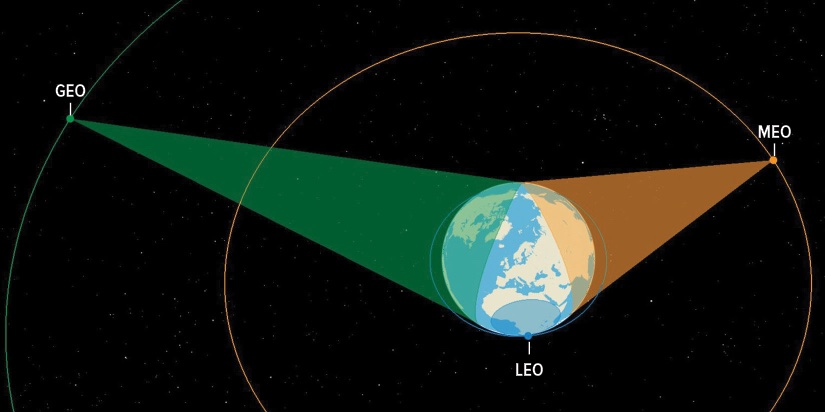
SES’s acquisition of Intelsat stands apart due to the size of their satellite fleets. Founded in 1985, SES currently operates 43 geostationary satellites, plus 26 broadband spacecraft in medium-Earth orbit (MEO) a few thousand miles above Earth. These MEO satellites operate in a kind of middle ground between LEO and GEO satellites, offering lower-latency than geostationary networks, while still flying high enough to not require hundreds or thousands of spacecraft to blanket the globe.

Intelsat has 57 geostationary satellites, primarily for television and video relay services. Al-Saleh said the combined company will offer coverage over 99 percent of the world, and provide services through a range of communication bands. For now, LEO broadband satellites in the Starlink and OneWeb networks beam signals to user terminals in Ku-band.

Al-Saleh said the combined networks of SES and Intelsat will span Ka-band, Ku-band, X-band, C-band, UHF, and secure bands tailored for military use. “That gives us a unique position in the market place to be able to deliver to our clients,” he said.

SES and Intelsat have 13 new satellites on order, including six GEO spacecraft and seven broadband MEO satellites. Intelsat also brings to the table access to OneWeb’s LEO constellation. Earlier this year, Intelsat announced it reserved $250 million of capacity on OneWeb’s network over the next six years, with an option to purchase double that amount.

This illustration shows the relative locations of satellites in geostationary orbit, medium-Earth orbit, and low-Earth orbit.

Enlarge / This illustration shows the relative locations of satellites in geostationary orbit, medium-Earth orbit, and low-Earth orbit.

“We will create a stronger expanded network capabilities that are multi-orbit,” Al-Saleh said in an earnings call Tuesday. “We are not just a GEO player. We are an all-orbit player.”

Internet signals coming from a GEO satellite, like a Viasat spacecraft, typically have a latency of about 600 milliseconds. Al-Saleh said SES’s O3b network in medium-Earth orbit provides signals with a latency of about 120 milliseconds. According to SpaceX, Starlink latency ranges between 25 and 60 milliseconds.

A satellite pioneer

Intelsat has a storied history. Founded in 1964 as an intergovernmental organization, Intelsat operated the first commercial communications satellite in geostationary orbit. It became a private company in 2001, then went public in 2013 before filing for bankruptcy in 2020. Intelsat emerged from bankruptcy proceedings as a private company in 2022.

“Over the past two years, the Intelsat team has executed a remarkable strategic reset,” said David Wajsgras, CEO of Intelsat, in a statement. “We have reversed a 10-year negative trend to return to growth, established a new and game-changing technology roadmap, and focused on productivity and execution to deliver competitive capabilities.”

SES and Intelsat expect the acquisition to close in the second half of 2025, pending regulatory approvals. The boards of both companies unanimously approved the transaction.

Both companies maintain hundreds of millions of dollars of business with the US government each year, and the military’s appetite for commercial satellite communications is going up. “I think many of the satellite players are seeing the benefit of that, not just us,” Al-Saleh said. “You can look at our competitors. You can look at Starlink. You can look at others. We’re all seeing an uptick in demand.”

Al-Saleh said he doesn’t foresee any roadblocks from the Pentagon or any government regulators before closing the transaction next year.

SES and Intelsat revealed last year there were in talks to combine. According to Al-Saleh, SES looked at multiple opportunities for mergers or acquisitions to make use of a multibillion-dollar windfall from the Federal Communications Commission tied to the auction of C-band satellite spectrum for cellular networks.

“It was clear to us that this particular transaction, if we’re able to successfully close it with the right type of value, is the most compelling proposition we had on the table,” he said.

Two giants in the satellite telecom industry join forces to counter Starlink Read More »
nasa-lays-out-how-spacex-will-refuel-starships-in-low-earth-orbit

NASA lays out how SpaceX will refuel Starships in low-Earth orbit

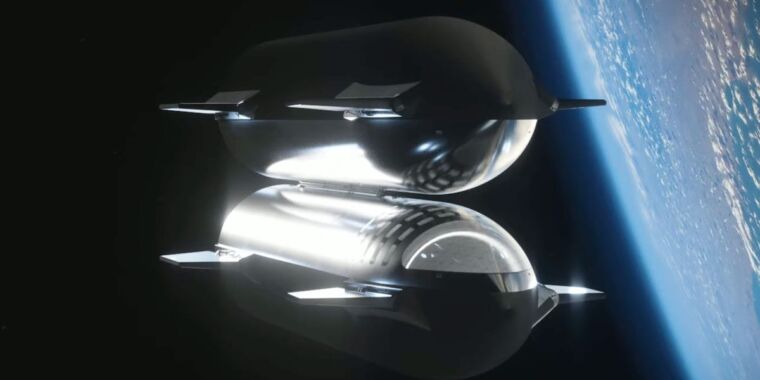
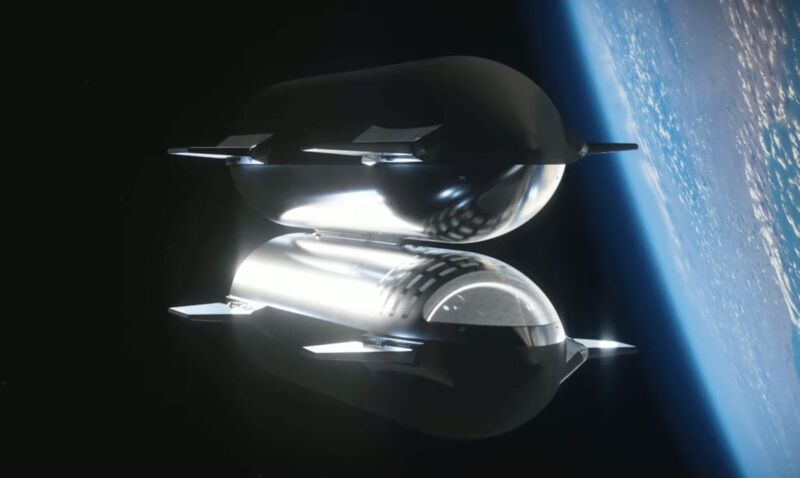
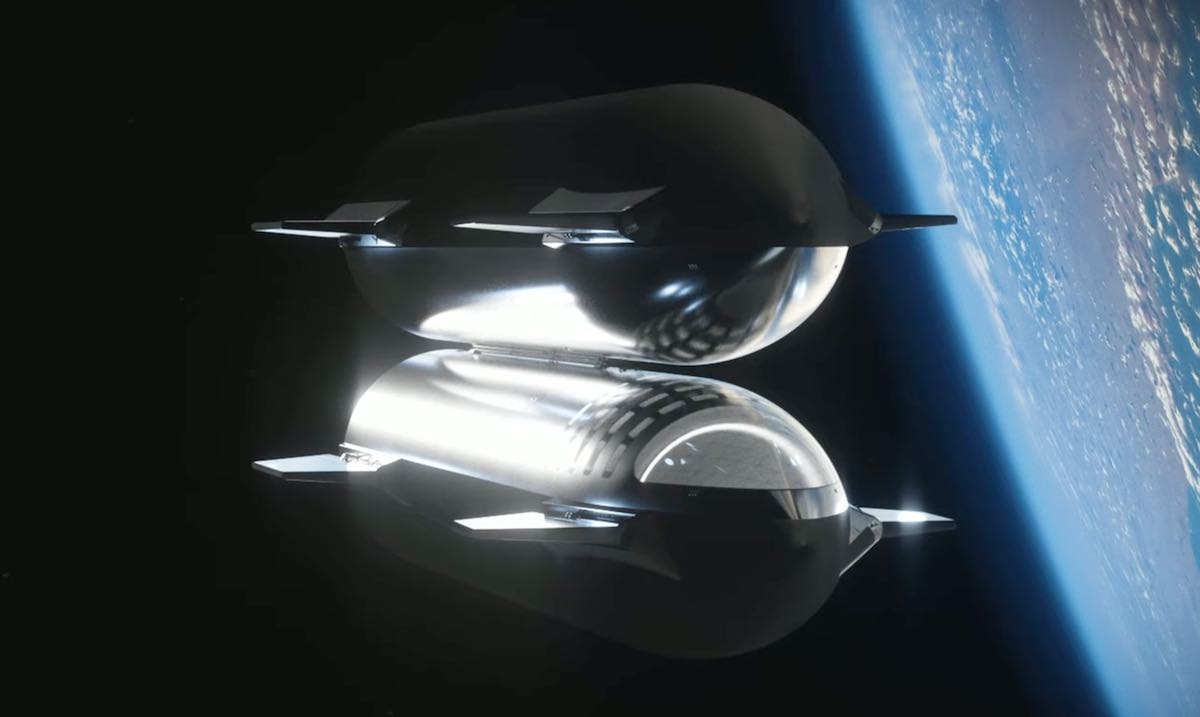
Artist's illustration of two Starships docked belly-to-belly in orbit.

Enlarge / Artist’s illustration of two Starships docked belly-to-belly in orbit.

SpaceX

Some time next year, NASA believes SpaceX will be ready to link two Starships in orbit for an ambitious refueling demonstration, a technical feat that will put the Moon within reach.

SpaceX is under contract with NASA to supply two human-rated Starships for the first two astronaut landings on the Moon through the agency’s Artemis program, which aims to return people to the lunar surface for the first time since 1972. The first of these landings, on NASA’s Artemis III mission, is currently targeted for 2026, although this is widely viewed as an ambitious schedule.

Last year, NASA awarded a contract to Blue Origin to develop its own human-rated Blue Moon lunar lander, giving Artemis managers two options for follow-on missions.

Designers of both landers were future-minded. They designed Starship and Blue Moon for refueling in space. This means they can eventually be reused for multiple missions, and ultimately, could take advantage of propellants produced from resources on the Moon or Mars.

Amit Kshatriya, who leads the “Moon to Mars” program within NASA’s exploration division, outlined SpaceX’s plan to do this in a meeting with a committee of the NASA Advisory Council on Friday. He said the Starship test program is gaining momentum, with the next test flight from SpaceX’s Starbase launch site in South Texas expected by the end of May.

“Production is not the issue,” Kshatriya said. “They’re rolling cores out. The engines are flowing into the factory. That is not the issue. The issue is it is a significant development challenge to do what they’re trying to do … We have to get on top of this propellant transfer problem. It is the right problem to try and solve. We’re trying to build a blueprint for deep space exploration.”

Road map to refueling

Before getting to the Moon, SpaceX and Blue Origin must master the technologies and techniques required for in-space refueling. Right now, SpaceX is scheduled to attempt the first demonstration of a large-scale propellant transfer between two Starships in orbit next year.

There will be at least several more Starship test flights before then. During the most recent Starship test flight in March, SpaceX conducted a cryogenic propellant transfer test between two tanks inside the vehicle. This tank-to-tank transfer of liquid oxygen was part of a demonstration supported with NASA funding. Agency officials said this demonstration would allow engineers to learn more about how the fluid behaves in a low-gravity environment.

Kshatriya said that while engineers are still analyzing the results of the cryogenic transfer demonstration, the test on the March Starship flight “was successful by all accounts.”

“That milestone is behind them,” he said Friday. Now, SpaceX will move out with more Starship test flights. The next launch will try to check off a few more capabilities SpaceX didn’t demonstrate on the March test flight.

These will include a precise landing of Starship’s Super Heavy booster in the Gulf of Mexico, which is necessary before SpaceX tries to land the booster back at its launch pad in Texas. Another objective will likely be the restart of a single Raptor engine on Starship in flight, which SpaceX didn’t accomplish on the March flight due to unexpected roll rates on the vehicle as it coasted through space. Achieving an in-orbit engine restart—necessary to guide Starship toward a controlled reentry—is a prerequisite for future launches into a stable higher orbit, where the ship could loiter for hours, days, or weeks to deploy satellites and attempt refueling.

In the long run, SpaceX wants to ramp up the Starship launch cadence to many daily flights from multiple launch sites. To achieve that goal, SpaceX plans to recover and rapidly reuse Starships and Super Heavy boosters, building on expertise from the partially reusable Falcon 9 rocket. Elon Musk, SpaceX’s founder and CEO, is keen on reusing ships and boosters as soon as possible. Earlier this month, Musk said he is optimistic SpaceX can recover a Super Heavy booster in Texas later this year and land a Starship back in Texas sometime next year.

NASA lays out how SpaceX will refuel Starships in low-Earth orbit Read More »
spacex-and-northrop-are-working-on-a-constellation-of-spy-satellites

SpaceX and Northrop are working on a constellation of spy satellites

X marks the spot —

First launch of these operational vehicles may occur next month from California.

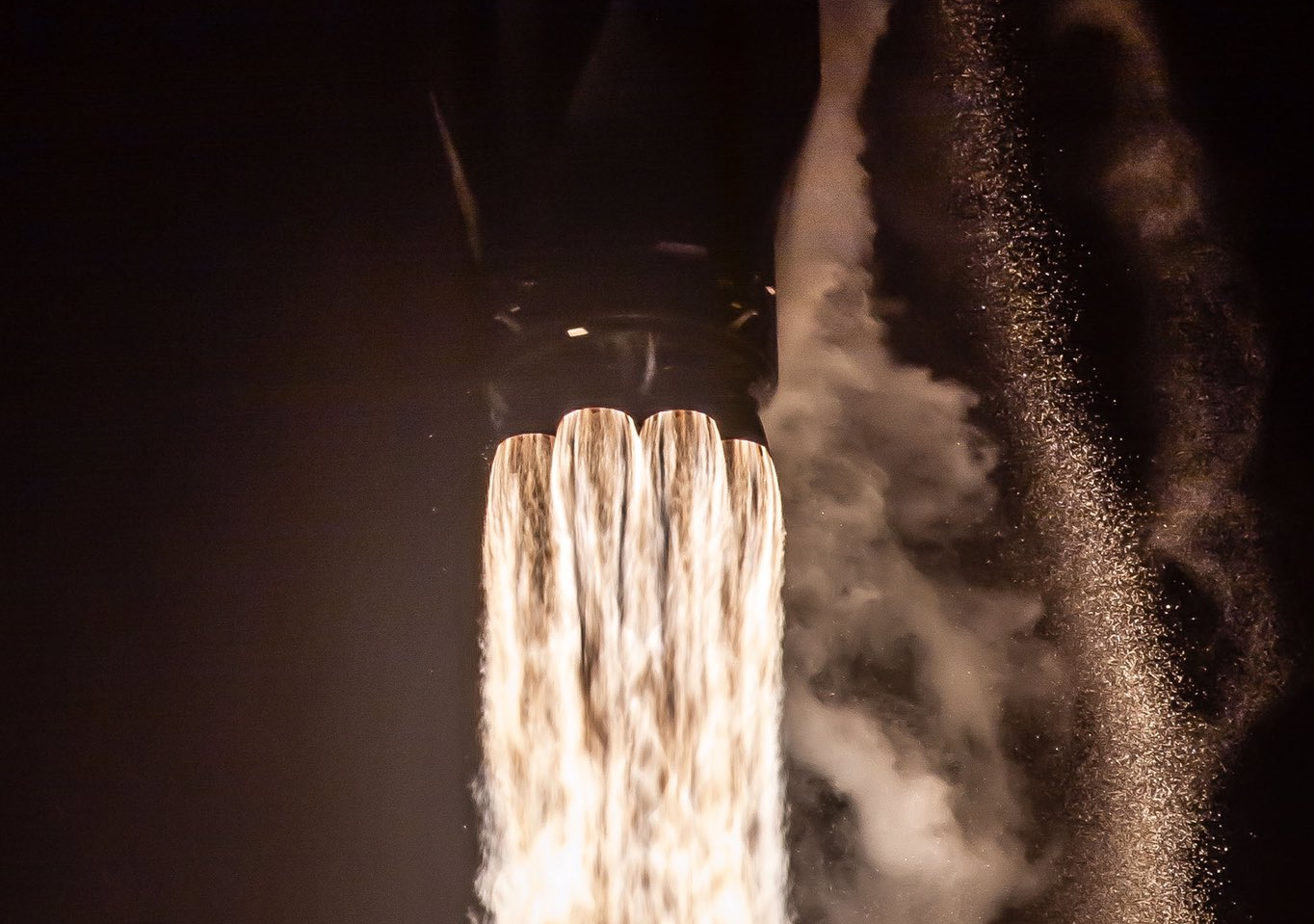
A Falcon 9 rocket launches a Starlink mission in January 2020.

Enlarge / A Falcon 9 rocket launches a Starlink mission in January 2020.

SpaceX

SpaceX is reportedly working with at least one major US defense contractor, Northrop Grumman, on a constellation of spy satellites for the National Reconnaissance Office.

According to Reuters, development of the network of hundreds of spy satellites by SpaceX is being coordinated with multiple contractors to avoid putting too much control of a highly sensitive intelligence program in the hands of one company.

“It is in the government’s interest to not be totally invested in one company run by one person,” one of the news agency’s sources said, most likely referring to SpaceX founder Elon Musk.

Northrop will provide sensors for a subset of the satellites in the constellation—at least 50 of them—and test those spacecraft at its own facility prior to their launch into orbit, Reuters reports.

A proliferated constellation

The news agency first disclosed the existence of SpaceX’s contract with the National Reconnaissance Office, which is responsible for operating US spy satellites, in March. The network is being built by SpaceX’s Starshield business unit under a $1.8 billion contract signed in 2021.

While this network will be separate from SpaceX’s Starlink Internet constellation, the National Reconnaissance Office contract is leveraging SpaceX’s capability to put a large number of Starlink satellites into orbit with its existing manufacturing facilities and the reusable Falcon 9 rocket. The current Starlink megaconstellation has more than 5,700 operational satellites.

This spysat constellation is considered to be “proliferated” because there will be swarms of satellites launched into low-Earth orbit to provide imaging and other capabilities, and these should be less vulnerable to enemy attack because of their large numbers.

Although no nation has ever attacked another nation’s satellites, major space powers, including the United States, Russia, and China, are clearly working on such measures. A good reference for these efforts is the Secure World Foundation’s annual Global Counterspace Capabilities report.

In its reporting, Reuters suggests that the high-quality imaging sensors on the SpaceX satellites in low-Earth orbit will exceed the resolution of some of the best US spy satellites at higher altitudes. They may also provide a superior alternative to the current use of drones and reconnaissance aircraft, which can be risky to fly in the airspace of other nations.

The first elements of this proliferated constellation are likely to launch next month from Vandenberg Space Force Base on the NROL-146 mission. According to Troy Meink, the National Reconnaissance Office’s principal deputy director, this will be the first of as many as six such launches in 2024.

“This launch will be the first launch of an actual operational system,” Meink said at the annual Space Symposium earlier this month. “This system will increase timeliness of access, diversity of communication paths and enhance our resilience.”

An uneasy partnership

Typically, in its 22 years of operation, SpaceX has eschewed deep partnerships with traditional aerospace contractors, including Northrop Grumman. Early on, in fact, SpaceX had a legal confrontation with Northrop over the pintle engine injector technology used in the Merlin rocket engine that powered the Falcon 1, and later Falcon 9 rocket. SpaceX counter-sued, saying Northrop had abused its position in an advisory role in the Air Force to spy on SpaceX. Eventually, the lawsuits were both dropped with no damages.

More than a decade later, SpaceX launched the “Zuma” satellite, an ultra-expensive classified spacecraft valued in excess of $3 billion and built by Northrop for the National Reconnaissance Office. The launch on a Falcon 9 rocket was successful in January 2018, but the spacecraft was subsequently lost. The failure was later blamed on a payload adaptor supplied by Northrop Grumman, although this has never been publicly confirmed.

It is clearly hoped by US government officials that this collaboration between SpaceX and Northrop will meet a happier fate.

SpaceX and Northrop are working on a constellation of spy satellites Read More »
spacex’s-most-flown-reusable-rocket-will-go-for-its-20th-launch-tonight

SpaceX’s most-flown reusable rocket will go for its 20th launch tonight

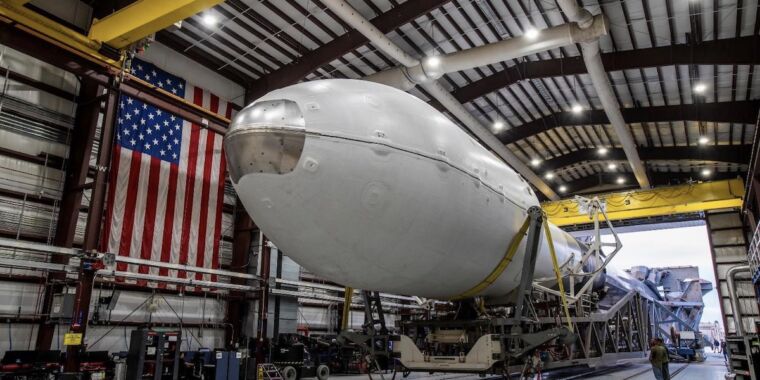
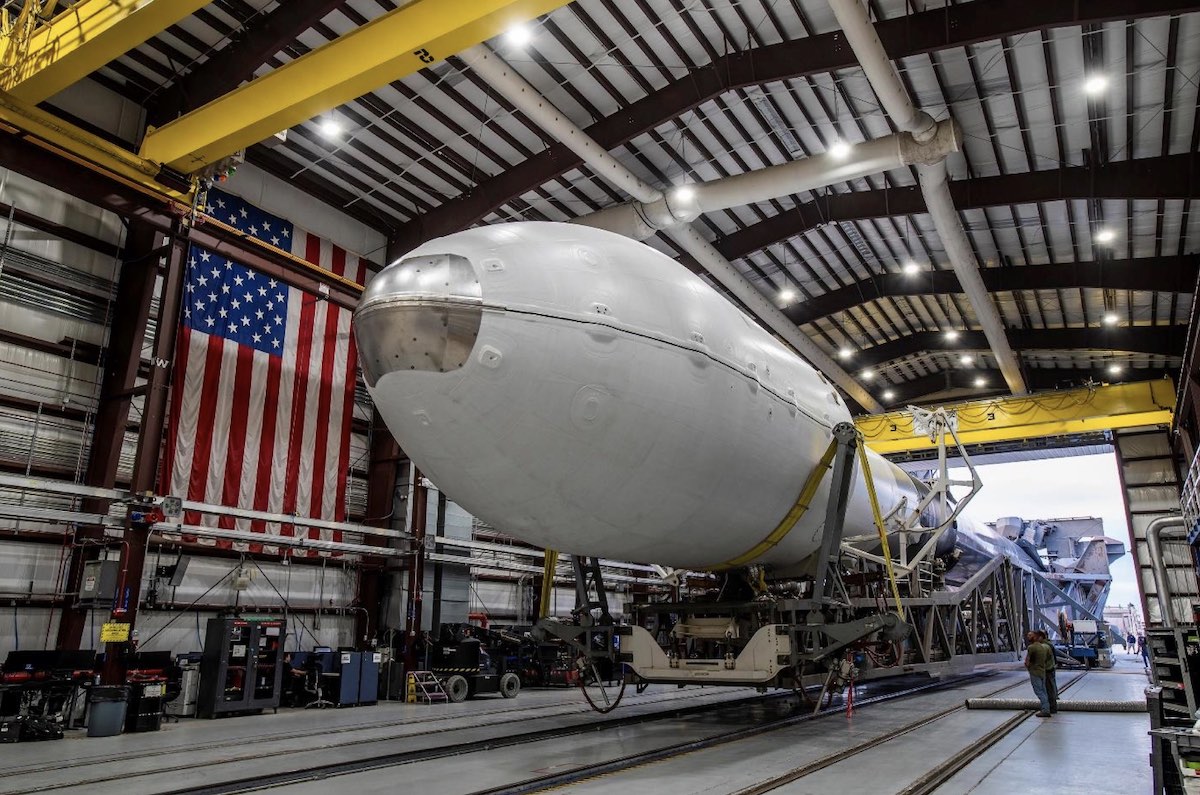
File photo of a Falcon 9 rocket rolling out of its hangar at Cape Canaveral Space Force Station, Florida.

Enlarge / File photo of a Falcon 9 rocket rolling out of its hangar at Cape Canaveral Space Force Station, Florida.

For the first time, SpaceX will launch one of its reusable Falcon 9 boosters for a 20th time Friday night on a flight to deliver 23 more Starlink Internet satellites to orbit.

This milestone mission is scheduled to lift off at 9: 22 pm EDT Friday (01: 22 UTC Saturday) from Space Launch Complex 40 (SLC-40) at Cape Canaveral Space Force Station, Florida. Forecasters from the US Space Force predict “excellent” weather for the primetime launch.

Falcon 9 will blaze a familiar trail into space, following the same profile as dozens of past Starlink missions.

The rocket’s first-stage booster will shut off its nine kerosene-fueled Merlin engines about two-and-a-half minutes into the flight, reaching a top speed of more than 5,000 mph (8,000 km per hour). The first stage will detach from the Falcon 9’s upper stage, which will continue firing into orbit. The 15-story-tall Falcon 9 booster, meanwhile, will follow an arcing trajectory before braking for a vertical landing on a drone ship floating in the Atlantic Ocean near the Bahamas.

The 23 flat-packed Starlink spacecraft will deploy from the upper stage a little more than an hour after liftoff, bringing the total number of Starlinks in low-Earth orbit to more than 5,800 spacecraft.

A hunger for launch

Pretty much every day, SpaceX is either launching a rocket or rolling one out of the hangar to the launch pad. At this pace, SpaceX is redefining what is routine in the space industry, but the rapid-fire launch rate also means the company is continually breaking records, mostly its own.

Friday night’s launch will break another one of those records. This first-stage booster, designated by the tail number B1062, has flown 19 times since its first flight in November 2020. The booster will now be the first in SpaceX’s inventory to go for a 20th flight, breaking a tie with three other rockets as the company’s fleet leader.

When SpaceX debuted the latest version of its Falcon 9 rocket, the Falcon 9 Block 5, officials said the reusable first stage could fly 10 times with minimal refurbishment and perhaps additional flights with a more extensive overhaul. Now, SpaceX is certifying Falcon 9 boosters for 40 flights.

This particular rocket has not undergone any extended maintenance or long-term grounding. It has flown an average of once every two months since debuting three-and-a-half years ago. So the 20-flight milestone SpaceX will achieve Friday night means this rocket has doubled its original design life and, at the same time, has reached the halfway point of its extended service life.

In its career, this booster has launched eight people and 530 spacecraft, mostly Starlinks. The rocket’s first two flights launched GPS navigation satellites for the US military, then it launched two commercial human spaceflight missions with Dragon crew capsules. These were the all-private Inspiration4 mission and Axiom Mission 1, the first fully commercial crew flight to the International Space Station.

A SpaceX Falcon 9 rocket lifts off Sunday, April 7, on the Bandwagon 1 rideshare mission.

Enlarge / A SpaceX Falcon 9 rocket lifts off Sunday, April 7, on the Bandwagon 1 rideshare mission.

Remarkably, this will be the sixth Falcon 9 launch in less than eight days, more flights than SpaceX’s main US rival, United Launch Alliance, has launched in 17 months.

It will be the 38th Falcon 9 launch of the year and the 111th flight of a Falcon 9 or Falcon Heavy rocket—the 114th launch by SpaceX overall—in the last 365 days. More than a third of SpaceX’s Falcon 9 or Falcon Heavy missions, a number that will stand at 332 after Friday night’s flight, have launched in the past year.

This month, for the first time, SpaceX demonstrated it could launch two Falcon 9 rockets in less than five days from the company’s launch pad at Vandenberg Space Force Base, California. SpaceX has also cut the turnaround time between Falcon 9 rockets at Launch Complex 39A at NASA’s Kennedy Space Center. The company’s most-used launch pad, SLC-40, can handle two Falcon 9 flights in less than four days.

It’s not just launch pad turnaround. SpaceX uses its drone ships—two based in Florida and one in California—for most Falcon 9 landings. In order to meet the appetite for Falcon 9 launches, SpaceX is getting rockets back to port and re-deploying drone ships back to sea at a faster rate.

SpaceX’s most-flown reusable rocket will go for its 20th launch tonight Read More »

rocket-report:-blue-origin-to-resume-human-flights;-progress-for-polaris-dawn

Rocket Report: Blue Origin to resume human flights; progress for Polaris Dawn

The wait is over —

“The pacing item in our supply chain is the BE-4.”

Ed Dwight stands in front of an F-104 jet fighter in 1963.

Enlarge / Ed Dwight stands in front of an F-104 jet fighter in 1963.

Welcome to Edition 6.38 of the Rocket Report! Ed Dwight was close to joining NASA’s astronaut corps more than 60 years ago. With an aeronautical engineering degree and experience as an Air Force test pilot, Dwight met the qualifications to become an astronaut. He was one of 26 test pilots the Air Force recommended to NASA for the third class of astronauts in 1963, but he wasn’t selected. Now, the man who would have become the first Black astronaut will finally get a chance to fly to space.

As always, we welcome reader submissions, and if you don’t want to miss an issue, please subscribe using the box below (the form will not appear on AMP-enabled versions of the site). Each report will include information on small-, medium-, and heavy-lift rockets, as well as a quick look ahead at the next three launches on the calendar.

Ed Dwight named to Blue Origin’s next human flight. Blue Origin, Jeff Bezos’ space company, announced Thursday that 90-year-old Ed Dwight, who almost became the first Black astronaut in 1963, will be one of six people to fly to suborbital space on the company’s next New Shepard flight. Dwight, a retired Air Force captain, piloted military fighter jets and graduated test pilot school, following a familiar career track as many of the early astronauts. He was on a short list of astronaut candidates the Air Force provided NASA, but the space agency didn’t include him. It took 20 more years for the first Black American to fly to space. Dwight’s ticket with Blue Origin is sponsored by Space for Humanity, a nonprofit that seeks to expand access to space for all people. Five paying passengers will join Dwight for the roughly 10-minute up-and-down flight to the edge of space over West Texas. Kudos to Space for Humanity and Blue Origin for making this happen.

Return to flight … This mission, named NS-25, will be the first time Blue Origin flies with human passengers since August 2022. Blue Origin hasn’t announced a launch date yet for NS-25. On an uncrewed launch the following month, an engine failure destroyed a New Shepard booster and grounded Blue Origin’s suborbital rocket program for more than 15 months. New Shepard returned to flight December 19 on another research flight, again without anyone onboard. As the mission name suggests, this will be the 25th flight of a New Shepard rocket and the seventh flight with people. Blue Origin has a history of flying aviation pioneers and celebrities. On the first human flight with New Shepard in 2021, the passengers included company founder Jeff Bezos and famed female aviator Wally Funk. (submitted by EllPeaTea)

The easiest way to keep up with Eric Berger’s space reporting is to sign up for his newsletter, we’ll collect his stories in your inbox.

Revisit Astra’s 2020 rocket explosion. In March 2020, as the world was under the grip of COVID, Astra blew up a rocket in remote Alaska and didn’t want anyone to see it. New video published by TechCrunch shows Astra’s Rocket 3 vehicle exploding on its launch pad. This was one of several setbacks that have brought the startup to its knees. The explosion, which occurred at Alaska’s Pacific Spaceport Complex, was simply reported as an “anomaly” at the time, an industry term for pretty much any issue that deviates from the expected outcome, TechCrunch reports. Satellite imagery of the launch site showed burn scars, suggesting an explosion, but the footage published this week confirms the reality of the event. This was Astra’s first orbital-class rocket, and it blew up during a fueling rehearsal.

A sign of things to come … Astra eventually flew its Rocket 3 small satellite launcher seven times, but only two of the flights actually reached orbit. This prompted Astra to abandon its Rocket 3 program and focus on developing a larger rocket, Rocket 4. But the future of this new rocket is in doubt. Astra’s co-founders are taking the company private after its market value and stock price tanked, and it’s not clear where the company will go from here. (submitted by Ken the Bin)

The easiest way to keep up with Eric Berger’s space reporting is to sign up for his newsletter, we’ll collect his stories in your inbox.

Russia’s plan to “restore” its launch industry. Yuri Borisov, chief of the Russian space agency Roscosmos, has outlined a strategy for Russia to regain a dominant position in the global launch market, Ars reports. This will include the development of a partially reusable replacement for the Soyuz rocket called Amur-CNG. The country’s spaceflight enterprise is also working on “ultralight” boosters that will incorporate an element of reusability. In an interview posted on the Roscosmos website, Borisov said he hopes Russia will have a “completely new fleet of space vehicles” by the 2028-2029 timeframe. Russia has previously discussed plans to develop the Amur rocket (the CNG refers to the propellant, liquified methane). The multi-engine vehicle looks somewhat similar to SpaceX’s Falcon 9 rocket in that preliminary designs incorporated landing legs and grid fins to enable a powered first-stage landing.

Reason to doubt … Russia’s launch industry was a global leader a couple of decades ago when prices were cheap relative to Western rockets. But the heavy-lift Proton rocket is nearing retirement after concerns about its reliability, and the still-reliable Soyuz is now excluded from the global market after Russia’s invasion of Ukraine. In the 2000s and 2010s, Russia’s position in the market was supplanted by the European Ariane 5 rocket and then SpaceX’s Falcon 9. Roscosmos originally announced the medium-lift Amur rocket program in 2020 for a maiden flight in 2026. Since then, the rocket has encountered a nearly year-for-year delay in its first test launch. I’ll believe it when I see it. The only new, large rocket Russia has developed in nearly 40 years, the expendable Angara A5, is still launching dummy payloads on test flights a decade after its debut.

Rocket Report: Blue Origin to resume human flights; progress for Polaris Dawn Read More »
rocket-report:-starship-could-fly-again-in-may;-ariane-6-coming-together

Rocket Report: Starship could fly again in May; Ariane 6 coming together

Eating their lunch —

“I think we’re really going to focus on getting reentry right.”

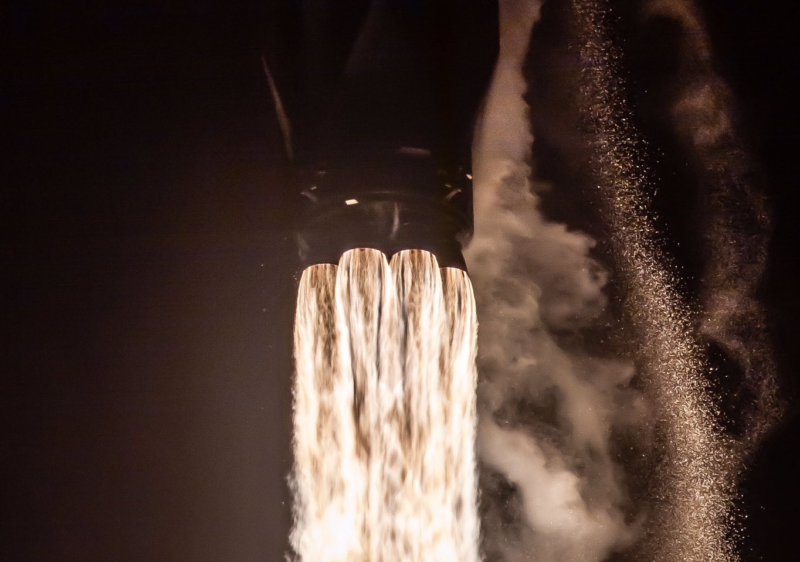
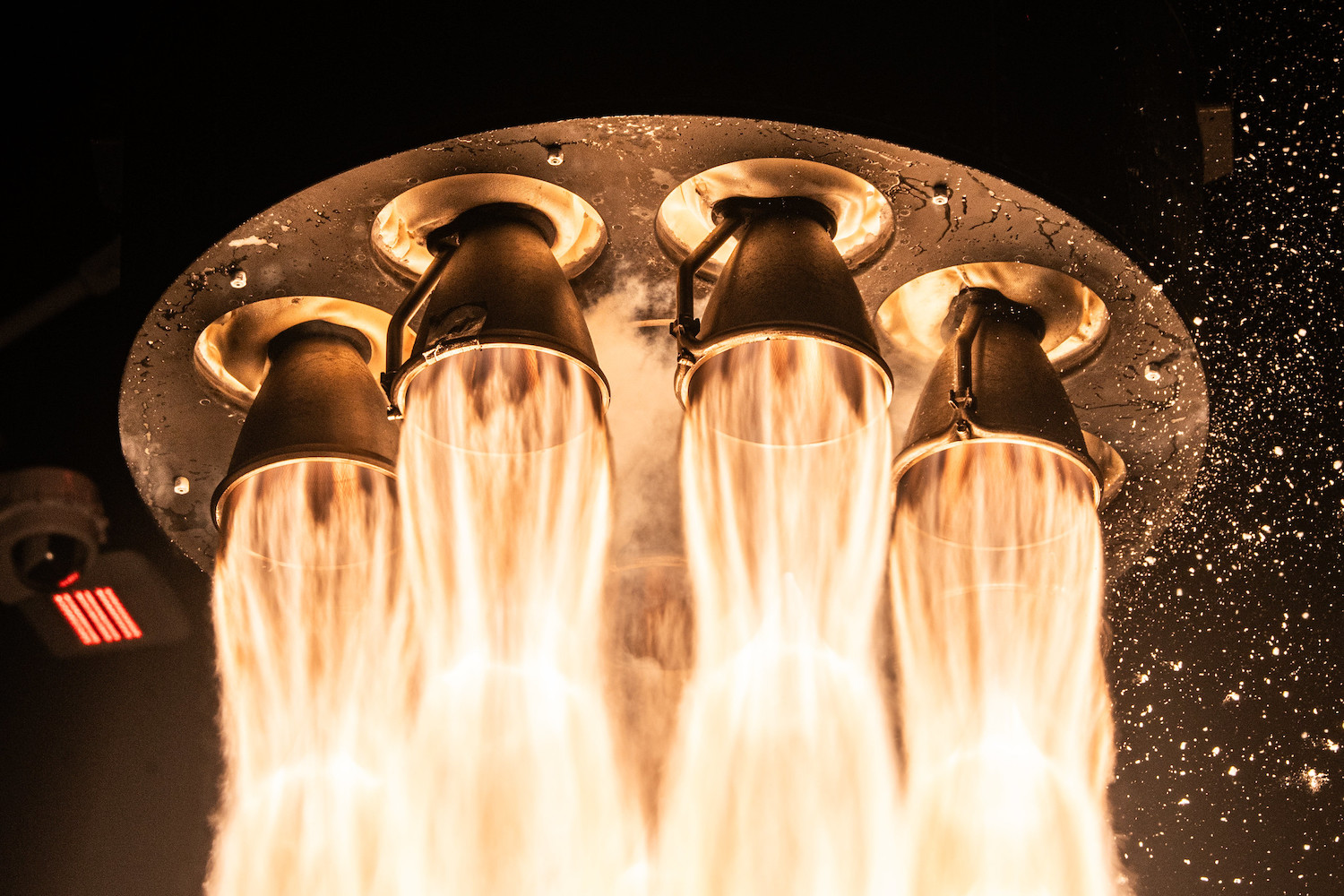
Nine kerosene-fueled Rutherford engines power Rocket Lab's Electron launch vehicle off the pad at Wallops Island, Virginia, early Thursday.

Enlarge / Nine kerosene-fueled Rutherford engines power Rocket Lab’s Electron launch vehicle off the pad at Wallops Island, Virginia, early Thursday.

Welcome to Edition 6.36 of the Rocket Report! SpaceX wants to launch the next Starship test flight as soon as early May, the company’s president and chief operating officer said this week. The third Starship test flight last week went well enough that the Federal Aviation Administration—yes, the FAA, the target of many SpaceX fans’ frustrations—anticipates a simpler investigation and launch licensing process than SpaceX went through before its previous Starship flights. However, it looks like we’ll have to wait a little longer for Starship to start launching real satellites.

As always, we welcome reader submissions, and if you don’t want to miss an issue, please subscribe using the box below (the form will not appear on AMP-enabled versions of the site). Each report will include information on small-, medium-, and heavy-lift rockets, as well as a quick look ahead at the next three launches on the calendar.

Starship could threaten small launch providers. Officials from several companies operating or developing small satellite launch vehicles are worried that SpaceX’s giant Starship rocket could have a big impact on their marketability, Space News reports. Starship’s ability to haul more than 100 metric tons of payload mass into low-Earth orbit will be attractive not just for customers with heavy satellites but also for those with smaller spacecraft. Aggregating numerous smallsats on Starship will mean lower prices than dedicated small satellite launch companies can offer and could encourage customers to build larger satellites with cheaper parts, further eroding business opportunities for small launch providers.

Well, yeah … SpaceX’s dedicated rideshare missions are already reshaping the small satellite launch market. The price per kilogram of payload on a Falcon 9 rocket launching a Transporter mission is less than the price per unit on a smaller rocket, like Rocket Lab’s Electron, Firefly’s Alpha, or Europe’s Vega. Companies operating only in the smallsat launch market tout the benefits of their services, often pointing to their ability to deliver payloads into bespoke orbits, rather than dropping off bunches of satellites into more standardized orbits. But the introduction of Orbital Transfer Vehicles for last-mile delivery services has made SpaceX’s Transporter missions, and potentially Starship rideshares, more attractive. “With Starship, OTVs can become the best option for smallsats,” said Marino Fragnito, senior vice president and head of the Vega business unit at Arianespace. If Starship is able to achieve the very low per-kilogram launch prices proposed for it, “then it will be difficult for small launch vehicles,” Fragnito said.

Rocket Lab launches again from Virginia. Rocket Lab’s fourth launch from Wallops Island, Virginia, and the company’s first there in nine months, took off early Thursday with a classified payload for the National Reconnaissance Office, the US government’s spy satellite agency, Space News reports. A two-stage Electron rocket placed the NRO’s payload into low-Earth orbit, and officials declared it a successful mission. The NRO did not disclose any details about the payload, but in a post-launch statement, the agency suggested the mission was conducting technology demonstrations of some kind. “The knowledge gained from this research will advance innovation and enable the development of critical new technology,” said Chris Scolose, director of the NRO.

A steady customer for Rocket Lab … The National Reconnaissance Office has become a regular customer of Rocket Lab. The NRO has historically launched larger spacecraft, such as massive bus-sized spy satellites, but like the Space Force, is beginning to launch larger numbers of small satellites. This mission, designated NROL-123 by the NRO, was the fifth and last mission under a Rapid Acquisition of a Small Rocket (RASR) contract between NRO and Rocket Lab, dating back to 2020. It was also Rocket Lab’s second launch in nine days, following an Electron flight last week from its primary base in New Zealand. Overall, it was the 46th launch of a light-class Electron rocket since it debuted in 2017. Rocket Lab is building a launch pad for its next-generation Neutron rocket at Wallops. (submitted by EllPeaTea)

The easiest way to keep up with Eric Berger’s space reporting is to sign up for his newsletter, we’ll collect his stories in your inbox.

Night flight for Astrobotic’s Xodiac. The Xodiac rocket, a small terrestrial vertical takeoff and vertical landing technology testbed, made its first night flight, Astrobotic says in a statement. The liquid-fueled Xodiac is designed for vertical hops and can host prototype sensors and other payloads, particularly instruments in development to assist in precision landings on other worlds. This first tethered night flight of Xodiac in Mojave, California, was in preparation for upcoming flight testing with the NASA TechLeap Prize’s Nighttime Precision Landing Challenge. These flights will begin in April, allowing NASA to test the ability of sensors to map a landing field designed to simulate the Moon’s surface in near-total darkness.

Building on the legacy of Masten … Xodiac has completed more than 160 successful flights, dating back to the vehicle’s original owner, Masten Space Systems. Masten filed for bankruptcy in 2022, and the company was acquired by Astrobotic a couple of months later. Astrobotic’s primary business area is in developing and flying robotic Moon landers, so it has a keen interest in mastering automated landing and navigation technologies like those it is testing with NASA on Xodiac. David Masten, founder of Masten Space Systems, is now chief engineer for Astrobotic’s propulsion and test department. “The teams will demonstrate their systems over the LSPG (Lunar Surface Proving Ground) at night to simulate landing on the Moon during the lunar night or in shadowed craters.” (submitted by Ken the Bin)

Rocket Report: Starship could fly again in May; Ariane 6 coming together Read More »
spacex’s-workhorse-launch-pad-now-has-the-accoutrements-for-astronauts

SpaceX’s workhorse launch pad now has the accoutrements for astronauts

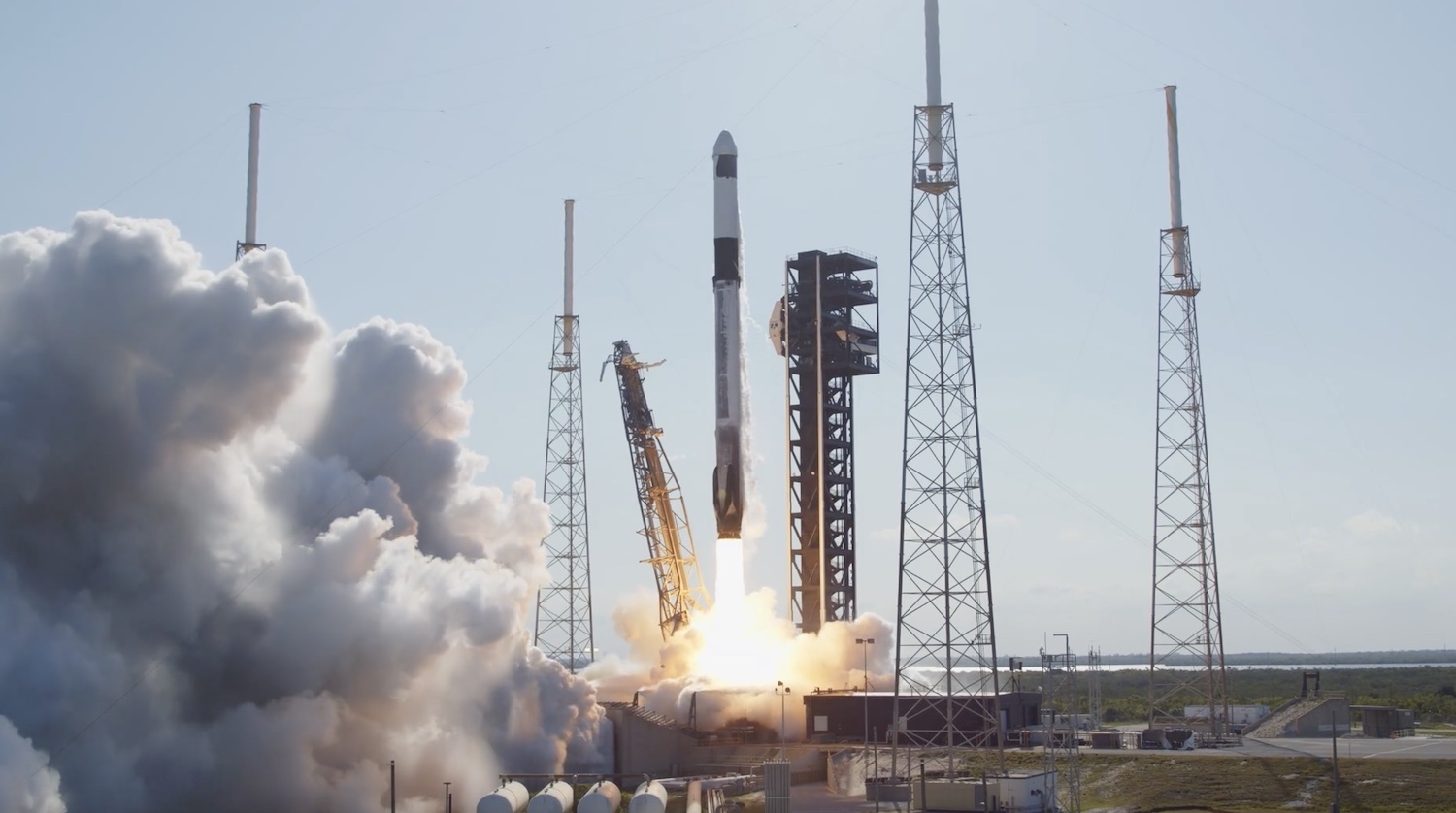
A Falcon 9 rocket lifts off Thursday from Cape Canaveral, Florida.

Enlarge / A Falcon 9 rocket lifts off Thursday from Cape Canaveral, Florida.

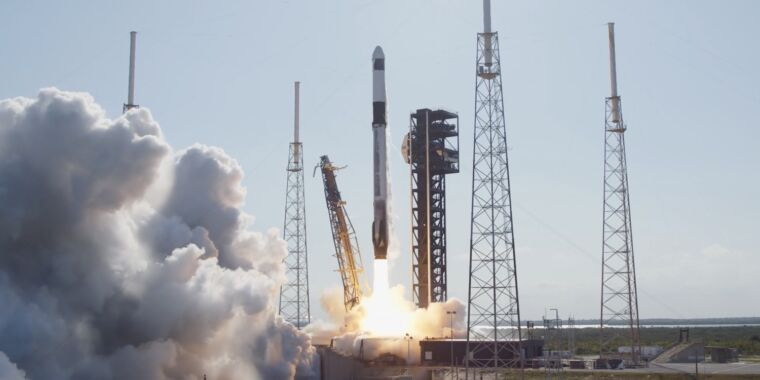
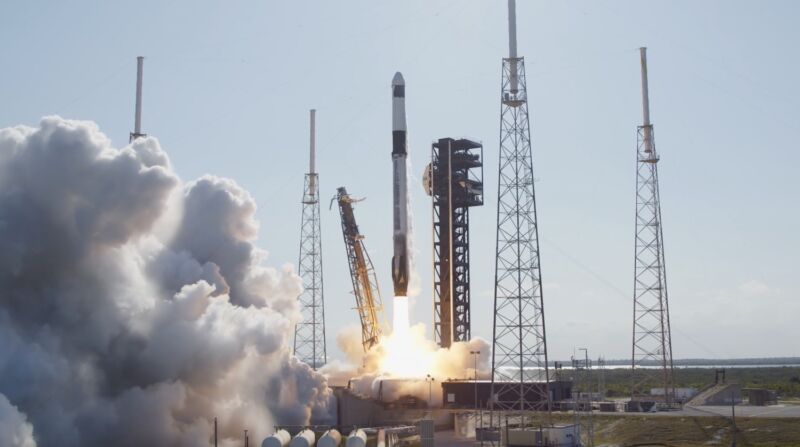
Upgrades at SpaceX’s most-used launch pad in Florida got a trial run Thursday with the liftoff of a Falcon 9 rocket with a Dragon cargo ship heading for the International Space Station.

SpaceX’s Cargo Dragon spacecraft launched at 4: 55 pm EDT (20: 55 UTC) Thursday from Space Launch Complex 40 (SLC-40) at Cape Canaveral Space Force Station in Florida. This mission, known as CRS-30, is SpaceX’s 30th resupply mission to the space station since 2012.

The automated Dragon supply ship took off on top of a Falcon 9 rocket, heading for a monthlong stay at the International Space Station, where it will deliver more than 6,000 pounds of hardware, fresh food, and experiments for the lab’s seven-person crew.

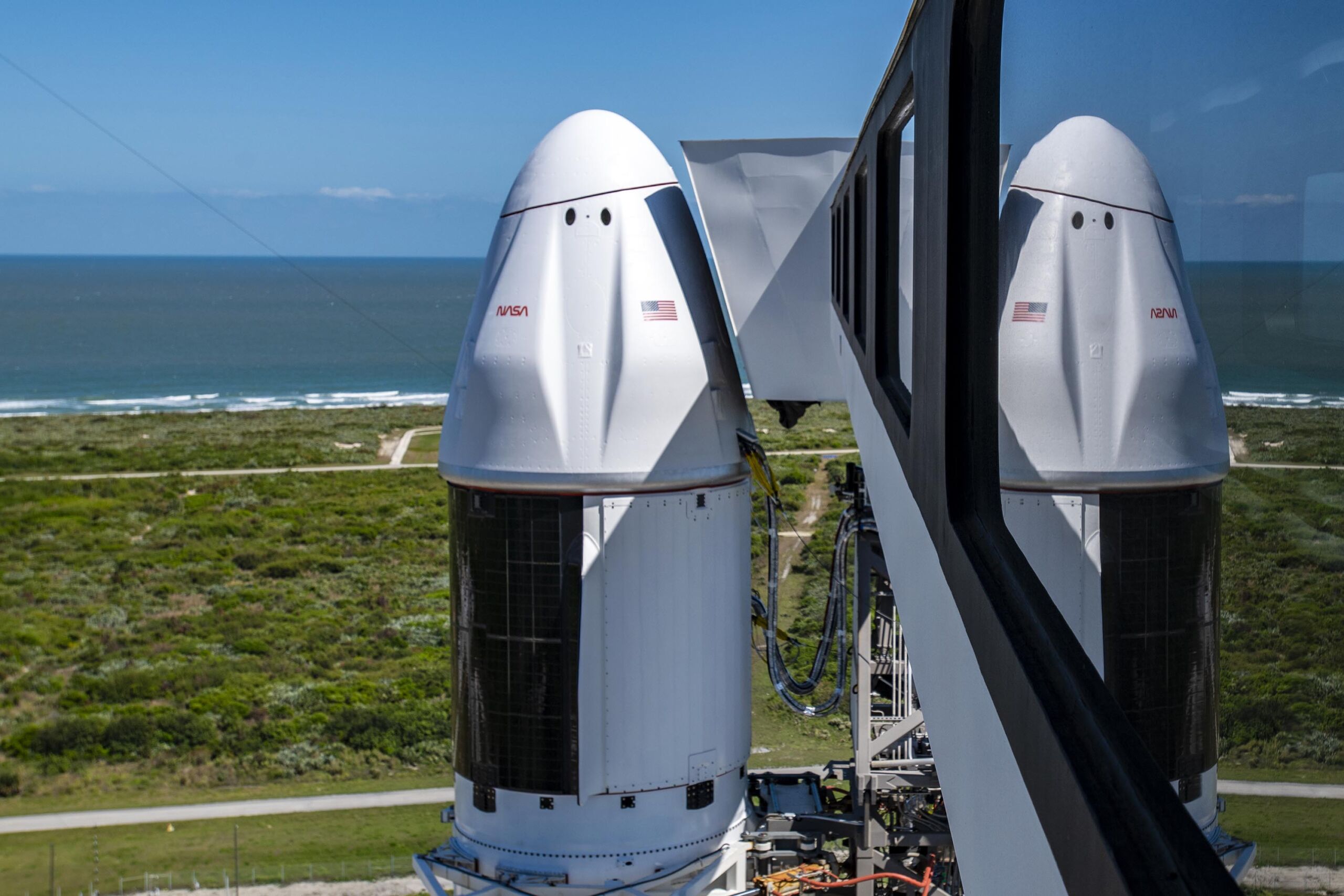
In the last few months, SpaceX has outfitted the launch pad with the equipment necessary to support launches of human spaceflight missions on the Crew Dragon spacecraft. The Cargo Dragon capsule is the same size and shape as SpaceX’s Crew Dragon, but it’s filled with cargo racks and storage platforms rather than seats and cockpit displays.

This week, SpaceX technicians used the newly installed launch tower and crew access arm at SLC-40 to load time-sensitive experiments and supplies into the Cargo Dragon capsule atop the Falcon 9 rocket.

“CRS-30 will be our first Dragon to launch from Pad 40 since we put that brand-new crew tower in place,” said Sarah Walker, SpaceX’s director of Dragon mission management, in a prelaunch press conference.

Building new capability

Starting last year, construction crews at Cape Canaveral erected segments of a more than 200-foot-tall metal lattice tower at SLC-40, right next to the starting blocks for SpaceX’s Falcon 9 rocket. Before then, SLC-40 was based on a “clean pad” architecture, without any structures to service or access Falcon 9 rockets while they were vertical on the pad.

In November, contractors raised the crew access arm to an attach point near the top of the tower. This walkway will allow astronauts to crawl into the Crew Dragon spacecraft during a launch countdown. It also provides access to the hatch on the Cargo Dragon spacecraft for final cargo loading.

Earlier this year, SpaceX tested an escape chute at SLC-40 that would be used in an emergency to help astronauts and ground crews quickly get away from the pad. The chute is similar in function to slide-wire baskets in use for decades at LC-39A, but instead of riding a basket from the top of the tower, personnel escaping a pad emergency would slide down a chute to carry them several hundred feet from the rocket.

SpaceX employees tested the pad escape chute last month at SLC-40. Gwynne Shotwell, SpaceX’s president and chief operating officer, took the ride down the chute. “Astronaut and personnel safety is SpaceX’s highest priority, which is why I had to personally test the new slide,” she posted on X, alongside a wink emoji.

Teams test the new emergency chutes from the pad 40 crew tower in Florida pic.twitter.com/rWVj7zaHp0

— SpaceX (@SpaceX) March 19, 2024

“The team took commercially available off the shelf technology and applied it to the crew tower,” Kiko Dontchev, SpaceX’s vice president of launch, wrote on X. “You are trained on it the same way you are trained on using an emergency exit door on airplane. Only takes a couple of quick physical actions to deploy the slide and anyone can effectively do it.”

As more people travel to space, particularly on larger vehicles like SpaceX’s Starship, simplifying safety systems will be important.

“This system will help us scale to bigger towers and spaceships (think 100 people on Starship),” Dontchev wrote.

SpaceX and its contractors completed all of this work as Falcon 9s fired off SLC-40 every few days with Starlink satellites and other missions.

For the last four years, all of SpaceX’s crew and cargo launches to the space station have departed from Launch Complex 39A (LC-39A) at NASA’s Kennedy Space Center, a few miles up the coast from SLC-40. In 2018 and 2019, SpaceX outfitted LC-39A for Cargo Dragon and Crew Dragon missions ahead of the company’s first human spaceflight mission in 2020.

Walker said the new infrastructure added at SLC-40 is “nearly functionally identical” to the equipment for crew missions at LC-39A. The primary differences are the means of pad escape—the chute instead of slide-wire baskets—and a more robust elevator in the tower at SLC-40.

Previously, SpaceX used both SLC-40 and LC-39A for launches of its now-retired first-generation Dragon cargo capsules, which had their final supplies loaded before SpaceX raised the rocket vertical for launch. Like regular satellite launches on Falcon 9s, both pads could support the first-generation Dragon cargo missions.

“Thanks to this new state-of-the-art crew tower required for our human spaceflight missions, that late-load cargo operation got a massive upgrade, too,” Walker said. “It is much easier to load a huge complement of time-critical NASA science into our Dragon spacecraft in the flight orientation.”

SpaceX has drastically ramped up its launch cadence since building LC-39A for Dragon missions. The company plans nearly 150 Falcon 9 or Falcon Heavy launches this year. When you’re flying rockets every two or three days, it’s inevitable two missions will end up vying for the same launch slots. Most recently, that happened in February, when a NASA crew mission was ready to launch from LC-39A around the same time as a narrow launch window for Intuitive Machines’ first commercial lunar lander. Both had to go off of LC-39A.

“Historically, Pad 40 has kind of become our high rate pad,” Walker said. “We’ve gotten the time between launches down to just a couple of days.”

LC-39A has seen less use, primarily for Dragon crew and cargo flights, Falcon Heavy missions, and other “uniquely complex” missions like the Intuitive Machines lander, Walker said.

SpaceX’s workhorse launch pad now has the accoutrements for astronauts Read More »