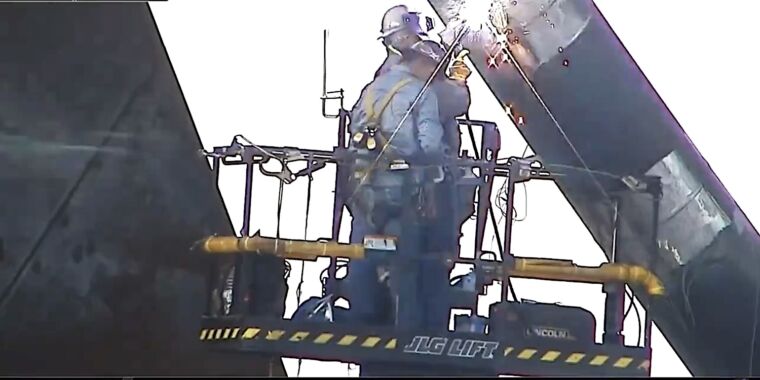
Pretty much every day for the last couple of weeks, workers wielding welding guns and torches have climbed onto SpaceX’s Starship launch pad in South Texas to make last-minute upgrades ahead of the next test flight of the world’s largest rocket.
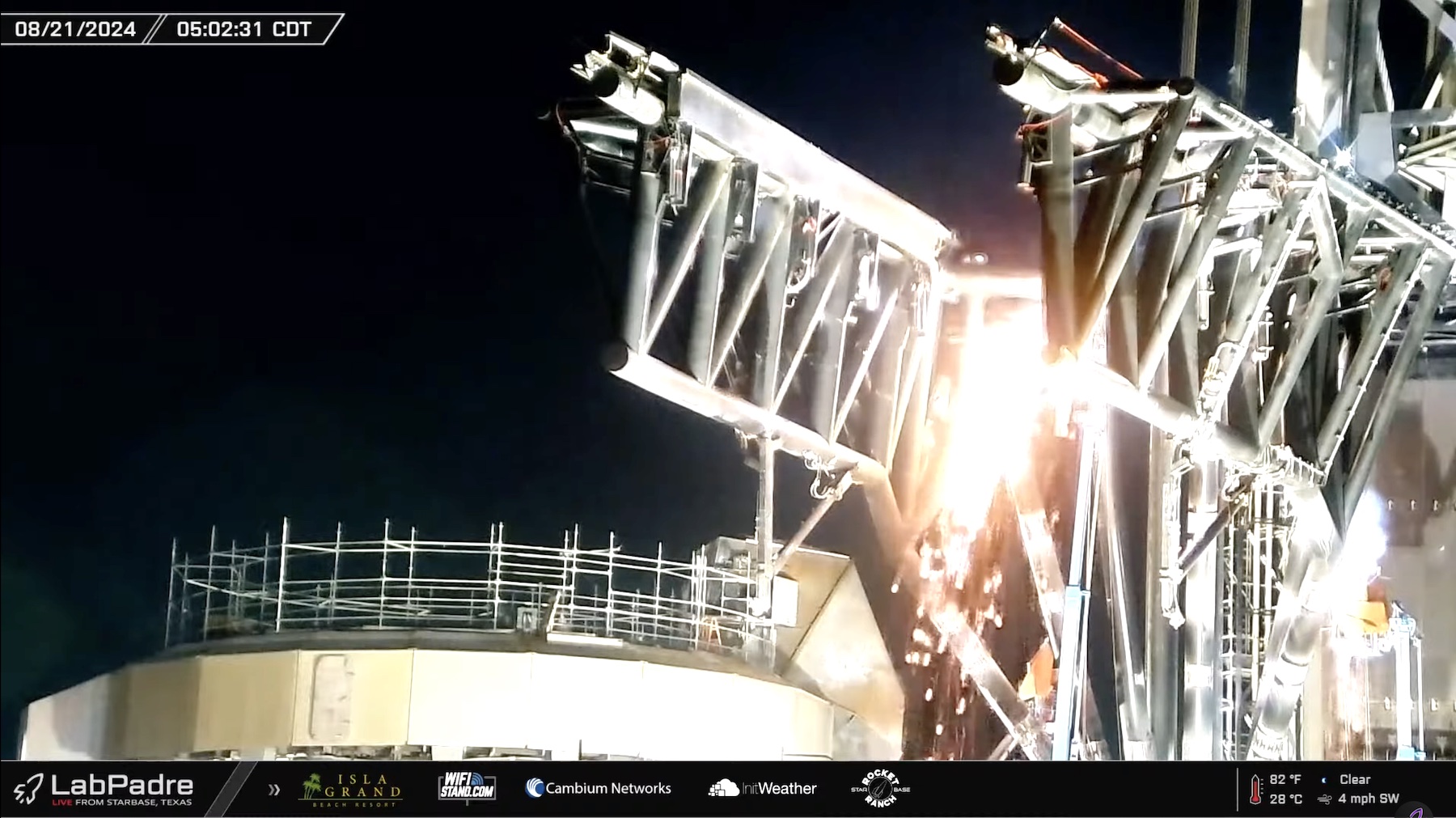
Livestreams of the launch site provided by LabPadre and NASASpaceflight.com have shown sparks raining down two mechanical arms extending from the side of the Starship launch tower at SpaceX’s Starbase launch site on the Gulf Coast east of Brownsville, Texas. We are publishing several views here of the welding activity with the permission of LabPadre, which runs a YouTube page with multiple live views of Starbase.
If SpaceX has its way on the next flight of Starship, these arms will close together to capture the first-stage booster, called Super Heavy, as it descends back to Earth and slows to a hover over the launch pad.
This method of rocket recovery is remarkably different from how SpaceX lands its smaller Falcon 9 booster, which has landing legs to touch down on offshore ocean-going platforms or at concrete sites onshore. Catching the rocket with large metallic arms—sometimes called “mechazilla arms” or “chopsticks”—would reduce the turnaround time to reuse the booster and simplify its design, according to SpaceX.
SpaceX has launched the nearly 400-foot-tall (121 meter) Starship rocket four times, most recently in June, when the Super Heavy booster, itself roughly 233 feet (71 meters) tall, made a pinpoint splashdown in the Gulf of Mexico just off the coast of Starbase.
On the same flight in June, the Starship upper stage flew halfway around the world and reentered the atmosphere over the Indian Ocean. The ship survived reentry and splashed down in the open ocean northwest of Australia. This flight was the first time either part of the Starship rocket made it back to Earth intact, but SpaceX didn’t recover the booster or the ship.
Doubling up
Lessons learned from the June test flight prompted SpaceX to replace thousands of heat shield tiles on the Starship vehicle for the next mission. While the ship survived reentry in June, onboard camera views showed numerous tiles ripped away from the vehicle. Last month, SpaceX test-fired engines on the booster and ship assigned to the next launch.
On August 8, SpaceX said Starship and Super Heavy were “ready to fly, pending regulatory approval” from the Federal Aviation Administration. An FAA spokesperson said the agency is evaluating SpaceX’s proposed flight profile for the next Starship test flight, when SpaceX wants to try catching the booster on the pad. This will be the first time SpaceX will try to bring the stainless-steel Super Heavy booster, as long as and wider than a Boeing 747 jumbo jet, back to a landing on land.
Enlarge/ Sparks fly at Starbase as welders work overnight at the Starship launch pad.
While the rocket appears to be ready to fly, SpaceX officials clearly believe there’s more work to do on the launch pad. Closer views revealed welders are installing structural supports, or doublers, to certain parts of the catch arms. Elsewhere on the arms, workers were seen removing and adding other unknown pieces of hardware. SpaceX hasn’t specified exactly what kind of work teams are doing on the Starship launch pad in Texas, but the focus is on beefing up hardware necessary for catching the Super Heavy booster.
All of this work is occurring during the hottest part of the year in South Texas. On most days this month, afternoon temperatures have soared into the mid-to-upper 90s Fahrenheit, with sticky humidity. A lot of the work on the catch arms has occurred at night, when temperatures drop into the lower 80s.
It’s unclear how long it will take for the FAA to approve a license for SpaceX to launch and recover the rocket on the next test flight or when SpaceX will complete the upgrades on the launch pad. Elon Musk, SpaceX’s founder and CEO, suggested earlier this month that the flight could take off by the end of August, but the condition of the launch pad and remaining tests indicate a launch is still probably at least a couple of weeks away.
Once workers finish up their tasks upgrading the pad and clearing scaffolding and cranes from the area, SpaceX will likely stack the Super Heavy booster and Starship upper stage and fill them with propellants during a full countdown rehearsal, as it has before each previous Starship launch.
Musk has signaled several times that the company will try to catch the Super Heavy booster on the next flight, which will also accelerate the Starship upper stage to nearly orbital velocity for another reentry demonstration over the Indian Ocean. Last month, SpaceX released a video teasing a catch of the booster on the next Starship flight, showing the rocket returning to Starbase with its Raptor engines firing.
Meanwhile, SpaceX has stacked a second Starship launch tower next to the existing launch pad in Texas. The company still has a lot of work to do to outfit the second launch pad before it is ready to support a Starship flight, but SpaceX could have it ready for activation sometime next year. SpaceX also plans two Starship launch pads at Cape Canaveral, Florida. All these sites will allow SpaceX to launch Starships more often. The company is also finishing a sprawling factory near the Starship factory in South Texas, just a couple of miles inland from the launch pads there.
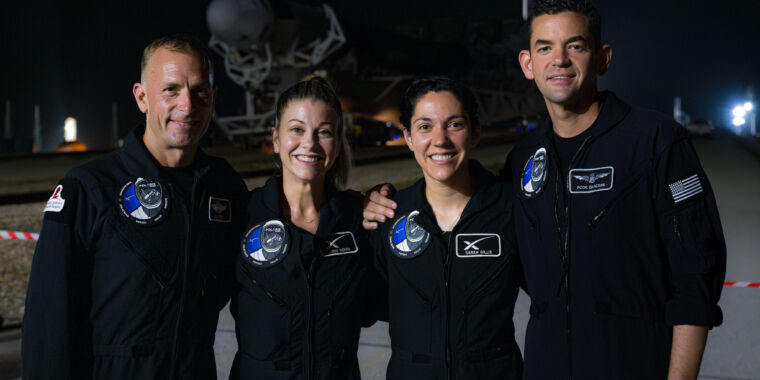
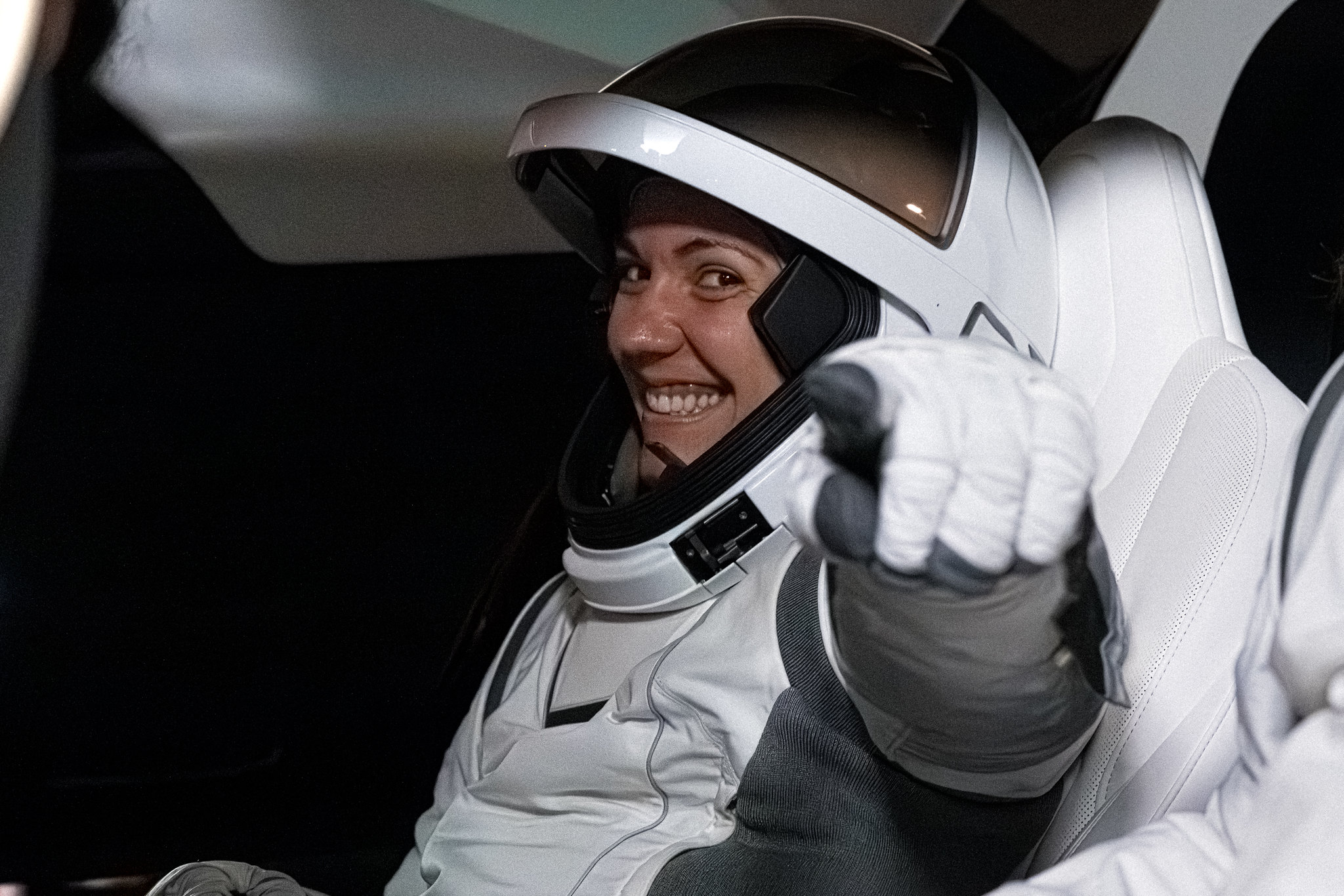
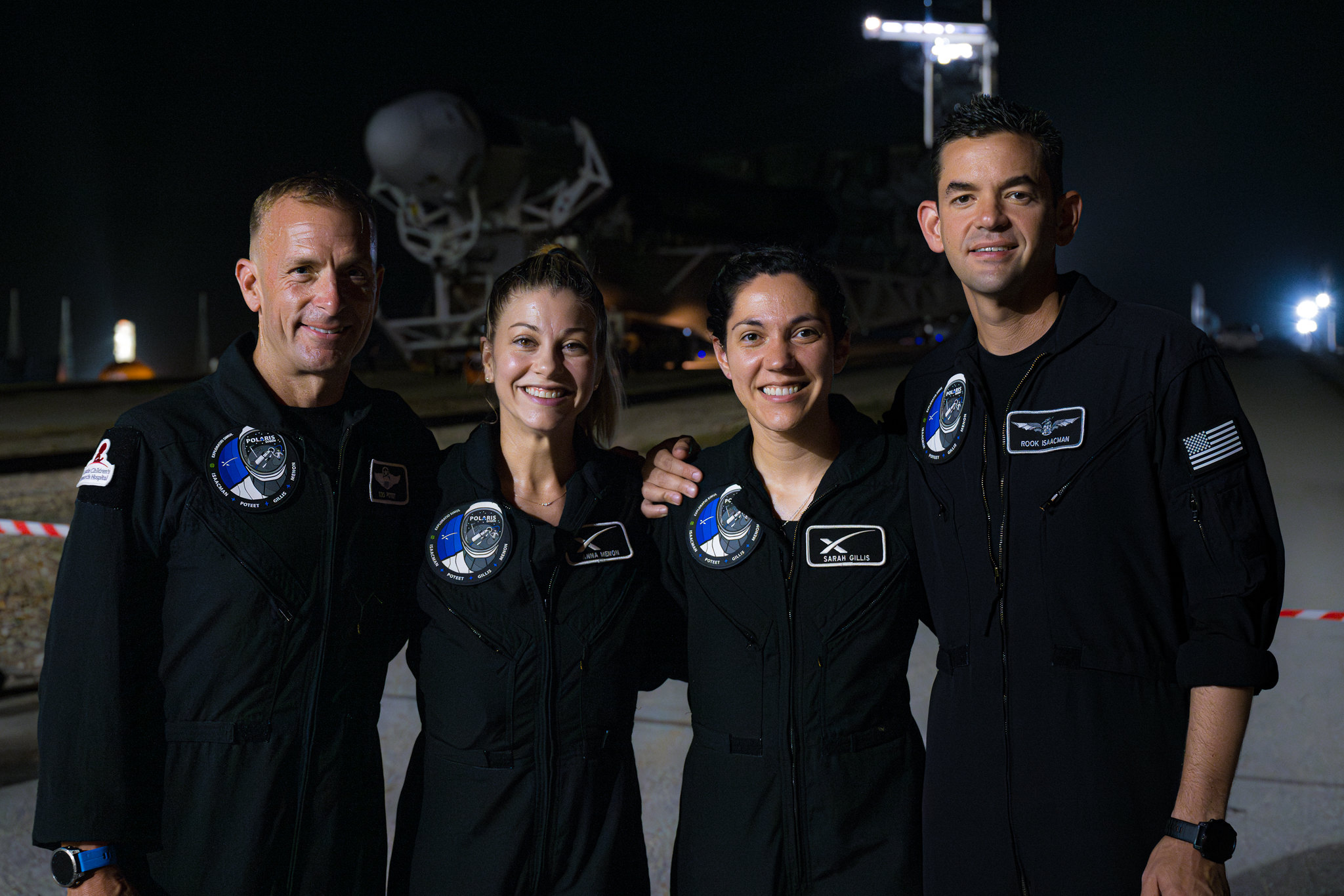
Enlarge/ The crew of Polaris Dawn, from L to R: Scott “Kidd” Poteet, Anna Menon, Sarah Gillis, and Jared Isaacman.
Polaris Program/John Kraus
SpaceX is set to launch the 14th crewed flight on its Dragon spacecraft early on Tuesday morning—and it’s an intriguing one.
This Polaris Dawn mission, helmed and funded by an entrepreneur and billionaire named Jared Isaacman, is scheduled to lift off at 3: 38 am ET (07: 38 UTC) on Tuesday from Launch Complex 39A at Kennedy Space Center in Florida.
This is just the second free-flying Crew Dragon mission that SpaceX has flown, and like the Inspiration4 mission that came before it, Polaris Dawn will once again field an entire crew of private astronauts. Although this is a private spaceflight, it really is not a space tourism mission. Rather, it seeks to push the ball of exploration forward. Isaacman has emerged as one of the most serious figures in commercial spaceflight in recent years, spending hundreds of millions of dollars to fly into space and push forward the boundaries of what private citizens can do in space.
“The idea is to develop and test new technology and operations in furtherance of SpaceX’s bold vision to enable humankind to journey among the stars,” Isaacman said last week during a news conference ahead of Tuesday’s launch.
A novel step forward
Isaacman, chief executive of the Shift4 payments company, led the Inspiration4 mission in September 2021, which was unique because the crew consisted of himself—an experienced pilot—and three newcomers to spaceflight. Isaacman used the world’s first all-civilian spaceflight, on a private vehicle, to raise hundreds of millions of dollars for charity and expand the window of who could become an astronaut.
Yet whereas Inspiration4 felt like something of a novelty, Polaris Dawn is truly pushing the boundary of private spaceflight forward. Working closely with SpaceX, Isaacman has plotted a five-day flight that will accomplish a number of significant tasks after it launches.
During the initial hours of the spaceflight, the crew will seek to fly in a highly elliptical orbit, reaching an altitude as high as 1,400 km (870 miles) above the planet’s surface. This will be the highest Earth-orbit mission ever flown by humans and the farthest any person has flown from Earth since the Apollo Moon landings more than half a century ago. This will expose the crew to a not insignificant amount of radiation, and they will collect biological data to assess harms.
The Resilience spacecraft will then descend toward a more circular orbit about 700 km above the Earth’s surface. Assuming a launch on Tuesday, the crew will don four spacesuits on Friday and open the hatch to the vacuum of space. Then Isaacman, followed by mission specialist Sarah Gillis, will each briefly climb out of the spacecraft into space.
Isaacman’s interest in performing the first private spacewalk accelerated, by years, SpaceX’s development of these spacesuits. This really is just the first generation of the suit, and SpaceX is likely to continue iterating toward a spacesuit that has its own portable life support system (PLSS). This is the “backpack” on a traditional spacesuit that allows NASA astronauts to perform spacewalks untethered to the International Space Station.
The general idea is that, as the Starship vehicle makes the surface of the Moon and eventually Mars more accessible to more people, future generations of these lower-cost spacesuits will enable exploration and settlement. That journey, in some sense, begins with this mission’s brief spacewalks, with Isaacman and Gillis tethered to the Dragon vehicle for life support.
Enlarge/ Sarah Gillis, a mission specialist on Polaris Dawn, is pretty darn excited about going to space.
Polaris Program/John Kraus
Lasers and SpaceXers
Isaacman and his crew will also conduct a number of other research experiments, including trying to better understand a recently detected but major concern of space habitation, spaceflight-associated neuro-ocular syndrome. This will also be the first crewed mission to test Starlink-based laser communications in space.
Then, there is the crew. Isaacman’s close friend, retired US Air Force Col. Scott “Kidd” Poteet, will be the mission’s pilot, with Gillis and Anna Menon serving as mission specialists. Both Gillis and Menon are SpaceX engineers who worked with Isaacman during Inspiration4. Now, they’ll become the first SpaceX employees to ever go into orbit, bringing their experiences back to share with their colleagues.
This is the first of three “Polaris” missions that Isaacman is scheduled to fly with SpaceX. The plan for the second Polaris mission, also to fly on a Dragon spacecraft, has yet to be determined. But it may well employ a second-generation spacesuit based on learnings from this spaceflight. The third flight, unlikely to occur before at least 2030, will be an orbital launch aboard the company’s Starship vehicle—making Isaacman and his crew the first to fly on that rocket.
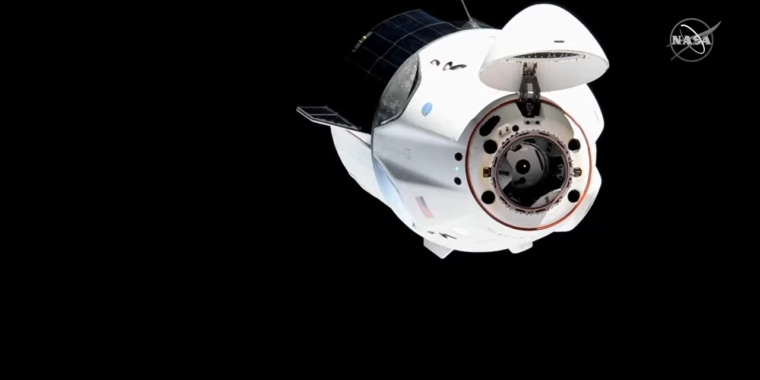
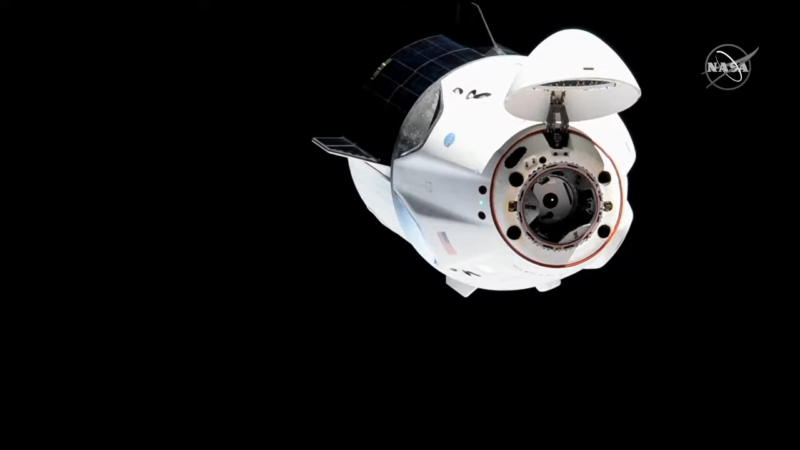
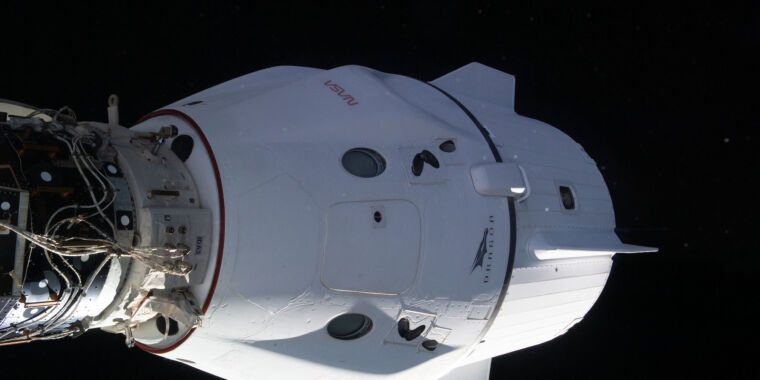
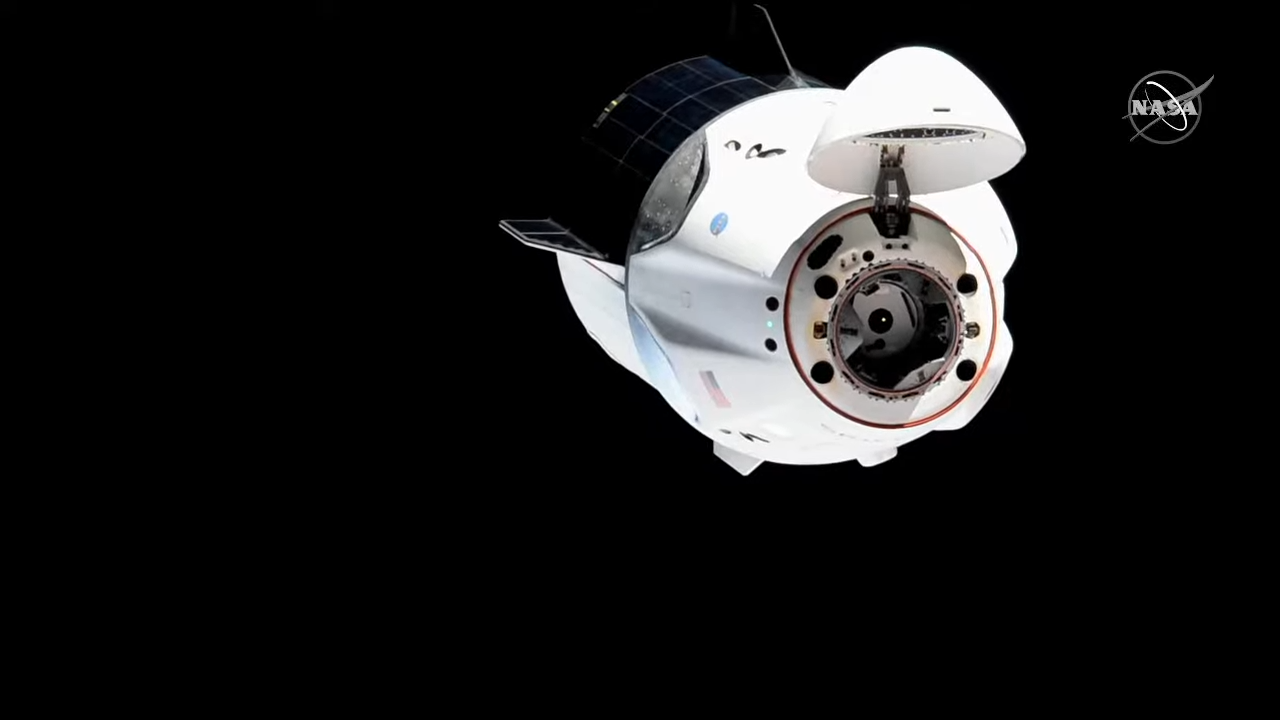
Enlarge/ Crew Dragon approaches the International Space Station
NASA TV
Following weeks of speculation, NASA finally made it official on Saturday: two astronauts who flew to the International Space Station on Boeing’s Starliner spacecraft in June will not return home on that vehicle. Instead, the agency has asked SpaceX to use its Crew Dragon spacecraft to fly astronauts Butch Wilmore and Suni Williams back to Earth.
“NASA has decided that Butch and Suni will return with Crew-9 next February,” said NASA Administrator Bill Nelson at the outset of a news conference on Saturday afternoon at Johnson Space Center.
In a sign of the gravity surrounding the agency’s decision, both Nelson and NASA’s deputy administrator, Pam Melroy, attended a Flight Readiness Review meeting held Saturday in Houston. During that gathering of the agency’s senior officials, an informal “go/no go” poll was taken. Those present voted unanimously for Wilmore and Williams to return to Earth on Crew Dragon. The official recommendation of the Commercial Crew Program was the same, and Nelson accepted it.
Therefore, Boeing’s Starliner spacecraft will undock from the station early next month—the tentative date, according to a source, is September 6—and attempt to make an autonomous return to Earth and land in a desert in the southwestern United States.
Then, no earlier than September 24, a Crew Dragon spacecraft will launch with two astronauts (NASA has not named the two crew members yet) to the space station with two empty seats. Wilmore and Williams will join these two Crew-9 astronauts for their previously scheduled six-month increment on the space station. All four will then return to Earth on the Crew Dragon vehicle.
Saturday’s announcement has big implications for Boeing, which entered NASA’s Commercial Crew Program more than a decade ago and lent legitimacy to NASA’s efforts to pay private companies for transporting astronauts to the International Space Station. The company’s failure—and despite the encomiums from NASA officials during Saturday’s news conference, this Starliner mission is a failure—will affect Boeing’s future in spaceflight. Ars will have additional coverage of Starliner’s path forward later today.
Never could get comfortable with thruster issues
For weeks after Starliner’s arrival at the space station in early June, officials from Boeing and NASA expressed confidence in the ability of the spacecraft to fly Wilmore and Williams home. They said they just needed to collect a little more data on the performance of the vehicle’s reaction control system thrusters. Five of these 28 small thrusters that guide Starliner failed during the trip to the space station.
Engineers from Boeing and NASA tested the performance of these thrusters at a facility in White Sands, New Mexico, in July. Initially, the engineers were excited to replicate the failures observed during Starliner’s transit to the space station. (Replicating failures is a critical step to understanding the root cause of a hardware problem.)
However, what NASA found after taking apart the failed thrusters was concerning, said the chief of NASA’s Commercial Crew Program, Steve Stich.
“I would say the White Sands testing did give us a surprise,” Stich said Saturday. “It was this piece of Teflon that swells up and got in the flow path and causes the oxidizer to not go into the thruster the way it needs to. That’s what caused the degradation of thrust. When we saw that, I think that’s when things changed a bit for us.”
When NASA took this finding to the thruster’s manufacturer, Aerojet Rocketdyne, the propulsion company said it had never seen this phenomenon before. It was at this point that agency engineers started to believe that it might not be possible to identify the root cause of the problem in a timely manner and become comfortable enough with the physics to be sure that the thruster problem would not occur during Starliner’s return to Earth.
Thank you for flying SpaceX
The result of this uncertainty is that NASA will now turn to the other commercial crew provider, SpaceX. This is not a pleasant outcome for Boeing which, a decade ago, looked askance at SpaceX as something akin to space cowboys. I have covered the space industry closely during the last 15 years, and during most of that time Boeing was perceived by much of the industry as the blueblood of spaceflight while SpaceX was the company that was going to kill astronauts due to its supposed recklessness.
Now the space agency is asking SpaceX to, in effect, rescue the Boeing astronauts currently on the International Space Station.
It won’t be the first time that SpaceX has helped a competitor recently. In the last two years SpaceX has launched satellites for a low-Earth orbit Internet competitor, OneWeb, after Russia’s space program squeezed the company; it has launched Europe’s sovereign Galileo satellites after delays to the Ariane 6 rocket; and it has launched the Cygnus spacecraft built by NASA’s other space station cargo services provider, Northrop Grumman, multiple times. Now SpaceX will help out Boeing, a crew competitor.
After Saturday’s news conference, I asked Jim Free, NASA’s highest-ranking civil servant, what he made of the once-upstart SpaceX now helping to backstop the rest of the Western spaceflight community. Without SpaceX, after all, NASA would not have a way to get crew or cargo to the International Space Station.
“They’re flying a lot, and they’re having success,” Free said. “And you know, when they have an issue, they find a way to recover like with the second-stage issue, We set out to have two providers to take crew to station to have options, and they’ve given us the option. In the reverse, Boeing could have been out there, and we still would face the same thing if they had a systemic Dragon problem, Boeing would have to bring us back. But I can’t argue with how much they’ve flown, that’s for sure, and what they’ve flown.”
Welcome to Edition 7.05 of the Rocket Report! The Federal Aviation Administration grounded SpaceX’s Falcon 9 rocket for 15 days after a rare failure of its upper stage earlier this month. The FAA gave the green light for Falcon 9 to return to flight July 25, and within a couple of days, SpaceX successfully launched three missions from three launch pads. There’s a lot on Falcon 9’s to-do list, so we expect SpaceX to quickly return to form with several flights per week.
As always, we welcome reader submissions. If you don’t want to miss an issue, please subscribe using the box below (the form will not appear on AMP-enabled versions of the site). Each report will include information on small-, medium-, and heavy-lift rockets as well as a quick look ahead at the next three launches on the calendar.
Big delay for a reusable rocket testbed. The French space agency, CNES, has revealed that the inaugural test flight of its Callisto reusable rocket demonstrator will not take place until late 2025 or early 2026, European Spaceflight reports. CNES unveiled an updated website for the Callisto rocket program earlier this month, showing the test rocket has been delayed from a debut launch later this year to until late 2025 or early 2026. The Callisto rocket is designed to test techniques and technologies required for reusable rockets, such as vertical takeoff and vertical landing, with suborbital flights from the Guiana Space Center in South America.
Cooperative action … Callisto, which stands for Cooperative Action Leading to Launcher Innovation in Stage Toss-back Operations, is a joint project between CNES, German space agency DLR, and JAXA, the Japanese space agency. It will stand 14 meters (46 feet) tall and weigh about 4 metric tons (8,800 pounds), with an engine supplied by Japan. Callisto is one of several test projects in Europe aiming to pave the way for a future reusable rocket. (submitted by EllPeaTea and Ken the Bin)
The easiest way to keep up with Eric Berger’s space reporting is to sign up for his newsletter, we’ll collect his stories in your inbox.
Small step for Themis. Another European project established to demonstrate reusable rocket tech is making slow progress toward a first flight. The Themis project, funded by the European Space Agency, is similar in purpose to the Callisto testbed discussed above. This week, the German aerospace manufacturing company MT Aerospace announced it has begun testing a demonstrator of the landing legs that will be used aboard the Themis reusable booster, European Spaceflight reports. The landing legs for Themis are made of carbon fiber-reinforced plastic composites, and the initial test demonstrated good deployment and showed it would withstand the impact energy of landing.
Also delayed … Like Callisto, Themis is facing delays in getting to the launch pad. ArianeGroup, the ESA-selected Themis prime contractor, had been expected to conduct an initial hop test of the demonstrator before the end of 2024. However, officials have announced the initial hop tests won’t happen until sometime next year. The Themis booster is intended to eventually become the first stage booster for an orbital-class partially reusable rocket being developed by MaiaSpace, a subsidiary of ArianeGroup. (submitted by Ken the Bin)
Falcon 9 is flying again. A SpaceX Falcon 9 rocket returned to flight on July 27, barely two weeks after an upper stage failure ended a streak of more than 300 consecutive successful launches, Ars reports. By some measures this was an extremely routine mission—it was, after all, SpaceX’s 73rd launch of this calendar year. And like many other Falcon 9 launches this year, the “Starlink 10-9” mission carried 23 of the broadband Internet satellites into orbit. However, after a rare failure earlier this month, this particular Falcon 9 rocket was making a return-to-flight for the company and attempting to get the world’s most active booster back into service.
Best part is no part … The Falcon 9 successfully deployed its payload of Starlink satellites about an hour after lifting off from NASA’s Kennedy Space Center in Florida. Later in the weekend, SpaceX launched two more Starlink missions on Falcon 9 rockets from Florida and California, notching three flights in less than 28 hours. The launch failure on the previous Falcon 9 launch was caused by a liquid oxygen leak on the upper stage, which led to a “hard start” on the upper stage engine when it attempted to reignite in flight. Engineers and technicians were quickly able to pinpoint the cause of the leak, a crack in a “sense line” for a pressure sensor attached to the vehicle’s liquid oxygen system.
Atlas V’s NSSL era is over. United Launch Alliance delivered a classified US military payload to orbit Tuesday for the last time with an Atlas V rocket, ending the Pentagon’s use of Russian rocket engines as national security missions transition to all-American launchers, Ars reports. This was the 101st launch of an Atlas V rocket since its debut in 2002, and the 58th and final Atlas V mission with a US national security payload since 2007. The Atlas V is powered by an RD-180 main engine made in Russia, and with a little prodding from SpaceX (via a lawsuit) and Congress, the Pentagon started making moves to end its reliance on the RD-180 a decade ago.
Other options available … The RD-180 never failed on a National Security Space Launch (NSSL) mission using the Atlas V rocket, but its use became politically untenable after Russia’s annexation of Crimea in 2014, which predated Russia’s full-scale invasion of Ukraine eight years later. SpaceX began launching US military missions in 2018, and ULA debuted its new Vulcan rocket in January. Assuming a successful second test flight of Vulcan in September, ULA’s next-generation rocket has a good shot at launching its first national security mission by the end of the year. The Space Force’s policy is to maintain at least two independent launch vehicles capable of flying military payloads into orbit. Vulcan and SpaceX’s Falcon rocket family fulfill that requirement, so the military no longer needs the Atlas V. However, 15 more Atlas V rockets remain in ULA’s inventory for future commercial flights.
Crackdown at the Cape. While this week’s landmark launch of the Atlas V rocket is worthy of celebration, there’s a new ULA policy that deserves ridicule, Ars reports. Many of the spectacular photos of rocket launches shared on social media come from independent photographers, who often make little to no money working for an established media organization. Instead, they rely on sales of prints to recoup at least some of their expenses for gas, food, and camera equipment needed to capture these images, which often serve as free publicity for launch providers like ULA. Last month, ULA announced it will no longer permit these photographers to set up remote cameras at their launch pads if they sell their images independently. This new policy was in place for the Atlas V launch from Cape Canaveral, Florida, on Tuesday morning.
But why? … “ULA will periodically confirm editorial publication for media participating in remote camera placement,” ULA stated in an email distributed to photographers last month. “If publication does not occur, or photos are sold outside of editorial purposes, privileges to place remote cameras may be revoked.” To the photographers who spend many hours preparing their equipment, waiting to set up and remove cameras, and persevering through scrubs and more, it seemed like a harsh judgment. And nobody knows why it happened. ULA has offered no public comment about the new policy, and the company did not respond to questions from Ars about the agreement.
Astroscale achieves a first in orbit. There are more than 2,000 mostly intact dead rockets circling the Earth, but until this year, no one ever launched a satellite to go see what one looked like after many years of tumbling around the planet, Ars reports. A Japanese company named Astroscale launched a small satellite in February to chase down the derelict upper stage from a Japanese H-IIA rocket. Astroscale’s ADRAS-J spacecraft arrived near the H-IIA upper stage in April, and the company announced this week that its satellite has now completed two 360-degree fly-arounds of the rocket. This is the first time a satellite has maneuvered around an actual piece of space junk, and it offers an unprecedented snapshot of how an abandoned rocket holds up to 15 years in the harsh environment of space.
Prepping for the future … Astroscale’s ADRAS-J mission is partially funded by the Japan Aerospace Exploration Agency (JAXA). Astroscale and JAXA also have a contract for a follow-up mission named ADRAS-J2, which will attempt to link up with the same H-IIA rocket and steer it on a trajectory to burn up in Earth’s atmosphere. This would be the first demonstration of active debris removal, a concept pursued by Astroscale and other companies to help clear space junk out of low-Earth orbit.
An update on Ariane 6. The European Space Agency has released its first update on the results from the first flight of the Ariane 6 rocket since its launch July 9. Europe’s new flagship rocket had a mostly successful inaugural test flight. Its first stage, solid rocket boosters, and upper stage performed as expected for the first phase of the flight, delivering eight small satellites into an on-target orbit. The launch pad at the Guiana Space Center in South America also held up to the violent environment of launch, ESA said.
Still investigating … However, the final phase of the mission didn’t go according to plan. The upper stage’s Vinci engine was supposed to reignite for a third time on the test flight to deorbit the rocket, which would have released two small reentry capsules on technology demonstration missions to test heat shield technologies. This didn’t happen. An Auxiliary Propulsion Unit, which is a small engine to provide additional bursts of thrust and pressurize the upper stage’s propellant tanks, shut down shortly after startup ahead of the third burn of the primary Vinci engine. “This meant the Vinci engine’s third boost could not take place,” ESA said. “Analysis of the APU’s behavior is ongoing and further information will be made available as soon as possible, while the next task force update is expected in September.” (submitted by Ken the Bin)
Room to grow at Starbase. SpaceX has since launched Starship four times from its launch site in South Texas, known as Starbase, and is planning a fifth launch within the next two months, Ars reports. However, as it continues to test Starship and make plans for regular flights, SpaceX will need a higher flight rate. This is especially true as the company is unlikely to activate additional launch pads for Starship in Florida until at least 2026. To that end, SpaceX has asked the FAA for permission for up to 25 flights a year from South Texas, as well as the capability to land both the Starship upper stage and Super Heavy booster stage back at the launch site.
The answer is probably yes … On Monday, the FAA signaled that it is inclined to grant this request. The agency released a draft assessment indicating that its extensive 2022 analysis of Starship launch activities on the environment, wildlife, local communities, and more was sufficient to account for SpaceX’s proposal for more launches. There is more to do for this conclusion to become official, including public meetings and a public comment period this month.
SpaceX eyes Australia. SpaceX is in talks with US and Australian officials to land and recover one of its Starship rockets off Australia’s coast, a possible first step toward a bigger presence for Elon Musk’s company in the region as the two countries bolster security ties, Reuters reports. At the end of SpaceX’s fourth Starship test flight in June, the rocket made a controlled splashdown in the Indian Ocean hundreds of miles off the northwest coast of Australia. The discussions now underway are focused on the possibility of towing a future Starship vehicle from its splashdown point in the ocean to a port in Australia, where SpaceX engineers could inspect it and learn more about how it performed.
Eventually, it’ll come back to land … On the next Starship flight, currently planned for no earlier than late August, SpaceX plans to attempt to recover Starship’s giant Super Heavy booster using catch arms on the launch pad tower in Texas. On Sunday, Elon Musk told SpaceX and Tesla enthusiasts at an event called the “X Takeover” that it will take a few more flights for engineers to get comfortable returning the Starship itself to a landing onshore. “We want to be really confident that the ship heat shield is super robust and lands at the exact right location,” he said. “So before we try to bring the ship back to the launch site, we probably want to have at least three successful landings of the ship [at sea].” (submitted by Ken the Bin)
Next three launches
August 2: Electron | “Owl for One, One for Owl” | Mahia Peninsula, New Zealand | 16: 39 UTC
August 3: Falcon 9 | NG-21 | Cape Canaveral Space Force Station, Florida | 15: 28 UTC
August 4: Falcon 9 | Starlink 11-1 | Vandenberg Space Force Base, California | 07: 00 UTC
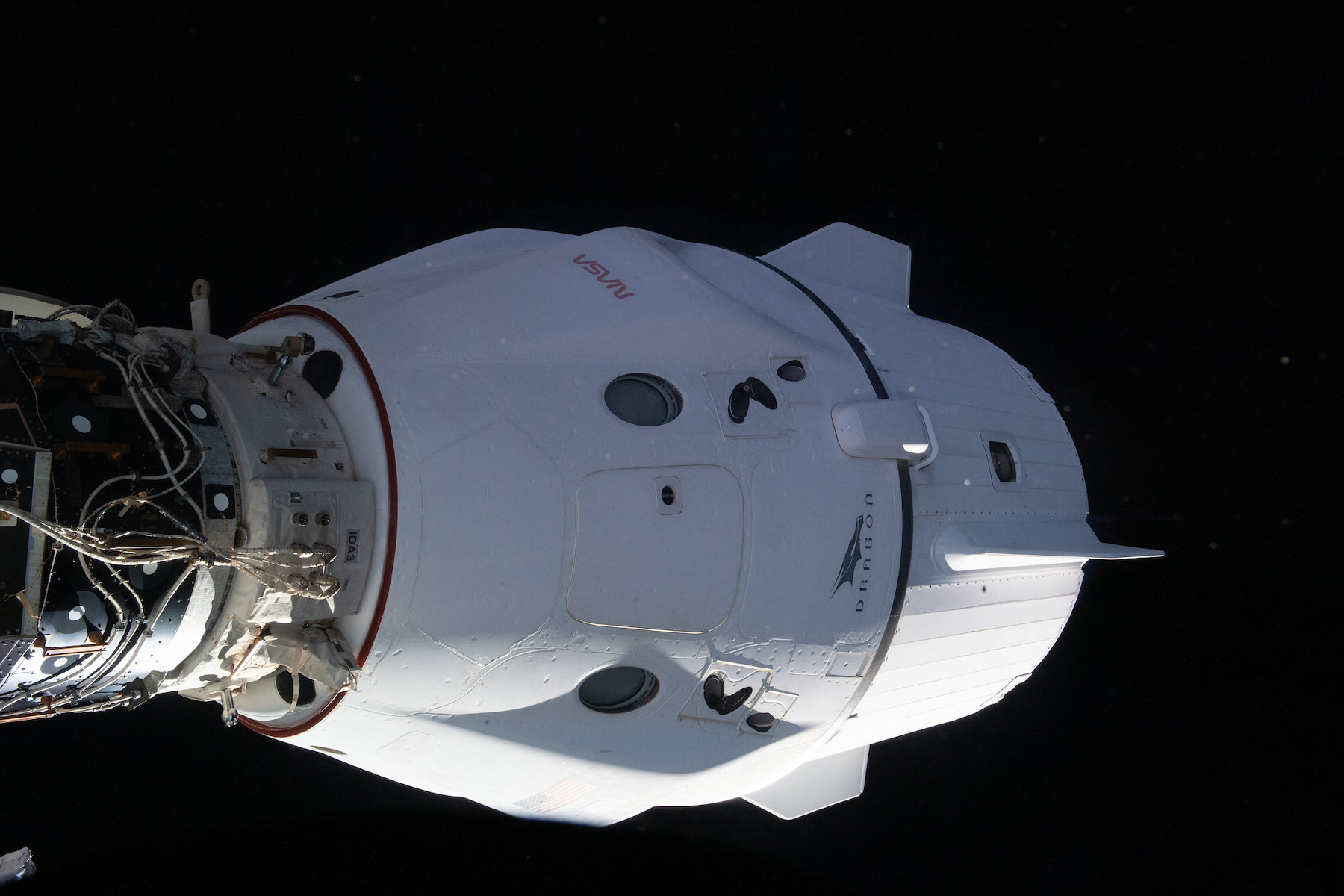
Enlarge/ A Crew Dragon spacecraft is seen docked at the International Space Station in 2022. The section of the spacecraft on the left is the pressurized capsule, while the rear section, at right, is the trunk.
NASA
Sometime next year, SpaceX will begin returning its Dragon crew and cargo capsules to splashdowns in the Pacific Ocean and end recoveries of the spacecraft off the coast of Florida.
This will allow SpaceX to make changes to the way it brings Dragons back to Earth and eliminate the risk, however tiny, that a piece of debris from the ship’s trunk section might fall on someone and cause damage, injury, or death.
“After five years of splashing down off the coast of Florida, we’ve decided to shift Dragon recovery operations back to the West Coast,” said Sarah Walker, SpaceX’s director of Dragon mission management.
Public safety
In the past couple of years, landowners have discovered debris from several Dragon missions on their property, and the fragments all came from the spacecraft’s trunk, an unpressurized section mounted behind the capsule as it carries astronauts or cargo on flights to and from the International Space Station.
SpaceX returned its first 21 Dragon cargo missions to splashdowns in the Pacific Ocean southwest of Los Angeles. When an upgraded human-rated version of Dragon started flying in 2019, SpaceX moved splashdowns to the Atlantic Ocean and the Gulf of Mexico to be closer to the company’s refurbishment and launch facilities at Cape Canaveral, Florida. The benefits of landing near Florida included a faster handover of astronauts and time-sensitive cargo back to NASA and shorter turnaround times between missions.
The old version of Dragon, known as Dragon 1, separated its trunk after the deorbit burn, allowing the trunk to fall into the Pacific. With the new version of Dragon, called Dragon 2, SpaceX changed the reentry profile to jettison the trunk before the deorbit burn. This meant that the trunk remained in orbit after each Dragon mission, while the capsule reentered the atmosphere on a guided trajectory. The trunk, which is made of composite materials and lacks a propulsion system, usually takes a few weeks or a few months to fall back into the atmosphere and doesn’t have control of where or when it reenters.
Air resistance from the rarefied upper atmosphere gradually slows the trunk’s velocity enough to drop it out of orbit, and the amount of aerodynamic drag the trunk sees is largely determined by fluctuations in solar activity.
SpaceX and NASA, which funded a large portion of the Dragon spacecraft’s development, initially determined the trunk would entirely burn up when it reentered the atmosphere and would pose no threat of surviving reentry and causing injuries or damaging property. However, that turned out to not be the case.
In May, a 90-pound chunk of a SpaceX Dragon spacecraft that departed the International Space Station fell on the property of a “glamping” resort in North Carolina. At the same time, a homeowner in a nearby town found a smaller piece of material that also appeared to be from the same Dragon mission.
These events followed the discovery in April of another nearly 90-pound piece of debris from a Dragon capsule on a farm in the Canadian province of Saskatchewan. SpaceX and NASA later determined the debris fell from orbit in February, and earlier this month, SpaceX employees came to the farm to retrieve the wreckage, according to CBC.
Pieces of a Dragon spacecraft also fell over Colorado last year, and a farmer in Australia found debris from a Dragon capsule on his land in 2022.
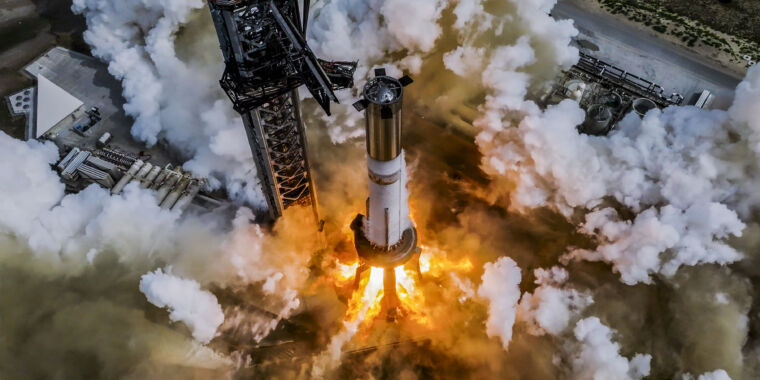
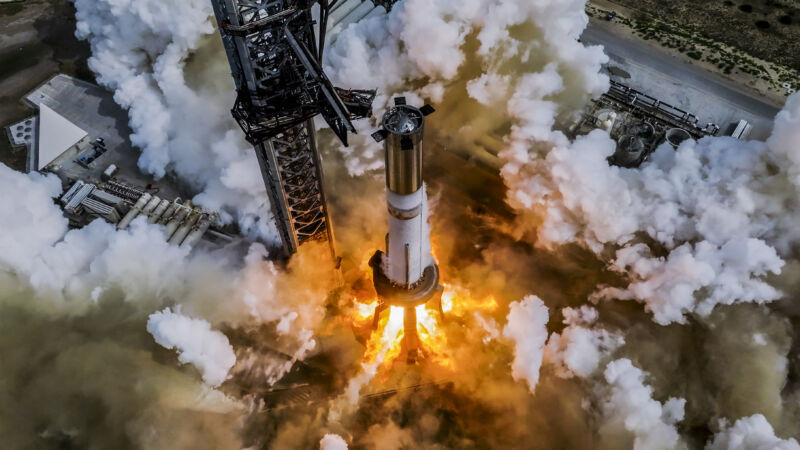
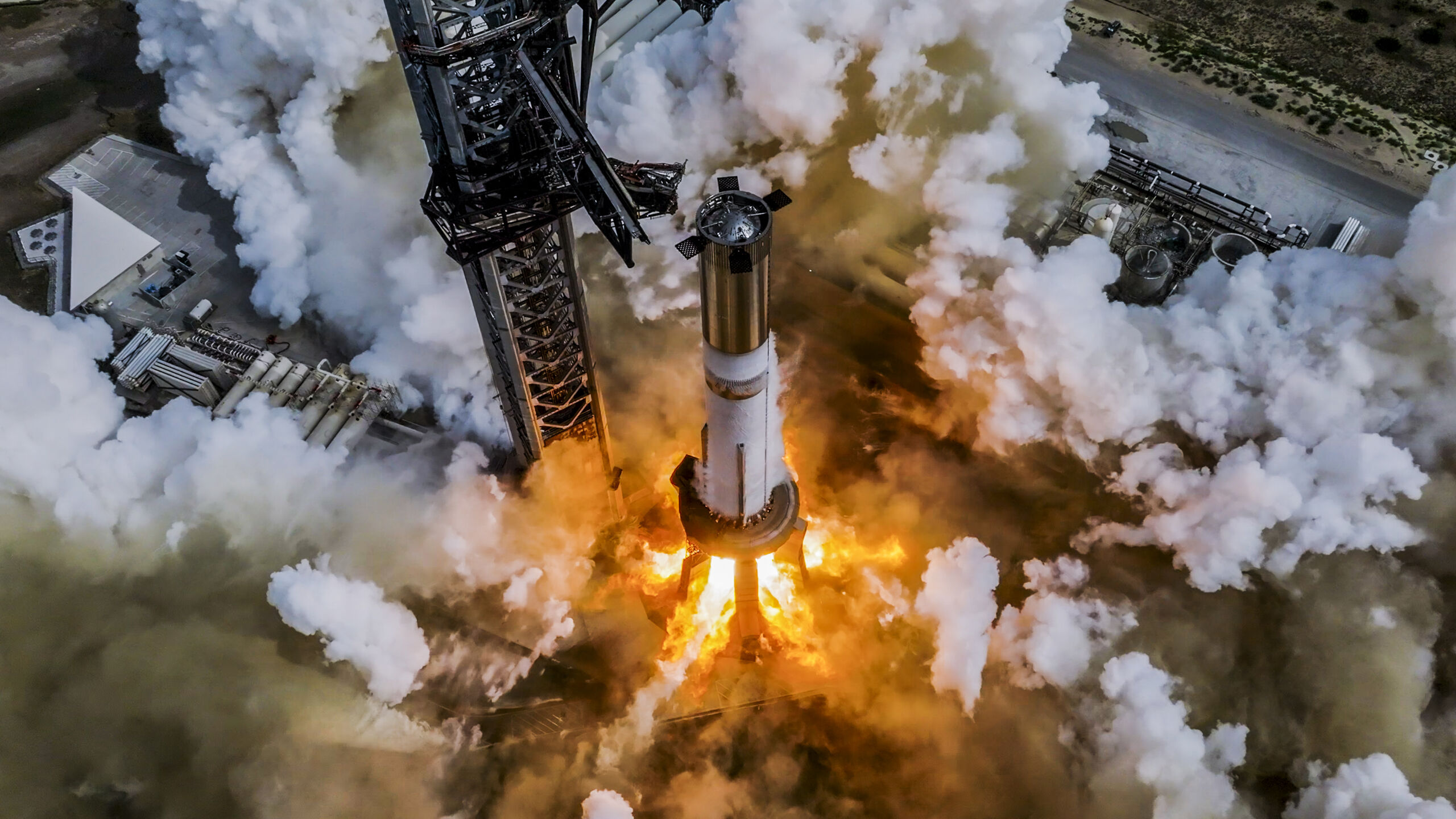
Enlarge/ The Super Heavy booster for Flight 5 of Starship undergoes a static fire test earlier this month.
SpaceX
After SpaceX decided to launch orbital missions of its Starship rocket from Texas about five years ago, the company had to undergo a federal environmental review of the site to ensure it was safe to do so.
As a part of this multi-year process, the Federal Aviation Administration completed a Final Programmatic Environmental Assessment in June 2022. Following that review, SpaceX received approval to conduct up to five Starship launches from South Texas annually.
SpaceX has since launched Starship four times from its launch site in South Texas, known as Starbase, and is planning a fifth launch within the next two months. However, as it continues to test Starship and make plans for regular flights, SpaceX will need a higher flight rate. This is especially true as the company is unlikely to activate additional launch pads for Starship in Florida until at least 2026.
To that end, SpaceX has asked the FAA for permission for up to 25 flights a year from South Texas, as well as the capability to land both the Starship upper stage and Super Heavy booster stage back at the launch site. On Monday, the FAA signaled that it is inclined to grant permission for this.
A solid step for SpaceX
The federal agency released a 154-page “Draft Tiered Environmental Assessment” for an increased cadence of Starship launches from South Texas. In conclusion, the document stated: “The FAA has concluded that the modification of SpaceX’s existing vehicle operator license for Starship/Super Heavy operations conforms to the prior environmental documentation, consistent with the data contained in the 2022 PEA, that there are no significant environmental changes, and all pertinent conditions and requirements of the prior approval have been met or will be met in the current action.”
Effectively, then, the FAA is saying that its extensive 2022 analysis of Starship activities on the environment, wildlife, local communities, and more was sufficient to account for SpaceX’s proposed modifications.
This is not the final word. In the parlance of the FAA, this is just milestone No. 3 in the seven-part process that results in a final determination. Up next are a series of public meetings, both in person in South Texas and online, during the month of August. The public comment period will then close on August 29.
Although the process is not yet complete, this document indicates the current thinking of federal regulators, who appear inclined to be permissive of an increased scope of activities. This is no small finding, as SpaceX is not only seeking to launch more rockets, but also to land them back at Starbase, as well as significantly increase the thrust of the vehicles.
SpaceX asked the FAA—which has federal authority to regulate such activities in order to protect life and property on the ground—for 25 annual launches and 50 total landings, 25 for Starship and 25 for Super Heavy. The company is also seeking to conduct up to 90 seconds of daytime Starship static fire tests, and 70 seconds of daytime Super Heavy static fire tests a year.
Bigger rockets, more propellant
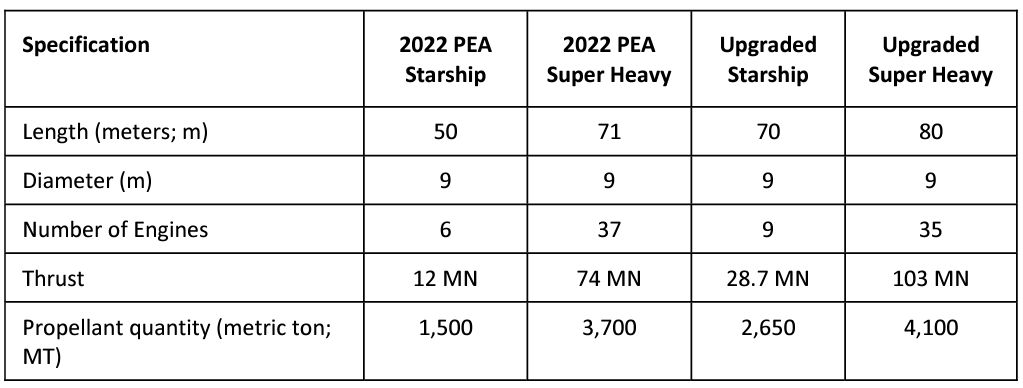
SpaceX also is developing more powerful variants of its rocket, and the launch of these vehicles would also be permitted. Under the environmental assessment completed in 2022, SpaceX’s plans called for a 50-meter-tall Starship and a 71-meter-tall Super Heavy booster stage. Its upgraded Starship would be 70 meters tall, atop an 80-meter boost stage, for a total stack height of 150 meters.
The company is contemplating a far greater thrust for each of the vehicles, more than doubling Starship’s thrust to 6.5 million pounds and substantially increasing Super Heavy’s thrust to 2.3 million pounds. A bigger, more powerful launch system will require more than 1,500 tons of liquid oxygen and methane propellant.
Enlarge/ Upgrade plans for Starship and Super Heavy.
FAA
One change that may have helped sell this increased flight rate is that SpaceX is not seeking any additional increases in road closures of State Highway 4, which leads from Brownsville to Boca Chica Beach. This road passes right by the launch site and is closed during launches and static fire tests. SpaceX has moved much of its pre-launch testing to a new location nearby that does not require road closures.
“SpaceX has dramatically reduced the duration of operations and the number of access restrictions through engineering analysis and improvements,” the FAA draft document states. “There has been an 85% reduction in the number of access restrictions from Flight 1 to Flight 3. Additionally, a majority of the testing that required access restrictions has been moved to SpaceX’s Massey’s Test Site, approximately 4 miles away.”
After the public comment period, the FAA will prepare a final environmental assessment and render a decision on the request.
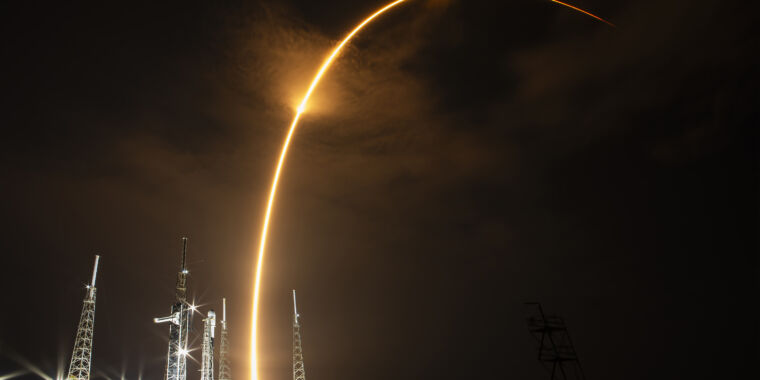
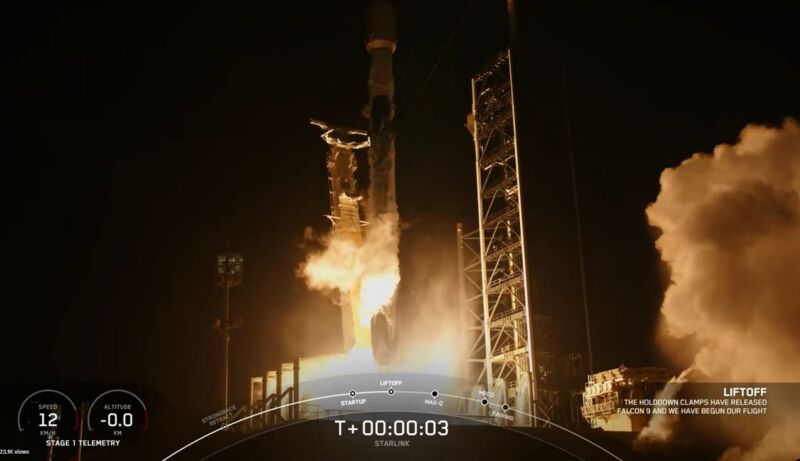
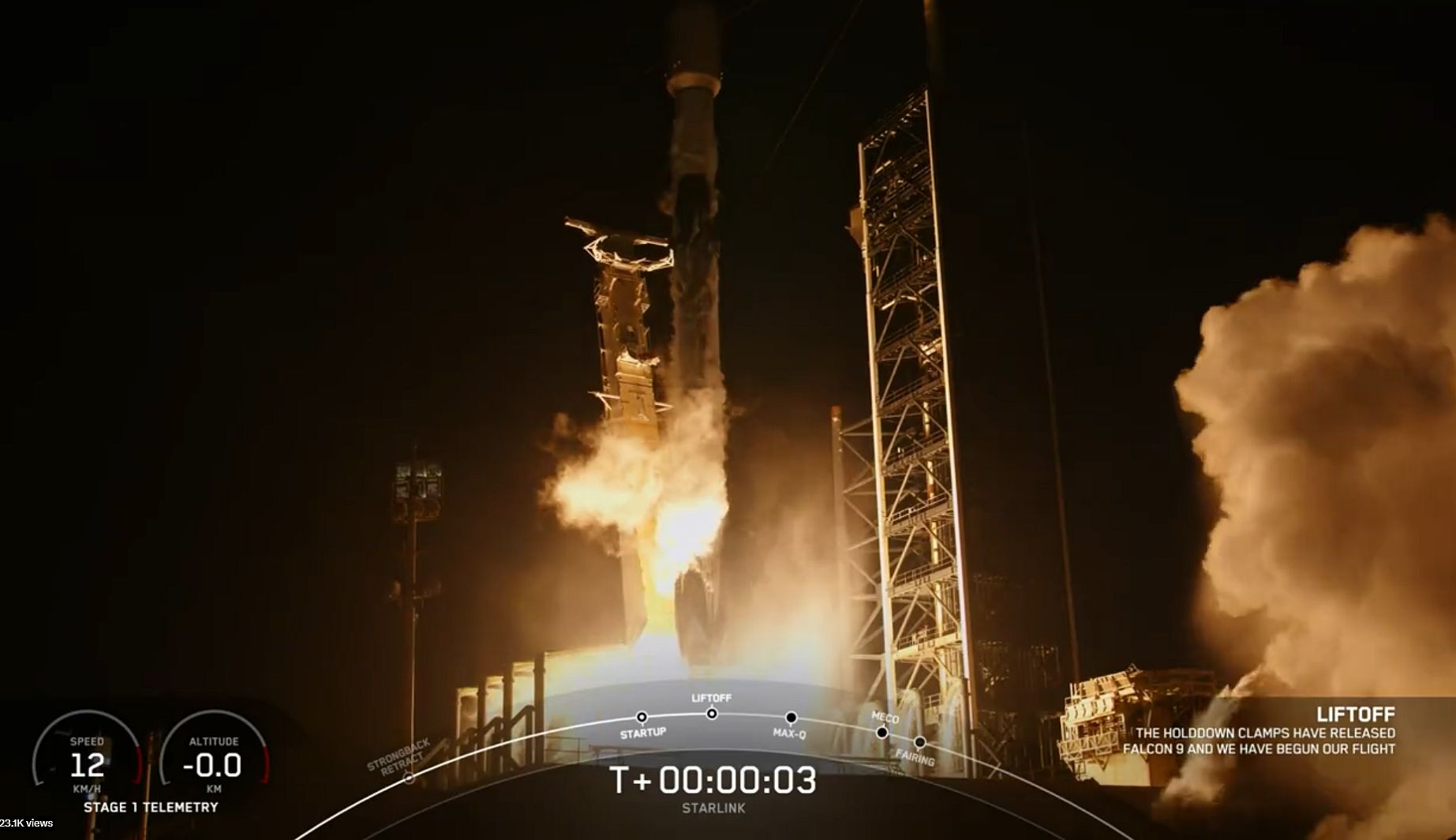
Enlarge/ The Starlink 10-9 mission lifts off early Saturday morning from Florida.
SpaceX webcast
Early on Saturday morning, at 1: 45 am local time, a Falcon 9 rocket soared into orbit from its launch site at Kennedy Space Center in Florida.
By some measures this was an extremely routine mission—it was, after all, SpaceX’s 73rd launch of this calendar year. And like many other Falcon 9 launches this year, the “Starlink 10-9” mission carried 23 of the broadband internet satellites into orbit. However, after a rare failure earlier this month, this particular Falcon 9 rocket was making a return-to-flight for the company, and attempting to get the world’s most active booster back into service.
And by all measures, it performed. The first stage booster, B-1069, made its 17th flight into orbit before landing on the Just Read the Instructions drone ship in the Atlantic Ocean. Then, a little more than an hour after liftoff, the rocket’s second stage released its payload into a good orbit, from which the Starlink spacecraft will use their on-board thrusters to reach operational altitudes in the coming weeks.
A crack in the sense line
The Falcon 9 rocket only failed a little more than 15 days ago, during a Starlink launch from Vandenberg Space Force Base, California, at 7: 35 pm PDT (02: 35 UTC) on July 11. During that mission, just a few minutes after stage separation, an unusual buildup of ice was observed on the Merlin vacuum engine that powers the second stage of the vehicle.
According to the company, the Merlin vacuum engine successfully completed its first burn after the second stage separated. However, during this time a liquid oxygen leak developed near the engine—which led to the buildup of ice observed during the webcast.
Engineers and technicians were quickly able to pinpoint the cause of the leak, a crack in a “sense line” for a pressure sensor attached to the vehicle’s liquid oxygen system. “This line cracked due to fatigue caused by high loading from engine vibration and looseness in the clamp that normally constrains the line,” the company said in an update published prior to Saturday morning’s launch.
This leak excessively cooled the engine, and caused a lower amount of igniter fluid to be available prior to re-lighting the Merlin for its second burn to circularize the rocket’s orbit before releasing the Starlink satellites. This caused a hard start of the Merlin engine. Ultimately the satellites were released into a lower orbit, where they burnt up in Earth’s atmosphere within days.
The sense line that failed is redundant, SpaceX said. It is not used by the flight safety system, and can be covered by alternate sensors already present on the engine. In the near term, the sense line will be removed from the second stage engine for Falcon 9 launches.
During a news briefing Thursday, SpaceX director Sarah Walker said this sense line was installed based on a customer requirement for another mission. The only difference between this component and other commonly flown sense lines is that it has two connections rather than one, she said. This may have made it a bit more susceptible to vibration, leading to a small crack.
Getting back fast
SpaceX identified the cause of the failure within hours of the anomaly, and worked the Federal Aviation Administration to come to a rapid resolution. On Thursday, the launch company received permission to return to flight.
“It was incredible to see how quickly the team was able to identify the cause of the mishap, and then the associated corrective actions to ensure success,” Walker said.
Before the failure on the night of July 11th, SpaceX had not experienced a mission failure in the previous 297 launches of the Falcon 9 rocket, dating back to the Amos-6 launch pad explosion in September 2016. The short interval between the failure earlier this month, and Saturday’s return to flight, appears to be unprecedented in spaceflight history.
The company now plans to launch two more Starlink missions on the Falcon 9 rocket this weekend, one from Cape Canaveral Space Force Station in Florida, as well as Vandenberg Space Force Base in California. It then has three additional missions before a critical astronaut flight for NASA, Crew-9, that could occur as soon as August 18.
For this reason, NASA was involved in the investigation of the second stage failure. Steve Stich, manager of NASA’s Commercial Crew Program, said SpaceX did an “extraordinary job” in identifying the root cause of the failure, and then rapidly looking at its Dragon spacecraft and first stage of the Falcon 9 rocket to ensure there were no other sensors that could cause similar problems.
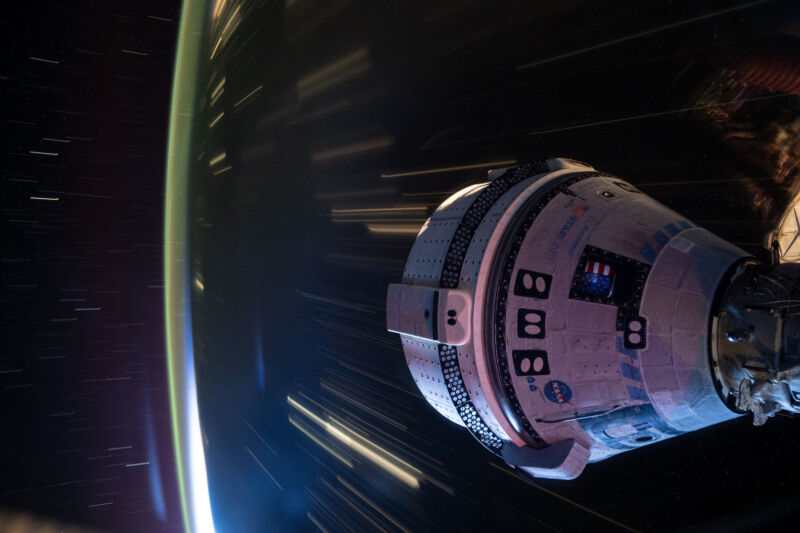
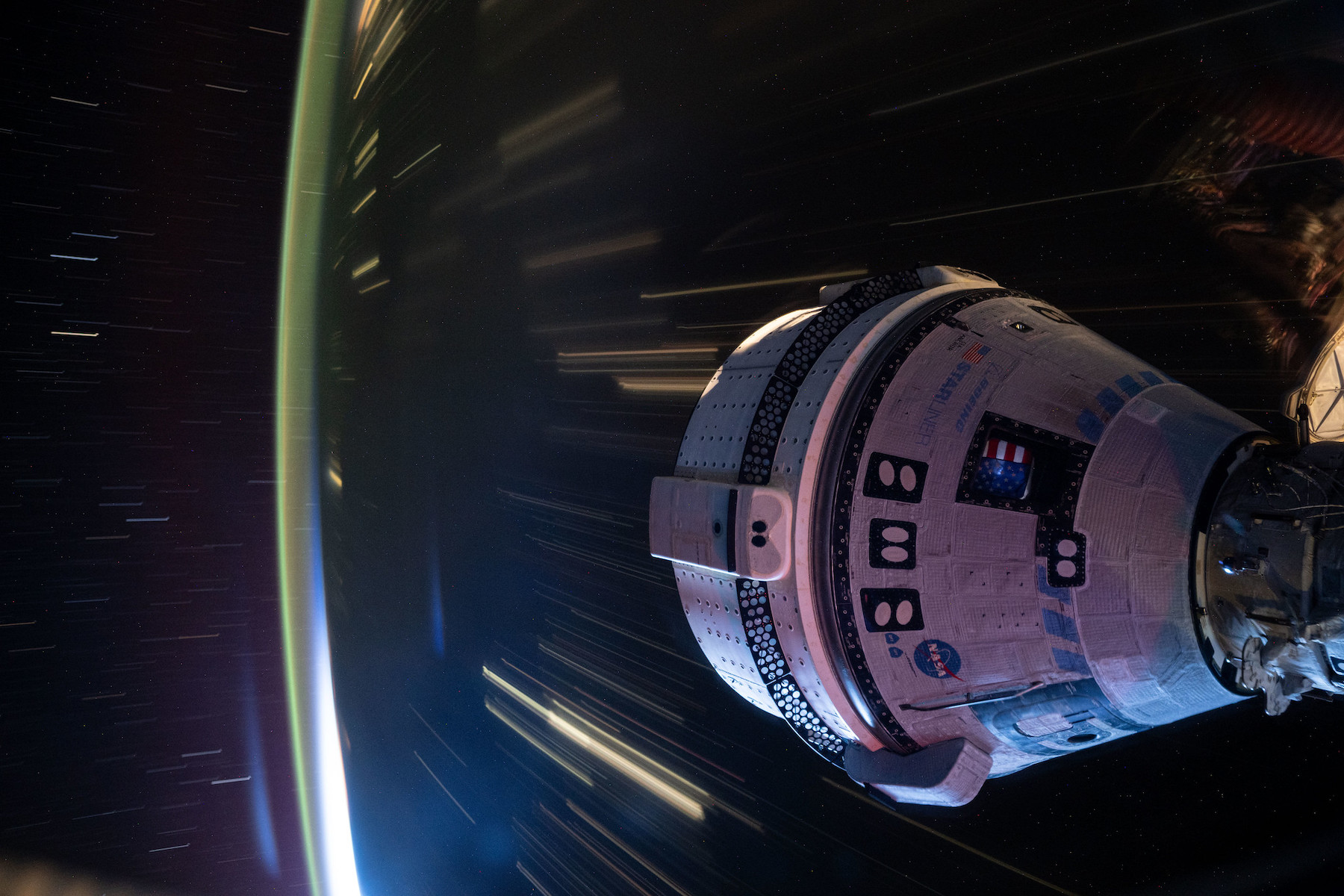
Enlarge/ Boeing’s Strainer spacecraft is seen docked at the International Space Station in this picture taken July 3.
The astronauts who rode Boeing’s Starliner spacecraft to the International Space Station last month still don’t know when they will return to Earth.
Astronauts Butch Wilmore and Suni Williams have been in space for 51 days, six weeks longer than originally planned, as engineers on the groundwork through problems with Starliner’s propulsion system.
The problems are twofold. The spacecraft’s reaction control thrusters overheated, and some of them shut off as Starliner approached the space station June 6. A separate, although perhaps related, problem involves helium leaks in the craft’s propulsion system.
On Thursday, NASA and Boeing managers said they still plan to bring Wilmore and Williams home on the Starliner spacecraft. In the last few weeks, ground teams completed testing of a thruster on a test stand at White Sands, New Mexico. This weekend, Boeing and NASA plan to fire the spacecraft’s thrusters in orbit to check their performance while docked at the space station.
“I think we’re starting to close in on those final pieces of flight rationale to make sure that we can come home safely, and that’s our primary focus right now,” Stich said.
The problems have led to speculation that NASA might decide to return Wilmore and Williams to Earth in a SpaceX Crew Dragon spacecraft. There’s one Crew Dragon currently docked at the station, and another one is slated to launch with a fresh crew next month. Steve Stich, manager of NASA’s commercial crew program, said the agency has looked at backup plans to bring the Starliner crew home on a SpaceX capsule, but the main focus is still to have the astronauts fly home aboard Starliner.
“Our prime option is to complete the mission,” Stich said. “There are a lot of good reasons to complete this mission and bring Butch and Suni home on Starliner. Starliner was designed, as a spacecraft, to have the crew in the cockpit.”
Starliner launched from Cape Canaveral Space Force Station in Florida on June 5. Wilmore and Williams are the first astronauts to fly into space on Boeing’s commercial crew capsule, and this test flight is intended to pave the way for future operational flights to rotate crews of four to and from the International Space Station.
Once NASA fully certifies Starliner for operational missions, the agency will have two human-rated spaceships for flights to the station. SpaceX’s Crew Dragon has been flying astronauts since 2020.
Tests, tests, and more tests
NASA has extended the duration of the Starliner test flight to conduct tests and analyze data in an effort to gain confidence in the spacecraft’s ability to safely bring its crew home and to better understand the root causes of the overheating thrusters and helium leaks. These problems are inside Starliner’s service module, which is jettisoned to burn up in the atmosphere during reentry, while the reusable crew module, with the astronauts inside, parachutes to an airbag-cushioned landing.
The most important of these tests was a series of test-firings of a Starliner thruster on the ground. This thruster was taken from a set of hardware slated to fly on a future Starlink mission, and engineers put it through a stress test, firing it numerous times to replicate the sequence of pulses it would see in flight. The testing simulated two sequences of flying up to the space station, and five sequences the thruster would execute during undocking and a deorbit burn for return to Earth.
“This thruster has seen quite a bit of pulses, maybe even more than what we would anticipate we would see during a flight, and more aggressive in terms of two uphills and five downhills,” Stich said. “What we did see in the thruster is the same kind of thrust degradation that we’re seeing on orbit. In a number of the thrusters (on Starliner), we’re seeing reduced thrust, which is important.”
Starliner’s flight computer shut off five of the spacecraft’s 28 reaction control system thrusters, produced by Aerojet Rocketdyne, during the rendezvous with the space station last month. Four of the five thrusters were recovered after overheating and losing thrust, but officials have declared one of the thrusters unusable.
The thruster tested on the ground showed similar behavior. Inspections of the thruster at White Sands showed bulging in a Teflon seal in an oxidizer valve, which could restrict the flow of nitrogen tetroxide propellant. The thrusters, each generating about 85 pounds of thrust, consume the nitrogen tetroxide, or NTO, oxidizer and mix it with hydrazine fuel for combustion.
A poppet valve, similar to an inflation valve on a tire, is designed to open and close to allow nitrogen tetroxide to flow into the thruster.
“That poppet has a Teflon seal at the end of it,” Nappi said. “Through the heating and natural vacuum that occurs with the thruster firing, that poppet seal was deformed and actually bulged out a little bit.”
Stich said engineers are evaluating the integrity of the Teflon seal to determine if it could remain intact through the undocking and deorbit burn of the Starliner spacecraft. The thrusters aren’t needed while Starliner is attached to the space station.
“Could that particular seal survive the rest of the flight? That’s the important part,” Stich said.
Enlarge/ With Dragon and Falcon, SpaceX has become an essential contractor for NASA.
SpaceX
There is an emerging truth about NASA’s push toward commercial contracts that is increasingly difficult to escape: Companies not named SpaceX are struggling with NASA’s approach of awarding firm, fixed-price contracts for space services.
This belief is underscored by the recent award of an $843 million contract to SpaceX for a heavily modified Dragon spacecraft that will be used to deorbit the International Space Station by 2030.
The recently released source selection statement for the “US Deorbit Vehicle” contract, a process led by NASA head of space operations Ken Bowersox, reveals that the competition was a total stomp. SpaceX faced just a single serious competitor in this process, Northrop Grumman. And in all three categories—price, mission suitability, and past performance—SpaceX significantly outclassed Northrop.
Although it’s wonderful that NASA has an excellent contractor in SpaceX, it’s not healthy in the long term that there are so few credible competitors. Moreover, a careful reading of the source selection statement reveals that NASA had to really work to get a competition at all.
“I was really happy that we got proposals from the companies that we did,” Bowersox said during a media teleconference last week. “The companies that sent us proposals are both great companies, and it was awesome to see that interest. I would have expected a few more [proposals], honestly, but I was very happy to get the ones that we got.”
Commercial initiatives struggling
NASA’s push into “commercial” space began nearly two decades ago with a program to deliver cargo to the International Space Station. The space agency initially selected SpaceX and Rocketplane Kistler to develop rockets and spacecraft to accomplish this, but after Kistler missed milestones, the company was subsequently replaced by Orbital Sciences Corporation. The cargo delivery program was largely successful, resulting in the Cargo Dragon (SpaceX) and Cygnus (Orbital Sciences) spacecraft. It continues to this day.
A commercial approach generally means that NASA pays a “fixed” price for a service rather than paying a contractor’s costs plus a fee. It also means that NASA hopes to become one of many customers. The idea is that, as the first mover, NASA is helping to stimulate a market by which its fixed-priced contractors can also sell their services to other entities—both private companies and other space agencies.
NASA has since extended this commercial approach to crew, with SpaceX and Boeing winning large contracts in 2014. However, only SpaceX has flown operational astronaut missions, while Boeing remains in the development and test phase, with its ongoing Crew Flight Test. Whereas SpaceX has sold half a dozen private crewed missions on Dragon, Boeing has yet to announce any.
Such a commercial approach has also been tried with lunar cargo delivery through the “Commercial Lunar Payload Services” program, as well as larger lunar landers (Human Landing System), next-generation spacesuits, and commercial space stations. Each of these programs has a mixed record at best. For example, NASA’s inspector general was highly critical of the lunar cargo program in a recent report, and one of the two spacesuit contractors, Collins Aerospace, recently dropped out because it could not execute on its fixed-price contract.
Some of NASA’s most important traditional space contractors, including Lockheed Martin, Boeing, and Northrop Grumman, have all said they are reconsidering whether to participate in fixed-price contract competitions in the future. For example, Northrop CEO Kathy Warden said last August, “We are being even more disciplined moving forward in ensuring that we work with the government to have the appropriate use of fixed-price contracts.”
So the large traditional space contractors don’t like fixed-price contracts, and many new space companies are struggling to survive in this environment.
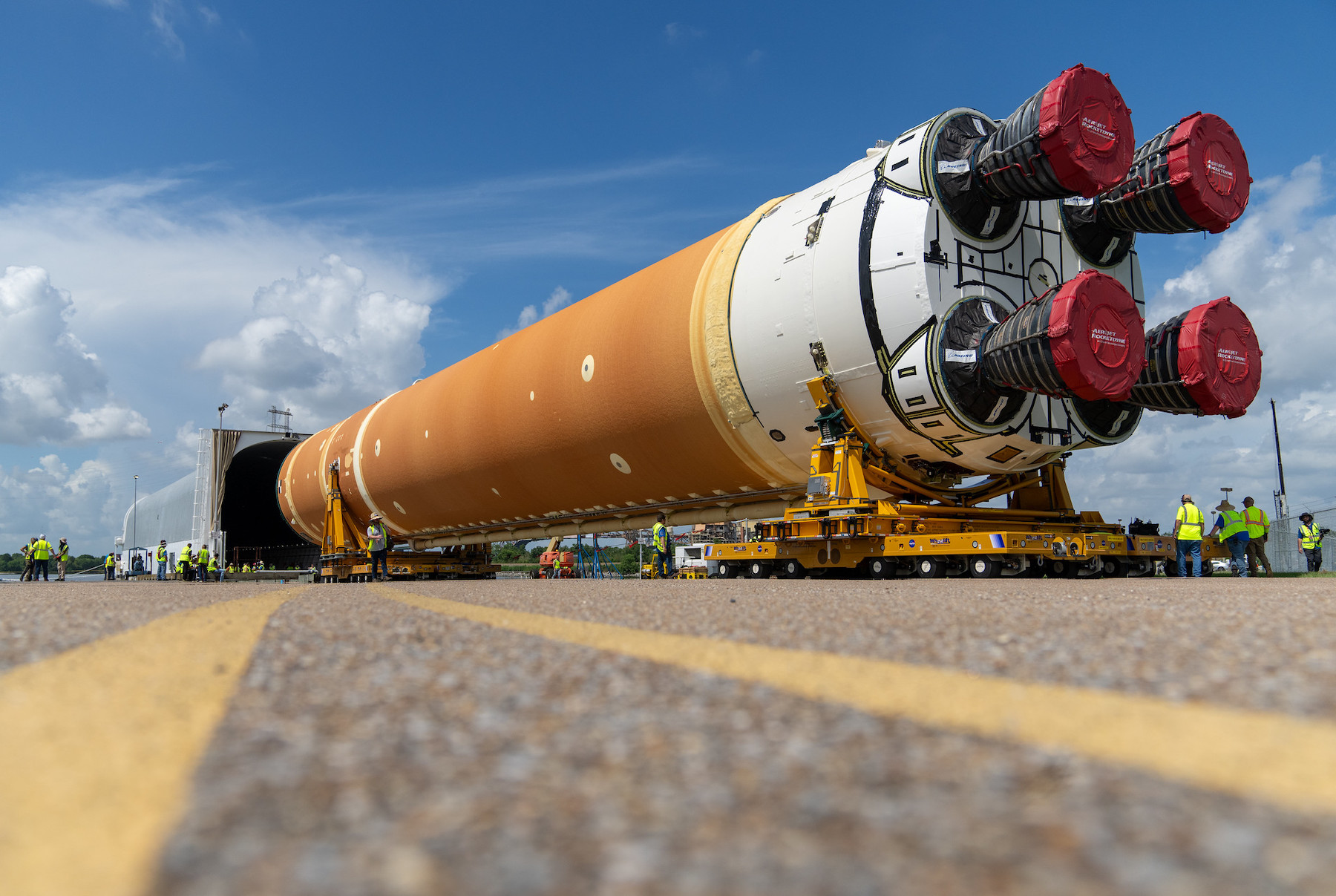
Enlarge/ The core stage for NASA’s second Space Launch System rocket rolls aboard a barge that will take it from New Orleans to Kennedy Space Center in Florida.
Welcome to Edition 7.03 of the Rocket Report! One week ago, SpaceX suffered a rare failure of its workhorse Falcon 9 rocket. In fact, it was the first time the latest version of the Falcon 9, known as the Block 5, has ever failed on its prime mission after nearly 300 launches. The world’s launch pads have been silent since the grounding of the Falcon 9 fleet after last week’s failure. This isn’t surprising, but it’s noteworthy. After all, the Falcon 9 has flown more this year than all of the world’s other rockets combined and is fundamental to much of what the world does in space.
As always, we welcome reader submissions. If you don’t want to miss an issue, please subscribe using the box below (the form will not appear on AMP-enabled versions of the site). Each report will include information on small-, medium-, and heavy-lift rockets as well as a quick look ahead at the next three launches on the calendar.
Astra finally goes private, again. A long-simmering deal for Astra’s founders to take the company private has been finalized, the company announced Thursday, capping the rocket launch company’s descent from blank-check darling to delisting in three years, Bloomberg reports. The launch company’s valuation peaked at $3.9 billion in 2021, the year it went public, and was worth about $12.2 million at the end of March, according to data compiled by Bloomberg. Astra’s chief executive officer, Chris Kemp, and chief technology officer, Adam London, founded the company in 2016 with the goal of essentially commoditizing launch services for small satellites. But Astra’s rockets failed to deliver and fell short of orbit five times in seven tries.
Spiraling … Astra’s stock price tanked after the spate of launch failures, drying up its funding spigot as Kemp tried to pivot toward a slightly larger, more reliable rocket. Astra acquired a company named Apollo Fusion in 2021, entering a new business segment to produce electric thrusters for small satellites. But Astra’s launch business faltered, and last November Kemp and London submitted an offer to retake ownership of the company. Astra announced the closure of the take-private deal Thursday, with Kemp and London acquiring the company’s outstanding shares for 50 cents per share in cash, below the stock’s final listing price of 53 cents. “We will now focus all of our attention on a successful launch of Rocket 4, delivering satellite engines to our customers, and building a company of consequence,” Kemp said. (submitted by EllPeaTea and Ken the Bin)
Firefly chief leaves company. Launch startup Firefly Aerospace parted ways with CEO Bill Weber, Payload reports. The announcement of Weber’s departure late Wednesday came two days after Payload reported Firefly was investigating claims of an alleged inappropriate relationship between him and a female employee. “Firefly Aerospace’s Board of Directors announced that Bill Weber is no longer serving as CEO of the company, effective immediately,” the company said in a statement Wednesday night. Peter Schumacher takes over as interim CEO while Firefly searches for a new permanent chief executive. Schumacher was an interim CEO at Firefly before Weber’s hiring in 2022.
Two days and gone … Payload published the first report of Weber’s alleged improper relationship with a female employee Monday. Two days later, Weber was gone. Payload reported an executive brought his concerns about the alleged relationship to Firefly’s board and resigned because he lost confidence in leadership at the company. Citing four current and former employees, Payload reported Firefly’s culture became “chaotic” since Weber took the helm in 2022 after its acquisition by AE Industrial Partners. The Texas-based company achieved some success during Weber’s tenure, with four orbital launches of its Alpha rocket, although two of the flights ended up in lower-than-planned orbits. (submitted by Ken the Bin)
The easiest way to keep up with Eric Berger’s space reporting is to sign up for his newsletter, we’ll collect his stories in your inbox.
Themis hop tests delayed to next year. The initial hop tests of the European Themis reusable booster, developed by ArianeGroup and funded by ESA, won’t start until next year, European Spaceflight reports. The Swedish Space Corporation, which operates the space center in Sweden where Themis will initially fly, confirmed the schedule change. Once ArianeGroup moves on to higher altitude flights, the testing will be moved to the Guiana Space Center. ESA awarded the first development contract for the Themis booster in 2019, and the first hop tests were then scheduled for 2022. Themis’ hops will be similar to SpaceX’s Grasshopper rocket, which performed a series of up-and-down atmospheric test flights before SpaceX started recovering and reusing Falcon 9 boosters.
Fate of Themis … The Themis booster is powered by the methane-fueled Prometheus engine, also funded by ESA. A large European reusable rocket is unlikely to fly until the 2030s, but a subsidiary of ArianeGroup named MaiaSpace is developing a smaller partially reusable two-stage rocket slated to debut as soon as next year. The Maia rocket will use a modified Themis booster as its first stage. “As a result, for MaiaSpace, the continued and rapid development of the Themis program is essential to ensure it can hit its projected target of an inaugural flight of Maia in 2025,” European Spaceflight reports. (submitted by Ken the Bin)
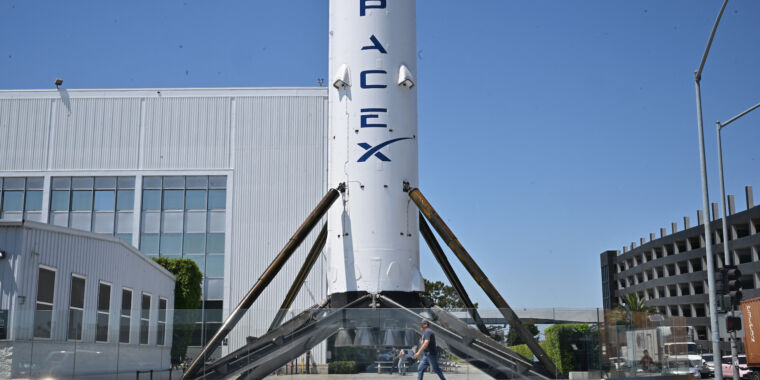
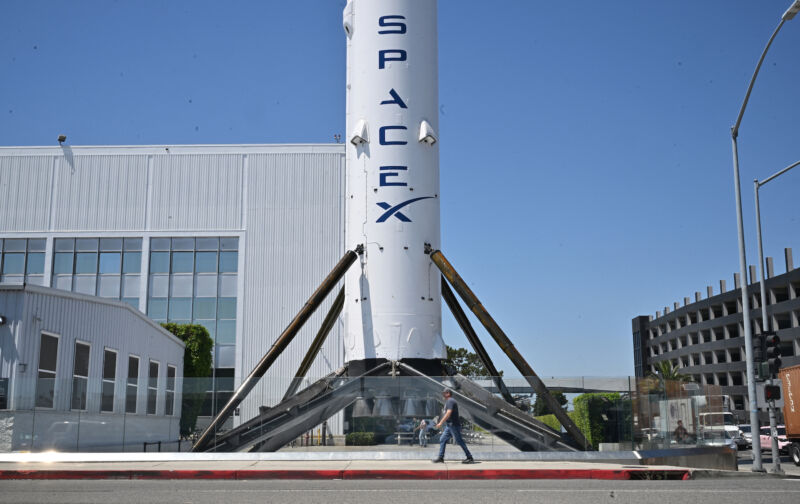
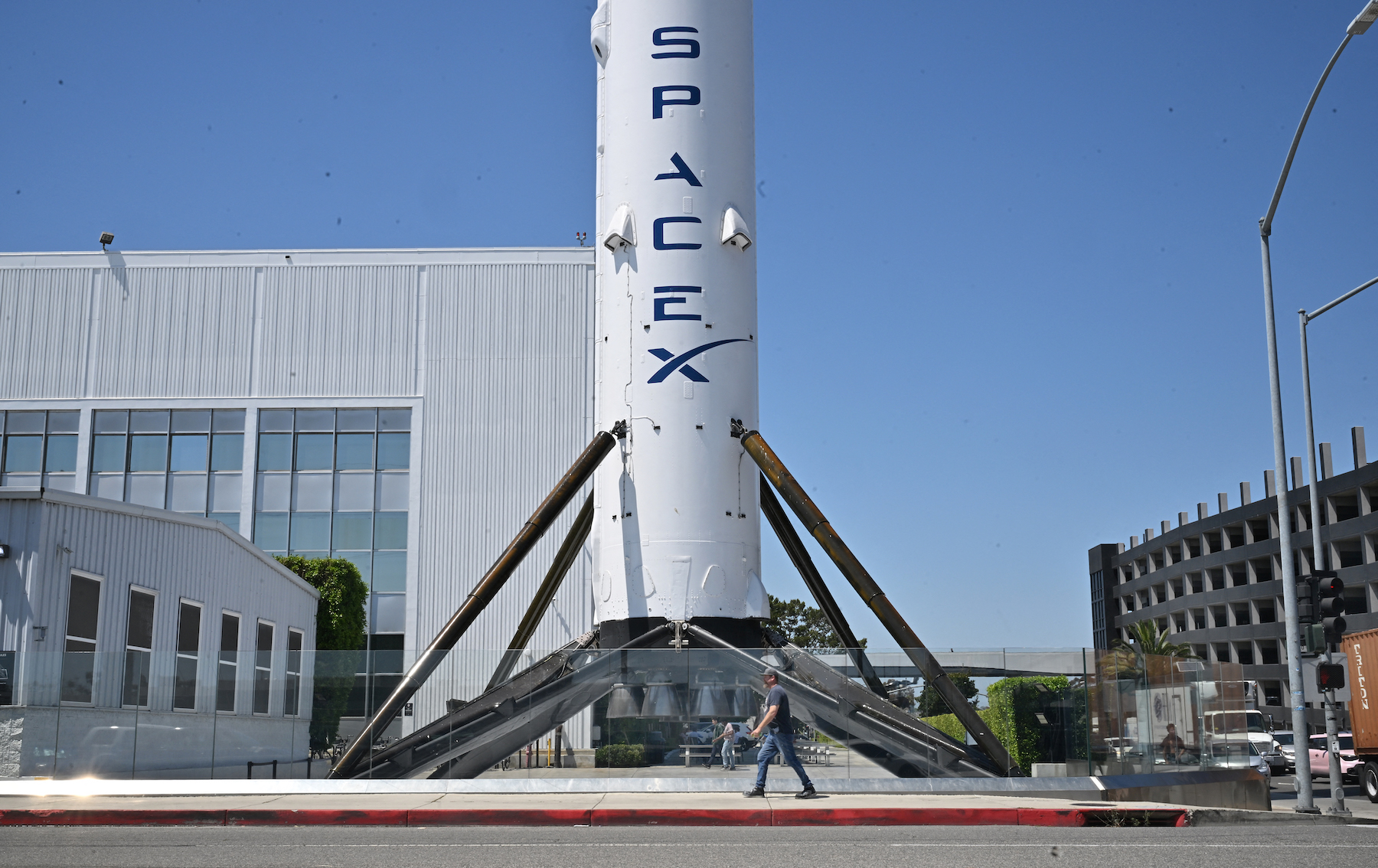
Enlarge/ A pedestrian walks past a flown Falcon 9 booster at SpaceX headquarters in Hawthorne, California, on Tuesday, the same day Elon Musk said he will relocate the headquarters to Texas.
Elon Musk said Tuesday that he will move the headquarters of SpaceX and his social media company X from California to Texas in response to a new gender identity law signed by California Governor Gavin Newsom.
Musk’s announcement, made via a post on X, follows his decision in 2021 to move the headquarters of the electric car company Tesla from Palo Alto, California, to Austin, Texas, in the wake of coronavirus lockdowns in the Bay Area the year before. Now, two of Musk’s other major holdings are making symbolic moves out of California: SpaceX to the company’s Starbase launch facility near Brownsville, Texas, and X to Austin.
The new gender identity law, signed by Governor Newsom, a Democrat, on Monday, bars school districts in California from requiring teachers to disclose a change in a student’s gender identification or sexual orientation to their parents without the child’s permission. Musk wrote on X that the law was the “final straw” prompting the relocation to Texas, where the billionaire executive and his companies could take advantage of lower taxes and light-touch regulations.
“Because of this law and the many others that preceded it, attacking both families and companies, SpaceX will now move its HQ from Hawthorne, California, to Starbase, Texas,” Musk wrote Tuesday on X.
The first-in-the-nation law in California is a flashpoint in the struggle between conservative school boards concerned about parental rights and proponents for the privacy rights of LGBTQ people.
“I did make it clear to Governor Newsom about a year ago that laws of this nature would force families and companies to leave California to protect their children,” wrote Musk, who on Saturday endorsed former President Donald Trump, the Republican nominee in this year’s presidential election.
In a statement, Newsom’s office said the law “does not allow a student’s name or gender identity to be changed on an official school record without parental consent” and “does not take away or undermine parents’ rights.”
What does this mean for SpaceX?
Musk’s comments on X didn’t mention details about the implications of his companies’ moves to Texas. However, while Tesla’s corporate headquarters relocated to Texas in 2021, the company still produces cars in California and announced a new engineering hub in Palo Alto last year. The situation with SpaceX is likely to be similar.
Since Musk bought Twitter in 2022, he renamed it X, rewrote the network’s policies on content moderation, and laid off most of the company’s staff, reducing its workforce to around 1,500 employees. With vast manufacturing capacities, SpaceX currently has more than 13,000 employees, so a relocation for Musk’s space company would affect more people and potentially be more disruptive than one at X.
SpaceX’s current headquarters in Hawthorne, California, serves as a factory, engineering design center, and mission control for the company’s rockets and spacecraft. Relocating these facilities wouldn’t be easy, but SpaceX may not need to.
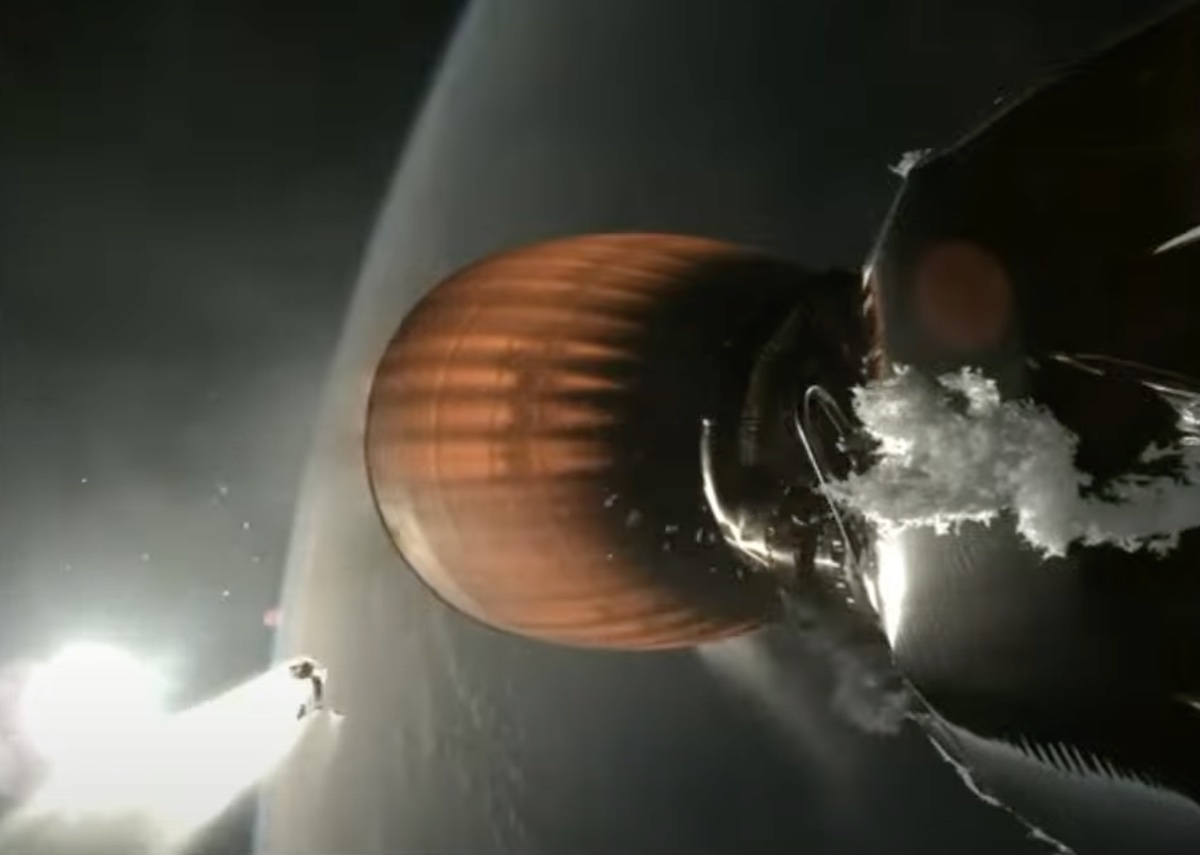
Enlarge/ Numerous pieces of ice fell off the second stage of the Falcon 9 rocket during its climb into orbit from Vandenberg Space Force Base, California.
SpaceX
A SpaceX Falcon 9 rocket suffered an upper stage engine failure and deployed a batch of Starlink Internet satellites into a perilously low orbit after launch from California Thursday night, the first blemish on the workhorse launcher’s record in more than 300 missions since 2016.
Elon Musk, SpaceX’s founder and CEO, posted on X that the rocket’s upper stage engine failed when it attempted to reignite nearly an hour after the Falcon 9 lifted off from Vandenberg Space Force Base, California, at 7: 35 pm PDT (02: 35 UTC).
Frosty evidence
After departing Vandenberg to begin SpaceX’s Starlink 9-3 mission, the rocket’s reusable first stage booster propelled the Starlink satellites into the upper atmosphere, then returned to Earth for an on-target landing on a recovery ship parked in the Pacific Ocean. A single Merlin Vacuum engine on the rocket’s second stage fired for about six minutes to reach a preliminary orbit.
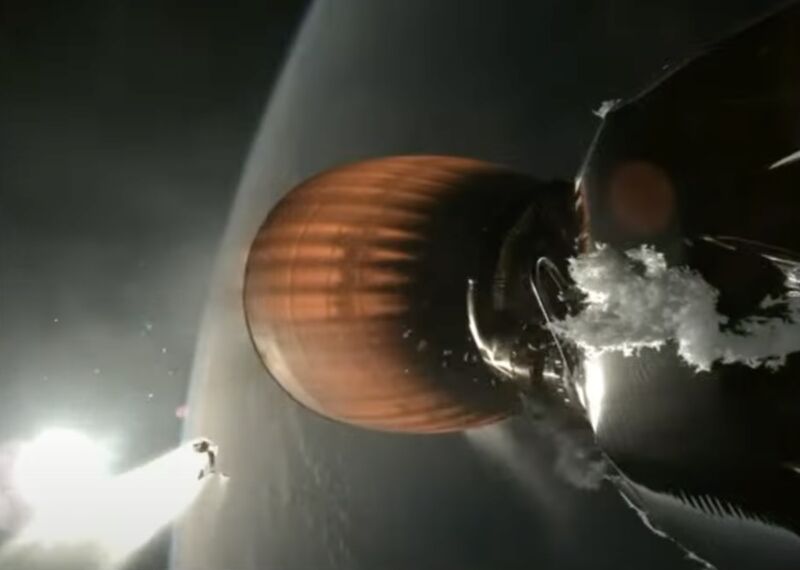
A few minutes after liftoff of SpaceX’s Starlink 9-3 mission, veteran observers of SpaceX launches noticed an unusual build-up of ice around the top of the Merlin Vacuum engine, which consumes a propellant mixture of super-chilled kerosene and cryogenic liquid oxygen. The liquid oxygen is stored at a temperature of several hundred degrees below zero.
Numerous chunks of ice fell away from the rocket as the upper stage engine powered into orbit, but the Merlin Vacuum, or M-Vac, engine appeared to complete its first burn as planned. A leak in the oxidizer system or a problem with insulation could lead to ice accumulation, although the exact cause, and its possible link to the engine malfunction later in flight, will be the focus of SpaceX’s investigation into the failure.
A second burn with the upper stage engine was supposed to raise the perigee, or low point, of the rocket’s orbit well above the atmosphere before releasing 20 Starlink satellites to continue climbing to their operational altitude with their own propulsion.
“Upper stage restart to raise perigee resulted in an engine RUD for reasons currently unknown,” Musk wrote in an update two hours after the launch. RUD (rapid unscheduled disassembly) is a term of art in rocketry that usually signifies a catastrophic or explosive failure.
“Team is reviewing data tonight to understand root cause,” Musk continued. “Starlink satellites were deployed, but the perigee may be too low for them to raise orbit. Will know more in a few hours.”
Telemetry from the Falcon 9 rocket indicated it released the Starlink satellites into an orbit with a perigee just 86 miles (138 kilometers) above Earth, roughly 100 miles (150 kilometers) lower than expected, according to Jonathan McDowell, an astrophysicist and trusted tracker of spaceflight activity. Detailed orbital data from the US Space Force was not immediately available.
Ripple effects
While ground controllers scramble to salvage the 20 Starlink satellites, SpaceX engineers began probing what went wrong with the second stage’s M-Vac engine. For SpaceX and its customers, the investigation into the rocket malfunction is likely the more pressing matter.
SpaceX could absorb the loss of 20 Starlink satellites relatively easily. The company’s satellite assembly line can produce 20 Starlink spacecraft in a few days. But the Falcon 9 rocket’s dependability and high flight rate have made it a workhorse for NASA, the US military, and the wider space industry. An investigation will probably delay several upcoming SpaceX flights.
The first in-flight failure for SpaceX’s Falcon rocket family since June 2015, a streak of 344 consecutive successful launches until tonight.
Depending on the cause of the problem and what SpaceX must do to fix it, it’s possible the company can recover from the upper stage failure and resume launching Starlink satellites soon. Most of SpaceX’s launches aren’t for external customers, but deploy satellites for the company’s own Starlink network. This gives SpaceX a unique flexibility to quickly return to flight with the Falcon 9 without needing to satisfy customer concerns.
The Federal Aviation Administration, which licenses all commercial space launches in the United States, will require SpaceX to conduct a mishap investigation before resuming Falcon 9 flights.
“The FAA will be involved in every step of the investigation process and must approve SpaceX’s final report, including any corrective actions,” an FAA spokesperson said. “A return to flight is based on the FAA determining that any system, process, or procedure related to the mishap does not affect public safety.”
Two crew missions are supposed to launch on SpaceX’s human-rated Falcon 9 rocket in the next six weeks, but those launch dates are now in doubt.
The all-private Polaris Dawn mission, commanded by billionaire Jared Isaacman, is scheduled to launch on a Falcon 9 rocket on July 31 from NASA’s Kennedy Space Center in Florida. Isaacman and three commercial astronaut crewmates will spend five days in orbit on a mission that will include the first commercial spacewalk outside their Crew Dragon capsule, using new pressure suits designed and built by SpaceX.
NASA’s next crew mission with SpaceX is slated to launch from Florida aboard a Falcon 9 rocket around August 19. This team of four astronauts will replace a crew of four who have been on the International Space Station since March.
Some customers, especially NASA’s commercial crew program, will likely want to see the results of an in-depth inquiry and require SpaceX to string together a series of successful Falcon 9 flights with Starlink satellites before clearing their own missions for launch. SpaceX has already launched 70 flights with its Falcon family of rockets since January 1, an average cadence of one launch every 2.7 days, more than the combined number of orbital launches by all other nations this year.
With this rapid-fire launch cadence, SpaceX could quickly demonstrate the fitness of any fixes engineers recommend to resolve the problem that caused Thursday night’s failure. But investigations into rocket failures often take weeks or months. It was too soon, early on Friday, to know the true impact of the upper stage malfunction on SpaceX’s launch schedule.