rocket report

rocket-report:-spacex’s-500th-falcon-launch;-why-did-uk’s-reaction-engines-fail?

Rocket Report: SpaceX’s 500th Falcon launch; why did UK’s Reaction Engines fail?


SpaceX’s rockets make a lot more noise, but the machinations of Texas’ newest city are underway.

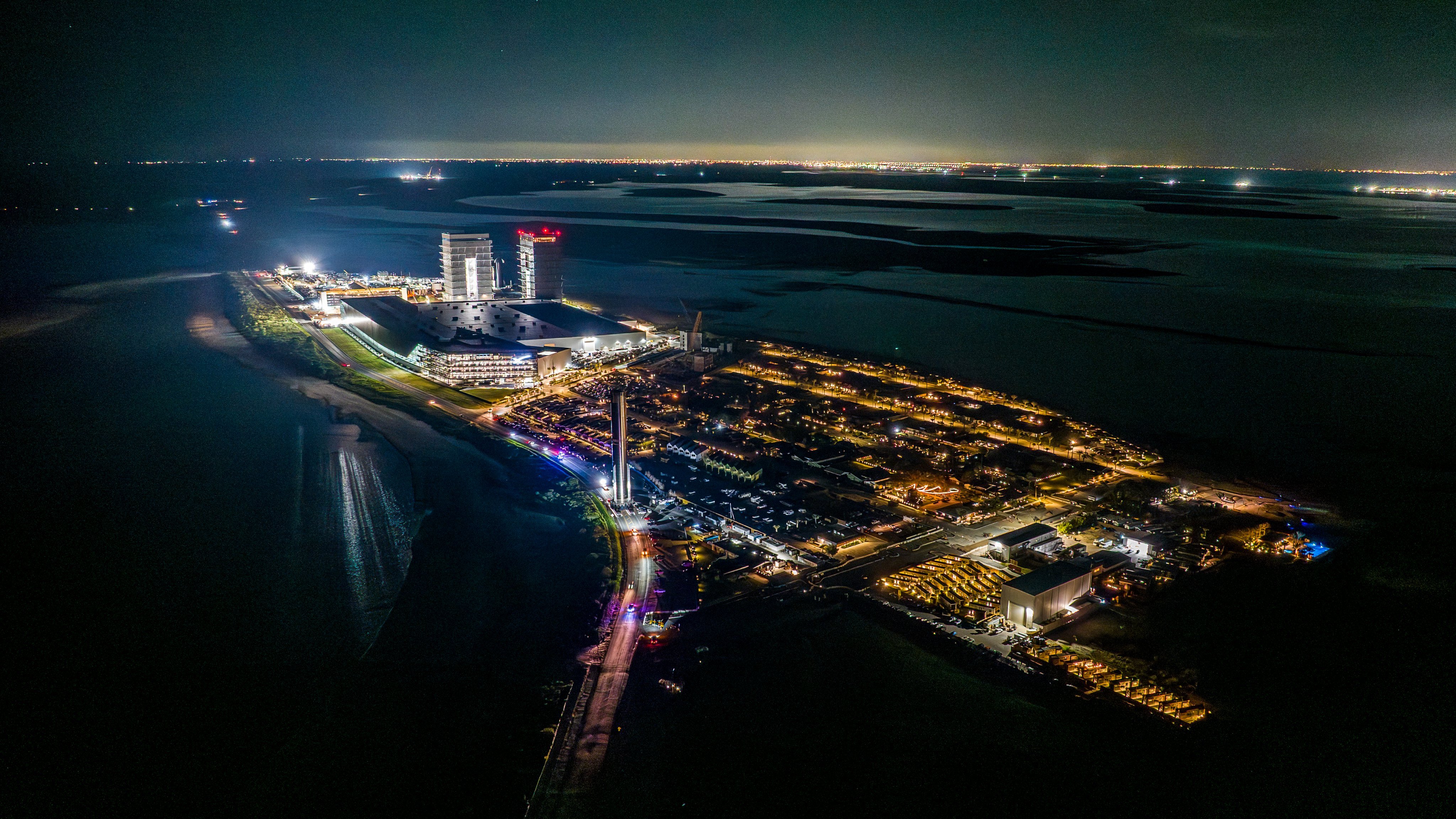
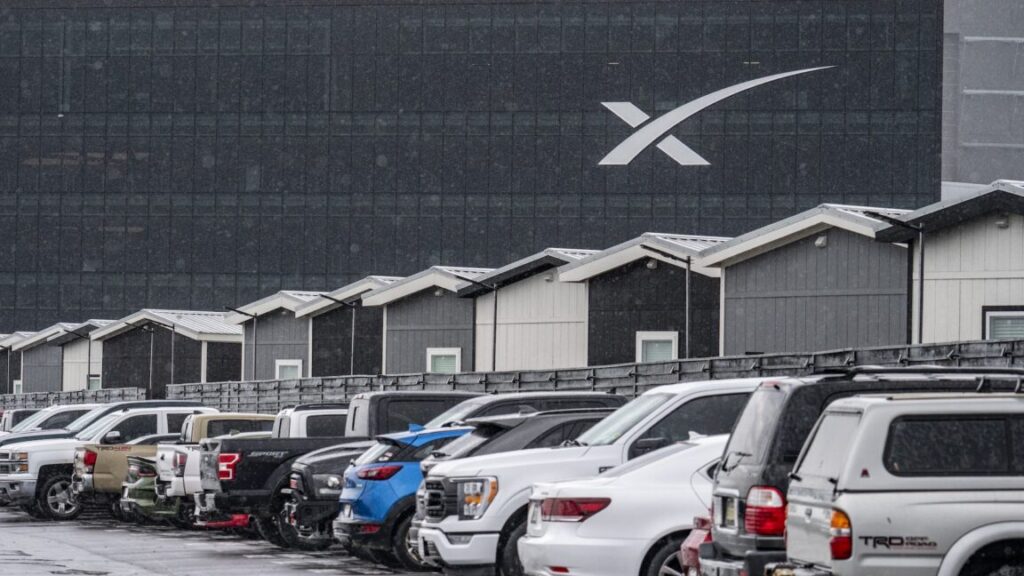
Prefabricated homes painted black, white, and gray are set against the backdrop of SpaceX’s Starship rocket factory at Starbase, Texas. Credit: Sergio Flores/AFP via Getty Images

Welcome to Edition 7.47 of the Rocket Report! Let’s hope not, but the quarrel between President Donald Trump and Elon Musk may be remembered as “Black Thursday” for the US space program. A simmering disagreement over Trump’s signature “One Big Beautiful Bill” coursing its way through Congress erupted into public view, with two of the most powerful Americans trading insults and threats on social media. Trump suggested the government should terminate “Elon’s governmental contracts and subsidies.” Musk responded with a post saying SpaceX will begin decommissioning the Dragon spacecraft used to transport crew and cargo to the International Space Station. This could go a number of ways, but it’s hard to think anything good will come of it.

As always, we welcome reader submissions. If you don’t want to miss an issue, please subscribe using the box below (the form will not appear on AMP-enabled versions of the site). Each report will include information on small-, medium-, and heavy-lift rockets, as well as a quick look ahead at the next three launches on the calendar.

Blue Origin flies aces suborbital space shot. Blue Origin, the space company founded and owned by Jeff Bezos, launched six people to the edge of space Saturday, May 31, from Bezos’ ranch in West Texas, CBS News reports. A hydrogen-fueled New Shepard booster propelled a crew capsule, equipped with the largest windows of any operational spaceship, to an altitude of nearly 65 miles (105 kilometers), just above the internationally recognized boundary between the discernible atmosphere and space, before beginning the descent to landing. The passengers included three Americans—Aymette Medina Jorge, Gretchen Green, and Paul Jeris—along with Canadian Jesse Williams, New Zealand’s Mark Rocket, and Panamanian Jaime Alemán, who served as his country’s ambassador to the United States.

If you missed it … You wouldn’t be alone. This was the 32nd flight of Blue Origin’s New Shepard rocket, and the company’s 12th human flight. From a technical perspective, these flights aren’t breaking any new ground in human spaceflight or rocketry. However, each flight provides an opportunity for wealthy or well-connected passengers to view Earth from a perspective only about 700 people have seen before. That’s really cool, but most of these launches are no longer newsworthy, and it takes a devoted fan of spaceflight to tune in to a New Shepard flight on a summertime Saturday morning. (submitted by EllPeaTea)

The easiest way to keep up with Eric Berger’s and Stephen Clark’s reporting on all things space is to sign up for our newsletter. We’ll collect their stories and deliver them straight to your inbox.

Sign Me Up!

Momentum for Amentum. The US Space Force awarded Jacobs Technology a contract worth up to $4 billion over 10 years to provide engineering and technical services at the nation’s primary space launch ranges, as the military seeks to modernize aging infrastructure and boost capacity amid a surge in commercial space activity, Space News reports. Jacobs Technology is now part of Amentum, a defense contractor based in Chantilly, Virginia. Amentum merged with Jacobs in September 2024. The so-called “Space Force Range Contract” covers maintenance, sustainment, systems engineering and integration services for the Eastern and Western ranges until 2035. The Eastern Range operates from Patrick Space Force Base in Florida, while the Western Range is based at Vandenberg Space Force Base in California.

Picking from the menu … The contract represents a significant shift in how space launch infrastructure is funded. Under the new arrangement, commercial launch service providers—which now account for the majority of launches at both ranges—can request services or upgrades and pay for them directly, rather than having the government bear the costs upfront. This arrangement would create a more market-driven approach to range operations and potentially accelerate modernization. “Historically, the government has fronted these costs,” Brig. Gen. Kristin Panzenhagen, Space Launch Delta 45 Commander and Eastern Range Director, said June 3 in a news release. “The ability of our commercial partners to directly fund their own task order will lessen the financial and administrative burden on the government and is in line with congressionally mandated financial improvement and audit readiness requirements.”

Impulse Space rakes in more cash. This week, an in-space propulsion company, Impulse Space, announced that it had raised a significant amount of money, $300 million, Ars reports. This follows a fundraising round just last year in which the Southern California-based company raised $150 million. This is one of the largest capital raises in space in a while, especially for a non-launch company. Founded by Tom Mueller, a former propulsion guru at SpaceX, Impulse Space has test-flown an orbital maneuvering vehicle called Mira on two flights over the last couple of years. The company is developing a larger vehicle, named Helios, that could meaningfully improve the ability of SpaceX’s Falcon 9 and Falcon Heavy to transport large payloads to the Moon, Mars, and other destinations in the Solar System.

Reacting to the market … The Mira vehicle was originally intended to provide “last-mile” services for spacecraft launched as part of rideshare missions. “The reality is the market for that is not very good,” said Eric Romo, the company’s CEO. Instead, Impulse Space found interest from the Space Force to use Mira as an agile platform for hosting electronic warfare payloads and other military instrumentation in orbit. “Mira wasn’t necessarily designed out of the gate for that, but what we found out after we flew it successfully was, the Space Force said, ‘Hey, we know what that thing’s for,” Romo said. Helios is a larger beast, with an engine capable of producing 15,000 pounds of thrust and the ability to move a multi-ton payload from low-Earth orbit to geostationary space in less than a day. (submitted by EllPeaTea)

Falcon rockets surpass 500 flights. SpaceX was back at the launch pad for a midweek flight from Vandenberg Space Force Base in California. This particular flight, designated Starlink 11-22, marked the company’s 500th orbital launch attempt with a Falcon rocket, including Falcon 1, Falcon 9, and Falcon Heavy, Spaceflight Now reports. This milestone coincided with the 15th anniversary of the first Falcon 9 launch on June 4, 2010. The day before, SpaceX launched the 500th Falcon rocket overall, counting a single suborbital flight in 2020 that tested the Dragon spacecraft’s abort system. The launch on Wednesday from California was the 68th Falcon 9 launch of the year.

Chasing Atlas … The soon-to-be-retired Atlas rocket holds the record for the most-flown family of space launchers in the United States, with 684 launches to date, beginning with Atlas ICBMs in the Cold War to the Atlas V rocket flying today. In reality, however, the Atlas V shares virtually nothing in common with the Atlas ICBM, other than its name. The Atlas V has new engines, more modern computers, and a redesigned booster stage that ended the line of pressure-stabilized “balloon tanks” that flew on Atlas rockets from 1957 until 2005. The Falcon 1, Falcon 9, and Falcon Heavy share more heritage, all using variants of SpaceX’s Merlin engine. If you consider the Atlas rocket as the US record-holder for most space launches, SpaceX’s Falcon family is on pace to reach 684 flights before the end of 2026.

SpaceX delivers again for GPS. The Space Force successfully sent its latest GPS III satellite to orbit Friday, May 30, demonstrating the ability to prepare and launch a military spacecraft on condensed timelines, Defense News reports. The satellite flew on a SpaceX Falcon 9 rocket from Cape Canaveral Space Force Base in Florida. GPS III, built by Lockheed Martin, is the latest version of the navigation and timing system and is designed to provide improved anti-jamming capabilities. It will broadcast additional military and civilian signals.

More anti-jamming capability … The launch was the second in a series of Rapid Response Trailblazer missions the Space Force is running to test whether it can quickly launch high-value satellites in response to national security needs. The goal is to condense a process that can take up to two years down to a handful of months. The first mission, which flew in December, reduced the time between launch notification and lift off to around five months—and the May 30 mission shortened it even further, to around 90 days. In addition to demonstrating the launch could be done on an accelerated timeline, Space Force officials were motivated to swap this satellite from United Launch Alliance’s long-delayed Vulcan rocket to SpaceX’s Falcon 9 in order to add more tech to the GPS constellation to counter jamming and spoofing. (submitted by EllPeaTea)

An autopsy on Reaction Engines. An article published by the BBC this week recounts some of the backstory behind the bankruptcy of Reaction Engines, a British company that labored for 35 years to develop a revolutionary air-breathing rocket engine. According to the vision of the company’s leaders, the new engine, called SABRE, could have powered a single-stage-to-orbit spaceplane or hypersonic vehicles within the atmosphere. If an engine like SABRE could ever be mastered, it could usher in a new era of spaceplanes that can take off and land horizontally on a runway, instead of launching vertically like a rocket.

A little too quixotic … But Reaction Engines started in an era too soon for true commercial spaceflight and couldn’t convince enough venture capital investors that the idea could compete with the likes of SpaceX. Instead, the company secured a handful of investments from large aerospace companies like Boeing, BAE Systems, and Rolls-Royce. This money allowed Reaction Engines to grow to a staff of approximately 200 employees and kept it afloat until last October, when the company went into administration and laid off its workforce. “A few people were in tears,” Richard Varvill, the company’s chief engineer, told the BBC. “A lot of them were shocked and upset because they’d hoped we could pull it off right up to the end.” It was galling for Varvill “because we were turning it around with an improved engine. Just as we were getting close to succeeding, we failed. That’s a uniquely British characteristic.” (submitted by ShuggyCoUk)

Draconian implications for Trump’s budget. New details of the Trump administration’s plans for NASA, released Friday, May 30, revealed the White House’s desire to end the development of an experimental nuclear thermal rocket engine that could have shown a new way of exploring the Solar System, Ars reports. The budget proposal’s impacts on human spaceflight and space science have been widely reported, but Trump’s plan would cut NASA’s space technology budget in half. One of the victims would be DRACO, a partnership with DARPA to develop and test the first nuclear thermal rocket engine in space.

But wait, there’s more … The budget proposal not only cancels DRACO, but it also zeros out funding for all of NASA’s nuclear propulsion projects. Proponents of nuclear propulsion say it offers several key advantages for sending heavy cargo and humans to deep space destinations, like Mars. “This budget provides no funding for Nuclear Thermal Propulsion and Nuclear Electric Propulsion projects,” officials wrote in the NASA budget request. “These efforts are costly investments, would take many years to develop, and have not been identified as the propulsion mode for deep space missions. The nuclear propulsion projects are terminated to achieve cost savings and because there are other nearer-term propulsion alternatives for Mars transit.” Trump’s budget request isn’t final. Both Republican-controlled houses of Congress will write their own versions of the NASA budget, which must be reconciled before going to the White House for President Trump’s signature.

Blue Origin CEO says government should get out of the launch business. Eighteen months after leaving his job as a vice president at Amazon to take over as Blue Origin’s chief executive, Dave Limp has some thoughts on how commercial companies and government agencies like NASA should explore the Solar System together. First, the government should leave launching things into space to private industry. “I think commercial folks can worry about the infrastructure,” he said. “We can do the launch. We can build the satellite buses that can get you to Mars much more frequently, that don’t cost billions of dollars. We can take a zero, and over time, maybe two zeros off of that. And if the governments around the world leave that to the commercial side, then there are a lot more resources that are freed up for the science side, for the national prestige side, and those types of things.”

Do the exotic … While commercial companies should drive the proverbial bus into the Solar System, NASA should get back to its roots in research and exploration, Limp said. “I would say, and it might be a little provocative, let’s have those smart brains look on the forward-thinking types of things, the really edge of science, planning the really exotic missions, figuring out how to get to planetary bodies we haven’t gotten to before, and staying there.” But Limp highlighted one area where he thinks government investment is needed: the Moon. He said there’s currently no commercial business case for sending people to the Moon, and the government should continue backing those efforts.

Hurdles ahead for Rocket Cargo. The Center for Biological Diversity is suing the military for details on a proposal to build a rocket test site in a remote wildlife refuge less than 900 miles from Hawaiʻi Island, Hawaiʻi Public Radio reports. The Air Force announced in March that it planned to prepare an environmental assessment for the construction and operation of two landing pads on Johnston Atoll to test the viability of using rockets to deliver military cargo loads. While the announcement didn’t mention SpaceX, that company’s Starship rocket is on contract with the Air Force Research Laboratory to work on delivering cargo anywhere in the world within an hour. Now, several conservationists have spoken out against the proposal, pointing out that Johnston is an important habitat for birds and marine species.

Scarred territory … For nearly a century, Johnston Atoll has served dual roles as a wildlife refuge and a base for US military operations, including as a nuclear test site between 1958 and 1963. In March, the Air Force said it anticipated an environmental assessment for its plans on Johnston Atoll would be available for public review in early April. So far, it has not been released. The Center for Biological Diversity filed a Freedom of Information Act request about the project. They say a determination on their request was due by May 19, but they have not received a response. The center filed a lawsuit last week to compel the military to rule on their request and release information about the project.

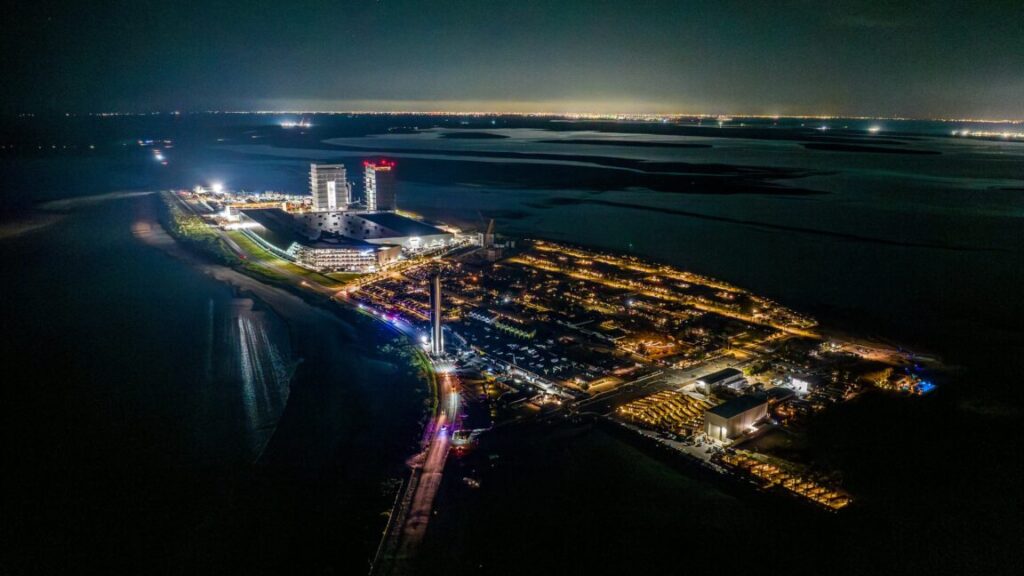
Getting down to business at Starbase. SpaceX’s rockets make a lot of noise at Starbase, but the machinations of setting up Texas’ newest city are in motion, too. After months of planning, SpaceX launched the city of Starbase on May 29 with its first public meeting chaired by Mayor Robert Peden and the City Commission at The Hub, a building owned by SpaceX, ValleyCentral.com reports. During the meeting, which lasted about 80 minutes, they hired a city administrator, approved standard regulations for new construction, and created a committee to guide the community’s long-term development. Voters approved the creation of Starbase on May 3, incorporating territory around SpaceX’s remote rocket factory and launch site near the US-Mexico border. SpaceX owns most of the land in Starbase and employs nearly everyone in the tiny town, including the mayor.

Property rights and zoning … The new city’s leaders have told landowners they plan to introduce land use rules that could result in changes for some residents,” KUT reports. In a letter, Starbase’s first city administrator, Kent Myers, warned local landowners that they may lose the right to continue using their property for its current use under the city’s new zoning plan. “Our goal is to ensure that the zoning plan reflects the City’s vision for balanced growth, protecting critical economic drivers, ensuring public safety, and preserving green spaces,” the letter, dated May 21, reads. This is a normal process when a city creates new zoning rules, and a new city is required by state law to notify landowners—most of which are SpaceX or its employees—of potential zoning changes so they can ask questions in a public setting. A public meeting to discuss the zoning ordinance at Starbase is scheduled for June 23.

Next three launches

June 7: Falcon 9 | SXM-10| Cape Canaveral Space Force Station, Florida | 03: 19 UTC

June 8: Falcon 9 | Starlink 15-8 | Vandenberg Space Force Base, California | 13: 34 UTC

June 10: Falcon 9 | Axiom Mission 4 | Kennedy Space Center, Florida | 12: 22 UTC

Photo of Stephen Clark

Stephen Clark is a space reporter at Ars Technica, covering private space companies and the world’s space agencies. Stephen writes about the nexus of technology, science, policy, and business on and off the planet.

Rocket Report: SpaceX’s 500th Falcon launch; why did UK’s Reaction Engines fail? Read More »

rocket-report:-northrop-backs-firefly-and-names-its-rocket;-xodiac-will-fly-no-more

Rocket Report: Northrop backs Firefly and names its rocket; Xodiac will fly no more


“This is a design change that I really had to push the team very hard to do.”

An artist’s rendering of the Eclipse rocket on the launch pad at Wallops. Credit: Northrop Grumman

Welcome to Edition 7.46 of the Rocket Report! As I write this, the date is May 29. From a meteorological standpoint, “spring” ends in fewer than three days. Summer lasts from June 1 through August 31. Consider this a public service announcement for launch companies targeting “spring” and “summer” launches for various missions.

As always, we welcome reader submissions, and if you don’t want to miss an issue, please subscribe using the box below (the form will not appear on AMP-enabled versions of the site). Each report will include information on small-, medium-, and heavy-lift rockets as well as a quick look ahead at the next three launches on the calendar.

Xodiac rocket makes its final flight. Originally built by Masten Space Systems, the suborbital Xodiac rocket had flown 175 successful missions before a flight from Mojave, California, on Wednesday. But now, it will fly no more. “While the vehicle remained within its planned flight envelope, it detected an anomalous condition and commanded a flight termination,” said Astrobotic, which acquired Masten a couple of years ago. “This resulted in a rapid descent and caused a loss of the vehicle upon impact with its launch pad.”

Now entering the Xogdor waiting room … There were no injuries or significant damage to the company’s infrastructure in Mojave. The vehicle is essentially a hopper and has been used in recent years by various customers, including companies building commercial lunar landers, to test their hazard-detection systems. Astrobotic has been working on a larger version of Xodiac, which it is calling Xogdor.

Chinese firm tests Grasshopper-like rocket. Chinese private rocket firm Space Epoch said Thursday it had successfully run a flight recovery test, Reuters reports. Beijing-based Space Epoch, or SEPOCH, said its Yuanxingzhe-1 verification rocket was launched at 4: 40 am from a sea-based platform off the waters of the eastern province of Shandong. The rocket soared upward, its engines briefly shutting down after the peak of its trajectory, then reigniting as it began its vertical descent to enter the Yellow Sea in a circle of fire, a video posted on Space Epoch’s WeChat account showed.

Chasing the Falcon 9 … The flight lasted 125 seconds, reaching a height of about 2.5 km (1.6 miles), the company said. Last year, another Chinese launch company, LandSpace, completed a 10-km (6.2-mile) VTVL test, marking China’s first in-flight engine reignition in descent. Both companies are pushing to make debut tests of their reusable rockets later this year.

The easiest way to keep up with Eric Berger’s and Stephen Clark’s reporting on all things space is to sign up for our newsletter. We’ll collect their stories and deliver them straight to your inbox.

Sign Me Up!

Florida company aims to acquire F-4 Phantoms for launch. Starfighters International, a company best known for doing air shows, is now seeking to move into air launch. Based at Kennedy Space Center, the company is in the process of acquiring a dozen F-4 Phantoms, a Cold War-era fighter jet, TWZ reports. Starfighters International is seeking to acquire the F-4 aircraft from South Korea.

Press F-4 to doubt? … Based upon the information in a filing with the Securities and Exchange Commission, the company is considering both a suborbital and orbital launch capability for small satellites, which would fly to space on a small rocket deployed from the F-4 Phantom. In my experience, air-based launch systems always seem like a better idea on paper than in reality. Perhaps there is some potential for hypersonics here, but I would be shocked to ever see a satellite launched into orbit from a fighter jet. (submitted by Biokleen)

Rocket Lab acquires Geost. Rocket Lab is expanding deeper into the defense sector with the acquisition of Geost, a supplier of electro-optical and infrared sensor payloads used in US military satellites, Space News reports. In a deal announced Tuesday, Rocket Lab will acquire Geost from the private equity firm ATL Partners for $125 million in cash and $150 million in stock, with an additional $50 million in potential cash payments tied to revenue targets in 2026 and 2027.

Seeking mil money … The acquisition gives Rocket Lab access to satellite sensor technology used by the US Department of Defense for missile-warning systems and space surveillance—capabilities that could help it win lucrative Pentagon contracts. “The acquisition of Geost will bring on board critical technology and payloads that are relied upon by the Department of Defense,” said Rocket Lab’s chief executive, Peter Beck. Rocket Lab has been seeking to expand its military contracts in recent years, and this move is consistent with that.

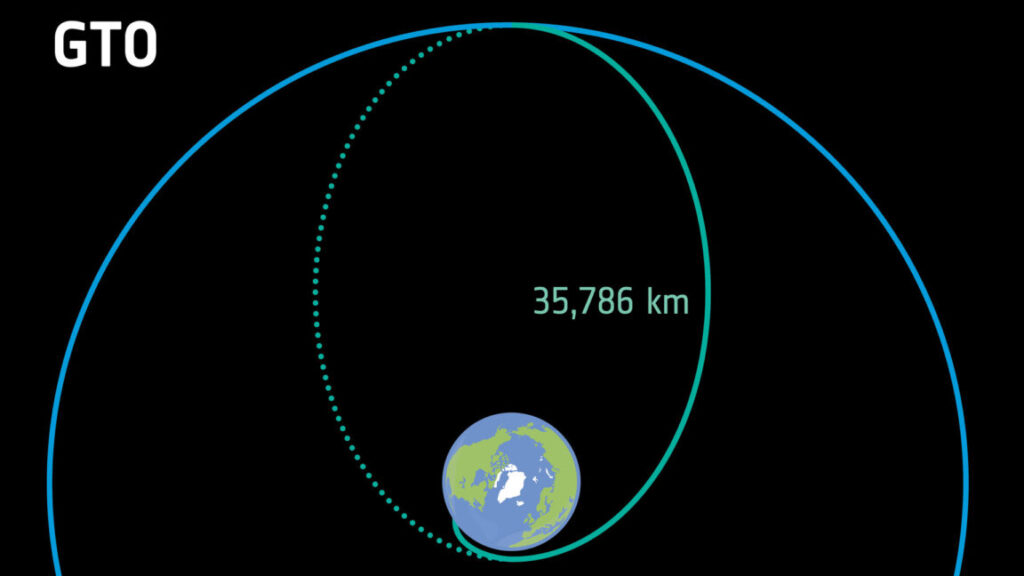
Northrop names rocket, invests in Firefly. Northrop Grumman announced Thursday that it is investing $50 million into Firefly Aerospace to further development of a medium-lift rocket. The company also revealed that the rocket will be named “Eclipse.” The rocket will be capable of launching up to 16,300 kg of cargo to low-Earth orbit or 3,200 kg of cargo to geosynchronous transfer orbit, and initially it will likely be used for Cygnus cargo missions to the International Space Station.

A match made in heaven? … Eclipse will use the same first stage Firefly is developing for the Northrop Grumman Antares 330 rocket. Both launch vehicles will use seven of Firefly’s Miranda engines. The new rocket is expected to make its debut no earlier than 2026 (and, if history is any guide, probably later). “Eclipse gives customers the right balance of payload capacity and affordability,” Northrop Vice President Wendy Williams said in a statement. “Our partnership with Firefly builds on our capacity to provide crucial space-based communication, observation, and exploration for civil and national security customers.”

China launches asteroid mission. A Chinese spacecraft built to collect specimens from an unexplored asteroid and return them to Earth launched Wednesday from a military-run spaceport in the country’s mountainous interior, Ars reports. The liftoff aboard a Long March 3B rocket from the Xichang launch base kicked off the second mission in a series of Chinese probes to explore the Solar System. This mission, designated Tianwen-2, follows the Tianwen-1 mission, which became the first Chinese spacecraft to land on Mars in 2021.

Sending samples home … China has two objectives for Tianwen-2. First, Tianwen-2 will fly to a near-Earth asteroid designated 469219 Kamoʻoalewa, or 2016 HO3. Once there, the spacecraft will retrieve a rocky sample from the asteroid’s surface and bring the material back to Earth in late 2027 for analysis in labs. After the spacecraft releases its sample carrier to land on Earth, Tianwen-2 will change course and head to a mysterious comet-like object found between the orbits of Mars and Jupiter.

Next Kuiper launch gets a June date. United Launch Alliance said Thursday that an Atlas V rocket will launch its second batch of Amazon’s Project Kuiper satellites next month. The Atlas V 551 rocket launch is planned for 2: 29 pm ET on June 13 from Space Launch Complex-41, pending range approval.

A speedy turnaround … Amazon also confirmed that it has finished processing the Kuiper satellites for the launch, saying all 27 spacecraft have been integrated onto the rocket. Getting to space in June with this mission will mark an impressive turnaround from Amazon, given that its KA-01 mission, also with 27 Internet satellites, launched on April 28.

SpaceX set to launch another GPS satellite. SpaceX is gearing up to launch a Global Positioning System satellite for the US military on Friday from Cape Canaveral Space Force Station, Florida, marking another high-profile national security mission that shifted from United Launch Alliance’s Vulcan to the Falcon 9 rocket, Space News reports. The launch of GPS III SV-08—the eighth satellite in the GPS III constellation—was originally assigned to United Launch Alliance but was switched to SpaceX as the military prioritizes getting advanced anti-jamming capabilities into orbit as quickly as possible.

Gotta go fast … This marks the second consecutive GPS III satellite to be switched from ULA to SpaceX, following December’s launch of GPS III SV-07. ULA’s Vulcan, which received certification to launch national security missions, continues to face delays and has accumulated a backlog of military launches. In a press call this week, Space Force officials said the mission was executed on an unusually accelerated timeline. Launch planning for GPS III SV-08 kicked off in February, with Lockheed Martin receiving a formal request on February 21 and SpaceX following on March 7, just under three months ahead of liftoff. That’s an extraordinary pace for a national security launch, they said, which typically takes 18 to 24 months from contract award.

Another Starship launch, another second-stage issue. SpaceX made some progress on another test flight of the world’s most powerful rocket Tuesday, finally overcoming technical problems that plagued the program’s two previous launches, Ars reports. But minutes into the mission, SpaceX’s Starship lost control as it cruised through space, then tumbled back into the atmosphere somewhere over the Indian Ocean nearly an hour after taking off from Starbase, Texas, the company’s privately owned spaceport near the US-Mexico border. During the rocket’s two previous test flights—each using an upgraded “Block 2” Starship design—problems in the ship’s propulsion system led to leaks during launch, eventually triggering an early shutdown of the rocket’s main engines.

Not great, not terrible … On both flights, the vehicle spun out of control and broke apart, spreading debris over an area near the Bahamas and the Turks and Caicos Islands. The good news is that that didn’t happen on Tuesday. The ship’s main engines fired for their full duration, putting the vehicle on its expected trajectory toward a splashdown in the Indian Ocean. For a short time, it appeared the ship was on track for a successful flight. The bad news is that Tuesday’s test flight revealed more problems, preventing SpaceX from achieving the most important goals Musk outlined going into the launch, including testing Starship’s reentry tiles.

Elon Musk talks Starship version 3. In an interview with Ars Technica, SpaceX founder Elon Musk said he expects that an upgraded version of Starship—essentially Block 3 of the vehicle with upgraded Raptor engines—should fly before the end of the year. The business end of the rocket will have a sleek look: “The upgraded Raptors have a complete redesign of the aft end of the booster and the ship,” Musk said. “So, because we don’t need the heat shield around the upper portion of the engine, it greatly simplifies the base of the booster and the ship. It’ll look a little, frankly, naked, especially on the booster side, because the engines will just be there, like, not with stuff around them.”

A difficult upgrade to work through … “This is a design change that I really had to push the team very hard to do, to get rid of any secondary structure, and any parts that could get burned off because there will be no heat shield,” Musk added. “So it’ll be very clear when we have a Raptor 3. Version 3 of the Ship and Booster has quite a radical redesign.” Given the challenges that version 2 of Starship has faced with its recent flights, an upgrade in the overall design appears to be much-needed.

Next three launches

May 30: Falcon 9 | GPS III SV-08 | Cape Canaveral Space Force Station, Florida | 17: 23 UTC

May 31: New Shepard | NS-32 | Launch Site One, West Texas | 13: 30 UTC

May 31: Falcon 9 | Starlink 11-18 | Vandenberg Space Force Base, California | 20: 01 UTC

Photo of Eric Berger

Eric Berger is the senior space editor at Ars Technica, covering everything from astronomy to private space to NASA policy, and author of two books: Liftoff, about the rise of SpaceX; and Reentry, on the development of the Falcon 9 rocket and Dragon. A certified meteorologist, Eric lives in Houston.

Rocket Report: Northrop backs Firefly and names its rocket; Xodiac will fly no more Read More »

rocket-report:-spacex’s-expansion-at-vandenberg;-india’s-pslv-fails-in-flight

Rocket Report: SpaceX’s expansion at Vandenberg; India’s PSLV fails in flight


China’s diversity in rockets was evident this week, with four types of launchers in action.

Dawn Aerospace’s Mk-II Aurora airplane in flight over New Zealand last year. Credit: Dawn Aerospace

Welcome to Edition 7.45 of the Rocket Report! Let’s talk about spaceplanes. Since the Space Shuttle, spaceplanes have, at best, been a niche part of the space transportation business. The US Air Force’s uncrewed X-37B and a similar vehicle operated by China’s military are the only spaceplanes to reach orbit since the last shuttle flight in 2011, and both require a lift from a conventional rocket. Virgin Galactic’s suborbital space tourism platform is also a spaceplane of sorts. A generation or two ago, one of the chief arguments in favor of spaceplanes was that they were easier to recover and reuse. Today, SpaceX routinely reuses capsules and rockets that look much more like conventional space vehicles than the winged designs of yesteryear. Spaceplanes are undeniably alluring in appearance, but they have the drawback of carrying extra weight (wings) into space that won’t be used until the final minutes of a mission. So, do they have a future?

As always, we welcome reader submissions. If you don’t want to miss an issue, please subscribe using the box below (the form will not appear on AMP-enabled versions of the site). Each report will include information on small-, medium-, and heavy-lift rockets, as well as a quick look ahead at the next three launches on the calendar.

One of China’s commercial rockets returns to flight. The Kinetica-1 rocket launched Wednesday for the first time since a failure doomed its previous attempt to reach orbit in December, according to the vehicle’s developer and operator, CAS Space. The Kinetica-1 is one of several small Chinese solid-fueled launch vehicles managed by a commercial company, although with strict government oversight and support. CAS Space, a spinoff of the Chinese Academy of Sciences, said its Kinetica-1 rocket deployed multiple payloads with “excellent orbit insertion accuracy.” This was the seventh flight of a Kinetica-1 rocket since its debut in 2022.

Back in action … “Kinetica-1 is back!” CAS Space posted on X. “Mission Y7 has just successfully sent six satellites into designated orbits, making a total of 63 satellites or 6 tons of payloads since its debut. Lots of missions are planned for the coming months. 2025 is going to be awesome.” The Kinetica-1 is designed to place up to 2 metric tons of payload into low-Earth orbit. A larger liquid-fueled rocket, Kinetica-2, is scheduled to debut later this year.

The easiest way to keep up with Eric Berger’s and Stephen Clark’s reporting on all things space is to sign up for our newsletter. We’ll collect their stories and deliver them straight to your inbox.

Sign Me Up!

French government backs a spaceplane startup. French spaceplane startup AndroMach announced May 15 that it received a contract from CNES, the French space agency, to begin testing an early prototype of its Banger v1 rocket engine, European Spaceflight reports. Founded in 2023, AndroMach is developing a pair of spaceplanes that will be used to perform suborbital and orbital missions to space. A suborbital spaceplane will utilize turbojet engines for horizontal takeoff and landing, and a pressure-fed biopropane/liquid oxygen rocket engine to reach space. Test flights of this smaller vehicle will begin in early 2027.

A risky proposition … A larger ÉTOILE “orbital shuttle” is designed to be launched by various small launch vehicles and will be capable of carrying payloads of up to 100 kilograms (220 pounds). According to the company, initial test flights of ÉTOILE are expected to begin at the beginning of the next decade. It’s unclear how much CNES is committing to AndroMach through this contract, but the company says the funding will support testing of an early demonstrator for its propane-fueled engine, with a focus on evaluating its thermodynamic performance. It’s good to see European governments supporting developments in commercial space, but the path to a small commercial orbital spaceplane is rife with risk. (submitted by EllPeaTea)

Dawn Aerospace is taking orders. Another spaceplane company in a more advanced stage of development says it is now taking customer orders for flights to the edge of space. New Zealand-based Dawn Aerospace said it is beginning to take orders for its remotely piloted, rocket-powered suborbital spaceplane, known as Aurora, with first deliveries expected in 2027, Aviation Week & Space Technology reports. “This marks a historic milestone: the first time a space-capable vehicledesigned to fly beyond the Kármán line (100 kilometers or 328,000 feet)has been offered for direct sale to customers,” Dawn Aerospace said in a statement. While it hasn’t yet reached space, Dawn’s Aurora spaceplane flew to supersonic speed for the first time last year and climbed to an altitude of 82,500 feet (25.1 kilometers), setting a record for the fastest climb from a runway to 20 kilometers.

Further along … Aurora is small in stature, measuring just 15.7 feet (4.8 meters) long. It’s designed to loft a payload of up to 22 pounds (10 kilograms) above the Kármán line for up to three minutes of microgravity, before returning to a runway landing. Eventually, Dawn wants to reduce the turnaround time between Aurora flights to less than four hours. “Aurora is set to become the fastest and highest-flying aircraft ever to take off from a conventional runway, blending the extreme performance of rocket propulsion with the reusability and operational simplicity of traditional aviation,” Dawn said. The company’s business model is akin to commercial airlines, where operators can purchase an aircraft directly from a manufacturer and manage their own operations. (submitted by EllPeaTea)

India’s workhorse rocket falls short of orbit. In a rare setback, Indian Space Research Organisation’s (ISRO) launch vehicle PSLV-C61 malfunctioned and failed to place a surveillance satellite into the intended orbit last weekend, the Times of India reported. The Polar Satellite Launch Vehicle lifted off from a launch pad on the southeastern coast of India early Sunday, local time, with a radar reconnaissance satellite named EOS-09, or RISAT-1B. The satellite was likely intended to gather intelligence for the Indian military. “The country’s military space capabilities, already hindered by developmental challenges, have suffered another setback with the loss of a potential strategic asset,” the Times of India wrote.

What happened? … V. Narayanan, ISRO’s chairman, later said that the rocket’s performance was normal until the third stage. The PSLV’s third stage, powered by a solid rocket motor, suffered a “fall in chamber pressure” and the mission could not be accomplished, Narayanan said. Investigators are probing the root cause of the failure. Telemetry data indicated the rocket deviated from its planned flight path around six minutes after launch, when it was traveling more than 12,600 mph (5.66 kilometers per second), well short of the speed it needed to reach orbital velocity. The rocket and its payload fell into the Indian Ocean south of the launch site. This was the first PSLV launch failure in eight years, ending a streak of 21 consecutive successful flights. (submitted by EllPeaTea)

SES makes a booking with Impulse Space. SES, owner of the world’s largest fleet of geostationary satellites, plans to use Impulse Space’s Helios kick stage to take advantage of lower-cost, low-Earth-orbit (LEO) launch vehicles and get its satellites quickly into higher orbits, Aviation Week & Space Technology reports. SES hopes the combination will break a traditional launch conundrum for operators of medium-Earth-orbit (MEO) and geostationary orbit (GEO). These operators often must make a trade-off between a lower-cost launch that puts them farther from their satellite’s final orbit, or a more expensive launch that can expedite their satellite’s entry into service.

A matter of hours … On Thursday, SES and Impulse Space announced a multi-launch agreement to use the methane-fueled Helios kick stage. “The first mission, currently planned for 2027, will feature a dedicated deployment from a medium-lift launcher in LEO, followed by Helios transferring the 4-ton-class payload directly to GEO within eight hours of launch,” Impulse said in a statement. Typically, this transit to GEO takes several weeks to several months, depending on the satellite’s propulsion system. “Today, we’re not only partnering with Impulse to bring our satellites faster to orbit, but this will also allow us to extend their lifetime and accelerate service delivery to our customers,” said Adel Al-Saleh, CEO of SES. “We’re proud to become Helios’ first dedicated commercial mission.”

Unpacking China’s spaceflight patches. There’s a fascinating set of new patches Chinese officials released for a series of launches with top-secret satellites over the last two months, Ars reports. These four patches depict Buddhist gods with a sense of artistry and sharp colors that stand apart from China’s previous spaceflight emblems, and perhaps—or perhaps not—they can tell us something about the nature of the missions they represent. The missions launched so-called TJS satellites toward geostationary orbit, where they most likely will perform missions in surveillance, signals intelligence, or missile warning. 

Making connections … It’s not difficult to start making connections between the Four Heavenly Gods and the missions that China’s TJS satellites likely carry out in space. A protector with an umbrella? An all-seeing entity? This sounds like a possible link to spy craft or missile warning, but there’s a chance Chinese officials approved the patches to misdirect outside observers, or there’s no connection at all.

China aims for an asteroid. China is set to launch its second Tianwen deep space exploration mission late May, targeting both a near-Earth asteroid and a main belt comet, Space News reports. The robotic Tianwen-2 spacecraft is being integrated with a Long March 3B rocket at the Xichang Satellite Launch Center in southwest China, the country’s top state-owned aerospace contractor said. Airspace closure notices indicate a four-hour-long launch window opening at noon EDT (16: 00–20: 00 UTC) on May 28. Backup launch windows are scheduled for May 29 and 30.

New frontiers … Tianwen-2’s first goal is to collect samples from a near-Earth asteroid designated 469219 Kamoʻoalewa, or 2016 HO3, and return them to Earth in late 2027 with a reentry module. The Tianwen-2 mothership will then set a course toward a comet for a secondary mission. This will be China’s first sample return mission from beyond the Moon. The asteroid selected as the target for Tianwen-2 is believed by scientists to be less than 100 meters, or 330 feet, in diameter, and may be made of material thrown off the Moon some time in its ancient past. Results from Tianwen-2 may confirm that hypothesis. (submitted by EllPeaTea)

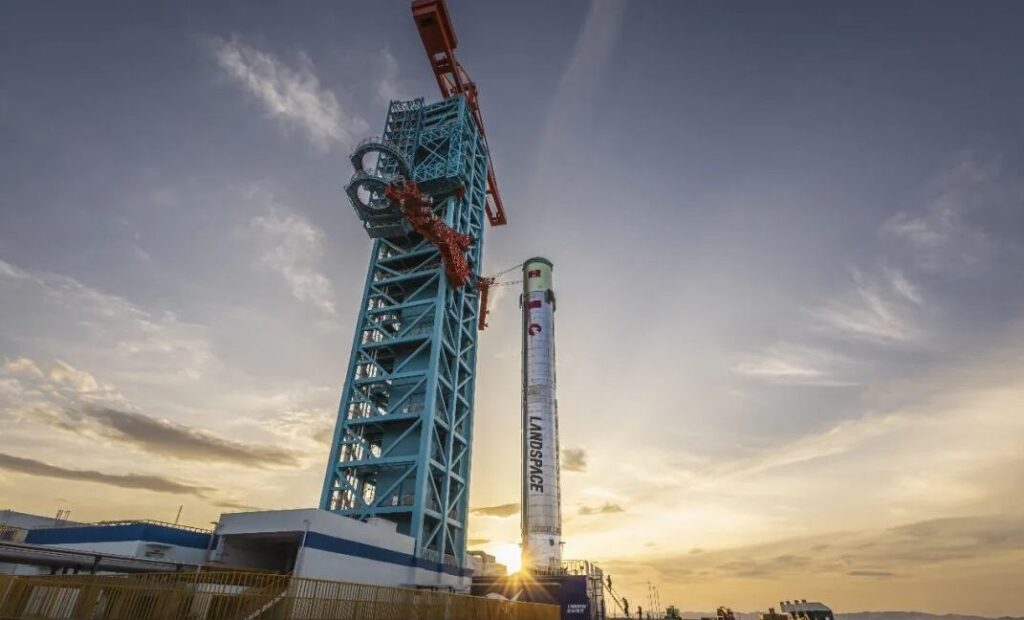
Upgraded methalox rocket flies from Jiuquan. Another one of China’s privately funded launch companies achieved a milestone this week. Landspace launched an upgraded version of its Zhuque-2E rocket Saturday from the Jiuquan launch base in northwestern China, Space News reports. The rocket delivered six satellites to orbit for a range of remote sensing, Earth observation, and technology demonstration missions. The Zhuque-2E is an improved version of the Zhuque-2, which became the first liquid methane-fueled rocket in the world to reach orbit in 2023.

Larger envelope … This was the second flight of the Zhuque-2E rocket design, but the first to utilize a wider payload fairing to provide more volume for satellites on their ride into space. The Zhuque-2E is a stepping stone toward a much larger rocket Landspace is developing called the Zhuque-3, a stainless steel launcher with a reusable first stage booster that, at least outwardly, bears some similarities to SpaceX’s Falcon 9. (submitted by EllPeaTea)

FAA clears SpaceX for Starship Flight 9. The Federal Aviation Administration gave the green light Thursday for SpaceX to launch the next test flight of its Starship mega-rocket as soon as next week, following two consecutive failures earlier this year, Ars reports. The failures set back SpaceX’s Starship program by several months. The company aims to get the rocket’s development back on track with the upcoming launch, Starship’s ninth full-scale test flight since its debut in April 2023. Starship is central to SpaceX’s long-held ambition to send humans to Mars and is the vehicle NASA has selected to land astronauts on the Moon under the umbrella of the government’s Artemis program.

Targeting Tuesday, for now … In a statement Thursday, the FAA said SpaceX is authorized to launch the next Starship test flight, known as Flight 9, after finding the company “meets all of the rigorous safety, environmental and other licensing requirements.” SpaceX has not confirmed a target launch date for the next launch of Starship, but warning notices for pilots and mariners to steer clear of hazard areas in the Gulf of Mexico suggest the flight might happen as soon as the evening of Tuesday, May 27. The rocket will lift off from Starbase, Texas, SpaceX’s privately owned spaceport near the US-Mexico border. The FAA’s approval comes with some stipulations, including that the launch must occur during “non-peak” times for air traffic and a larger closure of airspace downrange from Starbase.

Space Force is fed up with Vulcan delays. In recent written testimony to a US House of Representatives subcommittee that oversees the military, the senior official responsible for purchasing launches for national security missions blistered one of the country’s two primary rocket providers, Ars reports. The remarks from Major General Stephen G. Purdy, acting assistant secretary of the Air Force for Space Acquisition and Integration, concerned United Launch Alliance and its long-delayed development of the large Vulcan rocket. “The ULA Vulcan program has performed unsatisfactorily this past year,” Purdy said in written testimony during a May 14 hearing before the House Armed Services Committee’s Subcommittee on Strategic Forces. This portion of his testimony did not come up during the hearing, and it has not been reported publicly to date.

Repairing trust … “Major issues with the Vulcan have overshadowed its successful certification resulting in delays to the launch of four national security missions,” Purdy wrote. “Despite the retirement of highly successful Atlas and Delta launch vehicles, the transition to Vulcan has been slow and continues to impact the completion of Space Force mission objectives.” It has widely been known in the space community that military officials, who supported Vulcan with development contracts for the rocket and its engines that exceeded $1 billion, have been unhappy with the pace of the rocket’s development. It was originally due to launch in 2020. At the end of his written testimony, Purdy emphasized that he expected ULA to do better. As part of his job as the Service Acquisition Executive for Space (SAE), Purdy noted that he has been tasked to transform space acquisition and to become more innovative. “For these programs, the prime contractors must re-establish baselines, establish a culture of accountability, and repair trust deficit to prove to the SAE that they are adopting the acquisition principles necessary to deliver capabilities at speed, on cost and on schedule.”

SpaceX’s growth on the West Coast. SpaceX is moving ahead with expansion plans at Vandenberg Space Force Base, California, that will double its West Coast launch cadence and enable Falcon Heavy rockets to fly from California, Spaceflight Now reports. Last week, the Department of the Air Force issued its Draft Environmental Impact Statement (EIS), which considers proposed modifications from SpaceX to Space Launch Complex 6 (SLC-6) at Vandenberg. These modifications will include changes to support launches of Falcon 9 and Falcon Heavy rockets, the construction of two new landing pads for Falcon boosters adjacent to SLC-6, the demolition of unneeded structures at SLC-6, and increasing SpaceX’s permitted launch cadence from Vandenberg from 50 launches to 100.

Doubling the fun … The transformation of SLC-6 would include quite a bit of overhaul. Its most recent tenant, United Launch Alliance, previously used it for Delta IV rockets from 2006 through its final launch in September 2022. The following year, the Space Force handed over the launch pad to SpaceX, which lacked a pad at Vandenberg capable of supporting Falcon Heavy missions. The estimated launch cadence between SpaceX’s existing Falcon 9 pad at Vandenberg, known as SLC-4E, and SLC-6 would be a 70-11 split for Falcon 9 rockets in 2026, with one Falcon Heavy at SLC-6, for a total of 82 launches. That would increase to a 70-25 Falcon 9 split in 2027 and 2028, with an estimated five Falcon Heavy launches in each of those years. (submitted by EllPeaTea)

Next three launches

May 23: Falcon 9 | Starlink 11-16 | Vandenberg Space Force Base, California | 20: 36 UTC

May 24: Falcon 9 | Starlink 12-22 | Cape Canaveral Space Force Station, Florida | 17: 19 UTC

May 27: Falcon 9 | Starlink 17-1 | Vandenberg Space Force Base, California | 16: 14 UTC

Photo of Stephen Clark

Stephen Clark is a space reporter at Ars Technica, covering private space companies and the world’s space agencies. Stephen writes about the nexus of technology, science, policy, and business on and off the planet.

Rocket Report: SpaceX’s expansion at Vandenberg; India’s PSLV fails in flight Read More »

rocket-report:-how-is-your-payload-fairing?-poland-launches-test-rocket.

Rocket Report: How is your payload fairing? Poland launches test rocket.


All the news that’s fit to lift

No thunder down under.

Venus Aerospace tests its rotating detonation rocket engine in flight for the first time this week. Credit: Venus Aerospace

Venus Aerospace tests its rotating detonation rocket engine in flight for the first time this week. Credit: Venus Aerospace

Welcome to Edition 7.44 of the Rocket Report! We had some interesting news on Thursday afternoon from Down Under. As Gilmour Space was preparing for the second launch attempt of its Eris vehicle, as part of the pre-launch preparations, something triggered the payload fairing to deploy. We would love to see some video of that. Please.

As always, we welcome reader submissions, and if you don’t want to miss an issue, please subscribe using the box below (the form will not appear on AMP-enabled versions of the site). Each report will include information on small-, medium-, and heavy-lift rockets, as well as a quick look ahead at the next three launches on the calendar.

Rotating detonation rocket engine takes flight. On Wednesday, US-based propulsion company Venus Aerospace completed a short flight test of its rotating detonation rocket engine at Spaceport America in New Mexico, Ars reports. It is believed to be the first US-based flight test of an idea that has been discussed academically for decades. The concept has previously been tested in a handful of other countries, but never with a high-thrust engine.

Hypersonics on the horizon… The company has only released limited information about the test. The small rocket, powered by the company’s 2,000-pound-thrust engine, launched from a rail in New Mexico. The vehicle flew for about half a minute and, as planned, did not break the sound barrier. Governments around the world have been interested in rotating detonation engine technology for a long time because it has the potential to significantly increase fuel efficiency in a variety of applications, from Navy carriers to rocket engines. In the near term, Venus’ engine could be used for hypersonic missions.

Gilmour Space has a payload fairing mishap. Gilmour Space, a venture-backed startup based in Australia, said this week it was ready to launch a small rocket from its privately owned spaceport on a remote stretch of the country’s northeastern coastline, Ars reports. Gilmour’s three-stage rocket, named Eris, was prepped for a launch as early as Wednesday, but a ground systems issue delayed an attempt until Thursday US time. And then on Thursday, something odd happened: “Last night, during final checks, an unexpected issue triggered the rocket’s payload fairing,” the company said Thursday afternoon, US time.

Always more problems to solve… Gilmour, based in Gold Coast, Australia, was founded in 2012 by two brothers, Adam and James Gilmour, who came to the space industry after careers in banking and marketing. Today, Gilmour employs more than 200 people, mostly engineers and technicians. The debut launch of Gilmour’s Eris rocket is purely a test flight. Gilmour has tested the rocket’s engines and rehearsed the countdown last year, loading propellant and getting within 10 seconds of launch. But Gilmour cautioned in a post on LinkedIn early Wednesday that “test launches are complex.” And it confirmed that on Thursday. Now the company will need to source a replacement fairing, which will probably take a while.

The easiest way to keep up with Eric Berger’s and Stephen Clark’s reporting on all things space is to sign up for our newsletter. We’ll collect their stories and deliver them straight to your inbox.

Sign Me Up!

Is an orbital launch from Argentina imminent? We don’t know much about the Argentinian launch company TLON Space, which is developing a (very) small-lift orbital rocket called Aventura 1. According to the company’s website, this launch vehicle will be capable of lofting 25 kg to low-Earth orbit. Some sort of flight test took place two years ago, but the video cuts off after a minute, suggesting that the end of the flight was less than nominal.

Maybe, maybe not… Now, a publication called Urgente24 reports that an orbital launch attempt is underway. It is not clear exactly what this means, and details about what is actually happening at the Malacara Spaceport in Argentina are unclear. I could find no other outlets reporting on an imminent launch attempt. So my guess is that nothing will happen soon, but it is something we’ll keep an eye on regardless. (Submitted by fedeng.)

Poland launches suborbital rocket. Poland has successfully launched a single-stage rocket demonstrator at the Central Air Force Training Ground in Ustka, European Spaceflight reports. The flight was part of a project to develop a three-stage solid-fuel rocket for research payloads. In 2020, the Polish government selected Wojskowe Zakłady Lotnicze No. 1 to lead a consortium developing a three-stage suborbital launch system.

Military uses eyed… The Trójstopniowa Rakieta Suborbitalna (TRS) project involves the Military Institute of Armament Technology and Zakład Produkcji Specjalnej Gamrat and is co-financed by the National Center for Research and Development. The goal of the TRS project is to develop a three-stage rocket capable of carrying a 40-kilogram payload to an altitude exceeding 100 kilometres. While the rocket will initially be used to carry research payloads into space, Poland’s Military Institute of Armament Technology has stated that the technology could also be used for the development of anti-aircraft and tactical missiles.

Latitude signs MoU to launch microsats. On Wednesday, the French launch firm Latitude announced the signing of a memorandum of understanding for the launch of a microsatellite constellation dedicated to storing and processing data directly in orbit. In an emailed news release, Latitude said the “strategic partnership” represents a major step forward in strengthening collaborations between UAE and French space companies.

That’s a lot of launches… Madari Space is developing a constellation of microsatellites (50 to 100 kg), designed as true orbital data centers. Their mission is to store and process data generated on Earth or by other satellites. Latitude plans its first commercial launch with its small-lift Zephyr rocket as early as 2026, with the ambition of reaching a rate of 50 launches per year from 2030. An MoU represents an agreement but not a firm launch contract.

China begins launching AI constellation. China launched 12 satellites early Wednesday for an on-orbit computing project led by startup ADA Space and Zhejiang Lab, Space News reports. A Long March 2D rocket lifted off at 12: 12 am Eastern on Wednesday from Jiuquan Satellite Launch Center in northwest China. Commercial company ADA Space released further details, stating that the 12 satellites form the “Three-Body Computing Constellation,” which will directly process data in space rather than on the ground, reducing reliance on ground-based computing infrastructure.

Putting the intelligence in space… ADA Space claims the 12 satellites represent the world’s first dedicated orbital computing constellation. This marks a shift from satellites focused solely on sensing or communication to ones that also serve as data processors and AI platforms. The constellation is part of a wider “Star-Compute Program,” a collaboration between ADA Space and Zhejiang Lab, which aims to build a huge on-orbit network of 2,800 satellites. (Submitted by EllPeaTea.)

SpaceX pushes booster reuse record further. SpaceX succeeded with launching 28 more Starlink satellites from Florida early Tuesday morning following an overnight scrub the previous night. The Falcon 9 booster, 1067, made a record-breaking 28th flight, Spaceflight Now reports.

Booster landings have truly become routine… A little more than eight minutes after liftoff, SpaceX landed B1067 on its drone ship, Just Read the Instructions, which was positioned in the Atlantic Ocean to the east of the Bahamas. This marked the 120th successful landing for this drone ship and the 446th booster landing to date for SpaceX. (Submitted by EllPeaTea.)

What happens if Congress actually cancels the SLS rocket? The White House Office of Management and Budget dropped its “skinny” budget proposal for the federal government earlier this month, and the headline news for the US space program was the cancellation of three major programs: the Space Launch System rocket, the Orion spacecraft, and the Lunar Gateway. In a report, Ars answers the question of what happens to Artemis and NASA’s deep space exploration plans if that happens. The most likely answer is that NASA turns to an old but successful playbook: COTS.

A market price for the Moon… This stands for Commercial Orbital Transportation System and was created by NASA two decades ago to develop cargo transport systems (eventually, this became SpaceX’s Dragon and Northrop’s Cygnus spacecraft) for the International Space Station. Since then, NASA has adopted this same model for crew services as well as other commercial programs. Under the COTS model, NASA provides funding and guidance to private companies to develop their own spacecraft, rockets, and services and then buys those at a “market” rate. Sources indicate that NASA would go to industry and seek an “end-to-end” solution for lunar missions—that is, an integrated plan to launch astronauts from Earth, land them on the Moon, and return them to Earth.

Starship nearing its next test flight. SpaceX fired six Raptor engines on the company’s next Starship rocket Monday, clearing a major hurdle on the path to launch later this month on a high-stakes test flight to get the private rocket program back on track. SpaceX hasn’t officially announced a target launch date, but sources indicate a launch could take place toward the end of next week, prior to Memorial Day weekend, Ars reports. The launch window would open at 6: 30 pm local time (7: 30 pm EDT; 23: 30 UTC).

Getting back on track… If everything goes according to plan, Starship is expected to soar into space and fly halfway around the world, targeting a reentry and controlled splashdown into the Indian Ocean. While reusing the first stage is a noteworthy milestone, the next flight is important for another reason. SpaceX’s last two Starship test flights ended prematurely when the rocket’s upper stage lost power and spun out of control, dropping debris into the sea near the Bahamas and the Turks and Caicos Islands.

Next three launches

May 16: Falcon 9 | Starlink 15-5 | Vandenberg Space Force Base, California | 13: 43 UTC

May 17: Electron | The Sea God Sees | Māhia Peninsula, New Zealand | 08: 15 UTC

May 18: PSLV-XL | RISAT-1B | Satish Dhawan Space Centre, India | 00: 29 UTC

Photo of Eric Berger

Eric Berger is the senior space editor at Ars Technica, covering everything from astronomy to private space to NASA policy, and author of two books: Liftoff, about the rise of SpaceX; and Reentry, on the development of the Falcon 9 rocket and Dragon. A certified meteorologist, Eric lives in Houston.

Rocket Report: How is your payload fairing? Poland launches test rocket. Read More »

rocket-report:-rocket-lab-to-demo-cargo-delivery;-america’s-new-icbm-in-trouble

Rocket Report: Rocket Lab to demo cargo delivery; America’s new ICBM in trouble


SpaceX’s plan to turn Starbase into Texas’ newest city won the approval of voters—err, employees.

A decommissioned Titan II intercontinental ballistic missile inside a silo at a museum in Green Valley, Arizona.

Welcome to Edition 7.43 of the Rocket Report! There’s been a lot of recent news in hypersonic testing. We cover some of that in this week’s newsletter, but it’s just a taste of the US military’s appetite for fielding its own hypersonic weapons, and conversely, the Pentagon’s emphasis on the detection and destruction of an enemy’s hypersonic missiles. China has already declared its first hypersonic weapons operational, and Russia claims to have them, too. Now, the Pentagon is finally close to placing hypersonic missiles with combat units. Many US rocket companies believe the hypersonics sector is a lucrative business. Some companies have enough confidence in this emerging market—or lack of faith in the traditional space launch market—to pivot entirely toward hypersonics. I’m interested in seeing if their bets pay off.

As always, we welcome reader submissions. If you don’t want to miss an issue, please subscribe using the box below (the form will not appear on AMP-enabled versions of the site). Each report will include information on small-, medium-, and heavy-lift rockets, as well as a quick look ahead at the next three launches on the calendar.

Stratolaunch tests reusable hypersonic rocket plane. Stratolaunch has finally found a use for the world’s largest airplane. Twice in the last five months, the company launched a hypersonic vehicle over the Pacific Ocean, accelerated it to more than five times the speed of sound, and autonomously landed at Vandenberg Space Force Base in California, Ars reports. Stratolaunch used the same Talon-A vehicle for both flights, demonstrating its reusability, a characteristic that sets it apart from competitors. Zachary Krevor, Stratolaunch’s president and CEO, said his team aims to ramp up to monthly flights by the end of the year.

A 21st century X-15 … This is the first time anyone in the United States has flown a reusable hypersonic rocket plane since the last flight of the X-15, the iconic rocket-powered aircraft that pushed the envelope of high-altitude, high-speed flight 60 years ago. Like the Talon-A, the X-15 released from a carrier jet and ignited a rocket engine to soar into the uppermost layers of the atmosphere. But the X-15 had a pilot in command, while the Talon-A flies on autopilot. Stratolaunch is one of several companies participating in a US military program to test parts and technologies for use on future hypersonic weapons. “Why the autonomous flight matters is because hypersonic systems are now pushing the envelope in terms of maneuvering capability, maneuvering beyond what can be done by the human body,” Krevor said.

The easiest way to keep up with Eric Berger’s and Stephen Clark’s reporting on all things space is to sign up for our newsletter. We’ll collect their stories and deliver them straight to your inbox.

Sign Me Up!

New details about another recent hypersonic test. A hypersonic missile test on April 25 validated the launch mechanism for the US Navy Conventional Prompt Strike (CPS) weapon program, the Defense Department said on May 2. The CPS missile, the Navy’s name for what the US Army calls the Long Range Hypersonic Weapon (LRHW), launched from Cape Canaveral Space Force Station, Florida, Aviation Week & Space Technology Reports. While the Army and Navy versions use the same hypersonic glide vehicle and missile, they use different launch mechanisms. Last year, the Army tested its version of the hypersonic missile launcher. Now, the Navy has validated the cold-gas launch mechanism it will install on guided missile destroyers.

Deploying soon … “The cold-gas approach allows the Navy to eject the missile from the platform and achieve a safe distance above the ship prior to first stage ignition,” said Vice Adm Johnny R. Wolfe Jr., director of the Navy’s Strategic Systems Programs, which is the lead designer of the common hypersonic missile. The Army plans to field its Long Range Hypersonic Weaponalso called “Dark Eagle”with a combat unit later this year, while the Navy’s version won’t be ready for testing at sea until 2027 or 2028. Both missiles are designed for conventional (non-nuclear) strikes. The Army’s Dark Eagle will be the US military’s first operational hypersonic weapon.

Sentinel needs new silos. The Air Force will have to dig entirely new nuclear missile silos for the LGM-35A Sentinel, creating another complication for a troubled program that is already facing future cost and schedule overruns, Defense News reports. The Air Force originally hoped the existing silos that have housed Minuteman III intercontinental ballistic missiles could be adapted to launch Sentinel missiles, which would be more efficient than digging entirely new silos. But a test project at Vandenberg Space Force Base in California showed that approach would be fraught with further problems and cause the program to run even further behind and over budget, the service said.

Rising costs … Sentinel, developed by Northrop Grumman, will replace the Air Force’s fleet of Minuteman III ICBMs, which entered service in 1970, as the land-based leg of the military’s nuclear triad. It was originally expected to cost $77.7 billion, but projected future costs ran so severely over budget that in January 2024, it triggered a review process known as a critical Nunn-McCurdy breach. After that review, the Pentagon last year concluded Sentinel was too critical to national security to abandon, but ordered the Air Force to restructure it to bring its costs under control. Further studies of the program are now showing more potential problems.

Gilmour says it (hopefully) will wait no more. The Australian launch startup Gilmour Space Technologies has been given approval by Australia’s Civil Aviation Safety Authority for the debut launch of its Eris orbital rocket, InnovationAus.com reports. There is still one final regulatory hurdle, a final sign-off from the Australian Space Agency. If that happens in the next few days, Gilmour’s launch window will open May 15. The company has announced tentative launch schedules before, only to be thwarted by technical issues, regulatory hangups, or bad weather. Most recently, Gilmour got within six days of its targeted launch date in March before regulatory queries and the impact of a tropical cyclone forced a delay.

Stand by for history … The launch of Gilmour’s three-stage Eris rocket will be historic. If successful, the 82-foot-tall (25-meter) rocket will be Australia’s first homegrown orbital launcher. Eris is capable of hauling cargoes up to 672 pounds (305 kilograms) to orbit, according to Gilmour. The company has dispatched a small team from its Gold Coast headquarters to the launch site in Queensland, on Australia’s northeastern coast, to perform testing on the vehicle after it remained dormant for weeks. (submitted by trainticket)

Fresh insights into one of SpaceX’s worst days. When a Falcon 9 rocket exploded on its launch pad nearly nine years ago, SpaceX officials initially struggled to explain how it could have happened. The lack of a concrete explanation for the failure led SpaceX engineers to pursue hundreds of theories. One was the possibility that an outside “sniper” had shot the rocket. This theory appealed to SpaceX founder Elon Musk. A building leased by SpaceX’s main competitor in launch, United Launch Alliance, lay just a mile away from the Falcon 9 launch pad, and a video around the time of the explosion indicated a flash on its roof. Ars has now obtained a letter sent to SpaceX by the Federal Aviation Administration more than a month after the explosion, indicating the matter was elevated to the FBI. The bureau looked into it, and what did they find? Nothing, apparently.

Investigation terminated … “The FBI has informed us that based upon a thorough and coordinated review by the appropriate Federal criminal and security investigative authorities, there were no indications to suggest that sabotage or any other criminal activity played a role in the September 1 Falcon 9 explosion,” an FAA official wrote in the letter to SpaceX. Ultimately, engineers determined the explosion was caused by the sudden failure of a high-pressure helium tank on the Falcon 9’s upper stage.

Eric Schmidt’s motivations become clearer. In the nearly two months since former Google chief executive Eric Schmidt acquired Relativity Space, the billionaire has not said much publicly about his plans for the launch company. However, his intentions for Relativity now appear to be increasingly clear: He wants to have the capability to launch a significant amount of computing infrastructure into space, Ars reports. During a congressional hearing last month, Schmidt discussed the need more electricity to power data centers that will facilitate the computing needs for AI development and applications.

How big this crisis is … “People are planning 10 gigawatt data centers,” Schmidt said at the hearing. “Gives you a sense of how big this crisis is.” In an exchange with my colleague Eric Berger on X, Schmidt seemed to confirm he bought Relativity Space as a means to support the development of data centers in space. Such data centers, ideally, would be powered by solar panels and be able to radiate heat into the vacuum of space. Relativity’s Terran R rocket, still in development, is well-sized to play a role in launching the infrastructure for data centers in space. But several big questions remain: How big would these data centers be? Where would they go within an increasingly cluttered low-Earth orbit? Could space-based solar power meet their energy needs? Can all of this heat be radiated away efficiently in space? Economically, would any of this make sense?

Rocket Lab, meet Rocket Cargo. Rocket Lab’s next-generation Neutron rocket has been selected for an experimental US Air Force mission to test rapid global cargo delivery capabilities, a milestone for the company as it pushes further into the national security launch market, Space News reports. The mission, slated for no earlier than 2026, will fall under the Air Force Research Laboratory’s (AFRL) “Rocket Cargo” program, which explores how commercial launch vehicles might one day deliver materiel to any point on Earth within hours—a vision akin to airlift logistics via spaceflight.

A new mission for Neutron … Peter Beck, Rocket Lab’s founder and CEO, said the Rocket Cargo contract from AFRL represents an “experimental phase” of the program. “It’ll be interesting to see if that turns into a full requirement for an operational capability,” he said Thursday. Neutron is expected to carry a payload that will reenter Earth’s atmosphere, demonstrating the rocket’s ability to safely transport and deploy cargo. SpaceX’s Starship, with roughly 10 times more payload lift capacity than Neutron, is also on contract with AFRL for demonstrations for the Rocket Cargo program. Meanwhile, Beck said Neutron remains on schedule for its inaugural launch from Wallops Island, Virginia, later this year.

Trump calls for canceling the Space Launch System. The Trump administration released its “skinny” budget proposal earlier this week. Overall, NASA is asked to take a 25 percent cut in its budget, from about $25 billion to $18.8 billion. There are also significant changes proposed in NASA’s biggest-ticket exploration programs. The budget would cancel the Lunar Gateway that NASA has started developing and end the Space Launch System rocket and Orion spacecraft after two more flights, Artemis II and Artemis III, Ars reports. A statement from the White House calls the SLS rocket “grossly expensive” with projected costs of $4 billion per launch.

If not SLS, then what? … “The budget funds a program to replace SLS and Orion flights to the Moon with more cost-effective commercial systems that would support more ambitious subsequent lunar missions,” the Trump administration wrote. There are no further details about those commercial systems. NASA has contracted with SpaceX and Blue Origin to develop reusable landers for the Moon, and both of these systems include vehicles to move from Earth orbit to the Moon. In the budget proposal, the White House sets a priority for a human expedition to Mars to follow the Artemis program’s lunar landing.

FAA unlocks SpaceX launch cadence. Although we are still waiting for SpaceX to signal when it will fly the Starship rocket again, the company got some good news from the Federal Aviation Administration on Tuesday, Ars reports. After a lengthy review, the federal agency agreed to allow SpaceX to substantially increase the number of annual launches from its Starbase launch site in South Texas. Previously, the company was limited to five launches, but now it will be able to conduct up to 25 Starship launches and landings during a calendar year.

Waiting for clearance … Although the new finding permits SpaceX to significantly increase its flight rate from South Texas, the company still has work to do before it can fly Starship again. The company’s engineers are still working to get the massive rocket back to flight after its eighth mission broke apart off the coast of Florida on March 6. This was the second time, in two consecutive missions, that the Starship upper stage failed during its initial phase of flight. After two consecutive failures, there will be a lot riding on the next test flight of Starship. It will also be the first time the company attempts to fly a first stage of the rocket for a second time. According to some sources, if additional testing of this upper stage goes well, Starship could launch as early as May 19. This date is also supported by a notice to mariners, but it should be taken as notional rather than something to be confident in.

SpaceX adds to its dominion. Elon Musk’s wish to create his own city just came true, the Texas Tribune reports. On Saturday, voters living around SpaceX’s Starship rocket testing and launch facility in South Texas approved a measure to incorporate the area as a new city. Unofficial results later Saturday night showed the election was a landslide: 212 voted in favor; 6 opposed. After the county certifies the results, the new city will be official.

Elections have consequences … Only 283 people, those who live within the boundaries of the proposed city, were eligible to vote in the election. A Texas Newsroom analysis of the voter rolls showed two-thirds of them either work for SpaceX or had already indicated their support. The three unopposed people who ran to lead the city also have ties to SpaceX. It’s not clear if Musk, whose primary residence is at Starbase, cast a ballot. The vote clears the way for Musk to try to capture more control over the nearby public beach, which must be closed for launches.

Next three launches

May 10: Falcon 9 | Starlink 15-3 | Vandenberg Space Force Base, California | 00: 00 UTC

May 10: Falcon 9 | Starlink 6-91 | Cape Canaveral Space Force Station, Florida | 06: 28 UTC

May 11: Falcon 9 | Starlink 6-83 | Kennedy Space Center, Florida | 04: 24 UTC

Photo of Stephen Clark

Stephen Clark is a space reporter at Ars Technica, covering private space companies and the world’s space agencies. Stephen writes about the nexus of technology, science, policy, and business on and off the planet.

Rocket Report: Rocket Lab to demo cargo delivery; America’s new ICBM in trouble Read More »

rocket-report:-starbase-the-city-is-coming-soon;-alpha-remains-in-beta

Rocket Report: Starbase the city is coming soon; Alpha remains in beta


All the news that’s fit to lift

“A commitment to keeping on with the Moon mission is the key requirement.”

Europe’s Biomass satellite has launched aboard a Vega-C rocket from Europe’s Spaceport in French Guiana. Credit: ESA – M. Pédoussaut

Welcome to Edition 7.42 of the Rocket Report! For about a decade now, we’ve been following the development of the Starbase facility in South Texas. Up until 2019, progress was slow, but then the Starship program kicked into high gear, and SpaceX built up a production site beneath tents. The area has come a long way since then, and as soon as this weekend, there may be a new municipality, Starbase, in Texas.

As always, we welcome reader submissions, and if you don’t want to miss an issue, please subscribe using the box below (the form will not appear on AMP-enabled versions of the site). Each report will include information on small-, medium-, and heavy-lift rockets as well as a quick look ahead at the next three launches on the calendar.

Firefly’s Alpha rocket fails again. Firefly Aerospace launched its two-stage Alpha rocket from California early Tuesday, but something went wrong about two-and-a-half minutes into the flight, rendering the vehicle unable to deploy an experimental satellite into orbit for Lockheed Martin, Ars reports. The booster stage jettisoned from Alpha’s upper stage two-and-a-half minutes after liftoff, and that’s when things went awry. A bright cloud of white vapor appeared high in the sky, indicating an explosion—or something close to it.

Not a great record … A short time later, Firefly released a statement acknowledging a “mishap during first stage separation… that impacted the Stage 2 Lightning engine nozzle.” Firefly is one of just a handful of active US launch companies with rockets that have reached low-Earth orbit, but its Alpha rocket hasn’t established a reliable track record. In six flights, Alpha has amassed just two unqualified successes. Two prior Alpha launches deployed their payloads in lower-than-planned orbits, and the rocket’s debut test flight in 2021 failed soon after liftoff.

Hypersonic missile launches from the Cape. The US military launched a long-range hypersonic missile last Friday morning from Cape Canaveral Space Force Station in Florida on a test flight that, if successful, could pave the way for the weapon’s operational deployment later this year. The Army’s Long-Range Hypersonic Weapon fired out of a canister on a road-mobile trailer shortly after sunrise on Florida’s Space Coast, then headed east over the Atlantic Ocean propelled by a solid-fueled rocket booster, Ars reports.

Getting into the game … The new missile is poised to become the first ground-based hypersonic weapon fielded by the US military. Russia has used hypersonic missiles in combat against Ukraine. China has “the world’s leading hypersonic missile arsenal,” according to a recent Pentagon report on Chinese military power. After a successful test flight from Cape Canaveral last year, the long-range hypersonic weapon—officially named “Dark Eagle” by the Army earlier this week—will give the United States the ability to strike targets with little or no warning.

The easiest way to keep up with Eric Berger’s and Stephen Clark’s reporting on all things space is to sign up for our newsletter. We’ll collect their stories and deliver them straight to your inbox.

Sign Me Up!

Vega launches Biomass satellite. A Vega C rocket successfully launched an Earth science satellite for the European Space Agency, a mission officials said was also a demonstration of European space sovereignty, Space News reports. The 1,250 kg Biomass satellite was built by Airbus Defence and Space as part of ESA’s Earth Explorer program of Earth science missions. The launch was the first for the Vega C since its return to flight in December 2024, nearly two years after a launch failure on a mission designated VV22.

Space sovereignty a priority … After the launch, officials emphasized the importance of having both Vega C and the larger Ariane 6 rocket in operation. “In the current context, full of uncertainty and with some geopolitical evolution,” said David Cavaillolès, chief executive of Arianespace, “the fact that we are able to cover any mission with our two launchers is something that is of utmost importance.” There are four more Ariane 6 and two more Vega C launches planned for this year, with the next being another Vega C launch in July.

Europe tests P160C rocket booster. The European Space Agency said that the initial test of its P160C solid-propellant rocket motor, on April 24, was a success. The test firing lasted for more than two minutes, completing a full burn and expending all of its propellant as would happen during a launch. This new booster is a larger version of the P120C motor currently in use as a strap-on booster by the Ariane 6 rocket and as the core stage of the Vega C rocket.

We need more power, Scotty … Compared to the P120C, the new booster holds 14 percent more propellant, for a total of 167 metric tons, and is a meter taller. The larger and more powerful booster will allow Ariane 6 and Vega-C to launch heavier payloads into different orbits and destinations. It will also be used by the next-generation Vega-E rocket. The upgraded booster is important for the Ariane 6 to meet its commitment to launch hundreds of Project Kuiper satellites for Amazon.

ULA launches its first rocket of the year. The first 27 operational satellites for Amazon’s Kuiper broadband network lifted off from Florida’s Space Coast on Monday evening on an Atlas V rocket, the opening salvo in a challenge to SpaceX’s dominant Starlink global Internet service, Ars reports. Monday’s milestone launch kicks off a test campaign in low-Earth orbit to verify the functionality and performance of Amazon’s satellites. In a statement earlier this month, Amazon said it planned to begin providing service to customers later this year.

Putting the Atlas V to the test … The Atlas V, manufactured by United Launch Alliance, flew in its most powerful configuration, with five strap-on solid rocket boosters and an extended nose cone to accommodate the Kuiper satellites. Amazon’s 27 spacecraft added up to become the heaviest payload ever launched by an Atlas V in 102 missions. Amazon is using the Atlas V to boost its first batches of satellites to orbit and aims to launch thousands more Kuiper satellites in the next few years.

SpaceX launches 50th rocket of the year. The California company launched two separate Starlink missions within six hours of each other on Monday. The second of these, the Starlink 12-10 mission from NASA’s Kennedy Space Center, was the company’s 50th of the year, Spaceflight Now reports.

That’s quite a cadence you’ve got there … Since there are so many, it is kind of boring keeping count of Falcon 9 missions these days, but with 50 launches in the first third of the year, the company is on pace for 150 Falcon family launches this year. For what it’s worth, the company also recently launched its 250th Starlink mission overall, a pretty remarkable feat in less than six years.

Isaacman commits to Artemis II and III as is. The US Senate Commerce Committee on Wednesday advanced the nomination of private astronaut and businessman Jared Isaacman as the next administrator of NASA to the Senate floor, setting up the final step before he is confirmed, Ars reports. The vote was not unanimous, at 19–9, with all of the nay votes coming from senators on the Democratic side of the aisle. However, some key Democrats voted in favor of Isaacman, including the ranking member of the committee, Maria Cantwell, D-Wash.

Approval was contingent on support for Artemis … Notably, both Cantwell and the committee’s chair, Republican Ted Cruz of Texas, cited Isaacman’s support for the Artemis Program, and flying the next two missions on the Space Launch System rocket, as critical factors in their support. “A commitment to keeping on with the Moon mission is the key requirement we have to have in this position,” Cantwell said. “While it’s not clear to me where the Trump administration ultimately will end up on the NASA budget, and I have concerns about some of their proposed cuts today, Mr. Isaacman seems to be committed to the current plan.”

NASA swaps an Artemis II rocket engine. A couple of weeks ago, ground teams at NASA’s Kennedy Space Center in Florida removed one of the four main engines from the Space Launch System rocket slated to send four astronauts on a voyage around the Moon next year, Ars reports. NASA officials ordered the removal of one of the massive rocket’s RS-25 main engines after discovering a hydraulic leak on the engine’s main oxidizer valve actuator, which controls the flow of super-cold liquid oxygen propellant into the engine’s main combustion chamber.

Installed two years ago … In its place, technicians installed another RS-25 engine from NASA’s inventory to the bottom of the rocket’s core stage, which is standing vertical on its mobile launch platform inside the cavernous Vehicle Assembly Building at Kennedy. This is the first time NASA has replaced a main engine on the SLS core stage. The four RS-25 main engines had been installed on the core stage in 2023 while the rocket lay horizontally inside its factory in New Orleans before its shipment to Florida.

China eyes stainless steel, like Starship. A Chinese state-owned rocket maker is making progress in producing large diameter stainless steel tanks for its next-generation launch vehicles, Ars reports. The China Academy of Launch Vehicle Technology has announced the development of prototype 5.0-meter and 10.6-meter-diameter stainless steel propellant tanks over the past month, with the latter marking a breakthrough for the country’s super heavy-lift rocket plans.

Working toward Long March 9 … The 10.6-meter-diameter, 9.0-meter-high tank is part of the development of the Long March 9, a future reusable super heavy-lift rocket designed for large lunar and infrastructure missions that would transform the country’s launch capabilities. It is also being used in early mission concepts for crewed Mars missions. The Long March 9 project has morphed in recent years from an expendable rocket designed to facilitate crewed lunar missions, to a reusable, stainless-steel project for major infrastructure missions. The changes follow the development and demonstrated progress of SpaceX’s Starship.

A vote is coming on Starbase, the city. Nearly 10 years after SpaceX began operating in a small community in Cameron County just a few miles inland of the Gulf Coast, employees who live there and other residents will vote to incorporate their Starbase community as Texas’ newest city. If the majority of them vote yes on Saturday, the leaders they elect at the same time will have the responsibility of creating a city from the ground up, the Texas Tribune reports.

Given who is voting, a yes vote is likely … As a Type C municipality, Starbase will have a commission form of government—a mayor and two commissioners—who will be elected by the voters on the same day they vote to incorporate. Their terms in office last two years, unlike the typical four-year terms held by officials in larger cities. SpaceX leaders have made no secret of their plans to grow Starbase. “Incorporating Starbase will streamline the processes required to build the amenities necessary to make the area a world-class place to live—for the hundreds already calling it home, as well as for prospective workers eager to help build humanity’s future in space,” Starbase Manager Kathryn Lueders wrote recently.

However, SpaceX loses contest over beach access. Proposed legislation that would have handed authority to SpaceX to issue closures of Boca Chica Beach and the nearby road died after a vote by state lawmakers on Monday, Chron.com reports. The vote was close, with seven members of the Texas House State Affairs Committee against and six members in favor of Senate Bill 2188, which is the companion to state Rep. Janie Lopez’s House Bill 4660. SpaceX sought more control over when it could control the main road leading to and from the Starbase site for launch-related activities.

Battle is not over yet … The South Texas Environmental Justice Network celebrated the bills’ demise, saying it also stopped an associated bill that would have made it a Class B misdemeanor for unauthorized people to remain at a closed beach, as it would be an “FAA-designated hazard area.” The group said the bills’ defeat is a “significant victory” in preserving beach access for future generations. Going forward, Cameron County in South Texas can retain authority over beach closures near SpaceX’s launch facilities. Still, a retooled version of the bill could wind up going through the legislature before it adjourns at the end of May.

Next three launches

May 3: Falcon 9 | Starlink 15-3 | Vandenberg Space Force Base, California | 18: 13 UTC

May 4: Falcon 9 | Starlink 6-84 | Kennedy Space Center, Florida | 08: 48 UTC

May 5: Long March 12 | Unknown payload | Wenchang Space Launch Site, China | 11: 05 UTC

Photo of Eric Berger

Eric Berger is the senior space editor at Ars Technica, covering everything from astronomy to private space to NASA policy, and author of two books: Liftoff, about the rise of SpaceX; and Reentry, on the development of the Falcon 9 rocket and Dragon. A certified meteorologist, Eric lives in Houston.

Rocket Report: Starbase the city is coming soon; Alpha remains in beta Read More »

rocket-report:-the-pitfalls-of-rideshare;-china-launches-next-tiangong-crew

Rocket Report: The pitfalls of rideshare; China launches next Tiangong crew


This week, engineers ground-tested upgrades for Blue Origin’s New Glenn and Europe’s Ariane 6.

A Long March 2F carrier rocket, carrying the Shenzhou 20 spacecraft and a crew of three astronauts, lifts off from the Jiuquan Satellite Launch Center in northwest China on April 24, 2025. Credit: Photo by Pedro Pardo/AFP via Getty Images

Welcome to Edition 7.41 of the Rocket Report! NASA and its contractors at Kennedy Space Center in Florida continue building a new mobile launch tower for the Space Launch System Block 1B rocket, a taller, upgraded version of the SLS rocket being used for the agency’s initial Artemis lunar missions. Workers stacked another segment of the tower a couple of weeks ago, and the structure is inching closer to its full height of 355 feet (108 meters). But this is just the start. Once the tower is fully assembled, it must be outfitted with miles of cabling, tubing, and piping, then tested before it can support an SLS launch campaign. Last year, NASA’s inspector general projected the tower won’t be ready for a launch until the spring of 2029 and its costs could reach $2.7 billion. The good news, if you can call it that, is there probably won’t be an SLS Block 1B rocket that needs to use it in 2029, whether it’s due to delays or cancellation.

As always, we welcome reader submissions. If you don’t want to miss an issue, please subscribe using the box below (the form will not appear on AMP-enabled versions of the site). Each report will include information on small-, medium-, and heavy-lift rockets as well as a quick look ahead at the next three launches on the calendar.

Fresh details on Astra’s strategic pivot. Astra, the once high-flying rocket startup that crashed back to Earth with investors before going private last year, has unveiled new details about its $44 million contract with the Department of Defense, Space News reports. The DOD contract announced last year supports the development of Rocket 4, a two-stage, mobile launch vehicle with ambitions to deliver cargo across the globe in under an hour. While Astra’s ill-fated Rocket 3 focused on launching small satellites to low-Earth orbit, Astra wants to make Rocket 4 a military utility vehicle. Rocket 4 will still be able to loft conventional satellites, but Astra’s most lucrative contract for the new launch vehicle involves using the rocket for precise point-to-point delivery of up to 1,300 pounds (590 kilograms) of supplies from orbit via specialized reentry vehicles. The military has shown interest in developing a rocket-based rapid global cargo delivery system for several years, and has a contract with SpaceX to study how the much larger Starship rocket could do a similar job.

Back from the brink … The Alameda, California-based company, which was delisted from Nasdaq in June 2024 after its shares collapsed, is now targeting the first test flight of Rocket 4 in 2026. Astra’s arrangement with the Defense Innovation Unit includes two milestones: one suborbital (point-to-point), and the other orbital with the option to launch from a location outside the United States, as Astra is developing a mobile launcher. Chris Kemp, Astra’s co-founder and CEO, told Space News the orbital launch will likely originate from Australia. Astra’s first launches with the new-retired Rocket 3 vehicle were based from Alaska and Florida.

The easiest way to keep up with Eric Berger’s and Stephen Clark’s reporting on all things space is to sign up for our newsletter. We’ll collect their stories and deliver them straight to your inbox.

Sign Me Up!

The Army has a catchy name for its newest weapon. The Long Range Hypersonic Weapon has a new name: Dark Eagle. The US Army announced the popular name for the service’s quick strike missile this week. “Part of the name pays tribute to the eagle—a master hunter known for its speed, stealth and agility—due to the LRHW’s combination of velocity, accuracy, maneuverability, survivability and versatility,” the Army said in a press release. “In addition, the bald eagle—our national bird—represents independence, strength and freedom.” The Dark Eagle is designed to strike targets little or no warning with a hypersonic glide vehicle capable of maneuvering in the upper atmosphere after an initial launch with a conventional missile. The hypersonic weapon’s ability to overcome an adversary’s air and missile defenses is embodied in the word “dark” in Dark Eagle, the Army said.

Flying again soon … The Army tested the hypersonic weapon’s “all-up round” during a missile launch from Cape Canaveral, Florida, in December. The test was delayed more than a year due to unspecified issues. The Army appears to be preparing for another Dark Eagle test from Florida’s Space Coast as soon as Friday, according to airspace and maritime warning notices in the Atlantic Ocean. (submitted by EllPeaTea)

Northrop’s niche with Minotaur. Ars mentioned in last week’s Rocket Report that Northrop Grumman’s Minotaur IV rocket launched April 16 with a classified payload for the National Reconnaissance Office. This was the first Minotaur IV launch in nearly five years, and the first orbital Minotaur launch from Vandenberg Space Force Base, California, in 14 years. The low-volume Minotaur IV uses solid rocket motors from the Air Force’s stockpile of retired Peacekeeper ballistic missiles, turning part of a weapon of mass destruction into, this case, a tool to support the US government’s spy satellite agency. The Minotaur IV’s lift capability fits neatly between the capacity of smaller commercial rockets, like Firefly’s Alpha or Rocket Lab’s Electron, and larger rockets like SpaceX’s Falcon 9. The most recent Minotaur IV launch contract cost the Space Force roughly $30 million, more than a mission with Firefly but less than a dedicated ride on a Falcon 9.

Minotaur IV will keep flying … The Space Force has at least two more missions reserved to launch on the expendable Minotaur IV rocket. One of the missions will launch multiple small satellites for the US military’s Space Test Program, and the other will place a military weather satellite into orbit. Both missions will launch from California, with planning launch dates in 2026, a Space Systems Command spokesperson told Ars. “We do have multiple launches planned using Minotaur family launch vehicles between our OSP-4 (Orbital/Suborbital Program) and SRP-4 (Sounding Rocket Program) contracts,” the spokesperson said. “We will release more information on those missions as we get closer to launch.” The Commercial Space Act of 1998 prohibits the use of surplus ICBM motors for commercial launches and limits their use to only specific kinds of military launches. The restrictions were intended to encourage NASA and commercial satellite operators to use privately-developed launch vehicles.

NASA’s launch prices have somehow gone up. In an era of reusable rockets and near-daily access to space, NASA is still paying more than it did 30 years ago to launch missions into orbit, according to a study soon to be published in the scientific journal Acta Astronautica. Adjusted for inflation, the prices NASA pays for launch services rose at an annual average rate of 2.82 percent from 1996 to 2024, the report says. “Furthermore, there is no evidence of shift in the launch service costs trend after the introduction of a new launch service provider [SpaceX] in 2016.” Ars analyzed NASA’s launch prices in a story published Thursday.

Why is this? … One might think SpaceX’s reuse of Falcon 9 rocket components would drive down launch prices, but no. Rocket reuse and economies of scale have significantly reduced SpaceX’s launch costs, but the company is charging NASA roughly the same it did before booster reuse became commonplace. There are a few reasons this is happening. One is that SpaceX hasn’t faced any meaningful competition for NASA launch contracts in the last six years. That should change soon with the recent debuts of United Launch Alliance’s Vulcan rocket and Blue Origin’s New Glenn launcher. NASA levies additional requirements on its commercial launch providers, and the agency must pay for them. These include schedule priority, engineering oversight, and sometimes special payload cleanliness requirements and the choice of a particular Falcon 9 booster from SpaceX’s inventory.

What’s holding up ULA’s next launch? After poor weather forced ULA to scrub a launch attempt April 9, the company will have to wait nearly three weeks for another try to launch an Atlas V rocket with Amazon’s first full-up load of 27 Kuiper broadband satellites, Ars reports. The rocket and satellites are healthy, according to ULA. But the military-run Eastern Range at Cape Canaveral Space Force Station, Florida, is unable to accommodate ULA until Monday, April 28. The Space Force is being unusually cagey about the reasons for the lengthy delay, which isn’t affecting SpaceX launches to the same degree.

Finally, a theory … The publishing of airspace and maritime warning notices for an apparent test launch of the Army’s Long Range Hypersonic Weapon, or Dark Eagle, might explain the range’s unavailability. The test launch could happen as soon as Friday, and offshore keep-out zones cover wide swaths of the Atlantic Ocean. If this is the reason for the long Atlas V launch delay, we still have questions. If this launch is scheduled for Friday, why has it kept ULA from launching the last few weeks? Why was SpaceX permitted to launch multiple times in the same time period? And why didn’t the first test flight of the Dark Eagle missile in December result in similar lengthy launch delays on the Eastern Range?

Shenzhou 20 bound for Tiangong. A spaceship carrying three astronauts docked Thursday with China’s space station in the latest crew rotation, approximately six hours after their launch on a Long March 2F rocket from the Gobi Desert, the Associated Press reports. The Shenzhou 20 mission is commanded by Chen Dong, who is making his third flight. He is accompanied by fighter pilot Chen Zhongrui and engineer Wang Jie, both making their maiden voyages. They will replace three astronauts currently on the Chinese Tiangong space station. Like those before them, they will stay on board for roughly six months.

Finding a rhythm … China’s human spaceflight missions have launched like clockwork since the country’s first domestic astronaut launch in 2003. Now, with the Tiangong space station fully operational, China is launching fresh crews at six-month intervals. While in space, the astronauts will conduct experiments in medical science and new technologies and perform spacewalks to carry out maintenance and install new equipment. Their tasks will include adding space debris shielding to the exterior of the Tiangong station. (submitted by EllPeaTea)

SpaceX resupplies the ISS. SpaceX launched an uncrewed Cargo Dragon spacecraft to the International Space Station early Monday on a resupply mission with increased importance after a transportation mishap derailed a flight by another US cargo ship, Spaceflight Now reports. The Dragon cargo vessel docked at the space station early Tuesday with 4,780 pounds (2,168 kilograms) of pressurized cargo and 1,653 pounds (750 kilograms) of unpressurized payloads in the vehicle’s trunk. NASA adjusted the Dragon spacecraft’s payload because an upcoming flight by Northrop Grumman’s Cygnus supply freighter was canceled after the Cygnus cargo module was damaged during transport to the launch site.

Something strange … The payloads aboard this Dragon cargo mission—the 32nd by SpaceX—include normal things like fresh food (exactly 1,262 tortillas), biomedical and pharmaceutical experiments, and the technical demonstration of a new atomic clock. However, there’s something onboard nobody at NASA or SpaceX wants to talk about. A payload package named STP-H10 inside Dragon’s trunk section will be installed to a mounting post outside of the space station to perform a mission for the US military’s Space Test Program. STP-H10 wasn’t mentioned in NASA’s press kit for this mission, and SpaceX didn’t show the usual views of Dragon’s trunk when the spacecraft deployed from its Falcon 9 rocket shortly after launch. These kinds of Space Test Program experiment platforms have launched to the ISS before without any secrecy. Stranger still is the fact that the STP-H10 experiments are unclassified. You can see the list here. (submitted by EllPeaTea)

There are some drawbacks to rideshare. SpaceX launched its third “Bandwagon” rideshare mission into a mid-inclination orbit Monday evening from Cape Canaveral Space Force Station, Space News reports. The payloads included a South Korean military radar spy satellite, a small commercial weather satellite, and the most interesting payload: an experimental reentry vehicle from a German startup named Atmos Space Cargo. The startup’s Phoenix vehicle, fitted with an inflatable heat shield, separated from the Falcon 9’s upper stage about 90 minutes after liftoff and, roughly a half-hour later, began reentry for a splashdown in the South Atlantic Ocean about 1,200 miles (2,000 kilometers) off the coast of Brazil. Until last month, the Phoenix vehicle was supposed to reenter over the Indian Ocean east of Madagascar, near the island of Réunion. The late change to the mission’s trajectory meant Atmos could not recover the spacecraft after splashdown.

Changes in longitude … Five weeks before the launch, SpaceX informed Atmos of a change in trajectory because of “operational constraints” of the primary payload, a South Korean reconnaissance satellite. Smaller payloads on rideshare launches benefit from lower launch prices, but their owners have no control over the schedule or trajectory of the launch. The change for this mission resulted in a splashdown well off the coast of Brazil, ruling out any attempt to recover Phoenix after splashdown. It also meant a steeper reentry than previously planned, creating higher loads on the spacecraft. The company lined up new ground stations in South America to communicate with the spacecraft during key phases of flight leading up to reentry. In addition, it chartered a plane to attempt to collect data during reentry, but the splashdown location was beyond the range of the aircraft. Some data suggests that the heat shield inflated as planned, but Atmos’s CEO said the company needed more time to analyze the data it had, adding that it was “very difficult” to get data from Phoenix in the final phases of its flight given its distance from ground stations.

Ariane 6 is gonna need a bigger booster. A qualification motor for an upgraded solid rocket booster for Europe’s Ariane 6 rocket successfully fired up for the first time on a test stand Thursday in Kourou, French Guiana, according to the European Space Agency. The new P160C solid rocket motor burned for more than two minutes, and ESA declared the test-firing a success. ESA’s member states approved development of the P160C motor in 2022. The upgraded motor is about 3 feet (1 meter) longer than the P120C motor currently flying on the Ariane 6 rocket, and carries about 31,000 pounds (14 metric tons) more solid propellant. The Ariane 6 rocket can fly with two or four of these strap-on boosters. Officials plan to introduce the P160C on Ariane 6 flights next year, giving the rocket’s heaviest version the ability to haul up to 4,400 pounds (2 metric tons) of additional cargo mass to orbit.

A necessary change … The heavier P160C solid rocket motor is required for Arianespace to fulfill its multi-mission launch contract with Amazon’s Project Kuiper satellite broadband network. Alongside similar contracts with ULA and Blue Origin, Amazon reserved 18 Kuiper launches on Ariane 6 rockets, and 16 of them must use the upgraded P160C booster to deliver additional Kuiper satellites to orbit. The P160C is a joint project between ArianeGroup and Avio, which will use the same motor design on Europe’s smaller Vega C rocket to improve its performance. (submitted by EllPeaTea)

Progress toward the second flight of New Glenn. Blue Origin’s CEO, Dave Limp, said his team completed a full duration 15-second hot-fire test Thursday of the upper stage for the company’s second New Glenn rocket. In a post on X, Limp wrote that the upper stage for the next New Glenn flight will have “enhanced performance.” The maximum power of its hydrogen-fueled BE-3U engine will increase from 173,000 pounds to 175,000 pounds of thrust. Two BE-3U engines fly on New Glenn’s second stage.

A good engine … The BE-3U engine is a derivative of the BE-3 engine flying on Blue Origin’s suborbital New Shepard rocket. Limp wrote that the upper stage on the first New Glenn launch in January “performed remarkably” and achieved an orbital injection with less than 1 percent deviation from its target. So, when will New Glenn launch again? We’ve heard late spring, June, or October, depending on the source. I’ll note that Blue Origin test-fired the New Glenn upper stage for the rocket’s first flight about four months before it launched.

Next three launches

April 27: Alpha | “Message in a Booster” | Vandenberg Space Force Base, California | 13: 37 UTC

April 27: Long March 3B/E | Unknown Payload | Xichang Satellite Launch Center, China | 15: 55 UTC

April 27: Falcon 9 | Starlink 11-9 | Vandenberg Space Force Base, California | 20: 55 UTC

Photo of Stephen Clark

Stephen Clark is a space reporter at Ars Technica, covering private space companies and the world’s space agencies. Stephen writes about the nexus of technology, science, policy, and business on and off the planet.

Rocket Report: The pitfalls of rideshare; China launches next Tiangong crew Read More »

rocket-report:-daytona-rocket-delayed-again;-bahamas-tells-spacex-to-hold-up

Rocket Report: Daytona rocket delayed again; Bahamas tells SpaceX to hold up


A Falcon 9 core has now launched as many times as there are Merlins on a Falcon Heavy.

NS-31 Astronaut Katy Perry celebrates a successful mission to space. Credit: Blue Origin

Welcome to Edition 7.40 of the Rocket Report! One of the biggest spaceflight questions in my mind right now is when Blue Origin’s New Glenn rocket will fly again. The company has been saying “late spring.” Today, the Aerospace Safety Advisory Panel said they were told June. Several officials have suggested to Ars that the next launch will, in reality, occur no earlier than October. So when will we see New Glenn again?

As always, we welcome reader submissions, and if you don’t want to miss an issue, please subscribe using the box below (the form will not appear on AMP-enabled versions of the site). Each report will include information on small-, medium-, and heavy-lift rockets as well as a quick look ahead at the next three launches on the calendar.

Phantom Space delays Daytona launch, again. In a story that accepts what Phantom Space Founder Jim Cantrell says at face value, Payload Space reports that the company is “an up-and-coming launch provider and satellite manufacturer” and has “steadily built a three-pronged business model to take on the industry’s powerhouses.” It’s a surprisingly laudatory story for a company that has yet to accomplish much in space yet.

Putting the brakes on Daytona … What caught my eye is the section on the Daytona rocket, a small-lift vehicle the company is developing. “The company expects to begin flying Daytona late next year or early 2027, and already has a Daytona II and III in the works,” the publication reports. Why is this notable? Because in an article published less than two years ago, Cantrell said Phantom was hoping to launch an orbital test flight in 2024. In other words, the rocket is further from launch today than it was in 2023. I guess we’ll see what happens. (submitted by BH)

It appears the Minotaur IV rocket still exists. A Northrop Grumman Minotaur IV rocket successfully launched multiple classified payloads for the US National Reconnaissance Office on Wednesday, marking a return to Vandenberg Space Force Base for the solid-fueled launch vehicle after more than a decade, Space News reports. The mission, designated NROL-174, lifted off at 3: 33 p.m. Eastern from Space Launch Complex 8 at Vandenberg, California. The launch was successful.

Back on the California Coast … The Minotaur IV is a four-stage vehicle derived in part from decommissioned Peacekeeper intercontinental ballistic missiles. The first three stages are government-furnished Peacekeeper solid rocket motors, while the upper stage is a commercial Orion solid motor built by Northrop Grumman. NROL-174 follows previous NRO missions flown on Minotaur rockets—NROL-129 in 2020 and NROL-111 in 2021—both launched from NASA’s Wallops Flight Facility in Virginia. (submitted by EllPeaTea)

The easiest way to keep up with Eric Berger’s and Stephen Clark’s reporting on all things space is to sign up for our newsletter. We’ll collect their stories and deliver them straight to your inbox.

Sign Me Up!

French launch firm gets some funding runway. The French government has awarded Latitude funding to support the construction of its new rocket factory in Reims, which is expected to open in 2026, European Spaceflight reports. Latitude first announced plans to develop a larger rocket factory in late 2023, when it expanded its original site from 1,500 to 3,000 square meters. The new facility is expected to span approximately 25,000 square meters and will support a production capacity of up to 50 Zephyr rockets per year.

Working toward a launch next year … The Zephyr rocket is designed to deliver payloads of up to 200 kilograms to low Earth orbit. It could make its debut in 2026 if all goes well. Latitude did not disclose the exact amount of funding it received for the construction of its new factory. However, it is known that while part of the funding will be awarded as a straight grant, a portion will take the form of a recoverable loan. (submitted by EllPeaTea)

RFA gets a new CEO. German launch vehicle startup Rocket Factory Augsburg has replaced its chief executive as it works toward a second chance for its first launch, Space News reports. Last Friday, RFA announced that Stefan Tweraser, who had been chief executive since October 2021, had been replaced by Indulis Kalnins.

Working toward a second launch attempt … The announcement did not give a reason for the change, but it suggested that the company was seeking someone with expertise in the aerospace industry to lead the company. Kalnins is on the aerospace faculty of a German university, Hochschule Bremen, and has been managing director of OHB Cosmos, which focused on launch services. RFA is working toward a second attempt at a first flight for RFA ONE later this year. (submitted by EllPeaTea)

Blue Origin launches all-female mission. Blue Origin’s 11th human flight—and first with an all-female flight team—blasted off from West Texas’ Launch Site One Monday morning on a flight that lasted about 10 minutes, Travel + Leisure reports. Katy Perry and Gayle King were joined by aerospace engineer Aisha Bowe, civil rights activist and scientist Amanda Nguyễn, film producer Kerianne Flynn, and Jeff Bezos’ fiancée Lauren Sánchez.

I kissed a Kármán line … “This experience has shown me you never know how much love is inside of you, how much love you have to give, and how loved you are, until the day you launch,” Perry said in her post-flight interview on the Blue Origin livestream, calling the experience “second only to being a mom” and rating it “10 out of 10.”

Bahamas to SpaceX: Let’s press pause. The Bahamas government said on Tuesday it is suspending all SpaceX Falcon 9 rocket landings in the country, pending a full post-launch investigation of the latest Starship mishap, Reuters reports. “No further clearances will be granted until a full environmental assessment is reviewed,” Bahamian Director of Communications Latrae Rahming said.

Falling from the sky … The Bahamian government said in February, after SpaceX’s first Falcon 9 first stage landing in the country, that it had approved 19 more throughout 2025, subject to regulatory approval. The Bahamas’ post-launch investigation comes after a SpaceX Starship spacecraft exploded in space last month, minutes after lifting off from Texas. Following the incident, the Bahamas said debris from the spacecraft fell into its airspace.

NASA will fly on Soyuz for a while longer. NASA and Roscosmos have extended a seat barter agreement for flights to the International Space Station into 2027 that will feature longer Soyuz missions to the station, Space News reports. Under the no-exchange-of-funds barter agreement, NASA astronauts fly on Soyuz spacecraft and Roscosmos cosmonauts fly on commercial crew vehicles to ensure that there is at least one American and one Russian on the station should either Soyuz or commercial crew vehicles be grounded for an extended period. “NASA and Roscosmos have amended the integrated crew agreement to allow for a second set of integrated crew missions in 2025, one set of integrated crew missions in 2026, and a SpaceX Dragon flight in 2027,” an agency spokesperson said.

Flying fewer times per year. One change with the agreement is the cadence of Soyuz missions. While Roscosmos had been flying Soyuz missions to the ISS every six months, missions starting with Soyuz MS-27 this April will spend eight months at the station. Neither NASA nor Roscosmos offered a reason for the change, which means that Roscosmos will fly one fewer Soyuz mission over a two-year period: three instead of four. I presume that this is a cost-saving measure. (submitted by EllPeaTea)

Falcon 9 sets reuse record. SpaceX notched another new rocket reuse record with its midnight Starlink flight on Sunday night from Florida, Spaceflight Now reports. The Falcon 9 rocket booster with the tail number 1067 launched for a record-setting 27th time, further cementing its position as the flight leader among SpaceX’s fleet.

Approaching 500 launches … It supported the launch of 27 Starlink V2 Mini satellites heading into low Earth orbit. The 27th outing for B1067 comes nearly four years after it launched its first mission, CRS-22 on June 3, 2021. Its three most recent missions were all in support of SpaceX’s Starlink satellite constellation. The Starlink 6-73 mission was also the 460th launch of a Falcon 9 rocket to date. (submitted by EllPeaTea)

The real story behind the Space Shuttle legislation. Last week, two US senators from Texas, John Cornyn and Ted Cruz, filed the “Bring the Space Shuttle Home Act” to move Space Shuttle Discovery from its current location at the Smithsonian’s National Air and Space Museum’s Steven F. Udvar-Hazy Center in Virginia to Houston. After the senators announced their bill, the collective response from the space community was initially shock. This was soon followed by: why? Ars spoke with several people on background, both from the political and space spheres, to get a sense of what is really happening here.

Bill is not going anywhere … The short answer is that it is all political, and the timing is due to the reelection campaign for Cornyn, who faces a stiff runoff against Ken Paxton. The legislation is, in DC parlance, a “messaging bill.” Cornyn is behind this, and Cruz simply agreed to go along. The goal in Cornyn’s campaign is to use the bill as a way to show Texans that he is fighting for them in Washington, DC, against the evils there. Presumably, he will blame the Obama administration, even though it is quite clear in hindsight that there were no political machinations behind the decision to not award a space shuttle to Houston. Space Center Houston, which would be responsible for hosting the shuttle, was not even told about the legislation before it was filed.

Next three launches

April 18: Long March 4B | Unknown payload | Taiyuan Satellite Launch Center, China | 22: 55 UTC

April 19: Falcon 9 | NROL-145 | Vandenberg Space Force Base, California | 10: 41 UTC

April 21: Falcon 9 | CRS-32 | Cape Kennedy Space Center, Florida | 08: 15 UTC

Photo of Eric Berger

Eric Berger is the senior space editor at Ars Technica, covering everything from astronomy to private space to NASA policy, and author of two books: Liftoff, about the rise of SpaceX; and Reentry, on the development of the Falcon 9 rocket and Dragon. A certified meteorologist, Eric lives in Houston.

Rocket Report: Daytona rocket delayed again; Bahamas tells SpaceX to hold up Read More »

rocket-report:-“no-man’s-land”-in-rocket-wars;-isaacman-lukewarm-on-sls

Rocket Report: “No man’s land” in rocket wars; Isaacman lukewarm on SLS


China’s approach to space junk is worrisome as it begins launching its own megaconstellations.

A United Launch Alliance Atlas V rocket rolls to its launch pad in Florida in preparation for liftoff with 27 satellites for Amazon’s Kuiper broadband network. Credit: United Launch Alliance

Welcome to Edition 7.39 of the Rocket Report! Not getting your launch fix? Buckle up. We’re on the cusp of a boom in rocket launches as three new megaconstellations have either just begun or will soon begin deploying thousands of satellites to enable broadband connectivity from space. If the megaconstellations come to fruition, this will require more than a thousand launches in the next few years, on top of SpaceX’s blistering Starlink launch cadence. We discuss the topic of megaconstellations in this week’s Rocket Report.

As always, we welcome reader submissions. If you don’t want to miss an issue, please subscribe using the box below (the form will not appear on AMP-enabled versions of the site). Each report will include information on small-, medium-, and heavy-lift rockets as well as a quick look ahead at the next three launches on the calendar.

So, what is SpinLaunch doing now? Ars Technica has mentioned SpinLaunch, the company that literally wants to yeet satellites into space, in previous Rocket Report newsletters. This company enjoyed some success in raising money for its so-crazy-it-just-might-work idea of catapulting rockets and satellites into the sky, a concept SpinLaunch calls “kinetic launch.” But SpinLaunch is now making a hard pivot to small satellites, a move that, on its face, seems puzzling after going all-in on kinetic launch and even performing several impressive hardware tests, throwing a projectile to altitudes of up to 30,000 feet. Ars got the scoop, with the company’s CEO detailing why and how it plans to build a low-Earth orbit telecommunications constellation with 280 satellites.

Traditional versus kinetic … The planned constellation, named Meridian, is an opportunity for SpinLaunch to diversify away from being solely a launch company, according to David Wrenn, the company’s CEO. We’ve observed this in a number of companies that started out as rocket developers before branching out to satellite manufacturing or space services. Wrenn said SpinLaunch could loft all of the Meridian satellites on a single large conventional rocket, or perhaps two medium-lift rockets, and then maintain the constellation with its own kinetic launch system. A satellite communications network presents a better opportunity for profit, Wrenn said. “The launch market is relatively small compared to the economic potential of satellite communication,” he said. “Launch has generally been more of a cost center than a profit center. Satcom will be a much larger piece of the overall industry.”

The easiest way to keep up with Eric Berger’s and Stephen Clark’s reporting on all things space is to sign up for our newsletter. We’ll collect their stories and deliver them straight to your inbox.

Sign Me Up!

Peter Beck suggests Electron is here to stay. The conventional wisdom is that the small launch vehicle business isn’t a big moneymaker. There is really only one company, Rocket Lab, that has gained traction in selling dedicated rides to orbit for small satellites. Rocket Lab’s launcher, Electron, can place payloads of up to a few hundred pounds into orbit. As soon as Rocket Lab had some success, SpaceX began launching rideshare missions on its much larger Falcon 9 rocket, cobbling together dozens of satellites on a single vehicle to spread the cost of the mission among many customers. This offers customers a lower price point than buying a dedicated launch on Electron. But Peter Beck, Rocket Lab’s founder and CEO, says his company has found a successful market providing dedicated launches for small satellites, despite price pressure from SpaceX, Space News reports. “Dedicated small launch is a real market, and it should not be confused with rideshare,” he argued. “It’s totally different.”

No man’s land … Some small satellite companies that can afford the extra cost of a dedicated launch realize the value of controlling their schedule and orbit, traits that a dedicated launch offers over a rideshare, Beck said. It’s easy to blame SpaceX for undercutting the prices of Rocket Lab and other players in this segment of the launch business, but Beck said companies that have failed or withdrawn from the small launch market didn’t have a good business plan, a good product, or good engineering. He added that the capacity of the Electron vehicle is well-suited for dedicated launch, whereas slightly larger rockets in the one-ton-to-orbit class—a category that includes Firefly Aerospace’s Alpha and Isar Aerospace’s Spectrum rockets—are an ill fit. The one-ton performance range is “no man’s land” in the market, Beck said. “It’s too small to be a useful rideshare mission, and it’s too big to be a useful dedicated rocket” for smallsats. (submitted by EllPeaTea)

ULA scrubs first full-on Kuiper launch. A band of offshore thunderstorms near Florida’s Space Coast on Wednesday night forced United Launch Alliance to scrub a launch attempt of the first of dozens of missions on behalf of its largest commercial customer, Amazon, Spaceflight Now reports. The mission will use an Atlas V rocket to deploy 27 satellites for Amazon’s Project Kuiper network. It’s the first launch of what will eventually be more than 3,200 operational Kuiper satellites beaming broadband connectivity from space, a market currently dominated by SpaceX’s Starlink. As of Thursday, ULA hadn’t confirmed a new launch date, but airspace warning notices released by the FAA suggest the next attempt might occur Monday, April 14.

What’s a few more days? … This mission has been a long time coming. Amazon announced the Kuiper megaconstellation in 2019, and the company says it’s investing at least $10 billion in the project (the real number may be double that). Problems in manufacturing the Kuiper satellites, which Amazon is building in-house, delayed the program’s first full-on launch by a couple of years. Amazon launched a pair of prototype satellites in 2023, but the operational versions are different, and this mission fills the capacity of ULA’s Atlas V rocket. Amazon has booked more than 80 launches with ULA, Arianespace, Blue Origin, and SpaceX to populate the Kuiper network. (submitted by EllPeaTea)

Space Force swaps ULA for SpaceX. For the second time in six months, SpaceX will deploy a US military satellite that was sitting in storage, waiting for a slot on United Launch Alliance’s launch schedule, Ars reports. Space Systems Command, which oversees the military’s launch program, announced Monday that it is reassigning the launch of a Global Positioning System satellite from ULA’s Vulcan rocket to SpaceX’s Falcon 9. This satellite, designated GPS III SV-08 (Space Vehicle-08), will join the Space Force’s fleet of navigation satellites beaming positioning and timing signals for military and civilian users around the world. The move allows the GPS satellite to launch as soon as the end of May, the Space Force said. The military executed a similar rocket swap for a GPS mission that launched on a Falcon 9 in December.

Making ULA whole … The Space Force formally certified ULA’s Vulcan rocket for national security missions last month, so Vulcan may finally be on the cusp of delivering for the military. But there are several military payloads in the queue to launch on Vulcan before GPS III SV-08, which was already completed and in storage at its Lockheed Martin factory in Colorado. Meanwhile, SpaceX is regularly launching Falcon 9 rockets with ample capacity to add the GPS mission to the manifest. In exchange for losing the contract to launch this particular GPS satellite, the Space Force swapped a future GPS mission that was assigned to SpaceX to fly on ULA’s Vulcan instead.

Russia launches a former Navy SEAL to space. Jonny Kim, a former Navy SEAL, Harvard Medical School graduate, and now a NASA astronaut, blasted off with two cosmonaut crewmates aboard a Russian Soyuz rocket early Tuesday, CBS News reports. Three hours later, Kim and his Russian crewmates—Sergey Ryzhikov and Alexey Zubritsky—chased down the International Space Station and moved in for a picture-perfect docking aboard their Soyuz MS-27 spacecraft. “It was the trip of a lifetime and an honor to be here,” Kim told flight controllers during a traditional post-docking video conference.

Rotating back to Earth … Ryzhikov, Zubritsky, and Kim joined a crew of seven living aboard the International Space Station, temporarily raising the lab’s crew complement to 10 people. The new station residents are replacing an outgoing Soyuz crew—Alexey Ovchinin, Ivan Wagner, and Don Pettit—who launched to the ISS last September and who plan to return to Earth aboard their own spacecraft April 19 to wrap up a 219-day stay in space. This flight continues the practice of launching US astronauts on Russian Soyuz missions, part of a barter agreement between NASA and the Russian space agency that also reserves a seat on SpaceX Dragon missions for Russian cosmonauts.

China is littering in LEO. China’s construction of a pair of communications megaconstellations could cloud low Earth orbit with large spent rocket stages for decades or beyond, Space News reports. Launches for the government’s Guowang and Shanghai-backed but more commercially oriented Qianfan (Thousand Sails) constellation began in the second half of 2024, with each planned to consist of over 10,000 satellites, demanding more than a thousand launches in the coming years. Placing this number of satellites is enough to cause concern about space debris because China hasn’t disclosed its plans for removing the spacecraft from orbit at the end of their missions. It turns out there’s another big worry: upper stages.

An orbital time bomb … While Western launch providers typically deorbit their upper stages after dropping off megaconstellation satellites in space, China does not. This means China is leaving rockets in orbits high enough to persist in space for more than a century, according to Jim Shell, a space domain awareness and orbital debris expert at Novarum Tech. Space News reported on Shell’s commentary in a social media post, where he wrote that orbital debris mass in low-Earth orbit “will be dominated by PRC [People’s Republic of China] upper stages in short order unless something changes (sigh).” So far, China has launched five dedicated missions to deliver 90 Qianfan satellites into orbit. Four of these missions used China’s Long March 6A rocket, with an upper stage that has a history of breaking up in orbit, exacerbating the space debris problem. (submitted by EllPeaTea)

SpaceX wins another lunar lander launch deal. Intuitive Machines has selected a SpaceX Falcon 9 rocket to launch a lunar delivery mission scheduled for 2027, the Houston Chronicle reports. The upcoming IM-4 mission will carry six NASA payloads, including a European Space Agency-led drill suite designed to search for water at the lunar south pole. It will also include the launch of two lunar data relay satellites that support NASA’s so-called Near Space Network Services program. This will be the fourth lunar lander mission for Houston-based Intuitive Machines under the auspices of NASA’s Commercial Lunar Payload Services program.

Falcon 9 has the inside track … SpaceX almost certainly offered Intuitive Machines the best deal for this launch. The flight-proven Falcon 9 rocket is reliable and inexpensive compared to competitors and has already launched two Intuitive Machines missions, with a third one set to fly late this year. However, there’s another factor that made SpaceX a shoe-in for this contract. SpaceX has outfitted one of its launch pads in Florida with a unique cryogenic loading system to pump liquid methane and liquid oxygen propellants into the Intuitive Machines lunar lander as it sits on top of its rocket just before liftoff. The lander from Intuitive Machines uses these super-cold propellants to feed its main engine, and SpaceX’s infrastructure for loading it makes the Falcon 9 rocket the clear choice for launching it.

Time may finally be running out for SLS. Jared Isaacman, President Trump’s nominee for NASA administrator, said Wednesday in a Senate confirmation hearing that he wants the space agency to pursue human missions to the Moon and Mars at the same time, an effort that will undoubtedly require major changes to how NASA spends its money. My colleague Eric Berger was in Washington for the hearing and reported on it for Ars. Senators repeatedly sought Isaacman’s opinion on the Space Launch System, the NASA heavy-lifter designed to send astronauts to the Moon. The next SLS mission, Artemis II, is slated to launch a crew of four astronauts around the far side of the Moon next year. NASA’s official plans call for the Artemis III mission to launch on an SLS rocket later this decade and attempt a landing at the Moon’s south pole.

Limited runway … Isaacman sounded as if he were on board with flying the Artemis II mission as envisioned—no surprise, then, that the four Artemis II astronauts were in the audience—and said he wanted to get a crew of Artemis III to the lunar surface as quickly as possible. But he questioned why it has taken NASA so long, and at such great expense, to get its deep space human exploration plans moving. In one notable exchange, Isaacman said NASA’s current architecture for the Artemis lunar plans, based on the SLS rocket and Orion spacecraft, is probably not the ideal “long-term” solution to NASA’s deep space transportation plans. The smart reading of this is that Isaacman may be willing to fly the Artemis II and Artemis III missions as conceived, given that much of the hardware is already built. But everything that comes after this, including SLS rocket upgrades and the Lunar Gateway, could be on the chopping block.

Welcome to the club, Blue Origin. Finally, the Space Force has signaled it’s ready to trust Jeff Bezos’ space company, Blue Origin, for launching the military’s most precious satellites, Ars reports. Blue Origin received a contract on April 4 to launch seven national security missions for the Space Force between 2027 and 2032, an opening that could pave the way for more launch deals in the future. These missions will launch on Blue Origin’s heavy-lift New Glenn rocket, which had a successful debut test flight in January. The Space Force hasn’t certified New Glenn for national security launches, but military officials expect to do so sometime next year. Blue Origin joins SpaceX and United Launch Alliance in the Space Force’s mix of most-trusted launch providers.

A different class … The contract Blue Origin received last week covers launch services for the Space Force’s most critical space missions, requiring rocket certification and a heavy dose of military oversight to ensure reliability. Blue Origin was already eligible to launch a separate batch of missions the Space Force set aside to fly on newer rockets. The military is more tolerant of risk on these lower-priority missions, which include launches of “cookie-cutter” satellites for the Pentagon’s large fleet of missile-tracking satellites and a range of experimental payloads.

Why is SpaceX winning so many Space Force contracts? In less than a week, the US Space Force awarded SpaceX a $5.9 billion deal to make Elon Musk’s space company the Pentagon’s leading launch provider, replacing United Launch Alliance in the top position. Then, the Space Force assigned most of this year’s most lucrative launch contracts to SpaceX. As we mentioned earlier in the Rocket Report, the military also swapped a ULA rocket for a SpaceX launch vehicle for an upcoming GPS mission. So, is SpaceX’s main competitor worried Elon Musk is tipping the playing field for lucrative government contracts by cozying up to President Trump?

It’s all good, man … Tory Bruno, ULA’s chief executive, doesn’t seem too worried in his public statements, Ars reports. In a roundtable with reporters this week at the annual Space Symposium conference in Colorado, Bruno was asked about Musk’s ties with Trump. “We have not been impacted by our competitor’s position advising the president, certainly not yet,” Bruno said. “I expect that the government will follow all the rules and be fair and follow all the laws, and so we’re behaving that way.” The reason Bruno can say Musk’s involvement in the Trump administration so far hasn’t affected ULA is simple. SpaceX is cheaper and has a ready-made line of Falcon 9 and Falcon Heavy rockets available to launch the Pentagon’s satellites. ULA’s Vulcan rocket is now certified to launch military payloads, but it reached this important milestone years behind schedule.

Two Texas lawmakers are still fighting the last war. NASA has a lot to figure out in the next couple of years. Moon or Mars? Should, or when should, the Space Launch System be canceled? Can the agency absorb a potential 50 percent cut to its science budget? If Senators John Cornyn and Ted Cruz get their way, NASA can add moving a space shuttle to its list. The Lone Star State’s two Republican senators introduced the “Bring the Space Shuttle Home Act” on Thursday, CollectSpace reports. If passed by Congress and signed into law, the bill would direct NASA to take the space shuttle Discovery from the national collection at the Smithsonian National Air and Space Museum and transport it to Space Center Houston, a museum and visitor attraction next to Johnson Space Center, home to mission control and NASA’s astronaut training base. Discovery has been on display at the Smithsonian since 2012. NASA awarded museums in California, Florida, and New York the other three surviving shuttle orbiters.

Dollars and nonsense … Moving a space shuttle from Virginia to Texas would be a logistical nightmare, cost an untold amount of money, and would create a distraction for NASA when its focus should be on future space exploration. In a statement, Cruz said Houston deserves one of NASA’s space shuttles because of the city’s “unique relationship” with the program. Cornyn alleged in a statement that the Obama administration blocked Houston from receiving a space shuttle for political reasons. NASA’s inspector general found no evidence of this. On the contrary, transferring a space shuttle to Texas now would be an unequivocal example of political influence. The Boeing 747s that NASA used to move space shuttles across the country are no longer flightworthy, and NASA scrapped the handling equipment needed to prepare a shuttle for transport. Moving the shuttle by land or sea would come with its own challenges. “I can easily see this costing a billion dollars,” Dennis Jenkins, a former shuttle engineer who directed NASA’s shuttle transition and retirement program more than a decade ago, told CollectSpace in an interview. On a personal note, the presentation of Discovery at the Smithsonian is remarkable to see in person, with aerospace icons like the Concorde and the SR-71 spy plane under the same roof. Space Center Houston can’t match that.

Next three launches

April 12: Falcon 9 | Starlink 12-17 | Kennedy Space Center, Florida | 01: 15 UTC

April 12: Falcon 9 | NROL-192 | Vandenberg Space Force Base, California | 12: 17 UTC

April 14: Falcon 9 | Starlink 6-73 | Cape Canaveral Space Force Station, Florida | 01: 59 UTC

Photo of Stephen Clark

Stephen Clark is a space reporter at Ars Technica, covering private space companies and the world’s space agencies. Stephen writes about the nexus of technology, science, policy, and business on and off the planet.

Rocket Report: “No man’s land” in rocket wars; Isaacman lukewarm on SLS Read More »

rocket-report:-stoke-is-stoked;-sovereignty-is-the-buzzword-in-europe

Rocket Report: Stoke is stoked; sovereignty is the buzzword in Europe


“The idea that we will be able to do it through America… I think is very, very doubtful.”

Stoke Space’s Andromeda upper stage engine is hot-fired on a test stand. Credit: Stoke Space

Welcome to Edition 7.37 of the Rocket Report! It’s been interesting to watch how quickly European officials have embraced ensuring they have a space launch capability independent of other countries. A few years ago, European government satellites regularly launched on Russian Soyuz rockets, and more recently on SpaceX Falcon 9 rockets from the United States. Russia is now non grata in European government circles, and the Trump administration is widening the trans-Atlantic rift. European leaders have cited the Trump administration and its close association with Elon Musk, CEO of SpaceX, as prime reasons to support sovereign access to space, a capability currently offered only by Arianespace. If European nations can reform how they treat their commercial space companies, there’s enough ambition, know-how, and money in Europe to foster a competitive launch industry.

As always, we welcome reader submissions. If you don’t want to miss an issue, please subscribe using the box below (the form will not appear on AMP-enabled versions of the site). Each report will include information on small-, medium-, and heavy-lift rockets as well as a quick look ahead at the next three launches on the calendar.

Isar Aerospace aims for weekend launch. A German startup named Isar Aerospace will try to launch its first rocket Saturday, aiming to become the first in a wave of new European launch companies to reach orbit, Ars reports. The Spectrum rocket consists of two stages, stands about 92 feet (28 meters) tall, and can haul payloads up to 1 metric ton (2,200 pounds) into low-Earth orbit. Based in Munich, Isar was founded by three university graduate students in 2018. Isar scrubbed a launch attempt Monday due to unfavorable winds at the launch site in Norway.

From the Arctic … Notably, this will be the first orbital launch attempt from a launch pad in Western Europe. The French-run Guiana Space Center in South America is the primary spaceport for European rockets. Virgin Orbit staged an airborne launch attempt from an airport in the United Kingdom in 2023, and the Plesetsk Cosmodrome is located in European Russia. The launch site for Isar is named Andøya Spaceport, located about 650 miles (1,050 kilometers) north of Oslo, inside the Arctic Circle. (submitted by EllPeaTea)

A chance for competition in Europe. The European Space Agency is inviting proposals to inject competition into the European launch market, an important step toward fostering a dynamic multiplayer industry officials hope one day will mimic that of the United States, Ars reports. The near-term plan for the European Launcher Challenge is for ESA to select companies for service contracts to transport ESA and other European government payloads to orbit from 2026 through 2030. A second component of the challenge is for companies to perform at least one demonstration of an upgraded launch vehicle by 2028. The competition is open to any European company working in the launch business.

Challenging the status quo … This is a major change from how ESA has historically procured launch services. Arianespace has been the only European launch provider available to ESA and other European institutions for more than 40 years. But there are private companies across Europe at various stages of developing their own small launchers, and potentially larger rockets, in the years ahead. With the European Launcher Challenge, ESA will provide each of the winners up to 169 million euros ($182 million), a significant cash infusion that officials hope will shepherd Europe’s nascent private launch industry toward liftoff. Companies like Isar Aerospace, Rocket Factory Augsburg, MaiaSpace, and PLD Space are among the contenders for ESA contracts.

The easiest way to keep up with Eric Berger’s and Stephen Clark’s reporting on all things space is to sign up for our newsletter. We’ll collect their stories and deliver them straight to your inbox.

Sign Me Up!

Rocket Lab launches eight satellites. Rocket Lab launched eight satellites Wednesday for a German company that is expanding its constellation to detect and track wildfires, Space News reports. An Electron rocket lifted off from New Zealand and completed deploying its payload of eight CubeSats for OroraTech about 55 minutes later, placing them into Sun-synchronous orbits at an altitude of about 341 miles (550 kilometers). This was Rocket Lab’s fifth launch of the year, and the third in less than two weeks.

Fire goggles … OroraTech launched three satellites before this mission, fusing data from those satellites and government missions to detect and track wildfires. The new satellites are designed to fill a gap in coverage in the afternoon, a peak time for wildfire formation and spread. OroraTech plans to launch eight more satellites later this year. Wildfire monitoring from space is becoming a new application for satellite technology. Last month, OroraTech partnered with Spire for a contract to build a CubeSat constellation called WildFireSat for the Canadian Space Agency. Google is backing FireSat, another constellation of more than 50 satellites to be deployed in the coming years to detect and track wildfires. (submitted by EllPeaTea)

Should Britain have a sovereign launch capability? A UK House of Lords special inquiry committee has heard from industry experts on the importance of fostering a sovereign launch capability, European Spaceflight reports. On Monday, witnesses from the UK space industry testified that the nation shouldn’t rely on others, particularly the United States, to put satellites into orbit. “The idea that we will be able to do it through America… certainly in today’s, you know, the last 50 days, I think is very, very doubtful. The UK needs access to space,” said Scott Hammond, deputy CEO of SaxaVord Spaceport in Scotland.

Looking inward … A representative from one of the most promising UK launch startups agreed. “Most people who are looking to launch are beholden to the United States solutions or services that are there,” said Alan Thompson, head of government affairs at Skyrora. “Without having our own home-based or UK-based service provider, we risk not having that voice and not being able to undertake all these experiments or be able to manifest ourselves better in space.” The UK is the only nation to abandon an independent launch capability after putting a satellite into orbit. The British government canceled the Black Arrow rocket in the early 1970s, citing financial reasons. A handful of companies, including Skyrora, is working to restore the orbital launch business to the UK.

This rocket engine CEO faces some salacious allegations. The Independent published what it described as an exclusive report Monday describing a lawsuit filed against the CEO of RocketStar, a New York-based company that says its mission is “improving upon the engines that power us to the stars.” Christopher Craddock is accused of plundering investor funds to underwrite pricey jaunts to Europe, jewelry for his wife, child support payments, and, according to the company’s largest investor, “airline tickets for international call girls to join him for clandestine weekends in Miami,” The Independent reports. Craddock established RocketStar in 2014 after financial regulators barred him from working on Wall Street over a raft of alleged violations.

Go big or go home … The $6 million lawsuit filed by former CEO Michael Mojtahedi alleges RocketStar “is nothing more than a Ponzi scheme… [that] has been predicated on Craddock’s ability to con new people each time the company has run out of money.” On its website, RocketStar says its work focuses on aerospike rocket engines and a “FireStar Fusion Drive, the world’s first electric propulsion device enhanced with nuclear fusion.” These are tantalizing technologies that have proven elusive for other rocket companies. RocketStar’s attorney told The Independent: “The company denies the allegations and looks forward to vindicating itself in court.”

Another record for SpaceX. Last Thursday, SpaceX launched a batch of clandestine SpaceX-built surveillance satellites for the National Reconnaissance Office from Vandenberg Space Force Base in California, Spaceflight Now reports. This was the latest in a series of flights populating the NRO’s constellation of low-Earth orbit reconnaissance satellites. What was unique about this mission was its use of a Falcon 9 first stage booster that flew to space just nine days prior with a NASA astronomy satellite. The successful launch broke the record for the shortest span between flights of the same Falcon 9 booster, besting a 13.5-day turnaround in November 2024.

A mind-boggling number of launches … This flight also marked the 450th launch of a Falcon 9 rocket since its debut in 2010, and the 139th within a 365-day period, despite suffering its first mission failure in nearly 10 years and a handful of other glitches. SpaceX’s launch pace is unprecedented in the history of the space industry. No one else is even close. In the last Rocket Report I authored, I wrote that SpaceX’s steamroller no longer seems to be rolling downhill. That may be the case as the growth in the Falcon 9 launch cadence has slowed, but it’s hard for me to see anyone else matching SpaceX’s launch rate until at least the 2030s.

Rocket Lab and Stoke Space find an on-ramp. Space Systems Command announced Thursday that it selected Rocket Lab and Stoke Space to join the Space Force’s National Security Space Launch (NSSL) program. The contracts have a maximum value of $5.6 billion, and the Space Force will dole out “task orders” for individual missions as they near launch. Rocket Lab and Stoke Space join SpaceX, ULA, and Blue Origin as eligible launch providers for lower-priority national security satellites, a segment of missions known as Phase 3 Lane 1 in the parlance of the Space Force. For these missions, the Space Force won’t require certification of the rockets, as the military does for higher-value missions in the so-called “Lane 2” segment. However, Rocket Lab and Stoke Space must complete at least one successful flight of their new Neutron and Nova rockets before they are cleared to launch national security payloads.

Stoked at Stoke … This is a big win for Rocket Lab and Stoke. For Rocket Lab, it bolsters the business case for the medium-class Neutron rocket it is developing for flights from Wallops Island, Virginia. Neutron will be partially reusable with a recoverable first stage. But Rocket Lab already has a proven track record with its smaller Electron launch vehicle. Stoke hasn’t launched anything, and it has lofty ambitions for a fully reusable two-stage rocket called Nova. This is a huge vote of confidence in Stoke. When the Space Force released its invitation for an on-ramp to the NSSL program last year, it said bidders must show a “credible plan for a first launch by December 2025.” Smart money is that neither company will launch its rockets by the end of this year, but I’d love to be proven wrong.

Falcon 9 deploys spy satellite. Monday afternoon, a SpaceX Falcon 9 took flight from Florida’s Space Coast and delivered a national security payload designed, built, and operated by the National Reconnaissance Office into orbit, Florida Today reports. Like almost all NRO missions, details about the payload are classified. The mission codename was NROL-69, and the launch came three-and-a-half days after SpaceX launched another NRO mission from California. While we have some idea of what SpaceX launched from California last week, the payload for the NROL-69 mission is a mystery.

Space sleuthing … There’s an online community of dedicated skywatchers who regularly track satellites as they sail overhead around dawn and dusk. The US government doesn’t publish the exact orbital parameters for its classified spy satellites (they used to), but civilian trackers coordinate with one another, and through a series of observations, they can produce a pretty good estimate of a spacecraft’s orbit. Marco Langbroek, a Dutch archeologist and university lecturer on space situational awareness, is one of the best at this, using publicly available information about the flight path of a launch to estimate when the satellite will fly overhead. He and three other observers in Europe managed to locate the NROL-69 payload just two days after the launch, plotting the object in an orbit between 700 and 1,500 kilometers at an inclination of 64.1 degrees to the equator. Analysts speculated this mission might carry a pair of naval surveillance spacecraft, but this orbit doesn’t match up well with any known constellations of NRO satellites.

NASA continues with Artemis II preps. Late Saturday night, technicians at Kennedy Space Center in Florida moved the core stage for NASA’s second Space Launch System rocket into position between the vehicle’s two solid-fueled boosters, Ars reports. Working inside the iconic 52-story-tall Vehicle Assembly Building, ground teams used heavy-duty cranes to first lift the butterscotch orange core stage from its cradle, then rotate it to a vertical orientation and lift it into a high bay, where it was lowered into position on a mobile launch platform. The 212-foot-tall (65-meter) core stage is the largest single hardware element for the Artemis II mission, which will send a team of four astronauts around the far side of the Moon and back to Earth as soon as next year.

Looking like a go … With this milestone, the slow march toward launch continues. A few months ago, some well-informed people in the space community thought there was a real possibility the Trump administration could quickly cancel NASA’s Space Launch System, the high-priced heavy-lifter designed to send astronauts from the Earth to the Moon. The most immediate possibility involved terminating the SLS program before it flies with Artemis II. This possibility appears to have been overcome by circumstances. The rockets most often mentioned as stand-ins for the Space Launch System—SpaceX’s Starship and Blue Origin’s New Glenn—aren’t likely to be cleared for crew missions for at least several years. The long-term future of the Space Launch System remains in doubt.

Space Force says Vulcan is good to go. The US Space Force on Wednesday announced that it has certified United Launch Alliance’s Vulcan rocket to conduct national security missions, Ars reports. “Assured access to space is a core function of the Space Force and a critical element of national security,” said Brig. Gen. Kristin Panzenhagen, program executive officer for Assured Access to Space, in a news release. “Vulcan certification adds launch capacity, resiliency, and flexibility needed by our nation’s most critical space-based systems.” The formal announcement closes a yearslong process that has seen multiple delays in the development of the Vulcan rocket, as well as two anomalies in recent years that were a further setback to certification.

Multiple options … This certification allows ULA’s Vulcan to launch the military’s most sensitive national security missions, a separate lot from those Rocket Lab and Stoke Space are now eligible for (as we report in a separate Rocket Report entry). It elevates Vulcan to launch these missions alongside SpaceX’s Falcon 9 and Falcon Heavy rockets. Vulcan will not be the next rocket that the company launches, however. First up is one of the company’s remaining Atlas V boosters, carrying Project Kuiper broadband satellites for Amazon. This launch could occur in April, although ULA has not set a date. This will be followed by the first Vulcan national security launch, which the Space Force says could occur during the coming “summer.”

Next three launches

March 29: Spectrum | “Going Full Spectrum” | Andøya Spaceport, Norway | 11: 30 UTC

March 29: Long March 7A | Unknown Payload | Wenchang Space Launch Site, China | 16: 05 UTC

March 30: Alpha | LM-400 | Vandenberg Space Force Base, California | 13: 37 UTC

Photo of Stephen Clark

Stephen Clark is a space reporter at Ars Technica, covering private space companies and the world’s space agencies. Stephen writes about the nexus of technology, science, policy, and business on and off the planet.

Rocket Report: Stoke is stoked; sovereignty is the buzzword in Europe Read More »

rocket-report:-falcon-9-may-smash-reuse-record;-relativity-roving-to-texas?

Rocket Report: Falcon 9 may smash reuse record; Relativity roving to Texas?


All the news that’s fit to lift

“It is what he has always dreamt of.”

The Falcon 9 booster that launched Crew 10 is seen shortly after landing near its launch site in Florida. Credit: SpaceX

Welcome to Edition 7.36 of the Rocket Report! Well, after nine months, NASA astronauts Butch Wilmore and Suni Williams are finally back on Earth, safe and sound. This brings to conclusion one of the stranger and more dramatic human spaceflight stories in years. We’re glad they’re finally home, soon to be reunited with their families.

As always, we welcome reader submissions, and if you don’t want to miss an issue, please subscribe using the box below (the form will not appear on AMP-enabled versions of the site). Each report will include information on small-, medium-, and heavy-lift rockets as well as a quick look ahead at the next three launches on the calendar.

Summary of 2024 launch activity. In its annual launch report, released earlier this month, Bryce Tech analyzed the 259 orbital launches conducted last year. Among the major trends the analysts found were: Nearly 60 percent of all launches were conducted by US providers, Commercial providers accounted for about 70 percent of launches, and Small satellites, primarily for communications, represented the majority of all spacecraft launched at 97 percent.

Trends dominated by Starlink launches … SpaceX conducted more than half of the launches last year (134), putting 2,390 spacecraft into orbit (the vast majority of which were Starlink satellites). The next closest competitor was China, with 48 launches and 186 spacecraft. The nearest US competitor to SpaceX was Rocket Lab, with 14 launches and 33 spacecraft. The competition in “upmass,” that is total kg lofted into orbit, was less close still. SpaceX put 1.86 million kg into space, followed by China (164,000 kg) and Roscosmos (76,000). The closest US competitor was United Launch Alliance, at 29,000 kg. Put another way, for every kilogram ULA put into orbit, SpaceX lofted 66.

MaiaSpace inks first commercial customer. MaiaSpace, a French subsidiary of ArianeGroup founded in 2022, signed an agreement to fly multiple missions for Exotrail’s SpaceVan orbital transfer vehicle beginning in 2027. The partnership with Exotrail provides an early vote of confidence that the reusable Maia rocket can increase Europe’s sovereign launch capabilities, Payload reports. This is one of several launch agreements signed recently by Exotrail.

Hitting the trail … Exotrail flew its first SpaceVan mission on SpaceX’s Transporter-9 flight in November 2023 and deployed the Endurosat-built “EXO-0” cubesat in LEO after three months in orbit. In November, the company signed a deal with Arianespace to launch Exotrail’s first SpaceVan mission to geostationary transfer orbit in the latter half of 2026. After leaving Ariane 64, SpaceVan will tow a customer satellite to GEO, demonstrating its ability to deliver satellites to the full range of orbital trajectories. (submitted by gma)

The easiest way to keep up with Eric Berger’s and Stephen Clark’s reporting on all things space is to sign up for our newsletter. We’ll collect their stories and deliver them straight to your inbox.

Sign Me Up!

Electron launches twice in three days. Rocket Lab completed the deployment of a constellation of Internet of Things satellites for French company Kinéis with an Electron launch on Monday. The launch was the fifth and final mission under a contract signed by the companies in 2021. Each launch carried five satellites, weighing 28 kilograms each, to complete a 25-satellite constellation.

Continuing to steadily increase cadence … For Rocket Lab, this was the second launch in a little more than 72 hours, after another Electron launched a radar imaging satellite for Japanese company iQPS March 14. It was the fourth launch so far this year for Rocket Lab, which previously stated it expects to perform more than 20 Electron launches, including the HASTE suborbital version, this year.

Pangea raises Series A funding. The Spanish startup announced this week that it has raised 23 million euros ($25 million) in Series A funding, European Spaceflight reports. This funding includes contributions from former ArianeGroup CEO André-Hubert Roussel. Founded in 2018, Pangea Aerospace initially aimed to develop Meso, a small rocket designed to deliver 400 kilograms to low-Earth orbit. The rocket was to be powered by a unique, in-house-developed methalox aerospike engine.

Twice the size … However, in early 2023, the company announced it had abandoned the development of Meso to focus on providing propulsion systems for rockets and in-orbit applications. Pangea is currently in the process of developing ARCOS, an aerospike engine designed for use aboard the booster and/or upper stage of a rocket. According to Pangea, the funding will be used to “accelerate its expansion in the European market,” aiming to grow its customer base. It will look to double its workforce and scale up its manufacturing, integration, and testing capabilities.

Relativity Space eyeing move to Texas. As he consolidates control over Relativity Space, new owner and chief executive Eric Schmidt is planning significant changes at the launch company, including a likely move to the Lone Star State, Ars reports. The company faces several major challenges as it seeks to bring the Terran R rocket to market, particularly in logistics. This is because Terran R is a large launch vehicle, too large to move across the country by highway.

Watching for Baytown … The company’s initial plan was to manufacture first stages at its massive factory in Long Beach, California, and ship them through the Panama Canal to a test site at the Stennis Space Center in southern Mississippi. From there, they would be moved by barge again to the launch site in Florida. But this was expensive and time-consuming. Two sources have indicated that Relativity Space will likely move a significant portion of its Terran R manufacturing to Baytown, Texas, which is near Houston. Such a location would provide water access on the right side of the Panama Canal. Relativity has not made a formal announcement.

Crew-10 launches to ISS. A Falcon 9 rocket launched four astronauts safely into orbit on Friday evening, marking the official beginning of the Crew-10 mission to the International Space Station. Friday’s launch came two days after an initial attempt was scrubbed on Wednesday evening, Ars reports. This was due to a hydraulic issue with the ground systems that handle the Falcon 9 rocket at Launch Complex 39A in Florida.

Smooth ride to orbit … There were no technical issues on Friday, and with clear skies, NASA astronauts Anne McClain and Nichole Ayers, Japanese astronaut Takuya Onishi, and Roscosmos cosmonaut Kirill Peskov rocketed smoothly into orbit. Although any crew launch into orbit is notable, this mission came with an added bit of importance as its success cleared the way for two NASA astronauts, Butch Wilmore and Suni Williams, to finally return home from space after a saga spanning nine months. They did so on Tuesday evening.

SpaceX pushes Falcon 9 booster reuse record. On March 12 a Falcon 9 rocket first stage made its third launch, lofting the SPHEREx and PUNCH missions into low-Earth orbit for NASA. Following the successful launch, the first stage landed near the launch site at Vandenberg Space Force Base in California. Now, this same stage could launch again on Thursday night from Vandenberg, carrying the NROL-57 mission for the US Space Force.

Rapid reuse is a thing … The launch is scheduled for 06: 49 UTC, and if it takes place it would be just nine days and four hours since the SPHEREx mission. This would shatter the company’s previous booster turnaround, set in November, of a little more than 13 days. The fast turnaround was no doubt enabled by landing the booster back near the launch site, speeding the process of inspecting and refurbishing the rocket. It’s also impressive that the Space Force greenlit such a fast turnaround time for a national security payload.

And launch pad turnaround, too. SpaceX launched its latest batch of Starlink satellites from Cape Canaveral Space Force Station at sunrise Saturday morning. The mission marked a record-breaking turnaround for launch operations at Space Launch Complex 40, Spaceflight Now reports. The launch of 23 Starlink Version 2 Mini satellites came two days, eight hours, 59 minutes, and 40 seconds after the launch of the Starlink 12-21 mission. This beat SpaceX’s previous turnaround time at that pad by nearly six hours.

Ever pushing forward … Recently, Ars covered a recent string of issues with the Falcon 9 rocket, notably with its upper stage. The principal reason is that SpaceX continues to push the envelope with even its mature products like the Falcon 9 rocket, which is now nearly 15 years old. While we can take note of issues, it’s also worth celebrating the incredibly hard work that goes into pushing cadence and turnaround times. Moreover, success with the Falcon 9 rocket supports the notion that, one day, SpaceX will be able to reach a high cadence of operations with Starship.

The Jeff and the Donald. Over the past year, Amazon and Blue Origin founder Bezos has executed a sharp public reversal in his relationship with President Trump—whom he previously criticized as a “threat to democracy”—that has surprised even longtime associates. An article in the Financial Times explores this change, and finds that it is likely due, at least in part, to Bezos’ interest in his space company. There are some spicy, and to my sense of things, accurate comments that explain why Bezos has sought to curry favor with Trump.

One longtime adviser cautions … “He cares most about Blue Origin. His chance of being the player he wants to become in space could be destroyed” if the world’s richest man (Elon Musk) and most powerful politician united against him. “The growth trajectory for the entire enterprise depends on the federal contract… otherwise Blue is dead in the water.” Another close associate says that any move by Trump to deprioritize lunar missions in favor of Musk’s aspirations to reach Mars would have a significant impact on the company’s viability and success. “It is what he has always dreamt of. Nothing will hurt Jeff financially—Blue is a money loser. It is more the opportunity to be involved.”

Next three launches

March 21: Falcon 9 | NROL-57 | Vandenberg Space Force Base, Calif. | 06: 49 UTC

March 23: Spectrum | Demo flight | Andøya Rocket Range, Norway | 11: 30 UTC

March 24: Falcon 9 | NROL-69 | Cape Canaveral Space Force Station, Florida | 17: 42 UTC

Photo of Eric Berger

Eric Berger is the senior space editor at Ars Technica, covering everything from astronomy to private space to NASA policy, and author of two books: Liftoff, about the rise of SpaceX; and Reentry, on the development of the Falcon 9 rocket and Dragon. A certified meteorologist, Eric lives in Houston.

Rocket Report: Falcon 9 may smash reuse record; Relativity roving to Texas? Read More »

rocket-report:-starship-fails-for-a-second-time;-what’s-to-blame-for-vulcan-delays?

Rocket Report: Starship fails for a second time; what’s to blame for Vulcan delays?


“During Starship’s ascent burn, the vehicle experienced a rapid unscheduled disassembly.”

The first commercial flight of Ariane 6, operated by Arianespace, lifts off on Thursday. Credit: Arianespace

Welcome to Edition 7.34 of the Rocket Report! What a day in space Thursday was. During the morning hours we saw the triumphant second flight of the Ariane 6 rocket, a pivotal moment for European sovereignty in space. Then Intuitive Machines had a partially successful landing on the Moon. And finally, on Thursday evening, SpaceX’s Starship failed during its second consecutive test flight.

As always, we welcome reader submissions, and if you don’t want to miss an issue, please subscribe using the box below (the form will not appear on AMP-enabled versions of the site). Each report will include information on small-, medium-, and heavy-lift rockets as well as a quick look ahead at the next three launches on the calendar.

Firefly sets date for next Alpha launch. Having completed a static-fire test, Firefly Aerospace has set a target date of March 15 for the launch of its “Message in a Booster” mission. The Alpha rocket will launch Lockheed Martin’s LM 400 spacecraft from Vandenberg Space Force Base, with the 52-minute launch window opening at 6: 25 am PT (14: 25 UTC). Lockheed is self-funding the demonstration mission of its new satellite bus, the LM 400, which it says can serve civil, military, and commercial customers.

A slow build … This is Alpha’s second launch for Lockheed Martin, and the first of Firefly’s multi-launch agreement with the company that includes up to 25 missions over the next five years. Alpha is capable of lifting 1 metric ton to low-Earth orbit, and this will be the rocket’s sixth launch since its debut in September 2021. The company has recorded one failure, two partial failures, and two successes during the time. It’s been a slow ramp up for Alpha, with the rocket having launched just a single time in 2024, in July.

Isar Aerospace wins Asian launch contract. A Japanese microgravity services startup named ElevationSpace has become the first Asian customer for Germany’s Isar Aerospace, Space News reports. ElevationSpace said Monday it has booked a launch during the second half of 2026 with Isar Aerospace for AOBA, a 200-kilogram spacecraft designed to test a recoverable platform for space-based experiments and manufacturing. This is a hopeful sign that European startups will have commercial appeal beyond the continent.

Spectrum rocket nearing debut launch … The Japanese firm cited Isar Aerospace’s direct injection capability into low Earth orbit and flexible launch scheduling as key factors in its decision to sign the contract. Isar Aerospace said last month that Spectrum, designed to deliver up to 1,000 kilograms to low-Earth orbit, has completed static-fire testing and is prepared for its first flight from Andøya Spaceport in northern Norway, pending final regulatory approval.

The easiest way to keep up with Eric Berger’s and Stephen Clark’s reporting on all things space is to sign up for our newsletter. We’ll collect their stories and deliver them straight to your inbox.

Sign Me Up!

A small launch site in French Guiana. The French space agency, CNES, has opened a public consultation period for the new multi-user micro-launcher facility at the Guiana Space Centre in French Guiana, European Spaceflight reports. Last month, the first of four public consultation sessions into the construction of the new Multi-Launcher Launch Complex at the Guiana Space Centre was held at Kourou Town Hall. In March 2021, CNES announced plans to transform the old Diamant launch site into a new multi-use facility for commercial micro-launcher providers, supporting rockets with payloads of up to 1,500 kilograms.

Lots of potential users … The final mission launched from the Guiana Space Centre’s Diamant facility lifted off in 1976, after which it was abandoned and left to be reclaimed by the jungle. In 2019, the site was earmarked for revitalization to serve as a testing ground for the Callisto and Themis reusable rocket booster demonstrators. This testing was, however, always going to serve as a temporary justification for the launch facility’s rebirth. In July 2022, CNES pre-selected Avio, HyImpulse, Isar Aerospace, MaiaSpace, PLD Space, Rocket Factory Augsburg, and Latitude to use the facility. However, MaiaSpace has since allocated the Guiana Space Centre’s old Soyuz launch pad for its partially reusable Maia rocket.

Firefly nets Earth science launch contract. Amid its successful lunar landing, forthcoming Alpha launch, and a new launch contract, Firefly is having one heck of a week. NASA revealed this week that it has selected Firefly Aerospace to launch a trio of Earth science smallsats that will study the formation of storms, Space News reports. The agency said March 4 that it awarded a task order through its Venture-Class Acquisition of Dedicated and Rideshare (VADR) contract to Firefly to launch the three-satellite Investigation of Convective Updrafts mission.

Hello, Virginia … NASA did not disclose the value of the task order, a practice it has followed on other VADR awards. The three satellites will launch on a Firefly Alpha rocket from Wallops Flight Facility in Virginia. NASA did not disclose a launch date in its announcement, but Firefly, in its own statement, said the launch would take place as soon as 2026. Firefly said it will launch the mission from Pad 0A at the Mid-Atlantic Regional Spaceport on Wallops Island, Virginia, which has been used by Northrop Grumman’s Antares rocket and will also be used by Alpha and the future MLV rocket.

Ariane 6 delivers for Europe when it is needed. Europe’s Ariane 6 rocket lifted off Thursday from French Guiana and deployed a high-resolution reconnaissance satellite into orbit for the French military, notching a success on its first operational flight. “This is an absolute pleasure for me today to announce that Ariane 6 has successfully placed into orbit the CSO-3 satellite,” said David Cavaillolès, who took over in January as CEO of Arianespace, the Ariane 6’s commercial operator. “Today, here in Kourou, we can say that thanks to Ariane 6, Europe and France have their own autonomous access to space back, and this is great news.”

Can no longer rely on US rockets … This was the second flight of Europe’s new Ariane 6 rocket, following a mostly successful debut launch last July. The first test flight of the unproven Ariane 6 carried a batch of small, relatively inexpensive satellites. An auxiliary propulsion unit (APU)—essentially a miniature second engine—on the upper stage shut down in the latter portion of the inaugural Ariane 6 flight, after the rocket reached orbit and released some of its payloads. Philippe Baptiste, France’s minister for research and higher education, says Ariane 6 is “proof of our space sovereignty,” as many European officials feel they can no longer rely on the United States.

US launch facilities are not prepared for a surge. Rocket firm executives warned this week that the nation’s primary launch facilities may soon be unable to handle the projected surge in rocket launches, potentially hampering America’s competitiveness in the rapidly expanding commercial space sector, Space News reports. “I don’t think that people realize how many rockets are going to be launching five or eight years from now,” Dave Limp, CEO of Blue Origin, said at the Air & Space Forces Association’s Warfare Conference in Aurora, Colorado.

Support needed for multiple daily launches … Limp’s concerns were echoed by executives from SpaceX and United Launch Alliance during a panel discussion, where all three agreed that the industry must collectively prepare for a future where multiple daily launches become the norm. Jon Edwards, SpaceX’s vice president of Falcon launch vehicles, highlighted that even at Cape Canaveral, the busiest US spaceport, current protocols don’t allow simultaneous launches by different providers.

Falcon 9 first stage fails to land safely. After what appeared to be a routine Starlink mission on Sunday, a Falcon 9 first stage landed on the Just Read the Instructions drone ship in the Atlantic Ocean. Shortly after the landing, however, a fire broke out in the aft end of the rocket. This damaged a landing leg and caused the rocket to topple over. Florida Today has video of the badly damaged rocket returning to Port Canaveral.

Space remains hard … The Starlink satellites safely reached orbit, so this did not impact the primary mission. However, Falcon 9 landings have become so seemingly routine, such a failure now stands out. This booster was relatively new, having launched three Starlink missions, GOES-U, and Maxar 3. It was only the first-stage booster’s fifth flight. To date, SpaceX has successfully flown a single booster 26 times.

India begins construction of a new launch site. The Indian space agency, ISRO, presently has two operational launch pads at the Satish Dhawan Space Centre in Sriharikota. The space agency launches Indian and foreign satellites aboard rockets like PSLV and GSLV from here. As it seeks to expand its launch activities, ISRO officially began constructing a new launch site at Kulasekaranpattinam, in Tamil Nadu, this week, The National reports.

Avoiding the dogs … The Kulasekaranpattinam launch site is strategically located near the equator. With open seas to the south of it, the site allows for direct southward launches over the Indian Ocean. This will minimize fuel consumption and maximize payload capacity for small satellite launch vehicles, particularly beneficial for cost-effective commercial satellite launches. The site also avoids the need for complex “dogleg” maneuvers around Sri Lanka.

SpaceX launches Starship on its eighth flight. SpaceX launched the eighth full-scale test flight of its enormous Starship rocket on Thursday evening after receiving regulatory approval from the Federal Aviation Administration. The test flight sought a repeat of what SpaceX hoped to achieve on the previous Starship launch in January, when the rocket broke apart and showered debris over the Atlantic Ocean and Turks and Caicos Islands.

Alas … Unfortunately for SpaceX, the Starship upper stage failed again, in a similar location, with similar impacts. About a minute before reaching the cutoff of the vehicle’s engines en route to space, the upper stage spun out of control and broke apart. “During Starship’s ascent burn, the vehicle experienced a rapid unscheduled disassembly and contact was lost,” SpaceX said in a statement about an hour later. “Our team immediately began coordination with safety officials to implement pre-planned contingency responses.” Ars will have full coverage of what is a serious setback for the company.

Amazon culture comes to Blue Origin. Jeff Bezos has moved to introduce a tough Amazon-like approach to his rocket maker Blue Origin, as the world’s third-richest person seeks to revive a company that has lagged behind Elon Musk’s SpaceX, the Financial Times reports. The space company’s founder and sole shareholder has pushed to shift its internal culture with management hires from Amazon, while implementing policies akin to the e-commerce giant, including longer working hours and more aggressive targets.

Work-life balance, what? … Key to Bezos’s effort is chief executive Dave Limp. The former Amazon devices chief was appointed in late 2023 and has been followed in quick succession by several veterans from the $2.2 trillion tech giant, including supply chain chief Tim Collins, chief information officer Josh Koppelman, and chief financial officer Allen Parker. The changes in leadership have been accompanied by significant layoffs. In February, roughly 10 percent of Blue Origin’s more than 10,000-strong workforce was dismissed. Employees are now expected to work longer hours, and badge scanners have been introduced to track employee time similar to Amazon.

Space Force is to blame for Vulcan delays? The debut of United Launch Alliance’s Vulcan rocket was delayed more than four years, ultimately from 2019 to January 2024. The first flight went very well, but during the second certification mission in October 2024 there was an anomaly with one of the two solid rocket boosters powering the vehicle. Although the rocket reached its intended orbit, this issue necessitated an investigation. Vulcan has yet to fly again, and with the certification process still ongoing, it is now likely to launch no earlier than sometime this summer.

Spacecraft end up moving to the right … No one is more interested in seeing Vulcan fly than the US Space Force, which has dozens of missions lined up for the rocket. These missions were supposed to be launched between 2022 and 2026. To make up for lost time, the Space Force now hopes to launch 11 national security missions this year (this almost certainly won’t happen). In a curious comment to Space News, Bruno appeared to put some of the blame for delays on the Space Force, rather than Vulcan’s tardiness: Bruno pointed out there is inherent unpredictability in national security launch schedules, noting that “about half of the spacecraft end up needing to move right, and they move right by a lot.” It is a weird comment to make with a rocket that is years late.

Next three launches

March 9: Falcon 9 | SPHEREx & PUNCH | Vandenberg Space Force Base, Calif. | 03: 09 UTC

March 9: Falcon 9 | Starlink 12-21 | Cape Canaveral, Fla. | 04: 10 UTC

March 10: Electron | The Lightning God Reigns | Māhia Peninsula, New Zealand | 00:oo UTC

Photo of Eric Berger

Eric Berger is the senior space editor at Ars Technica, covering everything from astronomy to private space to NASA policy, and author of two books: Liftoff, about the rise of SpaceX; and Reentry, on the development of the Falcon 9 rocket and Dragon. A certified meteorologist, Eric lives in Houston.

Rocket Report: Starship fails for a second time; what’s to blame for Vulcan delays? Read More »