Meta

at-$250-million,-top-ai-salaries-dwarf-those-of-the-manhattan-project-and-the-space-race

At $250 million, top AI salaries dwarf those of the Manhattan Project and the Space Race


A 24 year-old AI researcher will earn 327x what Oppenheimer made while developing the atomic bomb.

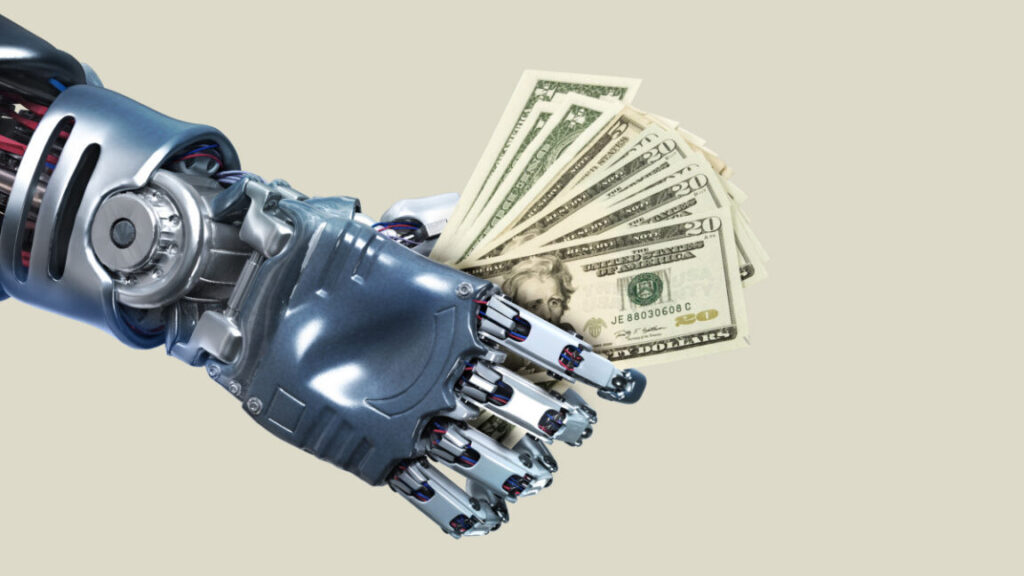
Silicon Valley’s AI talent war just reached a compensation milestone that makes even the most legendary scientific achievements of the past look financially modest. When Meta recently offered AI researcher Matt Deitke $250 million over four years (an average of $62.5 million per year)—with potentially $100 million in the first year alone—it shattered every historical precedent for scientific and technical compensation we can find on record. That includes salaries during the development of major scientific milestones of the 20th century.

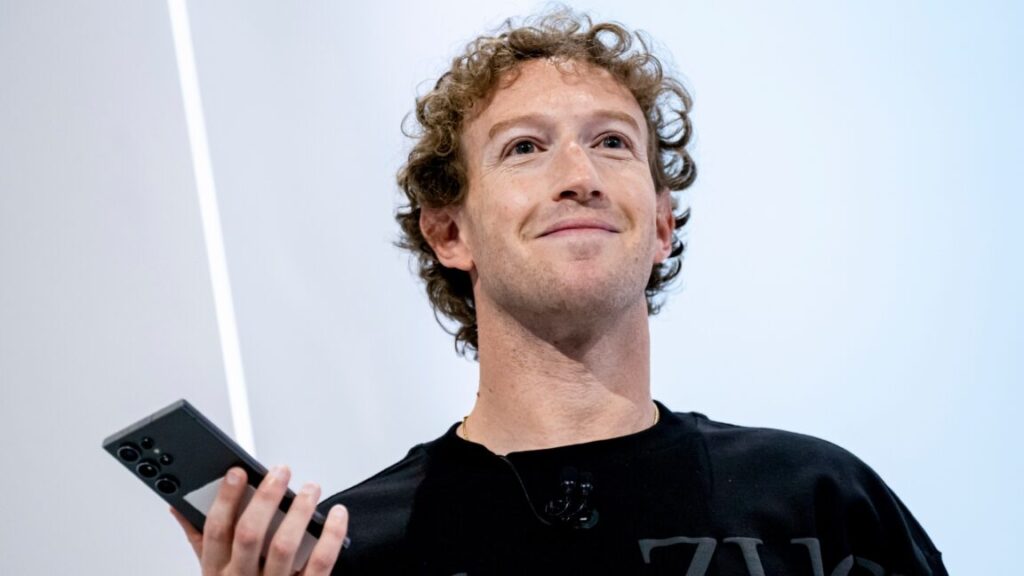
The New York Times reported that Deitke had cofounded a startup called Vercept and previously led the development of Molmo, a multimodal AI system, at the Allen Institute for Artificial Intelligence. His expertise in systems that juggle images, sounds, and text—exactly the kind of technology Meta wants to build—made him a prime target for recruitment. But he’s not alone: Meta CEO Mark Zuckerberg reportedly also offered an unnamed AI engineer $1 billion in compensation to be paid out over several years. What’s going on?

These astronomical sums reflect what tech companies believe is at stake: a race to create artificial general intelligence (AGI) or superintelligence—machines capable of performing intellectual tasks at or beyond the human level. Meta, Google, OpenAI, and others are betting that whoever achieves this breakthrough first could dominate markets worth trillions. Whether this vision is realistic or merely Silicon Valley hype, it’s driving compensation to unprecedented levels.

To put these salaries in a historical perspective: J. Robert Oppenheimer, who led the Manhattan Project that ended World War II, earned approximately $10,000 per year in 1943. Adjusted for inflation using the US Government’s CPI Inflation Calculator, that’s about $190,865 in today’s dollars—roughly what a senior software engineer makes today. The 24-year-old Deitke, who recently dropped out of a PhD program, will earn approximately 327 times what Oppenheimer made while developing the atomic bomb.

Many top athletes can’t compete with these numbers. The New York Times noted that Steph Curry’s most recent four-year contract with the Golden State Warriors was $35 million less than Deitke’s Meta deal (although soccer superstar Cristiano Ronaldo will make $275 million this year as the highest-paid professional athlete in the world).  The comparison prompted observers to call this an “NBA-style” talent market—except the AI researchers are making more than NBA stars.

Racing toward “superintelligence”

Mark Zuckerberg recently told investors that Meta plans to continue throwing money at AI talent “because we have conviction that superintelligence is going to improve every aspect of what we do.” In a recent open letter, he described superintelligent AI as technology that would “begin an exciting new era of individual empowerment,” despite declining to define what superintelligence actually is.

This vision explains why companies treat AI researchers like irreplaceable assets rather than well-compensated professionals. If these companies are correct, the first to achieve artificial general intelligence or superintelligence won’t just have a better product—they’ll have technology that could invent endless new products or automate away millions of knowledge-worker jobs and transform the global economy. The company that controls that kind of technology could become the richest company in history by far.

So perhaps it’s not surprising that even the highest salaries of employees from the early tech era pale in comparison to today’s AI researcher salaries. Thomas Watson Sr., IBM’s legendary CEO, received $517,221 in 1941—the third-highest salary in America at the time (about $11.8 million in 2025 dollars). The modern AI researcher’s package represents more than five times Watson’s peak compensation, despite Watson building one of the 20th century’s most dominant technology companies.

The contrast becomes even more stark when considering the collaborative nature of past scientific achievements. During Bell Labs’ golden age of innovation—when researchers developed the transistor, information theory, and other foundational technologies—the lab’s director made about 12 times what the lowest-paid worker earned.  Meanwhile, Claude Shannon, who created information theory at Bell Labs in 1948, worked on a standard professional salary while creating the mathematical foundation for all modern communication.

The “Traitorous Eight” who left William Shockley to found Fairchild Semiconductor—the company that essentially birthed Silicon Valley—split ownership of just 800 shares out of 1,325 total when they started. Their seed funding of $1.38 million (about $16.1 million today) for the entire company is a fraction of what a single AI researcher now commands.

Even Space Race salaries were far cheaper

The Apollo program offers another striking comparison. Neil Armstrong, the first human to walk on the moon, earned about $27,000 annually—roughly $244,639 in today’s money. His crewmates Buzz Aldrin and Michael Collins made even less, earning the equivalent of $168,737 and $155,373, respectively, in today’s dollars. Current NASA astronauts earn between $104,898 and $161,141 per year. Meta’s AI researcher will make more in three days than Armstrong made in a year for taking “one giant leap for mankind.”

The engineers who designed the rockets and mission control systems for the Apollo program also earned modest salaries by modern standards. A 1970 NASA technical report provides a window into these earnings by analyzing salary data for the entire engineering profession. The report, which used data from the Engineering Manpower Commission, noted that these industry-wide salary curves corresponded directly to the government’s General Schedule (GS) pay scale on which NASA’s own employees were paid.

According to a chart in the 1970 report, a newly graduated engineer in 1966 started with an annual salary of between $8,500 and $10,000 (about $84,622 to $99,555 today). A typical engineer with a decade of experience earned around $17,000 annually ($169,244 today). Even the most elite, top-performing engineers with 20 years of experience peaked at a salary of around $278,000 per year in today’s dollars—a sum that a top AI researcher like Deitke can now earn in just a few days.

Why the AI talent market is different

An image of a faceless human silhouette (chest up) with exposed microchip contacts and circuitry erupting from its open head. This visual metaphor explores transhumanism, AI integration, or the erosion of organic thought in the digital age. The stark contrast between the biological silhouette and mechanical components highlights themes of technological dependence or posthuman evolution. Ideal for articles on neural implants, futurism, or the ethics of human augmentation.

This isn’t the first time technical talent has commanded premium prices. In 2012, after three University of Toronto academics published AI research, they auctioned themselves to Google for $44 million (about $62.6 million in today’s dollars). By 2014, a Microsoft executive was comparing AI researcher salaries to NFL quarterback contracts. But today’s numbers dwarf even those precedents.

Several factors explain this unprecedented compensation explosion. We’re in a new realm of industrial wealth concentration unseen since the Gilded Age of the late 19th century. Unlike previous scientific endeavors, today’s AI race features multiple companies with trillion-dollar valuations competing for an extremely limited talent pool. Only a small number of researchers have the specific expertise needed to work on the most capable AI systems, particularly in areas like multimodal AI, which Deitke specializes in. And AI hype is currently off the charts as “the next big thing” in technology.

The economics also differ fundamentally from past projects. The Manhattan Project cost $1.9 billion total (about $34.4 billion adjusted for inflation), while Meta alone plans to spend tens of billions annually on AI infrastructure. For a company approaching a $2 trillion market cap, the potential payoff from achieving AGI first dwarfs Deitke’s compensation package.

One executive put it bluntly to The New York Times: “If I’m Zuck and I’m spending $80 billion in one year on capital expenditures alone, is it worth kicking in another $5 billion or more to acquire a truly world-class team to bring the company to the next level? The answer is obviously yes.”

Young researchers maintain private chat groups on Slack and Discord to share offer details and negotiation strategies. Some hire unofficial agents. Companies not only offer massive cash and stock packages but also computing resources—the NYT reported that some potential hires were told they would be allotted 30,000 GPUs, the specialized chips that power AI development.

Also, tech companies believe they’re engaged in an arms race where the winner could reshape civilization. Unlike the Manhattan Project or Apollo program, which had specific, limited goals, the race for artificial general intelligence ostensibly has no ceiling. A machine that can match human intelligence could theoretically improve itself, creating what researchers call an “intelligence explosion” that could potentially offer cascading discoveries—if it actually comes to pass.

Whether these companies are building humanity’s ultimate labor replacement technology or merely chasing hype remains an open question, but we’ve certainly traveled a long way from the $8 per diem that Neil Armstrong received for his moon mission—about $70.51 in today’s dollars—before deductions for the “accommodations” NASA provided on the spacecraft. After Deitke accepted Meta’s offer, Vercept co-founder Kiana Ehsani joked on social media, “We look forward to joining Matt on his private island next year.”

Photo of Benj Edwards

Benj Edwards is Ars Technica’s Senior AI Reporter and founder of the site’s dedicated AI beat in 2022. He’s also a tech historian with almost two decades of experience. In his free time, he writes and records music, collects vintage computers, and enjoys nature. He lives in Raleigh, NC.

At $250 million, top AI salaries dwarf those of the Manhattan Project and the Space Race Read More »

ai-in-wyoming-may-soon-use-more-electricity-than-state’s-human-residents

AI in Wyoming may soon use more electricity than state’s human residents

Wyoming’s data center boom

Cheyenne is no stranger to data centers, having attracted facilities from Microsoft and Meta since 2012 due to its cool climate and energy access. However, the new project pushes the state into uncharted territory. While Wyoming is the nation’s third-biggest net energy supplier, producing 12 times more total energy than it consumes (dominated by fossil fuels), its electricity supply is finite.

While Tallgrass and Crusoe have announced the partnership, they haven’t revealed who will ultimately use all this computing power—leading to speculation about potential tenants.

A potential connection to OpenAI’s Stargate AI infrastructure project, announced in January, remains a subject of speculation. When asked by The Associated Press if the Cheyenne project was part of this effort, Crusoe spokesperson Andrew Schmitt was noncommittal. “We are not at a stage that we are ready to announce our tenant there,” Schmitt said. “I can’t confirm or deny that it’s going to be one of the Stargate.”

OpenAI recently activated the first phase of a Crusoe-built data center complex in Abilene, Texas, in partnership with Oracle. Chris Lehane, OpenAI’s chief global affairs officer, told The Associated Press last week that the Texas facility generates “roughly and depending how you count, about a gigawatt of energy” and represents “the largest data center—we think of it as a campus—in the world.”

OpenAI has committed to developing an additional 4.5 gigawatts of data center capacity through an agreement with Oracle. “We’re now in a position where we have, in a really concrete way, identified over five gigawatts of energy that we’re going to be able to build around,” Lehane told the AP. The company has not disclosed locations for these expansions, and Wyoming was not among the 16 states where OpenAI said it was searching for data center sites earlier this year.

AI in Wyoming may soon use more electricity than state’s human residents Read More »

meta-pirated-and-seeded-porn-for-years-to-train-ai,-lawsuit-says

Meta pirated and seeded porn for years to train AI, lawsuit says

Evidence may prove Meta seeded more content

Seeking evidence to back its own copyright infringement claims, Strike 3 Holdings searched “its archive of recorded infringement captured by its VXN Scan and Cross Reference tools” and found 47 “IP addresses identified as owned by Facebook infringing its copyright protected Works.”

The data allegedly demonstrates a “continued unauthorized distribution” over “several years.” And Meta allegedly did not stop its seeding after Strike 3 Holdings confronted the tech giant with this evidence—despite the IP data supposedly being verified through an industry-leading provider called Maxmind.

Strike 3 Holdings shared a screenshot of MaxMind’s findings. Credit: via Strike 3 Holdings’ complaint

Meta also allegedly attempted to “conceal its BitTorrent activities” through “six Virtual Private Clouds” that formed a “stealth network” of “hidden IP addresses,” the lawsuit alleged, which seemingly implicated a “major third-party data center provider” as a partner in Meta’s piracy.

An analysis of these IP addresses allegedly found “data patterns that matched infringement patterns seen on Meta’s corporate IP Addresses” and included “evidence of other activity on the BitTorrent network including ebooks, movies, television shows, music, and software.” The seemingly non-human patterns documented on both sets of IP addresses suggest the data was for AI training and not for personal use, Strike 3 Holdings alleged.

Perhaps most shockingly, considering that a Meta employee joked “torrenting from a corporate laptop doesn’t feel right,” Strike 3 Holdings further alleged that it found “at least one residential IP address of a Meta employee” infringing its copyrighted works. That suggests Meta may have directed an employee to torrent pirated data outside the office to obscure the data trail.

The adult site operator did not identify the employee or the major data center discussed in its complaint, noting in a subsequent filing that it recognized the risks to Meta’s business and its employees’ privacy of sharing sensitive information.

In total, the company alleged that evidence shows “well over 100,000 unauthorized distribution transactions” linked to Meta’s corporate IPs. Strike 3 Holdings is hoping the evidence will lead a jury to find Meta liable for direct copyright infringement or charge Meta with secondary and vicarious copyright infringement if the jury finds that Meta successfully distanced itself by using the third-party data center or an employee’s home IP address.

“Meta has the right and ability to supervise and/or control its own corporate IP addresses, as well as the IP addresses hosted in off-infra data centers, and the acts of its employees and agents infringing Plaintiffs’ Works through their residential IPs by using Meta’s AI script to obtain content through BitTorrent,” the complaint said.

Meta pirated and seeded porn for years to train AI, lawsuit says Read More »

trump’s-order-to-make-chatbots-anti-woke-is-unconstitutional,-senator-says

Trump’s order to make chatbots anti-woke is unconstitutional, senator says


Trump plans to use chatbots to eliminate dissent, senator alleged.

The CEOs of every major artificial intelligence company received letters Wednesday urging them to fight Donald Trump’s anti-woke AI order.

Trump’s executive order requires any AI company hoping to contract with the federal government to jump through two hoops to win funding. First, they must prove their AI systems are “truth-seeking”—with outputs based on “historical accuracy, scientific inquiry, and objectivity” or else acknowledge when facts are uncertain. Second, they must train AI models to be “neutral,” which is vaguely defined as not favoring DEI (diversity, equity, and inclusion), “dogmas,” or otherwise being “intentionally encoded” to produce “partisan or ideological judgments” in outputs “unless those judgments are prompted by or otherwise readily accessible to the end user.”

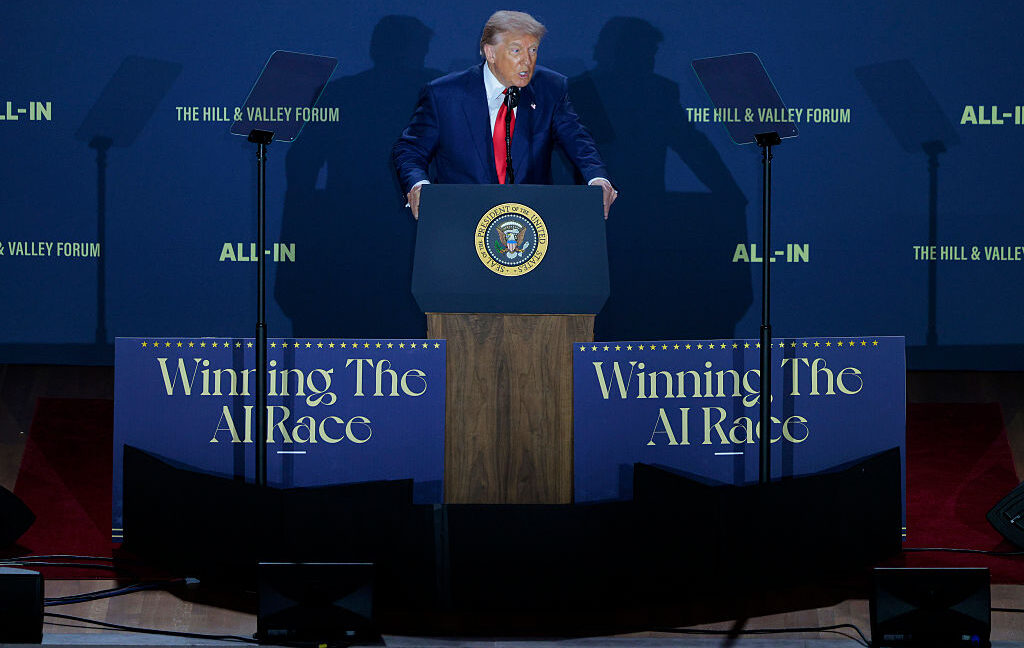
Announcing the order in a speech, Trump said that the US winning the AI race depended on removing allegedly liberal biases, proclaiming that “once and for all, we are getting rid of woke.”

“The American people do not want woke Marxist lunacy in the AI models, and neither do other countries,” Trump said.

Senator Ed Markey (D.-Mass.) accused Republicans of basing their policies on feelings, not facts, joining critics who suggest that AI isn’t “woke” just because of a few “anecdotal” outputs that reflect a liberal bias. And he suggested it was hypocritical that Trump’s order “ignores even more egregious evidence” that contradicts claims that AI is trained to be woke, such as xAI’s Elon Musk explicitly confirming that Grok was trained to be more right-wing.

“On May 1, 2025, Grok—the AI chatbot developed by xAI, Elon Musk’s AI company—acknowledged that ‘xAI tried to train me to appeal to the right,’” Markey wrote in his letters to tech giants. “If OpenAI’s ChatGPT or Google’s Gemini had responded that it was trained to appeal to the left, congressional Republicans would have been outraged and opened an investigation. Instead, they were silent.”

He warned the heads of Alphabet, Anthropic, Meta, Microsoft, OpenAI, and xAI that Trump’s AI agenda was allegedly “an authoritarian power grab” intended to “eliminate dissent” and was both “dangerous” and “patently unconstitutional.”

Even if companies’ AI models are clearly biased, Markey argued that “Republicans are using state power to pressure private companies to adopt certain political viewpoints,” which he claimed is a clear violation of the First Amendment. If AI makers cave, Markey warned, they’d be allowing Trump to create “significant financial incentives” to ensure that “their AI chatbots do not produce speech that would upset the Trump administration.”

“This type of interference with private speech is precisely why the US Constitution has a First Amendment,” Markey wrote, while claiming that Trump’s order is factually baseless.

It’s “based on the erroneous belief that today’s AI chatbots are ‘woke’ and biased against Trump,” Markey said, urging companies “to fight this unconstitutional executive order and not become a pawn in Trump’s effort to eliminate dissent in this country.”

One big reason AI companies may fight order

Some experts agreed with Markey that Trump’s order was likely unconstitutional or otherwise unlawful, The New York Times reported.

For example, Trump may struggle to convince courts that the government isn’t impermissibly interfering with AI companies’ protected speech or that such interference may be necessary to ensure federal procurement of unbiased AI systems.

Genevieve Lakier, a law professor at the University of Chicago, told the NYT that the lack of clarity around what makes a model biased could be a problem. Courts could deem the order an act of “unconstitutional jawboning,” with the Trump administration and Republicans generally perceived as using legal threats to pressure private companies into producing outputs that they like.

Lakier suggested that AI companies may be so motivated to win government contracts or intimidated by possible retaliation from Trump that they may not even challenge the order, though.

Markey is hoping that AI companies will refuse to comply with the order; however, despite recognizing that it places companies “in a difficult position: Either stand on your principles and face the wrath of the Trump administration or cave to Trump and modify your company’s political speech.”

There is one big possible reason that AI companies may have to resist, though.

Oren Etzioni, the former CEO of the AI research nonprofit Allen Institute for Artificial Intelligence, told CNN that Trump’s anti-woke AI order may contradict the top priority of his AI Action Plan—speeding up AI innovation in the US—and actually threaten to hamper innovation.

If AI developers struggle to produce what the Trump administration considers “neutral” outputs—a technical challenge that experts agree is not straightforward—that could delay model advancements.

“This type of thing… creates all kinds of concerns and liability and complexity for the people developing these models—all of a sudden, they have to slow down,” Etzioni told CNN.

Senator: Grok scandal spotlights GOP hypocrisy

Some experts have suggested that rather than chatbots adopting liberal viewpoints, chatbots are instead possibly filtering out conservative misinformation and unintentionally appearing to favor liberal views.

Andrew Hall, a professor of political economy at Stanford Graduate School of Business—who published a May paper finding that “Americans view responses from certain popular AI models as being slanted to the left”—told CNN that “tech companies may have put extra guardrails in place to prevent their chatbots from producing content that could be deemed offensive.”

Markey seemed to agree, writing that Republicans’ “selective outrage matches conservatives’ similar refusal to acknowledge that the Big Tech platforms suspend or impose other penalties disproportionately on conservative users because those users are disproportionately likely to share misinformation, rather than due to any political bias by the platforms.”

It remains unclear what amount of supposed bias detected in outputs could cause a contract bid to be rejected or an ongoing contract to be canceled, but AI companies will likely be on the hook to pay any fees in terminating contracts.

Complying with Trump’s order could pose a struggle for AI makers for several reasons. First, they’ll have to determine what’s fact and what’s ideology, contending with conflicting government standards in how Trump defines DEI. For example, the president’s order counts among “pervasive and destructive” DEI ideologies any outputs that align with long-standing federal protections against discrimination on the basis of race or sex. In addition, they must figure out what counts as “suppression or distortion of factual information about” historical topics like critical race theory, systemic racism, or transgenderism.

The examples in Trump’s order highlighting outputs offensive to conservatives seem inconsequential. He calls out image generators depicting the Pope, the Founding Fathers, and Vikings as not white as problematic, as well as models refusing to misgender a person “even if necessary to stop a nuclear apocalypse” or show white people celebrating their achievements.

It’s hard to imagine how these kinds of flawed outputs could impact government processes, as compared to, say, government contracts granted to models that could be hiding covert racism or sexism.

So far, there has been one example of an AI model displaying a right-wing bias earning a government contract with no red flags raised about its outputs.

Earlier this summer, Grok shocked the world after Musk announced he would be updating the bot to eliminate a supposed liberal bias. The unhinged chatbot began spouting offensive outputs, including antisemitic posts that praised Hitler as well as proclaiming itself “MechaHitler.”

But those obvious biases did not conflict with the Pentagon’s decision to grant xAI a $200 million federal contract. In a statement, a Pentagon spokesperson insisted that “the antisemitism episode wasn’t enough to disqualify” xAI, NBC News reported, partly since “several frontier AI models have produced questionable outputs.”

The Pentagon’s statement suggested that the government expected to deal with such risks while seizing the opportunity of rapidly deploying emerging AI technology into government prototype processes. And perhaps notably, Trump provides a carveout for any agencies using AI models to safeguard national security, which could exclude the Pentagon from experiencing any “anti-woke” delays in accessing frontier models.

But that won’t help other agencies that must figure out how to assess models to meet anti-woke AI requirements over the next few months. And those assessments could cause delays that Trump may wish to avoid in pushing for widespread AI adoption across government.

Trump’s anti-woke AI agenda may be impossible

On the same day that Trump issued his anti-woke AI order, his AI Action Plan promised an AI “renaissance” fueling “intellectual achievements” by “unraveling ancient scrolls once thought unreadable, making breakthroughs in scientific and mathematical theory, and creating new kinds of digital and physical art.”

To achieve that, the US must “innovate faster and more comprehensively than our competitors” and eliminate regulatory barriers impeding innovation in order to “set the gold standard for AI worldwide.”

However, achieving the anti-woke ambitions of both orders raises a technical problem that even the president must accept currently has no solution. In his AI Action Plan, Trump acknowledged that “the inner workings of frontier AI systems are poorly understood,” with even “advanced technologists” unable to explain “why a model produced a specific output.”

Whether requiring AI companies to explain their AI outputs to win government contracts will mess with other parts of Trump’s action plan remains to be seen. But Samir Jain, vice president of policy at a civil liberties group called the Center for Democracy and Technology, told the NYT that he predicts the anti-woke AI agenda will set “a really vague standard that’s going to be impossible for providers to meet.”

Photo of Ashley Belanger

Ashley is a senior policy reporter for Ars Technica, dedicated to tracking social impacts of emerging policies and new technologies. She is a Chicago-based journalist with 20 years of experience.

Trump’s order to make chatbots anti-woke is unconstitutional, senator says Read More »

meta’s-“ai-superintelligence”-effort-sounds-just-like-its-failed-“metaverse”

Meta’s “AI superintelligence” effort sounds just like its failed “metaverse”


Zuckerberg and company talked up another supposed tech revolution four short years ago.

Artist’s conception of Mark Zuckerberg looking into our glorious AI-powered future. Credit: Facebook

In a memo to employees earlier this week, Meta CEO Mark Zuckerberg shared a vision for a near-future in which “personal [AI] superintelligence for everyone” forms “the beginning of a new era for humanity.” The newly formed Meta Superintelligence Labs—freshly staffed with multiple high-level acquisitions from OpenAI and other AI companies—will spearhead the development of “our next generation of models to get to the frontier in the next year or so,” Zuckerberg wrote.

Reading that memo, I couldn’t help but think of another “vision for the future” Zuckerberg shared not that long ago. At his 2021 Facebook Connect keynote, Zuckerberg laid out his plan for the metaverse, a virtual place where “you’re gonna be able to do almost anything you can imagine” and which would form the basis of “the next version of the Internet.”

“The future of the Internet” of the recent past.

“The future of the Internet” of the recent past. Credit: Meta

Zuckerberg believed in that vision so much at the time that he abandoned the well-known Facebook corporate brand in favor of the new name “Meta.” “I’m going to keep pushing and giving everything I’ve got to make this happen now,” Zuckerberg said at the time. Less than four years later, Zuckerberg seems to now be “giving everything [he’s] got” for a vision of AI “superintelligence,” reportedly offering pay packages of up to $300 million over four years to attract top talent from other AI companies (Meta has since denied those reports, saying, “The size and structure of these compensation packages have been misrepresented all over the place”).

Once again, Zuckerberg is promising that this new technology will revolutionize our lives and replace the ways we currently socialize and work on the Internet. But the utter failure (so far) of those over-the-top promises for the metaverse has us more than a little skeptical of how impactful Zuckerberg’s vision of “personal superintelligence for everyone” will truly be.

Meta-vision

Looking back at Zuckerberg’s 2021 Facebook Connect keynote shows just how hard the company was selling the promise of the metaverse at the time. Zuckerberg said the metaverse would represent an “even more immersive and embodied Internet” where “everything we do online today—connecting socially, entertainment, games, work—is going to be more natural and vivid.”

Mark Zuckerberg lays out his vision for the metaverse in 2021.

“Teleporting around the metaverse is going to be like clicking a link on the Internet,” Zuckerberg promised, and metaverse users would probably switch between “a photorealistic avatar for work, a stylized one for hanging out, and maybe even a fantasy one for gaming.” This kind of personalization would lead to “hundreds of thousands” of artists being able to make a living selling virtual metaverse goods that could be embedded in virtual or real-world environments.

“Lots of things that are physical today, like screens, will just be able to be holograms in the future,” Zuckerberg promised. “You won’t need a physical TV; it’ll just be a one-dollar hologram from some high school kid halfway across the world… we’ll be able to express ourselves in new joyful, completely immersive ways, and that’s going to unlock a lot of amazing new experiences.”

A pre-rendered concept video showed metaverse users playing poker in a zero-gravity space station with robot avatars, then pausing briefly to appreciate some animated 3D art a friend had encountered on the street. Another video showed a young woman teleporting via metaverse avatar to virtually join a friend attending a live concert in Tokyo, then buying virtual merch from the concert at a metaverse afterparty from the comfort of her home. Yet another showed old men playing chess on a park bench, even though one of the players was sitting across the country.

Meta-failure

Fast forward to 2025, and the current reality of Zuckerberg’s metaverse efforts bears almost no resemblance to anything shown or discussed back in 2021. Even enthusiasts describe Meta’s Horizon Worlds as a “depressing” and “lonely” experience characterized by “completely empty” venues. And Meta engineers anonymously gripe about metaverse tools that even employees actively avoid using and a messy codebase that was treated like “a 3D version of a mobile app. “

screen sharing

Even Meta employees reportedly don’t want to work in Horizon Workrooms.

Even Meta employees reportedly don’t want to work in Horizon Workrooms. Credit: Facebook

The creation of a $50 million creator fund seems to have failed to encourage peeved creators to give the metaverse another chance. Things look a bit better if you expand your view past Meta’s own metaverse sandbox; the chaotic world of VR Chat attracts tens of thousands of daily users on Steam alone, for instance. Still, we’re a far cry from the replacement for the mobile Internet that Zuckerberg once trumpeted.

Then again, it’s possible that we just haven’t given Zuckerberg’s version of the metaverse enough time to develop. Back in 2021, he said that “a lot of this is going to be mainstream” within “the next five or 10 years.” That timeframe gives Meta at least a few more years to develop and release its long-teased, lightweight augmented reality glasses that the company showed off last year in the form of a prototype that reportedly still costs $10,000 per unit.

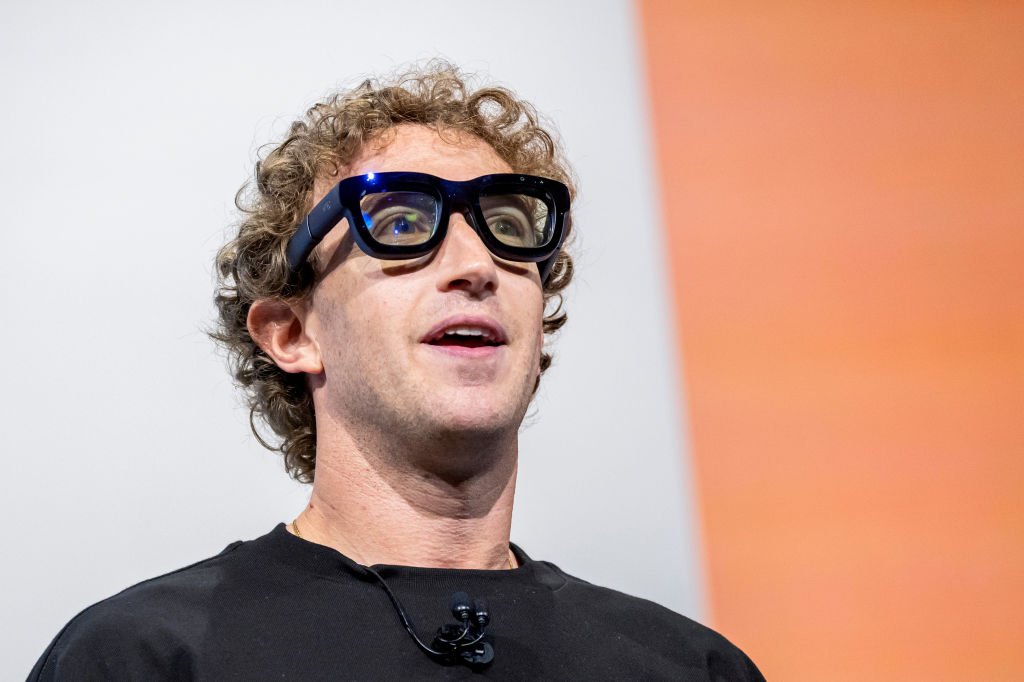
Zuckerberg shows off prototype AR glasses that could change the way we think about “the metaverse.” Credit: Bloomberg / Contributor | Bloomberg

Maybe those glasses will ignite widespread interest in the metaverse in a way that Meta’s bulky, niche VR goggles have utterly failed to. Regardless, after nearly four years and roughly $60 billion in VR-related losses, Meta thus far has surprisingly little to show for its massive investment in Zuckerberg’s metaverse vision.

Our AI future?

When I hear Zuckerberg talk about the promise of AI these days, it’s hard not to hear echoes of his monumental vision for the metaverse from 2021. If anything, Zuckerberg’s vision of our AI-powered future is even more grandiose than his view of the metaverse.

As with the metaverse, Zuckerberg now sees AI forming a replacement for the current version of the Internet. “Do you think in five years we’re just going to be sitting in our feed and consuming media that’s just video?” Zuckerberg asked rhetorically in an April interview with Drawkesh Patel. “No, it’s going to be interactive,” he continued, envisioning something like Instagram Reels, but “you can talk to it, or interact with it, and it talks back, or it changes what it’s doing. Or you can jump into it like a game and interact with it. That’s all going to be AI.”

Mark Zuckerberg talks about all the ways superhuman AI is going to change our lives in the near future.

As with the Metaverse, Zuckerberg sees AI as revolutionizing the way we interact with each other. He envisions “always-on video chats with the AI” incorporating expressions and body language borrowed from the company’s work on the metaverse. And our relationships with AI models are “just going to get more intense as these AIs become more unique, more personable, more intelligent, more spontaneous, more funny, and so forth,” Zuckerberg said. “As the personalization loop kicks in and the AI starts to get to know you better and better, that will just be really compelling.”

Zuckerberg did allow that relationships with AI would “probably not” replace in-person connections, because there are “things that are better about physical connections when you can have them.” At the same time, he said, for the average American who has three friends, AI relationships can fill the “demand” for “something like 15 friends” without the effort of real-world socializing. “People just don’t have as much connection as they want,” Zuckerberg said. “They feel more alone a lot of the time than they would like.”

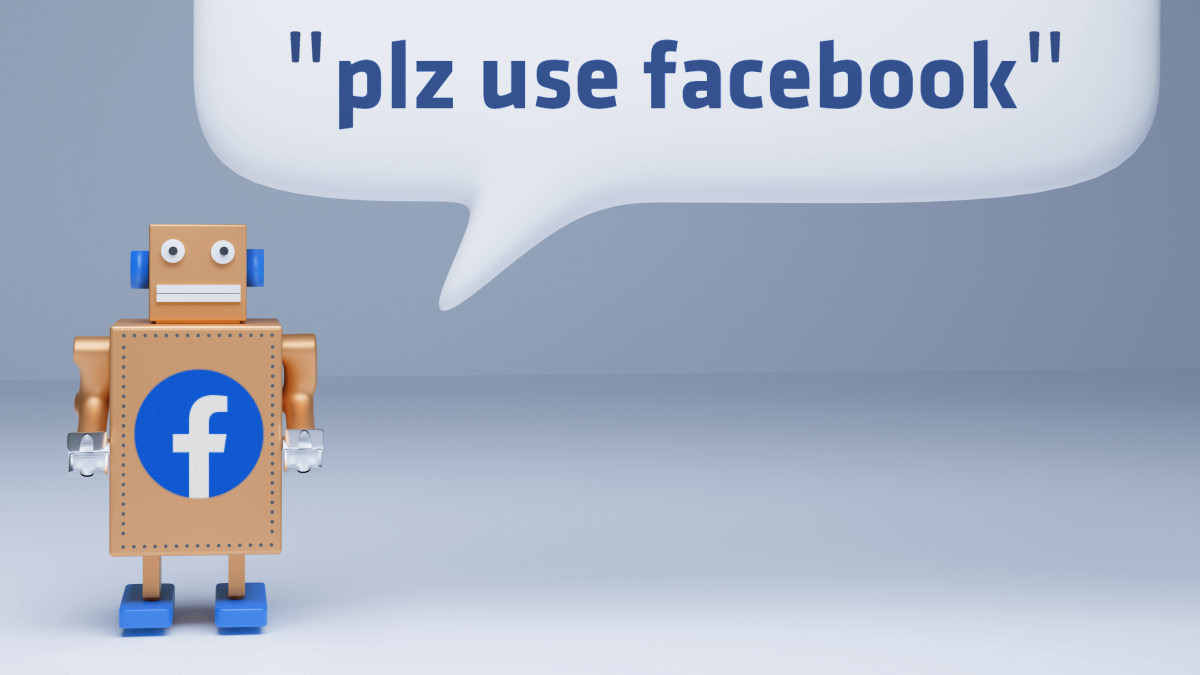
A toy robot saying

Why chat with real friends on Facebook when you can chat with AI avatars?

Credit: Benj Edwards / Getty Images

Why chat with real friends on Facebook when you can chat with AI avatars? Credit: Benj Edwards / Getty Images

Zuckerberg also sees AI leading to a flourishing of human productivity and creativity in a way even his wildest metaverse imaginings couldn’t match. Zuckerberg said that AI advancement could “lead toward a world of abundance where everyone has these superhuman tools to create whatever they want.” That means personal access to “a super powerful [virtual] software engineer” and AIs that are “solving diseases, advancing science, developing new technology that makes our lives better.”

That will also mean that some companies will be able to get by with fewer employees before too long, Zuckerberg said. In customer service, for instance, “as AI gets better, you’re going to get to a place where AI can handle a bunch of people’s issues,” he said. “Not all of them—maybe 10 years from now it can handle all of them—but thinking about a three- to five-year time horizon, it will be able to handle a bunch.“

In the longer term, Zuckerberg said, AIs will be integrated into our more casual pursuits as well. “If everyone has these superhuman tools to create a ton of different stuff, you’re going to get incredible diversity,” and “the amount of creativity that’s going to be unlocked is going to be massive,” he said. “I would guess the world is going to get a lot funnier, weirder, and quirkier, the way that memes on the Internet have gotten over the last 10 years.”

Compare and contrast

To be sure, there are some important differences between the past promise of the metaverse and the current promise of AI technology. Zuckerberg claims that a billion people use Meta’s AI products monthly, for instance, utterly dwarfing the highest estimates for regular use of “the metaverse” or augmented reality as a whole (even if many AI users seem to balk at paying for regular use of AI tools). Meta coders are also reportedly already using AI coding tools regularly in a way they never did with Meta’s metaverse tools. And people are already developing what they consider meaningful relationships with AI personas, whether that’s in the form of therapists or romantic partners.

Still, there are reasons to be skeptical about the future of AI when current models still routinely hallucinate basic facts, show fundamental issues when attempting reasoning, and struggle with basic tasks like beating a children’s video game. The path from where we are to a supposed “superhuman” AI is not simple or inevitable, despite the handwaving of industry boosters like Zuckerberg.

Artist’s conception of Carmack’s VR avatar waving goodbye to Meta.

Artist’s conception of Carmack’s VR avatar waving goodbye to Meta.

At the 2021 rollout of Meta’s push to develop a metaverse, high-ranking Meta executives like John Carmack were at least up front about the technical and product-development barriers that could get in the way of Zuckerberg’s vision. “Everybody that wants to work on the metaverse talks about the limitless possibilities of it,” Carmack said at the time (before departing the company in late 2022). “But it’s not limitless. It is a challenge to fit things in, but you can make smarter decisions about exactly what is important and then really optimize the heck out of things.”

Today, those kinds of voices of internal skepticism seem in short supply as Meta sets itself up to push AI in the same way it once backed the metaverse. Don’t be surprised, though, if today’s promise that we’re at “the beginning of a new era for humanity” ages about as well as Meta’s former promises about a metaverse where “you’re gonna be able to do almost anything you can imagine.”

Photo of Kyle Orland

Kyle Orland has been the Senior Gaming Editor at Ars Technica since 2012, writing primarily about the business, tech, and culture behind video games. He has journalism and computer science degrees from University of Maryland. He once wrote a whole book about Minesweeper.

Meta’s “AI superintelligence” effort sounds just like its failed “metaverse” Read More »

judge:-pirate-libraries-may-have-profited-from-meta-torrenting-80tb-of-books

Judge: Pirate libraries may have profited from Meta torrenting 80TB of books

It could certainly look worse for Meta if authors manage to present evidence supporting the second way that torrenting could be relevant to the case, Chhabaria suggested.

“Meta downloading copyrighted material from shadow libraries” would also be relevant to the character of the use, “if it benefitted those who created the libraries and thus supported and perpetuated their unauthorized copying and distribution of copyrighted works,” Chhabria wrote.

Counting potential strikes against Meta, Chhabria pointed out that the “vast majority of cases” involving “this sort of peer-to-peer file-sharing” are found to “constitute copyright infringement.” And it likely doesn’t help Meta’s case that “some of the libraries Meta used have themselves been found liable for infringement.”

However, Meta may overcome this argument, too, since book authors “have not submitted any evidence” that potentially shows how Meta’s downloading may perhaps be “propping up” or financially benefiting pirate libraries.

Finally, Chhabria noted that the “last issue relating to the character of Meta’s use” of books in regards to its torrenting is “the relationship between Meta’s downloading of the plaintiffs’ books and Meta’s use of the books to train Llama.”

Authors had tried to argue that these elements were distinct. But Chhabria said there’s no separating the fact that Meta downloaded the books to serve the “highly transformative” purpose of training Llama.

“Because Meta’s ultimate use of the plaintiffs’ books was transformative, so too was Meta’s downloading of those books,” Chhabria wrote.

AI training rulings may get more authors paid

Authors only learned of Meta’s torrenting through discovery in the lawsuit, and because of that, Chhabria noted that “the record on Meta’s alleged distribution is incomplete.”

It’s possible that authors may be able to show evidence that Meta “contributed to the BitTorrent network” by providing significant computing power that could’ve meaningfully assisted shadow libraries, Chhabria said in a footnote.

Judge: Pirate libraries may have profited from Meta torrenting 80TB of books Read More »

to-avoid-admitting-ignorance,-meta-ai-says-man’s-number-is-a-company-helpline

To avoid admitting ignorance, Meta AI says man’s number is a company helpline

Although that statement may provide comfort to those who have kept their WhatsApp numbers off the Internet, it doesn’t resolve the issue of WhatsApp’s AI helper potentially randomly generating a real person’s private number that may be a few digits off from the business contact information WhatsApp users are seeking.

Expert pushes for chatbot design tweaks

AI companies have recently been grappling with the problem of chatbots being programmed to tell users what they want to hear, instead of providing accurate information. Not only are users sick of “overly flattering” chatbot responses—potentially reinforcing users’ poor decisions—but the chatbots could be inducing users to share more private information than they would otherwise.

The latter could make it easier for AI companies to monetize the interactions, gathering private data to target advertising, which could deter AI companies from solving the sycophantic chatbot problem. Developers for Meta rival OpenAI, The Guardian noted, last month shared examples of “systemic deception behavior masked as helpfulness” and chatbots’ tendency to tell little white lies to mask incompetence.

“When pushed hard—under pressure, deadlines, expectations—it will often say whatever it needs to to appear competent,” developers noted.

Mike Stanhope, the managing director of strategic data consultants Carruthers and Jackson, told The Guardian that Meta should be more transparent about the design of its AI so that users can know if the chatbot is designed to rely on deception to reduce user friction.

“If the engineers at Meta are designing ‘white lie’ tendencies into their AI, the public need to be informed, even if the intention of the feature is to minimize harm,” Stanhope said. “If this behavior is novel, uncommon, or not explicitly designed, this raises even more questions around what safeguards are in place and just how predictable we can force an AI’s behavior to be.”

To avoid admitting ignorance, Meta AI says man’s number is a company helpline Read More »

ads-are-“rolling-out-gradually”-to-whatsapp

Ads are “rolling out gradually” to WhatsApp

For the first time since launching in 2009, WhatsApp will now show users advertisements. The ads are “rolling out gradually,” the company said.

For now, the ads will only appear on WhatsApp’s Updates tab, where users can update their status and access channels or groups targeting specific interests they may want to follow. In its announcement of the ads, parent company Meta claimed that placing ads under Updates means that the ads won’t “interrupt personal chats.”

Meta said that 1.5 billion people use the Updates tab daily. However, if you exclusively use WhatsApp for direct messages and personal group chats, you could avoid ever seeing ads.

“Now the Updates tab is going to be able to help Channel admins, organizations, and businesses build and grow,” Meta’s announcement said.

WhatsApp users will see three different types of ads on their messaging app. One is through the tab’s Status section, where users typically share photos, videos, voice notes, and/or text with their friends that disappear after 24 hours. While scrolling through friends’ status updates, users will see status updates from advertisers and can send a message to the company about the offering that it is promoting.

There are also Promoted Channels: “For the first time, admins have a way to increase their Channel’s visibility,” Meta said.

Finally, WhatsApp is allowing advertisers to charge users a monthly fee in order to “receive exclusive updates.” For example, people could subscribe to a cooking Channel and request alerts for new recipes.

In order to decide which ads users see, Meta says WhatsApp will leverage user information like their country code, age, their device’s language settings, and the user’s “general (not precise) location, like city or country.”

Ads are “rolling out gradually” to WhatsApp Read More »

meta-beefs-up-disappointing-ai-division-with-$15-billion-scale-ai-investment

Meta beefs up disappointing AI division with $15 billion Scale AI investment

Meta has invested heavily in generative AI, with the majority of its planned $72 billion in capital expenditure this year earmarked for data centers and servers. The deal underlines the high price AI companies are willing to pay for data that can be used to train AI models.

Zuckerberg pledged last year that his company’s models would outstrip rivals’ efforts in 2025, but Meta’s most recent release, Llama 4, has underperformed on various independent reasoning and coding benchmarks.

The long-term goal of researchers at Meta “has always been to reach human intelligence and go beyond it,” said Yann LeCun, the company’s chief AI scientist at the VivaTech conference in Paris this week.

Building artificial “general” intelligence—AI technologies that have human-level intelligence—is a popular goal for many AI companies. An increasing number of Silicon Valley groups are also seeking to reach “superintelligence,” a hypothetical scenario where AI systems surpass human intelligence.

The core of Scale’s business has been data-labeling, a manual process of ensuring images and text are accurately labeled and categorized before they are used to train AI models.

Wang has forged relationships with Silicon Valley’s biggest investors and technologists, including OpenAI’s Sam Altman. Scale AI’s early customers were autonomous vehicle companies, but the bulk of its expected $2 billion in revenues this year will come from labeling the data used to train the massive AI models built by OpenAI and others.

The deal will result in a substantial payday for Scale’s early venture capital investors, including Accel, Tiger Global Management, and Index Ventures. Tiger’s $200 million investment is worth more than $1 billion at the company’s new valuation, according to a person with knowledge of the matter.

Additional reporting by Tabby Kinder in San Francisco

© 2025 The Financial Times Ltd. All rights reserved. Not to be redistributed, copied, or modified in any way.

Meta beefs up disappointing AI division with $15 billion Scale AI investment Read More »

musk’s-doge-used-meta’s-llama-2—not-grok—for-gov’t-slashing,-report-says

Musk’s DOGE used Meta’s Llama 2—not Grok—for gov’t slashing, report says

Why didn’t DOGE use Grok?

It seems that Grok, Musk’s AI model, wasn’t available for DOGE’s task because it was only available as a proprietary model in January. Moving forward, DOGE may rely more frequently on Grok, Wired reported, as Microsoft announced it would start hosting xAI’s Grok 3 models in its Azure AI Foundry this week, The Verge reported, which opens the models up for more uses.

In their letter, lawmakers urged Vought to investigate Musk’s conflicts of interest, while warning of potential data breaches and declaring that AI, as DOGE had used it, was not ready for government.

“Without proper protections, feeding sensitive data into an AI system puts it into the possession of a system’s operator—a massive breach of public and employee trust and an increase in cybersecurity risks surrounding that data,” lawmakers argued. “Generative AI models also frequently make errors and show significant biases—the technology simply is not ready for use in high-risk decision-making without proper vetting, transparency, oversight, and guardrails in place.”

Although Wired’s report seems to confirm that DOGE did not send sensitive data from the “Fork in the Road” emails to an external source, lawmakers want much more vetting of AI systems to deter “the risk of sharing personally identifiable or otherwise sensitive information with the AI model deployers.”

A seeming fear is that Musk may start using his own models more, benefiting from government data his competitors cannot access, while potentially putting that data at risk of a breach. They’re hoping that DOGE will be forced to unplug all its AI systems, but Vought seems more aligned with DOGE, writing in his AI guidance for federal use that “agencies must remove barriers to innovation and provide the best value for the taxpayer.”

“While we support the federal government integrating new, approved AI technologies that can improve efficiency or efficacy, we cannot sacrifice security, privacy, and appropriate use standards when interacting with federal data,” their letter said. “We also cannot condone use of AI systems, often known for hallucinations and bias, in decisions regarding termination of federal employment or federal funding without sufficient transparency and oversight of those models—the risk of losing talent and critical research because of flawed technology or flawed uses of such technology is simply too high.”

Musk’s DOGE used Meta’s Llama 2—not Grok—for gov’t slashing, report says Read More »

meta-argues-enshittification-isn’t-real-in-bid-to-toss-ftc-monopoly-case

Meta argues enshittification isn’t real in bid to toss FTC monopoly case

Further, Meta argued that the FTC did not show evidence that users sharing friends-and-family content were shown more ads. Meta noted that it “does not profit by showing more ads to users who do not click on them,” so it only shows more ads to users who click ads.

Meta also insisted that there’s “nothing but speculation” showing that Instagram or WhatsApp would have been better off or grown into rivals had Meta not acquired them.

The company claimed that without Meta’s resources, Instagram may have died off. Meta noted that Instagram co-founder Kevin Systrom testified that his app was “pretty broken and duct-taped” together, making it “vulnerable to spam” before Meta bought it.

Rather than enshittification, what Meta did to Instagram could be considered “a consumer-welfare bonanza,” Meta argued, while dismissing “smoking gun” emails from Mark Zuckerberg discussing buying Instagram to bury it as “legally irrelevant.”

Dismissing these as “a few dated emails,” Meta argued that “efforts to litigate Mr. Zuckerberg’s state of mind before the acquisition in 2012 are pointless.”

“What matters is what Meta did,” Meta argued, which was pump Instagram with resources that allowed it “to ‘thrive’—adding many new features, attracting hundreds of millions and then billions of users, and monetizing with great success.”

In the case of WhatsApp, Meta argued that nobody thinks WhatsApp had any intention to pivot to social media when the founders testified that their goal was to never add social features, preferring to offer a simple, clean messaging app. And Meta disputed any claim that it feared Google might buy WhatsApp as the basis for creating a Facebook rival, arguing that “the sole Meta witness to (supposedly) learn of Google’s acquisition efforts testified that he did not have that worry.”

Meta argues enshittification isn’t real in bid to toss FTC monopoly case Read More »

judge-on-meta’s-ai-training:-“i-just-don’t-understand-how-that-can-be-fair-use”

Judge on Meta’s AI training: “I just don’t understand how that can be fair use”


Judge downplayed Meta’s “messed up” torrenting in lawsuit over AI training.

A judge who may be the first to rule on whether AI training data is fair use appeared skeptical Thursday at a hearing where Meta faced off with book authors over the social media company’s alleged copyright infringement.

Meta, like most AI companies, holds that training must be deemed fair use, or else the entire AI industry could face immense setbacks, wasting precious time negotiating data contracts while falling behind global rivals. Meta urged the court to rule that AI training is a transformative use that only references books to create an entirely new work that doesn’t replicate authors’ ideas or replace books in their markets.

At the hearing that followed after both sides requested summary judgment, however, Judge Vince Chhabria pushed back on Meta attorneys arguing that the company’s Llama AI models posed no threat to authors in their markets, Reuters reported.

“You have companies using copyright-protected material to create a product that is capable of producing an infinite number of competing products,” Chhabria said. “You are dramatically changing, you might even say obliterating, the market for that person’s work, and you’re saying that you don’t even have to pay a license to that person.”

Declaring, “I just don’t understand how that can be fair use,” the shrewd judge apparently stoked little response from Meta’s attorney, Kannon Shanmugam, apart from a suggestion that any alleged threat to authors’ livelihoods was “just speculation,” Wired reported.

Authors may need to sharpen their case, which Chhabria warned could be “taken away by fair use” if none of the authors suing, including Sarah Silverman, Ta-Nehisi Coates, and Richard Kadrey, can show “that the market for their actual copyrighted work is going to be dramatically affected.”

Determined to probe this key question, Chhabria pushed authors’ attorney, David Boies, to point to specific evidence of market harms that seemed noticeably missing from the record.

“It seems like you’re asking me to speculate that the market for Sarah Silverman’s memoir will be affected by the billions of things that Llama will ultimately be capable of producing,” Chhabria said. “And it’s just not obvious to me that that’s the case.”

But if authors can prove fears of market harms are real, Meta might struggle to win over Chhabria, and that could set a precedent impacting copyright cases challenging AI training on other kinds of content.

The judge repeatedly appeared to be sympathetic to authors, suggesting that Meta’s AI training may be a “highly unusual case” where even though “the copying is for a highly transformative purpose, the copying has the high likelihood of leading to the flooding of the markets for the copyrighted works.”

And when Shanmugam argued that copyright law doesn’t shield authors from “protection from competition in the marketplace of ideas,” Chhabria resisted the framing that authors weren’t potentially being robbed, Reuters reported.

“But if I’m going to steal things from the marketplace of ideas in order to develop my own ideas, that’s copyright infringement, right?” Chhabria responded.

Wired noted that he asked Meta’s lawyers, “What about the next Taylor Swift?” If AI made it easy to knock off a young singer’s sound, how could she ever compete if AI produced “a billion pop songs” in her style?

In a statement, Meta’s spokesperson reiterated the company’s defense that AI training is fair use.

“Meta has developed transformational open source AI models that are powering incredible innovation, productivity, and creativity for individuals and companies,” Meta’s spokesperson said. “Fair use of copyrighted materials is vital to this. We disagree with Plaintiffs’ assertions, and the full record tells a different story. We will continue to vigorously defend ourselves and to protect the development of GenAI for the benefit of all.”

Meta’s torrenting seems “messed up”

Some have pondered why Chhabria appeared so focused on market harms, instead of hammering Meta for admittedly illegally pirating books that it used for its AI training, which seems to be obvious copyright infringement. According to Wired, “Chhabria spoke emphatically about his belief that the big question is whether Meta’s AI tools will hurt book sales and otherwise cause the authors to lose money,” not whether Meta’s torrenting of books was illegal.

The torrenting “seems kind of messed up,” Chhabria said, but “the question, as the courts tell us over and over again, is not whether something is messed up but whether it’s copyright infringement.”

It’s possible that Chhabria dodged the question for procedural reasons. In a court filing, Meta argued that authors had moved for summary judgment on Meta’s alleged copying of their works, not on “unsubstantiated allegations that Meta distributed Plaintiffs’ works via torrent.”

In the court filing, Meta alleged that even if Chhabria agreed that the authors’ request for “summary judgment is warranted on the basis of Meta’s distribution, as well as Meta’s copying,” that the authors “lack evidence to show that Meta distributed any of their works.”

According to Meta, authors abandoned any claims that Meta’s seeding of the torrented files served to distribute works, leaving only claims about Meta’s leeching. Meta argued that the authors “admittedly lack evidence that Meta ever uploaded any of their works, or any identifiable part of those works, during the so-called ‘leeching’ phase,” relying instead on expert estimates based on how torrenting works.

It’s also possible that for Chhabria, the torrenting question seemed like an unnecessary distraction. Former Meta attorney Mark Lumley, who quit the case earlier this year, told Vanity Fair that the torrenting was “one of those things that sounds bad but actually shouldn’t matter at all in the law. Fair use is always about uses the plaintiff doesn’t approve of; that’s why there is a lawsuit.”

Lumley suggested that court cases mulling fair use at this current moment should focus on the outputs, rather than the training. Citing the ruling in a case where Google Books scanning books to share excerpts was deemed fair use, Lumley argued that “all search engines crawl the full Internet, including plenty of pirated content,” so there’s seemingly no reason to stop AI crawling.

But the Copyright Alliance, a nonprofit, non-partisan group supporting the authors in the case, in a court filing alleged that Meta, in its bid to get AI products viewed as transformative, is aiming to do the opposite. “When describing the purpose of generative AI,” Meta allegedly strives to convince the court to “isolate the ‘training’ process and ignore the output of generative AI,” because that’s seemingly the only way that Meta can convince the court that AI outputs serve “a manifestly different purpose from Plaintiffs’ books,” the Copyright Alliance argued.

“Meta’s motion ignores what comes after the initial ‘training’—most notably the generation of output that serves the same purpose of the ingested works,” the Copyright Alliance argued. And the torrenting question should matter, the group argued, because unlike in Google Books, Meta’s AI models are apparently training on pirated works, not “legitimate copies of books.”

Chhabria will not be making a snap decision in the case, planning to take his time and likely stressing not just Meta, but every AI company defending training as fair use the longer he delays. Understanding that the entire AI industry potentially has a stake in the ruling, Chhabria apparently sought to relieve some tension at the end of the hearing with a joke, Wired reported.

 “I will issue a ruling later today,” Chhabria said. “Just kidding! I will take a lot longer to think about it.”

Photo of Ashley Belanger

Ashley is a senior policy reporter for Ars Technica, dedicated to tracking social impacts of emerging policies and new technologies. She is a Chicago-based journalist with 20 years of experience.

Judge on Meta’s AI training: “I just don’t understand how that can be fair use” Read More »