iOS

what-to-expect-at-wwdc-24:-big-ios-changes,-more-vision-pro,-and-so-much-ai

What to expect at WWDC 24: Big iOS changes, more Vision Pro, and so much AI

WWDC 2024 —

There might not be new hardware, but Apple could make up for it with software.
A colorful logo that says

Enlarge / The logo for WWDC24.

Apple

Apple’s annual developer conference, WWDC, kicks off in Cupertino, California, next week. As always, it will start with a livestream keynote on Monday morning at 10 am Pacific, 1 pm Eastern. We’ll be in attendance reporting on the event, so let’s take a moment to take stock of what we expect to see next week.

But first, let’s note something we don’t think we’ll see: Due to some peculiarities about Apple’s upgrade cycles, as well as a push toward the M4, we’re not actually expecting any major hardware announcements at WWDC this year.

That’s OK, though, because it looks like it’s going to be a big one for software news. iOS has seen relatively modest updates in the past couple of years, but that’s about to change.

AI in the spotlight

Most of the rumors leading up to WWDC have been about Apple making plans to announce tons of generative AI features for its platforms. Part of that is because AI is the hot topic right now, so anything about that is bound to get some coverage. However, according to leaks reported on by Bloomberg, The Information, and others, it looks like Apple is going to make a conscious effort to reposition itself as a leader in AI.

Apple was already doing neat things with machine learning in iOS and elsewhere, like features that make image editing easier, smart recommendations, and more. But there have been major new developments in models lately that allow for many new options, as we’ve seen from others like OpenAI, Google, and Microsoft.

We don’t know many details about exactly what Apple will do here beyond it being a focus. The company has published several papers related to new large-language model chatbots, major Siri improvements, image generation, and more, but it’s hard to tell what will become user-facing features.

Possibilities include auto-generated summaries in apps like Mail, new ways to block ads or interact with websites in Safari, GitHub Copilot-like code editing assistance in Xcode, clip art generation for iWork documents, more conversational and larger-scope answers from Siri, new image editing features, expanded accessibility features, new transcription capabilities, and more.

Apple has reportedly been in talks with companies like OpenAI and Google (it even sounds like a deal has already been reached with OpenAI) about augmenting Siri and other parts of the iOS or macOS experience with an external AI chatbot. Apple has reportedly experimented with its own chatbot, but it’s unlikely that one would be far enough along to be a strong alternative to the likes of ChatGPT. At a minimum, expect Apple to partner with at least one company (probably OpenAI) as a provider for out-of-scope answers to queries asked of Siri or in Spotlight.

There have been rumblings that Apple could offer users a choice of multiple AI providers or launch an AI App Store, but we don’t know for sure how it will all take shape.

iOS and iPadOS 18

iOS 18 (and its close sibling, iPadOS 18) will roll out later this year alongside new iPhones, likely in September or October. But WWDC is the first time we’ll get a look at the major features Apple has planned.

Typically, Apple announces most new iOS features during the upcoming keynote, but it might save a couple that are are related to as-yet unannounced iPhone hardware for later.

The rumor mill this year points to an overhaul of both Control Center and Settings, plus the aforementioned inclusion of numerous new machine learning, LLM, or image generation features. One rumored example of how AI could be used in iOS described a new home screen that allows users to quickly recolor app icons to create a consistent color palette across their phone. Apple might even allow users to place icons wherever they want, addressing the irritating “wobble mode” home screen management that we’ve criticized in our iOS reviews for years.

Expect big new features for Messages, too, like new text effects and formatting options. There’s also a strong possibility that Apple will go into detail about RCS support in iOS. Generative AI could allow users to create custom emojis or stickers, too.

There were also a few rumors that Apple will make some visual changes to iOS, borrowing a bit from the visual language we saw in visionOS this spring.

Oh, and one more thing: iPadOS is finally getting a calculator app. We’re not sure why that took so long, but there it is.

What to expect at WWDC 24: Big iOS changes, more Vision Pro, and so much AI Read More »
apple-will-update-iphones-for-at-least-5-years-in-rare-public-commitment

Apple will update iPhones for at least 5 years in rare public commitment

finally, something in writing —

UK regulation requires companies to say how long they plan to provide support.

Apple will update iPhones for at least 5 years in rare public commitment

Apple

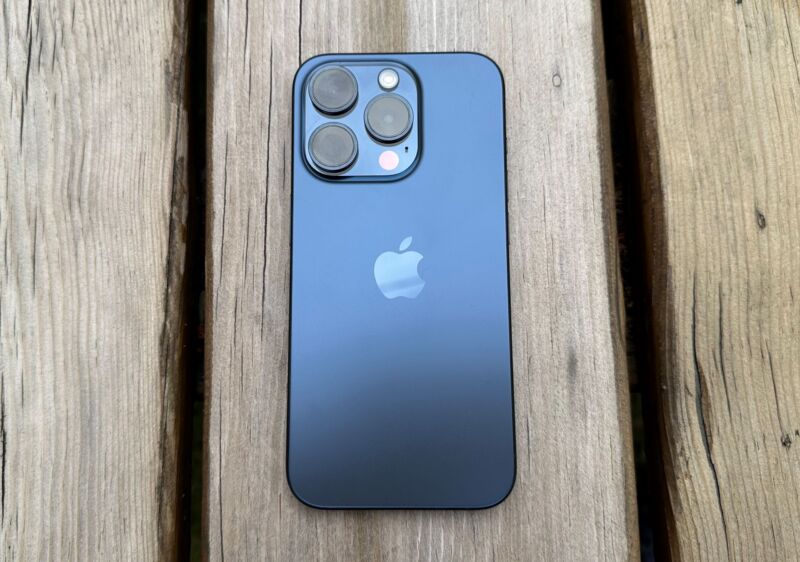
Apple has taken a rare step and publicly committed to a software support timeline for one of its products, as pointed out by MacRumors. A public regulatory filing for the iPhone 15 Pro (PDF) confirms that Apple will support the device with new software updates for at least five years from its “first supply date” of September 22, 2023, which would guarantee support until at least 2028.

Apple published the filing to comply with new Product Security and Telecommunications Infrastructure (PSTI) regulations from the UK that went into effect in late April. As this plain-language explainer from the Center for Cybersecurity Policy and Law summarizes, the PSTI regulations (among other things) don’t mandate a specific support window for manufacturers of Internet-connected devices, but they do require companies to publish a concrete support window and contact information for someone at the company who can be contacted with bug reports.

As publications like Android Authority have pointed out, five years is less than some Android phone makers like Google and Samsung have publicly committed to; both companies have said they’ll support their latest devices for seven years. But in reality, Apple usually hits or exceeds this seven-year timeline for updates—and does so for iPhones released nearly a decade ago and not just its newest products.

2017’s iPhone 8 and iPhone X, for example, are still receiving iOS 16 security updates. 2015’s iPhone 6S and 2016’s iPhone 7 were receiving iOS 15 updates as recently as March 2024, though these appear to have dried up in recent months. Each of these iPhones also received six or seven years’ worth of new major iOS releases, though not every phone that gets an iOS update supports every feature that newer devices get.

So Apple’s five-year pledge is notable less because it’s an improvement on or departure from the norm but more because Apple virtually never commits to software support timelines in writing.

Take those iOS 15 updates—Apple provided them for nearly a year and a half for iPhones and iPads that didn’t meet the requirements for iOS 16 or 17 but then abruptly (apparently) stopped releasing them. There was never a public commitment to continue releasing iOS 15 updates after iOS 16 came out, nor has there been any statement about iOS 15 updates being discontinued; we can only assume based on the fact that multiple iOS 16 and 17 updates have been released since March with no corresponding update for iOS 15.

The situation with the Mac is the same. Apple’s longstanding practice for decades has been to support the current version of macOS plus the two preceding versions, but that policy is not written down anywhere.

Contrast this with Microsoft, which generally commits to 10-year support timelines for new versions of Windows and publishes specific end-of-support dates years in advance; when Microsoft makes changes, it’s usually to extend the availability of updates in some way. Google has been making similar commitments for Chromebooks and officially certified ChromeOS Flex devices. These public timelines may tie a company’s hands, but they also make it easier for individuals, businesses, and schools to plan technology purchases and upgrades, and make it easier to know exactly how much support you can expect for a hand-me-down used or refurbished system.

Though the PSTI regulations only technically apply in the UK, it’s unlikely that Apple would go to the trouble of releasing iOS security updates in some countries without releasing those updates in all of them. But because a five-year support timeline is so much shorter than what Apple normally provides, it probably won’t matter that much. If Apple exceeds its stated support timeline, the PSTI law requires it to publish a new timeline “as soon as is practicable,” but for now, that date is far off.

Apple will update iPhones for at least 5 years in rare public commitment Read More »
the-apple-tv-is-coming-for-the-raspberry-pi’s-retro-emulation-box-crown

The Apple TV is coming for the Raspberry Pi’s retro emulation box crown

watch out, raspberry pi —

Apple’s restrictions will still hold it back, but there’s a lot of possibility.

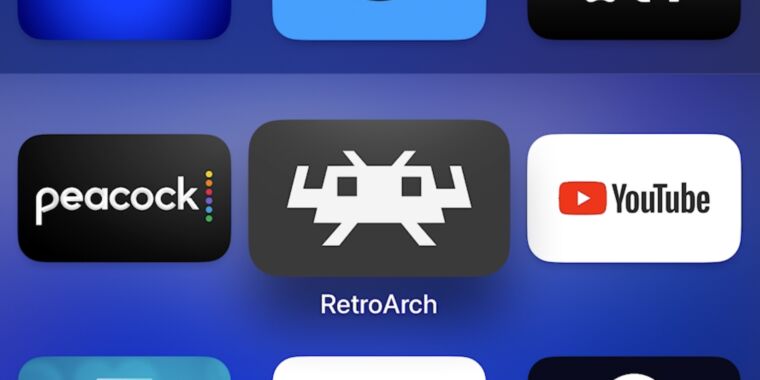
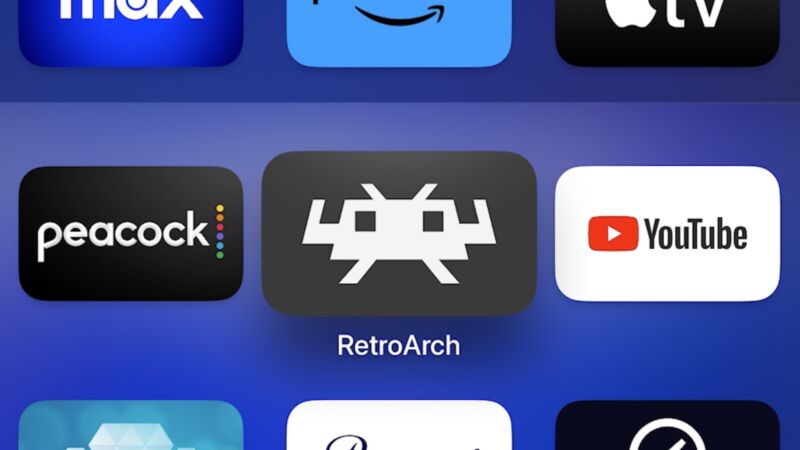
The RetroArch app installed in tvOS.

Enlarge / The RetroArch app installed in tvOS.

Andrew Cunningham

Apple’s initial pitch for the tvOS and the Apple TV as it currently exists was centered around apps. No longer a mere streaming box, the Apple TV would also be a destination for general-purpose software and games, piggybacking off of the iPhone’s vibrant app and game library.

That never really panned out, and the Apple TV is still mostly a box for streaming TV shows and movies. But the same App Store rule change that recently allowed Delta, PPSSPP, and other retro console emulators onto the iPhone and iPad could also make the Apple TV appeal to people who want a small, efficient, no-fuss console emulator for their TVs.

So far, few of the emulators that have made it to the iPhone have been ported to the Apple TV. But earlier this week, the streaming box got an official port of RetroArch, the sprawling collection of emulators that runs on everything from the PlayStation Portable to the Raspberry Pi. RetroArch could be sideloaded onto iOS and tvOS before this, but only using awkward workarounds that took a lot more work and know-how than downloading an app from the App Store.

Downloading and using RetroArch on the Apple TV is a lot like using it on any other platform it supports, for better or worse. ROM files can be uploaded using a browser connected to the Apple TV’s IP address or hostname, which will pop up the first time you launch the RetroArch app. From there, you’re only really limited by the list of emulators that the Apple TV version of the app supports.

The main benefit of using the Apple TV hardware for emulation is that even older models have substantially better CPU and GPU performance than any Raspberry Pi; the first-gen Apple TV 4K and its Apple A10X chip date back to 2017 and still do better than a Pi 5 released in 2023. Even these older models should be more than fast enough to support advanced video filters, like Run Ahead, to reduce wireless controller latency and higher-than-native-resolution rendering to make 3D games look a bit more modern.

Beyond the hardware, tvOS is also a surprisingly capable gaming platform. Apple has done a good job adding and maintaining support for new Bluetooth gamepads in recent releases, and even Nintendo’s official Switch Online controllers for the NES, SNES, and N64 are all officially supported as of late 2022. Apple may have added this gamepad support primarily to help support its Apple Arcade service, but all of those gamepads work equally well with RetroArch.

At the risk of stating the obvious, another upside of using the Apple TV for retro gaming is that you can also still use it as a modern 4K video streaming box when you’re finished playing your games. It has well-supported apps from just about every streaming provider, and it supports all the DRM that these providers insist on when you’re trying to stream high-quality 4K video with modern codecs. Most Pi gaming distributions offer the Kodi streaming software, but it’s frankly outside the scope of this article to talk about the long list of caveats and add-ons you’d need to use to attempt using the same streaming services the Apple TV can access.

Obviously, there are trade-offs. Pis have been running retro games for a decade, and the Apple TV is just starting to be able to do it now. Even with the loosened App Store restrictions, Apple still has other emulation limitations relative to a Raspberry Pi or a PC.

The biggest one is that emulators on Apple’s platforms can’t use just-in-time (JIT) code compilation, needed for 3D console emulators like Dolphin. These restrictions make the Apple TV a less-than-ideal option for emulating newer consoles—the Nintendo 64, Nintendo DS, Sony PlayStation, PlayStation Portable, and Sega Saturn are the newest consoles RetroArch supports on the Apple TV, cutting out newer things like the GameCube and Wii, Dreamcast, and PlayStation 2 that are all well within the capabilities of Apple’s chips. Apple also insists nebulously that emulators must be for “retro” consoles rather than modern ones, which could limit the types of emulators that are available.

With respect to RetroArch specifically, there are other limitations. Though RetroArch describes itself as a front-end for emulators, its user interface is tricky to navigate, and cluttered with tons of overlapping settings that make it easy to break things if you don’t know what you’re doing. Most Raspberry Pi gaming distros use RetroArch, but with a front-end-for-a-front-end like EmulationStation installed to make RetroArch a bit more accessible and easy to learn. A developer could release an app that included RetroArch plus a separate front-end, but Apple’s sandboxing restrictions would likely prevent anyone from releasing an app that just served as a more user-friendly front-end for the RetroArch app.

Regardless, it’s still pretty cool to be able to play retro games on an Apple TV’s more advanced hardware. As more emulators make their way to the App Store, the Apple TV’s less-fussy software and the power of its hardware could make it a compelling alternative to a more effort-intensive Raspberry Pi setup.

The Apple TV is coming for the Raspberry Pi’s retro emulation box crown Read More »
apple-releases-ios-175,-macos-14.5,-and-other-updates-as-new-ipads-launch

Apple releases iOS 17.5, macOS 14.5, and other updates as new iPads launch

start your updaters —

Latest updates launch in the shadow of WWDC keynote on June 10.

Apple releases iOS 17.5, macOS 14.5, and other updates as new iPads launch

Apple

Apple has released the latest updates for virtually all of its actively supported devices today. Most include a couple handfuls of security updates, some new features for Apple News+ subscribers, and something called Cross-Platform Tracking Protection for Bluetooth devices.

The iOS 17.5, iPadOS 17.5, macOS 4.5, watchOS 10.5, tvOS 17.5, and HomePod Software 17.5 updates are all available to download now.

Cross-Platform Tracking Protection notifications alert users “if a compatible Bluetooth tracker they do not own is moving with them, regardless of what operating system the device is paired with.” Apple has already implemented protections to prevent AirTag stalking, and Cross-Platform Tracking Protection implements some of those same safeguards for devices paired to non-Apple phones.

Apple News+ picks up a new word game called Quartiles, part of the wider trend of news organizations embracing games as growth drivers. Quartiles, Crossword, and Mini Crossword also track player stats and win streams, and the Today+ and News+ tabs will also load without an Internet connection.

Some of Apple’s older operating systems also received security-only updates to keep them current. The iOS 16.7.8 and iPadOS 16.7.8 updates are available for older iDevices that can’t update to iOS 17, and macOS Venture 13.6.7 and Monterey 12.7.5 support all Macs still running those OS versions regardless of whether they can install macOS Sonoma. There’s no update available for iOS or iPadOS 15.

These are likely to be the last major updates that Apple’s current operating systems receive before this year’s Worldwide Developers Conference on June 10, where Apple usually unveils its next major operating systems for the fall. Once those updates—iOS 18, macOS 15, and others—are announced, updates for current versions usually shift focus to security updates and bugs rather than adding major new features. Apple’s updates this year are widely expected to focus on generative AI features, including some ChatGPT-powered features and a more capable Siri assistant.

Apple releases iOS 17.5, macOS 14.5, and other updates as new iPads launch Read More »

apple-must-open-ipados-to-sideloading-within-6-months,-eu-says

Apple must open iPadOS to sideloading within 6 months, EU says

big regulations for a big iphone —

iPads must comply with the same DMA regulations as the iPhone.

Apple must open iPadOS to sideloading within 6 months, EU says

Andrew Cunningham

Starting in March with the release of iOS 17.4, iPhones in the European Union have been subject to the EU’s Digital Markets Act (DMA), a batch of regulations that (among other things) forced Apple to support alternate app stores, app sideloading, and third-party browser engines in iOS for the first time. Today, EU regulators announced that they are also categorizing Apple’s iPadOS as a “gatekeeper,” meaning that the iPad will soon be subject to the same regulations as the iPhone.

The EU began investigating whether iPadOS would qualify as a gatekeeper in September 2023, the same day it decided that iOS, the Safari browser, and the App Store were all gatekeepers.

“Apple now has six months to ensure full compliance of iPadOS with the DMA obligations,” reads the EU’s blog post about the change.

Apple technically split the iPad’s operating system from the iPhone’s in 2019 when it began calling its tablet operating system “iPadOS” instead of iOS. But practically speaking, little separates the two operating systems under the hood. Both iOS and iPadOS share the same software build numbers, they’re updated in lockstep (with rare exceptions), and most importantly for DMA compliance purposes, they pull software from the same locked-down App Store with the same Apple-imposed restrictions in place.

Apps distributed through alternate app stores or third-party websites will have to abide by many of Apple’s rules and will still generally be limited to using Apple’s public APIs. However, the ability to use alternate app stores and browser engines on the iPad’s large screen (and the desktop-class M-series chips) could make the tablets better laptop replacements by allowing them to do more of the things that Mac users can do on their systems.

Though Apple has made multiple changes to iOS in the EU to comply with the DMA, EU regulators are already investigating Apple (as well as Google and Meta) for “non-compliance.” Depending on the results of that investigation, the EU may require Apple to make more changes to the way it allows third-party apps to be installed in iOS and to the way that third-party developers are allowed to advertise non-Apple app store and payment options. Any changes that Apple makes to iOS to comply with the investigation’s findings will presumably trickle down to the iPad as well.

Of course, none of this directly affects US-based iPhone or iPad users, whose devices remain restricted to Apple’s app stores and the WebKit browsing engine. That said, we have seen some recent App Store rule changes that have arguably trickled down from Apple’s attempts to comply with the DMA, most notably policy changes that have allowed (some, not all) retro game console emulators into the App Store for the first time.

Apple must open iPadOS to sideloading within 6 months, EU says Read More »

apple-removes-the-first-ios-game-boy-emulator-released-under-new-app-store-rules

Apple removes the first iOS Game Boy emulator released under new App Store rules

Easy come, easy go —

iGBA seems to have taken unauthorized code from earlier GBA4iOS project.

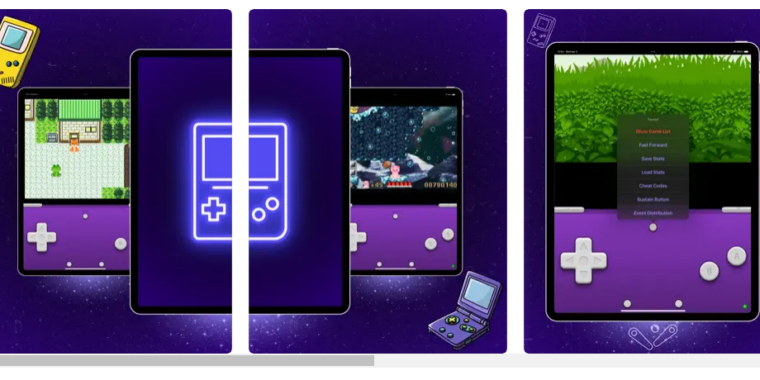
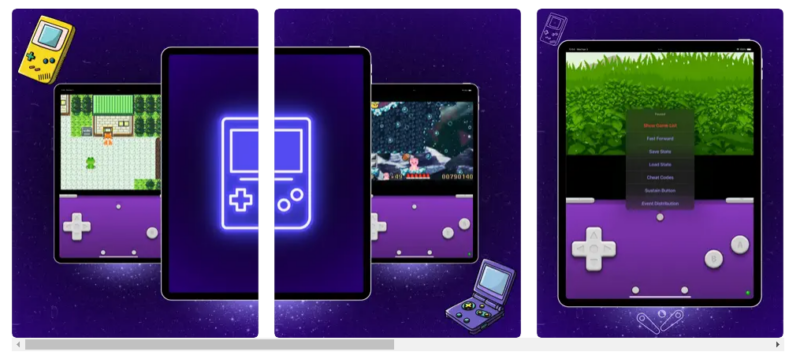
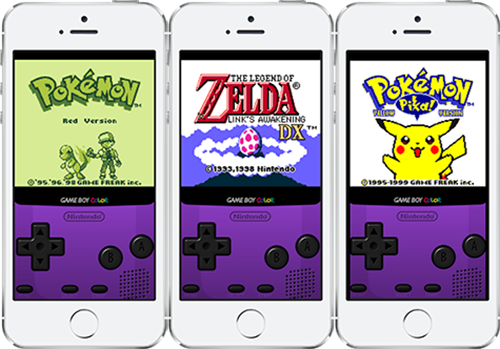
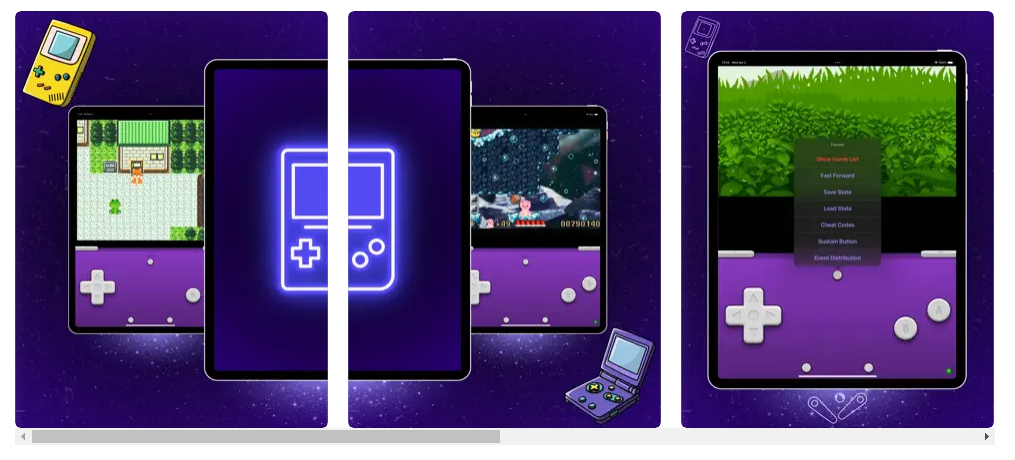
Photos of iGBA that appeared on the App Store before the app was taken down.

Enlarge / Photos of iGBA that appeared on the App Store before the app was taken down.

Over the weekend, developer Mattia La Spina launched iGBA as one of the first retro game emulators legitimately available on the iOS App Store following Apple’s rules change regarding such emulators earlier this month. As of Monday morning, though, iGBA has been pulled from the App Store following controversy over the unauthorized reuse of source code from a different emulator project.

Shortly after iGBA’s launch, some people on social media began noticing that the project appeared to be based on the code for GBA4iOS, a nearly decade-old emulator that developer Riley Testut and a partner developed as high-schoolers (and distributed via a temporary security hole in the iOS App Store). Testut took to social media Sunday morning to call iGBA a “knock-off” of GBA4iOS. “I did not give anyone permission to do this, yet it’s now sitting at the top of the charts (despite being filled with ads + tracking),” he wrote.

GBA4iOS is an open source program released under the GNU GPLv2 license, with licensing terms that let anyone “use, modify, and distribute my original code for this project without fear of legal consequences.” But those expansive licensing terms only apply “unless you plan to submit your app to Apple’s App Store, in which case written permission from me is explicitly required.”

Images from the original, circa 2014 version of GBA4iOS.

Images from the original, circa 2014 version of GBA4iOS.

“To be clear, I’m not pissed at the developer [of iGBA],” Testut added on social media. “I’m pissed that Apple took the time to change the App Store rules to allow emulators and then approved a knock-off of my own app.”

Hurry up and wait

MacRumors reports that Apple cited two sections of its App Store guidelines in removing iGBA: one related to spam (Section 4.3) and one related to copyright (section 5.2). Right now, it’s a bit ambiguous whether the copyright violation refers to the copyright on the emulator source code itself or the emulator’s ability to easily play copyrighted games from Nintendo and others.

As we discussed earlier this month, the wording of Apple’s recent App Store guidelines update makes it unclear if developers can release general-purpose emulators with the ability to play ROMs they don’t control the rights to. Aside from iGBA, a Commodore 64 emulator named Emu64 XL and built off of the open source VICE project was recently launched on the iOS App Store.

Apple has yet to respond to a request for comment from Ars Technica. But Testut wrote early Monday morning that “to Apple’s credit, though, once they were aware of the issue, they did take it seriously. So I really don’t believe this was malicious at all — just an unfortunate situation for everyone involved.” Testut added that iGBA maker La Spina “reached out to me via email to personally apologize for the mess. So no hard feelings there.”

But Testut did have some hard feelings regarding Apple’s treatment of AltStore, an alternative marketplace for sideloading iOS apps that he’s trying to launch under the EU’s new regulations. That would provide Testut with a legitimate way to distribute Delta, a “sequel” to GBA4iOS that emulates many classic Nintendo consoles on Apple devices.

“My frustration stemmed entirely from the fact we’ve been ready to launch Delta since last month,” Tetstut wrote on social media. “This whole situation could’ve been avoided if Apple hadn’t delayed approving us until after changing their rules to allow emulators.”

Apple removes the first iOS Game Boy emulator released under new App Store rules Read More »

apple-now-allows-retro-game-emulators-on-its-app-store—but-with-big-caveats

Apple now allows retro game emulators on its App Store—but with big caveats

RETRO GAMES —

It’s probably not the Wild West of game emulation you’re hoping for. Here’s why.

A screenshot of Sonic the Hedgehog on an iPhone

Enlarge / The classic Sega Genesis game Sonic the Hedgehog running on an iPhone—in this case, as a standalone app.

Samuel Axon

When Apple posted its latest update to the App Store’s app review and submission policies for developers, it included language that appears to explicitly allow a new kind of app for emulating retro console games.

Apple has long forbidden apps that run code from an external source, but today’s announced changes now allow “software that is not embedded in the binary” in certain cases, with “retro game console emulator apps can offer to download games” specifically listed as one of those cases.

Here’s the exact wording:

4.7 Mini apps, mini games, streaming games, chatbots, plug-ins, and game emulators

Apps may offer certain software that is not embedded in the binary, specifically HTML5 mini apps and mini games, streaming games, chatbots, and plug-ins. Additionally, retro game console emulator apps can offer to download games. You are responsible for all such software offered in your app, including ensuring that such software complies with these Guidelines and all applicable laws. Software that does not comply with one or more guidelines will lead to the rejection of your app. You must also ensure that the software adheres to the additional rules that follow in 4.7.1 and 4.7.5. These additional rules are important to preserve the experience that App Store customers expect, and to help ensure user safety.

It’s a little fuzzy how this will play out, but it may not allow the kind of emulators you see on Android and desktop, which let you play retro games from any outside source.

Retro game emulators run what are colloquially called ROM files, which are more or less images of the game cartridges or discs that played on console hardware. By now, it’s well-established that the emulators themselves are completely legal, but the legality of the ROM files downloaded from ROM sites on the Internet depends on the specific files and circumstances.

There are ROMs that are entirely public domain or in some license where the creator allows distribution; there are ROMs that are technically copyrighted intellectual property but where the original owner no longer exists, and the current ownership is unknown or unenforced; and there are some ROMs (like many games made by Nintendo) where the owner still has an interest in controlling distribution and often takes action to try to curb illegal sharing and use of the files.

Additionally, many game publishers use emulators to run ROMs of their own retro games, which they sell to consumers either as standalone games or in collections for modern platforms.

It’s not completely clear from Apple’s wording, but our interpretation of Apple’s new rules is that it’s likely only the last of those examples will be possible; companies that own the intellectual property could launch emulator apps for downloading ROMs of their (and only their) games. So, for example, Sega could offer a Sega app that would allow users to download an ever-expanding library of Sega games, either as part of a subscription, for free, or as in-app purchases. Sega has offered its retro games on the iPhone before in emulation but with a standalone app for each game.

“You are responsible for all such software offered in your app, including ensuring that such software complies with these Guidelines and all applicable laws,” Apple writes. And it specifically says “retro game console emulator apps can offer to download games” in the list of exceptions to the rules against “software that is not embedded inside the binary”—but it doesn’t list any other method for retro game console emulator apps.

Whatever the case, this update is not limited to the European Union. Apple has been subjected to regulatory scrutiny in both the EU and the United States regarding its App Store rules. It’s likely the company is making this change to preempt criticism in this area, though it did not name its reasons when announcing the change other than to say it has been made to “support updated policies, upcoming features, and to provide clarification.”

Apple now allows retro game emulators on its App Store—but with big caveats Read More »

apple-may-hire-google-to-power-new-iphone-ai-features-using-gemini—report

Apple may hire Google to power new iPhone AI features using Gemini—report

Bake a cake as fast as you can —

With Apple’s own AI tech lagging behind, the firm looks for a fallback solution.

A Google

Benj Edwards

On Monday, Bloomberg reported that Apple is in talks to license Google’s Gemini model to power AI features like Siri in a future iPhone software update coming later in 2024, according to people familiar with the situation. Apple has also reportedly conducted similar talks with ChatGPT maker OpenAI.

The potential integration of Google Gemini into iOS 18 could bring a range of new cloud-based (off-device) AI-powered features to Apple’s smartphone, including image creation or essay writing based on simple prompts. However, the terms and branding of the agreement have not yet been finalized, and the implementation details remain unclear. The companies are unlikely to announce any deal until Apple’s annual Worldwide Developers Conference in June.

Gemini could also bring new capabilities to Apple’s widely criticized voice assistant, Siri, which trails newer AI assistants powered by large language models (LLMs) in understanding and responding to complex questions. Rumors of Apple’s own internal frustration with Siri—and potential remedies—have been kicking around for some time. In January, 9to5Mac revealed that Apple had been conducting tests with a beta version of iOS 17.4 that used OpenAI’s ChatGPT API to power Siri.

As we have previously reported, Apple has also been developing its own AI models, including a large language model codenamed Ajax and a basic chatbot called Apple GPT. However, the company’s LLM technology is said to lag behind that of its competitors, making a partnership with Google or another AI provider a more attractive option.

Google launched Gemini, a language-based AI assistant similar to ChatGPT, in December and has updated it several times since. Many industry experts consider the larger Gemini models to be roughly as capable as OpenAI’s GPT-4 Turbo, which powers the subscription versions of ChatGPT. Until just recently, with the emergence of Gemini Ultra and Claude 3, OpenAI’s top model held a fairly wide lead in perceived LLM capability.

The potential partnership between Apple and Google could significantly impact the AI industry, as Apple’s platform represents more than 2 billion active devices worldwide. If the agreement gets finalized, it would build upon the existing search partnership between the two companies, which has seen Google pay Apple billions of dollars annually to make its search engine the default option on iPhones and other Apple devices.

However, Bloomberg reports that the potential partnership between Apple and Google is likely to draw scrutiny from regulators, as the companies’ current search deal is already the subject of a lawsuit by the US Department of Justice. The European Union is also pressuring Apple to make it easier for consumers to change their default search engine away from Google.

With so much potential money on the line, selecting Google for Apple’s cloud AI job could potentially be a major loss for OpenAI in terms of bringing its technology widely into the mainstream—with a market representing billions of users. Even so, any deal with Google or OpenAI may be a temporary fix until Apple can get its own LLM-based AI technology up to speed.

Apple may hire Google to power new iPhone AI features using Gemini—report Read More »

apple-backtracks,-reinstates-epic-games’-ios-developer-account-in-europe

Apple backtracks, reinstates Epic Games’ iOS developer account in Europe

Never mind —

After EU began investigation, Apple repaves path for Fortnite on European iOS.

Artist's conception of Epic Games celebrating their impending return to iOS in Europe.

Enlarge / Artist’s conception of Epic Games celebrating their impending return to iOS in Europe.

Epic Games

Apple has agreed to reinstate Epic Game’s Swedish iOS developer account just days after Epic publicized Apple’s decision to rescind that account. The move once again paves the way for Epic’s plans to release a sideloadable version of the Epic Games Store and Fortnite on iOS devices in Europe.

“Following conversations with Epic, they have committed to follow the rules, including our DMA policies,” Apple said in a statement provided to Ars Technica. “As a result, Epic Sweden AB has been permitted to re-sign the developer agreement and accepted into the Apple Developer Program.”

Apple’s new statement is in stark contrast to its position earlier this week when it cited “Epic’s egregious breach of its contractual obligations to Apple” as a reason why it couldn’t trust Epic’s commitments to stand by any new developer agreement. In correspondence with Epic shared by the Fortnite maker Wednesday, Apple executive Phil Schiller put an even finer point on it:

Your colorful criticism of our [Digital Markets Act] compliance plan, coupled with Epic’s past practice of intentionally violating contractual provisions with which it disagrees, strongly suggest that Epic Sweden does not intend to follow the rules… Developers who are unable or unwilling to keep their promises can’t continue to participate in the Developer Program.

A new regulatory world

Apple’s quick turnaround comes just a day after the European Commission said it was opening an investigation into Apple’s conduct under the new Digital Markets Act and other potentially applicable European regulations. That investigation could have entailed hefty fines of up to “10 percent of the company’s total worldwide turnover” if Apple was found to be in violation.

“We have the DMA coming into compliance [Thursday], so the demand of compliance is… listen, you need to be able to carry another app store, for instance, and you cannot put in place a fee structure that sort of disables the benefits of the DMA for all the market participants,” European Commission Executive Vice President Margrethe Vestager told Bloomberg TV Tuesday.

In an update on its official blog, Epic linked Apple’s decision to “public backlash for retaliation” and said the whole affair “sends a strong signal to developers that the European Commission will act swiftly to enforce the Digital Markets Act and hold gatekeepers accountable. We are moving forward as planned to launch the Epic Games Store and bring Fortnite back to iOS in Europe. Onward!”

In a social media post celebrating Apple’s move, Epic CEO Tim Sweeney said that “the DMA just had its first major victory” and called the move “a big win for European rule of law, for the European Commission, and for the freedom of developers worldwide to speak up.”

Apple’s apparent retreat on the issue preempts what would have likely been a lengthy legal and public relations battle between the two corporate giants, much like the one resulting from Epic’s 2020 decision to violate Apple’s developer agreement by adding third-party payment options to Fortnite on iOS. But that battle, which played out primarily in a series of US courts, differed in many particulars from the new conflict that was developing under the new enforcement regime surrounding Europe’s DMA rules.

Epic said last month that it plans to launch the Epic Games Store on iOS sometime in 2024.

Apple backtracks, reinstates Epic Games’ iOS developer account in Europe Read More »

apple-changes-course,-will-keep-iphone-eu-web-apps-how-they-are-in-ios-17.4

Apple changes course, will keep iPhone EU web apps how they are in iOS 17.4

Digital Markets Act —

Alternative browsers can pin web apps, but they only run inside Apple’s WebKit.

EU legislation has pushed a number of changes previously thought unthinkable in Apple products, including USB-C ports in iPhones sold in Europe.

Enlarge / EU legislation has pushed a number of changes previously thought unthinkable in Apple products, including USB-C ports in iPhones sold in Europe.

Getty Images

Apple has changed its stance on allowing web apps on iPhones and iPads in Europe and will continue to let users put them on their home screens after iOS 17.4 arrives. They will, however, have to be “built directly on WebKit and its security architecture,” rather than running in alternative browsers, which is how it had worked up until new legislation forced the issue.

After the European Union’s Digital Markets Act (DMA) demanded Apple open up its mobile devices to alternative browser engines, the company said it would remove the ability to install home screen web apps entirely. In a developer Q&A section, under the heading “Why don’t users in the EU have access to Home Screen web apps?”, Apple said that “the complex security and privacy concerns” of non-native web apps and what addressing them would require “given the other demands of the DMA and the very low user adoption of Home Screen web apps,” made it so that the company “had to remove the Home Screen web apps feature in the EU.” Any web app installed on a user’s home screen would have simply led them back to their preferred web browser.

Apple further warned against “malicious web apps,” which, without the isolation built into its WebKit system, could read data, steal permissions from other web apps, and install further web apps without permission, among other concerns.

That response prompted an inquiry by the European Commission officials, who asked Apple and app developers about the impact of a potential removal of home screen web apps. It also prompted a survey conducted by the Open Web Advocacy group. Apple has until March 6 to comply with the DMA. Apple’s move to block web apps entirely suggested that allowing web apps powered by Safari, but not other browser engines, might violate the DMA’s rules. Now, some aspect of that cautious approach has changed.

Under an updated version of that section heading, Apple reiterates its security and privacy concerns and the need to “build new integration architecture that does not currently exist in iOS.” But because of requests to continue web app offerings, “we will continue to offer the existing Home Screen capability in the EU,” Apple writes.

The long, weird road to where web apps are now

Apple has long offered web apps (or Progressive Web Apps) that opened as a separate application rather than in a browser tab. Web apps installed this way offer greater persistence and access to device features, like notifications, cameras, or file storage. Web apps were initially touted by Apple co-founder and then-CEO Steve Jobs as “everything you need” to write “amazing apps” rather than dedicated apps with their own SDK. Four months later, an iPhone SDK was announced, and Apple declared its enthusiastic desire for “native third-party applications on the iPhone.”

While Apple does not break out App Store revenues in its earning statements, its Services division recorded an all-time high of $22.3 billion in the company’s fourth quarter of 2023, including “all time revenue records” across the App Store and other offerings.

As part of its DMA compliance as a “gatekeeper” of certain systems, Apple must also allow for sideloading for EU customers, or allowing the installation of iOS apps from stores other than its own official App Store. This week, more than two dozen companies signed a letter to the Commission lamenting Apple’s implementation of App Store rules. Developers seeking to utilize alternative app stores will have to agree to terms that include a “Core Technology Fee,” demanding a 0.50 euro fee for each app, each year, after 1 million downloads. “Few app developers will agree to these unjust terms,” the letter claims, and will thereby further “Apple’s exploitation of its dominance over app developers.”

In a statement provided to Ars, Apple said that its “approach to the Digital Markets Act was guided by two simple goals: complying with the law and reducing the inevitable, increased risks the DMA creates for our EU users.” It noted that Apple employees “spent months in conversation with the European Commission,” and had “in little more than a year, created more than 600 new APIs and a wide range of developer tools.” Still, Apple said, the changes and safeguards it put in place can’t entirely “eliminate new threats the DMA creates,” and the changes “will result in a less secure system.”

That is why, Apple said, it is limiting third-party browser engines, app stores, and other DMA changes to the European Union. “[W]e’re concerned about their impacts on the privacy and security of our users’ experience—which remains our North Star.”

Apple changes course, will keep iPhone EU web apps how they are in iOS 17.4 Read More »

ios-17.3-adds-multiple-features-originally-planned-for-ios-17

iOS 17.3 adds multiple features originally planned for iOS 17

New Features —

macOS 14.3, watchOS 10.3, and tvOS 17.3 were also released.

An iPhone sits on a wood table

Enlarge / The iPhone 15 Pro.

Samuel Axon

Apple yesterday released iOS and iPadOS 17.3 as well as watchOS 10.3, tvOS 17.3, and macOS Sonoma 14.3 for all supported devices.

iOS 17.3 primarily adds collaborative playlists in Apple Music, and what Apple calls “Stolen Device Protection.” Collaborative playlists have been on a bit of a journey; they were promised as part of iOS 17, then added in the beta of iOS 17.2, but removed before that update went live. Now they’re finally reaching all users.

When enabled, Stolen Device Protection requires Face ID or Touch ID authentication “with no passcode fallback” for some sensitive actions on the phone.

And a related feature called Security Delay requires one use of Face ID or Touch ID, then a full hour’s wait, then another biometric authentication before certain particularly important actions can be performed, like changing the device’s passcode.

Other iOS 17.3 additions include support for AirPlay in participating hotels, an improved view for seeing the warranty status of all your devices, a new Unity wallpaper honoring Black History Month, and “crash detection optimizations.”

As is so often the case for these simultaneous operating system updates from Apple, iOS is the most robust. macOS 14.3 also adds the collaborative playlist feature and the AppleCare & Warranty Settings panel, but that’s about it as far as user-facing additions.

watchOS 10.3 adds a new 2024 Black Unity face that is meant to pair with a new watchband by the same name. And tvOS 17.3 simply reintroduces the previously removed iTunes Movie and TV Show Wishlist feature.

iOS 17.3 release notes

Stolen Device Protection

  • Stolen Device Protection increases security of iPhone and Apple ID by requiring Face ID or Touch ID with no passcode fallback to perform certain actions
  • Security Delay requires Face ID or Touch ID, an hour wait, and then an additional successful biometric authentication before sensitive operations like changing device passcode or Apple ID password can be performed

Lock Screen

  • New Unity wallpaper honors Black history and culture in celebration of Black History Month

Music

  • Collaborate on playlists allows you to invite friends to join your playlist and everyone can add, reorder, and remove songs
  • Emoji reactions can be added to any track in a collaborative playlist

This update also includes the following improvements:

  • AirPlay hotel support lets you stream content directly to the TV in your room in select hotels
  • AppleCare & Warranty in Settings shows your coverage for all devices signed in with your Apple ID
  • Crash detection optimizations (all iPhone 14 and iPhone 15 models)

macOS 14.3 Sonoma release notes

  • Collaborate on playlists in Apple Music allows you to invite friends to join your playlist and everyone can add, reorder, and remove songs
  • Emoji reactions can be added to any track in a collaborative playlist in Apple Music
  • AppleCare & Warranty in Settings shows your coverage for all devices signed in with your Apple ID

iOS 17.3 adds multiple features originally planned for iOS 17 Read More »

apple-partly-halts-beeper’s-imessage-app-again,-suggesting-a-long-fight-ahead

Apple partly halts Beeper’s iMessage app again, suggesting a long fight ahead

Beeper group chat illustration

Enlarge / The dream of everybody having blue bubbles, and epic photos of perfectly digestible meals, as proffered by Beeper.

Beeper

A friend of mine had been using Beeper’s iMessage-for-Android app, Beeper Mini to keep up on group chats where she was the only Android user. It worked great until last Friday, when it didn’t work at all.

What stung her wasn’t the return to being the Android interloper in the chats again. It wasn’t the resulting lower-quality images, loss of encryption, and strange “Emphasized your message” reaction texts. It was losing messages during the outage and never being entirely certain they had been sent or received. There was a gathering on Saturday, and she had to double-check with a couple people about the details after showing up inadvertently early at the wrong spot.

That kind of grievance is why, after Apple on Wednesday appeared to have blocked what Beeper described as “~5% of Beeper Mini users” from accessing iMessages, both co-founder Eric Migicovksy and the app told users they understood if people wanted out. The app had already suspended its plans to charge customers $1.99 per month, following the first major outage. But this was something more about “how ridiculously annoying this uncertainty is for our users,” Migicovsky posted.

Fighting on two fronts

But Beeper would keep working to ensure access and keep fighting on other fronts. Migicovsky pointed to Epic’s victory at trial against Google’s Play Store (“big tech”) as motivation. “We have a chance. We’re not giving up.” Over the weekend, Migicovsky reposted shows of support from Senators Elizabeth Warren (D-Mass.) and Amy Klobuchar (D-Minn.), who have focused on reigning in and regulating large technology company’s powers.

Apple previously issued a (somewhat uncommon) statement about Beeper’s iMessage access, stating that it “took steps to protect our users by blocking techniques that exploit fake credentials in order to gain access to iMessage.” Citing privacy, security, and spam concerns, Apple stated it would “continue to make updates in the future” to protect users. Migicovsky previously denied to Ars that Beeper used “fake credentials” or in any way made iMessages less secure.

I asked Migicovsky by direct message if, given Apple’s stated plan to continually block it, there could ever be a point at which Beeper’s access was “settled,” or “back up and running,” as he put it in his post on X (formerly Twitter). He wrote that it was up to the press and the community. “If there’s enough pressure on Apple, they will have to quit messing with us.” “Us,” he clarified, meant both Apple’s customers using iMessage and Android users trying to chat securely with iPhone friends.

“That’s who they’re penalizing,” he wrote. “It’s not a Beeper vs. Apple fight, it’s Apple versus customers.”

Apple partly halts Beeper’s iMessage app again, suggesting a long fight ahead Read More »