department of government efficiency

doge-“cut-muscle,-not-fat”;-26k-experts-rehired-after-brutal-cuts

DOGE “cut muscle, not fat”; 26K experts rehired after brutal cuts


Government brain drain will haunt US after DOGE abruptly terminated.

Billionaire Elon Musk, the head of the Department of Government Efficiency (DOGE), holds a chainsaw as he speaks at the annual Conservative Political Action Conference. Credit: SAUL LOEB / Contributor | AFP

After Donald Trump curiously started referring to the Department of Government Efficiency exclusively in the past tense, an official finally confirmed Sunday that DOGE “doesn’t exist.”

Talking to Reuters, Office of Personnel Management (OPM) Director Scott Kupor confirmed that DOGE—a government agency notoriously created by Elon Musk to rapidly and dramatically slash government agencies—was terminated more than eight months early. This may have come as a surprise to whoever runs the DOGE account on X, which continued posting up until two days before the Reuters report was published.

As Kupor explained, a “centralized agency” was no longer necessary, since OPM had “taken over many of DOGE’s functions” after Musk left the agency last May. Around that time, DOGE staffers were embedded at various agencies, where they could ostensibly better coordinate with leadership on proposed cuts to staffing and funding.

Under Musk, DOGE was hyped as planning to save the government a trillion dollars. On X, Musk bragged frequently about the agency, posting in February that DOGE was “the one shot the American people have to defeat BUREAUcracy, rule of the bureaucrats, and restore DEMOcracy, rule of the people. We’re never going to get another chance like this.”

The reality fell far short of Musk’s goals, with DOGE ultimately reporting it saved $214 billion—an amount that may be overstated by nearly 40 percent, critics warned earlier this year.

How much talent was lost due to DOGE cuts?

Once Musk left, confidence in DOGE waned as lawsuits over suspected illegal firings piled up. By June, Congress was drawn, largely down party lines, on whether to codify the “DOGE process”—rapidly firing employees, then quickly hiring back whoever was needed—or declare DOGE a failure—perhaps costing taxpayers more in the long term due to lost talent and services.

Because DOGE operated largely in secrecy, it may be months or even years before the public can assess the true cost of DOGE’s impact. However, in the absence of a government tracker, the director of the Center for Effective Public Management at the Brookings Institution, Elaine Kamarck, put together what might be the best status report showing how badly DOGE rocked government agencies.

In June, Kamarck joined other critics flagging DOGE’s reported savings as “bogus.” In the days before DOGE’s abrupt ending was announced, she published a report grappling with a critical question many have pondered since DOGE launched: “How many people can the federal government lose before it crashes?”

In the report, Kamarck charted “26,511 occasions where the Trump administration abruptly fired people and then hired them back.” She concluded that “a quick review of the reversals makes clear that the negative stereotype of the ‘paper-pushing bureaucrat’” that DOGE was supposedly targeting “is largely inaccurate.”

Instead, many of the positions the government rehired were “engineers, doctors, and other professionals whose work is critical to national security and public health,” Kamarck reported.

About half of the rehires, Kamarck estimated, “appear to have been mandated by the courts.” However, in about a quarter of cases, the government moved to rehire staffers before the court could weigh in, Kamarck reported. That seemed to be “a tacit admission that the blanket firings that took place during the DOGE era placed the federal government in danger of not being able to accomplish some of its most important missions,” she said.

Perhaps the biggest downside of all of DOGE’s hasty downsizing, though, is a trend in which many long-time government workers simply decided to leave or retire, rather than wait for DOGE to eliminate their roles.

During the first six months of Trump’s term, 154,000 federal employees signed up for the deferred resignation program, Reuters reported, while more than 70,000 retired. Both numbers were clear increases (tens of thousands) over exits from government in prior years, Kamarck’s report noted.

“A lot of people said, ‘the hell with this’ and left,” Kamarck told Ars.

Kamarck told Ars that her report makes it obvious that DOGE “cut muscle, not fat,” because “they didn’t really know what they were doing.”

As a result, agencies are now scrambling to assess the damage and rehire lost talent. However, her report documented that agencies aligned with Trump’s policies appear to have an easier time getting new hires approved, despite Kupor telling Reuters that the government-wide hiring freeze is “over.” As of mid-November 2025, “of the over 73,000 posted jobs, a candidate was selected for only about 14,400 of them,” Kamarck reported, noting that it was impossible to confirm how many selected candidates have officially started working.

“Agencies are having to do a lot of reassessments in terms of what happened,” Kamarck told Ars, concluding that DOGE “was basically a disaster.”

A decentralized DOGE may be more powerful

“DOGE is not dead,” though, Kamarck said, noting that “the cutting effort is definitely” continuing under the Office of Management and Budget, which “has a lot more power than DOGE ever had.”

However, the termination of DOGE does mean that “the way it operated is dead,” and that will likely come as a relief to government workers who expected DOGE to continue slashing agencies through July 2026 at least, if not beyond.

Many government workers are still fighting terminations, as court cases drag on, and even Kamarck has given up on tracking due to inconsistencies in outcomes.

“It’s still like one day the court says, ‘No, you can’t do that,’” Kamarck explained. “Then the next day another court says, ‘Yes, you can.’” Other times, the courts “change their minds,” or the Trump administration just doesn’t “listen to the courts, which is fairly terrifying,” Kamarck said.

Americans likely won’t get a clear picture of DOGE’s impact until power shifts in Washington. That could mean waiting for the next presidential election, or possibly if Democrats win a majority in midterm elections, DOGE investigations could start as early as 2027, Kamarck suggested.

OMB will likely continue with cuts that Americans appear to want, as White House spokesperson Liz Huston told Reuters that “President Trump was given a clear mandate to reduce waste, fraud and abuse across the federal government, and he continues to actively deliver on that commitment.”

However, Kamarck’s report noted polls showing that most Americans disapprove of how Trump is managing government and its workforce, perhaps indicating that OMB will be pressured to slow down and avoid roiling public opinion ahead of the midterms.

“The fact that ordinary Americans have come to question the downsizing is, most likely, the result of its rapid unfolding, with large cuts done quickly regardless of their impact on the government’s functioning,” Kamarck suggested. Even Musk began to question DOGE. After Trump announced plans to appeal an electrical vehicle mandate that the Tesla founder relied on, Musk posted on X, “What the heck was the point of DOGE, if he’s just going to increase the debt by $5 trillion??”

Facing “blowback” over the most unpopular cuts, agencies sometimes rehired cut staffers within 24 hours, Kamarck noted, pointing to the Department of Energy as one of the “most dramatic” earliest examples. In that case, Americans were alarmed to see engineers cut who were responsible for keeping the nation’s nuclear arsenal “safe and ready.” Retention for those posts was already a challenge due to “high demand in the private sector,” and the number of engineers was considered “too low” ahead of DOGE’s cuts. Everyone was reinstated within a day, Kamarck reported.

Alarm bells rang across the federal government, and it wasn’t just about doctors and engineers being cut or entire agencies being dismantled, like USAID. Even staffers DOGE viewed as having seemingly less critical duties—like travel bookers and customer service reps—were proven key to government functioning. Arbitrary cuts risked hurting Americans in myriad ways, hitting their pocketbooks, throttling community services, and limiting disease and disaster responses, Kamarck documented.

Now that the hiring freeze is lifted and OMB will be managing DOGE-like cuts moving forward, Kamarck suggested that Trump will face ongoing scrutiny over Musk’s controversial agency, despite its dissolution.

“In order to prove that the downsizing was worth the pain, the Trump administration will have to show that the government is still operating effectively,” Kamarck wrote. “But much could go wrong,” she reported, spouting a list of nightmare scenarios:

“Nuclear mismanagement or airline accidents would be catastrophic. Late disaster warnings from agencies monitoring weather patterns, such as the National Oceanic and Atmospheric Administration (NOAA), and inadequate responses from bodies such as the Federal Emergency Management Administration (FEMA), could put people in danger. Inadequate staffing at the FBI could result in counter-terrorism failures. Reductions in vaccine uptake could lead to the resurgence of diseases such as polio and measles. Inadequate funding and staffing for research could cause scientists to move their talents abroad. Social Security databases could be compromised, throwing millions into chaos as they seek to prove their earnings records, and persistent customer service problems will reverberate through the senior and disability communities.”

The good news is that federal agencies recovering from DOGE cuts are “aware of the time bombs and trying to fix them,” Kamarck told Ars. But with so much brain drain from DOGE’s first six months ripping so many agencies apart at their seams, the government may struggle to provide key services until lost talent can be effectively replaced, she said.

“I don’t know how quickly they can put Humpty Dumpty back together again,” Kamarck said.

Photo of Ashley Belanger

Ashley is a senior policy reporter for Ars Technica, dedicated to tracking social impacts of emerging policies and new technologies. She is a Chicago-based journalist with 20 years of experience.

DOGE “cut muscle, not fat”; 26K experts rehired after brutal cuts Read More »
musk’s-x-posts-on-ketamine,-putin-spur-release-of-his-security-clearances

Musk’s X posts on ketamine, Putin spur release of his security clearances

“A disclosure, even with redactions, will reveal whether a security clearance was granted with or without conditions or a waiver,” DCSA argued.

Ultimately, DCSA failed to prove that Musk risked “embarrassment or humiliation” not only if the public learned what specific conditions or waivers applied to Musk’s clearances but also if there were any conditions or waivers at all, Cote wrote.

Three cases that DCSA cited to support this position—including a case where victims of Jeffrey Epstein’s trafficking scheme had a substantial privacy interest in non-disclosure of detailed records—do not support the government’s logic, Cote said. The judge explained that the disclosures would not have affected the privacy rights of any third parties, emphasizing that “Musk’s diminished privacy interest is underscored by the limited information plaintiffs sought in their FOIA request.”

Musk’s X posts discussing his occasional use of prescription ketamine and his disclosure on a podcast that smoking marijuana prompted NASA requirements for random drug testing, Cote wrote, “only enhance” the public’s interest in how Musk’s security clearances were vetted. Additionally, Musk has posted about speaking with Vladimir Putin, prompting substantial public interest in how his foreign contacts may or may not restrict his security clearances. More than 2 million people viewed Musk’s X posts on these subjects, the judge wrote, noting that:

It is undisputed that drug use and foreign contacts are two factors DCSA considers when determining whether to impose conditions or waivers on a security clearance grant. DCSA fails to explain why, given Musk’s own, extensive disclosures, the mere disclosure that a condition or waiver exists (or that no condition or waiver exists) would subject him to ’embarrassment or humiliation.’

Rather, for the public, “the list of Musk’s security clearances, including any conditions or waivers, could provide meaningful insight into DCSA’s performance of that duty and responses to Musk’s admissions, if any,” Cote wrote.

In a footnote, Cote said that this substantial public interest existed before Musk became a special government employee, ruling that DCSA was wrong to block the disclosures seeking information on Musk as a major government contractor. Her ruling likely paves the way for the NYT or other news organizations to submit FOIA requests for a list of Musk’s clearances while he helmed DOGE.

It’s not immediately clear when the NYT will receive the list they requested in 2024, but the government has until October 17 to request redactions before it’s publicized.

“The Times brought this case because the public has a right to know about how the government conducts itself,” Charlie Stadtlander, an NYT spokesperson, said. “The decision reaffirms that fundamental principle and we look forward to receiving the document at issue.”

Musk’s X posts on ketamine, Putin spur release of his security clearances Read More »

is-doge-doomed-to-fail?-some-experts-are-ready-to-call-it.

Is DOGE doomed to fail? Some experts are ready to call it.


Trump wants $45M to continue DOGE’s work. Critics warn costs already too high.

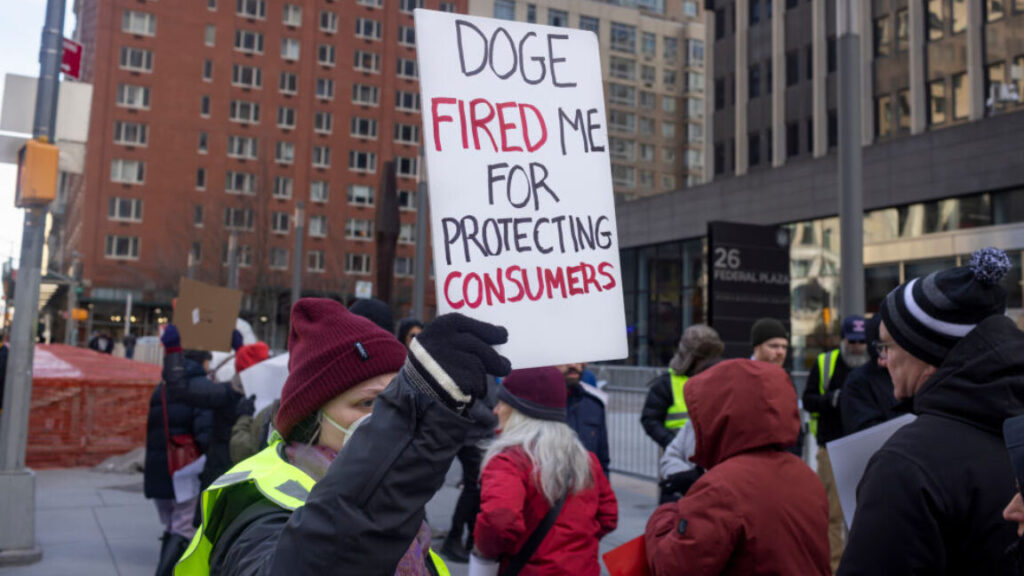
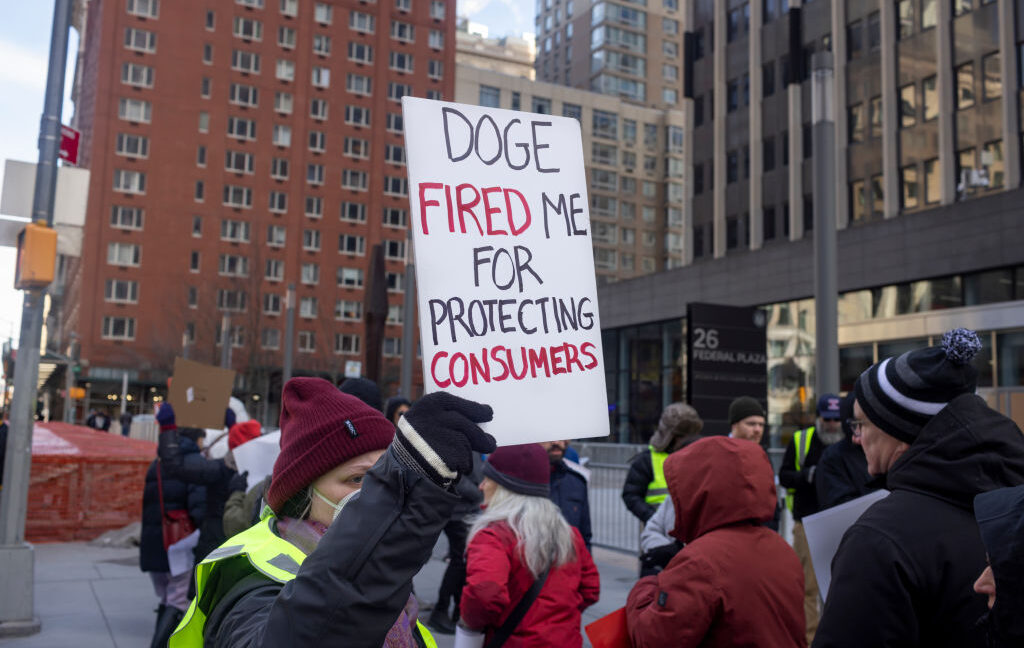
Federal workers and protestors spoke out against US President Donald Trump and Elon Musk and their push to gut federal services and impose mass layoffs earlier this year. Credit: Pacific Press / Contributor | LightRocket

Critics are increasingly branding Elon Musk’s Department of Government Efficiency (DOGE) as a failure, including lawmakers fiercely debating how much funding to allot next year to the controversial agency.

On Tuesday, Republicans and Democrats sparred over DOGE’s future at a DOGE subcommittee hearing, according to NextGov, a news site for federal IT workers. On one side, Republicans sought to “lock in” and codify the “DOGE process” for supposedly reducing waste and fraud in government, and on the other, Democrats argued that DOGE has “done the opposite” of its intended mission and harmed Americans in the process.

DOGE has “led to poor services, a brain drain on our federal government, and it’s going to cost taxpayers money long term,” Rep. Suhas Subramanyam (D-Va.) argued.

For now, DOGE remains a temporary government agency that could sunset as soon as July 4, 2026. Under Musk’s leadership, it was supposed to save the US government a trillion dollars. But so far, DOGE only reports saving about $180 billion—and doubt has been cast on DOGE’s math ever since reports revealed that nearly 40 percent of the savings listed on the DOGE site were “bogus,” Elaine Kamarck, director of the Center for Effective Public Management at the Brookings Institute, wrote in a report detailing DOGE’s exposed failures.

The “DOGE process” that Republicans want to codify, Kamarck explained, typically begins with rushed mass layoffs. That’s soon followed by offers for buyouts or deferred resignations, before the government eventually realizes it’s lost critical expertise and starts scrambling to rehire workers or rescind buyout offers after “it becomes apparent” that a heavily gutted agency “is in danger of malfunctioning.”

Kamarck warned that DOGE appeared to be using the firings of federal workers to test the “unitary executive” theory, “popular among conservatives,” that argues that “the president has more power than Congress.” Consider how DOGE works to shut down agencies funded by Congress without seeking lawmakers’ approval by simply removing critical workers key to operations, Kamarck suggested, like DOGE did early on at the National Science Foundation.

Democrats’ witness at the DOGE hearing—Emily DiVito of the economic policy think tank Groundwork Collaborative—suggested that extensive customer service problems at the Social Security Administration was just one powerful example of DOGE’s negative impacts affecting Americans today.

Some experts expect the damage of DOGE’s first few months could ripple across Trump’s entire term. “The rapid rehirings are a warning sign” that the government “has lost more capacities and expertise that could prove critical—and difficult to replace—in the months and years ahead,” experts told CNN.

By codifying the DOGE process, as Republicans wish to do, the government would seemingly only perpetuate this pattern, which could continue to be disastrous for Americans relying on government programs.

“There are time bombs all over the place in the federal government because of this,” Kamarck told CNN. “They’ve wreaked havoc across nearly every agency.”

DOGE spikes costs for Americans, nonprofit warns

Citizens for Ethics, a nonpartisan nonprofit striving to end government secrecy, estimated this week that DOGE cuts at just a few agencies “could result in a loss of over $10 billion in US-based economic activity.”

The shuttering of the Consumer Financial Protection Bureau alone—which Musk allegedly stands to personally benefit from—likely robbed American taxpayers of even more. The nonprofit noted that agency clawed back “over $26 billion in funds” from irresponsible businesses between 2011 and 2021 before its work was blocked.

Additionally, DOGE cuts at the Internal Revenue Service—which could “end or close audits of wealthy individuals and corporations” due to a lack of staffing—could cost the US an estimated $500 billion in dodged taxes, the nonprofit said. Partly due to conflicts like these, Kamarck suggested that when it finally comes time to assess DOGE’s success, the answer to both “did federal spending or the federal deficit shrink?” will “almost surely be no.”

As society attempts to predict the full extent of DOGE’s potential harms, The Wall Street Journal spoke to university students who suggested that regulatory clarity could possibly straighten out DOGE’s efforts now that Musk is no longer pushing for mass firings. At the DOGE hearing, Marjorie Taylor Greene (R-Ga.) suggested the only way to ensure DOGE hits its trillion-dollar goal is to “make sure these cuts aren’t just temporary” and pass laws “to streamline agencies, eliminate redundant programs and give the president the authority to fire bureaucrats who don’t do their jobs.”

But one finance student, Troy Monte, suggested to WSJ that DOGE has already cost the Trump administration “stability, expertise, and public trust,” opining, “the cost of DOGE won’t be measured in dollars, but in damage.”

Max Stier, CEO of the Partnership for Public Service, told CNN that when DOGE borrowed the tech industry tactic of moving fast and breaking things, then scrambling to fix what breaks, it exposed “the mosaic of incompetence and a failure on the part of this administration to understand the critical value that the breadth of government expertise provides.”

“This is not about a single incident,” Stier said. “It’s about a pattern that has implications for our government’s ability to meet not just the challenges of today but the critical challenges of tomorrow.”

DOGE’s future appears less certain without Musk

Rep. Jasmine Crockett (D-Texas) had hoped to subpoena Musk at the DOGE hearing to testify on DOGE’s agenda, but Republicans blocked her efforts, NextGov reported.

At the hearing, she alleged that “all of this talk about lowering costs and reducing waste is absolute BS. Their agenda is about one thing: making the federal government so weak that they can exploit it for their personal gain.”

Just yesterday, The Washington Post editorial board published an op-ed already declaring DOGE a failure. Former DOGE staffer Sahil Lavingia told NPR that he expects DOGE will “fizzle out” purely because DOGE failed to uncover as much fraud as Musk and Trump had alleged was spiking government costs.

Beyond obvious criticism (loudly voiced at myriad DOGE protests), it’s easy to understand why this pessimistic view is catching on, since even from a cursory glance at DOGE’s website, the agency’s momentum appears to be slowing since Musk’s abrupt departure in late May. The DOGE site’s estimated savings are supposed to be updated weekly—and one day aspire to be updated in real-time—but the numbers apparently haven’t changed a cent since a few days after Musk shed his “special government employee” label. The site notes the last update was on June 3.

In addition to Musk, several notable Musk appointees have also left DOGE. Most recently, Wired reported that one of Musk’s first appointees—19-year-old Edward “Big Balls” Coristine—is gone, quitting just weeks after receiving full-time employee status granted around the same time that Musk left. Lavingia told Wired that he’d heard “a lot” of people Musk hired have been terminated since his exit.

Rather than rely on a specific engineer spearheading DOGE initiatives across government, like Coristine appeared positioned to become in Musk’s absence, Trump cabinet members or individual agency heads may have more say over DOGE cuts in the future, Kamarck and Politico’s E&E News reported.

“The result so far is that post-Musk, DOGE is morphing into an agency-by-agency effort—no longer run by a central executive branch office, but by DOGE recruits who have been embedded in the agencies and by political appointees, such as cabinet secretaries, who are committed to the same objectives,” Kamarck wrote.

Whether Trump’s appointees can manage DOGE without Musk’s help or his appointees remains to be seen, as DOGE continues to seek new hires. While Musk’s appointed DOGE staff was heavily criticized from day one, Kamarck noted that at least Musk’s appointees appeared “to have a great deal of IT talent, something the federal government has been lacking since the beginning of the information age.”

Trump can extend the timeline for when DOGE sunsets, NextGov noted, and DOGE still has $22 million left over from this year to keep pursuing its goals, as lawmakers debate whether $45 million in funding is warranted.

Despite Trump and Musk’s very public recent fallout, White House spokesperson Kush Desai has said that Trump remains committed to fulfilling DOGE’s mission, but NPR noted his statement curiously didn’t mention DOGE by name.

“President Trump pledged to make our bloated government more efficient by slashing waste, fraud, and abuse. The administration is committed to delivering on this mandate while rectifying any oversights to minimize disruptions to critical government services,” Desai said.

Currently, there are several court-ordered reviews looking into exactly which government systems DOGE accessed, which could reveal more than what’s currently known about how much success—or failure—DOGE has had. Those reviews could expose how much training DOGE workers had before they were granted security clearances to access sensitive information, potentially spawning more backlash as DOGE’s work lurches forward.

Kamarck suggested that DOGE was “doomed to face early failures” because its “efforts were enacted on dubious legal grounds”—a fact that still seems to threaten the agency’s “permanence.” But if the next incoming president conducts an evaluation in 2029 and finds that DOGE’s efforts have not meaningfully reduced the size or spending of government, DOGE could possibly disappear. Former staffers hope that even more rehiring may resume if it does, E&E reported.

In the meantime, Americans relying on government programs must contend with the risk that they could lose assistance in the moments they need it most as long as the Musk-created “DOGE process” continues to be followed.

“Which one of these malfunctions will blow up first is anyone’s guess, but FEMA’s lack of preparedness for hurricane season is a good candidate,” Kamarck said.

Photo of Ashley Belanger

Ashley is a senior policy reporter for Ars Technica, dedicated to tracking social impacts of emerging policies and new technologies. She is a Chicago-based journalist with 20 years of experience.

Is DOGE doomed to fail? Some experts are ready to call it. Read More »

musk’s-doge-used-meta’s-llama-2—not-grok—for-gov’t-slashing,-report-says

Musk’s DOGE used Meta’s Llama 2—not Grok—for gov’t slashing, report says

Why didn’t DOGE use Grok?

It seems that Grok, Musk’s AI model, wasn’t available for DOGE’s task because it was only available as a proprietary model in January. Moving forward, DOGE may rely more frequently on Grok, Wired reported, as Microsoft announced it would start hosting xAI’s Grok 3 models in its Azure AI Foundry this week, The Verge reported, which opens the models up for more uses.

In their letter, lawmakers urged Vought to investigate Musk’s conflicts of interest, while warning of potential data breaches and declaring that AI, as DOGE had used it, was not ready for government.

“Without proper protections, feeding sensitive data into an AI system puts it into the possession of a system’s operator—a massive breach of public and employee trust and an increase in cybersecurity risks surrounding that data,” lawmakers argued. “Generative AI models also frequently make errors and show significant biases—the technology simply is not ready for use in high-risk decision-making without proper vetting, transparency, oversight, and guardrails in place.”

Although Wired’s report seems to confirm that DOGE did not send sensitive data from the “Fork in the Road” emails to an external source, lawmakers want much more vetting of AI systems to deter “the risk of sharing personally identifiable or otherwise sensitive information with the AI model deployers.”

A seeming fear is that Musk may start using his own models more, benefiting from government data his competitors cannot access, while potentially putting that data at risk of a breach. They’re hoping that DOGE will be forced to unplug all its AI systems, but Vought seems more aligned with DOGE, writing in his AI guidance for federal use that “agencies must remove barriers to innovation and provide the best value for the taxpayer.”

“While we support the federal government integrating new, approved AI technologies that can improve efficiency or efficacy, we cannot sacrifice security, privacy, and appropriate use standards when interacting with federal data,” their letter said. “We also cannot condone use of AI systems, often known for hallucinations and bias, in decisions regarding termination of federal employment or federal funding without sufficient transparency and oversight of those models—the risk of losing talent and critical research because of flawed technology or flawed uses of such technology is simply too high.”

Musk’s DOGE used Meta’s Llama 2—not Grok—for gov’t slashing, report says Read More »

doge-software-engineer’s-computer-infected-by-info-stealing-malware

DOGE software engineer’s computer infected by info-stealing malware

Login credentials belonging to an employee at both the Cybersecurity and Infrastructure Security Agency and the Department of Government Efficiency have appeared in multiple public leaks from info-stealer malware, a strong indication that devices belonging to him have been hacked in recent years.

Kyle Schutt is a 30-something-year-old software engineer who, according to Dropsite News, gained access in February to a “core financial management system” belonging to the Federal Emergency Management Agency. As an employee of DOGE, Schutt accessed FEMA’s proprietary software for managing both disaster and non-disaster funding grants. Under his role at CISA, he likely is privy to sensitive information regarding the security of civilian federal government networks and critical infrastructure throughout the US.

A steady stream of published credentials

According to journalist Micah Lee, user names and passwords for logging in to various accounts belonging to Schutt have been published at least four times since 2023 in logs from stealer malware. Stealer malware typically infects devices through trojanized apps, phishing, or software exploits. Besides pilfering login credentials, stealers can also log all keystrokes and capture or record screen output. The data is then sent to the attacker and, occasionally after that, can make its way into public credential dumps.

“I have no way of knowing exactly when Schutt’s computer was hacked, or how many times,” Lee wrote. “I don’t know nearly enough about the origins of these stealer log datasets. He might have gotten hacked years ago and the stealer log datasets were just published recently. But he also might have gotten hacked within the last few months.”

Lee went on to say that credentials belonging to a Gmail account known to belong to Schutt have appeared in 51 data breaches and five pastes tracked by breach notification service Have I Been Pwned. Among the breaches that supplied the credentials is one from 2013 that pilfered password data for 3 million Adobe account holders, one in a 2016 breach that stole credentials for 164 million LinkedIn users, a 2020 breach affecting 167 million users of Gravatar, and a breach last year of the conservative news site The Post Millennial.

DOGE software engineer’s computer infected by info-stealing malware Read More »

report:-doge-supercharges-mass-layoff-software,-renames-it-to-sound-less-dystopian

Report: DOGE supercharges mass-layoff software, renames it to sound less dystopian

“It is not clear how AutoRIF has been modified or whether AI is involved in the RIF mandate (through AutoRIF or independently),” Kunkler wrote. “However, fears of AI-driven mass-firings of federal workers are not unfounded. Elon Musk and the Trump Administration have made no secret of their affection for the dodgy technology and their intentions to use it to make budget cuts. And, in fact, they have already tried adding AI to workforce decisions.”

Automating layoffs can perpetuate bias, increase worker surveillance, and erode transparency to the point where workers don’t know why they were let go, Kunkler said. For government employees, such imperfect systems risk triggering confusion over worker rights or obscuring illegal firings.

“There is often no insight into how the tool works, what data it is being fed, or how it is weighing different data in its analysis,” Kunkler said. “The logic behind a given decision is not accessible to the worker and, in the government context, it is near impossible to know how or whether the tool is adhering to the statutory and regulatory requirements a federal employment tool would need to follow.”

The situation gets even starker when you imagine mistakes on a mass scale. Don Moynihan, a public policy professor at the University of Michigan, told Reuters that “if you automate bad assumptions into a process, then the scale of the error becomes far greater than an individual could undertake.”

“It won’t necessarily help them to make better decisions, and it won’t make those decisions more popular,” Moynihan said.

The only way to shield workers from potentially illegal firings, Kunkler suggested, is to support unions defending worker rights while pushing lawmakers to intervene. Calling on Congress to ban the use of shadowy tools relying on unknown data points to gut federal agencies “without requiring rigorous external testing and auditing, robust notices and disclosure, and human decision review,” Kunkler said rolling out DOGE’s new tool without more transparency should be widely condemned as unacceptable.

“We must protect federal workers from these harmful tools,” Kunkler said, adding, “If the government cannot or will not effectively mitigate the risks of using automated decision-making technology, it should not use it at all.”

Report: DOGE supercharges mass-layoff software, renames it to sound less dystopian Read More »

doge-staffer’s-youtube-nickname-accidentally-revealed-his-teen-hacking-activity

DOGE staffer’s YouTube nickname accidentally revealed his teen hacking activity

A SpaceX and X engineer, Christopher Stanley—currently serving as a senior advisor in the Deputy Attorney General’s office at the Department of Justice (DOJ)—was reportedly caught bragging about hacking and distributing pirated e-books, bootleg software, and game cheats.

The boasts appeared on archived versions of websites, of which several, once flagged, were quickly deleted, Reuters reported.

Stanley was assigned to the DOJ by Elon Musk’s Department of Government Efficiency (DOGE). While Musk claims that DOGE operates transparently, not much is known about who the staffers are or what their government roles entail. It remains unclear what Stanley does at DOJ, but Reuters noted that the Deputy Attorney General’s office is in charge of investigations into various crimes, “including hacking and other malicious cyber activity.” Declining to comment further, the DOJ did confirm that as a “special government employee,” like Musk, Stanley does not draw a government salary.

The engineer’s questionable past seemingly dates back to 2006, Reuters reported, when Stanley was still in high school. The news site connected Stanley to various sites and forums by tracing various pseudonyms he still uses, including Reneg4d3, a nickname he still uses on YouTube. The outlet then further verified the connection “by cross-referencing the sites’ registration data against his old email address and by matching Reneg4d3’s biographical data to Stanley’s.”

Among his earliest sites was one featuring a “crude sketch of a penis” called fkn-pwnd.com, where Stanley, at 15, bragged about “fucking up servers,” a now-deleted Internet Archive screenshot reportedly showed. Another, reneg4d3.com, was launched when he was 16. There, Stanley branded a competing messaging board “stupid noobs” after supposedly gaining admin access through an “easy exploit,” Reuters reported. On Bluesky, an account called “doge whisperer” alleges even more hacking activity, some of which appears to be corroborated by an IA screenshot of another site Stanley created, electonic.net (sic), which as of this writing can still be accessed.

DOGE staffer’s YouTube nickname accidentally revealed his teen hacking activity Read More »

ftc-can’t-afford-to-fight-amazon’s-allegedly-deceptive-sign-ups-after-doge-cuts

FTC can’t afford to fight Amazon’s allegedly deceptive sign-ups after DOGE cuts

The Federal Trade Commission is moving to push back a trial set to determine if Amazon tricked customers into signing up for Prime subscriptions.

At a Zoom status hearing on Wednesday, the FTC officially asked US District Judge John Chun to delay the trial. According to the FTC’s attorney, Jonathan Cohen, the agency needs two months to prepare beyond the September 22 start date, blaming recent “staffing and budgetary shortfalls” stemming from the Trump administration’s Department of Government Efficiency (DOGE), CNBC reported.

“We have lost employees in the agency, in our division, and on our case team,” Cohen said, explaining that “there is an extremely severe resource shortfall in terms of money and personnel,” Bloomberg reported. Cuts are apparently so bad, Cohen told Chun that the FTC is stuck with a $1 cap on any government credit card charges and “may not be able to purchase the transcript from Wednesday’s hearing,” Bloomberg reported.

Further threatening to scramble the agency’s trial preparation, the FTC anticipates that downsizing may require a move to another office “unexpectedly,” Cohen told Chun.

Amazon does not agree that a delay is necessary. The e-commerce giant’s attorney, John Hueston, told Chun that “there has been no showing on this call that the government does not have the resources to proceed to trial with the trial date as presently set.”

FTC can’t afford to fight Amazon’s allegedly deceptive sign-ups after DOGE cuts Read More »

china-aims-to-recruit-top-us-scientists-as-trump-tries-to-kill-the-chips-act

China aims to recruit top US scientists as Trump tries to kill the CHIPS Act


Tech innovation in US likely to stall if Trump ends the CHIPS Act.

On Tuesday, Donald Trump finally made it clear to Congress that he wants to kill the CHIPS and Science Act—a $280 billion bipartisan law Joe Biden signed in 2022 to bring more semiconductor manufacturing into the US and put the country at the forefront of research and innovation.

Trump has long expressed frustration with the high cost of the CHIPS Act, telling Congress on Tuesday that it’s a “horrible, horrible thing” to “give hundreds of billions of dollars” in subsidies to companies that he claimed “take our money” and “don’t spend it,” Reuters reported.

“You should get rid of the CHIPS Act, and whatever is left over, Mr. Speaker, you should use it to reduce debt,” Trump said.

Instead, Trump potentially plans to shift the US from incentivizing chips manufacturing to punishing firms dependent on imports, threatening a 25 percent tariff on all semiconductor imports that could kick in as soon as April 2, CNBC reported.

The CHIPS Act was supposed to be Biden’s legacy, and because he made it a priority, much of the $52.7 billion in subsidies that Trump is criticizing has already been finalized. In 2022, Biden approved $39 billion in subsidies for semiconductor firms, and in his last weeks in office, he finalized more than $33 billion in awards, Reuters noted.

Among the awardees are leading semiconductor firms, including the Taiwan Semiconductor Manufacturing Co. (TSMC), Micron, Intel, Nvidia, and Samsung Electronics. Although Trump claims the CHIPS Act is one-sided and only serves to benefit firms, according to the Semiconductor Industry Association, the law sparked $450 billion in private investments increasing semiconductor production across 28 states by mid-2024.

With the CHIPS Act officially in Trump’s crosshairs, innovation appears likely to stall the longer that lawmakers remain unsettled on whether the law stays or goes. Some officials worried that Trump might interfere with Biden’s binding agreements with leading firms already holding up their end of the bargain, Reuters reported. For example, Micron plans to invest $100 billion in New York, and TSMC just committed to spending the same over the next four years to expand construction of US chips fabs, which is already well underway.

So far, Commerce Secretary Howard Lutnick has only indicated that he will review the finalized awards, noting that the US wouldn’t be giving TSMC any new awards, Reuters reported.

But the CHIPS Act does much more than provide subsidies to lure leading semiconductor companies into the US. For the first time in decades, the law created a new arm of the National Science Foundation (NSF)—the Directorate of Technology, Innovation, and Partnerships (TIP)—which functions unlike any other part of NSF and now appears existentially threatened.

Designed to take the country’s boldest ideas from basic research to real-world applications as fast as possible to make the US as competitive as possible, TIP helps advance all NSF research and was supposed to ensure US leadership in breakthrough technologies, including AI, 6G communications, biotech, quantum computing, and advanced manufacturing.

Biden allocated $20 billion to launch TIP through the CHIPS Act to accelerate technology development not just at top firms but also in small research settings across the US. But as soon as the Department of Government Efficiency (DOGE) started making cuts at NSF this year, TIP got hit the hardest. Seemingly TIP was targeted not because DOGE deemed it the least consequential but simply because it was the youngest directorate at NSF with the most workers in transition when Trump took office and DOGE abruptly announced it was terminating all “probationary” federal workers.

It took years to get TIP ready to flip the switch to accelerate tech innovation in the US. Without it, Trump risks setting the US back at a time when competitors like China are racing ahead and wooing US scientists who suddenly may not know if or when their funding is coming, NSF workers and industry groups told Ars.

Without TIP, NSF slows down

Last month, DOGE absolutely scrambled the NSF by forcing arbitrary cuts of so-called probationary employees—mostly young scientists, some of whom were in transition due to promotions. All those cuts were deemed illegal and finally reversed Monday by court order after weeks of internal chaos reportedly stalling or threatening to delay some of the highest-priority research in the US.

“The Office of Personnel Management does not have any authority whatsoever under any statute in the history of the universe to hire and fire employees at another agency,” US District Judge William Alsup said, calling probationary employees the “life blood” of government agencies.

Ars granted NSF workers anonymity to discuss how cuts were impacting research. At TIP, a federal worker told Ars that one of the probationary cuts in particular threatened to do the most damage.

Because TIP is so new, only one worker was trained to code automated tracking forms that helped decision-makers balance budgets and approve funding for projects across NSF in real time. Ars’ source likened it to holding the only key to the vault of NSF funding. And because TIP is so different from other NSF branches—hiring experts never pulled into NSF before and requiring customized resources to coordinate projects across all NSF fields of research—the insider suggested another government worker couldn’t easily be substituted. It could take possibly two years to hire and train a replacement on TIP’s unique tracking system, the source said, while TIP’s (and possibly all of NSF’s) efficiency is likely strained.

TIP has never been fully functional, the TIP insider confirmed, and could be choked off right as it starts helping to move the needle on US innovation. “Imagine where we are in two years and where China is in two years in quantum computing, semiconductors, or AI,” the TIP insider warned, pointing to China’s surprisingly advanced AI model, DeepSeek, as an indicator of how quickly tech leadership in global markets can change.

On Monday, NSF emailed all workers to confirm that all probationary workers would be reinstated “right away.” But the damage may already be done as it’s unclear how many workers plan to return. When TIP lost the coder—who was seemingly fired for a technicality while transitioning to a different payscale—NSF workers rushed to recommend the coder on LinkedIn, hoping to help the coder quickly secure another opportunity in industry or academia.

Ars could not reach the coder to confirm whether a return to TIP is in the cards. But Ars’ source at TIP and another NSF worker granted anonymity said that probationary workers may be hesitant to return because they are likely to be hit in any official reductions in force (RIFs) in the future.

“RIFs done the legal way are likely coming down the pipe, so these staff are not coming back to a place of security,” the NSF worker said. “The trust is broken. Even for those that choose to return, they’d be wise to be seeking other opportunities.”

And even losing the TIP coder for a couple of weeks likely slows NSF down at a time when the US seemingly can’t afford to lose a single day.

“We’re going to get murdered” if China sets the standard on 6G or AI, the TIP worker fears.

Rivals and allies wooing top US scientists

On Monday, six research and scientific associations, which described themselves as “leading organizations representing more than 305,000 people in computing, information technology, and technical innovation across US industry, academia, and government,” wrote to Congress demanding protections for the US research enterprise.

The groups warned that funding freezes and worker cuts at NSF—and other agencies, including the Department of Energy, the National Institute of Standards & Technology, the National Aeronautics and Space Administration, the National Institutes of Health—”have caused disruption and uncertainty” and threaten “long-lasting negative consequences for our competitiveness, national security, and economic prosperity.”

Deeming America’s technology leadership at risk, the groups pointed out that “in computing alone, a federal investment in research of just over $10 billion annually across 24 agencies and offices underpins a technology sector that contributes more than $2 trillion to the US GDP each year.” Cutting US investment “would be a costly mistake, far outweighing any short-term savings,” the groups warned.

In a separate statement, the Computing Research Association (CRA) called NSF cuts, in particular, a “deeply troubling, self-inflicted setback to US leadership in computing research” that appeared “penny-wise and pound-foolish.”

“NSF is one of the most efficient federal agencies, operating with less than 9 percent overhead costs,” CRA said. “These arbitrary terminations are not justified by performance metrics or efficiency concerns; rather, they represent a drastic and unnecessary weakening of the US research enterprise.”

Many NSF workers are afraid to speak up, the TIP worker told Ars, and industry seems similarly tight-lipped as confusion remains. Only one of the organizations urging Congress to intervene agreed to talk to Ars about the NSF cuts and the significance of TIP. Kathryn Kelley, the executive director of the Coalition for Academic Scientific Computation, confirmed that while members are more aligned with NSF’s Directorate for Computer and Information Science and Engineering and the Office of Advanced Cyberinfrastructure, her group agrees that all NSF cuts are “deeply” concerning.

“We agree that the uncertainty and erosion of trust within the NSF workforce could have long-lasting effects on the agency’s ability to attract and retain top talent, particularly in such specialized areas,” Kelley told Ars. “This situation underscores the need for continued investment in a stable, well-supported workforce to maintain the US’s leadership in science and innovation.”

Other industry sources unwilling to go on the record told Ars that arbitrary cuts largely affecting the youngest scientists at NSF threatened to disrupt a generation of researchers who envisioned long careers advancing US tech. There’s now a danger that those researchers may be lured to other countries heavily investing in science and currently advertising to attract displaced US researchers, including not just rivals like China but also allies like Denmark.

Those sources questioned the wisdom of using the Elon Musk-like approach of breaking the NSF to rebuild it when it’s already one of the leanest organizations in government.

Ars confirmed that some PhD programs have been cancelled, as many academic researchers are already widely concerned about delayed or cancelled grants and generally freaked out about where to get dependable funding outside the NSF. And in industry, some CHIPS Act projects have already been delayed, as companies like Intel try to manage timelines without knowing what’s happening with CHIPS funding, AP News reported.

“Obviously chip manufacturing companies will slow spending on programs they previously thought they were getting CHIPS Act funding for if not cancel those projects outright,” the Semiconductor Advisors, an industry group, forecasted in a statement last month.

The TIP insider told Ars that the CHIPS Act subsidies for large companies that Trump despises mostly fuel manufacturing in the US, while funding for smaller research facilities is what actually advances technology. Reducing efficiency at TIP would likely disrupt those researchers the most, the TIP worker suggested, proclaiming that’s why TIP must be saved at all costs.

Photo of Ashley Belanger

Ashley is a senior policy reporter for Ars Technica, dedicated to tracking social impacts of emerging policies and new technologies. She is a Chicago-based journalist with 20 years of experience.

China aims to recruit top US scientists as Trump tries to kill the CHIPS Act Read More »

doge’s.gov-site-lampooned-as-coders-quickly-realize-it-can-be-edited-by-anyone

DOGE’s .gov site lampooned as coders quickly realize it can be edited by anyone

“An official website of the United States government,” reads small text atop the Department of Government Efficiency (DOGE) website that Elon Musk’s team started populating this week with information on agency cuts.

But you apparently don’t have to work in government to push updates to the site. A couple of prankster web developers told 404 Media that they separately discovered how “insecure” the DOGE site was, seemingly pulling from a “database that can be edited by anyone.”

One coder couldn’t resist and pushed two updates that, as of this writing, remained on the DOGE site. “This is a joke of a .gov site,” one read. “THESE ‘EXPERTS’ LEFT THEIR DATABASE OPEN,” read another.

404 Media spoke to two other developers who suggested that the DOGE site is not running on government servers. Instead, it seems to be running on a Cloudflare Pages site and is relying on a database that “can be and has been written to by third parties and will show up on the live website,” the developers told 404 Media.

Archived versions of the DOGE site show that it was basically blank before Tuesday. That’s when Musk held a DOGE press conference in the Oval Office, promising that DOGE is “actually trying to be as transparent as possible.” At that time, Musk claimed that DOGE was being “maximally transparent” by posting about “all” actions to X (Musk’s social media platform) and to the DOGE website. (Wired deemed the DOGE site “one big X ad” because it primarily seems to exist to point to Musk’s social media platform.)

According to 404 Media, after Musk made that statement, his team rushed to build out the DOGE website, mirroring X posts from the DOGE account and compiling stats on the federal workforce.

But in rushing, DOGE appears to have skipped security steps that are expected of government websites. That pattern is troubling some federal workers, as DOGE has already been dinged by workers concerned by Musk’s team seizing access to sensitive government information and sharing it in ways deemed less secure. For example, last week, Department of Education officials raised alarms about DOGE employees using personal emails viewed as less secure than government email addresses, seemingly in violation of security protocols. These personal emails also seemed to shroud the true identities of DOGE staffers, whereas other government employees must use their full names in official communications.

DOGE’s .gov site lampooned as coders quickly realize it can be edited by anyone Read More »

doj-agrees-to-temporarily-block-doge-from-treasury-records

DOJ agrees to temporarily block DOGE from Treasury records

Elez reports to Tom Krause, another Treasury Department special government employee, but Krause doesn’t have direct access to the payment system, Humphreys told the judge. Krause is the CEO of Cloud Software Group and is also viewed as a Musk ally.

But when the judge pressed Humphreys on Musk’s alleged access, the DOJ lawyer only said that as far as the defense team was aware, Musk did not have access.

Further, Humphreys explained that DOGE—which functions as part of the executive office—does not have access, to the DOJ’s knowledge. As he explained it, DOGE sets the high-level priorities that these special government employees carry out, seemingly trusting the employees to identify waste and protect taxpayer dollars without ever providing any detailed reporting on the records that supposedly are evidence of mismanagement.

To Kollar-Kotelly, the facts on the record seem to suggest that no one outside the Treasury is currently accessing sensitive data. But when she pressed Humphreys on whether DOGE had future plans to access the data, Humphreys declined to comment, calling it irrelevant to the complaint.

Humphreys suggested that the government’s defense in this case would focus on the complaint that outsiders are currently accessing Treasury data, seemingly dismissing any need to discuss DOGE’s future plans. But the judge pushed back, telling Humphreys she was not trying to “nail” him “to the wall,” but there’s too little information on the relationship between DOGE and the Treasury Department as it stands. How these entities work together makes a difference, the judge suggested, in terms of safeguarding sensitive Treasury data.

According to Kollar-Kotelly, granting a temporary restraining order in part would allow DOGE to “preserve the status quo” of its current work in the Treasury Department while ensuring no new outsiders get access to Americans’ sensitive information. Such an order would give both sides time to better understand the current government workflows to best argue their cases, the judge suggested.

If the order is approved, it would remain in effect until the judge rules on plantiffs’ request for a preliminary injunction. At the hearing today, Kollar-Kotelly suggested that matter would likely be settled at a hearing on February 24.

DOJ agrees to temporarily block DOGE from Treasury records Read More »

treasury-official-retires-after-clash-with-doge-over-access-to-payment-system

Treasury official retires after clash with DOGE over access to payment system

“This is a mechanical job—they pay Social Security benefits, they pay vendors, whatever. It’s not one where there’s a role for nonmechanical things, at least from the career standpoint. Your whole job is to pay the bills as they’re due,” Mazur was quoted as saying. “It’s never been used in a way to execute a partisan agenda… You have to really put bad intentions in place for that to be the case.”

The Trump administration previously issued an order to freeze funding for a wide range of government programs, but rescinded the order after two days of protest and a judge’s ruling that temporarily blocked the funding freeze.

Trump ordered cooperation with DOGE

The Trump executive order establishing DOGE took the existing United States Digital Service and renamed it the United States DOGE Service. It’s part of the Executive Office of the President and is tasked with “modernizing Federal technology and software to maximize governmental efficiency and productivity.”

Trump’s order said that federal agencies will have to collaborate with DOGE. “Among other things, the USDS Administrator shall work with Agency Heads to promote inter-operability between agency networks and systems, ensure data integrity, and facilitate responsible data collection and synchronization,” the order said. “Agency Heads shall take all necessary steps, in coordination with the USDS Administrator and to the maximum extent consistent with law, to ensure USDS has full and prompt access to all unclassified agency records, software systems, and IT systems. USDS shall adhere to rigorous data protection standards.”

The Post writes that “Musk has sought to exert sweeping control over the inner workings of the US government, installing longtime surrogates at several agencies, including the Office of Personnel Management, which essentially handles federal human resources, and the General Services Administration.”

On Thursday, Musk visited the General Services Administration headquarters in Washington, DC, The New York Times reported. The Department of Government Efficiency’s account on X stated earlier this week that the GSA had “terminated three leases of mostly empty office space” for a savings of $1.6 million and that more cuts are planned. In another post, DOGE claimed it “is saving the Federal Government approx. $1 billion/day, mostly from stopping the hiring of people into unnecessary positions, deletion of DEI and stopping improper payments to foreign organizations, all consistent with the President’s Executive Orders.”

“Mr. Musk’s visit to the General Services Administration could presage more cost-cutting efforts focused on federal real estate,” the Times wrote. “The agency also plays a role in federal contracting and in providing technology services across the federal government.”

Treasury official retires after clash with DOGE over access to payment system Read More »