culture

our-fave-star-wars-duo-is-back-in-mandalorian-and-grogu-teaser

Our fave Star Wars duo is back in Mandalorian and Grogu teaser

Disney CEO Bob Iger has been under fire for several days now for pulling Jimmy Kimmel Live off the air “indefinitely,” with Disney+’s cancellation page actually crashing a couple of times from all the traffic as people rushed to make their displeasure known. So what better time for the studio to release the first teaser trailer for The Mandalorian and Grogu, a feature film spinoff from its megahit Star Wars series The Mandalorian? Grogu and Mando, together again on an exciting space adventure, will certainly be a crowd-pleaser.

Grogu (aka Baby Yoda) won viewers’ hearts from the moment he first appeared onscreen in the first season of The Mandalorian, and the relationship between the little green creature and his father-figure bounty hunter has only gotten stronger. With the 2023 Hollywood strikes delaying production on S4 of the series, director Jon Favreau got the green light to make this spinoff film.

Per the official logline:

The evil Empire has fallen, and Imperial warlords remain scattered throughout the galaxy. As the fledgling New Republic works to protect everything the Rebellion fought for, they have enlisted the help of legendary Mandalorian bounty hunter Din Djarin (Pedro Pascal) and his young apprentice Grogu.

In addition to Pascal, the cast includes Sigourney Weaver as Ward, a veteran pilot, colonel, and leader of the New Republic’s Adelphi Rangers. Jeremy Allen White plays Rotta the Hutt (son of Jabba, first introduced in 2008’s The Clone Wars), Jonny Coyne reprises his Mandalorian S3 role as an Imperial warlord leading a surviving faction of the Galactic Empire, and we can expect to see Garazeb (“Zeb”) Orrelios from the Star Wars Rebels animated series, too. And yes, that’s a shiny new version of Mando’s ship (destroyed in S2).

Our fave Star Wars duo is back in Mandalorian and Grogu teaser Read More »

oklahoma’s-big-“tv-nudes”-scandal-was…-a-jackie-chan-movie-on-a-samsung-streaming-service

Oklahoma’s big “TV nudes” scandal was… a Jackie Chan movie on a Samsung streaming service

News 4 watched the movie and confirmed it contains several scenes that match the description given by board members, including one where a group of fully nude women [!] work inside a factory [!!] packaging cocaine [!!!], some wearing only lab coats [!!!!].

Another scene shows a fully nude woman giving a man a massage, eventually moving under the table while the dialogue strongly suggests sexual activity.

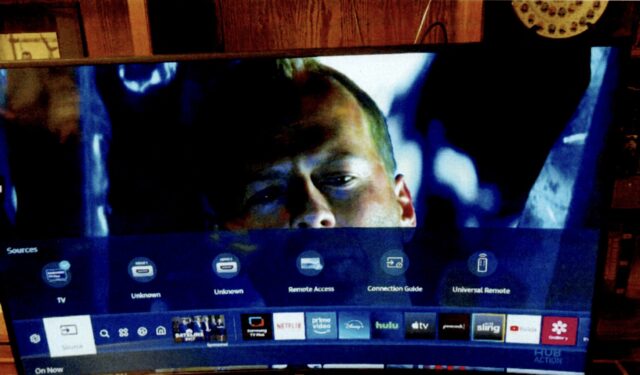
But why was The Protector showing on a TV in a state office building at all? Investigators came to find out that the Samsung smart TV in question—recently installed in the office—had been set up in such a way that it defaulted to showing Samsung TV Plus Channel 1204, the “Movie Hub Action.” (You can see Samsung’s full list of TV Plus streaming channels here.) And at the time of the state board meeting, Movie Hub Action was streaming The Protector. How and why the TV was turned on or switched to this streaming channel isn’t clear, but the whole thing appears to be an absolutely bizarre accident.

As part of this important investigation, the sheriff’s office then took clips from The Protector to the board members who complained. According to the Oklahoma Voice, “The board members, Becky Carson and Ryan Deatherage, confirmed to the Sheriff’s Office that the movie was consistent with what they saw on the TV.”

Photo of the TV.

Behold! The actual TV from the incident. Credit: Alias

Hooking smart TVs up to the Internet looks increasingly like a bad idea, though not usually for the reason found in this case. TV manufacturers have taken what should have been a useful feature and turned it into a way to spy on what you’re watching and to push ads to your TV.

Now you can add “showing naked, cocaine-packaging factory workers to Oklahoma Board of Education members” to the list of grievances.

Oklahoma’s big “TV nudes” scandal was… a Jackie Chan movie on a Samsung streaming service Read More »

trailer-for-anaconda-meta-reboot-leans-into-the-laughs

Trailer for Anaconda meta-reboot leans into the laughs

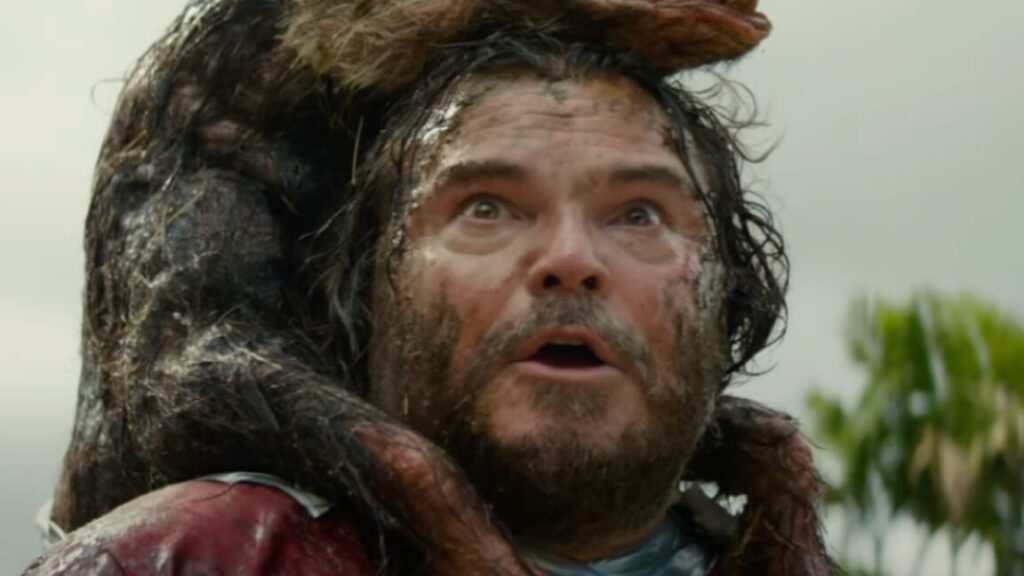
Sony Pictures has dropped a trailer for its upcoming horror comedy, Anaconda, a meta-reboot of the 1997 campy cult classic—and frankly, it looks like a lot of fun. Starring Paul Rudd and Jack Black, the film will arrive in theaters on Christmas Day.

(Spoilers for the 1997 film below.)

The original Anaconda was your basic B-movie creature feature, only with an all-star cast and better production values. The plot revolved around a documentary film crew (Jennifer Lopez, Ice Cube, Eric Stoltz, Jonathan Hyde, and Owen Wilson) who travel to the Amazon in search of a long-lost Indigenous tribe. They take on a stranded Paraguayan snake hunter named Serone (Jon Voight, affecting a hilariously bad foreign accent), who strong-arms them into helping him hunt down a 25-foot green anaconda. He wants to capture the animal alive, thinking he can sell it for over $1 million.

The snake has other ideas, chowing down on the boat’s skipper and the crew’s sound engineer and still hungry for more. The remaining crew’s efforts to survive are hampered by Serone, who still wants the snake alive and even kills one of the crew members himself. So it’s really a form of justice when he’s eaten by a 40-foot queen anaconda at the film’s end.

Anaconda wasn’t well-received by critics, but it made a decent showing at the box office, grossing about $136 million globally. It has since become a cult classic, one of those “so bad it’s good” offerings. It was even nominated for six Razzie Awards, including for Worst Screen Couple (Voight and the animatronic anaconda).

Trailer for Anaconda meta-reboot leans into the laughs Read More »

new-amelia-earhart-bio-delves-into-her-unconventional-marriage

New Amelia Earhart bio delves into her unconventional marriage


more than a marriage of convenience

Author Laurie Gwen Shapiro chats with Ars about her latest book, The Aviator and the Showman.

Amelia Earhart. Credit: Public domain

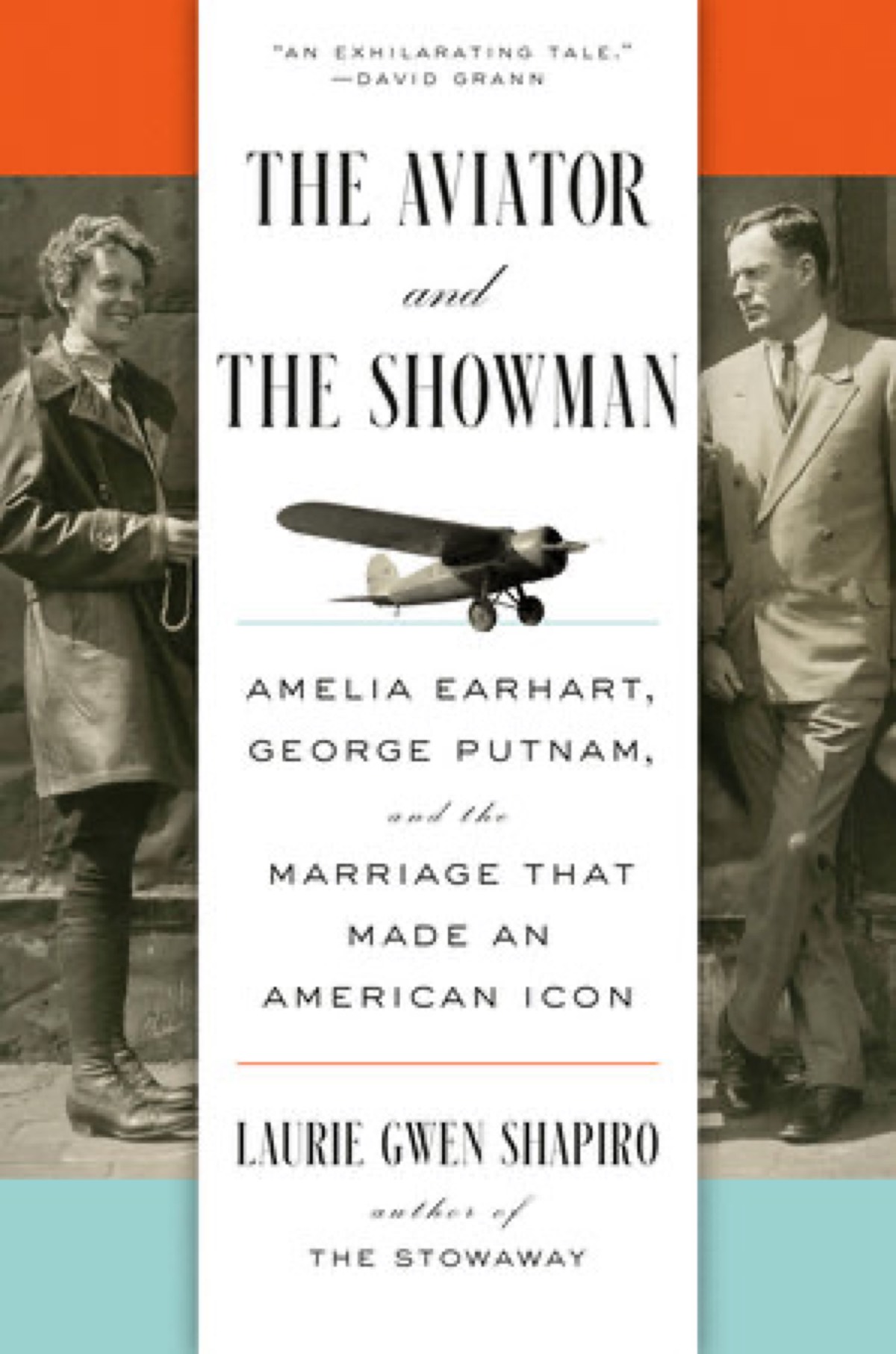
Famed aviator Amelia Earhart has captured our imaginations for nearly a century, particularly her disappearance in 1937 during an attempt to become the first female pilot to circumnavigate the globe. Earhart was a complicated woman, highly skilled as a pilot yet with a tendency toward carelessness. And her marriage to a flamboyant publisher with a flair for marketing may have encouraged that carelessness and contributed to her untimely demise, according to a fascinating new book, The Aviator and the Showman: Amelia Earhart, George Putnam, and the Marriage that Made an American Icon.

Author Laurie Gwen Shapiro is a longtime Earhart fan. A documentary filmmaker and journalist, she first read about Earhart in a short biography distributed by Scholastic Books. “I got a little obsessed with her when I was younger,” Shapiro told Ars. The fascination faded as she got older and launched her own career. But she rediscovered her passion for Earhart while writing her 2018 book, The Stowaway, about a young man who stowed away on Admiral Richard Byrd‘s first voyage to Antarctica. The marketing mastermind behind the boy’s journey and his subsequent (ghost-written) memoir was publisher George Palmer Putnam, Earhart’s eventual husband.

The fact that Earhart started out as Putnam’s mistress contradicted Shapiro’s early squeaky-clean image of Earhart and drove her to delve deeper into the life of this extraordinary woman. “I was less interested in how she died than how she lived,” said Shapiro. “Was she a good pilot? Was she a good, kind person? Was this a real marriage? The mystery of Amelia Earhart is not how she died, but how she lived.”

There have been numerous Earhart biographies, but Shapiro accessed some relatively new source material, most notably a good 200 hours of tapes that had become available via the Smithsonian’s Amelia Earhart Project, including interviews with Earhart’s sister, Muriel. “I took an extra six months on my book just so that I could listen to all of them,” said Shapiro. She also scoured archival material at the University of New Hampshire concerning Putnam’s close associate, Hilton Railey; at Purdue University; and at Harvard’s Radcliffe Institute, along with numerous in-person interviews—including several with authors of prior Earhart biographies.

Shapiro’s breezy account of Earhart’s early life includes a few new details, particularly about the aviator’s relationship with an early benefactor (Shapiro calls him Earhart’s “sugar daddy”) in California: a 63-year-old billboard magnate named Thomas Humphrey Bennett Varney. Varney wanted to marry her, but she ended up accepting the proposal of a young chemical engineer from Boston, Samuel Chapman. “Amelia could have had a very different life,” said Shapiro. “She could have gone to Marblehead, Massachusetts, where [Chapman] had a house, and become part of the yacht set and she still would have had an interesting life. But I don’t think that was the life Amelia Earhart wanted, even if that meant she had a shorter life.”

Shapiro doesn’t neglect Putnam’s story, describing him as the “PT Barnum of publishing.” The family publishing company, G.P. Putnam and Sons, was founded in 1838 by his grandfather, and by the late 1920s, the ambitious young George was among several possible successors jockeying for position to replace his uncle, George Haven Putnam. He had his own ambitions, determined to bring what he viewed as a stodgy company fully into the 20th century.

Putnam published Charles Lindbergh‘s blockbuster memoir, We, in 1927 and followed that early success with a series of rather lurid adventure memoirs chronicling the exploits of “boy explorers.” The boys didn’t always survive their adventures, with one perishing from a snake bite and another drowning in a Bolivian flood. But the books were commercial successes, so Putnam kept cranking them out.

After Lindbergh’s historic crossing, Putnam was eager to tap into the public’s thirst for aviation stories. It wouldn’t be especially newsworthy to have another man make the same flight. But a woman? Putnam liked that idea, and a wealthy benefactor, steel heiress Amy Phipps Guest, provided financial support for the feat—really more of a publicity stunt, since Putnam’s plan, as always, was to publish a scintillating memoir of the journey. During the Jazz Age, newspapers routinely paid for exclusive rights to these kinds of stories in exchange for glowing coverage, per Shapiro. In this case, The New York Times did not initially want to sponsor a woman for a trans-Atlantic flight, but Putnam’s connections won them over.

Love at first sight

Earhart, then a social worker living in Boston, interviewed to be part of the three-person crew making that historic 1928 trans-Atlantic flight, and Putnam quickly spotted her potential to be his new adventure heroine. Railey later recalled that, at least for Putnam—whose marriage to Crayola heiress Dorothy Binney was floundering—it was love at first sight.

At the time, Earhart was still engaged to Chapman, and George was still married to Binney, but nonetheless, he “relentlessly pursued” Earhart. Earhart ended her engagement to Chapman in November 1928. “There’s a tape in the Smithsonian archives that talks about his wife coming in and catching them in sexual relations,” said Shapiro. “But [Binney] was having an affair, too, with a young man named George Weymouth [her son’s tutor]. This is the Jazz Age, anything goes. Amelia wanted to be able to achieve her dreams. Who are we to say a woman can’t marry a man who can give her a path to being wealthy?”

The successful 1928 flight earned Earhart the moniker “Lady Lindy.” Putnam showered his mistress with fur coats, sporty cars, and other luxurious trappings—although as her manager, he still kept 10 percent of her earnings. That life of luxury fell apart in October 1929 with the onset of the Great Depression, and Putnam found himself scrambling financially after being pushed out of the family publishing company.

Earhart and Putnam in 1931. Public domain

After his rather messy divorce from Binney, Putnam married Earhart in 1931. Earhart held decidedly unconventional views on marriage for that era: They held separate bank accounts, and she kept her maiden name, viewing the marriage as a “partnership” with “dual control,” and insisting in a letter to Putnam on their wedding day that she would not require fidelity. “I may have to keep some place where I can go to be myself, now and then, for I cannot guarantee to endure at all times the confinement of even an attractive cage,” she wrote.

Since money was tight, Putnam encouraged Earhart to go on the lecture circuit. Earhart would execute a stunt flight, write a book about it, and then go on a lecture tour. “This is an actual marriage,” said Shapiro. “It might have started out more romantically, but at a certain point, they needed each other in a partnership to survive. We don’t have fairy tale connections. Sometimes we have a hot romance that turns into a partnership and then cycles back into intense closeness and mental separation. I think that was the case with Amelia and George.”

Then came Earhart’s fateful final fight. The night before her scheduled departure, a nervous Earhart wanted to wait, but Putnam already had plans in the works for yet another flight, financed through sponsorship deals. And he wanted to get the resulting book about the current pending flight out in time for Christmas. He convinced her to take off as planned. Her navigator, Fred Noonan, was good at his job, but he was a heavy drinker, so he came cheap. That decision was one of several that would prove costly.

Shapiro describes this flight as being “plagued with mechanical issues from the start, underprepared and over-hyped, a feat of marketing more than a feat of engineering.” And she does not absolve Earhart from blame. “She refused to learn Morse code,” said Shapiro. “She refused to hear that trying to land on Howland Island was almost a suicide mission. It’s almost certain that she ran out of gas. Amelia was a very good person, a decent flyer, and beyond brave. She brought up women and championed feminism when other technically more gifted women pilots were going for solo records and had no time for their peers. She aided the aviation industry during the Great Depression as a likable ambassador of the air.”

However, Shapiro believes that Earhart’s marriage to Putnam amplified her incautious impulses, with tragic consequences on her final flight. “Is it George’s fault, or is it Amelia’s fault? I don’t think that’s fair to say,” she said. In many ways, the two complemented each other. Like Putnam, Earhart had great ambition, and her marriage to Putnam enabled her to achieve her goals.

The flip side is that they also brought out each other’s less positive attributes. “They were both aware of the risks involved in what they were doing,” Shapiro said. “But I also tried to show that there was a pattern of both of them taking extraordinary risks without really worrying about critical details. Yes, there is tremendous bravery in [undertaking] all these flights, but bravery is not always enough when charisma trumps caution—and when the showman insists the show must go on.”

Photo of Jennifer Ouellette

Jennifer is a senior writer at Ars Technica with a particular focus on where science meets culture, covering everything from physics and related interdisciplinary topics to her favorite films and TV series. Jennifer lives in Baltimore with her spouse, physicist Sean M. Carroll, and their two cats, Ariel and Caliban.

New Amelia Earhart bio delves into her unconventional marriage Read More »

get-into-the-cockpit-as-new-crop-of-“top-gun”-pilots-get-their-wings

Get into the cockpit as new crop of “Top Gun” pilots get their wings


NatGeo’s new documentary series, Top Guns: The Next Generation, shows the sweat behind the spectacle.

Credit: National Geographic

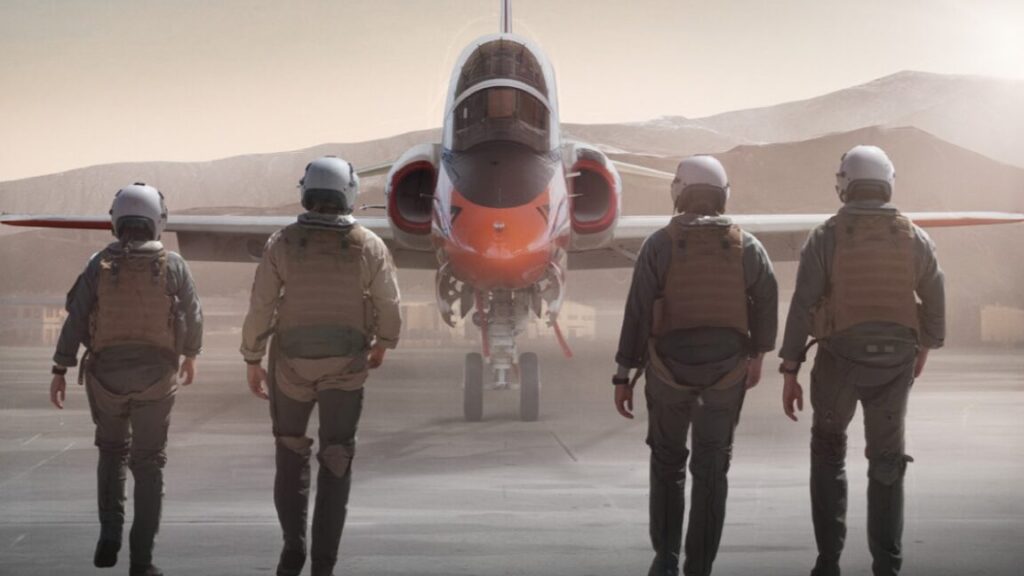
The blockbuster success of the 1986 film Top Gun—chronicling the paths of young naval aviators as they go through the grueling US Navy’s Fighter Weapons School (aka the titular Top Gun)—spawned more than just a successful multimedia franchise. It has also been credited with inspiring future generations of fighter pilots. National Geographic takes viewers behind the scenes to see the process play out for real, with its new documentary series, Top Guns: The Next Generation.

Each episode focuses on a specific aspect of the training, following a handful of students from the Navy and Marines through the highs and lows of their training. That includes practicing dive bombs at break-neck speeds; successfully landing on an aircraft carrier by “catching the wire”; learning the most effective offensive and defensive maneuvers in dogfighting; and, finally, engaging in a freestyle dogfight against a seasoned instructor to complete the program and (hopefully) earn their golden wings. NatGeo was granted unprecedented access, even using in-cockpit cameras to capture the pulse-pounding action of being in the air, as well as capturing behind-the-scenes candid moments.

How does reality stack up against its famous Hollywood depiction? “I think there is a lot of similarity,” Capt. Juston “Poker” Kuch, who oversees all training and operations at NAS Meridian, told Ars. “The execution portion of the mission gets focused in the movie so it is all about the flight and the dogfighting and dropping the bombs. What they don’t see is the countless hours of preparation that go into the mission, all the years and years of training that it took to get there. You see the battle scenes in Top Gun and you’re inspired, but there’s a lot of time and effort that goes in to get an individual to that point. It doesn’t make for good movies, I guess.”

Kuch went through the program himself, arriving one week before the terrorist attacks on September 11, 2001. He describes the program as being deliberately designed to overwhelm students with information and push them to their limits. “We give them more information, more data than they can possibly process,” said Kuch. “And we give it to them in a volume and speed that they are not going to be capable of handling. But it’s incumbent on them to develop that processing ability to figure out what is the important piece of information [or] data. What do I need to do to keep my aircraft flying, keep my nose pointed in the right direction?”

Ars caught up with Kuch to learn more.

Essential skills

A crew member holds an inert dummy bomb for the camera. National Geographic/Dan Di Martino

Ars Technica: How has the Top Gun training program changed since you went through it?

Juston Koch: It’s still the same hangar that I was in 25 years ago, and the platforms are a little bit different. One of the bigger changes is we do more in the simulator now. The simulators that I went through are now what the students use to train on their own without any instructors, because we now have much newer, nicer, and more capable simulators.

The thing that simulators let us do is they let us pause. When you’re on flight, there’s no pause button, and so you’ve got to do the entire event. A lot of times when there’s learning moments, we’ll try to provide a little bit of debrief in real-time. But the aircraft is still going 400 miles an hour, and you’re on to the next portion of the mission, so it’s tough to really kind of drill down into some of the debrief points. That doesn’t happen in the simulator. You pause it, you can spend five minutes to talk about what just happened, and then set them back up to go ahead and see it again. So you get a lot more sets and reps working through the simulator. So that’s probably one of the bigger differences from when I went through, is just the quality and capability of the simulators.

Ars Technica: Let’s talk about those G forces, particularly the impact on the human body and what pilots can do to offset those effects.

Juston Koch: The G-force that they experienced in their first phase of training is about 2 to 3 Gs, maybe 4 Gs. On the next platform we’ll go up to 6.5  to 7 Gs. Then they’ll continue on to their next platform which gets up to 7.5 Gs. It’s a gradual increase of G-force over time, and they’re training the body to respond. There’s a natural response that your body provides. As blood is draining from your head down to your lower extremities, your body is going to help push it back up. But we have a G-suit, which is an inflatable bladder that is wrapped around our legs and our stomach, and it basically constricts us, our legs, and tries to prevent the blood from going down to the lower extremities. But you have to help that G-suit along by straining your muscles. It’s called the anti-G straining maneuver.

That is part of developing that habit pattern. We do a lot of training with a physiologist [who] spends a lot of time in the ground school portion of training to talk to them about the effects of G-force, how they can physically prepare through physical fitness activities, hitting the gym as they are going through the syllabus. Diet and sleep kind of go along with those to help make sure that they’re at peak performance. We use the phrase, “You got to be an athlete.” Much like an athlete gets a good night’s sleep, has good nutrition to go along with their physical fitness, that’s what we stress to get them at peak performance for pulling Gs.

Learning to dogfight

Capt. Juston “Poker” Kuch during a debriefing. National Geographic

Ars Technica: Those G forces can stress the aircraft, too; I noted a great deal of focus on ensuring students stay within the required threshold.

Juston Kuch: Yes, the engineers have figured out the acceptable level of threshold for Gs. Over time, if the aircraft stays under it, the airframe is going to hold up just fine. But if it’s above it to a certain degree, we have to do inspections. Depending on how much of an overstress [there is], an invasive level of inspection might be required. The last thing we want to do is put an aircraft in the air that has suffered fatigue of a part because of overstress, because that part is now more prone to failing.

Ars Technica: There is a memorable moment where a student admits to being a little scared on his first bombing dive, despite extensive simulator training. How do you help students make the switch from simulations to reality?

Juston Kuch: That’s why we do a mixture of both. The simulator is to help them develop that scan pattern of where to look, what are the important pieces of information at the right time. As they get into the aircraft the first time and they roll in, it’s a natural tendency to look outside at the world getting very big at you or the mountains off in the distance. But you need to take a breath and come back into that scan pattern that you developed in the simulator on what to look for where. It’s very similar as we go to the aircraft carrier. If you go to the aircraft carrier and you’re looking at the boat, or looking at the rest of the ship, you’re probably not doing well. You need to focus on the lens out there in the lineup.

It’s constant corrections that you’re doing. It is very much an eye scan. You have to be looking at certain things. Where is your lead indicator coming from? If you wait for the airspeed to fall off, it’s probably a little bit too late to tell you that you’re underpowered. You need to look for some of the other cues that you have available to you. That’s why there’s so many different sensors and systems and numbers. We’re teaching them not to look at one number, but to look at a handful of numbers and extrapolate what that means for their energy state and their aircraft position.

Ars Technica: All the featured candidates were quite different in many ways, which is a good thing. As one instructor says in the series, they can’t all be “Mavericks.” But are there particular qualities that you find in most successful candidates?

Juston Kuch: The individual personality, whether they’re extroverts, introverts, quiet, are varied. But there is a common thread through all of them: dedication to mission, hard work, willing to take failure and setbacks on board, and get better for the next evolution. That trait is with everybody that I see go through successfully. I never see somebody fail and just say, “Oh, I’m never going to get this. I’m going to quit and go home.” If they do that, they don’t finish the program. So the personalities are different but the core motivations and attributes are there for all naval aviators.

Getting their wings

Ars Technica: I was particularly struck by the importance of resilience in the successful candidates.

Juston Kuch: That is probably one of the key ingredients to our training syllabus. We want the students to be stressed. We want to place demands on them. We want them to fail at certain times. We expect that they are going to fail at certain times. We do this in an incredibly safe environment. There are multiple protocols in place so that nobody is going to get hurt in that training evolution. But we want them to experience that, because it’s about learning and growing. If you fall down eight times, you get back up eight times.

It’s not that you are going to get it right the first time. It’s that you are going to continue to work to get to the right answer or get to the right level of performance. So resiliency is key, and that’s what combat is about, too, to a certain degree. The enemy is going to do something that you’re not expecting. There is the potential that there will be damage or other challenges that the enemy is going to impact on you. What do you do from there? How do you pick yourself up and your team up and continue to move on?

Ars Technica: What do you see for the future of the program as technology continues to develop?

Juston Kuch: I think just continuing to develop our simulator devices, our mixed-reality devices, which are getting better and better. And also the ability to apply that to a debrief. We do a great job in the preparation and the execution for the flights. Right now we evaluate students with an instructor in the back taking notes in real time, then bringing those notes for the debrief. We have some metrics we can download from the planes, as well as tapes. But to be able to automate that over time, particularly in the simulators, is where the real value added lies—where students go into the simulations, execute the profile, and the system provides a real-time debriefing critique. It would give them another opportunity to have a learning evolution as they get to relive the entire evolution and pick apart the portions of the flight that they need to work on.

Top Guns: The Next Generation premieres on National Geographic on September 16, 2025, and will be available for streaming on Disney+ the next day.

Photo of Jennifer Ouellette

Jennifer is a senior writer at Ars Technica with a particular focus on where science meets culture, covering everything from physics and related interdisciplinary topics to her favorite films and TV series. Jennifer lives in Baltimore with her spouse, physicist Sean M. Carroll, and their two cats, Ariel and Caliban.

Get into the cockpit as new crop of “Top Gun” pilots get their wings Read More »

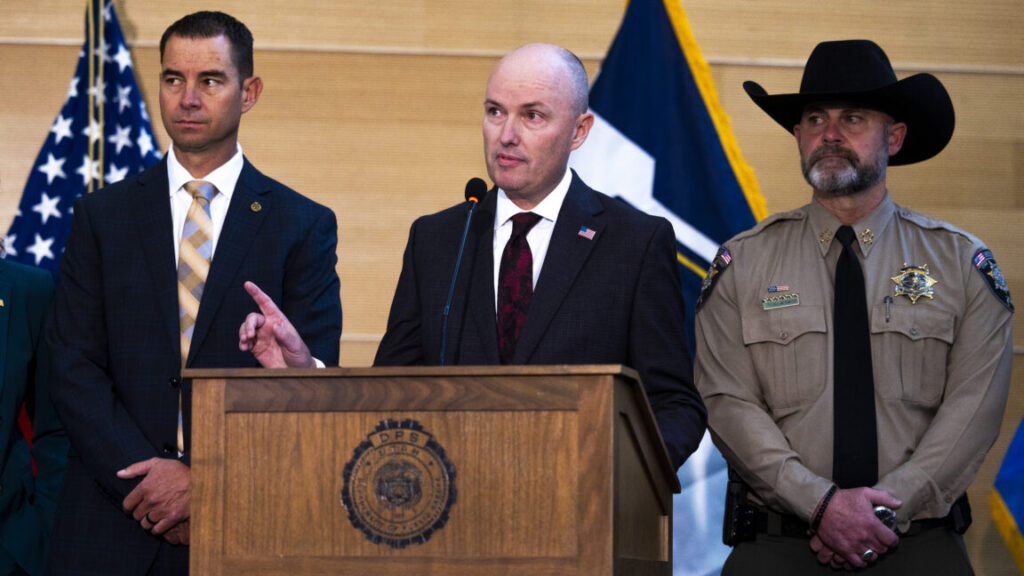
after-kirk-shooting,-utah-governor-calls-social-media-a-“cancer.”-will-we-treat-it-like-one?

After Kirk shooting, Utah governor calls social media a “cancer.” Will we treat it like one?

This is an extremely online style of writing—cryptic, meme-driven, and jokey even about serious or disturbing issues. Was the alleged shooter helped toward his act of violence by the communities he was in online? And are millions of Internet users helping or hurting their own moral and civic identities by watching detailed video of the murder, which was immediately shared on social media?

As his press conference wrapped up, Cox made a plea for everyone to follow Kirk’s tweeted advice (which he cited). He said that “we are not wired as human beings—biologically, historically—we have not evolved in a way that we are capable of processing those types of violent imagery… This is not good for us. It is not good to consume.”

And he added that “social media is a cancer on our society right now. I would encourage people to log off, turn off, touch grass, hug a family member, go out and do good in your community.”

This could have been useful to Extremely Online People like the alleged shooter, who was turned in by some of his own family members and who might have been dissuaded from his actions had he engaged more directly with them. (Of course, simplistic advice like this is often wrong; difficult family members and broken relationships might mean that in-person connection is also unhelpful for some.)

It might also be good advice for the kinds of Extremely Online People who lead the country by posting social media threats to unleash the “Department of War” upon Chicago, shown burning in the background.

Treating cancer

At its heart, though, Cox raises a question about whether social media is 1) a powerful force capable of both great good and terrible incitement and misinformation, or whether it is 2) a mere cancer.

I assume Ars readers are divided on this question, given that the Ars staff itself has differing views. One can point, of course, to the successes: The powerless can call out the lies of the powerful, they can gin up “color revolutions” to topple dictators, and they can publish their views with an ease and at a cost that not even the printing press—itself an extremely disruptive technology—could manage. On the flip side, of course, is all the “cancer”: the floods of misinformation and bile, the yelling, the “cancel culture,” the virtue signaling, the scams and hoaxes, the ethnic nationalism, the casual sharing of both gore and pornography, the buffoonish natures of the tech overlords who run too many of these services, and that feeling you get when you log in to Facebook and realize with a shock that your aunt is a closet racist.

After Kirk shooting, Utah governor calls social media a “cancer.” Will we treat it like one? Read More »

after-ukrainian-testing,-drone-detection-radar-doubles-range-with-simple-software-patch

After Ukrainian testing, drone-detection radar doubles range with simple software patch

As part of its unprovoked invasion, Russia has been firing massed waves of drones and missiles into Ukraine for years, though the tempo has been raised dramatically in recent months. Barrages of 700-plus drones now regularly attack Ukraine during overnight raids. Russia also appears to have upped the ante dramatically by sending at least 19 drones into Poland last night, some of which were shot down by NATO forces.

Many of these drones are Shahed/Geran types built with technology imported from Iran, and they have recently gained the ability to fly higher, making shootdowns more difficult. Given the low cost of the drones (estimates suggest they cost a few tens of thousands of dollars apiece, and many are simply decoys without warheads), hitting them with multimillion-dollar missiles from traditional air-defense batteries makes little sense and would quickly exhaust missile stocks.

So Ukraine has adopted widespread electronic warfare to disrupt control systems and navigation. Drones not forced off their path are fought with mobile anti-aircraft guns, aircraft, and interceptor drones, many launched from mobile fire teams patrolling Ukraine during the night.

For teams like this, early detection of the attack drones is crucial—even seconds matter when it comes to relocating a vehicle and launching a counter drone or aiming a gun. Take too long to get into position and the attack drone overhead has already passed by on the way to its target.

Which brings us to Robin Radar Systems, a Dutch company that initially used radar to detect birds. (Indeed, the name “Robin” is an acronym derived from “Radar OBservation of Bird INtensity.”) This radar technology, good at detecting small flying objects and differentiating them from fauna, has proven useful in Ukraine’s drone war. Last year, the Dutch Ministry of Defence bought 51 mobile Robin Radar IRIS units that could be mounted on vehicles and used by drone defense teams.

After Ukrainian testing, drone-detection radar doubles range with simple software patch Read More »

blade-runner-makes-its-live-action-return-next-year

Blade Runner makes its live-action return next year

Blade Runner’s third live-action entry will be a streaming miniseries on Amazon Prime Video, and Deadline reports that it is now slated for release in 2026.

“The update was provided by Laura Lancaster, Head of US SVOD TV Development and Series – Co-Productions at Amazon MGM Studios, in an internal memo announcing promotions for two executives, Kara Smith and Tom Lieber,” Deadline explained.

We previously reported that the series, titled Blade Runner 2099, had been greenlit under original film director Ridley Scott back in 2022.

There have been a few new developments since then, mainly in casting news. Blade Runner 2099 will star Michelle Yeoh (Everything Everywhere All At Once; Crouching Tiger, Hidden Dragon) and will also feature Hunter Schafer (Euphoria, The Hunger Games: The Ballad of Songbirds & Snakes), Tom Burke (Black Bag, Furiosa: A Mad Max Saga), and Dimitri Abold (Warrior Nun, also The Hunger Games: The Ballad of Songbirds & Snakes), among others.

Very little else is known about the show beyond the fact that it will take place 50 years after the 2017 film Blade Runner 2049, that it will be a live action miniseries, and that it will run for six episodes.

The showrunner will be Silka Luisa, a writer best known for her work on the TV series Shining Girls. (She also wrote one episode of Paramount+’s Halo TV series.) Ridley Scott is involved as an executive producer and is rumored to direct one or more episodes.

Neither Blade Runner 2049 director Denis Villeneuve nor prior big-screen franchise stars Harrison Ford, Ryan Gosling, or Ana de Armas are known to be involved.

The series will come as part of a wave of revivals of classic Hollywood sci-fi franchises on streaming—for example, recently premiered FX series Alien: Earth (which is streaming on Disney+) has achieved huge viewership numbers and widespread critical acclaim.

On the other hand, Amazon’s own The Lord of the Rings: The Rings of Power TV series has found relatively lukewarm reception given its massive budget.

Blade Runner makes its live-action return next year Read More »

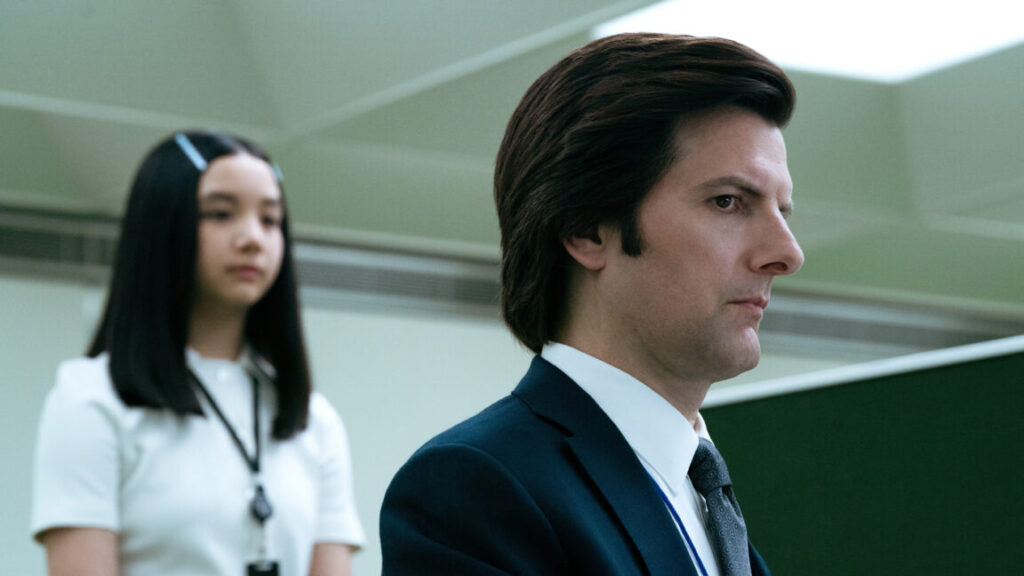
after-successes-like-severance-and-the-studio,-apple-tv+-gets-a-price-hike

After successes like Severance and The Studio, Apple TV+ gets a price hike

To confront all that, streamers have to turn any knobs they can to balance costs with revenue to satisfy the market. Some have turned to ads as an additional source of revenue, others crack down on password sharing or offer different subscription tiers. But virtually all of them have hiked subscription prices, because the previous price ensured short-term losses for long-term growth.

Apple TV+ does not have ads in any plan, and it hasn’t broken its offering into multiple tiers. (For example, some other streaming services charge more for 4K content.) Because of that, the monthly cost is the only knob it can turn to confront these realities, passing new costs to consumers.

Despite all this, it’s still very possible that even with successes like Ted Lasso, The Studio, and Severance, Apple TV+ is losing some amount of money every year. When reporting to investors each quarter, Apple bundles TV+ into a larger “services” category that includes Apple Music, the App Store, iCloud, AppleCare, and more, making it difficult for outsiders to estimate how well Apple TV+ is doing specifically.

Certainly, its shows have been critically well-received. Both Severance and The Studio in particular have gotten the streaming service positive attention. But the landscape is brutal for a relatively new entry like Apple, so expect Apple’s approach to continue to evolve.

After successes like Severance and The Studio, Apple TV+ gets a price hike Read More »

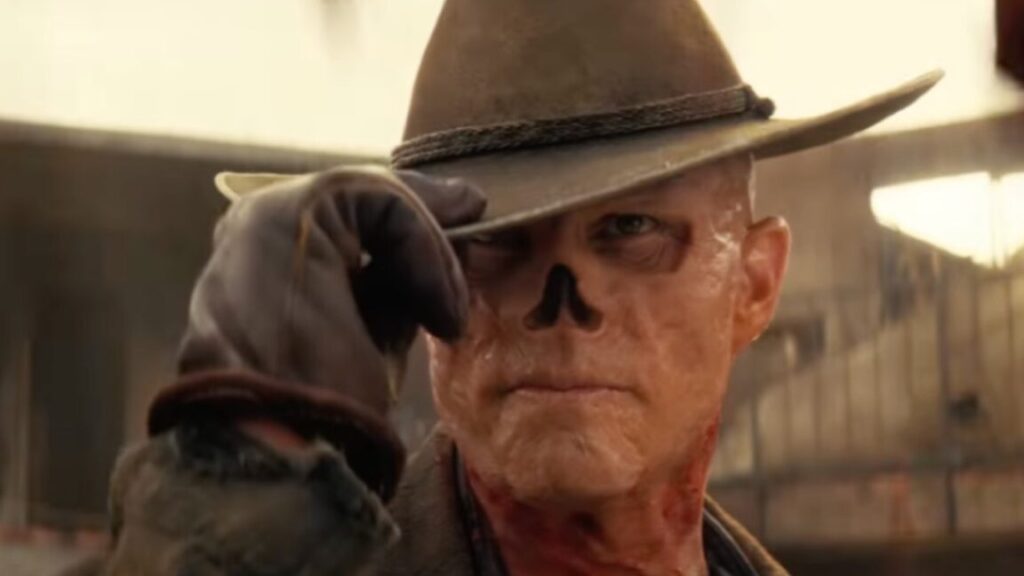
fallout-s2-teaser-brings-us-to-new-vegas

Fallout S2 teaser brings us to New Vegas

Prime Video has dropped an extended teaser for the much-anticipated second season of Fallout, widely considered to be among the best TV adaptations of a gaming franchise. In our 2024 year-end roundup, Ars senior editor Samuel Axon wrote that the first season gave us “a specific cocktail of tongue-in-cheek humor, sci-fi campiness, strong themes, great characters, and visceral violence [that] came together into a fantastic show.” The second season looks like it will bring us more of the same, along with a major new character drawn from the Fallout: New Vegas game. We even got a glimpse of a Deathclaw.

(Minor spoilers for S1 below.)

For the uninitiated, Fallout is set two centuries after nuclear warfare between the US and China destroyed civilization in 2077—an alternate history version of 2077, in which post-World War II nuclear technology ushered in a retrofuturistic society. Some lucky survivors took refuge in various underground vaults; others were left to scavenge a meager existence on the highly radioactive surface.

In S1, we met Lucy MacLean (Ella Purnell), a young woman whose vault is raided by surface dwellers. The raiders kill many vault residents and kidnap her father, Hank (Kyle MacLachlan), so the sheltered Lucy sets out on a quest to find him. Life on the surface is pretty brutal, but Lucy learns fast. Along the way, she finds an ally (and love interest) in Maximus (Aaron Moten), a squire masquerading as a knight of the Brotherhood of Steel. And she runs afoul of a gunslinger and bounty hunter known as the Ghoul (Walton Goggins), a former Hollywood actor named Cooper Howard who survived the original nuclear blast, but radiation exposure turned him into, well, a ghoul.

Fallout S2 teaser brings us to New Vegas Read More »

celebrating-50-years-of-the-rocky-horror-picture-show

Celebrating 50 years of The Rocky Horror Picture Show


hot patootie, bless my soul

“It’s had a profound impact on our culture, especially on people who’ve felt different and marginalized.”

Credit: 20th Century Studios

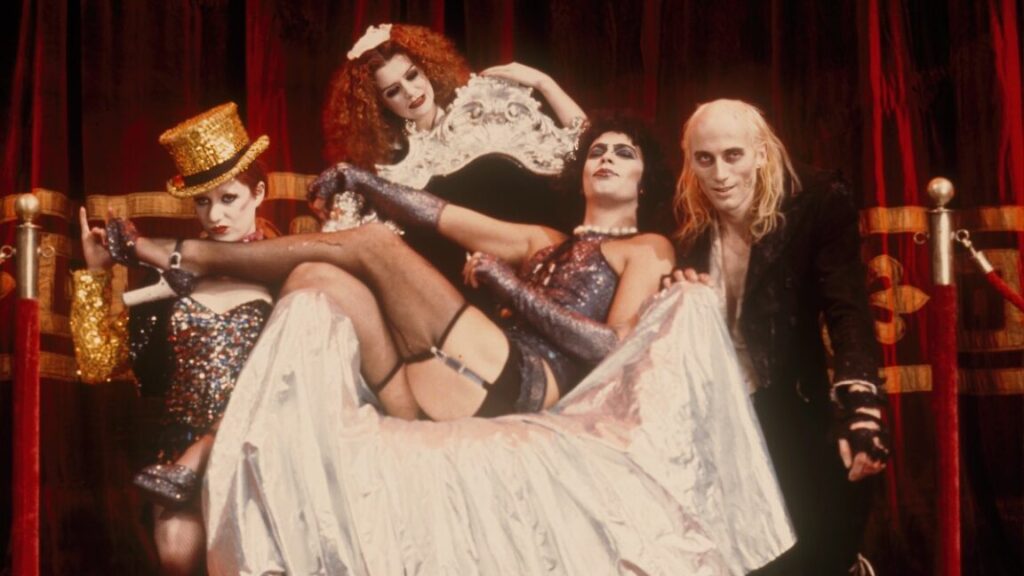
When The Rocky Horror Picture Show premiered in 1975, no one could have dreamed that it would become the longest-running theatrical release film in history. But that’s what happened. Thanks to a killer soundtrack, campy humor, and a devoted cult following, Rocky Horror is still a mainstay of midnight movie culture. In honor of its 50th anniversary, Disney/20th Century Studios is releasing a newly restored 4K HDR version in October, along with deluxe special editions on DVD and Blu-ray. And the film has inspired not one, but two documentaries marking its five decades of existence: Strange Journey: The Story of Rocky Horror and Sane Inside Insanity: The Phenomenon of Rocky Horror.

(Spoilers below, because it’s been 50 years.)

The film is an adaption of Richard O’Brien‘s 1973 musical for the stage, The Rocky Horror Show. At the time, he was a struggling actor and wrote the musical as an homage to the science fiction and B horror movies he’d loved since a child. In fact, the opening song (“Science Fiction/Double Feature“) makes explicit reference to many of those, including 1951’s The Day the Earth Stood Still, Flash Gordon (1936), King Kong (1933), The Invisible Man (1933), Forbidden Planet (1956), and The Day of the Triffids (1962), among others.

The musical ran for six years in London and was well-received when it was staged in Los Angeles. But the New York City production bombed. By then the film was already in development with O’Brien—who plays the hunchbacked butler Riff Raff in the film—co-writing the script. Director Jim Sharman retained most of the London stage cast, but brought in American actors Barry Bostwick and Susan Sarandon to play Brad and Janet, respectively. And he shot much of the film at the Victorian Gothic manor Oakley Court in Berkshire, England, where several Hammer horror movies had been filmed.  In fact, Sharman made use of several old props and set pieces from old Hammer productions, most notably the tank and dummy from 1958’s The Revenge of Frankenstein.

The film opens with nice wholesome couple Brad and Janet attending a wedding and awkwardly getting engaged themselves. They decide to visit their high school science teacher, Dr. Scott (Jonathan Adams), because they met in his class, but they get a flat tire en route and end up stranded in the rain. They seek refuge and a phone at a nearby castle, hoping to call for roadside assistance. Instead, they are pressured into becoming guests of the castle’s owner, a transvestite mad scientist called Frank-N-Furter (Tim Curry), and his merry bad of misfits.

The flamboyantly lascivious Frank-N-Furter is about to unveil his new Creature, the titular Rocky Horror (Peter Hinwood). Rocky is a buff, tanned, blond figure clad only in gold speedos and booties, with the body of a god and the mind of a child. Actually, he’s got half the brain of a motorcycling, rock-n-roll loving rebel named Eddie (Meat Loaf), who briefly escapes from the deep freeze where he’d been stored and causes a bit of havoc, before Frank-N-Furter kills him with an ice pick.

Things just get weirder from there. There’s a lot of sexual partner swapping, with the insatiable Frank-N-Furter bedding his Creature and then seducing the virginal Janet and Brad in turn. A sexually awakened Janet then gets down with Rocky, enraging their host. Dr. Scott shows up in time for Rocky’s birthday dinner, with the main course being the mutilated remains of Eddie. Frank-N-Further then zaps his guests with a Medusa freeze ray and turns them into Greek marble statues. He dresses them in sexy cabaret costumes—matching corsets and fishnets—before unfreezing them and forcing them to perform in an elaborate stage number.

Eventually his butler and maid—siblings Riff Raff and Magenta (Patricia Quinn), respectively—revolt, revealing that they are all actually aliens from the planet Transsexual, Transylvania. They kill Frank-N-Furter with a laser in revenge for his excesses, along with poor Rocky. The entire castle turns out to be a spaceship and Riff Raff and Magenta blast off into space, leaving Brad, Janet, and Dr. Scott crawling around the ground in confusion.

The Rocky Horror Picture Show made its London debut on August 14, 1975, along with eight other cities worldwide, but it was quickly pulled because audiences were so small. A planned Halloween opening night in New York was cancelled altogether. The film might have faded into obscurity if the studio hadn’t decided to re-market it to the midnight movie circuit, along with other counterculture fare like Pink Flamingoes (1972) and Reefer Madness (1933).

Rocky Horror fit right in and finally found its audience. It quickly became a fixture at New York City’s Waverly Theater, which ignited the film’s cult following. People went to see it again and again, and started dressing up in costumes and acting out the lines in front of the big screen, a practice that became known as shadow casting. (I saw it myself several times in the late 1980s, although I never joined a shadow cast.)

Why has Rocky Horror endured for so long? “The music, first of all, is up there, in my biased opinion, with the greatest soundtracks of all time,” Linus O’Brien, director of Strange Journey and Richard O’Brien’s son, told Ars. “I think maybe it doesn’t get recognized as such because on the surface, it just seems like a bit of fluff. But if the songs were only half as good, we wouldn’t be talking about Rocky today. It would be a very small B-movie that we’d laugh at or something.”

It really is an amazingly catchy collection of tunes, perfect for singing (and dancing) along, particularly “The Time Warp.” (Many of us can still perform the basic dance steps.) There’s “Dammit Janet,” “Over at the Frankenstein Place,” and Frank-N-Further makes an unforgettable entrance with “Sweet Transvestite.” Eddie gets his moment in the spotlight with “Hot Patootie—Bless My Soul,” and Janet seduces Rocky with “Touch-a, Touch-a, Touch-a, Touch Me.”

In addition to the unforgettable songs, O’Brien cites Curry’s inspired performance, as well as “all the things my dad loved in terms of bodybuilding and science fiction movies and ’50s rock and roll, the transgressive themes, [and] the classic reimagining of the Frankenstein story,” he said. “Whenever you have something that lasts this long, it’s usually working on many different levels that makes people keep coming back week after week, year after year.”

Shadow casting

Gia Milinovich, an American-born writer and TV presenter now living in England, was part of the second generation of Rocky Horror fans. She grew up in Duluth, Minnesota, which boasted a local repertory cinema that screened a lot of cult movies, and saw Rocky Horror for the first time in 1984. She saw it again in New York in 1987 and started her own shadow cast when she moved to London later that year—playing Frank-N-Furter, of course.

“For me, the moment when Frank-N-Furter threw off his cape—I’ve described it as a religious experience,” Milinovich told Ars. “It was like this world opened up to me and I just thought, ‘I want to be in that world.’ I was completely obsessed from then on. There’s lots of different things that I like as a fan, but there’s nothing that’s grabbed me like Rocky Horror. The atmosphere is the same every time I’ve seen it, this kind of electricity in the air.”

Decades later, Milinovich remains part of the Rocky Horror fandom, with fond memories of her shadow casting days. “I would call shadow casting an art form or a form of theater that doesn’t really exist anywhere else,” she said. “We were doing cosplay before cosplay was a thing. Part of the thing about shadow casting is getting your costumes to be screen accurate to a really obsessive degree. People are still discovering new details  because as the quality of the prints go up, the higher and higher quality DVDs that you get, the more detail you can see in the costumes. There’s a whole Facebook group dedicated just to Frank-N-Furter’s leather jacket.”

And it’s not just the members of the shadow casts who participate. “There’s also all of the talk back, the audience lines,” said Milinivoch. “There are loads of people who might not want to perform, but they’re really into doing costumes or making the props for the shadow cast. So you can be sitting in the audience but still be part of the show. No one needs permission, you just do it. There’s no difference between the audience and the performers and the film, it’s all kind of one thing melded together and it’s like nothing else.”

This was a period when Rocky Horror was still very much part of underground counterculture. “For someone to walk around dressed as Columbia (Little Nell) in the late 1980s, and certainly for men wearing lipstick or black fishnet stockings, it wasn’t necessarily a safe thing to dress up and go to Rocky Horror,” said Milinovich. “Now, all these years later, I feel like it’s acceptable. For the first and second generations of fans, it felt much more radical than it does now.”

Yet in some respects, it’s as relevant as ever. “There are still those extreme prejudices in society and Rocky Horror still provides a space for people to be themselves, or to be someone else, for the two hours that it takes to do the film,” Milinovich said. “The line in the film is ‘Don’t dream it, be it.'” People still take that line to heart.

Rocky Horror has had its share of detractors over the last five decades, but judging whether it’s a “good” film or not by the same criteria as other films is kind of missing the point. The magic lies not in passively watching Rocky Horror, but in the interactive live experience—very much in keeping with its theatrical roots. “I can’t really separate the film from the whole audience experience,” said Milinovich. “I wouldn’t even watch the film at home on its own, I just don’t. I’ve seen it so many times, but watching it at home was how I would always rehearse.”

Don’t dream it, be it

The documentary Strange Journey ends with a fan telling Richard O’Brien, “It doesn’t matter what people think about Rocky because it belongs to us, not to you”—and Rocky‘s creator agreeing that this was true. “Art takes on a life of its own,” Linus O’Brien concurred, citing Karen Tongson, a gender studies professor at the University of Southern California.

“She talks about how our art expresses how we’re feeling inside way before we’ve ever had a chance to understand it or explore it,” he said. “That’s what happened in the case of Rocky with my dad. He was essentially a 13-year-old boy writing a stage play, even though he was 30 at the time. He didn’t think about what he was doing. He was just expressing, took all the things that he liked, all the things that he was thinking about and put it all together. They came from within him, but he wasn’t consciously aware of it.”

At the time, Richard O’Brien also had no idea what his creation would end up meaning to so many people. Linus O’Brien decided to make Strange Journey while gathering archival clips of his father’s work. He came across a video clip of “I’m Going Home” and found himself browsing through the comments.

“It was one after another, [talking] about how Rocky had saved their lives, and how much that song in particular meant to them,” he said. “There was a soldier in Iraq who would always play it because he wanted to go home. A daughter who used to watch Rocky with her mother all the time and then played it at her funeral. It was startling and touching, how profound the impact of Rocky has been on so many people’s lives.”

When Strange Journey screened at SXSW earlier this year, a man came up to O’Brien after the Q&A. “He was shaking and he said, ‘Listen, my wife and I met 32 years ago at Rocky, and she wanted to let you and your dad know that if it wasn’t for Rocky, she wouldn’t be alive today,'” O’Brien recalled.

I don’t think there’s another work of art that has tangibly saved the lives of people like Rocky has,” he continued. “A lot of people just think it’s a little bit of trashy fun, a bit naughty and rude, but it’s much more than that. It’s had a profound impact on our culture, especially on people who’ve felt different and marginalized—regardless of their sexuality. It’s created a community for people who didn’t feel part of society. We’ve all felt like that to a degree. So it’s a wonderful thing to celebrate.”

Photo of Jennifer Ouellette

Jennifer is a senior writer at Ars Technica with a particular focus on where science meets culture, covering everything from physics and related interdisciplinary topics to her favorite films and TV series. Jennifer lives in Baltimore with her spouse, physicist Sean M. Carroll, and their two cats, Ariel and Caliban.

Celebrating 50 years of The Rocky Horror Picture Show Read More »

dedicated-volunteer-exposes-“single-largest-self-promotion-operation-in-wikipedia’s-history”

Dedicated volunteer exposes “single largest self-promotion operation in Wikipedia’s history”

After a reduction in activity, things ramped up again in 2021, as IP addresses from around the world started creating Woodard references and articles once more. For instance, “addresses from Canada, Germany, Indonesia, the UK and other places added some trivia about Woodard to all 15 Wikipedia articles about the calea ternifolia.”

Then things got “more sophisticated.” From December 2021 through June 2025, 183 articles were created about Woodard, each in a different language’s Wikipedia and each by a unique account. These accounts followed a pattern of behavior: They were “created, often with a fairly generic name, and made a user page with a single image on it. They then made dozens of minor edits to unrelated articles, before creating an article about David Woodard, then making a dozen or so more minor edits before disappearing off the platform.”

Grnrchst believes that all the activity was meant to “create as many articles about Woodard as possible, and to spread photos of and information on Woodard to as many articles as possible, while hiding that activity as much as possible… I came to believe that David Woodard himself, or someone close to him, had been operating this network of accounts and IP addresses for the purposes of cynical self-promotion.”

After the Grnrchst report, Wikipedia’s global stewards removed 235 articles on Woodard from Wikipedia instances with few users or administrators. Larger Wikipedias were free to make their own community decisions, and they removed another 80 articles and banned numerous accounts.

“A full decade of dedicated self-promotion by an individual network has been undone in only a few weeks by our community,” Grnrchst noted.

In the end, just 20 articles about Woodard remain, such as this one in English, which does not mention the controversy.

We were unable to get in touch with Woodard, whose personal website is password-protected and only available “by invitation.”

Could the whole thing be some kind of “art project,” with the real payoff being exposure and being written about? Perhaps. But whatever the motive behind the decade-long effort to boost Woodard on Wikipedia, the incident reminds us just how much effort some people are willing to put into polluting open or public-facing projects for their own ends.

Dedicated volunteer exposes “single largest self-promotion operation in Wikipedia’s history” Read More »