us-china trade war

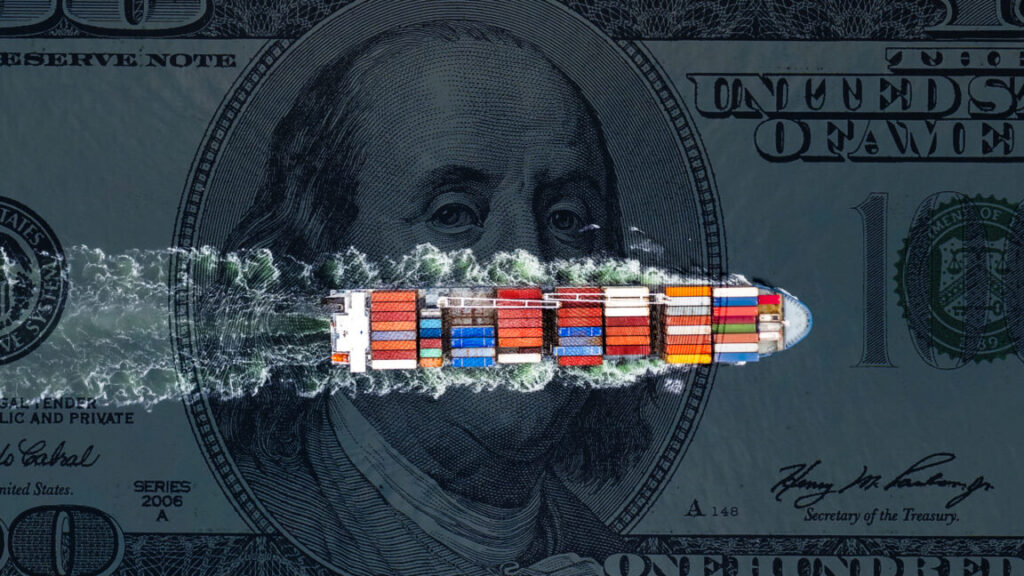
trump-caving-on-nvidia-h20-export-curbs-may-disrupt-his-bigger-trade-war

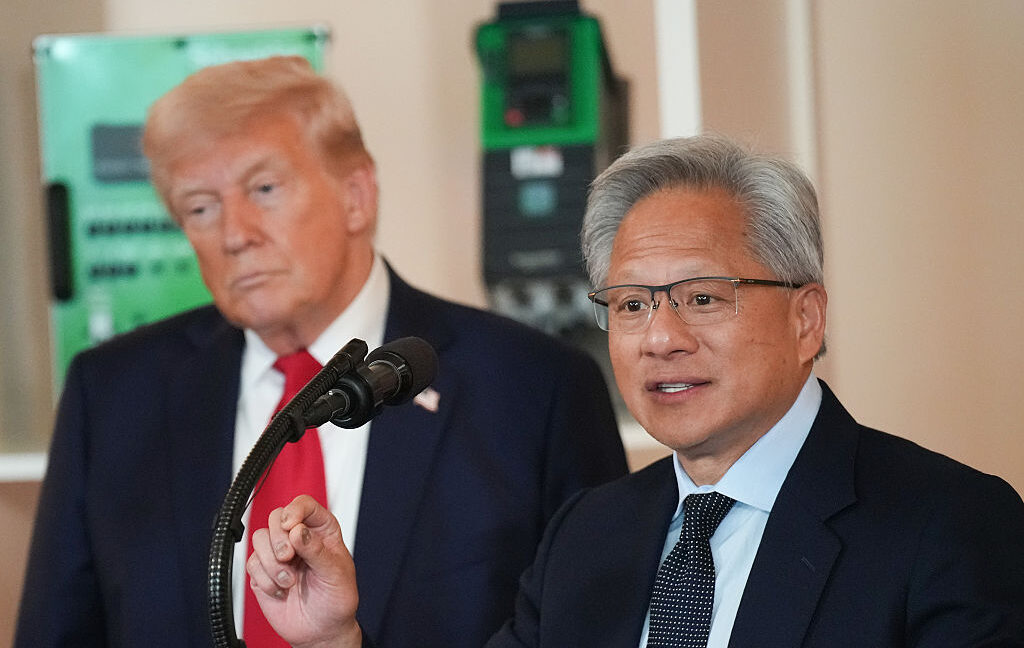
Trump caving on Nvidia H20 export curbs may disrupt his bigger trade war

But experts seem to fear that Trump isn’t paying enough attention to how exports of US technology could threaten to not only supercharge China’s military and AI capabilities but also drain supplies that US firms need to keep the US at the forefront of AI innovation.

“More chips for China means fewer chips for the US,” experts said, noting that “China’s biggest tech firms, including Tencent, ByteDance, and Alibaba,” have spent $16 billion on bulk-ordered H20 chips over the past year.

Meanwhile, “projected data center demand from the US power market would require 90 percent of global chip supply through 2030, an unlikely scenario even without China joining the rush to buy advanced AI chips,” experts said. If Trump doesn’t intervene, one of America’s biggest AI rivals could even end up driving up costs of AI chips for US firms, they warned.

“We urge you to reverse course,” the letter concluded. “This is not a question of trade. It is a question of national security.”

Trump says he never heard of Nvidia before

Perhaps the bigger problem for Trump, national security experts suggest, would be if China or other trade partners perceive the US resolve to wield export controls as a foreign policy tool to be “weakened” by Trump reversing course on H20 controls.

They suggested that Trump caving on H20 controls could even “embolden China to seek additional access concessions” at a time when some analysts suggest that China may already have an upper hand in trade negotiations.

The US and China are largely expected to extend a 90-day truce following recent talks in Stockholm, Reuters reported. Anonymous sources told the South China Morning Post that the US may have already agreed to not impose any new tariffs or otherwise ratchet up the trade war during that truce, but that remains unconfirmed, as Trump continues to warn that chip tariffs are coming soon.

Trump has recently claimed that he thinks he may be close to cementing a deal with China, but it appears likely that talks will continue well into the fall. A meeting between Trump and Chinese President Xi Jinping probably won’t be scheduled until late October or early November, Reuters reported.

Trump caving on Nvidia H20 export curbs may disrupt his bigger trade war Read More »

trump,-who-promised-to-save-tiktok,-threatens-to-shut-down-tiktok

Trump, who promised to save TikTok, threatens to shut down TikTok

Earlier this month, Trump had claimed that he wasn’t “confident” that China would approve the deal, even though he thought it was “good for China.” Analysts have suggested that China views TikTok as a bargaining chip in its tariff negotiations with Trump, which continue to not go smoothly, and it may be OK with the deal but unwilling to release the bargaining chip without receiving key concessions from the US.

US-China tariff talks complicate TikTok deal

For now, the US and China are enjoying a 90-day truce that could end in August, about a month before the deadline Trump set to sell TikTok in mid-September. In an op-ed this week, Sean Stein, the president of the US-China Business Council, suggested that “it is almost inevitable” that the US and China will extend the 90-day truce, indicating that Trump is far from securing a favorable deal for the US following weeks of tense negotiations with America’s biggest trade adversary.

It’s possible that the Trump administration is threatening to shut down TikTok in hopes that China will make a concession ahead of the September deadline. Lutnick’s comments could even mean that Trump has possibly failed to clinch the deal, which could have untold consequences in the US-China trade war, perhaps wounding Trump’s ego after his posturing that only he can save TikTok.

For TikTok fans and Americans who rely on TikTok for their livelihoods, betting on Trump’s dealmaking skills likely continues to feel tenuous as Lutnick forecasts a potential shutdown that could come within weeks.

“If that deal gets approved by the Chinese, then that deal will happen,” Lutnick said. “If they don’t approve it, then TikTok is going to go dark, and those decisions are coming very soon.”

Trump, who promised to save TikTok, threatens to shut down TikTok Read More »

trump-suggests-he-needs-china-to-sign-off-on-tiktok-sale,-delays-deal-again

Trump suggests he needs China to sign off on TikTok sale, delays deal again

For many Americans, losing TikTok would be disruptive. TikTok has warned that US businesses could lose $1 billion in one month if TikTok shuts down. As these businesses wait in limbo for a resolution to the situation, it’s getting harder to take the alleged national security threat seriously, as clinching the deal appears to lack urgency.

On Wednesday, the White House continued to warn that Americans are not safe using TikTok, though, despite leaving Americans vulnerable for an extended period that could now stretch to eight months.

In a statement, White House press secretary Karoline Leavitt only explained that “President Trump does not want TikTok to go dark” and would sign an executive order “to keep TikTok up and running” through mid-September. Leavitt confirmed that the Trump administration would focus on finishing the deal in this three-month period, “making sure the sale closes so that Americans can keep using TikTok with the assurance that their data is safe and secure,” Reuters reported.

US-China tensions continue, despite truce

Trump’s negotiations with China have been shaky, but a truce was reestablished last week that could potentially pave the way for a TikTok deal.

Initially, Trump had planned to use the TikTok deal as a bargaining chip, but the tit-for-tat retaliations between the US and China all spring reportedly left China hesitant to agree to any deal. Perhaps sensing the power shift in negotiations, Trump offered to reduce China’s highest tariffs to complete the deal in March. But by April, analysts opined that Trump was still “desperate” to close, while China saw no advantage in letting go of TikTok any time soon.

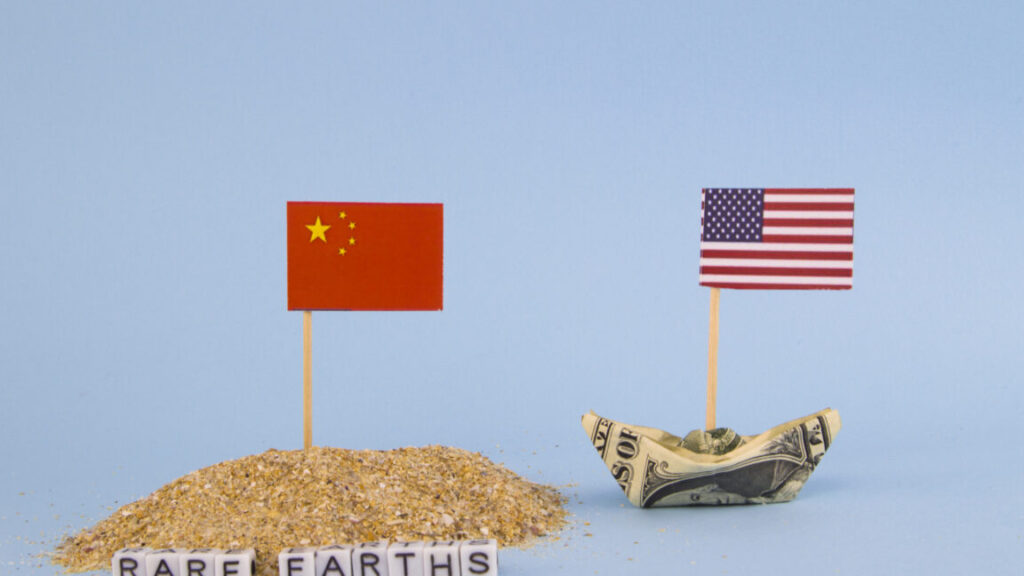
Despite the current truce, tensions between the US and China continue, as China has begun setting its own deadlines to maintain leverage in the trade war. According to The Wall Street Journal, China put a six-month limit “on the sales of rare earths to US carmakers and manufacturers, giving Beijing leverage if the trade conflict flares up again.”

Trump suggests he needs China to sign off on TikTok sale, delays deal again Read More »

trump-threatens-apple-with-25%-tariff-to-force-iphone-manufacturing-into-us

Trump threatens Apple with 25% tariff to force iPhone manufacturing into US

Donald Trump woke up Friday morning and threatened Apple with a 25 percent tariff on any iPhones sold in the US that are not manufactured in America.

In a Truth Social post, Trump claimed that he had “long ago” told Apple CEO Tim Cook that Apple’s plan to manufacture iPhones for the US market in India was unacceptable. Only US-made iPhones should be sold here, he said.

“If that is not the case, a tariff of at least 25 percent must be paid by Apple to the US,” Trump said.

This appears to be the first time Trump has threatened a US company directly with tariffs, and Reuters noted that “it is not clear if Trump can levy a tariff on an individual company.” (Typically, tariffs are imposed on countries or categories of goods.)

Apple has so far not commented on the threat after staying silent when Trump started promising that US-made iPhones were coming last month. At that time, Apple instead continued moving its US-destined operations from China into India, where tariffs were substantially lower and expected to remain so.

In his social media post, Trump made it clear that he did not approve of Apple’s plans to pivot production to India or “anyplace else” but the US.

For Apple, building an iPhone in the US threatens to spike costs so much that they risk pricing out customers. In April, CNBC cited Wall Street analysts estimating that a US-made iPhone could cost anywhere from 25 percent more—increasing to at least about $1,500—to potentially $3,500 at most. Today, The New York Times cited analysts forecasting that the costly shift “could more than double the consumer price of an iPhone.”

It’s unclear if Trump could actually follow through on this latest tariff threat, but the morning brought more potential bad news for Apple’s long-term forecast in another Truth Social post dashed off shortly after the Apple threat.

In that post, Trump confirmed that the European Union “has been very difficult to deal with” in trade talks, which he fumed “are going nowhere!” Because these talks have apparently failed, Trump ordered “a straight 50 percent tariff” on EU imports starting on June 1.

Trump threatens Apple with 25% tariff to force iPhone manufacturing into US Read More »

trump-is-“desperate”-to-make-a-deal—china-isn’t,-analysts-say

Trump is “desperate” to make a deal—China isn’t, analysts say

Donald Trump has started signaling that he’s ready to slash tariffs on Chinese imports, but economists have warned that the US softening its stance now likely cedes power to China, which perhaps benefits from dragging out trade talks.

On Tuesday, Trump confirmed that he is willing to reduce 145 percent tariffs on all Chinese imports. A senior White House official told The Wall Street Journal that the tariffs may come “down to between roughly 50 percent and 65 percent.” Or perhaps the US may use a tiered approach, charging a 35 percent tax on goods that don’t threaten national security, while requiring 100 percent tariffs on imports “deemed as strategic to America’s interest,” other insiders told the WSJ.

For now, Trump is being vague, only confirming that tariffs “won’t be that high” or “anywhere near” 145 percent. Attempting to maintain a tough veneer, Trump warned that China must act quickly to make a deal to end the trade war or else risk making concessions that China may not consider ideal.

“If they don’t make a deal, we’ll set the deal,” he said.

But analysts told the South China Morning Post that Trump appears “anxious” and “panicked,” rushing to make a deal that China can afford to delay until more favorable terms are offered.

So far, Trump has not met with China’s president Xi Jinping, the WSJ reported, which will be essential to inking a deal. Instead, US officials have been in contact with underlings who have not helped advance the deal. Last week, Trump confirmed the deal was not “imminent,” the South China Morning Post reported, despite meeting a “number of times” to discuss opening up negotiations.

On Wednesday, while analysts suggested that Trump appeared “desperate” for a “quick deal,” China’s foreign ministry spokesperson, Guo Jiakun, warned that the only path to a deal required the US to “stop making threats and resorting to coercion.” According to Alicia Garcia-Herrero, chief economist for Asia-Pacific at Natixis, China is well-positioned to get a better deal.

“[Trump] needs a quick deal,” Garcia-Herrero told the South China Morning Post. “China does not need to offer anything big in such circumstances, because the US is so desperate for a deal. With a few billion in imports from the US, China might manage to lower the tariffs. The deal might be sweeter for China than in 2019.”

Trump is “desperate” to make a deal—China isn’t, analysts say Read More »

trump-can’t-keep-china-from-getting-ai-chips,-tsmc-suggests

Trump can’t keep China from getting AI chips, TSMC suggests

“Despite TSMC’s best efforts to comply with all relevant export control and sanctions laws and regulations, there is no assurance that its business activities will not be found incompliant with export control laws and regulations,” TSMC said.

Further, “if TSMC or TSMC’s business partners fail to obtain appropriate import, export or re-export licenses or permits or are found to have violated applicable export control or sanctions laws, TSMC may also be adversely affected, through reputational harm as well as other negative consequences, including government investigations and penalties resulting from relevant legal proceedings,” TSMC warned.

Trump’s tariffs may end TSMC’s “tariff-proof” era

TSMC is thriving despite years of tariffs and export controls, its report said, with at least one analyst suggesting that, so far, the company appears “somewhat tariff-proof.” However, all of that could be changing fast, as “US President Donald Trump announced in 2025 an intention to impose more expansive tariffs on imports into the United States,” TSMC said.

“Any tariffs imposed on imports of semiconductors and products incorporating chips into the United States may result in increased costs for purchasing such products, which may, in turn, lead to decreased demand for TSMC’s products and services and adversely affect its business and future growth,” TSMC said.

And if TSMC’s business is rattled by escalations in the US-China trade war, TSMC warned, that risks disrupting the entire global semiconductor supply chain.

Trump’s semiconductor tariff plans remain uncertain. About a week ago, Trump claimed the rates would be unveiled “over the next week,” Reuters reported, which means they could be announced any day now.

Trump can’t keep China from getting AI chips, TSMC suggests Read More »

trump’s-tariffs-trigger-price-hikes-at-large-online-retailers

Trump’s tariffs trigger price hikes at large online retailers

Popular online shopping meccas Temu and Shein have finally broken their silence, warning of potential price hikes starting next week due to Donald Trump’s tariffs.

Temu is a China-based e-commerce platform that has grown as popular as Amazon for global shoppers making cross-border purchases, according to 2024 Statista data. Its tagline, “Shop like a billionaire,” is inextricably linked to the affordability of items on its platform. And although Shein—which vows to make global fashion “accessible to all” by selling inexpensive stylish clothing—moved its headquarters from China to Singapore in 2022, most of its products are still controversially manufactured in China, the BBC reported.

For weeks, the US-China trade war has seen both sides spiking tariffs. In the US, the White House last night crunched the numbers and confirmed that China now faces tariffs of up to 245 percent, The Wall Street Journal reported. That figure includes new tariffs Trump has imposed, taxing all Chinese goods by 145 percent, as well as prior 100 percent tariffs lobbed by the Biden administration that are still in effect on EVs and Chinese syringes.

Last week, China announced that it would stop retaliations, CNBC reported. But that came after China rolled out 125 percent tariffs on US goods. While China has since accused Trump of weaponizing tariffs to “an irrational level,” other retaliations have included increasingly cutting off US access to critical minerals used in tech manufacturing and launching antitrust probes into US companies.

For global retailers, the tit-for-tat tariffs have immediately scrambled business plans. Particularly for Temu and Shein, Trump’s decision to end the “de minimis” exemption on May 2—which allowed shipments valued under $800 to be imported duty-free—will soon hit hard, exposing them to 90 percent tariffs that inevitably led to next week’s price shifts. According to The Guardian, starting on June 1, retailers will have to pay $150 tariffs on each individual package.

Trump’s tariffs trigger price hikes at large online retailers Read More »

apple-silent-as-trump-promises-“impossible”-us-made-iphones

Apple silent as Trump promises “impossible” US-made iPhones


How does Apple solve a problem like Trump’s trade war?

Despite a recent pause on some tariffs, Apple remains in a particularly thorny spot as Donald Trump’s trade war spikes costs in the tech company’s iPhone manufacturing hub, China.

Analysts predict that Apple has no clear short-term options to shake up its supply chain to avoid tariffs entirely, and even if Trump grants Apple an exemption, iPhone prices may increase not just in the US but globally.

The US Trade Representative, which has previously granted Apple an exemption on a particular product, did not respond to Ars’ request to comment on whether any requests for exemptions have been submitted in 2025.

Currently, the US imposes a 145 percent tariff on Chinese imports, while China has raised tariffs on US imports to 125 percent.

Neither side seems ready to back down, and Trump’s TikTok deal—which must be approved by the Chinese government—risks further delays the longer negotiations and retaliations drag on. Trump has faced criticism for delaying the TikTok deal, with Senate Intelligence Committee Vice Chair Mark Warner (D-Va.) telling The Verge last week that the delay was “against the law” and threatened US national security. Meanwhile, China seems to expect more business to flow into China rather than into the US as a result of Trump’s tough stance on global trade.

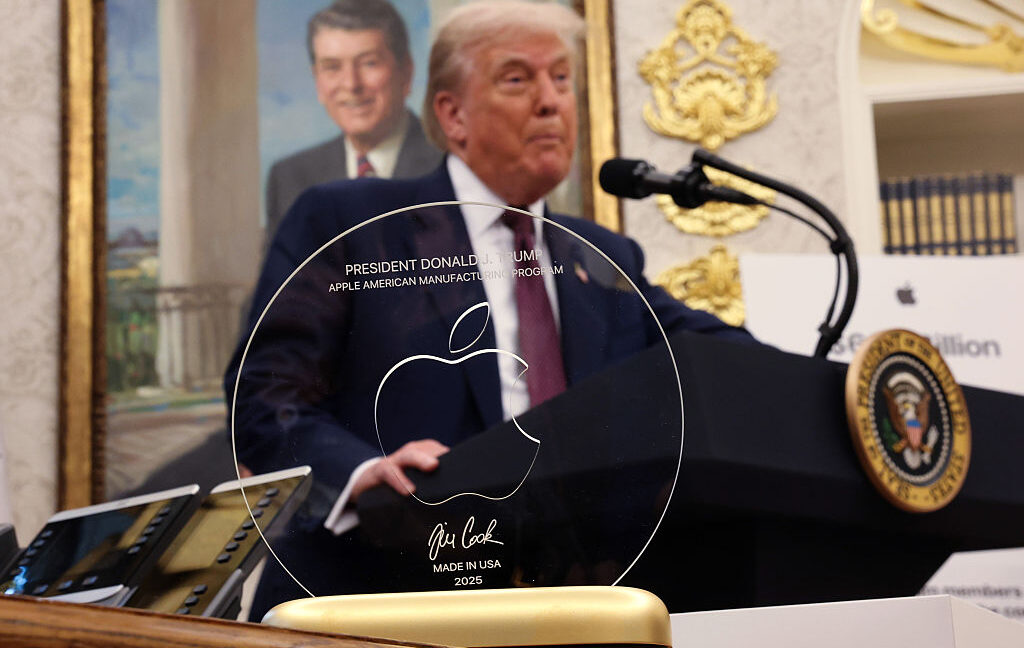
With the economy and national security at risk, Trump is claiming that tariffs will drive manufacturing into the US, create jobs, and benefit the economy. Getting the world’s most valuable company, Apple, to manufacture its most popular product, the iPhone, in the US, is clearly part of Trump’s vision. White House Press Secretary Karoline Leavitt told reporters this week that Apple’s commitment to invest $500 billion in the US over the next four years was supposedly a clear indicator that Apple believed it was feasible to build iPhones here, Bloomberg reported.

“If Apple didn’t think the United States could do it, they probably wouldn’t have put up that big chunk of change,” Leavitt said.

Apple did not respond to Ars’ request to comment, and so far, it has been silent on how tariffs are impacting its business.

iPhone price increases expected globally

For Apple, even if it can build products for the US market in India, where tariffs remain lower, Trump’s negotiations with China “remain the most important variable for Apple” to retain its global dominance.

Dan Ives, global head of technology research at Wedbush Securities, told CNBC that “Apple could be set back many years by these tariffs.” Although Apple reportedly stockpiled phones to sell in the US market, that supply will likely dwindle fast as customers move to purchase phones before prices spike. In the medium-term, consultancy firm Omdia forecasted, Apple will likely “focus on increasing iPhone production and exports from India” rather than pushing its business into the US, as Trump desires.

But Apple will still incur additional costs from tariffs on India until that country tries to negotiate a more favorable trade deal. And any exemption that Apple may secure due to its investment promise in the US or moderation of China tariffs that could spare Apple some pain “may not be enough for Apple to avoid adverse business effects,” co-founder and senior analyst at equity research publisher MoffettNathanson, Craig Moffett, suggested to CNBC.

And if Apple is forced to increase prices, it likely won’t be limited to just the US, Bank of America Securities analyst Wamsi Mohan suggested, as reported by The Guardian. To ensure that Apple’s largest market isn’t the hardest hit, Apple may increase prices “across the board geographically,” he forecasted.

“While Apple has not commented on this, we expect prices will be changed globally to prevent arbitrage,” Mohan said.

Apple may even choose to increase prices everywhere but the US, vice president at Forrester Research, Dipanjan Chatterjee, explained in The Guardian’s report.

“If there is a cost impact in the US for certain products,” Chatterjee said, Apple may not increase US prices because “the market is far more competitive there.” Instead, “the company may choose to keep prices flat in the US while recovering the lost margin elsewhere in its global portfolio,” Chatterjee said.

Trump’s US-made iPhone may be an impossible dream

Analysts have said that Trump’s dream that a “made-in-the-USA” iPhone could be coming soon is divorced from reality. Not only do analysts estimate that more than 80 percent of Apple products are currently made in China, but so are many individual parts. So even if Apple built an iPhone factory in the US, it would still have to pay tariffs on individual parts, unless Trump agreed to a seemingly wide range of exemptions. Mohan estimated it would “likely take many years” to move the “entire iPhone supply chain,” if that’s “even possible.”

Further, Apple’s $500 billion commitment covered “building servers for its artificial intelligence products, Apple TV productions and 20,000 new jobs in research and development—not a promise to make the iPhone stateside,” The Guardian noted.

For Apple, it would likely take years to build a US factory and attract talent, all without knowing how tariffs might change. A former Apple manufacturing engineer, Matthew Moore, told Bloomberg that “there are millions of people employed by the Apple supply chain in China,” and Apple has long insisted that the US talent pool is too small to easily replace them.

“What city in America is going to put everything down and build only iPhones?” Moore said. “Boston is over 500,000 people. The whole city would need to stop everything and start assembling iPhones.”

In a CBS interview, Commerce Secretary Howard Lutnick suggested that the “army of millions and millions of human beings” could be automated, Bloomberg reported. But China has never been able to make low-cost automation work, so it’s unclear how the US could achieve that goal without serious investment.

“That’s not yet realistic,” people who have worked on Apple’s product manufacturing told Bloomberg, especially since each new iPhone model requires retooling of assembly, which typically requires manual labor. Other analysts agreed, CNBC reported, concluding that “the idea of an American-made iPhone is impossible at worst and highly expensive at best.”

For consumers, CNBC noted, a US-made iPhone would cost anywhere from 25 percent more than the $1,199 price point today, increasing to about $1,500 at least, to potentially $3,500 at most, Wall Street analysts have forecasted.

It took Apple a decade to build its factory in India, which Apple reportedly intends to use to avoid tariffs where possible. That factory “only began producing Apple’s top-of-the-line Pro and Pro Max iPhone models for the first time last year,” CNBC reported.

Analysts told CNBC that it would take years to launch a similar manufacturing process in the US, while “there’s no guarantee that US trade policy might not change yet again in a way to make the factory less useful.”

Apple CEO’s potential game plan to navigate tariffs

It appears that there’s not much Apple can do to avoid maximum pain through US-China negotiations. But Apple’s CEO Tim Cook—who is considered “a supply chain whisperer”—may be “uniquely suited” to navigate Trump’s trade war, Fortune reported.

After Cook arrived at Apple in 1998, he “redesigned Apple’s sprawling supply chain” and perhaps is game to do that again, Fortune reported. Jeremy Friedman, associate professor of business and geopolitics at Harvard Business School, told Fortune that rather than being stuck in the middle, Cook may turn out to be a key intermediary, helping the US and China iron out a deal.

During Trump’s last term, Cook raised a successful “charm offensive” that secured tariff exemptions without caving to Trump’s demand to build iPhones in the US, CNBC reported, and he’s likely betting that Apple’s recent $500 billion commitment will lead to similar outcomes, even if Apple never delivers a US-made iPhone.

Back in 2017, Trump announced that Apple partner Foxconn would be building three “big beautiful plants” in the US and claimed that they would be Apple plants, CNBC reported. But the pandemic disrupted construction, and most of those plans were abandoned, with one facility only briefly serving to make face masks, not Apple products. In 2019, Apple committed to building a Texas factory that Trump toured. While Trump insisted that a US-made iPhone was on the horizon due to Apple moving some business into the US, that factory only committed to assembling the MacBook Pro, CNBC noted.

Morgan Stanley analyst Erik Woodring suggested that Apple may “commit to some small-volume production in the US (HomePod? AirTags?)” to secure an exemption in 2025, rather than committing to building iPhones, CNBC reported.

Although this perhaps sounds like a tried-and-true game plan, for Cook, Apple’s logistics have likely never been so complicated. However, analysts told Fortune that experienced logistics masterminds understand that flexibility is the priority, and Cook has already shown that he can anticipate Trump’s moves by stockpiling iPhones and redirecting US-bound iPhones through its factory in India.

While Trump negotiates with China, Apple hopes that an estimated 35 million iPhones it makes annually in India can “cover a large portion of its needs in the US,” Bloomberg reported. These moves, analysts said, prove that Cook may be the man for the job when it comes to steering Apple through the trade war chaos.

But to keep up with global demand—selling more than 220 million iPhones annually—Apple will struggle to quickly distance itself from China, where there’s abundant talent to scale production that Apple says just doesn’t exist in the US. For example, CNBC noted that Foxconn hired 50,000 additional workers last fall at its largest China plant just to build enough iPhones to meet demand during the latest September launches.

As Apple remains dependent on China, Cook will likely need to remain at the table, seeking friendlier terms on both sides to ensure its business isn’t upended for years.

“One can imagine, if there is some sort of grand bargain between US and China coming in the next year or two,” Friedman said, “Tim Cook might as soon as anybody play an intermediary role.”

Photo of Ashley Belanger

Ashley is a senior policy reporter for Ars Technica, dedicated to tracking social impacts of emerging policies and new technologies. She is a Chicago-based journalist with 20 years of experience.

Apple silent as Trump promises “impossible” US-made iPhones Read More »

trump-boosts-china-tariffs-to-125%,-pauses-tariff-hikes-on-other-countries

Trump boosts China tariffs to 125%, pauses tariff hikes on other countries

On Wednesday, Donald Trump, once again, took to Truth Social to abruptly shift US trade policy, announcing a 90-day pause “substantially” lowering reciprocal tariffs against all countries except China to 10 percent.

Because China retaliated—raising tariffs on US imports to 84 percent on Wednesday—Trump increased tariffs on China imports to 125 percent “effective immediately.” That likely will not be received well by China, which advised the Trump administration to cancel all China tariffs Wednesday, NPR reported.

“The US’s practice of escalating tariffs on China is a mistake on top of a mistake,” the Chinese finance ministry said, calling for Trump to “properly resolve differences with China through equal dialogue on the basis of mutual respect.”

For tech companies, trying to keep up with Trump’s social media posts regarding tariffs has been a struggle, as markets react within minutes. It’s not always clear what Trump’s posts mean or how the math will add up, but after Treasury Secretary Scott Bessent clarified Trump’s recent post, the stock market surged, CNBC reported, after slumping for days.

But even though the stock market may be, for now, recovering, tech companies remain stuck swimming in uncertainty. Ed Brzytwa, vice president of international trade for the Consumer Technology Association (CTA)—which represents the $505 billion US consumer technology industry—told Ars that for many CTA members, including small businesses and startups, “the damage has been done.”

“Our small business and startup members were uniquely exposed to these reciprocal tariffs and the whipsaw effect,” Brzytwa told Ars. “There’s collateral damage to that.”

In a statement, CTA CEO Gary Shapiro suggested that the pause was “a victory for American consumers,” but ultimately the CTA wants Trump to “fully revoke” the tariffs.

“While this is great news, we are hearing directly from our members that the ongoing additional 10 percent universal baseline tariffs and this continued uncertainty, are already hurting American small businesses,” Shapiro said. “CTA urges President Trump to focus his efforts on what he does best, dealmaking. Now is the time to reposition the United States with our allies as a reliable trading partner while growing the American and global economy.”

Trump boosts China tariffs to 125%, pauses tariff hikes on other countries Read More »

trump-gives-china-one-day-to-end-retaliations-or-face-extra-50%-tariffs

Trump gives China one day to end retaliations or face extra 50% tariffs


China expects to outlast US in trade war, alarming Big Tech.

Tech companies’ worst nightmare ahead of Donald Trump’s election has already come true, as the US and China are now fully engaged in a tit-for-tat trade war, where China claims it expects to be better positioned to withstand US blows long-term.

Trump has claimed that Americans must take their “medicine,” bearing any pains from tariffs while waiting for supposed long-term gains from potentially pressuring China—and every other country, including islands of penguins—into a more favorable trade deal. On Monday, tech companies across the US likely winced when Trump threatened to heap “additional” 50 percent tariffs on China, after China announced retaliatory 34 percent tariffs on US imports and restricted US access to rare earth metals.

Posting on Truth Social, Trump gave China one day to withdraw tariffs to avoid higher US tariffs.

As of this writing, the trade rivals remain in a stand-off, with US tech companies taking hits in the form of higher costs and supply chain disruptions from both sides.

Trump is apparently hoping that his threat will send China cowering before their retaliatory tariffs kick in April 10, while China appears to feel that it has little reason to back down. According to CNN, “a flurry of state media coverage and government statements” flooded Chinese news sites over the weekend, reassuring Chinese citizens and businesses that “US tariffs will have an impact (on China), but ‘the sky won’t fall.'”

“Since the US initiated the (first) trade war in 2017—no matter how the US fights or presses—we have continued to develop and progress, demonstrating resilience—’the more pressure we get, the stronger we become,'” a Sunday story in the “Chinese Communist Party’s mouthpiece People’s Daily read,” CNN reported.

For China, the bet seems to be that by imposing tariffs broadly, the US will drive other countries to deepen their investments in China. If the US loses too much business, while China potentially gains, then China could potentially emerge as the global leader, possibly thwarting Trump’s efforts to use tariffs as a weapon driving investment into the US.

Trump has no plans to pause tariffs

Currently, duties on all Chinese imports coming into the US are over 54 percent, CNN reported. And Trump’s threat of additional tariffs, while unclear precisely how much it would move the needle, would certainly push that figure above the 60 percent threshold that had US tech companies scrambling last year to warn of potentially dire impacts to the US economy.

At that time, the Consumer Technology Association (CTA) warned that laptop prices could nearly double, game console prices could rise by 40 percent, and smartphone prices by 26 percent. Now, the CTA has joined those warning that Trump’s tariffs could not only spark price hikes but also potentially cause a recession.

“These tariffs will raise consumer prices and will force our trade partners to retaliate,” Gary Shapiro, CTA’s CEO and vice chair, wrote in a press statement. “Americans will become poorer because of these tariffs.”

Various reports following Trump’s tariffs announcement signal prices could soon match CTA’s forecast or go even higher. PC vendors told PCMag they’re already preparing for prices economists estimate could increase by 45 percent by this time the next year. And Apple products like iPhones, iPads, MacBooks, and AirPods could increase by 40 percent, a financial planning analyst told CNET. Meanwhile, the entire game industry is apparently bracing, as China is one of two countries where most console hardware is produced.

With stocks plummeting, Trump has refused to back down, seeming particularly unwilling to relent from his hard stance against China. He has branded rumors that he might pause tariffs “fake news,” even as his aggressive tariff regime has disrupted markets for the US and many allies, like Australia, Japan, South Korea, and India. Commerce Secretary Howard Lutnick even defended imposing tariffs on the islands of penguins by insisting that any path any country may take to dodge tariffs by diverting shipments must be cut off.

“The idea is that there are no countries left off,” Lutnick told CBS News.

According to Lutnick, Trump is “resetting global trade,” and controversial tariffs will remain in place for potentially weeks, while Trump hopes to push more companies to manufacture products in the US.

Americans “will feel real pain,” tech group warned

Back in February, economist and trade expert Mary Lovely warned in a New York Times op-ed that Trump’s push for an “arbitrary” trade policy might make investing in the US “less attractive” by creating too much instability. Imagine a tech company diverts manufacturing into the US, only to have its supply chain disrupted by arbitrary tariffs. They might “think twice” about building here, Lovely suggested, which could possibly push US allies to find other partners—perhaps even benefiting China, if commercial ties are deepened there instead of in the US.

Economists told Chinese media that countries hit by US tariffs are already looking to deepen ties with China, CNN reported. According to those experts, China is “ready to compete with the US in redefining the new global trade system” and cannot afford to “tolerate US bullying.”

In her op-ed, Lovely suggested that Congress could intervene to possibly disrupt Trump’s trade policy in pursuit of “a fairer, more resilient economy.”

Last week, Politico reported that some top Republicans are pushing to reassert Congress’ power over tariffs as the trade war escalates. They’ve introduced a bill that would force Trump to give Congress 48 hours’ notice before imposing tariffs and to get congressional approval 60 days before tariffs could kick in. That could help companies avoid experiencing whiplash but wouldn’t necessarily change the trade policy. And lawmakers may entertain the bill, since the CTA warned that Republicans may lose voters if they don’t intervene.

“Make no mistake: American consumers, families, and workers will feel real pain, and elected policymakers in Washington will be held accountable by voters,” Shapiro said.

However, “it’s highly unlikely this proposal will ever become law,” Politico noted, as the majority of Republicans who control both chambers appear unlikely to support it.

In the meantime, Trump’s use of tariffs as a weapon could stoke never-before-seen retaliations from China, the CTA’s VP of International Trade, Ed Brzytwa, told Ars last year. That could include retaliation outside the economic arena, Brzytwa said, if China runs out of ways to strike back to hurt the US’s bottomline.

Panicked by the trade war, many Americans are rushing to make big-ticket purchases before prices shift, Fortune reported, perhaps hurting future demand for tech companies’ products.

For tech companies like Apple—which promised to invest $500 billion in the US, likely to secure tariff exemptions—Trump’s trade war threatens long-term supply chain disruptions, spiked costs, and unhappy customers potentially suddenly unable to afford even their latest devices. (Elsewhere, Switch 2 fans were recently dismayed when tariffs delayed deliveries of their preorders.)

And it kind of goes without saying that Trump’s long-term plan to push investments and supply chains into the US needs more than weeks to fulfill. Even if all companies strove to quickly move manufacturing into the US and blocked all imports from China within the next decade, Lovely told Ars last year, “we would still have a lot of imports from China because Chinese value added is going to be embedded in things we import from Vietnam and Thailand and Indonesia and Mexico.”

Ultimately, the US may never be able to push China out of global markets, and even coming close would likely require coordination across several presidential terms, Lovely suggested.

“The tariffs can be effective in changing these direct imports, as we’ve seen, yeah, but they’re not going to really push China out of the global economy,” Lovely told Ars.

Photo of Ashley Belanger

Ashley is a senior policy reporter for Ars Technica, dedicated to tracking social impacts of emerging policies and new technologies. She is a Chicago-based journalist with 20 years of experience.

Trump gives China one day to end retaliations or face extra 50% tariffs Read More »

tariffs-may-soon-spike-costs-of-cars,-household-goods,-consumer-tech

Tariffs may soon spike costs of cars, household goods, consumer tech


“A little pain”: Trump finally admits tariffs heap costs on Americans.

Canadian and American flags are seen at the US/Canada border March 1, 2017, in Pittsburg, New Hampshire. Credit: DON EMMERT / Staff | AFP

Over the weekend, President Trump issued executive orders heaping significant additional tariffs on America’s biggest trading partners, Canada, China, and Mexico.

To justify the tariffs—”a 25 percent additional tariff on imports from Canada and Mexico and a 10 percent additional tariff on imports from China”—Trump claimed that all partners were allowing drugs and immigrants to illegally enter the US. Declaring a national emergency under the International Emergency Economic Powers Act, Trump’s orders seemed bent on “downplaying” the potential economic impact on Americans, AP News reported.

But very quickly, the trade policy sparked inflation fears, with industry associations representing major US firms from many sectors warning of potentially derailed supply chains and spiked consumer costs of cars, groceries, consumer technology, and more. Perhaps the biggest pain will be felt by car buyers already frustrated by high prices if car prices go up by $3,000, as Bloomberg reported. And as Trump eyes expanding tariffs to the European Union next, January research from the Consumer Technology Association showed that imposing similar tariffs on all countries would increase the cost of laptops by as much as 68 percent, game consoles by up to 58 percent, and smartphones perhaps by 37 percent.

With tariffs scheduled to take effect on Tuesday, Mexico moved fast to negotiate a one-month pause on Monday, ABC News reported. In exchange, Mexico promised to “reinforce” the US-Mexico border with 10,000 National Guard troops.

The pause buys Mexico a little time to convince the Trump administration—including Secretary of State Marco Rubio, Treasury Secretary Scott Bessent, and potentially Commerce Secretary nominee Howard Lutnick—to strike a “permanent” trade deal, ABC News reported. If those talks fall through, though, Mexico has indicated it will retaliate with both tariff and non-tariff measures, ABC News reported.

Even in the best-case scenario where no countries retaliate, the average household income in 2025 could drop by about $1,170 if this week’s new tariffs remain in place, an analysis from the Budget Lab at Yale forecast. With retaliation, average income could decrease by $1,245.

Canada has already threatened to retaliate by imposing 35 percent tariffs on US goods, although that could change, depending on the outcome of a meeting this afternoon between Trump and outgoing Prime Minister Justin Trudeau.

Currently, there’s seemingly tension between the Trump administration and Trudeau, however.

On Saturday, Trudeau called Trump’s rationale for imposing tariffs on Canada—which Trudeau noted is responsible for less than 1 percent of drugs flowing into the US—”the flimsiest pretext possible,” NBC News reported.

This morning, the director of the White House’s National Economic Council, Kevin Hassett, reportedly criticized Canada’s response on CNBC. While Mexico is viewed as being “very, very serious” about Trump’s tariffs threat, “Canadians appear to have misunderstood the plain language of the executive order and they’re interpreting it as a trade war,” Hassett said.

On the campaign trail, Trump promised to lower prices of groceries, cars, gas, housing, and other goods, AP News noted. But on Sunday, Trump clearly warned reporters while boarding Air Force One that tariffs could have the opposite effect, ABC News reported, and could significantly worsen inflation the longer the trade policy stands.

“We may have short term, some, a little pain, and people understand that, but, long term, the United States has been ripped off by virtually every country in the world,” Trump said.

Online shoppers, car buyers brace for tariffs

In addition to imposing new tariffs on these countries, Trump’s executive orders also took aim at their access to the “de minimus” exemption that allows businesses, including online retailers, to send shipments below $800 into the US without being taxed. That move could likely spike costs for Americans using popular Chinese retail platforms like Temu or Shein.

Before leaving office, Joe Biden had threatened in September to alter the “de minimus” rule, accusing platforms like Temu or Shein of flooding the US with “huge volumes of low-value products such as textiles and apparel” and making “it increasingly difficult to target and block illegal or unsafe shipments.” Following the same logic, it seems that Trump wants to exclude Canada, China, and potentially Mexico from the duty-free exemption to make it easier to identify illegal drug shipments.

Temu and Shein did not respond to Ars’ request to comment. But both platforms in September told Ars that losing the duty-free exemption wouldn’t slow their growth. And both platforms have shifted business to keep more inventory in the US, CNBC reported.

Canada is retaliating, auto industry will suffer

While China has yet to retaliate to defend such retailers, for Canada, the tariffs are considered so intolerable that the country immediately ordered tariffs on beverages, cosmetics, and paper products flowing from the US, AP News reported. Next up will be “passenger vehicles, trucks, steel and aluminum products, certain fruits and vegetables, beef, pork, dairy products, aerospace products, and more.”

If the trade wars further complicate auto industry trade in particular, it could hurt US consumers. Carmakers globally saw stocks fall on expectations that Trump’s tariffs will have a “profound impact” on the entire auto industry, CNBC reported. And if tariffs expand into the EU, an Oxford Economics analysis suggested, the cost of European cars in the US market would likely increase while availability decreases, perhaps crippling a core EU market and limiting Americans’ choice in vehicles.

EU car companies are already bracing for potential disruptions. A spokesperson for Germany-based BMW told CNBC that tariffs “hinder free trade, slow down innovation, and set a negative spiral in motion. In the end, they are detrimental to customers, making products more expensive and less innovative.” A Volkswagen spokesperson confirmed the company was “counting on constructive talks between the trading partners to ensure planning security and economic stability and to avoid a trade conflict.”

Right now, Canada’s auto industry appears most spooked by the impending trade war, with the president of Canada’s Automotive Parts Manufacturers’ Association, Flavio Volpe, warning that Canada’s auto sector could “shut down within a week,” Bloomberg reported.

“At 25 percent, absolutely nobody in our business is profitable by a long shot,” Volpe said.

According to Bloomberg, nearly one-quarter of the 16 million cars sold in the US each year will be hit with duties, adding about $60 billion in industry costs. Seemingly the primary wallet drain will be car components that cross the US-Canada and US-Mexico borders “as many as eight times during production” and, should negotiations fail, could be getting hit with tariffs both ways. Tesla, for example, relies on a small parts manufacturer in Canada, Laval Tool, to create the molds for its Cybertruck. It already costs up to $500,000 per mold, Bloomberg noted, and since many of the mold components are sourced from Canada currently, that cost could go up at a time when Cybertruck sales already aren’t great, InsideEVs reported.

Tariffs “necessary”

William Reinsch, senior adviser at the Center for Strategic and International Studies and a former US trade official, told AP News that Trump’s new tariffs on raw materials disrupting the auto industry and others don’t seem to “make much economic sense.”

“Historically, most of our tariffs on raw materials have been low because we want to get cheaper materials so our manufacturers will be competitive … Now, what’s he talking about? He’s talking about tariffs on raw materials,” Reinsch said. “I don’t get the economics of it.”

But Trump has maintained that tariffs are necessary to push business into the US while protecting national security. Industry experts have warned that hoping Trump’s tariffs will pressure carmakers to source all car components within the US is a “tough ask,” as shifting production could take years. Trump seems unlikely to back down any time soon, instead asking already cash-strapped Americans to be patient with any rising costs potentially harming businesses and consumers.

“We can play the game all they want,” Trump said.

But to countries threatening the US with tariffs in response to Trump’s orders, it likely doesn’t feel like a game. According to AP News, the Ministry of Commerce in China plans to file a lawsuit with the World Trade Organization for the “wrongful practices of the US.”

Photo of Ashley Belanger

Ashley is a senior policy reporter for Ars Technica, dedicated to tracking social impacts of emerging policies and new technologies. She is a Chicago-based journalist with 20 years of experience.

Tariffs may soon spike costs of cars, household goods, consumer tech Read More »

trump-can-save-tiktok-without-forcing-a-sale,-bytedance-board-member-claims

Trump can save TikTok without forcing a sale, ByteDance board member claims

TikTok owner ByteDance is reportedly still searching for non-sale options to stay in the US after the Supreme Court upheld a national security law requiring that TikTok’s US operations either be shut down or sold to a non-foreign adversary.

Last weekend, TikTok briefly went dark in the US, only to come back online hours later after Donald Trump reassured ByteDance that the US law would not be enforced. Then, shortly after Trump took office, he signed an executive order delaying enforcement for 75 days while he consulted with advisers to “pursue a resolution that protects national security while saving a platform used by 170 million Americans.”

Trump’s executive order did not suggest that he intended to attempt to override the national security law’s ban-or-sale requirements. But that hasn’t stopped ByteDance, board member Bill Ford told World Economic Forum (WEF) attendees, from searching for a potential non-sale option that “could involve a change of control locally to ensure it complies with US legislation,” Bloomberg reported.

It’s currently unclear how ByteDance could negotiate a non-sale option without facing a ban. Joe Biden’s extended efforts through Project Texas to keep US TikTok data out of China-controlled ByteDance’s hands without forcing a sale dead-ended, prompting Congress to pass the national security law requiring a ban or sale.

At the WEF, Ford said that the ByteDance board is “optimistic we will find a solution” that avoids ByteDance giving up a significant chunk of TikTok’s operations.

“There are a number of alternatives we can talk to President Trump and his team about that are short of selling the company that allow the company to continue to operate, maybe with a change of control of some kind, but short of having to sell,” Ford said.

Trump can save TikTok without forcing a sale, ByteDance board member claims Read More »