Tech

guy-makes-“dodgy-e-bike”-from-130-used-vapes-to-make-point-about-e-waste

Guy makes “dodgy e-bike” from 130 used vapes to make point about e-waste

Disposable vapes are indefensible. Many, or maybe most, of them contain rechargeable lithium-ion batteries, but manufacturers prefer to sell new ones. More than 260 million vape batteries are estimated to enter the trash stream every year in the UK alone. Vapers and vape makers are simply leaving an e-waste epidemic to the planet’s future residents to sort out.

To make a point about how wasteful this practice is—and to also make a pretty rad project and video—Chris Doel took 130 disposable vape batteries (the bigger “3,500 puff” types with model 20400 cells) found littered at a music festival and converted them into a 48-volt, 1,500-watt e-bike battery, one that powered an e-bike with almost no pedaling more than 20 miles. You can see the whole build and watch Doel zoom along trails on his YouTube video.

A pile of empty aluminum vape shells, and the juice and batteries that came out of them, on Chris Doel’s workstation. A pile of empty aluminum

To be clear: Do not do this. Do not put disposable vape cartridges in a vise clamp to “pop out” their components. Do not desolder them from vape cartridges that have a surprising amount of concentration still in them. Do not wire them together using a balance board, group them using 3D-printed cell holders, and then wire them in series. Heck, do not put that much power into a rear hub on a standard bike frame, at least more than once. Doel has a fire extinguisher present and visible on his workbench, and he shows you what happens when two of the wrong batteries happen to make momentary contact—smoke, coughing, and strong warnings.

And yet, when you see Doel get 33 kilometers (about 20.5 miles) on his vape-powered ride, almost entirely without pedaling, hitting 32 miles per hour once, the point is made. We are tossing out a lot of battery materials that could be doing a lot of other things. Doel estimates his “dodgy bike” cost about $60 in filament and materials to piece together. Most of the cells are rated for a minimum of 300 cycles, which is both not a lot, but also more than some bikes and scooters actually take on.

Guy makes “dodgy e-bike” from 130 used vapes to make point about e-waste Read More »

apple-is-snapping-up-one-of-the-best-non-adobe-image-editors,-pixelmator

Apple is snapping up one of the best non-Adobe image editors, Pixelmator

Pixelmator, the Lithuania-based firm that makes popular Mac-based photo editing tools, has agreed to be acquired by Apple.

The company says that, pending regulatory approval, there will be “no material changes to the Pixelmator Pro, Pixelmator for iOS, and Photomator apps at this time,” but to “Stay tuned for exciting updates to come.” The Pixelmator team, now 17 years old, states that its staff will join Apple. Details of the acquisition price were not made public.

Fans of Pixelmator’s apps, which are notably one-time purchases, unlike Adobe’s tools, may be hoping that those “exciting updates” do not include the sublimation of Pixelmator into an Apple product at some future time, while the Pixelmator apps disappear.

Regulatory approval may not be a rubber stamp. Adobe had to abandon its $20 billion proposed acquisition of design software firm Figma after UK and European Union regulators signaled opposition to the deal and launched investigations. Similar objections from Europe arose over Amazon’s attempted purchase of iRobot, while Microsoft’s biggest acquisition ever, the $69 billion Activision Blizzard purchase, found a way through.

Apple is snapping up one of the best non-Adobe image editors, Pixelmator Read More »

charger-recall-spells-more-bad-news-for-humane’s-maligned-ai-pin

Charger recall spells more bad news for Humane’s maligned AI Pin

Other Humane charging accessories, like the Charge Pad, are said to be unaffected because Humane doesn’t use the same unnamed vendor for any parts besides the Charge Case Accessory’s battery.

Humane’s statement puts the blame on this anonymous third-party vendor. The company said it realized there was a problem when a user reported a “charging issue while using a third-party USB-C cable and third-party power source.” The company added:

Our investigation determined that the battery supplier was no longer meeting our quality standards and that certain battery cells supplied by this vendor may pose a fire safety risk. As a result, we immediately disqualified this battery vendor while we work to identify a new vendor to avoid such issues and maintain our high quality standards.

Impacted customers can get a refund for the accessory (up to $149) or a replacement via an online form. While refunds will go through within 14 business days, users seeking a replacement Charge Case Accessory have to wait until Humane makes one. That could take three to six months, the San Francisco firm estimates.

In the meantime, Humane is telling customers to properly dispose of their Charge Case Accessories (which means not throwing them in a trash can or the used battery recycling boxes found at some stores).

Another obstacle for Humane

A well-executed recall in the name of user safety isn’t automatically a death knell for a product, but Humane has already been struggling to maintain a positive reputation, and its ability to sell AI Pins in the long term was already in question before this mishap.

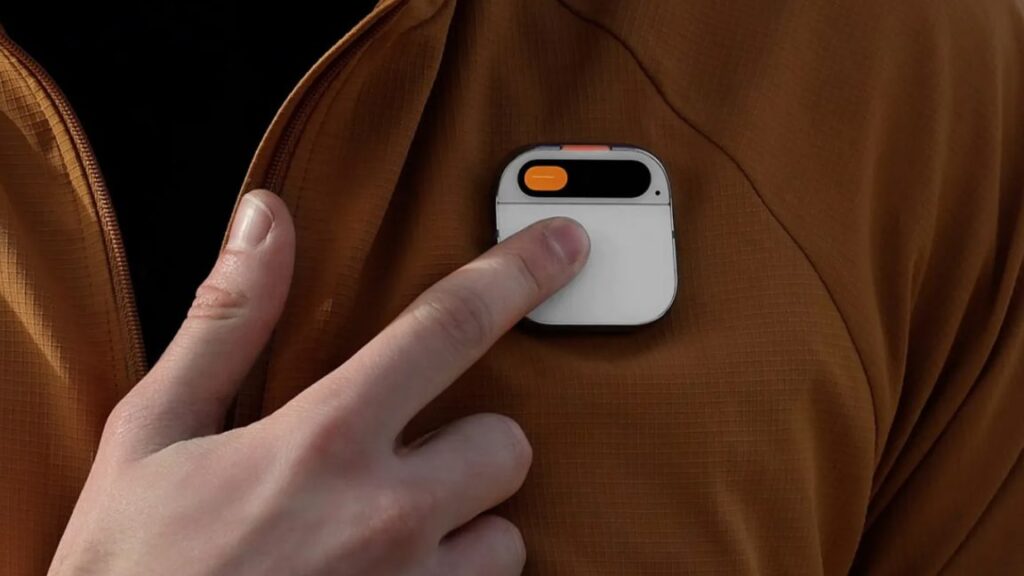
The AI Pin’s launch was marred by a myriad of complaints, including the pin’s inability to properly clip to some clothing, slow voice responses, short battery life, limitations with the laser projector working outside of dark rooms, and overall limited functionality. Soon after the product was released, The New York Times reported that the company’s founders, two former Apple executives, ignored negative internal reviews and even let go of an engineer who questioned the product. Humane spokesperson Zoz Cuccias admitted to The Verge in August that upon releasing the wearable, Humane “knew we were at the starting line, not the finish line.”

Charger recall spells more bad news for Humane’s maligned AI Pin Read More »

microsoft-delays-rollout-of-the-windows-11-recall-feature-yet-again

Microsoft delays rollout of the Windows 11 Recall feature yet again

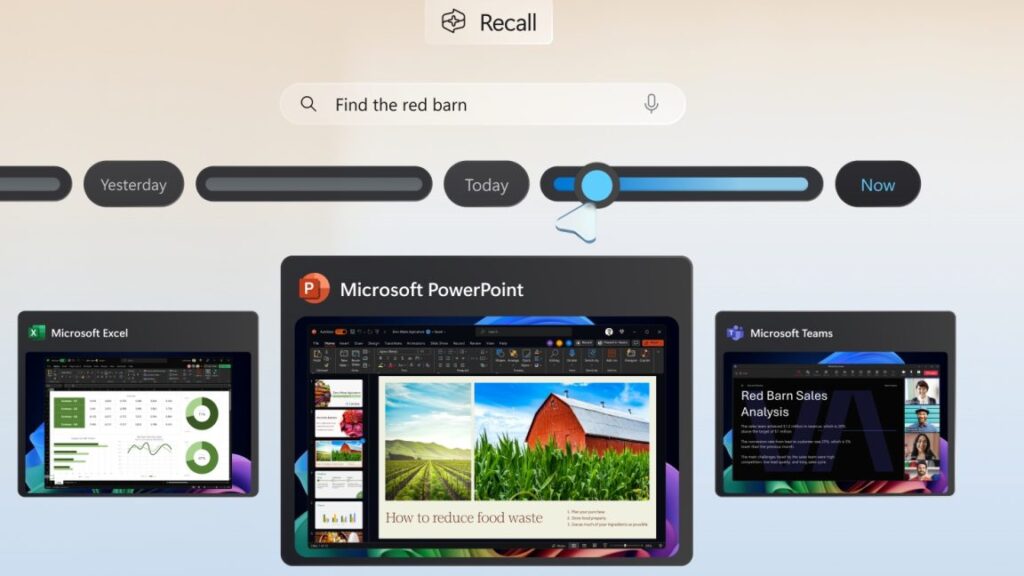
“We are committed to delivering a secure and trusted experience with Recall. To ensure we deliver on these important updates, we’re taking additional time to refine the experience before previewing it with Windows Insiders,” said Microsoft Windows Insider Senior Program Manager Brandon LeBlanc in a statement provided to The Verge.

LeBlanc didn’t offer additional details on the latest Recall delay or make any new announcements about other security precautions Microsoft is taking with the feature. The company’s September blog post detailed how data was being protected using Windows’ Virtualization-Based Security (VBS) features and Windows Hello authentication and reiterated that Recall will be opt-in by default and that it will be fully removable for Windows users who aren’t interested in using it.

When it does start to roll out, Recall will still require a Copilot+ PC, which gets some AI-related features not available to typical Windows 11 PCs. To meet the Copilot+ requirements, PCs must have at least 16GB of RAM and 256GB of storage, plus a neural processing unit (NPU) that can perform at least 40 trillion operations per second (TOPS). Users will also need their PCs to be enrolled in the Windows Insider Program; we have no idea when non-Windows Insider PCs will start getting Recall, though at this point, it seems likely it won’t be until sometime in 2025.

Microsoft delays rollout of the Windows 11 Recall feature yet again Read More »

not-just-chatgpt-anymore:-perplexity-and-anthropic’s-claude-get-desktop-apps

Not just ChatGPT anymore: Perplexity and Anthropic’s Claude get desktop apps

There’s a lot going on in the world of Mac apps for popular AI services. In the past week, Anthropic has released a desktop app for its popular Claude chatbot, and Perplexity launched a native app for its AI-driven search service.

On top of that, OpenAI updated its ChatGPT Mac app with support for its flashy advanced voice feature.

Like the ChatGPT app that debuted several weeks ago, the Perplexity app adds a keyboard shortcut that allows you to enter a query from anywhere on your desktop. You can use the app to ask follow-up questions and carry on a conversation about what it finds.

It’s free to download and use, but Perplexity offers subscriptions for major users.

Perplexity’s search emphasis meant it wasn’t previously a direct competitor to OpenAI’s ChatGPT, but OpenAI recently launched SearchGPT, a search-focused variant of its popular product. SearchGPT is not yet supported in the desktop app, though.

Anthropic’s Claude, on the other hand, is a more direct competitor to ChatGPT. It works similarly to ChatGPT but has different strengths, particularly in software development. The Claude app is free to download, but it’s in beta, and like Perplexity and OpenAI, Anthropic charges for more advanced users.

When ChatGPT launched its Mac app, it didn’t release a Windows app right away, saying that it was focused on where its users were at the time. A Windows app recently arrived, and Anthropic took a different approach, simultaneously introducing Windows and Mac apps.

Previously, all these tools offered mobile apps and web apps, but not necessarily native desktop apps.

Not just ChatGPT anymore: Perplexity and Anthropic’s Claude get desktop apps Read More »

pixel-phones-are-getting-an-actual-weather-app-in-2024,-with-a-bit-of-ai

Pixel phones are getting an actual weather app in 2024, with a bit of AI

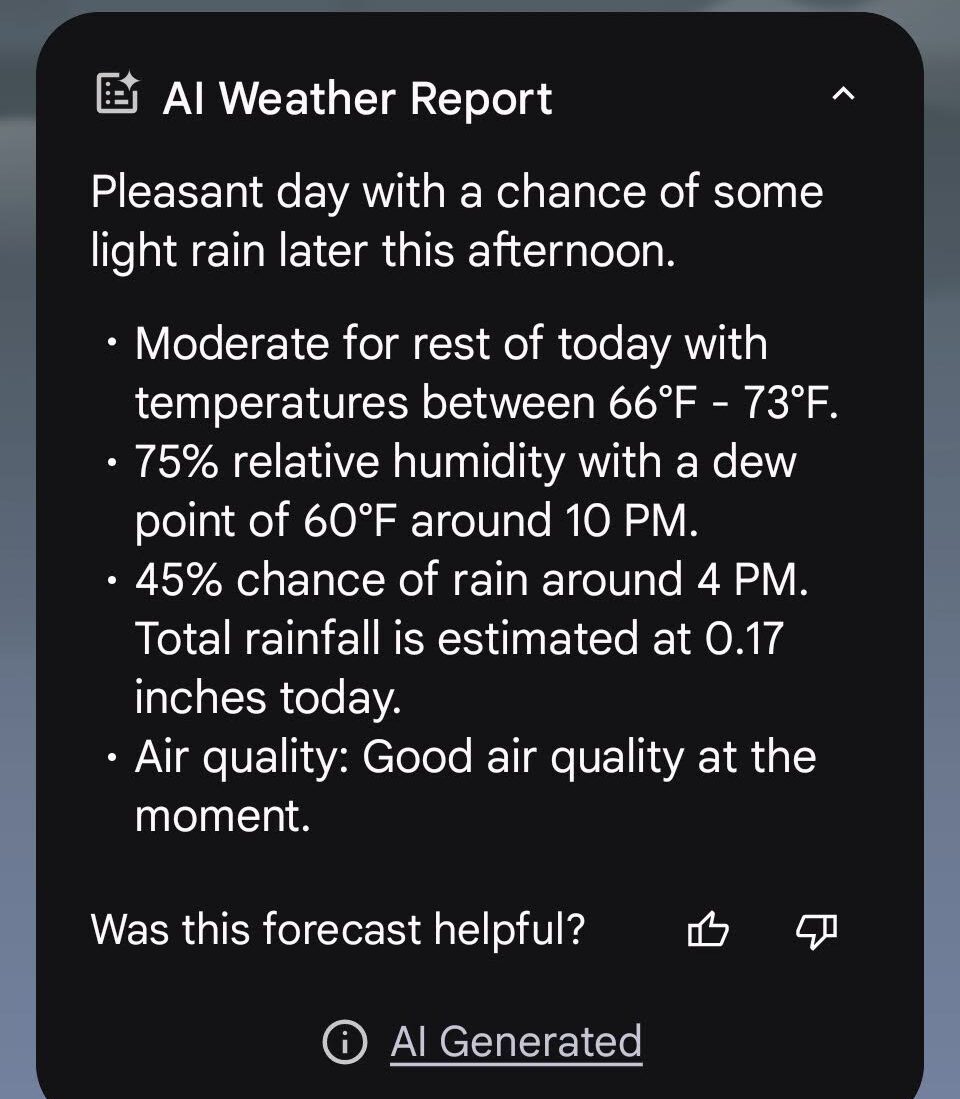
An AI weather report, expanded to read

Credit: Kevin Purdy

Customizable, but also not

There’s a prominent “AI generated weather report” on top of the weather stack, which is a combination of summary and familiarity. “Cold and rainy day, bring your umbrella and hold onto your hat!” is Google’s example; I can’t provide another one, because an update to “Gemini Nano” is pending.

Weather radar map from the Google Weather app.

Credit: Kevin Purdy

You can see weather radar for your location, along with forecasted precipitation movement. The app offers “Nowcasting” precipitation guesses, like “Rain continuing for 2 hours” or “Light rain in 10 minutes.”

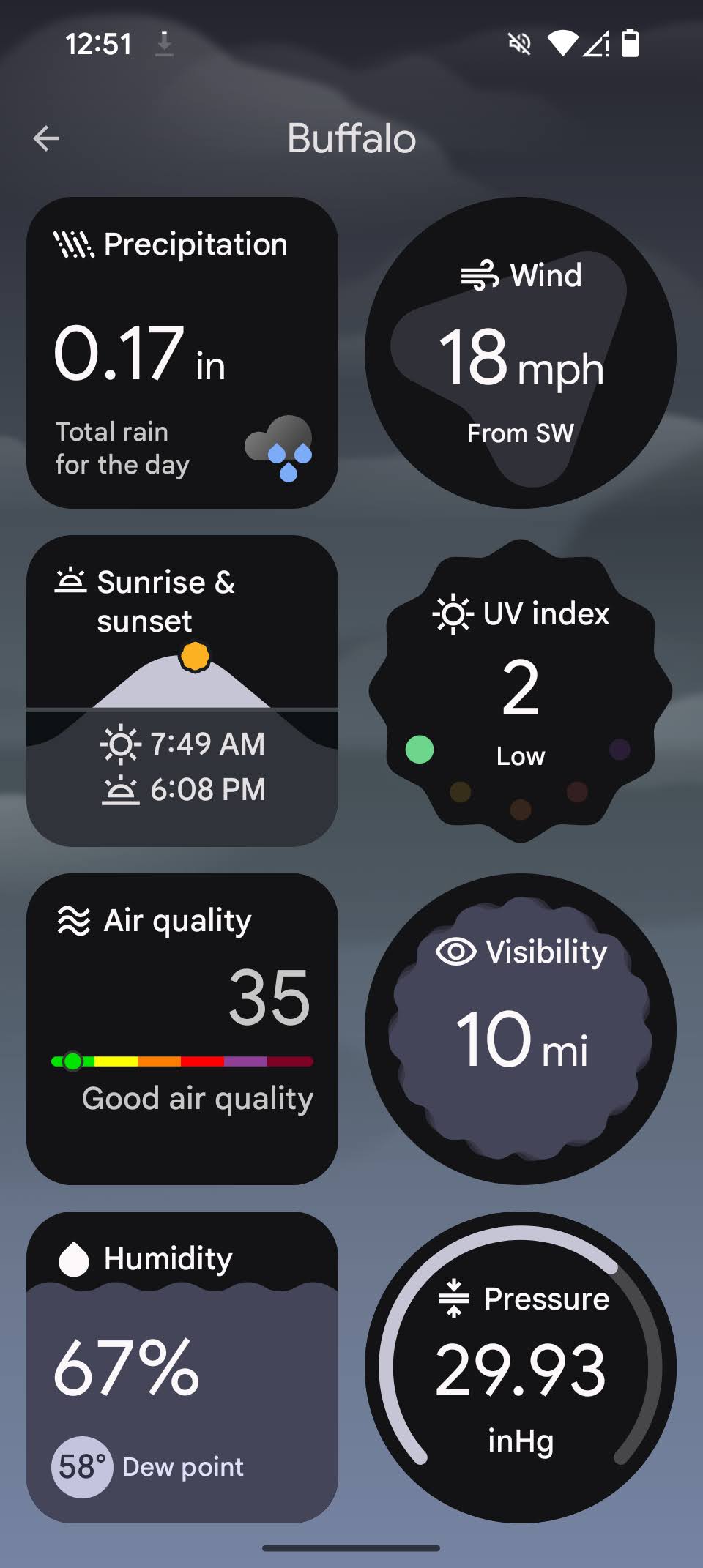
Widgets with weather data, including a UV index of 2, sunrise and sunset times, visibility distances, and air quality, displayed as rearrangeable widgets.

Credit: Kevin Purdy

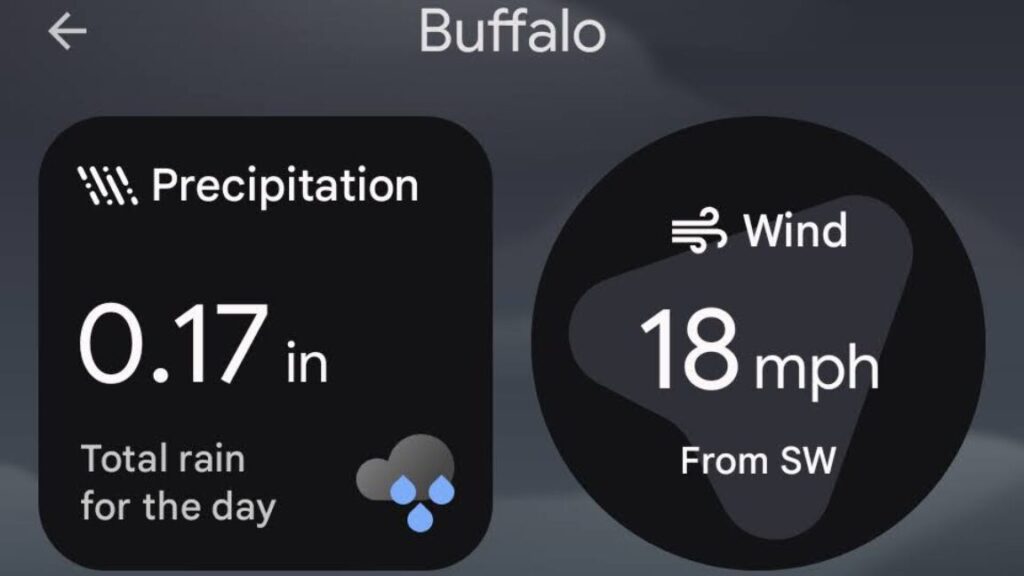
The best feature, one seen on the version of Weather that shipped to the Pixel Tablet and Fold, is that you can rearrange the order of data shown on your weather screen. I moved the UV index, humidity, sunrise/sunset, and wind conditions as high as they could go on my setup. It’s a trade-off, because the Weather app’s data widgets are so big as to require scrolling to get the full picture of a day, and you can’t move the AI summary or 10-day forecast off the top. But if you only need a few numbers and like a verbal summary, it’s handy.

Sadly, if you’re an allergy sufferer and you’re not in the UK, Germany, France, or Italy, Google can’t offer you any pollen data or forecasts. There is also, I am sad to say, no frog.

Google’s Weather app isn’t faring so well with Play Store reviewers. Users are miffed that they can’t see a location’s weather without adding it to their saved locations list; that other Google apps, including the “At a Glance” app on every Pixel’s default launcher, send you to the Google app’s summary instead of this app; the look of the weather map; and, most of all, that it does not show up in some phones’ app list, but only as a widget.

Pixel phones are getting an actual weather app in 2024, with a bit of AI Read More »

over-500-amazon-workers-decry-“non-data-driven”-logic-for-5-day-rto-policy

Over 500 Amazon workers decry “non-data-driven” logic for 5-day RTO policy

More than 500 Amazon workers reportedly signed a letter to Amazon Web Services’ (AWS) CEO this week, sharing their outrage over Amazon’s upcoming return-to-office (RTO) policy that will force workers into offices five days per week.

In September, Amazon announced that starting in 2025, workers will no longer be allowed to work remotely twice a week. At the time, Amazon CEO Andy Jassy said the move would make it easier for workers “to learn, model, practice, and strengthen our culture.”

Reuters reported today that it viewed a letter from a swath of workers sent to AWS chief Matt Garman on Wednesday regarding claims he reportedly made during an all-hands meeting this month. Garman reportedly told attendees that 9 out of 10 employees he spoke with support the five-day in-office work policy. The letter called the statements “inconsistent with the experiences of many employees” and “misrepresenting the realities of working at Amazon,” Reuters reported.

“We were appalled to hear the non-data-driven explanation you gave for Amazon imposing a five-day in-office mandate,’” the letter reportedly stated.

Employees banding together to protest against new, unfavorable work policies isn’t exclusive to Amazon. And the reported 500 workers who signed the letter represent just a fraction of Amazon’s worker base, which regulatory filings reported consisted of 1.5 million people in 2023. However, with the global conglomerate remaining firm about its stern policy thus far, eyes are on the Seattle firm’s HR approach, which could impact how other companies decide to implement RTO policies.

In the letter, hundreds of Amazon workers reportedly lamented what they believe was a lack of third-party data shared in making the RTO policy. It said that Garman’s statements “break the trust of your employees who have not only personal experience that shows the benefits of remote work but have seen the extensive data which supports that experience.”

Over 500 Amazon workers decry “non-data-driven” logic for 5-day RTO policy Read More »

microsoft-reports-big-profits-amid-massive-ai-investments

Microsoft reports big profits amid massive AI investments

Microsoft reported quarterly earnings that impressed investors and showed how resilient the company is even as it spends heavily on AI.

Some investors have been uneasy about the company’s aggressive spending on AI, while others have demanded it. During this quarter, Microsoft reported that it spent $20 billion on capital expenditures, nearly double what it had spent during the same quarter last year.

However, the company satisfied both groups of investors, as it revealed it has still been doing well in the short term amid those long-term investments. The fiscal quarter, which covered July through September, saw overall sales rise 16 percent year over year to $65.6 billion. Despite all that AI spending, profits were up 11 percent, too.

The growth was largely driven by Azure and cloud services, which saw a 33 percent increase in revenue. The company attributed 12 percent of that to AI-related products and services.

Meanwhile, Microsoft’s gaming division continued to challenge long-standing assumptions that hardware is king, with Xbox content and services posting 61 percent increased year-over-year revenue despite a 29 percent drop in hardware sales.

Microsoft has famously been inching away from the classic strategy of keeping software and services exclusive to its hardware, launching first-party games like Sea of Thieves not just on PC but on the competing PlayStation 5 console from Sony. Compared to the Xbox, the PlayStation is dominant in sales and install base for this generation.

But don’t make the mistake of assuming that a 61 percent jump in content and services revenue is solely because Microsoft’s Game Pass subscription service is taking off. The company attributed 53 points of that to the recent $69 billion Activision acquisition.

Microsoft reports big profits amid massive AI investments Read More »

apple’s-m4,-m4-pro,-and-m4-max-compared-to-past-generations,-and-to-each-other

Apple’s M4, M4 Pro, and M4 Max compared to past generations, and to each other

The M4 Max is also the only chip where memory bandwidth and RAM support changes between the low- and high-end versions. The low-end M4 Max offers 410GB/s of memory bandwidth, while the fully enabled M4 Max offers 546GB/s.

For completeness’ sake, there is a third version of the M4 that Apple ships, with nine CPU cores, 10 GPU cores, and 8GB of RAM. But the company is only shipping that version of the chip in M4 iPad Pros with 256GB or 512GB of storage, so we haven’t included it in the tables here.

Compared to the M2 and M3

CPU P/E-cores GPU cores RAM options Display support (including internal) Memory bandwidth
Apple M4 (low) 4/4 8 16/24GB Up to two 120GB/s
Apple M4 (high) 4/6 10 16/24/32GB Up to three 120GB/s
Apple M3 (high) 4/4 16 8/16/24GB Up to two 102.4GB/s
Apple M2 (high) 4/4 10 8/16/24GB Up to two 102.4GB/s

One interesting thing about the M4: This is the first time that the low-end Apple Silicon CPU has increased its maximum core count. The M1, M2, and M3 all used a 4+4 split that divided evenly between performance and efficiency cores, but the M4 can include six efficiency cores instead.

That’s not a game-changing development performance-wise (the “E” in “E-core” does not stand for “exciting”), but we’ve seen over and over again in chips from Apple, Intel, and others that adding more efficiency cores does meaningfully improve CPU performance in heavily multithreaded tasks.

CPU P/E-cores GPU cores RAM options Display support (including internal) Memory bandwidth
Apple M4 Pro (low) 8/4 16 24/48/64GB Up to three 273GB/s
Apple M4 Pro (high) 10/4 20 24/48/64GB Up to three 273GB/s
Apple M3 Pro (high) 6/6 18 18/36GB Up to three 153.6GB/s
Apple M2 Pro (high) 8/4 19 16/32GB Up to three 204.8GB/s

The M4 Pro is the most interesting year-over-year upgrade, though this says more about the M3 Pro than anything else. As we noted last year, it was a bit of an outlier, the only one of the M3-generation chips with fewer transistors than its predecessor. A small decrease in GPU cores and a large decrease in high-performance CPU cores explains most of the difference. The result was a very power-efficient chip, but also one that was more of a sidestep from the M2 Pro than a real upgrade.

Apple’s M4, M4 Pro, and M4 Max compared to past generations, and to each other Read More »

proton-is-the-latest-entrant-in-the-quirky-“vpn-for-your-tv”-market

Proton is the latest entrant in the quirky “VPN for your TV” market

Netflix started blocking VPN and proxy providers as early as 2015, then stepped up its efforts in 2021. VPN providers aiming to keep up geofence-avoiding services to customers would sometimes lease IP addresses generally associated with residential IP subnets. This resulted in Netflix banning larger swaths of IP addresses that VPNs were using as exit proxies.

Amazon’s Prime Video, Parmount+, and other services, including the BBC, have similarly ramped up efforts to block anything resembling tunneled traffic. Proton has, for example, a guide to “unblock Amazon Prime Video with Proton VPN“; Proton also writes on that page that it “does not condone the use of our VPN service to bypass copyright regulations.”

You can search the web and find freshly updated lists of the best VPNs for getting around various services’ geo-filtering blocks, but the fact that so many are dated by the year, or even month, gives you some clue as to how effective any one solution may be.

For the purposes of getting back to the content you’re entitled to view, or maybe keeping your viewing habits private on an Apple TV you’re using outside your home, Proton VPN is likely more useful. As for the other stuff, hey, it might be worth a shot. Using the Apple TV app requires a paid Proton VPN plan.

Proton is the latest entrant in the quirky “VPN for your TV” market Read More »

github-copilot-moves-beyond-openai-models-to-support-claude-3.5,-gemini

GitHub Copilot moves beyond OpenAI models to support Claude 3.5, Gemini

The large language model-based coding assistant GitHub Copilot will switch from using exclusively OpenAI’s GPT models to a multi-model approach over the coming weeks, GitHub CEO Thomas Dohmke announced in a post on GitHub’s blog.

First, Anthropic’s Claude 3.5 Sonnet will roll out to Copilot Chat’s web and VS Code interfaces over the next few weeks. Google’s Gemini 1.5 Pro will come a bit later.

Additionally, GitHub will soon add support for a wider range of OpenAI models, including GPT o1-preview and o1-mini, which are intended to be stronger at advanced reasoning than GPT-4, which Copilot has used until now. Developers will be able to switch between the models (even mid-conversation) to tailor the model to fit their needs—and organizations will be able to choose which models will be usable by team members.

The new approach makes sense for users, as certain models are better at certain languages or types of tasks.

“There is no one model to rule every scenario,” wrote Dohmke. “It is clear the next phase of AI code generation will not only be defined by multi-model functionality, but by multi-model choice.”

It starts with the web-based and VS Code Copilot Chat interfaces, but it won’t stop there. “From Copilot Workspace to multi-file editing to code review, security autofix, and the CLI, we will bring multi-model choice across many of GitHub Copilot’s surface areas and functions soon,” Dohmke wrote.

There are a handful of additional changes coming to GitHub Copilot, too, including extensions, the ability to manipulate multiple files at once from a chat with VS Code, and a preview of Xcode support.

GitHub Spark promises natural language app development

In addition to the Copilot changes, GitHub announced Spark, a natural language tool for developing apps. Non-coders will be able to use a series of natural language prompts to create simple apps, while coders will be able to tweak more precisely as they go. In either use case, you’ll be able to take a conversational approach, requesting changes and iterating as you go, and comparing different iterations.

GitHub Copilot moves beyond OpenAI models to support Claude 3.5, Gemini Read More »

apple’s-first-mac-mini-redesign-in-14-years-looks-like-a-big-aluminum-apple-tv

Apple’s first Mac mini redesign in 14 years looks like a big aluminum Apple TV

Apple’s week of Mac announcements continues today, and as expected, we’re getting a substantial new update to the Mac mini. Apple’s least-expensive Mac, the mini, is being updated with new M4 processors, plus a smaller design that looks like a cross between an Apple TV box and a Mac Studio—this is the mini’s first major design change since the original aluminum version was released in 2010. The mini is also Apple’s first device to ship with the M4 Pro processor, a beefed-up version of the M4 with more CPU and GPU cores, and it’s also the Mac mini’s first update since the M2 models came out in early 2023.

The cheapest Mac mini will still run you $599, which includes 16GB of RAM and 256GB of storage; as with yesterday’s iMac update, this is the first time since 2012 that Apple has boosted the amount of RAM in an entry-level Mac. It’s a welcome upgrade for every new Mac in the lineup that’s getting it, but the $200 that Apple previously charged for the 16GB upgrade makes an even bigger difference to someone shopping for a $599 system than it does for someone who can afford a $999 or $1,299 computer.

The M4 Pro Mac mini starts at $1,399, a $100 increase from the M2 Pro version. Both models go up for preorder today and will begin arriving on November 8.

A brand-new design for a little box

The new Mac mini is larger than the Apple TV by a bit—5×5 inches instead of 3.66×3.66 inches—but its proportions are roughly similar. That makes its footprint significantly smaller than the old mini (and the current Studio), which was 7.75×7.75 inches. But it’s also a fair bit taller: 2 inches, up from 1.4 inches.

Like the Studio, it’s made primarily of aluminum and has a pair of 10 Gbps USB-C ports on the front, plus an indicator light and a headphone jack for connecting headphones or speakers. On the back, it sheds all of its remaining USB-A ports in favor of Thunderbolt/USB-C ports (note that, like some Mac Studio models, the ports on the back have Thunderbolt capabilities and the ones on the front don’t). Compared to the old M2 mini, this is a net gain of one rear Thunderbolt port, but you’re giving one up compared to the M2 Pro Mac mini—the extra ports on the front should make up for this, but it’s worth noting if you have something connected to every single Thunderbolt port on your current box. All Mac mini models still include a gigabit Ethernet port and a full-size HDMI port, so USB-A is the only port you’ll need a dongle for that you didn’t need one for before.

Apple’s first Mac mini redesign in 14 years looks like a big aluminum Apple TV Read More »