Tech

samsung-reveals-the-super-slim-galaxy-s25-edge-with-a-laughably-small-battery

Samsung reveals the super-slim Galaxy S25 Edge with a laughably small battery

While the body of the phone is just 5.8 mm thick, the camera modules stick out a few millimeters more, making the phone quite wobbly when you set it on a table. The cameras have to stick out to leave more space for the internals, which are pretty powerful. Inside, this phone is essentially unchanged from the other S25 phones, with a Snapdragon 8 Elite, 12GB of RAM, and either 256 or 512GB of storage. The battery will be a problem, though.

S25 edge side with pencil

It is very, very thin.

Credit: Samsung

It is very, very thin. Credit: Samsung

While the S25+ sports a passable 4,900 mAh cell, the super-slim S25 Edge has just 3,900 mAh of juice. That is a problem because the Snapdragon 8 Elite is a flagship processor designed for speed. While it’s relatively efficient in low-power mode, it will devour the Edge’s battery in short order if you’re playing games or multitasking. A 20 percent reduction in battery life compared to the Galaxy S25+, which is a one-day phone, is a tough sell.

Most smartphone manufacturers could never justify making such a strange, niche device. This is Samsung showing off its engineering skills, and the S25 Edge does look neat. But the novelty of a super-slim phone will probably wear off when you have to start plugging it in to get a boost mid-afternoon. It doesn’t even charge very fast, topping out at a mere 25 W. And you’ll be paying $1,099 for the privilege, which slots the Edge between the S25+ ($1,000) and the S25 Ultra ($1,300).

If you want a phone that is thin at the expense of everything else, you can order the Galaxy S25 Edge from Samsung or Best Buy. It comes in black, icy blue, and silver colors and will ship on May 30.

Samsung reveals the super-slim Galaxy S25 Edge with a laughably small battery Read More »

vpn-firm-says-it-didn’t-know-customers-had-lifetime-subscriptions,-cancels-them

VPN firm says it didn’t know customers had lifetime subscriptions, cancels them

The new owners of VPN provider VPNSecure have drawn ire after canceling lifetime subscriptions. The owners told customers that they didn’t know about the lifetime subscriptions when they bought VPNSecure, and they cannot honor the purchases.

In March, complaints started appearing online about lifetime subscriptions to VPNSecure no longer working.

The first public response Ars Technica found came on April 28, when lifetime subscription holders reported receiving an email from the VPN provider saying:

To continue providing a secure and high-quality experience for all users, Lifetime Deal accounts have now been deactivated as of April 28th, 2025.

A copy of the email from “The VPN Secure Team” and posted on Reddit notes that VPNSecure had previously deactivated accounts with lifetime subscriptions that it said hadn’t been used in “over 6 months.” The message noted that VPNSecure was acquired in 2023, “including the technology, domain, and customer database—but not the liabilities.” The email continues:

Unfortunately, the previous owner did not disclose that thousands of Lifetime Deals (LTDs) had been sold through platforms like StackSocial.

We discovered this only months later—when a large portion of our resources were strained by these LTD accounts and high support volume from users, who through part of the database, provided no sustaining income to help us improve and maintain the service.

VPNSecure is offering affected users discounted new subscriptions for either $1.87 for a month (instead of $9.95), $19 for a year (instead of $79.92), or $55 for three years (instead of $107.64). The deals are available until May 31, per the email.

This week, users reported receiving a follow-up email from VPNSecure providing more details about why it made its bold and sudden move. Screenshots of the email shared on Reddit say that the acquisition by InfiniteQuant Ltd (which is a different company than InfiniteQuant Capital Ltd, an InfiniteQuant Capital rep told Ars via email) was “an asset only deal.”

A VPNSecure representative claimed on the reviews site Trustpilot that the current owners “did not gain access to the customer database until months” after the acquisition. According to VPNSecure’s owners, their acquisition netted them “the tech, the brand, and the infrastructure/technology—but none of the company, contracts, payments, or obligations from the previous owners.”

VPN firm says it didn’t know customers had lifetime subscriptions, cancels them Read More »
the-tinkerers-who-opened-up-a-fancy-coffee-maker-to-ai-brewing

The tinkerers who opened up a fancy coffee maker to AI brewing

(Ars contacted Fellow Products for comment on AI brewing and profile sharing and will update this post if we get a response.)

Opening up brew profiles

Fellow’s brew profiles are typically shared with buyers of its “Drops” coffees or between individual users through a phone app.

Credit: Fellow Products

Fellow’s brew profiles are typically shared with buyers of its “Drops” coffees or between individual users through a phone app. Credit: Fellow Products

Aiden profiles are shared and added to Aiden units through Fellow’s brew.link service. But the profiles are not offered in an easy-to-sort database, nor are they easy to scan for details. So Aiden enthusiast and hobbyist coder Kevin Anderson created brewshare.coffee, which gathers both general and bean-based profiles, makes them easy to search and load, and adds optional but quite helpful suggested grind sizes.

As a non-professional developer jumping into a public offering, he had to work hard on data validation, backend security, and mobile-friendly design. “I just had a bit of an idea and a hobby, so I thought I’d try and make it happen,” Anderson writes. With his tool, brew links can be stored and shared more widely, which helped both Dixon and another AI/coffee tinkerer.

Gabriel Levine, director of engineering at retail analytics firm Leap Inc., lost his OXO coffee maker (aka the “Barista Brain”) to malfunction just before the Aiden debuted. The Aiden appealed to Levine as a way to move beyond his coffee rut—a “nice chocolate-y medium roast, about as far as I went,” he told Ars. “This thing that can be hyper-customized to different coffees to bring out their characteristics; [it] really kind of appealed to that nerd side of me,” Levine said.

Levine had also been doing AI stuff for about 10 years, or “since before everyone called it AI—predictive analytics, machine learning.” He described his career as “both kind of chief AI advocate and chief AI skeptic,” alternately driving real findings and talking down “everyone who… just wants to type, ‘how much money should my business make next year’ and call that work.” Like Dixon, Levine’s work and fascination with Aiden ended up intersecting.

The coffee maker with 3,588 ideas

The author’s conversation with the Aiden Profile Creator, which pulled in both brewing knowledge and product info for a widely available coffee.

Levine’s Aiden Profile Creator is a ChatGPT prompt set up with a custom prompt and told to weight certain knowledge more heavily. What kind of prompt and knowledge? Levine didn’t want to give away his exact work. But he cited resources like the Specialty Coffee Association of America and James Hoffman’s coffee guides as examples of what he fed it.

What it does with that knowledge is something of a mystery to Levine himself. “There’s this kind of blind leap, where it’s grabbing the relevant pieces of information from the knowledge base, biasing toward all the expert advice and extraction science, doing something with it, and then I take that something and coerce it back into a structured output I can put on your Aiden,” Levine said.

It’s a blind leap, but it has landed just right for me so far. I’ve made four profiles with Levine’s prompt based on beans I’ve bought: Stumptown’s Hundred Mile, a light-roasted batch from Jimma, Ethiopia from Small Planes, Lost Sock’s Western House filter blend, and some dark-roast beans given as a gift. With the Western House, Levine’s profile creator said it aimed to “balance nutty sweetness, chocolate richness, and bright cherry acidity, using a slightly stepped temperature profile and moderate pulse structure.” The resulting profile has worked great, even if the chatbot named it “Cherry Timber.”

Levine’s chatbot relies on two important things: Dixon’s work in revealing Fellow’s Aiden API and his own workhorse Aiden. Every Aiden profile link is created on a machine, so every profile created by Levine’s chat is launched, temporarily, from the Aiden in his kitchen, then deleted. “I’ve hit an undocumented limit on the number of profiles you can have on one machine, so I’ve had to do some triage there,” he said. As of April 22, nearly 3,600 profiles had passed through Levine’s Aiden.

“My hope with this is that it lowers the bar to entry,” Levine said, “so more people get into these specialty roasts and it drives people to support local roasters, explore their world a little more. I feel like that certainly happened to me.”

Something new is brewing

Credit: Fellow Products

Having admitted to myself that I find something generated by ChatGPT prompts genuinely useful, I’ve softened my stance slightly on LLM technology, if not the hype. Used within very specific parameters, with everything second-guessed, I’m getting more comfortable asking chat prompts for formatted summaries on topics with lots of expertise available. I do my own writing, and I don’t waste server energy on things I can, and should, research myself. I even generally resist calling language model prompts “AI,” given the term’s baggage. But I’ve found one way to appreciate its possibilities.

This revelation may not be new to someone already steeped in the models. But having tested—and tasted—my first big experiment with willfully engaging with a brewing bot, I’m a bit more awake.

This post was updated at 8: 40 a.m. with a different capture of a GPT-created recipe.

The tinkerers who opened up a fancy coffee maker to AI brewing Read More »
wearables-firm’s-endless-free-hardware-upgrades-were-too-good-to-be-true

Wearables firm’s endless free hardware upgrades were too good to be true

Whoop published content which most certainly was to influence and convince people to buy the product, that clearly stated there was free upgrades. This has been removed as if it never happened. …

You can’t sell a subscription product making future promises, make a bunch of sales, and then take away those advertised benefits.

When reached for a comment, a Whoop spokesperson told Ars Technica that promises of free upgrades only pertained to previous launches.

Still, another Reddit user accused Whoop of performing a “bait and switch,” and a third said, “Just spent my first week with Whoop 4.0 and see all that has hit today. Looks like I’ll be returning and already walking away from the company.”

The statement shared by Whoop’s representative added:

With the launch of the WHOOP 5.0, we’ve worked to make WHOOP more accessible to more people and are now offering three tiers of membership, including our lowest price point ever with WHOOP One at $199. The WHOOP 4.0 will also continue to be supported, with members receiving new features available on our Peak membership.

Making adjustments

Whoop’s about-face is an increasingly common story as companies that launched during the initial Internet of Things (IoT) craze get a clearer idea of what they need to do to stay in business. In addition to changing its approach to upgrades, Whoop previously stopped selling monthly subscriptions to new customers. Its new devices, meanwhile, have more advanced features, including ECG capabilities and longer battery life claims, that likely add to associated costs.

Wearables are a relatively new type of gadget, and some firms, like Whoop, are still trying to figure out the best way to make money with them. That may mean going to market differently than a decade ago. Whoop customers will have to decide if the company’s offerings are worth dealing with the updated strategy and potential future changes.

Wearables firm’s endless free hardware upgrades were too good to be true Read More »
google’s-search-antitrust-trial-is-wrapping-up—here’s-what-we-learned

Google’s search antitrust trial is wrapping up—here’s what we learned


Google and the DOJ have had their say; now it’s in the judge’s hands.

Last year, United States District Court Judge Amit Mehta ruled that Google violated antitrust law by illegally maintaining a monopoly in search. Now, Google and the Department of Justice (DOJ) have had their say in the remedy phase of the trial, which wraps up today. It will determine the consequences for Google’s actions, potentially changing the landscape for search as we rocket into the AI era, whether we like it or not.

The remedy trial featured over 20 witnesses, including representatives from some of the most important technology firms in the world. Their statements about the past, present, and future of search moved markets, but what does the testimony mean for Google?

Everybody wants Chrome

One of the DOJ’s proposed remedies is to force Google to divest Chrome and the open source Chromium project. Google has been adamant both in and out of the courtroom that it is the only company that can properly run Chrome. It says selling Chrome would negatively impact privacy and security because Google’s technology is deeply embedded in the browser. And regardless, Google Chrome would be too expensive for anyone to buy.

Unfortunately for Google, it may have underestimated the avarice of its rivals. The DOJ called witnesses from Perplexity, OpenAI, and Yahoo—all of them said their firms were interested in buying Chrome. Yahoo’s Brian Provost noted that the company is currently working on a browser that supports the company’s search efforts. Provost said that it would take 6–9 months just to get a working prototype, but buying Chrome would be much faster. He suggested Yahoo’s search share could rise from the low single digits to double digits almost immediately with Chrome.

Break up the company without touching the sides and getting shocked!

Credit: Aurich Lawson

Meanwhile, OpenAI is burning money on generative AI, but Nick Turley, product manager for ChatGPT, said the company was prepared to buy Chrome if the opportunity arises. Like Yahoo, OpenAI has explored designing its own browser, but acquiring Chrome would instantly give it 3.5 billion users. If OpenAI got its hands on Chrome, Turley predicted an “AI-first” experience.

On the surface, the DOJ’s proposal to force a Chrome sale seems like an odd remedy for a search monopoly. However, the testimony made the point rather well. Search and browsers are inextricably linked—putting a different search engine in the Chrome address bar could give the new owner a major boost.

Browser choice conundrum

Also at issue in the trial are the massive payments Google makes to companies like Apple and Mozilla for search placement, as well as restrictions on search and app pre-loads on Android phones. The government says these deals are anti-competitive because they lock rivals out of so many distribution mechanisms.

Google pays Apple and Mozilla billions of dollars per year to remain the default search engine in their browsers. Apple’s Eddie Cue admitted he’s been losing sleep worrying about the possibility of losing that revenue. Meanwhile, Mozilla CFO Eric Muhlheim explained that losing the Google deal could spell the end of Firefox. He testified that Mozilla would have to make deep cuts across the company, which could lead to a “downward spiral” that dooms the browser.

Google’s goal here is to show that forcing it to drop these deals could actually reduce consumer choice, which does nothing to level the playing field, as the DOJ hopes to do. Google’s preferred remedy is to simply have less exclusivity in its search deals across both browsers and phones.

The great Google spinoff

While Google certainly doesn’t want to lose Chrome, there may be a more fundamental threat to its business in the DOJ’s remedies. The DOJ argued that Google’s illegal monopoly has given it an insurmountable technology lead, but a collection of data remedies could address that. Under the DOJ proposal, Google would have to license some of its core search technology, including the search index and ranking algorithm.

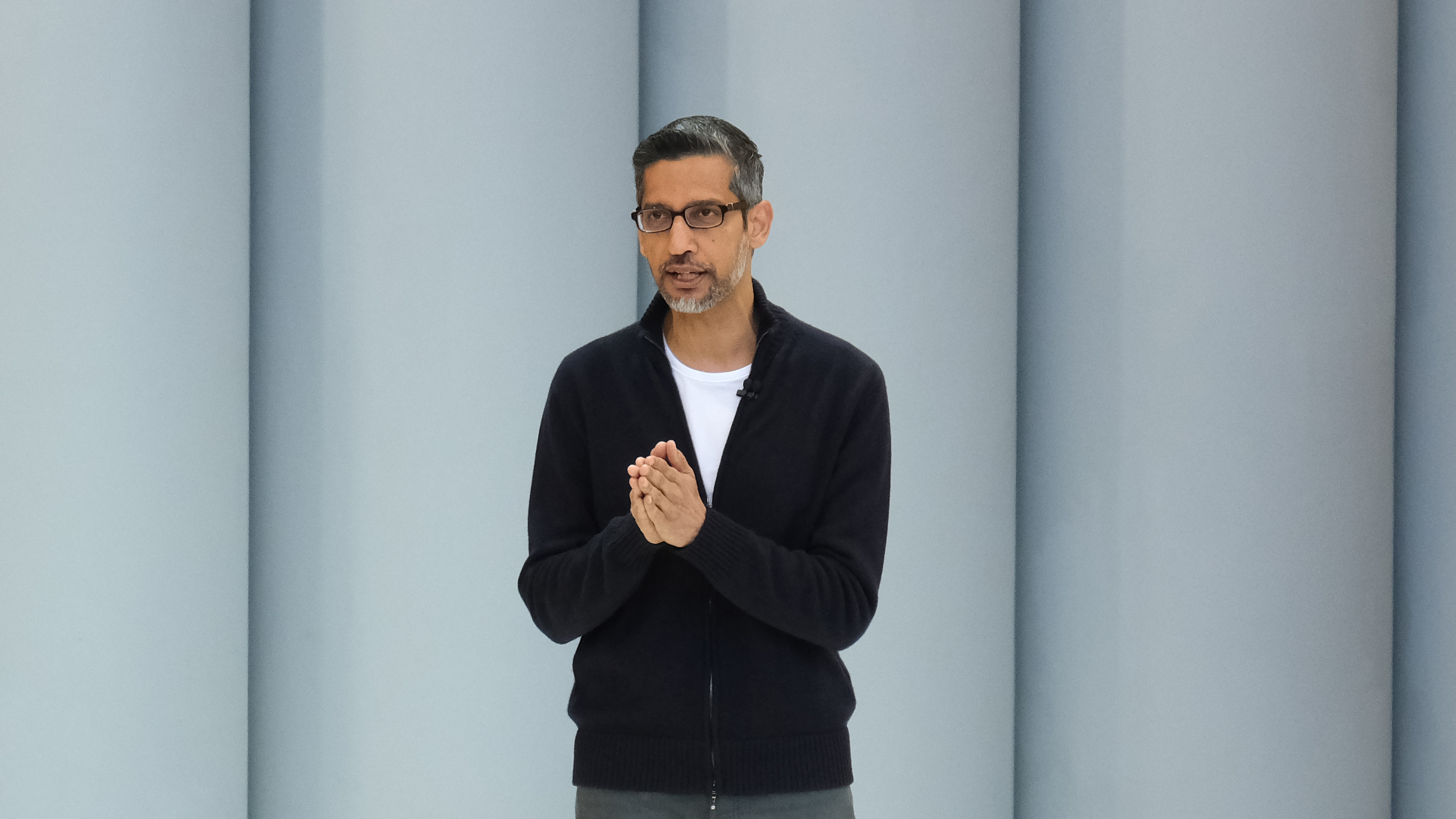
Google CEO Sundar Pichai gave testimony at the trial and cited these data remedies as no better than a spinoff of Google search. Google’s previous statements have referred to this derisively as “white labeling” Google search. Pichai claimed these remedies could force Google to reevaluate the amount it spends on research going forward, slowing progress in search for it and all the theoretical licensees.

Currently, there is no official API for syndicating Google’s search results. There are scrapers that aim to offer that service, but that’s a gray area, to say the least. Google has even rejected lucrative deals to share its index. Turley noted in his testimony that OpenAI approached Google to license the index for ChatGPT, but Google decided the deal could harm its search dominance, which was more important than a short-term payday.

AI advances

Initially, the DOJ wanted to force Google to stop investing in AI firms, fearing its influence could reduce competition as it gained control or acquired these startups. The government has backed away from this remedy, but AI is still core to the search trial. That seemed to surprise Judge Mehta.

During Pichai’s testimony, Mehta remarked that the status of AI had shifted considerably since the liability phase of the trial in 2023. “The consistent testimony from the witnesses was that the integration of AI and search or the impact of AI on search was years away,” Mehta said. Things are very different now, Mehta noted, with multiple competitors to Google in AI search. This may actually help Google’s case.

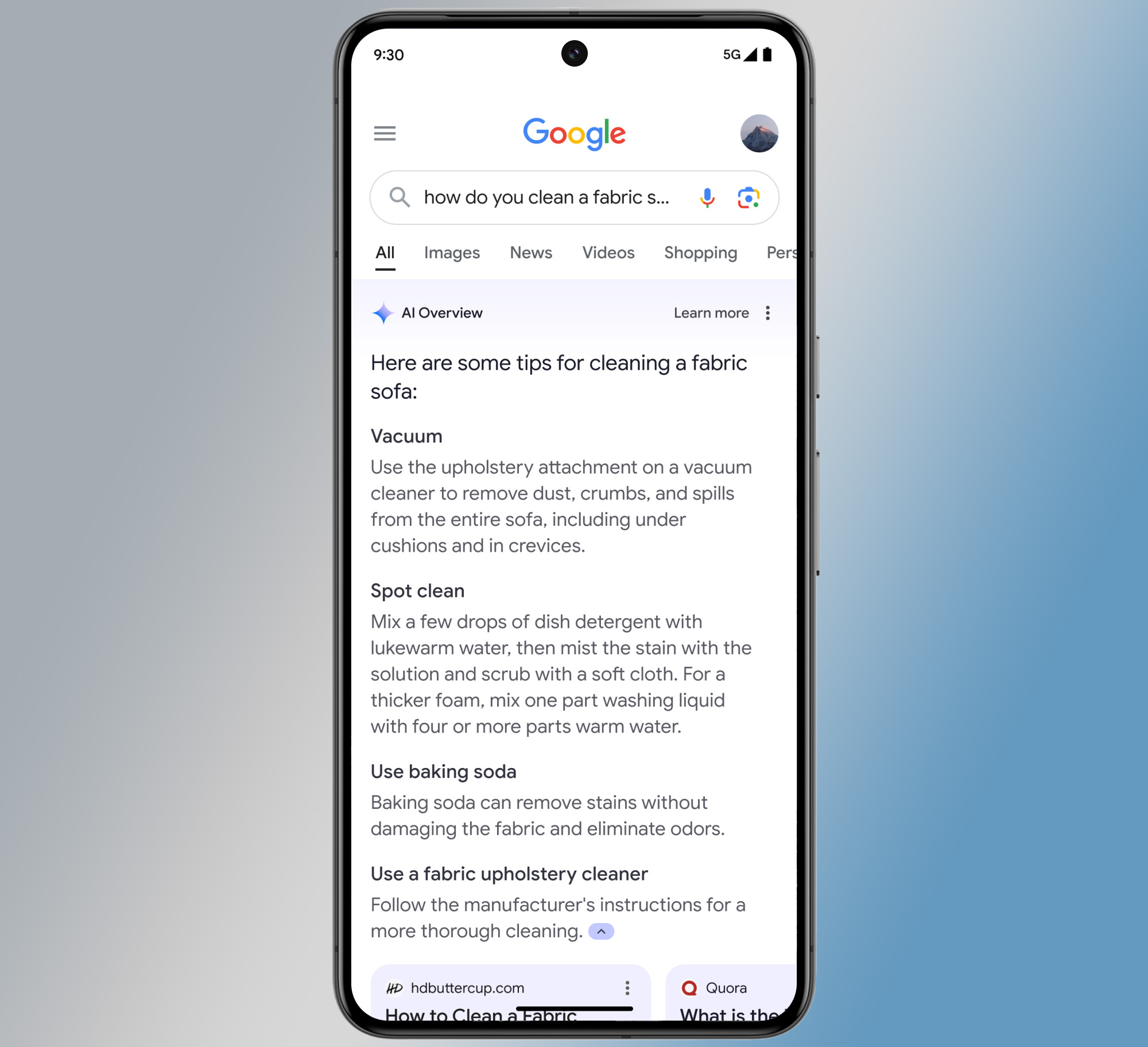
AI search has exploded since the 2023 trial, with Google launching its AI-only search product in beta earlier this year.

AI search has exploded since the 2023 trial, with Google launching its AI-only search product in beta earlier this year.

Throughout the trial, Google has sought to paint search as a rapidly changing market where its lead is no longer guaranteed. Google’s legal team pointed to the meteoric rise of ChatGPT, which has become an alternative to traditional search for many people.

On the other hand, Google doesn’t want to look too meek and ineffectual in the age of AI. Apple’s Eddie Cue testified toward the end of the trial and claimed that rival traditional search providers like DuckDuckGo don’t pose a real threat to Google, but AI does. According to Cue, search volume in Safari was down for the first time in April, which he attributed to people using AI services instead. Google saw its stock price drop on the news, forcing it to issue a statement denying Cue’s assessment. It says searches in Safari and other products are still growing.

A waiting game

With the arguments made, Google’s team will have to sweat it out this summer while Mehta decides on remedies. A decision is expected in August of this year, but that won’t be the end of it. Google is still hoping to overturn the original verdict. After the remedies are decided, it’s going to appeal and ask for a pause on the implementation of remedies. So it could be a while before anything changes for Google.

In the midst of all that, Google is still pursuing an appeal of the Google Play case brought by Epic Games, as well as the ad tech case that it lost a few weeks ago. That remedy trial will begin in September.

Photo of Ryan Whitwam

Ryan Whitwam is a senior technology reporter at Ars Technica, covering the ways Google, AI, and mobile technology continue to change the world. Over his 20-year career, he’s written for Android Police, ExtremeTech, Wirecutter, NY Times, and more. He has reviewed more phones than most people will ever own. You can follow him on Bluesky, where you will see photos of his dozens of mechanical keyboards.

Google’s search antitrust trial is wrapping up—here’s what we learned Read More »
linux-kernel-is-leaving-486-cpus-behind,-only-18-years-after-the-last-one-made

Linux kernel is leaving 486 CPUs behind, only 18 years after the last one made

It’s not the first time Torvalds has suggested dropping support for 32-bit processors and relieving kernel developers from implementing archaic emulation and work-around solutions. “We got rid of i386 support back in 2012. Maybe it’s time to get rid of i486 support in 2022,” Torvalds wrote in October 2022. Failing major changes to the 6.15 kernel, which will likely arrive late this month, i486 support will be dropped.

Where does that leave people running a 486 system for whatever reason? They can run older versions of the Linux kernel and Linux distributions. They might find recommendations for teensy distros like MenuetOS, KolibriOS, and Visopsys, but all three of those require at least a Pentium. They can run FreeDOS. They might get away with the OS/2 descendant ArcaOS. There are some who have modified Windows XP to run on 486 processors, and hopefully, they will not connect those devices to the Internet.

Really, though, if you’re dedicated enough to running a 486 system in 2025, you’re probably resourceful enough to find copies of the software meant for that system. One thing about computers—you never stop learning.

This post was updated at 3: 30 p.m. to fix a date error.

Linux kernel is leaving 486 CPUs behind, only 18 years after the last one made Read More »
kids-are-short-circuiting-their-school-issued-chromebooks-for-tiktok-clout

Kids are short-circuiting their school-issued Chromebooks for TikTok clout

Schools across the US are warning parents about an Internet trend that has students purposefully trying to damage their school-issued Chromebooks so that they start smoking or catch fire.

Various school districts, including some in Colorado, New Jersey, North Carolina, and Washington, have sent letters to parents warning about the trend that’s largely taken off on TikTok.

Per reports from school districts and videos that Ars Technica has reviewed online, the so-called Chromebook Challenge includes students sticking things into Chromebook ports to short-circuit the system. Students are using various easily accessible items to do this, including writing utensils, paper clips, gum wrappers, and pushpins.

The Chromebook challenge has caused chaos for US schools, leading to laptop fires that have forced school evacuations, early dismissals, and the summoning of first responders.

Schools are also warning that damage to school property can result in disciplinary action and, in some states, legal action.

In Plainville, Connecticut, a middle schooler allegedly “intentionally stuck scissors into a laptop, causing smoke to emit from it,” Superintendent Brian Reas told local news station WFSB. The incident reportedly led to one student going to the hospital due to smoke inhalation and is suspected to be connected to the viral trend.

“Although the investigation is ongoing, the student involved will be referred to juvenile court to face criminal charges,” Reas said.

Kids are short-circuiting their school-issued Chromebooks for TikTok clout Read More »

microsoft-effectively-raises-high-end-surface-prices-by-discontinuing-base-models

Microsoft effectively raises high-end Surface prices by discontinuing base models

While the Surface Pro and Laptop get price hikes that aren’t technically price hikes, some Surface accessories have had their prices directly increased. The Surface USB-C Travel Hub is now $120 instead of $100; the Surface Arc Mouse is now $90 instead of $80, and a handful of replacement parts are more expensive now than they were, according to recent Internet Wayback Machine snapshots. Generally, Surface Pen accessories and Surface Pro keyboard covers are the same price as they were before.

Microsoft also raised prices on its Xbox consoles earlier this month while warning customers that game prices could go up to $80 for some releases later this year.

If you’re quick, you can still find the 256GB Surface devices in stock at third-party retailers. For example, Best Buy will sell you a Surface Laptop 7 with a 256GB SSD for $799, $100 less than the price of the 13-inch Surface Laptop that Microsoft just announced. We’d expect these retail listings to vanish over the next few days or weeks, and we wouldn’t expect them to come back in stock once they’re gone.

Increased import tariffs imposed by the Trump administration could explain at least some of these price increases. Though PCs and smartphones are currently exempted from the worst of them (at least for now), global supply chains and shipping costs are complex enough that they could still be increasing Microsoft’s costs indirectly. For the Surface Pro and Surface Laptop, the decision to discontinue the old 256GB models also seems driven by a desire to make the new 12-inch Pro and 13-inch Laptop look like better deals than they did earlier this week. Raising the base price does help clarify the lineup; it just does so at the expense of the consumer.

Microsoft effectively raises high-end Surface prices by discontinuing base models Read More »
matter-update-may-finally-take-the-tedium-out-of-setting-up-your-smart-home

Matter update may finally take the tedium out of setting up your smart home

There is no product category that better embodies the XKCD take on standards than smart home. With an ocean of connectivity options and incompatible standards, taming this mess has been challenging, but Matter could finally have a shot at making things a little less frustrating. The latest version of the standard has launched, offering multiple ways to streamline the usually aggravating setup process.

The first public release of Matter was in late 2022, but compatible systems didn’t get support until the following year. Now, there are Matter-certified devices like smart bulbs and sensors that will talk to Apple, Google, Amazon, and other smart home platforms. Matter 1.4.1 includes support for multi-device QR codes, NFC connection, and integrated terms and conditions—all of these have the potential to eliminate some very real smart home headaches.

It’s common for retailers to offer multi-packs of devices like light bulbs or smart plugs. That can save you some money, but setting up all those devices is tedious. With Matter 1.4.1, it might be much easier thanks to multi-device QR codes. Manufacturers can now include a QR code in the package that will pair all the included devices with your smart home system when scanned.

QR codes will still appear on individual devices for pairing, but it might not always be a QR code going forward. The new Matter also gives manufacturers the option of embedding NFC tags inside smart home gadgets. So all you have to do to add them to your system is tap your phone. That will be nice if you need to pair a device after it has been installed somewhere that obscures the visible code.

Matter update may finally take the tedium out of setting up your smart home Read More »

cue:-apple-will-add-ai-search-in-mobile-safari,-challenging-google

Cue: Apple will add AI search in mobile Safari, challenging Google

Apple executive Eddie Cue said that Apple is “actively looking at” shifting the focus of mobile Safari’s search experience to AI search engines, potentially challenging Google’s longstanding search dominance and the two companies’ lucrative default search engine deal. The statements were made while Cue testified for the US Department of Justice in the Alphabet/Google antitrust trial, as first reported in Bloomberg.

Cue noted that searches in Safari fell for the first time ever last year, and attributed the shift to users increasingly using large language model-based solutions to perform their searches.

“Prior to AI, my feeling around this was, none of the others were valid choices,” Cue said of the deal Apple had with Google, which is a key component in the DOJ’s case against Alphabet. He added: “I think today there is much greater potential because there are new entrants attacking the problem in a different way.”

Here he was alluding to companies like Perplexity, which seek to offer an alternative to semantic search engines with a chat-like approach—as well as others like OpenAI. Cue said Apple has had talks with Perplexity already.

Speaking of AI-based search engines in general, he said “we will add them to the list”—referring to the default search engine selector in Safari settings. That said, “they probably won’t be the default” because they still need to improve, particularly when it comes to indexing.

Cue: Apple will add AI search in mobile Safari, challenging Google Read More »

vmware-perpetual-license-holders-receive-cease-and-desist-letters-from-broadcom

VMware perpetual license holders receive cease-and-desist letters from Broadcom

Broadcom has been sending cease-and-desist letters to owners of VMware perpetual licenses with expired support contracts, Ars Technica has confirmed.

Following its November 2023 acquisition of VMware, Broadcom ended VMware perpetual license sales. Users with perpetual licenses can still use the software they bought, but they are unable to renew support services unless they had a pre-existing contract enabling them to do so. The controversial move aims to push VMware users to buy subscriptions to VMware products bundled such that associated costs have increased by 300 percent or, in some cases, more.

Some customers have opted to continue using VMware unsupported, often as they research alternatives, such as VMware rivals or devirtualization.

Over the past weeks, some users running VMware unsupported have reported receiving cease-and-desist letters from Broadcom informing them that their contract with VMware and, thus, their right to receive support services, has expired. The letter [PDF], reviewed by Ars Technica and signed by Broadcom managing director Michael Brown, tells users that they are to stop using any maintenance releases/updates, minor releases, major releases/upgrades extensions, enhancements, patches, bug fixes, or security patches, save for zero-day security patches, issued since their support contract ended.

The letter tells users that the implementation of any such updates “past the Expiration Date must be immediately removed/deinstalled,” adding:

Any such use of Support past the Expiration Date constitutes a material breach of the Agreement with VMware and an infringement of VMware’s intellectual property rights, potentially resulting in claims for enhanced damages and attorneys’ fees.

Some customers of Members IT Group, a managed services provider (MSP) in Canada, have received this letter, despite not receiving VMware updates since their support contracts expired, CTO Dean Colpitts told Ars. One customer, he said, received a letter six days after their support contract expired.

Similarly, users online have reported receiving cease-and-desist letters even though they haven’t issued updates since losing VMware support. One user on Spiceworks’ community forum reported receiving such a letter even though they migrated off of VMware and to Proxmox.

VMware perpetual license holders receive cease-and-desist letters from Broadcom Read More »

apps-like-kindle-are-already-taking-advantage-of-court-mandated-ios-app-store-changes

Apps like Kindle are already taking advantage of court-mandated iOS App Store changes

As of an update released today, the iOS app still doesn’t allow books to be purchased directly in the app, but you can search Amazon’s virtual bookstore inside the app and tap a new “Get Book” button that automatically pops you over to Amazon.com in your phone or tablet’s default browser. This is not as convenient for users as allowing them to purchase digital goods or services directly in the app, but it does make things a lot more friendly for users of apps whose developers don’t want to pay Apple a cut.

For the first time ever, the Kindle app on iOS can automatically direct book buyers to Amazon’s site to complete a purchase. Credit: Andrew Cunningham

Apple’s position on its App Store commissions has generally been, to write a high-level summary, that these third-party app developers benefit from the size and reach of Apple’s platform, the work Apple does to maintain the App Store and to make apps discoverable, and Apple’s payment processing services, among other benefits.

Even when it complied with a court order to allow third-party developers to use alternate payment processors in their apps, Apple still insisted on a 12 to 27 percent cut (rather than the usual 15 to 30 percent) to cover these other less-tangible benefits of offering apps and services on Apple’s devices. (Apple’s method of complying with that ruling, including onerous filing requirements for developers who used third-party payment services, was one of many things Judge Gonzalez criticized Apple for in last week’s ruling.)

A new headache for Apple

Apple is appealing last week’s ruling, and it may well succeed in the end, giving the company the ability to roll back these rule changes and once again force developers to either use Apple’s in-app payments or force users to buy goods and services externally. But even if this change is only temporary, it still creates new potential PR headaches for Apple.

Apps like Kindle are already taking advantage of court-mandated iOS App Store changes Read More »