tcl

sony-is-giving-tcl-control-over-its-high-end-bravia-tvs

Sony is giving TCL control over its high-end Bravia TVs

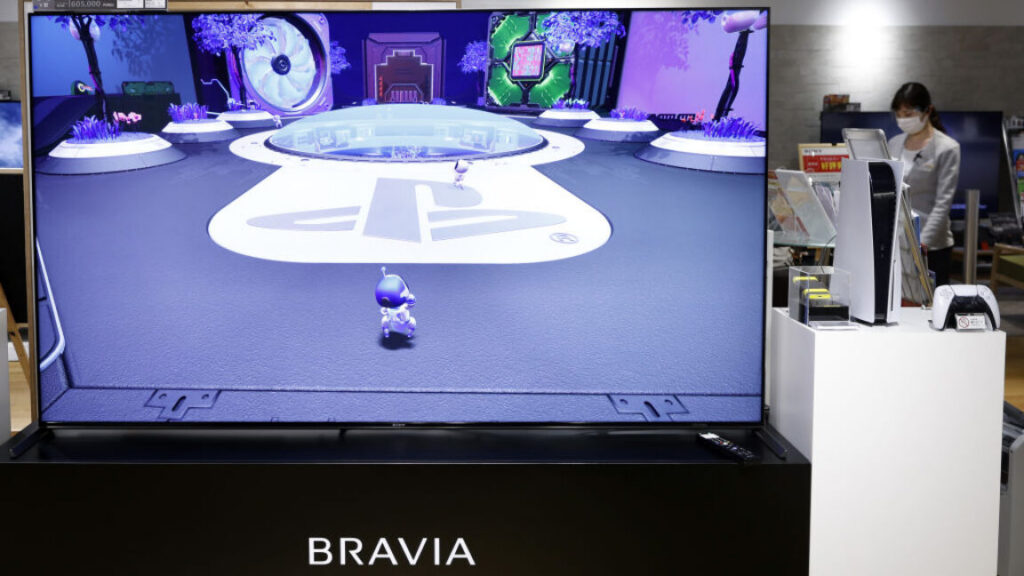
TCL is taking majority ownership of Sony’s Bravia series of TVs, the two companies announced today.

The two firms said they have signed a memorandum of understanding and aim to sign binding agreements by the end of March. Pending “relevant regulatory approvals and other conditions,” the joint venture is expected to launch in April 2027.

Under a new joint venture, Huizhou, China-headquartered TCL will own 51 percent of Tokyo, Japan-headquartered Sony’s “home entertainment business,” and Sony will own 49 percent, per an announcement today, adding:

The joint venture will operate globally, handling the full process from product development and design to manufacturing, sales, logistics, and customer service for products including televisions and home audio equipment.

The joint venture will continue to release TVs and home audio gadgets under the “Sony Bravia” branding; however, the TVs will rely on TCL display technology. The joint announcement suggested focuses on bigger TVs, higher-resolution displays, and “smart features.”

The news comes as the TV industry has struggled with decreasing margins and has become more competitive. Meanwhile, devices have become cheaper, and people are buying new TVs less frequently. Competition between Chinese companies, like TCL and Hisense, and South Korean firms, like LG and Samsung, has heated up, with Chinese companies making increasingly competitive budget and mid-range-priced TVs, and the South Korean government reportedly pushing local TV firms to work together. Numerous Japanese companies, including Toshiba and Sharp, have already exited or reduced their TV businesses.

The upcoming joint venture also comes as Sony has focused less on electronics in recent years. For example, it stopped making its Vaio PCs in 2014 and quit Blu-rays last year. Meanwhile, it has been focusing on intellectual property, like anime and movies, as Bloomberg noted. The joint venture should allow Sony to focus on its more lucrative businesses and allow TCL to gain an advantage by leveraging Sony’s more high-end Bravia devices and brand.

Sony is giving TCL control over its high-end Bravia TVs Read More »

texas-sues-biggest-tv-makers,-alleging-smart-tvs-spy-on-users-without-consent

Texas sues biggest TV makers, alleging smart TVs spy on users without consent


Automated Content Recognition brings “mass surveillance” to homes, lawsuits say.

Credit: Getty Images | Maskot

Texas Attorney General Ken Paxton sued five large TV manufacturers yesterday, alleging that their smart TVs spy on viewers without consent. Paxton sued Samsung, the longtime TV market share leader, along with LG, Sony, Hisense, and TCL.

“These companies have been unlawfully collecting personal data through Automated Content Recognition (‘ACR’) technology,” Paxton’s office alleged in a press release that contains links to all five lawsuits. “ACR in its simplest terms is an uninvited, invisible digital invader. This software can capture screenshots of a user’s television display every 500 milliseconds, monitor viewing activity in real time, and transmit that information back to the company without the user’s knowledge or consent. The companies then sell that consumer information to target ads across platforms for a profit. This technology puts users’ privacy and sensitive information, such as passwords, bank information, and other personal information at risk.”

The lawsuits allege violations of the Texas Deceptive Trade Practices Act, seeking damages of up to $10,000 for each violation and up to $250,000 for each violation affecting people 65 years or older. Texas also wants restraining orders prohibiting the collection, sharing, and selling of ACR data while the lawsuits are pending.

Texas argues that providing personalized content and targeted advertising are not legitimate purposes for collecting ACR data about consumers. The companies’ “insatiable appetite for consumer data far exceeds what is reasonably necessary,” and the “invasive data harvesting is only needed to increase advertisement revenue, which does not satisfy a consumer-necessity standard,” the lawsuits say.

Paxton is far from the first person to raise privacy concerns about smart TVs. The Center for Digital Democracy advocacy group said in a report last year that in “the world of connected TV, viewer surveillance is now built directly into the television set, making manufacturers central players in data collection, monitoring, and digital marketing.” We recently published a guide on how to break free from smart TV ads and tracking.

“Companies using ACR claim that it is all opt-in data, with permission required to use it,” the Center for Digital Democracy report said. “But the ACR system is bundled into new TVs as part of the initial set-up, and its extensive role in monitoring and sharing viewer actions is not fully explained. As a consequence, most consumers would be unaware of the threats and risks involved in signing up for the service.”

“Mass surveillance system” in US living rooms

Pointing out that Hisense and TCL are based in China, Paxton’s press release said the firms’ “Chinese ties pose serious concerns about consumer data harvesting and are exacerbated by China’s National Security Law, which gives its government the capability to get its hands on US consumer data.”

“Companies, especially those connected to the Chinese Communist Party, have no business illegally recording Americans’ devices inside their own homes,” Paxton said. “This conduct is invasive, deceptive, and unlawful. The fundamental right to privacy will be protected in Texas because owning a television does not mean surrendering your personal information to Big Tech or foreign adversaries.”

The Paxton lawsuits, filed in district courts in several Texas counties, are identical in many respects. The complaints allege that TVs made by the five companies “aren’t just entertainment devices—they’re a mass surveillance system sitting in millions of American living rooms. What consumers were told would enhance their viewing experience actually tracks, analyzes, and sells intimate details about everything they watch.”

Using ACR, each company “secretly monitors what consumers watch across streaming apps, cable, and even connected devices like gaming consoles or Blu-ray players,” and harvests the data to build profiles of consumer behavior and sell the data for profit, the complaints say.

We contacted the five companies sued by Texas today. Sony, LG, and Hisense responded and said they would not comment on a pending legal matter.

Difficult opt-out processes detailed

The complaints allege that the companies fail to obtain meaningful consent from users. The following excerpt is from the Samsung lawsuit but is repeated almost verbatim in the others:

Consumers never agreed to Samsung Watchware. When families buy a television, they don’t expect it to spy on them. They don’t expect their viewing habits packaged and auctioned to advertisers. Yet Samsung deceptively guides consumers to activate ACR and buries any explanation of what that means in dense legal jargon that few will read or understand. The so-called “consent” Samsung obtains is meaningless. Disclosures are hidden, vague, and misleading. The company collects far more data than necessary to make the TV work. Consumers are stripped of real choice and kept in the dark about what’s happening in their own homes on Samsung Smart TVs.

Samsung and other companies force consumers to go through multistep menus to exercise their privacy choices, Texas said. “Consumers must circumnavigate a long, non-intuitive path to exercise their right to opt-out,” the Samsung lawsuit said. This involves selecting menu choices for Settings, Additional Settings, General Privacy, Terms & Privacy, Viewing Information Services, and, finally, “Disable,” the lawsuit said. There are “additional toggles for Interest-Based Ads, Ad Personalization, and Privacy Choices,” the lawsuit said.

The “privacy choices are not meaningful because opt-out rights are scattered across four or more separate menus which requires approximately 15+ clicks,” the lawsuit continued. “To fully opt-out of ACR and related ad tracking on Samsung Smart TVs, consumers must disable at least two settings: (1) Viewing Information Services, and (2) Interest-Based Ads. Each of which appear in different parts of the setting UI. Conversely, Samsung provides consumers with a one-click enrollment option to opt-in during the initial start-up process.”

When consumers first start up a Samsung smart TV, they “must click through a multipage onboarding flow before landing on a consent screen, titled Smart Hub Terms & Conditions,” the lawsuit said. “Upon finally reaching the consent screen, consumers are presented with four notices: Terms & Conditions: Dispute Resolution Agreement, Smart Hub U.S. Policy Notice, Viewing Information Services, and Interest-Based Advertisements Service U.S. Privacy Notice, with only one button prominently displayed: I Agree to all.”

Deceptive trade practices alleged

It would be unreasonable to expect consumers to understand that Samsung TVs come equipped with surveillance capabilities, the lawsuit said. “Most consumers do not know, nor have any reason to suspect, that Samsung Smart TVs are capturing in real-time the audio and visuals displayed on the screen and using the information to profile them for advertisers,” it said.

Paxton alleges that TV companies violated the state’s Deceptive Trade Practices Act with misrepresentations regarding the collection of personal information and failure to disclose the use of ACR technology. The lawsuit against Hisense additionally alleges a failure to disclose that it may provide the Chinese government with consumers’ personal data.

Hisense “fails to disclose to Texas Consumers that under Chinese law, Hisense is required to transfer its collections of Texas consumers’ personal data to the People’s Republic of China when requested by the PRC,” the lawsuit said.

The TCL lawsuit doesn’t include that specific charge. But both the Hisense and TCL complaints say the Chinese Communist Party may use ACR data from the companies’ smart TVs “to influence or compromise public figures in Texas, including judges, elected officials, and law enforcement, and for corporate espionage by surveilling those employed in critical infrastructure, as part of the CCP’s long-term plan to destabilize and undermine American democracy.”

The TVs “are effectively Chinese-sponsored surveillance devices, recording the viewing habits of Texans at every turn without their knowledge or consent,” the lawsuits said.

Photo of Jon Brodkin

Jon is a Senior IT Reporter for Ars Technica. He covers the telecom industry, Federal Communications Commission rulemakings, broadband consumer affairs, court cases, and government regulation of the tech industry.

Texas sues biggest TV makers, alleging smart TVs spy on users without consent Read More »

tcl-tvs-will-use-films-made-with-generative-ai-to-push-targeted-ads

TCL TVs will use films made with generative AI to push targeted ads

Advertising has become a focal point of TV software. We’re seeing companies that sell TV sets be increasingly interested in leveraging TV operating systems (OSes) for ads and tracking. This has led to bold new strategies, like an adtech firm launching a TV OS and ads on TV screensavers.

With new short films set to debut on its free streaming service tomorrow, TV-maker TCL is positing a new approach to monetizing TV owners and to film and TV production that sees reduced costs through reliance on generative AI and targeted ads.

TCL’s five short films are part of a company initiative to get people more accustomed to movies and TV shows made with generative AI. The movies will “be promoted and featured prominently on” TCL’s free ad-supported streaming television (FAST) service, TCLtv+, TCL announced in November. TCLtv+has hundreds of FAST channels and comes on TCL-brand TVs using various OSes, including Google TV and Roku OS.

Some of the movies have real actors. You may even recognize some, (like Kellita Smith, who played Bernie Mac’s wife, Wanda, on The Bernie Mac Show). Others feature characters made through generative AI. All the films use generative AI for special effects and/or animations and took 12 weeks to make, 404 Media, which attended a screening of the movies, reported today. AI tools used include ComfyUI, Nuke, and Runway, 404 reported. However, all of the TCL short movies were written, directed, and scored by real humans (again, including by people you may be familiar with). At the screening, Chris Regina, TCL’s chief content officer for North America, told attendees that “over 50 animators, editors, effects artists, professional researchers, [and] scientists” worked on the movies.

I’ve shared the movies below for you to judge for yourself, but as a spoiler, you can imagine the quality of short films made to promote a service that was created for targeted ads and that use generative AI for fast, affordable content creation. AI-generated videos are expected to improve, but it’s yet to be seen if a TV brand like TCL will commit to finding the best and most natural ways to use generative AI for video production. Currently, TCL’s movies demonstrate the limits of AI-generated video, such as odd background imagery and heavy use of narration that can distract from badly synced audio.

TCL TVs will use films made with generative AI to push targeted ads Read More »

tcl-accused-of-selling-quantum-dot-tvs-without-actual-quantum-dots

TCL accused of selling quantum dot TVs without actual quantum dots

Many playing video games on TCL C655 Pro

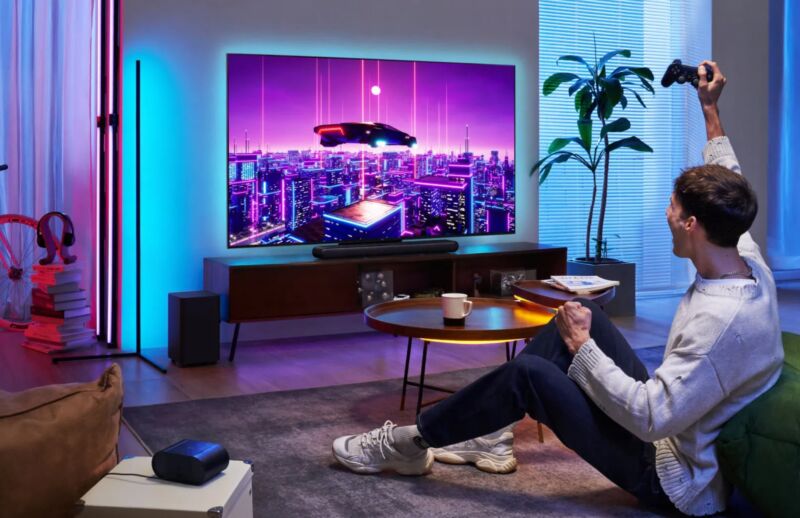
Enlarge / TCL’s C655 Pro TV is advertised as a quantum dot Mini LED TV.

TCL has come under scrutiny this month after testing that claimed to examine three TCL TVs marketed as quantum dot TVs reportedly showed no trace of quantum dots.

Quantum dots are semiconductor particles that are several nanometers large and emit different color lights when struck with light of a certain frequency. The color of the light emitted by the quantum dot depends on the wavelength, which is impacted by the quantum dot’s size. Some premium TVs (and computer monitors) use quantum dots so they can display a wider range of colors.

Quantum dots have become a large selling point for LCD-LED, Mini LED, and QD-OLED TVs, and quantum dot TVs command higher prices. A TV manufacturer pushing off standard TVs as quantum dot TVs would create a scandal significant enough to break consumer trust in China’s biggest TV manufacturer and could also result in legal ramifications.

But with TCL sharing conflicting testing results, and general skepticism around TCL being able to pull off such an anti-consumer scam in a way that would benefit it financially, this case of questionable colorful TVs isn’t so black and white. So, Ars Technica sought more clarity on the situation.

Tests unable to detect quantum dots in TCL TVs

Earlier this month, South Korean IT news publication ETNews published a report on testing that seemingly showed three TCL quantum dot TVs, marketed as QD TVs, as not having quantum dots present.

Hansol Chemical, a Seoul-headquartered chemicals company, commissioned the testing. SGS, a Geneva-headquartered testing and certification company, and Intertek, a London-headquartered testing and certification company, performed the tests.

The models examined were TCL’s C755, said to be a quantum dot Mini LED TV, the C655, a purported quantum dot LED (QLED) TV, and the C655 Pro, another QLED. None of those models are sold in the US, but TCL sells various Mini LED and LED TVs in the US that claim to use quantum dots.

According to a Google translation, ETNews reported: “According to industry sources on the 5th, the results of tests commissioned by Hansol Chemical to global testing and certification agencies SGS and Intertek showed that indium… and cadmium… were not detected in three TCL QD TV models. Indium and cadmium are essential materials that cannot be omitted in QD implementation.”

The testing was supposed to detect cadmium if present at a minimum concentration of 0.5 mg per 1 kg, while indium was tested at a minimum detection standard of 2 mg/kg or 5 mg/kg, depending on the testing lab.

These are the results from Intertek and SGS’s testing, as reported by display tech publication Display Daily:

Testing Lab TCL Model Measured Indium Cadmium Indium Minimum Detection Standard (mg/kg) Cadmium Minimum Detection Standard (mg/kg)
Intertek C755 Sheet Undetected Undetected 2 mg/kg 0.5 mg/kg
Intertek C655 Diffusion Plate Undetected Undetected 2 mg/kg 0.5 mg/kg
SGS C655 Pro Sheet Undetected Undetected 5 mg/kg 0.5 mg/kg
SGS C655 Pro Diffusion Plate Undetected Undetected 5 mg/kg 0.5 mg/kg
SGS C655 Pro Sheet Undetected Undetected 5 mg/kg 0.5 mg/kg

TCL accused of selling quantum dot TVs without actual quantum dots Read More »

tcl-announces-new-brand-slogan,-144-hz-mini-led-tvs-&-all-new-mobile-devices

TCL Announces New Brand Slogan, 144 Hz Mini LED TVs & All-New Mobile Devices

TCL Electronics (1070.HK), a leading consumer electronics brand, held a series of virtual press events today, where its chairperson and senior executives shared the company’s latest brand slogan “Inspire Greatness” and business developments. The audience was able to see TCL’s smart home products in action, as well as a preview of TCL’s 2022 Mini LED TVs and latest mobile devices.

Visit here to learn more about TCL at CES 2022 and view a recap of the livestreamed announcement.

Message from the Chairperson

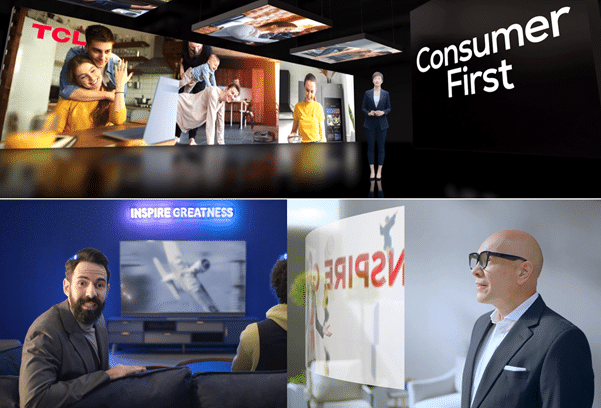
Ms. Juan Du, Chairperson of TCL Electronics, speaking at the global virtual press conference, addressed the core philosophies of TCL.

“At TCL, we always put our customers first. Everything we do is focused on bringing value to people by improving their lives and experiences with our products and services. But we can’t do this alone,” said Ms. Du. “We depend on our creative and pioneering employees, on the long-term support of our trusted partners, with whom we work tirelessly together, and most importantly, on our business ethics of integrity and honesty.”

She also shared highlights of the brand’s global business results in 2021 and the innovations that have driven the success of TCL.

Pushing the limits of what’s possible with display technology, TCL founded TCL CSOT in 2009 and has invested nearly US$31 billion to provide consumers with the best quality screens. And caring deeply for the environment, TCL has entered the photovoltaic sector to produce cleaner and greener energy.

Over the years, TCL has been creating a connected smart home ecosystem guided by its AI x IoT strategy. Large-screen TVs should be the entry point to a ‘smart life’ and TCL is continuously innovating and developing new home appliances and mobile devices to help make people’s lives more convenient by inspiring greatness.

“We hope our technology will create solutions so people worry less day-to-day, but also allow them to spend more time having fun with their family and friends,” added Ms. Du. “At TCL, with our products and services, we want to make people’s lives safer and healthier. Ultimately, we wish to inspire and empower people to pursue greatness in their lives.”

Ms. Juan Du, Chairperson of TCL Electronics (top) ; Tiago Abreu, Head of Smart Home Appliance X-Lab, TCL DIC (bottom left); Stefan Streit, CMO of TCL Communication (bottom right)

2022 TCL Mini LED TVs

Since 2018, TCL has been investing in Mini LED TV technology and is aiming to become the top player in Mini LED TVs within five years.

In 2022, TCL is taking another step forward by applying 144Hz refresh rate to its 2022 premium Mini LED TV models, providing faster responsiveness, sharper imagery, and smoother gameplay. Both competitive gamers who want to experience demanding high FPS games and casual gamers who want to enjoy extra responsiveness in gameplay will appreciate this upgrade. TCL’s 144 Hz Mini LED displays will hugely benefit from faster reaction times and fluidity, giving gamers an important edge, especially in multiplayer games.

In addition to being powered by TCL’s Mini LED technology, this new generation of TVs will elevate the enjoyment of the visuals in games and other action-packed content. With over 1,000 local dimming zones, 2022 TCL Mini LED TVs offer stunning brightness performance, achieving striking contrast and revealing even more details for a truly immersive viewing experience. More details of 2022 TCL Mini LED TVs will be disclosed later in this quarter.

2022 TCL Portable and Smart Devices

As part of its commitment to providing accessible 5G connectivity for all, TCL will launch TCL 30 XE 5G and 30 V 5G, exclusively in the US later this month. These smartphones come with enhanced NXTVISION technology, so customers will enjoy gorgeous visuals and fantastic imagery.

Several new tablets will also be displayed at CES 2022. This includes the TCL NXTPAPER 10s, which comes with a paper-like display that features eye protection at its core; the lightweight TCL TAB 8 4G, ideal for learning and creativity; and the TCL TAB 10L, an immersive tablet perfect for entertainment and productivity. Additionally, a trio of tablets designed with children in mind, the new TCL TKEE series: TCL TKEE MINI, MID, and MAX, will be showcased at the TCL booth.

TCL is excited to expand its product range to laptops for the first time with the launch of the TCL BOOK 14 Go. It’s slim, lightweight, has excellent battery life, and is a great fit for anyone who is constantly moving and traveling since it supports LTE connection.

At CES, TCL will also introduce the next generation of its wearable display glasses, the TCL NXTWEAR AIR. It’s portable, light and slim, with an emphasis on comfort and style. With an exchangeable front lens and much lighter body weight, the NXTWEAR AIR will bring a better experience than the previous generation of wearable display glasses.

To bring about TCL’s connected vision, it will soon launch the LINKHUB 5G router, whilst continuing to deliver high-quality 4G solutions with the LINKZONE LTE Cat4 Mobile Wi-Fi, a compact personal mobile hotspot.

*Devices will be available in selected markets throughout the year.

TCL AI x IoT Smart Home

At TCL, large screen TVs are the entry point to a ‘smart life’. Users can activate the TV TCL Home with just one button on a remote control, making it easy to manage entertainment as well as smart appliances and devices.

Besides the TV, the mobile TCL Home App enables users to control their smart home appliances, such as a TCL air purifier or robot vacuum cleaner, then sit back and enjoy a fresh, clean home.

TCL AI x IoT products and services make your life, work and play more enjoyable and bring you creative inspiration every day.

TCL Announces New Brand Slogan, 144 Hz Mini LED TVs & All-New Mobile Devices Read More »