starship flight 11

starship’s-elementary-era-ends-today-with-mega-rocket’s-11th-test-flight

Starship’s elementary era ends today with mega-rocket’s 11th test flight

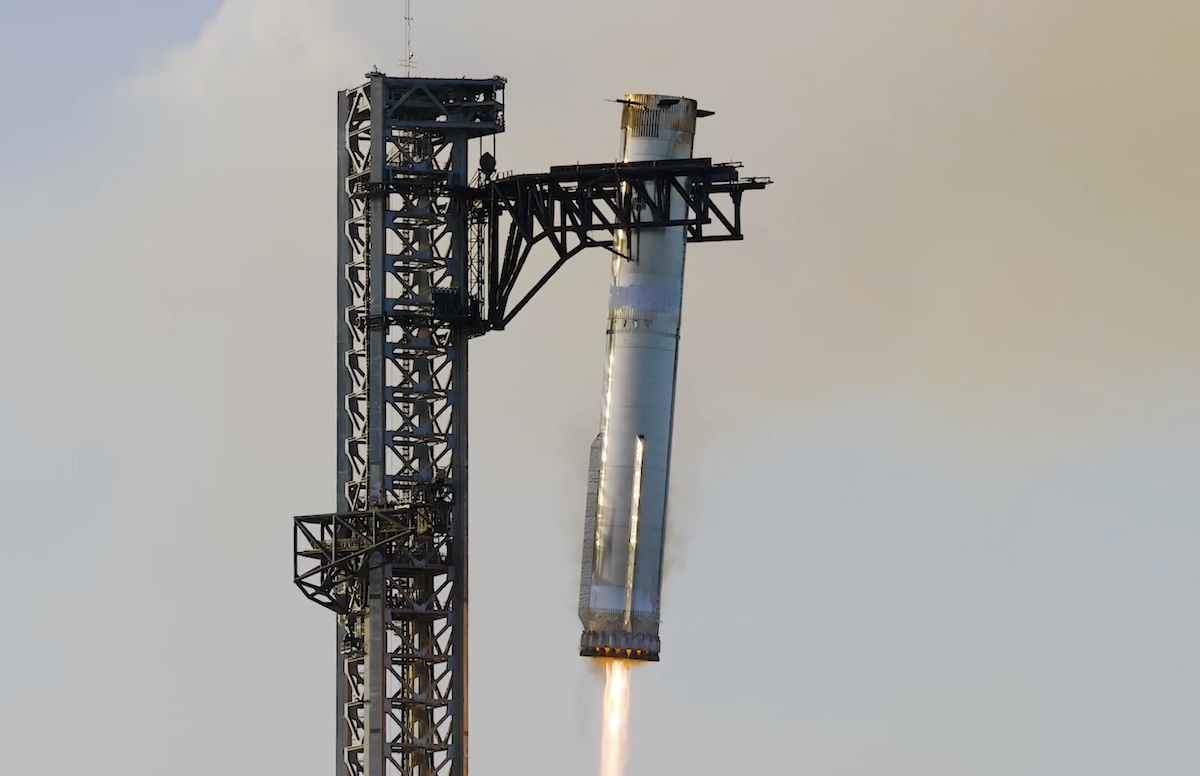
Future flights of Starship will end with returns to Starbase, where the launch tower will try to catch the vehicle coming home from space, similar to the way SpaceX has shown it can recover the Super Heavy booster. A catch attempt with Starship is still at least a couple of flights away.

In preparation for future returns to Starbase, the ship on Flight 11 will perform a “dynamic banking maneuver” and test subsonic guidance algorithms prior to its final engine burn to brake for splashdown. If all goes according to plan, the flight will end with a controlled water landing in the Indian Ocean approximately 66 minutes after liftoff.

Turning point

Monday’s test flight will be the last Starship launch of the year as SpaceX readies a new generation of the rocket, called Version 3, for its debut sometime in early 2026. The new version of the rocket will fly with upgraded Raptor engines and larger propellant tanks and have the capability for refueling in low-Earth orbit.

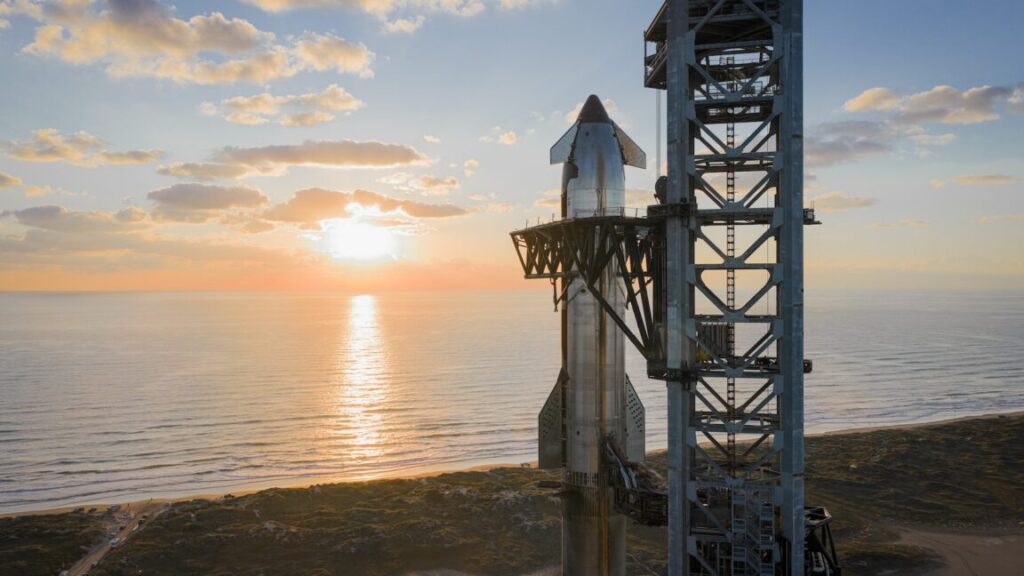
Starship Version 3 will also inaugurate SpaceX’s second launch pad at Starbase, which has several improvements over the existing site, including a flame trench to redirect engine exhaust away from the pad. The flame trench is a common feature of many launch pads, but all of the Starship flights so far have used an elevated launch mount, or stool, over a water-cooled flame deflector.

The current launch complex is expected to be modified to accommodate future Starship V3s, giving the company two pads to support a higher flight rate.

NASA is counting on a higher flight rate for Starship next year to move closer to fulfilling SpaceX’s contract to provide a human-rated lander to the agency’s Artemis lunar program. SpaceX has contracts worth more than $4 billion to develop a derivative of Starship to land NASA astronauts on the Moon.

But much of SpaceX’s progress toward a lunar landing hinges on launching numerous Starships—perhaps a dozen or more—in a matter of a few weeks or months. SpaceX is activating the second launch pad in Texas and building several launch towers and a new factory in Florida to make this possible.

Apart from recovering and reusing Starship itself, the program’s most pressing near-term hurdle is the demonstration of in-orbit refueling, a prerequisite for any future Starship voyages to the Moon or Mars. This first refueling test could happen next year but will require Starship V3 to have a smoother introduction than Starship V2, which is retiring after Flight 11 with, at best, a 40 percent success rate.

Starship’s elementary era ends today with mega-rocket’s 11th test flight Read More »
spacex-has-a-few-tricks-up-its-sleeve-for-the-last-starship-flight-of-the-year

SpaceX has a few tricks up its sleeve for the last Starship flight of the year

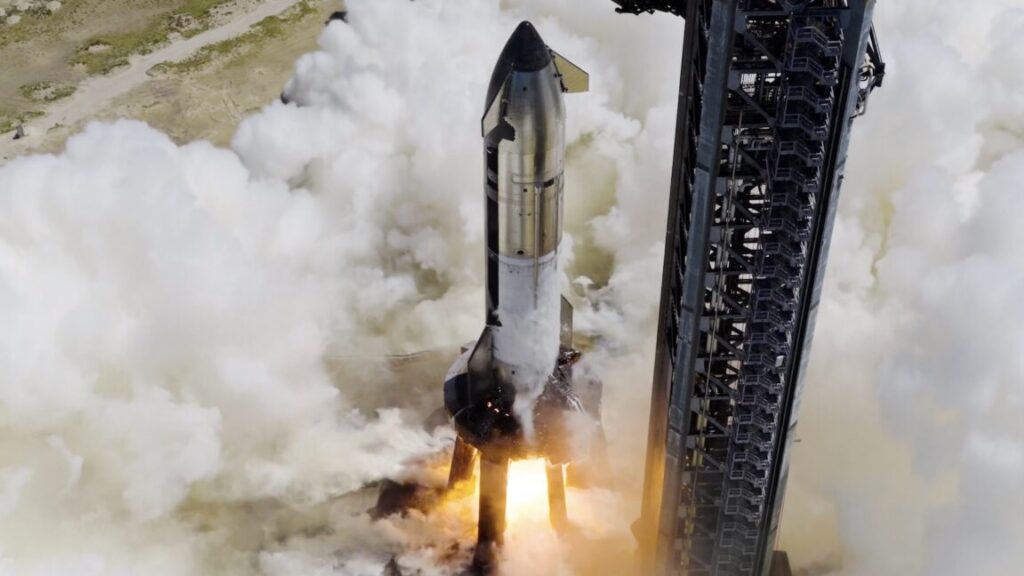
This particular booster, numbered Booster 15, launched in March and was caught by the launch tower at Starbase after returning from the edge of space. SpaceX said 24 of the 33 methane-fueled Raptor engines launching on the booster next month are “flight-proven.”

The Super Heavy booster flying next month previously launched and was recovered on Flight 8 in March. Credit: SpaceX

Similar to the last Starship flight, the Super Heavy booster will guide itself to a splashdown off the coast of South Texas instead of returning to Starbase.

“Its primary test objective will be demonstrating a unique landing burn engine configuration planned to be used on the next-generation Super Heavy,” SpaceX said.

The new booster landing sequence will initially use 13 of the rocket’s 33 engines, then downshift to five engines before running just the three center engines for the final portion of the burn. The booster previously went directly from 13 engines to three engines. Using five engines for part of the landing sequence provides “additional redundancy for spontaneous engine shutdowns,” according to SpaceX.

“The primary goal on the flight test is to measure the real-world vehicle dynamics as engines shut down while transitioning between the different phases,” SpaceX said.

Stepping stone to Version 3

After Flight 11, SpaceX will focus on the next-generation Starship design: Starship V3. This upgraded configuration will be the version that will actually fly to orbit, allowing SpaceX to begin deploying its new fleet of larger, more powerful Starlink Internet satellites.

Starship V3 will also be used to test orbital refueling, something never before attempted between two spacecraft with cryogenic propellants. Refueling in space is required to give Starship enough energy to propel itself out of Earth’s orbit to the Moon and Mars, destinations it must reach to fulfill the hopes of NASA and SpaceX founder Elon Musk.

The first flight of Starship V3 is likely to occur in early 2026, using a new launch pad undergoing final outfitting and testing a short distance away from SpaceX’s original launch pad at Starbase. Gerstenmaier, SpaceX’s vice president of build and flight reliability, told a crowd at a space industry conference earlier this month that the company will likely attempt one more suborbital flight with Starship V3. If that goes well, Flight 13 could launch all the way to low-Earth orbit sometime later next year.

SpaceX has a few tricks up its sleeve for the last Starship flight of the year Read More »