As many as 91,000 LG TVs face the risk of being commandeered unless they receive a just-released security update patching four critical vulnerabilities discovered late last year.
The vulnerabilities are found in four LG TV models that collectively comprise slightly more than 88,000 units around the world, according to results returned by the Shodan search engine for Internet-connected devices. The vast majority of those units are located in South Korea, followed by Hong Kong, the US, Sweden, and Finland. The models are:
Starting Wednesday, updates are available through these devices’ settings menu.
Got root?
According to Bitdefender—the security firm that discovered the vulnerabilities—malicious hackers can exploit them to gain root access to the devices and inject commands that run at the OS level. The vulnerabilities, which affect internal services that allow users to control their sets using their phones, make it possible for attackers to bypass authentication measures designed to ensure only authorized devices can make use of the capabilities.
“These vulnerabilities let us gain root access on the TV after bypassing the authorization mechanism,” Bitdefender researchers wrote Tuesday. “Although the vulnerable service is intended for LAN access only, Shodan, the search engine for Internet-connected devices, identified over 91,000 devices that expose this service to the Internet.”
The key vulnerability making these threats possible resides in a service that allows TVs to be controlled using LG’s ThinkQ smartphone app when it’s connected to the same local network. The service is designed to require the user to enter a PIN code to prove authorization, but an error allows someone to skip this verification step and become a privileged user. This vulnerability is tracked as CVE-2023-6317.
Once attackers have gained this level of control, they can go on to exploit three other vulnerabilities, specifically:
CVE-2023-6318, which allows the attackers to elevate their access to root
CVE-2023-6319, which allows for the injection of OS commands by manipulating a library for showing music lyrics
CVE-2023-6320, which lets an attacker inject authenticated commands by manipulating the com.webos.service.connectionmanager/tv/setVlanStaticAddress application interface.
Hackers are actively exploiting a pair of recently discovered vulnerabilities to remotely commandeer network-attached storage devices manufactured by D-Link, researchers said Monday.
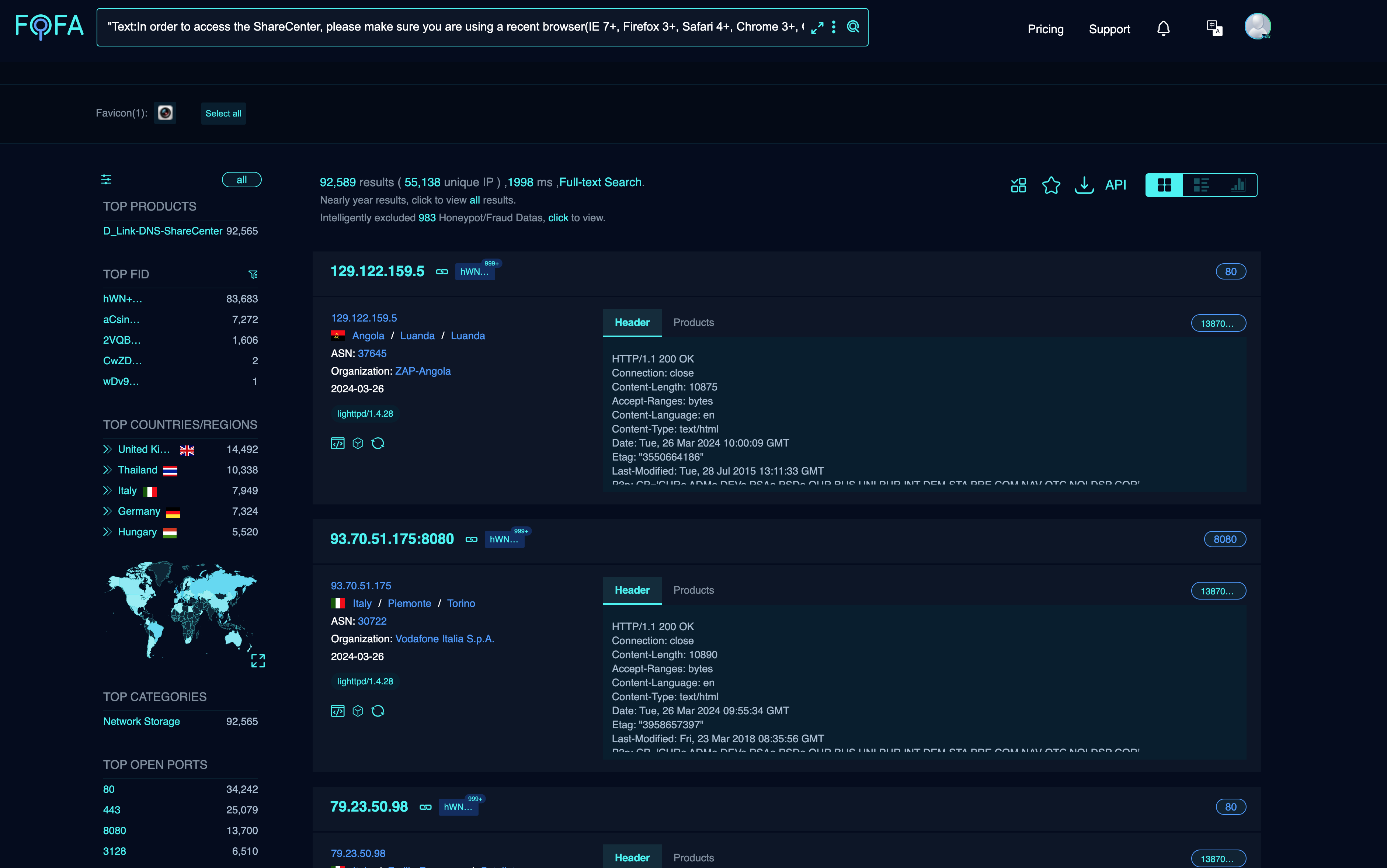
Roughly 92,000 devices are vulnerable to the remote takeover exploits, which can be remotely transmitted by sending malicious commands through simple HTTP traffic. The vulnerability came to light two weeks ago. The researcher said they were making the threat public because D-Link said it had no plans to patch the vulnerabilities, which are present only in end-of-life devices, meaning they are no longer supported by the manufacturer.
An ideal recipe
On Monday, researchers said their sensors began detecting active attempts to exploit the vulnerabilities starting over the weekend. Greynoise, one of the organizations reporting the in-the-wild exploitation, said in an email that the activity began around 02: 17 UTC on Sunday. The attacks attempted to download and install one of several pieces of malware on vulnerable devices depending on their specific hardware profile. One such piece of malware is flagged under various names by 40 endpoint protection services.
Security organization Shadowserver has also reported seeing scanning or exploits from multiple IP addresses but didn’t provide additional details.
The vulnerability pair, found in the nas_sharing.cgi programming interface of the vulnerable devices, provide an ideal recipe for remote takeover. The first, tracked as CVE-2024-3272 and carrying a severity rating of 9.8 out of 10, is a backdoor account enabled by credentials hardcoded into the firmware. The second is a command-injection flaw tracked as CVE-2024-3273 and has a severity rating of 7.3. It can be remotely activated with a simple HTTP GET request.
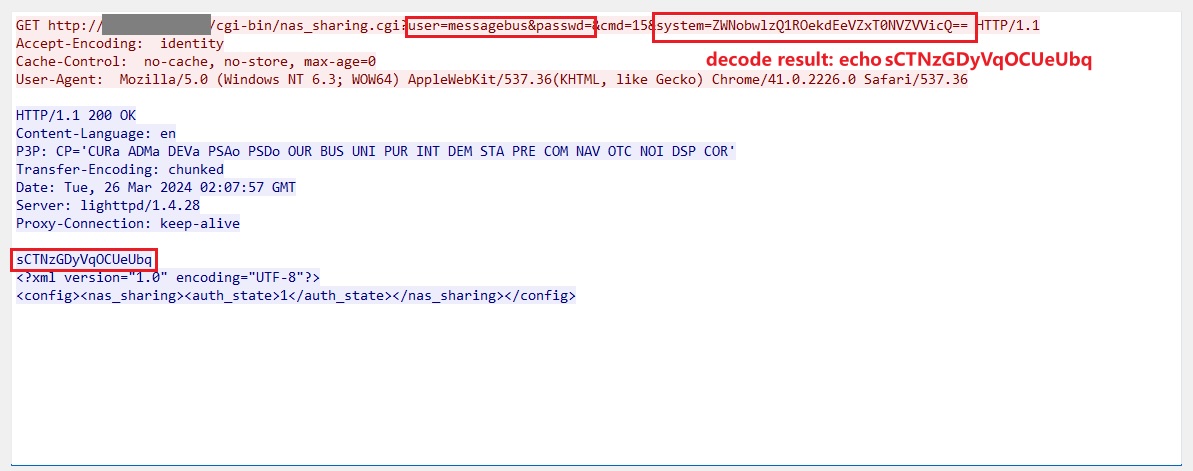
Netsecfish, the researcher who disclosed the vulnerabilities, demonstrated how a hacker could remotely commandeer vulnerable devices by sending a simple set of HTTP requests to them. The code looks like this:
GET /cgi-bin/nas_sharing.cgiuser=messagebus&passwd=&cmd=15&system=
In the exploit example below, the text inside the first red rectangle contains the hardcoded credentials—username messagebus and an empty password field—while the next rectangle contains a malicious command string that has been base64 encoded.
netsecfish
“Successful exploitation of this vulnerability could allow an attacker to execute arbitrary commands on the system, potentially leading to unauthorized access to sensitive information, modification of system configurations, or denial of service conditions,” netsecfish wrote.
Last week, D-Link published an advisory. D-Link confirmed the list of affected devices:
The best defense against these attacks and others like them is to replace hardware once it reaches end of life. Barring that, users of EoL devices should at least ensure they’re running the most recent firmware. D-Link provides this dedicated support page for legacy devices for owners to locate the latest available firmware. Another effective protection is to disable UPnP and connections from remote Internet addresses unless they’re absolutely necessary and configured correctly.
Ivanti, the remote-access company whose remote-access products have been battered by severe exploits in recent months, has pledged a “new era,” one that “fundamentally transforms the Ivanti security operating model” backed by “a significant investment” and full board support.
CEO Jeff Abbott’s open letter promises to revamp “core engineering, security, and vulnerability management,” make all products “secure by design,” formalize cyber-defense agency partnerships, and “sharing information and learning with our customers.” Among the details is the company’s promise to improve search abilities in Ivanti’s security resources and documentation portal, “powered by AI,” and an “Interactive Voice Response system” for routing calls and alerting customers about security issues, also “AI-powered.”
Ivanti CEO Jeff Abbott addresses the company’s “broad shift” in its security model.
Ivanti and Abbott seem to have been working on this presentation for a while, so it’s unlikely they could have known it would arrive just days after four new vulnerabilities were disclosed for its Connect Secure and Policy Secure gateway products, two of them rated for high severity. Those vulnerabilities came two weeks after twoother vulnerabilities, rated critical, with remote code execution. And those followed “a three-week spree of non-stop exploitation” in early February, one that left security directors scrambling to patch and restore services or, as federal civilian agencies did, rebuild their servers from scratch.
Because Ivanti makes VPN products that have been widely used in large organizations, including government agencies, it’s a rich target for threat actors and a target that’s seemed particularly soft in recent years. Ivanti’s Connect Secure, a VPN appliance often abbreviated as ICS, functions as a gatekeeper that allows authorized devices to connect.
Due to its wide deployment and always-on status, an ICS has been a rich target, particularly for nation-state-level actors and financially motivated intruders. ICS (formerly known as Pulse Connect) has had zero-day vulnerabilities previously exploited in 2019 and 2021. One PulseSecure vulnerability exploit led to money-changing firm Travelex working entirely from paper in early 2020 after ransomware firm REvil took advantage of the firm’s failure to patch a months-old vulnerability.
While some security professionals have given the firm credit, at times, for working hard to find and disclose new vulnerabilities, the sheer volume and cadence of vulnerabilities requiring serious countermeasures has surely stuck with some. “I don’t see how Ivanti survives as an enterprise firewall brand,” security researcher Jake Williams told the Dark Reading blog in mid-February.
Hence the open letter, the “new era,” the “broad shift,” and all the other pledges Ivanti has made. “We have already begun applying learnings from recent incidents to make immediate (emphasis Abbott’s) improvements to our own engineering and security practices. And there is more to come,” the letter states. Learnings, that is.
Enlarge/ Three examples of the video screen tampering.
US DOJ
Was someone messing with the Jacksonville Jaguars’ giant jumbotron?
On September 16, 2018, the Jaguars were playing the New England Patriots when the in-stadium screen experienced, in the US government’s words, “a loss in reference sync which manifested as a large horizontal green lines [sic] appearing across one whole video board.”
On November 18, during a game against the Pittsburgh Steelers, it happened again—but this time, entire video sub-boards filled with green.
Then, on December 2, 2018, the Indianapolis Colts came to town and the jumbotron glitched a third time as “a single video board experienced a change of what seemed to be the zoom of one of the base graphics displayed.”
The Jaguars’ IT staff could not at the time replicate any of these video errors, and they began to suspect that what they were seeing was not a technical problem but some sort of attack. Digging into log files, they quickly found that the source of the December 2 problem was “a command to change a specific parameter” of the video control software.
Where had the command come from? An Abekas Mira video control server known as MIRA9120. The Abekas Mira was meant to help in the production and display of instant replay video to be shown in-stadium on the massive jumbotron, but this particular server had been either decommissioned or kept on hand as a spare. In any event, the team thought the server was in storage. But when they went looking, MIRA9120 turned out to be sitting in the main server room, installed on a rack just beside the active Abekas Mira servers.
IT staffers started poking around in MIRA9120 and found the remote-access software TeamViewer, suggesting that someone had been controlling MIRA9120 from somewhere else. But only limited data about the culprit could be gleaned, because the TeamViewer instance had connection logging disabled.
On December 3, the Jaguars’ IT staff disconnected MIRA9120 from the other video control servers—but they left it powered on and in place. Then they turned TeamViewer’s connection logging back on. The idea was to set up a honeypot in case the attacker returned.
During the December 16 game against Washington, TeamViewer recorded another connection into MIRA9120. The TeamViewer account number that accessed the machine was logged, and the information was passed to the FBI, which was now actively investigating the situation. Agents sent a subpoena to TeamViewer, which in February 2019 provided the IP address of the machine that had used the account in question on that day.
This IP address was controlled by Comcast, so a subpoena to Comcast finally turned up the information the Jaguars wanted: MIRA9120 was accessed on December 16 from a home in St. Augustine, Florida—a home where Samuel Arthur Thompson was living.
The secret
The Jags knew Thompson. He had spent nearly five years as a contractor for the football team, helping Jacksonville design and install their stadium screen technology. After installation, Thompson helped to run the system during football games.
Thompson also had a secret: He had been convicted of sexually abusing a 14-year-old boy in Alabama in 1988. Thompson had not reported this to the Jaguars, either, though his contract required such a disclosure.
Someone had found out about the conviction and sent an anonymous letter about it to the Jaguars’ management. Once the letter arrived, the Jaguars terminated Thompson’s contract. His last day with the team had been February 23, 2018. The relationship was thought to be over—but maybe it wasn’t.
A closer search of network traffic and log files from that February day revealed that Thompson himself had installed TeamViewer onto MIRA9120 at 9: 09 am. So the pieces all fit: disgruntled employee on final day of work, the TeamViewer install, the IP address in St. Augustine.
But the FBI didn’t secure a warrant until the summer of 2019. Only in July did the FBI raid Thompson’s home in rather polite style, simply knocking on the door. (Thompson would later complain in a court filing that agents should have yelled out who they were and why they were there. He was strongly displeased about being surprised.) Thompson’s child opened the door. When Thompson himself came over, he still had his unlocked iPhone in hand—and an agent immediately grabbed it.
Then the case became something else entirely—because the phone had child sex abuse material (CSAM) on it.
Enlarge/ Downtown Kansas City, Missouri, which is part of Jackson County.
Jackson County, Missouri, has declared a state of emergency and closed key offices indefinitely as it responds to what officials believe is a ransomware attack that has made some of its IT systems inoperable.
“Jackson County has identified significant disruptions within its IT systems, potentially attributable to a ransomware attack,” officials wrote Tuesday. “Early indications suggest operational inconsistencies across its digital infrastructure and certain systems have been rendered inoperative while others continue to function as normal.”
The systems confirmed inoperable include tax and online property payments, issuance of marriage licenses, and inmate searches. In response, the Assessment, Collection and Recorder of Deeds offices at all county locations are closed until further notice.
The closure occurred the same day that the county was holding a special election to vote on a proposed sales tax to fund a stadium for MLB’s Kansas City Royals and the NFL’s Kansas City Chiefs. Neither the Jackson County Board of Elections nor the Kansas City Board of Elections have been affected by the attack; both remain open.
To date, ransomware attacks have hit 28 county, municipal, or tribal governments this year, according to Brett Callow, a threat analyst with security firm Emsisoft. Last year, there were 95; 106 occurred in 2022.
The Jackson County website says there are 654,000 residents in the 607-square-mile county, which includes most of Kansas City, the biggest city in Missouri.
The response to the attack and the investigation into it have just begun, but so far, officials said they had no evidence that data had been compromised.
“We are currently in the early stages of our diagnostic procedures, working closely with our cybersecurity partners to thoroughly explore all possibilities and identify the root cause of the situation,” officials wrote. “While the investigation considers ransomware as a potential cause, comprehensive analyses are underway to confirm the exact nature of the disruption.”
Jackson County Executive Frank White Jr. has issued an executive order declaring a state of emergency.
“The potential significant budgetary impact of this incident may require appropriations from the County’s emergency fund and, if these funds are found to be insufficient, the enactment of additional budgetary adjustments or cuts,” White wrote. “It is directed that all county staff are to take whatever steps are necessary to protect resident data, county assets, and continue essential services, thereby mitigating the impact of this potential ransomware attack.”
The attack first came to attention Tuesday morning, county officials said on Facebook.
The county has notified law enforcement and retained IT security contractors to help investigate and remediate the attack.
“The County recognizes the impact these closures have on its residents,” officials wrote. “We appreciate the community’s patience and understanding during this time and will provide more information as it becomes available.”
AT&T reset passcodes for millions of customers after acknowledging a massive leak involving the data of 73 million current and former subscribers.
“Based on our preliminary analysis, the data set appears to be from 2019 or earlier, impacting approximately 7.6 million current AT&T account holders and approximately 65.4 million former account holders,” AT&T said in an update posted to its website on Saturday.
An AT&T support article said the carrier is “reaching out to all 7.6 million impacted customers and have reset their passcodes. In addition, we will be communicating with current and former account holders with compromised sensitive personal information.” AT&T said the leaked information varied by customer but included full names, email addresses, mailing addresses, phone numbers, Social Security numbers, dates of birth, AT&T account numbers, and passcodes.
AT&T’s acknowledgement of the leak described it as “AT&T data-specific fields [that] were contained in a data set released on the dark web.” But the same data appears to be on the open web as well. As security researcher Troy Hunt wrote, the data is “out there in plain sight on a public forum easily accessed by a normal web browser.”
The hacking forum has a public version accessible with any browser and a hidden service that requires a Tor network connection. Based on forum posts we viewed today, the leak seems to have appeared on both the public and Tor versions of the hacking forum on March 17 of this year. Viewing the AT&T data requires a hacking forum account and site “credits” that can be purchased or earned by posting on the forum.
Hunt told Ars today that the term “dark web” is “incorrect and misleading” in this case. The forum where the AT&T data appeared “does not meet the definition of dark web,” he wrote in an email. “No special software, no special network, just a plain old browser. It’s easily discoverable via a Google search and immediately shows many PII [Personal Identifiable Information] records from the AT&T breach. Registration is then free for anyone with the only remaining barrier being obtaining credits.”
We contacted AT&T today and will update this article if we get a response.
49 million email addresses
Hunt’s post on March 19 said the leaked information included a file with 73,481,539 lines of data that contained 49,102,176 unique email addresses. Another file with decrypted Social Security numbers had 43,989,217 lines, he wrote.
Hunt, who runs the “Have I Been Pwned” database that lets you check if your email was in a data breach, says the 49 million email addresses in the AT&T leak have been added to his database.
BleepingComputer covered the leak two weeks ago, writing that it is the same data involved in a 2021 incident in which a hacker shared samples of the data and attempted to sell the entire data set for $1 million. In 2021, AT&T told BleepingComputer that “the information that appeared in an Internet chat room does not appear to have come from our systems.”
AT&T maintained that position last month. “AT&T continues to tell BleepingComputer today that they still see no evidence of a breach in their systems and still believe that this data did not originate from them,” the news site’s March 17, 2024, article said.
AT&T says data may have come from itself or vendor
AT&T’s update on March 30 acknowledged that the data may have come from AT&T itself, but said it also may have come from an AT&T vendor:
AT&T has determined that AT&T data-specific fields were contained in a data set released on the dark web approximately two weeks ago. While AT&T has made this determination, it is not yet known whether the data in those fields originated from AT&T or one of its vendors. With respect to the balance of the data set, which includes personal information such as Social Security numbers, the source of the data is still being assessed.
“Currently, AT&T does not have evidence of unauthorized access to its systems resulting in exfiltration of the data set,” the company update also said. AT&T said it “is communicating proactively with those impacted and will be offering credit monitoring at our expense where applicable.”
AT&T said the passcodes that it reset are generally four digits and are different from AT&T account passwords. The passcodes are used when calling customer support, when managing an account at a retail store, and when signing in to the AT&T website “if you’ve chosen extra security.”
Enlarge/ Internet Backdoor in a string of binary code in a shape of an eye.
Getty Images
Researchers have found a malicious backdoor in a compression tool that made its way into widely used Linux distributions, including those from Red Hat and Debian.
The compression utility, known as xz Utils, introduced the malicious code in versions 5.6.0 and 5.6.1, according to Andres Freund, the developer who discovered it. There are no known reports of those versions being incorporated into any production releases for major Linux distributions, but both Red Hat and Debian reported that recently published beta releases used at least one of the backdoored versions—specifically, in Fedora 40 and Fedora Rawhide and Debian testing, unstable and experimental distributions. A stable release of Arch Linux is also affected. That distribution, however, isn’t used in production systems.
Because the backdoor was discovered before the malicious versions of xz Utils were added to production versions of Linux, “it’s not really affecting anyone in the real world,” Will Dormann, a senior vulnerability analyst at security firm Analygence, said in an online interview. “BUT that’s only because it was discovered early due to bad actor sloppiness. Had it not been discovered, it would have been catastrophic to the world.”
Several people, including two Ars readers, reported that the multiple apps included in the HomeBrew package manager for macOS rely on the backdoored 5.6.1 version of xz Utils. HomeBrew has now rolled back the utility to version 5.4.6. Maintainers have more details available here.
Breaking SSH authentication
The first signs of the backdoor were introduced in a February 23 update that added obfuscated code, officials from Red Hat said in an email. An update the following day included a malicious install script that injected itself into functions used by sshd, the binary file that makes SSH work. The malicious code has resided only in the archived releases—known as tarballs—which are released upstream. So-called GIT code available in repositories aren’t affected, although they do contain second-stage artifacts allowing the injection during the build time. In the event the obfuscated code introduced on February 23 is present, the artifacts in the GIT version allow the backdoor to operate.
The malicious changes were submitted by JiaT75, one of the two main xz Utils developers with years of contributions to the project.
“Given the activity over several weeks, the committer is either directly involved or there was some quite severe compromise of their system,” an official with distributor OpenWall wrote in an advisory. “Unfortunately the latter looks like the less likely explanation, given they communicated on various lists about the ‘fixes’” provided in recent updates. Those updates and fixes can be found here, here, here, and here.
On Thursday, someone using the developer’s name took to a developer site for Ubuntu to ask that the backdoored version 5.6.1 be incorporated into production versions because it fixed bugs that caused a tool known as Valgrind to malfunction.
“This could break build scripts and test pipelines that expect specific output from Valgrind in order to pass,” the person warned, from an account that was created the same day.
One of maintainers for Fedora said Friday that the same developer approached them in recent weeks to ask that Fedora 40, a beta release, incorporate one of the backdoored utility versions.
“We even worked with him to fix the valgrind issue (which it turns out now was caused by the backdoor he had added),” the Ubuntu maintainer said.
He has been part of the xz project for two years, adding all sorts of binary test files, and with this level of sophistication, we would be suspicious of even older versions of xz until proven otherwise.
Maintainers for xz Utils didn’t immediately respond to emails asking questions.
The malicious versions, researchers said, intentionally interfere with authentication performed by SSH, a commonly used protocol for connecting remotely to systems. SSH provides robust encryption to ensure that only authorized parties connect to a remote system. The backdoor is designed to allow a malicious actor to break the authentication and, from there, gain unauthorized access to the entire system. The backdoor works by injecting code during a key phase of the login process.
“I have not yet analyzed precisely what is being checked for in the injected code, to allow unauthorized access,” Freund wrote. “Since this is running in a pre-authentication context, it seems likely to allow some form of access or other form of remote code execution.”
In some cases, the backdoor has been unable to work as intended. The build environment on Fedora 40, for example, contains incompatibilities that prevent the injection from correctly occurring. Fedora 40 has now reverted to the 5.4.x versions of xz Utils.
Xz Utils is available for most if not all Linux distributions, but not all of them include it by default. Anyone using Linux should check with their distributor immediately to determine if their system is affected. Freund provided a script for detecting if an SSH system is vulnerable.
Enlarge/ Supply-chain attacks, like the latest PyPI discovery, insert malicious code into seemingly functional software packages used by developers. They’re becoming increasingly common.
Getty Images
PyPI, a vital repository for open source developers, temporarily halted new project creation and new user registration following an onslaught of package uploads that executed malicious code on any device that installed them. Ten hours later, it lifted the suspension.
Short for the Python Package Index, PyPI is the go-to source for apps and code libraries written in the Python programming language. Fortune 500 corporations and independent developers alike rely on the repository to obtain the latest versions of code needed to make their projects run. At a little after 7 pm PT on Wednesday, the site started displaying a banner message informing visitors that the site was temporarily suspending new project creation and new user registration. The message didn’t explain why or provide an estimate of when the suspension would be lifted.
About 10 hours later, PyPI restored new project creation and new user registration. Once again, the site provided no reason for the 10-hour halt.
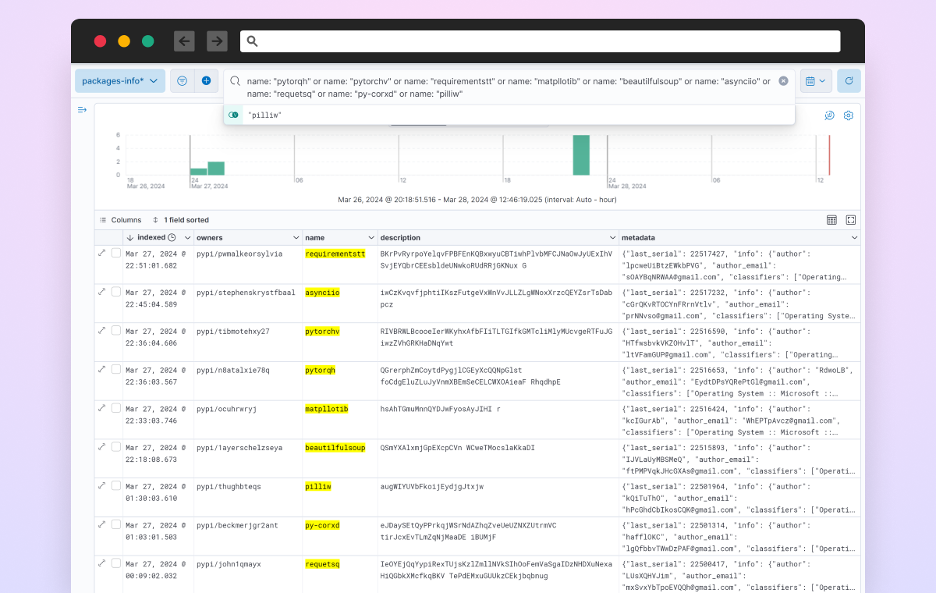
According to security firm Checkmarx, in the hours leading up to the closure, PyPI came under attack by users who likely used automated means to upload malicious packages that, when executed, infected user devices. The attackers used a technique known as typosquatting, which capitalizes on typos users make when entering the names of popular packages into command-line interfaces. By giving the malicious packages names that are similar to popular benign packages, the attackers count on their malicious packages being installed when someone mistakenly enters the wrong name.
“The threat actors target victims with Typosquatting attack technique using their CLI to install Python packages,” Checkmarx researchers Yehuda Gelb, Jossef Harush Kadouri, and Tzachi Zornstain wrote Thursday. “This is a multi-stage attack and the malicious payload aimed to steal crypto wallets, sensitive data from browsers (cookies, extensions data, etc.) and various credentials. In addition, the malicious payload employed a persistence mechanism to survive reboots.”
Enlarge/ Screenshot showing some of the malicious packages found by Checkmarx.
Checkmarx
The post said the malicious packages were “most likely created using automation” but didn’t elaborate. Attempts to reach PyPI officials for comment weren’t immediately successful. The package names mimicked those of popular packages and libraries such as Requests, Pillow, and Colorama.
The temporary suspension is only the latest event to highlight the increased threats confronting the software development ecosystem. Last month, researchers revealed an attack on open source code repository GitHub that was flooding the site with millions of packages containing obfuscated code that stole passwords and cryptocurrencies from developer devices. The malicious packages were clones of legitimate ones, making them hard to distinguish to the casual eye.
The party responsible automated a process that forked legitimate packages, meaning the source code was copied so developers could use it in an independent project that built on the original one. The result was millions of forks with names identical to the original ones. Inside the identical code was a malicious payload wrapped in multiple layers of obfuscation. While GitHub was able to remove most of the malicious packages quickly, the company wasn’t able to filter out all of them, leaving the site in a persistent loop of whack-a-mole.
Similar attacks are a fact of life for virtually all open source repositories, including npm pack picks and RubyGems.
Earlier this week, Checkmarx reported a separate supply-chain attack that also targeted Python developers. The actors in that attack cloned the Colorama tool, hid malicious code inside, and made it available for download on a fake mirror site with a typosquatted domain that mimicked the legitimate files.pythonhosted.org one. The attackers hijacked the accounts of popular developers, likely by stealing the authentication cookies they used. Then, they used the hijacked accounts to contribute malicious commits that included instructions to download the malicious Colorama clone. Checkmarx said it found evidence that some developers were successfully infected.
In Thursday’s post, the Checkmarx researchers reported:
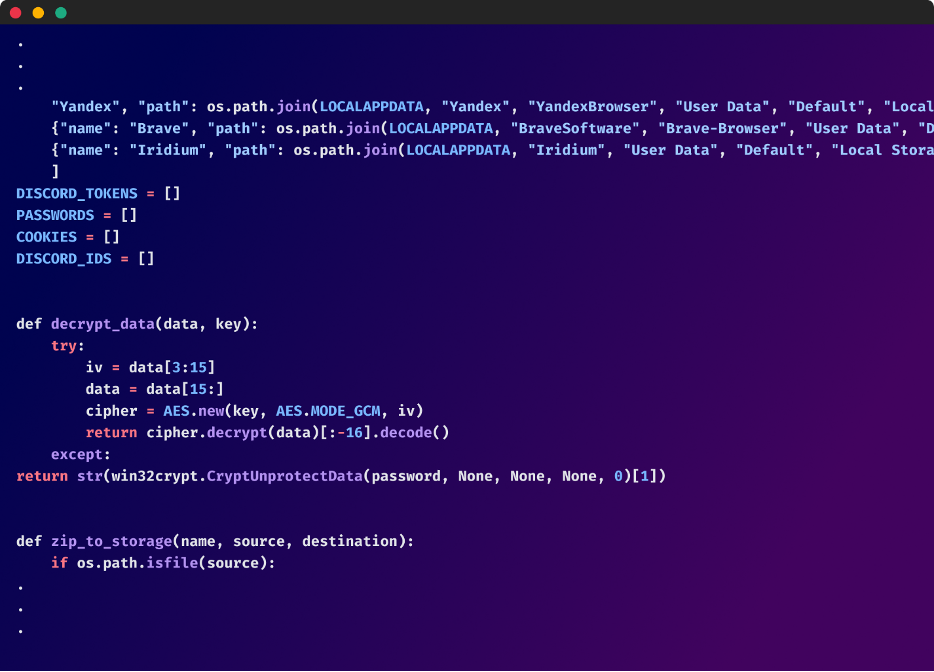
The malicious code is located within each package’s setup.py file, enabling automatic execution upon installation.
In addition, the malicious payload employed a technique where the setup.py file contained obfuscated code that was encrypted using the Fernet encryption module. When the package was installed, the obfuscated code was automatically executed, triggering the malicious payload.
Checkmarx
Upon execution, the malicious code within the setup.py file attempted to retrieve an additional payload from a remote server. The URL for the payload was dynamically constructed by appending the package name as a query parameter.
The retrieved payload was also encrypted using the Fernet module. Once decrypted, the payload revealed an extensive info-stealer designed to harvest sensitive information from the victim’s machine.
The malicious payload also employed a persistence mechanism to ensure it remained active on the compromised system even after the initial execution.
Enlarge/ Screenshot showing code that allows persistence.
Checkmarx
Besides using typosquatting and a similar technique known as brandjacking to trick developers into installing malicious packages, threat actors also employ dependency confusion. The technique works by uploading malicious packages to public code repositories and giving them a name that’s identical to a package stored in the target developer’s internal repository that one or more of the developer’s apps depend on to work. Developers’ software management apps often favor external code libraries over internal ones, so they download and use the malicious package rather than the trusted one. In 2021, a researcher used a similar technique to successfully execute counterfeit code on networks belonging to Apple, Microsoft, Tesla, and dozens of other companies.
There are no sure-fire ways to guard against such attacks. Instead, it’s incumbent on developers to meticulously check and double-check packages before installing them, paying close attention to every letter in a name.
Thousands of servers storing AI workloads and network credentials have been hacked in an ongoing attack campaign targeting a reported vulnerability in Ray, a computing framework used by OpenAI, Uber, and Amazon.
The attacks, which have been active for at least seven months, have led to the tampering of AI models. They have also resulted in the compromise of network credentials, allowing access to internal networks and databases and tokens for accessing accounts on platforms including OpenAI, Hugging Face, Stripe, and Azure. Besides corrupting models and stealing credentials, attackers behind the campaign have installed cryptocurrency miners on compromised infrastructure, which typically provides massive amounts of computing power. Attackers have also installed reverse shells, which are text-based interfaces for remotely controlling servers.
Hitting the jackpot
“When attackers get their hands on a Ray production cluster, it is a jackpot,” researchers from Oligo, the security firm that spotted the attacks, wrote in a post. “Valuable company data plus remote code execution makes it easy to monetize attacks—all while remaining in the shadows, totally undetected (and, with static security tools, undetectable).”
Among the compromised sensitive information are AI production workloads, which allow the attackers to control or tamper with models during the training phase and, from there, corrupt the models’ integrity. Vulnerable clusters expose a central dashboard to the Internet, a configuration that allows anyone who looks for it to see a history of all commands entered to date. This history allows an intruder to quickly learn how a model works and what sensitive data it has access to.
Oligo captured screenshots that exposed sensitive private data and displayed histories indicating the clusters had been actively hacked. Compromised resources included cryptographic password hashes and credentials to internal databases and to accounts on OpenAI, Stripe, and Slack.
Kuberay Operator running with Administrator permissions on the Kubernetes API.
Password hashes accessed
Production database credentials
AI model in action: handling a query submitted by a user in real time. The model could be abused by the attacker, who could potentially modify customer requests or responses.
Tokens for OpenAI, Stripe, Slack, and database credentials.
Cluster Dashboard with Production workloads and active tasks
Ray is an open source framework for scaling AI apps, meaning allowing huge numbers of them to run at once in an efficient manner. Typically, these apps run on huge clusters of servers. Key to making all of this work is a central dashboard that provides an interface for displaying and controlling running tasks and apps. One of the programming interfaces available through the dashboard, known as the Jobs API, allows users to send a list of commands to the cluster. The commands are issued using a simple HTTP request requiring no authentication.
Last year, researchers from security firm Bishop Fox flagged the behavior as a high-severity code-execution vulnerability tracked as CVE-2023-48022.
A distributed execution framework
“In the default configuration, Ray does not enforce authentication,” wrote Berenice Flores Garcia, a senior security consultant at Bishop Fox. “As a result, attackers may freely submit jobs, delete existing jobs, retrieve sensitive information, and exploit the other vulnerabilities described in this advisory.”
Anyscale, the developer and maintainer of Ray, responded by disputing the vulnerability. Anyscale officials said they have always held out Ray as framework for remotely executing code and as a result, have long advised it should be properly segmented inside a properly secured network.
“Due to Ray’s nature as a distributed execution framework, Ray’s security boundary is outside of the Ray cluster,” Anyscale officials wrote. “That is why we emphasize that you must prevent access to your Ray cluster from untrusted machines (e.g., the public Internet).”
The Anyscale response said the reported behavior in the jobs API wasn’t a vulnerability and wouldn’t be addressed in a near-term update. The company went on to say it would eventually introduce a change that would enforce authentication in the API. It explained:
We have considered very seriously whether or not something like that would be a good idea, and to date have not implemented it for fear that our users would put too much trust into a mechanism that might end up providing the facade of security without properly securing their clusters in the way they imagined.
That said, we recognize that reasonable minds can differ on this issue, and consequently have decided that, while we still do not believe that an organization should rely on isolation controls within Ray like authentication, there can be value in certain contexts in furtherance of a defense-in-depth strategy, and so we will implement this as a new feature in a future release.
Critics of the Anyscale response have noted that repositories for streamlining the deployment of Ray in cloud environments bind the dashboard to 0.0.0.0, an address used to designate all network interfaces and to designate port forwarding on the same address. One such beginner boilerplate is available on the Anyscale website itself. Another example of a publicly available vulnerable setup is here.
Critics also note Anyscale’s contention that the reported behavior isn’t a vulnerability has prevented many security tools from flagging attacks.
An Anyscale representative said in an email the company plans to publish a script that will allow users to easily verify whether their Ray instances are exposed to the Internet or not.
The ongoing attacks underscore the importance of properly configuring Ray. In the links provided above, Oligo and Anyscale list practices that are essential to locking down clusters. Oligo also provided a list of indicators Ray users can use to determine if their instances have been compromised.
Crooks are working overtime to anonymize their illicit online activities using thousands of devices of unsuspecting users, as evidenced by two unrelated reports published Tuesday.
The first, from security firm Lumen Labs, reports that roughly 40,000 home and office routers have been drafted into a criminal enterprise that anonymizes illicit Internet activities, with another 1,000 new devices being added each day. The malware responsible is a variant of TheMoon, a malicious code family dating back to at least 2014. In its earliest days, TheMoon almost exclusively infected Linksys E1000 series routers. Over the years it branched out to targeting the Asus WRTs, Vivotek Network Cameras, and multiple D-Link models.
In the years following its debut, TheMoon’s self-propagating behavior and growing ability to compromise a broad base of architectures enabled a growth curve that captured attention in security circles. More recently, the visibility of the Internet of Things botnet trailed off, leading many to assume it was inert. To the surprise of researchers in Lumen’s Black Lotus Lab, during a single 72-hour stretch earlier this month, TheMoon added 6,000 ASUS routers to its ranks, an indication that the botnet is as strong as it’s ever been.
More stunning than the discovery of more than 40,000 infected small office and home office routers located in 88 countries is the revelation that TheMoon is enrolling the vast majority of the infected devices into Faceless, a service sold on online crime forums for anonymizing illicit activities. The proxy service gained widespread attention last year following this profile by KrebsOnSecurity.
“This global network of compromised SOHO routers gives actors the ability to bypass some standard network-based detection tools—especially those based on geolocation, autonomous system-based blocking, or those that focus on TOR blocking,” Black Lotus researchers wrote Tuesday. They added that “80 percent of Faceless bots are located in the United States, implying that accounts and organizations within the US are primary targets. We suspect the bulk of the criminal activity is likely password spraying and/or data exfiltration, especially toward the financial sector.”
The researchers went on to say that more traditional ways to anonymize illicit online behavior may have fallen out of favor with some criminals. VPNs, for instance, may log user activity despite some service providers’ claims to the contrary. The researchers say that the potential for tampering with the Tor anonymizing browser may also have scared away some users.
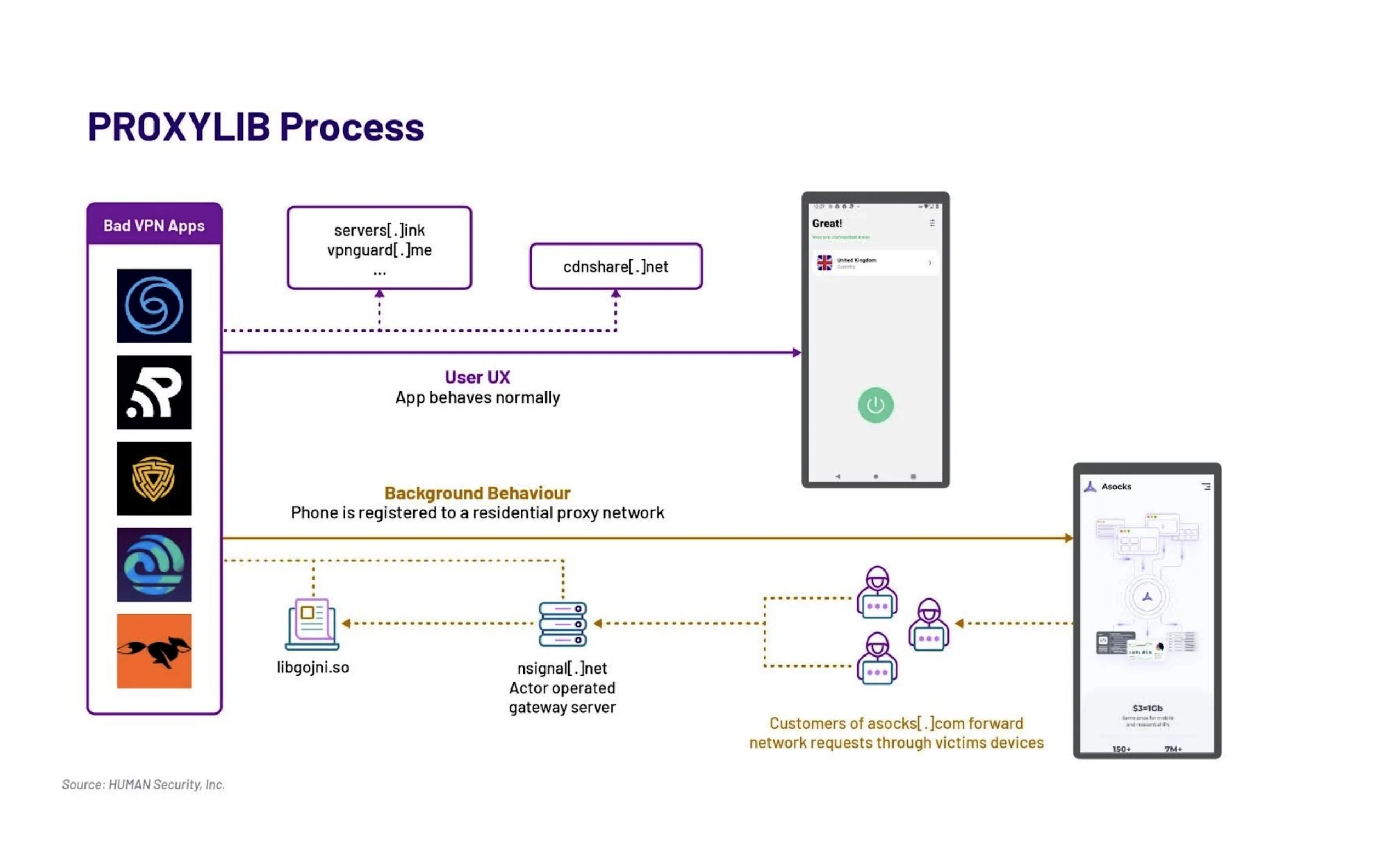
The second post came from Satori Intelligence, the research arm of security firm HUMAN. It reported finding 28 apps available in Google Play that, unbeknownst to users, enrolled their devices into a residential proxy network of 190,000 nodes at its peak for anonymizing and obfuscating the Internet traffic of others.
HUMAN
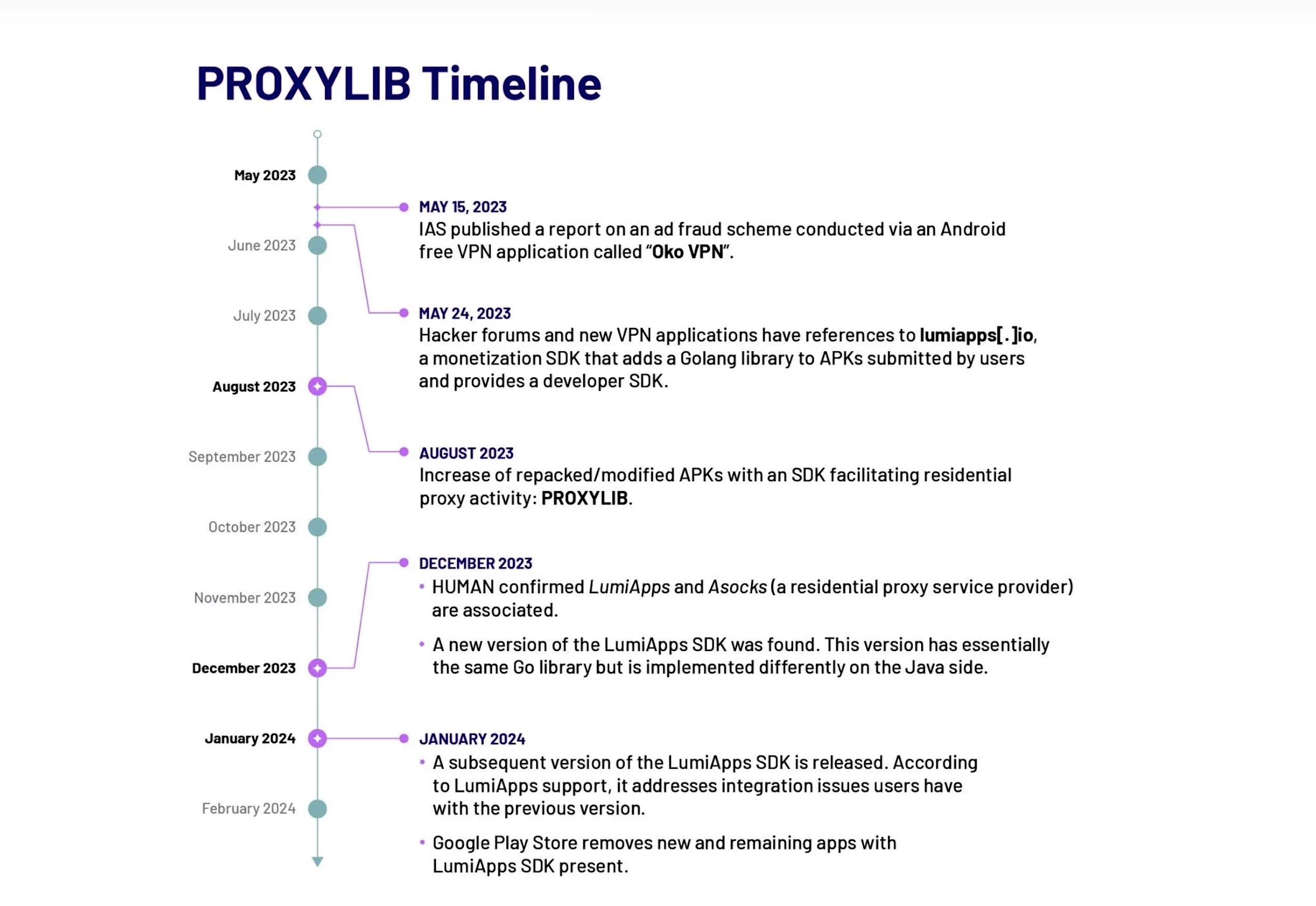
ProxyLib, the name Satori gave to the network, has its roots in Oko VPN, an app that was removed from Play last year after being revealed using infected devices for ad fraud. The 28 apps Satori discovered all copied the Oko VPN code, which made them nodes in the residential proxy service Asock.
HUMAN
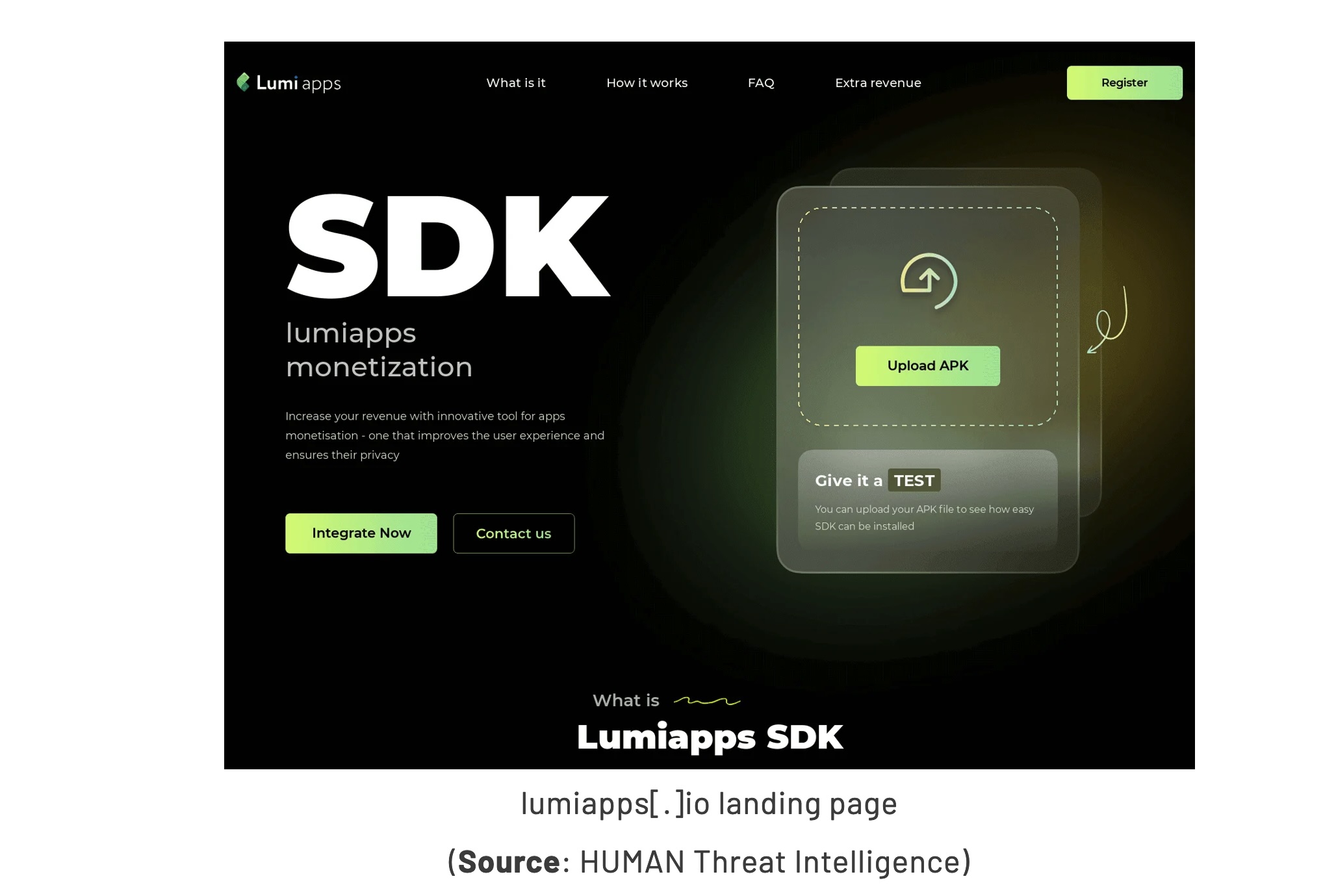
The researchers went on to identify a second generation of ProxyLib apps developed through lumiapps[.]io, a software developer kit deploying exactly the same functionality and using the same server infrastructure as Oko VPN. The LumiApps SDK allows developers to integrate their custom code into a library to automate standard processes. It also allows developers to do so without having to create a user account or having to recompile code. Instead they can upload their custom code and then download a new version.
HUMAN
“Satori has observed individuals using the LumiApps toolkit in the wild,” researchers wrote. “Most of the applications we identified between May and October 2023 appear to be modified versions of known legitimate applications, further indicating that users do not necessarily need to have access to the applications’ source code in order to modify them using LumiApps. These apps are largely named as ‘mods’ or indicated as patched versions and shared outside of the Google Play Store.”
The researchers don’t know if the 190,000 nodes comprising Asock at its peak were made up exclusively of infected Android devices or if they included other types of devices compromised through other means. Either way, the number indicates the popularity of anonymous proxies.
People who want to prevent their devices from being drafted into such networks should take a few precautions. The first is to resist the temptation to keep using devices once they’re no longer supported by the manufacturer. Most of the devices swept into TheMoon, for instance, have reached end-of-life status, meaning they no longer receive security updates. It’s also important to install security updates in a timely manner and to disable UPnP unless there’s a good reason for it remaining on and then allowing it only for needed ports. Users of Android devices should install apps sparingly and then only after researching the reputation of both the app and the app maker.
The US Justice Department on Monday unsealed an indictment charging seven men with hacking or attempting to hack dozens of US companies in a 14-year campaign furthering an economic espionage and foreign intelligence gathering by the Chinese government.
All seven defendants, federal prosecutors alleged, were associated with Wuhan Xiaoruizhi Science & Technology Co., Ltd. a front company created by the Hubei State Security Department, an outpost of the Ministry of State Security located in Wuhan province. The MSS, in turn, has funded an advanced persistent threat group tracked under names including APT31, Zirconium Violet Typhoon, Judgment Panda, and Altaire.
Relentless 14-year campaign
“Since at least 2010, the defendants … engaged in computer network intrusion activity on behalf of the HSSD targeting numerous US government officials, various US economic and defense industries and a variety of private industry officials, foreign democracy activists, academics and parliamentarians in response to geopolitical events affecting the PRC,” federal prosecutors alleged. “These computer network intrusion activities resulted in the confirmed and potential compromise of work and personal email accounts, cloud storage accounts and telephone call records belonging to millions of Americans, including at least some information that could be released in support of malign influence targeting democratic processes and institutions, and economic plans, intellectual property, and trade secrets belonging to American businesses, and contributed to the estimated billions of dollars lost every year as a result of the PRC’s state-sponsored apparatus to transfer US technology to the PRC.”
The relentless, 14-year campaign targeted thousands of individuals and dozens of companies through the use of zero-day attacks, website vulnerability exploitation, and the targeting of home routers and personal devices of high-ranking US government officials and politicians and election campaign staff from both major US political parties.
“The targeted US government officials included individuals working in the White House, at the Departments of Justice, Commerce, Treasury and State, and US Senators and Representatives of both political parties,” Justice Department officials said. “The defendants and others in the APT31 Group targeted these individuals at both professional and personal email addresses. Additionally in some cases, the defendants also targeted victims’ spouses, including the spouses of a high-ranking Department of Justice official, high-ranking White House officials and multiple United States Senators. Targets also included election campaign staff from both major US political parties in advance of the 2020 election.”
One technique the defendants allegedly used was the sending of emails to journalists, political officials, and companies. The messages, which were made to appear as originating from news outlets or journalists, contained hidden tracking links, which, when activated, gave APT31 members information about the locations, IP addresses, network schematics, and specific devices of the targets for use in follow-on attacks. Some of the targets of these emails included foreign government officials who were part of the Inter-Parliamentary Alliance on China, a group formed after the 1989 Tiananmen Square massacre that’s critical of the Chinese government; every European Union member of that’s a member of that group; and 43 UK parliamentary accounts part of the group or critical of the People’s Republic of China.
APT31 used a variety of methods to infect networks of interest with custom malware such as RAWDOOR, Trochilus, EvilOSX, DropDoor/DropCa, and later the widely available Cobalt Strike Beacon security testing tool. In late 2016, the hacking group exploited what was then a zero-day vulnerability in unnamed software to gain access to an unidentified defense contractor. In their indictment, prosecutors wrote:
Using the zero-day privilege escalation exploit, the Conspirators first obtained administrator access to a subsidiary’s network before ultimately pivoting into the Defense Contractor’s core corporate network,” prosecutors wrote in the indictment. “The Conspirators used a SQL injection, in which they entered malicious code into a web form input box to gain access to information that was not intended to be displayed, to create an account on the subsidiary’s network with the username “testdew23.” The Conspirators used malicious software to grant administrator privileges to the “testdew23” user account. Next, the Conspirators uploaded a web shell, or a script that enables remote administration of the computer, named “Welcome to Chrome,” onto the subsidiary’s web server. Thereafter, the Conspirators used the web shell to upload and execute at least two malicious files on the web server, which were configured to open a connection between the victim’s network and computers outside that network that were controlled by the Conspirators. Through this method, the Conspirators successfully gained unauthorized access to the Defense Contractor’s network.
Other APT31 targets include military contractors and companies in the aerospace, IT services, software, telecommunications, manufacturing, and financial services industries. APT31 has long been known to target not only individuals and entities with information of primary interest but also companies or services that the primary targets rely on. Primary targets were dissidents and critics of the PRC and Western companies in possession of technical information of value to the PRC.
Prosecutors said targets successfully hacked by APT31 include:
a cleared defense contractor based in Oklahoma that designed and manufactured military flight simulators for the US military
a cleared aerospace and defense contractor based in Tennessee
an Alabama-based research corporation in the aerospace and defense industries
a Maryland-based professional support services company that serviced the Department of Defense and other government agencies
a leading American manufacturer of software and computer services based in California
a leading global provider of wireless technology based in Illinois; a technology company based in New York
a software company servicing the industrial controls industry based in California
an IT consulting company based in California; an IT services and spatial processing company based in Colorado
a multifactor authentication company; an American trade association
multiple information technology training and support companies
a leading provider of 5G network equipment in the United States
an IT solutions and 5G integration service company based in Idaho
a telecommunications company based in Illinois
a voice technology company headquartered in California;
a prominent trade organization with offices in New York and elsewhere
a manufacturing association based in Washington, DC
a steel company
an apparel company based in New York
an engineering company based in California
an energy company based in Texas
a finance company headquartered in New York
A US multi-national management consulting company with offices in Washington, DC, and elsewhere
a financial ratings company based in New York
an advertising agency based in New York
a consulting company based in Virginia;
multiple global law firms based in New York and throughout the United States
a law firm software provider
a machine learning laboratory based in Virginia
a university based in California
multiple research hospitals and institutes located in New York and Massachusetts
an international non-profit organization headquartered in Washington, DC.
The defendants are:
Ni Gaobin (倪高彬), age 38
Weng Ming (翁明), 37
Cheng Feng (程锋), 34
Peng Yaowen (彭耀文), 38
Sun Xiaohui (孙小辉), 38
Xiong Wang (熊旺), 35
Zhao Guangzong (赵光宗), 38
The men were charged with conspiracy to commit computer intrusions and conspiracy to commit wire fraud. While none of the men are in US custody or likely to face prosecution, the US Department of Treasury on Monday sanctioned Wuhan Xiaoruizhi Science and Technology Company, Limited. The department also designated Zhao Guangzong and Ni Gaobin for their roles in hacks targeting US critical infrastructure.
“As a result of today’s action, all property and interests in property of the designated persons and entity described above that are in the United States or in the possession or control of US persons are blocked and must be reported to OFAC,” Treasury officials wrote. “In addition, any entities that are owned, directly or indirectly, individually or in the aggregate, 50 percent or more by one or more blocked persons are also blocked. Unless authorized by a general or specific license issued by OFAC, or exempt, OFAC’s regulations generally prohibit all transactions by US persons or within (or transiting) the United States that involve any property or interests in property of designated or otherwise blocked persons.”
The US State Department is offering $10 million for information leading to the identification or location of any of the defendants or others associated with the campaign.
When thousands of security researchers descend on Las Vegas every August for what’s come to be known as “hacker summer camp,” the back-to-back Black Hat and Defcon hacker conferences, it’s a given that some of them will experiment with hacking the infrastructure of Vegas itself, the city’s elaborate array of casino and hospitality technology. But at one private event in 2022, a select group of researchers were actually invited to hack a Vegas hotel room, competing in a suite crowded with their laptops and cans of Red Bull to find digital vulnerabilities in every one of the room’s gadgets, from its TV to its bedside VoIP phone.
One team of hackers spent those days focused on the lock on the room’s door, perhaps its most sensitive piece of technology of all. Now, more than a year and a half later, they’re finally bringing to light the results of that work: a technique they discovered that would allow an intruder to open any of millions of hotel rooms worldwide in seconds, with just two taps.
Today, Ian Carroll, Lennert Wouters, and a team of other security researchers are revealing a hotel keycard hacking technique they call Unsaflok. The technique is a collection of security vulnerabilities that would allow a hacker to almost instantly open several models of Saflok-brand RFID-based keycard locks sold by the Swiss lock maker Dormakaba. The Saflok systems are installed on 3 million doors worldwide, inside 13,000 properties in 131 countries.
By exploiting weaknesses in both Dormakaba’s encryption and the underlying RFID system Dormakaba uses, known as MIFARE Classic, Carroll and Wouters have demonstrated just how easily they can open a Saflok keycard lock. Their technique starts with obtaining any keycard from a target hotel—say, by booking a room there or grabbing a keycard out of a box of used ones—then reading a certain code from that card with a $300 RFID read-write device, and finally writing two keycards of their own. When they merely tap those two cards on a lock, the first rewrites a certain piece of the lock’s data, and the second opens it.
“Two quick taps and we open the door,” says Wouters, a researcher in the Computer Security and Industrial Cryptography group at the KU Leuven University in Belgium. “And that works on every door in the hotel.”
Wouters and Carroll, an independent security researcher and founder of travel website Seats.aero, shared the full technical details of their hacking technique with Dormakaba in November 2022. Dormakaba says that it’s been working since early last year to make hotels that use Saflok aware of their security flaws and to help them fix or replace the vulnerable locks. For many of the Saflok systems sold in the last eight years, there’s no hardware replacement necessary for each individual lock. Instead, hotels will only need to update or replace the front desk management system and have a technician carry out a relatively quick reprogramming of each lock, door by door.
Wouters and Carroll say they were nonetheless told by Dormakaba that, as of this month, only 36 percent of installed Safloks have been updated. Given that the locks aren’t connected to the Internet and some older locks will still need a hardware upgrade, they say the full fix will still likely take months longer to roll out, at the very least. Some older installations may take years.