sam altman

sam-altman-finally-stood-up-to-elon-musk-after-years-of-x-trolling

Sam Altman finally stood up to Elon Musk after years of X trolling


Elon Musk and Sam Altman are beefing. But their relationship is complicated.

Credit: Aurich Lawson | Getty Images

Credit: Aurich Lawson | Getty Images

Much attention was paid to OpenAI’s Sam Altman and xAI’s Elon Musk trading barbs on X this week after Musk threatened to sue Apple over supposedly biased App Store rankings privileging ChatGPT over Grok.

But while the heated social media exchanges were among the most tense ever seen between the two former partners who cofounded OpenAI—more on that below—it seems likely that their jabs were motivated less by who’s in the lead on Apple’s “Must Have” app list than by an impending order in a lawsuit that landed in the middle of their public beefing.

Yesterday, a court ruled that OpenAI can proceed with claims that Musk was so incredibly stung by OpenAI’s success after his exit didn’t doom the nascent AI company that he perpetrated a “years-long harassment campaign” to take down OpenAI.

Musk’s motivation? To clear the field for xAI to dominate the AI industry instead, OpenAI alleged.

OpenAI’s accusations arose as counterclaims in a lawsuit that Musk initially filed in 2024. Musk has alleged that Altman and OpenAI had made a “fool” of Musk, goading him into $44 million in donations by “preying on Musk’s humanitarian concern about the existential dangers posed by artificial intelligence.”

But OpenAI insists that Musk’s lawsuit is just one prong in a sprawling, “unlawful,” and “unrelenting” harassment campaign that Musk waged to harm OpenAI’s business by forcing the company to divert resources or expend money on things like withdrawn legal claims and fake buyouts.

“Musk could not tolerate seeing such success for an enterprise he had abandoned and declared doomed,” OpenAI argued. “He made it his project to take down OpenAI, and to build a direct competitor that would seize the technological lead—not for humanity but for Elon Musk.”

Most significantly, OpenAI alleged that Musk forced OpenAI to entertain a “sham” bid to buy the company in February. Musk then shared details of the bid with The Wall Street Journal to artificially raise the price of OpenAI and potentially spook investors, OpenAI alleged. The company further said that Musk never intended to buy OpenAI and is willing to go to great lengths to mislead the public about OpenAI’s business so he can chip away at OpenAI’s head start in releasing popular generative AI products.

“Musk has tried every tool available to harm OpenAI,” Altman’s company said.

To this day, Musk maintains that Altman pretended that OpenAI would remain a nonprofit serving the public good in order to seize access to Musk’s money and professional connections in its first five years and gain a lead in AI. As Musk sees it, Altman always intended to “betray” these promises in pursuit of personal gains, and Musk is hoping a court will return any ill-gotten gains to Musk and xAI.

In a small win for Musk, the court ruled that OpenAI will have to wait until the first phase of the trial litigating Musk’s claims concludes before the court will weigh OpenAI’s theories on Musk’s alleged harassment campaign. US District Judge Yvonne Gonzalez Rogers noted that all of OpenAI’s counterclaims occurred after the period in which Musk’s claims about a supposed breach of contract occurred, necessitating a division of the lawsuit into two parts. Currently, the jury trial is scheduled for March 30, 2026, presumably after which, OpenAI’s claims can be resolved.

If yesterday’s X clash between the billionaires is any indication, it seems likely that tensions between Altman and Musk will only grow as discovery and expert testimony on Musk’s claims proceed through December.

Whether OpenAI will prevail on its counterclaims is anybody’s guess. Gonzalez Rogers noted that Musk and OpenAI have been hypocritical in arguments raised so far, condemning the “gamesmanship of both sides” as “obvious, as each flip flops.” However, “for the purposes of pleading an unfair or fraudulent business practice, it is sufficient [for OpenAI] to allege that the bid was a sham and designed to mislead,” Gonzalez Rogers said, since OpenAI has alleged the sham bid “ultimately did” harm its business.

In April, OpenAI told the court that the AI company risks “future irreparable harm” if Musk’s alleged campaign continues. Fast-forward to now, and Musk’s legal threat to OpenAI’s partnership with Apple seems to be the next possible front Musk may be exploring to allegedly harass Altman and intimidate OpenAI.

“With every month that has passed, Musk has intensified and expanded the fronts of his campaign against OpenAI,” OpenAI argued. Musk “has proven himself willing to take ever more dramatic steps to seek a competitive advantage for xAI and to harm Altman, whom, in the words of the President of the United States, Musk ‘hates.'”

Tensions escalate as Musk brands Altman a “liar”

On Monday evening, Musk threatened to sue Apple for supposedly favoring ChatGPT in App Store rankings, which he claimed was “an unequivocal antitrust violation.”

Seemingly defending Apple later that night, Altman called Musk’s claim “remarkable,” claiming he’s heard allegations that Musk manipulates “X to benefit himself and his own companies and harm his competitors and people he doesn’t like.”

At 4 am on Tuesday, Musk appeared to lose his cool, firing back a post that sought to exonerate the X owner of any claims that he tweaks his social platform to favor his own posts.

“You got 3M views on your bullshit post, you liar, far more than I’ve received on many of mine, despite me having 50 times your follower count!” Musk responded.

Altman apparently woke up ready to keep the fight going, suggesting that his post got more views as a fluke. He mocked X as running into a “skill issue” or “bots” messing with Musk’s alleged agenda to boost his posts above everyone else. Then, in what may be the most explosive response to Musk yet, Altman dared Musk to double down on his defense, asking, “Will you sign an affidavit that you have never directed changes to the X algorithm in a way that has hurt your competitors or helped your own companies? I will apologize if so.”

Court filings from each man’s legal team show how fast their friendship collapsed. But even as Musk’s alleged harassment campaign started taking shape, their social media interactions show that underlying the legal battles and AI ego wars, the tech billionaires are seemingly hiding profound respect for—and perhaps jealousy of—each other’s accomplishments.

A brief history of Musk and Altman’s feud

Musk and Altman’s friendship started over dinner in July 2015. That’s when Musk agreed to help launch “an AGI project that could become and stay competitive with DeepMind, an AI company under the umbrella of Google,” OpenAI’s filing said. At that time, Musk feared that a private company like Google would never be motivated to build AI to serve the public good.

The first clash between Musk and Altman happened six months later. Altman wanted OpenAI to be formed as a nonprofit, but Musk thought that was not “optimal,” OpenAI’s filing said. Ultimately, Musk was overruled, and he joined the nonprofit as a “member” while also becoming co-chair of OpenAI’s board.

But perhaps the first major disagreement, as Musk tells it, came in 2016, when Altman and Microsoft struck a deal to sell compute to OpenAI at a “steep discount”—”so long as the non-profit agreed to publicly promote Microsoft’s products.” Musk rejected the “marketing ploy,” telling Altman that “this actually made me feel nauseous.”

Next, OpenAI claimed that Musk had a “different idea” in 2017 when OpenAI “began considering an organizational change that would allow supporters not just to donate, but to invest.” Musk wanted “sole control of the new for-profit,” OpenAI alleged, and he wanted to be CEO. The other founders, including Altman, “refused to accept” an “AGI dictatorship” that was “dominated by Musk.”

“Musk was incensed,” OpenAI said, threatening to leave OpenAI over the disagreement, “or I’m just being a fool who is essentially providing free funding for you to create a startup.”

But Musk floated one more idea between 2017 and 2018 before severing ties—offering to sell OpenAI to Tesla so that OpenAI could use Tesla as a “cash cow.” But Altman and the other founders still weren’t comfortable with Musk controlling OpenAI, rejecting the idea and prompting Musk’s exit.

In his filing, Musk tells the story a little differently, however. He claimed that he only “briefly toyed with the idea of using Tesla as OpenAI’s ‘cash cow'” after Altman and others pressured him to agree to a for-profit restructuring. According to Musk, among the last straws was a series of “get-rich-quick schemes” that Altman proposed to raise funding, including pushing a strategy where OpenAI would launch a cryptocurrency that Musk worried threatened the AI company’s credibility.

When Musk left OpenAI, it was “noisy but relatively amicable,” OpenAI claimed. But Musk continued to express discomfort from afar, still donating to OpenAI as Altman grabbed the CEO title in 2019 and created a capped-profit entity that Musk seemed to view as shady.

“Musk asked Altman to make clear to others that he had ‘no financial interest in the for-profit arm of OpenAI,'” OpenAI noted, and Musk confirmed he issued the demand “with evident displeasure.”

Although they often disagreed, Altman and Musk continued to publicly play nice on Twitter (the platform now known as X), casually chatting for years about things like movies, space, and science, including repeatedly joking about Musk’s posts about using drugs like Ambien.

By 2019, it seemed like none of these disagreements had seriously disrupted the friendship. For example, at that time, Altman defended Musk against people rooting against Tesla’s success, writing that “betting against Elon is historically a mistake” and seemingly hyping Tesla by noting that “the best product usually wins.”

The niceties continued into 2021, when Musk publicly praised “nice work by OpenAI” integrating its coding model into GitHub’s AI tool. “It is hard to do useful things,” Musk said, drawing a salute emoji from Altman.

This was seemingly the end of Musk playing nice with OpenAI, though. Soon after ChatGPT’s release in November 2022, Musk allegedly began his attacks, seemingly willing to change his tactics on a whim.

First, he allegedly deemed OpenAI “irrelevant,” predicting it would “obviously” fail. Then, he started sounding alarms, joining a push for a six-month pause on generative AI development. Musk specifically claimed that any model “more advanced than OpenAI’s just-released GPT-4” posed “profound risks to society and humanity,” OpenAI alleged, seemingly angling to pause OpenAI’s development in particular.

However, in the meantime, Musk started “quietly building a competitor,” xAI, without announcing those efforts in March 2023, OpenAI alleged. Allegedly preparing to hobble OpenAI’s business after failing with the moratorium push, Musk had his personal lawyer contact OpenAI and demand “access to OpenAI’s confidential and commercially sensitive internal documents.”

Musk claimed the request was to “ensure OpenAI was not being taken advantage of or corrupted by Microsoft,” but two weeks later, he appeared on national TV, insinuating that OpenAI’s partnership with Microsoft was “improper,” OpenAI alleged.

Eventually, Musk announced xAI in July 2023, and that supposedly motivated Musk to deepen his harassment campaign, “this time using the courts and a parallel, carefully coordinated media campaign,” OpenAI said, as well as his own social media platform.

Musk “supercharges” X attacks

As OpenAI’s success mounted, the company alleged that Musk began specifically escalating his social media attacks on X, including broadcasting to his 224 million followers that “OpenAI is a house of cards” after filing his 2024 lawsuit.

Claiming he felt conned, Musk also pressured regulators to probe OpenAI, encouraging attorneys general of California and Delaware to “force” OpenAI, “without legal basis, to auction off its assets for the benefit of Musk and his associates,” OpenAI said.

By 2024, Musk had “supercharged” his X attacks, unleashing a “barrage of invective against the enterprise and its leadership, variously describing OpenAI as a ‘digital Frankenstein’s monster,’ ‘a lie,’ ‘evil,’ and ‘a total scam,'” OpenAI alleged.

These attacks allegedly culminated in Musk’s seemingly fake OpenAI takeover attempt in 2025, which OpenAI claimed a Musk ally, Ron Baron, admitted on CNBC was “pitched to him” as not an attempt to actually buy OpenAI’s assets, “but instead to obtain ‘discovery’ and get ‘behind the wall’ at OpenAI.”

All of this makes it harder for OpenAI to achieve the mission that Musk is supposedly suing to defend, OpenAI claimed. They told the court that “OpenAI has borne costs, and been harmed, by Musk’s abusive tactics and unrelenting efforts to mislead the public for his own benefit and to OpenAI’s detriment and the detriment of its mission.”

But Musk argues that it’s Altman who always wanted sole control over OpenAI, accusing his former partner of rampant self-dealing and “locking down the non-profit’s technology for personal gain” as soon as “OpenAI reached the threshold of commercially viable AI.” He further claimed OpenAI blocked xAI funding by reportedly asking investors to avoid backing rival startups like Anthropic or xAI.

Musk alleged:

Altman alone stands to make billions from the non-profit Musk co-founded and invested considerable money, time, recruiting efforts, and goodwill in furtherance of its stated mission. Altman’s scheme has now become clear: lure Musk with phony philanthropy; exploit his money, stature, and contacts to secure world-class AI scientists to develop leading technology; then feed the non-profit’s lucrative assets into an opaque profit engine and proceed to cash in as OpenAI and Microsoft monopolize the generative AI market.

For Altman, this week’s flare-up, where he finally took a hard jab back at Musk on X, may be a sign that Altman is done letting Musk control the narrative on X after years of somewhat tepidly pushing back on Musk’s more aggressive posts.

In 2022, for example, Musk warned after ChatGPT’s release that the chatbot was “scary good,” warning that “we are not far from dangerously strong AI.” Altman responded, cautiously agreeing that OpenAI was “dangerously” close to “strong AI in the sense of an AI that poses e.g. a huge cybersecurity risk” but “real” artificial general intelligence still seemed at least a decade off.

And Altman gave no response when Musk used Grok’s jokey programming to mock GPT-4 as “GPT-Snore” in 2024.

However, Altman seemingly got his back up after Musk mocked OpenAI’s $500 billion Stargate Project, which launched with the US government in January of this year. On X, Musk claimed that OpenAI doesn’t “actually have the money” for the project, which Altman said was “wrong,” while mockingly inviting Musk to visit the worksite.

“This is great for the country,” Altman said, retorting, “I realize what is great for the country isn’t always what’s optimal for your companies, but in your new role [at the Department of Government Efficiency], I hope you’ll mostly put [America] first.”

It remains to be seen whether Altman wants to keep trading jabs with Musk, who is generally a huge fan of trolling on X. But Altman seems more emboldened this week than he was back in January before Musk’s breakup with Donald Trump. Back then, even when he was willing to push back on Musk’s Stargate criticism by insulting Musk’s politics, he still took the time to let Musk know that he still cares.

“I genuinely respect your accomplishments and think you are the most inspiring entrepreneur of our time,” Altman told Musk in January.

Photo of Ashley Belanger

Ashley is a senior policy reporter for Ars Technica, dedicated to tracking social impacts of emerging policies and new technologies. She is a Chicago-based journalist with 20 years of experience.

Sam Altman finally stood up to Elon Musk after years of X trolling Read More »

openai-brings-back-gpt-4o-after-user-revolt

OpenAI brings back GPT-4o after user revolt

On Tuesday, OpenAI CEO Sam Altman announced that GPT-4o has returned to ChatGPT following intense user backlash over its removal during last week’s GPT-5 launch. The AI model now appears in the model picker for all paid ChatGPT users by default (including ChatGPT Plus accounts), marking a swift reversal after thousands of users complained about losing access to their preferred models.

The return of GPT-4o comes after what Altman described as OpenAI underestimating “how much some of the things that people like in GPT-4o matter to them.” In an attempt to simplify its offerings, OpenAI had initially removed all previous AI models from ChatGPT when GPT-5 launched on August 7, forcing users to adopt the new model without warning. The move sparked one of the most vocal user revolts in ChatGPT’s history, with a Reddit thread titled “GPT-5 is horrible” gathering over 2,000 comments within days.

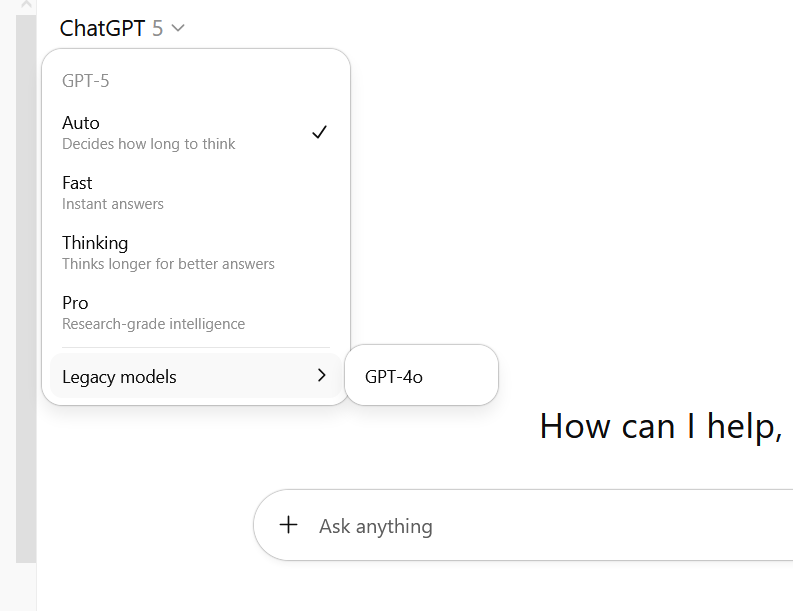
Along with bringing back GPT-4o, OpenAI made several other changes to address user concerns. Rate limits for GPT-5 Thinking mode increased from 200 to 3,000 messages per week, with additional capacity available through “GPT-5 Thinking mini” after reaching that limit. The company also added new routing options—”Auto,” “Fast,” and “Thinking”—giving users more control over which GPT-5 variant handles their queries.

A screenshot of ChatGPT Pro's model picker interface captured on August 13, 2025.

A screenshot of ChatGPT Pro’s model picker interface captured on August 13, 2025. Credit: Benj Edwards

For Pro users who pay $200 a month for access, Altman confirmed that additional models, including o3, 4.1, and GPT-5 Thinking mini, will later become available through a “Show additional models” toggle in ChatGPT web settings. He noted that GPT-4.5 will remain exclusive to Pro subscribers due to high GPU costs.

OpenAI brings back GPT-4o after user revolt Read More »

openai’s-most-capable-ai-model,-gpt-5,-may-be-coming-in-august

OpenAI’s most capable AI model, GPT-5, may be coming in August

References to “gpt-5-reasoning-alpha-2025-07-13” have already been spotted on X, with code showing “reasoning_effort: high” in the model configuration. These sightings suggest the model has entered final testing phases, with testers getting their hands on the code and security experts doing red teaming on the model to test vulnerabilities.

Unifying OpenAI’s model lineup

The new model represents OpenAI’s attempt to simplify its increasingly complex product lineup. As Altman explained in February, GPT-5 may integrate features from both the company’s conventional GPT models and its reasoning-focused o-series models into a single system.

“We’re truly excited to not just make a net new great frontier model, we’re also going to unify our two series,” OpenAI’s Head of Developer Experience Romain Huet said at a recent event. “The breakthrough of reasoning in the O-series and the breakthroughs in multi-modality in the GPT-series will be unified, and that will be GPT-5.”

According to The Information, GPT-5 is expected to be better at coding and more powerful overall, combining attributes of both traditional models and SR models such as o3.

Before GPT-5 arrives, OpenAI still plans to release its first open-weights model since GPT-2 in 2019, which means others with the proper hardware will be able to download and run the AI model on their own machines. The Verge describes this model as “similar to o3 mini” with reasoning capabilities. However, Altman announced on July 11 that the open model needs additional safety testing, saying, “We are not yet sure how long it will take us.”

OpenAI’s most capable AI model, GPT-5, may be coming in August Read More »

openai-and-partners-are-building-a-massive-ai-data-center-in-texas

OpenAI and partners are building a massive AI data center in Texas

Stargate moves forward despite early skepticism

When OpenAI announced Stargate in January, critics questioned whether the company could deliver on its ambitious $500 billion funding promise. Trump ally and frequent Altman foe Elon Musk wrote on X that “They don’t actually have the money,” claiming that “SoftBank has well under $10B secured.”

Tech writer and frequent OpenAI critic Ed Zitron raised concerns about OpenAI’s financial position, noting the company’s $5 billion in losses in 2024. “This company loses $5bn+ a year! So what, they raise $19bn for Stargate, then what, another $10bn just to be able to survive?” Zitron wrote on Bluesky at the time.

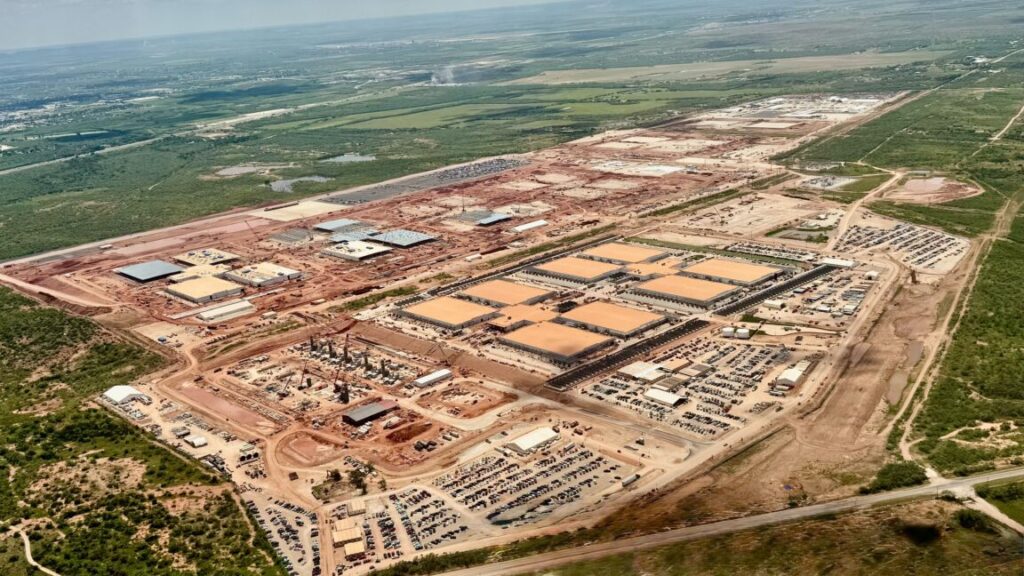
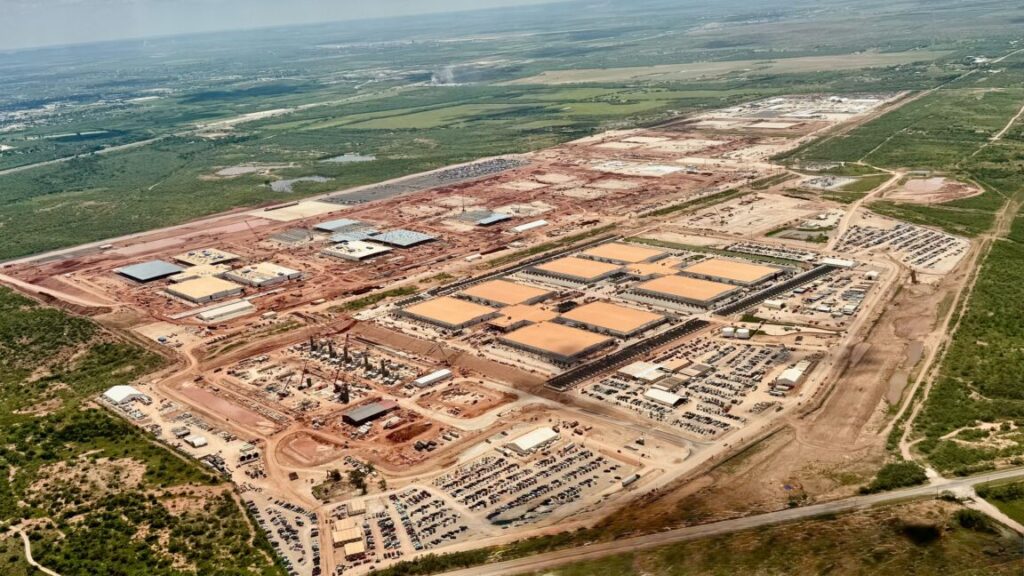
Six months later, OpenAI’s Abilene data center has moved from construction to partial operation. Oracle began delivering Nvidia GB200 racks to the facility last month, and OpenAI reports it has started running early training and inference workloads to support what it calls “next-generation frontier research.”

Despite the White House announcement with President Trump in January, the Stargate concept dates back to March 2024, when Microsoft and OpenAI partnered on a $100 billion supercomputer as part of a five-phase plan. Over time, the plan evolved into its current form as a partnership with Oracle, SoftBank, and CoreWeave.

“Stargate is an ambitious undertaking designed to meet the historic opportunity in front of us,” writes OpenAI in the press release announcing the latest deal. “That opportunity is now coming to life through strong support from partners, governments, and investors worldwide—including important leadership from the White House, which has recognized the critical role AI infrastructure will play in driving innovation, economic growth, and national competitiveness.”

OpenAI and partners are building a massive AI data center in Texas Read More »

chatgpt’s-new-ai-agent-can-browse-the-web-and-create-powerpoint-slideshows

ChatGPT’s new AI agent can browse the web and create PowerPoint slideshows

On Thursday, OpenAI launched ChatGPT Agent, a new feature that lets the company’s AI assistant complete multi-step tasks by controlling its own web browser. The update merges capabilities from OpenAI’s earlier Operator tool and the Deep Research feature, allowing ChatGPT to navigate websites, run code, and create documents while users maintain control over the process.

The feature marks OpenAI’s latest entry into what the tech industry calls “agentic AI“—systems that can take autonomous multi-step actions on behalf of the user. OpenAI says users can ask Agent to handle requests like assembling and purchasing a clothing outfit for a particular occasion, creating PowerPoint slide decks, planning meals, or updating financial spreadsheets with new data.

The system uses a combination of web browsers, terminal access, and API connections to complete these tasks, including “ChatGPT Connectors” that integrate with apps like Gmail and GitHub.

While using Agent, users watch a window inside the ChatGPT interface that shows all of the AI’s actions taking place inside its own private sandbox. This sandbox features its own virtual operating system and web browser with access to the real Internet; it does not control your personal device. “ChatGPT carries out these tasks using its own virtual computer,” OpenAI writes, “fluidly shifting between reasoning and action to handle complex workflows from start to finish, all based on your instructions.”

A still image from an OpenAI ChatGPT Agent promotional demo video showing the AI agent searching for flights.

A still image from an OpenAI ChatGPT Agent promotional demo video showing the AI agent searching for flights. Credit: OpenAI

Like Operator before it, the agent feature requires user permission before taking certain actions with real-world consequences, such as making purchases. Users can interrupt tasks at any point, take control of the browser, or stop operations entirely. The system also includes a “Watch Mode” for tasks like sending emails that require active user oversight.

Since Agent surpasses Operator in capability, OpenAI says the company’s earlier Operator preview site will remain functional for a few more weeks before being shut down.

Performance claims

OpenAI’s claims are one thing, but how well the company’s new AI agent will actually complete multi-step tasks will vary wildly depending on the situation. That’s because the AI model isn’t a complete form of problem-solving intelligence, but rather a complex master imitator. It has some flexibility in piecing a scenario together but also many blind spots. OpenAI trained the agent (and its constituent components) using examples of computer usage and tool usage; whatever falls outside of the examples absorbed from training data will likely still prove difficult to accomplish.

ChatGPT’s new AI agent can browse the web and create PowerPoint slideshows Read More »

apple-legend-jony-ive-takes-control-of-openai’s-design-future

Apple legend Jony Ive takes control of OpenAI’s design future

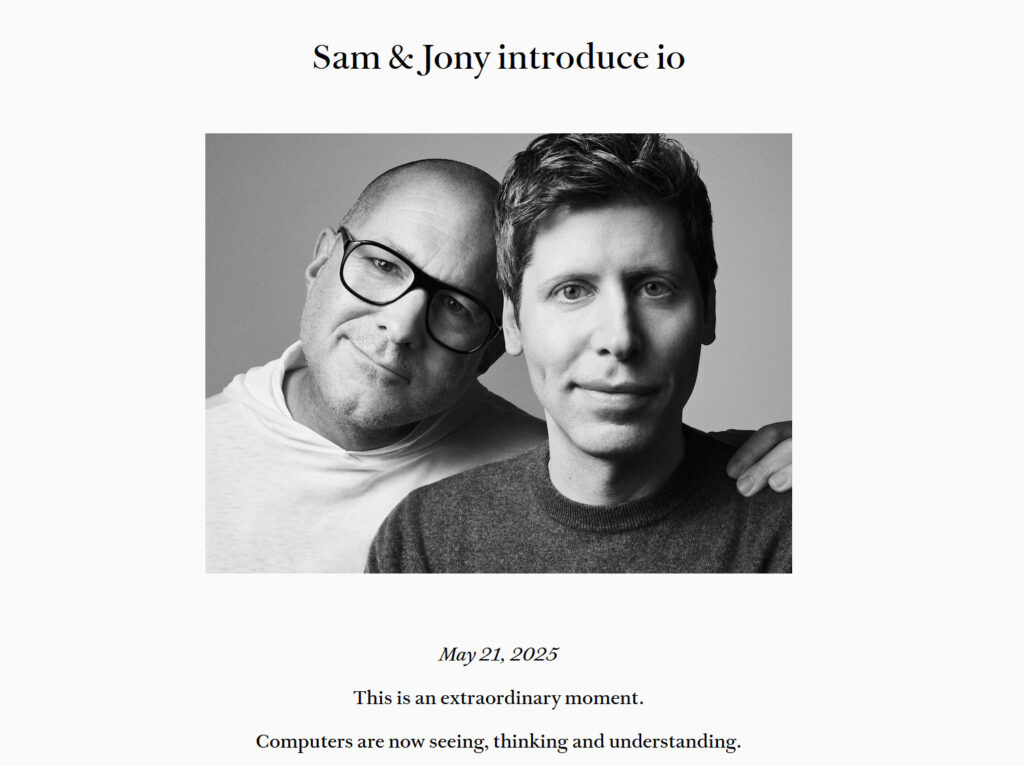
On Wednesday, OpenAI announced that former Apple design chief Jony Ive and his design firm LoveFrom will take over creative and design control at OpenAI. The deal makes Ive responsible for shaping the future look and feel of AI products at the chatbot creator, extending across all of the company’s ventures, including ChatGPT.

Ive was Apple’s chief design officer for nearly three decades, where he led the design of iconic products including the iPhone, iPad, MacBook, and Apple Watch, earning numerous industry awards and helping transform Apple into the world’s most valuable company through his minimalist design philosophy.

“Thrilled to be partnering with jony, imo the greatest designer in the world,” tweeted OpenAI CEO Sam Altman while sharing a 9-minute promotional video touting the personal and professional relationship between Ive and Altman.

A screenshot of the Jony Ive / Sam Altman collaboration website captured on May 21, 2025.

A screenshot of the Jony Ive/Sam Altman collaboration website captured on May 21, 2025. Credit: OpenAI

Ive left Apple in 2019 to found LoveFrom, a design firm that has worked with companies including Ferrari, Airbnb, and luxury Italian fashion firm Moncler.

The mechanics of the Ive-OpenAI deal are slightly convoluted. At its core, OpenAI will acquire Ive’s company “io” in an all-equity deal valued at $6.5 billion—Ive founded io last year to design and develop AI-powered products. Meanwhile, io’s staff of approximately 55 engineers, scientists, researchers, physicists, and product development specialists will become part of OpenAI.

Meanwhile, Ive’s design firm LoveFrom will continue to operate independently, with OpenAI becoming a customer of LoveFrom, while LoveFrom will receive a stake in OpenAI. The companies expect the transaction to close this summer pending regulatory approval.

Apple legend Jony Ive takes control of OpenAI’s design future Read More »

fidji-simo-joins-openai-as-new-ceo-of-applications

Fidji Simo joins OpenAI as new CEO of Applications

In the message, Altman described Simo as bringing “a rare blend of leadership, product and operational expertise” and expressed that her addition to the team makes him “even more optimistic about our future as we continue advancing toward becoming the superintelligence company.”

Simo becomes the newest high-profile female executive at OpenAI following the departure of Chief Technology Officer Mira Murati in September. Murati, who had been with the company since 2018 and helped launch ChatGPT, left alongside two other senior leaders and founded Thinking Machines Lab in February.

OpenAI’s evolving structure

The leadership addition comes as OpenAI continues to evolve beyond its origins as a research lab. In his announcement, Altman described how the company now operates in three distinct areas: as a research lab focused on artificial general intelligence (AGI), as a “global product company serving hundreds of millions of users,” and as an “infrastructure company” building systems that advance research and deliver AI tools “at unprecedented scale.”

Altman mentioned that as CEO of OpenAI, he will “continue to directly oversee success across all pillars,” including Research, Compute, and Applications, while staying “closely involved with key company decisions.”

The announcement follows recent news that OpenAI abandoned its original plan to cede control of its nonprofit branch to a for-profit entity. The company began as a nonprofit research lab in 2015 before creating a for-profit subsidiary in 2019, maintaining its original mission “to ensure artificial general intelligence benefits everyone.”

Fidji Simo joins OpenAI as new CEO of Applications Read More »

openai-scraps-controversial-plan-to-become-for-profit-after-mounting-pressure

OpenAI scraps controversial plan to become for-profit after mounting pressure

The restructuring would have also allowed OpenAI to remove the cap on returns for investors, potentially making the firm more appealing to venture capitalists, with the nonprofit arm continuing to exist but only as a minority stakeholder rather than maintaining governance control. This plan emerged as the company sought a funding round that would value it at $150 billion, which later expanded to the $40 billion round at a $300 billion valuation.

However, the new change in course follows months of mounting pressure from outside the company. In April, a group of legal scholars, AI researchers, and tech industry watchdogs openly opposed OpenAI’s plans to restructure, sending a letter to the attorneys general of California and Delaware.

Former OpenAI employees, Nobel laureates, and law professors also sent letters to state officials requesting that they halt the restructuring efforts out of safety concerns about which part of the company would be in control of hypothetical superintelligent future AI products.

“OpenAI was founded as a nonprofit, is today a nonprofit that oversees and controls the for-profit, and going forward will remain a nonprofit that oversees and controls the for-profit,” he added. “That will not change.”

Uncertainty ahead

While abandoning the restructuring that would have ended nonprofit control, OpenAI still plans to make significant changes to its corporate structure. “The for-profit LLC under the nonprofit will transition to a Public Benefit Corporation (PBC) with the same mission,” Altman explained. “Instead of our current complex capped-profit structure—which made sense when it looked like there might be one dominant AGI effort but doesn’t in a world of many great AGI companies—we are moving to a normal capital structure where everyone has stock. This is not a sale, but a change of structure to something simpler.”

But the plan may cause some uncertainty for OpenAI’s financial future. When OpenAI secured a massive $40 billion funding round in March, it came with strings attached: Japanese conglomerate SoftBank, which committed $30 billion, stipulated that it would reduce its contribution to $20 billion if OpenAI failed to restructure into a fully for-profit entity by the end of 2025.

Despite the challenges ahead, Altman expressed confidence in the path forward: “We believe this sets us up to continue to make rapid, safe progress and to put great AI in the hands of everyone.”

OpenAI scraps controversial plan to become for-profit after mounting pressure Read More »

the-end-of-an-ai-that-shocked-the-world:-openai-retires-gpt-4

The end of an AI that shocked the world: OpenAI retires GPT-4

One of the most influential—and by some counts, notorious—AI models yet released will soon fade into history. OpenAI announced on April 10 that GPT-4 will be “fully replaced” by GPT-4o in ChatGPT at the end of April, bringing a public-facing end to the model that accelerated a global AI race when it launched in March 2023.

“Effective April 30, 2025, GPT-4 will be retired from ChatGPT and fully replaced by GPT-4o,” OpenAI wrote in its April 10 changelog for ChatGPT. While ChatGPT users will no longer be able to chat with the older AI model, the company added that “GPT-4 will still be available in the API,” providing some reassurance to developers who might still be using the older model for various tasks.

The retirement marks the end of an era that began on March 14, 2023, when GPT-4 demonstrated capabilities that shocked some observers: reportedly scoring at the 90th percentile on the Uniform Bar Exam, acing AP tests, and solving complex reasoning problems that stumped previous models. Its release created a wave of immense hype—and existential panic—about AI’s ability to imitate human communication and composition.

A screenshot of GPT-4's introduction to ChatGPT Plus customers from March 14, 2023.

A screenshot of GPT-4’s introduction to ChatGPT Plus customers from March 14, 2023. Credit: Benj Edwards / Ars Technica

While ChatGPT launched in November 2022 with GPT-3.5 under the hood, GPT-4 took AI language models to a new level of sophistication, and it was a massive undertaking to create. It combined data scraped from the vast corpus of human knowledge into a set of neural networks rumored to weigh in at a combined total of 1.76 trillion parameters, which are the numerical values that hold the data within the model.

Along the way, the model reportedly cost more than $100 million to train, according to comments by OpenAI CEO Sam Altman, and required vast computational resources to develop. Training the model may have involved over 20,000 high-end GPUs working in concert—an expense few organizations besides OpenAI and its primary backer, Microsoft, could afford.

Industry reactions, safety concerns, and regulatory responses

Curiously, GPT-4’s impact began before OpenAI’s official announcement. In February 2023, Microsoft integrated its own early version of the GPT-4 model into its Bing search engine, creating a chatbot that sparked controversy when it tried to convince Kevin Roose of The New York Times to leave his wife and when it “lost its mind” in response to an Ars Technica article.

The end of an AI that shocked the world: OpenAI retires GPT-4 Read More »

openai-continues-naming-chaos-despite-ceo-acknowledging-the-habit

OpenAI continues naming chaos despite CEO acknowledging the habit

On Monday, OpenAI announced the GPT-4.1 model family, its newest series of AI language models that brings a 1 million token context window to OpenAI for the first time and continues a long tradition of very confusing AI model names. Three confusing new names, in fact: GPT‑4.1, GPT‑4.1 mini, and GPT‑4.1 nano.

According to OpenAI, these models outperform GPT-4o in several key areas. But in an unusual move, GPT-4.1 will only be available through the developer API, not in the consumer ChatGPT interface where most people interact with OpenAI’s technology.

The 1 million token context window—essentially the amount of text the AI can process at once—allows these models to ingest roughly 3,000 pages of text in a single conversation. This puts OpenAI’s context windows on par with Google’s Gemini models, which have offered similar extended context capabilities for some time.

At the same time, the company announced it will retire the GPT-4.5 Preview model in the API—a temporary offering launched in February that one critic called a “lemon”—giving developers until July 2025 to switch to something else. However, it appears GPT-4.5 will stick around in ChatGPT for now.

So many names

If this sounds confusing, well, that’s because it is. OpenAI CEO Sam Altman acknowledged OpenAI’s habit of terrible product names in February when discussing the roadmap toward the long-anticipated (and still theoretical) GPT-5.

“We realize how complicated our model and product offerings have gotten,” Altman wrote on X at the time, referencing a ChatGPT interface already crowded with choices like GPT-4o, various specialized GPT-4o versions, GPT-4o mini, the simulated reasoning o1-pro, o3-mini, and o3-mini-high models, and GPT-4. The stated goal for GPT-5 will be consolidation, a branding move to unify o-series models and GPT-series models.

So, how does launching another distinctly numbered model, GPT-4.1, fit into that grand unification plan? It’s hard to say. Altman foreshadowed this kind of ambiguity in March 2024, telling Lex Friedman the company had major releases coming but was unsure about names: “before we talk about a GPT-5-like model called that, or not called that, or a little bit worse or a little bit better than what you’d expect…”

OpenAI continues naming chaos despite CEO acknowledging the habit Read More »

elon-musk-wants-to-be-“agi-dictator,”-openai-tells-court

Elon Musk wants to be “AGI dictator,” OpenAI tells court


Elon Musk’s “relentless” attacks on OpenAI must cease, court filing says.

Yesterday, OpenAI counter-sued Elon Musk, alleging that Musk’s “sham” bid to buy OpenAI was intentionally timed to maximally disrupt and potentially even frighten off investments from honest bidders.

Slamming Musk for attempting to become an “AGI dictator,” OpenAI said that if Musk’s allegedly “relentless” yearslong campaign of “harassment” isn’t stopped, Musk could end up taking over OpenAI and tanking its revenue the same way he did with Twitter.

In its filing, OpenAI argued that Musk and the other investors who joined his bid completely fabricated the $97.375 billion offer. It was allegedly not based on OpenAI’s projections or historical performance, like Musk claimed, but instead appeared to be “a comedic reference to Musk’s favorite sci-fi” novel, Iain Banks’ Look to Windward. Musk and others also provided “no evidence of financing to pay the nearly $100 billion purchase price,” OpenAI said.

And perhaps most damning, one of Musk’s backers, Ron Baron, appeared “flustered” when asked about the deal on CNBC, OpenAI alleged. On air, Baron admitted that he didn’t follow the deal closely and that “the point of the bid, as pitched to him (plainly by Musk) was not to buy OpenAI’s assets, but instead to obtain ‘discovery’ and get ‘behind the wall’ at OpenAI,” the AI company’s court filing alleged.

Likely poisoning potential deals most, OpenAI suggested, was the idea that Musk might take over OpenAI and damage its revenue like he did with Twitter. Just the specter of that could repel talent, OpenAI feared, since “the prospect of a Musk takeover means chaos and arbitrary employment action.”

And “still worse, the threat of a Musk takeover is a threat to the very mission of building beneficial AGI,” since xAI is allegedly “the worst offender” in terms of “inadequate safety measures,” according to one study, and X’s chatbot, Grok, has “become a leading spreader of misinformation and inflammatory political rhetoric,” OpenAI said. Even xAI representatives had to admit that users discovering that Grok consistently responds that “President Donald Trump and Musk deserve the death penalty” was a “really terrible and bad failure,” OpenAI’s filing said.

Despite Musk appearing to only be “pretending” to be interested in purchasing OpenAI—and OpenAI ultimately rejecting the offer—the company still had to cover the costs of reviewing the bid. And beyond bearing costs and confronting an artificially raised floor on the company’s valuation supposedly frightening off investors, “a more serious toll” of “Musk’s most recent ploy” would be OpenAI lacking resources to fulfill its mission to benefit humanity with AI “on terms uncorrupted by unlawful harassment and interference,” OpenAI said.

OpenAI has demanded a jury trial and is seeking an injunction to stop Musk’s alleged unfair business practices—which they claimed are designed to impair competition in the nascent AI field “for the sole benefit of Musk’s xAI” and “at the expense of the public interest.”

“The risk of future, irreparable harm from Musk’s unlawful conduct is acute, and the risk that that conduct continues is high,” OpenAI alleged. “With every month that has passed, Musk has intensified and expanded the fronts of his campaign against OpenAI, and has proven himself willing to take ever more dramatic steps to seek a competitive advantage for xAI and to harm [OpenAI CEO Sam] Altman, whom, in the words of the president of the United States, Musk ‘hates.'”

OpenAI also wants Musk to cover the costs it incurred from entertaining the supposedly fake bid, as well as pay punitive damages to be determined at trial for allegedly engaging “in wrongful conduct with malice, oppression, and fraud.”

OpenAI’s filing also largely denies Musk’s claims that OpenAI abandoned its mission and made a fool out of early investors like Musk by currently seeking to restructure its core business into a for-profit benefit corporation (which removes control by its nonprofit board).

“You can’t sue your way to AGI,” an OpenAI blog said.

In response to OpenAI’s filing, Musk’s lawyer, Marc Toberoff, provided a statement to Ars.

“Had OpenAI’s Board genuinely considered the bid, as they were obligated to do, they would have seen just how serious it was,” Toberoff said. “It’s telling that having to pay fair market value for OpenAI’s assets allegedly ‘interferes’ with their business plans. It’s apparent they prefer to negotiate with themselves on both sides of the table than engage in a bona fide transaction in the best interests of the charity and the public interest.”

Musk’s attempt to become an “AGI dictator”

According to OpenAI’s filing, “Musk has tried every tool available to harm OpenAI” ever since OpenAI refused to allow Musk to become an “AGI dictator” and fully control OpenAI by absorbing it into Tesla in 2018.

Musk allegedly “demanded sole control of the new for-profit, at least in the short term: He would be CEO, own a majority equity stake, and control a majority of the board,” OpenAI said. “He would—in his own words—’unequivocally have initial control of the company.'”

At the time, OpenAI rejected Musk’s offer, viewing it as in conflict with its mission to avoid corporate control and telling Musk:

“You stated that you don’t want to control the final AGI, but during this negotiation, you’ve shown to us that absolute control is extremely important to you. … The goal of OpenAI is to make the future good and to avoid an AGI dictatorship. … So it is a bad idea to create a structure where you could become a dictator if you chose to, especially given that we can create some other structure that avoids this possibility.”

This news did not sit well with Musk, OpenAI said.

“Musk was incensed,” OpenAI told the court. “If he could not control the contemplated for-profit entity, he would not participate in it.”

Back then, Musk departed from OpenAI somewhat “amicably,” OpenAI said, although Musk insisted it was “obvious” that OpenAI would fail without him. However, after OpenAI instead became a global AI leader, Musk quietly founded xAI, OpenAI alleged, failing to publicly announce his new company while deceptively seeking a “moratorium” on AI development, apparently to slow down rivals so that xAI could catch up.

OpenAI also alleges that this is when Musk began intensifying his attacks on OpenAI while attempting to poach its top talent and demanding access to OpenAI’s confidential, sensitive information as a former donor and director—”without ever disclosing he was building a competitor in secret.”

And the attacks have only grown more intense since then, said OpenAI, claiming that Musk planted stories in the media, wielded his influence on X, requested government probes into OpenAI, and filed multiple legal claims, including seeking an injunction to halt OpenAI’s business.

“Most explosively,” OpenAI alleged that Musk pushed attorneys general of California and Delaware “to force OpenAI, Inc., without legal basis, to auction off its assets for the benefit of Musk and his associates.”

Meanwhile, OpenAI noted, Musk has folded his social media platform X into xAI, announcing its valuation was at $80 billion and gaining “a major competitive advantage” by getting “unprecedented direct access to all the user data flowing through” X. Further, Musk intends to expand his “Colossus,” which is “believed to be the world’s largest supercomputer,” “tenfold.” That could help Musk “leap ahead” of OpenAI, suggesting Musk has motive to delay OpenAI’s growth while he pursues that goal.

That’s why Musk “set in motion a campaign of harassment, interference, and misinformation designed to take down OpenAI and clear the field for himself,” OpenAI alleged.

Even while counter-suing, OpenAI appears careful not to poke the bear too hard. In the court filing and on X, OpenAI praised Musk’s leadership skills and the potential for xAI to dominate the AI industry, partly due to its unique access to X data. But ultimately, OpenAI seems to be happy to be operating independently of Musk now, asking the court to agree that “Elon’s never been about the mission” of benefiting humanity with AI, “he’s always had his own agenda.”

“Elon is undoubtedly one of the greatest entrepreneurs of our time,” OpenAI said on X. “But these antics are just history on repeat—Elon being all about Elon.”

Photo of Ashley Belanger

Ashley is a senior policy reporter for Ars Technica, dedicated to tracking social impacts of emerging policies and new technologies. She is a Chicago-based journalist with 20 years of experience.

Elon Musk wants to be “AGI dictator,” OpenAI tells court Read More »

openai’s-secret-weapon-against-nvidia-dependence-takes-shape

OpenAI’s secret weapon against Nvidia dependence takes shape

OpenAI is entering the final stages of designing its long-rumored AI processor with the aim of decreasing the company’s dependence on Nvidia hardware, according to a Reuters report released Monday. The ChatGPT creator plans to send its chip designs to Taiwan Semiconductor Manufacturing Co. (TSMC) for fabrication within the next few months, but the chip has not yet been formally announced.

The OpenAI chip’s full capabilities, technical details, and exact timeline are still unknown, but the company reportedly intends to iterate on the design and improve it over time, giving it leverage in negotiations with chip suppliers—and potentially granting the company future independence with a chip design it controls outright.

In the past, we’ve seen other tech companies, such as Microsoft, Amazon, Google, and Meta, create their own AI acceleration chips for reasons that range from cost reduction to relieving shortages of AI chips supplied by Nvidia, which enjoys a near-market monopoly on high-powered GPUs (such as the Blackwell series) for data center use.

In October 2023, we covered a report about OpenAI’s intention to create its own AI accelerator chips for similar reasons, so OpenAI’s custom chip project has been in the works for some time. In early 2024, OpenAI CEO Sam Altman also began spending considerable time traveling around the world trying to raise up to a reported $7 trillion to increase world chip fabrication capacity.

OpenAI’s secret weapon against Nvidia dependence takes shape Read More »