rocket report

rocket-report:-australia-says-yes-to-the-launch;-russia-delivers-for-iran

Rocket Report: Australia says yes to the launch; Russia delivers for Iran


The world’s first wooden satellite arrived at the International Space Station this week.

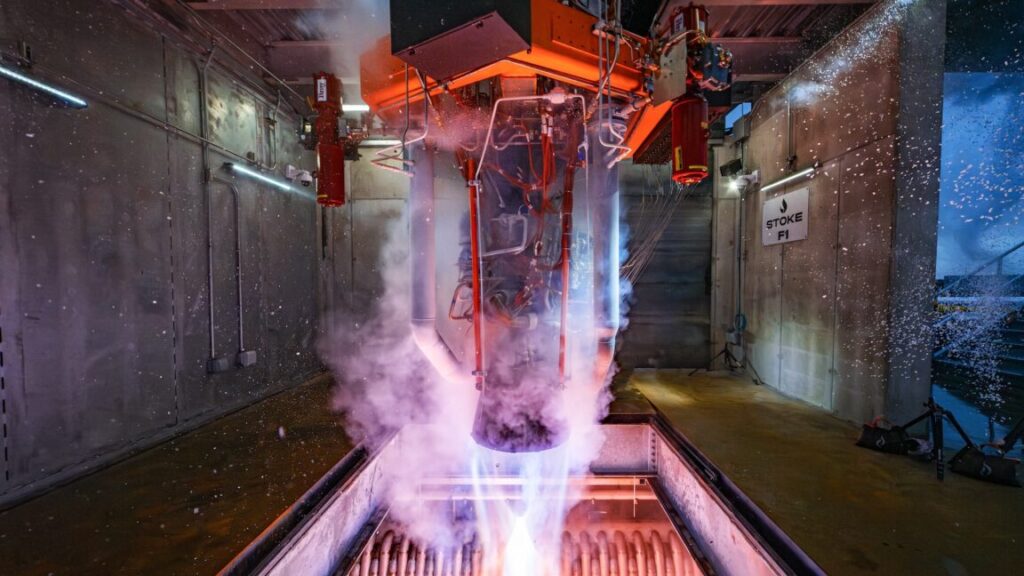
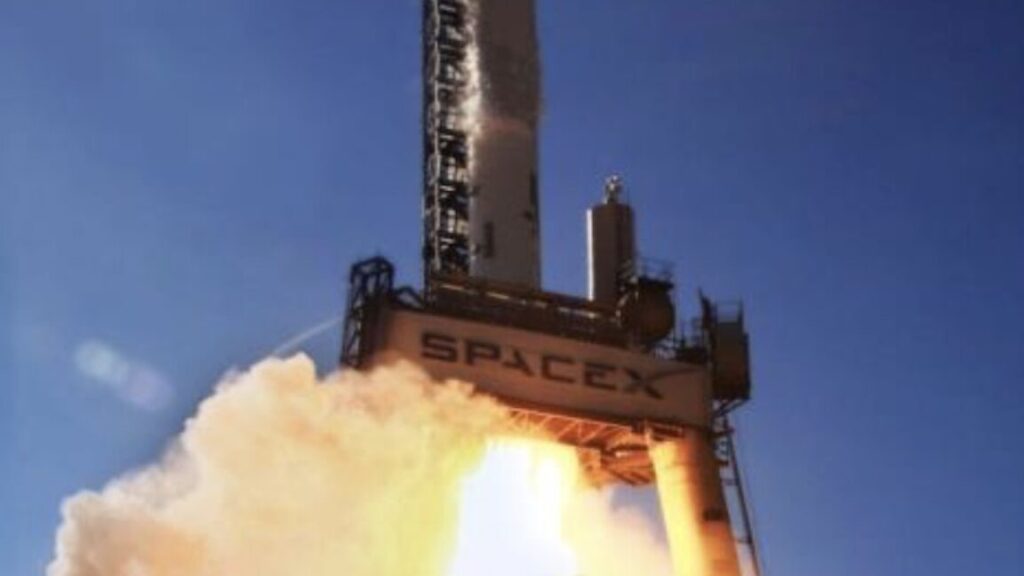
A Falcon 9 booster fires its engines on SpaceX’s “tripod” test stand in McGregor, Texas. Credit: SpaceX

Welcome to Edition 7.19 of the Rocket Report! Okay, we get it. We received more submissions from our readers on Australia’s approval of a launch permit for Gilmour Space than we’ve received on any other news story in recent memory. Thank you for your submissions as global rocket activity continues apace. We’ll cover Gilmour in more detail as they get closer to launch. There will be no Rocket Report next week as Eric and I join the rest of the Ars team for our 2024 Technicon in New York.

As always, we welcome reader submissions. If you don’t want to miss an issue, please subscribe using the box below (the form will not appear on AMP-enabled versions of the site). Each report will include information on small-, medium-, and heavy-lift rockets as well as a quick look ahead at the next three launches on the calendar.

Gilmour Space has a permit to fly. Gilmour Space Technologies has been granted a permit to launch its 82-foot-tall (25-meter) orbital rocket from a spaceport in Queensland, Australia. The space company, founded in 2012, had initially planned to lift off in March but was unable to do so without approval from the Australian Space Agency, the Australian Broadcasting Corporation reports. The government approved Gilmour’s launch permit Monday, although the company is still weeks away from flying its three-stage Eris rocket.

A first for Australia … Australia hosted a handful of satellite launches with US and British rockets from 1967 through 1971, but Gilmour’s Eris rocket would become the first all-Australian launch vehicle to reach orbit. The Eris rocket is capable of delivering about 670 pounds (305 kilograms) of payload mass into a Sun-synchronous orbit. Eris will be powered by hybrid rocket engines burning a solid fuel mixed with a liquid oxidizer, making it unique among orbital-class rockets. Gilmour completed a wet dress rehearsal, or practice countdown, with the Eris rocket on the launch pad in Queensland in September. The launch permit becomes active after 30 days, or the first week of December. “We do think we’ve got a good chance of launching at the end of the 30-day period, and we’re going to give it a red hot go,” said Adam Gilmour, the company’s co-founder and CEO. (submitted by Marzipan, mryall, ZygP, Ken the Bin, Spencer Willis, MarkW98, and EllPeaTea)

North Korea tests new missile. North Korea apparently completed a successful test of its most powerful intercontinental ballistic missile on October 31, lofting it nearly 4,800 miles (7,700 kilometers) into space before the projectile fell back to Earth, Ars reports. This solid-fueled, multi-stage missile, named the Hwasong-19, is a new tool in North Korea’s increasingly sophisticated arsenal of weapons. It has enough range—perhaps as much as 9,320 miles (15,000 kilometers), according to Japan’s government—to strike targets anywhere in the United States. It also happens to be one of the largest ICBMs in the world, rivaling the missiles fielded by the world’s more established nuclear powers.

Quid pro quo? … The Hwasong-19 missile test comes as North Korea deploys some 10,000 troops inside Russia to support the country’s war against Ukraine. The budding partnership between Russia and North Korea has evolved for several years. Russian President Vladimir Putin has met with North Korean leader Kim Jong Un on multiple occasions, most recently in Pyongyang in June. This has fueled speculation about what Russia is offering North Korea in exchange for the troops deployed on Russian soil. US and South Korean officials have some thoughts. They said North Korea is likely to ask for technology transfers in diverse areas related to tactical nuclear weapons, ICBMs, and reconnaissance satellites.

The easiest way to keep up with Eric Berger’s and Stephen Clark’s reporting on all things space is to sign up for our newsletter. We’ll collect their stories and deliver them straight to your inbox.

Sign Me Up!

Virgin Galactic is on the hunt for cash. Virgin Galactic is proposing to raise $300 million in additional capital to accelerate production of suborbital spaceplanes and a mothership aircraft the company says can fuel its long-term growth, Space News reports. The company, founded by billionaire Richard Branson, suspended operations of its VSS Unity suborbital spaceplane earlier this year. VSS Unity hit a monthly flight cadence carrying small groups of space tourists and researchers to the edge of space, but it just wasn’t profitable. Now, Virgin Galactic is developing larger Delta-class spaceplanes it says will be easier and cheaper to turn around between flights.

All-in with Delta … Michael Colglazier, Virgin Galactic’s CEO, announced the company’s appetite for fundraising in a quarterly earnings call with investment analysts Wednesday. He said manufacturing of components for Virgin Galactic’s first two Delta-class ships, which the company says it can fund with existing cash, is proceeding on schedule at a factory in Arizona. Virgin Galactic previously said it would use revenue from paying passengers on its first two Delta-class ships to pay for development of future vehicles. Instead, Virgin Galactic now says it wants to raise money to speed up work on the third and fourth Delta-class vehicles, along with a second airplane mothership to carry the spaceplanes aloft before they release and fire into space. (submitted by Ken the Bin and EllPeaTea)

ESA breaks its silence on Themis. The European Space Agency has provided a rare update on the progress of its Themis reusable booster demonstrator project, European Spaceflight reports. ESA is developing the Themis test vehicle for atmospheric flights to fine-tune technologies for a future European reusable rocket capable of vertical takeoffs and vertical landings. Themis started out as a project led by CNES, the French space agency, in 2018. ESA member states signed up to help fund the project in 2019, and the agency awarded ArianeGroup a contract to move forward with Themis in 2020. At the time, the first low-altitude hop test was expected to take place in 2022.

Some slow progress … Now, the first low-altitude hop is scheduled for 2025 from Esrange Space Centre in Sweden, a three-year delay. This week, ESA said engineers have completed testing of the Themis vehicle’s main systems, and assembly of the demonstrator is underway in France. A single methane-fueled Prometheus engine, also developed by ArianeGroup, has been installed on the rocket. Teams are currently adding avionics, computers, electrical systems, and cable harnesses. Themis’ stainless steel propellant tanks have been manufactured, tested, and cleaned and are now ready to be installed on the Themis demonstrator. Then, the rocket will travel by road from France to the test site in Sweden for its initial low-altitude hops. After those flights are complete, officials plan to add two more Prometheus engines to the rocket and ship it to French Guiana for high-altitude test flights. (submitted by Ken the Bin and EllPeaTea)

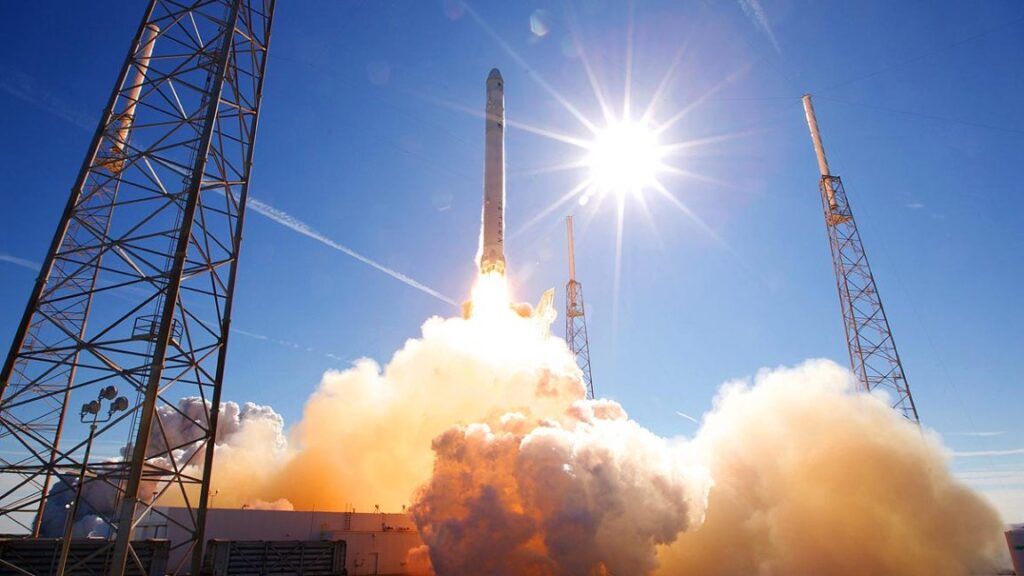
SpaceX will give the ISS a boost. A Cargo Dragon spacecraft docked to the International Space Station on Tuesday morning, less than a day after lifting off from Florida. As space missions go, this one is fairly routine, ferrying about 6,000 pounds (2,700 kilograms) of cargo and science experiments to the space station. One thing that’s different about this mission is that it delivered to the station a tiny 2 lb (900 g) satellite named LignoSat, the first spacecraft made of wood, for later release outside the research complex. There is one more characteristic of this flight that may prove significant for NASA and the future of the space station, Ars reports. As early as Friday, NASA and SpaceX have scheduled a “reboost and attitude control demonstration,” during which the Dragon spacecraft will use some of the thrusters at the base of the capsule. This is the first time the Dragon spacecraft will be used to move the space station.

Dragon’s breath … Dragon will fire a subset of its 16 Draco thrusters, each with about 90 pounds of thrust, for approximately 12.5 minutes to make a slight adjustment to the orbital trajectory of the roughly 450-ton space station. SpaceX and NASA engineers will analyze the results from the demonstration to determine if Dragon could be used for future space station reboost opportunities. The data will also inform the design of the US Deorbit Vehicle, which SpaceX is developing to perform the maneuvers required to bring the space station back to Earth for a controlled, destructive reentry in the early 2030s. For NASA, demonstrating Dragon’s ability to move the space station will be another step toward breaking free of reliance on Russia, which is currently responsible for providing propulsion to maneuver the orbiting outpost. Northrop Grumman’s Cygnus supply ship also previously demonstrated a reboost capability. (submitted by Ken the Bin and N35t0r)

Russia launches Soyuz in service of Iran. Russia launched a Soyuz rocket Monday carrying two satellites designed to monitor the space weather around Earth and 53 small satellites, including two Iranian ones, Reuters reports. The primary payloads aboard the Soyuz-2.1b rocket were two Ionosfera-M satellites to probe the ionosphere, an outer layer of the atmosphere near the edge of space. Solar activity can alter conditions in the ionosphere, impacting communications and navigation. The two Iranian satellites on this mission were named Kowsar and Hodhod. They will collect high-resolution reconnaissance imagery and support communications for Iran.

A distant third … This was only the 13th orbital launch by Russia this year, trailing far behind the United States and China. We know of two more Soyuz flights planned for later this month, but no more, barring a surprise military launch (which is possible). The projected launch rate puts Russia on pace for its quietest year of launch activity since 1961, the year Yuri Gagarin became the first person to fly in space. A major reason for this decline in launches is the decisions of Western governments and companies to move their payloads off of Russian rockets after the invasion of Ukraine. For example, OneWeb stopped launching on Soyuz in 2022, and the European Space Agency suspended its partnership with Russia to launch Soyuz rockets from French Guiana. (submitted by Ken the Bin)

H3 deploys Japanese national security satellite. Japan launched a defense satellite Monday aimed at speedier military operations and communication on an H3 rocket and successfully placed it into orbit, the Associated Press reports. The Kirameki 3 satellite will use high-speed X-band communication to support Japan’s defense ministry with information and data sharing, and command and control services. The satellite will serve Japanese land, air, and naval forces from its perch in geostationary orbit alongside two other Kirameki communications satellites.

Gaining trust … The H3 is Japan’s new flagship rocket, developed by Mitsubishi Heavy Industries (MHI) and funded by the Japan Aerospace Exploration Agency (JAXA). The launch of Kirameki 3 marked the third consecutive successful launch of the H3 rocket, following a debut flight in March 2023 that failed to reach orbit. This was the first time Japan’s defense ministry put one of its satellites on the H3 rocket. The first two Kirameki satellites launched on a European Ariane 5 and a Japanese H-IIA rocket, which the H3 will replace. (submitted by Ken the Bin, tsunam, and EllPeaTea)

Rocket Lab enters the race for military contracts. Rocket Lab is aiming to chip away at SpaceX’s dominance in military space launch, confirming its bid to compete for Pentagon contracts with its new medium-lift rocket, Neutron, Space News reports. Last month, the Space Force released a request for proposals from launch companies seeking to join the military’s roster of launch providers in the National Security Space Launch (NSSL) program. The Space Force will accept bids for launch providers to “on-ramp” to the NSSL Phase 3 Lane 1 contract, which doles out task orders to launch companies for individual missions. In order to win a task order, a launch provider must be on the Phase 3 Lane 1 contract. Currently, SpaceX, United Launch Alliance, and Blue Origin are the only rocket companies eligible. SpaceX won all of the first round of Lane 1 task orders last month.

Joining the club … The Space Force is accepting additional risk for Lane 1 missions, which largely comprise repeat launches deploying a constellation of missile-tracking and data-relay satellites for the Space Development Agency. A separate class of heavy-lift missions, known as Lane 2, will require rockets to undergo a thorough certification by the Space Force to ensure their reliability. In order for a launch company to join the Lane 1 roster, the Space Force requires bidders to be ready for a first launch by December 2025. Peter Beck, Rocket Lab’s founder and CEO, said he thinks the Neutron rocket will be ready for its first launch by then. Other new medium-lift rockets, such as Firefly Aerospace’s MLV and Relativity’s Terran-R, almost certainly won’t be ready to launch by the end of next year, leaving Rocket Lab as the only company that will potentially join incumbents SpaceX, ULA, and Blue Origin. (submitted by Ken the Bin)

Next Starship flight is just around the corner. Less than a month has passed since the historic fifth flight of SpaceX’s Starship, during which the company caught the booster with mechanical arms back at the launch pad in Texas. Now, another test flight could come as soon as November 18, Ars reports. The improbable but successful recovery of the Starship first stage with “chopsticks” last month, and the on-target splashdown of the Starship upper stage halfway around the world, allowed SpaceX to avoid an anomaly investigation by the Federal Aviation Administration. Thus, the company was able to press ahead on a sixth test flight if it flew a similar profile. And that’s what SpaceX plans to do, albeit with some notable additions to the flight plan.

Around the edges … Perhaps the most significant change to the profile for Flight 6 will be an attempt to reignite a Raptor engine on Starship while it is in space. SpaceX tried to do this on a test flight in March but aborted the burn because the ship’s rolling motion exceeded limits. A successful demonstration of a Raptor engine relight could pave the way for SpaceX to launch Starship into a higher stable orbit around Earth on future test flights. This is required for SpaceX to begin using Starship to launch Starlink Internet satellites and perform in-orbit refueling experiments with two ships docked together. (submitted by EllPeaTea)

China’s version of Starship. China has updated the design of its next-generation heavy-lift rocket, the Long March 9, and it looks almost exactly like a clone of SpaceX’s Starship rocket, Ars reports. The Long March 9 started out as a conventional-looking expendable rocket, then morphed into a launcher with a reusable first stage. Now, the rocket will have a reusable booster and upper stage. The booster will have 30 methane-fueled engines, similar to the number of engines on SpaceX’s Super Heavy booster. The upper stage looks remarkably like Starship, with flaps in similar locations. China intends to fly this vehicle for the first time in 2033, nearly a decade from now.

A vehicle for the Moon … The reusable Long March 9 is intended to unlock robust lunar operations for China, similar to the way Starship, and to some extent Blue Origin’s Blue Moon lander, promises to support sustained astronaut stays on the Moon’s surface. China says it plans to land its astronauts on the Moon by 2030, initially using a more conventional architecture with an expendable rocket named the Long March 10, and a lander reminiscent of NASA’s Apollo lunar lander. These will allow Chinese astronauts to remain on the Moon for a matter of days. With Long March 9, China could deliver massive loads of cargo and life support resources to sustain astronauts for much longer stays.

Ta-ta to the tripod. The large three-legged vertical test stand at SpaceX’s engine test site in McGregor, Texas, is being decommissioned, NASA Spaceflight reports. Cranes have started removing propellant tanks from the test stand, nicknamed the tripod, towering above the Central Texas prairie. McGregor is home to SpaceX’s propulsion test team and has 16 test cells to support firings of Merlin, Raptor, and Draco engines multiple times per day for the Falcon 9 rocket, Starship, and Dragon spacecraft.

Some history … The tripod might have been one of SpaceX’s most important assets in the company’s early years. It was built by Beal Aerospace for liquid-fueled rocket engine tests in the late 1990s. Beal Aerospace folded, and SpaceX took over the site in 2003. After some modifications, SpaceX installed the first qualification version of its Falcon 9 rocket on the tripod for a series of nine-engine test-firings leading up to the rocket’s inaugural flight in 2010. SpaceX test-fired numerous new Falcon 9 boosters on the tripod before shipping them to launch sites in Florida or California. Most recently, the tripod was used for testing of Raptor engines destined to fly on Starship and the Super Heavy booster.

Next three launches

Nov. 9:  Long March 2C | Unknown Payload | Jiuquan Satellite Launch Center, China | 03: 40 UTC

Nov. 9: Falcon 9 | Starlink 9-10 | Vandenberg Space Force Base, California | 06: 14 UTC

Nov. 10:  Falcon 9 | Starlink 6-69 | Cape Canaveral Space Force Station, Florida | 21: 28 UTC

Photo of Stephen Clark

Stephen Clark is a space reporter at Ars Technica, covering private space companies and the world’s space agencies. Stephen writes about the nexus of technology, science, policy, and business on and off the planet.

Rocket Report: Australia says yes to the launch; Russia delivers for Iran Read More »

rocket-report:-new-glenn-shows-out;-ula-acknowledges-some-fairing-issues

Rocket Report: New Glenn shows out; ULA acknowledges some fairing issues


“We have integrated some corrective actions and additional inspections.”

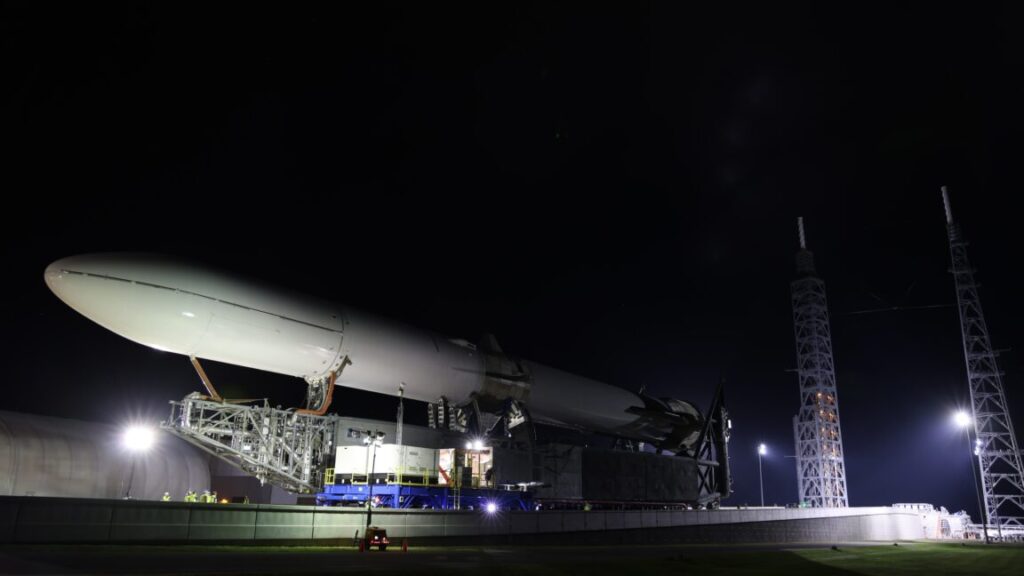
New Glenn arrives at Launch Complex 36 in Florida. Credit: Blue Origin

Welcome to Edition 7.18 of the Rocket Report! One of the most intriguing bits of news this week is the rolling of Blue Origin’s New Glenn rocket out to its launch complex in Florida. With two months remaining in 2024, will the company make owner Jeff Bezos’ deadline for getting to orbit this year? We’ll have to see, as the Rocket Report is not prepared to endorse any timelines at the moment.

As always, we welcome reader submissions, and if you don’t want to miss an issue, please subscribe using the box below (the form will not appear on AMP-enabled versions of the site). Each report will include information on small-, medium-, and heavy-lift rockets as well as a quick look ahead at the next three launches on the calendar.

ESA selects four companies for reusable launch. The European Space Agency announced this week the selection of Rocket Factory Augsburg, The Exploration Company, ArianeGroup, and Isar Aerospace to develop reusable rocket technology, European Spaceflight reports. The four awardees are divided into two initiatives focused on the development of reusable rocket technology: the Technologies for High-thrust Reusable Space Transportation (THRUST!) project and the Boosters for European Space Transportation (BEST!) project. The awarded companies will now begin contract negotiations with ESA to further develop and test their solutions.

The best thrust anywhere … The THRUST! initiative aims to push forward the development of European liquid propulsion systems, and Rocket Factory Augsburg and The Exploration were selected to develop projects under this initiative. The BEST! project was launched to stimulate the development of future reusable rocket first stages or boosters, and ArianeGroup and Isar Aerospace were chosen for this. Europe has a number of initiatives now aimed at developing a reusable rocket, but it seems doubtful that a European rocket will launch into orbit in the 2020s and successfully return to Earth. (submitted by Ken the Bin)

UK startup pursues fully reusable rocket. Astron Systems intends to develop a fully reusable two-stage rocket to transport about 360 kilograms to low-Earth orbit, Space News reports. Founded in 2021 and located at the Harwell Science Campus in England, Astron is one of 12 startups in the fall 2024 class of the TechStars Space Accelerator. “We have a vision for the future in-orbit economy being this big thriving thing,” Astron co-founder Eddie Brown said. “Small satellites are the beating heart of the in-orbit economy today. There are a lot of customers that are crying out for better launch solutions.”

But they have a ways to go … The company seeks to build a methane-liquid oxygen rocket, but clearly it is starting small. Astron Systems has raised more than $600,000 to date, including private investment, grants from Innovate UK and ESA, and backing from Techstars Space. The company’s initial work is with pump technology and a torch igniter. The company’s optimistic forecast calls for a test launch in late 2027. We’ll pencil that date in rather than putting it down in ink, if that’s OK. (submitted by Ken the Bin)

The easiest way to keep up with Eric Berger’s and Stephen Clark’s reporting on all things space is to sign up for our newsletter. We’ll collect their stories and deliver them straight to your inbox.

Sign Me Up!

Avio to build rocket motors for US military. Arlington-headquartered Avio USA was incorporated in April 2022. At the time, Italy-based Avio stated that the wholly owned subsidiary would be used to “explore business opportunities in the US market.” By 2023, the company revealed that it had identified “a significant production capacity gap relative to the substantial acceleration in demand requirements” in the area of tactical propulsion. This week the Italian rocket maker said it had begun design work on its first US-based solid rocket motor production facility, European Spaceflight reports.

Demand is rising … Avio USA is evaluating a number of possible locations in multiple US states for the several-hundred-acre production facility. A decision on the location of the facility is expected in the first half of 2025. “We are seeing significant demand for our capabilities from our current customers in multiple product lines, and this facility will be critical in creating our production capacity so we can meet the needs of our current and future customers as an independent supplier,” said Avio USA CEO James Syring. Avio will join several US startups in a hurry to ramp up solid rocket motors for missiles as the conflict in Ukraine continues. In the immortal words of Megadeth: Peace Sells … but Who’s Buying? (submitted by Ken the Bin)

ULA assessing fairing issues. A little more than a year ago, a snippet of video that wasn’t supposed to go public made its way onto United Launch Alliance’s live broadcast of an Atlas V rocket launch carrying three classified surveillance satellites for the US Space Force and the National Reconnaissance Office. The public saw video of the clamshell-like payload fairing falling away from the Atlas V rocket as it fired downrange from Cape Canaveral, Florida, on September 10, 2023. It wasn’t pretty. Numerous chunks of material, possibly insulation from the inner wall of the payload shroud’s two shells, fell off the fairing, Ars reports.

Issue still being looked at … We have heard murmurings about fairing issues on the Atlas V for a while now, but United Launch Alliance and Space Force officials have been tight-lipped. More than a year later, however, the company acknowledges it is still investigating the issue. A ULA spokesperson said the company continues to review data related to the fairing debris and will share information upon completion of the investigation. “We are working very closely with our customers and suppliers on the observations in advance of future launches to improve our capabilities,” the spokesperson said. “We have integrated some corrective actions and additional inspections of the hardware.” Payload fairing debris could pose a risk to sensitive components on the spacecraft that the shroud is supposed to protect.

China launches next space station crew. A Long March 2F rocket topped with the Shenzhou 19 crew spacecraft lifted off from the Jiuquan Satellite Launch Center on Tuesday carrying a crew of three Chinese astronauts, Space.com reports. Aboard were commander Cai Xuzhe, 48, who was a member of the Shenzhou 14 mission, and rookie astronauts Song Lingdong, 34, a former air force pilot, and Wang Haoze, also 34, a spaceflight engineer. About six hours after the launch, the Shenzhou 19 spacecraft docked with the Tiangong space station.

Keeping the station on track … The astronaut trio is set to spend six months in orbit aboard Tiangong, conducting various experiments and embarking on several extravehicular activities, or spacewalks. Shenzhou 19 is the 33rd spaceflight mission under China’s human spaceflight program. These missions include uncrewed test flights, crewed missions, launching Tiangong modules and smaller space lab precursor missions, next-generation crew spacecraft test flights, and Tianzhou cargo and refueling missions. China intends to keep Tiangong, which has about 20 percent of the mass of the International Space Station, flying for at least a decade. (submitted by Ken the Bin)

Firefly’s CEO to work “maniacally” to scale the company. Firefly’s previous CEO was in the job for less than two years before a shock exit in July after reported allegations of an inappropriate employee relationship. Now the company has a new top boss, Jason Kim, who left his job as chief executive of satellite-making subsidiary Millennium for Firefly. “I’m thrilled to be here,” Kim told CNBC in an interview. “I’m going to work maniacally to support this team so that we can achieve all of our visionary ideas.”

It starts with the engines … Kim is looking to fly more Alpha rockets and bring the Medium Launch Vehicle (MLV) online in 2026. Kim sees Firefly as having a key advantage—”an engine that works”—in its Reaver engines that power the Alpha rockets. And for MLV, Kim said Firefly took that “great engine technology” and “scaled it up to become Miranda, so you’re not starting from scratch” with a new engine. “We’re making huge strides on MLV,” Kim added. “We’ve had 50 Miranda engine tests already.” Although Alpha may not be reusable, the company has purposely designed the MLV for reusability. “We’re closer to how SpaceX tackled [rocket reuse],” Kim said. (submitted by Ken the Bin)

US Senator wants FAA to move faster. The Federal Aviation Administration must make “immediate changes” to the regulatory framework governing launch and re-entry, according to Sen. Jerry Moran (R-Kan.), a senior authorizer and appropriator who oversees the space sector, Payload reports. “Across the commercial space industry, concerns are abundant in every stage of FAA’s Office of Space Transportation of both its formal licensing process and its information pre-application review,” Moran wrote in a letter to FAA Administrator Michael Whitaker.

More funding may help … Referencing possible delays with NASA’s Artemis program, Moran called on the FAA to rapidly increase transparency and accountability, saying that America’s leadership in space depends on faster action. “It is irrational to think it often takes more time to complete licensing evaluations than actual rocket development and testing,” Moran wrote. The chief of the FAA’s space division, Kelvin Coleman, has previously said Congress could fix the issues with more funding. The  FAA’s Office of Space Transportation has an annual budget of $42 million.

Europe moves to address geo-return concerns in launch. In its most basic form, the European Space Agency’s geo-return policy ensures that companies in member states receive contracts proportional to their country’s financial contributions to ESA. While the policy does foster greater contributions to the agency, it can also add complexity to programs, requiring supply chains to be spread across multiple European countries. For commercial launch companies, this is almost certain to add cost to a public-private partnership with ESA.

No constraints … Now, European Spaceflight reports, ESA seeks to exempt a commercial launch competition from this geo-return policy. The program aims to incentivize the development of a diversified European commercial launch services market. ESA Director of Space Transportation Toni Tolker-Nielsen said, “There will be no constraints on geo-return in this request for proposals.” This would seem to be a positive step forward for private launch companies in Germany, the United Kingdom, Spain, France, and elsewhere. (submitted by Ken the Bin)

What are the next steps for Starship? In a feature, Ars explores the roadmap for SpaceX and the Starship rocket over the next three to five years and the path toward landing NASA astronauts on the Moon. The capture of a Super Heavy booster on October 13 at the company’s Starbase facility in South Texas brings the company closer to such a higher flight rate. SpaceX proved its titanic booster does not need cumbersome landing legs and can eliminate days of processing time otherwise needed to move a landed rocket back to the launch site. Less mass and shorter turnarounds are huge wins for Starship.

A long road ahead … Among the key milestones are: an in-flight relight of a Raptor engine, returning a Starship upper stage to land, reflying a Super Heavy booster, performing one or more in-flight refueling demonstrations, flying a long-duration mission around the Moon (probably 100 days or longer), landing an uncrewed version of Starship on the Moon, and, finally, landing humans as part of the Artemis program. If all goes well, it should be possible for NASA to fulfill the initial promise of the Artemis program and land two astronauts on the surface of the Moon in 2028. This is two years later than NASA’s current goal of September 2026 but would still represent a herculean task by SpaceX and the space agency. If there are significant setbacks, such as failed tower catches or mishaps during fueling in space, the program will doubtlessly face more delays.

New Glenn first stage rolls to the launch site. Blue Origin took another significant step toward the launch of its large New Glenn rocket on Tuesday night by rolling the first stage of the vehicle to a launch site at Cape Canaveral, Florida, Ars reports. Moving the rocket to the launch site is a key sign that the first stage is almost ready for its much-anticipated debut. Development of the New Glenn rocket would bring a third commercial heavy-lift rocket into the US market, after SpaceX’s Falcon Heavy and Starship vehicles. It would send another clear signal that the future of rocketry in the United States is commercially driven rather than government-led.

So when New Glenn? … The rocket must still undergo two key milestones: completing a wet dress rehearsal in which the vehicle will be fully fueled and its ground systems tested, followed by a hot-fire test during which the first stage’s seven BE-4 rocket engines will be ignited for several seconds. Blue Origin founder Jeff Bezos has been pushing the company hard to launch New Glenn for the first time this year, and the schedule is getting tight. Blue Origin already had to stand down from an October launch attempt and delay the launch of a small Mars-bound payload for NASA called ESCAPADE. Ars estimates the rocket will launch no earlier than early- to mid-December if all goes well.

Next three launches

Nov. 3: Falcon 9 | Starlink 6-77 | Cape Canaveral Space Force Station, Fla. | 20: 57 UTC

Nov. 4: H3 | Kirameki 3 | Tanegashima Space Center, Japan | 05: 48 UTC

Nov. 4: Electron | Changes in Latitudes, Changes in Attitudes| Māhia Peninsula, New Zealand | 09: 30 UTC

Photo of Eric Berger

Eric Berger is the senior space editor at Ars Technica, covering everything from astronomy to private space to NASA policy, and author of two books: Liftoff, about the rise of SpaceX; and Reentry, on the development of the Falcon 9 rocket and Dragon. A certified meteorologist, Eric lives in Houston.

Rocket Report: New Glenn shows out; ULA acknowledges some fairing issues Read More »

rocket-report:-sneak-peek-at-the-business-end-of-new-glenn;-france-to-fly-frog

Rocket Report: Sneak peek at the business end of New Glenn; France to fly FROG


“The vehicle’s max design gimbal condition is during ascent when it has to fight high-altitude winds.”

Blue Origin’s first New Glenn rocket, with seven BE-4 engines installed inside the company’s production facility near NASA’s Kennedy Space Center in Florida. Credit: Blue Origin

Welcome to Edition 7.17 of the Rocket Report! Next week marks 10 years since one of the more spectacular launch failures of this century. On October 28, 2014, an Antares rocket, then operated by Orbital Sciences, suffered an engine failure six seconds after liftoff from Virginia and crashed back onto the pad in a fiery twilight explosion. I was there and won’t forget seeing the rocket falter just above the pad, being shaken by the deafening blast, and then running for cover. The Antares rocket is often an afterthought in the space industry, but it has an interesting backstory touching on international geopolitics, space history, and novel engineering. Now, Northrop Grumman and Firefly Aerospace are developing a new version of Antares.

As always, we welcome reader submissions. If you don’t want to miss an issue, please subscribe using the box below (the form will not appear on AMP-enabled versions of the site). Each report will include information on small-, medium-, and heavy-lift rockets as well as a quick look ahead at the next three launches on the calendar.

Astra gets a lifeline from DOD. Astra, the launch startup that was taken private again earlier this year for a sliver of its former value, has landed a new contract with the Defense Innovation Unit (DIU) to support the development of a next-gen launch system for time-sensitive space missions, TechCrunch reports. The contract, which the DIU awarded under its Novel Responsive Space Delivery (NRSD) program, has a maximum value of $44 million. The money will go toward the continued development of Astra’s Launch System 2, designed to perform rapid, ultra-low-cost launches.

Guarantees? … It wasn’t clear from the initial reporting how much money DIU is actually committing to Astra, which said the contract will fund continued development of Launch System 2. Launch System 2 includes a small-class launch vehicle with a similarly basic name, Rocket 4, and mobile ground infrastructure designed to be rapidly set up at austere spaceports. Adam London, founder and chief technology officer at Astra, said the contract award is a “major vote of confidence” in the company. If Astra can capitalize on the opportunity, this would be quite a remarkable turnaround. After going public at an initial valuation of $2.1 billion, or $12.90 per share, Astra endured multiple launch failures with its previous rocket and risked bankruptcy before the company’s co-founders, Chris Kemp and Adam London, took the company private again this year at a price of just $0.50 per share. (submitted by Ken the Bin and EllPeaTea)

Blue Origin debuts a new New Shepard. Jeff Bezos’ Blue Origin space venture successfully sent a brand-new New Shepard rocket ship on an uncrewed shakedown cruise Wednesday, with the aim of increasing the company’s capacity to take people on suborbital space trips, GeekWire reports. The capsule, dubbed RSS Karman Line, carried payloads instead of people when it lifted off from Blue Origin’s Launch Site One in West Texas. But if all the data collected during the 10-minute certification flight checks out, it won’t be long before crews climb aboard for similar flights.

Now there are two … With this week’s flight, Blue Origin now has two human-rated suborbital capsules in its fleet, along with two boosters. This should allow the company to ramp up the pace of its human missions, which have historically flown at a cadence of about one flight every two to three months. The new capsule, named for the internationally recognized boundary of space 62 miles (100 kilometers) above Earth, features upgrades to improve performance and ease reusability. (submitted by Ken the Bin and EllPeaTea)

The easiest way to keep up with Eric Berger’s and Stephen Clark’s reporting on all things space is to sign up for our newsletter. We’ll collect their stories and deliver them straight to your inbox.

Sign Me Up!

China has a new space tourism company. Chinese launch startup Deep Blue Aerospace targets providing suborbital tourism flights starting in 2027, Space News reports. The company was already developing a partially reusable orbital rocket named Nebula-1 for satellite launches and recently lost a reusable booster test vehicle during a low-altitude test flight. While Deep Blue moves forward with more Nebula-1 testing before its first orbital launch, the firm is now selling tickets for rides to suborbital space on a six-person capsule. The first two tickets were expected to be sold Thursday in a promotional livestream event.

Architectural considerations … Deep Blue has a shot at becoming China’s first space tourism company and one of only a handful in the world, joining US-based Blue Origin and Virgin Galactic in the market for suborbital flights. Deep Blue’s design will be a single-stage reusable rocket and crew capsule, similar to Blue Origin’s New Shepard, capable of flying above the Kármán line and providing up to 10 minutes of microgravity experience for its passengers before returning to the ground. A ticket, presumably for a round trip, will cost about $210,000. (submitted by Ken the Bin)

France’s space agency aims to launch a FROG. French space agency CNES will begin flight testing a small reusable rocket demonstrator called FROG-H in 2025, European Spaceflight reports. FROG is a French acronym that translates to Rocket for GNC demonstration, and its purpose is to test landing algorithms for reusable launch vehicles. CNES manages the program in partnership with French nonprofits and universities. At 11.8 feet (3.6 meters) tall, FROG is the smallest launch vehicle prototype at CNES, which says it will test concepts and technologies at small scale before incorporating them into Europe’s larger vertical takeoff/vertical landing test rockets like Callisto and Themis. Eventually, the idea is for all this work to lead to a reusable European orbital-class rocket.

Building on experience … CNES flew a jet-powered demonstrator named FROG-T on five test flights beginning in May 2019, reaching a maximum altitude of about 100 feet (30 meters). FROG-H will be powered by a hydrogen peroxide rocket engine developed by the Łukasiewicz Institute of Aviation in Poland under a European Space Agency contract. The first flights of FROG-H are scheduled for early 2025. The structure of the FROG project seeks to “break free from traditional development methods” by turning to “teams of enthusiasts” to rapidly develop and test solutions through an experimental approach, CNES says on its website. (submitted by EllPeaTea and Ken the Bin)

Falcon 9 sweeps NSSL awards. The US Space Force’s Space Systems Command announced on October 18 it has ordered nine launches from SpaceX in the first batch of dozens of missions the military will buy in a new phase of competition for lucrative national security launch contracts, Ars reports. The parameters of the competition limited the bidders to SpaceX and United Launch Alliance (ULA). SpaceX won both task orders for a combined value of $733.5 million, or roughly $81.5 million per mission. Six of the nine missions will launch from Vandenberg Space Force Base, California, beginning as soon as late 2025. The other three will launch from Cape Canaveral Space Force Station, Florida.

Head-to-head … This was the first set of contract awards by the Space Force’s National Security Space Launch (NSSL) Phase 3 procurement round and represents one of the first head-to-head competitions between SpaceX’s Falcon 9 and ULA’s Vulcan rocket. The nine launches were divided into two separate orders, and SpaceX won both. The missions will deploy payloads for the National Reconnaissance Office and the Space Development Agency. (submitted by Ken the Bin)

SpaceX continues deploying NRO megaconstellation. SpaceX launched more surveillance satellites for the National Reconnaissance Office Thursday aboard a Falcon 9 rocket, Spaceflight Now reports. While the secretive spy satellite agency did not identify the number or exact purpose of the satellites, the Falcon 9 likely deployed around 20 spacecraft believed to be based on SpaceX’s Starshield satellite bus, a derivative of the Starlink spacecraft platform, with participation from Northrop Grumman. These satellites host classified sensors for the NRO.  This is the fourth SpaceX launch for the NRO’s new satellite fleet, which seeks to augment the agency’s bespoke multibillion-dollar spy satellites with a network of smaller, cheaper, more agile platforms in low-Earth orbit.

The century mark … This mission, officially designated NROL-167, was the 100th flight of a Falcon 9 rocket this year and the 105th SpaceX launch overall in 2024. The NRO has not said how many satellites will make up its fleet when completed, but the intelligence agency says it will be the US government’s largest satellite constellation in history. By the end of the year, the NRO expects to have 100 or more of these satellites in orbit, allowing the agency to transition from a demonstration mode to an operational mode to deliver intelligence data to military and government users. Many more launches are expected through 2028. (submitted by Ken the Bin)

ULA is stacking its third Vulcan rocket. United Launch Alliance has started assembling its next Vulcan rocket—the first destined to launch a US military payload—as the Space Force prepares to certify it to loft the Pentagon’s most precious national security satellites, Ars reports. Space Force officials expect to approve ULA’s Vulcan rocket for military missions without requiring another test flight, despite an unusual problem on the rocket’s second demonstration flight earlier this month, when one of Vulcan’s two strap-on solid-fueled boosters lost its nozzle shortly after liftoff.

Pending certification … Despite the nozzle failure, the Vulcan rocket continued climbing into space and eventually reached its planned injection orbit, and the Space Force and ULA declared the test flight a success. Still, engineers want to understand what caused the nozzle to break apart and decide on corrective actions before the Space Force clears the Vulcan rocket to launch a critical national security payload. This could take a little longer than expected due to the booster problem, but Space Force officials still hope to certify the Vulcan rocket in time to support a national security launch by the end of the year.

Blue Origin’s first New Glenn has all its engines. Blue Origin published a photo Thursday on X showing all seven first-stage BE-4 engines installed on the base of the company’s first New Glenn rocket. This is a notable milestone as Blue Origin proceeds toward the first launch of the heavy-lifter, possibly before the end of the year. But there’s a lot of work for Blue Origin to accomplish before then. These steps include rolling the rocket to the launch pad, running through propellant loading tests and practice countdowns, and then test-firing all seven BE-4 engines on the pad at Cape Canaveral Space Force Station, Florida.

Seven for seven … The BE-4 engines will consume methane fuel mixed with liquid oxygen for the first few minutes of the New Glenn flight, generating more than 3.8 million pounds of combined thrust. The seven BE-4s on New Glenn are similar to the BE-4 engines that fly two at a time on ULA’s Vulcan rocket. Dave Limp, Blue Origin’s CEO, said three of the seven engines on the New Glenn first stage have thrust vector control capability to provide steering during launch, reentry, and landing on the company’s offshore recovery vessel. “That gimbal capability, along with the landing gear and Reaction Control System thrusters, are key to making our booster fully reusable,” Limp wrote on X. “Fun fact: The vehicle’s max design gimbal condition is during ascent when it has to fight high-altitude winds.”

Next Super Heavy booster test-fired in Texas. SpaceX fired up the Raptor engines on its next Super Heavy booster, numbered Booster 13, Thursday evening at the company’s launch site in South Texas. This happened just 11 days after SpaceX launched and caught the Super Heavy booster on the previous Starship test flight and signals SpaceX could be ready for the next Starship test flight sometime in November. SpaceX has already test-fired the Starship upper stage for the next flight.

Great expectations … We expect the next Starship flight, which will be program’s sixth full-scale demo mission, will include another booster catch back at the launch tower at Starbase, Texas. SpaceX may also attempt to reignite a Raptor engine on the Starship upper stage while it is in space, demonstrating the capability to steer itself back into the atmosphere on future flights. So far, SpaceX has only launched Starships on long, arcing suborbital trajectories that carry the vehicle halfway around the world before reentry. In order to actually launch a Starship into a stable orbit around Earth, SpaceX will want to show it can bring the vehicle back so it doesn’t reenter the atmosphere in an uncontrolled manner. An uncontrolled reentry of a large spacecraft like Starship could pose a public safety risk.

Next three launches

Oct. 26: Falcon 9 | Starlink 10-8 | Cape Canaveral Space Force Station, Florida | 21: 47 UTC

Oct. 29: Falcon 9 | Starlink 9-9 | Vandenberg Space Force Base, California | 11: 30 UTC

Oct. 30: H3 | Kirameki 3 | Tanegashima Space Center, Japan | 06: 46 UTC

Photo of Stephen Clark

Stephen Clark is a space reporter at Ars Technica, covering private space companies and the world’s space agencies. Stephen writes about the nexus of technology, science, policy, and business on and off the planet.

Rocket Report: Sneak peek at the business end of New Glenn; France to fly FROG Read More »

rocket-report:-bloomberg-calls-for-sls-cancellation;-spacex-hits-century-mark

Rocket Report: Bloomberg calls for SLS cancellation; SpaceX hits century mark


All the news that’s fit to lift

“For the first time, Canada will host its own homegrown rocket technology.”

SpaceX’s fifth flight test ended in success. Credit: SpaceX

Welcome to Edition 7.16 of the Rocket Report! Even several days later, it remains difficult to process the significance of what SpaceX achieved in South Texas last Sunday. The moment of seeing a rocket fall out of the sky and be captured by two arms felt historic to me, as historic as the company’s first drone ship landing in April 2016. What a time to be alive.

As always, we welcome reader submissions, and if you don’t want to miss an issue, please subscribe using the box below (the form will not appear on AMP-enabled versions of the site). Each report will include information on small-, medium-, and heavy-lift rockets as well as a quick look ahead at the next three launches on the calendar.

Surprise! Rocket Lab adds a last-minute mission. After signing a launch contract less than two months ago, Rocket Lab says it will launch a customer as early as Saturday from New Zealand on board its Electron launch vehicle. Rocket Lab added that the customer for the expedited mission, to be named “Changes In Latitudes, Changes In Attitudes,” is confidential. This is an impressive turnaround in launch times and will allow Rocket Lab to burnish its credentials for the US Space Force, which has prioritized “responsive” launch in recent years.

Rapid turnaround down under … The basic idea is that if an adversary were to take out assets in space, the military would like to be able to rapidly replace them. “This quick turnaround from contract to launch is not only a showcase of Electron’s capability, but also of the relentless and fast-paced execution by the experienced team behind it that continues to deliver trusted and reliable access to space for our customers,” Rocket Lab Chief Executive Peter Beck said in a statement. (submitted by EllPeaTea and Ken the Bin)

Canadian spaceport and rocket firm link up. A Canadian spaceport developer, Maritime Launch Services, says it has partnered with a Canadian rocket firm, Reaction Dynamics. Initially, Reaction Dynamics will attempt a suborbital launch from the Nova Scotia-based spaceport. This first mission will serve as a significant step toward enabling Canada’s first-ever orbital launch of a domestically developed rocket, Space Daily reports.

A homegrown effort … “For the first time, Canada will host its own homegrown rocket technology, launched from a Canadian-built commercial spaceport, offering launch vehicle and satellite customers the opportunity to reach space without leaving Canadian soil,” said Stephen Matier, president and CEO of Maritime Launch. Reaction Dynamics is developing the Aurora rocket, which uses hybrid-propulsion technology and is projected to have a payload capacity of 200 kg to low-Earth orbit. (submitted by Joey Schwartz and brianrhurley)

The easiest way to keep up with Eric Berger’s and Stephen Clark’s reporting on all things space is to sign up for our newsletter. We’ll collect their stories and deliver them straight to your inbox.

Sign Me Up!

Sirius completes engine test campaign. French launch startup Sirius Space Services said Thursday that it had completed a hot fire test campaign of the thrust chamber for its STAR-1 rocket engine, European Spaceflight reports. During the campaign, the prototype completed two 60-second hot fire tests powered by liquid methane and liquid oxygen. The successful completion of the testing validates the design of the STAR-1 thrust chamber. Full-scale engine testing may begin during the second quarter of next year.

A lot of engines needed … Sirius Space Services is developing a range of three rockets that all use a modular booster system. Sirius 1 will be a two-stage single-stick rocket capable of delivering 175 kilograms to low-Earth orbit. Sirius 13 will feature two strap-on boosters and will have the capacity to deliver 600 kilograms. Finally, the Sirius 15 rocket will feature four boosters and will be capable of carrying payloads of up to 1,000 kilograms. (submitted by Ken the Bin)

SpaceX, California commission lock horns over launch rates. Last week the California Coastal Commission rejected a plan agreed to between SpaceX and the US Space Force to increase the number of launches from Vandenberg Space Force Base to as many as 50 annually, the Los Angeles Times reports. The commission voted 6–4 to block the request to increase from a maximum of 36 launches. In rejecting the plan, some members of the commission cited their concerns about Elon Musk, the owner of SpaceX. “We’re dealing with a company, the head of which has aggressively injected himself into the presidential race,” commission Chair Caryl Hart said.

Is this a free speech issue? … SpaceX responded to the dispute quickly, suing the California commission in federal court on Tuesday, Reuters reports. The company seeks an order that would bar the agency from regulating the company’s workhorse Falcon 9 rocket launch program at Vandenberg. The lawsuit claims the commission, which oversees use of land and water within the state’s more than 1,000 miles of coastline, unfairly asserted regulatory powers. Musk’s lawsuit called any consideration of his public statements improper, violating speech rights protected by the US Constitution. (submitted by brianrhurley)

SpaceX launches 100th rocket of the year. SpaceX launched its 100th rocket of the year early Tuesday morning and followed it up with another liftoff just hours later, Space.com reports. SpaceX’s centenary mission of the year lifted off from Florida with a Falcon 9 rocket carrying 23 of the company’s Starlink Internet satellites aloft.

Mostly Falcon 9s … The company followed that milestone with another launch two hours later from the opposite US coast. SpaceX’s 101st liftoff of 2024 saw 20 more Starlinks soar to space from Vandenberg Space Force Base in California. The company has already exceeded its previous record for annual launches, 98, set last year. The company’s tally in 2023 included 91 Falcon 9s, five Falcon Heavies, and two Starships. This year the mix is similar. (submitted by Ken the Bin)

Fifth launch of Starship a massive success. SpaceX accomplished a groundbreaking engineering feat Sunday when it launched the fifth test flight of its gigantic Starship rocket and then caught the booster back at the launch pad in Texas with mechanical arms seven minutes later, Ars reports. This achievement is the first of its kind, and it’s crucial for SpaceX’s vision of rapidly reusing the Starship rocket, enabling human expeditions to the Moon and Mars, routine access to space for mind-bogglingly massive payloads, and novel capabilities that no other company—or country—seems close to attaining.

Catching a rocket by its tail … High over the Gulf of Mexico, the first stage of the Starship rocket used its engines to reverse course and head back toward the Texas coastline. After reaching a peak altitude of 59 miles (96 kilometers), the Super Heavy booster began a supersonic descent before reigniting 13 engines for a final braking burn. The rocket then shifted down to just three engines for the fine maneuvering required to position the rocket in a hover over the launch pad. That’s when the launch pad’s tower, dubbed Mechazilla, ensnared the rocket in its two weight-bearing mechanical arms, colloquially known as “chopsticks.” The engines switched off, leaving the booster suspended perhaps 200 feet above the ground. The upper stage of the rocket, Starship, executed what appeared to be a nominal vertical landing into the Indian Ocean as part of its test flight.

Clipper launches on Falcon Heavy. NASA’s Europa Clipper spacecraft lifted off Monday from Kennedy Space Center in Florida aboard a SpaceX Falcon Heavy rocket, Ars reports, kicking off a $5.2 billion robotic mission to explore one of the most promising locations in the Solar System for finding extraterrestrial life. Delayed several days due to Hurricane Milton, which passed through Central Florida late last week, the launch of Europa Clipper signaled the start of a five-and-a-half- year journey to Jupiter, where the spacecraft will settle into an orbit taking it repeatedly by one of the giant planet’s numerous moons.

Exploring oceans, saving money … There’s strong evidence of a global ocean of liquid water below Europa’s frozen crust, and Europa Clipper is going there to determine if it has the ingredients for life. “This is an epic mission,” said Curt Niebur, Europa Clipper’s program scientist at NASA Headquarters. “It’s a chance for us not to explore a world that might have been habitable billions of years ago, but a world that might be habitable today, right now.” The Clipper mission was originally supposed to launch on NASA’s Space Launch System rocket, but it had to be moved off that vehicle because vibrations from the solid rocket motors could have damaged the spacecraft. The change to Falcon Heavy also saved the agency $2 billion.

ULA recovers pieces of shattered booster nozzle. When the exhaust nozzle on one of the Vulcan rocket’s strap-on boosters failed shortly after liftoff earlier this month, it scattered debris across the beachfront landscape just east of the launch pad on Florida’s Space Coast, Ars reports. United Launch Alliance, the company that builds and launches the Vulcan rocket, is investigating the cause of the booster anomaly before resuming Vulcan flights. Despite the nozzle failure, the rocket continued its climb and ended up reaching its planned trajectory heading into deep space.

Not clear what the schedule impacts will be … The nozzle fell off one of Vulcan’s two solid rocket boosters around 37 seconds after taking off from Cape Canaveral Space Force Station on October 4. A shower of sparks and debris fell away from the Vulcan rocket when the nozzle failed. Julie Arnold, a ULA spokesperson, confirmed to Ars that the company has retrieved some of the debris. “We recovered some small pieces of the GEM 63XL SRB nozzle that were liberated in the vicinity of the launch pad,” Arnold said. “The team is inspecting the hardware to aid in the investigation.” ULA has not publicly said what impacts there might be on the timeline for the next Vulcan launch, USSF-106, which had been due to occur before the end of this year.

Bloomberg calls for cancellation of the SLS rocket. In an op-ed that is critical of NASA’s Artemis Program, billionaire Michael Bloomberg—the founder of Bloomberg News and a former US Presidential candidate—called for cancellation of the Space Launch System rocket. “Each launch will likely cost at least $4 billion, quadruple initial estimates,” Bloomberg wrote. “This exceeds private-sector costs many times over, yet it can launch only about once every two years and—unlike SpaceX’s rockets—can’t be reused.”

NASA is falling behind … Bloomberg essentially is calling for the next administration to scrap all elements of the Artemis Program that are not essential to establishing and maintaining a presence on the surface of the Moon. “A celestial irony is that none of this is necessary,” he wrote. “A reusable SpaceX Starship will very likely be able to carry cargo and robots directly to the moon—no SLS, Orion, Gateway, Block 1B or ML-2 required—at a small fraction of the cost. Its successful landing of the Starship booster was a breakthrough that demonstrated how far beyond NASA it is moving.” None of the arguments that Bloomberg is advancing are new, but it is noteworthy to hear them from such a prominent person who is outside the usual orbit of space policy commentators.

Artemis II likely to be delayed. A new report from the US Government Accountability Office found that NASA’s Exploration Ground Systems program—this is, essentially, the office at Kennedy Space Center in Florida responsible for building ground infrastructure to support the Space Launch System rocket and Orion—is in danger of missing its schedule for Artemis II, according to Ars Technica. The new report, published Thursday, finds that the Exploration Ground Systems program had several months of schedule margin in its work toward a September 2025 launch date at the beginning of the year. But now, the program has allocated all of that margin to technical issues experienced during work on the rocket’s mobile launcher and pad testing.

Heat shield issue also a concern … NASA also has yet to provide any additional information on the status of its review of the Orion spacecraft’s heat shield. During the Artemis I mission that sent Orion beyond the Moon in late 2022, chunks of charred material cracked and chipped away from Orion’s heat shield during reentry into Earth’s atmosphere. Once the spacecraft landed, engineers found more than 100 locations where the stresses of reentry damaged the heat shield. To prepare for the Artemis II launch next September, Artemis officials had previously said they planned to begin stacking operations of the rocket in September of this year. But so far, this activity remains on hold pending a decision on the heat shield issue.

Next three launches

Oct. 18: Falcon 9 | Starlink 8-19 | Cape Canaveral Space Force Station, Fla. | 19: 31 UTC

Oct. 19: Electron | Changes In Latitudes, Changes In Attitudes | Māhia Peninsula, New Zealand | 10: 30 UTC

Oct. 20: Falcon 9 | OneWeb no. 20 | Vandenberg Space Force Base, Calif. | 05: 09 UTC

Photo of Eric Berger

Eric Berger is the senior space editor at Ars Technica, covering everything from astronomy to private space to NASA policy, and author of two books: Liftoff, about the rise of SpaceX; and Reentry, on the development of the Falcon 9 rocket and Dragon. A certified meteorologist, Eric lives in Houston.

Rocket Report: Bloomberg calls for SLS cancellation; SpaceX hits century mark Read More »

rocket-report:-ula-investigating-srb-anomaly;-europa-clipper-is-ready-to-fly

Rocket Report: ULA investigating SRB anomaly; Europa Clipper is ready to fly


US Space Force payloads will ride on the first flight of Impulse Space’s cryogenic space tug.

Impulse Space is assembling its first methane-fueled Deneb engine, a 15,000-pound-thrust power plant that will propel the company’s Helios space tug. Credit: Impulse Space

Welcome to Edition 7.15 of the Rocket Report! It’s a big week for big rockets, with SpaceX potentially launching its next Starship test flight and a Falcon Heavy rocket with NASA’s Europa Clipper mission this weekend. And a week ago, United Launch Alliance flew its second Vulcan rocket, which lost one of its booster nozzles in midair and amazingly kept going to achieve a successful mission. Are you not entertained?

As always, we welcome reader submissions. If you don’t want to miss an issue, please subscribe using the box below (the form will not appear on AMP-enabled versions of the site). Each report will include information on small-, medium-, and heavy-lift rockets as well as a quick look ahead at the next three launches on the calendar.

PLD Space is aiming high. Spanish launch provider PLD Space has revealed a family of new rockets that it plans to introduce beyond its Miura 5 rocket, which is expected to make its inaugural flight in 2025, European Spaceflight reports. The company also revealed that it was working on a crew capsule called Lince (Spanish for Lynx). PLD Space introduced its Miura Next, Miura Next Heavy, and Miura Next Super Heavy launch vehicles, designed in single stick, triple core, and quintuple core configurations with reusable boosters. At the high end of the rocket family’s performance, the Miura Next Super Heavy could deliver up to 53 metric tons (nearly 117,000 pounds) of payload to low-Earth orbit. The Lince capsule could become Europe’s first human-rated crew transportation spacecraft.

Still a year away from reaching space … These are lofty ambitions for a company that has yet to launch anything to space, but it’s good to think big. PLD Space launched a high-altitude test flight of its Miura 1 rocket last year, but it didn’t cross the boundary of space. The first launch campaign for Miura 5, PLD Space’s orbital-class rocket sized for small satellites, is on course to begin by the end of 2025, the company said. The Miura Next family would begin flying by 2030, followed by the heavier rockets a few years later. In April, PLD Space said it had raised 120 million euros ($131 million) from private investors and the Spanish government. This is probably enough to get Miura 5 to the launch pad, but PLD Space will need a lot of technical and financing successes to bring its follow-on vehicles online. (submitted by Ken the Bin and EllPeaTea)

Impulse Space wins Space Force contract. Fresh on the heels of a massive funding round, Impulse Space has landed a $34.5 million contract from the Space Force for two ultra-mobile spacecraft missions, TechCrunch reports. Under the Space Force’s Tactically Responsive Space (TacRS) program, the two missions will demonstrate how highly maneuverable spacecraft can help the military rapidly respond to threats in space. Both missions will use Impulse’s Mira orbital transfer vehicle, which can host experiments and payloads while moving into different orbits around the Earth.

Looking for an advantage … Mira completed its first test flight earlier this year. The payloads on the two Space Force demonstration flights will perform space domain awareness missions, the military service said in a statement. The first mission, called Victus Surgo, will combine the Mira transfer vehicle with Impulse’s higher-power Helios cryogenic methane-fueled kick stage on its first use in orbit. Helios will boost Mira into a high-altitude geostationary transfer orbit after launching on a Falcon 9 rocket. The second mission, called Victus Salo, will send a second Mira spacecraft into low-Earth orbit on a SpaceX rideshare mission. Impulse was founded by rocket scientist Tom Mueller, who was a founding employee at SpaceX before leaving in 2020. (submitted by Ken the Bin)

The easiest way to keep up with Eric Berger’s space reporting is to sign up for his newsletter, we’ll collect his stories in your inbox.

The launch campaign begins for Vega C’s return to flight. Days after a crucial test-firing of its redesigned second stage motor, a European Vega C rocket is now being stacked on its launch pad in French Guiana for a return to flight mission scheduled for December 3. Photos released by the French space agency, CNES, show the Vega C’s solid-fueled first stage moving into position on the launch pad. The Vega C launcher is an upgraded version of the Vega rocket that completed its career with a successful launch in September.

A lot of t(h)rust … Vega C made a successful debut in July 2022, then failed on its second flight five months later, destroying a pair of high-value commercial Earth-imaging satellites owned by Airbus. Engineers traced the failure to the second stage motor’s nozzle, prompting a redesign that grounded the Vega C rocket for two years. There is a queue of European space missions waiting for launch on Vega C, and first to go will be the Sentinel 1C radar imaging satellite for the European Commission’s flagship Copernicus program.

Australian launch company rehearses countdown. Gilmour Space still thinks it has a chance to conduct the maiden launch of its Eris rocket sometime this year, despite no launch license from the Australian Space Agency (ASA), having to go hunting for more money, and a wet dress rehearsal throwing up issues that will take several weeks to fix, Space & Defense Tech and Security News reports. Gilmour’s Eris rocket, capable of hauling cargoes up to 672 pounds (305 kilograms) to orbit, would become the first homegrown Australian-built orbital-class rocket.

WDR … The Australian Space Agency has worked on Gilmour’s launch license for around two years, but has yet to give the company the green light to fly the Eris rocket, despite approving licenses for two companies operating privately owned launch ranges elsewhere in Australia. At the beginning of the year, Gilmour targeted a first launch of the Eris rocket in March, but there were delays in getting the vehicle to the launch pad. The rocket went vertical for the first time in April to begin a series of ground tests, culminating in the launch rehearsal at the end of September, in which the company loaded propellants into the rocket and ran the countdown to T-10 seconds. The test uncovered valve and software issues Gilmour must fix before it can fly Eris. (submitted by mryall)

Falcon 9 launches European asteroid mission. The European Space Agency’s Hera mission lifted off Monday aboard a SpaceX Falcon 9 rocket, heading into the Solar System to investigate an asteroid smashed by NASA two years ago, Ars reports. It will take two years for Hera to travel to asteroids Didymos and Dimorphos, a binary pair, and survey the aftermath of the impact by NASA’s DART spacecraft on Dimorphos in September 2022. DART was NASA’s first planetary defense experiment, demonstrating how a kinetic impactor could knock an asteroid off course if it was on a path to hit Earth. Fortunately, these two asteroids are harmless, but DART proved a spacecraft could deflect an asteroid, if necessary. Coming in at high speed, DART got only a fleeting glimpse of Didymos and Dimorphos, so Hera will take more precise measurements of the asteroids’ interior structure, mass, and orbit to determine exactly how effective DART was.

Falcon soars again … The liftoff Monday from Cape Canaveral Space Force Station was the first flight of a Falcon 9 in nine days, since an upper stage anomaly steered the rocket off its intended reentry corridor after an otherwise successful launch. The Federal Aviation Administration grounded the Falcon 9 while SpaceX investigated the problem, but the regulator approved the launch of Hera because the Falcon 9’s upper stage won’t come back to Earth. Instead, it departed into deep space along with the Hera asteroid probe. As of Thursday, all other commercial Falcon 9 missions remain grounded. (submitted by Ken the Bin)

Emiratis go with Japan. A UAE mission to travel to the asteroid belt reached a milestone on Wednesday, when an agreement was signed to provide services for the 2028 launch of the Mohammed Bin Rashid Explorer spacecraft, The National reports. Emirati officials selected the Japanese H3 rocket from Mitsubishi Heavy Industries (MHI) to launch the asteroid explorer. The UAE is a repeat customer for MHI, which also launched the Emirati Hope spacecraft toward Mars in 2020. The mission will see the Mohammed Bin Rashid Explorer perform close flybys of six asteroids to gather data before landing on a seventh asteroid, Justitia.

H3 racking up wins … Japan’s new H3 rocket is taking a slice of the international commercial launch market after achieving back-to-back successful flights this year. The H3, which replaces Japan’s workhorse H-IIA rocket, is primarily intended to ensure Japanese autonomous access to space for national security missions, scientific probes, and resupply flights to the International Space Station. But, somewhat surprisingly, the H3 now has several customers outside of Japan, including the UAE, Eutelsat, and Inmarsat. Perhaps some satellite operators, eager for someone to compete with SpaceX in the launch business, are turning to the H3 as an alternative to United Launch Alliance’s Vulcan, Europe’s Ariane 6 rocket, or Blue Origin’s New Glenn. All of these rockets are under pressure to launch numerous payloads for their domestic governments and Amazon’s Kuiper megaconstellation.

China launches mystery satellite. China launched a new communications satellite toward geostationary orbit Thursday, although its precise role remains undisclosed​, Space News reports. The satellite lifted off aboard a Long March 3B rocket, and China’s leading state-owned aerospace contractor identified the payload as High orbit Internet satellite-03 (Weixing Hulianwan Gaogui-03). This is the third satellite in this series, following launches in February and August. The lack of publicly available information raises speculation about its potential uses, which could include military applications.

Shortfall … This was China’s 47th space launch of the year, well short of the 100 missions Chinese officials originally projected for 2024. This launch rate is on pace to come close to China’s numbers the last three years. Around 30 of these 100 projected launches were supposed to be with rockets from Chinese commercial startups. China’s commercial launch industry encountered a setback in June, when a rocket broke free of its restraints during a first stage static fire test, sending the fully fueled booster on an uncontrolled flight near populated areas before a fiery crash to the ground.

Vulcan’s second flight was successful but not perfect. United Launch Alliance’s Vulcan rocket, under contract for dozens of flights for the US military and Amazon’s Kuiper broadband network, lifted off from Florida on its second test flight October 4, suffered an anomaly with one of its strap-on boosters, and still achieved a successful mission, Ars reports. This test flight, known as Cert-2, was the second certification mission for the new Vulcan rocket, a milestone that paves the way for the Space Force to clear ULA’s new rocket to begin launching national security satellites in the coming months.

Anomalous plume … What happened 37 seconds after launch was startling and impressive. The exhaust nozzle from one of Vulcan’s two strap-on solid rocket boosters failed and fell off the vehicle, creating a shower of sparks and debris. The launcher visibly tilted along its axis due to asymmetrical thrust from the twin boosters, but Vulcan’s guidance system corrected its trajectory, and the rocket’s BE-4 engines vectored their exhaust to keep the rocket on course. The engines burned somewhat longer than planned to make up for the shortfall in power from the damaged booster, and the rocket still reached its target orbit. However, ULA and Northrop Grumman, the booster manufacturer, must determine what happened with the nozzle before Vulcan can fly again. (submitted by Ken the Bin)

Starship could launch this weekend. We may not have to wait as long as we thought for the next test flight of SpaceX’s Starship rocket. The world’s most powerful launcher could fly again from South Texas as soon as Sunday, assuming the Federal Aviation Administration grants approval, Ars reports. The last public statement released from the FAA suggested the agency didn’t expect to determine whether to approve a commercial launch license for SpaceX’s next Starship test flight before late November. There’s some optimism at SpaceX that the FAA might issue a launch license much sooner, perhaps in time for Starship to fly this weekend.

Going for the catch … “The fifth flight test of Starship will aim to take another step towards full and rapid reusability,” SpaceX wrote in an update posted on its website. “The primary objectives will be attempting the first ever return to launch site and catch of the Super Heavy booster and another Starship reentry and landing burn, aiming for an on-target splashdown of Starship in the Indian Ocean.” For the Starship upper stage, this means it will follow pretty much the same trajectory as the last test flight in June. But the most exciting thing about the next flight is the attempt to catch the Super Heavy booster, which will come back to the launch site in Texas at supersonic speed before braking to a hover over the launch pad. Then, mechanical arms, or “chopsticks,” will try to grapple the rocket in midair.

Europa Clipper is ready to fly. As soon as this weekend, a SpaceX Falcon Heavy rocket will lift off from Kennedy Space Center, carrying NASA’s $4.25 billion Europa Clipper spacecraft, Ars reports. This mission is unlikely to definitively answer the question of whether life exists in the liquid water ocean below the icy crust of Jupiter’s icy moon Europa, but it will tell us whether it could, and it will answer so many more questions. The best part is the unknown wonders it will discover. We cannot begin to guess at those, but we can be certain that if all goes well, Clipper will be a thrilling and breathtaking mission. Europa Clipper will zip by Europa 49 times in the early 2030s, probing the frozen world with a sophisticated suite of instruments to yield the best-ever data about any moon of another planet.

Delayed for weather … The launch of Europa Clipper was supposed to happen Thursday, but NASA and SpaceX suspended launch preparations earlier this week as Hurricane Milton approached Florida. The spacecraft is already attached to the Falcon Heavy rocket inside SpaceX’s hangar. Once teams are cleared to return to the space center for work after the storm, they will ready Falcon Heavy to roll to the launch pad. NASA says the launch is currently targeted for no earlier than Sunday.

Next three launches

Oct. 13: Starship/Super Heavy | Flight 5 | Starbase, Texas | 12: 00 UTC

Oct. 13: New Shepard | NS-27 uncrewed flight | Launch Site One, Texas | 13: 00 UTC

Oct. 13: Falcon Heavy | Europa Clipper | Kennedy Space Center, Florida | 16: 12 UTC

Photo of Stephen Clark

Stephen Clark is a space reporter at Ars Technica, covering private space companies and the world’s space agencies. Stephen writes about the nexus of technology, science, policy, and business on and off the planet.

Rocket Report: ULA investigating SRB anomaly; Europa Clipper is ready to fly Read More »

rocket-report:-falcon-9-second-stage-stumbles;-japanese-rocket-nears-the-end

Rocket Report: Falcon 9 second stage stumbles; Japanese rocket nears the end


“I’m pretty darn confident I’m going to have a good day on Friday.”

United Launch Alliance’s Vulcan rocket sits on the pad at Space Launch Complex-41 (at Cape Canaveral at sunset in advance of the Cert-2 flight test. Credit: United Launch Alliance

Welcome to Edition 7.14 of the Rocket Report! For readers who don’t know, my second book was published last week. It’s titled Reentry, and tells the story behind the story of SpaceX’s development of the Falcon 9 rocket and Dragon spacecraft. The early reviews are great, and it made USA Today’s bestseller list this week. If you’re interested in rockets, and since you’re reading this newsletter we already know the answer to that, the book is probably up your alley.

As always, we welcome reader submissions, and if you don’t want to miss an issue, please subscribe using the box below (the form will not appear on AMP-enabled versions of the site). Each report will include information on small-, medium-, and heavy-lift rockets as well as a quick look ahead at the next three launches on the calendar.

Vega C cleared for next launch in November. Italian rocket firm Avio successfully tested a redesigned Zefiro-40 solid rocket motor for the second time on Thursday, the European Space Agency said. This second firing follows an initial firing test of the motor in May 2024 and concludes the qualification tests for the new engine nozzle design of the Zefiro-40. This rocket motor powers the second stage of the Vega C rocket.

Flight three almost ready … The redesign of the motor was necessitated by the failure of a Vega C rocket in December 2022, which was just the second flight of the launch vehicle. Then, in June 2023, a test to re-certify the motor for flight also failed. Now that the second-stage issue appears to be resolved, Vega C is on the launch calendar for November of this year, although there’s the possibility the third mission of the rocket could slip a bit further. The rocket will be carrying the Sentinel-1C satellite to Sun-synchronous orbit. (submitted by EllPeaTea and Ken the Bin)

Impulse Space raises $150 million. Los Angeles-based space startup Impulse Space, which is led by renowned rocket scientist Tom Mueller, has raised $150 million in a new fundraising round led by venture capital firm Founders Fund, CNBC reports. Impulse is scaling a product line of orbital transfer vehicles, and so far is building two, the smaller Mira and the larger Helios. While rockets get satellites and payloads into orbit, like an airplane carrying passengers to a metro area, space tugs deliver them to specific destinations, like taxis taking those passengers home from the airport.

Taking the next step after launch … Mueller, who founded Impulse Space three years ago, said the funds will fuel growth of the company. “This means that we’re sufficiently funded through the development of Helios and the upgraded version Mira and out past the first flights of both of these products,” Mueller told the publication. Impulse flew its first mission, called LEO Express-1, with a Mira vehicle carrying and deploying a small satellite, last November. In Mueller’s view, while SpaceX reduced the cost to launch mass to orbit, the in-space delivery systems on the market are lacking. (submitted by Tom Nelson and Ken the Bin)

The easiest way to keep up with Eric Berger’s space reporting is to sign up for his newsletter, we’ll collect his stories in your inbox.

Polish company receives ESA support. Did you know there is a launch startup in Poland? Until this week, I confess I did not. However, that changed when the European Space Agency awarded 2.4 million euros to Poland’s SpaceForest for further development of its Perun rocket. SpaceForest has developed an 11.5-meter-tall sounding rocket capable of carrying payloads of up to 50 kilograms to an altitude of 150 kilometers, European Spaceflight reports.

Boosting up commercial companies … To date, the company has completed two test flights, one reaching an altitude of 22 kilometers and another topping out at 13 kilometers. With the new funding from ESA, SpaceForest will implement upgrades to the combustion chamber of its in-house developed SF1000 paraffin-powered hybrid rocket engine. ESA awarded the funding as part of the agency’s Boost! initiative. Adopted by member states in 2019, Boost! aims to foster the development of new commercial space transportation services. (submitted by Ken the Bin and EllPeaTea)

A new take on a kinetic launch system. Longshot Space is developing a straight-line kinetic launch system that will gradually accelerate payloads to hypersonic speeds before launching them to orbit, TechCrunch reports. The startup is betting it can achieve very, very low costs to orbit compared to a rocket, possibly as low as $10 per kilogram. The company raised $1.5 million in a pre-seed round in April 2023 and now, nearly 18 months later, Longshot closed a little over $5 million in combined venture capital and funding from the US Air Force’s TACFI program.

Pulling some serious Gs … The new capital will be used to build a large, 500-meter-long gun in the Nevada desert to push 100-kilogram payloads to Mach 5. The system has to be so long in order to keep acceleration forces low, which is better for both the vehicle and payload. For eventual space missions, Longshot is aiming to keep the maximum gravitational forces to 500–600 times the force of gravity. The company’s name serves a dual purpose, as its technology requires a longshot to reach space, and its prospects for success are probably a longshot. Nevertheless, it’s great to see someone trying new ideas. (submitted by Ken the Bin)

Falcon 9 rocket upper stage misfires. SpaceX is investigating a problem with the Falcon 9 rocket’s upper stage that caused it to reenter the atmosphere and fall into the sea outside of its intended disposal area after a launch last Saturday with a two-person crew heading to the International Space Station, Ars reports. The upper stage malfunction occurred after the Falcon 9 successfully deployed SpaceX’s Crew Dragon spacecraft carrying NASA astronaut Nick Hague and Russian cosmonaut Aleksandr Gorbunov on SpaceX’s Crew-9 mission. Hague and Gorbunov safely arrived at the space station Sunday to begin a five-month stay at the orbiting research complex.

Returning to flight shortly? … Safety warnings issued to mariners and pilots before the launch indicated the Falcon 9’s upper stage was supposed to fall somewhere in a narrow band stretching from southwest to northeast in the South Pacific east of New Zealand. Most of the rocket was expected to burn up during reentry, but SpaceX targeted a remote part of the ocean for disposal because some debris was likely to survive and reach the sea. This is the third time SpaceX has grounded the Falcon 9 rocket in less than three months, ending a remarkable run of flawless launches. A return to flight is expected as early as October 7 with the European Space Agency’s Hera spacecraft.

New Zealand seeks to reduce rocket regulations. New Zealand plans to implement a new “red tape-cutting” strategy for space and aviation by the end of 2025, the New Zealand Herald reports. “We have committed to having a world-class regulatory environment by the end of 2025,” Space Minister Judith Collins told the NZ Aerospace Summit recently. “To do that we’re introducing a light-touch regulatory approach that will significantly free up innovators to test their technology and ideas.”

Kiwis have a different attitude … The goal of reducing regulations is to allow companies to focus more on innovation and less on paperwork. New Zealand officials are motivated by concerns that Australia may seek to lure some of its space and aviation industries. Among the space companies with a significant presence in New Zealand are Rocket Lab, Dawn Aerospace, as well as smaller firms such as Astrix Astronautics. The move comes as US-based firms such as SpaceX, Varda, and others are pushing the country’s launch regulator, the Federal Aviation Administration, to be more nimble.

H2A nears the end of the road. Japan launched the classified IGS-Radar 8 satellite early Thursday with the second-to-last H-2A rocket, Space News reports. Developed and operated by Mitsubishi Heavy Industries, the H-2A rocket debuted in 2001 and has flown 49 times with a single failure, suffered in 2003. It has been a reliable medium-lift launch vehicle for Japan’s national space interests, as well as a handful of commercial space customers.

The rocket’s 50th launch will be its last … The final H-2A core stage is now completed and is scheduled for shipment to the Tanegashima Space Center. That launch, expected in late 2024, will carry the Global Observing SATellite for Greenhouse gases and Water cycle satellite. The H3 will succeed the H-2A. The new generation H3 had a troubled start, with its first flight in March 2023 suffering a second-stage engine failure. However, the new rocket has since flown successfully twice. (submitted by Ken the Bin)

Russians can invest in SpaceX now? Da. One of the odder stories this week concerns a Russian broker apparently offering access to privately held shares of SpaceX. An article in the Russian newspaper Kommersant suggests that a Moscow-based financial services company, Finam Holdings, managed to purchase a number of shares from a large foreign investment fund. The article says the minimum investment for Russians interested in buying into SpaceX is $10,000.

On bonds and broomsticks … Honestly, I have no idea about the legality of all this, but it sure smells funny. SpaceX, of course, periodically sells shares of the privately held company to investors. In addition, employees who receive shares in the company can sometimes sell their holdings. Given the existing sanctions on Russia due to the war on Ukraine and the potential for additional sanctions, it seems like these shareholders are definitely taking some risk.

ULA chief “supremely confident” in Vulcan’s second launch. The second flight of United Launch Alliance’s Vulcan rocket, planned for Friday morning, has a primary goal of validating the launcher’s reliability for delivering critical US military satellites to orbit. Tory Bruno, ULA’s chief executive, told reporters Wednesday that he is “supremely confident” the Vulcan rocket will succeed in accomplishing that objective, Ars reports. “As I come up on Cert-2, I’m pretty darn confident I’m going to have a good day on Friday, knock on wood,” Bruno said. “These are very powerful, complicated machines.”

A lengthy manifest to fly … The Vulcan launcher, a replacement for ULA’s Atlas V and Delta IV rockets, is on contract to haul the majority of the US military’s most expensive national security satellites into orbit over the next several years. If Friday’s test flight goes well, ULA is on track to launch at least one—and perhaps two—operational missions for the Space Force by the end of this year. The Space Force has already booked 25 launches on ULA’s Vulcan rocket for military payloads and spy satellites for the National Reconnaissance Office. Including the launch Friday, ULA has 70 Vulcan rockets in its backlog, mostly for the Space Force, the NRO, and Amazon’s Kuiper satellite broadband network.

NASA’s mobile launcher is on the move. NASA’s Exploration Ground Systems Program at Kennedy Space Center in Florida began moving the mobile launcher 1 from Launch Complex 39B along a 4.2-mile stretch back to the Vehicle Assembly Building this week. First motion of the mobile launcher, atop NASA’s crawler-transporter 2, occurred early on the morning of October 3, the space agency confirmed. Teams rolled the mobile launcher out to Kennedy’s Pad 39B in August 2023 for upgrades and a series of ground demonstration tests in preparation for the Artemis II mission.

Stacking operations when? … After arriving outside the Vehicle Assembly Building later on Thursday, the launch tower will be moved into High Bay 3 on Friday. This is all in preparation for stacking the Space Launch System rocket for the Artemis II mission, which is nominally scheduled for September 2025 but may slip further. NASA has not publicly said when stacking operations will begin, and this depends on when the space agency makes a final decision on whether to fly the Orion spacecraft with its heat shield as-is or adopt a different plan. Stacking will take several months.

Next three launches

Oct. 4: Vulcan | Cert-2 mission | Cape Canaveral Space Force Station, Florida | 10: 00 UTC

Oct. 7: Falcon 9 | Hera | Cape Canaveral Space Force Station, Florida | 14: 52 UTC

Oct. 9: Falcon 9 | OneWeb-20 | Vandenberg Space Force Base, California | 06: 03 UTC

Photo of Eric Berger

Eric Berger is the senior space editor at Ars Technica, covering everything from astronomy to private space to NASA policy, and author of two books: Liftoff, about the rise of SpaceX; and Reentry, on the development of the Falcon 9 rocket and Dragon. A certified meteorologist, Eric lives in Houston.

Rocket Report: Falcon 9 second stage stumbles; Japanese rocket nears the end Read More »

rocket-report:-china-leaps-into-rocket-reuse;-19-people-are-currently-in-orbit

Rocket Report: China leaps into rocket reuse; 19 people are currently in orbit

Ascendant —

Launch startups in China and Europe are borrowing ideas and rhetoric from SpaceX.

Landspace's reusable rocket test vehicle lifts off from the Jiuquan Satellite Launch Center on Wednesday, September 11, 2024.

Enlarge / Landspace’s reusable rocket test vehicle lifts off from the Jiuquan Satellite Launch Center on Wednesday, September 11, 2024.

Welcome to Edition 7.11 of the Rocket Report! Outside of companies owned by American billionaires, the most imminent advancements in reusable rockets are coming from China’s quasi-commercial launch industry. This industry is no longer nascent. After initially relying on solid-fueled rocket motors apparently derived from Chinese military missiles, China’s privately funded launch firms are testing larger launchers, with varying degrees of success, and now performing hop tests reminiscent of SpaceX’s Grasshopper and F9R Dev1 programs more than a decade ago.

As always, we welcome reader submissions. If you don’t want to miss an issue, please subscribe using the box below (the form will not appear on AMP-enabled versions of the site). Each report will include information on small-, medium-, and heavy-lift rockets as well as a quick look ahead at the next three launches on the calendar.

Landspace hops closer to a reusable rocket. Chinese private space startup Landspace has completed a 10-kilometer (33,000-foot) vertical takeoff and vertical landing test on its Zhuque-3 (ZQ-3) reusable rocket testbed, including a mid-flight engine reignition at near supersonic conditions, Aviation Week & Space Technology reports. The 18.3-meter (60-foot) vehicle took off from the Jiuquan launch base in northwestern China, ascended to 10,002 meters, and then made a vertical descent and achieved an on-target propulsive landing 3.2 kilometers (2 miles) from the launch pad. Notably, the rocket’s methane-fueled variable-thrust engine intentionally shutdown in flight, then reignited for descent, as engines would operate on future full-scale booster flybacks. The test booster used grid fins and cold gas thrusters to control itself when its main engine was dormant, according to Landspace.

“All indicators met the expected design” … Landspace hailed the test as a major milestone in the company’s road to flying its next rocket, the Zhuque-3, as soon as next year. With nine methane-fueled main engines, the Zhuque-3 will initially be able to deliver 21 metric tons (46,300 pounds) of payload into low-Earth orbit with its booster flying in expendable mode. In 2026, Landspace aims to begin recovering Zhuque-3 first-stage boosters for reuse. Landspace is one of several Chinese companies working seriously on reusable rocket designs. Another Chinese firm, Deep Blue Aerospace, says it plans a 100-kilometer (62-mile) suborbital test of a reusable booster soon, ahead of the first flight of its medium-class Nebula-1 rocket next year. (submitted by Ken the Bin)

The easiest way to keep up with Eric Berger’s space reporting is to sign up for his newsletter, we’ll collect his stories in your inbox.

Isar Aerospace sets low bar for success on first launch. Daniel Metzler, CEO of German launch startup Isar Aerospace, stated that the first flight of the Spectrum rocket would be a success if it didn’t destroy the launch site, European Spaceflight reports. During an interview at the Handelsblatt innovation conference, Metzler was asked what he would consider a successful inaugural flight of Spectrum. “For me, the first flight will be a success if we don’t blow up the launch site,” explained Metzler. “That would probably be the thing that would set us back the most in terms of technology and time.” This tempering of expectations sounds remarkably similar to statements made by Elon Musk about SpaceX’s first flight of the Starship rocket last year.

In the catbird seat? … Isar Aerospace could be in a position to become the first in a new crop of European commercial launch companies to attempt its first orbital flight. Another German company, Rocket Factory Augsburg, recently gave up on a possible launch this year after the booster for its first launch caught fire and collapsed during a test at a launch site in Scotland. Isar plans to launch its two-stage Spectrum rocket, designed to carry up to 1,000 kilograms (2,200 pounds) of payload into low-Earth orbit, from Andøya Spaceport in Norway. Isar hasn’t publicized any schedule for the first flight of Spectrum, but there are indications the publicity-shy company is testing hardware at the Norwegian spaceport. (submitted by Ken the Bin)

FAA to introduce new orbital debris rules. The Federal Aviation Administration is moving ahead with efforts to develop rules for the disposal of upper stages as another Centaur upper stage breaks apart in orbit, Space News reports. The FAA released draft regulations on the matter for public comment one year ago, and the head of the agency’s commercial spaceflight division recently said the rules are a “high priority for our organization.” The rules would direct launch operators to dispose of upper stages in one of five ways, from controlled reentries to placement in graveyard or “disposal” orbits not commonly used by operational satellites. One change the FAA might make to the draft rules is to reduce the required timeline for an uncontrolled reentry of a disposed upper stage from no more than 25 years to a shorter timeline. “We got a lot of comments that said it should be a lot less,” said Kelvin Coleman, head of the FAA’s commercial spaceflight office. “We’re taking that into consideration.”

Upper stages are a problem … Several recent breakups involving spent upper stages in orbit have highlighted the concern that dead rocket bodies could create unnecessary space junk. Last month, the upper stage from a Chinese Long March 6A disintegrated in low-Earth orbit, creating at least 300 pieces of space debris. More recently, a Centaur upper stage from a United Launch Alliance Atlas V rocket broke apart in a much higher orbit, resulting in more than 40 pieces of debris. This was the fourth time one of ULA’s Centaur upper stages has broken up since 2018. (submitted by Ken the Bin)

Rocket Report: China leaps into rocket reuse; 19 people are currently in orbit Read More »

rocket-report:-falcon-9-lifts-its-7,000th-starlink;-abl-cuts-deep

Rocket Report: Falcon 9 lifts its 7,000th Starlink; ABL cuts deep

GS2 and Blue —

“Branson was determined to be the first billionaire in space.”

The second stage of the New Glenn rocket rolls to the launch pad on Tuesday.

Enlarge / The second stage of the New Glenn rocket rolls to the launch pad on Tuesday.

Blue Origin

Welcome to Edition 7.10 of the Rocket Report! It has been a big week for seeing new hardware from Blue Origin. We’ve observed the second stage of New Glenn rolling out to its launch pad in Florida, and the rocket’s first stage recovery ship, Jacklyn, arriving at a nearby port. It looks like the pieces are finally coming into place for the debut launch of the massive new rocket.

As always, we welcome reader submissions, and if you don’t want to miss an issue, please subscribe using the box below (the form will not appear on AMP-enabled versions of the site). Each report will include information on small-, medium-, and heavy-lift rockets as well as a quick look ahead at the next three launches on the calendar.

Vega rocket makes its final flight. The final flight of Europe’s Vega rocket lifted off Wednesday night from French Guiana, carrying an important environmental monitoring satellite for the European Union’s flagship Copernicus program, Ars reports. About an hour after liftoff, the Vega rocket’s upper stage released Sentinel-2C into an on-target orbit. Then, Sentinel-2C radioed its status to ground controllers, confirming the satellite was healthy in space. The Vega rocket will be replaced by the larger Vega-C rocket, with a more powerful booster stage and a wider payload fairing. One of the primary purposes of the Vega-C will be to launch future Copernicus satellites for Europe.

A mixed record of commercial success … “I think it was a great success,” said Giulio Ranzo, Avio’s CEO, in an interview with Ars a few hours before Wednesday night’s mission. “It was our first launcher. It was our first experience as a major player in the launcher domain.” However, in a dozen years of service, the Vega rocket never really took off in the commercial launch market. It averaged about two flights per year and primarily deployed satellites for the European Space Agency and other European government agencies, which prefer launching their payloads on European rockets.

ABL Space lays off staff. Launch vehicle developer ABL Space Systems has laid off a significant portion of its workforce, citing the need to reduce costs after the loss of a rocket in a static-fire test, Space News reports. In a post on LinkedIn on August 30, Harry O’Hanley, chief executive of ABL, said the company was laying off an unspecified number of people. The layoffs came after the company’s second RS1 rocket was lost in a fire after a static-fire test at the Pacific Spaceport Complex – Alaska on Kodiak Island on July 19.

Era of easy money ends … O’Hanley said in the email that the company had been working to reduce costs at the company even ahead of that test, citing changes in the market and access to capital. The company had raised several hundred million dollars, including $200 million in October 2021 and $170 million in March 2021. Hanley wrote that starting in 2023, “we cut costs and positioned the company for leaner operations with smaller teams, restrained hiring, and more conservative spending.” That was working, he said, until the static-fire incident. (submitted by brianrhurley and Ken the Bin)

The easiest way to keep up with Eric Berger’s space reporting is to sign up for his newsletter, we’ll collect his stories in your inbox.

So many un-spac-tacular results. A recent feature in Space News reviewed how the special purpose acquisition company, or SPAC, process has gone for several new space firms. Fortunes have been decidedly mixed for the space businesses that merged with publicly traded shell companies in search of capital as COVID-19 ravaged the economy, the publication says.

Launch does not fare well … “Wildly missed revenue projections from most of the class in their eagerness to drum up investor support for their SPAC merger have not helped their reputation,” the author, Jason Rainbow, writes. The list includes four launch companies: Virgin Galactic, Virgin Orbit, Astra, and Rocket Lab. Of these, Virgin Orbit has gone bankrupt, and Astra’s results were so disastrous that it went private again. Then there’s Virgin Galactic, a company whose shares publicly trade at $7, down nearly 90 percent from its peak during the pandemic. Only Rocket Lab gets a gold star for its post-SPAC performance.

New investor suit filed against Branson over Virgin Galactic. A newly unsealed lawsuit alleges that Richard Branson exploited bogus hype about the capabilities of Virgin Galactic’s spacecraft to make $1 billion worth of illegal insider stock sales, Bloomberg Law reports. A shareholder sued Branson, saying he spent years misleading the public about the readiness of Virgin Galactic’s flagship space tourism vessel, Unity, then dumped “massive portions of his stock” across 2020 and 2021. The sales included $300 million in August 2021, shortly after Branson flew on the spaceship. Branson founded Virgin Galactic about two decades ago.

Branson says suit is meritless … “Despite the near misses, loss of life, and questionable safety record, Branson was determined to be the first billionaire in space” so he could “secure billionaire bragging rights” and try to bail out a travel business empire that lost nearly $1.9 billion during the COVID-19 pandemic, the suit says. Branson and Virgin Galactic disputed the court claims in separate statements Wednesday. Branson called the claims meritless through a spokesperson, saying he would “vigorously defend against them.” The case involves shareholder derivative claims, which are technically brought on a corporation’s behalf against its leaders or owners.

MaiaSpace working toward stage testing. French launch firm MaiaSpace has announced that it is preparing to conduct the first hot fire test of the upper stage of its Maia rocket in 2025, European Spaceflight reports. The company is developing a partially reusable two-stage rocket called Maia that will be capable of delivering payloads of up to 1,500 kilograms when launched in an expandable configuration. For both of its stages, the rocket will use Prometheus rocket engines, which are being developed by ArianeGroup under a European Space Agency contract.

Is it new space or old space? … MaiaSpace is an interesting company. It positions itself as a launch startup, but it is also a wholly owned subsidiary of ArianeGroup, which is as traditional a launch company as can be. The rocket’s first stage will essentially be the Themis reusable booster demonstrator, which is also being developed by ArianeGroup under an ESA contract. (submitted by Ken the Bin)

Rocket Report: Falcon 9 lifts its 7,000th Starlink; ABL cuts deep Read More »

rocket-report:-a-ula-sale-tidbit;-polaris-dawn-mission-is-on-deck

Rocket Report: A ULA sale tidbit; Polaris Dawn mission is on deck

Flying high —

“The idea is to learn as much as we possibly can about this suit.”

India's Small Satellite Launch Vehicle launched for the third time this week.

Enlarge / India’s Small Satellite Launch Vehicle launched for the third time this week.

ISRO

Welcome to Edition 7.08 of the Rocket Report!  Lots of news as always, but what I’m most interested in is the launch of the Polaris Dawn mission. If all goes as planned, the flight will break all sorts of ground for commercial spaceflight, including the first-ever private spacewalk. Best of luck to Jared Isaacman and his crew on their adventurous mission.

As always, we welcome reader submissions, and if you don’t want to miss an issue, please subscribe using the box below (the form will not appear on AMP-enabled versions of the site). Each report will include information on small-, medium-, and heavy-lift rockets as well as a quick look ahead at the next three launches on the calendar.

RFA One blows up a booster. The first stage of Rocket Factory Augsburg’s first orbital launcher was destroyed in a fireball during a test-firing Monday evening at a spaceport in Scotland, Ars reports. It’s a notable event for the European commercial space industry as the German launch startup aimed to send its first rocket into space later this year and appeared to be running ahead of several competitors in Europe’s commercial launch industry that are also developing rockets to deploy small satellites in orbit. BBC obtained video of the fiery explosion.

Now comes the hard work of an anomaly investigation … In a statement, RFA said there was “an anomaly that led to the loss of the stage” Monday evening. The company said no one was injured and reported that the launch pad had been “saved and secured.” This was the same rocket RFA planned to launch on its inaugural test flight. The hot fire test Monday was the first with all nine engines on RFA One’s first stage. “We are now working closely with SaxaVord Spaceport and the authorities to gather data and info to eventually resolve what happened,” RFA said. “We will take our time to analyze and assess the situation.” On Thursday, the cause was attributed to a turbopump fire. (submitted by SPHK_Tech, gizmo23, brianrhurley, Jay500001, and Ken the Bin)

Orbex says it’s targeting a 2025 launch, but get real. UK-based Orbex is now projecting a 2025 first launch of its small launch vehicle, the company’s chief executive told Space News recently. Phil Chambers, chief executive of the United Kingdom-based company, said the company was making progress on both its Prime small rocket and launch site at Sutherland Spaceport in northern Scotland. “We are shooting for a 2025 launch,” Chambers said but declined to be more specific about a launch date other than to say that the company wanted to avoid a launch in winter because of poor weather conditions. “But I do want it to be 2025.”

Shooting to be the first orbital launch success from the UK … There is an interesting detail in the story that caught my eye: “Vehicle subsystems are going through critical design reviews, with some flight hardware under construction.” Let’s be honest, if they’re still working through the critical design review process for subsystems, the chance of a launch in 2025 is zero, and honestly for a company founded in 2015 it should not provide much confidence that the company will ever successfully launch an orbital rocket. (submitted by EllPeaTea)

The easiest way to keep up with Eric Berger’s space reporting is to sign up for his newsletter, we’ll collect his stories in your inbox.

SSLV makes its third launch. India successfully launched its third Small Satellite Launch Vehicle on Thursday, placing an Earth observation satellite into orbit and completing the solid rocket’s development process, Space News reports. The rocket carried the experimental Earth observation EOS-08 spacecraft into its intended 475-kilometer circular orbit for the Indian Space Research Organization.

Two for three … According to ISRO chairman S. Somanath, the successful completion of the SSLV’s development phase paves the way for technology transfer to Indian industry, enabling serial production and operational deployment of the SSLV. The first SSLV flight failed in August 2022 when an upper stage malfunction left its payloads stranded in a very low orbit. The second launch, in February 2023, was successful. (submitted by Ken the Bin)

Indian firm plans suborbital launch. A Chennai-based startup, Space Zone India, plans to launch its Rhumi-01 suborbital rocket on Saturday from a mobile launcher. The hybrid vehicle, combining both solid and liquid rocket propellants, will carry three cubesats and 50 smaller picosats on its debut launch, the New Indian Express reports.

Seeking to recycle rockets … According to the company’s website, the Rhumi launch vehicle can reach an altitude of about 30 km. The three cubesats are designed to monitor and collect data on atmospheric conditions, including cosmic radiation intensity, UV radiation intensity, air quality, and more. The company said most of the rocket is designed to be recoverable and reused. (submitted by brianrhurley)

Sierra Space kicking the tires on ULA. Boeing and Lockheed Martin are in talks to sell their rocket-launching joint venture United Launch Alliance to Sierra Space, Reuters reports. A deal could value ULA at around $2 billion to $3 billion, sources told the publication. A potential deal would be an ambitious move for Sierra Space, spun off from Sierra Nevada in 2021 to focus on bringing to market its long-delayed Dream Chaser spaceplane. A deal with ULA could give the company a rocket, Vulcan, for uncrewed and potentially crewed launches of Dream Chaser.

A source believes the deal is unlikely … ULA has been up for sale, actively, for more than a year. Blue Origin and Cerberus Capital Management had placed bids in early 2023 for the company, but none of those offers resulted in a deal. I heard about Sierra’s interest last Friday, but the Reuters story came out before I could write something up. I will say, from the reporting I have been able to do, that the discussions between Sierra and ULA’s owners were serious and substantial. However, at this time, my best information indicates that a sale is unlikely to happen. The parents believe ULA is worth more than Sierra is willing to pay. Sierra would also need to borrow substantially to make any transaction happen. (submitted by Hacker Uno and Ken the Bin)

Rocket Report: A ULA sale tidbit; Polaris Dawn mission is on deck Read More »

rocket-report:-ula-is-losing-engineers;-spacex-is-launching-every-two-days

Rocket Report: ULA is losing engineers; SpaceX is launching every two days

Every other day —

The first missions of Stoke Space’s reusable Nova rocket will fly in expendable mode.

A Falcon 9 booster returns to landing at Cape Canaveral Space Force Station following a launch Thursday with two WorldView Earth observation satellites for Maxar.

Enlarge / A Falcon 9 booster returns to landing at Cape Canaveral Space Force Station following a launch Thursday with two WorldView Earth observation satellites for Maxar.

Welcome to Edition 7.07 of the Rocket Report! SpaceX has not missed a beat since the Federal Aviation Administration gave the company a green light to resume Falcon 9 launches after a failure last month. In 19 days, SpaceX has launched 10 flights of the Falcon 9 rocket, taking advantage of all three of its Falcon 9 launch pads. This is a remarkable cadence in its own right, but even though it’s a small sample size, it is especially impressive right out of the gate after the rocket’s grounding.

As always, we welcome reader submissions. If you don’t want to miss an issue, please subscribe using the box below (the form will not appear on AMP-enabled versions of the site). Each report will include information on small-, medium-, and heavy-lift rockets as well as a quick look ahead at the next three launches on the calendar.

A quick turnaround for Rocket Lab. Rocket Lab launched its 52nd Electron rocket on August 11 from its private spaceport on Mahia Peninsula in New Zealand, Space News reports. The company’s light-class Electron rocket deployed a small radar imaging satellite into a mid-inclination orbit for Capella Space. This was the shortest turnaround between two Rocket Lab missions from its primary launch base in New Zealand, coming less than nine days after an Electron rocket took off from the same pad with a radar imaging satellite for the Japanese company Synspective. Capella’s Acadia 3 satellite was originally supposed to launch in July, but Capella requested a delay to perform more testing of its spacecraft. Rocket Lab swapped its place in the Electron launch sequence and launched the Synspective mission first.

Now, silence at the launch pad … Rocket Lab hailed the swap as an example of the flexibility provided by Electron, as well as the ability to deliver payloads to specific orbits that are not feasible with rideshare missions, according to Space News. For this tailored launch service, Rocket Lab charges a premium launch price over the price of launching a small payload on a SpaceX rideshare mission. However, SpaceX’s rideshare launches gobble up the lion’s share of small satellites within Rocket Lab’s addressable market. On Friday, a Falcon 9 rocket is slated to launch 116 small payloads into polar orbit. Rocket Lab, meanwhile, projects just one more launch before the end of September and expects to perform 15 to 18 Electron launches this year, a record for the company but well short of the 22 it forecasted earlier in the year. Rocket Lab says customer readiness is the reason it will be far short of projections.

The easiest way to keep up with Eric Berger’s space reporting is to sign up for his newsletter, we’ll collect his stories in your inbox.

Defense contractors teaming up on solid rockets. Lockheed Martin and General Dynamics are joining forces to kickstart solid rocket motor production, announcing a strategic teaming agreement today that could see new motors roll off the line as early as 2025, Breaking Defense reports. The new agreement could position a third vendor to enter into the ailing solid rocket motor industrial base, which currently only includes L3Harris subsidiary Aerojet Rocketdyne and Northrop Grumman in the United States. Both companies have struggled to meet demands from weapons makers like Lockheed and RTX, which are in desperate need of solid rocket motors for products such as Javelin or the PAC-3 missiles used by the Patriot missile defense system.

Pressure from startups … Demand for solid rocket motors has skyrocketed since Russia’s invasion of Ukraine as the United States and its partners sought to backfill stocks of weapons like Javelin and Stinger, as well as provide motors to meet growing needs in the space domain. Although General Dynamics has kept its interest in the solid rocket motor market quiet until now, several defense tech startups, such as Ursa Major Technologies, Anduril, and X-Bow Systems, have announced plans to enter the market. (submitted by Ken the Bin)

Going polar with crew. SpaceX will fly the first human spaceflight over the Earth’s poles, possibly before the end of this year, Ars reports. The private Crew Dragon mission will be led by a Chinese-born cryptocurrency entrepreneur named Chun Wang, and he will be joined by a polar explorer, a roboticist, and a filmmaker whom he has befriended in recent years. The “Fram2” mission, named after the Norwegian research ship Fram, will launch into a polar corridor from SpaceX’s launch facilities in Florida and fly directly over the north and south poles. The three- to five-day mission is being timed to fly over Antarctica near the summer solstice in the Southern Hemisphere, to afford maximum lighting.

Wang’s inclination is Wang’s prerogative … Wang told Ars he wanted to try something new, and flying a polar mission aligned with his interests in cold places on Earth. He’s paying the way on a commercial basis, and SpaceX in recent years has demonstrated it can launch satellites into polar orbit from Cape Canaveral, Florida, something no one had done in more than 50 years. The highest-inclination flight ever by a human spacecraft was the Soviet Vostok 6 mission in 1963 when Valentina Tereshkova’s spacecraft reached 65.1 degrees. Now, Fram2 will fly repeatedly and directly over the poles.

Rocket Report: ULA is losing engineers; SpaceX is launching every two days Read More »

rocket-report:-archimedes-engine-sees-first-light,-new-glenn-making-moves

Rocket Report: Archimedes engine sees first light, New Glenn making moves

All the news that’s fit to lift —

“Coming soon: a full recovery rehearsal with our landing vessel.”

Rocket Lab says it fired up the Archimedes engine at full thrust this week.

Enlarge / Rocket Lab says it fired up the Archimedes engine at full thrust this week.

Rocket Lab

Welcome to Edition 7.06 of the Rocket Report! There has been a lot of drama over the last week involving NASA, the crew of Starliner on board the International Space Station, and the launch of the Crew-9 mission on a Falcon 9 rocket. NASA is now down to a binary choice: Fly Butch Wilmore and Suni Williams home on Starliner, or send two astronauts to orbit on Crew-9, and return Wilmore and Williams next February on that spacecraft. We should know NASA’s final decision next week.

As always, we welcome reader submissions, and if you don’t want to miss an issue, please subscribe using the box below (the form will not appear on AMP-enabled versions of the site). Each report will include information on small-, medium-, and heavy-lift rockets as well as a quick look ahead at the next three launches on the calendar.

Firefly inks another big Alpha contract. Firefly Aerospace said Wednesday that it has signed a multi-launch agreement with L3Harris Technologies for up to 20 launches on Firefly’s Alpha rocket, including two to four missions per year from 2027 to 2031, depending on customer needs. The new agreement is in addition to Firefly’s existing multi-launch agreement with L3Harris for three Alpha missions in 2026. What is not clear is exactly what satellites L3Harris wants to launch.

Putting skins on the wall … “Firefly continues to see growing demand for Alpha’s responsive small-lift services, and we’re committed to providing a dedicated launch option that takes our customers directly to their preferred orbits,” said Peter Schumacher, Interim CEO at Firefly Aerospace. This represents another significant win for the Alpha rocket, which can lift about 1 metric ton to low-Earth orbit. Under terms of a separate agreement announced in June, Lockheed purchased 15 launches from Firefly, with an option for 10 more, through the year 2029. (submitted by Ken the Bin and EllPeaTea)

Electron pushing launch cadence. Rocket Lab announced Wednesday that it has scheduled the launch for its 52nd Electron mission, which will deploy a single satellite for American space tech company Capella Space. The mission is scheduled to launch during a 14-day window that opens on August 11 from Rocket Lab Launch Complex 1 on New Zealand’s Mahia Peninsula.

Getting to ten much faster … Should this launch take place at the opening of this window, this Electron flight would occur just eight days after the most recent Electron mission on August 3. This upcoming mission for Capella will be Rocket Lab’s tenth mission for 2024, equaling the company’s annual launch record set in 2023. (submitted by Ken the Bin)

The easiest way to keep up with Eric Berger’s space reporting is to sign up for his newsletter, we’ll collect his stories in your inbox.

PLD Space to start work on launch site. PLD Space plans to start building launch facilities for its Miura 5 rocket in October from the Diamant site at Guiana Space Centre, cofounder and Chief Business Development Officer Raúl Verdú said this week, Space News reports. Diamant has been dormant for decades after once being used for the French rocket of the same name, and “in the area where we are there is nothing,” Verdú said, “we have to do everything from scratch.”

Lots of things to build … PLD Space, Germany’s Isar Aerospace and a handful of other small European launchers are working with France’s CNES space agency to convert the site into a multi-use facility. In June, the Spanish company announced a 10 million euro ($11 million) investment plan for 15,765 square meters of space at Diamant, divided between a launch zone and a preparation area comprising an integration hangar, clean room, control center, commercial and work offices. CNES is providing common infrastructure such as roads and electricity networks. (submitted by Ken the Bin)

Japanese firm raises $21 million. Interstellar Technologies announced a new fundraising round that brings its total capital and government funding to $117 million, Payload reports. After building and launching a suborbital rocket called Momo, the company is building its first orbital rocket, dubbed ZERO, with a goal of flying in 2025. This rocket is intended to carry 800 kg of payload to low-Earth orbit, and be cheaper than Rocket Lab’s Electron, COO Keiji Atsuta said.

Big help from Japan … Interstellar’s latest round was led by Japanese VC fund SBI and NTT Docomo, the country’s leading mobile firm. Previously, it received a large amount of funding, $96 million, from the Japanese government. “The Japanese government has explicitly expressed its support for private rockets due to the growing importance of the space industry, and being selected for this support program has significantly accelerated our business,” Interstellar CEO Takahiro Inagawa said. (submitted by Ken the Bin)

Cross-border deal benefits Nova Scotia spaceport. The Canadian government says it has completed negotiations with the United States on an agreement that would allow the use of US space launch technology, expertise, and data for space launches in Canada, the AP reports. Maritime Launch Services, the company developing Canada’s first commercial spaceport in northeastern Nova Scotia, called the agreement a major step forward for the industry.

US rockets could launch from Canada … Ottawa has said it hopes to position Canada as future leader in commercial space launches. The country has geographical advantages, including a vast, sparsely populated territory and high-inclination orbits. The agreement, which is yet to be signed, will establish the legal and technical safeguards needed while ensuring the proper handling of sensitive technology, the government said in a news release. (submitted by JoeyS-IVB)

Rocket Report: Archimedes engine sees first light, New Glenn making moves Read More »

rocket-report:-falcon-9-is-back;-starship-could-be-recovered-off-australia

Rocket Report: Falcon 9 is back; Starship could be recovered off Australia

Starship down under —

Elon Musk doesn’t expect the next Starship test flight to occur before late August.

Welcome to Edition 7.05 of the Rocket Report! The Federal Aviation Administration grounded SpaceX’s Falcon 9 rocket for 15 days after a rare failure of its upper stage earlier this month. The FAA gave the green light for Falcon 9 to return to flight July 25, and within a couple of days, SpaceX successfully launched three missions from three launch pads. There’s a lot on Falcon 9’s to-do list, so we expect SpaceX to quickly return to form with several flights per week.

As always, we welcome reader submissions. If you don’t want to miss an issue, please subscribe using the box below (the form will not appear on AMP-enabled versions of the site). Each report will include information on small-, medium-, and heavy-lift rockets as well as a quick look ahead at the next three launches on the calendar.

Big delay for a reusable rocket testbed. The French space agency, CNES, has revealed that the inaugural test flight of its Callisto reusable rocket demonstrator will not take place until late 2025 or early 2026, European Spaceflight reports. CNES unveiled an updated website for the Callisto rocket program earlier this month, showing the test rocket has been delayed from a debut launch later this year to until late 2025 or early 2026. The Callisto rocket is designed to test techniques and technologies required for reusable rockets, such as vertical takeoff and vertical landing, with suborbital flights from the Guiana Space Center in South America.

Cooperative action … Callisto, which stands for Cooperative Action Leading to Launcher Innovation in Stage Toss-back Operations, is a joint project between CNES, German space agency DLR, and JAXA, the Japanese space agency. It will stand 14 meters (46 feet) tall and weigh about 4 metric tons (8,800 pounds), with an engine supplied by Japan. Callisto is one of several test projects in Europe aiming to pave the way for a future reusable rocket. (submitted by EllPeaTea and Ken the Bin)

The easiest way to keep up with Eric Berger’s space reporting is to sign up for his newsletter, we’ll collect his stories in your inbox.

Small step for Themis. Another European project established to demonstrate reusable rocket tech is making slow progress toward a first flight. The Themis project, funded by the European Space Agency, is similar in purpose to the Callisto testbed discussed above. This week, the German aerospace manufacturing company MT Aerospace announced it has begun testing a demonstrator of the landing legs that will be used aboard the Themis reusable booster, European Spaceflight reports. The landing legs for Themis are made of carbon fiber-reinforced plastic composites, and the initial test demonstrated good deployment and showed it would withstand the impact energy of landing.

Also delayed … Like Callisto, Themis is facing delays in getting to the launch pad. ArianeGroup, the ESA-selected Themis prime contractor, had been expected to conduct an initial hop test of the demonstrator before the end of 2024. However, officials have announced the initial hop tests won’t happen until sometime next year. The Themis booster is intended to eventually become the first stage booster for an orbital-class partially reusable rocket being developed by MaiaSpace, a subsidiary of ArianeGroup. (submitted by Ken the Bin)

Falcon 9 is flying again. A SpaceX Falcon 9 rocket returned to flight on July 27, barely two weeks after an upper stage failure ended a streak of more than 300 consecutive successful launches, Ars reports. By some measures this was an extremely routine mission—it was, after all, SpaceX’s 73rd launch of this calendar year. And like many other Falcon 9 launches this year, the “Starlink 10-9” mission carried 23 of the broadband Internet satellites into orbit. However, after a rare failure earlier this month, this particular Falcon 9 rocket was making a return-to-flight for the company and attempting to get the world’s most active booster back into service.

Best part is no part … The Falcon 9 successfully deployed its payload of Starlink satellites about an hour after lifting off from NASA’s Kennedy Space Center in Florida. Later in the weekend, SpaceX launched two more Starlink missions on Falcon 9 rockets from Florida and California, notching three flights in less than 28 hours. The launch failure on the previous Falcon 9 launch was caused by a liquid oxygen leak on the upper stage, which led to a “hard start” on the upper stage engine when it attempted to reignite in flight. Engineers and technicians were quickly able to pinpoint the cause of the leak, a crack in a “sense line” for a pressure sensor attached to the vehicle’s liquid oxygen system.

Atlas V’s NSSL era is over. United Launch Alliance delivered a classified US military payload to orbit Tuesday for the last time with an Atlas V rocket, ending the Pentagon’s use of Russian rocket engines as national security missions transition to all-American launchers, Ars reports. This was the 101st launch of an Atlas V rocket since its debut in 2002, and the 58th and final Atlas V mission with a US national security payload since 2007. The Atlas V is powered by an RD-180 main engine made in Russia, and with a little prodding from SpaceX (via a lawsuit) and Congress, the Pentagon started making moves to end its reliance on the RD-180 a decade ago.

Other options available … The RD-180 never failed on a National Security Space Launch (NSSL) mission using the Atlas V rocket, but its use became politically untenable after Russia’s annexation of Crimea in 2014, which predated Russia’s full-scale invasion of Ukraine eight years later. SpaceX began launching US military missions in 2018, and ULA debuted its new Vulcan rocket in January. Assuming a successful second test flight of Vulcan in September, ULA’s next-generation rocket has a good shot at launching its first national security mission by the end of the year. The Space Force’s policy is to maintain at least two independent launch vehicles capable of flying military payloads into orbit. Vulcan and SpaceX’s Falcon rocket family fulfill that requirement, so the military no longer needs the Atlas V. However, 15 more Atlas V rockets remain in ULA’s inventory for future commercial flights.

Crackdown at the Cape. While this week’s landmark launch of the Atlas V rocket is worthy of celebration, there’s a new ULA policy that deserves ridicule, Ars reports. Many of the spectacular photos of rocket launches shared on social media come from independent photographers, who often make little to no money working for an established media organization. Instead, they rely on sales of prints to recoup at least some of their expenses for gas, food, and camera equipment needed to capture these images, which often serve as free publicity for launch providers like ULA. Last month, ULA announced it will no longer permit these photographers to set up remote cameras at their launch pads if they sell their images independently. This new policy was in place for the Atlas V launch from Cape Canaveral, Florida, on Tuesday morning.

But why? … “ULA will periodically confirm editorial publication for media participating in remote camera placement,” ULA stated in an email distributed to photographers last month. “If publication does not occur, or photos are sold outside of editorial purposes, privileges to place remote cameras may be revoked.” To the photographers who spend many hours preparing their equipment, waiting to set up and remove cameras, and persevering through scrubs and more, it seemed like a harsh judgment. And nobody knows why it happened. ULA has offered no public comment about the new policy, and the company did not respond to questions from Ars about the agreement.

Astroscale achieves a first in orbit. There are more than 2,000 mostly intact dead rockets circling the Earth, but until this year, no one ever launched a satellite to go see what one looked like after many years of tumbling around the planet, Ars reports. A Japanese company named Astroscale launched a small satellite in February to chase down the derelict upper stage from a Japanese H-IIA rocket. Astroscale’s ADRAS-J spacecraft arrived near the H-IIA upper stage in April, and the company announced this week that its satellite has now completed two 360-degree fly-arounds of the rocket. This is the first time a satellite has maneuvered around an actual piece of space junk, and it offers an unprecedented snapshot of how an abandoned rocket holds up to 15 years in the harsh environment of space.

Prepping for the future … Astroscale’s ADRAS-J mission is partially funded by the Japan Aerospace Exploration Agency (JAXA). Astroscale and JAXA also have a contract for a follow-up mission named ADRAS-J2, which will attempt to link up with the same H-IIA rocket and steer it on a trajectory to burn up in Earth’s atmosphere. This would be the first demonstration of active debris removal, a concept pursued by Astroscale and other companies to help clear space junk out of low-Earth orbit.

An update on Ariane 6. The European Space Agency has released its first update on the results from the first flight of the Ariane 6 rocket since its launch July 9. Europe’s new flagship rocket had a mostly successful inaugural test flight. Its first stage, solid rocket boosters, and upper stage performed as expected for the first phase of the flight, delivering eight small satellites into an on-target orbit. The launch pad at the Guiana Space Center in South America also held up to the violent environment of launch, ESA said.

Still investigating … However, the final phase of the mission didn’t go according to plan. The upper stage’s Vinci engine was supposed to reignite for a third time on the test flight to deorbit the rocket, which would have released two small reentry capsules on technology demonstration missions to test heat shield technologies. This didn’t happen. An Auxiliary Propulsion Unit, which is a small engine to provide additional bursts of thrust and pressurize the upper stage’s propellant tanks, shut down shortly after startup ahead of the third burn of the primary Vinci engine. “This meant the Vinci engine’s third boost could not take place,” ESA said. “Analysis of the APU’s behavior is ongoing and further information will be made available as soon as possible, while the next task force update is expected in September.” (submitted by Ken the Bin)

Room to grow at Starbase. SpaceX has since launched Starship four times from its launch site in South Texas, known as Starbase, and is planning a fifth launch within the next two months, Ars reports. However, as it continues to test Starship and make plans for regular flights, SpaceX will need a higher flight rate. This is especially true as the company is unlikely to activate additional launch pads for Starship in Florida until at least 2026. To that end, SpaceX has asked the FAA for permission for up to 25 flights a year from South Texas, as well as the capability to land both the Starship upper stage and Super Heavy booster stage back at the launch site.

The answer is probably yes … On Monday, the FAA signaled that it is inclined to grant this request. The agency released a draft assessment indicating that its extensive 2022 analysis of Starship launch activities on the environment, wildlife, local communities, and more was sufficient to account for SpaceX’s proposal for more launches. There is more to do for this conclusion to become official, including public meetings and a public comment period this month.

SpaceX eyes Australia. SpaceX is in talks with US and Australian officials to land and recover one of its Starship rockets off Australia’s coast, a possible first step toward a bigger presence for Elon Musk’s company in the region as the two countries bolster security ties, Reuters reports. At the end of SpaceX’s fourth Starship test flight in June, the rocket made a controlled splashdown in the Indian Ocean hundreds of miles off the northwest coast of Australia. The discussions now underway are focused on the possibility of towing a future Starship vehicle from its splashdown point in the ocean to a port in Australia, where SpaceX engineers could inspect it and learn more about how it performed.

Eventually, it’ll come back to land … On the next Starship flight, currently planned for no earlier than late August, SpaceX plans to attempt to recover Starship’s giant Super Heavy booster using catch arms on the launch pad tower in Texas. On Sunday, Elon Musk told SpaceX and Tesla enthusiasts at an event called the “X Takeover” that it will take a few more flights for engineers to get comfortable returning the Starship itself to a landing onshore. “We want to be really confident that the ship heat shield is super robust and lands at the exact right location,” he said. “So before we try to bring the ship back to the launch site, we probably want to have at least three successful landings of the ship [at sea].” (submitted by Ken the Bin)

Next three launches

August 2: Electron | “Owl for One, One for Owl” | Mahia Peninsula, New Zealand | 16: 39 UTC

August 3: Falcon 9 | NG-21 | Cape Canaveral Space Force Station, Florida | 15: 28 UTC

August 4: Falcon 9 | Starlink 11-1 | Vandenberg Space Force Base, California | 07: 00 UTC

Listing image by SpaceX

Rocket Report: Falcon 9 is back; Starship could be recovered off Australia Read More »