Policy

lawsuit:-citibank-refused-to-reimburse-scam-victims-who-lost-“life-savings”

Lawsuit: Citibank refused to reimburse scam victims who lost “life savings”

Online banking fraud —

Citibank’s poor security helped scammers steal millions, NY AG’s lawsuit says.
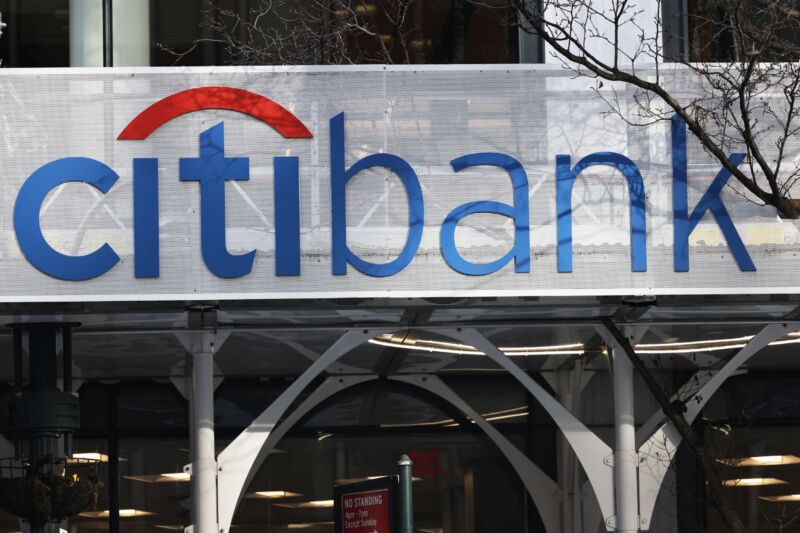
A large Citibank logo on the outside of a bank building.

Enlarge / The Citibank logo on a bank in New York City in January 2024.

Citibank has illegally refused to reimburse scam victims who lost money due partly to Citibank’s poor online security practices, New York Attorney General Letitia James alleged in a lawsuit filed today in US District Court for the Southern District of New York.

“The lawsuit alleges that Citi does not implement strong online protections to stop unauthorized account takeovers, misleads account holders about their rights after their accounts are hacked and funds are stolen, and illegally denies reimbursement to victims of fraud,” James’ office said in a press release.

The AG’s office alleged that Citi customers “have lost their life savings, their children’s college funds, or even money needed to support their day-to-day lives as a result of Citi’s illegal and deceptive acts and practices.”

“Defendant Citi has not deployed sufficiently robust data security measures to protect consumer financial accounts, respond appropriately to red flags, or limit theft by scam,” the lawsuit said. “Instead, Citi has overpromised and underdelivered on security, reacted ineffectively to fraud alerts, misled consumers, and summarily denied their claims. Citi’s illegal and deceptive practices have cost New Yorkers millions.”

Citi approved large wire transfers

Describing the case of a New York woman who lost $35,000 to a scammer in July 2022, the AG’s press release stated:

She was reviewing her online account and found a message that her account had been suspended and was instructed to call a phone number. She called the number provided and a scammer told her that he would send her Citi codes to verify recent suspicious activity. The scammer then transferred all of the money in the customer’s three savings accounts into her checking account, changed her online passwords, and attempted a $35,000 wire transfer.

Citi attempted to verify the wire transfer by calling the customer, but she was working and did not see the call at the time. Less than an hour later, the scammer attempted another $35,000 wire transfer, which Citi approved without ever having made direct contact with the customer. She lost nearly everything she had saved, and Citi refused to reimburse her.

In an October 2021 incident, a customer clicked a link in a scammer’s message “but did not provide additional information” and then “called her local branch to report the suspicious activity but was told not to worry about it,” the AG’s office said.

“Three days later, the customer discovered that a scammer changed her banking password, enrolled in online wire transfers, transferred $70,000 from her savings to her checking account, and then electronically executed a $40,000 wire transfer, none of which was consistent with her past account activity,” the AG’s office said. “For weeks, the customer continued to contact the bank and submit affidavits, but in the end, she was told that her claim for fraud was denied.”

Citi: No refunds when people “follow criminals’ instructions”

Citi defended its security and refund practices in a statement provided to Ars.

“Citi closely follows all laws and regulations related to wire transfers and works extremely hard to prevent threats from affecting our clients and to assist them in recovering losses when possible. Banks are not required to make clients whole when those clients follow criminals’ instructions and banks can see no indication the clients are being deceived,” the company said.

Citi acknowledged that there has been an “industry-wide surge in wire fraud during the last several years,” and said it has “taken proactive steps to safeguard our clients’ accounts with leading security protocols, intuitive fraud prevention tools, clear insights about the latest scams, and driving client awareness and education. Our actions have reduced client wire fraud losses significantly, and we remain committed to investing in fraud prevention measures to help our clients secure their accounts against emerging threats.”

James’ lawsuit argues that Citibank must provide reimbursement under the Electronic Fund Transfer Act (EFTA), a US law passed in 1978. “As with credit cards, so long as consumers promptly alert banks to unauthorized activity, the EFTA limits losses and requires reimbursement of stolen funds. These consumer protections cannot be waived or modified by contract… Under the EFTA, Citi’s electronic debits of consumers’ accounts are unauthorized and Citi must reimburse all debited amounts,” the lawsuit said.

The lawsuit seeks a permanent injunction against Citibank, an accounting of customer losses over the last six years, payment of restitution and damages to harmed consumers, and civil penalties.

Lawsuit: Citibank refused to reimburse scam victims who lost “life savings” Read More »

sim-swapping-ring-stole-$400m-in-crypto-from-a-us-company,-officials-allege

SIM-swapping ring stole $400M in crypto from a US company, officials allege

Undetected for years —

Scheme allegedly targeted Apple, AT&T, Verizon, and T-Mobile stores in 13 states.

SIM-swapping ring stole $400M in crypto from a US company, officials allege

The US may have uncovered the nation’s largest “SIM swap” scheme yet, charging a Chicago man and co-conspirators with allegedly stealing $400 million in cryptocurrency by targeting over 50 victims in more than a dozen states, including one company.

A recent indictment alleged that Robert Powell—using online monikers “R,” “R$,” and “ElSwapo1″—was the “head of a SIM swapping group” called the “Powell SIM Swapping Crew.” He allegedly conspired with Indiana man Carter Rohn (aka “Carti” and “Punslayer”) and Colorado woman Emily Hernandez (allegedly aka “Em”) to gain access to victims’ devices and “carry out fraudulent SIM swap attacks” between March 2021 and April 2023.

SIM-swap attacks occur when someone fraudulently induces a wireless carrier to “reassign a cell phone number from the legitimate subscriber or user’s SIM card to a SIM card controlled by a criminal actor,” the indictment said. Once the swap occurs, the bad actor can defeat multi-factor authentication protections and access online accounts to steal data or money.

Powell’s accused crew allegedly used identification card printers to forge documents, then posed as victims visiting Apple, AT&T, Verizon, and T-Mobile retail stores in Minnesota, Illinois, Indiana, Utah, Nebraska, Colorado, Florida, Maryland, Massachusetts, Texas, New Mexico, Tennessee, Virginia, and the District of Columbia.

According to the indictment, many of the alleged victims did not suffer financial losses, but those that did were allegedly hit hard. The hardest hit appears to be an employee of a company whose AT&T device was allegedly commandeered at a Texas retail store, resulting in over $400 million being allegedly transferred from the employee’s company to co-conspirators’ financial accounts. Other individual victims allegedly lost cryptocurrency valued between $15,000 and more than $1 million.

Co-conspirators are accused of masking stolen funds, sometimes by allegedly hiding transfers in unhosted or self-hosted virtual currency wallets. If convicted, all stolen funds must be forfeited, the indictment said.

Powell has been charged with conspiracy to commit wire fraud and conspiracy to commit aggravated identity theft and access device fraud, Special Agent Brent Bledsoe said in the indictment. This Friday, Powell faces a detention hearing, where he has been ordered by the US Marshals Service to appear in person.

Powell’s attorney, Gal Pissetzky, told Ars that Powell has no comment on the indictment at this time.

SIM swaps escalating in US?

When Powell’s alleged scheme began in 2021, the FBI issued a warning, noting that criminals were increasingly using SIM-swap attacks, fueling total losses that year of $68 million.

Since then, US law enforcement has made several arrests, but none of the uncovered schemes come close to the alleged losses from the thefts Powell’s crew are being accused of.

In 2022, a Florida man, Nicholas Truglia, was sentenced to 18 months for stealing more than $20 million from a single victim. On top of forfeiting the stolen funds, Truglia was also ordered to forfeit more than $900,000 as a criminal penalty. According to security blogger Brian Krebs, Truglia was connected to a group that allegedly stole $100 million using SIM-swap attacks.

Last year, there were a few notable arrests. In October, the Department of Justice sentenced a hacker, Jordan Dave Persad, to 30 months for stealing nearly $1 million from “dozens of victims.” And in December, four Florida men received sentences between eight and 27 months for stealing more than $509,475 in SIM-swap attacks.

Ars could not find any FBI warnings since 2021 raising awareness that losses from SIM-swap attacks may be further increasing to amounts as eye-popping as the alleged losses in Powell’s case.

A DOJ official was unable to confirm if this is the biggest SIM-swapping scheme alleged in the US, directing Ars to another office. Ars will update this report with any new information the DOJ provides.

US officials seem aware that some bad actors attempting SIM-swap attacks appear to be getting bolder. Earlier this year, the Securities and Exchange Commission was targeted in an attack that commandeered the agency’s account on X, formerly known as Twitter. That attack led to a misleading X post falsely announcing the approval of bitcoin exchange-traded funds, causing a brief spike in bitcoin’s price.

To protect consumers from SIM-swap attacks, the Federal Communications Commission announced new rules last year to “require wireless providers to adopt secure methods of authenticating a customer before redirecting a customer’s phone number to a new device or provider. The new rules require wireless providers to immediately notify customers whenever a SIM change or port-out request is made on customers’ accounts and take additional steps to protect customers from SIM swap and port-out fraud.” But an Ars review found these new rules may be too vague to be effective.

In 2021, when European authorities busted a SIM-swapping ring allegedly targeting high-profile individuals worldwide, Europol advised consumers to avoid becoming targets. Tips included using multifactor authentication, resisting associating sensitive accounts with mobile phone numbers, keeping devices updated, avoiding replying to suspicious emails or callers requesting sensitive information, and limiting personal data shared online. Consumers can also request the highest security settings possible from mobile carriers and are encouraged to always use stronger, longer security PINs or passwords to protect devices.

SIM-swapping ring stole $400M in crypto from a US company, officials allege Read More »

japan-government-accepts-it’s-no-longer-the-’90s,-stops-requiring-floppy-disks

Japan government accepts it’s no longer the ’90s, stops requiring floppy disks

“war on floppy disks” —

Government amends 34 ordinances to no longer require diskettes.

A pile of floppy disks

The Japanese government is finally letting go of floppy disks and CD-ROMs. It recently announced amendments to laws requiring the use of the physical media formats for submissions to the government for things like alcohol business, mining, and aircraft regulation.

Japan’s minister for Digital Transformation, Taro Kono, announced the “war on floppy discs” in August 2022. Before the recent law changes, about 1,900 government procedures required the use of obsolete disk formats, including floppy disks, CDs, and MiniDiscs, for submissions from citizens and businesses.

Kono announced intentions to amend regulations to support online submissions and cloud data storage, changing requirements that go back several decades, as noted recently by Japanese news site SoraNews24.

On January 22, Japan’s Ministry of Economy, Trade and Industry (METI) announced that it changed 34 ordinances to eradicate the requirements of floppy disks. As per a Google translation of a January 23 article from the Japanese tech website PC Watch, the ministry has deleted requirements of floppy disks and CD-ROMs for various ordinances, including some pertaining to quarrying, energy, and weapons manufacturing regulations.

METI’s announcement, as per a Google translation, highlighted the Japanese government’s “many provisions stipulating the use of specific recording media such as floppy disks regarding application and notification methods,” as well as “situations that are hindering the online implementation of procedures.”

Floppy disks first became commercially available in 1971 through IBM. They evolved through the decades, including with the release of the 3.5-inch floppy in 1983 via Sony. With usage growing and peaking in the ’80s and ’90s, the floppy disk couldn’t compete with the likes of CD-ROMs, USB thumb drives, and other more advanced forms of storage made available by the late ’90s. Sony, the last floppy disk manufacturer standing, stopped making floppies in 2011.

Floppy disks aren’t equipped for many of today’s technological needs, with storage capacity maxing at 1.44MB. Still, government bodies in Japan have been using them regularly, leading, at times, to complications. For example, in 2021, it was reported that Tokyo police lost a pair of floppy disks that had information about 38 public housing applicants.

Japan’s reliance on dated tech is something METI is tackling, but reports have noted resistance from some government bodies. This includes local governments and the Ministry of Justice resisting moving to cloud-based admin systems, per the Japan News newspaper. Japan is ranked number 32 out of 64 economies in the Institute for Management Development’s (IMD’s) 2023 World Digital Competitiveness Ranking, which the IMD says “measures the capacity and readiness of 64 economies to adopt and explore digital technologies as a key driver for economic transformation in business, government, and wider society.”

Some have attributed Japan’s sluggish movement from older technologies to its success in establishing efficiencies with analog tech. Governmental bureaucracy has also been listed as a factor.

Japan isn’t the only entity holding on to the floppy, though. Despite a single photo these days being enough to overfill a floppy disk, various industries—like embroidery, medical devices, avionics, and plastic molding—still rely on them. Even the US Air Force stopped using 8-inch floppy disks in its missile launch control system in 2019. And last year, we reported on an Illinois Chuck E. Cheese using a 3.5-inch floppy for its animatronics system.

US-based Floppydisk.com told The Register that Japan’s rule changes shouldn’t endanger the business. Its Japanese customers are “mostly hobbyists and private parties that have machines or musical equipment that continue to use floppy disks,” Tom Persky, who runs the site, said. Floppydisk.com also sells data-transfer services but told The Register in 2022 that the bulk of revenue is from blank floppy disk sales. At the time, Persky said he expected the company to last until at least 2026.

Japan government accepts it’s no longer the ’90s, stops requiring floppy disks Read More »

boeing-withdraws-bid-for-safety-exemption-as-details-on-missing-bolts-emerge

Boeing withdraws bid for safety exemption as details on missing bolts emerge

Missing bolts —

Boeing workers apparently failed to replace bolts after reinstalling door plug.

Tarp-like material covers a large opening in the side of a Boeing airplane.

Enlarge / A hole is covered where a door plug blew off a Boeing 737 Max 9 plane used by Alaska Airlines.

Getty Images

Boeing is withdrawing an application for a safety exemption related to its 737 Max 7 aircraft as more details emerge on the cause of a near-disaster involving a 737 Max 9 plane used by Alaska Airlines.

While initial inspections of Alaska Airlines’ fleet of Boeing 737 Max 9s turned up “many” loose bolts, a Wall Street Journal report yesterday said it now appears that “bolts needed to secure part of an Alaska Airlines jet that blew off in midair appear to have been missing when the plane left Boeing’s factory.”

“Boeing and other industry officials increasingly believe the plane maker’s employees failed to put back the bolts when they reinstalled a 737 Max 9 [door plug] after opening or removing it during production, according to people familiar with the matter,” the article said.

In the incident on January 5, a Boeing 737 Max 9 lost a passenger door plug while in flight, causing decompression of the passenger cabin and forcing an emergency landing (a door plug is used instead of an emergency exit door in some planes). The Federal Aviation Administration subsequently grounded 171 Boeing planes and informed Boeing that the agency “will not grant any production expansion of the Max, including the 737-9 Max.”

737 Max 7 application withdrawn

With the 737 Max 9 investigation continuing, Boeing confirmed this week that it withdrew an application for a safety exemption for the 737 Max 7. Boeing was facing pressure from US Sen. Tammy Duckworth (D-Ill.), who chairs a subcommittee on aviation safety and operations. Duckworth last week urged the FAA to reject Boeing’s request for “an exemption from safety standards to prematurely allow the 737 Max 7 to enter commercial service.”

“The exemption Boeing seeks involves an anti-ice system that can overheat and cause the engine nacelle to break apart and fall off,” Duckworth wrote. “This could generate fuselage-penetrating debris, which could endanger passengers in window seats behind the wing and/or result in a loss of control of the aircraft.”

Even though a permanent fix is not expected until 2026, Boeing “is asking the FAA to allow the Max 7 to fly with merely a warning to flight crews to remember to manually turn off the anti-ice system when the aircraft emerges from icy conditions,” Duckworth wrote. “This is a request for the FAA to certify a commercial aircraft with a single point of failure subject to human error with potentially catastrophic consequences.”

In a statement provided to Ars and other media outlets, Boeing said it is withdrawing the request for an exemption. “We have informed the FAA that we are withdrawing our request for a time-limited exemption relating to the engine inlet deicing system on the 737-7,” Boeing said. “While we are confident that the proposed time-limited exemption for that system follows established FAA processes to ensure safe operation, we will instead incorporate an engineering solution that will be completed during the certification process.

“As always, the FAA will determine the timing of certification and we will follow their lead every step of the way,” Boeing added. “We’re committed to being transparent, listening to all our stakeholders and taking action to strengthen safety and quality at Boeing.”

Duckworth also met Thursday with Boeing CEO Dave Calhoun. “After this bold-face attempt to put profits over the safety of the flying public with the Max 7 and this month’s horrific Alaska Airlines incident aboard the Max 9, I am as committed as ever to doing everything I can to ensure Boeing aircraft meet all safety standards—and I made that clear in today’s meeting,” Duckworth said.

Details suggest missing bolts on Max 9

The Wall Street Journal report about the Max 9 investigation said that an “apparent absence of markings” on the door plug is one factor suggesting that bolts were missing when the plane left Boeing’s factory. The WSJ said its sources “also pointed to paperwork and process lapses at Boeing’s Renton, Wash., factory.”

“The National Transportation Safety Board has been conducting metallurgical analysis of the [door plug] but hasn’t released the results of the testing. Laboratory tests might show whether the bolts were in place or not there at all,” the article said.

When contacted by Ars today, the NTSB said the agency’s preliminary report is slated to be released on Wednesday and “will include all of the factual information that we have developed at this point in the investigation.” (Update at 3: 38pm ET: The NTSB now says the report will not be issued on Wednesday, and a new date for its release has not been set.)

Boeing said it was unable to comment on the probe because “only the US National Transportation Safety Board can release information about the investigation.”

Boeing withdraws bid for safety exemption as details on missing bolts emerge Read More »

apple-warns-proposed-uk-law-will-affect-software-updates-around-the-world

Apple warns proposed UK law will affect software updates around the world

Heads up —

Apple may leave the UK if required to provide advance notice of product updates.

Apple warns proposed UK law will affect software updates around the world

Apple is “deeply concerned” that proposed changes to a United Kingdom law could give the UK government unprecedented power to “secretly veto” privacy and security updates to its products and services, the tech giant said in a statement provided to Ars.

If passed, potentially this spring, the amendments to the UK’s Investigatory Powers Act (IPA) could deprive not just UK users, but all users globally of important new privacy and security features, Apple warned.

“Protecting our users’ privacy and the security of their data is at the very heart of everything we do at Apple,” Apple said. “We’re deeply concerned the proposed amendments” to the IPA “now before Parliament place users’ privacy and security at risk.”

The IPA was initially passed in 2016 to ensure that UK officials had lawful access to user data to investigate crimes like child sexual exploitation or terrorism. Proposed amendments were announced last November, after a review showed that the “Act has not been immune to changes in technology over the last six years” and “there is a risk that some of these technological changes have had a negative effect on law enforcement and intelligence services’ capabilities.”

The proposed amendments require that any company that fields government data requests must notify UK officials of any updates they planned to make that could restrict the UK government’s access to this data, including any updates impacting users outside the UK.

UK officials said that this would “help the UK anticipate the risk to public safety posed by the rolling out of technology by multinational companies that precludes lawful access to data. This will reduce the risk of the most serious offenses such as child sexual exploitation and abuse or terrorism going undetected.”

According to the BBC, the House of Lords will begin debating the proposed changes on Tuesday.

Ahead of that debate, Apple described the amendments on Monday as “an unprecedented overreach by the government” that “if enacted” could allow the UK to “attempt to secretly veto new user protections globally, preventing us from ever offering them to customers.”

In a letter last year, Apple argued that “it would be improper for the Home Office to act as the world’s regulator of security technology.”

Apple told the UK Home Office that imposing “secret requirements on providers located in other countries” that apply to users globally “could be used to force a company like Apple, that would never build a backdoor, to publicly withdraw critical security features from the UK market, depriving UK users of these protections.” It could also “dramatically disrupt the global market for security technologies, putting users in the UK and around the world at greater risk,” Apple claimed.

The proposed changes, Apple said, “would suppress innovation, stifle commerce, and—when combined with purported extraterritorial application—make the Home Office the de facto global arbiter of what level of data security and encryption are permissible.”

UK defends proposed changes

The UK Home Office has repeatedly stressed that these changes do not “provide powers for the Secretary of State to approve or refuse technical changes,” but “simply” requires companies “to inform the Secretary of State of relevant changes before those changes are implemented.”

“The intention is not to introduce a consent or veto mechanism or any other kind of barrier to market,” a UK Home Office fact sheet said. “A key driver for this amendment is to give operational partners time to understand the change and adapt their investigative techniques where necessary, which may in some circumstances be all that is required to maintain lawful access.”

The Home Office has also claimed that “these changes do not directly relate to end-to-end encryption,” while admitting that they “are designed to ensure that companies are not able to unilaterally make design changes which compromise exceptional lawful access where the stringent safeguards of the IPA regime are met.”

This seems to suggest that companies will not be allowed to cut off the UK government from accessing encrypted data under certain circumstances, which concerns privacy advocates who consider end-to-end encryption a vital user privacy and security protection. Earlier this month, civil liberties groups including Big Brother Watch, Liberty, Open Rights Group and Privacy International filed a joint brief opposing the proposed changes, the BBC reported, warning that passing the amendments would be “effectively transforming private companies into arms of the surveillance state and eroding the security of devices and the Internet.”

“We have always been clear that we support technological innovation and private and secure communications technologies, including end-to-end encryption, but this cannot come at a cost to public safety,” a UK government official told the BBC.

The UK government may face more opposition to the amendments than from tech companies and privacy advocates, though. In Apple’s letter last year, the tech giant noted that the proposed changes to the IPA could conflict with EU and US laws, including the EU’s General Data Protection Regulation—considered the world’s strongest privacy law.

Under the GDPR, companies must implement measures to safeguard users’ personal data, Apple said, noting that “encryption is one means by which a company can meet” that obligation.

“Secretly installing backdoors in end-to-end encrypted technologies in order to comply with UK law for persons not subject to any lawful process would violate that obligation,” Apple argued.

Apple warns proposed UK law will affect software updates around the world Read More »

nsa-finally-admits-to-spying-on-americans-by-purchasing-sensitive-data

NSA finally admits to spying on Americans by purchasing sensitive data

Leaving Americans in the dark —

Violating Americans’ privacy “not just unethical but illegal,” senator says.

NSA finally admits to spying on Americans by purchasing sensitive data

The National Security Agency (NSA) has admitted to buying records from data brokers detailing which websites and apps Americans use, US Senator Ron Wyden (D-Ore.) revealed Thursday.

This news follows Wyden’s push last year that forced the FBI to admit that it was also buying Americans’ sensitive data. Now, the senator is calling on all intelligence agencies to “stop buying personal data from Americans that has been obtained illegally by data brokers.”

“The US government should not be funding and legitimizing a shady industry whose flagrant violations of Americans’ privacy are not just unethical but illegal,” Wyden said in a letter to Director of National Intelligence (DNI) Avril Haines. “To that end, I request that you adopt a policy that, going forward,” intelligence agencies “may only purchase data about Americans that meets the standard for legal data sales established by the FTC.”

Wyden suggested that the intelligence community might be helping data brokers violate an FTC order requiring that Americans are provided “clear and conspicuous” disclosures and give informed consent before their data can be sold to third parties. In the seven years that Wyden has been investigating data brokers, he said that he has not been made “aware of any company that provides such a warning to users before collecting their data.”

The FTC’s order came after reaching a settlement with a data broker called X-Mode, which admitted to selling sensitive location data without user consent and even to selling data after users revoked consent.

In his letter, Wyden referred to this order as the FTC outlining “new rules,” but that’s not exactly what happened. Instead of issuing rules, FTC settlements often serve as “common law,” signaling to marketplaces which practices violate laws like the FTC Act.

According to the FTC’s analysis of the order on its site, X-Mode violated the FTC Act by “unfairly selling sensitive data, unfairly failing to honor consumers’ privacy choices, unfairly collecting and using consumer location data, unfairly collecting and using consumer location data without consent verification, unfairly categorizing consumers based on sensitive characteristics for marketing purposes, deceptively failing to disclose use of location data, and providing the means and instrumentalities to engage in deceptive acts or practices.”

The FTC declined to comment on whether the order also applies to data purchases by intelligence agencies. In defining “location data,” the FTC order seems to carve out exceptions for any data collected outside the US and used for either “security purposes” or “national security purposes conducted by federal agencies or other federal entities.”

NSA must purge data, Wyden says

NSA officials told Wyden that not only is the intelligence agency purchasing data on Americans located in the US but that it also bought Americans’ Internet metadata.

Wyden warned that the former “can reveal sensitive, private information about a person based on where they go on the Internet, including visiting websites related to mental health resources, resources for survivors of sexual assault or domestic abuse, or visiting a telehealth provider who focuses on birth control or abortion medication.” And the latter “can be equally sensitive.”

To fix the problem, Wyden wants intelligence communities to agree to inventory and then “promptly” purge the data that they allegedly illegally collected on Americans without a warrant. Wyden said that this process has allowed agencies like the NSA and the FBI “in effect” to use “their credit card to circumvent the Fourth Amendment.”

X-Mode’s practices, the FTC said, were likely to cause “substantial injury to consumers that are not outweighed by countervailing benefits to consumers or competition and are not reasonably avoidable by consumers themselves.” Wyden’s spokesperson, Keith Chu, told Ars that “the data brokers selling Internet records to the government appear to engage in nearly identical conduct” to X-Mode.

The FTC’s order also indicates “that Americans must be told and agree to their data being sold to ‘government contractors for national security purposes’ for the practice to be allowed,” Wyden said.

DoD defends shady data broker dealings

In response to Wyden’s letter to Haines, the Under Secretary of Defense for Intelligence & Security, Ronald Moultrie, said that the Department of Defense (DoD) “adheres to high standards of privacy and civil liberties protections” when buying Americans’ location data. He also said that he was “not aware of any requirement in US law or judicial opinion” forcing the DoD to “obtain a court order in order to acquire, access, or use” commercially available information that “is equally available for purchase to foreign adversaries, US companies, and private persons as it is to the US government.”

In another response to Wyden, NSA leader General Paul Nakasone told Wyden that the “NSA takes steps to minimize the collection of US person information” and “continues to acquire only the most useful data relevant to mission requirements.” That includes some commercially available information on Americans “where one side of the communications is a US Internet Protocol address and the other is located abroad,” data which Nakasone said is “critical to protecting the US Defense Industrial Base” that sustains military weapons systems.

While the FTC has so far cracked down on a few data brokers, Wyden believes that the shady practice of selling data without Americans’ informed consent is an “industry-wide” problem in need of regulation. Rather than being a customer in this sketchy marketplace, intelligence agencies should stop funding companies allegedly guilty of what the FTC has described as “intrusive” and “unchecked” surveillance of Americans, Wyden said.

According to Moultrie, DNI Haines decides what information sources are “relevant and appropriate” to aid intelligence agencies.

But Wyden believes that Americans should have the opportunity to opt out of consenting to such invasive, secretive data collection. He said that by purchasing data from shady brokers, US intelligence agencies have helped create a world where consumers have no opportunity to consent to intrusive tracking.

“The secrecy around data purchases was amplified because intelligence agencies have sought to keep the American people in the dark,” Wyden told Haines.

NSA finally admits to spying on Americans by purchasing sensitive data Read More »

x-can’t-stop-spread-of-explicit,-fake-ai-taylor-swift-images

X can’t stop spread of explicit, fake AI Taylor Swift images

Escalating the situation —

Will Swifties’ war on AI fakes spark a deepfake porn reckoning?

X can’t stop spread of explicit, fake AI Taylor Swift images

Explicit, fake AI-generated images sexualizing Taylor Swift began circulating online this week, quickly sparking mass outrage that may finally force a mainstream reckoning with harms caused by spreading non-consensual deepfake pornography.

A wide variety of deepfakes targeting Swift began spreading on X, the platform formerly known as Twitter, yesterday.

Ars found that some posts have been removed, while others remain online, as of this writing. One X post was viewed more than 45 million times over approximately 17 hours before it was removed, The Verge reported. Seemingly fueling more spread, X promoted these posts under the trending topic “Taylor Swift AI” in some regions, The Verge reported.

The Verge noted that since these images started spreading, “a deluge of new graphic fakes have since appeared.” According to Fast Company, these harmful images were posted on X but soon spread to other platforms, including Reddit, Facebook, and Instagram. Some platforms, like X, ban sharing of AI-generated images but seem to struggle with detecting banned content before it becomes widely viewed.

Ars’ AI reporter Benj Edwards warned in 2022 that AI image-generation technology was rapidly advancing, making it easy to train an AI model on just a handful of photos before it could be used to create fake but convincing images of that person in infinite quantities. That is seemingly what happened to Swift, and it’s currently unknown how many different non-consensual deepfakes have been generated or how widely those images have spread.

It’s also unknown what consequences have resulted from spreading the images. At least one verified X user had their account suspended after sharing fake images of Swift, The Verge reported, but Ars reviewed posts on X from Swift fans targeting others who allegedly shared images whose accounts remain active. Swift fans also have been uploading countless favorite photos of Swift to bury the harmful images and prevent them from appearing in various X searches. Her fans seem dedicated to reducing the spread however they can, with some posting different addresses, seemingly in attempts to dox an X user who, they’ve alleged, is the initial source of the images.

Neither X nor Swift’s team has yet commented on the deepfakes, but it seems clear that solving the problem will require more than just requesting removals from social media platforms. The AI model trained on Swift’s images is likely still out there, likely procured through one of the known websites that specialize in making fine-tuned celebrity AI models. As long as the model exists, anyone with access could crank out as many new images as they wanted, making it hard for even someone with Swift’s resources to make the problem go away for good.

In that way, Swift’s predicament might raise awareness of why creating and sharing non-consensual deepfake pornography is harmful, perhaps moving the culture away from persistent notions that nobody is harmed by non-consensual AI-generated fakes.

Swift’s plight could also inspire regulators to act faster to combat non-consensual deepfake porn. Last year, she inspired a Senate hearing after a Live Nation scandal frustrated her fans, triggering lawmakers’ antitrust concerns about the leading ticket seller, The New York Times reported.

Some lawmakers are already working to combat deepfake porn. Congressman Joe Morelle (D-NY) proposed a law criminalizing deepfake porn earlier this year after teen boys at a New Jersey high school used AI image generators to create and share non-consensual fake nude images of female classmates. Under that proposed law, anyone sharing deepfake pornography without an individual’s consent risks fines and being imprisoned for up to two years. Damages could go as high as $150,000 and imprisonment for as long as 10 years if sharing the images facilitates violence or impacts the proceedings of a government agency.

Elsewhere, the UK’s Online Safety Act restricts any illegal content from being shared on platforms, including deepfake pornography. It requires moderation, or companies will risk fines worth more than $20 million, or 10 percent of their global annual turnover, whichever amount is higher.

The UK law, however, is controversial because it requires companies to scan private messages for illegal content. That makes it practically impossible for platforms to provide end-to-end encryption, which the American Civil Liberties Union has described as vital for user privacy and security.

As regulators tangle with legal questions and social media users with moral ones, some AI image generators have moved to limit models from producing NSFW outputs. Some did this by removing some of the large quantity of sexualized images in the models’ training data, such as Stability AI, the company behind Stable Diffusion. Others, like Microsoft’s Bing image creator, make it easy for users to report NSFW outputs.

But so far, keeping up with reports of deepfake porn seems to fall squarely on social media platforms’ shoulders. Swift’s battle this week shows how unprepared even the biggest platforms currently are to handle blitzes of harmful images seemingly uploaded faster than they can be removed.

X can’t stop spread of explicit, fake AI Taylor Swift images Read More »

amazon-ring-stops-letting-police-request-footage-in-neighbors-app-after-outcry

Amazon Ring stops letting police request footage in Neighbors app after outcry

Neighborhood watch —

Warrantless access may still be granted during vaguely defined “emergencies.”

Amazon Ring stops letting police request footage in Neighbors app after outcry

Amazon Ring has shut down a controversial feature in its community safety app Neighbors that has allowed police to contact homeowners and request doorbell and surveillance camera footage without a warrant for years.

In a blog, head of the Neighbors app Eric Kuhn confirmed that “public safety agencies like fire and police departments can still use the Neighbors app to share helpful safety tips, updates, and community events,” but the Request for Assistance (RFA) tool will be disabled.

“They will no longer be able to use the RFA tool to request and receive video in the app,” Kuhn wrote.

Kuhn did not explain why Neighbors chose to “sunset” the RFA tool, but privacy advocates and lawmakers have long criticized Ring for helping to expand police surveillance in communities, seemingly threatening privacy and enabling racial profiling, CNBC reported. Among the staunchest critics of Ring’s seemingly tight relationship with law enforcement is the Electronic Frontier Foundation (EFF), which has long advocated for Ring and its users to stop sharing footage with police without a warrant.

In a statement provided to Ars, EFF senior policy analyst Matthew Guariglia noted that Ring had launched the RFA tool after EFF and other organizations had criticized Ring for allowing police to privately email warrantless requests for footage in the Neighbors app. Rather than end requests through the app entirely, Ring appeared to see the RFA tool as a middle ground, providing transparency about how many requests were being made, without ending police access to community members readily sharing footage on the app.

“Now, Ring hopefully will altogether be out of the business of platforming casual and warrantless police requests for footage to its users,” Guariglia said.

Moving forward, police and public safety agencies with warrants will still be able to request footage, which Amazon documents in transparency reports published every six months. These reports show thousands of search warrant requests and even more “preservation requests,” which allow government agencies to request to preserve user information for up to 90 days, “pending the receipt of a legally valid and binding order.”

“If we are legally required to comply, we will provide information responsive to the government demand,” Ring’s website says.

Ring rebrand embraces “hope and joy”

Guariglia said that Ring sunsetting the RFA tool “is a step in the right direction,” but it has “come after years of cozy relationships with police and irresponsible handling of data” that has, for many, damaged trust in Ring.

In 2022, EFF reported that Ring admitted that “there are ’emergency’ instances when police can get warrantless access to Ring personal devices without the owner’s permission.” And last year, Ring reached a $5.8 million settlement with the Federal Trade Commission, refunding customers for what the FTC described as “compromising its customers’ privacy by allowing any employee or contractor to access consumers’ private videos and by failing to implement basic privacy and security protections, enabling hackers to take control of consumers’ accounts, cameras, and videos.”

Because of this history, Guariglia said that EFF is “still deeply skeptical about law enforcement’s and Ring’s ability to determine what is, or is not, an emergency that requires the company to hand over footage without a warrant or user consent.”

EFF recommends additional steps that Ring could take to enhance user privacy, like enabling end-to-end encryption by default and turning off default audio collection, Guariglia said.

Bloomberg noted that this change to the Neighbors app comes after a new CEO, Liz Hamren, came on board, announcing that last year “Ring was rethinking its mission statement.” Because Ring was adding indoor and backyard home monitoring and business services, the company’s initial mission statement—”to reduce crime in neighborhoods”—was no longer, as founding Ring CEO Jamie Siminoff had promoted it, “at the core” of what Ring does.

In Kuhn’s blog, barely any attention is given to ending the RFA tool. A Ring spokesperson declined to tell Ars how many users had volunteered to use the tool, so it remains unclear how popular it was.

Rather than clarifying the RFA tool controversy, Kuhn’s blog primarily focused on describing how much Ring users loved “heartwarming or silly” footage like a “bear relaxing in a pool.” Under Hamren and Kuhn’s guidance, it appears that the Neighbors app is embracing a new mission of connecting communities to find “hope and joy” in their areas by adding new features to Neighbors like Moments and Best of Ring.

By contrast, when Ring introduced the RFA tool, it said that its mission was “to make neighborhoods safer for everyone.” On a help page, Ring bragged that police had used Neighbors to recover stolen guns and medical supplies. Because of these selling points, Ring’s community safety features may still be priorities for some users. So, while Ring may be ready to move on from highlighting its partnership with law enforcement as a “core” part of its service, its users may still be used to seeing their cameras as tools that should be readily accessible to police.

As law enforcement agencies lose access to Neighbors’ RFA tool, Guariglia said that it’s important to raise awareness among Ring owners that police can’t demand access to footage without a warrant.

“This announcement will not stop police from trying to get Ring footage directly from device owners without a warrant,” Guariglia said. “Ring users should also know that when police knock on their door, they have the right to, and should, request that police get a warrant before handing over footage.”

Amazon Ring stops letting police request footage in Neighbors app after outcry Read More »

ebay-lays-off-1,000-employees,-about-9-percent-of-full-time-workforce

eBay lays off 1,000 employees, about 9 percent of full-time workforce

eBay layoffs —

Cutting 1,000 jobs, eBay says “headcount and expenses have outpaced” growth.

A large eBay logo on a sign near the company headquarters building.

Getty Images | Justin Sullivan

eBay is laying off approximately 1,000 employees in a move that reduces its full-time workforce by 9 percent, the company announced yesterday. eBay also plans “to scale back the number of contracts we have within our alternate workforce over the coming months,” CEO Jamie Iannone wrote in a message to staff that was titled, “Ensuring eBay’s Long-Term Success.”

Iannone cited “the challenging macroeconomic environment” and said that eBay has too many employees. “While we are making progress against our strategy, our overall headcount and expenses have outpaced the growth of our business,” he wrote.

eBay asked all US-based employees to work from home on Wednesday “to provide some space and privacy” for conversations in which laid-off employees were to be given the bad news. The 1,000 layoffs come nearly one year after eBay eliminated 500 employees.

eBay reported $2.5 billion of revenue in its most recent quarterly earnings, for Q3 2023, a rise of 5 percent year over year. Q3 2023 net income was $1.3 billion, whereas the company had reported a net loss of $70 million in Q3 2022. eBay’s Q3 operating income was $455 million, down from $568 million the previous year.

eBay exceeded earnings expectations

eBay also said it “returned $783 million to shareholders in Q3, including $651 million of share repurchases and $132 million paid in cash dividends.” eBay’s stock price was up 0.48 percent today but has fallen about 5 percent this month.

“In Q3, we met or exceeded expectations across all of our key financial metrics,” eBay Chief Financial Officer Steve Priest said at the time. “Our strong balance sheet and operational rigor enable us to adapt to the evolving changes in this dynamic macro environment. We will continue to be prudent with cost efficiencies, saving to invest for the future, while remaining good stewards of capital for our shareholders.”

Even though eBay beat earnings estimates in Q3, The Wall Street Journal pointed out some challenges facing the company going forward. “The company has been under pressure amid rising competition from the likes of Amazon.com and Walmart, as well as from emerging Chinese retailers such as Temu and Shein,” the WSJ wrote. “High interest rates and sticky inflation in the US and other major economies have also weighed on consumers’ discretionary spending.”

eBay’s layoff announcement is the latest in a string of job cuts in the tech industry. Amazon this month announced layoffs of 500 employees at Twitch and several hundred more at its MGM and Prime Video divisions. Google announced layoffs of 100 employees at YouTube after previously laying off hundreds of workers in several other divisions.

eBay lays off 1,000 employees, about 9 percent of full-time workforce Read More »

mugger-take-your-phone?-cash-apps-too-easily-let-thieves-drain-accounts,-da-says

Mugger take your phone? Cash apps too easily let thieves drain accounts, DA says

Mugger take your phone? Cash apps too easily let thieves drain accounts, DA says

Popular apps like Venmo, Zelle, and Cash App aren’t doing enough to protect consumers from fraud that occurs when unauthorized users gain access to unlocked devices, Manhattan District Attorney Alvin Bragg warned.

“Thousands or even tens of thousands can be drained from financial accounts in a matter of seconds with just a few taps,” Bragg said in letters to app makers. “Without additional protections, customers’ financial and physical safety is being put at risk.”

According to Bragg, his office and the New York Police Department have been increasingly prosecuting crimes where phones are commandeered by bad actors to quickly steal large amounts of money through financial apps.

This can happen to unwitting victims when fraudsters ask “to use an individual’s smartphone for personal use” or to transfer funds to initiate a donation for a specific cause. Or “in the most disturbing cases,” Bragg said, “offenders have violently assaulted or drugged victims, and either compelled them to provide a password for a device or used biometric ID to open the victim’s phone before transferring money once the individual is incapacitated.”

But prosecuting crimes alone won’t solve this problem, Bragg suggested. Prevention is necessary. That’s why the DA is requesting meetings with executives managing widely used financial apps to discuss “commonsense” security measures that Bragg said can be taken to “combat this growing concern.”

Bragg appears particularly interested in Apple’s recently developed “Stolen Device Protection,” which he said is “making it harder for perpetrators to use a phone’s passcode to steal funds when the user’s phone is not at home or at work.”

Apple just rolled out “Stolen Device Protection” for iOS 17.3. On its website, Apple explained that when “Stolen Device Protection” is enabled, “some features and actions have additional security requirements when your iPhone is away from familiar locations such as home or work.”

For users taking advantage of this enhanced security layer, biometric or FaceID would be required to access devices, with no option to bypass with a passcode. This alone could help deter crimes that Bragg described, potentially stopping thieves from rifling through someone’s passwords to get instant access to a cash app. “Stolen Device Protection” also sets up a security delay that could stop thieves from immediately changing the account password and locking an owner out of their device. To change a password in this more secure mode, thieves would need to wait one hour—perhaps giving time for the owner to report that the phone is stolen or missing—and then must provide a biometric or FaceID.

Bragg wants financial apps like Zelle or Venmo to follow Apple’s lead and build similar safeguards. He suggested that Apple’s release makes it clear that the technology exists where apps could detect when a user is attempting to send a large transaction from an unknown location and perhaps block or delay sending that transaction for up to a day without secondary verification. This could afford victims more time to discover and cancel fraudulent transfers before they go through, instead of after the theft, when it’s usually harder to claw back funds.

This problem goes well beyond Manhattan, Bragg wrote, pointing to “similar thefts and robberies” that have been “publicly reported” in major cities like Los Angeles and Orlando, as well as in West Virginia, Louisiana, Illinois, Kansas, Tennessee, Virginia, and “elsewhere across the United States.”

Overall, the DA traced a pattern showing that the more people were using financial apps, the more fraud claims spiked, “tripling between 2020 and 2022” and “costing consumers hundreds of millions of dollars each year.”

“While cash apps, like Cash App, offer consumers an easy and fast method to transfer funds, they also have made these platforms a favorite of fraudsters because consumers have no option to cancel transactions, even moments after authorizing them,” Bragg wrote to Cash App CEO Brian Grassadonia. “I am concerned about the troubling rise in illegal behavior that has developed because of insufficient security measures connected with your software and business policy decisions.”

While building tech like Apple’s “Stolen Device Protection” seems to be the most extreme step that Bragg recommended, he also pushed “commonsense solutions” that he claimed that financial apps currently overlook. These include steps like requiring multifactor authentication to help keep thieves locked out and lowering limits on daily transfers to make the scam less appealing to thieves looking for a big payday.

Mugger take your phone? Cash apps too easily let thieves drain accounts, DA says Read More »

patreon:-blocking-platforms-from-sharing-user-video-data-is-unconstitutional

Patreon: Blocking platforms from sharing user video data is unconstitutional

Patreon: Blocking platforms from sharing user video data is unconstitutional

Patreon, a monetization platform for content creators, has asked a federal judge to deem unconstitutional a rarely invoked law that some privacy advocates consider one of the nation’s “strongest protections of consumer privacy against a specific form of data collection.” Such a ruling would end decades that the US spent carefully shielding the privacy of millions of Americans’ personal video viewing habits.

The Video Privacy Protection Act (VPPA) blocks businesses from sharing data with third parties on customers’ video purchases and rentals. At a minimum, the VPPA requires written consent each time a business wants to share this sensitive video data—including the title, description, and, in most cases, the subject matter.

The VPPA was passed in 1988 in response to backlash over a reporter sharing the video store rental history of a judge, Robert Bork, who had been nominated to the Supreme Court by Ronald Reagan. The report revealed that Bork apparently liked spy thrillers and British costume dramas and suggested that maybe the judge had a family member who dug John Hughes movies.

Although the videos that Bork rented “revealed nothing particularly salacious” about the judge, the intent of reporting the “Bork Tapes” was to confront the judge “with his own vulnerability to privacy harms” during a time when the Supreme Court nominee had “criticized the constitutional right to privacy” as “a loose canon in the law,” Harvard Law Review noted.

Even though no harm was caused by sharing the “Bork Tapes,” policymakers on both sides of the aisle agreed that First Amendment protections ought to safeguard the privacy of people’s viewing habits, or else risk chilling their speech by altering their viewing habits. The US government has not budged on this stance since, supporting a lawsuit filed in 2022 by Patreon users who claimed that while no harms were caused, damages are owed after Patreon allegedly violated the VPPA by sharing data on videos they watched on the platform with Facebook through Meta Pixel without users’ written consent.

“Restricting the ability of those who possess a consumer’s video purchase, rental, or request history to disclose such information directly advances the goal of keeping that information private and protecting consumers’ intellectual freedom,” the Department of Justice’s brief said.

The Meta Pixel is a piece of code used by companies like Patreon to better target content to users by tracking their activity and monitoring conversions on Meta platforms. “In simplest terms,” Patreon users said in an amended complaint, “the Pixel allows Meta to know what video content one of its users viewed on Patreon’s website.”

The Pixel is currently at the center of a pile of privacy lawsuits, where people have accused various platforms of using the Pixel to covertly share sensitive data without users’ consent, including health and financial data.

Several lawsuits have specifically lobbed VPPA claims, which users have argued validates the urgency of retaining the VPPA protections that Patreon now seeks to strike. The DOJ argued that “the explosion of recent VPPA cases” is proof “that the disclosures the statute seeks to prevent are a legitimate concern,” despite Patreon’s arguments that the statute does “nothing to materially or directly advance the privacy interests it supposedly was enacted to protect.”

Patreon’s attack on the VPPA

Patreon has argued in a recent court filing that the VPPA was not enacted to protect average video viewers from embarrassing and unwarranted disclosures but “for the express purpose of silencing disclosures about political figures and their video-watching, an issue of undisputed continuing public interest and concern.”

That’s one of many ways that the VPPA silences speech, Patreon argued, by allegedly preventing disclosures regarding public figures that are relevant to public interest.

Among other “fatal flaws,” Patreon alleged, the VPPA “restrains speech” while “doing little if anything to protect privacy” and never protecting privacy “by the least restrictive means.”

Patreon claimed that the VPPA is too narrow, focusing only on pre-recorded videos. It prevents video service providers from disclosing to any other person the titles of videos that someone watched, but it does not necessarily stop platforms from sharing information about “the genres, performers, directors, political views, sexual content, and every other detail of pre-recorded video that those consumers watch,” Patreon claimed.

Patreon: Blocking platforms from sharing user video data is unconstitutional Read More »