This week, as part of the process to develop a budget for fiscal-year 2026, the Trump White House shared the draft version of its budget request for NASA with the space agency.
This initial version of the administration’s budget request calls for an approximately 20 percent overall cut to the agency’s budget across the board, effectively $5 billion from an overall topline of about $25 billion. However, the majority of the cuts are concentrated within the agency’s Science Mission Directorate, which oversees all planetary science, Earth science, astrophysics research, and more.
According to the “passback” documents given to NASA officials on Thursday, the space agency’s science programs would receive nearly a 50 percent cut in funding. After the agency received $7.5 billion for science in fiscal-year 2025, the Trump administration has proposed a science topline budget of just $3.9 billion for the coming fiscal year.
Detailing the cuts
Among the proposals were: A two-thirds cut to astrophysics, down to $487 million; a greater than two-thirds cut to heliophysics, down to $455 million; a greater than 50 percent cut to Earth science, down to $1.033 billion; and a 30 percent cut to Planetary science, down to $1.929 billion.
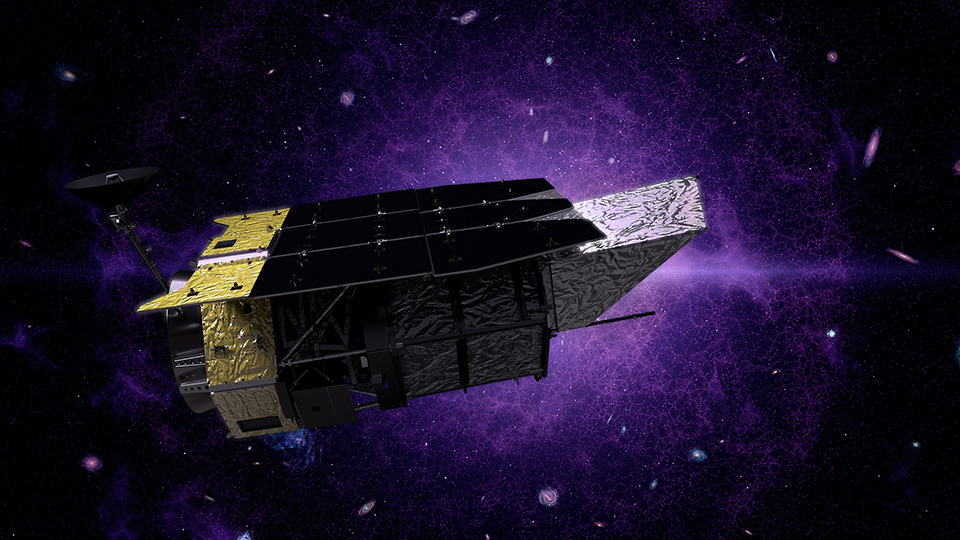
Although the budget would continue support for ongoing missions such as the Hubble Space Telescope and the James Webb Space Telescope, it would kill the much-anticipated Nancy Grace Roman Space Telescope, an observatory seen as on par with those two world-class instruments that is already fully assembled and on budget for a launch in two years.
“Passback supports continued operation of the Hubble and James Webb Space Telescopes and assumes no funding is provided for other telescopes,” the document states.
WASHINGTON, DC—Over the course of a nearly three-hour committee hearing Wednesday, the nominee to lead NASA for the Trump administration faced difficult questions from US senators who sought commitments to specific projects.
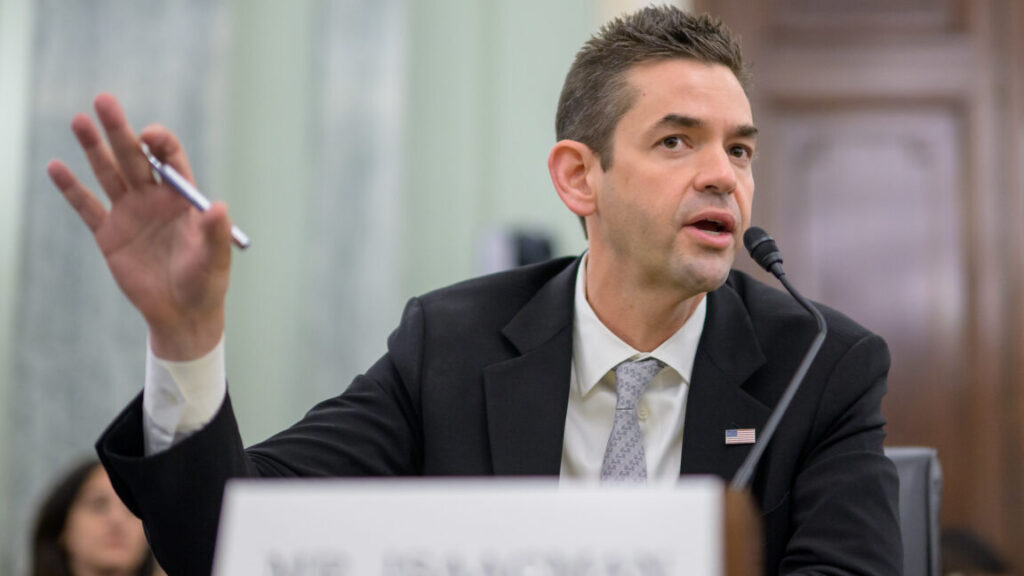
However, maneuvering like a pilot with more than 7,000 hours in jets and ex-military aircraft, entrepreneur and private astronaut Jared Isaacman dodged most of their questions and would not be pinned down. His basic message to members of the Senate Committee on Commerce, Science, and Transportation was that NASA is an exceptional agency that does the impossible, but that it also faces some challenges. NASA, he said, receives an “extraordinary” budget, and he vowed to put taxpayer dollars to efficient use in exploring the universe and retaining the nation’s lead on geopolitical competitors in space.
“I have lived the American dream, and I owe this nation a great debt,” said Isaacman, who founded his first business at 16 in his parents’ basement and would go on to found an online payments company, Shift4, that would make him a billionaire. Isaacman is also an avid pilot who self-funded and led two private missions to orbit on Crew Dragon. Leading NASA would be “the privilege of a lifetime,” he said.
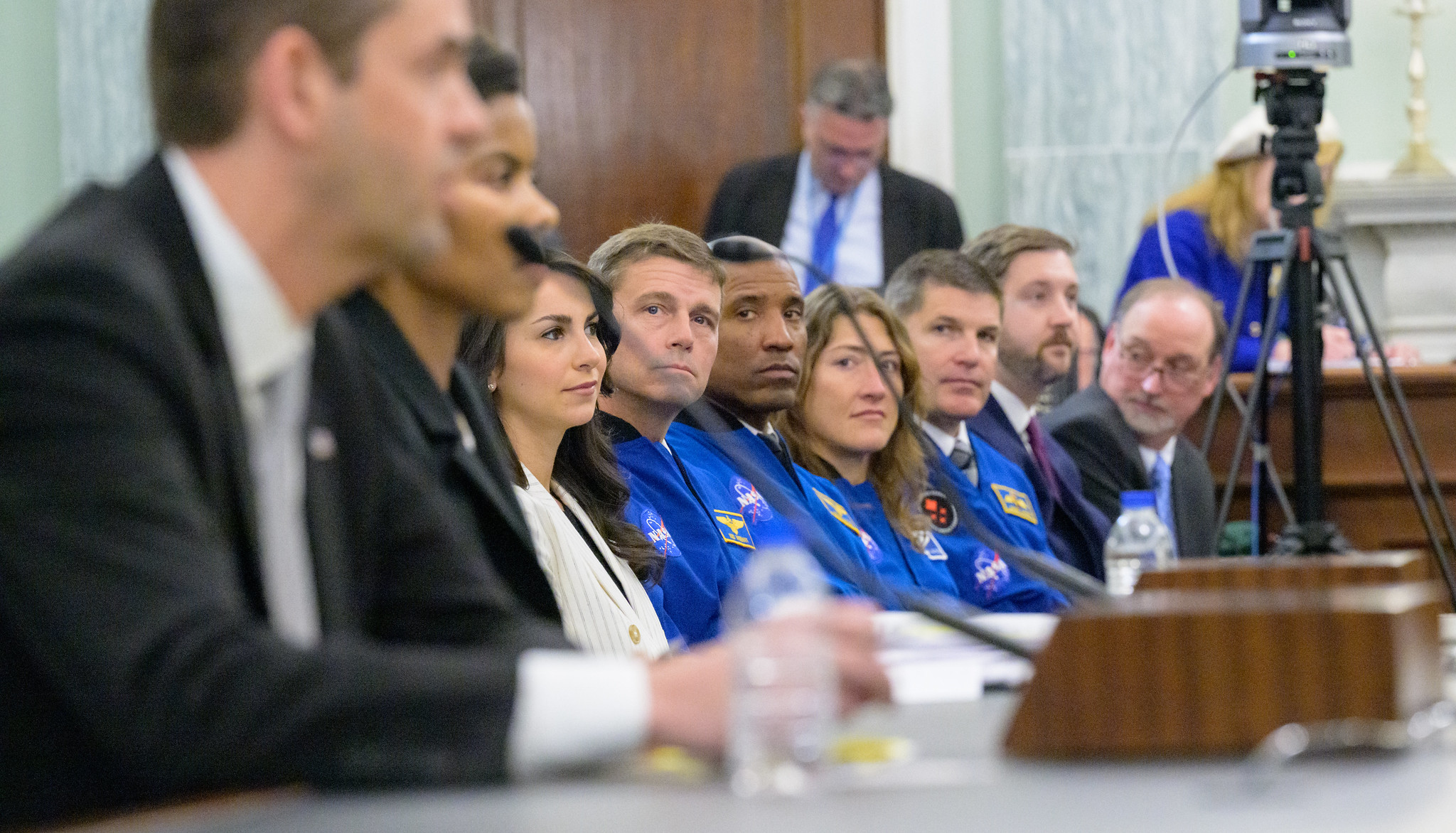
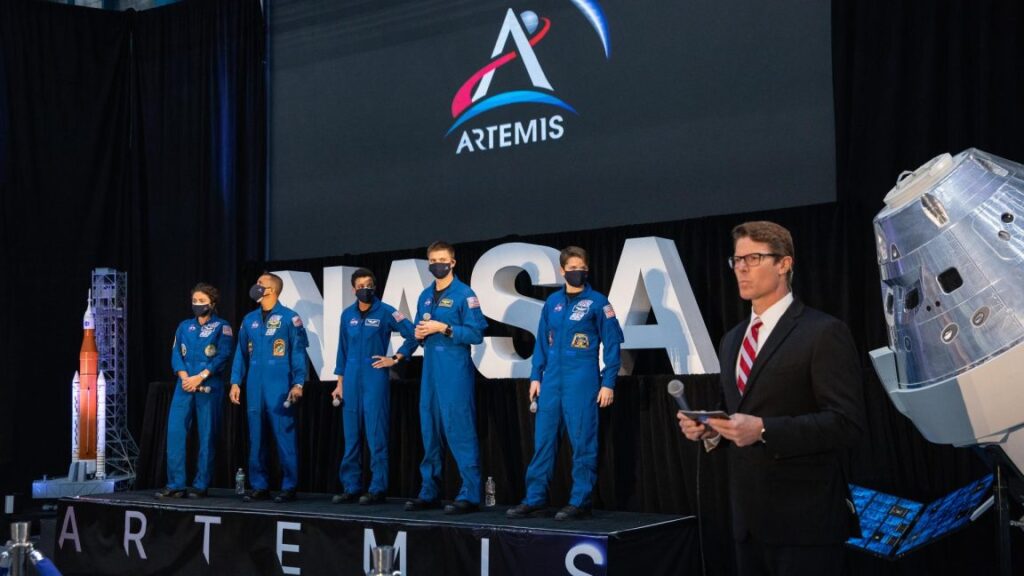
The hearing took place in the Russell Senate Office building next to the US Capitol on Wednesday morning, in an expansive room with marbled columns and three large chandeliers. There was plenty of spaceflight royalty on hand, including the four astronauts who will fly on the Artemis II mission, as well as the six private citizens who flew with Isaacman on his two Dragon missions.
“This may be the most badass assemblage we’ve had at a Senate hearing,” said US Sen. Ted Cruz, R-Texas, chair of the committee, commenting on the astronauts in the room.
Committed to staying at the Moon?
However, when the meeting got down to brass tacks, there were sharp questions for Isaacman.
Cruz opened the hearing by stating his priorities for NASA clearly and explicitly: He is most focused on ensuring the United States does not cede any of its preeminence to China in space, and this starts with low-Earth orbit and the Moon.
“Make no mistake, the Chinese Communist Party has been explicit in its desire to dominate space, putting a fully functional space station in low-Earth orbit and robotic rovers on the far side of the Moon,” he said. “We are not headed for the next space race; it is already here.”
Cruz wanted Isaacman to commit to not just flying human missions to the Moon, but also to a sustained presence on the surface or in cislunar space.
In response, Isaacman said he would see that NASA returns humans to the Moon as quickly as possible, beating China in the process. This includes flying Artemis II around the Moon in 2026, and then landing the Artemis III mission later this decade.
The disagreement came over what to do after this. Isaacman, echoing the Trump administration, said the agency should also press onward, sending humans to Mars as soon as possible. Cruz, however, wanted Isaacman to say NASA would establish a sustained presence at the Moon. The committee has written authorizing legislation to mandate this, Cruz reminded Isaacman.
“If that’s the law, then I am committed to it,” Isaacman said.
NASA astronauts Reid Wiseman, left, Victor Glover, Christina Koch, and CSA (Canadian Space Agency) astronaut Jeremy Hansen watch as Jared Isaacman testifies on Wednesday.
Credit: NASA/Bill Ingalls
NASA astronauts Reid Wiseman, left, Victor Glover, Christina Koch, and CSA (Canadian Space Agency) astronaut Jeremy Hansen watch as Jared Isaacman testifies on Wednesday. Credit: NASA/Bill Ingalls
Cruz also sought Isaacman’s commitment to flying the International Space Station through at least 2030, which is the space agency’s current date for retiring the orbital laboratory. Isaacman said that seemed reasonable and added that NASA should squeeze every possible bit of research out of it until then. However, when Cruz pressed Isaacman about the Lunar Gateway, a space station NASA is developing to fly in an elliptical orbit around the Moon, Isaacman would not be drawn in. He replied that he would work with Congress and space agency officials to determine which programs are working and which ones are not.
The Gateway is a program championed by Cruz since it is managed by Johnson Space Center in Texas. Parochial interests aside, a lot of space community stakeholders question the value of the Gateway to NASA’s exploration plans.
Ten centers and the future of SLS
One of the most tense interactions came between Isaacman and Sen. Maria Cantwell, D-Wash., who wanted commitments from Isaacman that he would not close any of NASA’s 10 field centers, and also that the space agency would fly the Artemis II and Artemis III missions on the Space Launch System rocket.
Regarding field centers, there has been discussion about making the space agency more efficient by closing some of them. This is a politically sensitive topic, and naturally, politicians from states where those centers are located are protective of them. At the same time, there is a general recognition that it would be more cost-effective for NASA to consolidate its operations as part of modernization.
Isaacman did not answer Cantwell’s question about field centers directly. Rather, he said he had not been fully briefed on the administration’s plans for NASA’s structure. “Senator, there’s only so much I can be briefed on in advance of a hearing,” he said. In response to further prodding, Isaacman said, “I fully expect to roll up my sleeves” when it came to ideas to restructure NASA.
Cantwell and other Senators pressed Isaacman on plans to use NASA’s Space Launch System rocket as part of the overall plan to get astronauts to the lunar surface. Isaacman sounded as if he were on board with flying the Artemis II as envisioned—no surprise, then, that this crew was in the audience—and said he wanted to get a crew of Artemis III to the lunar surface as quickly as possible. But he questioned why it has taken NASA so long, and at such great expense, to get its deep space human exploration plans moving.
He noted, correctly, that presidential administrations dating back to 1989 have been releasing plans for sending humans to the Moon or Mars, and that significantly more than $100 billion has been spent on various projects over nearly four decades. For all of that, Isaacman and his private Polaris Dawn crewmates remain the humans to have flown the farthest from Earth since the Apollo Program. They did so last year.
“Why is it taking us so long, and why is it costing us so much to go to the Moon?” he asked.
In one notable exchange, Isaacman said NASA’s current architecture for the Artemis lunar plans, based on the SLS rocket and Orion spacecraft, is probably not the ideal “long-term” solution to NASA’s deep space transportation plans. The smart reading of this is that Isaacman may be willing to fly the Artemis II and Artemis III missions as conceived, given that much of the hardware is already built. But everything that comes after this, including SLS rocket upgrades and the Lunar Gateway, could be on the chopping block. Ars wrote more about why this is a reasonable path forward last September.
Untangling a relationship with SpaceX
Some of the most intelligent questions came from US Sen. Andy Kim, D-New Jersey. During his time allotment, Kim also pressed Isaacman on the question of a sustained presence on the Moon. Isaacman responded that it was critical for NASA to get astronauts on the Moon, along with robotic missions, to determine the “economic, scientific, and national security value” of the Moon. With this information, he said, NASA will be better positioned to determine whether and why it should have an enduring presence on the Moon.
If this were so, Kim subsequently asked what the economic, scientific, and national security value of sending humans to Mars was. Not responding directly to this question, Isaacman reiterated that NASA should do both Moon and Mars exploration in parallel. NASA will need to become much more efficient to afford that, and some of the US Senators appeared skeptical. But Isaacman seems to truly believe this and wants to take a stab at making NASA more cost-effective and “mission focused.”
Throughout the hearing, Isaacman appeared to win the approval of various senators with his repeated remarks that he was committed to NASA’s science programs and that he was eager to help NASA uphold its reputation for making the impossible possible. He also said it is a “fundamental” obligation of the space agency to inspire the next generation of scientists.
A challenging moment came during questioning from Sen. Edward Markey, D-Mass., who expressed his concern about Isaacman’s relationship to SpaceX founder Elon Musk. Isaacman was previously an investor in SpaceX and has paid for two Dragon missions. In a letter written in March, Isaacman explained how he would disentangle his “actual and apparent” conflicts of interest with SpaceX.
However, Markey wanted to know if Isaacman would be pulling levers at NASA for Musk, and for the financial benefit of SpaceX. Markey pressed multiple times on whether Musk was in the room at Mar-A-Lago late last year when Trump offered Isaacman the position of NASA administrator. Isaacman declined to say, reiterating multiple times that his meeting was with Trump, not anyone else. Asked if he had discussed his plans for NASA with Musk, Isaacman said, “I have not.”
Earlier in the hearing, Isaacman sought to make clear that he was not beholden to Musk in any way.
“My loyalty is to this nation, the space agency, and its world-changing mission,” Isaacman said. Yes, he acknowledged he would talk to contractors for the space agency. It is important to draw on a broad range of perspectives, Isaacman said. But he wanted to make this clear: NASA works for the nation, and the contractors, he added, “work for us.”
A full committee vote on Isaacman is expected later this month after April 15, and if successful, the nomination would pass to the full Senate. Isaacman could be confirmed late this month or in May.
NASA’s Curiosity Mars rover has detected the largest organic (carbon-containing) molecules ever found on the red planet. The discovery is one of the most significant findings in the search for evidence of past life on Mars. This is because, on Earth at least, relatively complex, long-chain carbon molecules are involved in biology. These molecules could actually be fragments of fatty acids, which are found in, for example, the membranes surrounding biological cells.
Scientists think that, if life ever emerged on Mars, it was probably microbial in nature. Because microbes are so small, it’s difficult to be definitive about any potential evidence for life found on Mars. Such evidence needs more powerful scientific instruments that are too large to be put on a rover.
The organic molecules found by Curiosity consist of carbon atoms linked in long chains, with other elements bonded to them, like hydrogen and oxygen. They come from a 3.7-billion-year-old rock dubbed Cumberland, encountered by the rover at a presumed dried-up lakebed in Mars’s Gale Crater. Scientists used the Sample Analysis at Mars (SAM) instrument on the NASA rover to make their discovery.
Scientists were actually looking for evidence of amino acids, which are the building blocks of proteins and therefore key components of life as we know it. But this unexpected finding is almost as exciting. The research is published in Proceedings of the National Academies of Science.
Among the molecules were decane, which has 10 carbon atoms and 22 hydrogen atoms, and dodecane, with 12 carbons and 26 hydrogen atoms. These are known as alkanes, which fall under the umbrella of the chemical compounds known as hydrocarbons.
It’s an exciting time in the search for life on Mars. In March this year, scientists presented evidence of features in a different rock sampled elsewhere on Mars by the Perseverance rover. These features, dubbed “leopard spots” and “poppy seeds,” could have been produced by the action of microbial life in the distant past, or not. The findings were presented at a US conference and have not yet been published in a peer-reviewed journal.
“The idea that we will be able to do it through America… I think is very, very doubtful.”
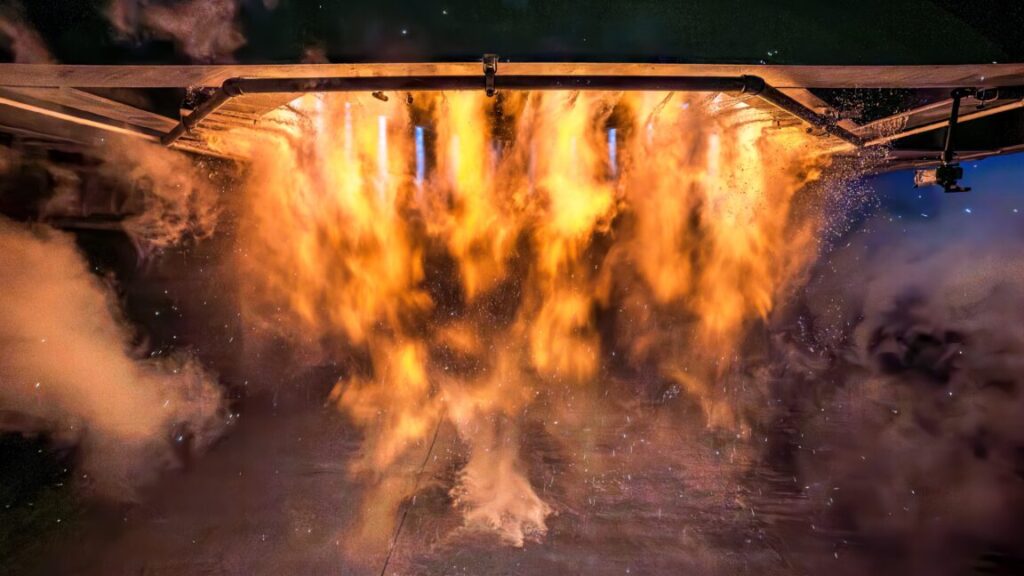
Stoke Space’s Andromeda upper stage engine is hot-fired on a test stand. Credit: Stoke Space
Welcome to Edition 7.37 of the Rocket Report! It’s been interesting to watch how quickly European officials have embraced ensuring they have a space launch capability independent of other countries. A few years ago, European government satellites regularly launched on Russian Soyuz rockets, and more recently on SpaceX Falcon 9 rockets from the United States. Russia is now non grata in European government circles, and the Trump administration is widening the trans-Atlantic rift. European leaders have cited the Trump administration and its close association with Elon Musk, CEO of SpaceX, as prime reasons to support sovereign access to space, a capability currently offered only by Arianespace. If European nations can reform how they treat their commercial space companies, there’s enough ambition, know-how, and money in Europe to foster a competitive launch industry.
As always, we welcome reader submissions. If you don’t want to miss an issue, please subscribe using the box below (the form will not appear on AMP-enabled versions of the site). Each report will include information on small-, medium-, and heavy-lift rockets as well as a quick look ahead at the next three launches on the calendar.
Isar Aerospace aims for weekend launch. A German startup named Isar Aerospace will try to launch its first rocket Saturday, aiming to become the first in a wave of new European launch companies to reach orbit, Ars reports. The Spectrum rocket consists of two stages, stands about 92 feet (28 meters) tall, and can haul payloads up to 1 metric ton (2,200 pounds) into low-Earth orbit. Based in Munich, Isar was founded by three university graduate students in 2018. Isar scrubbed a launch attempt Monday due to unfavorable winds at the launch site in Norway.
From the Arctic … Notably, this will be the first orbital launch attempt from a launch pad in Western Europe. The French-run Guiana Space Center in South America is the primary spaceport for European rockets. Virgin Orbit staged an airborne launch attempt from an airport in the United Kingdom in 2023, and the Plesetsk Cosmodrome is located in European Russia. The launch site for Isar is named Andøya Spaceport, located about 650 miles (1,050 kilometers) north of Oslo, inside the Arctic Circle. (submitted by EllPeaTea)
A chance for competition in Europe. The European Space Agency is inviting proposals to inject competition into the European launch market, an important step toward fostering a dynamic multiplayer industry officials hope one day will mimic that of the United States, Ars reports. The near-term plan for the European Launcher Challenge is for ESA to select companies for service contracts to transport ESA and other European government payloads to orbit from 2026 through 2030. A second component of the challenge is for companies to perform at least one demonstration of an upgraded launch vehicle by 2028. The competition is open to any European company working in the launch business.
Challenging the status quo … This is a major change from how ESA has historically procured launch services. Arianespace has been the only European launch provider available to ESA and other European institutions for more than 40 years. But there are private companies across Europe at various stages of developing their own small launchers, and potentially larger rockets, in the years ahead. With the European Launcher Challenge, ESA will provide each of the winners up to 169 million euros ($182 million), a significant cash infusion that officials hope will shepherd Europe’s nascent private launch industry toward liftoff. Companies like Isar Aerospace, Rocket Factory Augsburg, MaiaSpace, and PLD Space are among the contenders for ESA contracts.
The easiest way to keep up with Eric Berger’s and Stephen Clark’s reporting on all things space is to sign up for our newsletter. We’ll collect their stories and deliver them straight to your inbox.
Rocket Lab launches eight satellites. Rocket Lab launched eight satellites Wednesday for a German company that is expanding its constellation to detect and track wildfires, Space News reports. An Electron rocket lifted off from New Zealand and completed deploying its payload of eight CubeSats for OroraTech about 55 minutes later, placing them into Sun-synchronous orbits at an altitude of about 341 miles (550 kilometers). This was Rocket Lab’s fifth launch of the year, and the third in less than two weeks.
Fire goggles … OroraTech launched three satellites before this mission, fusing data from those satellites and government missions to detect and track wildfires. The new satellites are designed to fill a gap in coverage in the afternoon, a peak time for wildfire formation and spread. OroraTech plans to launch eight more satellites later this year. Wildfire monitoring from space is becoming a new application for satellite technology. Last month, OroraTech partnered with Spire for a contract to build a CubeSat constellation called WildFireSat for the Canadian Space Agency. Google is backing FireSat, another constellation of more than 50 satellites to be deployed in the coming years to detect and track wildfires. (submitted by EllPeaTea)
Should Britain have a sovereign launch capability? A UK House of Lords special inquiry committee has heard from industry experts on the importance of fostering a sovereign launch capability, European Spaceflight reports. On Monday, witnesses from the UK space industry testified that the nation shouldn’t rely on others, particularly the United States, to put satellites into orbit. “The idea that we will be able to do it through America… certainly in today’s, you know, the last 50 days, I think is very, very doubtful. The UK needs access to space,” said Scott Hammond, deputy CEO of SaxaVord Spaceport in Scotland.
Looking inward … A representative from one of the most promising UK launch startups agreed. “Most people who are looking to launch are beholden to the United States solutions or services that are there,” said Alan Thompson, head of government affairs at Skyrora. “Without having our own home-based or UK-based service provider, we risk not having that voice and not being able to undertake all these experiments or be able to manifest ourselves better in space.” The UK is the only nation to abandon an independent launch capability after putting a satellite into orbit. The British government canceled the Black Arrow rocket in the early 1970s, citing financial reasons. A handful of companies, including Skyrora, is working to restore the orbital launch business to the UK.
This rocket engine CEO faces some salacious allegations. The Independent published what it described as an exclusive report Monday describing a lawsuit filed against the CEO of RocketStar, a New York-based company that says its mission is “improving upon the engines that power us to the stars.” Christopher Craddock is accused of plundering investor funds to underwrite pricey jaunts to Europe, jewelry for his wife, child support payments, and, according to the company’s largest investor, “airline tickets for international call girls to join him for clandestine weekends in Miami,” The Independent reports. Craddock established RocketStar in 2014 after financial regulators barred him from working on Wall Street over a raft of alleged violations.
Go big or go home … The $6 million lawsuit filed by former CEO Michael Mojtahedi alleges RocketStar “is nothing more than a Ponzi scheme… [that] has been predicated on Craddock’s ability to con new people each time the company has run out of money.” On its website, RocketStar says its work focuses on aerospike rocket engines and a “FireStar Fusion Drive, the world’s first electric propulsion device enhanced with nuclear fusion.” These are tantalizing technologies that have proven elusive for other rocket companies. RocketStar’s attorney told The Independent: “The company denies the allegations and looks forward to vindicating itself in court.”
Another record for SpaceX. Last Thursday, SpaceX launched a batch of clandestine SpaceX-built surveillance satellites for the National Reconnaissance Office from Vandenberg Space Force Base in California, Spaceflight Now reports. This was the latest in a series of flights populating the NRO’s constellation of low-Earth orbit reconnaissance satellites. What was unique about this mission was its use of a Falcon 9 first stage booster that flew to space just nine days prior with a NASA astronomy satellite. The successful launch broke the record for the shortest span between flights of the same Falcon 9 booster, besting a 13.5-day turnaround in November 2024.
A mind-boggling number of launches … This flight also marked the 450th launch of a Falcon 9 rocket since its debut in 2010, and the 139th within a 365-day period, despite suffering its first mission failure in nearly 10 years and a handful of other glitches. SpaceX’s launch pace is unprecedented in the history of the space industry. No one else is even close. In the last Rocket Report I authored, I wrote that SpaceX’s steamroller no longer seems to be rolling downhill. That may be the case as the growth in the Falcon 9 launch cadence has slowed, but it’s hard for me to see anyone else matching SpaceX’s launch rate until at least the 2030s.
Rocket Lab and Stoke Space find an on-ramp. Space Systems Command announced Thursday that it selected Rocket Lab and Stoke Space to join the Space Force’s National Security Space Launch (NSSL) program. The contracts have a maximum value of $5.6 billion, and the Space Force will dole out “task orders” for individual missions as they near launch. Rocket Lab and Stoke Space join SpaceX, ULA, and Blue Origin as eligible launch providers for lower-priority national security satellites, a segment of missions known as Phase 3 Lane 1 in the parlance of the Space Force. For these missions, the Space Force won’t require certification of the rockets, as the military does for higher-value missions in the so-called “Lane 2” segment. However, Rocket Lab and Stoke Space must complete at least one successful flight of their new Neutron and Nova rockets before they are cleared to launch national security payloads.
Stoked at Stoke … This is a big win for Rocket Lab and Stoke. For Rocket Lab, it bolsters the business case for the medium-class Neutron rocket it is developing for flights from Wallops Island, Virginia. Neutron will be partially reusable with a recoverable first stage. But Rocket Lab already has a proven track record with its smaller Electron launch vehicle. Stoke hasn’t launched anything, and it has lofty ambitions for a fully reusable two-stage rocket called Nova. This is a huge vote of confidence in Stoke. When the Space Force released its invitation for an on-ramp to the NSSL program last year, it said bidders must show a “credible plan for a first launch by December 2025.” Smart money is that neither company will launch its rockets by the end of this year, but I’d love to be proven wrong.
Falcon 9 deploys spy satellite. Monday afternoon, a SpaceX Falcon 9 took flight from Florida’s Space Coast and delivered a national security payload designed, built, and operated by the National Reconnaissance Office into orbit, Florida Today reports. Like almost all NRO missions, details about the payload are classified. The mission codename was NROL-69, and the launch came three-and-a-half days after SpaceX launched another NRO mission from California. While we have some idea of what SpaceX launched from California last week, the payload for the NROL-69 mission is a mystery.
Space sleuthing … There’s an online community of dedicated skywatchers who regularly track satellites as they sail overhead around dawn and dusk. The US government doesn’t publish the exact orbital parameters for its classified spy satellites (they used to), but civilian trackers coordinate with one another, and through a series of observations, they can produce a pretty good estimate of a spacecraft’s orbit. Marco Langbroek, a Dutch archeologist and university lecturer on space situational awareness, is one of the best at this, using publicly available information about the flight path of a launch to estimate when the satellite will fly overhead. He and three other observers in Europe managed to locate the NROL-69 payload just two days after the launch, plotting the object in an orbit between 700 and 1,500 kilometers at an inclination of 64.1 degrees to the equator. Analysts speculated this mission might carry a pair of naval surveillance spacecraft, but this orbit doesn’t match up well with any known constellations of NRO satellites.
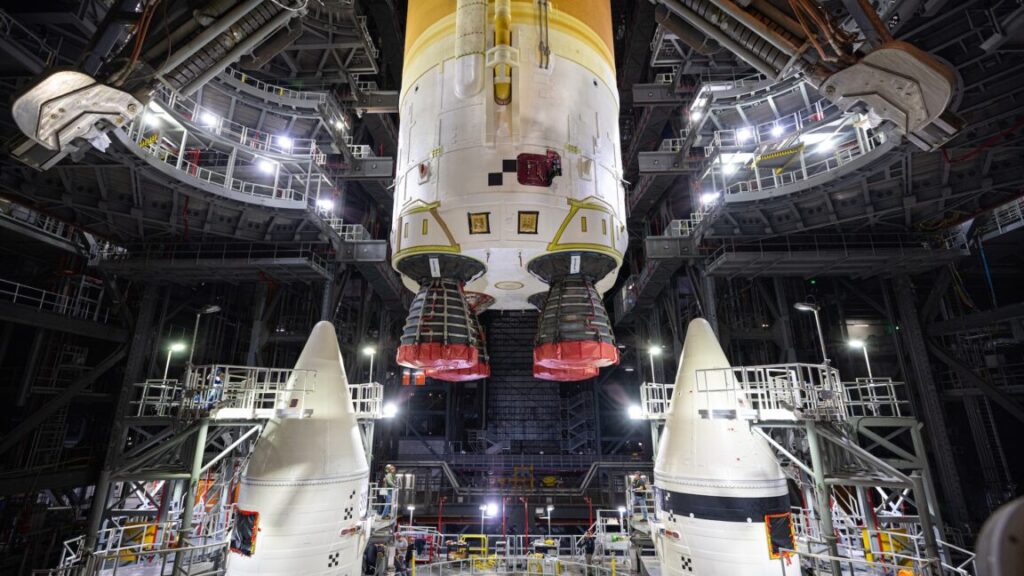
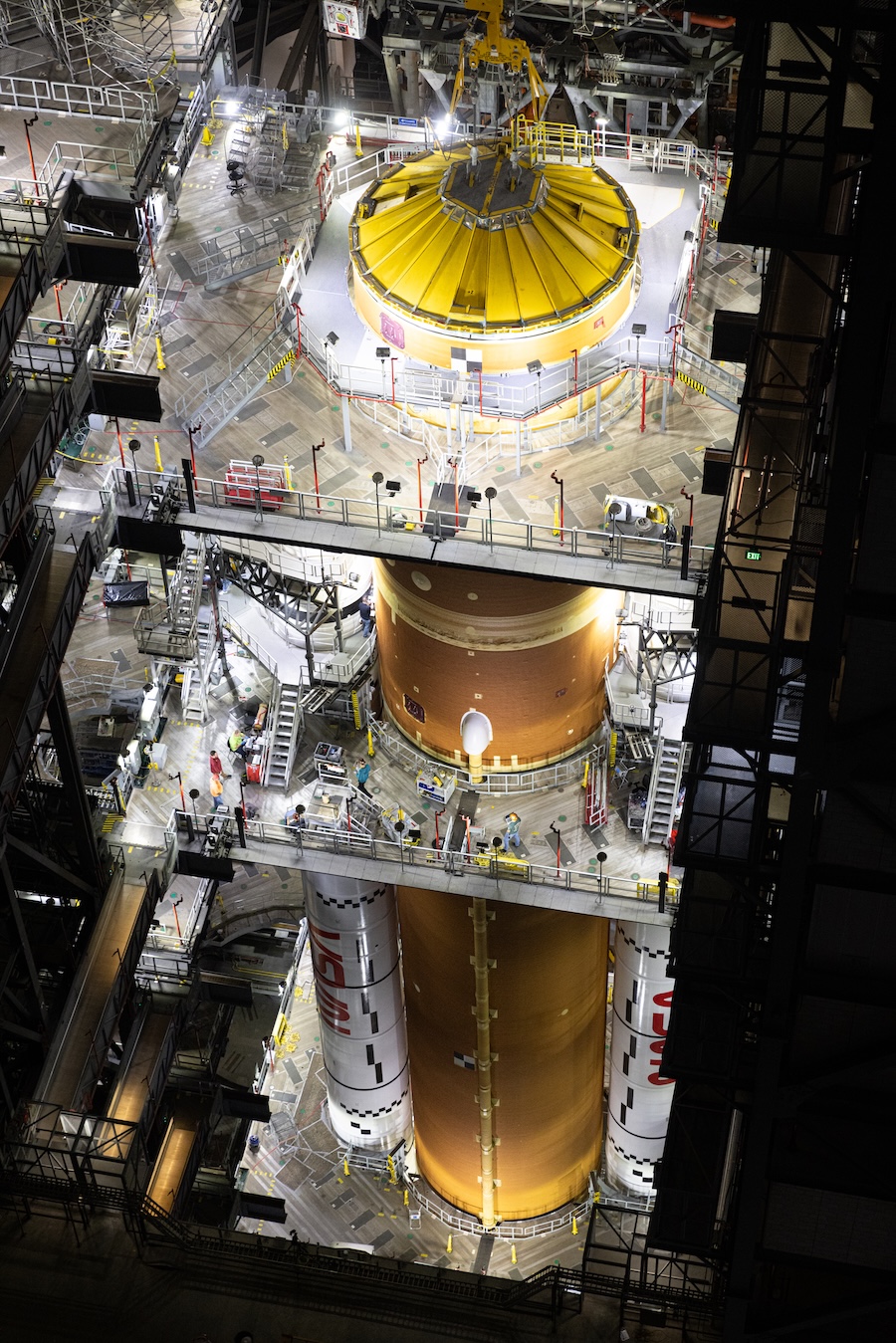
NASA continues with Artemis II preps. Late Saturday night, technicians at Kennedy Space Center in Florida moved the core stage for NASA’s second Space Launch System rocket into position between the vehicle’s two solid-fueled boosters, Ars reports. Working inside the iconic 52-story-tall Vehicle Assembly Building, ground teams used heavy-duty cranes to first lift the butterscotch orange core stage from its cradle, then rotate it to a vertical orientation and lift it into a high bay, where it was lowered into position on a mobile launch platform. The 212-foot-tall (65-meter) core stage is the largest single hardware element for the Artemis II mission, which will send a team of four astronauts around the far side of the Moon and back to Earth as soon as next year.
Looking like a go … With this milestone, the slow march toward launch continues. A few months ago, some well-informed people in the space community thought there was a real possibility the Trump administration could quickly cancel NASA’s Space Launch System, the high-priced heavy-lifter designed to send astronauts from the Earth to the Moon. The most immediate possibility involved terminating the SLS program before it flies with Artemis II. This possibility appears to have been overcome by circumstances. The rockets most often mentioned as stand-ins for the Space Launch System—SpaceX’s Starship and Blue Origin’s New Glenn—aren’t likely to be cleared for crew missions for at least several years. The long-term future of the Space Launch System remains in doubt.
Space Force says Vulcan is good to go. The US Space Force on Wednesday announced that it has certified United Launch Alliance’s Vulcan rocket to conduct national security missions, Ars reports. “Assured access to space is a core function of the Space Force and a critical element of national security,” said Brig. Gen. Kristin Panzenhagen, program executive officer for Assured Access to Space, in a news release. “Vulcan certification adds launch capacity, resiliency, and flexibility needed by our nation’s most critical space-based systems.” The formal announcement closes a yearslong process that has seen multiple delays in the development of the Vulcan rocket, as well as two anomalies in recent years that were a further setback to certification.
Multiple options … This certification allows ULA’s Vulcan to launch the military’s most sensitive national security missions, a separate lot from those Rocket Lab and Stoke Space are now eligible for (as we report in a separate Rocket Report entry). It elevates Vulcan to launch these missions alongside SpaceX’s Falcon 9 and Falcon Heavy rockets. Vulcan will not be the next rocket that the company launches, however. First up is one of the company’s remaining Atlas V boosters, carrying Project Kuiper broadband satellites for Amazon. This launch could occur in April, although ULA has not set a date. This will be followed by the first Vulcan national security launch, which the Space Force says could occur during the coming “summer.”
Next three launches
March 29: Spectrum | “Going Full Spectrum” | Andøya Spaceport, Norway | 11: 30 UTC
March 29: Long March 7A | Unknown Payload | Wenchang Space Launch Site, China | 16: 05 UTC
March 30: Alpha | LM-400 | Vandenberg Space Force Base, California | 13: 37 UTC
Stephen Clark is a space reporter at Ars Technica, covering private space companies and the world’s space agencies. Stephen writes about the nexus of technology, science, policy, and business on and off the planet.
All of these grand Chinese plans come as NASA faces budget cuts. Although nothing is final, Ars reported earlier this year that some officials in the Trump administration want to cut science programs at the US space agency by as much as 50 percent, and that would include significant reductions for planetary science. Such cuts, one planetary officials told Ars, would represent an “extinction level” event for space science and exploration in the United States.
This raises the prospect that the United States could cede the lead in space exploration to China in the coming decades.
So what will happen?
To date, the majority of China’s space science objectives have been successful, bringing credibility to a government that sees space exploration as a projection of its soft power. By becoming a major actor in space and surpassing the United States in some areas, China can both please its own population and become a more attractive partner to other countries around the world.
However, if there are high-profile (and to some in China’s leadership, embarrassing) failures, would China be so willing to fund such an ambitious program? With the objectives listed above, China would be attempting some unprecedented and technically demanding missions. Some of them, certainly, will face setbacks.
Additionally, China is also investing in a human lunar program, seeking to land its own astronauts on the surface of the Moon by 2030. Simultaneously funding ambitious human and robotic programs would very likely require significantly more resources than the government has invested to date. How deep are China’s pockets?
It’s probably safe to say, therefore, that some of these mission concepts and time frames are aspirational.
At the same time, the US Congress is likely to block some of the deepest cuts in planetary exploration, should they be proposed by the Trump administration. So NASA still has a meaningful future in planetary exploration. And if companies like K2 are successful in lowering the cost of satellite buses, the combination of lower-cost launch and planetary missions would allow NASA to do more with less in deep space.
The future, therefore, has yet to be won. But when it comes to deep space planetary exploration, NASA, for the first time since the 1960s, has a credible challenger.
NASA’s existing architecture still has a limited shelf life, and the agency will probably have multiple options for transporting astronauts to and from the Moon in the 2030s. A decision on the long-term future of SLS and Orion isn’t expected until the Trump administration’s nominee for NASA administrator, Jared Isaacman, takes office after confirmation by the Senate.
So, what is the plan for SLS?
There are different degrees of cancellation options. The most draconian would be an immediate order to stop work on Artemis II preparations. This is looking less likely than it did a few months ago and would come with its own costs. It would cost untold millions of dollars to disassemble and dispose of parts of Artemis II’s SLS rocket and Orion spacecraft. Canceling multibillion-dollar contracts with Boeing, Northrop Grumman, and Lockheed Martin would put NASA on the hook for significant termination costs.
Of course, these liabilities would be less than the $4.1 billion NASA’s inspector general estimates each of the first four Artemis missions will cost. Most of that money has already been spent for Artemis II, but if NASA spends several billion dollars on each Artemis mission, there won’t be much money left over to do other cool things.
Other options for NASA might be to set a transition point when the Artemis program would move off of the Space Launch System rocket, and perhaps even the Orion spacecraft, and switch to new vehicles.
Looking down on the Space Launch System for Artemis II. Credit: NASA/Frank Michaux
Another possibility, which seems to be low-hanging fruit for Artemis decision-makers, could be to cancel the development of a larger Exploration Upper Stage for the SLS rocket. If there are a finite number of SLS flights on NASA’s schedule, it’s difficult to justify the projected $5.7 billion cost of developing the upgraded Block 1B version of the Space Launch System. There are commercial options available to replace the rocket’s Boeing-built Exploration Upper Stage, as my colleague Eric Berger aptly described in a feature story last year.
For now, it looks like NASA’s orange behemoth has a little life left in it. All the hardware for the Artemis II mission has arrived at the launch site in Florida.
The Trump administration will release its fiscal year 2026 budget request in the coming weeks. Maybe, then, NASA will also have a permanent administrator, and the veil will lift over the White House’s plans for Artemis.
That was then. NASA’s landing page for the First Woman comic series, where young readers could download or listen to the comic, no longer exists. Callie and her crew survived the airless, radiation-bathed surface of the Moon, only to be wiped out by President Trump’s Diversity, Equity, and Inclusion executive order, signed two months ago.
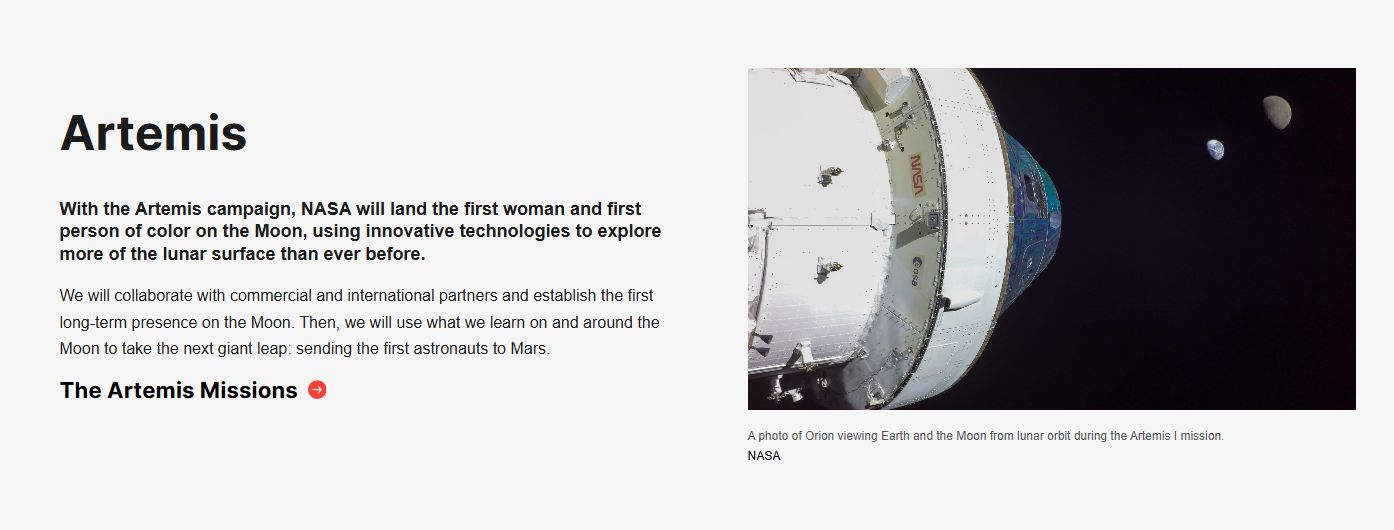
Another casualty is the “first woman” language within the Artemis Program. For years, NASA’s main Artemis page, an archived version of which is linked here, included the following language: “With the Artemis campaign, NASA will land the first woman and first person of color on the Moon, using innovative technologies to explore more of the lunar surface than ever before.”
Artemis website changes
The current landing page for the Artemis program has excised this paragraph. It is not clear how recently the change was made. It was first noticed by British science journalist Oliver Morton.
The removal is perhaps more striking than Callie’s downfall since it was the first Trump administration that both created Artemis and highlighted its differences from Apollo by stating that the Artemis III lunar landing would fly the first woman and person of color to the lunar surface.
How NASA’s Artemis website appeared before recent changes.
Credit: NASA
How NASA’s Artemis website appeared before recent changes. Credit: NASA
For its part, NASA says it is simply complying with the White House executive order by making the changes.
“In keeping with the President’s Executive Order, we’re updating our language regarding plans to send crew to the lunar surface as part of NASA’s Artemis campaign,” an agency spokesperson said. “We look forward to learning more from about the Trump Administration’s plans for our agency and expanding exploration at the Moon and Mars for the benefit of all.”
The nominal date for the Artemis III landing is 2027, but few in the industry expect NASA to be able to hold to that date. With further delays likely, the space agency will probably not name a crew anytime soon.
It looked like the final scene of a movie, the denouement of a long adventure in which the good guys finally prevail. Azure skies and brilliant blue seas provided a perfect backdrop on Tuesday evening as a spacecraft carrying four people neared the planet’s surface.
“Just breathtaking views of a calm, glass-like ocean off the coast of Tallahassee, Florida,” commented Sandra Jones, a NASA spokesperson, during the webcast co-hosted by the space agency and SpaceX, whose Dragon vehicle returned the four astronauts from orbit.
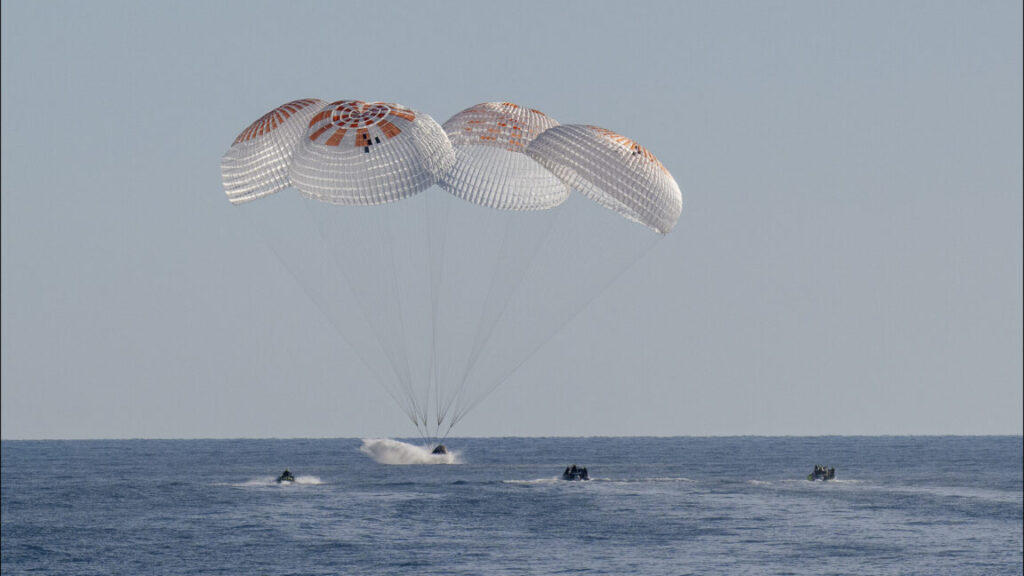
A drone near the landing site captured incredible images of Crew Dragon Freedom as it slowly descended beneath four parachutes. Most of NASA’s astronauts today, outside of the small community of spaceflight devotees, are relatively anonymous. But not two of the passengers inside Freedom, Butch Wilmore and Suni Williams. After nine months of travails, 286 days to be precise, they were finally coming home.
Dragon continued its stately descent, falling to 400 meters, then 300, and then 200 above the ocean.
Kate Tice, an engineer from SpaceX on the webcast, noted that touchdown was imminent. “We’re going to stand by for splashdown located in the Gulf of America,” she said.
Ah, yes. The Gulf of America.
This is why we can’t have nice things.
A throne of lies
For those of us who have closely followed the story of Wilmore and Williams over the last nine months—and Ars Technica has had its share of exclusivestories about this long and strange saga—the final weeks before the landing have seen it take a disturbing turn.
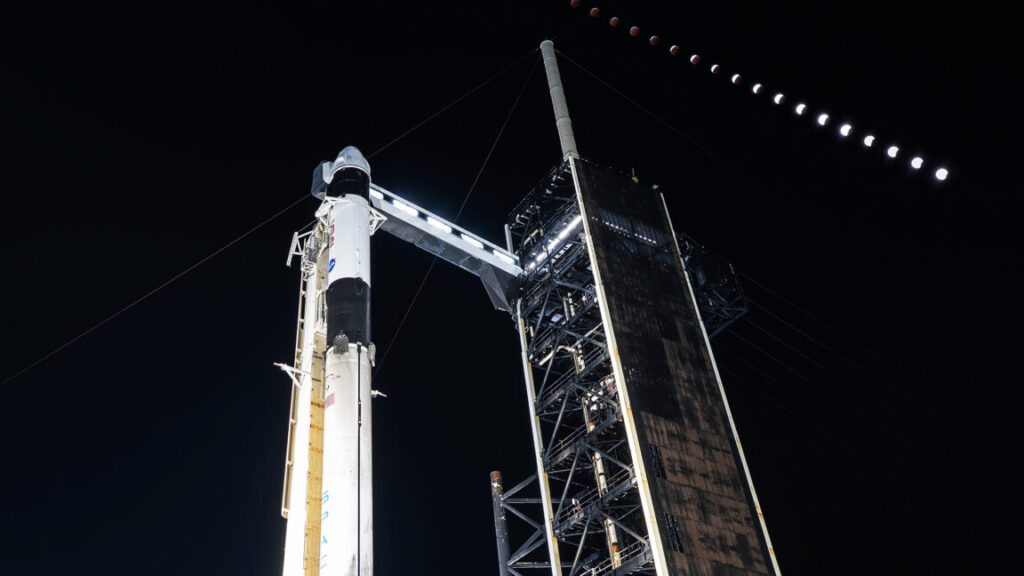
A Falcon 9 rocket launched four astronauts safely into orbit on Friday evening, marking the official beginning of the Crew-10 mission to the International Space Station.
Although any crew launch into orbit is notable, this mission comes with an added bit of importance as its success clears the way for two NASA astronauts, Butch Wilmore and Suni Williams, to finally return home from space after a saga spanning nine months.
Friday’s launch came two days after an initial attempt was scrubbed on Wednesday evening. This was due to a hydraulic issue with the ground systems that handle the Falcon 9 rocket at Launch Complex 39A in Florida.
There were no technical issues on Friday, and with clear skies NASA astronauts Anne McClain and Nichole Ayers, Japanese astronaut Takuya Onishi, and Roscosmos cosmonaut Kirill Peskov rocketed smoothly into orbit.
If all goes well, the Crew Dragon spacecraft carrying the four astronauts will dock with the space station at 11: 30 pm ET on Saturday. They will spend about six months there.
A long, strange trip
Following their arrival at the space station, the members of Crew-10 will participate in a handover ceremony with the four astronauts of Crew-9, which includes Wilmore and Williams. This will clear the members of Crew 9 for departure from the station as early as next Wednesday, March 19, pending good weather in the waters surrounding Florida for splashdown of Dragon.
The flight plan going into Thursday’s mission called for sending Starship on a journey halfway around the world from Texas, culminating in a controlled reentry over the Indian Ocean before splashing down northwest of Australia.
The test flight was supposed to be a do-over of the previous Starship flight on January 16, when the rocket’s upper stage—itself known as Starship, or ship—succumbed to fires fueled by leaking propellants in its engine bay. Engineers determined the most likely cause of the propellant leak was a harmonic response several times stronger than predicted, suggesting the vibrations during the ship’s climb into space were in resonance with the vehicle’s natural frequency. This would have intensified the vibrations beyond the levels engineers expected.
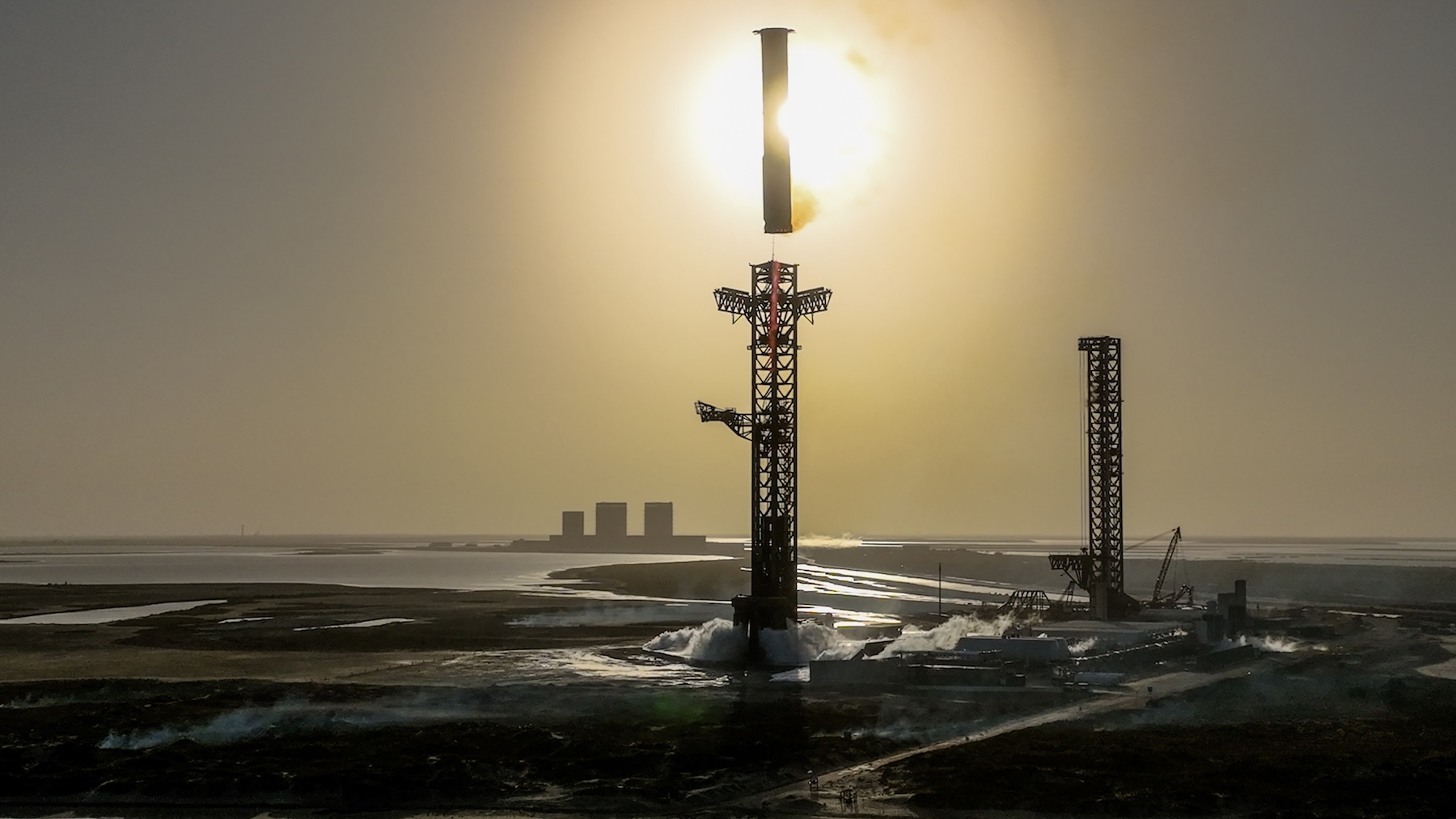
The Super Heavy booster returned to Starbase in Texas to be caught back at the launch pad. Credit: SpaceX
Engineers test-fired the Starship vehicle earlier this month for this week’s test flight, validating changes to propellant temperatures, operating thrust, and the ship’s fuel feed lines leading to its six Raptor engines.
But engineers missed something. On Thursday, the Raptor engines began shutting down on Starship about eight minutes into the flight, and the rocket started tumbling 90 miles (146 kilometers) over the southeastern Gulf of Mexico. SpaceX ground controllers lost all contact with the rocket about nine-and-a-half minutes after liftoff.
“Prior to the end of the ascent burn, an energetic event in the aft portion of Starship resulted in the loss of several Raptor engines,” SpaceX wrote on X. “This in turn led to a loss of attitude control and ultimately a loss of communications with Starship.”
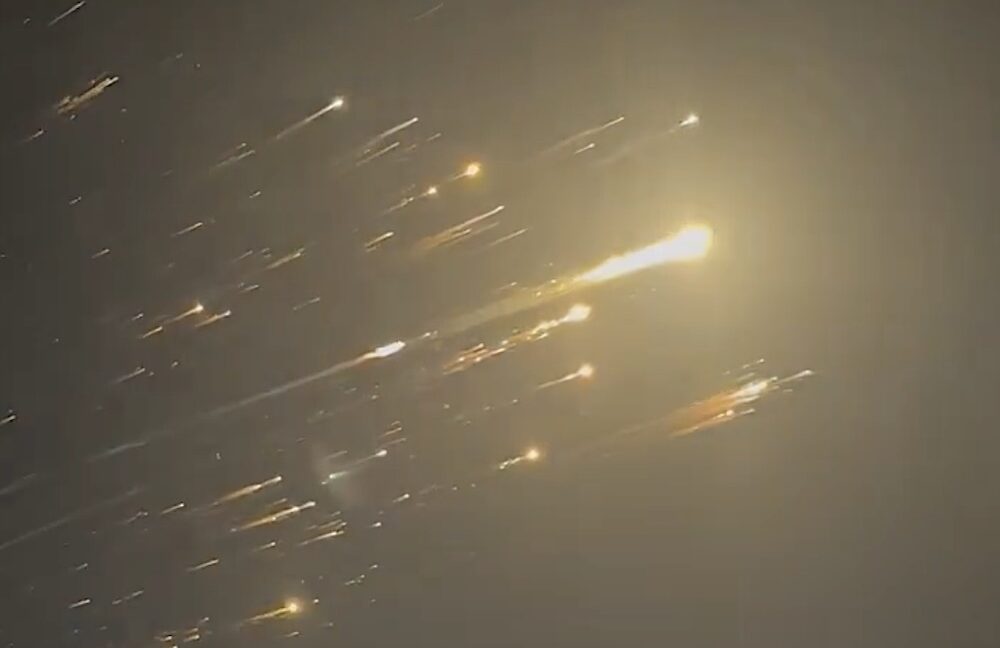
Just like in January, residents and tourists across the Florida peninsula, the Bahamas, and the Turks and Caicos Islands shared videos of fiery debris trails appearing in the twilight sky. Air traffic controllers diverted or delayed dozens of commercial airline flights flying through the debris footprint, just as they did in response to the January incident.
There were no immediate reports Thursday of any Starship wreckage falling over populated areas. In January, residents in the Turks and Caicos Islands recovered small debris fragments, including one piece that caused minor damage when it struck a car. The debris field from Thursday’s failed flight appeared to fall west of the areas where debris fell after Starship Flight 7.
A spokesperson for the Federal Aviation Administration said the regulatory agency will require SpaceX to perform an investigation into Thursday’s Starship failure.
“We were looking at this before some of those statements were made by the President.”
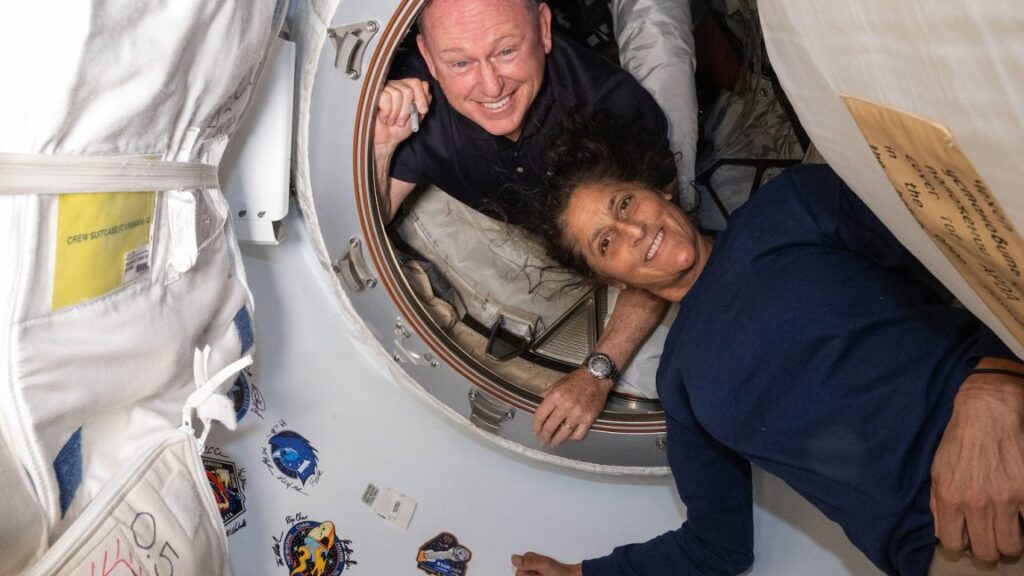
NASA astronauts Butch Wilmore and Suni Williams aboard the International Space Station. Credit: NASA
Over the last month there has been something more than a minor kerfuffle in the space industry over the return of two NASA astronauts from the International Space Station.
The fate of Butch Wilmore and Suni Williams, who launched on the first crewed flight of Boeing’s Starliner spacecraft on June 5, 2024, has become a political issue after President Donald Trump and SpaceX founder Elon Musk said the astronauts’ return was held up by the Biden White House.
In February, Trump and Musk appeared on FOX News. During the joint interview, the subject of Wilmore and Williams came up. They remain in space today after NASA decided it would be best they did not fly home in their malfunctioning Starliner spacecraft—but would return in a SpaceX-built Crew Dragon.
“At the President’s request, or instruction, we are accelerating the return of the astronauts, which was postponed to a ridiculous degree,” Musk said.
“They got left in space,” Trump added.
“They were left up there for political reasons, which is not good,” Musk concluded.
After this interview, a Danish astronaut named Andreas Mogensen asserted that Musk was lying. “What a lie,” Mogensen wrote on the social media site Musk owns, X. “And from someone who complains about lack of honesty from the mainstream media.”
Musk offered a caustic response to Mogensen. “You are fully retarded,” Musk wrote. “SpaceX could have brought them back several months ago. I OFFERED THIS DIRECTLY to the Biden administration and they refused. Return WAS pushed back for political reasons. Idiot.”
So what’s the truth?
NASA has not directly answered questions about this over the last month. However, the people who really know the answer lie within the human spaceflight programs at the space agency. After one news conference was canceled last month, two key NASA officials were finally made available on a media teleconference on Friday evening. These were Ken Bowersox, associate administrator, Space Operations Mission Directorate, and Steve Stich, manager, of NASA’s Commercial Crew Program, which is responsible for Starliner and Crew Dragon flights.
Musk is essentially making two claims. First, he is saying that last year SpaceX offered to bring Wilmore and Williams home from the International Space Station—and made the offer directly to the Biden Administration. And the offer was refused for “political” reasons.
Second, Musk says that, at Trump’s request, the return of Wilmore and Williams was accelerated. The pair is now likely to return home to Earth as part of the Crew 9 mission later this month, about a week after the launch of a new group of astronauts to the space station. This Crew 10 mission has a launch date of March 12, so Wilmore and Williams could finally fly home about two weeks from now.
Let’s examine each of Musk’s claims in light of what Bowersox and Stich said Friday evening.
Was Musk’s offer declined for political reasons?
On July 14, last year, NASA awarded SpaceX a special contract to study various options to bring Wilmore and Williams home on a Crew Dragon vehicle. At the time, the space agency was considering options if Starliner was determined to be unsafe. Among the options NASA was considering were to fly Wilmore and Williams home on the Crew 8 vehicle attached to the station (which would put an unprecedented six people in the capsule) or asking SpaceX to autonomously fly a Dragon to the station to return Wilmore and Williams separately.
“The SpaceX folks helped us with a lot of options for how we would bring Butch and Suni home on Dragon in a contingency,” Bowersox said during Friday’s teleconference. “When it comes to adding on missions, or bringing a capsule home early, those were always options. But we ruled them out pretty quickly just based on how much money we’ve got in our budget, and the importance of keeping crews on the International Space Station. They’re an important part of maintaining the station.”
As a result, the Crew 9 mission launched in September with just two astronauts. Wilmore and Williams joined that crew for a full, six-month increment on the space station.
Stich said NASA made that decision based on flight schedules to the space station and the orbiting laboratory’s needs. It also allowed time to send SpaceX spacesuits up for the pair of astronauts and to produce seat liners that would make their landing in the water, under parachutes, safe.
“When we laid all that out, the best option was really the one that we’re embarking upon now,” Stich said. “And so we did Crew 9, flying the two empty seats, flying a suit for Butch up, and also making sure that the seats were right for Butch’s anthropometrics, and Suni’s, to return them safely.”
So yes, SpaceX has been working with NASA to present options, including the possibility of a return last fall. However, those discussions were being held within the program levels and their leaders: Stich for Commercial Crew and Dana Weigel for the International Space Station.
“Dana and I worked to come up with a decision that worked for the Commercial Crew Program and Space Station,” Stich said. “And then, Ken (Bowersox), we all we had the Flight Readiness Review process with you, and the Administrator of NASA listened in as well. So we had a recommendation to the agency and that was on the process that we typically use.”
Bowersox confirmed that the decision was made at the programmatic level.
“That’s typically the way our decisions work,” Bowersox said. “The programs work what makes the most sense for them, programmatically, technically. We’ll weigh in at the headquarters level, and in this case we thought the plan that we came up with made a lot of sense.”
During the teleconference, a vice president at SpaceX, Bill Gerstenmaier, was asked directly what offer Musk was referring to when he mentioned the Biden administration. He did not provide a substantive answer.
Musk claims he made an offer directly to senior officials in the Biden Administration. We have no way to verify that, but it does seem clear that the Biden administration never communicated such an offer to lower-level officials within NASA, who made their decision for technical rather than political reasons.
“I think you know we work for NASA, and we worked with NASA cooperatively to do whatever we think was the right thing,” the SpaceX official, Gerstenmaier, replied. “You know, we were willing to support in any manner they thought was the right way to support. They came up with the option you heard described today by them, and we’re supporting that option.”
Did Trump tell NASA to accelerate Butch and Suni’s return?
As of late last year, the Crew 9 mission was due to return in mid-February. However, there was a battery issue with a new Dragon spacecraft that was going to be used to fly Crew 10 into orbit. As a result, NASA announced on December 17 that the return of the crew was delayed into late March or early April.
Then, on February 11, NASA announced that the Crew 10 launch was being brought forward to March 12. This was a couple of weeks earlier than planned, and it was possible because NASA and SpaceX decided to swap out Dragon capsules, using a previously flown vehicle—Crew Dragon Endurance—for Crew 10.
So was this change to accelerate the return of Wilmore and Williams politically driven?
The decision to swap to Endurance was made in late January, Stich said, and this allowed the launch date to be moved forward. Asked if political pressure was a reason, Stich said it was not. “It really was driven by a lot of other factors, and we were looking at this before some of those statements were made by the President and Mr. Musk,” he said.
Bowersox added that this was correct but also said that NASA appreciated the President’s interest in the space program.
“I can verify that Steve has been talking about how we might need to juggle the flights and switch capsules a good month before there was any discussion outside of NASA, but the President’s interest sure added energy to the conversation,” Bowersox said.
Eric Berger is the senior space editor at Ars Technica, covering everything from astronomy to private space to NASA policy, and author of two books: Liftoff, about the rise of SpaceX; and Reentry, on the development of the Falcon 9 rocket and Dragon. A certified meteorologist, Eric lives in Houston.
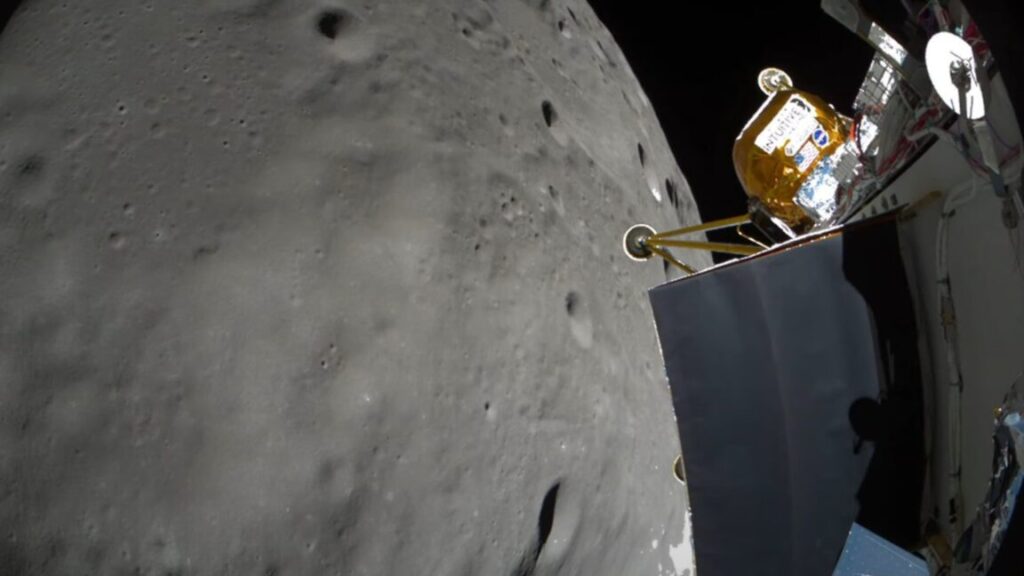
Inside a small control room, during the middle of the day on Thursday local time in Texas, about a dozen white-knuckled engineers at a space startup named Intuitive Machines started to get worried. Their spacecraft, a lander named Athena, was beginning its final descent down to the lunar surface.
A little more than a year had passed since the company’s first attempt to land on the Moon with a similarly built vehicle, Odysseus. Due to problems with that spacecraft’s laser rangefinder, it skidded into the Moon’s surface and toppled over.
So engineers at Intuitive Machines had checked, and re-checked the laser-based altimeters on Athena. When the lander got down within about 30 km of the lunar surface, they tested the rangefinders again. Worryingly, there was some noise in the readings as the laser bounced off the Moon. However, the engineers had reason to believe that, maybe, the readings would improve as the spacecraft got nearer to the surface.
“Our hope was that the signal to noise would improve as we got closer to the Moon,” said Tim Crain, chief technology officer for Intuitive Machines, speaking to reporters afterward.
It didn’t. The noise remained. And so, to some extent, Athena went down to the Moon blind. The spacecraft’s propulsion system, based on liquid oxygen and methane, and designed in-house, worked beautifully. But in the final moments, the spacecraft did not quite know where it was relative to the surface.
Probably lying on its side
Beyond that, Crain and the rest of the company, including its chief executive Steve Altemus, could not precisely say what happened. After Athena landed, the engineers in mission control could talk to the spacecraft, and they were able to generate some power from its solar arrays. But precisely where it was, or how it lay on the ground, they could not say a few hours later.
Based on a reading from an inertial measurement unit inside the vehicle, most likely Athena is lying on its side. This is the same fate Odysseus met last year, when it skidded into the Moon, broke a leg, and toppled over.