NASA

as-nasa-faces-cuts,-china-reveals-ambitious-plans-for-planetary-exploration

As NASA faces cuts, China reveals ambitious plans for planetary exploration

All of these grand Chinese plans come as NASA faces budget cuts. Although nothing is final, Ars reported earlier this year that some officials in the Trump administration want to cut science programs at the US space agency by as much as 50 percent, and that would include significant reductions for planetary science. Such cuts, one planetary officials told Ars, would represent an “extinction level” event for space science and exploration in the United States.

This raises the prospect that the United States could cede the lead in space exploration to China in the coming decades.

So what will happen?

To date, the majority of China’s space science objectives have been successful, bringing credibility to a government that sees space exploration as a projection of its soft power. By becoming a major actor in space and surpassing the United States in some areas, China can both please its own population and become a more attractive partner to other countries around the world.

However, if there are high-profile (and to some in China’s leadership, embarrassing) failures, would China be so willing to fund such an ambitious program? With the objectives listed above, China would be attempting some unprecedented and technically demanding missions. Some of them, certainly, will face setbacks.

Additionally, China is also investing in a human lunar program, seeking to land its own astronauts on the surface of the Moon by 2030. Simultaneously funding ambitious human and robotic programs would very likely require significantly more resources than the government has invested to date. How deep are China’s pockets?

It’s probably safe to say, therefore, that some of these mission concepts and time frames are aspirational.

At the same time, the US Congress is likely to block some of the deepest cuts in planetary exploration, should they be proposed by the Trump administration. So NASA still has a meaningful future in planetary exploration. And if companies like K2 are successful in lowering the cost of satellite buses, the combination of lower-cost launch and planetary missions would allow NASA to do more with less in deep space.

The future, therefore, has yet to be won. But when it comes to deep space planetary exploration, NASA, for the first time since the 1960s, has a credible challenger.

As NASA faces cuts, China reveals ambitious plans for planetary exploration Read More »

as-preps-continue,-it’s-looking-more-likely-nasa-will-fly-the-artemis-ii-mission

As preps continue, it’s looking more likely NASA will fly the Artemis II mission

NASA’s existing architecture still has a limited shelf life, and the agency will probably have multiple options for transporting astronauts to and from the Moon in the 2030s. A decision on the long-term future of SLS and Orion isn’t expected until the Trump administration’s nominee for NASA administrator, Jared Isaacman, takes office after confirmation by the Senate.

So, what is the plan for SLS?

There are different degrees of cancellation options. The most draconian would be an immediate order to stop work on Artemis II preparations. This is looking less likely than it did a few months ago and would come with its own costs. It would cost untold millions of dollars to disassemble and dispose of parts of Artemis II’s SLS rocket and Orion spacecraft. Canceling multibillion-dollar contracts with Boeing, Northrop Grumman, and Lockheed Martin would put NASA on the hook for significant termination costs.

Of course, these liabilities would be less than the $4.1 billion NASA’s inspector general estimates each of the first four Artemis missions will cost. Most of that money has already been spent for Artemis II, but if NASA spends several billion dollars on each Artemis mission, there won’t be much money left over to do other cool things.

Other options for NASA might be to set a transition point when the Artemis program would move off of the Space Launch System rocket, and perhaps even the Orion spacecraft, and switch to new vehicles.

Looking down on the Space Launch System for Artemis II. Credit: NASA/Frank Michaux

Another possibility, which seems to be low-hanging fruit for Artemis decision-makers, could be to cancel the development of a larger Exploration Upper Stage for the SLS rocket. If there are a finite number of SLS flights on NASA’s schedule, it’s difficult to justify the projected $5.7 billion cost of developing the upgraded Block 1B version of the Space Launch System. There are commercial options available to replace the rocket’s Boeing-built Exploration Upper Stage, as my colleague Eric Berger aptly described in a feature story last year.

For now, it looks like NASA’s orange behemoth has a little life left in it. All the hardware for the Artemis II mission has arrived at the launch site in Florida.

The Trump administration will release its fiscal year 2026 budget request in the coming weeks. Maybe, then, NASA will also have a permanent administrator, and the veil will lift over the White House’s plans for Artemis.

As preps continue, it’s looking more likely NASA will fly the Artemis II mission Read More »

trump-white-house-drops-diversity-plan-for-moon-landing-it-created-back-in-2019

Trump White House drops diversity plan for Moon landing it created back in 2019

That was then. NASA’s landing page for the First Woman comic series, where young readers could download or listen to the comic, no longer exists. Callie and her crew survived the airless, radiation-bathed surface of the Moon, only to be wiped out by President Trump’s Diversity, Equity, and Inclusion executive order, signed two months ago.

Another casualty is the “first woman” language within the Artemis Program. For years, NASA’s main Artemis page, an archived version of which is linked here, included the following language: “With the Artemis campaign, NASA will land the first woman and first person of color on the Moon, using innovative technologies to explore more of the lunar surface than ever before.”

Artemis website changes

The current landing page for the Artemis program has excised this paragraph. It is not clear how recently the change was made. It was first noticed by British science journalist Oliver Morton.

The removal is perhaps more striking than Callie’s downfall since it was the first Trump administration that both created Artemis and highlighted its differences from Apollo by stating that the Artemis III lunar landing would fly the first woman and person of color to the lunar surface.

How NASA’s Artemis website appeared before recent changes.

Credit: NASA

How NASA’s Artemis website appeared before recent changes. Credit: NASA

For its part, NASA says it is simply complying with the White House executive order by making the changes.

“In keeping with the President’s Executive Order, we’re updating our language regarding plans to send crew to the lunar surface as part of NASA’s Artemis campaign,” an agency spokesperson said. “We look forward to learning more from about the Trump Administration’s plans for our agency and expanding exploration at the Moon and Mars for the benefit of all.”

The nominal date for the Artemis III landing is 2027, but few in the industry expect NASA to be able to hold to that date. With further delays likely, the space agency will probably not name a crew anytime soon.

Trump White House drops diversity plan for Moon landing it created back in 2019 Read More »

can-nasa-remain-nonpartisan-when-basic-spaceflight-truths-are-shredded?

Can NASA remain nonpartisan when basic spaceflight truths are shredded?

It looked like the final scene of a movie, the denouement of a long adventure in which the good guys finally prevail. Azure skies and brilliant blue seas provided a perfect backdrop on Tuesday evening as a spacecraft carrying four people neared the planet’s surface.

“Just breathtaking views of a calm, glass-like ocean off the coast of Tallahassee, Florida,” commented Sandra Jones, a NASA spokesperson, during the webcast co-hosted by the space agency and SpaceX, whose Dragon vehicle returned the four astronauts from orbit.

A drone near the landing site captured incredible images of Crew Dragon Freedom as it slowly descended beneath four parachutes. Most of NASA’s astronauts today, outside of the small community of spaceflight devotees, are relatively anonymous. But not two of the passengers inside Freedom, Butch Wilmore and Suni Williams. After nine months of travails, 286 days to be precise, they were finally coming home.

Dragon continued its stately descent, falling to 400 meters, then 300, and then 200 above the ocean.

Kate Tice, an engineer from SpaceX on the webcast, noted that touchdown was imminent. “We’re going to stand by for splashdown located in the Gulf of America,” she said.

Ah, yes. The Gulf of America.

This is why we can’t have nice things.

A throne of lies

For those of us who have closely followed the story of Wilmore and Williams over the last nine months—and Ars Technica has had its share of exclusive stories about this long and strange saga—the final weeks before the landing have seen it take a disturbing turn.

Can NASA remain nonpartisan when basic spaceflight truths are shredded? Read More »

crew-10-launches,-finally-clearing-the-way-for-butch-and-suni-to-fly-home

Crew-10 launches, finally clearing the way for Butch and Suni to fly home

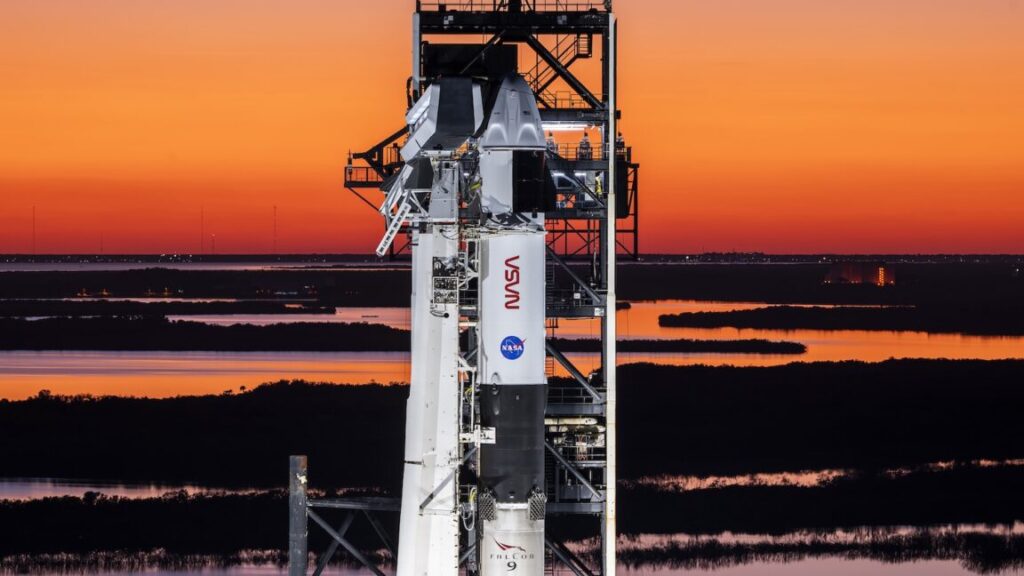
A Falcon 9 rocket launched four astronauts safely into orbit on Friday evening, marking the official beginning of the Crew-10 mission to the International Space Station.

Although any crew launch into orbit is notable, this mission comes with an added bit of importance as its success clears the way for two NASA astronauts, Butch Wilmore and Suni Williams, to finally return home from space after a saga spanning nine months.

Friday’s launch came two days after an initial attempt was scrubbed on Wednesday evening. This was due to a hydraulic issue with the ground systems that handle the Falcon 9 rocket at Launch Complex 39A in Florida.

There were no technical issues on Friday, and with clear skies NASA astronauts Anne McClain and Nichole Ayers, Japanese astronaut Takuya Onishi, and Roscosmos cosmonaut Kirill Peskov rocketed smoothly into orbit.

If all goes well, the Crew Dragon spacecraft carrying the four astronauts will dock with the space station at 11: 30 pm ET on Saturday. They will spend about six months there.

A long, strange trip

Following their arrival at the space station, the members of Crew-10 will participate in a handover ceremony with the four astronauts of Crew-9, which includes Wilmore and Williams. This will clear the members of Crew 9 for departure from the station as early as next Wednesday, March 19, pending good weather in the waters surrounding Florida for splashdown of Dragon.

Crew-10 launches, finally clearing the way for Butch and Suni to fly home Read More »

the-starship-program-hits-another-speed-bump-with-second-consecutive-failure

The Starship program hits another speed bump with second consecutive failure

The flight plan going into Thursday’s mission called for sending Starship on a journey halfway around the world from Texas, culminating in a controlled reentry over the Indian Ocean before splashing down northwest of Australia.

The test flight was supposed to be a do-over of the previous Starship flight on January 16, when the rocket’s upper stage—itself known as Starship, or ship—succumbed to fires fueled by leaking propellants in its engine bay. Engineers determined the most likely cause of the propellant leak was a harmonic response several times stronger than predicted, suggesting the vibrations during the ship’s climb into space were in resonance with the vehicle’s natural frequency. This would have intensified the vibrations beyond the levels engineers expected.

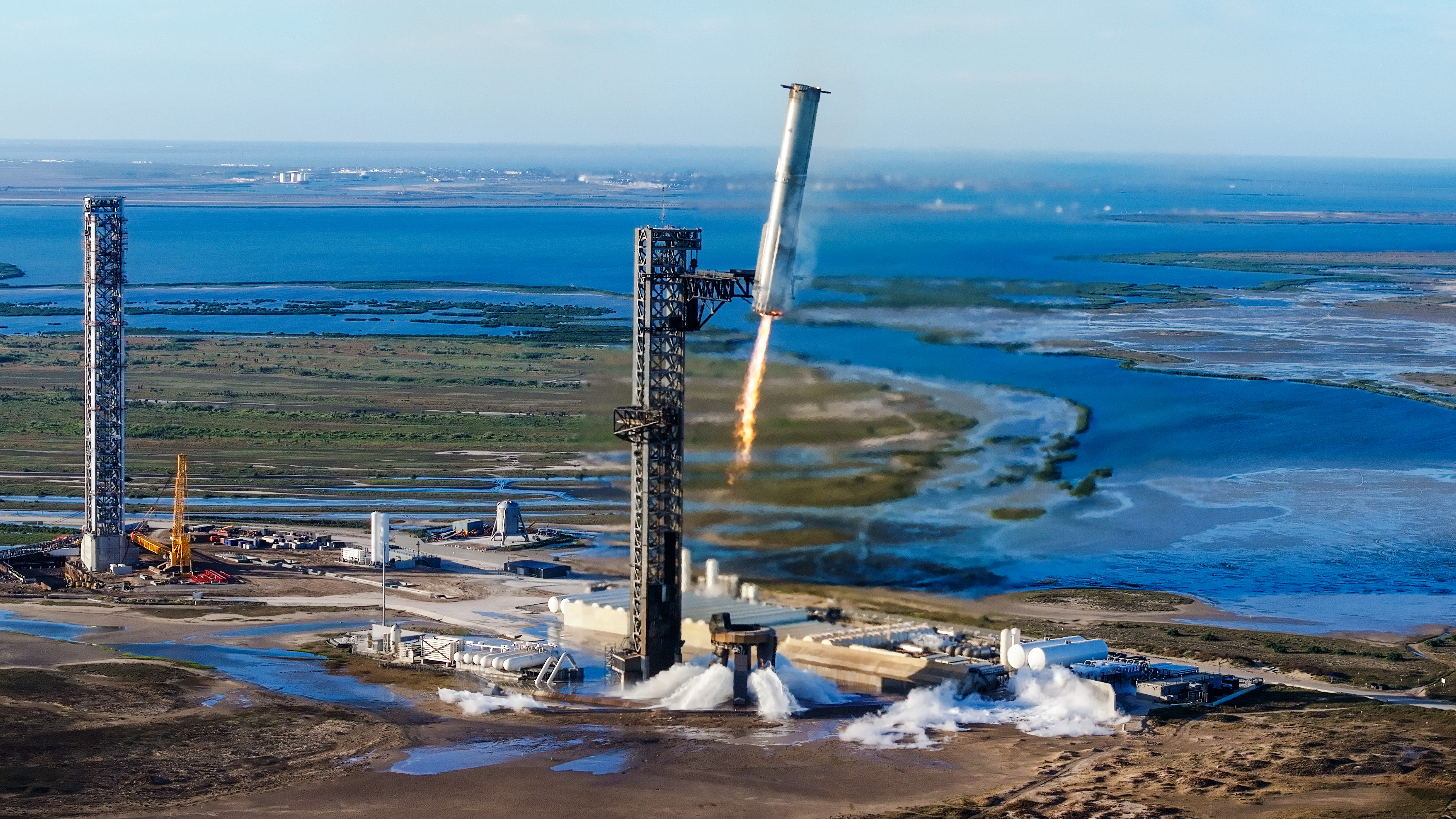
The Super Heavy booster returned to Starbase in Texas to be caught back at the launch pad. Credit: SpaceX

Engineers test-fired the Starship vehicle earlier this month for this week’s test flight, validating changes to propellant temperatures, operating thrust, and the ship’s fuel feed lines leading to its six Raptor engines.

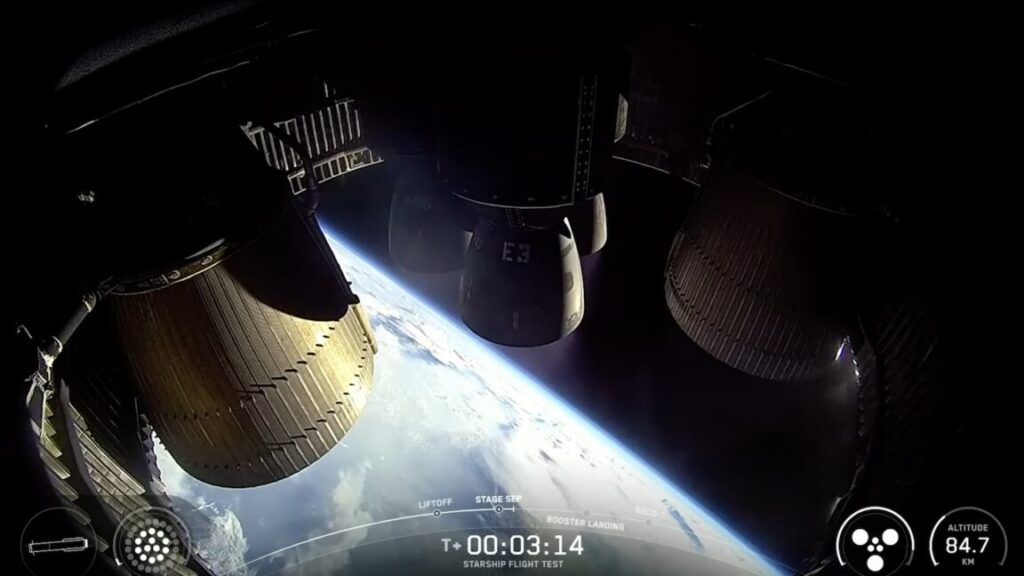
But engineers missed something. On Thursday, the Raptor engines began shutting down on Starship about eight minutes into the flight, and the rocket started tumbling 90 miles (146 kilometers) over the southeastern Gulf of Mexico. SpaceX ground controllers lost all contact with the rocket about nine-and-a-half minutes after liftoff.

“Prior to the end of the ascent burn, an energetic event in the aft portion of Starship resulted in the loss of several Raptor engines,” SpaceX wrote on X. “This in turn led to a loss of attitude control and ultimately a loss of communications with Starship.”

Just like in January, residents and tourists across the Florida peninsula, the Bahamas, and the Turks and Caicos Islands shared videos of fiery debris trails appearing in the twilight sky. Air traffic controllers diverted or delayed dozens of commercial airline flights flying through the debris footprint, just as they did in response to the January incident.

There were no immediate reports Thursday of any Starship wreckage falling over populated areas. In January, residents in the Turks and Caicos Islands recovered small debris fragments, including one piece that caused minor damage when it struck a car. The debris field from Thursday’s failed flight appeared to fall west of the areas where debris fell after Starship Flight 7.

A spokesperson for the Federal Aviation Administration said the regulatory agency will require SpaceX to perform an investigation into Thursday’s Starship failure.

The Starship program hits another speed bump with second consecutive failure Read More »

nasa-officials-undermine-musk’s-claims-about-‘stranded’-astronauts

NASA officials undermine Musk’s claims about ‘stranded’ astronauts


“We were looking at this before some of those statements were made by the President.”

NASA astronauts Butch Wilmore and Suni Williams aboard the International Space Station. Credit: NASA

Over the last month there has been something more than a minor kerfuffle in the space industry over the return of two NASA astronauts from the International Space Station.

The fate of Butch Wilmore and Suni Williams, who launched on the first crewed flight of Boeing’s Starliner spacecraft on June 5, 2024, has become a political issue after President Donald Trump and SpaceX founder Elon Musk said the astronauts’ return was held up by the Biden White House.

In February, Trump and Musk appeared on FOX News. During the joint interview, the subject of Wilmore and Williams came up. They remain in space today after NASA decided it would be best they did not fly home in their malfunctioning Starliner spacecraft—but would return in a SpaceX-built Crew Dragon.

“At the President’s request, or instruction, we are accelerating the return of the astronauts, which was postponed to a ridiculous degree,” Musk said.

“They got left in space,” Trump added.

“They were left up there for political reasons, which is not good,” Musk concluded.

After this interview, a Danish astronaut named Andreas Mogensen asserted that Musk was lying. “What a lie,” Mogensen wrote on the social media site Musk owns, X. “And from someone who complains about lack of honesty from the mainstream media.”

Musk offered a caustic response to Mogensen. “You are fully retarded,” Musk wrote. “SpaceX could have brought them back several months ago. I OFFERED THIS DIRECTLY to the Biden administration and they refused. Return WAS pushed back for political reasons. Idiot.”

So what’s the truth?

NASA has not directly answered questions about this over the last month. However, the people who really know the answer lie within the human spaceflight programs at the space agency. After one news conference was canceled last month, two key NASA officials were finally made available on a media teleconference on Friday evening. These were Ken Bowersox, associate administrator, Space Operations Mission Directorate, and Steve Stich, manager, of NASA’s Commercial Crew Program, which is responsible for Starliner and Crew Dragon flights.

Musk is essentially making two claims. First, he is saying that last year SpaceX offered to bring Wilmore and Williams home from the International Space Station—and made the offer directly to the Biden Administration. And the offer was refused for “political” reasons.

Second, Musk says that, at Trump’s request, the return of Wilmore and Williams was accelerated. The pair is now likely to return home to Earth as part of the Crew 9 mission later this month, about a week after the launch of a new group of astronauts to the space station. This Crew 10 mission has a launch date of March 12, so Wilmore and Williams could finally fly home about two weeks from now.

Let’s examine each of Musk’s claims in light of what Bowersox and Stich said Friday evening.

Was Musk’s offer declined for political reasons?

On July 14, last year, NASA awarded SpaceX a special contract to study various options to bring Wilmore and Williams home on a Crew Dragon vehicle. At the time, the space agency was considering options if Starliner was determined to be unsafe. Among the options NASA was considering were to fly Wilmore and Williams home on the Crew 8 vehicle attached to the station (which would put an unprecedented six people in the capsule) or asking SpaceX to autonomously fly a Dragon to the station to return Wilmore and Williams separately.

“The SpaceX folks helped us with a lot of options for how we would bring Butch and Suni home on Dragon in a contingency,” Bowersox said during Friday’s teleconference. “When it comes to adding on missions, or bringing a capsule home early, those were always options. But we ruled them out pretty quickly just based on how much money we’ve got in our budget, and the importance of keeping crews on the International Space Station. They’re an important part of maintaining the station.”

As a result, the Crew 9 mission launched in September with just two astronauts. Wilmore and Williams joined that crew for a full, six-month increment on the space station.

Stich said NASA made that decision based on flight schedules to the space station and the orbiting laboratory’s needs. It also allowed time to send SpaceX spacesuits up for the pair of astronauts and to produce seat liners that would make their landing in the water, under parachutes, safe.

“When we laid all that out, the best option was really the one that we’re embarking upon now,” Stich said. “And so we did Crew 9, flying the two empty seats, flying a suit for Butch up, and also making sure that the seats were right for Butch’s anthropometrics, and Suni’s, to return them safely.”

So yes, SpaceX has been working with NASA to present options, including the possibility of a return last fall. However, those discussions were being held within the program levels and their leaders: Stich for Commercial Crew and Dana Weigel for the International Space Station.

“Dana and I worked to come up with a decision that worked for the Commercial Crew Program and Space Station,” Stich said. “And then, Ken (Bowersox), we all we had the Flight Readiness Review process with you, and the Administrator of NASA listened in as well. So we had a recommendation to the agency and that was on the process that we typically use.”

Bowersox confirmed that the decision was made at the programmatic level.

“That’s typically the way our decisions work,” Bowersox said. “The programs work what makes the most sense for them, programmatically, technically. We’ll weigh in at the headquarters level, and in this case we thought the plan that we came up with made a lot of sense.”

During the teleconference, a vice president at SpaceX, Bill Gerstenmaier, was asked directly what offer Musk was referring to when he mentioned the Biden administration. He did not provide a substantive answer.

Musk claims he made an offer directly to senior officials in the Biden Administration. We have no way to verify that, but it does seem clear that the Biden administration never communicated such an offer to lower-level officials within NASA, who made their decision for technical rather than political reasons.

“I think you know we work for NASA, and we worked with NASA cooperatively to do whatever we think was the right thing,” the SpaceX official, Gerstenmaier, replied. “You know, we were willing to support in any manner they thought was the right way to support. They came up with the option you heard described today by them, and we’re supporting that option.”

Did Trump tell NASA to accelerate Butch and Suni’s return?

As of late last year, the Crew 9 mission was due to return in mid-February. However, there was a battery issue with a new Dragon spacecraft that was going to be used to fly Crew 10 into orbit. As a result, NASA announced on December 17 that the return of the crew was delayed into late March or early April.

Then, on February 11, NASA announced that the Crew 10 launch was being brought forward to March 12. This was a couple of weeks earlier than planned, and it was possible because NASA and SpaceX decided to swap out Dragon capsules, using a previously flown vehicle—Crew Dragon Endurance—for Crew 10.

So was this change to accelerate the return of Wilmore and Williams politically driven?

The decision to swap to Endurance was made in late January, Stich said, and this allowed the launch date to be moved forward. Asked if political pressure was a reason, Stich said it was not. “It really was driven by a lot of other factors, and we were looking at this before some of those statements were made by the President and Mr. Musk,” he said.

Bowersox added that this was correct but also said that NASA appreciated the President’s interest in the space program.

“I can verify that Steve has been talking about how we might need to juggle the flights and switch capsules a good month before there was any discussion outside of NASA, but the President’s interest sure added energy to the conversation,” Bowersox said.

Photo of Eric Berger

Eric Berger is the senior space editor at Ars Technica, covering everything from astronomy to private space to NASA policy, and author of two books: Liftoff, about the rise of SpaceX; and Reentry, on the development of the Falcon 9 rocket and Dragon. A certified meteorologist, Eric lives in Houston.

NASA officials undermine Musk’s claims about ‘stranded’ astronauts Read More »

intuitive-machines’-second-attempt-to-land-on-the-moon-also-went-sideways

Intuitive Machines’ second attempt to land on the Moon also went sideways

Inside a small control room, during the middle of the day on Thursday local time in Texas, about a dozen white-knuckled engineers at a space startup named Intuitive Machines started to get worried. Their spacecraft, a lander named Athena, was beginning its final descent down to the lunar surface.

A little more than a year had passed since the company’s first attempt to land on the Moon with a similarly built vehicle, Odysseus. Due to problems with that spacecraft’s laser rangefinder, it skidded into the Moon’s surface and toppled over.

So engineers at Intuitive Machines had checked, and re-checked the laser-based altimeters on Athena. When the lander got down within about 30 km of the lunar surface, they tested the rangefinders again. Worryingly, there was some noise in the readings as the laser bounced off the Moon. However, the engineers had reason to believe that, maybe, the readings would improve as the spacecraft got nearer to the surface.

“Our hope was that the signal to noise would improve as we got closer to the Moon,” said Tim Crain, chief technology officer for Intuitive Machines, speaking to reporters afterward.

It didn’t. The noise remained. And so, to some extent, Athena went down to the Moon blind. The spacecraft’s propulsion system, based on liquid oxygen and methane, and designed in-house, worked beautifully. But in the final moments, the spacecraft did not quite know where it was relative to the surface.

Probably lying on its side

Beyond that, Crain and the rest of the company, including its chief executive Steve Altemus, could not precisely say what happened. After Athena landed, the engineers in mission control could talk to the spacecraft, and they were able to generate some power from its solar arrays. But precisely where it was, or how it lay on the ground, they could not say a few hours later.

Based on a reading from an inertial measurement unit inside the vehicle, most likely Athena is lying on its side. This is the same fate Odysseus met last year, when it skidded into the Moon, broke a leg, and toppled over.

Intuitive Machines’ second attempt to land on the Moon also went sideways Read More »

yes,-we-are-about-to-be-treated-to-a-second-lunar-landing-in-a-week

Yes, we are about to be treated to a second lunar landing in a week

Because the space agency now has some expectation that Intuitive Machines will be fully successful with its second landing attempt, it has put some valuable experiments on board. Principal among them is the PRIME-1 experiment, which has an ice drill to sample any ice that lies below the surface. Drill, baby, drill.

The Athena lander also is carrying a NASA-funded “hopper” that will fire small hydrazine rockets to bounce around the Moon and explore lunar craters near the South Pole. It might even fly into a lava tube. If this happens it will be insanely cool.

Because this is a commercial program, NASA has encouraged the delivery companies to find additional, private payloads. Athena has some nifty ones, including a small rover from Lunar Outpost, a data center from Lonestar Data Holdings, and a 4G cellular network from Nokia. So there’s a lot riding on Athena‘s success.

So will it be a success?

“Of course, everybody’s wondering, are we gonna land upright?” Tim Crain, Intuitive Machines’ chief technology officer, told Ars. “So, I can tell you our laser test plan is much more comprehensive than those last time.”

During the first landing about a year ago, Odysseus‘ laser-based system for measuring altitude failed during the descent. Because Odysseus did not have access to altitude data, the spacecraft touched down faster, and on a 12-degree slope, which exceeded the 10-degree limit. As a result, the lander skidded across the surface, and one of its six legs broke, causing it to fall over.

Crain said about 10 major changes were made to the spacecraft and its software for the second mission. On top of that, about 30 smaller things, such as more efficient file management, were updated on the new vehicle.

In theory, everything should work this time. Intuitive Machines has the benefit of all of its learnings from the last time, and nearly everything worked right during this first attempt. But the acid test comes on Thursday.

The company and NASA will provide live coverage of the attempt beginning at 11: 30 am ET (16: 30 UTC) on NASA+, with landing set for just about one hour later. The Moon may be a harsh mistress, but hopefully not too harsh.

Yes, we are about to be treated to a second lunar landing in a week Read More »

butch-wilmore-says-elon-musk-is-“absolutely-factual”-on-dragon’s-delayed-return

Butch Wilmore says Elon Musk is “absolutely factual” on Dragon’s delayed return

For what it is worth, all of the reporting done by Ars over the last nine months suggests the decision to return Wilmore and Williams this spring was driven by technical reasons and NASA’s needs on board the International Space Station, rather than because of politics.

Q. How do you feel about waking up and finding yourself in a political storm?

Wilmore: I can tell you at the outset, all of us have the utmost respect for Mr. Musk, and obviously, respect and admiration for our president of the United States, Donald Trump. We appreciate them. We appreciate all that they do for us, for human space flight, for our nation. The words they said, politics, I mean, that’s part of life. We understand that. And there’s an important reason why we have a political system, a political system that we do have, and we’re behind it 100 percent. We know what we’ve lived up here, the ins and outs, and the specifics that they may not be privy to. And I’m sure that they have some issues that they are dealing with, information that they have, that we are not privy to. So when I think about your question, that’s part of life, we are on board with it.

Q. Did politics influence NASA’s decision for you to stay longer in space?

Wilmore: From my standpoint, politics is not playing into this at all. From our standpoint, I think that they would agree, we came up prepared to stay long, even though we plan to stay short. That’s what we do in human spaceflight. That’s what your nation’s human space flight program is all about, planning for unknown, unexpected contingencies. And we did that, and that’s why we flowed right into Crew 9, into Expedition 72 as we did. And it was somewhat of a seamless transition, because we had planned ahead for it, and we were prepared.

Butch Wilmore says Elon Musk is “absolutely factual” on Dragon’s delayed return Read More »

spacex-readies-a-redo-of-last-month’s-ill-fated-starship-test-flight

SpaceX readies a redo of last month’s ill-fated Starship test flight


The FAA has cleared SpaceX to launch Starship’s eighth test flight as soon as Monday.

Ship 34, destined to launch on the next Starship test flight, test-fired its engines in South Texas on February 12. Credit: SpaceX

SpaceX plans to launch the eighth full-scale test flight of its enormous Starship rocket as soon as Monday after receiving regulatory approval from the Federal Aviation Administration.

The test flight will be a repeat of what SpaceX hoped to achieve on the previous Starship launch in January, when the rocket broke apart and showered debris over the Atlantic Ocean and Turks and Caicos Islands. The accident prevented SpaceX from completing many of the flight’s goals, such as testing Starship’s satellite deployment mechanism and new types of heat shield material.

Those things are high on the to-do list for Flight 8, set to lift off at 5: 30 pm CST (6: 30 pm EST; 23: 30 UTC) Monday from SpaceX’s Starbase launch facility on the Texas Gulf Coast. Over the weekend, SpaceX plans to mount the rocket’s Starship upper stage atop the Super Heavy booster already in position on the launch pad.

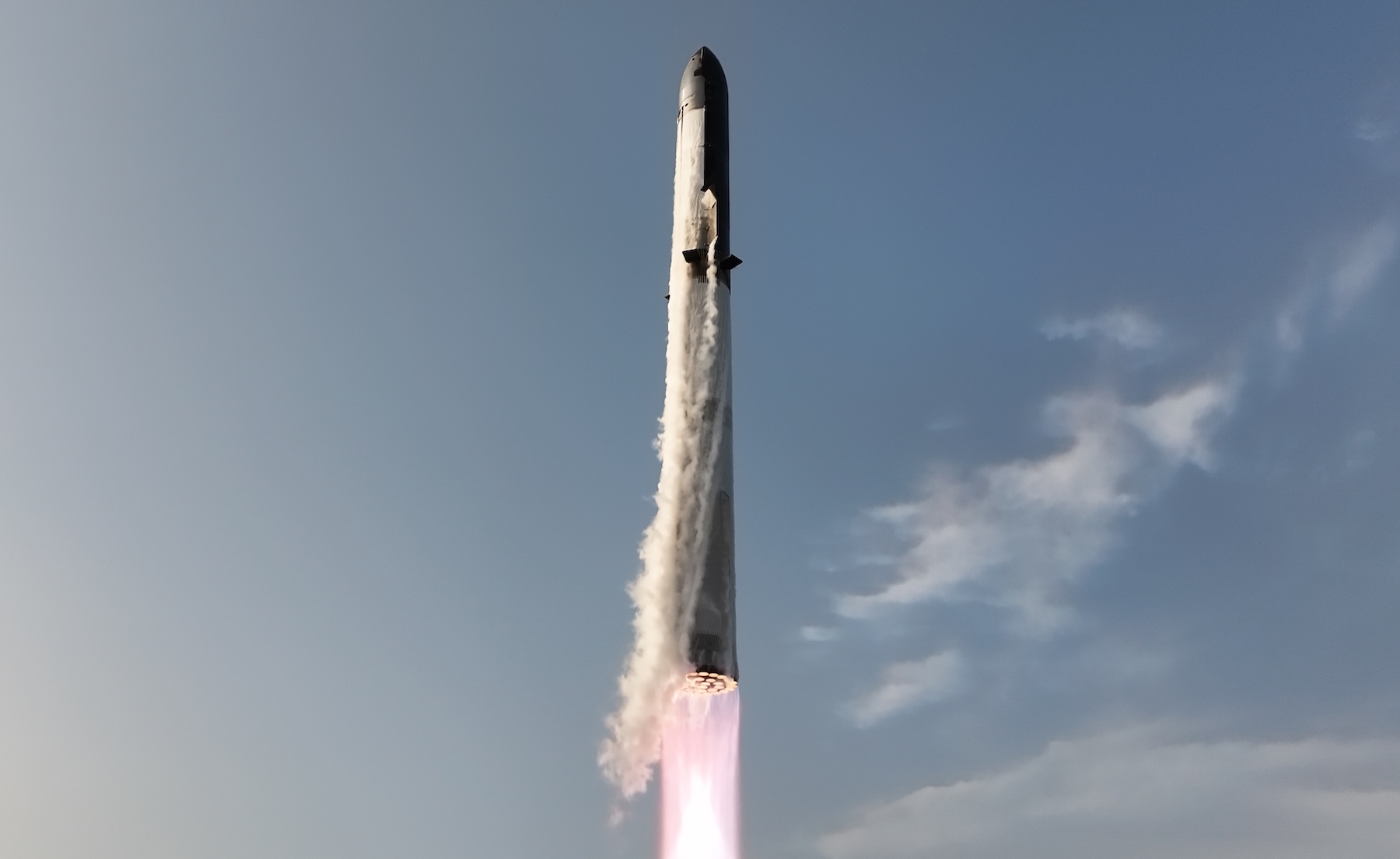
The fully stacked rocket will tower 404 feet (123.1 meters) tall. Like the test flight on January 16, this launch will use a second-generation, Block 2, version of Starship with larger propellant tanks with 25 percent more volume than previous vehicle iterations. The payload compartment near the ship’s top is somewhat smaller than the payload bay on Block 1 Starships.

This block upgrade moves SpaceX closer to attempting more challenging things with Starship, such as returning the ship, or upper stage, back to the launch site from orbit. It will be caught with the launch tower at Starbase, just like SpaceX accomplished last year with the Super Heavy booster. Officials also want to bring Starship into service to launch Starlink Internet satellites and demonstrate in-orbit refueling, an enabling capability for future Starship flights to the Moon and Mars.

NASA has contracts with SpaceX worth more than $4 billion to develop a Starship spinoff as a human-rated Moon lander for the Artemis lunar program. The mega-rocket is central to Elon Musk’s ambition to create a human settlement on Mars.

Another shot at glory

Other changes introduced on Starship Version 2 include redesigned forward flaps, which are smaller and closer to the tip of the ship’s nose to better protect them from the scorching heat of reentry. Technicians also removed some of the ship’s thermal protection tiles to “stress-test vulnerable areas” of the vehicle during descent. SpaceX is experimenting with metallic tile designs, including one with active cooling, that might be less brittle than the ceramic tiles used elsewhere on the ship.

Engineers also installed rudimentary catch fittings on the ship to evaluate how they respond to the heat of reentry, when temperatures outside the vehicle climb to 2,600° Fahrenheit (1,430° Celsius). Read more about Starship Version in this previous story from Ars.

It will take about 1 hour and 6 minutes for Starship to fly from the launch pad in South Texas to a splashdown zone in the Indian Ocean northwest of Australia. The rocket’s Super Heavy booster will fire 33 methane-fueled Raptor engines for two-and-a-half minutes as it climbs east from the Texas coastline, then jettison from the Starship upper stage and reverse course to return to Starbase for another catch with mechanical arms on the launch tower.

Meanwhile, Starship will ignite six Raptor engines and accelerate to a speed just shy of orbital velocity, putting the ship on a trajectory to reenter the atmosphere after soaring about halfway around the world.

Booster 15 perched on the launch mount at Starbase, Texas. Credit: SpaceX

If you’ve watched the last few Starship flights, this profile probably sounds familiar. SpaceX achieved successful splashdowns after three Starship test flights last year, and hoped to do it again before the premature end of Flight 7 in January. Instead, the accident was the most significant technical setback for the Starship program since the first full-scale test flight in 2023, which damaged the launch pad before the rocket spun out of control in the upper atmosphere.

Now, SpaceX hopes to get back on track. At the end of last year, company officials said they targeted as many as 25 Starship flights in 2025. Two months in, SpaceX is about to launch its second Starship of the year.

The breakup of Starship last month prevented SpaceX from evaluating the performance of the ship’s Pez-like satellite deployer and upgraded heat shield. Engineers are eager to see how those perform on Monday’s flight. Once in space, the ship will release four simulators replicating the approximate size and mass of SpaceX’s next-generation Starlink Internet satellites. They will follow the same suborbital trajectory as Starship and reenter the atmosphere over the Indian Ocean.

That will be followed by a restart of a Raptor engine on Starship in space, repeating a feat first achieved on Flight 6 in November. Officials want to ensure Raptor engines can reignite reliably in space before actually launching Starship into a stable orbit, where the ship must burn an engine to guide itself back into the atmosphere for a controlled reentry. With another suborbital flight on tap Monday, the engine relight is purely a confidence-building demonstration and not critical for a safe return to Earth.

The flight plan for Starship’s next launch includes another attempt to catch the Super Heavy booster with the launch tower, a satellite deployment demonstration, and an important test of its heat shield. Credit: SpaceX

Then, about 47 minutes into the mission, Starship will plunge back into the atmosphere. If this flight is like the previous few, expect to see live high-definition video streaming back from Starship as super-heated plasma envelops the vehicle in a cloak of pink and orange. Finally, air resistance will slow the ship below the speed of sound, and just 20 seconds before reaching the ocean, the rocket will flip to a vertical orientation and reignite its Raptor engines again to brake for splashdown.

This is where SpaceX hopes Starship Version 2 will shine. Although three Starships have made it to the ocean intact, the scorching temperatures of reentry damaged parts of their heat shields and flaps. That won’t do for SpaceX’s vision of rapidly reusing Starship with minimal or no refurbishment. Heat shield repairs slowed down the turnaround time between NASA’s space shuttle missions, and officials hope the upgraded heat shield on Starship Version 2 will decrease the downtime.

FAA’s green light

The FAA confirmed Friday it issued a launch license earlier this week for Starship Flight 8.

“The FAA determined SpaceX met all safety, environmental and other licensing requirements for the suborbital test flight,” an FAA spokesperson said in a statement.

The federal regulator oversaw a SpaceX-led investigation into the failure of Flight 7. SpaceX said NASA, the National Transportation Safety Board, and the US Space Force also participated in the investigation, which determined that propellant leaks and fires in an aft compartment, or attic, of Starship led to the shutdown of its engines and eventual breakup.

Engineers concluded the leaks were most likely caused by a harmonic response several times stronger than predicted, suggesting the vibrations during the ship’s climb into space were in resonance with the vehicle’s natural frequency. This would have intensified the vibrations beyond the levels engineers expected from ground testing.

Earlier this month, SpaceX completed an extended-duration static fire of the next Starship upper stage to test hardware modifications at multiple engine thrust levels. According to SpaceX, findings from the static fire informed changes to the fuel feed lines to Starship’s Raptor engines, adjustments to propellant temperatures, and a new operating thrust for the next test flight.

“To address flammability potential in the attic section on Starship, additional vents and a new purge system utilizing gaseous nitrogen are being added to the current generation of ships to make the area more robust to propellant leakage,” SpaceX said. “Future upgrades to Starship will introduce the Raptor 3 engine, reducing the attic volume and eliminating the majority of joints that can leak into this volume.”

FAA officials were apparently satisfied with all of this. The agency’s commercial spaceflight division completed a “comprehensive safety review” and determined Starship can return to flight operations while the investigation into the Flight 7 failure remains open. This isn’t new. The FAA also used this safety determination to expedite SpaceX launch license approvals last year as officials investigated mishaps on Starship and Falcon 9 rocket flights.

Photo of Stephen Clark

Stephen Clark is a space reporter at Ars Technica, covering private space companies and the world’s space agencies. Stephen writes about the nexus of technology, science, policy, and business on and off the planet.

SpaceX readies a redo of last month’s ill-fated Starship test flight Read More »

in-a-last-minute-decision,-white-house-decides-not-to-terminate-nasa-employees

In a last-minute decision, White House decides not to terminate NASA employees

So what changed?

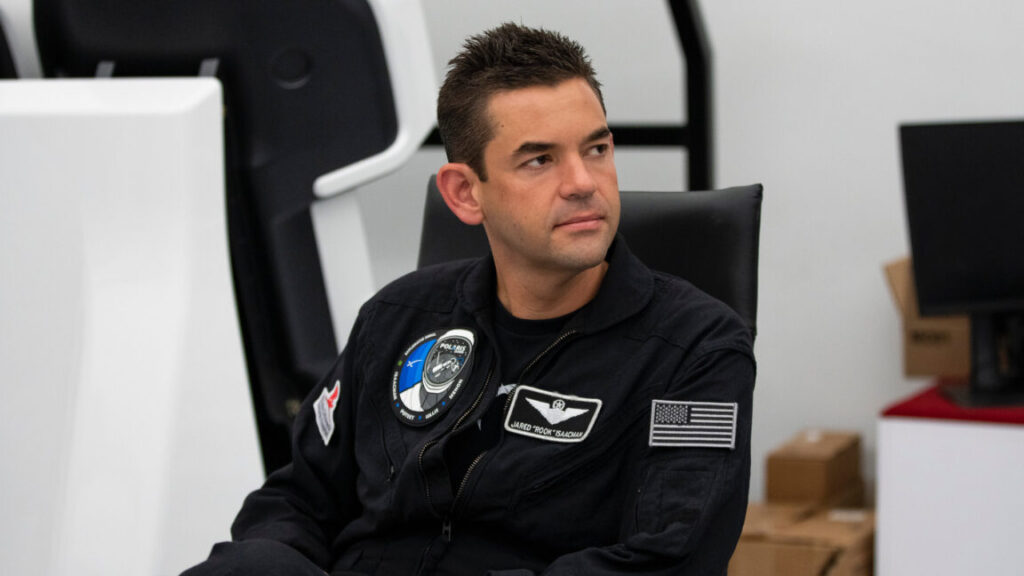
It was not immediately clear why. A NASA spokesperson in Washington, DC, offered no comment on the updated guidance. Two sources indicated that it was plausible that private astronaut Jared Isaacman, whom President Trump has nominated to lead the space agency, asked for the cuts to be put on hold.

Although this could not be confirmed, it seems reasonable that Isaacman would want to retain some control over where cuts at the agency are made. Firing all probationary employees—which is the most expedient way to reduce the size of government—is a blunt instrument. It whacks new hires that the agency may have recruited for key positions, as well as high performers who earned promotions.

The reprieve in these terminations does not necessarily signal that NASA will escape significant budget or employment cuts in the coming months.

The administration could still seek to terminate probationary employees. In addition, Ars reported earlier that directors at the agency’s field centers have been told to prepare options for a “significant” reduction in force in the coming months. The scope of these cuts has not been defined, and it’s likely they would need to be negotiated with Congress.

In a last-minute decision, White House decides not to terminate NASA employees Read More »