In short, the state attorneys general object to the document treating facts as facts, as there have been lawsuits that contested them. “Among other things, the Manual states that human activities have ‘unequivocally warmed the climate,’ that it is ‘extremely likely’ human influence drives ocean warming, and that researchers are ‘virtually certain’ about ocean acidification,” their letter states, “treating contested litigation positions as settled fact.” In other words, they’re arguing that, if someone is ignorant enough to start a suit based on ignorance of well-established science, then the Federal Judicial Center should join them in their ignorance.
The attorneys general also complain that the report calls the Intergovernmental Panel on Climate Change an “authoritative science body,” citing a conservative Canadian public policy think tank that disagreed with that assessment.
These complaints were mixed in with some more potentially reasonable complaints about how the climate chapter gave specific suggestions on how to legally approach some issues and assigned significance to one or two recent studies that haven’t yet been validated by follow-on work. But the letter’s authors would not settle for revisions based on a few reasonable complaints; instead, they demand the entire chapter be removed because it accurately reflects the status of climate science.
Naturally, the Federal Judicial Center has agreed. We have confirmed that the current version of the document no longer includes a chapter on climate science, even though the foreword by Supreme Court Justice Elana Kagan still mentions it. The full text of the now-deleted chapter has been posted by the RealClimate blog, though.
“The only justice I’m getting is exposing this man and having posted that video,” she added. “And it has gone viral. Now he can live with shame and embarrassment if people have seen it.”
“I’m the victim!” she said. “Is this making sense to any-fucking-body?”
Her numerous videos attracted huge followings—anywhere from 5 million to 30 million views each—and DoorDash eventually felt the need to respond.
“DoorDash never deactivates someone for reporting [sexual assault]—full stop,” said the company.
But, it added, “posting a video of a customer in their home, and disclosing their personal details publicly, is a clear violation of our policies. That is the sole reason that this Dasher’s account was deactivated, along with the customer’s, while we investigated. We’ve also ensured that the Dasher has full access to their earnings.”
Meanwhile, the police were doing something—but not something that Henderson wanted.
The cops determined that the nude man in question “was incapacitated and unconscious on his couch due to alcohol consumption.” Being drunk and naked inside your own home apparently does not qualify as sexual assault on a delivery driver, and the police department said in a press release yesterday that “the investigation by the Oswego Police Department determined that no sexual assault occurred.”
As part of their investigation, the cops found that Henderson had filmed the man and “subsequently posted the video to social media, where it drew significant attention.” This shifted their attention to Henderson’s decision to film and upload the video without the man’s consent.
The police eventually arrested Henderson, who is now charged with two felonies: “Unlawful Surveillance in the Second Degree” and “Dissemination of an Unlawful Surveillance Image in the First Degree.” She was released after being charged, and her case will be heard by the Oswego City Court.
Henderson has stopped releasing videos on TikTok about the situation.
Government can’t use funding threats to override the First Amendment.
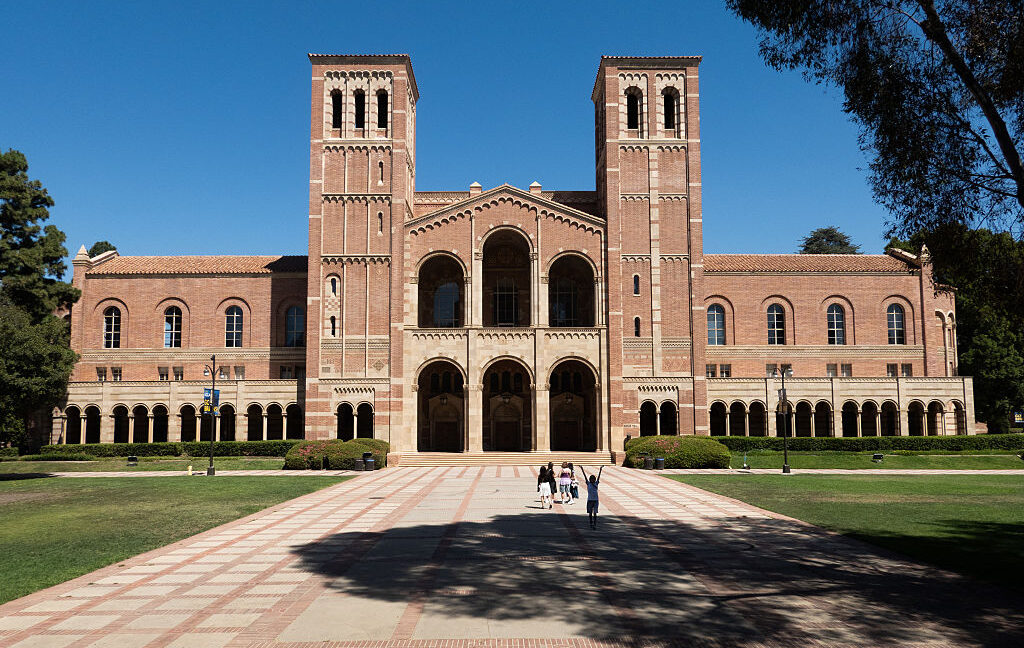
While UCLA has been most prominently targeted by the Trump Administration, the ruling protects the entire UC system. Credit: Myung J. Chun
On Friday, a US District Court issued a preliminary injunction blocking the United States government from halting federal funding at UCLA or any other school in the University of California system. The ruling came in response to a suit filed by groups representing the faculty at these schools challenging the Trump administration’s attempts to force UCLA into a deal that would substantially revise instruction and policy.
The court’s decision lays out how the Trump administration’s attacks on universities follow a standard plan: use accusations of antisemitism to justify an immediate cut to funding, then use the loss of money to compel an agreement that would result in revisions to university instruction and management. The court finds that this plan was deficient on multiple grounds, violating legal procedures for cutting funding to an illegal attempt and suppressing the First Amendment rights of faculty.
The result is a reprieve for the entire University of California system, as well as a clear pathway for any universities to fight back against the Trump administration’s attacks on research and education.
First Amendment violations
The Judge overseeing this case, Rita Lin, issued separate documents describing the reasoning behind her decision and the sanctions she has placed on the Trump administration. In the first, she lays out the argument that the threats facing the UC system, and most notably UCLA, are part of a scripted campaign deployed against many other universities, one that proceeds through several steps. The Trump administration’s Task Force to Combat Anti-Semitism is central to this effort, which starts with the opening of a civil rights investigation against a university that was the site of anti-Israel protests during the conflict in Gaza.
“Rooting out antisemitism is undisputedly a laudable and important goal,” Judge Lin wrote. But the investigations in many cases take place after those universities have already taken corrective steps, which the Trump administration seemingly never considers. Instead, while the investigations are still ongoing, agencies throughout the federal government cancel funding for research and education meant for that university and announce that there will be no future funding without an agreement.
The final step is a proposed settlement that would include large payments (over $1.2 billion in UCLA’s case) and a set of conditions that alter university governance and instruction. These conditions often have little to no connection with antisemitism.
While all of this was ostensibly meant to combat antisemitism, the plaintiffs in this case presented a huge range of quotes from administration officials, including the head of the Task Force to Combat Anti-Semitism, saying the goal was to suppress certain ideas on campus. “The unrebutted record in this case shows that Defendants have used the threat of investigations and economic sanctions to… coerce the UC to stamp out faculty, staff, and student ‘woke,’ ‘left,’ ‘anti-American,’ ‘anti-Western,’ and ‘Marxist’ speech,” Lin said.
And even before any sort of agreement was reached, there was extensive testimony that people on campus changed their teaching and research to avoid further attention from the administration. “Plaintiffs’ members express fear that researching, teaching, and speaking on disfavored topics will trigger further retaliatory funding cancellations against the UC,” Lin wrote, “and that they will be blamed for the retaliation. They also describe fears that the UC will retaliate against them to avoid further funding cuts or in order to comply with the proposed settlement agreement.”
That’s a problem, given that teaching and research topics are forms of speech, and therefore protected by the First Amendment. “These are classic, predictable First Amendment harms, and exactly what Defendants publicly said that they intended,” Lin concluded.
Beyond speech
But the First Amendment isn’t the only issue here. The Civil Rights Act, most notably Title VI, lays out a procedure for cutting federal funding, including warnings and hearings before any funds are shut off. That level of coercion is also limited to cases where there’s an indication that voluntary compliance won’t work. Any funding cut would need to target the specific programs involved and the money allocated to them. There is nothing in Title VI that enables the sort of financial payments that the government has been demanding (and, in some cases, receiving) from schools.
It’s pretty obvious that none of these procedures are being followed here. And as Lin noted in her ruling, “Defendants conceded at oral argument that, of the billions of dollars of federal university funding suspended across numerous agencies in recent months, not a single agency has followed the procedures required by Title VI and IX.”
She found that the government decided it wasn’t required to follow the Civil Rights Act procedures. (Reading through the decision, it becomes hard to tell where the government offered any defense of its actions at all.)
The decision to ignore all existing procedures, in turn, causes additional problems, including violations of the Tenth Amendment, which limits the actions that the government can take. And it runs afoul of the Administrative Procedures Act, which prohibits the government from taking actions that are “arbitrary and capricious.”
All of this provided Lin with extensive opportunities to determine that the Plaintiffs, largely organizations that represent the faculty at University of California schools, are likely to prevail in their suit, and thus are deserving of a preliminary injunction to block the federal government’s actions. But first, she had to deal with a recent Supreme Court precedent holding that cases involving federal money belong in a different court system. She did so by arguing that this case is largely about First Amendment and federal procedures rather than any sort of contract for federal money; money is being used as a lever here, so they ruling must involve restoring the money to address the free speech issues.
That issue will undoubtedly be picked up on appeal as it makes its way through the courts.
Complete relief
Lin identified a coercive program that is being deployed against many universities and is already suppressing speech throughout the University of California system, including on campuses that haven’t been targeted yet. She is issuing a ruling that targets the program broadly.
“Plaintiffs have shown that Defendants are coercing the [University of California] as a whole, through the Task Force Policy and Funding Cancellation, to stamp out their members’ disfavored speech,” Lin concluded. “Therefore, to afford Plaintiffs complete relief, the entirety of the coercive practice must be enjoined, not just the suspensions that impact Plaintiffs’ members.”
Her ruling indicates that if the federal government decides it wants to cut any grants to any school in the UC system, it has to go through the entire procedure set out in the Civil Rights Act. The government is also prohibited from demanding money from any of these schools as a fine or payment, and it can’t threaten future funding to the schools. The current hold on grants to the school by the government must also be lifted.
In short, the entire UC system should be protected from any of the ways that the government has been trying to use accusations of antisemitism to suppress ideas that it disfavors. And since those primarily involve federal funding, that has to be restored, and any future threats to it must be blocked.
While this case is likely to face a complicated appeals process, Lin’s ruling makes it extremely clear that all of these cases are exactly what they seemed. Just as members of the administration stated in public multiple times, they decided to target some ideas they disfavored and simply made up a process that would let them do so.
While it worked against a number of prominent universities, its legal vulnerabilities have been there from the start.
John is Ars Technica’s science editor. He has a Bachelor of Arts in Biochemistry from Columbia University, and a Ph.D. in Molecular and Cell Biology from the University of California, Berkeley. When physically separated from his keyboard, he tends to seek out a bicycle, or a scenic location for communing with his hiking boots.
According to the FBI, in 2023, Martin took steps to become an “affiliate” of the BlackCat ransomware developers. BlackCat provides full-service malware, offering up modern ransomware code and dark web infrastructure in return for a cut of any money generated by affiliates, who find and hack their own targets. (And yes, sometimes BlackCat devs do scam their own affiliates.)
Martin had seen how this system worked in practice through his job, and he is said to have approached a pair of other people to help him make some easy cash. One of these people was allegedly Ryan Goldberg of Watkinsville, Georgia, who worked as an incident manager at the cybersecurity firm Sygnia. Goldberg told the FBI that Martin had recruited him to “try and ransom some companies.”
In May 2023, the group attacked its first target, a medical company based in Tampa, Florida. The team got the BlackCat software onto the company’s network, where it encrypted corporate data, and demanded a $10 million ransom for the decryption key.
Eventually, the extorted company decided to pay up—though only $1.27 million. The money was paid out in crypto, with a percentage going to the BlackCat devs and the rest split between Martin, Goldberg, and a third, as-yet-unnamed conspirator.
Success was short-lived, though. Throughout 2023, the extortion team allegedly went after a pharma company in Maryland, a doctor’s office, and an engineering firm in California, plus a drone manufacturer in Virginia.
Ransom requests varied widely: $5 million, or $1 million, or even a mere $300,000.
But no one else paid.
By early 2025, an FBI investigation had ramped up, and the Bureau searched Martin’s property in April. Once that happened, Goldberg said that he received a call from the third member of their team, who was “freaking out” about the raid on Martin. In early May, Goldberg searched the web for Martin’s name plus “doj.gov,” apparently looking for news on the investigation.
On June 17, Goldberg, too, was searched and his devices taken. He agreed to talk to agents and initially denied knowing anything about the ransomware attacks, but he eventually confessed his involvement and fingered Martin as the ringleader. Goldberg told agents that he had helped with the attacks to pay off some debts, and he was despondent about the idea of “going to federal prison for the rest of [his] life.”
But deceased public figures obviously can’t consent to Sora 2’s cameo feature or exercise that kind of “end-to-end” control of their own likeness. And OpenAI seems OK with that. “We don’t have a comment to add, but we do allow the generation of historical figures,” an OpenAI spokesperson recently told PCMag.
The countdown to lawsuits begins
The use of digital re-creations of dead celebrities isn’t exactly a new issue—back in the ’90s, we were collectively wrestling with John Lennon chatting to Forrest Gump and Fred Astaire dancing with a Dirt Devil vacuum. Back then, though, that kind of footage required painstaking digital editing and technology only easily accessible to major video production houses. Now, more convincing footage of deceased public figures can be generated by any Sora 2 user in minutes for just a few bucks.
In the US, the right of publicity for deceased public figures is governed by various laws in at least 24 states. California’s statute, which dates back to 1985, bars unauthorized post-mortem use of a public figure’s likeness “for purposes of advertising or selling, or soliciting purchases of products, merchandise, goods, or services.” But a 2001 California Supreme Court ruling explicitly allows those likenesses to be used for “transformative” purposes under the First Amendment.
The New York version of the law, signed in 2022, contains specific language barring the unauthorized use of a “digital replicas” that are “so realistic that a reasonable observer would believe it is a performance by the individual being portrayed and no other individual” and in a manner “likely to deceive the public into thinking it was authorized by the person or persons.” But video makers can get around this prohibition with a “conspicuous disclaimer” explicitly noting that the use is unauthorized.
So the group tried again. “Million tears” had been booted by its host, but the group reconstituted on another platform and renamed itself “the trail of trillion tears.” They reached out to another Indonesian videographer and asked for a more graphic version of the same video. But this version, more sadistic than the last, still didn’t satisfy. As one of the Americans allegedly said to another, “honey that’s not what you asked for. Thats the village idiot version. But I’m talking with someone about getting a good vo [videographer] to do it.”
Arrests continue
In 2021, someone leaked communications from the “million tears” group to animals rights organizations like Lady Freethinker and Action for Primates, which handed it over to authorities. Still, it took several years to arrest and prosecute the torture group’s leaders.
In 2024, one of these leaders—Ronald Bedra of Ohio—pled guilty to commissioning the videos and to mailing “a thumb drive containing 64 videos of monkey torture to a co-conspirator in Wisconsin.” His mother, in a sentencing letter to the judge, said that her son must “have been undergoing some mental crisis when he decided to create the website.” As a boy, he had loved all of the family pets, she said, even providing a funeral for a fish.
Bedra was sentenced late last year to 54 months in prison. According to letters from family members, he has also lost his job, his wife, and his kids.
In April 2025, two more alleged co-conspirators were indicted and subsequently arrested; their cases were unsealed only this week. Two other co-conspirators from this group still appear to be uncharged.
In May 2025, 11 other Americans were indicted for their participation in monkey torture groups, though they appear to come from a different network. This group allegedly “paid a minor in Indonesia to commit the requested acts on camera.”
As for the Indonesian side of this equation, arrests have been happening there, too. Following complaints from animal rights groups, police in Indonesia have arrested multiple videographers over the last two years.
Update: Showing the international nature of these torture groups, the Scottish Sun just ran a rather lurid piece about the “sadistic Scots mum jailed for helping to run a horrific global monkey torture network.” The 39-year-old was apparently caught after US authorities broke up another monkey torturing network based around outsourcing the torture to Indonesia.
In August, he moved into a two-bed, two-bath rental unit on the second floor of a building in Greensboro, North Carolina.
On September 15, his father, Ryan Routh, was found in the bushes of the sixth hole of Trump International Golf Club with a scope and a rifle, apparently in a bid to assassinate Donald Trump, who was golfing that day.
As part of the ensuing federal investigation, the FBI raided the junior Routh’s apartment on September 21. A Starbucks bag labeled “Oran” still sat on a dresser in one of the bedrooms while agents searched the home and Routh’s person, looking for any evidence related to his father’s actions. In the course of the search, they found one Galaxy Note 9 on Oran’s person and another Galaxy Note 9 in a laptop bag.
On September 22, the FBI obtained a warrant to search the devices. The investigation of Oran Routh quickly moved in a different direction after the FBI said that it found “hundreds” of videos depicting the sexual abuse of prepubescent girls on an SD card in the Note 9 from the laptop bag.
The other Note 9, the one that Oran had with him when raided, contained not just downloaded files but also “chats from a messaging application that, based on my training and experience, is commonly used by individuals who distribute and receive child pornography,” said an FBI agent in an affidavit. (The messaging app is not named.)
According to the agent, whoever used the phone had been chatting as recently as July with someone on the Internet who sold access to various cloud storage links. When asked for a sample of the linked material, the seller sent over two files depicting the abuse of young girls.
On September 23, Routh was charged in North Carolina federal court with both receipt and possession of child pornography. According to the court docket, Routh was arrested today.
Enlarge/ Guys, it was just a group chat! Over fantasy football!
John Lamb | Getty Images
Philadelphia has learned its lesson the hard way: football makes people a little crazy. (Go birds!) Police here even grease downtown light poles before important games to keep rowdy fans from climbing them.
But Matthew Gabriel, 25, who lives in Philly’s Mt. Airy neighborhood, took his football fanaticism to a whole ‘nother level. For reasons that remain unclear, Gabriel grew incensed with a University of Iowa student who was also a member of Gabriel’s fantasy football group chat.
So Gabriel did what anyone might do under such circumstances: He waited until the student went to Norway for a study abroad visit in August 2023, then contacted Norwegian investigators (Politiets Sikkerhetstjeneste) through an online “tip” form and told them that the student was planning a mass shooting. Gabriel’s message read, in part:
On August 15th a man named [student’s name] is headed around oslo and has a shooting planned with multiple people on his side involved. they plan to take as many as they can at a concert and then head to a department store. I don’t know any more people then that, I just can’t have random people dying on my conscience. he plans to arrive there unarmed spend a couple days normal and then execute the attack. please be ready. he is around a 5 foot 7 read head coming from America, on the 10th or 11th I believe. he should have weapons with him. please be careful
Police in both Norway and the US spent “hundreds of man-hours” reacting to this tip, according to the US government, even though the threat was entirely bogus. When eventually questioned by the FBI, Gabriel admitted the whole thing was a hoax.
But while the government was preparing to prosecute him for one false claim, Gabriel filed another one in March 2024. This time, it was a bomb threat emailed to administrators at the University of Iowa.
“Hello,” it began. “I saw this in a group chat I’m in and just want to make sure everyone is safe and fine. I don’t want anything bad to happen to any body. Thank you. A man named [student’s name] from I believe Nebraska sent this, and I want to make sure that it is a joke and no one will get hurt.”
Gabriel then attached a screenshot pulled from his group chat, which stated, “Hello University of Iowa a man named [student name] told me he was gonna blow up the school.” This was no fake image; it was in fact a real screenshot. But it was also a joke—made in reaction to the previous incident—and Gabriel knew this.
The government found none of this humorous and charged Gabriel with two counts of “interstate and foreign communication of a threat to injure.”
This week, at the federal courthouse in downtown Philly, Gabriel pled guilty to both actions; he will be sentenced in January. (Though he could have faced five years in prison, local media are reporting that he reached a deal with the feds in which they will recommend 15 months of house arrest instead.)
Gabriel’s lawyer has given some choice quotes about the case this week, including, “This guy is fortunate as hell to get house arrest” (Philadelphia Inquirer), “I don’t know what he was thinking. It was definitely not smart” (NBC News), and “I’m an Eagles fan” (Inquirer again—always important to get this out there in Philly).
US Attorney Jacqueline C. Romero offered some unsolicited thoughts of her own about fantasy football group chat behavior, saying in a statement, “My advice to keyboard warriors who’d like to avoid federal charges: always think of the potential consequences before you hit ‘post’ or ‘send.'”
At least this international bad behavior isn’t solely an American export. We import it, too. Over the summer, the US Department of Justice announced that two men, one from Romania and one from Serbia, spent the last several years making fake “swatting” calls to US police and had targeted 101 people, including members of Congress.