Infectious disease

measles-outbreak-hits-208-cases-as-federal-response-goes-off-the-rails

Measles outbreak hits 208 cases as federal response goes off the rails

Vitamin A is a fat-soluble vitamin that stays in the body. Taking too much over longer periods can cause vomiting, headache, fatigue, joint and bone pain, blurry vision, and skin and hair problems. Further, it can lead to dangerously high pressure inside the skull that pushes on the brain, as well as liver damage, confusion, coma, and other problems, according to the American Academy of Pediatrics.

Nevertheless, in an interview with Fox News this week, Kennedy endorsed an unconventional regimen of a steroid, an antibiotic and cod liver oil, praising two Texas doctors for giving it to patients. One of the doctors Kennedy championed was disciplined by the state medical board in 2003 for “unusual use of risk-filled medications,” according to a report by CNN.

In a yet more worrying sign, Reuters reported Friday afternoon that the CDC is planning to conduct a large study on whether the MMR vaccine is linked to autism. This taxpayer-funded effort would occur despite the fact that decades of research and numerous high-quality studies have already been conducted—and they have consistently disproven or found no connection between the vaccine and autism.

The agency’s move is exactly what Democratic senators feared when Kennedy was confirmed as the country’s top health official. In Senate hearings, Kennedy refused to say that vaccines do not cause autism. Democratic senators quickly warned that his anti-vaccine stance could not only move the country backward in the fight against vaccine-preventable diseases, but also hold back autism research aimed at finding the real cause(s) as well as better treatments.

“When you continue to sow doubt about settled science it makes it impossible for us to move forward,” Senator Maggie Hassan (D-N.H.) said in a Senate hearing. “It’s the relitigating and rehashing … it freezes us in place.”

Measles outbreak hits 208 cases as federal response goes off the rails Read More »

texas-official-warns-against-“measles-parties”-as-outbreak-keeps-growing

Texas official warns against “measles parties” as outbreak keeps growing

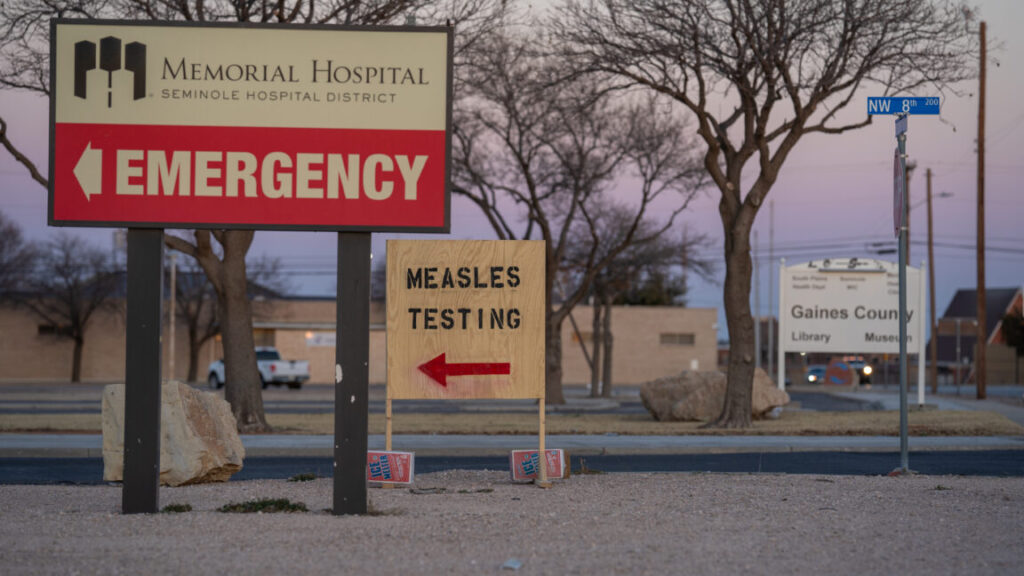
Cook, along with Lubbock’s director of public health, Katherine Wells, said they see no end in sight for the outbreak, which now spans nine counties in Texas, many of which have low vaccination rates. “This outbreak is going to continue to grow,” Wells said, declining to forecast how high the final case count could go after a reporter raised the possibility of several hundred.

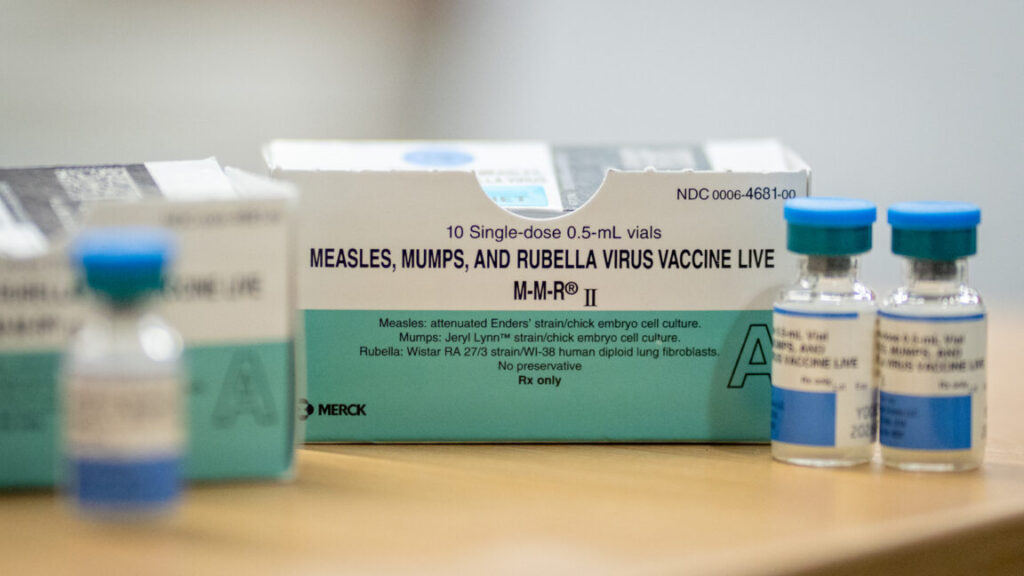
So far, 116 of the 146 cases are under the age of 18, with 46 being between the ages of 0 and 4. Only five of the 146 were vaccinated with at least one dose of the Measles, Mumps, and Rubella (MMR) vaccine.

Messaging

On a more positive note, Wells reported that the outbreak has seemed to sway some vaccine-hesitant parents to get their children vaccinated. Just yesterday in Lubbock, over 50 children came into the city’s clinic for measles vaccines. Eleven of those children had vaccine exemptions, meaning their parents had previously gone through the state process to exempt their child from having to receive routine childhood vaccines to attend school. “Which is a really good sign; that means our message is getting out there,” Wells said.

So far in the outbreak, which erupted in late January, messaging about the disease and the importance of vaccination has exclusively come from state and local authorities. The Centers for Disease Control and Prevention only released a brief statement late Thursday, which was not sent through the agency’s press distribution list. It did, however, note that “vaccination remains the best defense against measles infection.”

During a cabinet meeting Wednesday, US Health Secretary and anti-vaccine advocate Robert F. Kennedy Jr. responded to a question about the outbreak, offering a variety of inaccurate information. Kennedy downplayed the outbreak, falsely claiming that “it’s not unusual.” But, this is an unusual year for measles in the US. As epidemiologist Katelyn Jetelina noted on Bluesky, the number of US measles cases this year has already surpassed the total case counts from eight of the previous 15 years. And it is only February.

Texas official warns against “measles parties” as outbreak keeps growing Read More »

texas-measles-outbreak-reaches-90-cases;-9-cases-in-new-mexico

Texas measles outbreak reaches 90 cases; 9 cases in New Mexico

Other affected counties in Texas include Dawson (6 cases); Ector (1); Lubbock (1); Lynn (1); Terry (20); and Yoakum (4).

In Texas, the majority of the cases continue to be in children: 26 are in infants and young children ages 0 to 4, and 51 are between ages 5 and 17. All but five cases have been in unvaccinated people. Sixteen people (roughly 18 percent) have been hospitalized.

In New Mexico, there have been no hospitalizations, and five of the nine cases are in adults. The other four cases were between the ages of 5 and 17.

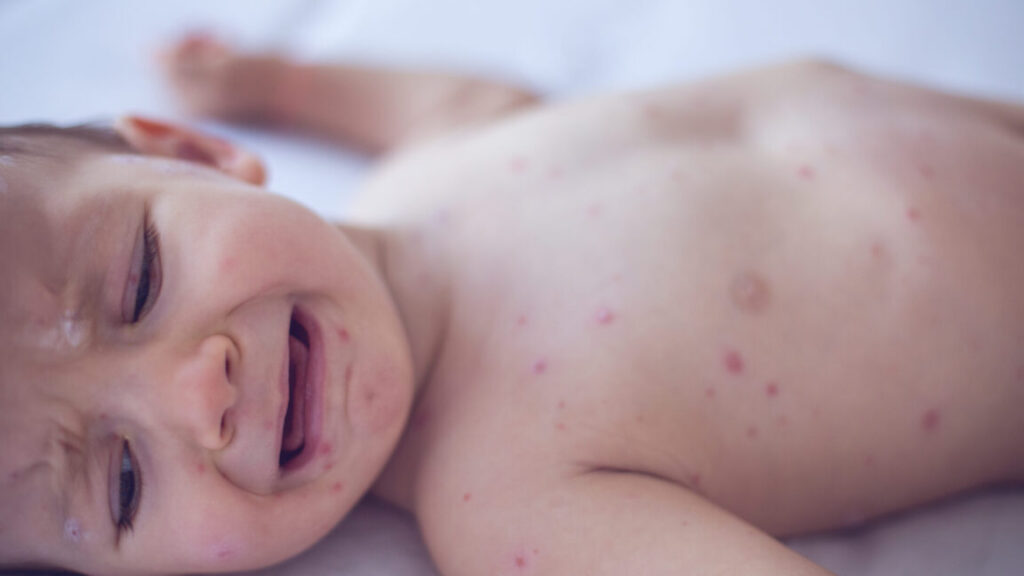
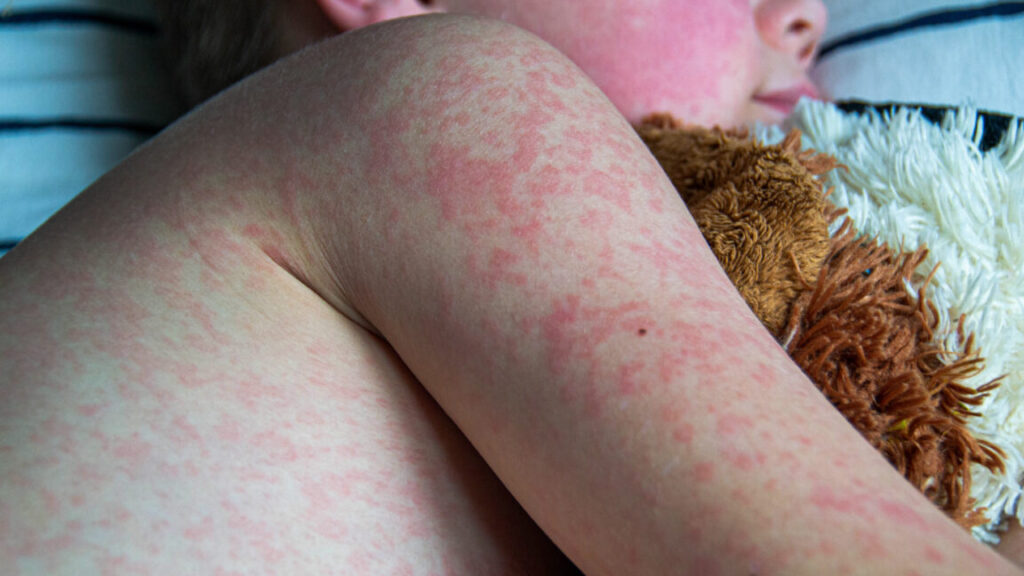
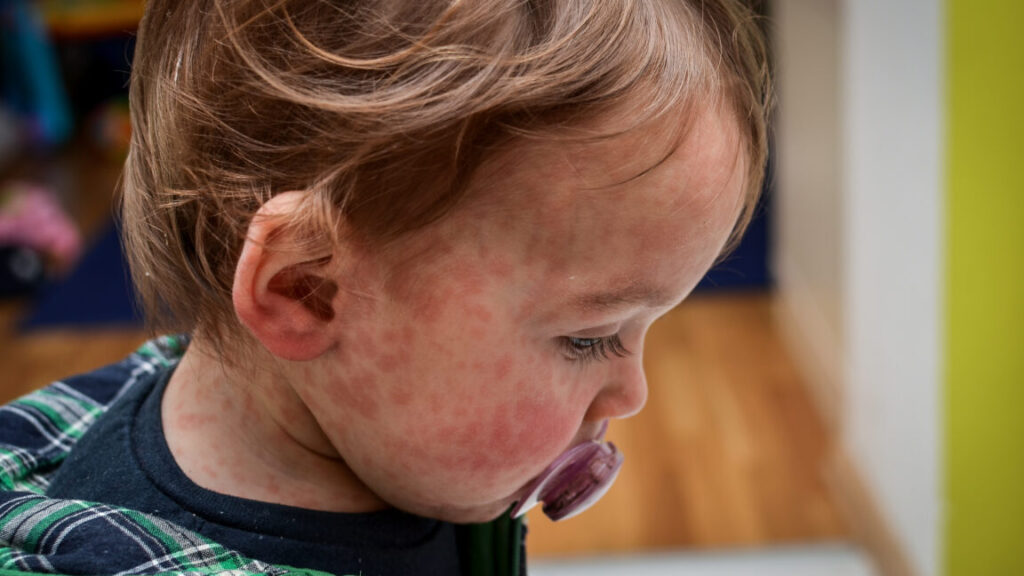
Given low vaccination rate in the area and the contagiousness of measles, health officials expect the outbreak to continue to grow. Measles is one of the most infectious viruses known; 90 percent of people who are unvaccinated and exposed will fall ill. The disease is marked by high fevers and a telltale rash and can cause severe complications in some, including younger children.

In the US, about 20 percent of people with measles are typically hospitalized. Five percent develop pneumonia, and up to 3 in 1,000 die of the infection. In rare cases, measles can cause a fatal disease of the central nervous system later in life called Subacute sclerosing panencephalitis. Measles also wipes out immune responses to other infections (a phenomenon known as immune amnesia), making people vulnerable to various illnesses.

Texas measles outbreak reaches 90 cases; 9 cases in New Mexico Read More »

burning-in-woman’s-legs-turned-out-to-be-slug-parasites-migrating-to-her-brain

Burning in woman’s legs turned out to be slug parasites migrating to her brain

It started with a bizarre burning sensation in her feet. Over the next two days, the searing pain crept up her legs. Any light touch made it worse, and over-the-counter pain medicine offered no relief.

On the third day, the 30-year-old, otherwise healthy woman from New England went to an emergency department. Her exam was normal. Her blood tests and kidney function were normal. The only thing that stood out was a high number of eosinophils—white blood cells that become active with certain allergic diseases, parasitic infections, or other medical conditions, such as cancer. The woman was discharged and advised to follow up with her primary care doctor.

Over the next few days, the scorching sensation kept advancing, invading her trunk and arms. She developed a headache that was also unfazed by over-the-counter pain medicine. Seven days into the illness, she went to a second emergency department. There, the findings were much the same: Normal exam, normal blood tests, normal kidney function, and high eosinophil count—this time higher. The reference range for this count was 0 to 400; her count was 1,050. She was given intravenous medicine to treat her severe headache, then once again discharged with a plan to see her primary care provider.

At home again, with little relief, a family member gave her a prescription sleep aid to help her get some rest. The next day, she awoke confused, saying she needed to pack for a vacation and couldn’t be reasoned with to return to bed. After hours in this fog, her partner brought her to an emergency department for a third time, this time the one at Massachusetts General Hospital.

Getting warmer

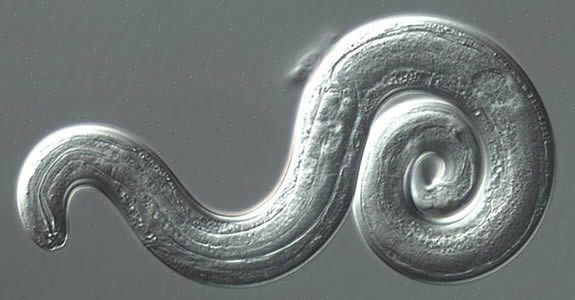
In a case report published in the New England Journal of Medicine, doctors explain how they figured out the source of her fiery symptoms—worms burrowing into her brain. By this point, she was alert but disoriented and restless. She couldn’t answer questions consistently or follow commands.

The doctors at Mass General, including a neurologist specializing in infectious diseases, quickly focused their attention on the fact that the woman had recently traveled. Just four days before her feet began burning, she had returned from a three-week trip that included stops in Bangkok, Thailand; Tokyo, Japan; and Hawaii. They asked what she ate. In Thailand, she ate street foods but nothing raw. In Japan, she ate sushi several times and spent most of her time in a hotel. In Hawaii, she again ate sushi as well as salads.

Burning in woman’s legs turned out to be slug parasites migrating to her brain Read More »

nine-unvaccinated-people-hospitalized-as-texas-measles-outbreak-doubles

Nine unvaccinated people hospitalized as Texas measles outbreak doubles

In an interview with Ars Technica last week, Zach Holbrooks, the executive director of the South Plains Public Health District (SPPHD), which includes Gaines, said that the area has a large religious community that has expressed vaccine hesitancy.

Additional cases likely

Pockets of the county have yet lower vaccination rates than the county-wide averages suggest. For instance, one independent public school district in Loop, in the northeast corner of Gaines, had a vaccination rate of 46 percent in the 2023–2024 school year.

Measles is one of the most infectious diseases known. The measles virus spreads through the air and can linger in the airspace of a room for up to two hours after an infected person has left. Ninety percent of unvaccinated people who are exposed will fall ill with the disease, which is marked by a very high fever and a telltale rash. Typically, 1 in 5 unvaccinated people with measles in the US end up hospitalized, and 1 in 20 develop pneumonia. Between 1 to 3 in 1,000 die of the infection. In rare cases, it can cause a fatal disease of the central nervous system called Subacute sclerosing panencephalitis later in life. Measles can also wipe out immune responses to other infections (a phenomenon known as immune amnesia), making people vulnerable to other infectious diseases.

“Due to the highly contagious nature of this disease, additional cases are likely to occur in Gaines County and the surrounding communities,” the state health department said.

While Gaines is remarkable for its low vaccination rate, vaccination coverage nationwide has slipped in recent years as vaccine misinformation and hesitancy have taken root. Overall, vaccination rates among US kindergartners have fallen from 95 percent in the 2019–2020 school year into the 92 percent range in the 2023–2024 school year. Vaccine exemptions, meanwhile, have hit an all-time high. Health experts expect to see more vaccine-preventable outbreaks, like the one in Gaines, as the trend continues.

Nine unvaccinated people hospitalized as Texas measles outbreak doubles Read More »

bird-flu-strain-that-just-jumped-to-cows-infects-dairy-worker-in-nevada

Bird flu strain that just jumped to cows infects dairy worker in Nevada

However, the new Nevada case is notable because it marks the first time D1.1 is known to have jumped from birds to cows to a person. Moreover, D1.1 has proven dangerous. The genotype is behind the country’s only severe and ultimately fatal case of H5N1 so far in the outbreak. The death in the Louisiana case linked to wild and backyard birds was reported last month. The CDC’s statement added that the person had “prolonged, unprotected” exposure to the birds. The D1.1. genotype was also behind a severe H5N1 infection that put a Canadian teenager in intensive care late last year.

In a February 7 analysis, the USDA reported finding that the D1.1 strain infecting cows in Nevada has a notable mutation known to help the bird-adapted virus replicate in mammals more efficiently (PB2 D701N). To date, this mutation has not been seen in D1.1 strains spreading in wild birds nor has it been seen in the B3.13 genotype circulating in dairy cows. However, it was seen before in a 2023 human case in Chile. The CDC said it has confirmed that the strain of D1.1 infecting the person in Nevada also contains the PB2 D701N mutation.

The USDA and CDC both reported that no other concerning mutations were found, including one that has been consistently identified in the B3.13 strain in cows. The CDC said it does not expect any changes to how the virus will interact with human immune responses or to antivirals.

Most importantly, to date, there has been no evidence of human-to-human transmission, which would mark a dangerous turn for the virus’s ability to spark an outbreak. For all these reasons, the CDC considers the risk to the public low, though people with exposure to poultry, dairy cows, and birds are at higher risk and should take precautions.

To date, 967 herds across 16 states have been infected with H5N1 bird flu, and nearly 158 million commercial birds have been affected since 2022.

Bird flu strain that just jumped to cows infects dairy worker in Nevada Read More »

h5n1-bird-flu-spills-over-again;-nevada-cows-hit-with-different,-deadly-strain

H5N1 bird flu spills over again; Nevada cows hit with different, deadly strain

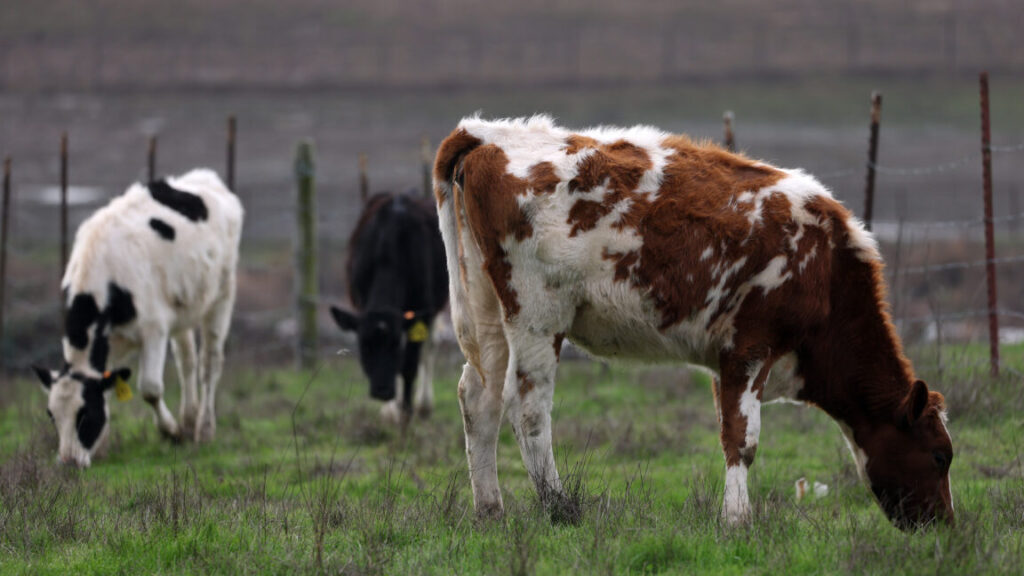
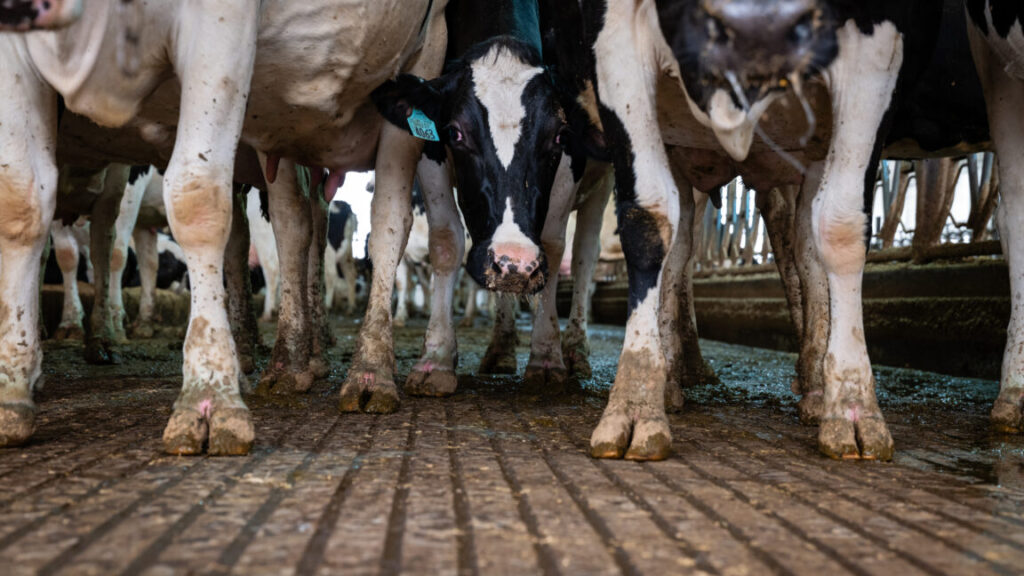
The spread of H5N1 bird flu in dairy cows is unprecedented; the US outbreak is the first of its kind in cows. Virologists and infectious disease experts fear that the continued spread of the virus in domestic mammals like cows, which have close interactions with people, will provide the virus countless opportunities to spill over and adapt to humans.

So far, the US has tallied 67 human cases of H5N1 since the start of 2024. Of those, 40 have been in dairy workers, while 23 were in poultry workers, one was the Louisiana case who had contact with wild and backyard birds, and three were cases that had no clear exposure.

Whether the D1.1 genotype will pose a yet greater risk for dairy workers remains unclear for now. Generally, H5N1 infections in humans have been rare but dangerous. According to data collected by the World Health Organization, 954 H5N1 human cases have been documented globally since 2003. Of those, 464 were fatal, for a fatality rate among documented cases of 49 percent. But, so far, nearly all of the human infections in the US have been relatively mild, and experts don’t know why. There are various possible factors, including transmission route, past immunity of workers, use of antivirals, or something about the B3.13 genotype specifically.

For now, the USDA says that the detection of the D1.1 genotype in cows doesn’t change their eradication strategy. It further touted the finding as a “testament to the strength of our National Milk Testing Strategy.”

H5N1 bird flu spills over again; Nevada cows hit with different, deadly strain Read More »

as-us-marks-first-h5n1-bird-flu-death,-who-and-cdc-say-risk-remains-low

As US marks first H5N1 bird flu death, WHO and CDC say risk remains low

The H5N1 bird flu situation in the US seems more fraught than ever this week as the virus continues to spread swiftly in dairy cattle and birds while sporadically jumping to humans.

On Monday, officials in Louisiana announced that the person who had developed the country’s first severe H5N1 infection had died of the infection, marking the country’s first H5N1 death. Meanwhile, with no signs of H5N1 slowing, seasonal flu is skyrocketing, raising anxiety that the different flu viruses could mingle, swap genetic elements, and generate a yet more dangerous virus strain.

But, despite the seemingly fever-pitch of viral activity and fears, a representative for the World Health Organization today noted that risk to the general population remains low—as long as one critical factor remains absent: person-to-person spread.

“We are concerned, of course, but we look at the risk to the general population and, as I said, it still remains low,” WHO spokesperson Margaret Harris told reporters at a Geneva press briefing Tuesday in response to questions related to the US death. In terms of updating risk assessments, you have to look at how the virus behaved in that patient and if it jumped from one person to another person, which it didn’t, Harris explained. “At the moment, we’re not seeing behavior that’s changing our risk assessment,” she added.

In a statement on the death late Monday, the US Centers for Disease Control and Prevention emphasized that no human-to-human transmission has been identified in the US. To date, there have been 66 documented human cases of H5N1 infections since the start of 2024. Of those, 40 were linked to exposure to infected dairy cows, 23 were linked to infected poultry, two had no clear source, and one case—the fatal case in Louisiana—was linked to exposure to infected backyard and wild birds.

As US marks first H5N1 bird flu death, WHO and CDC say risk remains low Read More »

louisiana-resident-in-critical-condition-with-h5n1-bird-flu

Louisiana resident in critical condition with H5N1 bird flu

The Louisiana resident infected with H5N1 bird flu is hospitalized in critical condition and suffering from severe respiratory symptoms, the Louisiana health department revealed Wednesday.

The health department had reported the presumptive positive case on Friday and noted the person was hospitalized, as Ars reported. But a spokesperson had, at the time, declined to provide Ars with the patient’s condition or further details, citing patient confidentiality and an ongoing public health investigation.

This morning, the Centers for Disease Control and Prevention announced that it had confirmed the state’s H5N1 testing and determined that the case “marks the first instance of severe illness linked to the virus in the United States.”

In a follow-up, the health department spokesperson Emma Herrock was able to release more information about the case. In addition to being in critical condition with severe respiratory symptoms, the person is reported to be over the age of 65 and has underlying health conditions.

Further, the CDC collected partial genetic data of the H5N1 strain infecting the patient, finding it to be of D1.1. genotype, which has been detected in wild birds and some poultry in the US. Notably, it is the same genotype seen in a Canadian teenager who was also hospitalized in critical condition from the virus last month. The D1.1. genotype is not the same as the one circulating in US dairy cows, which is the B3.13 genotype.

Louisiana resident in critical condition with H5N1 bird flu Read More »

us-to-start-nationwide-testing-for-h5n1-flu-virus-in-milk-supply

US to start nationwide testing for H5N1 flu virus in milk supply

So, the ultimate goal of the USDA is to eliminate cattle as a reservoir. When the Agency announced it was planning for this program, it noted that there were two candidate vaccines in trials. Until those are validated, it plans to use the standard playbook for handling emerging infections: contact tracing and isolation. And it has the ability to compel cattle and their owners to be more cooperative than the human population turned out to be.

The five-step plan

The USDA refers to isolation and contact tracing as Stage 3 of a five-stage plan for controlling H5N1 in cattle, with the two earlier stages being the mandatory sampling and testing, meant to be handled on a state-by-state basis. Following the successful containment of the virus in a state, the USDA will move on to batch sampling to ensure each state remains virus-free. This is essential, given that we don’t have a clear picture of how many times the virus has jumped from its normal reservoir in birds into the cattle population.

That makes it possible that reaching Stage 5, which the USDA terms “Demonstrating Freedom from H5 in US Dairy Cattle,” will turn out to be impossible. Dairy cattle are likely to have daily contact with birds, and it may be that the virus will be regularly re-introduced into the population, leaving containment as the only option until the vaccines are ready.

Testing will initially focus primarily on states where cattle-to-human transmission is known to have occurred or the virus is known to be present: California, Colorado, Michigan, Mississippi, Oregon, and Pennsylvania. If you wish to track the progress of the USDA’s efforts, it will be posting weekly updates.

US to start nationwide testing for H5N1 flu virus in milk supply Read More »

splash-pads-really-are-fountains-of-fecal-material;-cdc-reports-10k-illnesses

Splash pads really are fountains of fecal material; CDC reports 10K illnesses

Once infectious material gets into the water, disinfection systems that aren’t working properly or are inadequate can allow pathogens to gush from every nozzle. Splash pads aren’t unique in having to handle sick children in poopy swim diapers—but they are unique in how they are regulated. That is, in some places, they’re not regulated at all. Splash pads are designed to not have standing water, therefore reducing the risk of young children drowning. But, because they lack standing water, they are sometimes deemed exempt from local health regulations. Before 2000, only 13 states regulated splash pads. Though many states have since added regulations, some did so only after splash pad-linked outbreaks were reported.

Downpour of disease

The primary method for keeping recreational water free of infectious viruses and bacteria is chlorinating it. However, maintaining germ-killing chlorine concentration is especially difficult for splash pads because the jets and sprays aerosolize chlorine, lowering the concentration.

Still, in most splash-pad linked outbreaks, standard chlorine concentrations aren’t enough anyway. The most common pathogen to cause an outbreak at splash pads is the parasite Cryptosporidium, aka Crypto. The parasite’s hardy spores, called oocysts, are extremely tolerant of chlorine, surviving in water with the standard chlorine concentration (1 ppm free chlorine) for over seven days. (Other germs die in minutes.) In splash pads that might not even have that standard chlorine concentration, Crypto flourishes and can cause massive outbreaks.

In 2023, the CDC recommended new health codes that call for “secondary disinfection” methods to keep Crypto at bay, including disinfection systems using ozone or ultraviolet light. Another possible solution is to have “single-pass” splash pads that don’t recirculate water.

In all, to keep splash pads from being geysers of gastrointestinal parasites and pathogens, various changes have to happen, the CDC experts say.

“Prevention of waterborne disease outbreaks at splash pads requires changes in user behavior; recreational venue code updates; and improved venue design, construction, operation, and management of facilities,” they conclude. But it should all start with keeping kids from sitting on jets and drinking the water.

Splash pads really are fountains of fecal material; CDC reports 10K illnesses Read More »

raw-milk-recalled-for-containing-bird-flu-virus,-california-reports

Raw milk recalled for containing bird flu virus, California reports

Pasteurization

The milk-related risk of H5N1 is only from raw milk; pasteurized milk does not contain live virus and is safe to drink. Pasteurization, which heats milk to a specific temperature for a specified amount of time, kills a variety of bacteria and viruses, including bird flu. Influenza viruses, generally, are considered susceptible to heat treatments because they have an outer layer called an envelope, which can be destabilized by heat. Studies that have specifically looked at the effectiveness of heat-killing treatments against H5N1 have repeatedly found that pasteurization effectively inactivates the virus.

The advent of pasteurization is considered a public health triumph. Its adoption of a safe milk supply contributed to a dramatic reduction in infant deaths in the early 20th century. Before that, milkborne infections—including human and bovine tuberculosis, brucellosis, salmonellosis, streptococcal infections, diphtheria, and “summer diarrhea”—were common killers of infants.

As such, public health officials have long advised people against consuming raw milk, which has no evidence-based health benefits. Raw milk consumption, meanwhile, is linked to higher rates of outbreaks from pathogens including Salmonella, Listeria monocytogenes, toxin-producing E. coli, Brucella, Campylobacter, and many other bacteria.

Risky drinking

Since H5N1 was found spreading among dairy cows in March, health experts have warned about the additional risk of consuming raw milk. Still, consumption of raw milk has continued, and surprisingly increased, as supporters of the dangerous practice have accused health officials of “fearmongering.”

When the retail sampling of Raw Farm’s milk came back positive, the California Department of Food and Agriculture (CDFA) conducted testing at the company’s locations, which were negative for the virus. The CDFA will now begin testing Raw Farm’s milk for bird flu twice a week.

The recalled milk has lot code 20241109 and a “best by” date of November 27, 2024, printed on the packaging.​

“Drinking or accidentally inhaling raw milk containing bird flu virus may lead to illness,” California’s public health department said. “In addition, touching your eyes, nose, or mouth with unwashed hands after touching raw milk with bird flu virus may also lead to infection.”

Some US dairy workers who contracted the virus from infected cows reported having had milk splash in their eyes and face. A common symptom of H5N1 infections in humans during the dairy outbreak has been conjunctivitis, aka eye inflammation.

Raw milk recalled for containing bird flu virus, California reports Read More »