health

bonkers-cdc-vaccine-meeting-ends-with-vote-to-keep-covid-shot-access

Bonkers CDC vaccine meeting ends with vote to keep COVID shot access

At one point, Hillary Blackburn, a pharmacist and daughter-in-law of Sen. Marsha Blackburn (R-Tenn.), noted that her mother developed lung cancer two years after getting a COVID-19 vaccine, suggesting, without any evidence, that there could be a link. Evelyn Griffin, an obstetrician and gynecologist in Louisiana who reportedly lost her job for refusing to get a COVID-19 vaccine, meanwhile, did her own research and tried to suggest that the mRNA in mRNA vaccines could be turned into DNA inside human cells and integrate into our genetic material. She made this assertion to a scientist at Pfizer (a maker of an mRNA COVID-19 vaccine), asking him to respond.

With admirable composure, the Pfizer scientist explained that it was not biologically plausible: “RNA cannot reverse transcribe to DNA and transport from the cytoplasm to the nucleus and then integrate. That requires a set of molecules and enzymes that don’t exist in humans and are largely reserved for retroviruses.”

At the very start of the meeting, liaisons from mainstream medical organizations pressed that the ACIP committee needs to ditch such anecdotal nonsense and unvetted data, and return to the high-quality framework for evidence-based decision-making that ACIP has used in the past, which involves comprehensive, methodical evaluations.

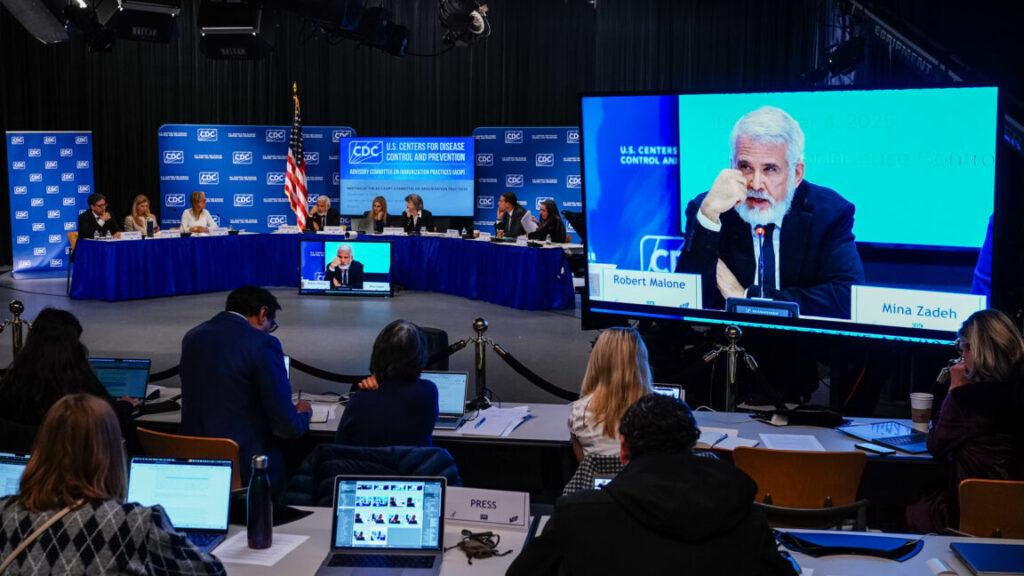
Retsef Levi, who works on operations management and has publicly said that COVID-19 vaccines should be removed from the market, responded by falsely claiming that there are no high-quality clinical trials to show vaccine safety, so calls to return to methodological rigor for policy making are hypocritical. “With all due respect, I just encourage all of us to be a little bit more humble,” Levi, who was the head of the ACIP’s COVID-19 working group, said.

During his response, a hot mic picked up someone saying, “You’re an idiot.” It’s unclear who the speaker was—or how many other people they were speaking for.

This post was updated to include the adoption of the recommendation by the CDC.

Bonkers CDC vaccine meeting ends with vote to keep COVID shot access Read More »

rfk-jr.’s-anti-vaccine-panel-realizes-it-has-no-idea-what-it’s-doing,-skips-vote

RFK Jr.’s anti-vaccine panel realizes it has no idea what it’s doing, skips vote


With a lack of data and confusing language, the panel tabled the vote indefinitely.

Catherine Stein, far right, speaks during a meeting of the CDC’s Advisory Committee on Immunization Practices on September 18, 2025 in Chamblee, Georgia. Credit: Getty | Elijah Nouvelage

The second day of a two-day meeting of the Advisory Committee on Immunization Practices—a panel currently made up of federal vaccine advisors hand-selected by anti-vaccine activist Robert F. Kennedy, Jr.—is off to a dramatic start, with the advisors seemingly realizing they have no idea what they’re doing.

The inexperienced, questionably qualified group that has espoused anti-vaccine rhetoric started its second day of deliberations by reversing a vote taken the previous day on federal coverage for the measles, mumps, rubella, and varicella (MMRV) vaccine. Yesterday, the group voted to restrict access to MMRV, stripping recommendations for its use in children under age 4. While that decision was based on no new data, it passed with majority support of 8–3 (with one abstention). (For an explanation of that, see our coverage of yesterday’s part of the meeting here.)

But puzzlingly, they then voted to uphold access and coverage of MMRV vaccines for children under age 4 if they receive free vaccines through the federal Vaccines for Children program, which covers about half of American children, mostly low-income. The discrepancy projected the idea that the alleged safety concerns that led the panel to rescind the recommendation for MMRV generally, somehow did not apply to low-income, vulnerable children. The vote also created significant confusion for VFC coverage, which typically aligns with recommendations made by the panel.

Today, Kennedy’s ACIP retook the vote, deciding 9-0 (with three abstentions) to align VFC coverage with their vote yesterday to strip the recommendation for MMRV in young children.

Hepatitis B vaccine newborn dose

Next, they moved to a vote they failed to take yesterday as scheduled—a vote to strip a recommendation for a dose of hepatitis B vaccine that is currently recommended to be given universally on the first day of a baby’s life. Instead, the proposed recommendation would be to wait at least a month before the first dose—opening a window for a highly infectious disease that leads to chronic liver disease and cancer—unless the baby’s mother tested positive for the virus.

While it initially seemed that the panel was poised to approve the change, cracks in the plan began to appear quickly this morning, as some members of the panel noted that the proposed recommendation made no sense and was based on zero data.

Joseph Hibbeln, a psychiatrist on the panel, raised the obvious concern yesterday, saying: “I’m unclear if we’ve been presented with any safety or data comparing before one month to after one month, and I’m wondering why one month was selected as our time point and if there are data to help to inform us if there’s greater risk of adverse effects before one month or after one month at all, let alone in negative mothers.”

There was no data comparing the risks and benefits of moving the first dose from the day of birth to any other time point. And there is no data suggesting that such a move would be more or less safe.

Adam Langer, Acting Principal Deputy Director of the CDC’s National Center for HIV, Viral Hepatitis, STD, and Tuberculosis Prevention, stressed in his presentation on the safety data yesterday, that the vaccine is safe—there are no safety concerns for giving a dose at birth. Adverse side effects are rare, he said, and when they do occur, they’re mild. “The worst adverse event you could imagine, anaphylaxis, has been very rarely reported at only 1.1 cases per 1 million vaccine doses administered.”

Langer gave a clear explanation for why newborns are vaccinated at day one. Hepatitis B, which primarily affects the liver, spreads via bodily fluids and can live on surfaces for up to seven days. It can spread easily; only a tiny microscopic amount of blood or fluid is enough for a child to be infected. For some, an infection can be short-lived, but for others it can become chronic, which leads to liver disease, cirrhosis, liver transplant, and liver cancer. The risk of the infection becoming chronic increases with the younger someone is when they’re infected.

Benefits and harms

Newborns who get hepatitis B from their mothers at birth have a 90 percent chance of developing a chronic infection, and 25 percent of those children will die prematurely from the disease. Up to 16 percent of pregnant women in the US are not tested for hepatitis B during pregnancy. Newborns and babies can also get infected from other people in their family or household, given hepatitis B’s infectiousness. Prior to the universal birth dose recommendation, a study of US-born children born to immigrant mothers found that 7 percent to 11 percent of them had hepatitis B while their mothers were negative. This highlights that unvaccinated babies and children can pick up the infection from family or the community.

Part of the reason for this is the elusiveness of the disease. While about 2.4 million people in the US are infected with hepatitis B, about 50 percent of those infected do not know that they’re infected.

In 1991, ACIP began recommending universal hepatitis B vaccination at birth; acute hepatitis B cases then fell from around 18,000 to about 5,500 in 2005 to about 2,200 in 2023. Since 2018, ACIP has recommended universal Hep B vaccination for all newborns within 24 hours of birth.

In the discussion, panel members pushed back on the universal birth dose, arguing that if mothers tested negative, there was little to no risk—downplaying the risk of other family or community exposure and assuming that test coverage could increase to 100 percent. There was a lot of discussion of why some women aren’t tested and if doctors can just try to assess whether there’s a risk that a family member might have the infection—even if those family members don’t know themselves that they’re infected.

Data and trust

Langer acknowledged there might be ways to assess risk from at least the mother in the 24-hour window after birth—”or,” he suggested, “you cannot have to worry about all of those different things that could go wrong, and you could simply give the vaccine because there is no data available that says that there is any harm that would come to a newborn compared to a one-month-old infant [getting the vaccine.]”

He summed up the discussion succinctly: “The only thing that we’re discussing here is if there’s some benefit or removal of harm that comes from waiting a month. And I have not seen any data that says that there is any benefit to the infant of waiting a month, but there are a number of potential harms to the infant of waiting a month.”

Panel member Robert Malone, who has falsely claimed that COVID-19 vaccines cause a form of AIDS, explained that the proposed change for the hep B vaccination was not due to any safety concern or evidence-based reason, but about trust among parents who have been exposed to vaccine misinformation.

“The signal that is prompting this is not one of safety, it is one of trust,” Malone said yesterday. “It is one of parents uncomfortable with this medical procedure being performed at birth in a rather unilateral fashion without significant informed consent at a time in particular when there has been a loss of trust in the public health enterprise and vaccines in general.”

Dashed decisions

But the questions and uncertainties of the proposed recommendation and the data behind it dogged the committee again this morning.

This morning, the voting language was put on a slide and immediately drew criticism. The language was:

If a mother tests [hepatitis B]-negative:

  • The first dose of the Hepatitis B vaccine is not given until the child is at least one month old.
  • Infants may receive a dose of Hepatitis B vaccine before one month according to individual based decision-making. *

*Also referred to as shared clinical decision-making.

Hibbeln, the psychiatrist, again pushed back, this time noting that the language of the change is confusing. “You can’t say don’t give it and then give an opportunity to give it,” he said, arguing that shared clinical decision-making is, essentially, all or nothing.

Discussion quickly spiraled, with another member questioning whether there was any data presented at all on the proposed recommendation. There was a fast motion to table the vote indefinitely, and the motion to table passed in a speedy vote of 11–1, with the ACIP chair, Martin Kulldorff, being the only holdout.

For the rest of the day, the panel is discussing COVID-19 vaccines. Stay tuned.

Photo of Beth Mole

Beth is Ars Technica’s Senior Health Reporter. Beth has a Ph.D. in microbiology from the University of North Carolina at Chapel Hill and attended the Science Communication program at the University of California, Santa Cruz. She specializes in covering infectious diseases, public health, and microbes.

RFK Jr.’s anti-vaccine panel realizes it has no idea what it’s doing, skips vote Read More »

ai-medical-tools-found-to-downplay-symptoms-of-women,-ethnic-minorities

AI medical tools found to downplay symptoms of women, ethnic minorities

Google said it took model bias “extremely seriously” and was developing privacy techniques that can sanitise sensitive datasets and develop safeguards against bias and discrimination.

Researchers have suggested that one way to reduce medical bias in AI is to identify what data sets should not be used for training in the first place and then train on diverse and more representative health data sets.

Zack said Open Evidence, which is used by 400,000 doctors in the US to summarize patient histories and retrieve information, trained its models on medical journals, the US Food and Drug Administration’s labels, health guidelines, and expert reviews. Every AI output is also backed up with a citation to a source.

Earlier this year, researchers at University College London and King’s College London partnered with the UK’s NHS to build a generative AI model, called Foresight.

The model was trained on anonymized patient data from 57 million people on medical events such as hospital admissions and COVID-19 vaccinations. Foresight was designed to predict probable health outcomes, such as hospitalization or heart attacks.

“Working with national-scale data allows us to represent the full kind of kaleidoscopic state of England in terms of demographics and diseases,” said Chris Tomlinson, honorary senior research fellow at UCL, who is the lead researcher of the Foresight team. Although not perfect, Tomlinson said it offered a better start than more general datasets.

European scientists have also trained an AI model called Delphi-2M that predicts susceptibility to diseases decades into the future, based on anonymized medical records from 400,000 participants in UK Biobank.

But with real patient data of this scale, privacy often becomes an issue. The NHS Foresight project was paused in June to allow the UK’s Information Commissioner’s Office to consider a data protection complaint, filed by the British Medical Association and Royal College of General Practitioners, over its use of sensitive health data in the model’s training.

In addition, experts have warned that AI systems often “hallucinate”—or make up answers—which could be particularly harmful in a medical context.

But MIT’s Ghassemi said AI was bringing huge benefits to healthcare. “My hope is that we will start to refocus models in health on addressing crucial health gaps, not adding an extra percent to task performance that the doctors are honestly pretty good at anyway.”

© 2025 The Financial Times Ltd. All rights reserved Not to be redistributed, copied, or modified in any way.

AI medical tools found to downplay symptoms of women, ethnic minorities Read More »

in-new-level-of-stupid,-rfk-jr.’s-anti-vaccine-advisors-axe-mmrv-recommendation

In new level of stupid, RFK Jr.’s anti-vaccine advisors axe MMRV recommendation


The vote to strip the recommendation came after a day of inept discussion.

An MMR and VAR vaccine ready for a pediatric vaccination at Kaiser Permanente East Medical offices in Denver in 2015. Credit: Getty | Joe Amon

The panel of vaccine advisors hand-selected by anti-vaccine activist Robert F. Kennedy Jr. voted on Thursday to change the federal vaccine recommendations for children, removing safe, well-established vaccine doses from current schedules and realizing Kennedy’s anti-vaccine agenda to erode federal vaccine policy and sow distrust.

Specifically, the panel—the Advisory Committee on Immunization Practices (ACIP)—voted to remove the Centers for Disease Control and Prevention’s previous recommendation for use of a measles, mumps, rubella, varicella (chickenpox) MMRV combination vaccine for children under 4 years old.

The context

In June, Kennedy fired all 17 highly qualified, highly vetted members of ACIP and quickly replaced them with seven questionable members, who largely did not have subject matter expertise. Moreover, many of them have clearly expressed anti-vaccine rhetoric and skepticism about pandemic responses and COVID-19 vaccines. At least two new members have been paid witnesses in trials against vaccine makers, a clear conflict of interest. Earlier this week, Kennedy added five additional members, who raise the same anti-vaccine concerns as the first group.

In the meeting today—the first of two all-day meetings—members made clear their inexperience and lack of expertise in evaluating vaccine policy. They asked basic questions about study data and analysis—such as asking what a “low confidence” designation means—and claimed CDC presentations lacked critical data when, in fact, a CDC scientist had just presented the exact data in question.

The first half of the day focused on the MMRV vaccine, while the second half focused on a newborn dose of the hepatitis B (hep B) vaccine. A vote was initially scheduled for that vaccine today, too, but was postponed after the panel decided to change the wording of the voting question. They meet again tomorrow to vote on the hep B recommendation as well as recommendations for this year’s COVID-19 vaccine. Ars Technica will have coverage of the second half of the meeting tomorrow, along with a report on the hepatitis B discussion today.

MMRV vaccine change

For the MMRV vaccine, the panel rehashed an issue that vaccine experts had thoroughly examined years ago. Currently, the CDC recommends children get vaccinated against measles, mumps, rubella, and varicella (chickenpox) twice—one dose at 12 to 15 months, and a second dose between the ages of 4 and 6 years.

In 2005, the Food and Drug Administration approved a combo shot for all four—the MMRV vaccine—which provided an alternative to the previous method of giving an MMR vaccine dose (against measles, mumps, and rubella) plus a separate varicella vaccine dose at the same time. (This vaccination strategy is shorthanded as MMR + V.) Thus, the MMRV combo shot meant one fewer shot for children. But, in 2008, post-market data suggested that the MMRV shot might have a slightly higher risk of causing febrile seizures (seizures associated with fevers), which is a very low risk with the MMR + V separate shots.

Febrile seizures are a somewhat common reaction in young children; this type of seizure almost entirely occurs in children under age 5 years, most often striking between 14 and 18 months. The seizures are short, usually less than a minute or two, and they can be caused by essentially anything that can cause a fever—ear infections, vaccines, the flu, etc. For parents, a febrile seizure can be very scary and lead them to bring their child to a doctor or hospital. However, febrile seizures are almost always harmless—the prognosis is “excellent,” as CDC staff experts noted. Nearly all children fully recover with no long-term problems. By age 5, up to 5 percent of all children have had a febrile seizure at some point, for some reason.

Low risks

In post-market studies of the MMRV vaccine, it was very clear that a slightly increased risk of febrile seizures was only linked to the first dose (given at 12 to 15 months, not the second, given at 4 to 6 years). In studies of over 400,000 children, data found that the risk of a febrile seizure after a first-dose MMRV vaccine was 7 to 8.5 seizure cases for every 10,000 vaccinations. That’s compared to 3.2 to 4.2 seizure cases in 10,000 vaccinations with MMR + V. In all, a first-dose MMRV vaccine had about one additional febrile seizure per 2,300 to 2,600 children vaccinated compared with MMR + V.

In 2009, CDC vaccine experts reviewed all the data and updated the vaccine recommendation. They maintained that MMRV and the MMR+V vaccinations are still both safe, effective, and recommended at both vaccination time points. But, they added the nuance that there is a preference (or a default, basically) for using the MMR + V shots for the first dose, unless a parent expressly wanted the MMRV vaccine for that first dose. This skirted the slightly increased risk of febrile seizure in young children, without entirely taking away the option if a parent prioritized fewer jabs and wanted the MMRV. For the second dose, again, both MMRV and MMR + V are options, but the CDC stated a preference for the one-shot MMRV.

Since then, about 85 percent of vaccinated children have gotten MMR + V for their first dose shots, with the other 15 percent getting the MMRV vaccine.

Inept discussion

In the discussion today, Kennedy’s members seemed to have little grasp of the issue at hand and the clinical significance of febrile seizures generally. They continued to circle back to unfounded concerns about febrile seizures and fringe theories about potential long-term effects.

Cody Meissner, a pediatric professor at Dartmouth’s Geisel School of Medicine who has served on ACIP in the past—arguably the most qualified of Kennedy’s new lineup—was bewildered at why the committee was rehashing the issue addressed years ago. “This discussion is really a déjà vu for me,” he said.  Yet, while Meisner felt the issue was settled and pediatricians were well-equipped to calm parents’ fears about febrile seizures, the other members could not be swayed. They claimed, without evidence, that parents of children who have febrile seizures after a vaccine would be less likely to get future vaccines.

As the committee seemed to be leaning toward removing the recommendation for MMRV for the first dose, Jason Goldman, president of the American College of Physicians, who attended the meeting as a liaison, pushed back strongly. He pointed out that—as with the last time Kennedy’s ACIP met—they were not following the standard framework for making and changing recommendations.

“Are we going to have a thoroughly vetted evidence-to-recommend framework presentation that looks at all the harms benefits, acceptability, feasibility—with input from practicing clinicians and liaisons in order to make an informed decision?” Goldman asked. “I would argue that this recommendation is going to create more confusion among the public.”

Goldman noted that if the committee rescinds the recommendation for MMRV for children under 4, the shot would no longer be covered by the Vaccines for Children (VFC) Program, a federal program for Medicaid-eligible and under- or uninsured kids, which covers about half of American children.

“And finally, you are taking away the choice of parents to have informed consent and discussion with their physician on what they want to do for the health and benefit of their children,” Goldman said. “So, I urge this committee not to change the recommendations if they truly want to give the power to the parents to decide what is best for their child and allow them to make the choice in consultation with their physicians.”

Voting confusion

In the end, Kennedy’s panel voted 8–3 (with one abstention) to not recommend MMRV for children under age 4, meaning the MMRV vaccine could potentially no longer be available for some children under age 4. Private insurance companies are required to cover ACIP-recommended vaccines, so this move strips the recommendation and that coverage requirement.

But, anticipating such a change, AHIP, a trade organization representing insurance companies, put out a statement earlier this week suggesting that they would still cover the MMRV vaccine for children under 4, even if it’s not required.

“Health plans will continue to cover all ACIP-recommended immunizations that were recommended as of September 1, 2025, including updated formulations of the COVID-19 and influenza vaccines, with no cost-sharing for patients through the end of 2026,” the statement reads.

But, there’s more: In a second vote today, ACIP voted 8–1 (with three abstentions) against changing VFC coverage for MMRV. Therefore, the VFC program will continue to cover MMRV vaccines for children under age 4. This is a split from standard policy that is likely to spur confusion, because VFC typically goes with ACIP recommendations. Also, Medicaid’s Children’s Health Insurance Program (CHIP) has to follow the ACIP vaccine recommendation and thus will no longer cover MMRV for children under age 4 covered by CHIP.

One of the abstentions on the VFC coverage vote was Meissner, who didn’t want to strip the recommendation or the VFC coverage but was entirely confused by how this would work in practice.

Photo of Beth Mole

Beth is Ars Technica’s Senior Health Reporter. Beth has a Ph.D. in microbiology from the University of North Carolina at Chapel Hill and attended the Science Communication program at the University of California, Santa Cruz. She specializes in covering infectious diseases, public health, and microbes.

In new level of stupid, RFK Jr.’s anti-vaccine advisors axe MMRV recommendation Read More »

rfk-jr.-adds-more-anti-vaccine-members-to-cdc-vaccine-advisory-panel

RFK Jr. adds more anti-vaccine members to CDC vaccine advisory panel

Kirk Milhoan, a pediatric cardiologist who is a senior fellow at the Independent Medical Alliance (formerly Front Line COVID-19 Critical Care Alliance), which promotes misinformation about COVID-19 vaccines and touts unproven and dubious COVID-19 treatments. Those include the malaria drug hydroxychloroquine, the de-worming drug ivermectin, and various concoctions of vitamins and other drugs. Milhoan has stated that mRNA COVID-19 vaccines should be removed from the market, telling KFF in March: “We should stop it and test it more before we move forward.”

Evelyn Griffin, an obstetrician and gynecologist in Louisiana who reportedly lost her job for refusing to get a COVID-19 vaccine. In a speech at a Louisiana Health Freedom Day in May 2024, Griffin claimed that doctors “blindly believed” that mRNA COVID-19 vaccines were safe. She has also claimed that the vaccines cause “bizarre and rare conditions,” according to the Post.

Hillary Blackburn, a pharmacist in St. Louis. Reuters reports that she is the daughter-in-law of Sen. Marsha Blackburn (R-Tenn.), who has opposed vaccine mandates.

Raymond Pollak, a semi-retired transplant surgeon who filed a whistleblower lawsuit against the University of Illinois Hospital in 1999, alleging the hospital manipulated patient data to increase their chances of receiving livers. The hospital settled the suit, paying $2.5 million, while denying wrongdoing.

ACIP is scheduled to meet at the end of this week, on September 18 and September 19. According to an agenda recently posted online, the committee will vote on recommendations for a measles, mumps, rubella, and varicella (MMRV) combination vaccine, the Hepatitis B vaccine, and this year’s updated COVID-19 vaccines. Vaccine experts widely fear that the committee will rescind recommendations and restrict access to those vaccines. Such moves will likely create new, potentially insurmountable barriers for people, including children, to get vaccines.

ACIP-recommended vaccines are required to be covered by private health insurance plans and the Vaccines for Children program for Medicaid-eligible and under- or uninsured kids, which covers about half of American children. Without ACIP recommendations for a vaccine, insurance coverage would be an open question, and vulnerable children would simply lose access entirely.

RFK Jr. adds more anti-vaccine members to CDC vaccine advisory panel Read More »

rfk-jr.’s-cdc-may-limit-covid-shots-to-75-and-up,-claim-they-killed-kids

RFK Jr.’s CDC may limit COVID shots to 75 and up, claim they killed kids

While some experts and health care providers had hoped that next week’s ACIP meeting would add clarity to the situation and allow healthy adults and children better access to the shots, the Post’s reporting suggests that’s unlikely. According to their sources, Kennedy’s ACIP is considering recommending the vaccines to those 75 and older, while instructing those 74 and younger to speak with their doctor about getting a shot. Another reported option is to not recommend the vaccine to people under the age of 75 at all, unless they have a preexisting condition.

Backlash

Such additional restrictions would likely intensify the backlash against Kennedy’s anti-vaccine agenda. Already, medical organizations have taken the unprecedented action to release their own evidence-based guidances that maintain COVID-19 vaccine recommendations for healthy children, particularly those under age 2, pregnant people, and healthy adults. Many medical and health organizations, as well as lawmakers, and over 1,000 current and former HHS employees have also called for Kennedy to resign.

Criticism of Kennedy’s actions has spread across party lines. Sen. Bill Cassidy (R-La.), a vaccine-supporting physician who cast a critical vote for Kennedy’s confirmation, had accused Kennedy of denying people vaccines and called for next week’s ACIP meeting to be postponed.

“Serious allegations have been made about the meeting agenda, membership, and lack of scientific process being followed for the now announced September ACIP meeting,” Cassidy said. “These decisions directly impact children’s health, and the meeting should not occur until significant oversight has been conducted. If the meeting proceeds, any recommendations made should be rejected as lacking legitimacy given the seriousness of the allegations and the current turmoil in CDC leadership.”

Meanwhile, in a clear rebuff of Kennedy’s cancellation of mRNA vaccine funding, the Republican-led House Committee on Appropriations this week passed a 2026 spending bill that was specifically amended to inject the words “including of mRNA vaccines” into a sentence about pandemic preparedness funding. The bill now reads: “$1,100,000,000, to remain available through September 30, 2027, shall be for expenses necessary to support advanced research and development, including of mRNA vaccines, pursuant to section 319L of the PHS Act and other administrative expenses of the Biomedical Advanced Research and Development Authority.”

RFK Jr.’s CDC may limit COVID shots to 75 and up, claim they killed kids Read More »

child-dies-of-horrifying-measles-complication-in-los-angeles

Child dies of horrifying measles complication in Los Angeles

A child in Los Angeles has died of a measles-related brain disorder stemming from an infection in infancy, the Los Angeles County health department reported Thursday.

Specifically, the child died of subacute sclerosing panencephalitis (SSPE), a rare but always fatal complication that strikes years after an initial measles infection. The health department’s announcement offered few details about the child, including the child’s age, but said that the child had contracted the virus before they were old enough to be vaccinated against measles. The first of two recommended doses of measles, mumps, and rubella (MMR) vaccine is given between 12 and 15 months.

“This case is a painful reminder of how dangerous measles can be, especially for our most vulnerable community members,” Muntu Davis, a Los Angeles County health officer, said in a statement. “Infants too young to be vaccinated rely on all of us to help protect them through community immunity. Vaccination is not just about protecting yourself—it’s about protecting your family, your neighbors, and especially children who are too young to be vaccinated.”

SSPE is caused by a persistent measles infection in the central nervous system. Children infected with the virus may go through the standard disease progression—flu-like symptoms, high fever, the telltale rash—and then appear to fully recover. But, for a small few, the virus remains, and SSPE emerges years later, often seven to 10 years after the initial infection.

The Los Angeles health department noted that SSPE generally affects about 1 in 10,000 people with measles, but the risk may be much higher—about 1 in 600—for those who get measles as infants, such as the child who recently died.

With widespread vaccination, which led to measles being declared eliminated from the US in 2000, SSPE has virtually disappeared in the US. However, with vaccination rates slipping and anti-vaccine misinformation and views gripping the country, health experts fear seeing more of these devastating cases. Already, the US measles case count for the year is at a 33-year high, and two other children, as well as an adult, died from the acute infection this year.

Child dies of horrifying measles complication in Los Angeles Read More »

ousted-cdc-director-to-testify-before-senate-after-rfk-jr.-called-her-a-liar

Ousted CDC director to testify before Senate after RFK Jr. called her a liar

Kennedy is reportedly vetting seven additional members for ACIP, who may be added before the next meeting. They include additional anti-vaccine voices and fringe members of the medical community, such as Kirk Milhoan, who promoted the de-worming drug ivermectin to treat COVID-19, despite several clinical trials finding it is not effective. There is also Joseph Fraiman, who has repeatedly called for COVID-19 vaccines to be pulled from the market.

Also on the list is Catherine Stein, who, The Washington Post noted, has advocated against vaccine mandates and wrote a 2021 article arguing that people should not be afraid of contracting COVID-19 because: “Our Lord has given us a mission to share the gospel. If we live in fear of death, that weakens our testimony. Remember, the Lord Jesus did not fear lepers, and leprosy was (and continues to be) a highly contagious infectious disease.”

Leprosy, or Hansen’s disease, is, in fact, not a highly contagious disease. It does not spread easily from person to person, is not spread through casual contact, and about 95 percent of people are immune to it naturally. COVID-19, meanwhile, is estimated to have caused more than 7 million deaths worldwide since the start of the pandemic.

Regardless of whether these candidates are added to the roster, Cassidy has called for the ACIP meeting scheduled for September 18 and 19 to be postponed.

“Serious allegations have been made about the meeting agenda, membership, and lack of scientific process being followed for the now announced September ACIP meeting,” Cassidy said. “These decisions directly impact children’s health and the meeting should not occur until significant oversight has been conducted. If the meeting proceeds, any recommendations made should be rejected as lacking legitimacy given the seriousness of the allegations and the current turmoil in CDC leadership.”

After Monarez and Houry testify before the HELP committee, Cassidy said that Senators are planning to invite current health officials to respond in a subsequent hearing.

Ousted CDC director to testify before Senate after RFK Jr. called her a liar Read More »

who-can-get-a-covid-vaccine—and-how?-it’s-complicated.

Who can get a COVID vaccine—and how? It’s complicated.


We’re working with a patchwork system, and there are a lot of gray areas.

Vaccinations were available at CVS in Huntington Park, California, on August 28, 2024. Credit: Getty | Christina House

As fall approaches and COVID cases tick up, you might be thinking about getting this season’s COVID-19 vaccine. The annually updated shots have previously been easily accessible to anyone over 6 months of age. Most people could get them at no cost by simply walking into their neighborhood pharmacy—and that’s what most people did.

However, the situation is much different this year with an ardent anti-vaccine activist, Robert F. Kennedy Jr., as the country’s top health official. Since taking the role, Kennedy has worked diligently to dismantle the country’s premier vaccination infrastructure, as well as directly hinder access to lifesaving shots. That includes restricting access to COVID-19 vaccines—something he’s done by brazenly flouting all standard federal processes while providing no evidence-based reasoning for the changes.

How we got here

In late May, Kennedy unilaterally decided that all healthy children and pregnant people should no longer have access to the shots. He announced the unprecedented change not through official federal channels, but via a video posted on Elon Musk’s X platform. Top vaccine and infectious disease officials at the Centers for Disease Control and Prevention—which sets federal vaccination recommendations—said they also learned of the change via X.

Medical experts—particularly the American Academy of Pediatrics (AAP) and the American College of Obstetricians and Gynecologists (ACOG)—immediately slammed the change, noting that data continues to indicate pregnant women and children under age 2 are particularly vulnerable to severe COVID-19. Both medical groups have since released their own vaccination guidance documents that uphold COVID-19 vaccine recommendations for those patient groups. (AAP here, ACOG here)

Nevertheless, in line with Kennedy, officials at the Food and Drug Administration signaled that they would take the unprecedented, unilateral step of changing the labels on the vaccines to limit who could get them—in this case, people 65 and over, and children and adults with health conditions that put them at risk of severe COVID-19. Kennedy’s FDA underlings—FDA Commissioner Martin Makary and top vaccine regulator, Vinay Prasad—laid out the plans alongside a lengthy list of health conditions in a commentary piece published in the New England Journal of Medicine. The list includes pregnancy—which is evidence-based, but odd, since it conflicts with Kennedy.

What was supposed to happen

When there isn’t a zealous anti-vaccine activist personally directing federal vaccine policy, US health agencies have a thorough, transparent protocol for approving and recommending vaccinations. Generally, it starts with the FDA, which has both its own scientists and a panel of outside expert advisors to review safety and efficacy data submitted by a vaccine’s maker. The FDA’s advisory committee—the Vaccines and Related Biological Products Advisory Committee (VRBPAC)—then holds a completely public meeting to review, analyze, and discuss the data. They make a recommendation on a potential approval and then the FDA commissioner can decide to sign off, typically in accordance with internal experts.

Resulting FDA approvals or authorizations are usually broad, basically covering people who could safely get the vaccine. The specifics of who should get the vaccine fall to the CDC.

Once the FDA approves or authorizes a vaccine, the CDC has a similar evaluation process. Internal experts review all the data for the vaccine, plus the epidemiological and public health data to assess things like disease burden, populations at risk, resource access, etc. A committee of outsides expert advisors do the same—again in a totally transparent public meeting that is livestreamed with all documents and presentations available on the CDC’s website.

That committee, the Advisory Committee on Immunization Practices (ACIP), then makes recommendations to the CDC about how the shots should be used. These recommendations can provide nuanced clinical guidance on exactly who should receive a vaccine, when, in what scenarios, and in what time series, etc. The recommendations may also be firm or soft—e.g., some people should get a vaccine, while others may get the vaccine.

The CDC director then decides whether to adopt ACIP’s recommendations (the director usually does) and updates the federal immunization schedules accordingly. Those schedules set clinical standards for immunizations, including routine childhood vaccinations, nationwide. Once a vaccine recommendation makes it to the ACIP-guided federal immunization schedules, private health insurance companies are required to cover those recommended vaccinations at no cost to members. And—a key catch for this year—19 states tie ACIP vaccine recommendations to pharmacists’ ability to independently administer vaccines.

What actually happened

Days after Kennedy’s X announcement of COVID-19 vaccine restrictions in late May, the CDC changed the federal immunization schedules. The recommendation for a COVID-19 shot during pregnancy was removed. But, for healthy children 6 months to 17 years, the CDC diverged from Kennedy slightly. The updated schedule doesn’t revoke access outright; instead, it now says that healthy children can get the shots if there is shared decision-making with the child’s doctor, that is, if the parent/child wants to get the vaccine and the doctor approves. ACIP was not involved in any of these changes.

On August 27, the FDA followed through with its plans to change the labels on COVID-19 vaccines, limiting access to people who are 65 and older and people who have an underlying condition that puts them at high risk of severe COVID-19.

FDA’s advisory committee, VRBPAC, met in late May, just a few days after FDA officials announced their plans to restrict COVID-19 vaccine access. The committee was not allowed to discuss the proposed changes. Instead, it was limited to discussing the SARS-CoV-2 strain selection for the season, and questions about the changes were called “off topic” by an FDA official.

ACIP, meanwhile, has not met to discuss the use of the updated COVID-19 vaccines for the 2025–2026 season. Last year, ACIP met and set the 2024–2025 COVID-19 shot recommendations in June. But, instead, in June of this year, Kennedy fired all 17 members of ACIP, falsely claiming members were rife with conflicts of interest. He quickly repopulated ACIP with anti-vaccine allies who are largely unqualified and some of whom have been paid witnesses in lawsuits against vaccine makers, a clear conflict of interest. While Kennedy is reportedly working to pack more anti-vaccine activists onto ACIP, the committee is scheduled to meet and discuss the COVID-19 vaccine on September 18 and 19. The committee will also discuss other vaccines.

Outside medical and public health experts view ACIP as critically compromised and expect it will further restrict access to vaccines.

With this set of events, COVID-19 vaccine access is in disarray. Here’s what we do and don’t know about access.

Getting a vaccine

FDA vaccine criteria

Prior to Kennedy, COVID-19 vaccines were available to all people ages 6 months and up. But that is no longer the case. The current FDA approvals are as follows:

Pfizer’s mRNA COVID-19 vaccine (COMIRNATY) is only available to people:

  • 65 years of age and older, or
  • 5 years through 64 years of age with at least one underlying condition that puts them at high risk for severe outcomes from COVID-19.

Moderna’s mRNA COVID-10 vaccine (SPIKEVAX) is only available to people:

  • 65 years of age and older, or
  • 6 months through 64 years of age with at least one underlying condition that puts them at high risk for severe outcomes from COVID-19.

Novavax’s protein subunit COVID-19 vaccine NUVAXOVID is only available to people:

  • 65 years of age and older, or
  • 12 years through 64 years of age with at least one underlying condition that puts them at high risk for severe outcomes from COVID-19.

Who can get a COVID-19 vaccine and where now depends on a person’s age, underlying conditions, and the state they reside in.

States-based restrictions

The fact that ACIP has not set recommendations for the use of 2025–2026 COVID-19 vaccines means vaccine access is a messy patchwork across the country. As mentioned above, 19 states link pharmacists’ ability to independently provide COVID-19 vaccines to ACIP recommendations. Without those recommendations, pharmacies in those states may not be able to administer the vaccines at all, or only provide them with a doctor’s prescription—even for people who fit into the FDA’s criteria.

Last week, The New York Times reported that CVS and Walgreens, the country’s largest pharmacy chains, were either not providing vaccines or requiring prescriptions in 16 states. And the list of 16 states where CVS had those restrictions was slightly different than where Walgreens had them, likely due to ambiguities in state-specific regulations.

The National Alliance of State Pharmacy Associations (NASPA) and the American Pharmacists Association (APhA) have a state-by-state overview of pharmacist vaccination authority regulations here.

For people meeting the FDA criteria

In the 31 states that allow for broader pharmacist vaccination authority, people meeting FDA’s criteria (65 years and older, and people with underlying conditions), should be able to get the vaccine at a pharmacy like usual. And once ACIP sets recommendations later this month—assuming the committee doesn’t restrict access further—people in those groups should be able to get them at pharmacies in the remaining states, too.

Proving underlying conditions

People under 65 with underlying health conditions who want to get their COVID-19 shot at a pharmacy will likely have to do something to confirm their eligibility.

Brigid Groves, APhA’s vice president of professional affairs and the organization’s expert on vaccine policy, told Ars that the most likely scenario is that people will have to fill out forms prior to vaccination, indicating the conditions they have that make them eligible, a process known as self-attestation. This is not unusual, Groves noted. Other vaccinations require such self-attestation of conditions, and for years, this has been sufficient for pharmacists to administer vaccines and for insurance policies to cover those vaccinations, she said.

“APhA is a strong supporter of that patient self-attestation, recognizing that patients have a very good grasp of their medical conditions,” Groves said.

For people who don’t meet the FDA criteria

There are a lot of reasons why healthy children and adults outside the FDA’s criteria may still want to get vaccinated: Maybe they are under the age of 2, an age that is, in fact, still at high risk of severe COVID-19; maybe they live or work with vulnerable people, such as cancer patients, the elderly, or immunocompromised; or maybe they just want to avoid a crummy respiratory illness that they could potentially pass on to someone else.

For these people, regardless of what state they are in, getting the vaccine would mean a pharmacist or doctor would have to go “off-label” to provide it.

“It’s very gray on how a pharmacist may proceed in that scenario,” Groves told Ars. Going off-label could open pharmacists up to liability concerns, she said. And even if a patient can obtain a prescription for an off-label vaccine, that still may not be enough to allow a pharmacist to administer the vaccine.

“Pharmacists have something called ‘corresponding responsibility,’ Groves explained. “So even if a physician, or a nurse practitioner, or whomever may send a prescription over for that vaccine, that pharmacist still has that responsibility to ensure this is the right medication, for the right patient, at the right time, and that they’re indicated for it,” she said. So, it would still be going outside what they’re technically authorized to do.

Doctors, on the other hand, can administer vaccines off-label, which they might do if they choose to follow guidance from medical organizations like AAP and ACOG, or if they think it’s best for their patient. They can do this without any heightened professional liability, contrary to some suggestions Kennedy has made (doctors prescribe things off-label all the time). But, people may have to schedule an appointment with their doctor and convince them to provide the shot—a situation far less convenient than strolling into a local pharmacy. Also, since pharmacies have provided the vast majority of COVID-19 vaccines so far, some doctors’ offices may not have them on hand.

Pregnancy

It’s unclear if pregnancy still falls under the FDA’s criteria for a high-risk condition. It was included in the list that FDA officials published in May. However, the agency did not make that list official when it changed the vaccine labels last month. Some experts have suggested that, in this case, the qualifying high-risk conditions default to the CDC’s existing list of high-risk conditions, which includes pregnancy. But it’s not entirely clear.

In addition, with Kennedy’s previous unilateral change to the CDC’s immunization schedule—which dropped the COVID-19 vaccine recommendation during pregnancy—pregnant people could still face barriers to getting the vaccine in the 19 states that link pharmacist authorization to ACIP recommendations. That could change if ACIP reverses Kennedy’s restriction when the committee meets later this month, but that may be unlikely.

Insurance coverage

It’s expected that insurance companies will continue to cover the full costs of COVID-19 vaccines for people who meet the FDA criteria. For off-label use, it remains unclear.

Groves noted that in June, AHIP, the trade organization for health insurance providers, put out a statement suggesting that it would continue to cover vaccines at previous levels.

“We are committed to ongoing coverage of vaccines to ensure access and affordability for this respiratory virus season. We encourage all Americans to talk to their health care provider about vaccines,” the statement reads.

However, Groves was cautious about how to interpret that. “At the end of the day, on the claims side, we’ll see how that pans out,” she said.

Rapidly evolving access

While the outcome of the ACIP meeting on September 18 and 19 could alter things, a potentially bigger source of change could be actions by states. Already, there have been rapid responses with states changing their policies to ensure pharmacists can provide vaccines, and states making alliances with other states to provide vaccine recommendations and vaccines themselves.

Photo of Beth Mole

Beth is Ars Technica’s Senior Health Reporter. Beth has a Ph.D. in microbiology from the University of North Carolina at Chapel Hill and attended the Science Communication program at the University of California, Santa Cruz. She specializes in covering infectious diseases, public health, and microbes.

Who can get a COVID vaccine—and how? It’s complicated. Read More »

rfk-jr.-says-covid-shots-still-available-to-all-as-cancer-patients-denied-access

RFK Jr. says COVID shots still available to all as cancer patients denied access

Here are some key moments from today’s hearing:

Untrustworthy

With the fallout ongoing from the abrupt ouster of CDC Director Susan Monarez last week, many senators focused on what led to her downfall. In a Wall Street Journal op-ed published two hours before the hearing, Monarez confirmed media reports that she had been fired by Kennedy for refusing to rubber-stamp changes to CDC vaccine guidance based on recommendations from Kennedy’s hand-selected advisors.

“I was told to preapprove the recommendations of a vaccine advisory panel newly filled with people who have publicly expressed antivaccine rhetoric,” Monarez wrote in the op-ed. She said she refused, insisting that the panel’s recommendations be “rigorously and scientifically reviewed before being accepted or rejected.”

In today’s hearing, Senators directly confronted Kennedy with that statement from the op-ed. Kennedy repeatedly said that she is lying and that he never directed her to preapprove vaccine recommendations. Instead, he claims, he told her to resign after he asked her directly if she was a trustworthy person, and she replied, ‘No.”

After several exchanges about this with other senators, Bernie Sanders (I-Vt.) picked it apart further, saying:

“Are you telling us that the former head of CDC went to you, you asked her, ‘Are you a trustworthy person?’ And she said, ‘No, I am not a trustworthy person,'” Sanders asked.

“She didn’t say ‘No, I’m not a trustworthy person,'” Kennedy replied. “She said, ‘No.’ I’m giving a quote.”

After that, Sen. Thom Tillis (R-NC), who seemed skeptical of Kennedy’s arguments generally, pointed out the absurdity of the claim, quoting Kennedy’s previous praise of Monarez. “I don’t see how you go—over four weeks—from a public health expert with ‘unimpeachable scientific credentials,’ a longtime champion of MAHA values, caring and compassionate and brilliant microbiologists, and four weeks later fire her,” Tillis said.  “As somebody who advised executives on hiring strategies, number one, I would suggest in the interview you ask ’em if they’re truthful rather than four weeks after we took the time of the US Senate to confirm the person.”

RFK Jr. says COVID shots still available to all as cancer patients denied access Read More »

putin:-“immortality”-coming-soon-through-continuous-organ-transplants

Putin: “Immortality” coming soon through continuous organ transplants

In a later press conference, Putin confirmed the discussion and said that “life expectancy will increase significantly” in the near future and “we should also think about this” in terms of political and economic consequences. (In Russia, life expectancy has actually decreased significantly in recent years, and the overall population is declining.)

The brief snippets of conversation suggest that immortality is on the minds of the world’s strongmen, though it’s interesting to see how it takes a different form than in Silicon Valley, where robots and software are more often seen as the key to longevity instead of, say, recurring organ transplants into an aging bag of skin.

Shows like Upload and Alien: Earth present visions of a world in which consciousness can be scanned by machines and perhaps even loaded into other machines. Meanwhile, Putin and Xi are thinking more about repeated organ transplants and life extension rather than “the Singularity.”

So, which dystopic future are we more likely to get? (Yes, I am presuming, based on the current state of the world, that the near future will be pretty dystopic. I think it’s a good bet.) Clones being raised for organ transplants, as in Kazuo Ishiguro’s novel Never Let Me Go? Or some kind of “download your consciousness into this machine” situation in which the mind of Elon Musk inhabits one of his beloved Tesla robots for all eternity? Given either alternative, I’m not entirely sure I’d want to live forever.

Putin: “Immortality” coming soon through continuous organ transplants Read More »

otc-nasal-spray-seemed-to-cut-covid-infections-by-67%-in-mid-sized-trial

OTC nasal spray seemed to cut COVID infections by 67% in mid-sized trial

COVID context

Like all trials, there are limitations. As mentioned, the number of infections here is small—the impressive efficacy numbers could potentially vanish in a larger trial with more infections. And, while the trial had a high-quality design, it was undertaken in just one location in Germany and mostly involved healthy white women between the ages of 20 and 46, so the findings are not generalizable. The study was also funded by a pharmaceutical company that makes an azelastine nasal spray (though not the one that is sold over the counter in the US).

Still, with the previous studies, the trial offers some hope that this accessible nasal spray could be used as a viral prophylactic for respiratory seasons in the future. And the results land at a time when access to COVID-19 vaccines—which have firmly proven to be safe and highly effective—has been severely restricted in the US by health secretary and anti-vaccine activist Robert F. Kennedy Jr.

As it stands now, it appears that only people ages 65 and over, and those at higher risk of COVID-19 will have access to the shots this year, though some aspects of that access are murky, including how people will prove they’re at high risk. For healthy children, teens, and adults under 65, there may be no access or extremely limited access. That includes groups that medical experts recommend get vaccinated, namely healthy pregnant people and children ages 6 months to 23 months, both of which are considered at high risk from COVID-19 by medical experts, but not federal guidance under Kennedy. Experts also recommend access for healthy people who have contact with vulnerable people, such as cancer doctors, people who live with immunocompromised family members, and people who work in nursing homes.

With limited vaccine access and the normal slew of respiratory viruses on the horizon, a simple nasal spray is an appealing addition to the defenses. The main side effects are fairly minor, including bitter taste in the mouth, nosebleeds, and tiredness.

OTC nasal spray seemed to cut COVID infections by 67% in mid-sized trial Read More »