health

parenting-nightmare:-kiss-on-the-cheek-causes-child’s-incurable-infection

Parenting nightmare: Kiss on the cheek causes child’s incurable infection

Stress of parenting —

Puzzle of child’s misdiagnosed cheek lesion solved with one look at dad

Herpes simplex virus, (HSV). Image taken with transmission electron microscopy.

Enlarge / Herpes simplex virus, (HSV). Image taken with transmission electron microscopy.

As the US Surgeon General recently highlighted, parenting is stressful. From navigating social media to facing a youth mental health crisis, challenges abound. But, for one father in Spain, even the simple, loving, everyday act of giving your child a peck on the cheek has turned to nightmare fuel.

According to a case report in the New England Journal of Medicine, the man’s 9-year-old daughter developed a fever along with a crusty, blistering lesion on her left cheek. Doctors initially diagnosed the blotch as impetigo, a bacterial infection on the skin’s surface layers that is fairly common in children. It’s often caused by Staphylococcus aureus or Streptococcus bacteria and is generally easily treated with antibiotics.

The lesion on the girl's cheek with satellite blisters noted by arrows.

Enlarge / The lesion on the girl’s cheek with satellite blisters noted by arrows.

But, after several days of treatment for impetigo, the child’s symptoms weren’t getting better. At that point, it had been seven days since the lesion erupted, and it was 3 centimeters in diameter on the side of her face. So, he took her to a dermatology clinic. There, specialists closely examined the lesion, noting the red, raised area with blisters and a “honey-crusted appearance,” which is a classic sign of impetigo. They also noted smaller “satellite” blisters around the cheek, as well as swollen lymph nodes on the left side of her neck, the same side as the lesion. All of the symptoms still lined up with impetigo. But then the specialists looked over at her dad.

The doctors took note of a crusting on her father’s lower lip, which he said had started 10 days earlier. It looked like a classic case of common cold sores, aka oral herpes. And the doctors made a connection.

Stress begets stress

Cold sores are caused by herpes simplex virus type 1 (HSV-1), a highly contagious virus that is estimated to infect 3.7 billion people under the age of 50 globally. (There’s also HSV-2, which causes genital herpes). In an initial infection, herpes viruses invade cells on the body’s surfaces, but then go into hiding in nerve cells. From there, they can occasionally reactivate and produce new lesions and infections. For HSV-1, that usually means cold sores around the mouth.

There is no cure for herpes infections; the virus will lurk in a person’s nerve cells for the rest of their lives, with the potential to spur recurring outbreaks. However, there are antiviral treatments that can ease the symptoms of outbreaks and help them clear up a little faster.

When a cold sore develops, the lesions are highly infectious. It’s often transmitted through oral-oral contact, but any direct contact or contact with contaminated saliva can spread the virus. (HSV-2 primarily spreads through sexual contact.) And, while HSV-1 lesions typically erupt around the mouth and on mucosal surfaces, they can sometimes also flare elsewhere on the skin.

The dermatologists treating the 9-year-old ran a test for HSV-1, confirming the genetic traces of the virus were present. They started the girl on an oral antiviral drug. They also noted that there was no concern for sexual abuse. The lesion cleared without scarring.

In their report on the case, they end with a note of caution for other doctors: “When HSV-1 infection manifests in children as cutaneous lesions without mucosal involvement, it may be confused with the honey-crusted appearance of impetigo.”

For parents, the lesson is to be careful not to kiss your child (or anyone else) when you have a cold sore flare up. While those viral reactivations can be sparked by many things, one notable factor will likely strike home for parents: stress.

Parenting nightmare: Kiss on the cheek causes child’s incurable infection Read More »

blood-puddles,-mold,-tainted-meat,-bugs:-boar’s-head-inspections-are-horrifying

Blood puddles, mold, tainted meat, bugs: Boar’s Head inspections are horrifying

“ample amounts of blood” —

The USDA recorded 69 violations in a year. So far, 9 people have died in the outbreak.

A recall notice is posted next to Boar's Head meats that are displayed at a Safeway store on July 31, 2024, in San Rafael, California.

Enlarge / A recall notice is posted next to Boar’s Head meats that are displayed at a Safeway store on July 31, 2024, in San Rafael, California.

Federal inspections found 69 violations—many grisly—at the Boar’s Head meat facility at the center of a deadly, nationwide Listeria outbreak that has now killed nine people, sickened and hospitalized a total of 57 across 18 states, and spurred the nationwide recall of more than 7 million pounds of meat.

The Jarratt, Virginia-based facility had repeated problems with mold, water leaks, dirty equipment and rooms, meat debris stuck on walls and equipment, various bugs, and, at one point, puddles of blood on the floor, according to inspection reports from the US Department of Agriculture’s Food Safety and Inspection Services. The reports were obtained by CBS News through a Freedom of Information Act Request. In all, the reports outline 69 violations just between the dates of August 1, 2023, and August 2, 2024.

The findings in the reports reveal the perfect conditions for the company’s meat to become contaminated with the germ behind the deadly outbreak, Listeria monocytogenes. This is a hardy germ that is ubiquitous in the environment, including in soil and water, and it spreads among people via the fecal-oral route. In healthy people, it usually only causes gastrointestinal infections. But for older people, newborns, and the immunocompromised, it can cause a life-threatening invasive infection with a fatality rate of around 17 percent. It’s also a significant danger to pregnant people, causing miscarriage, stillbirth, premature delivery, and life-threatening infections in newborns.

While it’s always lurking, L. monocytogenes especially plagues the food industry because it has the notable ability to reproduce at refrigerator temperatures—a condition that typically limits the growth of other nasty germs.

Buildup and bugs

In the Boar’s Head facility, L. monocytogenes appeared to have various opportunities to beef up its numbers. For one, the facility had a long track record of trash and meat debris in various places, which was sometimes reported alongside insect sightings. For instance, on June 10, an inspector entered the “pickle vat pump room” and noted “heavy meat buildup” on the walls, which were also crawling with flies and gnats. On the same day, an inspection of a different area found a rollup door with meat buildup on it, and a water pipe over the door leaked a steady stream of water down the wall and onto the floor. There was also a “steady line of ants” and an inventory of ladybugs, a cockroach, and a beetle of some sort.  Earlier, on March 13, an inspection of a room next to where netted hams were handled, an inspector found trash and meat protein on the floor, including “whole pork muscles.”

Going back to August 8, 2023, an inspection likewise found processing lines covered in meat particles and trash. “Heavy discolored meat buildup” was found covering a hydraulic pump, and pieces of meat and fat clung to the support braces of a catwalk. An inspection-line scale had meat pieces and trash in it—and it smelled bad. “Multiple instances of meat were found around the department on the floor. As well as standing water containing a brown mud/dirt-like substance,” the inspection read.

The facility had numerous problems with water leaks and condensation, which fits with the other numerous sightings of mold. The facility temporarily fixed water pipe leaks by wrapping the pipes in plastic. On October 26, an inspector noticed a plastic-wrapped pipe in the cure cooler. The plastic was dated August 17, and there was “orange/brown water pooled in the lowest hanging point.”

Bubbles and blood

On January 9, the inspection of a holding cooler found spots of black mold as large as a quarter throughout the room. On July 23, an inspector noticed bubbled paint on the wall around employee hand-washing sinks. The bubbles were filled with water. And under the sinks, the inspector found black mold and pink mildew.

On July 17, the inspector found “green algal growth” in a puddle of standing water in a raw holding cooler. And on July 27, an inspector noted clear liquid leaking out from a square patch on the ceiling. Behind the patch, there were two other patches that were also leaking. An employee came and wiped the liquid away with a sponge, but it returned within 10 seconds. The employee wiped it again, and the liquid again returned within 10 seconds. Meanwhile, a ceiling fan mounted close by was blowing the leaking liquid onto uncovered hams in a hallway outside the room.

To top if off, a report on February 21 found a raw cooler with “ample amounts of blood in puddles on the floor” and a “rancid smell.”

According to USDA documents, the agency has not taken enforcement actions against Boar’s Head, and there is no data available on swab testing for Listeria at the Virginia facility. The plant has been shut down since late July after health investigators found the outbreak strain of L. monocytogenes in unopened containers of Boar’s Head liverwurst.

In a statement updated on August 29, Boar’s Head said, “We are conducting an extensive investigation, working closely with the USDA and government regulatory agencies, as well as with the industry’s leading food safety experts, to determine how our liverwurst produced at our Jarratt, Virginia facility was adulterated and to prevent it from happening again… We will not resume operations at this facility until we are confident that it meets USDA regulatory standards and Boar’s Head’s highest quality and safety standards.”

Blood puddles, mold, tainted meat, bugs: Boar’s Head inspections are horrifying Read More »

massive-nationwide-meat-linked-outbreak-kills-5-more,-now-largest-since-2011

Massive nationwide meat-linked outbreak kills 5 more, now largest since 2011

Hardy germs —

CDC implores consumers to check their fridges for the recalled meats.

Listeria monocytogenes.

Enlarge / Listeria monocytogenes.

Five more people have died in a nationwide outbreak of Listeria infections linked to contaminated Boar’s Head brand meats, the Centers for Disease Control and Prevention reported Wednesday.

To date, 57 people across 18 states have been sickened, all of whom required hospitalization. A total of eight have died. The latest tally makes this the largest listeriosis outbreak in the US since 2011, when cantaloupe processed in an unsanitary facility led to 147 Listeria infections in 28 states, causing 33 deaths, the CDC notes.

The new cases and deaths come after a massive recall of more than 7 million pounds of Boar’s Head meat products, which encompassed 71 of the company’s products. That recall was announced on July 30, which itself was an expansion of a July 26 recall of an additional 207,528 pounds of Boar’s Head products. By August 8, when the CDC last provided an update on the outbreak, the number of cases had hit 43, with 43 hospitalizations and three deaths.

In a media statement Wednesday, the CDC says the updated toll of cases and deaths is a “reminder to avoid recalled products.” The agency noted that the outbreak bacteria, Listeria monocytogenes, is a “hardy germ that can remain on surfaces, like meat slicers, and foods, even at refrigerated temperatures. It can also take up to 10 weeks for some people to have symptoms of listeriosis.” The agency recommends that people look through their fridges for any recalled Boar’s Head products, which have sell-by dates into October.

If you find any recalled meats, do not eat them, the agency warns. Throw them away or return them to the store where they were purchased for a refund. The CDC and the US Department of Agriculture also recommend that you disinfect your fridge, given the germs’ ability to linger.

L. monocytogenes is most dangerous to people who are pregnant, people age 65 years or older, and people who have weakened immune systems. In these groups, the bacteria are more likely to move beyond the gastrointestinal system to cause an invasive listeriosis infection. In older and immunocompromised people, listeriosis usually causes fever, muscle aches, and tiredness but may also cause headache, stiff neck, confusion, loss of balance, or seizures. These cases almost always require hospitalization, and 1 in 6 die. In pregnant people, listeriosis also causes fever, muscle aches, and tiredness but can also lead to miscarriage, stillbirth, premature delivery, or a life-threatening infection in their newborns.

Massive nationwide meat-linked outbreak kills 5 more, now largest since 2011 Read More »

tattoo-ink-sold-on-amazon-has-high-levels-of-weird-and-rare-bacteria

Tattoo ink sold on Amazon has high levels of weird and rare bacteria

Infectious ink —

The recall announcement noted that the germs “present a health concern.”

BARCELONA, SPAIN - 2021/10/02: Spanish tattoo artist Oscar Garcia works on a man, during the Expo.  Fira de Barcelona hosts the XXIV edition of the Barcelona Tattoo Expo where tattoo artists from Spain and other countries exhibit tattoos and tattoo material such as ink, needles and special machinery for tattoo work. (Photo by Ramon Costa/SOPA Images/LightRocket via Getty Images)

Enlarge / BARCELONA, SPAIN – 2021/10/02: Spanish tattoo artist Oscar Garcia works on a man, during the Expo. Fira de Barcelona hosts the XXIV edition of the Barcelona Tattoo Expo where tattoo artists from Spain and other countries exhibit tattoos and tattoo material such as ink, needles and special machinery for tattoo work. (Photo by Ramon Costa/SOPA Images/LightRocket via Getty Images)

The Food and Drug Administration has been warning for years that some tattoo inks are brimming with bacteria—a large assortment that, when injected into your skin, can cause inflammatory reactions, allergic hypersensitivity, toxic responses, and, of course, straight-up infections. And, worse yet, the labels that say the inks are sterile are not reliable.

But, a recent recall of three tattoo pigments from the same manufacturer does a good job of illustrating the FDA’s concerns. The water-based inks, all from Sierra Stain, had a bizarre array of bacteria, which were found at high levels, according to FDA testing.

One ink product—described as “Carolina Blue”—offered a microbial menagerie, with six odd species identified. They included a bacterium that often dwells in the gastrointestinal system and can inflame the mucosal lining of the intestines (Citrobacter braakii), a water-borne bacterium (Cupriavidus pauculus), and several that cause opportunistic infections (Citrobacter farmer, Achromobacter xylosoxidans, Ochrobactrum anthropi, and Pseudomonas fluorescens). These are bacteria that don’t typically go about attacking humans but will if the conditions are right, including when they find themselves inside a human with a compromised immune system.

An ink called “UV China Pink” contained an unusual soil bacterium (Curtobacterium citreum/pusillum). And an “All Purpose Black” ink puzzlingly contained Acetobacter senegalensis, a bacterium first isolated from mangos in Senegal and used for industrial vinegar production in low-income countries.

The three inks were sold nationwide through Amazon. To date, there have been no reported infections or adverse reactions linked to these inks. But the FDA notes that reactions to contaminated inks can be difficult to accurately diagnose. The infections and skin responses can look like generic rashes and allergic responses, sometimes including lesions with red papules in areas where the ink was injected, the FDA notes. However, infections from tattoo ink can leave permanent scarring.

In a study published in July in Applied and Environmental Microbiology, FDA researchers tested 75 samples of tattoo and permanent makeup inks from 14 manufacturers. Of the 75 inks, 26 (35 percent) were contaminated with a total of 34 types of bacteria, many that were possibly disease-causing. Some of the bacteria were anaerobic, meaning they don’t need oxygen to grow, suggesting they could thrive in the low-oxygen environment of skin layers. Of the 40 tattoo inks specifically, nine (22 percent) were contaminated. Among all the ink samples, 49 were labeled “sterile” and, of those, 16 (33 percent) were contaminated.

The recall announcement noted that Sierra Stain is no longer in business. While the company lists a remaining email address, it did not immediately respond to a comment request from Ars on the bacteria found in their inks.

The FDA recommends that consumers be vigilant about the quality and safety of tattoo supplies and techniques. It also encourages tattoo artists to work in professional environments that can reduce the risk of contamination.

Tattoo ink sold on Amazon has high levels of weird and rare bacteria Read More »

more-bad-news-for-psychedelic-drug-company:-fda-expands-probe-after-rejection

More bad news for psychedelic drug company: FDA expands probe after rejection

trippy trip up —

Psychedelic drug company Lykos already slashed staff and overhauled leadership.

 President of Multidisciplinary Association for Psychedelic Studies (MAPS) Rick Doblin speaks onstage during  the 2023 Concordia Annual Summit at Sheraton New York on September 18, 2023, in New York City.

Enlarge / President of Multidisciplinary Association for Psychedelic Studies (MAPS) Rick Doblin speaks onstage during the 2023 Concordia Annual Summit at Sheraton New York on September 18, 2023, in New York City.

There’s more bad news for the company behind an experimental MDMA therapy for post-traumatic stress disorder, which the Food and Drug Administration roundly rejected earlier this month.

According to a report from The Wall Street Journal, the FDA is now expanding an investigation into clinical trials behind the experimental psychedelic therapy—even though the agency has already rejected it. Agency investigators reportedly interviewed four additional people last week, asking questions regarding whether the trials underreported side effects.

People involved in the trial have previously alleged, among other things, that ill effects, such as suicidal thoughts, went undocumented, and trial participants were discouraged from reporting them to bolster the chances of FDA approval. Overall, the MDMA trials faced crushing criticism amid the FDA’s review, with outside experts and agency advisors calling out allegations of sexual misconduct at one trial site, as well as flaws in overall trial designs, multiple sources of biases, and claims of that the company behind the therapy, Lykos, fostered a cult-like belief in psychedelics.

According to the Journal, the recent interviews were being conducted by the FDA’s Office of Regulatory Affairs, which oversees inspections, and a subdivision of that office called Biomedical Research Monitoring Program, which works to ensure the quality and integrity of data submitted to FDA. Notably, when the agency rejected MDMA, it advised Lykos to conduct a new trial.

While the FDA’s rejection and expanded investigation are bad enough for Lykos, the company announced this month that it’s laying off 75 percent of its staff and overhauling its leadership. The moves were in response to the FDA’s rejections, the company said. Additionally, a scientific journal retracted three of the company’s MDMA studies, citing “protocol violations amounting to unethical conduct” in its trials, echoing claims raised amid the FDA review.

Troubling roots

Underpinning the allegations and criticisms against Lykos is its roots in drug advocacy. Lykos is a commercial spinoff of the psychedelic advocacy nonprofit Multidisciplinary Association for Psychedelic Studies (MAPS). For decades, MAPS has worked to legalize psychedelics and research their use as potential treatments, particularly mental health conditions, including PTSD, anxiety, and substance use disorders. MAPS was founded by Rick Doblin, a longtime psychedelic activist and advocate who openly believes the use of psychedelics will lead to world peace. Amid the leadership overhaul this month, Doblin left his position on Lykos’ board.

“After 38 plus years of work, I’m profoundly saddened by the FDA decision around this critically needed therapy, but am heartened that Lykos will still move forward continuing clinical research that addresses the FDA’s questions,” Doblin said in a statement. “I can speak more freely as a public advocate by resigning from the Lykos Board. The FDA delays make it more important than ever that I work at MAPS toward developing global legal access to MDMA and other psychedelics for public benefit through MAPS’ multidisciplinary research, education, and drug policy reform.”

Lykos did not immediately respond to Ars’ request for comment on the FDA’s investigation. In a response to the Journal, a company spokesperson said that “Lykos is committed to engaging with the FDA and addressing any questions it raises.” The spokesperson also noted that the company is planning to meet with the FDA about the rejection, which it is appealing.

But, trial participants and outsiders have levied heavy criticism against the company that will likely be hard to move beyond.

“The prospect of a therapy cult guiding a suggestibility-enhancing drug through clinical trials highlights unique risks that have never been publicly discussed,” Neşe Devenot, a Johns Hopkins University senior lecturer in the university’s writing program who focuses on the issue of drugs in society, said in public comments prior to the FDA rejection. “The trials should be scrutinized as if Scientology or NXIVM had submitted a new drug application to the FDA.”

Those public comments appeared in a damning report from Institute for Clinical and Economic Review, which concluded that there was insufficient evidence to back MDMA-based therapy. According to the Journal report, Devenot was among the people interviewed by FDA investigators recently.

Lykos’ saga has been a blow to the psychedelic community in general and to many patients, particularly veterans, who have reported benefits from using MDMA to treat PTSD, a condition in desperate need of effective treatments.

Amid Lykos’ troubles, the company has brought in David Hough as senior medical advisor to oversee clinical and regulatory work. Hough is a former vice president at Johnson & Johnson, where he notably helped develop Spravato—esketamine—a compound related to ketamine that was approved for use against treatment-resistant depression in 2019.

More bad news for psychedelic drug company: FDA expands probe after rejection Read More »

covid-shot-now-or-later?-just-getting-it-at-all-is-great,-officials-respond.

COVID shot now or later? Just getting it at all is great, officials respond.

Viral defences —

As the summer wave peaks, officials are prepping for the coming winter wave.

A 13-year-old celebrates getting the Pfizer-BioNTech COVID-19 vaccine in Hartford, Connecticut, on May 13, 2021.

Enlarge / A 13-year-old celebrates getting the Pfizer-BioNTech COVID-19 vaccine in Hartford, Connecticut, on May 13, 2021.

With the impending arrival of the 2024–2025 COVID-19 vaccines approved yesterday, some Americans are now gaming out when to get their dose—right away while the summer wave is peaking, a bit later in the fall to maximize protection for the coming winter wave, or maybe a few weeks before a big family event at the end of the year? Of course, the group pondering such a question is just a small portion of the US.

Only 22.5 percent of adults and 14 percent of children in the country are estimated to have gotten the 2023–2024 vaccine. In contrast, 48.5 percent of adults and 54 percent of children were estimated to have gotten a flu shot. The stark difference is despite the fact that COVID-19 is deadlier than the flu, and the SARS-CoV-2 virus is evolving faster than seasonal influenza viruses.

In a press briefing Friday, federal health officials were quick to redirect focus when reporters raised questions about the timing of COVID-19 vaccination in the coming months and the possibility of updating the vaccines twice a year, instead of just once, to keep up with an evolving virus that has been producing both summer and winter waves.

“The current problem is not that the virus is evolving so much, at least in terms of my estimation,” Peter Marks, the top vaccine regulator at the Food and Drug Administration, told journalists. “It’s that we don’t have the benefits of the vaccine, which is [to say] that it’s not vaccines that prevent disease, it’s vaccination. It’s getting vaccines in arms.” When exactly to get the vaccine is a matter of personal choice, Marks went on, but the most important choice is to get vaccinated.

Estimates for this winter

The press briefing, which featured several federal health officials, was intended to highlight the government’s preparations and hopes for the upcoming respiratory virus season. The FDA, the Centers for Disease Control and Prevention, and the Department of Health and Human Services (HHS) are urging all Americans to get their respiratory virus vaccines—flu, COVID-19, and RSV.

CDC Director Mandy Cohen introduced an updated data site that provides snapshots of local respiratory virus activity, national trends, data visualizations, and the latest guidance in one place. HHS, meanwhile, highlighted a new outreach campaign titled “Risk Less. Do More.” to raise awareness of COVID-19 and encourage vaccination, particularly among high-risk populations. For those not at high risk, health officials still emphasize the importance of vaccination to lower transmission and prevent serious outcomes, including long COVID. “There is no group without risk,” Cohen said, noting that the group with the highest rates of emergency department visits for COVID-19 were children under the age of 5, who are not typically considered high risk.

So far, CDC models are estimating that this year’s winter wave of COVID-19 will be similar, if not slightly weaker on some metrics, than last year’s winter wave, Cohen said. But she emphasized that many assumptions go into the modeling, including how the virus will evolve in the near future and the amount of vaccine uptake. The modeling assumes the current omicron variants stay on their evolutionary path and that US vaccination coverage is about the same as last year. Of course, beating last year’s vaccine coverage could blunt transmission.

COVID shot now or later? Just getting it at all is great, officials respond. Read More »

fda-green-lights-fall-covid-19-boosters

FDA green-lights fall COVID-19 boosters

Shoot me up —

Updated mRNA vaccines from Pfizer and Moderna are ready to roll.

FDA green-lights fall COVID-19 boosters

Getty Images

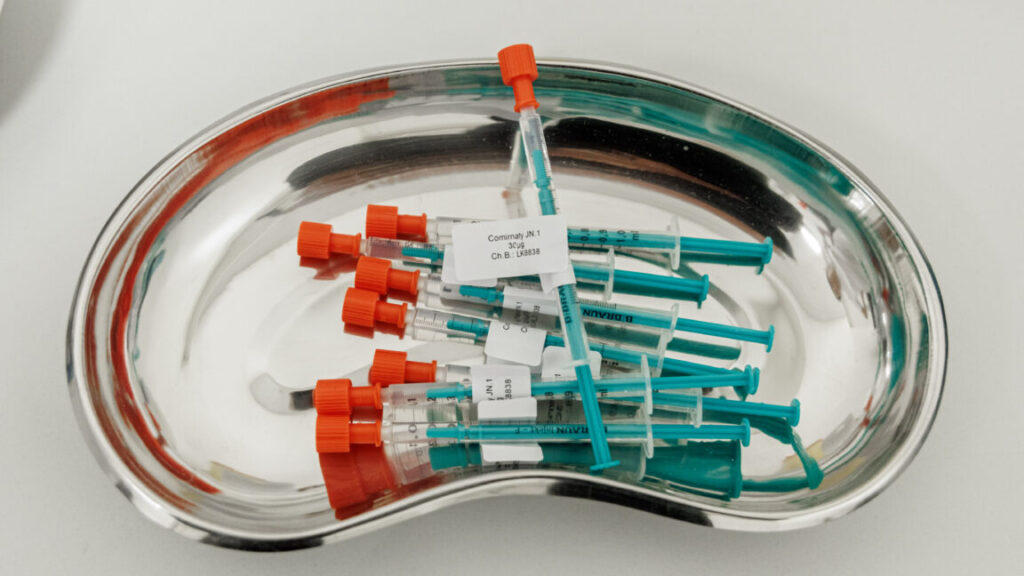
As the COVID-19 case count continues to tick upward, the US Food and Drug Administration has approved an updated vaccine for use ahead of the northern hemisphere winter. The emergency use authorization covers updated mRNA vaccines from both Pfizer and Moderna.

The booster shots will target the JN.1 and KP.2 strains of SARS-CoV-2, both of which are omicron variants. Last year’s booster keyed on omicron subvariant XBB.1.5, which has long since lost the evolutionary arms race.

Both Spikevax (Moderna) and Comirnaty (Pfizer) vaccines have been updated. While the vaccine is targeted toward those 12 and over, parents of children aged six months through 11 years are also eligible for the updated vaccines under the FDA’s emergency use authorization.

“Vaccination continues to be the cornerstone of COVID-19 prevention,” said Peter Marks, director of the FDA’s Center for Biologics Evaluation and Research. “These updated vaccines meet the agency’s rigorous, scientific standards for safety, effectiveness, and manufacturing quality. Given waning immunity of the population from previous exposure to the virus and from prior vaccination, we strongly encourage those who are eligible to consider receiving an updated COVID-19 vaccine to provide better protection against currently circulating variants.”

Updated vaccines will hit hospitals and pharmacies soon, as Moderna and Pfizer are ready to ship vaccines. Once injected, the boosters will take a couple of weeks to hit peak protection, and they will offer that level of protection for a few months after the shot. Keep that in mind as you think about timing your booster for maximum efficacy.

FDA green-lights fall COVID-19 boosters Read More »

town-urges-curfew-over-mosquito-spread-disease-that-kills-up-to-50%-of-people

Town urges curfew over mosquito-spread disease that kills up to 50% of people

“Critical risk” —

Eastern Equine Encephalitis is very rare in the US, but when it strikes, it’s bad.

A mosquito collected to test for mosquito-borne diseases.

Enlarge / A mosquito collected to test for mosquito-borne diseases.

A small town in Massachusetts is urging residents to stay indoors in the evenings after the spread of a dangerous mosquito-spread virus reached “critical risk level.”

The virus causes Eastern equine encephalitis (EEE), which kills between 30 and 50 percent of people who are stricken—who are often children under the age of 15 and the elderly. Around half who survive are left permanently disabled, and some die within a few years due to complications. There is no treatment for EEE. So far, one person in the town—an elderly resident of Oxford—has already become seriously ill with neuroinvasive EEE.

EEE virus is spread by mosquitoes in certain swampy areas of the country, particularly in Atlantic and Gulf Coast states and the Great Lakes region. Mosquitoes shuttle the virus between wild birds and animals, including horses and humans. In humans, the virus causes very few cases in the US each year—an average of 11, according to the Centers for Disease Control and Prevention. But given the extreme risk of EEE, health officials take any spread seriously.

On August 16, the Massachusetts Department of Public Health announced the state’s first case and declared a “critical risk level” in the four communities of Douglas, Oxford, Sutton, and Webster. These all cluster in Worcester county near the state’s borders with Rhode Island and Connecticut.

Curfew

While the state health department did not identify the man as a resident of Oxford, the town’s manager confirmed his residence in a memorandum Wednesday. The manager, Jennifer Callahan, reported that the man remains hospitalized. She also reported that a horse across the border in Connecticut had recently died of EEE.

Also on Wednesday, the four towns—Douglas, Oxford, Sutton, and Webster—issued a joint health advisory, which included a recommended curfew.

Last night, The Oxford Board of Health voted to adopt the advisory, according to the Boston Globe. The recommendation is for residents to avoid mosquito’s peak activity time. They should “finish outdoor activities before 6: 00 PM through September 30th, 2024 and before 5: 00 PM October 1st, 2024 until the first hard frost.” The advisory also recommends residents wear insect repellent, wear protective clothing, and mosquito-proof their homes.

Officials emphasized that the curfew is a recommendation, not mandatory. However, to use town properties—such as recreation fields—people will first need to file an indemnification form and provide proof of adequate insurance coverage to the town.

To date, there have been only three cases of EEE in the US this year. One in Massachusetts, one in Vermont, and the last in New Jersey. All three are neuroinvasive. The CDC says that about 30 percent of cases are fatal, while Massachusetts health officials report that about half of people who develop EEE in the state have died.

In 2019, there was a multi-state outbreak of EEE, leading to a high of 38 cases. Twelve of the cases occurred in Massachusetts, and six died.

Town urges curfew over mosquito-spread disease that kills up to 50% of people Read More »

ceo-of-failing-hospital-chain-got-$250m-amid-patient-deaths,-layoffs,-bankruptcy

CEO of failing hospital chain got $250M amid patient deaths, layoffs, bankruptcy

“Outrageous corporate greed” —

Steward Health Care System, run by CEO Ralph de la Torre, filed for bankruptcy in May.

 Hospital staff and community members held a protest in front of Carney Hospital  in Boston on August 5 as Steward has announced it will close the hospital.

Enlarge / Hospital staff and community members held a protest in front of Carney Hospital in Boston on August 5 as Steward has announced it will close the hospital. “Ralph” refers to Steward’s CEO, Ralph de la Torre, who owns a yacht.

As the more than 30 hospitals in the Steward Health Care System scrounged for cash to cover supplies, shuttered pediatric and neonatal units, closed maternity wards, laid off hundreds of health care workers, and put patients in danger, the system paid out at least $250 million to its CEO and his companies, according to a report by The Wall Street Journal.

The newly revealed financial details bring yet more scrutiny to Steward CEO Ralph de la Torre, a Harvard University-trained cardiac surgeon who, in 2020, took over majority ownership of Steward from the private equity firm Cerberus. De la Torre and his companies were reportedly paid at least $250 million since that takeover. In May, Steward, which has hospitals in eight states, filed for Chapter 11 bankruptcy.

Critics—including members of the Senate Committee on Health, Education, Labor, and Pensions (HELP)—allege that de la Torre and stripped the system’s hospitals of assets, siphoned payments from them, and loaded them with debt, all while reaping huge payouts that made him obscenely wealthy.

Alleged greed

For instance, de la Torre sold the land under the system’s hospitals to a large hospital landlord, Medical Properties Trust, leaving Steward hospitals on the hook for large rent payments. Under de la Torre’s leadership, Steward also paid a management consulting firm $30 million a year to “provide executive oversight and overall strategic directive.” But, de la Torre was the majority owner of the consulting firm, which also employed other Steward executives. As the WSJ put it, Steward “effectively paid its CEO’s firm, which employed Steward executives, for executive- management services for Steward.”

In 2021, while the COVID-19 pandemic strained hospitals, Steward distributed $111 million to shareholders. With de la Torre owning 73 percent of the company at the time, his share would have been around $81 million, the WSJ reported. That year, de la Torre bought a 190-foot yacht for $40 million. He also owns a $15 million custom-made luxury fishing boat called Jaruco. The Senate Help Committee, meanwhile, notes that a Steward affiliate owned two jets, one valued at $62 million and a second “backup” jet valued at $33 million.

In 2022, de la Torre got married in an elaborate wedding on Italy’s Amalfi Coast and bought a 500-acre Texas ranch for at least $7.2 million. His new wife, Nicole Acosta, 29, is a competitive equestrian who trains at a facility near the ranch. She competes on a horse that was sold in 2014 for $3.5 million, though it’s unclear how much the couple paid for it. Besides the ranch, de la Torre, 58, owns an 11,108-square-foot mansion in Dallas valued at $7.2 million, the WSJ reported.

While de la Torre was living a lavish lifestyle, Steward hospitals faced dire situations—as they had been for years. An investigation by the Senate HELP committee noted that Steward had shut down several hospitals in Massachusetts, Ohio, Arizona, and Texas between 2014 and this year, laying off thousands of health care workers and leaving communities in the lurch. It closed several pediatric wards in Massachusetts and Texas; in Florida, it closed neonatal units and eliminated maternity services. In Louisiana, Steward patients faced “immediate jeopardy.”

“Third-world medicine”

In a July hearing, Sen. Bill Cassidy (R-LA), ranking member of the HELP Committee, spoke of the conditions at Glenwood Regional Medical Center in West Monroe, Louisiana, which Steward allegedly mismanaged. “According to a report from the Centers for Medicare and Medicaid Services, a physician at Glenwood told a Louisiana state inspector that the hospital was performing ‘third-world medicine,'” Cassidy said.

Further, “one patient died while waiting for a transfer to another hospital because Glenwood did not have the resources to treat them,” the Senator said.  “Unfortunately, Glenwood is not unique,” he went on. “At a Steward-owned Massachusetts hospital, a woman died after giving birth when doctors realized mid-surgery that the supplies needed to treat her were previously repossessed due to Steward’s financial troubles.” The hospital reportedly owed the supplier $2.5 million in unpaid bills.

Additionally, the WSJ investigation dug up records that showed that a pest control company discovered 3,000 bats living in one of Steward’s Florida hospitals. In Arizona, a Phoenix-area hospital was without air conditioning during scorching temperatures, and its kitchen was closed for health-code violations. The state ordered it to shut down last week.

“Dr. de la Torre and his executive teams’ poor financial decisions and gross mismanagement of its hospitals is shocking,” Cassidy said. “Patients’ lives are at risk. The American people deserve answers.”

Outrage

Senate HELP Committee chair Bernie Sanders (I-VT) went further, saying that the US health care system “is designed not to make patients well, but to make health care executives and stockholders extraordinarily wealthy. … Perhaps more than anyone else in America, Ralph de la Torre, the CEO of Steward Health Care, epitomizes the type of outrageous corporate greed that is permeating throughout our for-profit health care system.”

Sanders lamented how de la Torre’s payouts could have instead benefited patients and communities, asking: “How many of Steward’s hospitals could have been prevented from closing down, how many lives could have been saved, how many health care workers would still have their jobs if Dr. de la Torre spent $150 million on high-quality health care instead of a yacht, two private jets and a luxury fishing boat?”

On July 25, the committee voted 16–4 to subpoena de la Torre so they could ask him such questions in person. To date, de la Torre has refused to voluntarily appear before the committee and declined to comment on the WSJ report. The committee’s vote marks the first time since 1981 that it has issued a subpoena.

Separately, Steward and de la Torre are under investigation by the Department of Justice over allegations of fraud and corruption in a deal to run hospitals in Malta.

CEO of failing hospital chain got $250M amid patient deaths, layoffs, bankruptcy Read More »

how-accurate-are-wearable-fitness-trackers?-less-than-you-might think

How accurate are wearable fitness trackers? Less than you might think

some misleading metrics —

Wide variance underscores need for a standardized approach to validation of devices.

How accurate are wearable fitness trackers? Less than you might think

Corey Gaskin

Back in 2010, Gary Wolf, then the editor of Wired magazine, delivered a TED talk in Cannes called “the quantified self.” It was about what he termed a “new fad” among tech enthusiasts. These early adopters were using gadgets to monitor everything from their physiological data to their mood and even the number of nappies their children used.

Wolf acknowledged that these people were outliers—tech geeks fascinated by data—but their behavior has since permeated mainstream culture.

From the smartwatches that track our steps and heart rate, to the fitness bands that log sleep patterns and calories burned, these gadgets are now ubiquitous. Their popularity is emblematic of a modern obsession with quantification—the idea that if something isn’t logged, it doesn’t count.

At least half the people in any given room are likely wearing a device, such as a fitness tracker, that quantifies some aspect of their lives. Wearables are being adopted at a pace reminiscent of the mobile phone boom of the late 2000s.

However, the quantified self movement still grapples with an important question: Can wearable devices truly measure what they claim to?

Along with my colleagues Maximus Baldwin, Alison Keogh, Brian Caulfield, and Rob Argent, I recently published an umbrella review (a systematic review of systematic reviews) examining the scientific literature on whether consumer wearable devices can accurately measure metrics like heart rate, aerobic capacity, energy expenditure, sleep, and step count.

At a surface level, our results were quite positive. Accepting some error, wearable devices can measure heart rate with an error rate of plus or minus 3 percent, depending on factors like skin tone, exercise intensity, and activity type. They can also accurately measure heart rate variability and show good sensitivity and specificity for detecting arrhythmia, a problem with the rate of a person’s heartbeat.

Additionally, they can accurately estimate what’s known as cardiorespiratory fitness, which is how the circulatory and respiratory systems supply oxygen to the muscles during physical activity. This can be quantified by something called VO2Max, which is a measure of how much oxygen your body uses while exercising.

The ability of wearables to accurately measure this is better when those predictions are generated during exercise (rather than at rest). In the realm of physical activity, wearables generally underestimate step counts by about 9 percent.

Challenging endeavour

However, discrepancies were larger for energy expenditure (the number of calories you burn when exercising) with error margins ranging from minus-21.27 percent to 14.76 percent, depending on the device used and the activity undertaken.

Results weren’t much better for sleep. Wearables tend to overestimate total sleep time and sleep efficiency, typically by more than 10 percent. They also tend to underestimate sleep onset latency (a lag in getting to sleep) and wakefulness after sleep onset. Errors ranged from 12 percent to 180 percent, compared to the gold standard measurements used in sleep studies, known as polysomnography.

The upshot is that, despite the promising capabilities of wearables, we found conducting and synthesizing research in this field to be very challenging. One hurdle we encountered was the inconsistent methodologies employed by different research groups when validating a given device.

This lack of standardization leads to conflicting results and makes it difficult to draw definitive conclusions about a device’s accuracy. A classic example from our research: one study might assess heart rate accuracy during high-intensity interval training, while another focuses on sedentary activities, leading to discrepancies that can’t be easily reconciled.

Other issues include varying sample sizes, participant demographics, and experimental conditions—all of which add layers of complexity to the interpretation of our findings.

What does it mean for me?

Perhaps most importantly, the rapid pace at which new wearable devices are released exacerbates these issues. With most companies following a yearly release cycle, we and other researchers find it challenging to keep up. The timeline for planning a study, obtaining ethical approval, recruiting and testing participants, analyzing results, and publishing can often exceed 12 months.

By the time a study is published, the device under investigation is likely to already be obsolete, replaced by a newer model with potentially different specifications and performance characteristics. This is demonstrated by our finding that less than 5 percent of the consumer wearables that have been released to date have been validated for the range of physiological signals they purport to measure.

What do our results mean for you? As wearable technologies continue to permeate various facets of health and lifestyle, it is important to approach manufacturers’ claims with a healthy dose of skepticism. Gaps in research, inconsistent methodologies, and the rapid pace of new device releases underscore the need for a more formalized and standardized approach to the validation of devices.

The goal here would be to foster collaborative synergies between formal certification bodies, academic research consortia, popular media influencers, and the industry so that we can augment the depth and reach of wearable technology evaluation.

Efforts are already underway to establish a collaborative network that can foster a richer, multifaceted dialogue that resonates with a broad spectrum of stakeholders—ensuring that wearables are not just innovative gadgets but reliable tools for health and wellness.The Conversation

Cailbhe Doherty, assistant professor in the School of Public Health, Physiotherapy and Sports Science, University College Dublin. This article is republished from The Conversation under a Creative Commons license. Read the original article.

How accurate are wearable fitness trackers? Less than you might think Read More »

explosion-of-cicada-eating-mites-has-the-state-of-illinois-scratching

Explosion of cicada-eating mites has the state of Illinois scratching

Attack of the mites —

The good news: There’s little risk beyond the rash. The bad: The rash is awful.

A cicada from a 17-year cicada brood clings to a tree on May 29, 2024, in Park Ridge, Illinois. The state experienced an emergence of cicadas from Brood XIII and Brood XIX simultaneously. This rare occurrence hasn't taken place since 1803.

Enlarge / A cicada from a 17-year cicada brood clings to a tree on May 29, 2024, in Park Ridge, Illinois. The state experienced an emergence of cicadas from Brood XIII and Brood XIX simultaneously. This rare occurrence hasn’t taken place since 1803.

A plague of parasitic mites has descended upon Illinois in the wake of this year’s historic crop of cicadas, leaving residents with raging rashes and incessant itching.

The mighty attack follows the overlapping emergence of the 17-year Brood XIII and the 13-year Brood XIX this past spring, a specific co-emergence that only occurs every 221 years. The cacophonous boom in cicadas sparked an explosion of mites, which can feast on various insects, including the developing eggs of periodical cicadas. But, when the mites’ food source fizzles out, the mites bite any humans in their midst in hopes of finding their next meal. While the mites cannot live on humans, their biting leads to scratching. The mite, Pyemotes herfsi, is aptly dubbed the “itch mite.”

“You can’t see them, you can’t feel them, they’re always here,” Jennifer Rydzewski, an ecologist for the Forest Preserve District of DuPage County, told Chicago outlet The Daily Herald. “But because of the cicadas, they have a food source [and] their population has exploded.”

The mites are around 0.2 millimeters in length and very difficult to see with the naked eye, according to agriculture experts at Pennsylvania State University. They have four pairs of legs and are tan with a reddish tinge. Female itch mites can produce up to 250 offspring, which emerge from her abdomen as adults. Emerged adult offspring quickly mate, with the males then dying off and the newly fertilized females dispersing to find their own food source.

Itchy outbreak

Besides “itch mites” these parasites have also been called the “oak leaf itch mite” or “oak leaf gall mite,” because they have often been found feasting on the larvae of oak gall midges. These midges are a type of fly that lays eggs on oak trees. The resulting larvae feast on the tree, spurring the formation of unusual growths (galls) around the larvae.

The first known outbreak of itch mites in the US occurred in Kansas in August 2004. The Kansas Department of Health and Environment had called in the Centers for Disease Control and Prevention to help investigate a puzzling outbreak of rashes in Crawford County. At the start, 300 residents in the small city of Pittsburg reported extremely itchy rashes, primarily on the limbs, neck, and face. The rashes looked similar to those from insect bites, but few of the affected people recalled being bitten by anything.

With the help of entomologists, outbreak investigators pinned the rashes to the itch mites. The area had experienced a mild winter and cooler summer temps, leading to an explosion of oak gall midges and subsequent infestation of oak galls. A detailed investigation determined that county residents were nearly four times more likely to have an itchy rash if they had a pin oak tree on their property. Once the itch mites invade a gall-infected oak tree, more than 16,000 mites can emerge from the galls on a single leaf. The mites can then drop from trees and are even small enough to be carried by the wind, giving them ample opportunity to find their way onto humans.

By the end of the outbreak, investigators estimated that 54 percent of the roughly 38,000 residents in Crawford County—that is, around 20,500 people—had been bitten by the mites.

Profuse parasites

But oak gall midges are far from the only insect the itch mites feed upon. In 2007, the emergence of a particularly prolific brood of cicadas led to an outbreak of itch mites in the Chicago area. The Illinois Department of Public Health noted that the “proposed common name ‘oak leaf itch mite’ for P. herfsi is misleading and contributed to the delay in identifying the causative agent of the 2007 Illinois outbreak.” The department noted that at least five insect orders and nine insect families are prey to the mites.

In the US, cases of itch mite rashes have been documented in at least Illinois, Nebraska, Ohio, Oklahoma, Pennsylvania, Missouri, Tennessee, and Texas.

If bitten, humans develop an itchy red rash, typically with pimple-like bumps, which can stick around for up to two weeks. The rash develops between 10 to 16 hours after exposure, which can make it difficult to identify the source. But, the mites typically don’t produce groupings of bite marks like bedbugs or burrowing like scabies.

To try to avoid rashes, experts recommend wearing protective clothing when outside—including gloves while gardening or doing yard work—and washing clothes and showering after a potential exposure. The insect repellent DEET is often recommended, but anecdotal reports indicate DEET may not be entirely effective. If you already have a rash, the only thing to do is treat the symptoms with things like ice packs, soothing lotions (like calamine), oral antihistamines, over-the-counter hydrocortisone creams, and, if needed, prescription topical steroids. The good news is that the mites will not live on you and are not known to spread any diseases.

Explosion of cicada-eating mites has the state of Illinois scratching Read More »

big-name-drugs-see-price-drops-in-first-round-of-medicare-negotiations

Big-name drugs see price drops in first round of Medicare negotiations

price cut —

If the prices were set in 2023, Medicare would have saved $6 billion.

Prescription drugs are displayed at NYC Discount Pharmacy in Manhattan on July 23, 2024.

Enlarge / Prescription drugs are displayed at NYC Discount Pharmacy in Manhattan on July 23, 2024.

In the first round of direct price negotiations between Medicare and drug manufacturers, prices for 10 expensive and commonly used drugs saw price cuts between 38 percent to 79 percent compared to their 2023 list prices, the White House and the US Department of Health and Human Services (HHS) announced Thursday. The new negotiated prices will take effect on January 1, 2026.

The 10 drugs that were up for negotiations are used to treat various conditions, from diabetes, psoriasis, blood clots, heart failure, and chronic kidney disease to blood cancers. About 9 million people with Medicare use at least one of the drugs on the list. In 2023, the 10 drugs accounted for $56.2 billion in total Medicare spending, or about 20 percent of total gross spending by Medicare Part D prescription drug coverage. But in 2018, spending on the 10 drugs was just about $20 billion, rising to 46 billion in 2022—a 134 percent rise. In 2022, Medicare enrollees collectively paid $3.4 billion in out-of-pocket costs for these drugs.

The 10 drugs as well as their use, 2023 costs, negotiated prices, and savings.

Enlarge / The 10 drugs as well as their use, 2023 costs, negotiated prices, and savings.

For now, it’s unclear how much the newly set prices will actually save those who have Medicare enrollees in 2026. Overall costs and out-of-pocket costs will depend on each member’s coverage plans and other drug spending. Additionally, in 2025, Medicare Part D enrollees will have their out-of-pocket drug costs capped at $2,000, which alone could significantly lower costs for some beneficiaries before the negotiated prices take effect.

If the newly negotiated prices took effect in 2023, HHS estimates it would have saved Medicare $6 billion. HHS also estimates that the prices will save Medicare enrollees $1.5 billion in out-of-pocket costs in 2026.

The price negotiations have been ongoing since last August when HHS announced the first 10 drugs up for negotiation. Medicare said it held three meetings with each of the drug manufacturers since then. For five drugs, the process of offers and counteroffers resulted in an agreed-upon price, with Medicare accepting revised counteroffers from drugmakers for four of the drugs. For the other five drugs, Medicare made final written offers on prices that were eventually accepted. If a drugmaker had rejected the offer, it would have either had to pay large fees or pull its drug from Medicare plans.

“The negotiations were comprehensive. They were intense. It took both sides to reach a good deal,” HHS Secretary Xavier Becerra told reporters Wednesday night.

“Price-setting scheme”

Both the price negotiations and the $2,000 cap are provisions in the Inflation Reduction Act (IRA), signed into law by President Biden in 2022. In a statement Thursday, Biden highlighted that Vice President Kamala Harris cast the tie-breaking vote to pass the legislation along party lines and that they are both committed to fighting Big Pharma. “[T]he Vice President and I are not backing down,” Biden said. “We will continue the fight to make sure all Americans can pay less for prescription drugs and to give more breathing room for American families.”

“Today’s announcement will be lifechanging for so many of our loved ones across the nation,” Harris said in her own statement, “and we are not stopping here.” She noted that the list of drugs up for Medicare negotiation will increase in each year, with an additional 15 drugs added in 2025.

In a scathing response to the negotiated prices, Steve Ubl—president of the industry group Pharmaceutical Research and Manufacturers of America (PhRMA)—called the negotiations a “price-setting scheme” and warned that patients would be disappointed. “There are no assurances patients will see lower out-of-pocket costs because the [IRA] did nothing to rein in abuses by insurance companies and PBMs who ultimately decide what medicines are covered and what patients pay at the pharmacy,” Ubl said. He went on to warn that IRA “fundamentally alters” the incentives for drug development and, as such, fewer drugs will be developed to treat cancer and many other conditions.

In a December 2023 report, the Congressional Budget Office estimated that “over the next 30 years, 13 fewer new drugs (of 1,300 estimated new drugs) will come to market as a result of the law.”

The pharmaceutical industry has unleashed a bevy of legal challenges to the negotiations, claiming they are unconstitutional. So far, it has lost every ruling.

Big-name drugs see price drops in first round of Medicare negotiations Read More »