Apple

breaking-down-why-apple-tvs-are-privacy-advocates’-go-to-streaming-device

Breaking down why Apple TVs are privacy advocates’ go-to streaming device


Using the Apple TV app or an Apple account means giving Apple more data, though.

Credit: Aurich Lawson | Getty Images

Credit: Aurich Lawson | Getty Images

Every time I write an article about the escalating advertising and tracking on today’s TVs, someone brings up Apple TV boxes. Among smart TVs, streaming sticks, and other streaming devices, Apple TVs are largely viewed as a safe haven.

“Just disconnect your TV from the Internet and use an Apple TV box.”

That’s the common guidance you’ll hear from Ars readers for those seeking the joys of streaming without giving up too much privacy. Based on our research and the experts we’ve consulted, that advice is pretty solid, as Apple TVs offer significantly more privacy than other streaming hardware providers.

But how private are Apple TV boxes, really? Apple TVs don’t use automatic content recognition (ACR, a user-tracking technology leveraged by nearly all smart TVs and streaming devices), but could that change? And what about the software that Apple TV users do use—could those apps provide information about you to advertisers or Apple?

In this article, we’ll delve into what makes the Apple TV’s privacy stand out and examine whether users should expect the limited ads and enhanced privacy to last forever.

Apple TV boxes limit tracking out of the box

One of the simplest ways Apple TVs ensure better privacy is through their setup process, during which you can disable Siri, location tracking, and sending analytics data to Apple. During setup, users also receive several opportunities to review Apple’s data and privacy policies. Also off by default is the boxes’ ability to send voice input data to Apple.

Most other streaming devices require users to navigate through pages of settings to disable similar tracking capabilities, which most people are unlikely to do. Apple’s approach creates a line of defense against snooping, even for those unaware of how invasive smart devices can be.

Apple TVs running tvOS 14.5 and later also make third-party app tracking more difficult by requiring such apps to request permission before they can track users.

“If you choose Ask App Not to Track, the app developer can’t access the system advertising identifier (IDFA), which is often used to track,” Apple says. “The app is also not permitted to track your activity using other information that identifies you or your device, like your email address.”

Users can access the Apple TV settings and disable the ability of third-party apps to ask permission for tracking. However, Apple could further enhance privacy by enabling this setting by default.

The Apple TV also lets users control which apps can access the set-top box’s Bluetooth functionality, photos, music, and HomeKit data (if applicable), and the remote’s microphone.

“Apple’s primary business model isn’t dependent on selling targeted ads, so it has somewhat less incentive to harvest and monetize incredible amounts of your data,” said RJ Cross, director of the consumer privacy program at the Public Interest Research Group (PIRG). “I personally trust them more with my data than other tech companies.”

What if you share analytics data?

If you allow your Apple TV to share analytics data with Apple or app developers, that data won’t be personally identifiable, Apple says. Any collected personal data is “not logged at all, removed from reports before they’re sent to Apple, or protected by techniques, such as differential privacy,” Apple says.

Differential privacy, which injects noise into collected data, is one of the most common methods used for anonymizing data. In support documentation (PDF), Apple details its use of differential privacy:

The first step we take is to privatize the information using local differential privacy on the user’s device. The purpose of privatization is to assure that Apple’s servers don’t receive clear data. Device identifiers are removed from the data, and it is transmitted to Apple over an encrypted channel. The Apple analysis system ingests the differentially private contributions, dropping IP addresses and other metadata. The final stage is aggregation, where the privatized records are processed to compute the relevant statistics, and the aggregate statistics are then shared with relevant Apple teams. Both the ingestion and aggregation stages are performed in a restricted access environment so even the privatized data isn’t broadly accessible to Apple employees.

What if you use an Apple account with your Apple TV?

Another factor to consider is Apple’s privacy policy regarding Apple accounts, formerly Apple IDs.

Apple support documentation says you “need” an Apple account to use an Apple TV, but you can use the hardware without one. Still, it’s common for people to log into Apple accounts on their Apple TV boxes because it makes it easier to link with other Apple products. Another reason someone might link an Apple TV box with an Apple account is to use the Apple TV app, a common way to stream on Apple TV boxes.

So what type of data does Apple harvest from Apple accounts? According to its privacy policy, the company gathers usage data, such as “data about your activity on and use of” Apple offerings, including “app launches within our services…; browsing history; search history; [and] product interaction.”

Other types of data Apple may collect from Apple accounts include transaction information (Apple says this is “data about purchases of Apple products and services or transactions facilitated by Apple, including purchases on Apple platforms”), account information (“including email address, devices registered, account status, and age”), device information (including serial number and browser type), contact information (including physical address and phone number), and payment information (including bank details). None of that is surprising considering the type of data needed to make an Apple account work.

Many Apple TV users can expect Apple to gather more data from their Apple account usage on other devices, such as iPhones or Macs. However, if you use the same Apple account across multiple devices, Apple recognizes that all the data it has collected from, for example, your iPhone activity, also applies to you as an Apple TV user.

A potential workaround could be maintaining multiple Apple accounts. With an Apple account solely dedicated to your Apple TV box and Apple TV hardware and software tracking disabled as much as possible, Apple would have minimal data to ascribe to you as an Apple TV owner. You can also use your Apple TV box without an Apple account, but then you won’t be able to use the Apple TV app, one of the device’s key features.

Data collection via the Apple TV app

You can download third-party apps like Netflix and Hulu onto an Apple TV box, but most TV and movie watching on Apple TV boxes likely occurs via the Apple TV app. The app is necessary for watching content on the Apple TV+ streaming service, but it also drives usage by providing access to the libraries of many (but not all) popular streaming apps in one location. So understanding the Apple TV app’s privacy policy is critical to evaluating how private Apple TV activity truly is.

As expected, some of the data the app gathers is necessary for the software to work. That includes, according to the app’s privacy policy, “information about your purchases, downloads, activity in the Apple TV app, the content you watch, and where you watch it in the Apple TV app and in connected apps on any of your supported devices.” That all makes sense for ensuring that the app remembers things like which episode of Severance you’re on across devices.

Apple collects other data, though, that isn’t necessary for functionality. It says it gathers data on things like the “features you use (for example, Continue Watching or Library),” content pages you view, how you interact with notifications, and approximate location information (that Apple says doesn’t identify users) to help improve the app.

Additionally, Apple tracks the terms you search for within the app, per its policy:

We use Apple TV search data to improve models that power Apple TV. For example, aggregate Apple TV search queries are used to fine-tune the Apple TV search model.

This data usage is less intrusive than that of other streaming devices, which might track your activity and then sell that data to third-party advertisers. But some people may be hesitant about having any of their activities tracked to benefit a multi-trillion-dollar conglomerate.

Data collected from the Apple TV app used for ads

By default, the Apple TV app also tracks “what you watch, your purchases, subscriptions, downloads, browsing, and other activities in the Apple TV app” to make personalized content recommendations. Content recommendations aren’t ads in the traditional sense but instead provide a way for Apple to push you toward products by analyzing data it has on you.

You can disable the Apple TV app’s personalized recommendations, but it’s a little harder than you might expect since you can’t do it through the app. Instead, you need to go to the Apple TV settings and then select Apps > TV > Use Play History > Off.

The most privacy-conscious users may wish that personalized recommendations were off by default. Darío Maestro, senior legal fellow at the nonprofit Surveillance Technology Oversight Project (STOP), noted to Ars that even though Apple TV users can opt out of personalized content recommendations, “many will not realize they can.”

Apple can also use data it gathers on you from the Apple TV app to serve traditional ads. If you allow your Apple TV box to track your location, the Apple TV app can also track your location. That data can “be used to serve geographically relevant ads,” according to the Apple TV app privacy policy. Location tracking, however, is off by default on Apple TV boxes.

Apple’s tvOS doesn’t have integrated ads. For comparison, some TV OSes, like Roku OS and LG’s webOS, show ads on the OS’s home screen and/or when showing screensavers.

But data gathered from the Apple TV app can still help Apple’s advertising efforts. This can happen if you allow personalized ads in other Apple apps serving targeted apps, such as Apple News, the App Store, or Stocks. In such cases, Apple may apply data gathered from the Apple TV app, “including information about the movies and TV shows you purchase from Apple, to serve ads in those apps that are more relevant to you,” the Apple TV app privacy policy says.

Apple also provides third-party advertisers and strategic partners with “non-personal data” gathered from the Apple TV app:

We provide some non-personal data to our advertisers and strategic partners that work with Apple to provide our products and services, help Apple market to customers, and sell ads on Apple’s behalf to display on the App Store and Apple News and Stocks.

Apple also shares non-personal data from the Apple TV with third parties, such as content owners, so they can pay royalties, gauge how much people are watching their shows or movies, “and improve their associated products and services,” Apple says.

Apple’s policy notes:

For example, we may share non-personal data about your transactions, viewing activity, and region, as well as aggregated user demographics[,] such as age group and gender (which may be inferred from information such as your name and salutation in your Apple Account), to Apple TV strategic partners, such as content owners, so that they can measure the performance of their creative work [and] meet royalty and accounting requirements.

When reached for comment, an Apple spokesperson told Ars that Apple TV users can clear their play history from the app.

All that said, the Apple TV app still shares far less data with third parties than other streaming apps. Netflix, for example, says it discloses some personal information to advertising companies “in order to select Advertisements shown on Netflix, to facilitate interaction with Advertisements, and to measure and improve effectiveness of Advertisements.”

Warner Bros. Discovery says it discloses information about Max viewers “with advertisers, ad agencies, ad networks and platforms, and other companies to provide advertising to you based on your interests.” And Disney+ users have Nielsen tracking on by default.

What if you use Siri?

You can easily deactivate Siri when setting up an Apple TV. But those who opt to keep the voice assistant and the ability to control Apple TV with their voice take somewhat of a privacy hit.

According to the privacy policy accessible in Apple TV boxes’ settings, Apple boxes automatically send all Siri requests to Apple’s servers. If you opt into using Siri data to “Improve Siri and Dictation,” Apple will store your audio data. If you opt out, audio data won’t be stored, but per the policy:

In all cases, transcripts of your interactions will be sent to Apple to process your requests and may be stored by Apple.

Apple TV boxes also send audio and transcriptions of dictation input to Apple servers for processing. Apple says it doesn’t store the audio but may store transcriptions of the audio.

If you opt to “Improve Siri and Dictation,” Apple says your history of voice requests isn’t tied to your Apple account or email. But Apple is vague about how long it may store data related to voice input performed with the Apple TV if you choose this option.

The policy states:

Your request history, which includes transcripts and any related request data, is associated with a random identifier for up to six months and is not tied to your Apple Account or email address. After six months, you request history is disassociated from the random identifier and may be retained for up to two years. Apple may use this data to develop and improve Siri, Dictation, Search, and limited other language processing functionality in Apple products …

Apple may also review a subset of the transcripts of your interactions and this … may be kept beyond two years for the ongoing improvements of products and services.

Apple promises not to use Siri and voice data to build marketing profiles or sell them to third parties, but it hasn’t always adhered to that commitment. In January, Apple agreed to pay $95 million to settle a class-action lawsuit accusing Siri of recording private conversations and sharing them with third parties for targeted ads. In 2019, contractors reported hearing private conversations and recorded sex via Siri-gathered audio.

Outside of Apple, we’ve seen voice request data used questionably, including in criminal trials and by corporate employees. Siri and dictation data also represent additional ways a person’s Apple TV usage might be unexpectedly analyzed to fuel Apple’s business.

Automatic content recognition

Apple TVs aren’t preloaded with automatic content recognition (ACR), an Apple spokesperson confirmed to Ars, another plus for privacy advocates. But ACR is software, so Apple could technically add it to Apple TV boxes via a software update at some point.

Sherman Li, the founder of Enswers, the company that first put ACR in Samsung TVs, confirmed to Ars that it’s technically possible for Apple to add ACR to already-purchased Apple boxes. Years ago, Enswers retroactively added ACR to other types of streaming hardware, including Samsung and LG smart TVs. (Enswers was acquired by Gracenote, which Nielsen now owns.)

In general, though, there are challenges to adding ACR to hardware that people already own, Li explained:

Everyone believes, in theory, you can add ACR anywhere you want at any time because it’s software, but because of the way [hardware is] architected… the interplay between the chipsets, like the SoCs, and the firmware is different in a lot of situations.

Li pointed to numerous variables that could prevent ACR from being retroactively added to any type of streaming hardware, “including access to video frame buffers, audio streams, networking connectivity, security protocols, OSes, and app interface communication layers, especially at different levels of the stack in these devices, depending on the implementation.”

Due to the complexity of Apple TV boxes, Li suspects it would be difficult to add ACR to already-purchased Apple TVs. It would likely be simpler for Apple to release a new box with ACR if it ever decided to go down that route.

If Apple were to add ACR to old or new Apple TV boxes, the devices would be far less private, and the move would be highly unpopular and eliminate one of the Apple TV’s biggest draws.

However, Apple reportedly has a growing interest in advertising to streaming subscribers. The Apple TV+ streaming service doesn’t currently show commercials, but the company is rumored to be exploring a potential ad tier. The suspicions stem from a reported meeting between Apple and the United Kingdom’s ratings body, Barb, to discuss how it might track ads on Apple TV+, according to a July report from The Telegraph.

Since 2023, Apple has also hired several prominent names in advertising, including a former head of advertising at NBCUniversal and a new head of video ad sales. Further, Apple TV+ is one of the few streaming services to remain ad-free, and it’s reported to be losing Apple $1 billion per year since its launch.

One day soon, Apple may have much more reason to care about advertising in streaming and being able to track the activities of people who use its streaming offerings. That has implications for Apple TV box users.

“The more Apple creeps into the targeted ads space, the less I’ll trust them to uphold their privacy promises. You can imagine Apple TV being a natural progression for selling ads,” PIRG’s Cross said.

Somewhat ironically, Apple has marketed its approach to privacy as a positive for advertisers.

“Apple’s commitment to privacy and personal relevancy builds trust amongst readers, driving a willingness to engage with content and ads alike,” Apple’s advertising guide for buying ads on Apple News and Stocks reads.

The most private streaming gadget

It remains technologically possible for Apple to introduce intrusive tracking or ads to Apple TV boxes, but for now, the streaming devices are more private than the vast majority of alternatives, save for dumb TVs (which are incredibly hard to find these days). And if Apple follows its own policies, much of the data it gathers should be kept in-house.

However, those with strong privacy concerns should be aware that Apple does track certain tvOS activities, especially those that happen through Apple accounts, voice interaction, or the Apple TV app. And while most of Apple’s streaming hardware and software settings prioritize privacy by default, some advocates believe there’s room for improvement.

For example, STOP’s Maestro said:

Unlike in the [European Union], where the upcoming Data Act will set clearer rules on transfers of data generated by smart devices, the US has no real legislation governing what happens with your data once it reaches Apple’s servers. Users are left with little way to verify those privacy promises.

Maestro suggested that Apple could address these concerns by making it easier for people to conduct security research on smart device software. “Allowing the development of alternative or modified software that can evaluate privacy settings could also increase user trust and better uphold Apple’s public commitment to privacy,” Maestro said.

There are ways to limit the amount of data that advertisers can get from your Apple TV. But if you use the Apple TV app, Apple can use your activity to help make business decisions—and therefore money.

As you might expect from a device that connects to the Internet and lets you stream shows and movies, Apple TV boxes aren’t totally incapable of tracking you. But they’re still the best recommendation for streaming users seeking hardware with more privacy and fewer ads.

Photo of Scharon Harding

Scharon is a Senior Technology Reporter at Ars Technica writing news, reviews, and analysis on consumer gadgets and services. She’s been reporting on technology for over 10 years, with bylines at Tom’s Hardware, Channelnomics, and CRN UK.

Breaking down why Apple TVs are privacy advocates’ go-to streaming device Read More »
trump-threatens-apple-with-25%-tariff-to-force-iphone-manufacturing-into-us

Trump threatens Apple with 25% tariff to force iPhone manufacturing into US

Donald Trump woke up Friday morning and threatened Apple with a 25 percent tariff on any iPhones sold in the US that are not manufactured in America.

In a Truth Social post, Trump claimed that he had “long ago” told Apple CEO Tim Cook that Apple’s plan to manufacture iPhones for the US market in India was unacceptable. Only US-made iPhones should be sold here, he said.

“If that is not the case, a tariff of at least 25 percent must be paid by Apple to the US,” Trump said.

This appears to be the first time Trump has threatened a US company directly with tariffs, and Reuters noted that “it is not clear if Trump can levy a tariff on an individual company.” (Typically, tariffs are imposed on countries or categories of goods.)

Apple has so far not commented on the threat after staying silent when Trump started promising that US-made iPhones were coming last month. At that time, Apple instead continued moving its US-destined operations from China into India, where tariffs were substantially lower and expected to remain so.

In his social media post, Trump made it clear that he did not approve of Apple’s plans to pivot production to India or “anyplace else” but the US.

For Apple, building an iPhone in the US threatens to spike costs so much that they risk pricing out customers. In April, CNBC cited Wall Street analysts estimating that a US-made iPhone could cost anywhere from 25 percent more—increasing to at least about $1,500—to potentially $3,500 at most. Today, The New York Times cited analysts forecasting that the costly shift “could more than double the consumer price of an iPhone.”

It’s unclear if Trump could actually follow through on this latest tariff threat, but the morning brought more potential bad news for Apple’s long-term forecast in another Truth Social post dashed off shortly after the Apple threat.

In that post, Trump confirmed that the European Union “has been very difficult to deal with” in trade talks, which he fumed “are going nowhere!” Because these talks have apparently failed, Trump ordered “a straight 50 percent tariff” on EU imports starting on June 1.

Trump threatens Apple with 25% tariff to force iPhone manufacturing into US Read More »
i-helped-a-lost-dog’s-airtag-ping-its-owner:-an-ode-to-replaceable-batteries

I helped a lost dog’s AirTag ping its owner: An ode to replaceable batteries

Out of all the books I read for my formal education, one bit, from one slim paperback, has lodged the deepest into my brain.

William Blundell’s The Art and Craft of Feature Writing offers a “selective list of what readers like.” It starts with a definitive No. 1: “Dogs, followed by other cute animals and well-behaved small children.” People, Blundell writes, are your second-best option, providing they are doing or saying something interesting.

I have failed to provide Ars Technica readers with a dog story during nearly three years here. Today, I intend to fix that. This is a story about a dog, but also a rare optimistic take on a ubiquitous “smart” product, one that helped out a very good girl.

Note: The images in this post are not of the aforementioned dog, so as to protect their owner’s privacy. The Humane Rescue Alliance of Washington, DC, provided photos of adoptable dogs with some resemblance to that dog.

Hello, stranger

My wife and I were sitting with our dog on our front porch on a recent weekend morning. We were drinking coffee, reading, and enjoying DC’s tiny window of temperate spring weather. I went inside for a moment; when I came back, my dog was inside, but my wife was not. Confused, I cracked open the door to look out. A dog, not my own, stuck its nose into the door gap, eager to sniff me out.

“There’s a dog here?” my wife said, partly to herself. “She just ran up on the porch. I have no idea where she came from.”

Rexi, a pitbull leaning to the right, onto someone wearing jeans.

Rexi, a nearly 3-year-old mixed breed, is being fostered and ready for adoption at the Humane Rescue Alliance. The author’s wife thinks Rexi looks the most like their unexpected dog visitor.

Rexi, a nearly 3-year-old mixed breed, is being fostered and ready for adoption at the Humane Rescue Alliance. The author’s wife thinks Rexi looks the most like their unexpected dog visitor. Credit: Humane Rescue Alliance

I secured my dog inside, then headed out to meet this fast-moving but friendly interloper. She had a collar, but no leash, and looked well-groomed, healthy, and lightly frantic. The collar had a silicone band on it, holding one of Apple’s AirTags underneath. I pulled out the AirTag, tapped it against my phone, and nothing happened.

While my wife posted on our neighborhood’s various social outlets (Facebook, Nextdoor, and a WhatsApp group for immediate neighbors), I went into the garage and grabbed a CR2032 battery. That’s not something everyone has, but I have a few AirTags, along with a bit of a home automation habit. After some pressing, twisting, and replacing, the AirTag beeped and returned to service.

I helped a lost dog’s AirTag ping its owner: An ode to replaceable batteries Read More »
apple-legend-jony-ive-takes-control-of-openai’s-design-future

Apple legend Jony Ive takes control of OpenAI’s design future

On Wednesday, OpenAI announced that former Apple design chief Jony Ive and his design firm LoveFrom will take over creative and design control at OpenAI. The deal makes Ive responsible for shaping the future look and feel of AI products at the chatbot creator, extending across all of the company’s ventures, including ChatGPT.

Ive was Apple’s chief design officer for nearly three decades, where he led the design of iconic products including the iPhone, iPad, MacBook, and Apple Watch, earning numerous industry awards and helping transform Apple into the world’s most valuable company through his minimalist design philosophy.

“Thrilled to be partnering with jony, imo the greatest designer in the world,” tweeted OpenAI CEO Sam Altman while sharing a 9-minute promotional video touting the personal and professional relationship between Ive and Altman.

A screenshot of the Jony Ive / Sam Altman collaboration website captured on May 21, 2025.

A screenshot of the Jony Ive/Sam Altman collaboration website captured on May 21, 2025. Credit: OpenAI

Ive left Apple in 2019 to found LoveFrom, a design firm that has worked with companies including Ferrari, Airbnb, and luxury Italian fashion firm Moncler.

The mechanics of the Ive-OpenAI deal are slightly convoluted. At its core, OpenAI will acquire Ive’s company “io” in an all-equity deal valued at $6.5 billion—Ive founded io last year to design and develop AI-powered products. Meanwhile, io’s staff of approximately 55 engineers, scientists, researchers, physicists, and product development specialists will become part of OpenAI.

Meanwhile, Ive’s design firm LoveFrom will continue to operate independently, with OpenAI becoming a customer of LoveFrom, while LoveFrom will receive a stake in OpenAI. The companies expect the transaction to close this summer pending regulatory approval.

Apple legend Jony Ive takes control of OpenAI’s design future Read More »

matter-update-may-finally-take-the-tedium-out-of-setting-up-your-smart-home

Matter update may finally take the tedium out of setting up your smart home

There is no product category that better embodies the XKCD take on standards than smart home. With an ocean of connectivity options and incompatible standards, taming this mess has been challenging, but Matter could finally have a shot at making things a little less frustrating. The latest version of the standard has launched, offering multiple ways to streamline the usually aggravating setup process.

The first public release of Matter was in late 2022, but compatible systems didn’t get support until the following year. Now, there are Matter-certified devices like smart bulbs and sensors that will talk to Apple, Google, Amazon, and other smart home platforms. Matter 1.4.1 includes support for multi-device QR codes, NFC connection, and integrated terms and conditions—all of these have the potential to eliminate some very real smart home headaches.

It’s common for retailers to offer multi-packs of devices like light bulbs or smart plugs. That can save you some money, but setting up all those devices is tedious. With Matter 1.4.1, it might be much easier thanks to multi-device QR codes. Manufacturers can now include a QR code in the package that will pair all the included devices with your smart home system when scanned.

QR codes will still appear on individual devices for pairing, but it might not always be a QR code going forward. The new Matter also gives manufacturers the option of embedding NFC tags inside smart home gadgets. So all you have to do to add them to your system is tap your phone. That will be nice if you need to pair a device after it has been installed somewhere that obscures the visible code.

Matter update may finally take the tedium out of setting up your smart home Read More »

cue:-apple-will-add-ai-search-in-mobile-safari,-challenging-google

Cue: Apple will add AI search in mobile Safari, challenging Google

Apple executive Eddie Cue said that Apple is “actively looking at” shifting the focus of mobile Safari’s search experience to AI search engines, potentially challenging Google’s longstanding search dominance and the two companies’ lucrative default search engine deal. The statements were made while Cue testified for the US Department of Justice in the Alphabet/Google antitrust trial, as first reported in Bloomberg.

Cue noted that searches in Safari fell for the first time ever last year, and attributed the shift to users increasingly using large language model-based solutions to perform their searches.

“Prior to AI, my feeling around this was, none of the others were valid choices,” Cue said of the deal Apple had with Google, which is a key component in the DOJ’s case against Alphabet. He added: “I think today there is much greater potential because there are new entrants attacking the problem in a different way.”

Here he was alluding to companies like Perplexity, which seek to offer an alternative to semantic search engines with a chat-like approach—as well as others like OpenAI. Cue said Apple has had talks with Perplexity already.

Speaking of AI-based search engines in general, he said “we will add them to the list”—referring to the default search engine selector in Safari settings. That said, “they probably won’t be the default” because they still need to improve, particularly when it comes to indexing.

Cue: Apple will add AI search in mobile Safari, challenging Google Read More »

apps-like-kindle-are-already-taking-advantage-of-court-mandated-ios-app-store-changes

Apps like Kindle are already taking advantage of court-mandated iOS App Store changes

As of an update released today, the iOS app still doesn’t allow books to be purchased directly in the app, but you can search Amazon’s virtual bookstore inside the app and tap a new “Get Book” button that automatically pops you over to Amazon.com in your phone or tablet’s default browser. This is not as convenient for users as allowing them to purchase digital goods or services directly in the app, but it does make things a lot more friendly for users of apps whose developers don’t want to pay Apple a cut.

For the first time ever, the Kindle app on iOS can automatically direct book buyers to Amazon’s site to complete a purchase. Credit: Andrew Cunningham

Apple’s position on its App Store commissions has generally been, to write a high-level summary, that these third-party app developers benefit from the size and reach of Apple’s platform, the work Apple does to maintain the App Store and to make apps discoverable, and Apple’s payment processing services, among other benefits.

Even when it complied with a court order to allow third-party developers to use alternate payment processors in their apps, Apple still insisted on a 12 to 27 percent cut (rather than the usual 15 to 30 percent) to cover these other less-tangible benefits of offering apps and services on Apple’s devices. (Apple’s method of complying with that ruling, including onerous filing requirements for developers who used third-party payment services, was one of many things Judge Gonzalez criticized Apple for in last week’s ruling.)

A new headache for Apple

Apple is appealing last week’s ruling, and it may well succeed in the end, giving the company the ability to roll back these rule changes and once again force developers to either use Apple’s in-app payments or force users to buy goods and services externally. But even if this change is only temporary, it still creates new potential PR headaches for Apple.

Apps like Kindle are already taking advantage of court-mandated iOS App Store changes Read More »

spotify-seizes-the-day-after-apple-is-forced-to-allow-external-payments

Spotify seizes the day after Apple is forced to allow external payments

After a federal court issued a scathing order Wednesday night that found Apple in “willful violation” of an injunction meant to allow iOS apps to provide alternate payment options, app developers are capitalizing on the moment. Spotify may be the quickest of them all.

Less than 24 hours after District Court Judge Yvonne Gonzalez Rogers found that Apple had sought to thwart a 2021 injunction and engaged in an “obvious cover-up” around its actions, Spotify announced in a blog post that it had submitted an updated app to Apple. The updated app can show specific plan prices, link out to Spotify’s website for plan changes and purchases that avoid Apple’s 30 percent commission on in-app purchases, and display promotional offers, all of which were disallowed under Apple’s prior App Store rules.

Spotify’s post adds that Apple’s newly court-enforced policy “opens the door to other seamless buying opportunities that will directly benefit creators (think easy-to-purchase audiobooks).” Spotify posted on X (formerly Twitter) Friday morning that the updated app was approved by Apple. Apple made substantial modifications to its App Review Guidelines on Friday and emailed registered developers regarding the changes.

Spotify seizes the day after Apple is forced to allow external payments Read More »

fortnite-will-return-to-ios-as-court-slams-apple’s-“interference“-and-”cover-up“

Fortnite will return to iOS as court slams Apple’s “interference“ and ”cover-up“

In a statement provided to Ars Technica, an Apple spokesperson said, “We strongly disagree with the decision. We will comply with the court’s order and we will appeal.”

An Epic return

With the new court order in place, Epic says it will once again submit a version of Fortnite to the iOS App Store in the US in the next week or so. That new version will offer players the option to use standard Apple App Store payments or its own, cheaper “Epic Direct Payment” system to purchase in-game currency and items.

That would mirror the system that was briefly in place for iOS players in August 2020, when Epic added alternate payment options to iOS Fortnite in intentional violation of what were then Apple’s store policies. Apple removed Fortnite from the iOS App Store hours later, setting off a legal battle that seems to finally be reaching its conclusion.

For those few hours when Epic Direct Payments were available on iOS Fortnite in 2020, Sweeney said that about 50 percent of customers “decided to give Epic a shot,” going through an additional step to register and pay through an Epic account on a web page outside the app itself (and saving 20 percent on their purchase in the process). The other roughly 50 percent of customers decided to pay a higher price in exchange for the convenience of paying directly in the app through the iOS account they already had set up, Sweeney said. “Consumers were making the choice… and it was a wonderful thing to see,” he said.

Speaking to the press Wednesday night, Sweeney said the new court order was a “huge victory for developers” looking to offer their own payment service alongside Apple’s on iOS devices. “This is what we’ve wanted all along,” he said. “We think that this achieves the goal that we’ve been aiming for in the US, while there are still some challenges elsewhere in the world.”

While Sweeney said the specific iOS developer account Epic used to publish Fortnite in 2020 is still banned, he added that the company has several other developer accounts that could be used for the new submission, including one it has used to support Unreal Engine on Apple devices. And while Sweeney allowed that Apple could still “arbitrarily reject Epic from the App Store despite Epic following all the rules,” he added that, in light of this latest court ruling, Apple would now “have to deal with various consequences of that if they did.”

Fortnite will return to iOS as court slams Apple’s “interference“ and ”cover-up“ Read More »

millions-of-apple-airplay-enabled-devices-can-be-hacked-via-wi-fi

Millions of Apple Airplay-enabled devices can be hacked via Wi-Fi

Oligo also notes that many of the vulnerable devices have microphones and could be turned into listening devices for espionage. The researchers did not go so far as to create proof-of-concept malware for any particular target that would demonstrate that trick.

Oligo says it warned Apple about its AirBorne findings in the late fall and winter of last year, and Apple responded in the months since then by pushing out security updates. The researchers collaborated with Apple to test and validate the fixes for Macs and other Apple products.

Apple tells WIRED that it has also created patches that are available for impacted third-party devices. The company emphasizes, though, that there are limitations to the attacks that would be possible on AirPlay-enabled devices as a result of the bugs, because an attacker must be on the same Wi-Fi network as a target to exploit them. Apple adds that while there is potentially some user data on devices like TVs and speakers, it is typically very limited.

Below is a video of the Oligo researchers demonstrating their AirBorne hacking technique to take over an AirPlay-enabled Bose speaker to show their company’s logo for AirBorne. (The researchers say they didn’t intend to single out Bose, but just happened to have one of the company’s speakers on hand for testing.) Bose did not immediately respond to WIRED’s request for comment.

Speaker Demo. Courtesy of Oligo

The AirBorne vulnerabilities Oligo found also affect CarPlay, the radio protocol used to connect to vehicles’ dashboard interfaces. Oligo warns that this means hackers could hijack a car’s automotive computer, known as its head unit, in any of more than 800 CarPlay-enabled car and truck models. In those car-specific cases, though, the AirBorne vulnerabilities could only be exploited if the hacker is able to pair their own device with the head unit via Bluetooth or a USB connection, which drastically restricts the threat of CarPlay-based vehicle hacking.

The AirPlay SDK flaws in home media devices, by contrast, may present a more practical vulnerability for hackers seeking to hide on a network, whether to install ransomware or carry out stealthy espionage, all while hiding on devices that are often forgotten by both consumers and corporate or government network defenders. “The amount of devices that were vulnerable to these issues, that’s what alarms me,” says Oligo researcher Uri Katz. “When was the last time you updated your speaker?”

Millions of Apple Airplay-enabled devices can be hacked via Wi-Fi Read More »

ios-and-android-juice-jacking-defenses-have-been-trivial-to-bypass-for-years

iOS and Android juice jacking defenses have been trivial to bypass for years


SON OF JUICE JACKING ARISES

New ChoiceJacking attack allows malicious chargers to steal data from phones.

Credit: Aurich Lawson | Getty Images

Credit: Aurich Lawson | Getty Images

About a decade ago, Apple and Google started updating iOS and Android, respectively, to make them less susceptible to “juice jacking,” a form of attack that could surreptitiously steal data or execute malicious code when users plug their phones into special-purpose charging hardware. Now, researchers are revealing that, for years, the mitigations have suffered from a fundamental defect that has made them trivial to bypass.

“Juice jacking” was coined in a 2011 article on KrebsOnSecurity detailing an attack demonstrated at a Defcon security conference at the time. Juice jacking works by equipping a charger with hidden hardware that can access files and other internal resources of phones, in much the same way that a computer can when a user connects it to the phone.

An attacker would then make the chargers available in airports, shopping malls, or other public venues for use by people looking to recharge depleted batteries. While the charger was ostensibly only providing electricity to the phone, it was also secretly downloading files or running malicious code on the device behind the scenes. Starting in 2012, both Apple and Google tried to mitigate the threat by requiring users to click a confirmation button on their phones before a computer—or a computer masquerading as a charger—could access files or execute code on the phone.

The logic behind the mitigation was rooted in a key portion of the USB protocol that, in the parlance of the specification, dictates that a USB port can facilitate a “host” device or a “peripheral” device at any given time, but not both. In the context of phones, this meant they could either:

  • Host the device on the other end of the USB cord—for instance, if a user connects a thumb drive or keyboard. In this scenario, the phone is the host that has access to the internals of the drive, keyboard or other peripheral device.
  • Act as a peripheral device that’s hosted by a computer or malicious charger, which under the USB paradigm is a host that has system access to the phone.

An alarming state of USB security

Researchers at the Graz University of Technology in Austria recently made a discovery that completely undermines the premise behind the countermeasure: They’re rooted under the assumption that USB hosts can’t inject input that autonomously approves the confirmation prompt. Given the restriction against a USB device simultaneously acting as a host and peripheral, the premise seemed sound. The trust models built into both iOS and Android, however, present loopholes that can be exploited to defeat the protections. The researchers went on to devise ChoiceJacking, the first known attack to defeat juice-jacking mitigations.

“We observe that these mitigations assume that an attacker cannot inject input events while establishing a data connection,” the researchers wrote in a paper scheduled to be presented in August at the Usenix Security Symposium in Seattle. “However, we show that this assumption does not hold in practice.”

The researchers continued:

We present a platform-agnostic attack principle and three concrete attack techniques for Android and iOS that allow a malicious charger to autonomously spoof user input to enable its own data connection. Our evaluation using a custom cheap malicious charger design reveals an alarming state of USB security on mobile platforms. Despite vendor customizations in USB stacks, ChoiceJacking attacks gain access to sensitive user files (pictures, documents, app data) on all tested devices from 8 vendors including the top 6 by market share.

In response to the findings, Apple updated the confirmation dialogs in last month’s release of iOS/iPadOS 18.4 to require a user authentication in the form of a PIN or password. While the researchers were investigating their ChoiceJacking attacks last year, Google independently updated its confirmation with the release of version 15 in November. The researchers say the new mitigation works as expected on fully updated Apple and Android devices. Given the fragmentation of the Android ecosystem, however, many Android devices remain vulnerable.

All three of the ChoiceJacking techniques defeat Android juice-jacking mitigations. One of them also works against those defenses in Apple devices. In all three, the charger acts as a USB host to trigger the confirmation prompt on the targeted phone.

The attacks then exploit various weaknesses in the OS that allow the charger to autonomously inject “input events” that can enter text or click buttons presented in screen prompts as if the user had done so directly into the phone. In all three, the charger eventually gains two conceptual channels to the phone: (1) an input one allowing it to spoof user consent and (2) a file access connection that can steal files.

An illustration of ChoiceJacking attacks. (1) The victim device is attached to the malicious charger. (2) The charger establishes an extra input channel. (3) The charger initiates a data connection. User consent is needed to confirm it. (4) The charger uses the input channel to spoof user consent. Credit: Draschbacher et al.

It’s a keyboard, it’s a host, it’s both

In the ChoiceJacking variant that defeats both Apple- and Google-devised juice-jacking mitigations, the charger starts as a USB keyboard or a similar peripheral device. It sends keyboard input over USB that invokes simple key presses, such as arrow up or down, but also more complex key combinations that trigger settings or open a status bar.

The input establishes a Bluetooth connection to a second miniaturized keyboard hidden inside the malicious charger. The charger then uses the USB Power Delivery, a standard available in USB-C connectors that allows devices to either provide or receive power to or from the other device, depending on messages they exchange, a process known as the USB PD Data Role Swap.

A simulated ChoiceJacking charger. Bidirectional USB lines allow for data role swaps. Credit: Draschbacher et al.

With the charger now acting as a host, it triggers the file access consent dialog. At the same time, the charger still maintains its role as a peripheral device that acts as a Bluetooth keyboard that approves the file access consent dialog.

The full steps for the attack, provided in the Usenix paper, are:

1. The victim device is connected to the malicious charger. The device has its screen unlocked.

2. At a suitable moment, the charger performs a USB PD Data Role (DR) Swap. The mobile device now acts as a USB host, the charger acts as a USB input device.

3. The charger generates input to ensure that BT is enabled.

4. The charger navigates to the BT pairing screen in the system settings to make the mobile device discoverable.

5. The charger starts advertising as a BT input device.

6. By constantly scanning for newly discoverable Bluetooth devices, the charger identifies the BT device address of the mobile device and initiates pairing.

7. Through the USB input device, the charger accepts the Yes/No pairing dialog appearing on the mobile device. The Bluetooth input device is now connected.

8. The charger sends another USB PD DR Swap. It is now the USB host, and the mobile device is the USB device.

9. As the USB host, the charger initiates a data connection.

10. Through the Bluetooth input device, the charger confirms its own data connection on the mobile device.

This technique works against all but one of the 11 phone models tested, with the holdout being an Android device running the Vivo Funtouch OS, which doesn’t fully support the USB PD protocol. The attacks against the 10 remaining models take about 25 to 30 seconds to establish the Bluetooth pairing, depending on the phone model being hacked. The attacker then has read and write access to files stored on the device for as long as it remains connected to the charger.

Two more ways to hack Android

The two other members of the ChoiceJacking family work only against the juice-jacking mitigations that Google put into Android. In the first, the malicious charger invokes the Android Open Access Protocol, which allows a USB host to act as an input device when the host sends a special message that puts it into accessory mode.

The protocol specifically dictates that while in accessory mode, a USB host can no longer respond to other USB interfaces, such as the Picture Transfer Protocol for transferring photos and videos and the Media Transfer Protocol that enables transferring files in other formats. Despite the restriction, all of the Android devices tested violated the specification by accepting AOAP messages sent, even when the USB host hadn’t been put into accessory mode. The charger can exploit this implementation flaw to autonomously complete the required user confirmations.

The remaining ChoiceJacking technique exploits a race condition in the Android input dispatcher by flooding it with a specially crafted sequence of input events. The dispatcher puts each event into a queue and processes them one by one. The dispatcher waits for all previous input events to be fully processed before acting on a new one.

“This means that a single process that performs overly complex logic in its key event handler will delay event dispatching for all other processes or global event handlers,” the researchers explained.

They went on to note, “A malicious charger can exploit this by starting as a USB peripheral and flooding the event queue with a specially crafted sequence of key events. It then switches its USB interface to act as a USB host while the victim device is still busy dispatching the attacker’s events. These events therefore accept user prompts for confirming the data connection to the malicious charger.”

The Usenix paper provides the following matrix showing which devices tested in the research are vulnerable to which attacks.

The susceptibility of tested devices to all three ChoiceJacking attack techniques. Credit: Draschbacher et al.

User convenience over security

In an email, the researchers said that the fixes provided by Apple and Google successfully blunt ChoiceJacking attacks in iPhones, iPads, and Pixel devices. Many Android devices made by other manufacturers, however, remain vulnerable because they have yet to update their devices to Android 15. Other Android devices—most notably those from Samsung running the One UI 7 software interface—don’t implement the new authentication requirement, even when running on Android 15. The omission leaves these models vulnerable to ChoiceJacking. In an email, principal paper author Florian Draschbacher wrote:

The attack can therefore still be exploited on many devices, even though we informed the manufacturers about a year ago and they acknowledged the problem. The reason for this slow reaction is probably that ChoiceJacking does not simply exploit a programming error. Rather, the problem is more deeply rooted in the USB trust model of mobile operating systems. Changes here have a negative impact on the user experience, which is why manufacturers are hesitant. [It] means for enabling USB-based file access, the user doesn’t need to simply tap YES on a dialog but additionally needs to present their unlock PIN/fingerprint/face. This inevitably slows down the process.

The biggest threat posed by ChoiceJacking is to Android devices that have been configured to enable USB debugging. Developers often turn on this option so they can troubleshoot problems with their apps, but many non-developers enable it so they can install apps from their computer, root their devices so they can install a different OS, transfer data between devices, and recover bricked phones. Turning it on requires a user to flip a switch in Settings > System > Developer options.

If a phone has USB Debugging turned on, ChoiceJacking can gain shell access through the Android Debug Bridge. From there, an attacker can install apps, access the file system, and execute malicious binary files. The level of access through the Android Debug Mode is much higher than that through Picture Transfer Protocol and Media Transfer Protocol, which only allow read and write access to system files.

The vulnerabilities are tracked as:

    • CVE-2025-24193 (Apple)
    • CVE-2024-43085 (Google)
    • CVE-2024-20900 (Samsung)
    • CVE-2024-54096 (Huawei)

A Google spokesperson confirmed that the weaknesses were patched in Android 15 but didn’t speak to the base of Android devices from other manufacturers, who either don’t support the new OS or the new authentication requirement it makes possible. Apple declined to comment for this post.

Word that juice-jacking-style attacks are once again possible on some Android devices and out-of-date iPhones is likely to breathe new life into the constant warnings from federal authorities, tech pundits, news outlets, and local and state government agencies that phone users should steer clear of public charging stations.

As I reported in 2023, these warnings are mostly scaremongering, and the advent of ChoiceJacking does little to change that, given that there are no documented cases of such attacks in the wild. That said, people using Android devices that don’t support Google’s new authentication requirement may want to refrain from public charging.

Photo of Dan Goodin

Dan Goodin is Senior Security Editor at Ars Technica, where he oversees coverage of malware, computer espionage, botnets, hardware hacking, encryption, and passwords. In his spare time, he enjoys gardening, cooking, and following the independent music scene. Dan is based in San Francisco. Follow him at here on Mastodon and here on Bluesky. Contact him on Signal at DanArs.82.

iOS and Android juice jacking defenses have been trivial to bypass for years Read More »

report:-apple-will-take-another-crack-at-ipad-multitasking-in-ipados-19

Report: Apple will take another crack at iPad multitasking in iPadOS 19

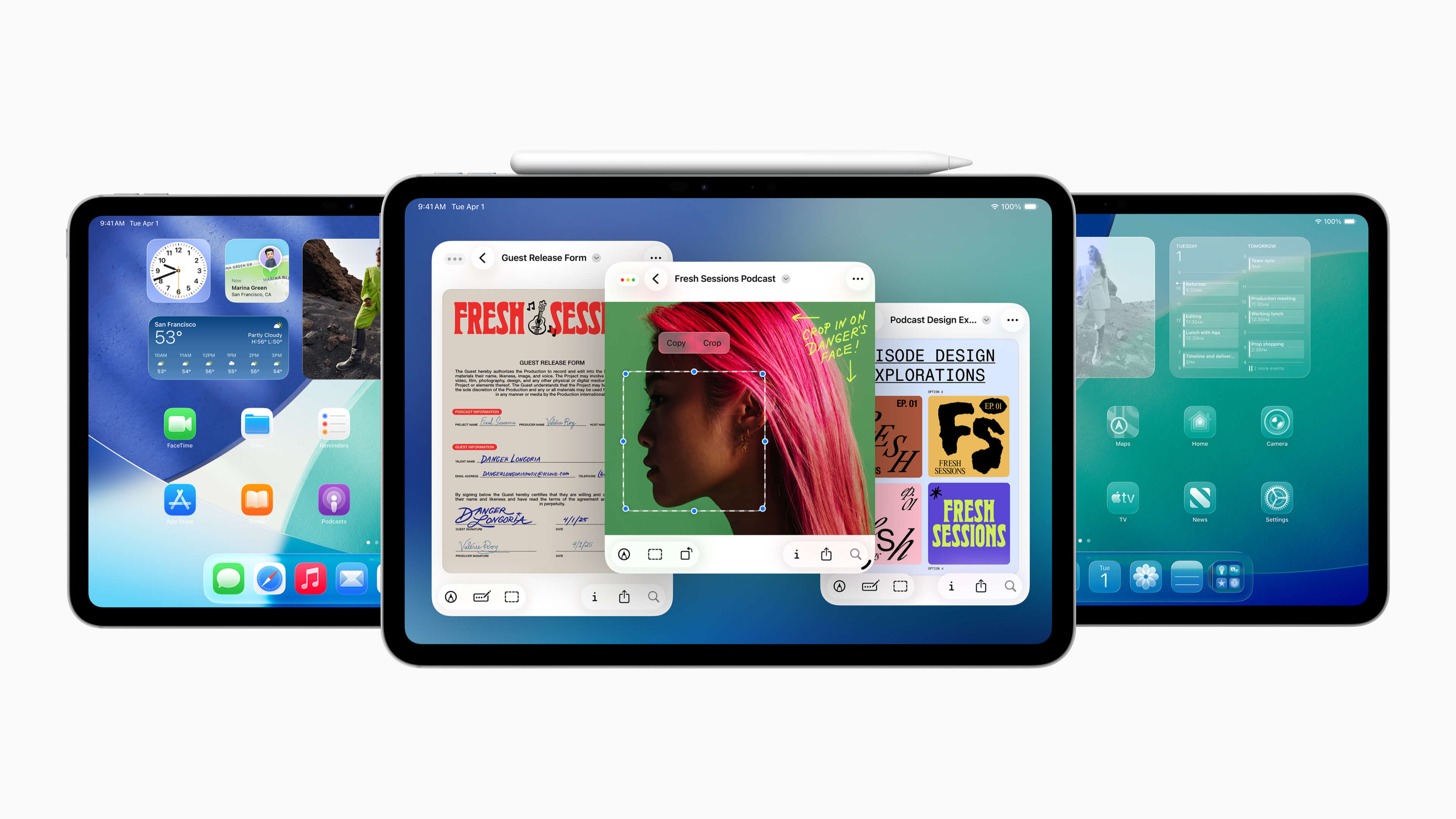
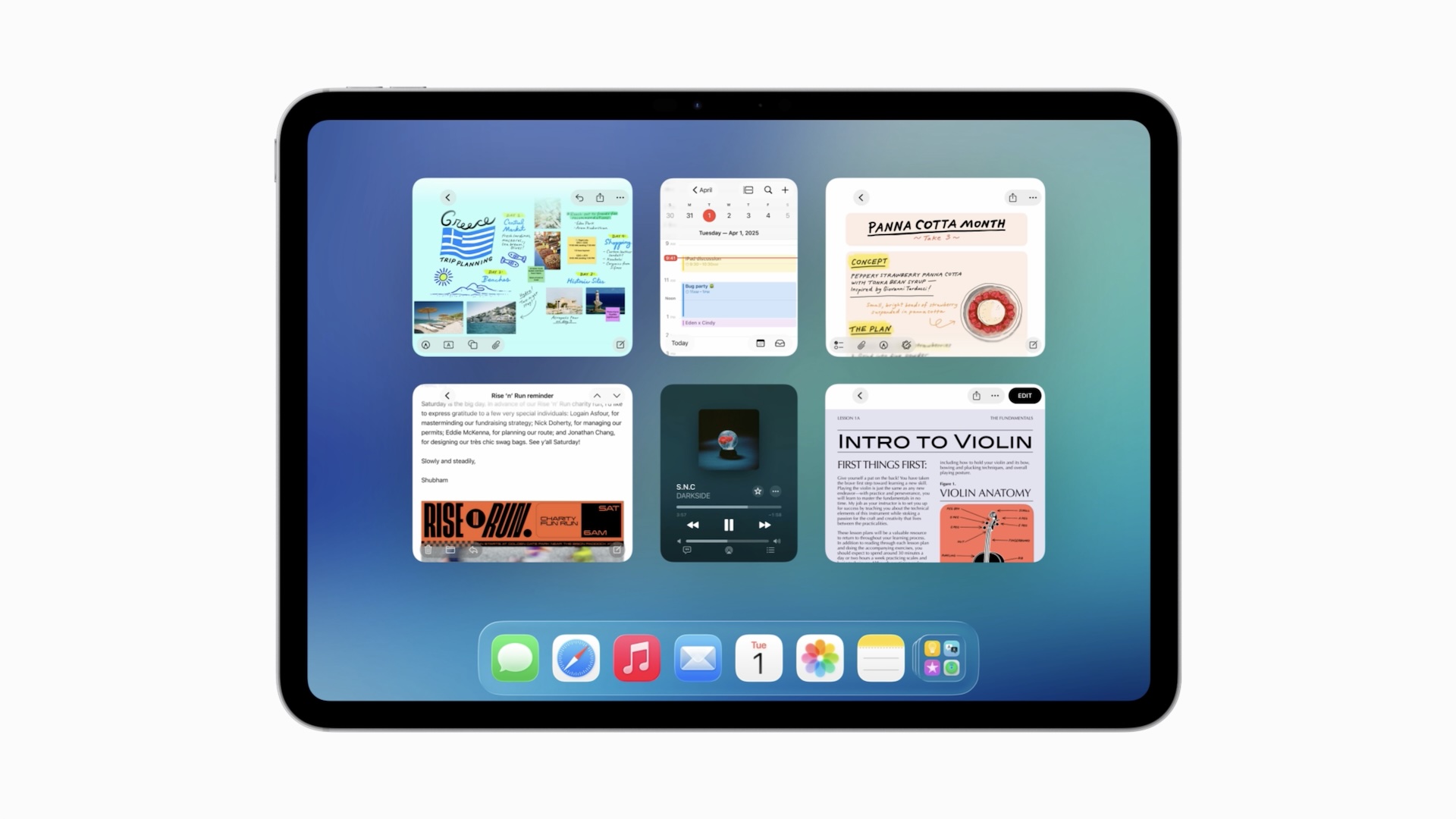
Apple is taking another crack at iPad multitasking, according to a report from Bloomberg’s Mark Gurman. This year’s iPadOS 19 release, due to be unveiled at Apple’s Worldwide Developers Conference on June 9, will apparently include an “overhaul that will make the tablet’s software more like macOS.”

The report is light on details about what’s actually changing, aside from a broad “focus on productivity, multitasking, and app window management.” But Apple will apparently continue to stop short of allowing users of newer iPads to run macOS on their tablets, despite the fact that modern iPad Airs and Pros use the same processors as Macs.

If this is giving you déjà vu, you’re probably thinking about iPadOS 16, the last time Apple tried making significant upgrades to the iPad’s multitasking model. Gurman’s reporting at the time even used similar language, saying that iPads running the new software would work “more like a laptop and less like a phone.”

The result of those efforts was Stage Manager. It had steep hardware requirements and launched in pretty rough shape, even though Apple delayed the release of the update by a month to keep polishing it. Stage Manager did allow for more flexible multitasking, and on newer models, it enabled true multi-monitor support for the first time. But early versions were buggy and frustrating in ways that still haven’t fully been addressed by subsequent updates (MacStories’ Federico Viticci keeps the Internet’s most comprehensive record of the issues with the software.)

Report: Apple will take another crack at iPad multitasking in iPadOS 19 Read More »