android

qualcomm-and-google-team-up-to-offer-8-years-of-android-updates

Qualcomm and Google team up to offer 8 years of Android updates

How long should your phone last?

This is just the latest attempt from Google and its partners to address Android’s original sin. Google’s open approach to Android roped in numerous OEMs to create and sell hardware, all of which were managing their update schemes individually and relying on hardware vendors to provide updated drivers and other components—which they usually didn’t. As a result, even expensive flagship phones could quickly fall behind and miss out on features and security fixes.

Google undertook successive projects over the last decade to improve Android software support. For example, Project Mainline in Android 10 introduced system-level modules that Google can update via Play Services without a full OS update. This complemented Project Treble, which was originally released in Android 8.0 Oreo. Treble separated the Android OS from the vendor implementation, giving OEMs the ability to update Android without changing the low-level code.

The legacy of Treble is still improving outcomes, too. Qualcomm cites Project Treble as a key piece of its update-extending initiative. The combination of consistent vendor layer support and fresh kernels will, according to Qualcomm, make it faster and easier for OEMs to deploy updates. However, they don’t have to.

Credit: Ron Amadeo

Update development is still the responsibility of device makers, with Google implementing only a loose framework of requirements. That means companies can build with Qualcomm’s most powerful chips and say “no thank you” to the extended support window. OnePlus has refused to match Samsung and Google’s current seven-year update guarantee, noting that pushing new versions of Android to older phones can cause performance and battery life issues—something we saw in action when Google’s Pixel 4a suffered a major battery life hit with the latest update.

Samsung has long pushed the update envelope, and it has a tight relationship with Qualcomm to produce Galaxy-optimized versions of its processors. So it won’t be surprising if Samsung tacks on another year to its update commitment in its next phone release. Google, too, emphasizes updates on its Pixel phones. Google doesn’t use Qualcomm chips, but it will probably match any move Samsung makes. The rest of the industry is anyone’s guess—eight years of updates is a big commitment, even with Qualcomm’s help.

Qualcomm and Google team up to offer 8 years of Android updates Read More »

nothing-on-phone-3a-pro-design:-“some-people-will-hate-it”

Nothing on Phone 3a Pro design: “Some people will hate it”

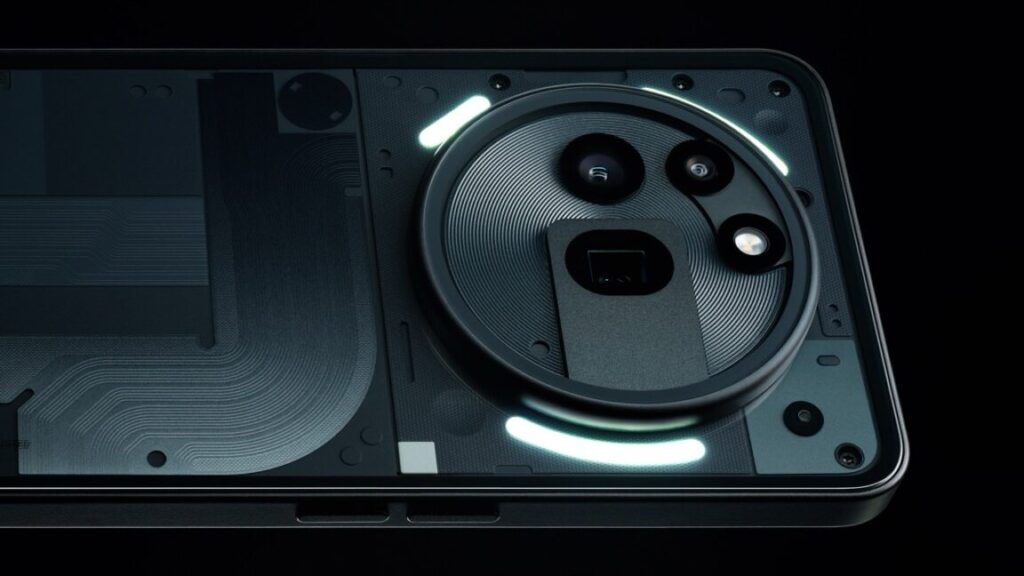
Nothing, the smartphone venture from OnePlus co-founder Carl Pei, is on its third generation of Android smartphones. The Nothing Phone 3a and 3a Pro will be officially announced on March 4, but there won’t be much left to reveal. Not only has Nothing teased the phones a few times, there’s also a new video highlighting the Nothing Phone 3a Pro’s design. In it, Nothing’s design team speaks at length about how they tried to incorporate the chunky camera module, but what they came up with is going to be divisive.

As we approach 20 years since the iPhone made touchscreen smartphones the default, the form factor is very fleshed out. Some of today’s most popular smartphones have almost reached the point of anti-design—flat, unremarkable bodies that are intended to be covered up with a case. There’s something to be said for that when most people slap a sheet of plastic on their phone and only remove it once in a blue moon. Nothing, however, designs phones with transparent panels and glowing “Glyphs” that are intended to be seen. In the case of the 3a Pro, there’s also a camera module so big it’s sure to stand out.

People generally want big screens and big batteries that don’t make phones too thick or heavy. Some components have shrunk or been dropped entirely to free up space (a moment of silence for the dearly departed headphone jack). Camera modules, however, can’t shrink infinitely. Smaller lenses and sensors have an impact on image quality, so expensive phones often have gargantuan camera arrays that can make phones top-heavy. For example, look at the Google Pixel 9 series, which features a camera bump that towers above the rest of the back.

The Nothing Phone 3a Pro isn’t a flagship device, but it’ll have more cameras than the Nothing Phone 3a that will release at the same time. The new design video shows off the phone’s three rear-facing sensors: a 50MP primary, an 8MP ultrawide, and a 50MP periscope telephoto (focal length unknown). The Nothing Phone 3a Pro has three of those glowing Glyphs on the back, framing the enormous camera module. The phone’s PCB also needed some tweaks to make room for the folded periscope assembly, which is much thicker than the other sensors.

Nothing on Phone 3a Pro design: “Some people will hate it” Read More »

google-pixel-4a’s-ruinous-“battery-performance”-update-is-a-bewildering-mess

Google Pixel 4a’s ruinous “Battery Performance” update is a bewildering mess

Two hours on a charge or less

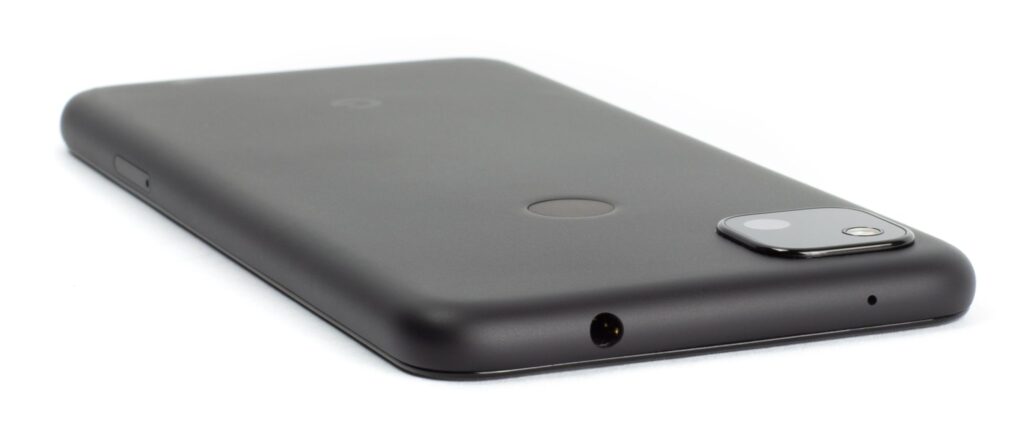
Pixel 4a phone, face down, with headphone jack at the top facing viewer at 45 degrees.

Credit: Ron Amadeo

One Ars staffer who had a Pixel 4a still in use received the update. They saw their battery life drop from “Still working” to “Two hours on a charge,” in their estimation. They had chosen the Google Store credit option before the update arrived and before the battery life drop became apparent. Once chosen, a different appeasement option could not be selected.

Others have noted all but unusable battery life on their phones, as seen on subreddit threads and blog summaries.

Even technically savvy Pixel owners will have a hard time avoiding the update. Google last week removed all of the Pixel 4a’s factory images from its website, preventing owners from rolling back their firmware without having to go hunting for an image (or convert to a third-party offering, like LineageOS). With no source and debug code posted for the tweaked kernel, third-party firmware providers cannot easily incorporate the battery fixes.

Some Pixel 4a owners have reported that, even after a battery swap, their devices have the same limited battery capacity. This would affirm Martin’s suggestion of a faulty battery cell type and that batteries with those same cells are still being used in replacements. (Martin’s post provides serial numbers one can look for on the battery part to indicate the cell manufacturer.)

$30 per year to receive $50

As seen on a wiki page on the Pixel 4a battery program hosted by repair advocate and YouTube creator Louis Rossman, and noted by Pixel 4a owners on Reddit (and the Ars staffer), the $50 credit offered by Google is paid out through vendor Payoneer.

Signing up to be paid through Payoneer requires providing a Social Security number or other identification, birth date, and checking account details to a financial services firm most non-business owners would not recognize. Payoneer notes on its site that it charges a $30 annual account fee for accounts that receive less than $2,000 in 12 months. It is seemingly left up to Pixel 4a owners to close out their Payoneer accounts after receiving their credits.

Google Pixel 4a’s ruinous “Battery Performance” update is a bewildering mess Read More »

samsung’s-galaxy-s25-event-was-an-ai-presentation-with-occasional-phone-hardware

Samsung’s Galaxy S25 event was an AI presentation with occasional phone hardware

Samsung announced the Galaxy S25, S25+, and S25 Ultra at its Unpacked event today. What is different from last year’s models? With the phones themselves, not much, other than a new chipset and a wide camera. But pure AI optimism? Samsung managed to pack a whole lot more of that into its launch event and promotional materials.

The corners on the S25 Ultra are a bit more rounded, the edges are flatter, and the bezels seem to be slightly thinner. The S25 and S25+ models have the same screen size as the S24 models, at 6.2 and 6.7 inches, respectively, while the Ultra notches up slightly from 6.8 to 6.9 inches.



Samsung’s S25 Ultra, in titanium builds colored silver blue, black, gray, and white silver.

Credit: Samsung

Samsung’s S25 Ultra, in titanium builds colored silver blue, black, gray, and white silver. Credit: Samsung

The S25 Ultra, starting at $1,300, touts a Snapdragon 8 Elite processor, a new 50-megapixel ultra-wide lens, and what Samsung claims is improved detail in software-derived zoom images. It comes with the S Pen, a vestige of the departed Note line, but as The Verge notes, there is no Bluetooth included, so you can’t pull off hand gestures with the pen off the screen or use it as a quirky remote camera trigger.

Samsung’s S25 Plus phones, in silver blue, navy, and icy blue.

Credit: Samsung

Samsung’s S25 Plus phones, in silver blue, navy, and icy blue. Credit: Samsung

It’s much the same with the S25 and S25 Plus, starting at $800. The base models got an upgrade to a default of 12GB of RAM. The displays, cameras, and general shape and build are the same. All the Galaxy devices released in 2025 have Qi2 wireless charging support—but not by default. You’ll need a “Qi2 Ready” magnetic case to get a sturdy attachment and the 15 W top charging speed.

One thing that hasn’t changed, for the better, is Samsung’s recent bump up in longevity. Each Galaxy S25 model gets seven years of security updates and seven of OS upgrades, which matches Google’s Pixel line in number of years.

Side view of the Galaxy S25 Edge, which is looking rather thin. Samsung

At the very end of Samsung’s event, for less than 30 seconds, a “Galaxy S25 Edge” was teased. In a mostly black field with some shiny metal components, Samsung seemed to be teasing the notably slimmer variant of the S25 that had been rumored. The same kinds of leaks about an “iPhone Air” have been circulating. No details were provided beyond its name, and a brief video suggesting its svelte nature.

Samsung’s Galaxy S25 event was an AI presentation with occasional phone hardware Read More »

google-steps-into-“extended-reality”-once-again-with-android-xr

Google steps into “extended reality” once again with Android XR

Citing “years of investment in AI, AR, and VR,” Google is stepping into the augmented reality market once more with Android XR. It’s an operating system that Google says will power future headsets and glasses that “transform how you watch, work, and explore.”

The first version you’ll see is Project Moohan, a mixed-reality headset built by Samsung. It will be available for purchase next year, and not much more is known about it. Developers have access to the new XR version of Android now.

“We’ve been in this space since Google Glass, and we have not stopped,” said Juston Payne, director of product at Google for XR in Android XR’s launch video. Citing established projects like Google Lens, Live View for Maps, instant camera translation, and, of course, Google’s general-purpose Gemini AI, XR promises to offer such overlays in both dedicated headsets and casual glasses.

Android XR announcement video.

There are few additional details right now beyond a headset rendering, examples in Google’s video labeled as “visualization for concept purposes.” Google’s list of things that will likely be on board includes Gemini, Maps, Photos, Translate, Chrome, Circle to Search, and Messages. And existing Android apps, or at least those updated to do so, should make the jump, too.

Google steps into “extended reality” once again with Android XR Read More »

google-seems-to-have-called-it-quits-on-making-its-own-android-tablets—again

Google seems to have called it quits on making its own Android tablets—again

Depending on which Android-focused site you believe, either a third Pixel Tablet was apparently in the works at Google and canceled, as Android Headlines reported, or the second one, as Android Authority has it. Either way, there was reportedly a team at Google working on the next flagship Pixel-branded tablet, and now, seemingly due to profitability concerns, that work is over. At least until, maybe, a third Pixel Tablet in the future.

The Pixel Tablet, released last fall, was generally regarded as Google’s second re-entry into the tablet market that the iPad all but owns, at least at the consumer level. As such, it sought to distinguish itself from Apple’s slab by launching with a home-friendly dock and speaker cradle, taking on the appearance of a big smart home display when docked to it.

While there are no public sales figures, the device has not kick-started a resurgence of interest in Android tablets beyond the baseline sales of Amazon’s Kindle Fire devices (based on a Google-less fork of Android). Google will likely continue to support and promote Android tablets for other manufacturers and now has its own Pixel Fold devices occupying that middle space between phone and tablet forms.

Ars has contacted Google for comment and confirmation and will update this post with its response.

Google seems to have called it quits on making its own Android tablets—again Read More »

welcome-to-google’s-nightmare:-us-reveals-plan-to-destroy-search-monopoly

Welcome to Google’s nightmare: US reveals plan to destroy search monopoly

Hepner expects that the DOJ plan may be measured enough that the court may only “be interested in a nip-tuck, not a wholesale revision of what plaintiffs have put forward.”

Kamyl Bazbaz, SVP of public affairs for Google’s more privacy-focused rival DuckDuckGo, released a statement agreeing with Hepner.

“The government has put forward a proposal that would free the search market from Google’s illegal grip and unleash a new era of innovation, investment, and competition,” Bazbaz said. “There’s nothing radical about this proposal: It’s firmly based on the court’s extensive finding of fact and proposes solutions in line with previous antitrust actions.”

Bazbaz accused Google of “cynically” invoking privacy among chief concerns with a forced Chrome sale. That “is rich coming from the Internet’s biggest tracker,” Bazbaz said.

Will Apple finally compete with Google in search?

The remedies the DOJ has proposed could potentially be game-changing, Bazbaz told Ars, not just for existing rivals but also new rivals and startups the court found were previously unable to enter the market while it was under Google’s control.

If the DOJ gets its way, Google could be stuck complying with these proposed remedies for 10 years. But if the company can prove after five years that competition has substantially increased and it controls less than 50 percent of the market, the remedies could be terminated early, the DOJ’s proposed final judgment order said.

That’s likely cold comfort for Google as it prepares to fight the DOJ’s plan to break up its search empire and potentially face major new competitors. The biggest risk to Google’s dominance in AI search could even be its former partner, whom the court found was being paid handsomely to help prop up Google’s search monopoly: Apple.

On X (formerly Twitter), Hepner said that cutting off Google’s $20 billion payments to Apple for default placements in Safari alone could “have a huge effect and may finally kick Apple to enter the market itself.”

Welcome to Google’s nightmare: US reveals plan to destroy search monopoly Read More »

android-will-soon-instantly-log-you-in-to-your-apps-on-new-devices

Android will soon instantly log you in to your apps on new devices

If you lose your iPhone or buy an upgrade, you could reasonably expect to be up and running after an hour, presuming you backed up your prior model. Your Apple stuff all comes over, sure, but most of your third-party apps will still be signed in.

Doing the same swap with an Android device is more akin to starting three-quarters fresh. After one or two Android phones, you learn to bake in an extra hour of rapid-fire logging in to all your apps. Password managers, or just using a Google account as your authentication, are a godsend.

That might change relatively soon, as Google has announced a new Restore Credentials feature, which should do what it says in the name. Android apps can “seamlessly onboard users to their accounts on a new device,” with the restore keys handled by Android’s native backup and restore process. The experience, says Google, is “delightful” and seamless. You can even get the same notifications on the new device as you were receiving on the old.

Android will soon instantly log you in to your apps on new devices Read More »

pixel-phones-are-getting-an-actual-weather-app-in-2024,-with-a-bit-of-ai

Pixel phones are getting an actual weather app in 2024, with a bit of AI

An AI weather report, expanded to read

Credit: Kevin Purdy

Customizable, but also not

There’s a prominent “AI generated weather report” on top of the weather stack, which is a combination of summary and familiarity. “Cold and rainy day, bring your umbrella and hold onto your hat!” is Google’s example; I can’t provide another one, because an update to “Gemini Nano” is pending.

Weather radar map from the Google Weather app.

Credit: Kevin Purdy

You can see weather radar for your location, along with forecasted precipitation movement. The app offers “Nowcasting” precipitation guesses, like “Rain continuing for 2 hours” or “Light rain in 10 minutes.”

Widgets with weather data, including a UV index of 2, sunrise and sunset times, visibility distances, and air quality, displayed as rearrangeable widgets.

Credit: Kevin Purdy

The best feature, one seen on the version of Weather that shipped to the Pixel Tablet and Fold, is that you can rearrange the order of data shown on your weather screen. I moved the UV index, humidity, sunrise/sunset, and wind conditions as high as they could go on my setup. It’s a trade-off, because the Weather app’s data widgets are so big as to require scrolling to get the full picture of a day, and you can’t move the AI summary or 10-day forecast off the top. But if you only need a few numbers and like a verbal summary, it’s handy.

Sadly, if you’re an allergy sufferer and you’re not in the UK, Germany, France, or Italy, Google can’t offer you any pollen data or forecasts. There is also, I am sad to say, no frog.

Google’s Weather app isn’t faring so well with Play Store reviewers. Users are miffed that they can’t see a location’s weather without adding it to their saved locations list; that other Google apps, including the “At a Glance” app on every Pixel’s default launcher, send you to the Google app’s summary instead of this app; the look of the weather map; and, most of all, that it does not show up in some phones’ app list, but only as a widget.

Pixel phones are getting an actual weather app in 2024, with a bit of AI Read More »

android-trojan-that-intercepts-voice-calls-to-banks-just-got-more-stealthy

Android Trojan that intercepts voice calls to banks just got more stealthy

Much of the new obfuscation is the result of hiding malicious code in a dynamically decrypted and loaded .dex file of the apps. As a result, Zimperium initially believed the malicious apps they were analyzing were part of a previously unknown malware family. Then the researchers dumped the .dex file from an infected device’s memory and performed static analysis on it.

“As we delved deeper, a pattern emerged,” Ortega wrote. “The services, receivers, and activities closely resembled those from an older malware variant with the package name com.secure.assistant.” That package allowed the researchers to link it to the FakeCall Trojan.

Many of the new features don’t appear to be fully implemented yet. Besides the obfuscation, other new capabilities include:

Bluetooth Receiver

This receiver functions primarily as a listener, monitoring Bluetooth status and changes. Notably, there is no immediate evidence of malicious behavior in the source code, raising questions about whether it serves as a placeholder for future functionality.

Screen Receiver

Similar to the Bluetooth receiver, this component only monitors the screen’s state (on/off) without revealing any malicious activity in the source code.

Accessibility Service

The malware incorporates a new service inherited from the Android Accessibility Service, granting it significant control over the user interface and the ability to capture information displayed on the screen. The decompiled code shows methods such as onAccessibilityEvent() and onCreate() implemented in native code, obscuring their specific malicious intent.

While the provided code snippet focuses on the service’s lifecycle methods implemented in native code, earlier versions of the malware give us clues about possible functionality:

  • Monitoring Dialer Activity: The service appears to monitor events from the com.skt.prod.dialer package (the stock dialer app), potentially allowing it to detect when the user is attempting to make calls using apps other than the malware itself.
  • Automatic Permission Granting: The service seems capable of detecting permission prompts from the com.google.android.permissioncontroller (system permission manager) and com.android.systemui (system UI). Upon detecting specific events (e.g., TYPE_WINDOW_STATE_CHANGED), it can automatically grant permissions for the malware, bypassing user consent.
  • Remote Control: The malware enables remote attackers to take full control of the victim’s device UI, allowing them to simulate user interactions, such as clicks, gestures, and navigation across apps. This capability enables the attacker to manipulate the device with precision.

Phone Listener Service

This service acts as a conduit between the malware and its Command and Control (C2) server, allowing the attacker to issue commands and execute actions on the infected device. Like its predecessor, the new variant provides attackers with a comprehensive set of capabilities (see the table below). Some functionalities have been moved to native code, while others are new additions, further enhancing the malware’s ability to compromise devices.

The Kaspersky post from 2022 said that the only language supported by FakeCall was Korean and that the Trojan appeared to target several specific banks in South Korea. Last year, researchers from security firm ThreatFabric said the Trojan had begun supporting English, Japanese, and Chinese, although there were no indications people speaking those languages were actually targeted.

Android Trojan that intercepts voice calls to banks just got more stealthy Read More »

android-15’s-security-and-privacy-features-are-the-update’s-highlight

Android 15’s security and privacy features are the update’s highlight

Android 15 started rolling out to Pixel devices Tuesday and will arrive, through various third-party efforts, on other Android devices at some point. There is always a bunch of little changes to discover in an Android release, whether by reading, poking around, or letting your phone show you 25 new things after it restarts.

In Android 15, some of the most notable involve making your device less appealing to snoops and thieves and more secure against the kids to whom you hand your phone to keep them quiet at dinner. There are also smart fixes for screen sharing, OTP codes, and cellular hacking prevention, but details about them are spread across Google’s own docs and blogs and various news site’s reports.

Here’s what is notable and new in how Android 15 handles privacy and security.

Private Space for apps

In the Android 15 settings, you can find “Private Space,” where you can set up a separate PIN code, password, biometric check, and optional Google account for apps you don’t want to be available to anybody who happens to have your phone. This could add a layer of protection onto sensitive apps, like banking and shopping apps, or hide other apps for whatever reason.

In your list of apps, drag any app down to the lock space that now appears in the bottom right. It will only be shown as a lock until you unlock it; you will then see the apps available in your new Private Space. After that, you should probably delete it from the main app list. Dave Taylor has a rundown of the process and its quirks.

It’s obviously more involved than Apple’s “Hide and Require Face ID” tap option but with potentially more robust hiding of the app.

Hiding passwords and OTP codes

A second form of authentication is good security, but allowing apps to access the notification text with the code in it? Not so good. In Android 15, a new permission, likely to be given only to the most critical apps, prevents the leaking of one-time passcodes (OTPs) to other apps waiting for them. Sharing your screen will also hide OTP notifications, along with usernames, passwords, and credit card numbers.

Android 15’s security and privacy features are the update’s highlight Read More »

doj-proposes-breakup-and-other-big-changes-to-end-google-search-monopoly

DOJ proposes breakup and other big changes to end Google search monopoly


Google called the DOJ extending search remedies to AI “radical,” an “overreach.”

The US Department of Justice finally proposed sweeping remedies to destroy Google’s search monopoly late yesterday, and, predictably, Google is not loving any of it.

On top of predictable asks—like potentially requiring Google to share search data with rivals, restricting distribution agreements with browsers like Firefox and device makers like Apple, and breaking off Chrome or Android—the DOJ proposed remedies to keep Google from blocking competition in “the evolving search industry.” And those extra steps threaten Google’s stake in the nascent AI search world.

This is only the first step in the remedies stage of litigation, but Google is already showing resistance to both expected and unexpected remedies that the DOJ proposed. In a blog from Google’s vice president of regulatory affairs, Lee-Anne Mulholland, the company accused the DOJ of “overreach,” suggesting that proposed remedies are “radical” and “go far beyond the specific legal issues in this case.”

From here, discovery will proceed as the DOJ makes a case to broaden the scope of proposed remedies and Google raises its defense to keep remedies as narrowly tailored as possible. After that phase concludes, the DOJ will propose its final judgement on remedies in November, which must be fully revised by March 2025 for the court to then order remedies.

Even then, however, the trial is unlikely to conclude, as Google plans to appeal. In August, Mozilla’s spokesperson told Ars that the trial could drag on for years before any remedies are put in place.

In the meantime, Google plans to continue focusing on building out its search empire, Google’s president of global affairs, Kent Walker, said in August. This presumably includes innovations in AI search that the DOJ fears may further entrench Google’s dominant position.

Scrutiny of Google’s every move in the AI industry will likely only be heightened in that period. As Google has already begun seeking exclusive AI deals with companies like Apple, it risks appearing to engage in the same kinds of anti-competitive behavior in AI markets as the court has already condemned. And giving that impression could not only impact remedies ordered by the court, but also potentially weaken Google’s chances of winning on appeal, Lee Hepner, an antitrust attorney monitoring the trial for the American Economic Liberties Project, told Ars.

Ending Google’s monopoly starts with default deals

In the DOJ’s proposed remedy framework, the DOJ says that there’s still so much more to consider before landing on final remedies that it reserves “the right to add or remove potential proposed remedies.”

Through discovery, DOJ said that it plans to continue engaging experts and stakeholders “to learn not just about the relevant markets themselves but also about adjacent markets as well as remedies from other jurisdictions that could affect or inform the optimal remedies in this action.

“To be effective, these remedies… must include some degree of flexibility because market developments are not always easy to predict and the mechanisms and incentives for circumvention are endless,” the DOJ said.

Ultimately, the DOJ said that any remedies sought should be “mutually reinforcing” and work to “unfetter” Google’s current monopoly in general search services and general text advertising markets. That effort would include removing barriers to competition—like distribution and revenue-sharing agreements—as well as denying Google monopoly profits and preventing Google from monopolizing “related markets in the future,” the DOJ said.

Any effort to undo Google’s monopoly starts with ending Google’s control over “the most popular distribution channels,” the DOJ said. At one point during the trial, for example, a witness accidentally blurted out that Apple gets a 36 percent cut from its Safari deal with Google. Lucrative default deals like that leave rivals with “little-to-no incentive to compete for users,” the DOJ said.

“Fully remedying these harms requires not only ending Google’s control of distribution today, but also ensuring Google cannot control the distribution of tomorrow,” the DOJ warned.

To dislodge this key peg propping up Google’s search monopoly, some options include ending Google’s default deals altogether, which would “limit or prohibit default agreements, preinstallation agreements, and other revenue-sharing arrangements related to search and search-related products, potentially with or without the use of a choice screen.”

A breakup could be necessary

Behavior and structural remedies may also be needed, the DOJ proposed, to “prevent Google from using products such as Chrome, Play, and Android to advantage Google search and Google search-related products and features—including emerging search access points and features, such as artificial intelligence—over rivals or new entrants.” That could mean spinning off the Chrome browser or restricting Google from preinstalling its search engine as the default in Chrome or on Android devices.

In her blog, Mulholland conceded that “this case is about a set of search distribution contracts” but claimed that “overbroad restrictions on distribution contracts” would create friction for Google users and “reduce revenue for companies like Mozilla” as well as Android smart phone makers.

Asked to comment on supposedly feared revenue losses, a Mozilla spokesperson told Ars, “[We are] closely monitoring the legal process and considering its potential impact on Mozilla and how we can positively influence the next steps. Mozilla has always championed competition and choice online, particularly in search. Firefox continues to offer a range of search options, and we remain committed to serving our users’ preferences while fostering a competitive market.”

Mulholland also warned that “splitting off” Chrome or Android from Google’s search business “would break them” and potentially “raise the cost of devices,” because “few companies would have the ability or incentive to keep them open source, or to invest in them at the same level we do.”

“We’ve invested billions of dollars in Chrome and Android,” Mulholland wrote. “Chrome is a secure, fast, and free browser and its open-source code provides the backbone for numerous competing browsers. Android is a secure, innovative, and free open-source operating system that has enabled vast choice in the smartphone market, helping to keep the cost of phones low for billions of people.”

Google has long argued that its investment in open source Chrome and Android projects benefits developers whose businesses and customers would be harmed if those efforts lost critical funding.

“Features like Chrome’s Safe Browsing, Android’s security features, and Play Protect benefit from information and signals from a range of Google products and our threat-detection expertise,” Mulholland wrote. “Severing Chrome and Android would jeopardize security and make patching security bugs harder.”

Hepner told Ars that Android could potentially thrive if broken off from Google, suggesting that through discovery, it will become clearer what would happen if either Google product was severed from the company.

“I think others would agree that Android is a company that is capable [being] a standalone entity,” Hepner said. “It could be independently monetized through relationships with device manufacturers, web browsers, alternative Play Stores that are not under Google’s umbrella. And that if that were the case, what you would see is that Android and the operating system marketplace begins to evolve to meet the needs and demands of innovative products that are not being created just by Google. And you’ll see that dictating the evolution of the marketplace and fundamentally the flow of information across our society.”

Mulholland also claimed that sharing search data with rivals risked exposing users to privacy and security risks, but the DOJ vowed to be “mindful of potential user privacy concerns in the context of data sharing” while distinguishing “genuine privacy concerns” from “pretextual arguments” potentially misleading the court regarding alleged risks.

One possible way around privacy concerns, the DOJ suggested, would be prohibiting Google from collecting the kind of sensitive data that cannot be shared with rivals.

Finally, to stop Google from charging supra-competitive prices for ads, the DOJ is “evaluating remedies” like licensing or syndicating Google’s ad feed “independent of its search results.” Further, the DOJ may require more transparency, forcing Google to provide detailed “search query reports” featuring currently obscured “information related to its search text ads auction and ad monetization.”

Stakeholders were divided on whether the DOJ’s initial framework is appropriate.

Matt Schruers, the CEO of a trade association called the Computer & Communications Industry Association (which represents Big Tech companies like Google), criticized the DOJ’s “hodgepodge of structural and behavioral remedies” as going “far beyond” what’s needed to address harms.

“Any remedy should be narrowly tailored to address specific conduct, which in this case was a set of search distribution contracts,” Schruers said. “Instead, the proposed DOJ remedies would reshape numerous industries and products, which would harm consumers and innovation in these dynamic markets.”

But a senior vice president of public affairs for Google search rival DuckDuckGo, Kamyl Bazbaz, praised the DOJ’s framework as being “anchored to the court’s ruling” and appropriately broad.

“This proposal smartly takes aim at breaking Google’s illegal hold on the general search market now and ushers in a new era of enduring competition moving forward,” Bazbaz said. “The framework understands that no single remedy can undo Google’s illegal monopoly, it will require a range of behavioral and structural remedies to free the market.”

Bazbaz expects that “Google is going to use every resource at its disposal to discredit this proposal,” suggesting that “should be taken as a sign this framework can create real competition.”

AI deals could weaken Google’s appeal, expert says

Google appears particularly disturbed by the DOJ’s insistence that remedies must be forward-looking and prevent Google from leveraging its existing monopoly power “to feed artificial intelligence features.”

As Google sees it, the DOJ’s attempt to attack Google’s AI business “comes at a time when competition in how people find information is blooming, with all sorts of new entrants emerging and new technologies like AI transforming the industry.”

But the DOJ has warned that Google’s search monopoly potentially feeding AI features “is an emerging barrier to competition and risks further entrenching Google’s dominance.”

The DOJ has apparently been weighing some of the biggest complaints about Google’s AI training when mulling remedies. That includes listening to frustrated site owners who can’t afford to block Google from scraping data for AI training because the same exact crawler indexes their content in Google search results. Those site owners have “little choice” but to allow AI training or else sacrifice traffic from Google search, The Seattle Times reported.

Remedy options may come with consequences

Remedies in the search trial might change that. In their proposal, the DOJ said it’s considering remedies that would “prohibit Google from using contracts or other practices to undermine rivals’ access to web content and level the playing field by requiring Google to allow websites crawled for Google search to opt out of training or appearing in any Google-owned artificial-intelligence product or feature on Google search,” such as Google’s controversial AI summaries.

Hepner told Ars that “it’s not surprising at all” that remedies cover both search and AI because “at the core of Google’s monopoly power is its enormous scale and access to data.”

“The Justice Department is clearly thinking creatively,” Hepner said, noting that “the ability for content creators to opt out of having their material and work product used to train Google’s AI systems is an interesting approach to depriving Google of its immense scale.”

The DOJ is also eyeing controls on Google’s use of scale to power AI advertising technologies like Performance Max to end Google’s supracompetitive pricing on text ads for good.

It’s critical to think about the future, the DOJ argued in its framework, because “Google’s anticompetitive conduct resulted in interlocking and pernicious harms that present unprecedented complexities in a highly evolving set of markets”—not just in the markets where Google holds monopoly powers.

Google disagrees with this alleged “government overreach.”

“Hampering Google’s AI tools risks holding back American innovation at a critical moment,” Mulholland warned, claiming that AI is still new and “competition globally is fierce.”

“There are enormous risks to the government putting its thumb on the scale of this vital industry—skewing investment, distorting incentives, hobbling emerging business models—all at precisely the moment that we need to encourage investment, new business models, and American technological leadership,” Mulholland wrote.

Hepner told Ars that he thinks that the DOJ’s proposed remedies framework actually “meets the moment and matches the imperative to deprive Google of its monopoly hold on the search market, on search advertising, and potentially on future related markets.”

To ensure compliance with any remedies pursued, the DOJ also recommended “protections against circumvention and retaliation, including through novel paths to preserving dominance in the monopolized markets.”

That means Google might be required to “finance and report to a Court-appointed technical committee” charged with monitoring any Google missteps. The company may also have to agree to retain more records for longer—including chat messages that the company has been heavily criticized for deleting. And through this compliance monitoring, Google may also be prohibited from owning a large stake in any rivals.

If Google were ever found willfully non-compliant, the DOJ is considering a “range of provisions,” including risking more extreme structural or behavioral remedies or enduring extensions of compliance periods.

As the remedies stage continues through the spring, followed by Google’s prompt appeal, Hepner suggested that the DOJ could fight to start imposing remedies before the appeal concludes. Likely Google would just as strongly fight for any remedies to be delayed.

While the trial drags on, Hepner noted that Google already appears to be trying to strike another default deal with Apple that appears pretty similar to the controversial distribution deals at the heart of the search monopoly trial. In March, Apple started mulling using Google’s Gemini to exclusively power new AI features for the iPhone.

“This is basically the exact same anticompetitive behavior that they were found liable for,” Hepner told Ars, suggesting this could “weaken” Apple’s defense both against the DOJ’s broad framework of proposed remedies and during the appeal.

“If Google is actually engaging in the same anti-competitive conduct and artificial intelligence markets that they were found liable for in the search market, the court’s not going to look kindly on that relative to an appeal,” Hepner said.

Photo of Ashley Belanger

Ashley is a senior policy reporter for Ars Technica, dedicated to tracking social impacts of emerging policies and new technologies. She is a Chicago-based journalist with 20 years of experience.

DOJ proposes breakup and other big changes to end Google search monopoly Read More »