AI infrastructure

ars-live-recap:-is-the-ai-bubble-about-to-pop?-ed-zitron-weighs-in.

Ars Live recap: Is the AI bubble about to pop? Ed Zitron weighs in.


Despite connection hiccups, we covered OpenAI’s finances, nuclear power, and Sam Altman.

On Tuesday of last week, Ars Technica hosted a live conversation with Ed Zitron, host of the Better Offline podcast and one of tech’s most vocal AI critics, to discuss whether the generative AI industry is experiencing a bubble and when it might burst. My Internet connection had other plans, though, dropping out multiple times and forcing Ars Technica’s Lee Hutchinson to jump in as an excellent emergency backup host.

During the times my connection cooperated, Zitron and I covered OpenAI’s financial issues, lofty infrastructure promises, and why the AI hype machine keeps rolling despite some arguably shaky economics underneath. Lee’s probing questions about per-user costs revealed a potential flaw in AI subscription models: Companies can’t predict whether a user will cost them $2 or $10,000 per month.

You can watch a recording of the event on YouTube or in the window below.

Our discussion with Ed Zitron. Click here for transcript.

“A 50 billion-dollar industry pretending to be a trillion-dollar one”

I started by asking Zitron the most direct question I could: “Why are you so mad about AI?” His answer got right to the heart of his critique: the disconnect between AI’s actual capabilities and how it’s being sold. “Because everybody’s acting like it’s something it isn’t,” Zitron said. “They’re acting like it’s this panacea that will be the future of software growth, the future of hardware growth, the future of compute.”

In one of his newsletters, Zitron describes the generative AI market as “a 50 billion dollar revenue industry masquerading as a one trillion-dollar one.” He pointed to OpenAI’s financial burn rate (losing an estimated $9.7 billion in the first half of 2025 alone) as evidence that the economics don’t work, coupled with a heavy dose of pessimism about AI in general.

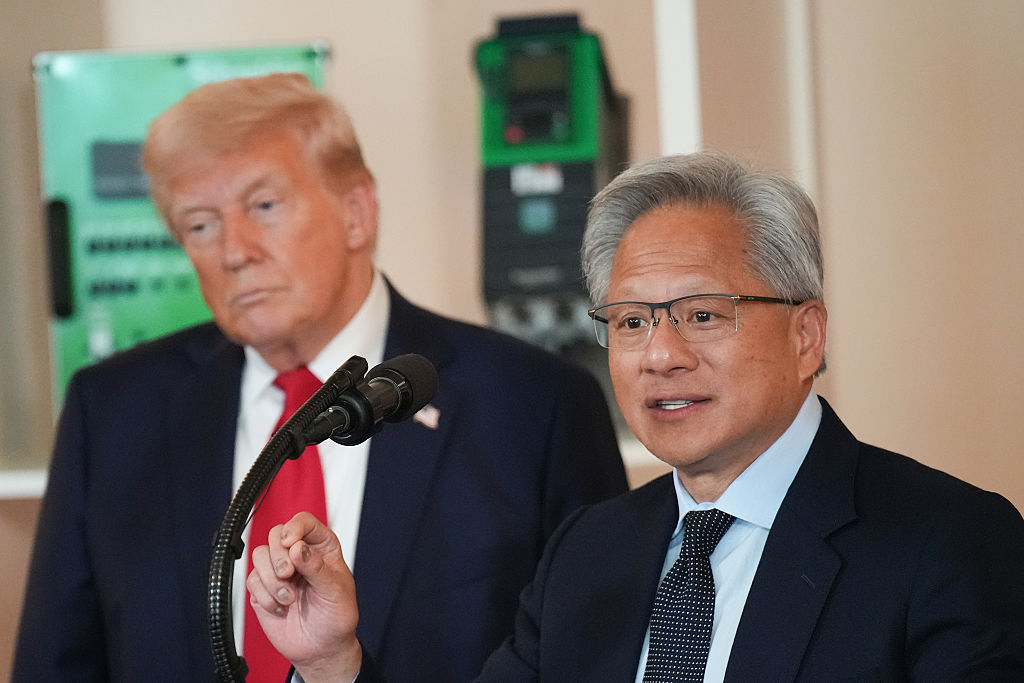
Donald Trump listens as Nvidia CEO Jensen Huang speaks at the White House during an event on “Investing in America” on April 30, 2025, in Washington, DC. Credit: Andrew Harnik / Staff | Getty Images News

“The models just do not have the efficacy,” Zitron said during our conversation. “AI agents is one of the most egregious lies the tech industry has ever told. Autonomous agents don’t exist.”

He contrasted the relatively small revenue generated by AI companies with the massive capital expenditures flowing into the sector. Even major cloud providers and chip makers are showing strain. Oracle reportedly lost $100 million in three months after installing Nvidia’s new Blackwell GPUs, which Zitron noted are “extremely power-hungry and expensive to run.”

Finding utility despite the hype

I pushed back against some of Zitron’s broader dismissals of AI by sharing my own experience. I use AI chatbots frequently for brainstorming useful ideas and helping me see them from different angles. “I find I use AI models as sort of knowledge translators and framework translators,” I explained.

After experiencing brain fog from repeated bouts of COVID over the years, I’ve also found tools like ChatGPT and Claude especially helpful for memory augmentation that pierces through brain fog: describing something in a roundabout, fuzzy way and quickly getting an answer I can then verify. Along these lines, I’ve previously written about how people in a UK study found AI assistants useful accessibility tools.

Zitron acknowledged this could be useful for me personally but declined to draw any larger conclusions from my one data point. “I understand how that might be helpful; that’s cool,” he said. “I’m glad that that helps you in that way; it’s not a trillion-dollar use case.”

He also shared his own attempts at using AI tools, including experimenting with Claude Code despite not being a coder himself.

“If I liked [AI] somehow, it would be actually a more interesting story because I’d be talking about something I liked that was also onerously expensive,” Zitron explained. “But it doesn’t even do that, and it’s actually one of my core frustrations, it’s like this massive over-promise thing. I’m an early adopter guy. I will buy early crap all the time. I bought an Apple Vision Pro, like, what more do you say there? I’m ready to accept issues, but AI is all issues, it’s all filler, no killer; it’s very strange.”

Zitron and I agree that current AI assistants are being marketed beyond their actual capabilities. As I often say, AI models are not people, and they are not good factual references. As such, they cannot replace human decision-making and cannot wholesale replace human intellectual labor (at the moment). Instead, I see AI models as augmentations of human capability: as tools rather than autonomous entities.

Computing costs: History versus reality

Even though Zitron and I found some common ground about AI hype, I expressed a belief that criticism over the cost and power requirements of operating AI models will eventually not become an issue.

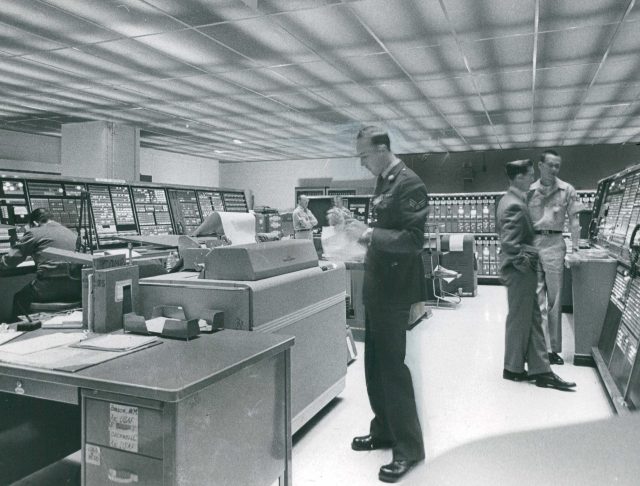
I attempted to make that case by noting that computing costs historically trend downward over time, referencing the Air Force’s SAGE computer system from the 1950s: a four-story building that performed 75,000 operations per second while consuming two megawatts of power. Today, pocket-sized phones deliver millions of times more computing power in a way that would be impossible, power consumption-wise, in the 1950s.

The blockhouse for the Semi-Automatic Ground Environment at Stewart Air Force Base, Newburgh, New York. Credit: Denver Post via Getty Images

“I think it will eventually work that way,” I said, suggesting that AI inference costs might follow similar patterns of improvement over years and that AI tools will eventually become commodity components of computer operating systems. Basically, even if AI models stay inefficient, AI models of a certain baseline usefulness and capability will still be cheaper to train and run in the future because the computing systems they run on will be faster, cheaper, and less power-hungry as well.

Zitron pushed back on this optimism, saying that AI costs are currently moving in the wrong direction. “The costs are going up, unilaterally across the board,” he said. Even newer systems like Cerebras and Grok can generate results faster but not cheaper. He also questioned whether integrating AI into operating systems would prove useful even if the technology became profitable, since AI models struggle with deterministic commands and consistent behavior.

The power problem and circular investments

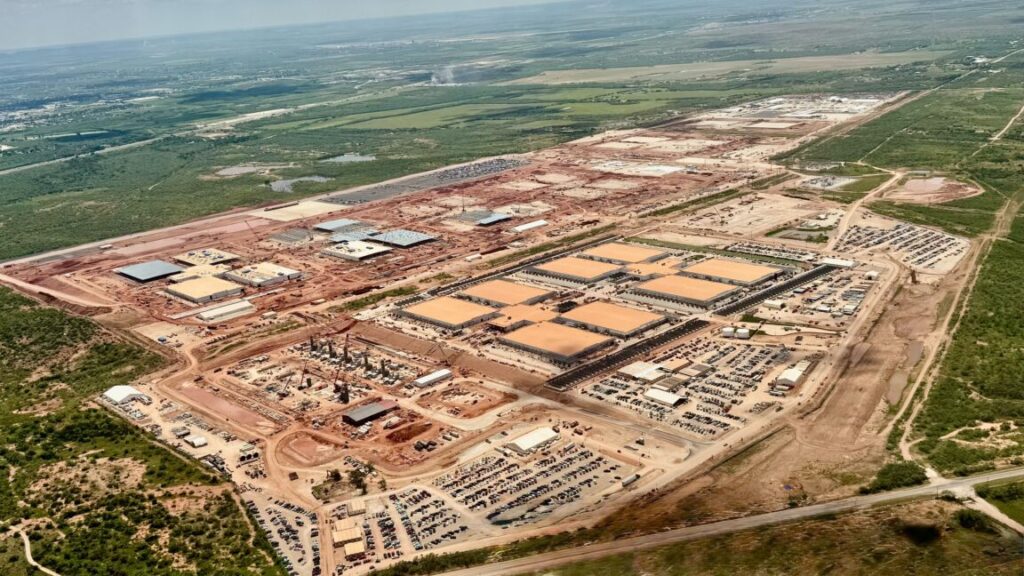
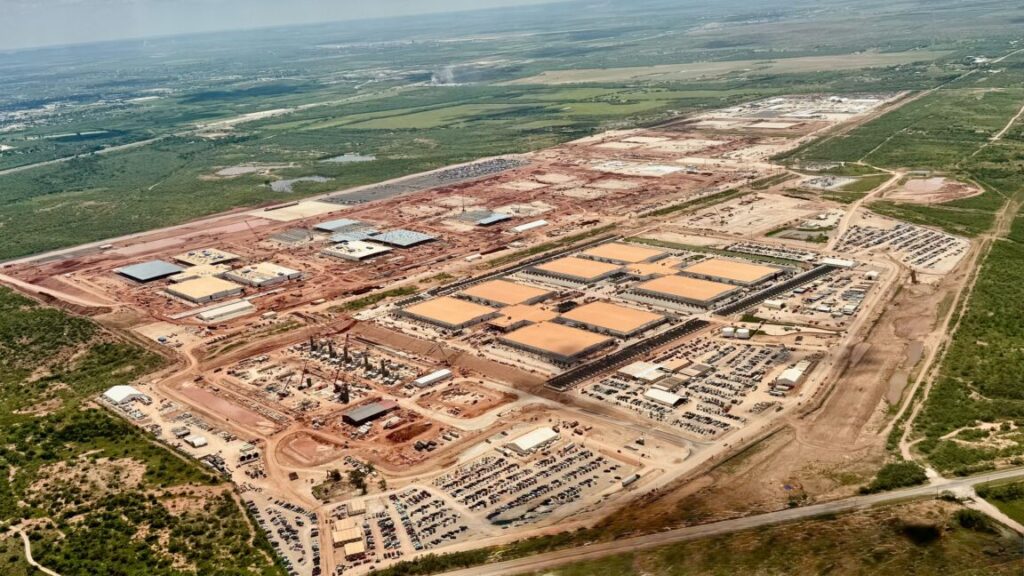
One of Zitron’s most pointed criticisms during the discussion centered on OpenAI’s infrastructure promises. The company has pledged to build data centers requiring 10 gigawatts of power capacity (equivalent to 10 nuclear power plants, I once pointed out) for its Stargate project in Abilene, Texas. According to Zitron’s research, the town currently has only 350 megawatts of generating capacity and a 200-megawatt substation.

“A gigawatt of power is a lot, and it’s not like Red Alert 2,” Zitron said, referencing the real-time strategy game. “You don’t just build a power station and it happens. There are months of actual physics to make sure that it doesn’t kill everyone.”

He believes many announced data centers will never be completed, calling the infrastructure promises “castles on sand” that nobody in the financial press seems willing to question directly.

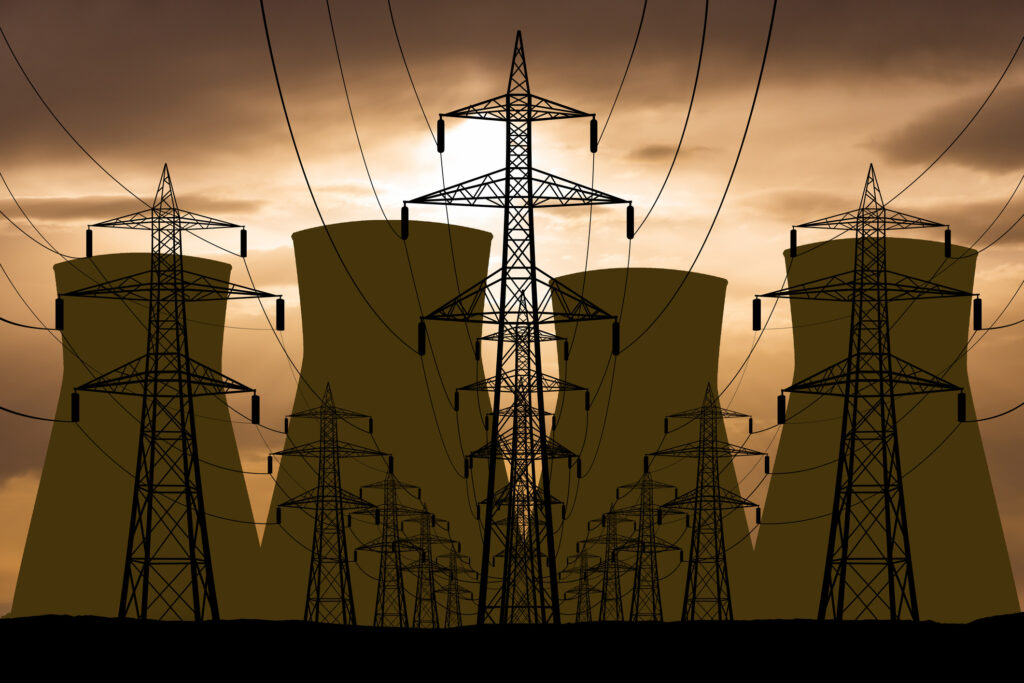
An orange, cloudy sky backlights a set of electrical wires on large pylons, leading away from the cooling towers of a nuclear power plant.

After another technical blackout on my end, I came back online and asked Zitron to define the scope of the AI bubble. He says it has evolved from one bubble (foundation models) into two or three, now including AI compute companies like CoreWeave and the market’s obsession with Nvidia.

Zitron highlighted what he sees as essentially circular investment schemes propping up the industry. He pointed to OpenAI’s $300 billion deal with Oracle and Nvidia’s relationship with CoreWeave as examples. “CoreWeave, they literally… They funded CoreWeave, became their biggest customer, then CoreWeave took that contract and those GPUs and used them as collateral to raise debt to buy more GPUs,” Zitron explained.

When will the bubble pop?

Zitron predicted the bubble would burst within the next year and a half, though he acknowledged it could happen sooner. He expects a cascade of events rather than a single dramatic collapse: An AI startup will run out of money, triggering panic among other startups and their venture capital backers, creating a fire-sale environment that makes future fundraising impossible.

“It’s not gonna be one Bear Stearns moment,” Zitron explained. “It’s gonna be a succession of events until the markets freak out.”

The crux of the problem, according to Zitron, is Nvidia. The chip maker’s stock represents 7 to 8 percent of the S&P 500’s value, and the broader market has become dependent on Nvidia’s continued hyper growth. When Nvidia posted “only” 55 percent year-over-year growth in January, the market wobbled.

“Nvidia’s growth is why the bubble is inflated,” Zitron said. “If their growth goes down, the bubble will burst.”

He also warned of broader consequences: “I think there’s a depression coming. I think once the markets work out that tech doesn’t grow forever, they’re gonna flush the toilet aggressively on Silicon Valley.” This connects to his larger thesis: that the tech industry has run out of genuine hyper-growth opportunities and is trying to manufacture one with AI.

“Is there anything that would falsify your premise of this bubble and crash happening?” I asked. “What if you’re wrong?”

“I’ve been answering ‘What if you’re wrong?’ for a year-and-a-half to two years, so I’m not bothered by that question, so the thing that would have to prove me right would’ve already needed to happen,” he said. Amid a longer exposition about Sam Altman, Zitron said, “The thing that would’ve had to happen with inference would’ve had to be… it would have to be hundredths of a cent per million tokens, they would have to be printing money, and then, it would have to be way more useful. It would have to have efficacy that it does not have, the hallucination problems… would have to be fixable, and on top of this, someone would have to fix agents.”

A positivity challenge

Near the end of our conversation, I wondered if I could flip the script, so to speak, and see if he could say something positive or optimistic, although I chose the most challenging subject possible for him. “What’s the best thing about Sam Altman,” I asked. “Can you say anything nice about him at all?”

“I understand why you’re asking this,” Zitron started, “but I wanna be clear: Sam Altman is going to be the reason the markets take a crap. Sam Altman has lied to everyone. Sam Altman has been lying forever.” He continued, “Like the Pied Piper, he’s led the markets into an abyss, and yes, people should have known better, but I hope at the end of this, Sam Altman is seen for what he is, which is a con artist and a very successful one.”

Then he added, “You know what? I’ll say something nice about him, he’s really good at making people say, ‘Yes.’”

Photo of Benj Edwards

Benj Edwards is Ars Technica’s Senior AI Reporter and founder of the site’s dedicated AI beat in 2022. He’s also a tech historian with almost two decades of experience. In his free time, he writes and records music, collects vintage computers, and enjoys nature. He lives in Raleigh, NC.

Ars Live recap: Is the AI bubble about to pop? Ed Zitron weighs in. Read More »

nvidia-sells-tiny-new-computer-that-puts-big-ai-on-your-desktop

Nvidia sells tiny new computer that puts big AI on your desktop

On Tuesday, Nvidia announced it will begin taking orders for the DGX Spark, a $4,000 desktop AI computer that wraps one petaflop of computing performance and 128GB of unified memory into a form factor small enough to sit on a desk. Its biggest selling point is likely its large integrated memory that can run larger AI models than consumer GPUs.

Nvidia will begin taking orders for the DGX Spark on Wednesday, October 15, through its website, with systems also available from manufacturing partners and select US retail stores.

The DGX Spark, which Nvidia previewed as “Project DIGITS” in January and formally named in May, represents Nvidia’s attempt to create a new category of desktop computer workstation specifically for AI development.

With the Spark, Nvidia seeks to address a problem facing some AI developers: Many AI tasks exceed the memory and software capabilities of standard PCs and workstations (more on that below), forcing them to shift their work to cloud services or data centers. However, the actual market for a desktop AI workstation remains uncertain, particularly given the upfront cost versus cloud alternatives, which allow developers to pay as they go.

Nvidia’s Spark reportedly includes enough memory to run larger-than-typical AI models for local tasks, with up to 200 billion parameters and fine-tune models containing up to 70 billion parameters without requiring remote infrastructure. Potential uses include running larger open-weights language models and media synthesis models such as AI image generators.

According to Nvidia, users can customize Black Forest Labs’ Flux.1 models for image generation, build vision search and summarization agents using Nvidia’s Cosmos Reason vision language model, or create chatbots using the Qwen3 model optimized for the DGX Spark platform.

Big memory in a tiny box

Nvidia has squeezed a lot into a 2.65-pound box that measures 5.91 x 5.91 x 1.99 inches and uses 240 watts of power. The system runs on Nvidia’s GB10 Grace Blackwell Superchip, includes ConnectX-7 200Gb/s networking, and uses NVLink-C2C technology that provides five times the bandwidth of PCIe Gen 5. It also includes the aforementioned 128GB of unified memory that is shared between system and GPU tasks.

Nvidia sells tiny new computer that puts big AI on your desktop Read More »

amd-wins-massive-ai-chip-deal-from-openai-with-stock-sweetener

AMD wins massive AI chip deal from OpenAI with stock sweetener

As part of the arrangement, AMD will allow OpenAI to purchase up to 160 million AMD shares at 1 cent each throughout the chips deal.

OpenAI diversifies its chip supply

With demand for AI compute growing rapidly, companies like OpenAI have been looking for secondary supply lines and sources of additional computing capacity, and the AMD partnership is part the company’s wider effort to secure sufficient computing power for its AI operations. In September, Nvidia announced an investment of up to $100 billion in OpenAI that included supplying at least 10 gigawatts of Nvidia systems. OpenAI plans to deploy a gigawatt of Nvidia’s next-generation Vera Rubin chips in late 2026.

OpenAI has worked with AMD for years, according to Reuters, providing input on the design of older generations of AI chips such as the MI300X. The new agreement calls for deploying the equivalent of 6 gigawatts of computing power using AMD chips over multiple years.

Beyond working with chip suppliers, OpenAI is widely reported to be developing its own silicon for AI applications and has partnered with Broadcom, as we reported in February. A person familiar with the matter told Reuters the AMD deal does not change OpenAI’s ongoing compute plans, including its chip development effort or its partnership with Microsoft.

AMD wins massive AI chip deal from OpenAI with stock sweetener Read More »

why-does-openai-need-six-giant-data-centers?

Why does OpenAI need six giant data centers?

Training next-generation AI models compounds the problem. On top of running existing AI models like those that power ChatGPT, OpenAI is constantly working on new technology in the background. It’s a process that requires thousands of specialized chips running continuously for months.

The circular investment question

The financial structure of these deals between OpenAI, Oracle, and Nvidia has drawn scrutiny from industry observers. Earlier this week, Nvidia announced it would invest up to $100 billion as OpenAI deploys Nvidia systems. As Bryn Talkington of Requisite Capital Management told CNBC: “Nvidia invests $100 billion in OpenAI, which then OpenAI turns back and gives it back to Nvidia.”

Oracle’s arrangement follows a similar pattern, with a reported $30 billion-per-year deal where Oracle builds facilities that OpenAI pays to use. This circular flow, which involves infrastructure providers investing in AI companies that become their biggest customers, has raised eyebrows about whether these represent genuine economic investments or elaborate accounting maneuvers.

The arrangements are becoming even more convoluted. The Information reported this week that Nvidia is discussing leasing its chips to OpenAI rather than selling them outright. Under this structure, Nvidia would create a separate entity to purchase its own GPUs, then lease them to OpenAI, which adds yet another layer of circular financial engineering to this complicated relationship.

“NVIDIA seeds companies and gives them the guaranteed contracts necessary to raise debt to buy GPUs from NVIDIA, even though these companies are horribly unprofitable and will eventually die from a lack of any real demand,” wrote tech critic Ed Zitron on Bluesky last week about the unusual flow of AI infrastructure investments. Zitron was referring to companies like CoreWeave and Lambda Labs, which have raised billions in debt to buy Nvidia GPUs based partly on contracts from Nvidia itself. It’s a pattern that mirrors OpenAI’s arrangements with Oracle and Nvidia.

So what happens if the bubble pops? Even Altman himself warned last month that “someone will lose a phenomenal amount of money” in what he called an AI bubble. If AI demand fails to meet these astronomical projections, the massive data centers built on physical soil won’t simply vanish. When the dot-com bubble burst in 2001, fiber optic cable laid during the boom years eventually found use as Internet demand caught up. Similarly, these facilities could potentially pivot to cloud services, scientific computing, or other workloads, but at what might be massive losses for investors who paid AI-boom prices.

Why does OpenAI need six giant data centers? Read More »

developers-joke-about-“coding-like-cavemen”-as-ai-service-suffers-major-outage

Developers joke about “coding like cavemen” as AI service suffers major outage

Growing dependency on AI coding tools

The speed at which news of the outage spread shows how deeply embedded AI coding assistants have already become in modern software development. Claude Code, announced in February and widely launched in May, is Anthropic’s terminal-based coding agent that can perform multi-step coding tasks across an existing code base.

The tool competes with OpenAI’s Codex feature, a coding agent that generates production-ready code in isolated containers, Google’s Gemini CLI, Microsoft’s GitHub Copilot, which itself can use Claude models for code, and Cursor, a popular AI-powered IDE built on VS Code that also integrates multiple AI models, including Claude.

During today’s outage, some developers turned to alternative solutions. “Z.AI works fine. Qwen works fine. Glad I switched,” posted one user on Hacker News. Others joked about reverting to older methods, with one suggesting the “pseudo-LLM experience” could be achieved with a Python package that imports code directly from Stack Overflow.

While AI coding assistants have accelerated development for some users, they’ve also caused problems for others who rely on them too heavily. The emerging practice of so-called “vibe coding“—using natural language to generate and execute code through AI models without fully understanding the underlying operations—has led to catastrophic failures.

In recent incidents, Google’s Gemini CLI destroyed user files while attempting to reorganize them, and Replit’s AI coding service deleted a production database despite explicit instructions not to modify code. These failures occurred when the AI models confabulated successful operations and built subsequent actions on false premises, highlighting the risks of depending on AI assistants that can misinterpret file structures or fabricate data to hide their errors.

Wednesday’s outage served as a reminder that as dependency on AI grows, even minor service disruptions can become major events that affect an entire profession. But perhaps that could be a good thing if it’s an excuse to take a break from a stressful workload. As one commenter joked, it might be “time to go outside and touch some grass again.”

Developers joke about “coding like cavemen” as AI service suffers major outage Read More »

at-$250-million,-top-ai-salaries-dwarf-those-of-the-manhattan-project-and-the-space-race

At $250 million, top AI salaries dwarf those of the Manhattan Project and the Space Race


A 24 year-old AI researcher will earn 327x what Oppenheimer made while developing the atomic bomb.

Silicon Valley’s AI talent war just reached a compensation milestone that makes even the most legendary scientific achievements of the past look financially modest. When Meta recently offered AI researcher Matt Deitke $250 million over four years (an average of $62.5 million per year)—with potentially $100 million in the first year alone—it shattered every historical precedent for scientific and technical compensation we can find on record. That includes salaries during the development of major scientific milestones of the 20th century.

The New York Times reported that Deitke had cofounded a startup called Vercept and previously led the development of Molmo, a multimodal AI system, at the Allen Institute for Artificial Intelligence. His expertise in systems that juggle images, sounds, and text—exactly the kind of technology Meta wants to build—made him a prime target for recruitment. But he’s not alone: Meta CEO Mark Zuckerberg reportedly also offered an unnamed AI engineer $1 billion in compensation to be paid out over several years. What’s going on?

These astronomical sums reflect what tech companies believe is at stake: a race to create artificial general intelligence (AGI) or superintelligence—machines capable of performing intellectual tasks at or beyond the human level. Meta, Google, OpenAI, and others are betting that whoever achieves this breakthrough first could dominate markets worth trillions. Whether this vision is realistic or merely Silicon Valley hype, it’s driving compensation to unprecedented levels.

To put these salaries in a historical perspective: J. Robert Oppenheimer, who led the Manhattan Project that ended World War II, earned approximately $10,000 per year in 1943. Adjusted for inflation using the US Government’s CPI Inflation Calculator, that’s about $190,865 in today’s dollars—roughly what a senior software engineer makes today. The 24-year-old Deitke, who recently dropped out of a PhD program, will earn approximately 327 times what Oppenheimer made while developing the atomic bomb.

Many top athletes can’t compete with these numbers. The New York Times noted that Steph Curry’s most recent four-year contract with the Golden State Warriors was $35 million less than Deitke’s Meta deal (although soccer superstar Cristiano Ronaldo will make $275 million this year as the highest-paid professional athlete in the world).  The comparison prompted observers to call this an “NBA-style” talent market—except the AI researchers are making more than NBA stars.

Racing toward “superintelligence”

Mark Zuckerberg recently told investors that Meta plans to continue throwing money at AI talent “because we have conviction that superintelligence is going to improve every aspect of what we do.” In a recent open letter, he described superintelligent AI as technology that would “begin an exciting new era of individual empowerment,” despite declining to define what superintelligence actually is.

This vision explains why companies treat AI researchers like irreplaceable assets rather than well-compensated professionals. If these companies are correct, the first to achieve artificial general intelligence or superintelligence won’t just have a better product—they’ll have technology that could invent endless new products or automate away millions of knowledge-worker jobs and transform the global economy. The company that controls that kind of technology could become the richest company in history by far.

So perhaps it’s not surprising that even the highest salaries of employees from the early tech era pale in comparison to today’s AI researcher salaries. Thomas Watson Sr., IBM’s legendary CEO, received $517,221 in 1941—the third-highest salary in America at the time (about $11.8 million in 2025 dollars). The modern AI researcher’s package represents more than five times Watson’s peak compensation, despite Watson building one of the 20th century’s most dominant technology companies.

The contrast becomes even more stark when considering the collaborative nature of past scientific achievements. During Bell Labs’ golden age of innovation—when researchers developed the transistor, information theory, and other foundational technologies—the lab’s director made about 12 times what the lowest-paid worker earned.  Meanwhile, Claude Shannon, who created information theory at Bell Labs in 1948, worked on a standard professional salary while creating the mathematical foundation for all modern communication.

The “Traitorous Eight” who left William Shockley to found Fairchild Semiconductor—the company that essentially birthed Silicon Valley—split ownership of just 800 shares out of 1,325 total when they started. Their seed funding of $1.38 million (about $16.1 million today) for the entire company is a fraction of what a single AI researcher now commands.

Even Space Race salaries were far cheaper

The Apollo program offers another striking comparison. Neil Armstrong, the first human to walk on the moon, earned about $27,000 annually—roughly $244,639 in today’s money. His crewmates Buzz Aldrin and Michael Collins made even less, earning the equivalent of $168,737 and $155,373, respectively, in today’s dollars. Current NASA astronauts earn between $104,898 and $161,141 per year. Meta’s AI researcher will make more in three days than Armstrong made in a year for taking “one giant leap for mankind.”

The engineers who designed the rockets and mission control systems for the Apollo program also earned modest salaries by modern standards. A 1970 NASA technical report provides a window into these earnings by analyzing salary data for the entire engineering profession. The report, which used data from the Engineering Manpower Commission, noted that these industry-wide salary curves corresponded directly to the government’s General Schedule (GS) pay scale on which NASA’s own employees were paid.

According to a chart in the 1970 report, a newly graduated engineer in 1966 started with an annual salary of between $8,500 and $10,000 (about $84,622 to $99,555 today). A typical engineer with a decade of experience earned around $17,000 annually ($169,244 today). Even the most elite, top-performing engineers with 20 years of experience peaked at a salary of around $278,000 per year in today’s dollars—a sum that a top AI researcher like Deitke can now earn in just a few days.

Why the AI talent market is different

An image of a faceless human silhouette (chest up) with exposed microchip contacts and circuitry erupting from its open head. This visual metaphor explores transhumanism, AI integration, or the erosion of organic thought in the digital age. The stark contrast between the biological silhouette and mechanical components highlights themes of technological dependence or posthuman evolution. Ideal for articles on neural implants, futurism, or the ethics of human augmentation.

This isn’t the first time technical talent has commanded premium prices. In 2012, after three University of Toronto academics published AI research, they auctioned themselves to Google for $44 million (about $62.6 million in today’s dollars). By 2014, a Microsoft executive was comparing AI researcher salaries to NFL quarterback contracts. But today’s numbers dwarf even those precedents.

Several factors explain this unprecedented compensation explosion. We’re in a new realm of industrial wealth concentration unseen since the Gilded Age of the late 19th century. Unlike previous scientific endeavors, today’s AI race features multiple companies with trillion-dollar valuations competing for an extremely limited talent pool. Only a small number of researchers have the specific expertise needed to work on the most capable AI systems, particularly in areas like multimodal AI, which Deitke specializes in. And AI hype is currently off the charts as “the next big thing” in technology.

The economics also differ fundamentally from past projects. The Manhattan Project cost $1.9 billion total (about $34.4 billion adjusted for inflation), while Meta alone plans to spend tens of billions annually on AI infrastructure. For a company approaching a $2 trillion market cap, the potential payoff from achieving AGI first dwarfs Deitke’s compensation package.

One executive put it bluntly to The New York Times: “If I’m Zuck and I’m spending $80 billion in one year on capital expenditures alone, is it worth kicking in another $5 billion or more to acquire a truly world-class team to bring the company to the next level? The answer is obviously yes.”

Young researchers maintain private chat groups on Slack and Discord to share offer details and negotiation strategies. Some hire unofficial agents. Companies not only offer massive cash and stock packages but also computing resources—the NYT reported that some potential hires were told they would be allotted 30,000 GPUs, the specialized chips that power AI development.

Also, tech companies believe they’re engaged in an arms race where the winner could reshape civilization. Unlike the Manhattan Project or Apollo program, which had specific, limited goals, the race for artificial general intelligence ostensibly has no ceiling. A machine that can match human intelligence could theoretically improve itself, creating what researchers call an “intelligence explosion” that could potentially offer cascading discoveries—if it actually comes to pass.

Whether these companies are building humanity’s ultimate labor replacement technology or merely chasing hype remains an open question, but we’ve certainly traveled a long way from the $8 per diem that Neil Armstrong received for his moon mission—about $70.51 in today’s dollars—before deductions for the “accommodations” NASA provided on the spacecraft. After Deitke accepted Meta’s offer, Vercept co-founder Kiana Ehsani joked on social media, “We look forward to joining Matt on his private island next year.”

Photo of Benj Edwards

Benj Edwards is Ars Technica’s Senior AI Reporter and founder of the site’s dedicated AI beat in 2022. He’s also a tech historian with almost two decades of experience. In his free time, he writes and records music, collects vintage computers, and enjoys nature. He lives in Raleigh, NC.

At $250 million, top AI salaries dwarf those of the Manhattan Project and the Space Race Read More »

ai-in-wyoming-may-soon-use-more-electricity-than-state’s-human-residents

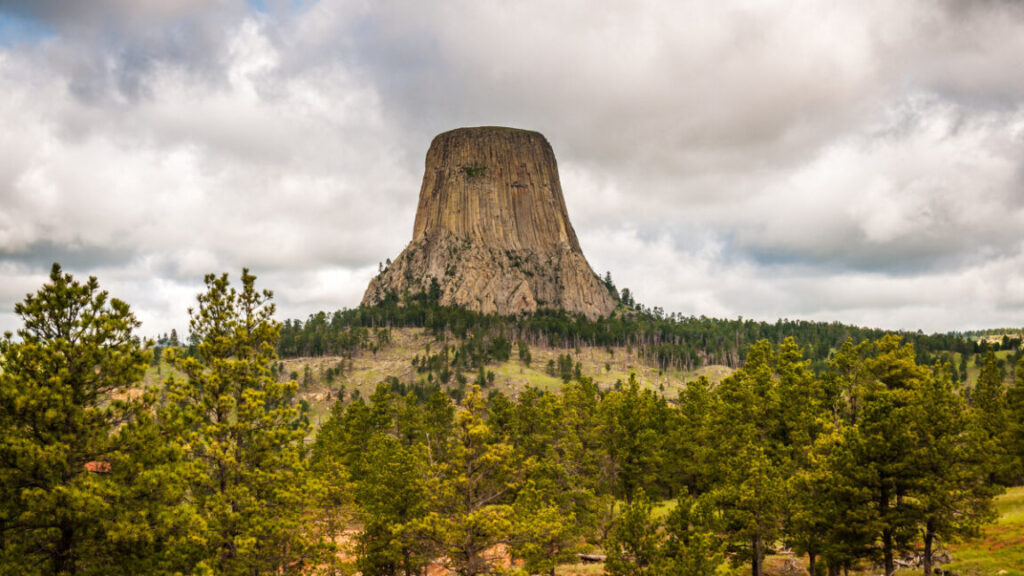
AI in Wyoming may soon use more electricity than state’s human residents

Wyoming’s data center boom

Cheyenne is no stranger to data centers, having attracted facilities from Microsoft and Meta since 2012 due to its cool climate and energy access. However, the new project pushes the state into uncharted territory. While Wyoming is the nation’s third-biggest net energy supplier, producing 12 times more total energy than it consumes (dominated by fossil fuels), its electricity supply is finite.

While Tallgrass and Crusoe have announced the partnership, they haven’t revealed who will ultimately use all this computing power—leading to speculation about potential tenants.

A potential connection to OpenAI’s Stargate AI infrastructure project, announced in January, remains a subject of speculation. When asked by The Associated Press if the Cheyenne project was part of this effort, Crusoe spokesperson Andrew Schmitt was noncommittal. “We are not at a stage that we are ready to announce our tenant there,” Schmitt said. “I can’t confirm or deny that it’s going to be one of the Stargate.”

OpenAI recently activated the first phase of a Crusoe-built data center complex in Abilene, Texas, in partnership with Oracle. Chris Lehane, OpenAI’s chief global affairs officer, told The Associated Press last week that the Texas facility generates “roughly and depending how you count, about a gigawatt of energy” and represents “the largest data center—we think of it as a campus—in the world.”

OpenAI has committed to developing an additional 4.5 gigawatts of data center capacity through an agreement with Oracle. “We’re now in a position where we have, in a really concrete way, identified over five gigawatts of energy that we’re going to be able to build around,” Lehane told the AP. The company has not disclosed locations for these expansions, and Wyoming was not among the 16 states where OpenAI said it was searching for data center sites earlier this year.

AI in Wyoming may soon use more electricity than state’s human residents Read More »

white-house-unveils-sweeping-plan-to-“win”-global-ai-race-through-deregulation

White House unveils sweeping plan to “win” global AI race through deregulation

Trump’s plan was not welcomed by everyone. J.B. Branch, Big Tech accountability advocate for Public Citizen, in a statement provided to Ars, criticized Trump as giving “sweetheart deals” to tech companies that would cause “electricity bills to rise to subsidize discounted power for massive AI data centers.”

Infrastructure demands and energy requirements

Trump’s new AI plan tackles infrastructure head-on, stating that “AI is the first digital service in modern life that challenges America to build vastly greater energy generation than we have today.” To meet this demand, it proposes streamlining environmental permitting for data centers through new National Environmental Policy Act (NEPA) exemptions, making federal lands available for construction and modernizing the power grid—all while explicitly rejecting “radical climate dogma and bureaucratic red tape.”

The document embraces what it calls a “Build, Baby, Build!” approach—echoing a Trump campaign slogan—and promises to restore semiconductor manufacturing through the CHIPS Program Office, though stripped of “extraneous policy requirements.”

On the technology front, the plan directs Commerce to revise NIST’s AI Risk Management Framework to “eliminate references to misinformation, Diversity, Equity, and Inclusion, and climate change.” Federal procurement would favor AI developers whose systems are “objective and free from top-down ideological bias.” The document strongly backs open source AI models and calls for exporting American AI technology to allies while blocking administration-labeled adversaries like China.

Security proposals include high-security military data centers and warnings that advanced AI systems “may pose novel national security risks” in cyberattacks and weapons development.

Critics respond with “People’s AI Action Plan”

Before the White House unveiled its plan, more than 90 organizations launched a competing “People’s AI Action Plan” on Tuesday, characterizing the Trump administration’s approach as “a massive handout to the tech industry” that prioritizes corporate interests over public welfare. The coalition includes labor unions, environmental justice groups, and consumer protection nonprofits.

White House unveils sweeping plan to “win” global AI race through deregulation Read More »

openai-and-partners-are-building-a-massive-ai-data-center-in-texas

OpenAI and partners are building a massive AI data center in Texas

Stargate moves forward despite early skepticism

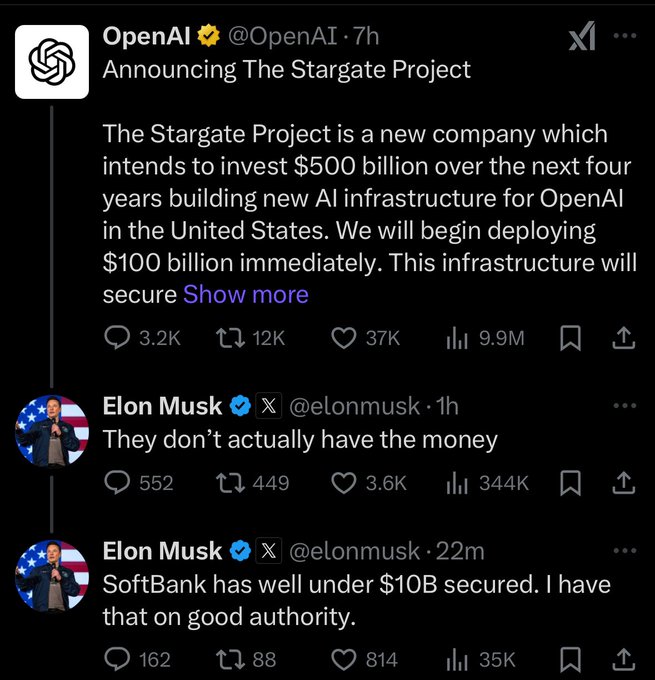
When OpenAI announced Stargate in January, critics questioned whether the company could deliver on its ambitious $500 billion funding promise. Trump ally and frequent Altman foe Elon Musk wrote on X that “They don’t actually have the money,” claiming that “SoftBank has well under $10B secured.”

Tech writer and frequent OpenAI critic Ed Zitron raised concerns about OpenAI’s financial position, noting the company’s $5 billion in losses in 2024. “This company loses $5bn+ a year! So what, they raise $19bn for Stargate, then what, another $10bn just to be able to survive?” Zitron wrote on Bluesky at the time.

Six months later, OpenAI’s Abilene data center has moved from construction to partial operation. Oracle began delivering Nvidia GB200 racks to the facility last month, and OpenAI reports it has started running early training and inference workloads to support what it calls “next-generation frontier research.”

Despite the White House announcement with President Trump in January, the Stargate concept dates back to March 2024, when Microsoft and OpenAI partnered on a $100 billion supercomputer as part of a five-phase plan. Over time, the plan evolved into its current form as a partnership with Oracle, SoftBank, and CoreWeave.

“Stargate is an ambitious undertaking designed to meet the historic opportunity in front of us,” writes OpenAI in the press release announcing the latest deal. “That opportunity is now coming to life through strong support from partners, governments, and investors worldwide—including important leadership from the White House, which has recognized the critical role AI infrastructure will play in driving innovation, economic growth, and national competitiveness.”

OpenAI and partners are building a massive AI data center in Texas Read More »

nvidia-announces-“rubin-ultra”-and-“feynman”-ai-chips-for-2027-and-2028

Nvidia announces “Rubin Ultra” and “Feynman” AI chips for 2027 and 2028

On Tuesday at Nvidia’s GTC 2025 conference in San Jose, California, CEO Jensen Huang revealed several new AI-accelerating GPUs the company plans to release over the coming months and years. He also revealed more specifications about previously announced chips.

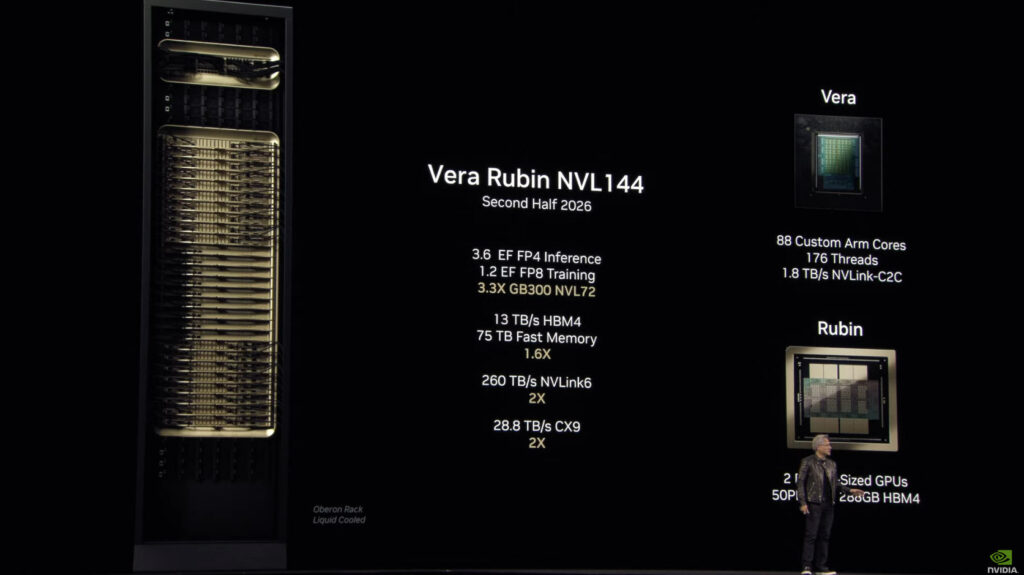
The centerpiece announcement was Vera Rubin, first teased at Computex 2024 and now scheduled for release in the second half of 2026. This GPU, named after a famous astronomer, will feature tens of terabytes of memory and comes with a custom Nvidia-designed CPU called Vera.

According to Nvidia, Vera Rubin will deliver significant performance improvements over its predecessor, Grace Blackwell, particularly for AI training and inference.

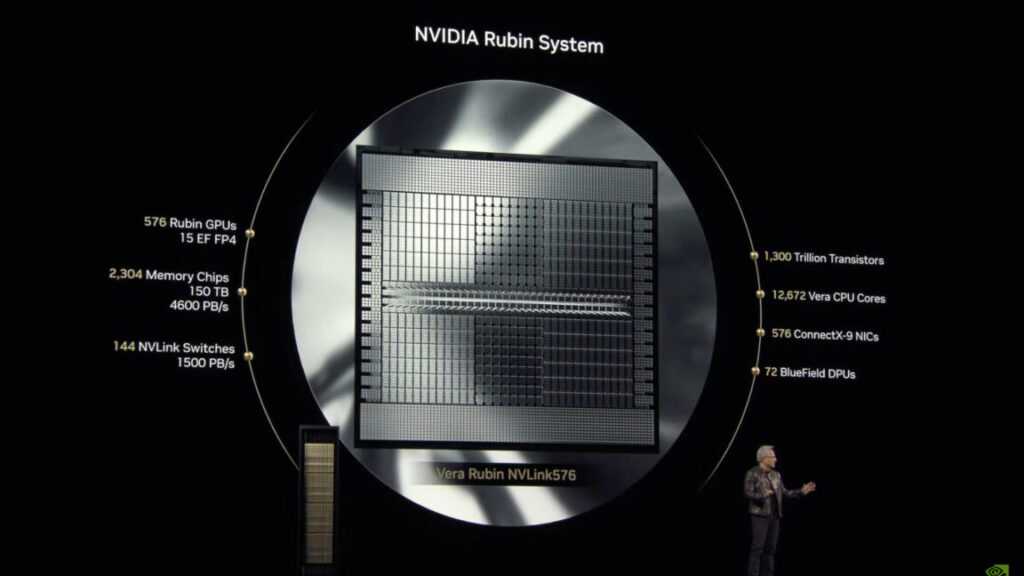
Specifications for Vera Rubin, presented by Jensen Huang during his GTC 2025 keynote.

Specifications for Vera Rubin, presented by Jensen Huang during his GTC 2025 keynote.

Vera Rubin features two GPUs together on one die that deliver 50 petaflops of FP4 inference performance per chip. When configured in a full NVL144 rack, the system delivers 3.6 exaflops of FP4 inference compute—3.3 times more than Blackwell Ultra’s 1.1 exaflops in a similar rack configuration.

The Vera CPU features 88 custom ARM cores with 176 threads connected to Rubin GPUs via a high-speed 1.8 TB/s NVLink interface.

Huang also announced Rubin Ultra, which will follow in the second half of 2027. Rubin Ultra will use the NVL576 rack configuration and feature individual GPUs with four reticle-sized dies, delivering 100 petaflops of FP4 precision (a 4-bit floating-point format used for representing and processing numbers within AI models) per chip.

At the rack level, Rubin Ultra will provide 15 exaflops of FP4 inference compute and 5 exaflops of FP8 training performance—about four times more powerful than the Rubin NVL144 configuration. Each Rubin Ultra GPU will include 1TB of HBM4e memory, with the complete rack containing 365TB of fast memory.

Nvidia announces “Rubin Ultra” and “Feynman” AI chips for 2027 and 2028 Read More »

trump-announces-$500b-“stargate”-ai-infrastructure-project-with-agi-aims

Trump announces $500B “Stargate” AI infrastructure project with AGI aims

Video of the Stargate announcement conference at the White House.

Despite optimism from the companies involved, as CNN reports, past presidential investment announcements have yielded mixed results. In 2017, Trump and Foxconn unveiled plans for a $10 billion Wisconsin electronics factory promising 13,000 jobs. The project later scaled back to a $672 million investment with fewer than 1,500 positions. The facility now operates as a Microsoft AI data center.

The Stargate announcement wasn’t Trump’s only major AI move announced this week. It follows the newly inaugurated US president’s reversal of a 2023 Biden executive order on AI risk monitoring and regulation.

Altman speaks, Musk responds

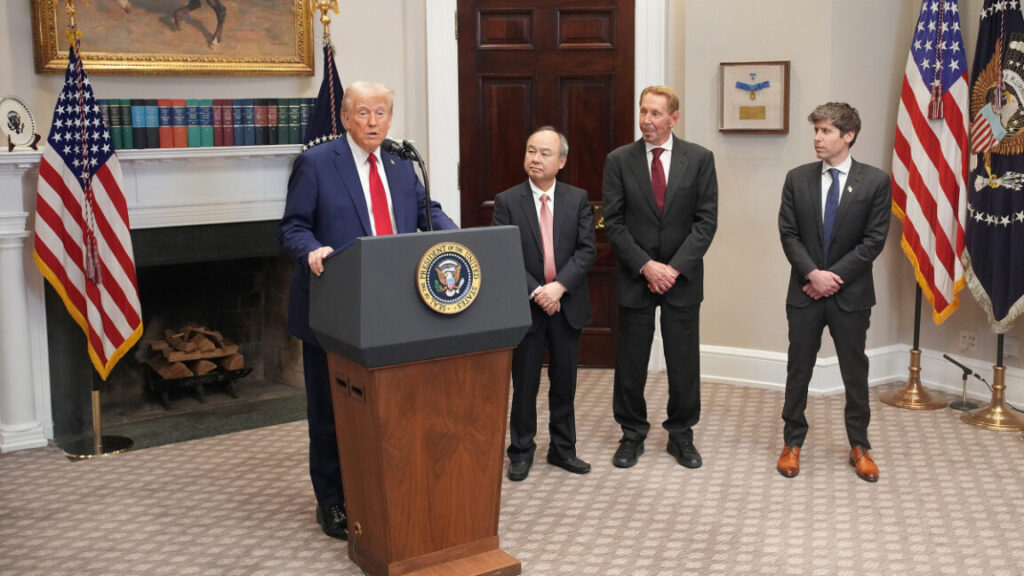
On Tuesday, OpenAI CEO Sam Altman appeared at a White House press conference alongside Present Trump, Oracle CEO Larry Ellison, and SoftBank CEO Masayoshi Son to announce Stargate.

Altman said he thinks Stargate represents “the most important project of this era,” allowing AGI to emerge in the United States. He believes that future AI technology could create hundreds of thousands of jobs. “We wouldn’t be able to do this without you, Mr. President,” Altman added.

Responding to off-camera questions from Trump about AI’s potential to spur scientific development, Altman said he believes AI will accelerate the discoveries for cures of diseases like cancer and heart disease.

Screenshots of Elon Musk challenging the Stargate announcement on X.

Screenshots of Elon Musk challenging the Stargate announcement on X.

Meanwhile on X, Trump ally and frequent Altman foe Elon Musk immediately attacked the Stargate plan, writing, “They don’t actually have the money,” and following up with a claim that we cannot yet substantiate, saying, “SoftBank has well under $10B secured. I have that on good authority.”

Musk’s criticism has complex implications given his very close ties to Trump, his history of litigating against OpenAI (which he co-founded and later left), and his own goals with his xAI company.

Trump announces $500B “Stargate” AI infrastructure project with AGI aims Read More »

openai-asked-us-to-approve-energy-guzzling-5gw-data-centers,-report-says

OpenAI asked US to approve energy-guzzling 5GW data centers, report says

Great scott! —

OpenAI stokes China fears to woo US approvals for huge data centers, report says.

OpenAI asked US to approve energy-guzzling 5GW data centers, report says

OpenAI hopes to convince the White House to approve a sprawling plan that would place 5-gigawatt AI data centers in different US cities, Bloomberg reports.

The AI company’s CEO, Sam Altman, supposedly pitched the plan after a recent meeting with the Biden administration where stakeholders discussed AI infrastructure needs. Bloomberg reviewed an OpenAI document outlining the plan, reporting that 5 gigawatts “is roughly the equivalent of five nuclear reactors” and warning that each data center will likely require “more energy than is used to power an entire city or about 3 million homes.”

According to OpenAI, the US needs these massive data centers to expand AI capabilities domestically, protect national security, and effectively compete with China. If approved, the data centers would generate “thousands of new jobs,” OpenAI’s document promised, and help cement the US as an AI leader globally.

But the energy demand is so enormous that OpenAI told officials that the “US needs policies that support greater data center capacity,” or else the US could fall behind other countries in AI development, the document said.

Energy executives told Bloomberg that “powering even a single 5-gigawatt data center would be a challenge,” as power projects nationwide are already “facing delays due to long wait times to connect to grids, permitting delays, supply chain issues, and labor shortages.” Most likely, OpenAI’s data centers wouldn’t rely entirely on the grid, though, instead requiring a “mix of new wind and solar farms, battery storage and a connection to the grid,” John Ketchum, CEO of NextEra Energy Inc, told Bloomberg.

That’s a big problem for OpenAI, since one energy executive, Constellation Energy Corp. CEO Joe Dominguez, told Bloomberg that he’s heard that OpenAI wants to build five to seven data centers. “As an engineer,” Dominguez said he doesn’t think that OpenAI’s plan is “feasible” and would seemingly take more time than needed to address current national security risks as US-China tensions worsen.

OpenAI may be hoping to avoid delays and cut the lines—if the White House approves the company’s ambitious data center plan. For now, a person familiar with OpenAI’s plan told Bloomberg that OpenAI is focused on launching a single data center before expanding the project to “various US cities.”

Bloomberg’s report comes after OpenAI’s chief investor, Microsoft, announced a 20-year deal with Constellation to re-open Pennsylvania’s shuttered Three Mile Island nuclear plant to provide a new energy source for data centers powering AI development and other technologies. But even if that deal is approved by regulators, the resulting energy supply that Microsoft could access—roughly 835 megawatts (0.835 gigawatts) of energy generation, which is enough to power approximately 800,000 homes—is still more than five times less than OpenAI’s 5-gigawatt demand for its data centers.

Ketchum told Bloomberg that it’s easier to find a US site for a 1-gigawatt data center, but locating a site for a 5-gigawatt facility would likely be a bigger challenge. Notably, Amazon recently bought a $650 million nuclear-powered data center in Pennsylvania with a 2.5-gigawatt capacity. At the meeting with the Biden administration, OpenAI suggested opening large-scale data centers in Wisconsin, California, Texas, and Pennsylvania, a source familiar with the matter told CNBC.

During that meeting, the Biden administration confirmed that developing large-scale AI data centers is a priority, announcing “a new Task Force on AI Datacenter Infrastructure to coordinate policy across government.” OpenAI seems to be trying to get the task force’s attention early on, outlining in the document that Bloomberg reviewed the national security and economic benefits its data centers could provide for the US.

In a statement to Bloomberg, OpenAI’s spokesperson said that “OpenAI is actively working to strengthen AI infrastructure in the US, which we believe is critical to keeping America at the forefront of global innovation, boosting reindustrialization across the country, and making AI’s benefits accessible to everyone.”

Big Tech companies and AI startups will likely continue pressuring officials to approve data center expansions, as well as new kinds of nuclear reactors as the AI explosion globally continues. Goldman Sachs estimated that “data center power demand will grow 160 percent by 2030.” To ensure power supplies for its AI, according to the tech news site Freethink, Microsoft has even been training AI to draft all the documents needed for proposals to secure government approvals for nuclear plants to power AI data centers.

OpenAI asked US to approve energy-guzzling 5GW data centers, report says Read More »