AI infrastructure

after-nearly-30-years,-crucial-will-stop-selling-ram-to-consumers

After nearly 30 years, Crucial will stop selling RAM to consumers

DRAM contract prices have increased 171 percent year over year, according to industry data. Gerry Chen, general manager of memory manufacturer TeamGroup, warned that the situation will worsen in the first half of 2026 once distributors exhaust their remaining inventory. He expects supply constraints to persist through late 2027 or beyond.

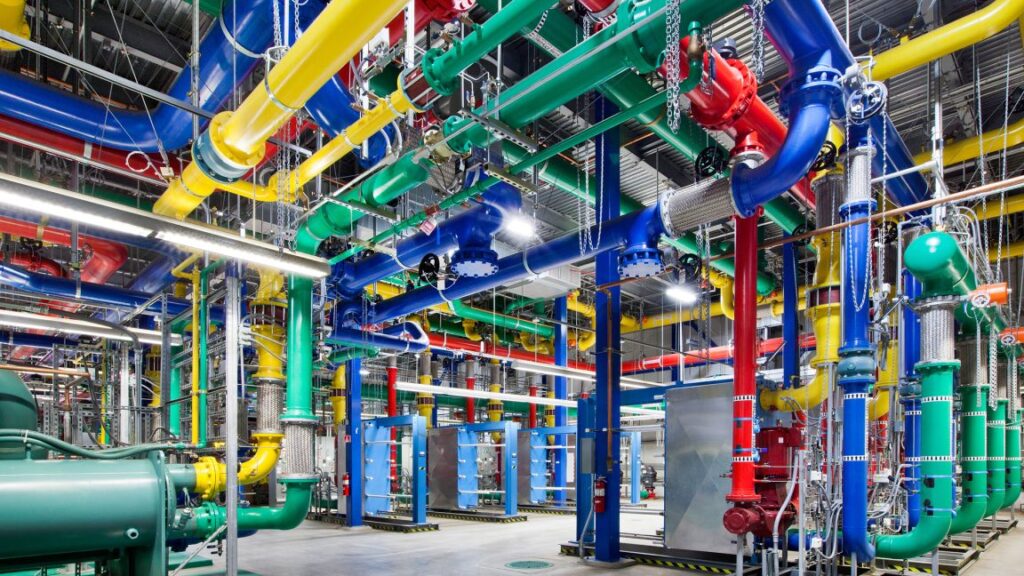
The fault lies squarely at the feet of AI mania in the tech industry. The construction of new AI infrastructure has created unprecedented demand for high-bandwidth memory (HBM), the specialized DRAM used in AI accelerators from Nvidia and AMD. Memory manufacturers have been reallocating production capacity away from consumer products toward these more profitable enterprise components, and Micron has presold its entire HBM output through 2026.

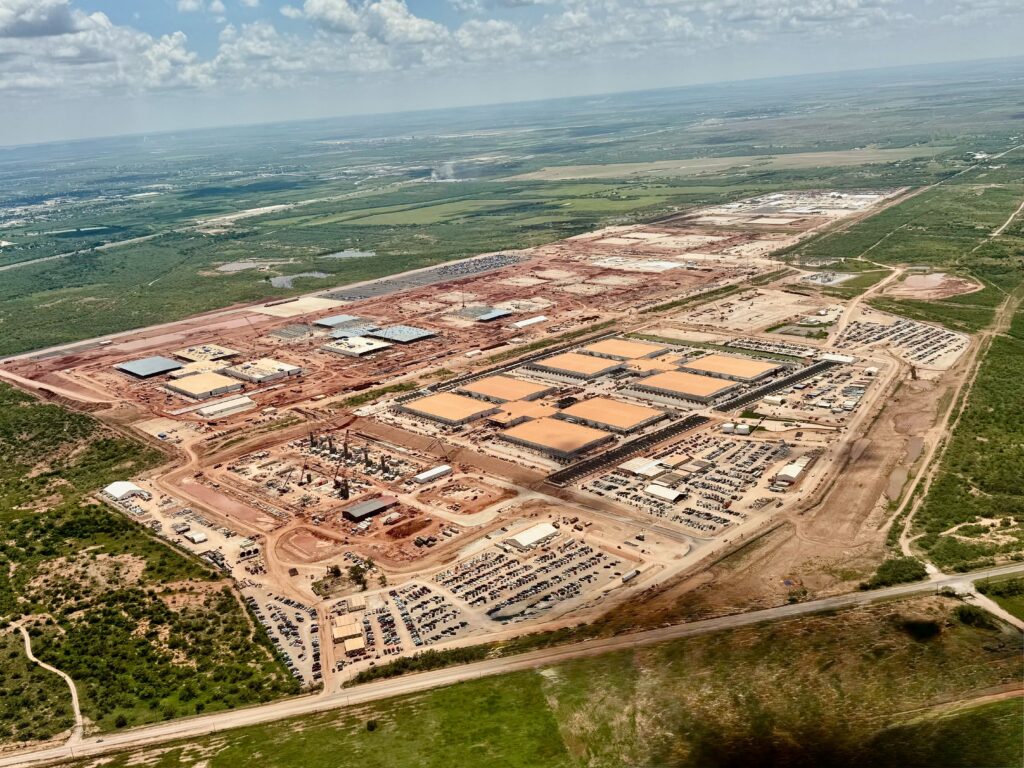
A photo of the

A photo of the “Stargate I” site in Abilene, Texas. AI data center sites like this are eating up the RAM supply. Credit: OpenAI

At the moment, the structural imbalance between AI demand and consumer supply shows no signs of easing. OpenAI’s Stargate project has reportedly signed agreements for up to 900,000 wafers of DRAM per month, which could account for nearly 40 percent of global production.

The shortage has already forced companies to adapt. As Ars’ Andrew Cunningham reported, laptop maker Framework stopped selling standalone RAM kits in late November to prevent scalping and said it will likely be forced to raise prices soon.

For Micron, the calculus is clear: Enterprise customers pay more and buy in bulk. But for the DIY PC community, the decision will leave PC builders with one fewer option when reaching for the RAM sticks. In his statement, Sadana reflected on the brand’s 29-year run.

“Thanks to a passionate community of consumers, the Crucial brand has become synonymous with technical leadership, quality and reliability of leading-edge memory and storage products,” Sadana said. “We would like to thank our millions of customers, hundreds of partners and all of the Micron team members who have supported the Crucial journey for the last 29 years.”

After nearly 30 years, Crucial will stop selling RAM to consumers Read More »

microsoft-drops-ai-sales-targets-in-half-after-salespeople-miss-their-quotas

Microsoft drops AI sales targets in half after salespeople miss their quotas

Microsoft has lowered sales growth targets for its AI agent products after many salespeople missed their quotas in the fiscal year ending in June, according to a report Wednesday from The Information. The adjustment is reportedly unusual for Microsoft, and it comes after the company missed a number of ambitious sales goals for its AI offerings.

AI agents are specialized implementations of AI language models designed to perform multistep tasks autonomously rather than simply responding to single prompts. So-called “agentic” features have been central to Microsoft’s 2025 sales pitch: At its Build conference in May, the company declared that it has entered “the era of AI agents.”

The company has promised customers that agents could automate complex tasks, such as generating dashboards from sales data or writing customer reports. At its Ignite conference in November, Microsoft announced new features like Word, Excel, and PowerPoint agents in Microsoft 365 Copilot, along with tools for building and deploying agents through Azure AI Foundry and Copilot Studio. But as the year draws to a close, that promise has proven harder to deliver than the company expected.

According to The Information, one US Azure sales unit set quotas for salespeople to increase customer spending on a product called Foundry, which helps customers develop AI applications, by 50 percent. Less than a fifth of salespeople in that unit met their Foundry sales growth targets. In July, Microsoft lowered those targets to roughly 25 percent growth for the current fiscal year. In another US Azure unit, most salespeople failed to meet an earlier quota to double Foundry sales, and Microsoft cut their quotas to 50 percent for the current fiscal year.

Microsoft drops AI sales targets in half after salespeople miss their quotas Read More »

google-tells-employees-it-must-double-capacity-every-6-months-to-meet-ai-demand

Google tells employees it must double capacity every 6 months to meet AI demand

While AI bubble talk fills the air these days, with fears of overinvestment that could pop at any time, something of a contradiction is brewing on the ground: Companies like Google and OpenAI can barely build infrastructure fast enough to fill their AI needs.

During an all-hands meeting earlier this month, Google’s AI infrastructure head Amin Vahdat told employees that the company must double its serving capacity every six months to meet demand for artificial intelligence services, reports CNBC. Vahdat, a vice president at Google Cloud, presented slides showing the company needs to scale “the next 1000x in 4-5 years.”

While a thousandfold increase in compute capacity sounds ambitious by itself, Vahdat noted some key constraints: Google needs to be able to deliver this increase in capability, compute, and storage networking “for essentially the same cost and increasingly, the same power, the same energy level,” he told employees during the meeting. “It won’t be easy but through collaboration and co-design, we’re going to get there.”

It’s unclear how much of this “demand” Google mentioned represents organic user interest in AI capabilities versus the company integrating AI features into existing services like Search, Gmail, and Workspace. But whether users are using the features voluntarily or not, Google isn’t the only tech company struggling to keep up with a growing user base of customers using AI services.

Major tech companies are in a race to build out data centers. Google competitor OpenAI is planning to build six massive data centers across the US through its Stargate partnership project with SoftBank and Oracle, committing over $400 billion in the next three years to reach nearly 7 gigawatts of capacity. The company faces similar constraints serving its 800 million weekly ChatGPT users, with even paid subscribers regularly hitting usage limits for features like video synthesis and simulated reasoning models.

“The competition in AI infrastructure is the most critical and also the most expensive part of the AI race,” Vahdat said at the meeting, according to CNBC’s viewing of the presentation. The infrastructure executive explained that Google’s challenge goes beyond simply outspending competitors. “We’re going to spend a lot,” he said, but noted the real objective is building infrastructure that is “more reliable, more performant and more scalable than what’s available anywhere else.”

Google tells employees it must double capacity every 6 months to meet AI demand Read More »

tech-giants-pour-billions-into-anthropic-as-circular-ai-investments-roll-on

Tech giants pour billions into Anthropic as circular AI investments roll on

On Tuesday, Microsoft and Nvidia announced plans to invest in Anthropic under a new partnership that includes a $30 billion commitment by the Claude maker to use Microsoft’s cloud services. Nvidia will commit up to $10 billion to Anthropic and Microsoft up to $5 billion, with both companies investing in Anthropic’s next funding round.

The deal brings together two companies that have backed OpenAI and connects them more closely to one of the ChatGPT maker’s main competitors. Microsoft CEO Satya Nadella said in a video that OpenAI “remains a critical partner,” while adding that the companies will increasingly be customers of each other.

“We will use Anthropic models, they will use our infrastructure, and we’ll go to market together,” Nadella said.

Anthropic, Microsoft, and NVIDIA announce partnerships.

The move follows OpenAI’s recent restructuring that gave the company greater distance from its non-profit origins. OpenAI has since announced a $38 billion deal to buy cloud services from Amazon.com as the company becomes less dependent on Microsoft. OpenAI CEO Sam Altman has said the company plans to spend $1.4 trillion to develop 30 gigawatts of computing resources.

Tech giants pour billions into Anthropic as circular AI investments roll on Read More »

google-ceo:-if-an-ai-bubble-pops,-no-one-is-getting-out-clean

Google CEO: If an AI bubble pops, no one is getting out clean

Market concerns and Google’s position

Alphabet’s recent market performance has been driven by investor confidence in the company’s ability to compete with OpenAI’s ChatGPT, as well as its development of specialized chips for AI that can compete with Nvidia’s. Nvidia recently reached a world-first $5 trillion valuation due to making GPUs that can accelerate the matrix math at the heart of AI computations.

Despite acknowledging that no company would be immune to a potential AI bubble burst, Pichai argued that Google’s unique position gives it an advantage. He told the BBC that the company owns what he called a “full stack” of technologies, from chips to YouTube data to models and frontier science research. This integrated approach, he suggested, would help the company weather any market turbulence better than competitors.

Pichai also told the BBC that people should not “blindly trust” everything AI tools output. The company currently faces repeated accuracy concerns about some of its AI models. Pichai said that while AI tools are helpful “if you want to creatively write something,” people “have to learn to use these tools for what they’re good at and not blindly trust everything they say.”

In the BBC interview, the Google boss also addressed the “immense” energy needs of AI, acknowledging that the intensive energy requirements of expanding AI ventures have caused slippage on Alphabet’s climate targets. However, Pichai insisted that the company still wants to achieve net zero by 2030 through investments in new energy technologies. “The rate at which we were hoping to make progress will be impacted,” Pichai said, warning that constraining an economy based on energy “will have consequences.”

Even with the warnings about a potential AI bubble, Pichai did not miss his chance to promote the technology, albeit with a hint of danger regarding its widespread impact. Pichai described AI as “the most profound technology” humankind has worked on.

“We will have to work through societal disruptions,” he said, adding that the technology would “create new opportunities” and “evolve and transition certain jobs.” He said people who adapt to AI tools “will do better” in their professions, whatever field they work in.

Google CEO: If an AI bubble pops, no one is getting out clean Read More »

google-plans-secret-ai-military-outpost-on-tiny-island-overrun-by-crabs

Google plans secret AI military outpost on tiny island overrun by crabs

Christmas Island Shire President Steve Pereira told Reuters that the council is examining community impacts before approving construction. “There is support for it, providing this data center actually does put back into the community with infrastructure, employment, and adding economic value to the island,” Pereira said.

That’s great, but what about the crabs?

Christmas Island’s annual crab migration is a natural phenomenon that Sir David Attenborough reportedly once described as one of his greatest TV moments when he visited the site in 1990.

Every year, millions of crabs emerge from the forest and swarm across roads, streams, rocks, and beaches to reach the ocean, where each female can produce up to 100,000 eggs. The tiny baby crabs that survive take about nine days to march back inland to the safety of the plateau.

While Google is seeking environmental approvals for its subsea cables, the timing could prove delicate for Christmas Island’s most famous residents. According to Parks Australia, the island’s annual red crab migration has already begun for 2025, with a major spawning event expected in just a few weeks, around November 15–16.

During peak migration times, sections of roads close at short notice as crabs move between forest and sea, and the island has built special crab bridges over roads to protect the migrating masses.

Parks Australia notes that while the migration happens annually, few baby crabs survive the journey from sea to forest most years, as they’re often eaten by fish, manta rays, and whale sharks. The successful migrations that occur only once or twice per decade (when large numbers of babies actually survive) are critical for maintaining the island’s red crab population.

How Google’s facility might coexist with 100 million marching crustaceans remains to be seen. But judging by the size of the event, it seems clear that it’s the crab’s world, and we’re just living in it.

Google plans secret AI military outpost on tiny island overrun by crabs Read More »

openai-signs-massive-ai-compute-deal-with-amazon

OpenAI signs massive AI compute deal with Amazon

On Monday, OpenAI announced it has signed a seven-year, $38 billion deal to buy cloud services from Amazon Web Services to power products like ChatGPT and Sora. It’s the company’s first big computing deal after a fundamental restructuring last week that gave OpenAI more operational and financial freedom from Microsoft.

The agreement gives OpenAI access to hundreds of thousands of Nvidia graphics processors to train and run its AI models. “Scaling frontier AI requires massive, reliable compute,” OpenAI CEO Sam Altman said in a statement. “Our partnership with AWS strengthens the broad compute ecosystem that will power this next era and bring advanced AI to everyone.”

OpenAI will reportedly use Amazon Web Services immediately, with all planned capacity set to come online by the end of 2026 and room to expand further in 2027 and beyond. Amazon plans to roll out hundreds of thousands of chips, including Nvidia’s GB200 and GB300 AI accelerators, in data clusters built to power ChatGPT’s responses, generate AI videos, and train OpenAI’s next wave of models.

Wall Street apparently liked the deal, because Amazon shares hit an all-time high on Monday morning. Meanwhile, shares for long-time OpenAI investor and partner Microsoft briefly dipped following the announcement.

Massive AI compute requirements

It’s no secret that running generative AI models for hundreds of millions of people currently requires a lot of computing power. Amid chip shortages over the past few years, finding sources of that computing muscle has been tricky. OpenAI is reportedly working on its own GPU hardware to help alleviate the strain.

But for now, the company needs to find new sources of Nvidia chips, which accelerate AI computations. Altman has previously said that the company plans to spend $1.4 trillion to develop 30 gigawatts of computing resources, an amount that is enough to roughly power 25 million US homes, according to Reuters.

OpenAI signs massive AI compute deal with Amazon Read More »

chatgpt-maker-reportedly-eyes-$1-trillion-ipo-despite-major-quarterly-losses

ChatGPT maker reportedly eyes $1 trillion IPO despite major quarterly losses

An OpenAI spokesperson told Reuters that “an IPO is not our focus, so we could not possibly have set a date,” adding that the company is “building a durable business and advancing our mission so everyone benefits from AGI.”

Revenue grows as losses mount

The IPO preparations follow a restructuring of OpenAI completed on October 28 that reduced the company’s reliance on Microsoft, which has committed to investments of $13 billion and now owns about 27 percent of the company. OpenAI was most recently valued around $500 billion in private markets.

OpenAI started as a nonprofit in 2015, then added a for-profit arm a few years later with nonprofit oversight. Under the new structure, OpenAI is still controlled by a nonprofit, now called the OpenAI Foundation, but it gives the nonprofit a 26 percent stake in OpenAI Group and a warrant for additional shares if the company hits certain milestones.

A successful OpenAI IPO could represent a substantial gain for investors, including Microsoft, SoftBank, Thrive Capital, and Abu Dhabi’s MGX. But even so, OpenAI faces an uphill financial battle ahead. The ChatGPT maker expects to reach about $20 billion in revenue by year-end, according to people familiar with the company’s finances who spoke with Reuters, but its quarterly losses are significant.

Microsoft’s earnings filing on Wednesday offered a glimpse at the scale of those losses. The company reported that its share of OpenAI losses reduced Microsoft’s net income by $3.1 billion in the quarter that ended September 30. Since Microsoft owns 27 percent of OpenAI under the new structure, that suggests OpenAI lost about $11.5 billion during the quarter, as noted by The Register. That quarterly loss figure exceeds half of OpenAI’s expected revenue for the entire year.

ChatGPT maker reportedly eyes $1 trillion IPO despite major quarterly losses Read More »

nvidia-hits-record-$5-trillion-mark-as-ceo-dismisses-ai-bubble-concerns

Nvidia hits record $5 trillion mark as CEO dismisses AI bubble concerns

Partnerships and government contracts fuel optimism

At the GTC conference on Tuesday, Nvidia’s CEO went out of his way to repeatedly praise Donald Trump and his policies for accelerating domestic tech investment while warning that excluding China from Nvidia’s ecosystem could limit US access to half the world’s AI developers. The overall event stressed Nvidia’s role as an American company, with Huang even nodding to Trump’s signature slogan in his sign-off by thanking the audience for “making America great again.”

Trump’s cooperation is paramount for Nvidia because US export controls have effectively blocked Nvidia’s AI chips from China, costing the company billions of dollars in revenue. Bob O’Donnell of TECHnalysis Research told Reuters that “Nvidia clearly brought their story to DC to both educate and gain favor with the US government. They managed to hit most of the hottest and most influential topics in tech.”

Beyond the political messaging, Huang announced a series of partnerships and deals that apparently helped ease investor concerns about Nvidia’s future. The company announced collaborations with Uber Technologies, Palantir Technologies, and CrowdStrike Holdings, among others. Nvidia also revealed a $1 billion investment in Nokia to support the telecommunications company’s shift toward AI and 6G networking.

The agreement with Uber will power a fleet of 100,000 self-driving vehicles with Nvidia technology, with automaker Stellantis among the first to deliver the robotaxis. Palantir will pair Nvidia’s technology with its Ontology platform to use AI techniques for logistics insights, with Lowe’s as an early adopter. Eli Lilly plans to build what Nvidia described as the most powerful supercomputer owned and operated by a pharmaceutical company, relying on more than 1,000 Blackwell AI accelerator chips.

The $5 trillion valuation surpasses the total cryptocurrency market value and equals roughly half the size of the pan European Stoxx 600 equities index, Reuters notes. At current prices, Huang’s stake in Nvidia would be worth about $179.2 billion, making him the world’s eighth-richest person.

Nvidia hits record $5 trillion mark as CEO dismisses AI bubble concerns Read More »

ars-live-recap:-is-the-ai-bubble-about-to-pop?-ed-zitron-weighs-in.

Ars Live recap: Is the AI bubble about to pop? Ed Zitron weighs in.


Despite connection hiccups, we covered OpenAI’s finances, nuclear power, and Sam Altman.

On Tuesday of last week, Ars Technica hosted a live conversation with Ed Zitron, host of the Better Offline podcast and one of tech’s most vocal AI critics, to discuss whether the generative AI industry is experiencing a bubble and when it might burst. My Internet connection had other plans, though, dropping out multiple times and forcing Ars Technica’s Lee Hutchinson to jump in as an excellent emergency backup host.

During the times my connection cooperated, Zitron and I covered OpenAI’s financial issues, lofty infrastructure promises, and why the AI hype machine keeps rolling despite some arguably shaky economics underneath. Lee’s probing questions about per-user costs revealed a potential flaw in AI subscription models: Companies can’t predict whether a user will cost them $2 or $10,000 per month.

You can watch a recording of the event on YouTube or in the window below.

Our discussion with Ed Zitron. Click here for transcript.

“A 50 billion-dollar industry pretending to be a trillion-dollar one”

I started by asking Zitron the most direct question I could: “Why are you so mad about AI?” His answer got right to the heart of his critique: the disconnect between AI’s actual capabilities and how it’s being sold. “Because everybody’s acting like it’s something it isn’t,” Zitron said. “They’re acting like it’s this panacea that will be the future of software growth, the future of hardware growth, the future of compute.”

In one of his newsletters, Zitron describes the generative AI market as “a 50 billion dollar revenue industry masquerading as a one trillion-dollar one.” He pointed to OpenAI’s financial burn rate (losing an estimated $9.7 billion in the first half of 2025 alone) as evidence that the economics don’t work, coupled with a heavy dose of pessimism about AI in general.

Donald Trump listens as Nvidia CEO Jensen Huang speaks at the White House during an event on “Investing in America” on April 30, 2025, in Washington, DC. Credit: Andrew Harnik / Staff | Getty Images News

“The models just do not have the efficacy,” Zitron said during our conversation. “AI agents is one of the most egregious lies the tech industry has ever told. Autonomous agents don’t exist.”

He contrasted the relatively small revenue generated by AI companies with the massive capital expenditures flowing into the sector. Even major cloud providers and chip makers are showing strain. Oracle reportedly lost $100 million in three months after installing Nvidia’s new Blackwell GPUs, which Zitron noted are “extremely power-hungry and expensive to run.”

Finding utility despite the hype

I pushed back against some of Zitron’s broader dismissals of AI by sharing my own experience. I use AI chatbots frequently for brainstorming useful ideas and helping me see them from different angles. “I find I use AI models as sort of knowledge translators and framework translators,” I explained.

After experiencing brain fog from repeated bouts of COVID over the years, I’ve also found tools like ChatGPT and Claude especially helpful for memory augmentation that pierces through brain fog: describing something in a roundabout, fuzzy way and quickly getting an answer I can then verify. Along these lines, I’ve previously written about how people in a UK study found AI assistants useful accessibility tools.

Zitron acknowledged this could be useful for me personally but declined to draw any larger conclusions from my one data point. “I understand how that might be helpful; that’s cool,” he said. “I’m glad that that helps you in that way; it’s not a trillion-dollar use case.”

He also shared his own attempts at using AI tools, including experimenting with Claude Code despite not being a coder himself.

“If I liked [AI] somehow, it would be actually a more interesting story because I’d be talking about something I liked that was also onerously expensive,” Zitron explained. “But it doesn’t even do that, and it’s actually one of my core frustrations, it’s like this massive over-promise thing. I’m an early adopter guy. I will buy early crap all the time. I bought an Apple Vision Pro, like, what more do you say there? I’m ready to accept issues, but AI is all issues, it’s all filler, no killer; it’s very strange.”

Zitron and I agree that current AI assistants are being marketed beyond their actual capabilities. As I often say, AI models are not people, and they are not good factual references. As such, they cannot replace human decision-making and cannot wholesale replace human intellectual labor (at the moment). Instead, I see AI models as augmentations of human capability: as tools rather than autonomous entities.

Computing costs: History versus reality

Even though Zitron and I found some common ground about AI hype, I expressed a belief that criticism over the cost and power requirements of operating AI models will eventually not become an issue.

I attempted to make that case by noting that computing costs historically trend downward over time, referencing the Air Force’s SAGE computer system from the 1950s: a four-story building that performed 75,000 operations per second while consuming two megawatts of power. Today, pocket-sized phones deliver millions of times more computing power in a way that would be impossible, power consumption-wise, in the 1950s.

The blockhouse for the Semi-Automatic Ground Environment at Stewart Air Force Base, Newburgh, New York. Credit: Denver Post via Getty Images

“I think it will eventually work that way,” I said, suggesting that AI inference costs might follow similar patterns of improvement over years and that AI tools will eventually become commodity components of computer operating systems. Basically, even if AI models stay inefficient, AI models of a certain baseline usefulness and capability will still be cheaper to train and run in the future because the computing systems they run on will be faster, cheaper, and less power-hungry as well.

Zitron pushed back on this optimism, saying that AI costs are currently moving in the wrong direction. “The costs are going up, unilaterally across the board,” he said. Even newer systems like Cerebras and Grok can generate results faster but not cheaper. He also questioned whether integrating AI into operating systems would prove useful even if the technology became profitable, since AI models struggle with deterministic commands and consistent behavior.

The power problem and circular investments

One of Zitron’s most pointed criticisms during the discussion centered on OpenAI’s infrastructure promises. The company has pledged to build data centers requiring 10 gigawatts of power capacity (equivalent to 10 nuclear power plants, I once pointed out) for its Stargate project in Abilene, Texas. According to Zitron’s research, the town currently has only 350 megawatts of generating capacity and a 200-megawatt substation.

“A gigawatt of power is a lot, and it’s not like Red Alert 2,” Zitron said, referencing the real-time strategy game. “You don’t just build a power station and it happens. There are months of actual physics to make sure that it doesn’t kill everyone.”

He believes many announced data centers will never be completed, calling the infrastructure promises “castles on sand” that nobody in the financial press seems willing to question directly.

An orange, cloudy sky backlights a set of electrical wires on large pylons, leading away from the cooling towers of a nuclear power plant.

After another technical blackout on my end, I came back online and asked Zitron to define the scope of the AI bubble. He says it has evolved from one bubble (foundation models) into two or three, now including AI compute companies like CoreWeave and the market’s obsession with Nvidia.

Zitron highlighted what he sees as essentially circular investment schemes propping up the industry. He pointed to OpenAI’s $300 billion deal with Oracle and Nvidia’s relationship with CoreWeave as examples. “CoreWeave, they literally… They funded CoreWeave, became their biggest customer, then CoreWeave took that contract and those GPUs and used them as collateral to raise debt to buy more GPUs,” Zitron explained.

When will the bubble pop?

Zitron predicted the bubble would burst within the next year and a half, though he acknowledged it could happen sooner. He expects a cascade of events rather than a single dramatic collapse: An AI startup will run out of money, triggering panic among other startups and their venture capital backers, creating a fire-sale environment that makes future fundraising impossible.

“It’s not gonna be one Bear Stearns moment,” Zitron explained. “It’s gonna be a succession of events until the markets freak out.”

The crux of the problem, according to Zitron, is Nvidia. The chip maker’s stock represents 7 to 8 percent of the S&P 500’s value, and the broader market has become dependent on Nvidia’s continued hyper growth. When Nvidia posted “only” 55 percent year-over-year growth in January, the market wobbled.

“Nvidia’s growth is why the bubble is inflated,” Zitron said. “If their growth goes down, the bubble will burst.”

He also warned of broader consequences: “I think there’s a depression coming. I think once the markets work out that tech doesn’t grow forever, they’re gonna flush the toilet aggressively on Silicon Valley.” This connects to his larger thesis: that the tech industry has run out of genuine hyper-growth opportunities and is trying to manufacture one with AI.

“Is there anything that would falsify your premise of this bubble and crash happening?” I asked. “What if you’re wrong?”

“I’ve been answering ‘What if you’re wrong?’ for a year-and-a-half to two years, so I’m not bothered by that question, so the thing that would have to prove me right would’ve already needed to happen,” he said. Amid a longer exposition about Sam Altman, Zitron said, “The thing that would’ve had to happen with inference would’ve had to be… it would have to be hundredths of a cent per million tokens, they would have to be printing money, and then, it would have to be way more useful. It would have to have efficacy that it does not have, the hallucination problems… would have to be fixable, and on top of this, someone would have to fix agents.”

A positivity challenge

Near the end of our conversation, I wondered if I could flip the script, so to speak, and see if he could say something positive or optimistic, although I chose the most challenging subject possible for him. “What’s the best thing about Sam Altman,” I asked. “Can you say anything nice about him at all?”

“I understand why you’re asking this,” Zitron started, “but I wanna be clear: Sam Altman is going to be the reason the markets take a crap. Sam Altman has lied to everyone. Sam Altman has been lying forever.” He continued, “Like the Pied Piper, he’s led the markets into an abyss, and yes, people should have known better, but I hope at the end of this, Sam Altman is seen for what he is, which is a con artist and a very successful one.”

Then he added, “You know what? I’ll say something nice about him, he’s really good at making people say, ‘Yes.’”

Photo of Benj Edwards

Benj Edwards is Ars Technica’s Senior AI Reporter and founder of the site’s dedicated AI beat in 2022. He’s also a tech historian with almost two decades of experience. In his free time, he writes and records music, collects vintage computers, and enjoys nature. He lives in Raleigh, NC.

Ars Live recap: Is the AI bubble about to pop? Ed Zitron weighs in. Read More »

nvidia-sells-tiny-new-computer-that-puts-big-ai-on-your-desktop

Nvidia sells tiny new computer that puts big AI on your desktop

On Tuesday, Nvidia announced it will begin taking orders for the DGX Spark, a $4,000 desktop AI computer that wraps one petaflop of computing performance and 128GB of unified memory into a form factor small enough to sit on a desk. Its biggest selling point is likely its large integrated memory that can run larger AI models than consumer GPUs.

Nvidia will begin taking orders for the DGX Spark on Wednesday, October 15, through its website, with systems also available from manufacturing partners and select US retail stores.

The DGX Spark, which Nvidia previewed as “Project DIGITS” in January and formally named in May, represents Nvidia’s attempt to create a new category of desktop computer workstation specifically for AI development.

With the Spark, Nvidia seeks to address a problem facing some AI developers: Many AI tasks exceed the memory and software capabilities of standard PCs and workstations (more on that below), forcing them to shift their work to cloud services or data centers. However, the actual market for a desktop AI workstation remains uncertain, particularly given the upfront cost versus cloud alternatives, which allow developers to pay as they go.

Nvidia’s Spark reportedly includes enough memory to run larger-than-typical AI models for local tasks, with up to 200 billion parameters and fine-tune models containing up to 70 billion parameters without requiring remote infrastructure. Potential uses include running larger open-weights language models and media synthesis models such as AI image generators.

According to Nvidia, users can customize Black Forest Labs’ Flux.1 models for image generation, build vision search and summarization agents using Nvidia’s Cosmos Reason vision language model, or create chatbots using the Qwen3 model optimized for the DGX Spark platform.

Big memory in a tiny box

Nvidia has squeezed a lot into a 2.65-pound box that measures 5.91 x 5.91 x 1.99 inches and uses 240 watts of power. The system runs on Nvidia’s GB10 Grace Blackwell Superchip, includes ConnectX-7 200Gb/s networking, and uses NVLink-C2C technology that provides five times the bandwidth of PCIe Gen 5. It also includes the aforementioned 128GB of unified memory that is shared between system and GPU tasks.

Nvidia sells tiny new computer that puts big AI on your desktop Read More »

amd-wins-massive-ai-chip-deal-from-openai-with-stock-sweetener

AMD wins massive AI chip deal from OpenAI with stock sweetener

As part of the arrangement, AMD will allow OpenAI to purchase up to 160 million AMD shares at 1 cent each throughout the chips deal.

OpenAI diversifies its chip supply

With demand for AI compute growing rapidly, companies like OpenAI have been looking for secondary supply lines and sources of additional computing capacity, and the AMD partnership is part the company’s wider effort to secure sufficient computing power for its AI operations. In September, Nvidia announced an investment of up to $100 billion in OpenAI that included supplying at least 10 gigawatts of Nvidia systems. OpenAI plans to deploy a gigawatt of Nvidia’s next-generation Vera Rubin chips in late 2026.

OpenAI has worked with AMD for years, according to Reuters, providing input on the design of older generations of AI chips such as the MI300X. The new agreement calls for deploying the equivalent of 6 gigawatts of computing power using AMD chips over multiple years.

Beyond working with chip suppliers, OpenAI is widely reported to be developing its own silicon for AI applications and has partnered with Broadcom, as we reported in February. A person familiar with the matter told Reuters the AMD deal does not change OpenAI’s ongoing compute plans, including its chip development effort or its partnership with Microsoft.

AMD wins massive AI chip deal from OpenAI with stock sweetener Read More »