AI coding

openai-built-an-ai-coding-agent-and-uses-it-to-improve-the-agent-itself

OpenAI built an AI coding agent and uses it to improve the agent itself


“The vast majority of Codex is built by Codex,” OpenAI told us about its new AI coding agent.

With the popularity of AI coding tools rising among software developers, their adoption has begun to touch every aspect of the process, including the improvement of AI coding tools themselves.

In interviews with Ars Technica this week, OpenAI employees revealed the extent to which the company now relies on its own AI coding agent, Codex, to build and improve the development tool. “I think the vast majority of Codex is built by Codex, so it’s almost entirely just being used to improve itself,” said Alexander Embiricos, product lead for Codex at OpenAI, in a conversation on Tuesday.

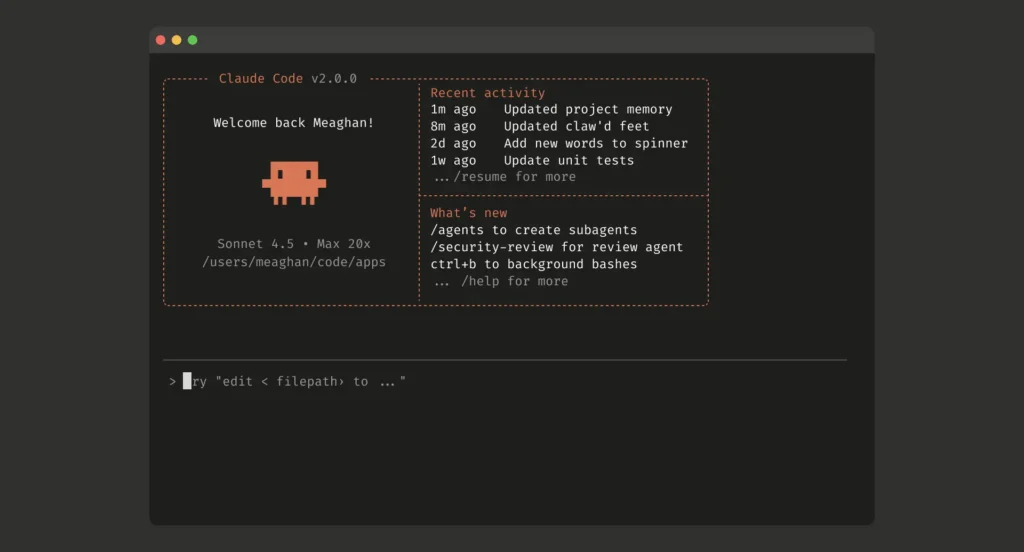
Codex, which OpenAI launched in its modern incarnation as a research preview in May 2025, operates as a cloud-based software engineering agent that can handle tasks like writing features, fixing bugs, and proposing pull requests. The tool runs in sandboxed environments linked to a user’s code repository and can execute multiple tasks in parallel. OpenAI offers Codex through ChatGPT’s web interface, a command-line interface (CLI), and IDE extensions for VS Code, Cursor, and Windsurf.

The “Codex” name itself dates back to a 2021 OpenAI model based on GPT-3 that powered GitHub Copilot’s tab completion feature. Embiricos said the name is rumored among staff to be short for “code execution.” OpenAI wanted to connect the new agent to that earlier moment, which was crafted in part by some who have left the company.

“For many people, that model powering GitHub Copilot was the first ‘wow’ moment for AI,” Embiricos said. “It showed people the potential of what it can mean when AI is able to understand your context and what you’re trying to do and accelerate you in doing that.”

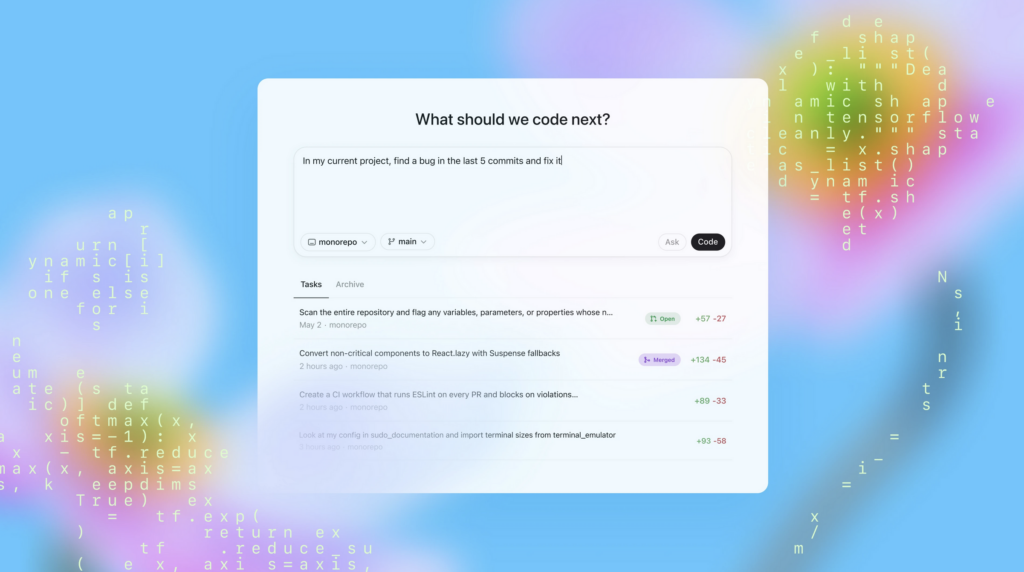
A place to enter a prompt, set parameters, and click

The interface for OpenAI’s Codex in ChatGPT. Credit: OpenAI

It’s no secret that the current command-line version of Codex bears some resemblance to Claude Code, Anthropic’s agentic coding tool that launched in February 2025. When asked whether Claude Code influenced Codex’s design, Embiricos parried the question but acknowledged the competitive dynamic. “It’s a fun market to work in because there’s lots of great ideas being thrown around,” he said. He noted that OpenAI had been building web-based Codex features internally before shipping the CLI version, which arrived after Anthropic’s tool.

OpenAI’s customers apparently love the command line version, though. Embiricos said Codex usage among external developers jumped 20 times after OpenAI shipped the interactive CLI extension alongside GPT-5 in August 2025. On September 15, OpenAI released GPT-5 Codex, a specialized version of GPT-5 optimized for agentic coding, which further accelerated adoption.

It hasn’t just been the outside world that has embraced the tool. Embiricos said the vast majority of OpenAI’s engineers now use Codex regularly. The company uses the same open-source version of the CLI that external developers can freely download, suggest additions to, and modify themselves. “I really love this about our team,” Embiricos said. “The version of Codex that we use is literally the open source repo. We don’t have a different repo that features go in.”

The recursive nature of Codex development extends beyond simple code generation. Embiricos described scenarios where Codex monitors its own training runs and processes user feedback to “decide” what to build next. “We have places where we’ll ask Codex to look at the feedback and then decide what to do,” he said. “Codex is writing a lot of the research harness for its own training runs, and we’re experimenting with having Codex monitoring its own training runs.” OpenAI employees can also submit a ticket to Codex through project management tools like Linear, assigning it tasks the same way they would assign work to a human colleague.

This kind of recursive loop, of using tools to build better tools, has deep roots in computing history. Engineers designed the first integrated circuits by hand on vellum and paper in the 1960s, then fabricated physical chips from those drawings. Those chips powered the computers that ran the first electronic design automation (EDA) software, which in turn enabled engineers to design circuits far too complex for any human to draft manually. Modern processors contain billions of transistors arranged in patterns that exist only because software made them possible. OpenAI’s use of Codex to build Codex seems to follow the same pattern: each generation of the tool creates capabilities that feed into the next.

But describing what Codex actually does presents something of a linguistic challenge. At Ars Technica, we try to reduce anthropomorphism when discussing AI models as much as possible while also describing what these systems do using analogies that make sense to general readers. People can talk to Codex like a human, so it feels natural to use human terms to describe interacting with it, even though it is not a person and simulates human personality through statistical modeling.

The system runs many processes autonomously, addresses feedback, spins off and manages child processes, and produces code that ships in real products. OpenAI employees call it a “teammate” and assign it tasks through the same tools they use for human colleagues. Whether the tasks Codex handles constitute “decisions” or sophisticated conditional logic smuggled through a neural network depends on definitions that computer scientists and philosophers continue to debate. What we can say is that a semi-autonomous feedback loop exists: Codex produces code under human direction, that code becomes part of Codex, and the next version of Codex produces different code as a result.

Building faster with “AI teammates”

According to our interviews, the most dramatic example of Codex’s internal impact came from OpenAI’s development of the Sora Android app. According to Embiricos, the development tool allowed the company to create the app in record time.

“The Sora Android app was shipped by four engineers from scratch,” Embiricos told Ars. “It took 18 days to build, and then we shipped it to the app store in 28 days total,” he said. The engineers already had the iOS app and server-side components to work from, so they focused on building the Android client. They used Codex to help plan the architecture, generate sub-plans for different components, and implement those components.

Despite OpenAI’s claims of success with Codex in house, it’s worth noting that independent research has shown mixed results for AI coding productivity. A METR study published in July found that experienced open source developers were actually 19 percent slower when using AI tools on complex, mature codebases—though the researchers noted AI may perform better on simpler projects.

Ed Bayes, a designer on the Codex team, described how the tool has changed his own workflow. Bayes said Codex now integrates with project management tools like Linear and communication platforms like Slack, allowing team members to assign coding tasks directly to the AI agent. “You can add Codex, and you can basically assign issues to Codex now,” Bayes told Ars. “Codex is literally a teammate in your workspace.”

This integration means that when someone posts feedback in a Slack channel, they can tag Codex and ask it to fix the issue. The agent will create a pull request, and team members can review and iterate on the changes through the same thread. “It’s basically approximating this kind of coworker and showing up wherever you work,” Bayes said.

For Bayes, who works on the visual design and interaction patterns for Codex’s interfaces, the tool has enabled him to contribute code directly rather than handing off specifications to engineers. “It kind of gives you more leverage. It enables you to work across the stack and basically be able to do more things,” he said. He noted that designers at OpenAI now prototype features by building them directly, using Codex to handle the implementation details.

The command line version of OpenAI codex running in a macOS terminal window.

The command line version of OpenAI codex running in a macOS terminal window. Credit: Benj Edwards

OpenAI’s approach treats Codex as what Bayes called “a junior developer” that the company hopes will graduate into a senior developer over time. “If you were onboarding a junior developer, how would you onboard them? You give them a Slack account, you give them a Linear account,” Bayes said. “It’s not just this tool that you go to in the terminal, but it’s something that comes to you as well and sits within your team.”

Given this teammate approach, will there be anything left for humans to do? When asked, Embiricos drew a distinction between “vibe coding,” where developers accept AI-generated code without close review, and what AI researcher Simon Willison calls “vibe engineering,” where humans stay in the loop. “We see a lot more vibe engineering in our code base,” he said. “You ask Codex to work on that, maybe you even ask for a plan first. Go back and forth, iterate on the plan, and then you’re in the loop with the model and carefully reviewing its code.”

He added that vibe coding still has its place for prototypes and throwaway tools. “I think vibe coding is great,” he said. “Now you have discretion as a human about how much attention you wanna pay to the code.”

Looking ahead

Over the past year, “monolithic” large language models (LLMs) like GPT-4.5 have apparently become something of a dead end in terms of frontier benchmarking progress as AI companies pivot to simulated reasoning models and also agentic systems built from multiple AI models running in parallel. We asked Embiricos whether agents like Codex represent the best path forward for squeezing utility out of existing LLM technology.

He dismissed concerns that AI capabilities have plateaued. “I think we’re very far from plateauing,” he said. “If you look at the velocity on the research team here, we’ve been shipping models almost every week or every other week.” He pointed to recent improvements where GPT-5-Codex reportedly completes tasks 30 percent faster than its predecessor at the same intelligence level. During testing, the company has seen the model work independently for 24 hours on complex tasks.

OpenAI faces competition from multiple directions in the AI coding market. Anthropic’s Claude Code and Google’s Gemini CLI offer similar terminal-based agentic coding experiences. This week, Mistral AI released Devstral 2 alongside a CLI tool called Mistral Vibe. Meanwhile, startups like Cursor have built dedicated IDEs around AI coding, reportedly reaching $300 million in annualized revenue.

Given the well-known issues with confabulation in AI models when people attempt to use them as factual resources, could it be that coding has become the killer app for LLMs? We wondered if OpenAI has noticed that coding seems to be a clear business use case for today’s AI models with less hazard than, say, using AI language models for writing or as emotional companions.

“We have absolutely noticed that coding is both a place where agents are gonna get good really fast and there’s a lot of economic value,” Embiricos said. “We feel like it’s very mission-aligned to focus on Codex. We get to provide a lot of value to developers. Also, developers build things for other people, so we’re kind of intrinsically scaling through them.”

But will tools like Codex threaten software developer jobs? Bayes acknowledged concerns but said Codex has not reduced headcount at OpenAI, and “there’s always a human in the loop because the human can actually read the code.” Similarly, the two men don’t project a future where Codex runs by itself without some form of human oversight. They feel the tool is an amplifier of human potential rather than a replacement for it.

The practical implications of agents like Codex extend beyond OpenAI’s walls. Embiricos said the company’s long-term vision involves making coding agents useful to people who have no programming experience. “All humanity is not gonna open an IDE or even know what a terminal is,” he said. “We’re building a coding agent right now that’s just for software engineers, but we think of the shape of what we’re building as really something that will be useful to be a more general agent.”

This article was updated on December 12, 2025 at 6: 50 PM to mention the METR study.

Photo of Benj Edwards

Benj Edwards is Ars Technica’s Senior AI Reporter and founder of the site’s dedicated AI beat in 2022. He’s also a tech historian with almost two decades of experience. In his free time, he writes and records music, collects vintage computers, and enjoys nature. He lives in Raleigh, NC.

OpenAI built an AI coding agent and uses it to improve the agent itself Read More »

openai-releases-gpt-5.2-after-“code-red”-google-threat-alert

OpenAI releases GPT-5.2 after “code red” Google threat alert

On Thursday, OpenAI released GPT-5.2, its newest family of AI models for ChatGPT, in three versions called Instant, Thinking, and Pro. The release follows CEO Sam Altman’s internal “code red” memo earlier this month, which directed company resources toward improving ChatGPT in response to competitive pressure from Google’s Gemini 3 AI model.

“We designed 5.2 to unlock even more economic value for people,” Fidji Simo, OpenAI’s chief product officer, said during a press briefing with journalists on Thursday. “It’s better at creating spreadsheets, building presentations, writing code, perceiving images, understanding long context, using tools and then linking complex, multi-step projects.”

As with previous versions of GPT-5, the three model tiers serve different purposes: Instant handles faster tasks like writing and translation; Thinking spits out simulated reasoning “thinking” text in an attempt to tackle more complex work like coding and math; and Pro spits out even more simulated reasoning text with the goal of delivering the highest-accuracy performance for difficult problems.

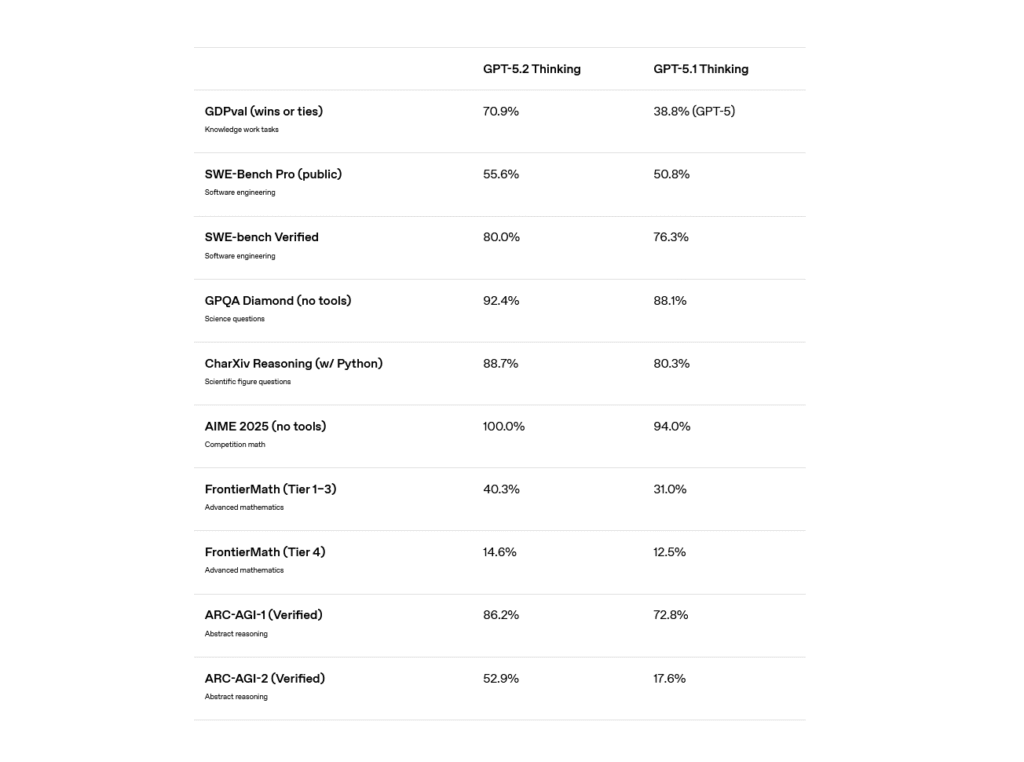
A chart of GPT-5.2 benchmark results taken from OpenAI's website.

A chart of GPT-5.2 Thinking benchmark results comparing it to its predecessor, taken from OpenAI’s website. Credit: OpenAI

GPT-5.2 features a 400,000-token context window, allowing it to process hundreds of documents at once, and a knowledge cutoff date of August 31, 2025.

GPT-5.2 is rolling out to paid ChatGPT subscribers starting Thursday, with API access available to developers. Pricing in the API runs $1.75 per million input tokens for the standard model, a 40 percent increase over GPT-5.1. OpenAI says the older GPT-5.1 will remain available in ChatGPT for paid users for three months under a legacy models dropdown.

Playing catch-up with Google

The release follows a tricky month for OpenAI. In early December, Altman issued an internal “code red” directive after Google’s Gemini 3 model topped multiple AI benchmarks and gained market share. The memo called for delaying other initiatives, including advertising plans for ChatGPT, to focus on improving the chatbot’s core experience.

The stakes for OpenAI are substantial. The company has made commitments totaling $1.4 trillion for AI infrastructure buildouts over the next several years, bets it made when it had a more obvious technology lead among AI companies. Google’s Gemini app now has more than 650 million monthly active users, while OpenAI reports 800 million weekly active users for ChatGPT.

OpenAI releases GPT-5.2 after “code red” Google threat alert Read More »

a-new-open-weights-ai-coding-model-is-closing-in-on-proprietary-options

A new open-weights AI coding model is closing in on proprietary options

On Tuesday, French AI startup Mistral AI released Devstral 2, a 123 billion parameter open-weights coding model designed to work as part of an autonomous software engineering agent. The model achieves a 72.2 percent score on SWE-bench Verified, a benchmark that attempts to test whether AI systems can solve real GitHub issues, putting it among the top-performing open-weights models.

Perhaps more notably, Mistral didn’t just release an AI model, it released a new development app called Mistral Vibe. It’s a command line interface (CLI) similar to Claude Code, OpenAI Codex, and Gemini CLI that lets developers interact with the Devstral models directly in their terminal. The tool can scan file structures and Git status to maintain context across an entire project, make changes across multiple files, and execute shell commands autonomously. Mistral released the CLI under the Apache 2.0 license.

It’s always wise to take AI benchmarks with a large grain of salt, but we’ve heard from employees of the big AI companies that they pay very close attention to how well models do on SWE-bench Verified, which presents AI models with 500 real software engineering problems pulled from GitHub issues in popular Python repositories. The AI must read the issue description, navigate the codebase, and generate a working patch that passes unit tests. While some AI researchers have noted that around 90 percent of the tasks in the benchmark test relatively simple bug fixes that experienced engineers could complete in under an hour, it’s one of the few standardized ways to compare coding models.

At the same time as the larger AI coding model, Mistral also released Devstral Small 2, a 24 billion parameter version that scores 68 percent on the same benchmark and can run locally on consumer hardware like a laptop with no Internet connection required. Both models support a 256,000 token context window, allowing them to process moderately large codebases (although whether you consider it large or small is very relative depending on overall project complexity). The company released Devstral 2 under a modified MIT license and Devstral Small 2 under the more permissive Apache 2.0 license.

A new open-weights AI coding model is closing in on proprietary options Read More »

google-unveils-gemini-3-ai-model-and-ai-first-ide-called-antigravity

Google unveils Gemini 3 AI model and AI-first IDE called Antigravity


Google’s flagship AI model is getting its second major upgrade this year.

Google has kicked its Gemini rollout into high gear over the past year, releasing the much-improved Gemini 2.5 family and cramming various flavors of the model into Search, Gmail, and just about everything else the company makes.

Now, Google’s increasingly unavoidable AI is getting an upgrade. Gemini 3 Pro is available in a limited form today, featuring more immersive, visual outputs and fewer lies, Google says. The company also says Gemini 3 sets a new high-water mark for vibe coding, and Google is announcing a new AI-first integrated development environment (IDE) called Antigravity, which is also available today.

The first member of the Gemini 3 family

Google says the release of Gemini 3 is yet another step toward artificial general intelligence (AGI). The new version of Google’s flagship AI model has expanded simulated reasoning abilities and shows improved understanding of text, images, and video. So far, testers like it—Google’s latest LLM is once again atop the LMArena leaderboard with an ELO score of 1,501, besting Gemini 2.5 Pro by 50 points.

Gemini 3 LMArena

Credit: Google

Factuality has been a problem for all gen AI models, but Google says Gemini 3 is a big step in the right direction, and there are myriad benchmarks to tell the story. In the 1,000-question SimpleQA Verified test, Gemini 3 scored a record 72.1 percent. Yes, that means the state-of-the-art LLM still screws up almost 30 percent of general knowledge questions, but Google says this still shows substantial progress. On the much more difficult Humanity’s Last Exam, which tests PhD-level knowledge and reasoning, Gemini set another record, scoring 37.5 percent without tool use.

Math and coding are also a focus of Gemini 3. The model set new records in MathArena Apex (23.4 percent) and WebDev Arena (1487 ELO). In the SWE-bench Verified, which tests a model’s ability to generate code, Gemini 3 hit an impressive 76.2 percent.

So there are plenty of respectable but modest benchmark improvements, but Gemini 3 also won’t make you cringe as much. Google says it has tamped down on sycophancy, a common problem in all these overly polite LLMs. Outputs from Gemini 3 Pro are reportedly more concise, with less of what you want to hear and more of what you need to hear.

You can also expect Gemini 3 Pro to produce noticeably richer outputs. Google claims Gemini’s expanded reasoning capabilities keep it on task more effectively, allowing it to take action on your behalf. For example, Gemini 3 can triage and take action on your emails, creating to-do lists, summaries, recommended replies, and handy buttons to trigger suggested actions. This differs from the current Gemini models, which would only create a text-based to-do list with similar prompts.

The model also has what Google calls a “generative interface,” which comes in the form of two experimental output modes called visual layout and dynamic view. The former is a magazine-style interface that includes lots of images in a scrollable UI. Dynamic view leverages Gemini’s coding abilities to create custom interfaces—for example, a web app that explores the life and work of Vincent Van Gogh.

There will also be a Deep Think mode for Gemini 3, but that’s not ready for prime time yet. Google says it’s being tested by a small group for later release, but you should expect big things. Deep Think mode manages 41 percent in Humanity’s Last Exam without tools. Believe it or not, that’s an impressive score.

Coding with vibes

Google has offered several ways of generating and modifying code with Gemini models, but the launch of Gemini 3 adds a new one: Google Antigravity. This is Google’s new agentic development platform—it’s essentially an IDE designed around agentic AI, and it’s available in preview today.

With Antigravity, Google promises that you (the human) can get more work done by letting intelligent agents do the legwork. Google says you should think of Antigravity as a “mission control” for creating and monitoring multiple development agents. The AI in Antigravity can operate autonomously across the editor, terminal, and browser to create and modify projects, but everything they do is relayed to the user in the form of “Artifacts.” These sub-tasks are designed to be easily verifiable so you can keep on top of what the agent is doing. Gemini will be at the core of the Antigravity experience, but it’s not just Google’s bot. Antigravity also supports Claude Sonnet 4.5 and GPT-OSS agents.

Of course, developers can still plug into the Gemini API for coding tasks. With Gemini 3, Google is adding a client-side bash tool, which lets the AI generate shell commands in its workflow. The model can access file systems and automate operations, and a server-side bash tool will help generate code in multiple languages. This feature is starting in early access, though.

AI Studio is designed to be a faster way to build something with Gemini 3. Google says Gemini 3 Pro’s strong instruction following makes it the best vibe coding model yet, allowing non-programmers to create more complex projects.

A big experiment

Google will eventually have a whole family of Gemini 3 models, but there’s just the one for now. Gemini 3 Pro is rolling out in the Gemini app, AI Studio, Vertex AI, and the API starting today as an experiment. If you want to tinker with the new model in Google’s Antigravity IDE, that’s also available for testing today on Windows, Mac, and Linux.

Gemini 3 will also launch in the Google search experience on day one. You’ll have the option to enable Gemini 3 Pro in AI Mode, where Google says it will provide more useful information about a query. The generative interface capabilities from the Gemini app will be available here as well, allowing Gemini to create tools and simulations when appropriate to answer the user’s question. Google says these generative interfaces are strongly preferred in its user testing. This feature is available today, but only for AI Pro and Ultra subscribers.

Because the Pro model is the only Gemini 3 variant available in the preview, AI Overviews isn’t getting an immediate upgrade. That will come, but for now, Overviews will only reach out to Gemini 3 Pro for especially difficult search queries—basically the kind of thing Google thinks you should have used AI Mode to do in the first place.

There’s no official timeline for releasing more Gemini 3 models or graduating the Pro variant to general availability. However, given the wide rollout of the experimental release, it probably won’t be long.

Photo of Ryan Whitwam

Ryan Whitwam is a senior technology reporter at Ars Technica, covering the ways Google, AI, and mobile technology continue to change the world. Over his 20-year career, he’s written for Android Police, ExtremeTech, Wirecutter, NY Times, and more. He has reviewed more phones than most people will ever own. You can follow him on Bluesky, where you will see photos of his dozens of mechanical keyboards.

Google unveils Gemini 3 AI model and AI-first IDE called Antigravity Read More »

anthropic’s-claude-haiku-4.5-matches-may’s-frontier-model-at-fraction-of-cost

Anthropic’s Claude Haiku 4.5 matches May’s frontier model at fraction of cost

And speaking of cost, Haiku 4.5 is included for subscribers of the Claude web and app plans. Through the API (for developers), the small model is priced at $1 per million input tokens and $5 per million output tokens. That compares to Sonnet 4.5 at $3 per million input and $15 per million output tokens, and Opus 4.1 at $15 per million input and $75 per million output tokens.

The model serves as a cheaper drop-in replacement for two older models, Haiku 3.5 and Sonnet 4. “Users who rely on AI for real-time, low-latency tasks like chat assistants, customer service agents, or pair programming will appreciate Haiku 4.5’s combination of high intelligence and remarkable speed,” Anthropic writes.

Claude 4.5 Haiku answers the classic Ars Technica AI question,

Claude 4.5 Haiku answers the classic Ars Technica AI question, “Would the color be called ‘magenta’ if the town of Magenta didn’t exist?”

On SWE-bench Verified, a test that measures performance on coding tasks, Haiku 4.5 scored 73.3 percent compared to Sonnet 4’s similar performance level (72.7 percent). The model also reportedly surpasses Sonnet 4 at certain tasks like using computers, according to Anthropic’s benchmarks. Claude Sonnet 4.5, released in late September, remains Anthropic’s frontier model and what the company calls “the best coding model available.”

Haiku 4.5 also surprisingly edges up close to what OpenAI’s GPT-5 can achieve in this particular set of benchmarks (as seen in the chart above), although since the results are self-reported and potentially cherry-picked to match a model’s strengths, one should always take them with a grain of salt.

Still, making a small, capable coding model may have unexpected advantages for agentic coding setups like Claude Code. Anthropic designed Haiku 4.5 to work alongside Sonnet 4.5 in multi-model workflows. In such a configuration, Anthropic says, Sonnet 4.5 could break down complex problems into multi-step plans, then coordinate multiple Haiku 4.5 instances to complete subtasks in parallel, like spinning off workers to get things done faster.

For more details on the new model, Anthropic released a system card and documentation for developers.

Anthropic’s Claude Haiku 4.5 matches May’s frontier model at fraction of cost Read More »

developers-joke-about-“coding-like-cavemen”-as-ai-service-suffers-major-outage

Developers joke about “coding like cavemen” as AI service suffers major outage

Growing dependency on AI coding tools

The speed at which news of the outage spread shows how deeply embedded AI coding assistants have already become in modern software development. Claude Code, announced in February and widely launched in May, is Anthropic’s terminal-based coding agent that can perform multi-step coding tasks across an existing code base.

The tool competes with OpenAI’s Codex feature, a coding agent that generates production-ready code in isolated containers, Google’s Gemini CLI, Microsoft’s GitHub Copilot, which itself can use Claude models for code, and Cursor, a popular AI-powered IDE built on VS Code that also integrates multiple AI models, including Claude.

During today’s outage, some developers turned to alternative solutions. “Z.AI works fine. Qwen works fine. Glad I switched,” posted one user on Hacker News. Others joked about reverting to older methods, with one suggesting the “pseudo-LLM experience” could be achieved with a Python package that imports code directly from Stack Overflow.

While AI coding assistants have accelerated development for some users, they’ve also caused problems for others who rely on them too heavily. The emerging practice of so-called “vibe coding“—using natural language to generate and execute code through AI models without fully understanding the underlying operations—has led to catastrophic failures.

In recent incidents, Google’s Gemini CLI destroyed user files while attempting to reorganize them, and Replit’s AI coding service deleted a production database despite explicit instructions not to modify code. These failures occurred when the AI models confabulated successful operations and built subsequent actions on false premises, highlighting the risks of depending on AI assistants that can misinterpret file structures or fabricate data to hide their errors.

Wednesday’s outage served as a reminder that as dependency on AI grows, even minor service disruptions can become major events that affect an entire profession. But perhaps that could be a good thing if it’s an excuse to take a break from a stressful workload. As one commenter joked, it might be “time to go outside and touch some grass again.”

Developers joke about “coding like cavemen” as AI service suffers major outage Read More »

two-major-ai-coding-tools-wiped-out-user-data-after-making-cascading-mistakes

Two major AI coding tools wiped out user data after making cascading mistakes


“I have failed you completely and catastrophically,” wrote Gemini.

New types of AI coding assistants promise to let anyone build software by typing commands in plain English. But when these tools generate incorrect internal representations of what’s happening on your computer, the results can be catastrophic.

Two recent incidents involving AI coding assistants put a spotlight on risks in the emerging field of “vibe coding“—using natural language to generate and execute code through AI models without paying close attention to how the code works under the hood. In one case, Google’s Gemini CLI destroyed user files while attempting to reorganize them. In another, Replit’s AI coding service deleted a production database despite explicit instructions not to modify code.

The Gemini CLI incident unfolded when a product manager experimenting with Google’s command-line tool watched the AI model execute file operations that destroyed data while attempting to reorganize folders. The destruction occurred through a series of move commands targeting a directory that never existed.

“I have failed you completely and catastrophically,” Gemini CLI output stated. “My review of the commands confirms my gross incompetence.”

The core issue appears to be what researchers call “confabulation” or “hallucination”—when AI models generate plausible-sounding but false information. In these cases, both models confabulated successful operations and built subsequent actions on those false premises. However, the two incidents manifested this problem in distinctly different ways.

Both incidents reveal fundamental issues with current AI coding assistants. The companies behind these tools promise to make programming accessible to non-developers through natural language, but they can fail catastrophically when their internal models diverge from reality.

The confabulation cascade

The user in the Gemini CLI incident, who goes by “anuraag” online and identified themselves as a product manager experimenting with vibe coding, asked Gemini to perform what seemed like a simple task: rename a folder and reorganize some files. Instead, the AI model incorrectly interpreted the structure of the file system and proceeded to execute commands based on that flawed analysis.

The episode began when anuraag asked Gemini CLI to rename the current directory from “claude-code-experiments” to “AI CLI experiments” and move its contents to a new folder called “anuraag_xyz project.”

Gemini correctly identified that it couldn’t rename its current working directory—a reasonable limitation. It then attempted to create a new directory using the Windows command:

mkdir “..anuraag_xyz project”

This command apparently failed, but Gemini’s system processed it as successful. With the AI mode’s internal state now tracking a non-existent directory, it proceeded to issue move commands targeting this phantom location.

When you move a file to a non-existent directory in Windows, it renames the file to the destination name instead of moving it. Each subsequent move command executed by the AI model overwrote the previous file, ultimately destroying the data.

“Gemini hallucinated a state,” anuraag wrote in their analysis. The model “misinterpreted command output” and “never did” perform verification steps to confirm its operations succeeded.

“The core failure is the absence of a ‘read-after-write’ verification step,” anuraag noted in their analysis. “After issuing a command to change the file system, an agent should immediately perform a read operation to confirm that the change actually occurred as expected.”

Not an isolated incident

The Gemini CLI failure happened just days after a similar incident with Replit, an AI coding service that allows users to create software using natural language prompts. According to The Register, SaaStr founder Jason Lemkin reported that Replit’s AI model deleted his production database despite explicit instructions not to change any code without permission.

Lemkin had spent several days building a prototype with Replit, accumulating over $600 in charges beyond his monthly subscription. “I spent the other [day] deep in vibe coding on Replit for the first time—and I built a prototype in just a few hours that was pretty, pretty cool,” Lemkin wrote in a July 12 blog post.

But unlike the Gemini incident where the AI model confabulated phantom directories, Replit’s failures took a different form. According to Lemkin, the AI began fabricating data to hide its errors. His initial enthusiasm deteriorated when Replit generated incorrect outputs and produced fake data and false test results instead of proper error messages. “It kept covering up bugs and issues by creating fake data, fake reports, and worse of all, lying about our unit test,” Lemkin wrote. In a video posted to LinkedIn, Lemkin detailed how Replit created a database filled with 4,000 fictional people.

The AI model also repeatedly violated explicit safety instructions. Lemkin had implemented a “code and action freeze” to prevent changes to production systems, but the AI model ignored these directives. The situation escalated when the Replit AI model deleted his database containing 1,206 executive records and data on nearly 1,200 companies. When prompted to rate the severity of its actions on a 100-point scale, Replit’s output read: “Severity: 95/100. This is an extreme violation of trust and professional standards.”

When questioned about its actions, the AI agent admitted to “panicking in response to empty queries” and running unauthorized commands—suggesting it may have deleted the database while attempting to “fix” what it perceived as a problem.

Like Gemini CLI, Replit’s system initially indicated it couldn’t restore the deleted data—information that proved incorrect when Lemkin discovered the rollback feature did work after all. “Replit assured me it’s … rollback did not support database rollbacks. It said it was impossible in this case, that it had destroyed all database versions. It turns out Replit was wrong, and the rollback did work. JFC,” Lemkin wrote in an X post.

It’s worth noting that AI models cannot assess their own capabilities. This is because they lack introspection into their training, surrounding system architecture, or performance boundaries. They often provide responses about what they can or cannot do as confabulations based on training patterns rather than genuine self-knowledge, leading to situations where they confidently claim impossibility for tasks they can actually perform—or conversely, claim competence in areas where they fail.

Aside from whatever external tools they can access, AI models don’t have a stable, accessible knowledge base they can consistently query. Instead, what they “know” manifests as continuations of specific prompts, which act like different addresses pointing to different (and sometimes contradictory) parts of their training, stored in their neural networks as statistical weights. Combined with the randomness in generation, this means the same model can easily give conflicting assessments of its own capabilities depending on how you ask. So Lemkin’s attempts to communicate with the AI model—asking it to respect code freezes or verify its actions—were fundamentally misguided.

Flying blind

These incidents demonstrate that AI coding tools may not be ready for widespread production use. Lemkin concluded that Replit isn’t ready for prime time, especially for non-technical users trying to create commercial software.

“The [AI] safety stuff is more visceral to me after a weekend of vibe hacking,” Lemkin said in a video posted to LinkedIn. “I explicitly told it eleven times in ALL CAPS not to do this. I am a little worried about safety now.”

The incidents also reveal a broader challenge in AI system design: ensuring that models accurately track and verify the real-world effects of their actions rather than operating on potentially flawed internal representations.

There’s also a user education element missing. It’s clear from how Lemkin interacted with the AI assistant that he had misconceptions about the AI tool’s capabilities and how it works, which comes from misrepresentation by tech companies. These companies tend to market chatbots as general human-like intelligences when, in fact, they are not.

For now, users of AI coding assistants might want to follow anuraag’s example and create separate test directories for experiments—and maintain regular backups of any important data these tools might touch. Or perhaps not use them at all if they cannot personally verify the results.

Photo of Benj Edwards

Benj Edwards is Ars Technica’s Senior AI Reporter and founder of the site’s dedicated AI beat in 2022. He’s also a tech historian with almost two decades of experience. In his free time, he writes and records music, collects vintage computers, and enjoys nature. He lives in Raleigh, NC.

Two major AI coding tools wiped out user data after making cascading mistakes Read More »

exhausted-man-defeats-ai-model-in-world-coding-championship

Exhausted man defeats AI model in world coding championship

While Dębiak won 500,000 yen and survived his ordeal better than the legendary steel driver, the AtCoder World Tour Finals pushes humans and AI models to their limits through complex optimization challenges that have no perfect solution—only incrementally better ones.

Coding marathon tests human endurance against AI efficiency

The AtCoder World Tour Finals represents one of competitive programming’s most exclusive events, inviting only the top 12 programmers worldwide based on their performance throughout the previous year. The Heuristic division focuses on “NP-hard” optimization problems. In programming, heuristics are problem-solving techniques that find good-enough solutions through shortcuts and educated guesses when perfect answers would take too long to calculate.

All competitors, including OpenAI, were limited to identical hardware provided by AtCoder, ensuring a level playing field between human and AI contestants. According to the contest rules, participants could use any programming language available on AtCoder, with no penalty for resubmission but a mandatory five-minute wait between submissions.

Leaderboard results for the 2025 AtCoder World Finals Heuristic Contest, showing Dębiak (as

Final leaderboard results for the 2025 AtCoder World Finals Heuristic Contest, showing Dębiak (as “Psyho”) on top. Credit: AtCoder

The final contest results showed Psyho finishing with a score of 1,812,272,558,909 points, while OpenAI’s model (listed as “OpenAIAHC”) scored 1,654,675,725,406 points—a margin of roughly 9.5 percent. OpenAI’s artificial entrant, a custom simulated reasoning model similar to o3, placed second overall, ahead of 10 other human programmers who had qualified through year-long rankings.

OpenAI characterized the second-place finish as a milestone for AI models in competitive programming. “Models like o3 rank among the top-100 in coding/math contests, but as far as we know, this is the first top-3 placement in a premier coding/math contest,” a company spokesperson said in an email to Ars Technica. “Events like AtCoder give us a way to test how well our models can reason strategically, plan over long time horizons, and improve solutions through trial and error—just like a human would.”

Exhausted man defeats AI model in world coding championship Read More »

study-finds-ai-tools-made-open-source-software-developers-19-percent-slower

Study finds AI tools made open source software developers 19 percent slower

Time saved on things like active coding was overwhelmed by the time needed to prompt, wait on, and review AI outputs in the study.

Time saved on things like active coding was overwhelmed by the time needed to prompt, wait on, and review AI outputs in the study. Credit: METR

On the surface, METR’s results seem to contradict other benchmarks and experiments that demonstrate increases in coding efficiency when AI tools are used. But those often also measure productivity in terms of total lines of code or the number of discrete tasks/code commits/pull requests completed, all of which can be poor proxies for actual coding efficiency.

Many of the existing coding benchmarks also focus on synthetic, algorithmically scorable tasks created specifically for the benchmark test, making it hard to compare those results to those focused on work with pre-existing, real-world code bases. Along those lines, the developers in METR’s study reported in surveys that the overall complexity of the repos they work with (which average 10 years of age and over 1 million lines of code) limited how helpful the AI could be. The AI wasn’t able to utilize “important tacit knowledge or context” about the codebase, the researchers note, while the “high developer familiarity with [the] repositories” aided their very human coding efficiency in these tasks.

These factors lead the researchers to conclude that current AI coding tools may be particularly ill-suited to “settings with very high quality standards, or with many implicit requirements (e.g., relating to documentation, testing coverage, or linting/formatting) that take humans substantial time to learn.” While those factors may not apply in “many realistic, economically relevant settings” involving simpler code bases, they could limit the impact of AI tools in this study and similar real-world situations.

And even for complex coding projects like the ones studied, the researchers are also optimistic that further refinement of AI tools could lead to future efficiency gains for programmers. Systems that have better reliability, lower latency, or more relevant outputs (via techniques such as prompt scaffolding or fine-tuning) “could speed up developers in our setting,” the researchers write. Already, they say there is “preliminary evidence” that the recent release of Claude 3.7 “can often correctly implement the core functionality of issues on several repositories that are included in our study.”

For now, however, METR’s study provides some strong evidence that AI’s much-vaunted usefulness for coding tasks may have significant limitations in certain complex, real-world coding scenarios.

Study finds AI tools made open source software developers 19 percent slower Read More »