Author name: Rejus Almole

iphone-16-gets-two-new-buttons-and-a-new-camera-layout

iPhone 16 gets two new buttons and a new camera layout

Flagship phones —

The 16 is positioned as the first non-Pro iPhone optimized for generative AI.

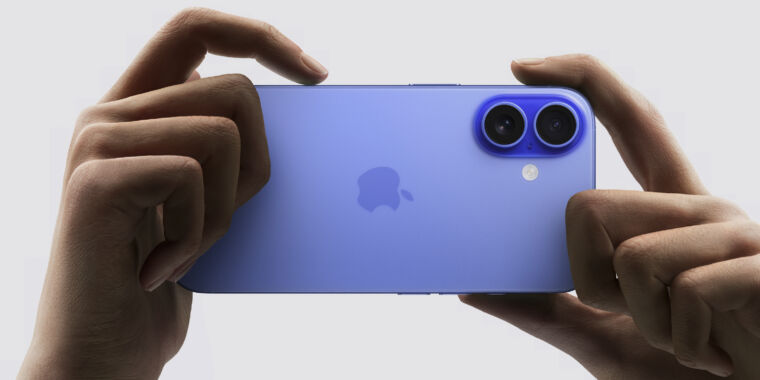
  • The iPhone 16 has a new rear camera arrangement.

    Apple

  • There are two new buttons: Action and Capture.

    Apple

Apple’s new iPhone 16 isn’t a revolution by any means, but it’s a solid upgrade with a handful of new features (including two new physical buttons), plus better performance and Apple Intelligence support.

The design is similar to the iPhone 15 but with a vertical camera arrangement on the back, which helps take more efficient spatial photos and videos. A new camera control button can be clicked to take a photo, and also is touch-sensitive, allowing you to slide your finger across it to tweak the settings for the images, like zoom. It can tell the difference between a full click and a lighter press, which allows you to access customization features instead of taking a picture right away.

That’s not the only new button; the configurable Action button has arrived on the iPhone 16. It was introduced in the Pro models last year and can be used for various predetermined purposes or assigned to work with Shortcuts.

There’s a new chip, too: the A18. It has a new 16-core Neural Engine, which is up to two times faster than what we saw in the iPhone 15. The memory subsystem has 17 percent more memory bandwidth. These features allow it to support Apple’s generative models and Apple Intelligence, which was exclusive to the Pro phones last year. The 3 nm chip has a 6-core CPU with two performance cores and four efficiency cores. It’s up to 30 percent faster than the CPU iPhone 15, Apple claims.

There’s a new, ray-tracing-enabled, 5-core GPU that Apple says is is up to 40 percent faster; Apple says a new thermal design allows up to 30 percent higher sustained performance for gaming, and that the iPhone 16 can run AAA games like Assassin’s Creed Mirage that only worked on the 15 Pro last year.

Thanks to this chip, Apple says the iPhone 16 is the first non-Pro iPhone to support the upcoming suite of generative AI features the company calls Apple Intelligence. This will allow features like taking pictures of restaurants to pull up a menu or identifying dog breeds on the street by pointing the camera their way. Apple is calling those two examples “Visual Intelligence,” and it leans on the camera control feature of the iPhone 16, so that’s unique to this new model.

Speaking of the camera, there aren’t a ton of significant improvements on the hardware side over the iPhone 15. Apple talked up the 48-megapixel wide-angle camera, but most of the features applied to the previous model. There’s a new ultra-wide camera that has a larger aperture, with up to 2.6 times more light capture. It also includes macro photography and spatial video capture support, which was previously limited to the Pro phones.

The screen comes in the same sizes as before (6.1 inches for the regular iPhone 15, 6.7 for the Plus), but it can reach 2,000 nits of brightness in a sunny environment and as low as 1 nit in the dark. There’s a 50 percent tougher ceramic shield on the screen, too.

The iPhone 16 starts at $799 (128GB), and the Plus model starts at $899 (also 128GB). They are available for pre-order this coming Friday, and it ships September 20.

Listing image by Apple

iPhone 16 gets two new buttons and a new camera layout Read More »
after-another-boeing-letdown,-nasa-isn’t-ready-to-buy-more-starliner-missions

After another Boeing letdown, NASA isn’t ready to buy more Starliner missions

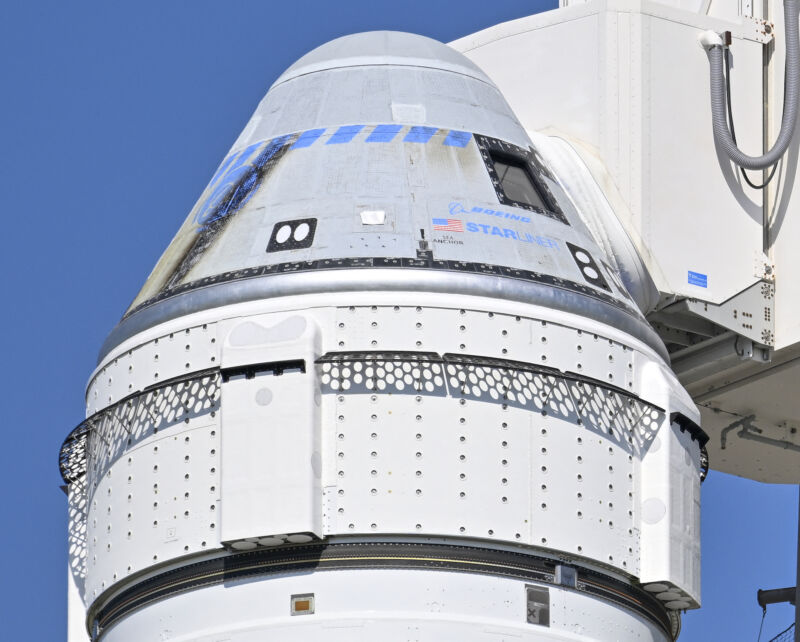
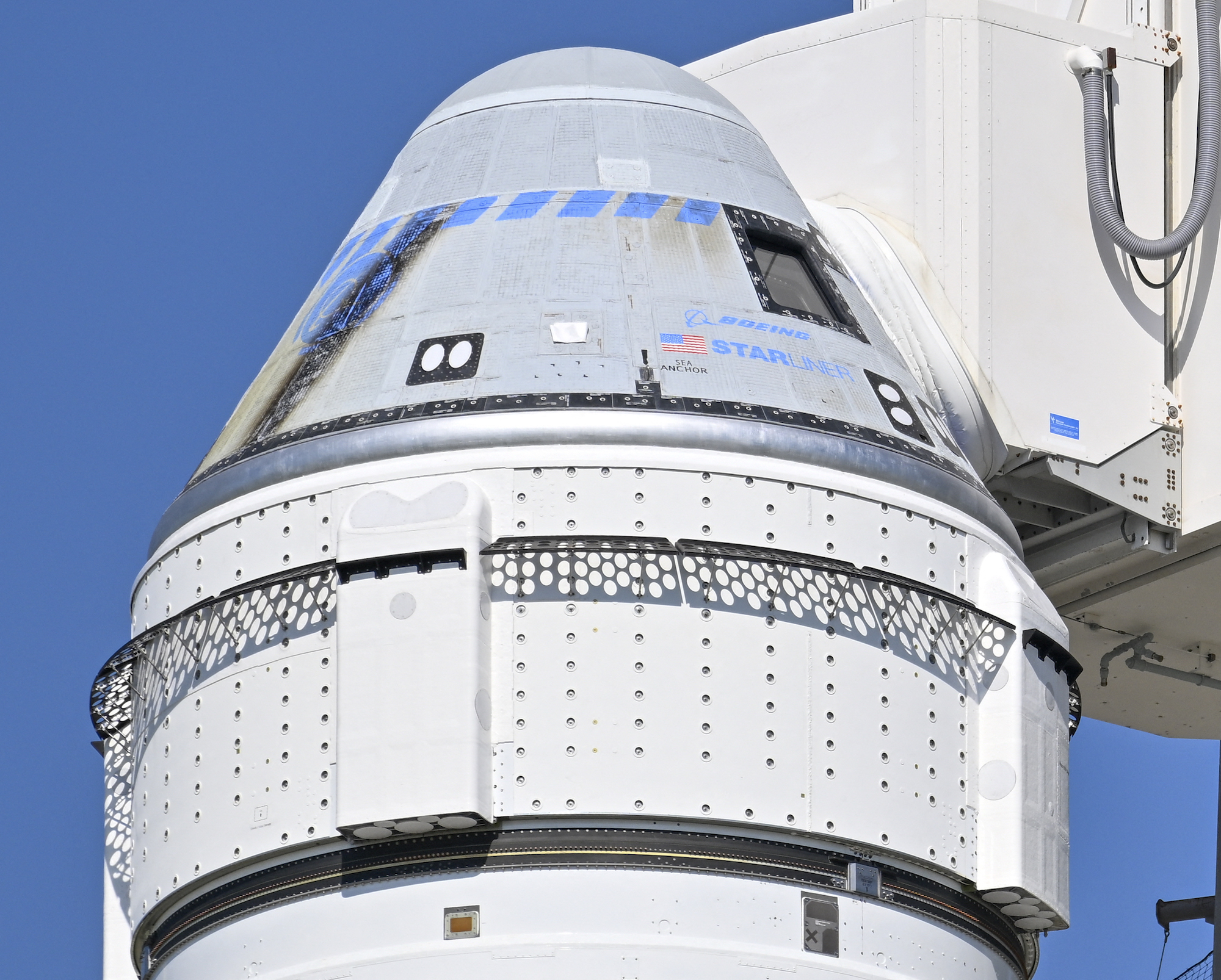
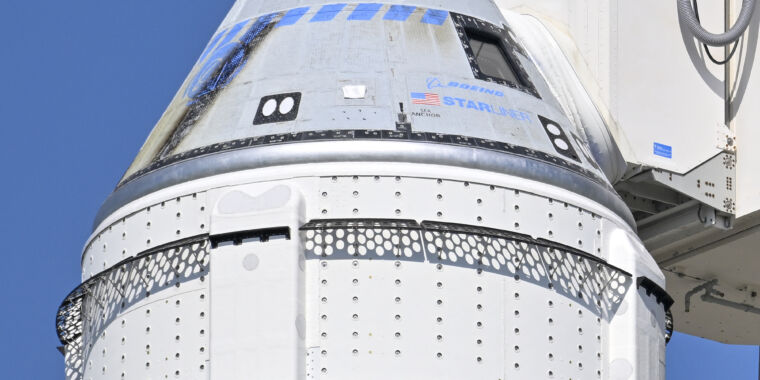
Boeing's Starliner spacecraft sits atop a United Launch Alliance Atlas V rocket before liftoff in June to begin the Crew Flight Test.

Enlarge / Boeing’s Starliner spacecraft sits atop a United Launch Alliance Atlas V rocket before liftoff in June to begin the Crew Flight Test.

NASA is ready for Boeing’s Starliner spacecraft, stricken with thruster problems and helium leaks, to leave the International Space Station as soon as Friday, wrapping up a disappointing test flight that has clouded the long-term future of the Starliner program.

Astronauts Butch Wilmore and Suni Williams, who launched aboard Starliner on June 5, closed the spacecraft’s hatch Thursday in preparation for departure Friday. But it wasn’t what they envisioned when they left Earth on Starliner three months ago. Instead of closing the hatch from a position in Starliner’s cockpit, they latched the front door to the spacecraft from the space station’s side of the docking port.

The Starliner spacecraft is set to undock from the International Space Station at 6: 04 pm EDT (22: 04 UTC) Friday. If all goes according to plan, Starliner will ignite its braking rockets at 11: 17 pm EDT (03: 17 UTC) for a minute-long burn to target a parachute-assisted, airbag-cushioned landing at White Sands Space Harbor, New Mexico, at 12: 03 am EDT (04: 03 UTC) Saturday.

The Starliner mission set to conclude this weekend was the spacecraft’s first test flight with astronauts, running seven years behind Boeing’s original schedule. But due to technical problems with the spacecraft, it won’t come home with the two astronauts who flew it into orbit back in June, leaving some of the test flight’s objectives incomplete.

This outcome is, without question, a setback for NASA and Boeing, which must resolve two major problems in Starliner’s propulsion system—supplied by Aerojet Rocketdyne—before the capsule can fly with people again. NASA officials haven’t said whether they will require Boeing to launch another Starliner test flight before certifying the spacecraft for the first of up to six operational crew missions on Boeing’s contract.

A noncommittal from NASA

For over a decade, the space agency has worked with Boeing and SpaceX to develop two independent vehicles to ferry astronauts to and from the International Space Station (ISS). SpaceX launched its first Dragon spacecraft with astronauts in May 2020, and six months later, NASA cleared SpaceX to begin flying regular six-month space station crew rotation missions.

Officially, NASA has penciled in Starliner’s first operational mission for August 2025. But the agency set that schedule before realizing Boeing and Aerojet Rocketdyne would need to redesign seals and perhaps other elements in Starliner’s propulsion system.

No one knows how long that will take, and NASA hasn’t decided if it will require Boeing to launch another test flight before formally certifying Starliner for operational missions. If Starliner performs flawlessly after undocking and successfully lands this weekend, perhaps NASA engineers can convince themselves Starliner is good to go for crew rotation flights once Boeing resolves the thruster problems and helium leaks.

In any event, the schedule for launching an operational Starliner crew flight in less than a year seems improbable. Aside from the decision on another test flight, the agency also must decide whether it will order any more operational Starliner missions from Boeing. These “post-certification missions” will transport crews of four astronauts between Earth and the ISS, orbiting roughly 260 miles (420 kilometers) above the planet.

NASA has only given Boeing the “Authority To Proceed” for three of its six potential operational Starliner missions. This milestone, known as ATP, is a decision point in contracting lingo where the customer—in this case, NASA—places a firm order for a deliverable. NASA has previously said it awards these task orders about two to three years prior to a mission’s launch.

Josh Finch, a NASA spokesperson, told Ars that the agency hasn’t made any decisions on whether to commit to any more operational Starliner missions from Boeing beyond the three already on the books.

“NASA’s goal remains to certify the Starliner system for crew transportation to the International Space Station,” Finch said in a written response to questions from Ars. “NASA looks forward to its continued work with Boeing to complete certification efforts after Starliner’s uncrewed return. Decisions and timing on issuing future authorizations are on the work ahead.”

This means NASA’s near-term focus is on certifying Starliner so that Boeing can start executing its commercial crew contract. The space agency hasn’t determined when or if it will authorize Boeing to prepare for any Starliner missions beyond the three already on the books.

When it awarded commercial crew contracts to SpaceX and Boeing in 2014, NASA pledged to buy at least two operational crew flights from each company. The initial contracts from a decade ago had options for as many as six crew rotation flights to the ISS after certification.

Since then, NASA has extended SpaceX’s commercial crew contract to cover as many as 14 Dragon missions with astronauts, and SpaceX has already launched eight of them. The main reason for this contract extension was to cover NASA’s needs for crew transportation after delays with Boeing’s Starliner, which was originally supposed to alternate with SpaceX’s Dragon for human flights every six months.

After another Boeing letdown, NASA isn’t ready to buy more Starliner missions Read More »

nasa-wants-starliner-to-make-a-quick-getaway-from-the-space-station

NASA wants Starliner to make a quick getaway from the space station

WSSHing for success —

Starliner is set to land at White Sands Space Harbor in New Mexico shortly after midnight.

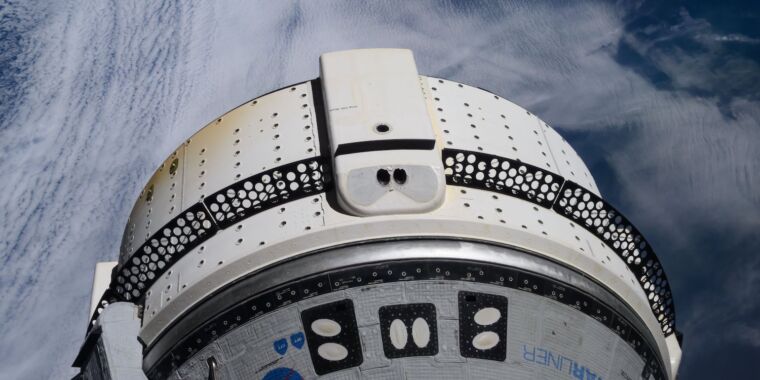
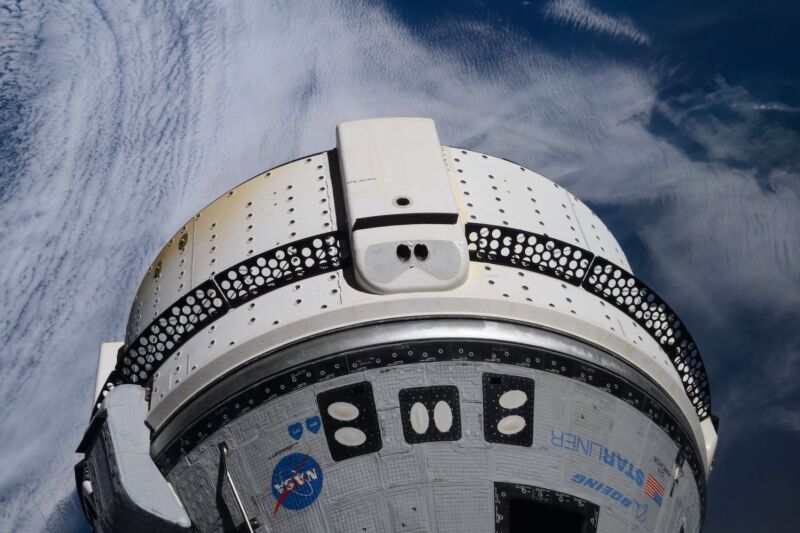
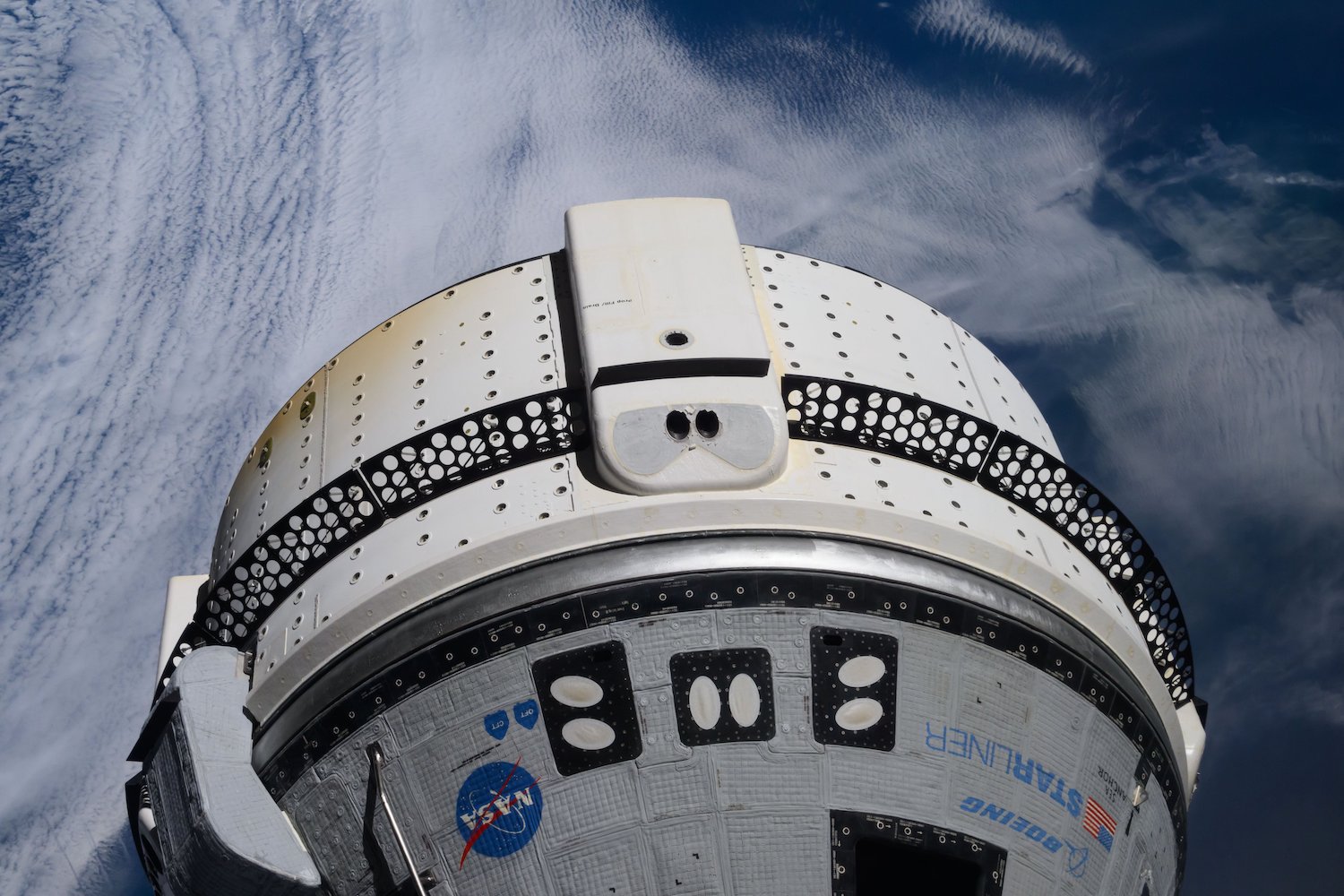
Boeing's Starliner spacecraft is set to undock from the International Space Station on Friday evening.

Enlarge / Boeing’s Starliner spacecraft is set to undock from the International Space Station on Friday evening.

NASA

Boeing’s Starliner spacecraft will gently back away from the International Space Station Friday evening, then fire its balky thrusters to rapidly depart the vicinity of the orbiting lab and its nine-person crew.

NASA asked Boeing to adjust Starliner’s departure sequence to get away from the space station faster and reduce the workload on the thrusters to reduce the risk of overheating, which caused some of the control jets to drop offline as the spacecraft approached the outpost for docking in June.

The action begins at 6: 04 pm EDT (22: 04 UTC) on Friday, when hooks in the docking mechanism connecting Starliner with the International Space Station (ISS) will open, and springs will nudge the spacecraft away its mooring on the forward end of the massive research complex.

Around 90 seconds later, a set of forward-facing thrusters on Starliner’s service module will fire in a series of 12 pulses over a few minutes to drive the spacecraft farther away from the space station. These maneuvers will send Starliner on a trajectory over the top of the ISS, then behind it until it is time for the spacecraft to perform a deorbit burn at 11: 17 pm EDT (03: 17 UTC) to target landing at White Sands Space Harbor, New Mexico, shortly after midnight EDT (10 pm local time at White Sands).

How to watch, and what to watch for

The two videos embedded below will show NASA TV’s live coverage of the undocking and landing of Starliner.

Starliner is leaving its two-person crew behind on the space station after NASA officials decided last month they did not have enough confidence in the spacecraft’s reaction control system (RCS) thrusters, used to make exact changes to the capsule’s trajectory and orientation in orbit. Five of the 28 RCS thrusters on Starliner’s service module failed during the craft’s rendezvous with the space station three months ago. Subsequent investigations showed overheating could cause Teflon seals in a poppet valve to swell, restricting the flow of propellant to the thrusters.

Engineers recovered four of the five thrusters after they temporarily stopped working, but NASA officials couldn’t be sure the thrusters would not overheat again on the trip home. NASA decided it was too risky for Starliner to come home with astronauts Butch Wilmore and Suni Williams, who launched on Boeing’s crew test flight on June 5, becoming the first people to fly on the commercial capsule. They will remain aboard the station until February, when they will return to Earth on a SpaceX Dragon spacecraft.

The original flight plan, had Wilmore and Williams been aboard Starliner for the trip home, called for the spacecraft to make a gentler departure from the ISS, allowing engineers to fully check out the performance of its navigation sensors and test the craft’s ability to loiter in the vicinity of the station for photographic surveys of its exterior.

“In this case, what we’re doing is the break-out burn, which will be a series of 12 burns, each not very large, about 0.1 meters per second (0.2 mph) and that’s just to take the Starliner away from the station, and then immediately start going up and away, and eventually it’ll curve around to the top and deorbit from above the station a few orbits later,” said Anthony Vareha, NASA’s flight director overseeing ISS operations during Starliner’s undocking sequence.

Astronauts won’t be inside Starliner’s cockpit to take manual control in the event of a major problem, so NASA managers want the spacecraft to get away from the space station as quickly as possible.

On this path, Starliner will exit the so-called approach ellipsoid, a 2.5-by-1.25-by-1.25-mile (4-by-2-by-2-kilometer) invisible boundary around the orbiting laboratory, about 20 to 25 minutes after undocking, NASA officials said. That’s less than half the time Starliner would normally take to leave the vicinity of the ISS.

“It’s a quicker way to get away from the station, with less stress on the thrusters,” said Steve Stich, NASA’s commercial crew program manager. “Essentially, once we open the hooks, the springs will push Starliner away and then we’ll do some really short thruster firings to put us on a trajectory that will take us above the station and behind, we’ll be opening to a nice range to where we can execute the deorbit burn.”

In the unlikely event of a more significant series of thruster failures, the springs that push Starliner away from the station should be enough to ensure there’s no risk of collision, according to Vareha.

“Then, after that, we really are going to just stay in some very benign attitudes and not fire the the thrusters very much at all,” Stich said.

Starliner will need to use the RCS thrusters again to point itself in the proper direction to fire four larger rocket engines for the deorbit burn. Once this burn is complete, the RCS thrusters will reorient the spacecraft to jettison the service module to burn up in the atmosphere. The reusable crew module relies on a separate set of thrusters during reentry.

Finally, the capsule will approach the landing zone in New Mexico from the southwest, flying over the Pacific Ocean and Mexico before deploying three main parachutes and airbags to cushion its landing at White Sands. Boeing and NASA teams there will meet the spacecraft and secure it for a road voyage back to Kennedy Space Center in Florida for refurbishment.

Meanwhile, engineers must resolve the causes of the thruster problems and helium leaks that plagued the Starliner test flight before it can fly astronauts again.

NASA wants Starliner to make a quick getaway from the space station Read More »

at&t-sues-broadcom-for-refusing-to-renew-perpetual-license-support

AT&T sues Broadcom for refusing to renew perpetual license support

AT&T vs. Broadcom —

Ars cited in lawsuit AT&T recently filed against Broadcom.

Signage is displayed outside the Broadcom offices on June 7, 2018 in San Jose, California.

AT&T filed a lawsuit against Broadcom on August 29 accusing it of seeking to “retroactively change existing VMware contracts to match its new corporate strategy.” The lawsuit, spotted by Channel Futures, concerns claims that Broadcom is not letting AT&T renew support services for previously purchased perpetual VMware software licenses unless AT&T meets certain conditions.

Broadcom closed its $61 billion VMware acquisition in November and swiftly enacted sweeping changes. For example, in December, Broadcom announced the end of VMware perpetual license sales in favor of subscriptions of bundled products. Combined with higher core requirements per CPU subscription, complaints ensued that VMware was getting more expensive to work with.

AT&T uses VMware software to run 75,000 virtual machines (VMs) across about 8,600 servers, per the complaint filed at the Supreme Court of the State of New York [PDF]. It reportedly uses the VMs to support customer service operations and for operations management efficiency.

AT&T feels it should be granted a one-year renewal for VMware support services, which it claimed would be the second of three one-year renewals to which its contract entitles it. According to AT&T, support services are critical in case of software errors and for upkeep, like security patches, software upgrades, and daily maintenance. Without support, “an error or software glitch” could result in disruptive failure, AT&T said.

AT&T claims Broadcom refuses to renew support and plans to terminate AT&T’s VMware support services on September 9. It asked the court to stop Broadcom from cutting VMware support services and for “further relief” deemed necessary. The New York Supreme Court has told Broadcom to respond within 20 days of the complaint’s filing.

In a statement to Ars Technica, an AT&T spokesperson said: “We have filed this complaint to preserve continuity in the services we provide and protect the interests of our customers.”

AT&T accuses Broadcom of trying to make it spend millions on unwanted software

AT&T’s lawsuit claims that Broadcom has refused to renew support services for AT&T’s perpetual licenses unless AT&T agrees to what it deems are unfair conditions that would cost it “tens of millions more than the price of the support services alone.”

The lawsuit reads:

Specifically, Broadcom is threatening to withhold essential support services for previously purchased VMware perpetually licensed software unless AT&T capitulates to Broadcom’s demands that AT&T purchase hundreds of millions of dollars’ worth of bundled subscription software and services, which AT&T does not want.

After buying VMware, Broadcom consolidated VMware’s offering from about 8,000 SKUs to four bundles, per Channel Futures. AT&T claims these subscription offerings “would impose significant additional contractual and technological obligations.” AT&T claims it might have to invest millions to “develop its network to accommodate the new software.”

VMware and AT&T’s agreement precludes “Broadcom’s attempt to bully AT&T into paying a king’s ransom for subscriptions AT&T does not want or need, or risk widespread network outages,” AT&T reckons.

In its lawsuit, AT&T claims “bullying tactics” were expected from Broadcom post-acquisition. Quoting Ars Technica reporting, the lawsuit claims that “Broadcom wasted no time strong-arming customers into highly unfavorable subscription models marked by ‘steeply increased prices[,]’ ‘refusing to maintain security conditions for perpetual license[d] [software,]’ and threatening to cut off support for existing products already licensed by customers—exactly as it has done here.'”

“Without the Support Services, the more than 75,000 virtual machines operated by AT&T⸺impacting millions of its customers worldwide⸺would all be just an error or software glitch away from failing,” AT&T’s lawsuit says.

Broadcom’s response

In the lawsuit, Broadcom alleges that AT&T is not eligible to renew support services for a year because it believes AT&T was supposed to renew all three one-year support service plans by the end of 2023.

In a statement to Ars Technica, a Broadcom company spokesperson said:

Broadcom strongly disagrees with the allegations and is confident we will prevail in the legal process. VMware has been moving to a subscription model, the standard for the software industry, for several years – beginning before the acquisition by Broadcom. Our focus will continue to be providing our customers choice and flexibility while helping them address their most complex technology challenges.

Communications for Office of the President, first responders could be affected

AT&T’s lawsuit emphasizes that should it lose support for VMware offerings, communications for the Office of the President and first responders would be at risk. AT&T claims that about 22,000 of its 75,000 VMs relying on VMware “are used in some way to support AT&T’s provision of services to millions of police officers, firefighters, paramedics, emergency workers and incident response team members nationwide… for use in connection with matters of public safety and/or national security.”

When reached for comment, AT&T’s spokesperson declined to comment on AT&T’s backup plan for minimizing disruption should it lose VMware support in a few days.

Ultimately, the case centers on “multiple documents involved, and resolution of the dispute will require interpretation as to which clauses prevail,” Benjamin B. Kabak, a partner practicing in technology and outsourcing at the Loeb & Loeb LLP New York law firm, points out

AT&T sues Broadcom for refusing to renew perpetual license support Read More »
what-to-expect-from-apple’s-“it’s-glowtime”-event

What to expect from Apple’s “It’s Glowtime” event

Apple It's Glowtime event promo image depicting a neon Apple logo

Enlarge / Apple’s event will likely discuss Apple Intelligence, though that’s not going to launch until later in the year with iOS 18.1

Apple

For years, Apple’s September event has focused almost exclusively on new flagship iPhones and new Apple Watch models. Once in a while, other second-tier products make an appearance. And in recent cycles, the Mac and high-end iPads had their shining moment later in the year—often in October or November.

We expect the same to happen this time. You can almost certainly count on new iPhones and Watches. As for what else to expect: well, no Macs, but there are a couple of interesting possibilities.

Here’s what we expect to see next week.

iPhone 16 and 16 Pro

Gone are the days of radical changes to the iPhone; the last dramatic redesign was the iPhone X in 2017. Since then, Apple has iterated a little bit each year—never enough to drive yearly upgrades, but perhaps enough to entice consumers with phones that are three years old or so.

The iPhone 16 and 16 Pro are expected to continue this pacing, with a grab bag of improvements to existing features but nothing too radical.

The only notable design change that has been rumored is the introduction of the “Capture” button on all models; this will allow taking pictures without using the touchscreen on all models. This could be done with the Action button on last year’s iPhone 15 Pro, and that Action button is expected to come to all iPhone 16 models (not just Pro) this year.

But adding a Capture button frees the Action button up for other things, and the Capture button is expected to produce different results depending on how you press it, making it more useful.

The iPhone 16 and iPhone 16 Plus rear camera arrangement will switch to two vertically aligned lenses instead of the diagonal arrangement of the previous model. Apart from that and the new buttons, there will be no noticeable design changes in the non-Pro phones this year.

The iPhone 16 Pro and iPhone 16 Pro Max will also not have noticeable design changes, but they will have slightly larger screens. The Pro is going from a 6.1-inch screen to 6.3 inches, while the larger Max version will go from 6.7 to 6.9 inches. The phones will be slightly larger, but much of the screen-size gain will come from Border Reduction Structure (BRS) implementation that will reduce the already barely there bezels a little bit.

Speaking of the screens, the Pro models will feature new panels that will provide just a bit more maximum brightness, following a trend of improvements in that area that has spanned the last few iPhones.

  • The general look of the new iPhones isn’t expected to change compared to these designs from last year, except for the camera arrangement on the base iPhone 16.

    Samuel Axon

  • The Action Button, seen here on the iPhone 15 Pro Max, will reach the non-Pro iPhones this year.

    Samuel Axon

That’s it for changes visible on the outside. Inside, the phones are expected to get an improved thermal design—which hopefully addresses our biggest complaint when we reviewed the iPhone 15 Pro—as well as faster 5G modems in the Pros and a new A-series chip that will probably offer modest gains in performance and efficiency over the top-tier chip from last year.

All the remaining changes that are rumored from leaks, supply-chain insights, or news reports are tweaks to the camera systems. All models will get better ultra-wide cameras that handle low light better, and the iPhone 16 Pro will go to a 48-megapixel ultra-wide camera to better match the wide-angle lens’ overall performance. Additionally, the 5x zoom telephoto lens that was reserved only for the Pro Max last year will make its way to the smaller Pro this time.

That’s all we’ve heard so far. Looking back on paragraphs of text here, it sounds like a lot, but most of these things are pretty modest improvements. Those coming from an iPhone 13 Pro or earlier may be tempted by all this, but it’ll be pretty silly to upgrade from an iPhone 15 to an iPhone 16 unless Apple has managed to keep some earth-shattering new feature a secret.

What to expect from Apple’s “It’s Glowtime” event Read More »
after-seeing-wi-fi-network-named-“stinky,”-navy-found-hidden-starlink-dish-on-us-warship

After seeing Wi-Fi network named “STINKY,” Navy found hidden Starlink dish on US warship

I need that sweet, sweet wi-fi —

To be fair, it’s hard to live without Wi-Fi.

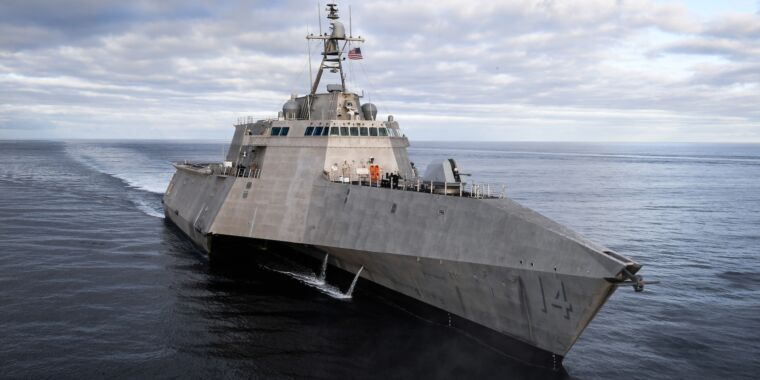
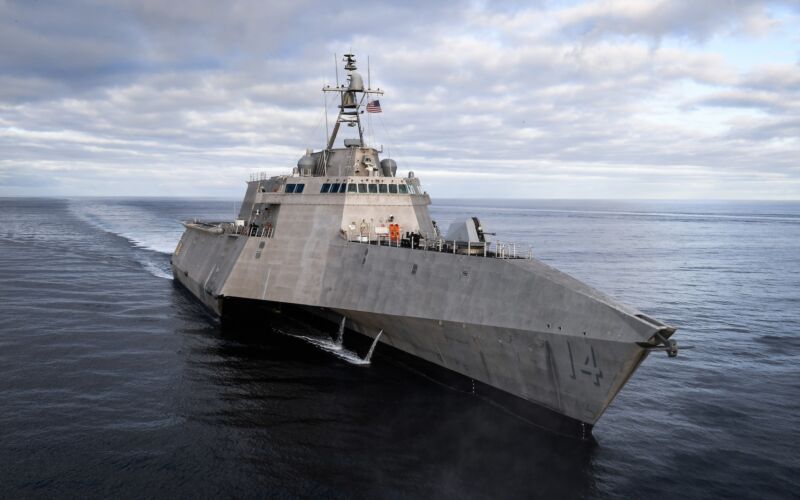
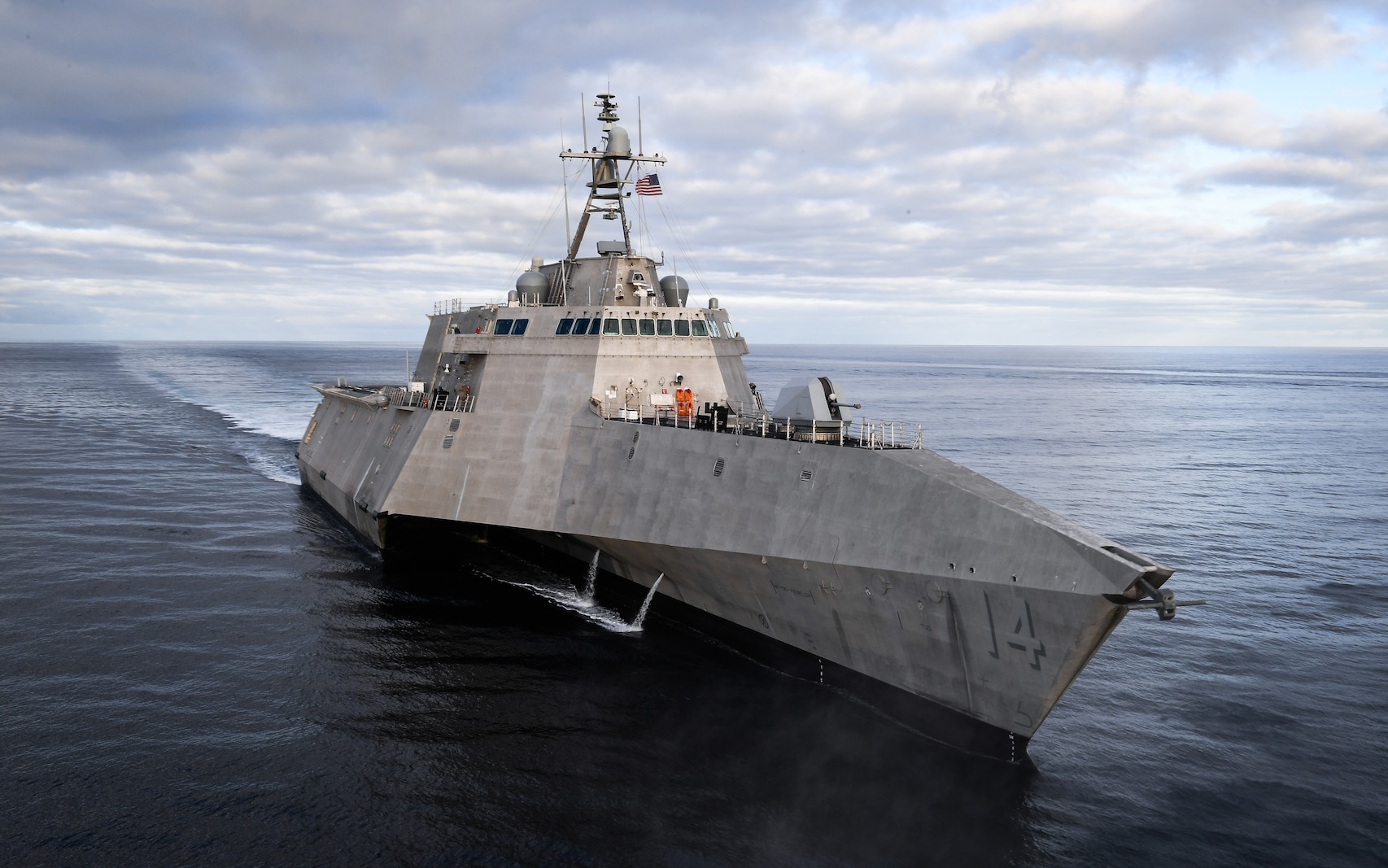
A photo of the USS Manchester.

Enlarge / The USS Manchester. Just the spot for a Starlink dish.

Department of Defense

It’s no secret that government IT can be a huge bummer. The records retention! The security! So government workers occasionally take IT into their own hands with creative but, err, unauthorized solutions.

For instance, a former US Ambassador to Kenya in 2015 got in trouble after working out of an embassy compound bathroom—the only place where he could use his personal computer (!) to access an unsecured network (!!) that let him log in to Gmail (!!!), where he did much of his official business—rules and security policies be damned.

Still, the ambassador had nothing on senior enlisted crew members of the littoral combat ship USS Manchester, who didn’t like the Navy’s restriction of onboard Internet access. In 2023, they decided that the best way to deal with the problem was to secretly bolt a Starlink terminal to the “O-5 level weatherdeck” of a US warship.

They called the resulting Wi-Fi network “STINKY”—and when officers on the ship heard rumors and began asking questions, the leader of the scheme brazenly lied about it. Then, when exposed, she went so far as to make up fake Starlink usage reports suggesting that the system had only been accessed while in port, where cybersecurity and espionage concerns were lower.

Rather unsurprisingly, the story ends badly, with a full-on Navy investigation and court-martial. Still, for half a year, life aboard the Manchester must have been one hell of a ride.

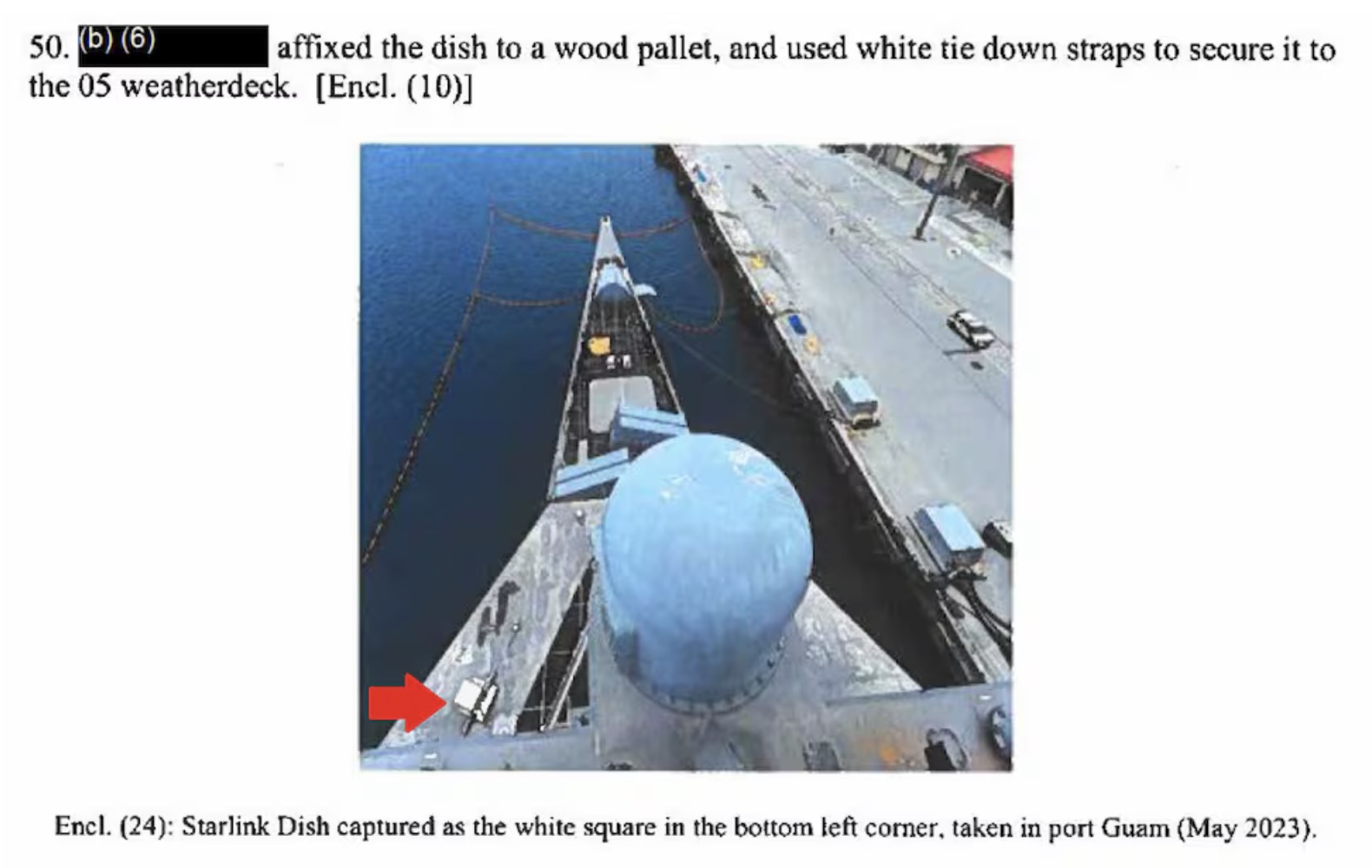
Enlarge / A photo included in the official Navy investigation report, showing the location of the hidden Starlink terminal on the USS Manchester.

DOD (through Navy Times)

One stinky solution

The Navy Times has all the new and gory details, and you should read their account, because they went to the trouble of using the Freedom of Information Act (FOIA) to uncover the background of this strange story. But the basics are simple enough: People are used to Internet access. They want it, even (perhaps especially!) when at sea on sensitive naval missions to Asia, where concern over Chinese surveillance and hacking runs hot.

So, in early 2023, while in the US preparing for a deployment, Command Senior Chief Grisel Marrero—the enlisted shipboard leader—led a scheme to buy a Starlink for $2,800 and to install it inconspicuously on the ship’s deck. The system was only for use by chiefs—not by officers or by most enlisted personnel—and a Navy investigation later revealed that at least 15 chiefs were in on the plan.

The Navy Times describes how Starlink was installed:

The Starlink dish was installed on the Manchester’s O-5 level weatherdeck during a “blanket” aloft period, which requires a sailor to hang high above or over the side of the ship.

During a “blanket” aloft, duties are not documented in the deck logs or the officer of the deck logs, according to the investigation.

It’s unclear who harnessed up and actually installed the system for Marrero due to redactions in the publicly released copy of the probe, but records show Marrero powered up the system the night before the ship got underway to the West Pacific waters of U.S. 7th Fleet.

This was all extremely risky, and the chiefs don’t appear to have taken amazing security precautions once everything was installed. For one thing, they called the network “STINKY.” For another, they were soon adding more gear around the ship, which was bound to raise further questions. The chiefs found that the Wi-Fi signal coming off the Starlink satellite transceiver couldn’t cover the entire ship, so during a stop in Pearl Harbor, they bought “signal repeaters and cable” to extend coverage.

Sailors on the ship then began finding the STINKY network and asking questions about it. Some of these questions came to Marrero directly, but she denied knowing anything about the network… and then privately changed its Wi-Fi name to “another moniker that looked like a wireless printer—even though no such general-use wireless printers were present on the ship, the investigation found.”

Marrero even went so far as to remove questions about the network from the commanding officer’s “suggestion box” aboard ship to avoid detection.

Finding the stench

Ship officers heard the scuttlebutt about STINKY, of course, and they began asking questions and doing inspections, but they never found the concealed device. On August 18, though, a civilian worker from the Naval Information Warfare Center was installing an authorized SpaceX “Starshield” device and came across the unauthorized SpaceX device hidden on the weatherdeck.

Marrero’s attempt to create fake data showing that the system had only been used in port then failed spectacularly due to the “poorly doctored” statements she submitted. At that point, the game was up, and Navy investigators looked into the whole situation.

All of the chiefs who used, paid for, or even knew about the system without disclosing it were given “administrative nonjudicial punishment at commodore’s mast,” said Navy Times.

Marrero herself was relieved of her post last year, and she pled guilty during a court-martial this spring.

So there you go, kids: two object lessons in poor decision-making. Whether working from an embassy bathroom or the deck of a littoral combat ship, if you’re a government employee, think twice before giving in to the sweet temptation of unsecured, unauthorized wireless Internet access.

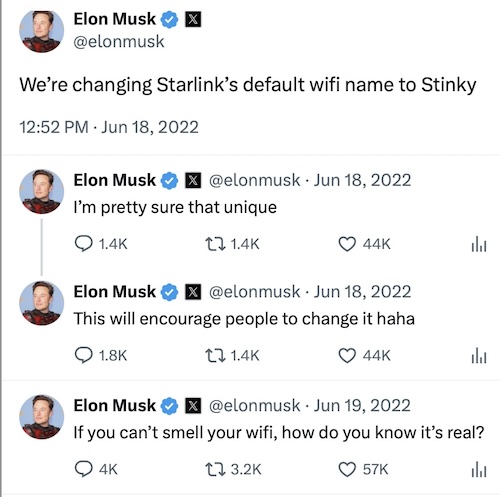
Update, Sept. 5, 3: 30pm: A reader has claimed that the default Starlink SSID is actually… “STINKY.” This seemed almost impossible to believe, but Elon Musk in fact tweeted about it in 2022, Redditors have reported it in the wild, and back in 2022 (thanks, Wayback Machine), the official Starlink FAQ said that the device’s “network name will appear as ‘STARLINK’ or ‘STINKY’ in device WiFi settings.” (A check of the current Starlink FAQ, however, shows that the default network name now is merely “STARLINK.”)

In other words, not only was this asinine conspiracy a terrible OPSEC idea, but the ringleaders didn’t even change the default Wi-Fi name until they started getting questions about it. Yikes.

2022 Twitter thread announcing that

2022 Twitter thread announcing that “STINKY” would be the default SSID for Starlink.

After seeing Wi-Fi network named “STINKY,” Navy found hidden Starlink dish on US warship Read More »
new-ai-model-“learns”-how-to-simulate-super-mario-bros.-from-video-footage

New AI model “learns” how to simulate Super Mario Bros. from video footage

At first glance, these AI-generated <em>Super Mario Bros.</em> videos are pretty impressive. The more you watch, though, the more glitches you’ll see.” src=”https://cdn.arstechnica.net/wp-content/uploads/2024/09/MarioVGG_output_grid.gif”></img><figcaption>
<p>At first glance, these AI-generated <em>Super Mario Bros.</em> videos are pretty impressive. The more you watch, though, the more glitches you’ll see.</p>
</figcaption></figure>
<p>Last month, Google’s GameNGen AI model showed that <a href=generalized image diffusion techniques can be used to generate a passable, playable version of Doom. Now, researchers are using some similar techniques with a model called MarioVGG to see if an AI model can generate plausible video of Super Mario Bros. in response to user inputs.

The results of the MarioVGG model—available as a pre-print paper published by the crypto-adjacent AI company Virtuals Protocol—still display a lot of apparent glitches, and it’s too slow for anything approaching real-time gameplay at the moment. But the results show how even a limited model can infer some impressive physics and gameplay dynamics just from studying a bit of video and input data.

The researchers hope this represents a first step toward “producing and demonstrating a reliable and controllable video game generator,” or possibly even “replacing game development and game engines completely using video generation models” in the future.

Watching 737,000 frames of Mario

To train their model, the MarioVGG researchers (GitHub users erniechew and Brian Lim are listed as contributors) started with a public data set of Super Mario Bros. gameplay containing 280 “levels'” worth of input and image data arranged for machine-learning purposes (level 1-1 was removed from the training data so images from it could be used in the evaluation). The more than 737,000 individual frames in that data set were “preprocessed” into 35 frame chunks so the model could start to learn what the immediate results of various inputs generally looked like.

To “simplify the gameplay situation,” the researchers decided to focus only on two potential inputs in the data set: “run right” and “run right and jump.” Even this limited movement set presented some difficulties for the machine-learning system, though, since the preprocessor had to look backward for a few frames before a jump to figure out if and when the “run” started. Any jumps that included mid-air adjustments (i.e., the “left” button) also had to be thrown out because “this would introduce noise to the training dataset,” the researchers write.

  • MarioVGG takes a single gameplay frame and a text input action to generate multiple video frames.

  • The last frame of a generated video sequence can be used as the baseline for the next set of frames in the video.

  • The AI-generated arc of Mario’s jump is pretty accurate (even as the algorithm creates random obstacles as the screen “scrolls”).

  • MarioVGG was able to infer the physics of behaviors like running off a ledge or running into obstacles.

  • A particularly bad example of a glitch that causes Mario to simply disappear from the scene at points.

After preprocessing (and about 48 hours of training on a single RTX 4090 graphics card), the researchers used a standard convolution and denoising process to generate new frames of video from a static starting game image and a text input (either “run” or “jump” in this limited case). While these generated sequences only last for a few frames, the last frame of one sequence can be used as the first of a new sequence, feasibly creating gameplay videos of any length that still show “coherent and consistent gameplay,” according to the researchers.

New AI model “learns” how to simulate Super Mario Bros. from video footage Read More »
after-starliner,-nasa-has-another-big-human-spaceflight-decision-to-make

After Starliner, NASA has another big human spaceflight decision to make

Heat shield a hot decision —

“We still have a lot of work to do to close out the heat shield investigation.”

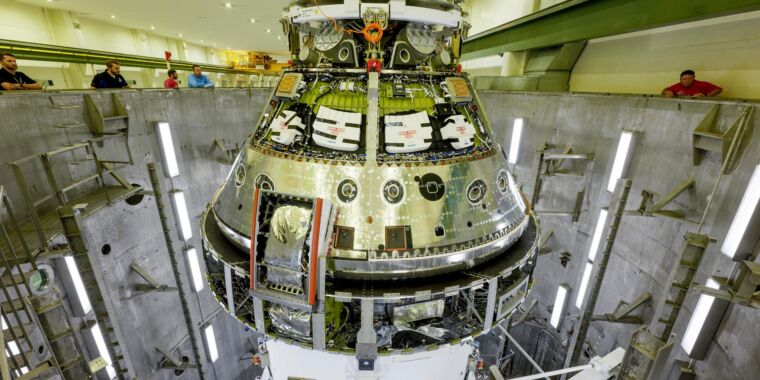
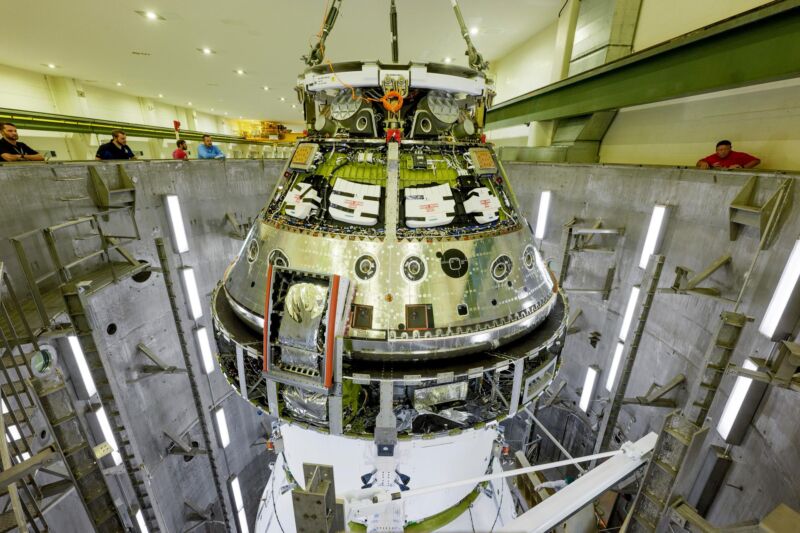
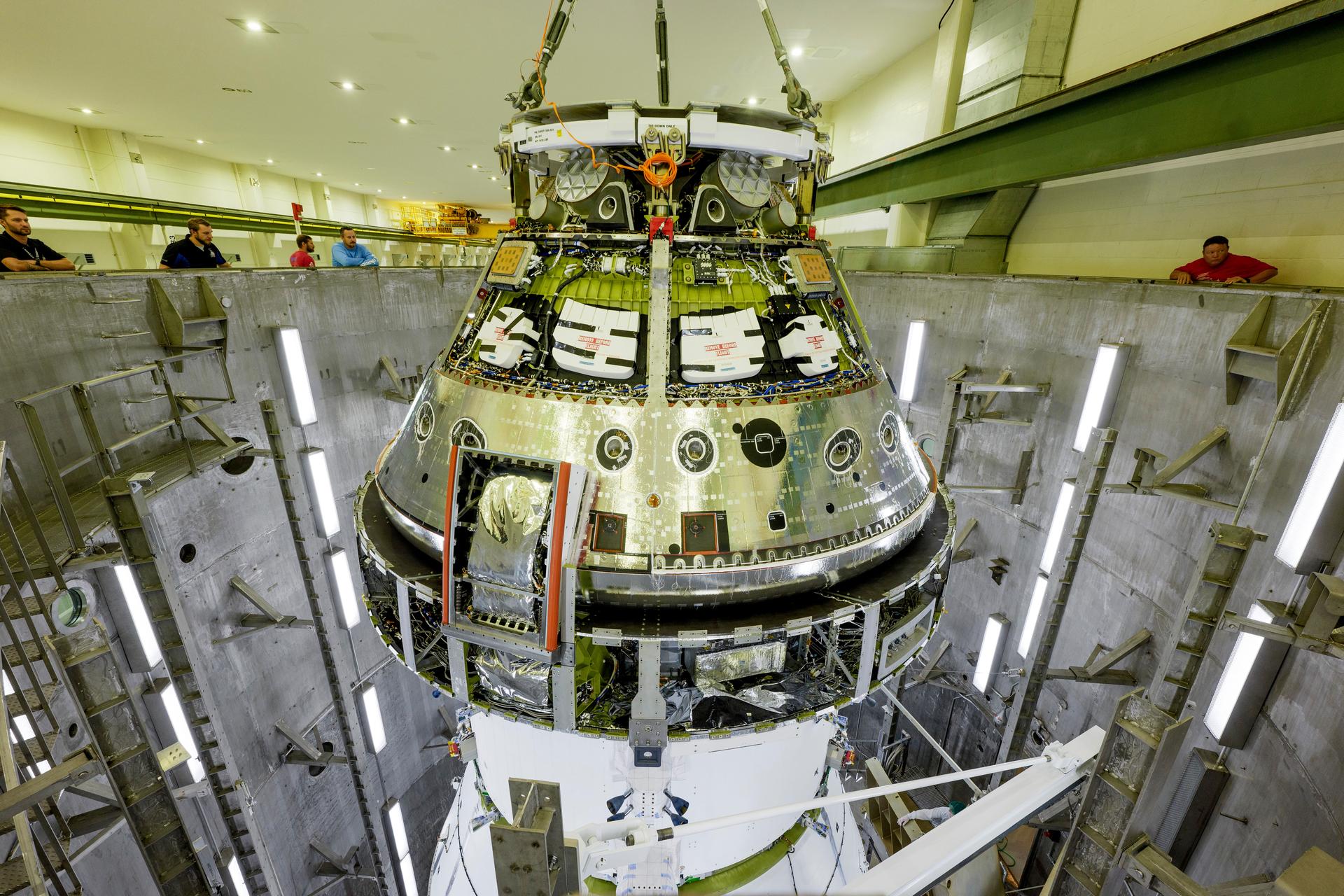
The Artemis II Orion spacecraft being prepared for tests at NASA’S Kennedy Space Center in Florida in June 2024.

Enlarge / The Artemis II Orion spacecraft being prepared for tests at NASA’S Kennedy Space Center in Florida in June 2024.

NASA / Rad Sinyak

Now that NASA has resolved the question of the Starliner spacecraft and its two crew members on the International Space Station, the agency faces another high-stakes human spaceflight decision.

The choice concerns the Orion spacecraft’s heat shield and whether NASA will make any changes before the Artemis II mission that will make a lunar flyby. Although Starliner has garnered a lot of media attention, this will be an even higher-profile decision for NASA, with higher consequences—four astronauts will be on board, and hundreds of millions, if not billions of people, will be watching humanity’s first deep space mission in more than five decades.

The issue is the safety of the heat shield, located at the base of the capsule, which protects Orion’s crew during its return to Earth. During the Artemis I mission that sent Orion beyond the Moon in late 2022, without astronauts on board, chunks of charred material cracked and chipped away from Orion’s heat shield during reentry into Earth’s atmosphere. Once the spacecraft landed, engineers found more than 100 locations where the stresses of reentry damaged the heat shield.

After assessing the issue for more than a year, NASA convened an “independent review team” to conduct its analysis of NASA’s work. Initially, this review team’s work was due to be completed in June, but its deliberations continued throughout much of the summer, and it only recently concluded.

The team’s findings are not public yet, but NASA essentially faces two choices with the heat shield: It can fly Artemis II with a similar heat shield that Orion used on Artemis I, or the agency can revamp the design and construct a new heat shield, likely delaying Artemis II from its September 2025 launch date for multiple years.

What they’re saying

In recent comments, NASA officials have been relatively tight-lipped when asked how the heat shield issue will be resolved:

  • NASA Administrator Bill Nelson, in an interview with Ars, in early August: “They are still deciding. I’m very confident [in a launch date of September 2025] unless there is the problem with the heat shield. Obviously, that would be a big hit. But I have no indication at this point that the final recommendation is going to be to go with another heat shield.”
  • NASA Associate Administrator Jim Free, in conversation with Ars, in late August: “That’s on a good path right now.”
  • NASA Associate Administrator for Exploration Systems Development, Catherine Koerner, in an interview with Ars in mid-August: “The entire trade space is open. But as far as the actual Artemis II mission, right now, we’re still holding to the September ’25 launch date, knowing that we still have a lot of work to do to close out the heat shield investigation.”
  • NASA Deputy Associate Administrator for Moon to Mars Program Amit Kshatriya to the NASA Advisory Committee in late August: “The independent review team has just wrapped up their analysis, so I expect that to close out. We should have a disposition there in terms of how they incorporate those findings.”

In summary, the Independent Review Team’s work is done, and it has begun to brief NASA officials. A final decision will then be made by NASA’s senior leadership.

What happens now

In preparation for Artemis II, the Orion spacecraft underwent thermal and vacuum testing this year before it will be stacked onto the Space Launch System rocket. Initially, NASA planned to begin the stacking process this month but ultimately delayed this until there was clarity on the heat shield question. The shield is already attached to the spacecraft.

Most people Ars spoke to believe NASA will likely fly with the heat shield as is. Sources have indicated that NASA engineers believe the best way to preserve the heat shield during Artemis II is by changing its trajectory through Earth’s atmosphere.

The inspector general's report May 1 included new images of Orion's heat shield.

The inspector general’s report May 1 included new images of Orion’s heat shield.

NASA Inspector General

During Artemis I, the spacecraft followed a “skip” reentry profile, in which Orion dipped into the atmosphere, skipped back into space, and then made a final descent into the atmosphere. This allowed for precise control over Orion’s splashdown location and reduced g-forces on the vehicle. There are other options, including a ballistic reentry, with a steeper trajectory that is harder on the crew in terms of gravitational forces, and a direct reentry, which involves a miniature skip.

A steeper trajectory would allow Orion’s heat shield to be exposed to atmospheric heating and air resistance for a shorter period of time. NASA engineers believe that the cracking issues observed during Artemis I were due to the duration of exposure to atmospheric heating. So less time—theoretically—means that there would be less damage observed during the reentry of Orion during Artemis II.

After Starliner, NASA has another big human spaceflight decision to make Read More »

natural-piezoelectric-effect-may-build-gold-deposits

Natural piezoelectric effect may build gold deposits

Building the bling —

How does an unreactive, barely soluble metal end up forming giant chunks?

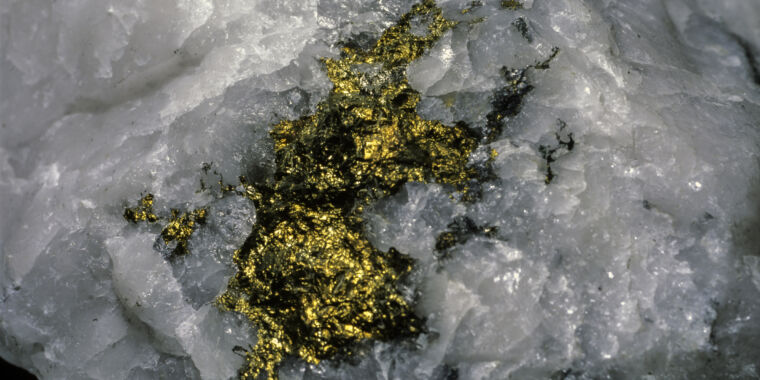
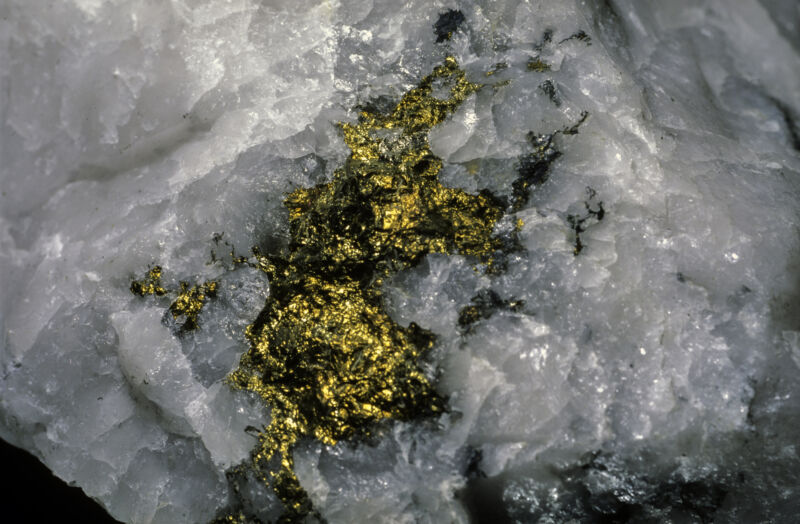
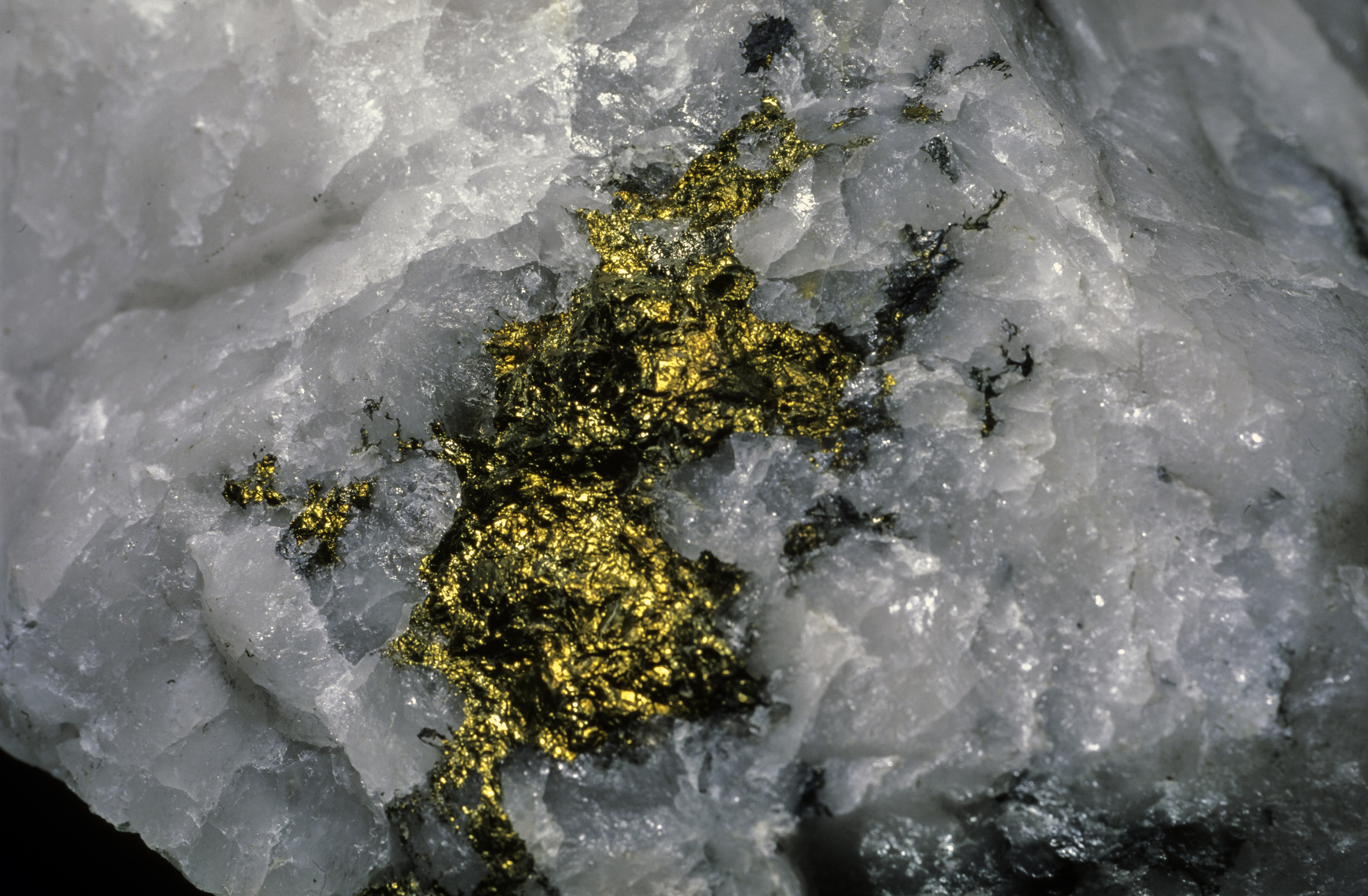
Image of a white rock with gold and black deposits speckled throughout it.

Enlarge / A lot of gold deposits are found embedded in quartz crystals.

One of the reasons gold is so valuable is because it is highly unreactive—if you make something out of gold, it keeps its lustrous radiance. Even when you can react it with another material, it’s also barely soluble, a combination that makes it difficult to purify away from other materials. Which is part of why a large majority of the gold we’ve obtained comes from deposits where it is present in large chunks, some of them reaching hundreds of kilograms.

Those of you paying careful attention to the previous paragraph may have noticed a problem here: If gold is so difficult to get into its pure form, how do natural processes create enormous chunks of it? On Monday, a group of Australian researchers published a hypothesis, and a bit of evidence supporting it. They propose that an earthquake-triggered piezoelectric effect essentially electroplates gold onto quartz crystals.

The hypothesis

Approximately 75 percent of the gold humanity has obtained has come from what are called orogenic gold deposits. Orogeny is a term for the tectonic processes that build mountains, and orogenic gold deposits form in the seams where two bodies of rock are moving past each other. These areas are often filled with hot hydrothermal fluids, and the heat can increase the solubility of gold from “barely there” to “extremely low,” meaning generally less than a single milligram in a liter of water.

The other striking thing about these deposits is that they’re generally associated with the mineral quartz, a crystalline form of silicon dioxide. And that fact formed the foundation for the new hypothesis, which brings together a number of topics that are generally considered largely unrelated.

It turns out that quartz is the only abundant mineral that’s piezoelectric, meaning that it generates a charge when it’s placed under strain. While you don’t need to understand why that’s the case to follow this hypothesis, the researchers’ explanation of the piezoelectric effect is remarkably cogent and clear, so I’ll just quote it here for people who want to come away from this having learned something: “Quartz is the only common mineral that forms crystals lacking a center of symmetry (non-centrosymmetric). Non-centrosymmetric crystals distorted under stress have an imbalance in their internal electric configuration, which produces an electrical potential—or voltage—across the crystal that is directly proportional to the applied mechanical force.”

Quartz happens to be an insulator, so this electric potential doesn’t easily dissipate on its own. It can, however, be eliminated through the transfer of electrons to or from any materials that touch the quartz crystals, including fluids. In practice, that means the charge can drive redox (reduction/oxidation) reactions in any nearby fluids, potentially neutralizing any dissolved ions and causing them to come out of solution.

This has the potential to be self-reinforcing. Once a small metal deposit forms on the surface of quartz, it will ease the exchange of electrons with the fluid in its immediate vicinity, meaning more metal will be deposited in the same location. This will also lower the concentration of the metal in the nearby solution, which will favor the diffusion of additional metal ions into the location, meaning that the fluid itself doesn’t need to keep circulating past the same spot.

Finally, the concept also needs a source of strain to generate the piezoelectric effect in the first place. But remember that this is all happening in an active fault zone, so strain is not in short supply.

And the evidence

Figuring out whether this happens in active fault zones would be extremely challenging for all sorts of reasons. But it’s relatively easy to dunk some quartz crystals in a solution containing gold and see what happens. So the latter is the route the Australians took.

The gold came in the form of either a solution of gold chloride ions or a suspension of gold nanoparticles. Quartz crystals were either pure quartz or obtained from a gold-rich area and already contained some small gold deposits. The crystals themselves were subject to strain at a frequency similar to that produced by small earthquakes, and the experiment was left to run for an hour.

An hour was enough to get small gold deposits to form on the pure quartz crystals, regardless of whether it was from dissolved gold or suspended gold nanoparticles. In the case of the naturally formed quartz, the gold ended up being deposited on the existing sites where gold metal is present, rather than forming additional deposits.

The researchers note that a lot of the quartz in deposits is disordered rather than in the form of single crystals. In disordered material, there are lots of small crystals oriented randomly, meaning the piezoelectric effect of any one of these crystals is typically canceled out by its neighbors. So, gold will preferentially form on single crystals, which also helps explain why it’s found in large lumps in these deposits.

So, this is a pretty compelling hypothesis—it explains something puzzling, relies on well-established processes, and has a bit of experimental support. Given that activity in active faults is likely to remain both slow and inaccessible, the next steps are probably going to involve getting longer-term information on the rate of deposition through this process and a physical comparison of these deposits with those found in natural settings.

Nature Geoscience, 2024. DOI: 10.1038/s41561-024-01514-1  (About DOIs).

Natural piezoelectric effect may build gold deposits Read More »
cops’-favorite-face-image-search-engine-fined-$33m-for-privacy-violation

Cops’ favorite face image search engine fined $33M for privacy violation

Cops’ favorite face image search engine fined $33M for privacy violation

A controversial facial recognition tech company behind a vast face image search engine widely used by cops has been fined approximately $33 million in the Netherlands for serious data privacy violations.

According to the Dutch Data Protection Authority (DPA), Clearview AI “built an illegal database with billions of photos of faces” by crawling the web and without gaining consent, including from people in the Netherlands.

Clearview AI’s technology—which has been banned in some US cities over concerns that it gives law enforcement unlimited power to track people in their daily lives—works by pulling in more than 40 billion face images from the web without setting “any limitations in terms of geographical location or nationality,” the Dutch DPA found. Perhaps most concerning, the Dutch DPA said, Clearview AI also provides “facial recognition software for identifying children,” therefore indiscriminately processing personal data of minors.

Training on the face image data, the technology then makes it possible to upload a photo of anyone and search for matches on the Internet. People appearing in search results, the Dutch DPA found, can be “unambiguously” identified. Billed as a public safety resource accessible only by law enforcement, Clearview AI’s face database casts too wide a net, the Dutch DPA said, with the majority of people pulled into the tool likely never becoming subject to a police search.

“The processing of personal data is not only complex and extensive, it moreover offers Clearview’s clients the opportunity to go through data about individual persons and obtain a detailed picture of the lives of these individual persons,” the Dutch DPA said. “These processing operations therefore are highly invasive for data subjects.”

Clearview AI had no legitimate interest under the European Union’s General Data Protection Regulation (GDPR) for the company’s invasive data collection, Dutch DPA Chairman Aleid Wolfsen said in a press release. The Dutch official likened Clearview AI’s sprawling overreach to “a doom scenario from a scary film,” while emphasizing in his decision that Clearview AI has not only stopped responding to any requests to access or remove data from citizens in the Netherlands, but across the EU.

“Facial recognition is a highly intrusive technology that you cannot simply unleash on anyone in the world,” Wolfsen said. “If there is a photo of you on the Internet—and doesn’t that apply to all of us?—then you can end up in the database of Clearview and be tracked.”

To protect Dutch citizens’ privacy, the Dutch DPA imposed a roughly $33 million fine that could go up by about $5.5 million if Clearview AI does not follow orders on compliance. Any Dutch businesses attempting to use Clearview AI services could also face “hefty fines,” the Dutch DPA warned, as that “is also prohibited” under the GDPR.

Clearview AI was given three months to appoint a representative in the EU to stop processing personal data—including sensitive biometric data—in the Netherlands and to update its privacy policies to inform users in the Netherlands of their rights under the GDPR. But the company only has one month to resume processing requests for data access or removals from people in the Netherlands who otherwise find it “impossible” to exercise their rights to privacy, the Dutch DPA’s decision said.

It appears that Clearview AI has no intentions to comply, however. Jack Mulcaire, the chief legal officer for Clearview AI, confirmed to Ars that the company maintains that it is not subject to the GDPR.

“Clearview AI does not have a place of business in the Netherlands or the EU, it does not have any customers in the Netherlands or the EU, and does not undertake any activities that would otherwise mean it is subject to the GDPR,” Mulcaire said. “This decision is unlawful, devoid of due process and is unenforceable.”

But the Dutch DPA found that GDPR applies to Clearview AI because it gathers personal information about Dutch citizens without their consent and without ever alerting users to the data collection at any point.

“People who are in the database also have the right to access their data,” the Dutch DPA said. “This means that Clearview has to show people which data the company has about them, if they ask for this. But Clearview does not cooperate in requests for access.”

Dutch DPA vows to investigate Clearview AI execs

In the press release, Wolfsen said that the Dutch DPA has “to draw a very clear line” underscoring the “incorrect use of this sort of technology” after Clearview AI refused to change its data collection practices following fines in other parts of the European Union, including Italy and Greece.

While Wolfsen acknowledged that Clearview AI could be used to enhance police investigations, he said that the technology would be more appropriate if it was being managed by law enforcement “in highly exceptional cases only” and not indiscriminately by a private company.

“The company should never have built the database and is insufficiently transparent,” the Dutch DPA said.

Although Clearview AI appears ready to defend against the fine, the Dutch DPA said that the company failed to object to the decision within the provided six-week timeframe and therefore cannot appeal the decision.

Further, the Dutch DPA confirmed that authorities are “looking for ways to make sure that Clearview stops the violations” beyond the fines, including by “investigating if the directors of the company can be held personally responsible for the violations.”

Wolfsen claimed that such “liability already exists if directors know that the GDPR is being violated, have the authority to stop that, but omit to do so, and in this way consciously accept those violations.”

Cops’ favorite face image search engine fined $33M for privacy violation Read More »

blood-puddles,-mold,-tainted-meat,-bugs:-boar’s-head-inspections-are-horrifying

Blood puddles, mold, tainted meat, bugs: Boar’s Head inspections are horrifying

“ample amounts of blood” —

The USDA recorded 69 violations in a year. So far, 9 people have died in the outbreak.

A recall notice is posted next to Boar's Head meats that are displayed at a Safeway store on July 31, 2024, in San Rafael, California.

Enlarge / A recall notice is posted next to Boar’s Head meats that are displayed at a Safeway store on July 31, 2024, in San Rafael, California.

Federal inspections found 69 violations—many grisly—at the Boar’s Head meat facility at the center of a deadly, nationwide Listeria outbreak that has now killed nine people, sickened and hospitalized a total of 57 across 18 states, and spurred the nationwide recall of more than 7 million pounds of meat.

The Jarratt, Virginia-based facility had repeated problems with mold, water leaks, dirty equipment and rooms, meat debris stuck on walls and equipment, various bugs, and, at one point, puddles of blood on the floor, according to inspection reports from the US Department of Agriculture’s Food Safety and Inspection Services. The reports were obtained by CBS News through a Freedom of Information Act Request. In all, the reports outline 69 violations just between the dates of August 1, 2023, and August 2, 2024.

The findings in the reports reveal the perfect conditions for the company’s meat to become contaminated with the germ behind the deadly outbreak, Listeria monocytogenes. This is a hardy germ that is ubiquitous in the environment, including in soil and water, and it spreads among people via the fecal-oral route. In healthy people, it usually only causes gastrointestinal infections. But for older people, newborns, and the immunocompromised, it can cause a life-threatening invasive infection with a fatality rate of around 17 percent. It’s also a significant danger to pregnant people, causing miscarriage, stillbirth, premature delivery, and life-threatening infections in newborns.

While it’s always lurking, L. monocytogenes especially plagues the food industry because it has the notable ability to reproduce at refrigerator temperatures—a condition that typically limits the growth of other nasty germs.

Buildup and bugs

In the Boar’s Head facility, L. monocytogenes appeared to have various opportunities to beef up its numbers. For one, the facility had a long track record of trash and meat debris in various places, which was sometimes reported alongside insect sightings. For instance, on June 10, an inspector entered the “pickle vat pump room” and noted “heavy meat buildup” on the walls, which were also crawling with flies and gnats. On the same day, an inspection of a different area found a rollup door with meat buildup on it, and a water pipe over the door leaked a steady stream of water down the wall and onto the floor. There was also a “steady line of ants” and an inventory of ladybugs, a cockroach, and a beetle of some sort.  Earlier, on March 13, an inspection of a room next to where netted hams were handled, an inspector found trash and meat protein on the floor, including “whole pork muscles.”

Going back to August 8, 2023, an inspection likewise found processing lines covered in meat particles and trash. “Heavy discolored meat buildup” was found covering a hydraulic pump, and pieces of meat and fat clung to the support braces of a catwalk. An inspection-line scale had meat pieces and trash in it—and it smelled bad. “Multiple instances of meat were found around the department on the floor. As well as standing water containing a brown mud/dirt-like substance,” the inspection read.

The facility had numerous problems with water leaks and condensation, which fits with the other numerous sightings of mold. The facility temporarily fixed water pipe leaks by wrapping the pipes in plastic. On October 26, an inspector noticed a plastic-wrapped pipe in the cure cooler. The plastic was dated August 17, and there was “orange/brown water pooled in the lowest hanging point.”

Bubbles and blood

On January 9, the inspection of a holding cooler found spots of black mold as large as a quarter throughout the room. On July 23, an inspector noticed bubbled paint on the wall around employee hand-washing sinks. The bubbles were filled with water. And under the sinks, the inspector found black mold and pink mildew.

On July 17, the inspector found “green algal growth” in a puddle of standing water in a raw holding cooler. And on July 27, an inspector noted clear liquid leaking out from a square patch on the ceiling. Behind the patch, there were two other patches that were also leaking. An employee came and wiped the liquid away with a sponge, but it returned within 10 seconds. The employee wiped it again, and the liquid again returned within 10 seconds. Meanwhile, a ceiling fan mounted close by was blowing the leaking liquid onto uncovered hams in a hallway outside the room.

To top if off, a report on February 21 found a raw cooler with “ample amounts of blood in puddles on the floor” and a “rancid smell.”

According to USDA documents, the agency has not taken enforcement actions against Boar’s Head, and there is no data available on swab testing for Listeria at the Virginia facility. The plant has been shut down since late July after health investigators found the outbreak strain of L. monocytogenes in unopened containers of Boar’s Head liverwurst.

In a statement updated on August 29, Boar’s Head said, “We are conducting an extensive investigation, working closely with the USDA and government regulatory agencies, as well as with the industry’s leading food safety experts, to determine how our liverwurst produced at our Jarratt, Virginia facility was adulterated and to prevent it from happening again… We will not resume operations at this facility until we are confident that it meets USDA regulatory standards and Boar’s Head’s highest quality and safety standards.”

Blood puddles, mold, tainted meat, bugs: Boar’s Head inspections are horrifying Read More »

gen-ai-alexa-to-use-anthropic-tech-after-it-“struggled-for-words”-with-amazon’s

Gen AI Alexa to use Anthropic tech after it “struggled for words” with Amazon’s

Subscription Alexa —

Amazon’s $4 billion investment in Anthropic has been under investigation.

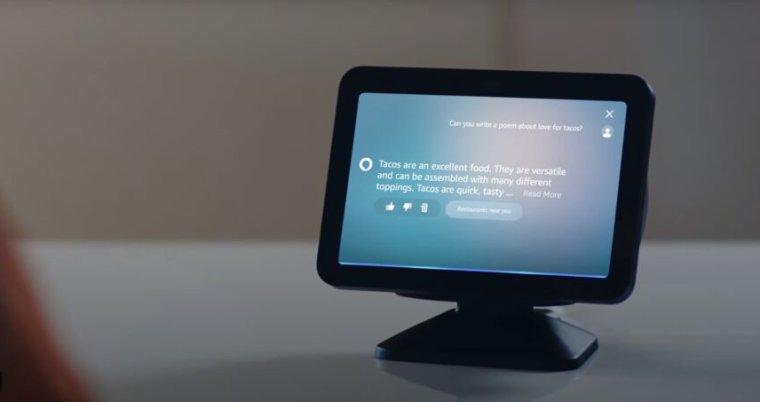
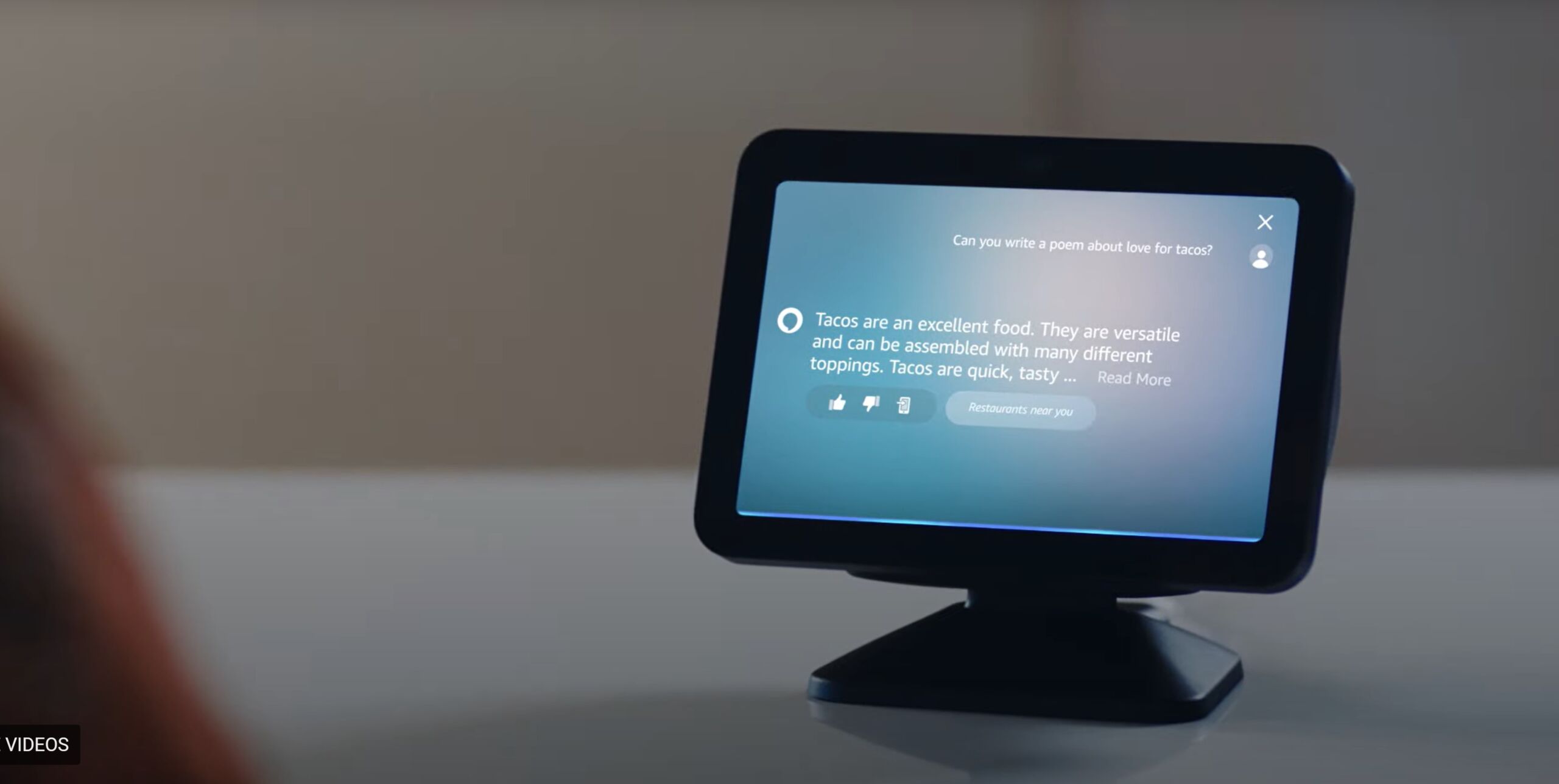
Amazon Alexa using generative AI on an Echo Show

Enlarge / Generative AI Alexa asked to make a taco poem.

The previously announced generative AI version of Amazon’s Alexa voice assistant “will be powered primarily by Anthropic’s Claude artificial intelligence models,” Reuters reported today. This comes after challenges with using proprietary models, according to the publication, which cited five anonymous people “with direct knowledge of the Alexa strategy.”

Amazon demoed a generative AI version of Alexa in September 2023 and touted it as being more advanced, conversational, and capable, including the ability to do multiple smart home tasks with simpler commands. Gen AI Alexa is expected to come with a subscription fee, as Alexa has reportedly lost Amazon tens of billions of dollars throughout the years. Earlier reports said the updated voice assistant would arrive in June, but Amazon still hasn’t confirmed an official release date.

Now, Reuters is reporting that Amazon will no longer use its own large language models as the new Alexa’s primary driver. Early versions of gen AI Alexa based on Amazon’s AI models “struggled for words, sometimes taking six or seven seconds to acknowledge a prompt and reply,” Reuters said, citing one of its sources. Without specifying versions or features used, Reuters’ sources said Claude outperformed proprietary software.

In a statement to Reuters, Amazon didn’t deny using third-party models but claimed that its own tech is still part of Alexa:

Amazon uses many different technologies to power Alexa.

When it comes to machine learning models, we start with those built by Amazon, but we have used, and will continue to use, a variety of different models—including (Amazon AI model) Titan and future Amazon models, as well as those from partners—to build the best experience for customers.

Amazon has invested $4 billion in Anthropic (UK regulators are currently investigating this). It’s uncertain if Amazon’s big investment in Anthropic means that Claude can be applied to Alexa for free. Anthropic declined to comment on Reuters’ report.

The new Alexa may be delayed

On Monday, The Washington Post reported that Amazon wants to launch the new Alexa in October, citing internal documents. However, Reuters’ sources claimed that this date could be pushed back if the voice assistant fails certain unspecified internal benchmarks.

The Post said gen AI Alexa could cost up to $10 per month, according to the documents. That coincides with a June Reuters report saying that the service would cost $5 to $10 per month. The Post said Amazon would finalize pricing and naming in August.

But getting people to open their wallets for a voice assistant already associated with being free will be difficult (free Alexa is expected to remain available after the subscription version releases). Some Amazon employees are questioning if people will really pay for Alexa, Reuters noted. Amazon is facing an uphill battle with generative AI, which is being looked at as a last shot for Alexa amid big competition and leads from other AI offerings, including free ones like ChatGPT.

In June, Bank of America analysts estimated that Amazon could make $600 million to $1.2 billion in annual sales with gen AI Alexa, depending on final monthly pricing. This is under the assumption that 10 percent of an estimated 100 million active Alexa users (Amazon says it has sold 500 million Alexa-powered gadgets) will upgrade. But analysts noted that free alternatives would challenge the adoption rate.

The Post’s Monday report said the new Alexa will try winning over subscribers with features like AI-generated news summaries. This Smart Briefing feature will reportedly share summaries based on user preferences on topics including politics, despite OG Alexa’s previous problems with reporting accurate election results. The publication also said that gen AI Alexa would include “a chatbot aimed at children” and “conversational shopping tools.”

Gen AI Alexa to use Anthropic tech after it “struggled for words” with Amazon’s Read More »