Author name: Rejus Almole

microsoft-releases-a-new-windows-app-called-windows-app-for-running-windows-apps

Microsoft releases a new Windows app called Windows App for running Windows apps

heard you like apps —

Windows App replaces Microsoft Remote Desktop on macOS, iOS, and Android.
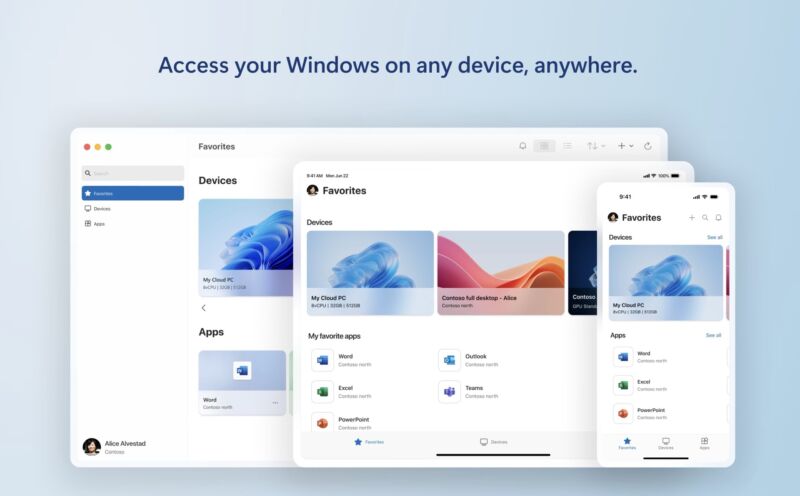
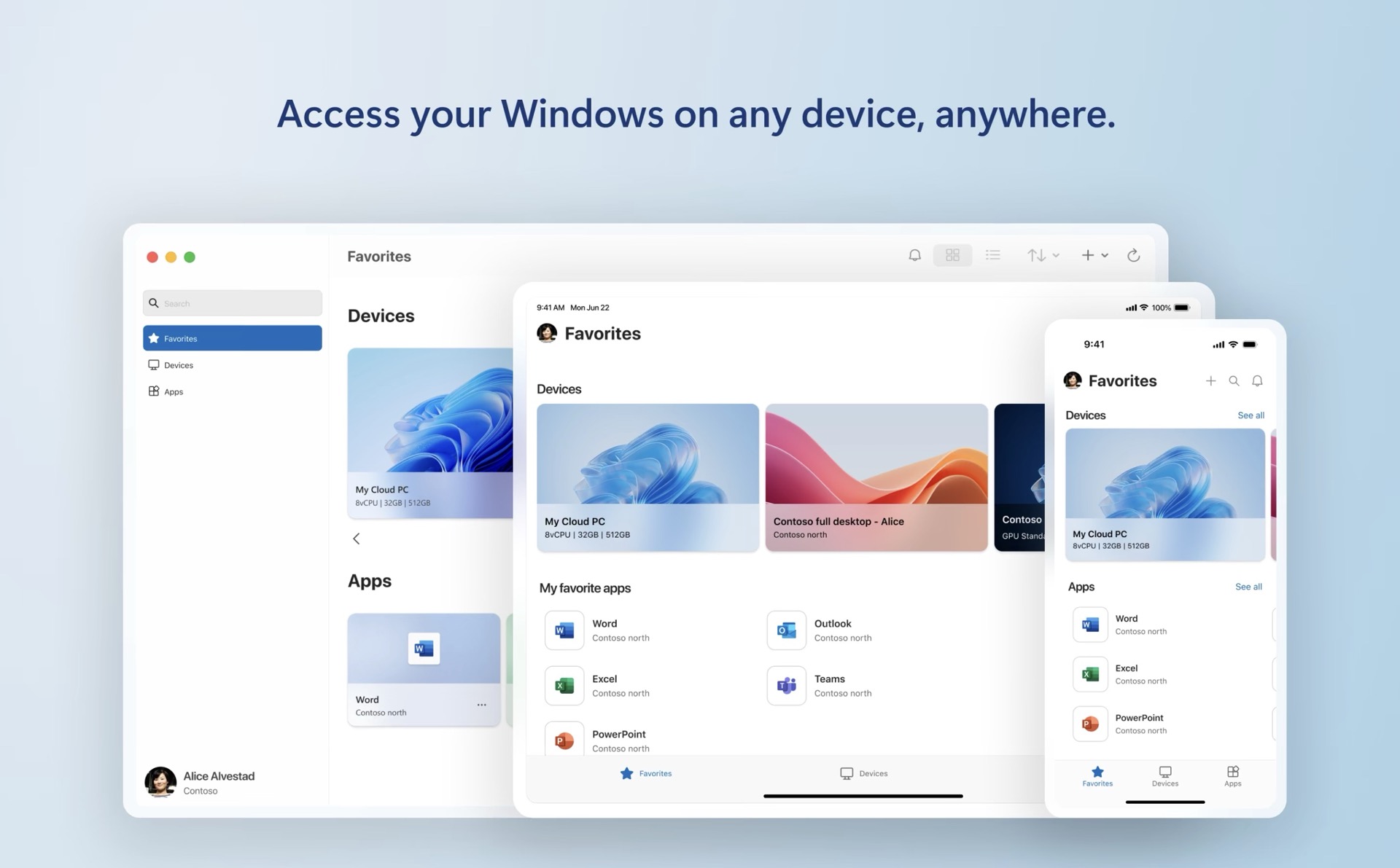
The Windows App runs on Windows, but also macOS, iOS/iPadOS, web browsers, and Android.

Enlarge / The Windows App runs on Windows, but also macOS, iOS/iPadOS, web browsers, and Android.

Microsoft

Microsoft announced today that it’s releasing a new app called Windows App as an app for Windows that allows users to run Windows and also Windows apps (it’s also coming to macOS, iOS, web browsers, and is in public preview for Android).

On most of those platforms, Windows App is a replacement for the Microsoft Remote Desktop app, which was used for connecting to a copy of Windows running on a remote computer or server—for some users and IT organizations, a relatively straightforward way to run Windows software on devices that aren’t running Windows or can’t run Windows natively.

The new name, though potentially confusing, attempts to sum up the app’s purpose: It’s a unified way to access your own Windows PCs with Remote Desktop access turned on, cloud-hosted Windows 365 and Microsoft Dev Box systems, and individual remotely hosted apps that have been provisioned by your work or school.

“This unified app serves as your secure gateway to connect to Windows across Windows 365, Azure Virtual Desktop, Remote Desktop, Remote Desktop Services, Microsoft Dev Box, and more,” reads the post from Microsoft’s Windows 365 Senior Product Manager Hilary Braun.

Microsoft says that aside from unifying multiple services into a single app, Windows App’s enhancements include easier account switching, better device management for IT administrators, support for the version of Windows 365 for frontline workers, and support for Microsoft’s “Relayed RDP Shortpath,” which can enable Remote Desktop on networks that normally wouldn’t allow it.

On macOS, iOS, and Android, the Windows App is a complete replacement for the Remote Desktop Connection app—if you have Remote Desktop installed, an update will change it to the Windows App. On Windows, the Remote Desktop Connection remains available, and Windows App is only used for Microsoft’s other services; it also requires some kind of account sign-in on Windows, while it works without a user account on other platforms.

For connections to your own Remote Desktop-equipped PCs, Windows App has most of the same features and requirements as the Remote Desktop Connection app did before, including support for multiple monitors, device redirection for devices like webcams and audio input/output, and dynamic resolution support (so that your Windows desktop resizes as you resize the app window).

Microsoft releases a new Windows app called Windows App for running Windows apps Read More »
creator-of-fake-kamala-harris-video-musk-boosted-sues-calif.-over-deepfake-laws

Creator of fake Kamala Harris video Musk boosted sues Calif. over deepfake laws

Creator of fake Kamala Harris video Musk boosted sues Calif. over deepfake laws

After California passed laws cracking down on AI-generated deepfakes of election-related content, a popular conservative influencer promptly sued, accusing California of censoring protected speech, including satire and parody.

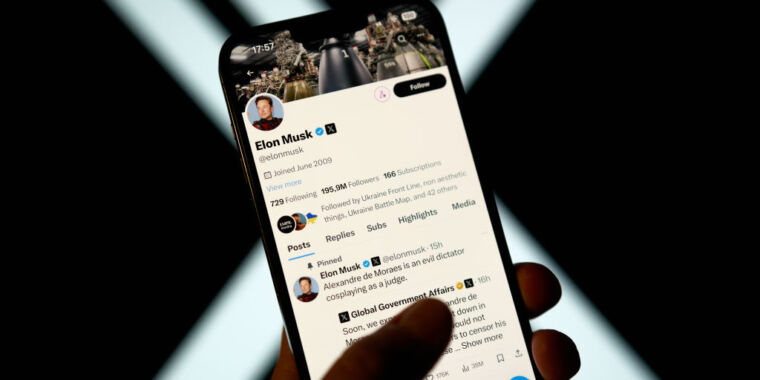
In his complaint, Christopher Kohls—who is known as “Mr Reagan” on YouTube and X (formerly Twitter)—said that he was suing “to defend all Americans’ right to satirize politicians.” He claimed that California laws, AB 2655 and AB 2839, were urgently passed after X owner Elon Musk shared a partly AI-generated parody video on the social media platform that Kohls created to “lampoon” presidential hopeful Kamala Harris.

AB 2655, known as the “Defending Democracy from Deepfake Deception Act,” prohibits creating “with actual malice” any “materially deceptive audio or visual media of a candidate for elective office with the intent to injure the candidate’s reputation or to deceive a voter into voting for or against the candidate, within 60 days of the election.” It requires social media platforms to block or remove any reported deceptive material and label “certain additional content” deemed “inauthentic, fake, or false” to prevent election interference.

The other law at issue, AB 2839, titled “Elections: deceptive media in advertisements,” bans anyone from “knowingly distributing an advertisement or other election communication” with “malice” that “contains certain materially deceptive content” within 120 days of an election in California and, in some cases, within 60 days after an election.

Both bills were signed into law on September 17, and Kohls filed his complaint that day, alleging that both must be permanently blocked as unconstitutional.

Elon Musk called out for boosting Kohls’ video

Kohls’ video that Musk shared seemingly would violate these laws by using AI to make Harris appear to give speeches that she never gave. The manipulated audio sounds like Harris, who appears to be mocking herself as a “diversity hire” and claiming that any critics must be “sexist and racist.”

“Making fun of presidential candidates and other public figures is an American pastime,” Kohls said, defending his parody video. He pointed to a long history of political cartoons and comedic impressions of politicians, claiming that “AI-generated commentary, though a new mode of speech, falls squarely within this tradition.”

While Kohls’ post was clearly marked “parody” in the YouTube title and in his post on X, that “parody” label did not carry over when Musk re-posted the video. This lack of a parody label on Musk’s post—which got approximately 136 million views, roughly twice as many as Kohls’ post—set off California governor Gavin Newsom, who immediately blasted Musk’s post and vowed on X to make content like Kohls’ video “illegal.”

In response to Newsom, Musk poked fun at the governor, posting that “I checked with renowned world authority, Professor Suggon Deeznutz, and he said parody is legal in America.” For his part, Kohls put up a second parody video targeting Harris, calling Newsom a “bully” in his complaint and claiming that he had to “punch back.”

Shortly after these online exchanges, California lawmakers allegedly rushed to back the governor, Kohls’ complaint said. They allegedly amended the deepfake bills to ensure that Kohls’ video would be banned when the bills were signed into law, replacing a broad exception for satire in one law with a narrower safe harbor that Kohls claimed would chill humorists everywhere.

“For videos,” his complaint said, disclaimers required under AB 2839 must “appear for the duration of the video” and “must be in a font size ‘no smaller than the largest font size of other text appearing in the visual media.'” For a satirist like Kohls who uses large fonts to optimize videos for mobile, this “would require the disclaimer text to be so large that it could not fit on the screen,” his complaint said.

On top of seeming impractical, the disclaimers would “fundamentally” alter “the nature of his message” by removing the comedic effect for viewers by distracting from what allegedly makes the videos funny—”the juxtaposition of over-the-top statements by the AI-generated ‘narrator,’ contrasted with the seemingly earnest style of the video as if it were a genuine campaign ad,” Kohls’ complaint alleged.

Imagine watching Saturday Night Live with prominent disclaimers taking up your TV screen, his complaint suggested.

It’s possible that Kohls’ concerns about AB 2839 are unwarranted. Newsom spokesperson Izzy Gardon told Politico that Kohls’ parody label on X was good enough to clear him of liability under the law.

“Requiring them to use the word ‘parody’ on the actual video avoids further misleading the public as the video is shared across the platform,” Gardon said. “It’s unclear why this conservative activist is suing California. This new disclosure law for election misinformation isn’t any more onerous than laws already passed in other states, including Alabama.”

Creator of fake Kamala Harris video Musk boosted sues Calif. over deepfake laws Read More »

fitbit-users-struggle-with-“very-frustrating”-app-bugs-for-months

Fitbit users struggle with “very frustrating” app bugs for months

iOS and Android —

People have been complaining about some of the issues since at least April.

Fitbit's Charge 6.

Enlarge / Fitbit’s Charge 6.

Google

Users of Fitbit’s iOS and Android apps have been reporting problems with the apps’ ability to sync and collect and display accurate data. Some have been complaining of such problems since at least April, and Fitbit has been working on addressing syncing issues since at least September 3. However, Google’s Fitbit hasn’t said when it expects the bugs to be totally resolved.

On September 3, Fitbit’s Status Dashboard updated to show a service disruption, pointing to an incident affecting the web API.

“Some users may notice data discrepancies or syncing issues between [third-party] apps and Fitbit. Our team is currently investigating the root cause of the issue,” the dashboard reads.

On September 3, Fitbit also released version 4.24 of its mobile apps. It’s unclear if the update is related to the problems. At least some of the complaints in this story started coming to light before September.

Owners of older and newer Fitbit devices have taken to the company’s online support forum to discuss software problems they’re reportedly having. There are several threads with dozens of pages’ worth of responses pointing to issues, like the app’s dashboard “deleting steps and not syncing properly,” the app recording steps but not distance traveled, the app seemingly showing inaccurate data, and other bugs.

When reached for comment about the complaints, a Google spokesperson told Ars Technica: “We’re aware of the issue and are working hard to get it resolved.”

Monthslong problems

Some of the complaints about the apps have seemingly gone on for months. Fitbit representatives have said online that the issues are being worked on.

For example, in an 11-page thread on Fitbit’s community forum, users say the app inaccurately claims that they’ve taken about the same number of steps per day for several days in a row. The thread began on April 10. On September 8, a Fitbit moderator said that Fitbit “is aware of the situation and is working on a solution to it.”

“We haven’t received any time frame yet, how long our team still needs to solve this. Hopefully it will be fixed soon,” the Fitbit moderator going by JuanFitbit said.

The Fitbit app.

The Fitbit app.

Google

In another thread, started on July 3, a Charge 5 user claimed that their iOS is tracking steps but not kilometers traveled. On September 18, JuanFitbit posted in the thread: “We still haven’t received an update on how long this will take. But our team has this problem as one of their priorities to solve.”

“Insanely annoying”

As expected, the ongoing bugs and broken features have left users frustrated and hungry for a solution.

“This is insanely annoying,” a forum user going by MonkeyPants wrote on September 11. “The app has constant syncing issues especially with the One.”

Since acquiring Fitbit in 2021, Google has ushered sweeping changes to the platform, including removing the online dashboard, social features, and the ability to sync Fitbits with computers. Some long-time Fitbit owners have accused Google of reducing Fitbit support and quality in favor of Google Pixel Watches. For its part, Google has denied that it will stop making Fitbit products.

On Fitbit’s forum, a user called DustyStone claimed they are having problems with the app’s dashboard losing steps and not syncing properly. They said this happened with both an old Fitbit One and newly purchased Inspire 3:

It looks that Google just somehow screwed up the app. Worse yet, nothing has changed in weeks. Google is a tier 1 tech company. But their response to this issue and the deletion of the web based Fitbit platform shows that may no longer be the case.

Similarly, MBWaldo said they are “not sure how serious the fitbit team is about resolving” the app problems while lamenting the lack of an online dashboard, like countless other users we’ve seen.

“Very frustrating!!!!,” MBWaldo wrote. “I have been experiencing this for several days now. I have deleted app and reinstalled it, I have unpaired and re-paired the ONE and looked for app updates in the app store – NADA. And of course the dashboard is no longer available at fitbit.com.”

Some app problems fixed

Based on Fitbit’s forums, it seems that at least some recently reported software problems have been fixed.

For example, some customers recently pointed to a problem with the apps’ “Exercise days” tiles not loading properly being fixed. Some people have also said that they’re no longer experiencing a problem where the app was listing calorie counts for days in the future.

One only needs to go back to the recent Sonos app debacle for a reminder of the importance of ensuring that software changes won’t hurt the experience of already-purchased hardware. A company’s bad app and slow response to issues can ruin otherwise functioning hardware and discourage future purchases.

Although this is different from the Charge 5’s battery problems that were suspected to be caused by a firmware update—Google denied this was the case but didn’t provide an alternate answer—it’s an improvement to see Google at least acknowledge the app problems. But killing features combined with a broken app experience won’t help the wearables brand’s errant reputation. Fixes are reportedly in the works, but for some it may be too little too late.

Fitbit users struggle with “very frustrating” app bugs for months Read More »

life-imitates-xkcd-comic-as-florida-gang-beats-crypto-password-from-retiree

Life imitates xkcd comic as Florida gang beats crypto password from retiree

intruders —

Group staged home invasions to steal cryptocurrency.

Sometimes this is all you need.

Enlarge / Sometimes this is all you need.

Aurich Lawson | Getty Image

Remy Ra St. Felix spent April 11, 2023, on a quiet street in a rented BMW X5, staking out the 76-year-old couple that he planned to rob the next day.

He had recently made the 11-hour drive up I-95 from southern Florida, where he lived, to Durham, North Carolina. It was a long way, but as with so many jobs, occasional travel was the cost of doing business. That was true especially when your business was robbing people of their cryptocurrency by breaking into their homes and threatening to cut off their balls and rape their wives.

St. Felix, a young man of just 25, had tried this line of work closer to home at first, but it hadn’t gone well. A September 2022 home invasion in Homestead, Florida, was supposed to bring St. Felix and his crew piles of crypto. All they had to do was stick a gun to some poor schlub’s head and force him to log in to his online exchange and then transfer the money to accounts controlled by the thieves. A simple plan—which worked fine until it turned out that the victim’s crypto accounts had far less money in them than planned.

Rather than waste the opportunity, St. Felix improvised. Court records showed that he tied the victim’s hands, shoved him into a vehicle, and drove away. Inside the car, the kidnappers filmed themselves beating the victim, who was visibly bleeding from the mouth and face. A gun was placed to the victim’s neck, and he was forced to record a plea for friends and family to send cryptocurrency to secure the man’s release. Five such videos were recorded in the car. The abducted man was eventually found by police 120 miles from his home.

A messy operation.

So St. Felix and his crew began to look out of state for new jobs. They robbed someone in Little Elm, Texas, of $150,000 and two Rolex watches, but their attention was eventually drawn to a tidy home on Wells Street in far-off Durham. The homeowner there was believed to be a significant crypto investor. (The crew had hacked into his email account to confirm this.)

After his day of surveillance on April 11, St. Felix and his partner, Elmer Castro, drove to a local Walmart and purchased their work uniforms: sunglasses, a clipboard, reflective vests, and khaki pants. Back at their hotel, St. Felix snapped a photo of himself in this getup, which looked close enough to a construction worker for his purposes.

The next morning at 7: 30 am, St. Felix and Castro rolled up to the Wells Street home once more. Instead of surveilling it from down the block, they knocked on the door. The husband answered. The men told him some story involving necessary pipe inspections. They wandered around the home for a few minutes, then knocked on the front door again.

But this time, when the wife answered, St. Felix and Castro were wearing ski masks and sunglasses—and they had handguns. They pushed their way inside. The woman screamed, and her husband came in from the kitchen to see them all fighting. The intruders punched the husband in the face and zip-tied the hands and feet of both homeowners.

Castro dragged the wife by her legs down the hallway and into the bathroom. He stood guard over her, wielding his distinctive pink revolver.

In the meantime, St. Felix had marched the husband at gunpoint into a loft office at the back of the home. There, the threats came quickly—St. Felix would cut off the man’s toes, he said, or his genitals. He would shoot him. He would rape his wife. The only way out was to cooperate, and that meant helping St. Felix log in to the man’s Coinbase account.

St. Felix, holding a black handgun and wearing a Bass Pro Shop baseball cap, waited for the shocked husband’s agreement. When he got it, he cut the man’s zip-ties and set him in front of the home office iMac.

The husband logged in to the computer, and St. Felix took over and downloaded the remote-control software AnyDesk. He then opened up a Telegram audio call to the real brains of the operation.

The actual robbery was about to begin.

Life imitates xkcd comic as Florida gang beats crypto password from retiree Read More »
30th-anniversary-limited-run-ps5-and-ps5-pro-bring-back-mid-’90s-gray-plastic

30th-anniversary limited-run PS5 and PS5 Pro bring back mid-’90s gray plastic

u r not (red) e —

Sony launched a similar gray PlayStation 4 in 2014 for the 20th anniversary.

  • The PS5 Pro version of the 30th anniversary bundle comes with both varieties of DualSense controller, a plate for an (optional) optical drive, and other accessories.

    Sony

  • The regular PS5 version of the limited edition console.

    Sony

  • This is still a PS5 Pro, despite the PS1-inspired casing.

    Sony

  • It’s possible that Sony should have never stopped using the multicolor PS logo.

    Sony

  • The limited-edition PlayStation Portal.

    Sony

Sony launched the original PlayStation console in Japan on December 3, 1994, and Sony isn’t letting the 30th anniversary pass by quietly. Today the company has announced limited-edition versions of both the PS5 and PS5 Pro with gray plastic shells and multicolored PlayStation logos, inspired by the gray plastic shells of the original. The retro-inspired modern consoles will be released on November 21 and will be available for preorder starting September 26 from Sony’s direct.playstation.com site.

Sony is also releasing DualSense and DualSense Edge controllers with gray shells and colorful PS logo buttons and a gray version of the Switch-esque PlayStation Portal streaming console. Sony says that the limited-edition PS5 Pro will be limited to 12,300 units—a reference to the December 3 launch date—but didn’t mention any specific manufacturing numbers for the regular PS5, either DualSense controller design, or the PlayStation Portal.

Both console bundles also come with a handful of other accessories: a PS logo sticker, a PS logo paperclip, cable ties, and (my personal favorite) a regular USB-C cable with a giant, chunky PS1-style controller connector on one end.

Though they’re inspired by the original PlayStation, neither limited edition console comes with a built-in optical drive; however, they do include the gray plastic enclosure for anyone who chooses to add an $80 optical drive after the fact.

The USB-C cable with the PS1-style connector housing on it may be my favorite part of this entire announcement.

Enlarge / The USB-C cable with the PS1-style connector housing on it may be my favorite part of this entire announcement.

Sony

Sony has, notably, announced no pricing information for either console or any of the controllers or other accessories, though it almost doesn’t matter—the nature of limited-edition gaming-related collectibles is such that enthusiasts and scalpers will snap these consoles up shortly after launch, regardless of whether Sony sells them at the usual MSRP or not.

Sony released a similar PS1-inspired version of the PlayStation 4 for the PlayStation’s 20th anniversary in 2014, and it still fetches a high price—upward of $1,000 on eBay for used versions in good condition and between $1,500 and $2,000 for mint-in-box consoles.

Listing image by Sony

30th-anniversary limited-run PS5 and PS5 Pro bring back mid-’90s gray plastic Read More »

after-20-years,-world-of-warcraft-will-now-let-players-do-solo-raids

After 20 years, World of Warcraft will now let players do solo raids

No more randos —

People have been playing WoW solo for years, so this was just the final step.

An insect queen in a video game

Enlarge / The final boss of the new WoW raid, who will now be beatable as a solo player in Story Mode.

Blizzard

After 20 years, it’s now possible for solo players to finish storylines in the massively multiplayer online role-playing game World of Warcraft that previously required a group to do an intensive raid.

That’s thanks to “Story Mode,” a new raid difficulty that was added for the final wing of the first raid of the recently released The War Within expansion.

Over the years, developer Blizzard has expanded the difficulty options for raids to meet various players and communities where they’re at in terms of play styles. The top difficulty is Mythic, where the semi-pro hardcore guilds compete. Below that is Heroic, where serious, capital-G gamers coordinate with friends in weekly raid schedules to progress. Then there’s Normal, which still requires some coordination but isn’t nearly as challenging and can typically be completed by a pick-up group within a few tries.

The most accessible difficulty is Raid Finder, where you’re matched up with random players automatically to complete a vastly easier version of a raid. Now Story Mode has been added to the mix, and it’s even easier than Raid Finder.

How Story Mode works

In Story Mode, you fight only the raid’s final boss, which has been scaled back in stats and complexity so that it’s beatable for a single player or a very small group of friends. Challenging encounter mechanics have been removed, and the whole fight has been retooled to focus exclusively on the narrative aspects.

There are some rewards, but they’re not the same as those on more difficult raids; the goal was to avoid cheapening the experience for those who do want to go all the way.

So far, Story Mode is available exclusively for the newest raid, which is called Nerub-ar Palace. It hasn’t been made available for other encounters yet, but Blizzard has hinted that this could be the long-term goal.

Supporting new (well, actually, old) play styles

Throughout WoW‘s history, it’s been common for the conclusion of a major storyline to involve defeating the final boss of a raid or dungeon. In the earlier years, Raid Finder didn’t exist, so only a small percentage of players who were willing to take on hardcore raiding could see those narrative outcomes.

Raid Finder was added in the Cataclysm expansion, but that still required grouping with other players, which isn’t everyone’s cup of tea. For some players, the social aspect of WoW is simply guild chat while doing solo activities at their own pace. Some people even play WoW without interacting directly with other players at all, treating others in the game as background crowds that add immersion to the experience.

In most areas, WoW has been better than most of its peers at supporting this kind of play. I played WoW socially early on, but I’ve played almost exclusively solo for the past several years. To see the endings of storylines I encountered while questing, I often turned to YouTube to see the cutscenes players got when they beat the raids.

Story Mode is also relevant for older content; Blizzard wisely introduced a new approach to leveling new characters where players can essentially pick a past expansion to level through. It’s tuned so that the players reach the level cap and are ready for current live content at more or less the same time they finish the final story in that expansion. But it’s only during special Timewalking events that those players got the opportunity to find other players to do the raids with, so they often didn’t get to finish the stories.

Story Mode solves both of those scenarios, and it’s a fundamental philosophy shift for how WoW approaches endgame content.

A lot of players enjoy WoW‘s positive community aspects but don’t like the pressure of having to perform for others in a high-stress situation. Raid Finder addressed some of their concerns, but since some people just play for the story, there was no good reason for Blizzard not to have done this ages ago.

Story Mode might even be enough to get lapsed players back who might have left because they didn’t have time for the demanding social schedules associated with raiding. It also doesn’t take away from hardcore players’ satisfaction or enjoyment if casual solos can see some version of the final encounter and cutscene of a story arc, especially since the rewards are so distinct.

Sometimes, casual and hardcore players can play the same game without ruining each other’s experience. That’s a fine line that Blizzard has struggled to walk sometimes, but Story Mode is one of a handful of cases where it’s a win for everyone.

After 20 years, World of Warcraft will now let players do solo raids Read More »

patents-for-software-and-genetic-code-could-be-revived-by-two-bills-in-congress

Patents for software and genetic code could be revived by two bills in Congress

Patently retro —

PERA and PREVAIL want to re-enable patents struck down by Supreme Court rulings.

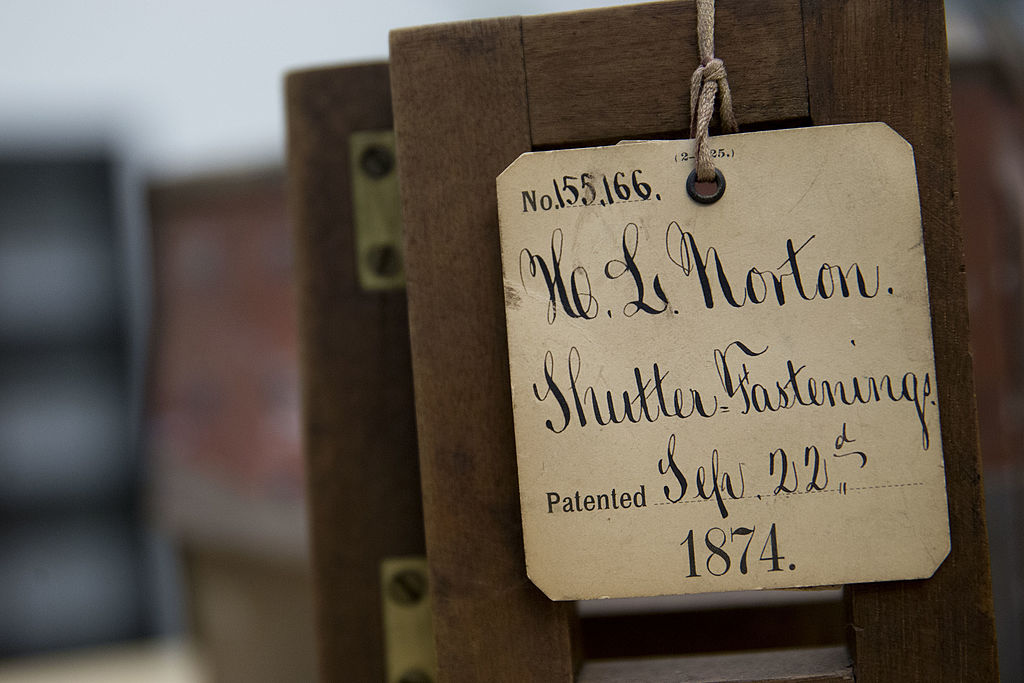
Image from the patent office of a patent for

Enlarge / An image from the U.S. Patent and Trademark Office, where in 1874, the newest thing was not software or genetic compositions, but shutter fastenings from H.L. Norton.

Andrew Harrer/Bloomberg via Getty Images

The Senate Judiciary Committee is scheduled to consider two bills Thursday that would effectively nullify the Supreme Court’s rulings against patents on broad software processes and human genes. Open source and Internet freedom advocates are mobilizing and pushing back.

The Patent Eligibility Restoration Act (or PERA, S. 2140), sponsored by Sens. Thom Tillis (R-NC) and Chris Coons (D-Del.), would amend US Code such that “all judicial exceptions to patent eligibility are eliminated.” That would include the 2014 ruling in which the Supreme Court held, with Justice Clarence Thomas writing, that simply performing an existing process on a computer does not make it a new, patentable invention. “The relevant question is whether the claims here do more than simply instruct the practitioner to implement the abstract idea of intermediated settlement on a generic computer,” Thomas wrote. “They do not.”

That case also drew on Bilski v. Kappos, a case in which a patent was proposed based solely on the concept of hedging against price fluctuations in commodity markets.

Open source groups hunker down

Software and Internet advocates have taken notice. This week, the Linux Foundation, working with the Cloud Native Computing Foundation (CNCF), announced an expanded partnership with Unified Patents, intended to defend open source software against what it gamely calls “non-practicing entities” (NPEs), but most people would term patent trolls. “As the risk and volume of frivolous litigation against open source projects grows, the need to provide accessible protection from NPEs has become crucial,” the Linux Foundation writes.

In interviews with The Register, leaders at CNCF and Unified Patents described patent trolls as actively chasing any widespread technology, aiming for settlements over the cost of trials. Nearly 98 percent of NPE claims are settled, according to Unified Patents, but NPE claims challenged at the US Patent and Trademark Appeals Board lose 67 percent of the time.

Challenging patent claims, however valid, could get tougher under the PREVAIL Act, the other bill being considered by the Senate Judiciary Committee this week. PREVAIL would, among other changes, limit patent challenge petitions to 14,000 words, hampering attempts to debunk complex patents. The Act would also eliminate clearance patents, which companies can use to clear any infringement claims prior to their own products’ release.

Clearing the way for genome patents

Another wrinkle in the PERA bill involves genetic patents. The Supreme Court ruled in June 2013 that pieces of DNA that occur naturally in the genomes of humans or other organisms cannot, themselves, be patented. Myriad Genetics had previously been granted patents on genes associated with breast and ovarian cancer, BRCA1 and BRCA2, which were targeted in a lawsuit led by the American Civil Liberties Union (ACLU). The resulting Supreme Court decision—this one also written by Thomas—found that information that naturally occurs in the human genome could not be the subject to a patent, even if the patent covered the process of isolating that information from the rest of the genome. As with broad software patents, PERA would seemingly allow for the patenting of isolated human genes and connections between those genes and diseases like cancer.

The Electronic Frontier Foundation (EFF) describes PERA and PREVAIL as “a huge gift to patent trolls, a few tech firms that aggressively license patents, and patent lawyers. For everyone else, it will be a huge loss.” The EFF maintains a collection of stories of people claiming their jobs or avocations were “Saved by Alice” (the Supreme Court ruling).

The Judiciary Committee is set to debate and potentially amend or rewrite PREVAIL and PERA (i.e. mark up) on Thursday. Tillis told Axios that the bills are necessary for “Biotech, a number of emerging sectors [needing] relief, or we’re just going to stifle innovation.” Most Judiciary Committee members have not indicated their votes on the bills. Pharmaceutical trade group PhRMA supports the bills, while numerous advocates for lower-cost drugs and biosimilars oppose them.

Patents for software and genetic code could be revived by two bills in Congress Read More »

isps-tell-supreme-court-they-don’t-want-to-disconnect-users-accused-of-piracy

ISPs tell Supreme Court they don’t want to disconnect users accused of piracy

The US Supreme Court building is seen on a sunny day. Kids mingle around a small pool on the grounds in front of the building.

Enlarge / The Supreme Court of the United States in Washington, DC, in May 2023.

Getty Images | NurPhoto

Four more large Internet service providers told the US Supreme Court this week that ISPs shouldn’t be forced to aggressively police copyright infringement on broadband networks.

While the ISPs worry about financial liability from lawsuits filed by major record labels and other copyright holders, they also argue that mass terminations of Internet users accused of piracy “would harm innocent people by depriving households, schools, hospitals, and businesses of Internet access.” The legal question presented by the case “is exceptionally important to the future of the Internet,” they wrote in a brief filed with the Supreme Court on Monday.

The amici curiae brief was filed by Altice USA (operator of the Optimum brand), Frontier Communications, Lumen (aka CenturyLink), and Verizon. The brief supports cable firm Cox Communications’ attempt to overturn its loss in a copyright infringement lawsuit brought by Sony. Cox petitioned the Supreme Court to take up the case last month.

Sony and other music copyright holders sued Cox in 2018, claiming it didn’t adequately fight piracy on its network and failed to terminate repeat infringers. A US District Court jury in the Eastern District of Virginia ruled in December 2019 that Cox must pay $1 billion in damages to the major record labels.

Cox won a partial victory when the US Court of Appeals for the 4th Circuit vacated the $1 billion verdict, finding that Cox wasn’t guilty of vicarious infringement because it did not profit directly from infringement committed by users of its cable broadband network. But the appeals court affirmed the jury’s finding of willful contributory infringement and ordered a new damages trial.

Future of Internet at stake, ISPs say

The Altice/Frontier/Lumen/Verizon brief said the 4th Circuit ruling “imperils the future of the Internet” by “expos[ing] Internet service providers to massive liability if they do not carry out mass Internet evictions.” Cutting off a subscriber’s service would hurt other residents in a home “who did not infringe and may have no connection to the infringer,” they wrote.

The automated processes used by copyright holders to find infringement on peer-to-peer networks are “famously flawed,” ISPs wrote. Despite that, the appeals court’s “view of contributory infringement would force Internet service providers to cut off any subscriber after receiving allegations that some unknown person used the subscriber’s connection for copyright infringement,” the brief said.

Under the 4th Circuit’s theory, “an Internet service provider acts culpably whenever it knowingly fails to stop some bad actor from exploiting its service,” the brief said. According to the ISPs, this “would compel Internet service providers to engage in wide-scale terminations to avoid facing crippling damages, like the $1 billion judgment entered against Cox here, the $2.6 billion damages figure touted by these same plaintiffs in a recent suit against Verizon, or the similarly immense figures sought from Frontier and Altice USA.”

Potential liability for ISPs is up to $150,000 in statutory damages for each work that is infringed, the brief said. “Enterprising plaintiffs’ lawyers could seek to hold Internet service providers liable for every bad act that occurs online,” they wrote. This threat of financial liability detracts from the ISPs’ attempts “to fulfill Congress’s goal of connecting all Americans to the Internet,” the ISPs said.

ISPs tell Supreme Court they don’t want to disconnect users accused of piracy Read More »

robert-pattinson-gets-the-crappiest-immortality-in-trailer-for-mickey-17

Robert Pattinson gets the crappiest immortality in trailer for Mickey 17

How (un)lucky can one guy get? —

“Let’s blow up these second-hand baloney boys.”

Robert Pattinson’s character didn’t read his contract’s fine print in Mickey 17, director Bong Joon-ho’s latest film.

It has been five long years since director Bong Joon-ho’s film Parasite topped Ars’ list for best films of the year, whose prior work on Snowpiercer and Okja are also staff favorites. We’re finally getting a new film from this gifted director: the sci-fi comedy Mickey 17, based on the 2022 novel Mickey7 by Edward Ashton. Judging by the trailer that recently dropped, it feels a bit like a darkly comic version of Duncan Jones’ 2009 film Moon, with a bit of the surreal absurdity of Terry Gilliam’s Brazil (1985) thrown in for good measure. And the visuals are terrific.

Ashton’s inspiration for the novel was the teletransportation paradox—a thought experiment pondering the philosophy of identity that challenges certain notions of the self and consciousness. It started as a short story about what Ashton called “a crappy immortality” and expanded from there into a full-length novel.

Ashton told Nerdist last year that Bong’s adaptation would “change a lot of the book,” but he considered the director a “genius” and wasn’t concerned about those changes. The basic premise remains the same. Robert Pattinson plays the space colonist named Mickey Barnes, who is so eager to escape Earth that he signs up to be an “expendable” without reading the fine print.

Expendables are basically disposable employees (aka “second-hand baloney boys”). If they happen to die on the job, their consciousness is uploaded to a new body, and the cycle starts all over again. When a multiple unexpectedly survives while on an expedition to colonize the ice world Niflheim, Mickeys 17 and 18 discover that the policy in such cases is to exterminate all the multiples, and they must fight for their right to keep existing.

In addition to Pattinson, the cast includes Steven Yeun as Berto, Toni Collette as Gwen Johansen, Mark Ruffalo as Hieronymous Marshall, Naomi Ackie as Nasha Adjaya, Holliday Grainger as Red Hair, Angus Imrie as Shrimp Eyes, and Steve Park as Agent Zeke. Anamaria Vartolomei, Thomas Turgoose, Patsy Ferran, and Daniel Henshall have also been cast in as-yet-undisclosed roles. Perhaps one of them plays the person in the giant pigeon costume who briefly appears in the trailer.

Mickey 17 hits theaters in the US on January 31, 2025. It will premiere in other countries on January 28, 2025. Ashton penned a sequel, Antimatter Blues, which was published last year, so maybe Bong Joon-ho will adapt that one, too.

Listing image by YouTube/Warner Bros.

Robert Pattinson gets the crappiest immortality in trailer for Mickey 17 Read More »

at&t-fined-$13m-for-data-breach-after-giving-customer-bill-info-to-vendor

AT&T fined $13M for data breach after giving customer bill info to vendor

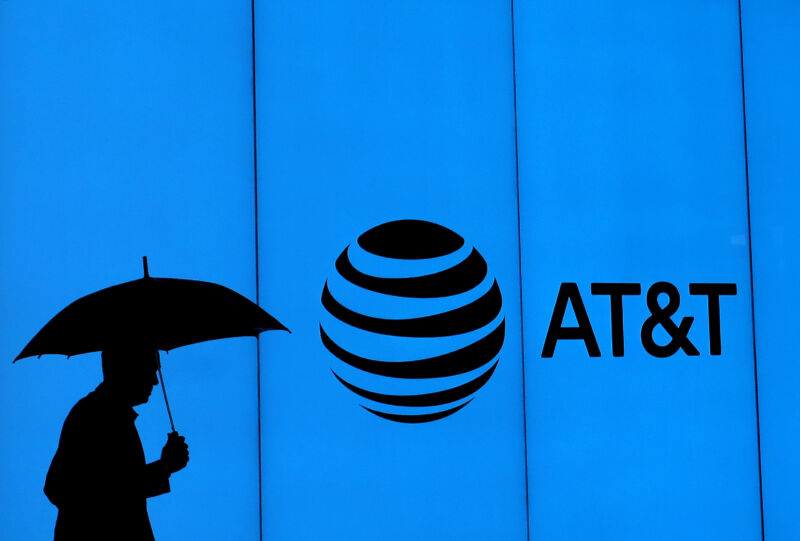
A man with an umbrella walking past a building with an AT&T logo.

AT&T agreed to pay a $13 million fine because it gave customer bill information to a vendor in order to create personalized videos, then allegedly failed to ensure that the vendor destroyed the data when it was no longer needed. In addition to the fine, AT&T agreed to stricter controls on sharing data with vendors in a consent decree announced today by the Federal Communications Commission.

In January 2023, years after the data was supposed to be destroyed, the vendor suffered a breach “when threat actors accessed the vendor’s cloud environment and ultimately exfiltrated AT&T customer information,” the FCC said. Information related to 8.9 million AT&T wireless customers was exposed.

Phone companies are required by law to protect customer information, and AT&T should not have merely relied on third-party firms’ assurances that they destroyed data when it was no longer needed, the FCC said.

“AT&T used the vendor to generate and host personalized video content, including billing and marketing videos, for AT&T customers,” an FCC press release said. “Under AT&T’s contracts, the vendor should have destroyed or returned AT&T customer information when no longer necessary to fulfill contractual obligations, which ended years before the breach occurred. AT&T failed to ensure the vendor: (1) adequately protected the customer information, and (2) returned or destroyed it as required by contract.”

The data “remained in the vendor’s cloud environment for many years after it should have been deleted or returned to AT&T and was ultimately exposed” in the January 2023 breach, an FCC Enforcement Bureau order said.

Data should have been deleted in 2018

AT&T told the FCC that it shared customer data with the vendor between 2015 and 2017, and that data was supposed to be “securely destroyed or deleted” by 2018. The exposed data included “line count for all impacted customers, and bill balance and payment information and rate plan name and features for approximately one percent of impacted customers,” the FCC said.

AT&T told Ars today that the data “did not contain credit card information, Social Security Numbers, account passwords or other sensitive personal information.” AT&T said it notified customers of the breach in March 2023.

“AT&T stated that it monitored impacted customer accounts following the incident and identified no evidence of AT&T account-related fraud or other unlawful or unauthorized activity tied to the Breach,” the consent decree said. “According to AT&T, porting, SIM swap, and equipment fraud rates for impacted customers following the incident were consistently less than the rates for the general population of AT&T Mobility customers across all account types.”

When contacted by Ars, AT&T did not respond directly to the FCC’s allegation that it failed to ensure the vendor protected customer information. AT&T provided us with a statement saying, “A vendor we previously used experienced a security incident last year that exposed data pertaining to some of our wireless customers. Though our systems were not compromised in this incident, we’re making enhancements to how we manage customer information internally, as well as implementing new requirements on our vendors’ data management practices.”

AT&T fined $13M for data breach after giving customer bill info to vendor Read More »

no-“offensive-or-inappropriate”-final-fantasy-xvi-mods,-producer-pleads

No “offensive or inappropriate” Final Fantasy XVI mods, producer pleads

Mind your mod manners —

Request continues a long tradition of modding concerns from Japanese game studios.

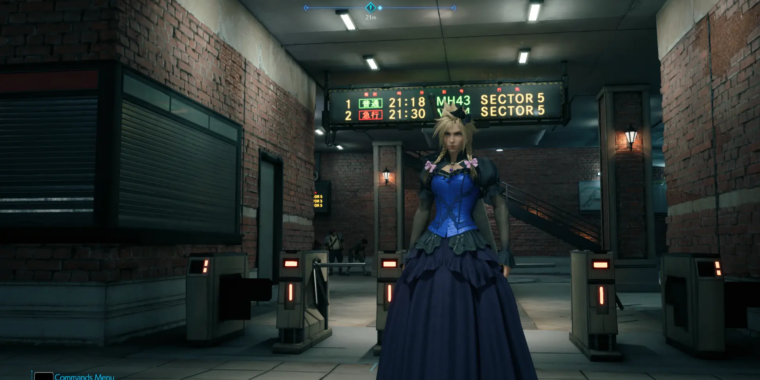
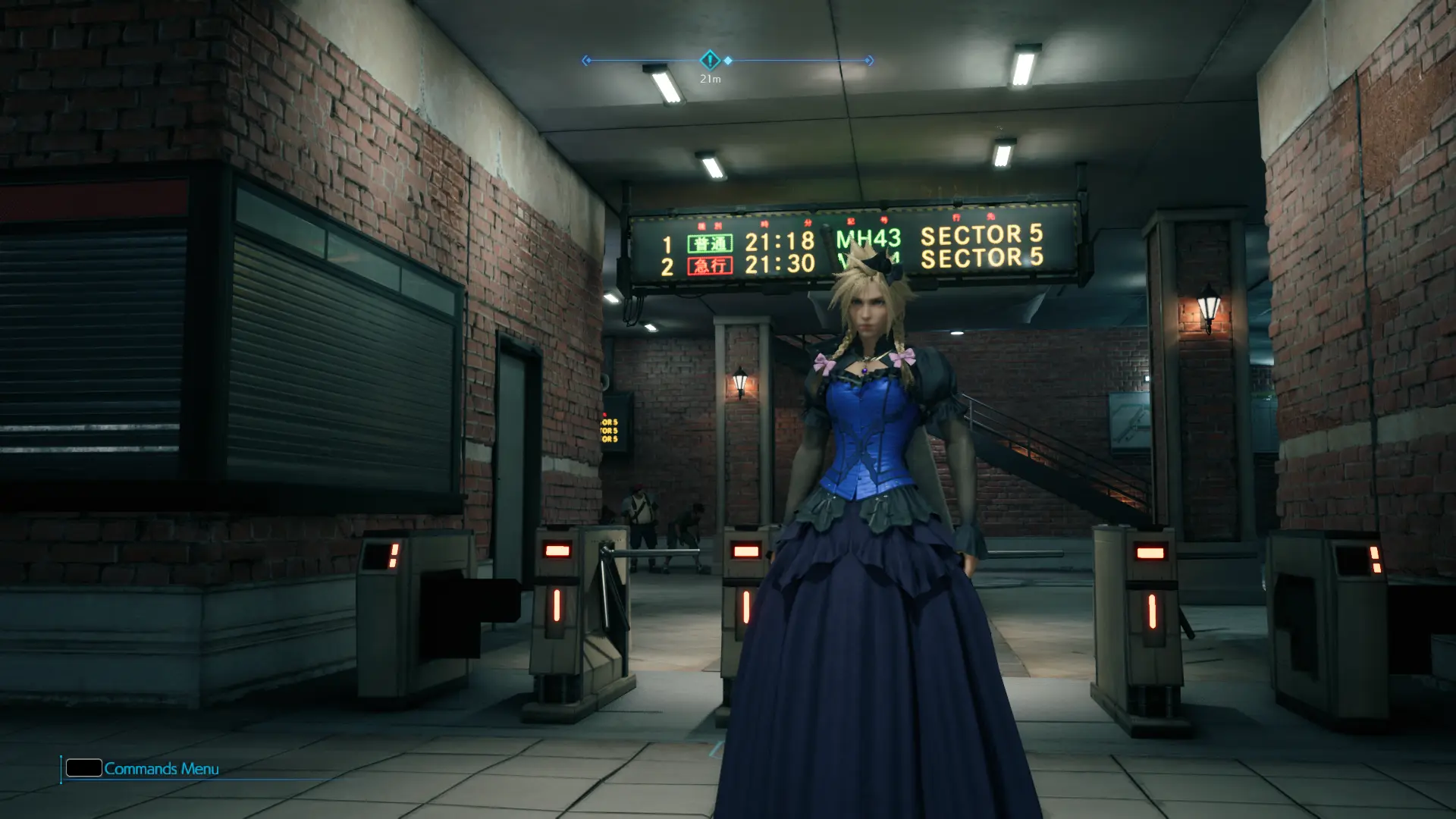
This screenshot of a Final Fantasy PC mods that are way too inappropriate for publication on Ars.” src=”https://cdn.arstechnica.net/wp-content/uploads/2024/09/clouddress-800×450.png”>

Enlarge / This screenshot of a “Cloud in a dress” mod is being used in place of some other Final Fantasy PC mods that are way too inappropriate for publication on Ars.

Final Fantasy XVI finally arrives on Windows PCs today, over a year after its launch on the PlayStation 5. That means expanded access for a game that sold below Square Enix’s expectations on console. But it also means the first opportunity for modders to add their own content to the game.

For game producer Naoki Yoshida, though, that new opportunity comes along with a plea for the user community to behave themselves when modifying the game. In a recent interview with PC Gamer, Yoshida felt the need to step in when director Hiroshi Takai was asked about what “goofy mods” he would like to see in the game.

“If we said, ‘It’d be great if someone made xyz,’ it might come across as a request, so I’ll avoid mentioning any specifics here!” Yoshida told PC Gamer. “The only thing I will say is that we definitely don’t want to say anything offensive or inappropriate, so please don’t make or install anything like that.”

It’s a plea that’s likely to fall on deaf ears, if history is any guide. A quick perusal of the Nexus Mods page for the Final Fantasy VII Remake turns up everything from the relatively tame “sexy dress Aerith” and “Regular Dress Cloud” mods to the much less appropriate “Tifa 4K Hi-Poly Nude Mod” (which is blocked by Nexus Mods’ filters unless you actively enable adult content). A little Googling can easily find forums with multipage threads of explicitly adult-oriented mods for the game as well.

Get used to it

This isn’t exactly a new type of concern for Japanese game developers. In 2015, Dead or Alive 5 producer Yosuke Hayashi asked “PC users to play our game in good moral and manner” (a bit ironic for a series so focused on scantily clad, buxom female competitors). Last year, Capcom went even further by likening PC game modding to “cheating,” citing the “reputational damage caused by malicious mods” that can be “offensive to public order and morals.”

Dead or Alive character, modders.” height=”360″ src=”https://cdn.arstechnica.net/wp-content/uploads/2015/02/doa5-2-640×360.jpg” width=”640″>

Enlarge / Please don’t do anything immoral with this Dead or Alive character, modders.

“When these [offensive mods] are disseminated, the image of the product is tarnished and branding is affected,” Capcom said, adding that when these mods are “mistaken for legitimate implementations” it can cause “reputational damage” and “bad publicity.”

Bandai Namco, meanwhile, has taken legal action against Dark Souls modders and, more recently, started taking down YouTube videos featuring Tekken mods. Tekken director/producer Katsuhiro Harada went so far as to ask one Tekken modder to “plz stop” with his Elden Ring-themed mod for the game, even while he praised the mod as “ridiculously well-made.”

Um … Sure, Elden is a Bandai Namco-funded title, and I was the production general manager in charge of Elden, so it’s not irrelevant … it’s ridiculously well-made mod but plz stop it lol https://t.co/ISlXLrjfhM

— Katsuhiro Harada (@Harada_TEKKEN) March 31, 2022

“Personally, I wouldn’t say anything for your personal enjoyment,” Harada said in a follow-up post. “The only problem is that many people misunderstand it as official and ask us to support the problems it causes (I’m tired of this wrong inquiry).”

While we understand how annoying it is for random players to confuse a fan mod with a developer’s core product, it’s well past time for these developers to start accepting that this is how PC gaming works. When you publish a game on an open platform like the PC, you relinquish some level of control over what the community does with the gaming canvas you’ve given them. If a developer isn’t comfortable with that, they should stay out of PC games altogether.

Rather than chastising “inappropriate” mods, maybe developers should try to embrace the attitude that FFXVI director Takai was able to express in an interview posted on the Epic Games Store: “Feel free to have fun on your own,” he said. “Within reason, of course!”

No “offensive or inappropriate” Final Fantasy XVI mods, producer pleads Read More »