Author name: Rejus Almole

german-chip-plant-breaks-ground-in-‘major-step-forward’-for-eu’s-semiconductor-industry

German chip plant breaks ground in ‘major step forward’ for EU’s semiconductor industry

German chip plant breaks ground in ‘major step forward’ for EU’s semiconductor industry

Siôn Geschwindt

Story by

Siôn Geschwindt

Germany’s Infineon has broken ground on its new €5bn semiconductor manufacturing plant in Dresden, less than six months since announcing the project. 

Speaking at the groundbreaking ceremony yesterday, European Commission President Ursula von der Leyen hailed the construction as a “major step forward” toward the bloc’s goal of boosting its market share in semiconductors.

Europe is currently scrambling to reduce its reliance on foreign imports of semiconductor chips from, among others, China, Taiwan, and South Korea. “These are regions where tensions can flare up at any time,” said von der Leyen, in a nod to the current tensions between Beijing and Taipei. “The slightest disruption to trade would immediately hit Europe’s strong industrial base and our internal market hard.” 

The bloc believes that boosting domestic production of the chips — essential components in everything from cars to smartphones — will mitigate the supply shortages that have plagued many of the EU’s vital tech sectors over the past two years. 

Under the EU Chips Act, which got the green light last month, the bloc is mobilising €43bn to double its market share in semiconductors from 10% to 20% by 2030. “The capacity will have to be quadrupled, and this is only possible with companies like Infineon,” von der Leyen said. 

“With this groundbreaking, Infineon is launching an important contribution to the green and digital transformation of our society,” said Infineon CEO Jochen Hanebeck at the ceremony on Tuesday. “Global semiconductor demand will grow strongly and persistently in view of the high demand for renewable energies, data centres and electromobility.”  
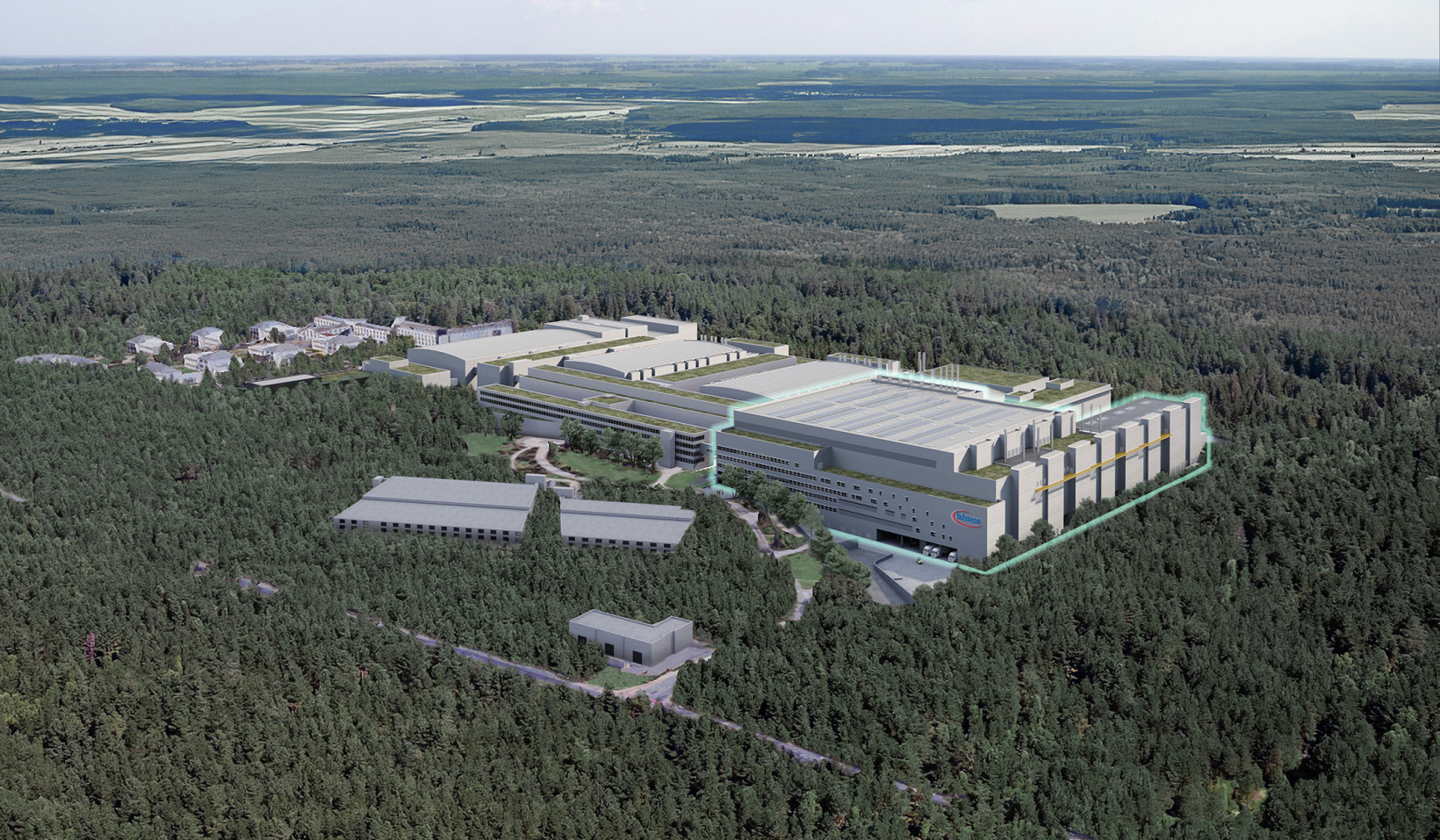
A rendering of Infineon’s Smart Power Fab in Dresden which is scheduled for completion in 2026. Credit: Infineon.

Infineon expects production at the plant to start in 2026. The new 300mm fab represents the largest investment in the company’s history, and will add capacity to its current manufacturing site in Dresden.  

Other chip manufacturers are also currently investing in Germany. US-based Wolfspeed is investing €2.7bn to build a plant in Saarland, while Intel is building an even larger factory in Magdeburg that will cost €17bn.

While the EU’s chip plans are taking shape, von der Leyen warned that Europe was still too dependent on raw materials from individual suppliers, pointing to the fact that China controls 76% of the silicon metal supply needed for chip production. 

To secure raw materials closer to home, she said the bloc is exploring new projects in Europe, but also partnerships with countries such as Australia, the US, and Canada. The EU also recently passed the Critical Raw Materials Act which looks to ensure that Europe secures stable supplies of critical rare earth elements and raw materials.

Get the TNW newsletter

Get the most important tech news in your inbox each week.

Also tagged with


German chip plant breaks ground in ‘major step forward’ for EU’s semiconductor industry Read More »


why-your-next-workplace-training-session-might-be-in-the-belly-of-a-volcano

Why Your Next Workplace Training Session Might Be in the Belly of a Volcano

Whoever said workplace training had to be boring? Thanks to advances in virtual reality, the world of workplace learning and development might finally be something to get excited about…and not a moment too soon.

In the world of training, education, and development, what’s fun and what’s effective are often one and the same. Educators have understood for quite some time that engagement is critical to the learning process. And there’s no quicker way to lose someone’s interest than boring them or lulling them to sleep.

A disengaged student is a student that isn’t learning, and that’s why we find that fun is very much an essential ingredient to the learning process. However, while educators have known this to be true for quite some time, it seems that, in the corporate world, this lesson has yet to truly sink in.

Can you remember the last time you took part in workplace training? If not, that might be because it wasn’t very memorable. If you’re like most people, your experience with workplace training probably amounts to sitting in a drab, windowless room and struggling to keep your eyes open as a grainy video drones at you from a television set in the corner.

Workplace Learning and Development Don’t Have to Be a Drag

Thanks to the emergence of technologies like virtual reality and augmented reality, however, this drab form of corporate training may soon be a thing of the past. Companies are realizing that they can save a considerable amount of time, money, and other resources on training and development. With these portable, cost-effective technologies, organizations can upskill a distributed workforce in a way that’s interactive, inclusive, and sustainable.

In my time working with Gemba, we’ve worked with the companies like Johnson & Johnson, Coca-Cola, and Pfizer to deliver immersive, impactful VR training programs, all while eliminating up to $2M in travel costs and over a ton of CO2  per trainee.

For organizations big and small, that’s a real, meaningful step towards sustainability — and, unlike most other sustainability initiatives, this transition doesn’t entail sacrifice. On the contrary, we’ve found that VR-based training is not only cheaper and more sustainable than traditional forms of training, but it’s actually more effective.

Fun and Efficiency Make VR Training an Inevitability

In our experience helping companies train and develop their employees, we’ve found that the use of VR is associated with significant improvements in educational efficacy.

While many might intuitively understand this, independent research has shown that making the learning process fun or enjoyable not only improves students’ willingness to engage in learning, but also improves their ability to retain information — even if the information itself is dull.

And this phenomenon isn’t unique to students. In fact, we’ve seen the same effect being borne out time and time again in our own work with professionals. An assessment of Gemba’s VR-enabled training with automotive technology supplier, Aptiv, found that a more immersive, engaging, and enjoyable learning experience led to faster, more effective training.

An independent case study of the program, published by the World Economic Forum (WEF),  found that Aptiv was able to reduce what was originally two days of in-person training to just four hours of VR-enabled training. The study concluded that, overall, the use of Gemba’s VR-enabled training allowed Aptiv to upskill its workforce with 80% greater efficiency, compared to real-world training.

And there’s a very real need for more efficient, effective workplace training. According to the Organisation for Economic Cooperation and Development (OECD), over one billion workers globally will need to be upskilled by the year 2030. As technological advancements continue to reconfigure our world, organizations will be hard-pressed to find fast, effective, and scalable means of upskilling such a sizable portion of the workforce.

With VR, The Sky’s No Limit

It’s for these reasons that VR-enabled training’s mainstream adoption is all but an inevitability. Already, leading global enterprises like Unilever, Volvo, L’Oreal, and Nike are making use of VR-enabled training to optimize workforce development. And at the same time, advances in both hardware and software are making virtual and augmented reality platforms more impressive by the minute.

This begs the question — if you can hold a virtual meeting anywhere, why do it in a virtual recreation of some drab, lifeless conference room? Why not in the belly of a volcano? Or a castle floating above the clouds? Or at the bottom of the ocean? Why create a pixel-perfect digital twin of your cramped office space when you can convene anywhere on (or off) Earth?

I know what some of you are thinking — “That sounds rather childish,” or “That seems unprofessional.” To which, I’d respond, is being boring a prerequisite for professionalism?

I’ve had the luxury of working with a wide range of people and professionals throughout my career. I’ve worked in the gaming industry, been a university lecturer, and worked extensively with corporate leadership from around the world. Across all these spaces and demographics I’ve found one thing to be true — people like having fun. As a CTO myself, I can tell you from first-hand experience that you don’t magically become a dullard the moment they put a “C” in front of your title.

And we can expect businesses to be on board as well. Given enjoyment’s proven ability to make learning more effective, you can rest assured that organizations will be eager to inject VR training with all manner of fanciful, gamified fun. And I, for one, can’t wait.

Guest Post


About the Guest Author(s)

Frankie Cavanagh

Frankie Cavanagh

Frankie is a visionary leader, an innovative technologist, and a game-changer in the world of virtual reality and learning. His background in teaching, combined with his passion for game design and XR technology and his skills as an artist, designer, and coder, gives him a unique ability to create immersive and engaging experiences that revolutionize how businesses train and develop their workforce.

Why Your Next Workplace Training Session Might Be in the Belly of a Volcano Read More »

europol’s-operation-spector-leads-to-massive-dark-web-drug-bust

Europol’s Operation SpecTor leads to massive dark web drug bust

Europol’s Operation SpecTor leads to massive dark web drug bust

Linnea Ahlgren

Story by

Linnea Ahlgren

Coordinated by Europol and the US Department of Justice, yesterday, Operation SpecTor seized over €50mn in cash and cryptocurrency, 850 kg of drugs (including amphetamines, cocaine, MDMA and ecstasy pills) and 117 firearms. The latter, contrary to Europol’s choice of emoji, were in all likelihood not water pistols.

🚨 288 dark web vendors arrested in major marketplace seizure.

Operation #SpecTor led to the seizure of:

💶 EUR 50.8 million

💊 850 kg of drugs

🔫 117 firearms

The #MonopolyMarket vendors arrested were also active on other illicit marketplaces.

More ⤵️https://t.co/fDbWJbeFiM pic.twitter.com/086e1XMCUo

— Europol (@Europol) May 2, 2023

The arrested vendors were operating on the marketplace Monopoly Market, selling drugs to customers in exchange for digital currencies. Monopoly has been active since 2019, and one of the candidates hoping for a bigger slice of the darknet pie after law enforcement shut down its highest earner Hydra in April 2022. 

“This operation sends a strong message to criminals on the dark web: international law enforcement has the means and the ability to identify and hold you accountable for your illegal activities, even on the dark web,” Europol’s Executive Director Catherine De Bolle commented

Across Europe, the synchronised arrests took place in the UK (55), Germany (52), the Netherlands (10), Austria (9), France (5), Switzerland (2) and Poland (1). Furthermore, 155 individuals were arrested in the US, and one in Brazil. Europol stated that a number of the suspects arrested were “high-value targets.” 

In addition, authorities obtained buyer lists from the vendors, which could potentially result in the arrests of “thousands of customers” across the globe. 

Transaction data sped up investigations

German law enforcement managed to seize the “criminal infrastructure” supporting the site in 2021. Since then, they have been able to gather intelligence packages that have served as the basis for hundreds of national investigations. 

“The intelligence that Europol shared with us, such as transaction data and virtual currency addresses, helped us to start new investigations and to enrich existing investigations,” the leader of the Dutch team, Nan van de Coevering, told media in the Netherlands. 

In the US, the operation was led by the Department of Justice’s Joint Criminal and Opioid Darknet Enforcement (JCODE) team, set up in 2018. According to US Attorney General Merrick B. Garland, SpecTor “represents the most funds seized and the highest number of arrests in any coordinated international action led by the Justice Department against drug traffickers on the dark web.” 

The 18-month long SpecTor operation is the latest in a row of aptly named high-profile darknet busts by international law enforcement. DisrupTor took place in 2020 with 179 arrests, and Dark HunTor in 2021 with 150 arrests. 

Before it was shut down last year, Russia-based Hydra had about 17 million customers and focused on the trade of illicit drugs, cyberattack tools, forged documents and stolen data. 

Hydra had an estimated revenue of €1.23bn, and German authorities seized €23mn in cryptocurrencies during the bust. Following its shutdown, there was an immediate sector-wide precipitous decline in daily dark web market revenues, from around €4 million to close to €400,000, according to research from Chainalysis.

Closing down Monopoly may not have the same effect, but the ripples will be felt throughout the darknet nonetheless. 

Get the TNW newsletter

Get the most important tech news in your inbox each week.

Also tagged with


Europol’s Operation SpecTor leads to massive dark web drug bust Read More »

23%-of-jobs-to-be-disrupted-in-the-next-5-years,-wef-predicts

23% of jobs to be disrupted in the next 5 years, WEF predicts

23% of jobs to be disrupted in the next 5 years, WEF predicts

Ioanna Lykiardopoulou

Story by

Ioanna Lykiardopoulou

Ioanna is a writer at TNW. She covers the full spectrum of the European tech ecosystem, with a particular interest in startups, sustainabili Ioanna is a writer at TNW. She covers the full spectrum of the European tech ecosystem, with a particular interest in startups, sustainability, green tech, AI, and EU policy. With a background in the humanities, she has a soft spot for social impact-enabling technologies.

Nearly a quarter of the world’s jobs will be disrupted in the coming five years, the latest report by the World Economic Forum (WEF) has found. Specifically, the job market will experience a 23% churn, as a result of emerging and vanishing positions.

According to WEF, the companies surveyed anticipate that 83m jobs will be lost, albeit offset by the creation of 69m new roles. This still leaves a deficit of 14m eliminated positions, which translates into a 2% contraction of the global workforce.

The report identified three key factors fueling the transformation of the labour market: the green transition, the increased adoption of new technologies, and the slow economic growth alongside the rising cost of living.

Respondents expect that investments that facilitate the green transition of businesses and the broader application of ESG standards will have the strongest net job creation effect, despite a minor displacement percentage. Sustainability Specialists are among the top fastest-growing roles, with Renewable Energy Engineers and Solar Energy Installation and System Engineers flourishing as well.

New technologies are estimated to have an overall positive impact, even though they’ll eliminate positions.

In particular, big data analytics, climate change-environmental management technologies, encryption, and cybersecurity are forecast to be the biggest drivers of job growth. Digital platforms, apps, e-commerce, and AI will also generate more jobs than they eliminate. Only robots will be actually taking our jobs, resulting in a 11.4% role loss.

Correspondingly, AI and Machine Learning Specialists, Business Intelligence Analysts, and Information Security Analysts top the list of the fastest-growing roles. The largest job losses — which are related to the increasing automation and digitisation — are expected in administrative roles and traditional security, factory, and commerce positions. These include, for instance, Cashiers, Bank Tellers, and Accounting, Bookkeeping and Payroll Clerks.

But despite technology’s considerable disruption, respondents believe that the greatest threat to the labour market is the economic downturn. Specifically, the slow economic growth coupled with supply shortages and inflation could be responsible for 87.4% of the net job displacement

From a regional perspective, countries across the world are expected to experience similar levels of disruption in the job market, driven by the same three key factors. The shift is slightly lower in Europe, North America, Middle East, and Northern Africa at 21%, while the highest change is expected in Central Asia at 25%.

Get the TNW newsletter

Get the most important tech news in your inbox each week.

Also tagged with


23% of jobs to be disrupted in the next 5 years, WEF predicts Read More »

‘break-them-open’-–-new-eu-rules-coming-for-big-tech

‘Break them open’ – new EU rules coming for Big Tech

‘Break them open’ – new EU rules coming for Big Tech

Linnea Ahlgren

Story by

Linnea Ahlgren

As dry and bureaucratic as EU legislation may seem, it can also be groundbreaking and, dare we say it, radical. The bloc has taken a global lead in tackling regulation in areas such as green taxonomy and the much-anticipated AI Act. European lawmakers are also at the forefront in trying to curb the seemingly ever-growing dominance of Big Tech. 

The Digital Markets Act (DMA) is the EU’s tool to attempt to open the digital app marketplace up for smaller competitors. It sets criteria to identify the “gatekeepers” of the market and make them comply with a certain list of do’s and don’ts. 

Among other things, the DMA will promote interoperability, forcing companies like Google, Apple, and Meta to let users link rival apps to their services. This means that Apple will need to release the tightly controlled (and heavily commissioned) grip it exerts through its app store.

In the words of Cédric O, France’s then-digital economy minister, upon the signing of the act last year, “Don’t break them up, break them open.” 

Theoretically, it also means that users of different messaging apps will be able to contact each other from, say, WhatsApp to Telegram, but it is unclear how this would actually be implemented. It will also forbid the gatekeeper companies from doing things such as track their users outside core platforms for targeted marketing without consent. 

While it entered into force on 1 November 2022, the DMA technically began applying yesterday, 2 May 2023. This means that potential gatekeeper tech companies now have until 3 July to notify their core platform services to the European Commission. 

The Commission will then have 45 working days (until 6 September) to decide whether or not they pass the gatekeeper threshold. If the Commission concludes that the company in question does indeed meet the designated criteria, the gatekeeper will then have six months (until 6 March 2024) to comply with the requirements set out in the DMA. 

In the case of non-compliance, the Commission can impose fines of up to 10% of the company’s total worldwide annual turnover. In the event of repeated infringements this can increase to 20% plus periodic penalty payments of up to 5% of the company’s total worldwide daily turnover.

Europe ‘strengthening digital sovereignty’

So who are the “gatekeepers?” According to the DMA, they are platforms in the digital markets that “have a significant impact on the internal market, serve as an important gateway for business users to reach their end users, and which enjoy, or will foreseeably enjoy, an entrenched and durable position.”

As with all legal texts, the criteria go into significant detail. Simplified, they entail that companies will be considered gatekeepers if they have a market capitalisation of more than €75 billion, and 45 million monthly active users in the EU.

There are 10 platform services listed in the DMA. These are: 

  • Online intermediation services;
  • Online search engines;
  • Online social networking services;
  • Video-sharing platform services;
  • Number-independent interpersonal communication services;
  • Operating systems;
  • Cloud computing services;
  • Advertising services;
  • Web browsers;
  • Virtual assistants.

A company may be listed as a gatekeeper for more than one service. 

Together with the Digital Services Act (DSA), the DMA forms one of the central columns of the EU’s digital strategies. They are both part of a regulatory program known as A Europe Fit For the Digital Age.

Adopted three years ago, it is part of the Commission’s ambition to make this Europe‘s ‘Digital Decade’ in which it will “strengthen its digital sovereignty and set standards, rather than following those of others – with a clear focus on data, technology, and infrastructure.”

Get the TNW newsletter

Get the most important tech news in your inbox each week.

Also tagged with


‘Break them open’ – new EU rules coming for Big Tech Read More »

ai-‘godfather’-quits-google-and-warns-of-dangers-ahead

AI ‘godfather’ quits Google and warns of dangers ahead

AI ‘godfather’ quits Google and warns of dangers ahead

Ioanna Lykiardopoulou

Story by

Ioanna Lykiardopoulou

Ioanna is a writer at TNW. She covers the full spectrum of the European tech ecosystem, with a particular interest in startups, sustainabili Ioanna is a writer at TNW. She covers the full spectrum of the European tech ecosystem, with a particular interest in startups, sustainability, green tech, AI, and EU policy. With a background in the humanities, she has a soft spot for social impact-enabling technologies.

Dr Geoffry Hinton, widely referred to as AI’s “godfather,” has confirmed in an interview with the New York Times that he has quit his job at Google — to talk about the dangers of the technology he helped develop.

Hinton’s pioneering work in neural networks — for which he won the Turing award in 2018 alongside two other university professors — laid the foundations for the current advancement of generative AI.

The lifelong academic and computer scientist joined Google in 2013, after the tech giant spent $44m to acquire a company founded by Hinton and two of his students, Ilya Sutskever (now chief scientist at OpenAI) and Alex Krishevsky. Their neural network system ultimately led to the creation of ChatGPT and Google Bard.

But Hinton has come to partly regret his life’s work, as he told the NYT. “I console myself with the normal excuse: If I hadn’t done it, somebody else would have,” he said. He decided to leave Google so that he could speak freely about the dangers of AI and ensure that his warnings don’t impact the company itself.

In the NYT today, Cade Metz implies that I left Google so that I could criticize Google. Actually, I left so that I could talk about the dangers of AI without considering how this impacts Google. Google has acted very responsibly.

— Geoffrey Hinton (@geoffreyhinton) May 1, 2023

According to the interview, Hinton was prompted by Microsoft’s integration of ChatGPT into its Bing search engine, which he fears will drive tech giants into a potentially unstoppable competition. This could result in an overflow of fake photos, videos, and texts to the extent that an average person won’t be able to “tell what’s true anymore.”

But apart from misinformation, Hinton also voiced concerns about AI’s potential to eliminate jobs and even write and run its own code, as it’s seemingly capable of becoming smarter than humans much earlier than expected.

The more companies improve artificial intelligence without control, the more dangerous it becomes, Hinton believes. “Look at how it was five years ago and how it is now. Take the difference and propagate it forwards. That’s scary.”

The need to control AI development

Geoffry Hinton isn’t alone in expressing fears over AI’s rapid and uncontrolled development.

In late March, more than 2,000 industry experts and executives in North America signed an open letter, calling for a six-month pause in the training of systems more powerful than GPT-4, ChatGPT’s successor.

The signees — including researchers at DeepMind, computer scientist Yoshua Bengio, and Elon Musk — emphasised the need for regulatory policies, cautioning that “powerful AI systems should be developed only once we are confident that their effects will be positive and their risks will be manageable.”

Across the Atlantic, ChatGPT’s growth has stirred the efforts of EU and national authorities to efficiently regulate AI’s development without stifling innovation.

Individual member states are trying to oversee the operation of advanced models. For instance, Spain, France, and Italy have opened investigations into ChatGPT over data privacy concerns — with the latter being the first Western country to regulate its use after imposing a temporary ban of the service.

The union as a whole is also moving closer to the adoption of the anticipated AI Act — the world’s first AI law by a major regulatory body. Last week, Members of the European Parliament agreed to advance the draft to the next stage, called trilogue, in which lawmakers and member states will work out the bill’s final details.

According to Margrethe Vestager, the EU’s tech regulation chief, the bloc is likely to agree on the law this year, and businesses could already start considering its implications.

“With these landmark rules, the EU is spearheading the development of new global norms to make sure AI can be trusted. By setting the standards, we can pave the way to ethical technology worldwide and ensure that the EU remains competitive along the way,” Vestager said when the bill was first announced.

Unless regulatory efforts in Europe and the globe are sped up, we might risk repeating the approach of Oppenheimer of which Hinton is now sounding the alarm: “When you see something that is technically sweet, you go ahead and do it and you argue about what to do about it only after you have had your technical success.”

Get the TNW newsletter

Get the most important tech news in your inbox each week.

Also tagged with


AI ‘godfather’ quits Google and warns of dangers ahead Read More »

tech-job-opportunities-remain-strong-despite-layoffs-—-here’s-why

Tech job opportunities remain strong despite layoffs — here’s why

Tech job opportunities remain strong despite layoffs — here’s why

Kirstie McDermott

Story by

Kirstie McDermott

If you’ve been reading about the current state of the tech industry in traditional media reports, you’d be forgiven for assuming that the industry is trembling on a precipice, about to plunge into the inky abyss.

The truth, though, is somewhat more nuanced. While sites such as layoffs.fyi, which tracks tech redundancies, are reporting that around 616 tech companies have laid off 184,101 employees so far this year, those layoffs should be viewed within a wider context.

Gartner’s Mbula Schoen, a senior director analyst, said in a recent blog post, “Gartner research found that the companies behind the 10 largest layoffs in tech talent still employ over 150,000 more people in total than at the beginning of 2020.”

Without diminishing the impact this has had on those who have lost their jobs, in the main, layoffs aren’t happening because companies are failing.

Rather they are happening because of a number of factors which include over-hiring during the pandemic and corrections around that, wider economic factors, inflation and higher interest rates, as well as cost-cutting.

Jeffrey Pfeffer, a professor at the Stanford Graduate School of Business, also posits that, “layoffs are basically an instance of social contagion, in which companies imitate what others are doing.”

Muddying the waters further is the fact that many of the roles that have been made redundant aren’t technical ones, for example, coding, machine learning, or data scientist jobs.

“Contrary to what we’re seeing in the headlines, many of those being impacted by layoffs are in business functions, rather than tech roles,” says Schoen.

Layoffs.fyi founder Roger Lee agrees. “Sales is the most common role, accounting for 20% of the laid-off tech workers. Recruiting and HR are the functions most disproportionately affected relative to their size; it’s becoming quite common for companies to lay off 50% or more of their talent teams.”

Layoffs and a talent crunch

As a result, we are in an environment where thousands of people at tech firms are losing their jobs––and yet employers are experiencing a talent crunch; struggling to fill specific roles.

A survey of recently laid off workers echoed this demand. It found that those who have been let go have been swiftly re-hired elsewhere. About 79% of workers recently hired after a tech-company layoff or termination landed their new job within three months of starting their search.

In another study from 2022, Gartner confirmed that a skills shortage exists, with 86% of CIOs saying they were experiencing more competition for qualified candidates, and 73% worried about IT talent attrition.

Because there simply isn’t a large pool of tech talent active in the job market, as a result, there are a number of sought-after, in-demand skills, such as web development, DevOps and database software, according to data from Statista. Those skills are closely followed by AI and ML, mobile development, cloud computing, and UI/UX.

The European Software Skills Alliance (ESSA) said in its 2021 Needs Analysis Report that, “There is a shift to new kinds of developers, like full stack developers and low code developers, but the most important insight is that developers are becoming more and more part of the regular organisation instead of a separate entity. Soft skills and knowledge of the business are therefore increasingly important for developers to be able to function.”

ESSA also identified skills gaps in the areas of data analysis and said that the key areas influencing software skills are AI, Big Data, Industry 4.0, and modelling, particularly in research.

If you’re in the market for a data job, Amsterdam-based RevoData B.V. is seeking the unusual title of Data Revolutionist to be the company’s data and AI champion, and work as part of a highly-talented, digital-native team to develop revolutionary data and AI solutions with DataBricks.

Also of interest is this Java Full Stack Developer for Industry X at Accenture in Berlin. This digital transformation role is ideal for someone whose expertise lay in the sophisticated design and implementation of high-quality software solutions with JavaScript and Java.

The AI field also needs more talent. Those with skills in augmented and virtual reality (AR/VR) are in particularly high demand, feeding into the requirements of Internet of Things companies, the metaverse, and Industry 4.0.

Those with machine learning skills should check out this role at Apple in Berlin. The Machine Learning High-Performance C++ Software Engineer will work on complex problems in computer vision that require robust, efficient, well tested, and clean solutions.

Still more jobs are set to be created as a whole new breed of startups launch. In what could be a symptom of big tech’s layoffs, the startup accelerator Y Combinator said applications increased by 20% in 2022, and in total it received over 38,000 applications. This means exciting new career opportunities are just on the horizon.

Want a new job in an emerging field? Discover thousands of employers actively hiring on the House of Talent Job Board

Get the TNW newsletter

Get the most important tech news in your inbox each week.

Also tagged with


Tech job opportunities remain strong despite layoffs — here’s why Read More »
chatgpt-has-generated-a-brand-new-app-sector-—-and-european-devs-are-leading-it

ChatGPT has generated a brand new app sector — and European devs are leading it

ChatGPT has generated a brand new app sector — and European devs are leading it

Thomas Macaulay

Story by

Thomas Macaulay

Senior reporter

Thomas is a senior reporter at TNW. He covers European tech, with a focus on deeptech, startups, and government policy. Thomas is a senior reporter at TNW. He covers European tech, with a focus on deeptech, startups, and government policy.

ChatGPT has spawned a new sector of AI chat apps — and Europe’s at its epicentre. Since the tool launched in November 2022, these apps have been downloaded 23.6 million times from the Google Play Store, according to research by App Radar.

The study uncovered 40 AI chat apps with over 10,000 users that harness ChatGPT or similar tech. Europe emerged as the global leader of the nascent segment. The continent was the birthplace of 14 apps that bagged a total of 8m downloads — 34% of the entire sector.

The remainder was divided between the Americas (nine apps with 2.7m downloads) and Asia (seven apps with 7.4m downloads). A further eight apps with 5.2m downloads had an unknown country of origin.

Thomas Kriebernegg, co-founder and managing director at App Radar, ranks the boom among the most explosive he’s ever witnessed for a new sector. He largely credits media interest in generative AI and the perception that ChatGPT is groundbreaking. In Europe, the growth has been further accelerated by talented devs and a receptive public.

“Generally speaking, European consumers are much more willing to experiment with new technology than people in other regions. You can see that clearly when you compare usage numbers for fintech apps and solutions in the UK with the US,” Kriebernegg told TNW via email.

“This culture enables European app developers to grow their consumer base faster before expanding into new territories.”

The continent’s standout country is Turkey,  which has attracted 5.9m downloads across four apps — including the top three. With a rising development ecosystem, a mobile gaming hub, regulations supporting startups, and an expanding list of tech successes topped by Getir, the country is a potential powerhouse in the segment. But converting its early advantage into a lucrative ecosystem will be challenging.

In the new wave of AI chat apps, promising user bases haven’t yet produced high revenues.

At present, AI chat apps are typically monetised with ad revenue and premium subscriptions, but basic use is essentially free. To secure a large, paying customer base, devs will need to offer unique services that add major value. Unfortunately for the app-makers, existing users appear reluctant to invest.

Nonetheless, Kriebernegg expects the sector to continue growing — for now.

“Oftentimes app segments end up getting dominated by 10 or 20 apps that account for the vast majority of users,” he says. “At the moment eight apps have more than a million users, so there’s plenty of room for new challengers.

“As the market starts to coalesce and leaders emerge it will become much more difficult for new entrants to compete unless they bring something unique and innovative to the table.”

“It’s clear that this is just the beginning.

Most of the current apps are in the ‘Productivity’ and ‘Tools’ categories of the Google Play Store, which suggests that they’re designed for day-to-day work and tasks. A smaller group within the ‘Entertainment’ category is intended for companionship.

Analysts expect new use cases to emerge fairly quickly, but it’s still unclear whether customers will ultimately prefer specialist AI apps or ‘one-stop shops’ that cover various tasks.

For the early app users, ChatGPT appears to predominantly provide a smarter search function or a quicker way to draft messages. The model’s Q&A capabilities are particularly popular, which may further alarm Google about the future of search.

“ChatGPT apps enable this type of natural searching, presenting information in a really intuitive way,” says Kriebernegg. “It can be more accurate and much faster than using these questions or keywords on Google. As a result, people are really embracing ChatGPT apps as assistants.

“However, it’s clear that this is just the beginning. I would expect, once people really get to grips with generative AI, they will start to look at how they can automate daily tasks or assist with creativity — such as producing imagery or music.”

Get the TNW newsletter

Get the most important tech news in your inbox each week.

Also tagged with


ChatGPT has generated a brand new app sector — and European devs are leading it Read More »

the-park-playground’s-newest-vr-experience-for-battle-game-fans-is-here

The Park Playground’s Newest VR Experience for Battle Game Fans Is Here

Europe-based virtual reality experiences provider The Park Playground recently launched its latest offering, a new esports-inspired VR experience called NanoClash Focus. A first in the industry, this new virtual reality game allows two opposing teams to battle it out simultaneously on two independent fields. It’s a fully mobile, free-roam game that aims to provide an immersive and engaging VR experience for players.

An Exciting Combo of VR Experience and Esports

For NanoClash Focus The Park Playground partnered with HTC and Triangle Factory. The company was encouraged by the success of one of its past VR experiences that allowed players to compete remotely in a virtual battlefield in separate cities. This led to the development of NanoClash Focus, which used elements from esports in its design and artificial intelligence technology to ensure an enhanced user experience.

VR experience NanoClash Focus The Park Playground

Players of NanoClash Focus are virtually transported to a hanging platform in a futuristic setting, where they compete against another team in a laser shoot-out, sports battle-style. Each team consists of four to eight people, and the goal is to be the first to reach the arena floor and prevent opponents from doing so by shooting with either laser guns or laser cannons.

Using HTC VIVE Focus 3 wireless headsets that offer greater mobility, players can freely roam the playing field. “Power-ups” are up for grabs in the game, giving teams a solid advantage when they utilize them strategically. The game is a VR experience combined with the exciting features of esports, a move that The Park Playground wants to pursue.

NanoClash Focus VR experience The Park Playground

“With two teams positioned on two independent free roam fields and rewards given for teamwork and strategic thinking, NanoClash Focus is an exciting example of how we’re driving technological innovations in LBE VR alongside our partners,” The Park Playground CEO Peter Vindevogel said in a press release shared with ARPost.

According to Vindevogel, the company plans to develop more experiences that use elements of other gaming formats. NanoClash Focus is an example of a location-based VR experience that is inspired by esports for a more immersive, interactive, and inclusive experience. “We’ll be seeing this cross-pollination between LBE VR and elements more traditionally associated with gaming surfacing much more frequently in the future,” Vindevogel further explained.

Developing More VR Experiences with AI

The release of NanoClash Focus is an exciting achievement for The Park Playground. The company has only recently begun experimenting with AI technology and data management in its game development process. The result is a more efficient way of developing seamless and innovative VR experiences that The Park Playground aims to achieve.

“Tapping into emerging technologies like AI is something LBE VR providers must consider doing to remain relevant and drive innovative VR experiences that keep people coming back for more,” said the company’s CTO Gilles-Adrien Cenni.

With the launch of NanoClash Focus, The Park Playground seems poised to enter more markets in Europe, Australia, and the US. Headquartered in the Netherlands, the VR experience company currently has 13 owned and franchised locations around the world.

It recently opened two new locations in Brisbane, Australia, and Leeds, UK, and is set to open another venue in Birmingham this year. NanoClash Focus is available for players to try out in all of The Park Playground’s locations globally.

AWE USA 2023 giveaway

The Park Playground’s Newest VR Experience for Battle Game Fans Is Here Read More »
new-promo-video-suggests-standalone-‘asgard’s-wrath’-game-coming-to-quest

New Promo Video Suggests Standalone ‘Asgard’s Wrath’ Game Coming to Quest

Meta is putting on its Quest Gaming Showcase in June, and while we’re not certain what standalone goodies the company has in store, a promo video seems to suggest we’ll be getting something from the universe of hit Rift exclusive Asgard’s Wrath (2019).

We say ‘universe’ and not ‘direct port’ because we simply can’t tell for now based on the few seconds of footage, which seems to show Loki’s helmet with what appears to be a shadowy god-like figure in the background.

What suggests the promo may not be a flat-out Rift to Quest port is the desert environment. If you’ve played Asgard’s Wrath on Rift, you may remember some post-credits sequel bait, where you find an Egyptian ankh that suggests a follow-up will take place in an Egyptian-inspired environment.

Meta largely abandoned PC VR gaming almost immediately after releasing Rift S and Asgard’s Wrath in 2019 however, afterwards devoting its clutch of VR gaming studios to produce content for Quest and putting the kibosh on a direct-to-Rift sequel in the process. Maybe the next in the series will live on as a Quest native from the get-go?

It would certainly make more sense than Meta’s Sanzaru Games going back and completely overhauling the original Asgard’s Wrath for Quest, although we haven’t heard anything from the studio since it was acquired by Meta in early 2020. It’s not inconceivable that the original and a sequel could be in the works for Quest.

Meanwhile, we’ll be waiting to hear about the other rash of long-promised Quest content yet to come, including Grand Theft Auto: San Andreas, Assassin’s Creed Nexus, and Vertigo Games’ upcoming work with Deep Silver’s IP, which could be anything from Metro to Dead Island.

Follow along with us on June at at 10 AM PT to find out, as Meta is slated to share over 40 minutes of content, including new game announcements, gameplay first-looks, updates to existing games, and more.

New Promo Video Suggests Standalone ‘Asgard’s Wrath’ Game Coming to Quest Read More »

the-hidden-design-behind-the-ingenious-room-scale-gameplay-in-‘eye-of-the-temple’

The Hidden Design Behind the Ingenious Room-Scale Gameplay in ‘Eye of the Temple’

Eye of the Temple is one of the rare VR games that focuses on not just on pure room-scale movement, but dynamic room-scale movement. The result is a uniquely immersive experience that required some clever design behind the scenes to make it all work. This guest article by developer Rune Skovbo Johansen explains the approach.

Guest Article by Rune Skovbo Johansen

Rune Skovbo Johansen is a Danish independent game developer based in Turku, Finland. His work spans games and other interactive experiences, focused on tech, wonder, and exploration. After positive reception of the 2016 VR game jam game Chrysalis Pyramid, he started working on a more ambitious spiritual successor, Eye of the Temple, and at the end of 2020 he quit his day job to pursue indie game development full-time.

In Eye of the Temple, you move through a vast environment, not by teleportation or artificial locomotion, but by using your own feet. It makes unique use of room-scale VR to deliver an experience of navigating an expansive space.

In Eye of the Temple you move around large environments using your own feet

But how does it work behind the scenes? To mark the upcoming release of Eye of the Temple on Quest 2, I wanted to take the time to explain these aspects of the game’s design that I’ve never fully gone into detail with before. In this article we’ll go over a variety of the tricks the game uses to make it all work. Let’s start with the basics of keeping the player in the play area

Keeping the Player in the Play Area

Say you need to go from one tall pillar in the game to another via a moving platform. You step forward onto the platform, the platform moves, and then you step forward onto the next pillar. But now you’re outside your physical play area.

Moving platforms are positioned in a way to keep players inside the play area

If we instead position the moving platform to the side, it goes like this: You sidestep onto the platform, it moves, and you sidestep onto the next pillar. Since you took a step right, and then left, you’re back where you started in the center of the play area. So the game’s tricks are all about how the platforms are positioned relative to each other.

Now, to get a better sense for it, let’s look at some mixed reality footage (courtesy of Naysy) where a grid representing the play area is overlaid on top.

Mixed reality footage with a grid overlaid on top which represents the play area

Keeping an Overview in the Level Design

Now that we’ve seen how the trick works, let’s take a look at how I keep track of it all when doing the level design for the game. First things first – I made this pattern, which represents the player’s entire play area – or the part of it the game takes advantage of anyway:

A pattern representing the physical play area

As you can see, there’s a thick white border along the edge, and a thick circle in the center.

Every platform in the game has a designated spot in the play area and a pattern overlay that shows what that spot is. For platforms that are a single tile large, it’s generally one of nine positions. The overlay makes it easy to see if a given platform is positioned in the center of the play area, or at an edge or corner.

The play area pattern overlaid on each platform and its end positions make it easy to see if they are lined up correctly in the level design

Additional overlays show a ghostly version of the pattern at both the start and end positions of a moving platform. This is the real trick of keeping track of how the platforms connect together, because these ghostly overlays at the end positions make it trivial to see if the platforms are lined up correctly in the level design when they touch each other. If the adjacent ghostly patterns are continuous like puzzle pieces that fit together, then the platforms work correctly together.

It still took a lot of ingenuity to work out how to position all the platforms so they both fit correctly together and also take the player where they need to go in the virtual world, but now you know how I kept the complexity of it manageable.

Getting the Player’s Cooperation

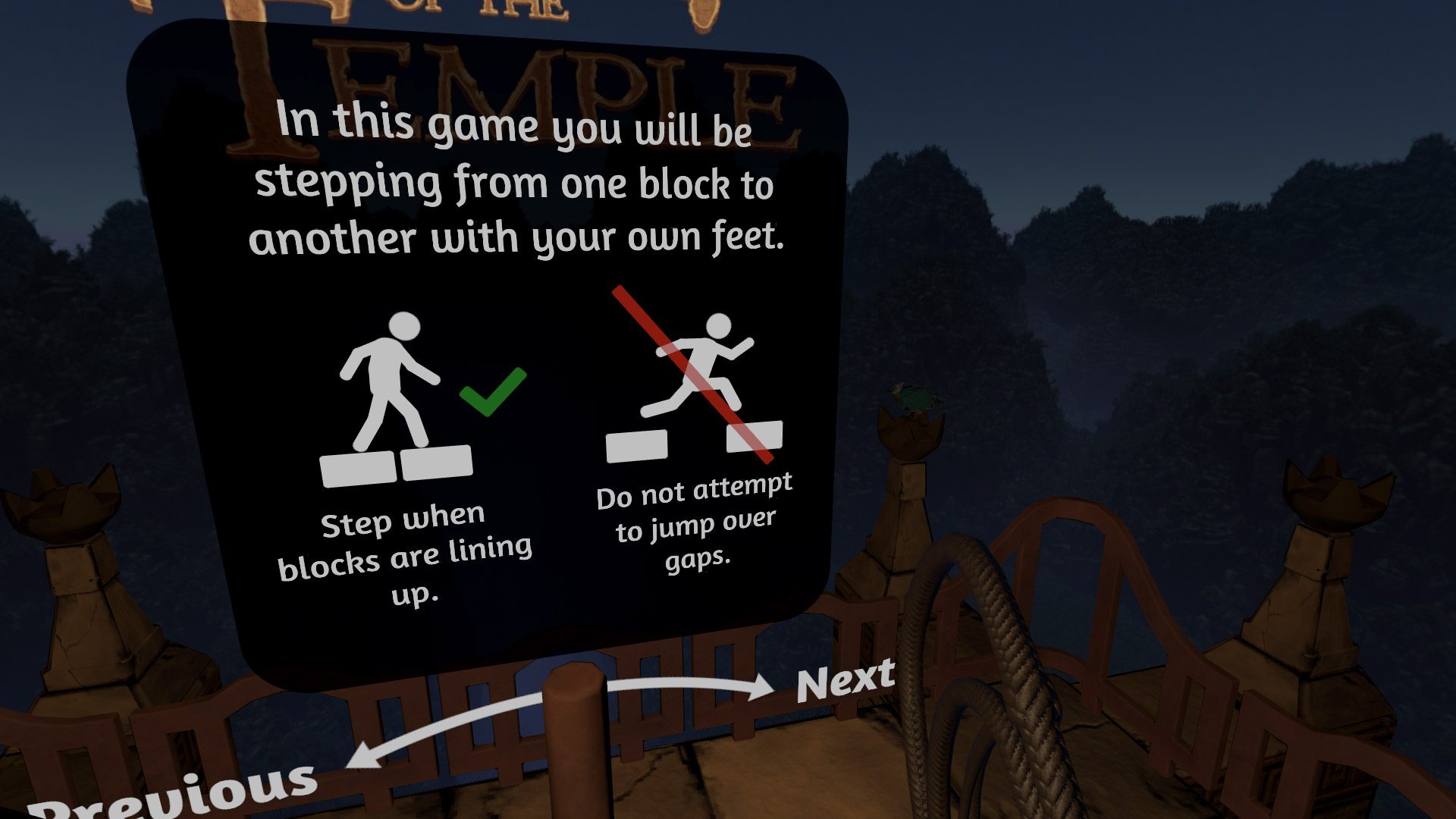
The whole premise of getting around the world via these moving platforms is based on an understanding that the player should step from one platform to another when they’re lined up, and not at other times. The most basic way the game establishes this is by just telling it outright to the player in safety instructions displayed prior to starting the game.

One of the safety instructions shown before the game begins

This instructions is shown for two reasons:

One is safety. You should avoid jumping over gaps, otherwise you would risk jumping right out of your play area and into a wall, for example.

The other is that the game’s system of traversal only works correctly when stepping from one platform to another when they line up. This is not as critical – I’ll get back to later what happens if stepping onto a platform that’s misaligned – but it still provides the best play experience.

Apart from the explicit instructions, the game also employs more subtle tricks to help ensure the player only steps over when blocks are correctly aligned. Consider the following example of a larger 2 x 2 tile static platform the player can step onto. A moving platform arrives from the side in a way that would allow the player to step off well before the platform has stopped moving, but that would break the game’s traversal logic.

In this room, ‘foot fences’ are used to discourage the player from stepping from one platform to another when they are not correctly aligned

To avoid this, “foot fences” were placed to discourage the player from stepping over onto the static platform (or away from it) at incorrect positions. The fences are purely visual and don’t technically prevent anything. The player can still step over them if they try, or right through them for that matter. However, psychologically it feels like less effort to not step over or through a fence and instead step onto the static platform where there’s a gap in the fence. In this way, a purely non-technical solution is used as part of the game’s arsenal of tricks.

Continued on Page 2: Correcting for Unaligned Platforms »

The Hidden Design Behind the Ingenious Room-Scale Gameplay in ‘Eye of the Temple’ Read More »

can-ai-save-lives?-cancer-detection-study-suggests-yes

Can AI save lives? Cancer detection study suggests yes

Can AI save lives? Cancer detection study suggests yes

Linnea Ahlgren

Story by

Linnea Ahlgren

Much of the world may currently be fretting about how to limit the impact (lack of privacy, copyright issues, loss of jobs, world domination, etc.) of artificial intelligence. However, that does not mean that there isn’t enormous potential for AI to improve quality of life on earth. 

One such application is healthcare. With the ability to process big data sets, the deployment of AI could lead to significant advances in predictive diagnostics, including early detection of cancer. While more research is needed, one of the latest studies in the field shows promising results for AI-assisted diagnosis of lung cancer. 

Doctors and researchers at the Royal Marsden NHS foundation trust, the Institute of Cancer Research, and Imperial College London have built an AI algorithm they say can diagnose cancerous growths more efficiently than current methods. 

In the study named OCTAPUS-AI, researchers used imaging and clinical data from over 900 patients from the UK and Netherlands following curative radiotherapy to develop and test ML algorithms to see how accurately the models could predict recurrence. 

Specifically, the study looked at if AI could help identify the risk of cancer returning in non-small cell lung cancer (NSCLC) patients. Researchers used CT scans to develop an AI algorithm using radiomics. This is a quantitative approach which extracts novel data and predictive biomarkers from medical imaging. 

Research algorithm superior to current technology

NSCLC patients make up 85% of lung cancer cases. While the disease is often treatable when caught early, in over a third of patients, the cancer returns. The study found that using the algorithm, clinicians may eventually be able to identify recurrence earlier in high-risk patients. 

The scientists used a measure called area under the curve (AUC) to see how efficient the model was at detecting cancer. A perfect 100% accuracy score would be a 1, whereas a model that was purely guessing 50-50 would get 0.5. In the study, the AI algorithm built by the researchers scored 0.87. This can be compared to the 0.67 score of the technology currently in use. 

“Next, we want to explore more advanced machine learning techniques, such as deep learning, to see if we can get even better results,” Dr Sumeet Hindocha, Clinical Oncology Specialist Registrar at The Royal Marsden NHS Foundation Trust, and Clinical Research Fellow at Imperial College London, said. “We then want to test this model on newly diagnosed NSCLC patients and follow them to see if the model can accurately predict their risk of recurrence.”

Support for practitioners – and patients

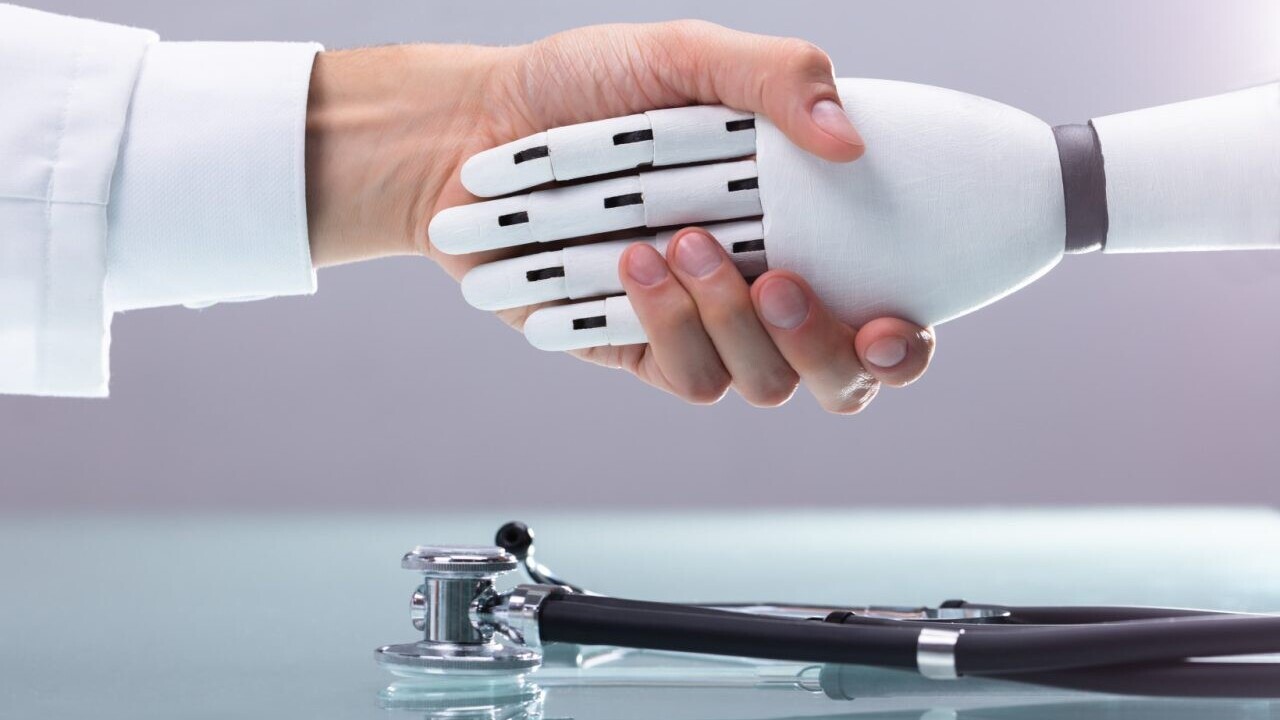
Rather than believing it will replace doctors, most now view AI in healthtech as a tool that will assist practitioners in providing the best possible care – including improved bedside manners. Despite investors growing gradually more risk-averse over the past year, the healthcare AI sector is still expected to grow from close to $14 billion in 2023 to $103 billion by 2028. 

The UK is teeming with AI healthtech startups. Many are focused on drug development, genomic analysis or more consumer-centric telehealth symptom checking and wearables. However, some are intent on improving disease detection and diagnosis. These include the likes of Mendelian, who just received close to £1.5 million to roll out its AI-based solution for rare disease diagnosis as part of the government’s investment into AI technology within the NHS. 

The rest of Europe also has its fair share of diagnostic AI startups. Among them are Liége-based Radiomics. The company focuses on the detection and phenotypic quantification of solid tumours based on standard-of-care imaging. In Norway, DoMore diagnostics is using AI and deep learning to increase the prognostic and predictive value of cancer tissue biopsies. The company’s founders also say it could help guide the selection of therapy to avoid over- and undertreatment. 

Meanwhile, a few percentage points of more accurate diagnosis, vital though they may be for the affected individual, may not be the only positive impact AI could have on our care systems. 

According to Eric Topol, the author of Deep Medicine: How Artificial Intelligence Can Make Healthcare Human Again, “the greatest opportunity offered by AI is not reducing errors or workloads, or even curing cancer: it is the opportunity to restore the precious and time-honoured connection and trust—the human touch—between patients and doctors.”

Get the TNW newsletter

Get the most important tech news in your inbox each week.

Also tagged with


Can AI save lives? Cancer detection study suggests yes Read More »