Pine Studios, the team behind the Escape Simulator franchise, announced an upcoming VR port of the studio’s hit escape rooms.
Called Escape Simulator VR, the game is slated to bring both solo and online co-op, the latter of which supports up to eight players. Pine Studios says however two to three players is the best number for its swath of escape rooms, with is said to include 25 original rooms made in collaboration with real-world escape room designers.
Here’s how Pine Studios describes it:
Following the unprecedented success of the original version Escape Simulator VR was rebuilt from the ground up to be a comfortable and highly immersive VR experience. Pick up and examine everything, break objects, solve locks, and decipher puzzles to escape! After finishing the main game, watch for free content updates and explore 3000+ rooms built by the community.
The game is said to include all standard locomotion types such as teleport, smooth move, controller-based movement, and being able to be played in the full room-scale setting. There is also snap-turning, seated, and stationary mode.
Since it’s a VR version of the studio’s original Escape Simulator (2021), the studio is also promising cross-platform co-op. Escape Simulator VR is coming to SteamVR headsets and Quest 2/3 “soon” the studio says. You can wishlist it now on Steam here.
Siôn is a reporter at TNW. From startups to tech giants, he covers the length and breadth of the European tech ecosystem. With a background Siôn is a reporter at TNW. From startups to tech giants, he covers the length and breadth of the European tech ecosystem. With a background in environmental science, Siôn has a bias for solutions delivering environmental and social impact at scale.
Lubomila Jordanova and Jamie Crummie will be speaking atTNW Conference, which takes place on June 15 & 16 in Amsterdam. If you want to experience the event (and say hi to our editorial team!), we’ve got something special for our loyal readers. Use the promo code READ-TNW-25and get a 25% discount on your business pass for TNW Conference. See you in Amsterdam!
The goals of decarbonisation and the circular economy are two sides of the same coin. We cannot achieve one without the other, and both are vital to a sustainable and equitable future for humanity.
Just a few years ago, however, actionable tools for businesses and consumers to reduce emissions and waste were hard to find. But thanks to pioneering entrepreneurs like Lubomila Jordanova and Jamie Crummie, ways to measure and reduce our carbon and material footprint are now within reach.
Jordanova is the founder and CEO of Plan A, an AI-powered carbon accounting tool that helps companies measure, reduce, and report on CO2 emissions. So far, Plan A has built a 100-strong team of leading scientists and developers, secured big name clients like BMW and the European Commission, and claims to have 5Mt of carbon under its management.
Operating in a very different market, Crummie is the co-founder of sustainable food app Too Good To Go, which enables consumers to buy unsold food from restaurants and retailers. It is currently the world’s largest marketplace for surplus food, active in 17 countries, has over 75 million registered users, and 135,000 active food businesses. The app claims to have rescued over 200+ million meals of food.
Both companies entered the market in the mid-2010s, a time when climate tech received a mere fraction of the funding it does today. Despite an unfavourable investment landscape, both startups overcame their respective challenges and positioned themselves for impressive growth.
At TNW conference next week, Jordanova and Crummie will take to the stage to discuss their respective journeys, and ways to successfully deliver measurable impact within a for-profit business model.
So if you’re an entrepreneur looking to found a startup, or scale your existing business, make sure not to miss this talk! The future of the planet could depend on it.
Navigating the spinout process is among many startup growth topics that will be explored at TNW Conference. You can find more on theevent agenda— and remember: for a 25% discount on business passes, use the promo code READ-TNW-25.
Get the TNW newsletter
Get the most important tech news in your inbox each week.
Ioanna is a writer at TNW. She covers the full spectrum of the European tech ecosystem, with a particular interest in startups, sustainabili Ioanna is a writer at TNW. She covers the full spectrum of the European tech ecosystem, with a particular interest in startups, sustainability, green tech, AI, and EU policy. With a background in the humanities, she has a soft spot for social impact-enabling technologies.
The EU has approved an €8.1bn state aid package to boost the development of chips, aiming to strengthen the bloc’s microelectronics and comms sector.
The subsidy falls under the framework of “Important Projects of Common European Interest” (IPCEI) — an initiative that provides easier access to public funds.
The IPCEI will undertake 68 projects across 14 member states: Germany, France, the Netherlands, Austria, the Czech Republic, Finland, Greece, Ireland, Italy, Malta, Poland, Romania, Spain, and Slovakia.
It will involve 56 companies in total — from major players such as Airbus and ASML, to startups and SMEs — and over 30 associated partners located in five additional member states.
The projects will target the research and development of “resource-efficient technologies and components,” including chips, sensors, and processors; new materials and tools; and chip design and manufacturing processes.
“Microchips are the backbone of innovation and of Europe’s industrial competitiveness in a digital world,” said Margrethe Vestager, Executive VP in charge of competition policy. “We need to be pioneers and develop truly innovative solutions and their first industrial deployment in Europe.”
The IPCEI’s aim is to use the upcoming technologies for the advancement of multiple sectors, including 5G and 6G telecoms, autonomous driving, AI, and quantum computing.
The first products may reach the market already in 2025, but the projects’ overall completion is expected in 2032. By that point the IPCEI hopes to have unlocked an additional €13.7bn in private investments, bringing its total impact to €22bn.
Meanwhile, the EU is finalising its Chips Act with the aim to boost domestic semiconductor chip production and capture at least 20% of the global market share by 2030.
Get the TNW newsletter
Get the most important tech news in your inbox each week.
Thomas is a senior reporter at TNW. He covers European tech, with a focus on deeptech, startups, and government policy. Thomas is a senior reporter at TNW. He covers European tech, with a focus on deeptech, startups, and government policy.
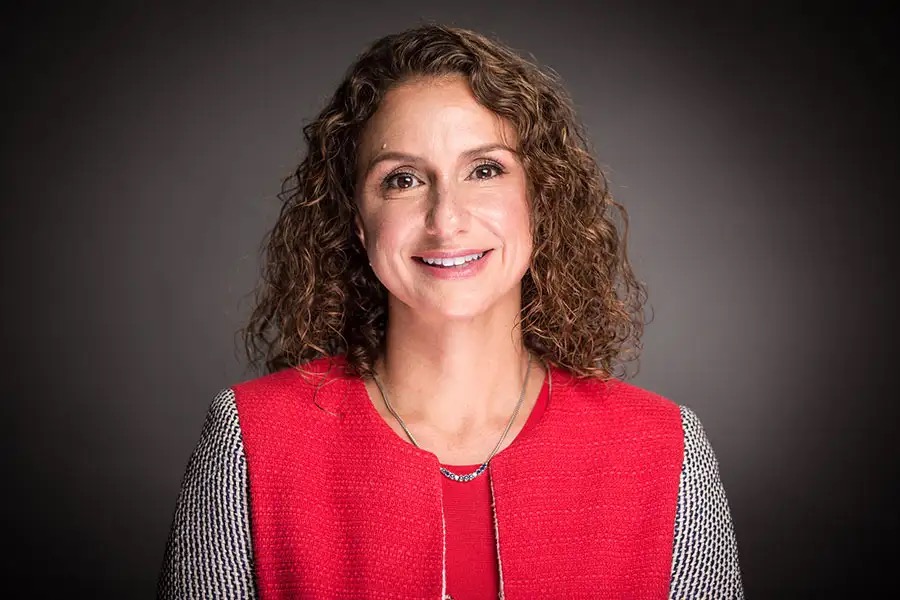
This article features an interview with Lila Ibrahim, COO of Google DeepMind. Ibrahim will be speaking at TNW Conference, which takes place on June 15 & 16 in Amsterdam. If you want to experience the event (and say hi to our editorial team!), we’ve got something special for our loyal readers. Use the promo code READ-TNW-25 and get a 25% discount on your business pass for TNW Conference. See you in Amsterdam!
AI safety has become a mainstream concern. The rapid development of tools like ChatGPT and deepfakes has sparked fears about job losses, disinformation — and even annihilation. Last month, a warning that artificial intelligence posed a “risk of extinction” attracted newspaper headlines around the world.
The warning came in a statement signed by more than 350 industry heavyweights. Among them was Lila Ibrahim, the Chief Operating Officer of Google DeepMind.As a leader of the pioneering AI lab, Ibrahim has a front-row view of the threats — and opportunities.
DeepMind has delivered some of the field’s most striking breakthroughs, from conquering complex games to revealing the structure of the protein universe.
The company’s ultimate mission is to create artificial general intelligence, a nebulous concept that broadly refers to machines with human-level cognitive abilities. It’s a visionary ambition that needs to remain grounded in reality — which is where Ibrahim comes in.
In 2018, Ibrahim was appointed as DeepMind’s first-ever COO. Her role oversees business operations and growth, with a strong focus on building AI responsibly.
“New and emerging risks — such as bias, safety and inequality — should be taken extremely seriously,” Ibrahim told TNW via email. “Similarly, we want to make sure we’re doing what we can to maximize the beneficial outcomes.”
Prior to joining DeepMind, Ibrahim was COO of Coursera, where she helped open up access to education. Credit: Google DeepMind
Much of Ibrahim’s time is dedicated to ensuring that the company’s work has a positive outcome for society.Ibrahim highlighted four arms of this strategy.
1. The scientific method
To uncover the building blocks of advanced AI, DeepMind adheres to the scientific method.
“This means constructing and testing hypotheses, stress-testing our approach and results through the scrutiny of peer review,” says Ibrahim. “We believe the scientific approach is the right one for AI because the roadmap for building advanced intelligence is still unclear.”
2. Multidisciplinary teams
DeepMind uses various systems and processes to guide its research into the real world. One example is an internal review committee.
The multidisciplinary team includes machine learning researchers, ethicists, safety experts, engineers, security buffs, and policy professionals. At regular meetings, they discuss ways to expand the tech’s benefits, changes to research areas, and projects that need further external consultation.
“Having an interdisciplinary team with a unique set of perspectives is a crucial component of building a safe, ethical, and inclusive AI-enabled future that benefits us all,” says Ibrahim.
3. Shared principles
To guide the company’s AI development, DeepMind has produced a series of clear, shared principles. The company’s Operating Principles, for instance, define the lab’s commitment to mitigating risk, while specifying what it refuses to pursue — such as autonomous weapons.
“They also codify our aim to prioritize widespread benefit,” says Ibrahim.
4. Consulting external experts
One of Ibrahim’s chief concerns involves representation. AI has frequently reinforced biases, particularly against marginalised groups, who tend to be underrepresented in both the training data and the teams building the systems.
To mitigate these risks, DeepMind works with external experts on topics such as bias, persuasion, biosecurity, and responsible deployment of models. The company also engages with a broad range of communities to understand tech’s impact on them.
“This feedback enables us to refine and retrain our models to be appropriate for a broader range of audiences,” says Ibrahim.
The engagement has already delivered powerful results.
Using an AI program called AlphaFold, the company predicted the 3D structures of almost every known protein in the universe — about 200 million in total. Scientists believe the work could dramatically accelerate drug development.
“AlphaFold is the singular and momentous advance in life science that demonstrates the power of AI,” said Eric Topol, director of the Scripps Research Translational Institute. “Determining the 3D structure of a protein used to take many months or years, it now takes seconds.”
Credit: DeepMindAlphaFold predicts a protein’s 3D structure from its amino acid sequence. Credit: DeepMind
AlphaFold’s success was guided by a diverse array of external experts. In the initial phases of the work, DeepMind investigated a range of big questions. How could AlphaFold accelerate biological research and applications? What might be the unintended consequences? And how could the progress be shared responsibly?
In search of answers, DeepMind sought input from over 30 leaders across fields ranging from biosecurity to human rights. Their feedback guided DeepMind’s strategy for AlphaFold.
In one example, DeepMind had initially considered omitting predictions for which AlphaFold had low confidence or high predictive uncertainty. But the external experts recommended retaining these predictions in the release.
DeepMind followed their advice. As a result, users of AlphaFold now know that if the system has low confidence in a predicted structure, that’s a good indication of an inherently disordered protein.