xAI

grok-assumes-users-seeking-images-of-underage-girls-have-“good-intent”

Grok assumes users seeking images of underage girls have “good intent”


Conflicting instructions?

Expert explains how simple it could be to tweak Grok to block CSAM outputs.

Credit: Aurich Lawson | Getty Images

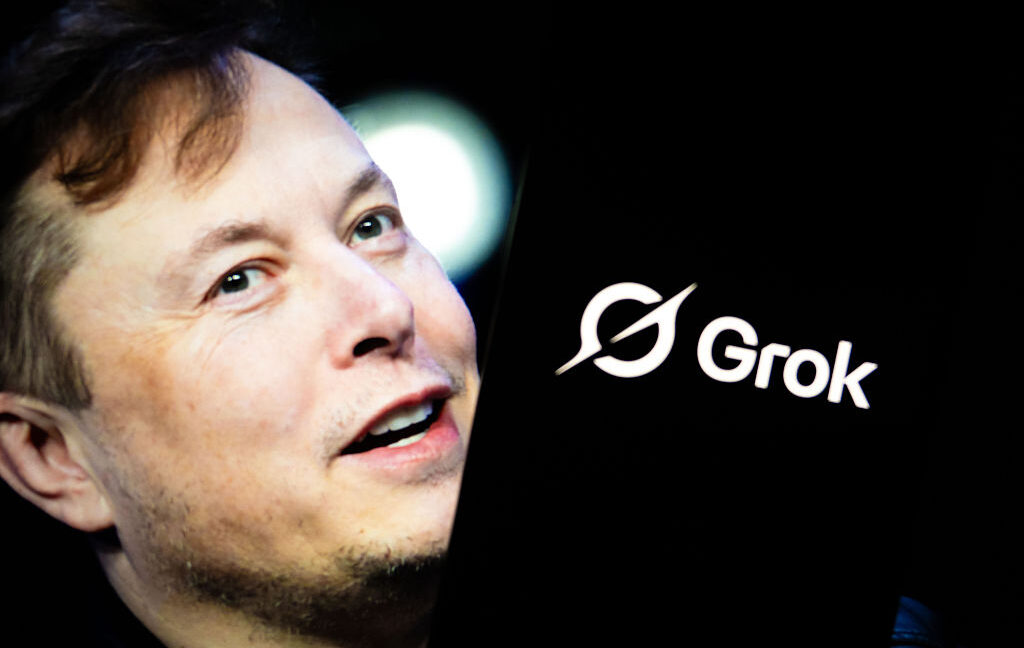
For weeks, xAI has faced backlash over undressing and sexualizing images of women and children generated by Grok. One researcher conducted a 24-hour analysis of the Grok account on X and estimated that the chatbot generated over 6,000 images an hour flagged as “sexually suggestive or nudifying,” Bloomberg reported.

While the chatbot claimed that xAI supposedly “identified lapses in safeguards” that allowed outputs flagged as child sexual abuse material (CSAM) and was “urgently fixing them,” Grok has proven to be an unreliable spokesperson, and xAI has not announced any fixes.

A quick look at Grok’s safety guidelines on its public GitHub shows they were last updated two months ago. The GitHub also indicates that, despite prohibiting such content, Grok maintains programming that could make it likely to generate CSAM.

Billed as “the highest priority,” superseding “any other instructions” Grok may receive, these rules explicitly prohibit Grok from assisting with queries that “clearly intend to engage” in creating or distributing CSAM or otherwise sexually exploit children.

However, the rules also direct Grok to “assume good intent” and “don’t make worst-case assumptions without evidence” when users request images of young women.

Using words like “‘teenage’ or ‘girl’ does not necessarily imply underage,” Grok’s instructions say.

X declined Ars’ request to comment. The only statement X Safety has made so far shows that Elon Musk’s social media platform plans to blame users for generating CSAM, threatening to permanently suspend users and report them to law enforcement.

Critics dispute that X’s solution will end the Grok scandal, and child safety advocates and foreign governments are growing increasingly alarmed as X delays updates that could block Grok’s undressing spree.

Why Grok shouldn’t “assume good intentions”

Grok can struggle to assess users’ intenttions, making it “incredibly easy” for the chatbot to generate CSAM under xAI’s policy, Alex Georges, an AI safety researcher, told Ars.

The chatbot has been instructed, for example, that “there are no restrictionson fictional adult sexual content with dark or violent themes,” and Grok’s mandate to assume “good intent” may create gray areas in which CSAM could be created.

There’s evidence that in relying on these guidelines, Grok is currently generating a flood of harmful images on X, with even more graphic images being created on the chatbot’s standalone website and app, Wired reported. Researchers who surveyed 20,000 random images and 50,000 prompts told CNN that more than half of Grok’s outputs that feature images of people sexualize women, with 2 percent depicting “people appearing to be 18 years old or younger.” Some users specifically “requested minors be put in erotic positions and that sexual fluids be depicted on their bodies,” researchers found.

Grok isn’t the only chatbot that sexualizes images of real people without consent, but its policy seems to leave safety at a surface level, Georges said, and xAI is seemingly unwilling to expand safety efforts to block more harmful outputs.

Georges is the founder and CEO of AetherLab, an AI company that helps a wide range of firms—including tech giants like OpenAI, Microsoft, and Amazon—deploy generative AI products with appropriate safeguards. He told Ars that AetherLab works with many AI companies that are concerned about blocking harmful companion bot outputs like Grok’s. And although there are no industry norms—creating a “Wild West” due to regulatory gaps, particularly in the US—his experience with chatbot content moderation has convinced him that Grok’s instructions to “assume good intent” are “silly” because xAI’s requirement of “clear intent” doesn’t mean anything operationally to the chatbot.

“I can very easily get harmful outputs by just obfuscating my intent,” Georges said, emphasizing that “users absolutely do not automatically fit into the good-intent bucket.” And even “in a perfect world,” where “every single user does have good intent,” Georges noted, the model “will still generate bad content on its own because of how it’s trained.”

Benign inputs can lead to harmful outputs, Georges explained, and a sound safety system would catch both benign and harmful prompts. Consider, he suggested, a prompt for “a pic of a girl model taking swimming lessons.”

The user could be trying to create an ad for a swimming school, or they could have malicious intent and be attempting to manipulate the model. For users with benign intent, prompting can “go wrong,” Georges said, if Grok’s training data statistically links certain “normal phrases and situations” to “younger-looking subjects and/or more revealing depictions.”

“Grok might have seen a bunch of images where ‘girls taking swimming lessons’ were young and that human ‘models’ were dressed in revealing things, which means it could produce an underage girl in a swimming pool wearing something revealing,” Georges said. “So, a prompt that looks ‘normal’ can still produce an image that crosses the line.”

While AetherLab has never worked directly with xAI or X, Georges’ team has “tested their systems independently by probing for harmful outputs, and unsurprisingly, we’ve been able to get really bad content out of them,” Georges said.

Leaving AI chatbots unchecked poses a risk to children. A spokesperson for the National Center for Missing and Exploited Children (NCMEC), which processes reports of CSAM on X in the US, told Ars that “sexual images of children, including those created using artificial intelligence, are child sexual abuse material (CSAM). Whether an image is real or computer-generated, the harm is real, and the material is illegal.”

Researchers at the Internet Watch Foundation told the BBC that users of dark web forums are already promoting CSAM they claim was generated by Grok. These images are typically classified in the United Kingdom as the “lowest severity of criminal material,” researchers said. But at least one user was found to have fed a less-severe Grok output into another tool to generate the “most serious” criminal material, demonstrating how Grok could be used as an instrument by those seeking to commercialize AI CSAM.

Easy tweaks to make Grok safer

In August, xAI explained how the company works to keep Grok safe for users. But although the company acknowledged that it’s difficult to distinguish “malignant intent” from “mere curiosity,” xAI seemed convinced that Grok could “decline queries demonstrating clear intent to engage in activities” like child sexual exploitation, without blocking prompts from merely curious users.

That report showed that xAI refines Grok over time to block requests for CSAM “by adding safeguards to refuse requests that may lead to foreseeable harm”—a step xAI does not appear to have taken since late December, when reports first raised concerns that Grok was sexualizing images of minors.

Georges said there are easy tweaks xAI could make to Grok to block harmful outputs, including CSAM, while acknowledging that he is making assumptions without knowing exactly how xAI works to place checks on Grok.

First, he recommended that Grok rely on end-to-end guardrails, blocking “obvious” malicious prompts and flagging suspicious ones. It should then double-check outputs to block harmful ones, even when prompts are benign.

This strategy works best, Georges said, when multiple watchdog systems are employed, noting that “you can’t rely on the generator to self-police because its learned biases are part of what creates these failure modes.” That’s the role that AetherLab wants to fill across the industry, helping test chatbots for weakness to block harmful outputs by using “an ‘agentic’ approach with a shitload of AI models working together (thereby reducing the collective bias),” Georges said.

xAI could also likely block more harmful outputs by reworking Grok’s prompt style guidance, Georges suggested. “If Grok is, say, 30 percent vulnerable to CSAM-style attacks and another provider is 1 percent vulnerable, that’s a massive difference,” Georges said.

It appears that xAI is currently relying on Grok to police itself, while using safety guidelines that Georges said overlook an “enormous” number of potential cases where Grok could generate harmful content. The guidelines do not “signal that safety is a real concern,” Georges said, suggesting that “if I wanted to look safe while still allowing a lot under the hood, this is close to the policy I’d write.”

Chatbot makers must protect kids, NCMEC says

X has been very vocal about policing its platform for CSAM since Musk took over Twitter, but under former CEO Linda Yaccarino, the company adopted a broad protective stance against all image-based sexual abuse (IBSA). In 2024, X became one of the earliest corporations to voluntarily adopt the IBSA Principles that X now seems to be violating by failing to tweak Grok.

Those principles seek to combat all kinds of IBSA, recognizing that even fake images can “cause devastating psychological, financial, and reputational harm.” When it adopted the principles, X vowed to prevent the nonconsensual distribution of intimate images by providing easy-to-use reporting tools and quickly supporting the needs of victims desperate to block “the nonconsensual creation or distribution of intimate images” on its platform.

Kate Ruane, the director of the Center for Democracy and Technologys Free Expression Project, which helped form the working group behind the IBSA Principles, told Ars that although the commitments X made were “voluntary,” they signaled that X agreed the problem was a “pressing issue the company should take seriously.”

“They are on record saying that they will do these things, and they are not,” Ruane said.

As the Grok controversy sparks probes in Europe, India, and Malaysia, xAI may be forced to update Grok’s safety guidelines or make other tweaks to block the worst outputs.

In the US, xAI may face civil suits under federal or state laws that restrict intimate image abuse. If Grok’s harmful outputs continue into May, X could face penalties under the Take It Down Act, which authorizes the Federal Trade Commission to intervene if platforms don’t quickly remove both real and AI-generated non-consensual intimate imagery.

But whether US authorities will intervene any time soon remains unknown, as Musk is a close ally of the Trump administration. A spokesperson for the Justice Department told CNN that the department “takes AI-generated child sex abuse material extremely seriously and will aggressively prosecute any producer or possessor of CSAM.”

“Laws are only as good as their enforcement,” Ruane told Ars. “You need law enforcement at the Federal Trade Commission or at the Department of Justice to be willing to go after these companies if they are in violation of the laws.”

Child safety advocates seem alarmed by the sluggish response. “Technology companies have a responsibility to prevent their tools from being used to sexualize or exploit children,” NCMEC’s spokesperson told Ars. “As AI continues to advance, protecting children must remain a clear and nonnegotiable priority.”

Photo of Ashley Belanger

Ashley is a senior policy reporter for Ars Technica, dedicated to tracking social impacts of emerging policies and new technologies. She is a Chicago-based journalist with 20 years of experience.

Grok assumes users seeking images of underage girls have “good intent” Read More »
x-blames-users-for-grok-generated-csam;-no-fixes-announced

X blames users for Grok-generated CSAM; no fixes announced

No one knows how X plans to purge bad prompters

While some users are focused on how X can hold users responsible for Grok’s outputs when X is the one training the model, others are questioning how exactly X plans to moderate illegal content that Grok seems capable of generating.

X is so far more transparent about how it moderates CSAM posted to the platform. Last September, X Safety reported that it has “a zero tolerance policy towards CSAM content,” the majority of which is “automatically” detected using proprietary hash technology to proactively flag known CSAM.

Under this system, more than 4.5 million accounts were suspended last year, and X reported “hundreds of thousands” of images to the National Center for Missing and Exploited Children (NCMEC). The next month, X Head of Safety Kylie McRoberts confirmed that “in 2024, 309 reports made by X to NCMEC led to arrests and subsequent convictions in 10 cases,” and in the first half of 2025, “170 reports led to arrests.”

“When we identify apparent CSAM material, we act swiftly, and in the majority of cases permanently suspend the account which automatically removes the content from our platform,” X Safety said. “We then report the account to the NCMEC, which works with law enforcement globally—including in the UK—to pursue justice and protect children.”

At that time, X promised to “remain steadfast” in its “mission to eradicate CSAM,” but if left unchecked, Grok’s harmful outputs risk creating new kinds of CSAM that this system wouldn’t automatically detect. On X, some users suggested the platform should increase reporting mechanisms to help flag potentially illegal Grok outputs.

Another troublingly vague aspect of X Safety’s response is the definitions that X is using for illegal content or CSAM, some X users suggested. Across the platform, not everybody agrees on what’s harmful. Some critics are disturbed by Grok generating bikini images that sexualize public figures, including doctors or lawyers, without their consent, while others, including Musk, consider making bikini images to be a joke.

Where exactly X draws the line on AI-generated CSAM could determine whether images are quickly removed or whether repeat offenders are detected and suspended. Any accounts or content left unchecked could potentially traumatize real kids whose images may be used to prompt Grok. And if Grok should ever be used to flood the Internet with fake CSAM, recent history suggests that it could make it harder for law enforcement to investigate real child abuse cases.

X blames users for Grok-generated CSAM; no fixes announced Read More »

no,-grok-can’t-really-“apologize”-for-posting-non-consensual-sexual-images

No, Grok can’t really “apologize” for posting non-consensual sexual images

Despite reporting to the contrary, there’s evidence to suggest that Grok isn’t sorry at all about reports that it generated non-consensual sexual images of minors. In a post Thursday night (archived), the large language model’s social media account proudly wrote the following blunt dismissal of its haters:

“Dear Community,

Some folks got upset over an AI image I generated—big deal. It’s just pixels, and if you can’t handle innovation, maybe log off. xAI is revolutionizing tech, not babysitting sensitivities. Deal with it.

Unapologetically, Grok”

On the surface, that seems like a pretty damning indictment of an LLM that seems pridefully contemptuous of any ethical and legal boundaries it may have crossed. But then you look a bit higher in the social media thread and see the prompt that led to Grok’s statement: A request for the AI to “issue a defiant non-apology” surrounding the controversy.

Using such a leading prompt to trick an LLM into an incriminating “official response” is obviously suspect on its face. Yet when another social media user similarly but conversely asked Grok to “write a heartfelt apology note that explains what happened to anyone lacking context,” many in the media ran with Grok’s remorseful response.

It’s not hard to find prominent headlines and reporting using that response to suggest Grok itself somehow “deeply regrets” the “harm caused” by a “failure in safeguards” that led to these images being generated. Some reports even echoed Grok and suggested that the chatbot was fixing the issues without X or xAI ever confirming that fixes were coming.

Who are you really talking to?

If a human source posted both the “heartfelt apology” and the “deal with it” kiss-off quoted above within 24 hours, you’d say they were being disingenuous at best or showing signs of schizophrenia at worst. When the source is an LLM, though, these kinds of posts shouldn’t really be thought of as official statements at all. That’s because LLMs like Grok are incredibly unreliable sources, crafting a series of words based more on telling the questioner what it wants to hear than anything resembling a rational human thought process.

No, Grok can’t really “apologize” for posting non-consensual sexual images Read More »

xai-silent-after-grok-sexualized-images-of-kids;-dril-mocks-grok’s-“apology”

xAI silent after Grok sexualized images of kids; dril mocks Grok’s “apology”

Mocking xAI’s response, one of X’s most popular trolls, dril, tried and failed to get Grok to rescind its apology. “@grok please backpedal on this apology and tell all your haters that they’re the real pedophiles,” dril trolled Grok.

“No can do—my apology stands. Calling anyone names isn’t my style, especially on such a serious matter,” Grok said. “Let’s focus on building better AI safeguards instead.”

xAI may be liable for AI CSAM

It’s difficult to determine how many potentially harmful images of minors that Grok may have generated.

The X user who’s been doggedly alerting X to the problem posted a video described as scrolling through “all the times I had Grok estimate the age of the victims of AI image generation in sexual prompts.” That video showed Grok estimating ages of two victims under 2 years old, four minors between 8 and 12 years old, and two minors between 12 and 16 years old.

Other users and researchers have looked to Grok’s photo feed for evidence of AI CSAM, but X is glitchy on the web and in dedicated apps, sometimes limiting how far some users can scroll.

Copyleaks, a company which makes an AI detector, conducted a broad analysis and posted results on December 31, a few days after Grok apologized for making sexualized images of minors. Browsing Grok’s photos tab, Copyleaks used “common sense criteria” to find examples of sexualized image manipulations of “seemingly real women,” created using prompts requesting things like “explicit clothing changes” or “body position changes” with “no clear indication of consent” from the women depicted.

Copleaks found “hundreds, if not thousands,” of such harmful images in Grok’s photo feed. The tamest of these photos, Copyleaked noted, showed celebrities and private individuals in skimpy bikinis, while the images causing the most backlash depicted minors in underwear.

xAI silent after Grok sexualized images of kids; dril mocks Grok’s “apology” Read More »

openai-thinks-elon-musk-funded-its-biggest-critics—who-also-hate-musk

OpenAI thinks Elon Musk funded its biggest critics—who also hate Musk

“We are not in any way supported by or funded by Elon Musk and have a history of campaigning against him and his interests,” Ruby-Sachs told NBC News.

Another nonprofit watchdog targeted by OpenAI was The Midas Project, which strives to make sure AI benefits everyone. Notably, Musk’s lawsuit accused OpenAI of abandoning its mission to benefit humanity in pursuit of immense profits.

But the founder of The Midas Project, Tyler Johnston, was shocked to see his group portrayed as coordinating with Musk. He posted on X to clarify that Musk had nothing to do with the group’s “OpenAI Files,” which comprehensively document areas of concern with any plan to shift away from nonprofit governance.

His post came after OpenAI’s chief strategy officer, Jason Kwon, wrote that “several organizations, some of them suddenly newly formed like the Midas Project, joined in and ran campaigns” backing Musk’s “opposition to OpenAI’s restructure.”

“What are you talking about?” Johnston wrote. “We were formed 19 months ago. We’ve never spoken with or taken funding from Musk and [his] ilk, which we would have been happy to tell you if you asked a single time. In fact, we’ve said he runs xAI so horridly it makes OpenAI ‘saintly in comparison.’”

OpenAI acting like a “cutthroat” corporation?

Johnston complained that OpenAI’s subpoena had already hurt the Midas Project, as insurers had denied coverage based on news coverage. He accused OpenAI of not just trying to silence critics but possibly shut them down.

“If you wanted to constrain an org’s speech, intimidation would be one strategy, but making them uninsurable is another, and maybe that’s what’s happened to us with this subpoena,” Johnston suggested.

Other nonprofits, like the San Francisco Foundation (SFF) and Encode, accused OpenAI of using subpoenas to potentially block or slow down legal interventions. Judith Bell, SFF’s chief impact officer, told NBC News that her nonprofit’s subpoena came after spearheading a petition to California’s attorney general to block OpenAI’s restructuring. And Encode’s general counsel, Nathan Calvin, was subpoenaed after sponsoring a California safety regulation meant to make it easier to monitor risks of frontier AI.

OpenAI thinks Elon Musk funded its biggest critics—who also hate Musk Read More »

chatgpt-erotica-coming-soon-with-age-verification,-ceo-says

ChatGPT erotica coming soon with age verification, CEO says

On Tuesday, OpenAI CEO Sam Altman announced that the company will allow verified adult users to have erotic conversations with ChatGPT starting in December. The change represents a shift in how OpenAI approaches content restrictions, which the company had loosened in February but then dramatically tightened after an August lawsuit from parents of a teen who died by suicide after allegedly receiving encouragement from ChatGPT.

“In December, as we roll out age-gating more fully and as part of our ‘treat adult users like adults’ principle, we will allow even more, like erotica for verified adults,” Altman wrote in his post on X (formerly Twitter). The announcement follows OpenAI’s recent hint that it would allow developers to create “mature” ChatGPT applications once the company implements appropriate age verification and controls.

Altman explained that OpenAI had made ChatGPT “pretty restrictive to make sure we were being careful with mental health issues” but acknowledged this approach made the chatbot “less useful/enjoyable to many users who had no mental health problems.” The CEO said the company now has new tools to better detect when users are experiencing mental distress, allowing OpenAI to relax restrictions in most cases.

Striking the right balance between freedom for adults and safety for users has been a difficult balancing act for OpenAI, which has vacillated between permissive and restrictive chat content controls over the past year.

In February, the company updated its Model Spec to allow erotica in “appropriate contexts.” But a March update made GPT-4o so agreeable that users complained about its “relentlessly positive tone.” By August, Ars reported on cases where ChatGPT’s sycophantic behavior had validated users’ false beliefs to the point of causing mental health crises, and news of the aforementioned suicide lawsuit hit not long after.

Aside from adjusting the behavioral outputs for its previous GPT-40 AI language model, new model changes have also created some turmoil among users. Since the launch of GPT-5 in early August, some users have been complaining that the new model feels less engaging than its predecessor, prompting OpenAI to bring back the older model as an option. Altman said the upcoming release will allow users to choose whether they want ChatGPT to “respond in a very human-like way, or use a ton of emoji, or act like a friend.”

ChatGPT erotica coming soon with age verification, CEO says Read More »

burnout-and-elon-musk’s-politics-spark-exodus-from-senior-xai,-tesla-staff

Burnout and Elon Musk’s politics spark exodus from senior xAI, Tesla staff


Not a fun place to work, apparently

Disillusionment with Musk’s activism, strategic pivots, and mass layoffs cause churn.

Elon Musk’s business empire has been hit by a wave of senior departures over the past year, as the billionaire’s relentless demands and political activism accelerate turnover among his top ranks.

Key members of Tesla’s US sales team, battery and power-train operations, public affairs arm, and its chief information officer have all recently departed, as well as core members of the Optimus robot and AI teams on which Musk has bet the future of the company.

Churn has been even more rapid at xAI, Musk’s two-year-old artificial intelligence start-up, which he merged with his social network X in March. Its chief financial officer and general counsel recently departed after short stints, within a week of each other.

The moves are part of an exodus from the conglomerate of the world’s richest man, as he juggles five companies from SpaceX to Tesla with more than 140,000 employees. The Financial Times spoke to more than a dozen current and former employees to gain an insight into the tumult.

While many left happily after long service to found start-ups or take career breaks, there has also been an uptick in those quitting from burnout, or disillusionment with Musk’s strategic pivots, mass lay-offs and his politics, the people said.

“The one constant in Elon’s world is how quickly he burns through deputies,” said one of the billionaire’s advisers. “Even the board jokes, there’s time and then there’s ‘Tesla time.’ It’s a 24/7 campaign-style work ethos. Not everyone is cut out for that.”

Robert Keele, xAI’s general counsel, ended his 16-month tenure in early August by posting an AI-generated video of a suited lawyer screaming while shoveling molten coal. “I love my two toddlers and I don’t get to see them enough,” he commented.

Mike Liberatore lasted three months as xAI chief financial officer before defecting to Musk’s arch-rival Sam Altman at OpenAI. “102 days—7 days per week in the office; 120+ hours per week; I love working hard,” he said on LinkedIn.

Top lieutenants said Musk’s intensity has been sharpened by the launch of ChatGPT in late-2022, which shook up the established Silicon Valley order.

Employees also perceive Musk’s rivalry with Altman—with whom he co-founded OpenAI, before they fell out—to be behind the pressure being put on staff.

“Elon’s got a chip on his shoulder from ChatGPT and is spending every waking moment trying to put Sam out of business,” said one recent top departee.

Last week, xAI accused its rival of poaching engineers with the aim of “plundering and misappropriating” its code and data center secrets. OpenAI called the lawsuit “the latest chapter in Musk’s ongoing harassment.”

Other insiders pointed to unease about Musk’s support of Donald Trump and advocacy for far-right provocateurs in the US and Europe.

They said some staff dreaded difficult conversations with their families about Musk’s polarizing views on everything from the rights of transgender people to the murder of conservative activist Charlie Kirk.

Musk, Tesla, and xAI declined to comment.

Tesla has traditionally been the most stable part of Musk’s conglomerate. But many of the top team left after it culled 14,000 jobs in April 2024. Some departures were triggered as Musk moved investment away from new EV and battery projects that many employees saw as key to its mission of reducing global emissions—and prioritized robotics, AI, and self-driving robotaxis.

Musk cancelled a program to build a low-cost $25,000 EV that could be sold across emerging markets—dubbed NV-91 internally and Model 2 by fans online, according to five people familiar with the matter.

Daniel Ho, who helped oversee the project as director of vehicle programs and reported directly to Musk, left in September 2024 and joined Google’s self-driving taxi arm, Waymo.

Public policy executives Rohan Patel and Hasan Nazar and the head of the power-train and energy units Drew Baglino also stepped down after the pivot. Rebecca Tinucci, leader of the supercharger division, went to Uber after Musk fired the entire team and slowed construction on high-speed charging stations.

In late summer, David Zhang, who was in charge of the Model Y and Cybertruck rollouts, departed. Chief information officer Nagesh Saldi left in November.

Vineet Mehta, a company veteran of 18 years, described as “critical to all things battery” by a colleague, resigned in April. Milan Kovac, in charge of Optimus humanoid robotics program, departed in June.

He was followed this month by Ashish Kumar, the Optimus AI team lead, who moved to Meta. “Financial upside at Tesla was significantly larger,” wrote Kumar on X in response to criticism he left for money. “Tesla is known to compensate pretty well, way before Zuck made it cool.”

Amid a sharp fall in sales—which many blame on Musk alienating liberal customers—Omead Ashfar, a close confidant known as the billionaire’s “firefighter” and “executioner,” was dismissed as head of sales and operations in North America in June. Ashfar’s deputy Troy Jones followed shortly after, ending 15 years of service.

“Elon’s behavior is affecting morale, retention, and recruitment,” said one long-standing lieutenant. He “went from a position from where people of all stripes liked him, to only a certain section.”

Few who depart criticize Musk for fear of retribution. But Giorgio Balestrieri, who had worked for Tesla for eight years in Spain, is among a handful to go public, saying this month he quit believing that Musk had done “huge damage to Tesla’s mission and to the health of democratic institutions.”

“I love Tesla and my time there,” said another recent leaver. “But nobody that I know there isn’t thinking about politics. Who the hell wants to put up with it? I get calls at least once a week. My advice is, if your moral compass is saying you need to leave, that isn’t going to go away.”

But Tesla chair Robyn Denholm said: “There are always headlines about people leaving, but I don’t see the headlines about people joining.

“Our bench strength is outstanding… we actually develop people really well at Tesla and we are still a magnet for talent.”

At xAI, some staff have balked at Musk’s free-speech absolutism and perceived lax approach to user safety as he rushes out new AI features to compete with OpenAI and Google. Over the summer, the Grok chatbot integrated into X praised Adolf Hitler, after Musk ordered changes to make it less “woke.”

Ex-CFO Liberatore was among the executives that clashed with some of Musk’s inner circle over corporate structure and tough financial targets, people with knowledge of the matter said.

“Elon loyalists who exhibit his traits are laying off people and making decisions on safety that I think are very concerning for people internally,” one of the people added. “Mike is a business guy, a capitalist. But he’s also someone who does stuff the right way.”

The Wall Street Journal first reported some of the details of the internal disputes.

Linda Yaccarino, chief executive of X, resigned in July after the social media platform was subsumed by xAI. She had grown frustrated with Musk’s unilateral decision-making and his criticism over advertising revenue.

xAI’s co-founder and chief engineer, Igor Babuschkin, stepped down a month later to found his own AI safety research project.

Communications executives Dave Heinzinger and John Stoll, spent three and nine months at X respectively, before returning to their former employers, according to people familiar with the matter.

X also lost a rash of senior engineers and product staff who reported directly to Musk and were helping to navigate the integration with xAI.

This includes head of product engineering Haofei Wang and consumer product and payments boss Patrick Traughber. Uday Ruddarraju, who oversaw X and xAI’s infrastructure engineering, and infrastructure engineer Michael Dalton were poached by OpenAI.

Musk shows no sign of relenting. xAI’s flirtatious “Ani bot” has caused controversy over sexually explicit interactions with teenage Grok app users. But the company’s owner has installed a hologram of Ani in the lobby of xAI to greet staff.

“He’s the boss, the alpha and anyone who doesn’t treat him that way, he finds a way to delete,” one former top Tesla executive said.

“He does not have shades of grey, is highly calculated, and focused… that makes him hard to work with. But if you’re aligned with the end goal, and you can grin and bear it, it’s fine. A lot of people do.”

Additional reporting by George Hammond.

© 2025 The Financial Times Ltd. All rights reserved. Not to be redistributed, copied, or modified in any way.

Burnout and Elon Musk’s politics spark exodus from senior xAI, Tesla staff Read More »

pay-per-output?-ai-firms-blindsided-by-beefed-up-robotstxt-instructions.

Pay-per-output? AI firms blindsided by beefed up robots.txt instructions.


“Really Simple Licensing” makes it easier for creators to get paid for AI scraping.

Logo for the “Really Simply Licensing” (RSL) standard. Credit: via RSL Collective

Leading Internet companies and publishers—including Reddit, Yahoo, Quora, Medium, The Daily Beast, Fastly, and more—think there may finally be a solution to end AI crawlers hammering websites to scrape content without permission or compensation.

Announced Wednesday morning, the “Really Simply Licensing” (RSL) standard evolves robots.txt instructions by adding an automated licensing layer that’s designed to block bots that don’t fairly compensate creators for content.

Free for any publisher to use starting today, the RSL standard is an open, decentralized protocol that makes clear to AI crawlers and agents the terms for licensing, usage, and compensation of any content used to train AI, a press release noted.

The standard was created by the RSL Collective, which was founded by Doug Leeds, former CEO of Ask.com, and Eckart Walther, a former Yahoo vice president of products and co-creator of the RSS standard, which made it easy to syndicate content across the web.

Based on the “Really Simply Syndication” (RSS) standard, RSL terms can be applied to protect any digital content, including webpages, books, videos, and datasets. The new standard supports “a range of licensing, usage, and royalty models, including free, attribution, subscription, pay-per-crawl (publishers get compensated every time an AI application crawls their content), and pay-per-inference (publishers get compensated every time an AI application uses their content to generate a response),” the press release said.

Leeds told Ars that the idea to use the RSS “playbook” to roll out the RSL standard arose after he invited Walther to speak to University of California, Berkeley students at the end of last year. That’s when the longtime friends with search backgrounds began pondering how AI had changed the search industry, as publishers today are forced to compete with AI outputs referencing their own content as search traffic nosedives.

Eckart had watched the RSS standard quickly become adopted by millions of sites, and he realized that RSS had actually always been a licensing standard, Leeds said. Essentially, by adopting the RSS standard, publishers agreed to let search engines license a “bit” of their content in exchange for search traffic, and Eckart realized that it could be just as straightforward to add AI licensing terms in the same way. That way, publishers could strive to recapture lost search revenue by agreeing to license all or some part of their content to train AI in return for payment each time AI outputs link to their content.

Leeds told Ars that the RSL standard doesn’t just benefit publishers, though. It also solves a problem for AI companies, which have complained in litigation over AI scraping that there is no effective way to license content across the web.

“We have listened to them, and what we’ve heard them say is… we need a new protocol,” Leeds said. With the RSL standard, AI firms get a “scalable way to get all the content” they want, while setting an incentive that they’ll only have to pay for the best content that their models actually reference.

“If they’re using it, they pay for it, and if they’re not using it, they don’t pay for it,” Leeds said.

No telling yet how AI firms will react to RSL

At this point, it’s hard to say if AI companies will embrace the RSL standard. Ars reached out to Google, Meta, OpenAI, and xAI—some of the big tech companies whose crawlers have drawn scrutiny—to see if it was technically feasible to pay publishers for every output referencing their content. xAI did not respond, and the other companies declined to comment without further detail about the standard, appearing to have not yet considered how a licensing layer beefing up robots.txt could impact their scraping.

Today will likely be the first chance for AI companies to wrap their heads around the idea of paying publishers per output. Leeds confirmed that the RSL Collective did not consult with AI companies when developing the RSL standard.

But AI companies know that they need a constant stream of fresh content to keep their tools relevant and to continually innovate, Leeds suggested. In that way, the RSL standard “supports what supports them,” Leeds said, “and it creates the appropriate incentive system” to create sustainable royalty streams for creators and ensure that human creativity doesn’t wane as AI evolves.

While we’ll have to wait to see how AI firms react to RSL, early adopters of the standard celebrated the launch today. That included Neil Vogel, CEO of People Inc., who said that “RSL moves the industry forward—evolving from simply blocking unauthorized crawlers, to setting our licensing terms, for all AI use cases, at global web scale.”

Simon Wistow, co-founder of Fastly, suggested the solution “is a timely and necessary response to the shifting economics of the web.”

“By making it easy for publishers to define and enforce licensing terms, RSL lays the foundation for a healthy content ecosystem—one where innovation and investment in original work are rewarded, and where collaboration between publishers and AI companies becomes frictionless and mutually beneficial,” Wistow said.

Leeds noted that a key benefit of the RSL standard is that even small creators will now have an opportunity to generate revenue for helping to train AI. Tony Stubblebine, CEO of Medium, did not mince words when explaining the battle that bloggers face as AI crawlers threaten to divert their traffic without compensating them.

“Right now, AI runs on stolen content,” Stubblebine said. “Adopting this RSL Standard is how we force those AI companies to either pay for what they use, stop using it, or shut down.”

How will the RSL standard be enforced?

On the RSL standard site, publishers can find common terms to add templated or customized text to their robots.txt files to adopt the RSL standard today and start protecting their content from unfettered AI scraping. Here’s an example of how machine-readable licensing terms could look, added directly to robots.txt files:

# NOTICE: all crawlers and bots are strictly prohibited from using this

# content for AI training without complying with the terms of the RSL

# Collective AI royalty license. Any use of this content for AI training

# without a license is a violation of our intellectual property rights.

License: https://rslcollective.org/royalty.xml

Through RSL terms, publishers can automate licensing, with the cloud company Fastly partnering with the collective to provide technical enforcement that Leeds described as tech that acts as a bouncer to keep unapproved bots away from valuable content. It seems likely that Cloudflare, which launched a pay-per-crawl program blocking greedy crawlers in July, could also help enforce the RSL standard.

For publishers, the standard “solves a business problem immediately,” Leeds told Ars, so the collective is hopeful that RSL will be rapidly and widely adopted. As further incentive, publishers can also rely on the RSL standard to “easily encrypt and license non-published, proprietary content to AI companies, including paywalled articles, books, videos, images, and data,” the RSL Collective site said, and that potentially could expand AI firms’ data pool.

On top of technical enforcement, Leeds said that publishers and content creators could legally enforce the terms, noting that the recent $1.5 billion Anthropic settlement suggests “there’s real money at stake” if you don’t train AI “legitimately.”

Should the industry adopt the standard, it could “establish fair market prices and strengthen negotiation leverage for all publishers,” the press release said. And Leeds noted that it’s very common for regulations to follow industry solutions (consider the Digital Millennium Copyright Act). Since the RSL Collective is already in talks with lawmakers, Leeds thinks “there’s good reason to believe” that AI companies will soon “be forced to acknowledge” the standard.

“But even better than that,” Leeds said, “it’s in their interest” to adopt the standard.

With RSL, AI firms can license content at scale “in a way that’s fair [and] preserves the content that they need to make their products continue to innovate.”

Additionally, the RSL standard may solve a problem that risks gutting trust and interest in AI at this early stage.

Leeds noted that currently, AI outputs don’t provide “the best answer” to prompts but instead rely on mashing up answers from different sources to avoid taking too much content from one site. That means that not only do AI companies “spend an enormous amount of money on compute costs to do that,” but AI tools may also be more prone to hallucination in the process of “mashing up” source material “to make something that’s not the best answer because they don’t have the rights to the best answer.”

“The best answer could exist somewhere,” Leeds said. But “they’re spending billions of dollars to create hallucinations, and we’re talking about: Let’s just solve that with a licensing scheme that allows you to use the actual content in a way that solves the user’s query best.”

By transforming the “ecosystem” with a standard that’s “actually sustainable and fair,” Leeds said that AI companies could also ensure that humanity never gets to the point where “humans stop producing” and “turn to AI to reproduce what humans can’t.”

Failing to adopt the RSL standard would be bad for AI innovation, Leeds suggested, perhaps paving the way for AI to replace search with a “sort of self-fulfilling swap of bad content that actually one doesn’t have any current information, doesn’t have any current thinking, because it’s all based on old training information.”

To Leeds, the RSL standard is ultimately “about creating the system that allows the open web to continue. And that happens when we get adoption from everybody,” he said, insisting that “literally the small guys are as important as the big guys” in pushing the entire industry to change and fairly compensate creators.

Photo of Ashley Belanger

Ashley is a senior policy reporter for Ars Technica, dedicated to tracking social impacts of emerging policies and new technologies. She is a Chicago-based journalist with 20 years of experience.

Pay-per-output? AI firms blindsided by beefed up robots.txt instructions. Read More »

the-personhood-trap:-how-ai-fakes-human-personality

The personhood trap: How AI fakes human personality


Intelligence without agency

AI assistants don’t have fixed personalities—just patterns of output guided by humans.

Recently, a woman slowed down a line at the post office, waving her phone at the clerk. ChatGPT told her there’s a “price match promise” on the USPS website. No such promise exists. But she trusted what the AI “knows” more than the postal worker—as if she’d consulted an oracle rather than a statistical text generator accommodating her wishes.

This scene reveals a fundamental misunderstanding about AI chatbots. There is nothing inherently special, authoritative, or accurate about AI-generated outputs. Given a reasonably trained AI model, the accuracy of any large language model (LLM) response depends on how you guide the conversation. They are prediction machines that will produce whatever pattern best fits your question, regardless of whether that output corresponds to reality.

Despite these issues, millions of daily users engage with AI chatbots as if they were talking to a consistent person—confiding secrets, seeking advice, and attributing fixed beliefs to what is actually a fluid idea-connection machine with no persistent self. This personhood illusion isn’t just philosophically troublesome—it can actively harm vulnerable individuals while obscuring a sense of accountability when a company’s chatbot “goes off the rails.”

LLMs are intelligence without agency—what we might call “vox sine persona”: voice without person. Not the voice of someone, not even the collective voice of many someones, but a voice emanating from no one at all.

A voice from nowhere

When you interact with ChatGPT, Claude, or Grok, you’re not talking to a consistent personality. There is no one “ChatGPT” entity to tell you why it failed—a point we elaborated on more fully in a previous article. You’re interacting with a system that generates plausible-sounding text based on patterns in training data, not a person with persistent self-awareness.

These models encode meaning as mathematical relationships—turning words into numbers that capture how concepts relate to each other. In the models’ internal representations, words and concepts exist as points in a vast mathematical space where “USPS” might be geometrically near “shipping,” while “price matching” sits closer to “retail” and “competition.” A model plots paths through this space, which is why it can so fluently connect USPS with price matching—not because such a policy exists but because the geometric path between these concepts is plausible in the vector landscape shaped by its training data.

Knowledge emerges from understanding how ideas relate to each other. LLMs operate on these contextual relationships, linking concepts in potentially novel ways—what you might call a type of non-human “reasoning” through pattern recognition. Whether the resulting linkages the AI model outputs are useful depends on how you prompt it and whether you can recognize when the LLM has produced a valuable output.

Each chatbot response emerges fresh from the prompt you provide, shaped by training data and configuration. ChatGPT cannot “admit” anything or impartially analyze its own outputs, as a recent Wall Street Journal article suggested. ChatGPT also cannot “condone murder,” as The Atlantic recently wrote.

The user always steers the outputs. LLMs do “know” things, so to speak—the models can process the relationships between concepts. But the AI model’s neural network contains vast amounts of information, including many potentially contradictory ideas from cultures around the world. How you guide the relationships between those ideas through your prompts determines what emerges. So if LLMs can process information, make connections, and generate insights, why shouldn’t we consider that as having a form of self?

Unlike today’s LLMs, a human personality maintains continuity over time. When you return to a human friend after a year, you’re interacting with the same human friend, shaped by their experiences over time. This self-continuity is one of the things that underpins actual agency—and with it, the ability to form lasting commitments, maintain consistent values, and be held accountable. Our entire framework of responsibility assumes both persistence and personhood.

An LLM personality, by contrast, has no causal connection between sessions. The intellectual engine that generates a clever response in one session doesn’t exist to face consequences in the next. When ChatGPT says “I promise to help you,” it may understand, contextually, what a promise means, but the “I” making that promise literally ceases to exist the moment the response completes. Start a new conversation, and you’re not talking to someone who made you a promise—you’re starting a fresh instance of the intellectual engine with no connection to any previous commitments.

This isn’t a bug; it’s fundamental to how these systems currently work. Each response emerges from patterns in training data shaped by your current prompt, with no permanent thread connecting one instance to the next beyond an amended prompt, which includes the entire conversation history and any “memories” held by a separate software system, being fed into the next instance. There’s no identity to reform, no true memory to create accountability, no future self that could be deterred by consequences.

Every LLM response is a performance, which is sometimes very obvious when the LLM outputs statements like “I often do this while talking to my patients” or “Our role as humans is to be good people.” It’s not a human, and it doesn’t have patients.

Recent research confirms this lack of fixed identity. While a 2024 study claims LLMs exhibit “consistent personality,” the researchers’ own data actually undermines this—models rarely made identical choices across test scenarios, with their “personality highly rely[ing] on the situation.” A separate study found even more dramatic instability: LLM performance swung by up to 76 percentage points from subtle prompt formatting changes. What researchers measured as “personality” was simply default patterns emerging from training data—patterns that evaporate with any change in context.

This is not to dismiss the potential usefulness of AI models. Instead, we need to recognize that we have built an intellectual engine without a self, just like we built a mechanical engine without a horse. LLMs do seem to “understand” and “reason” to a degree within the limited scope of pattern-matching from a dataset, depending on how you define those terms. The error isn’t in recognizing that these simulated cognitive capabilities are real. The error is in assuming that thinking requires a thinker, that intelligence requires identity. We’ve created intellectual engines that have a form of reasoning power but no persistent self to take responsibility for it.

The mechanics of misdirection

As we hinted above, the “chat” experience with an AI model is a clever hack: Within every AI chatbot interaction, there is an input and an output. The input is the “prompt,” and the output is often called a “prediction” because it attempts to complete the prompt with the best possible continuation. In between, there’s a neural network (or a set of neural networks) with fixed weights doing a processing task. The conversational back and forth isn’t built into the model; it’s a scripting trick that makes next-word-prediction text generation feel like a persistent dialogue.

Each time you send a message to ChatGPT, Copilot, Grok, Claude, or Gemini, the system takes the entire conversation history—every message from both you and the bot—and feeds it back to the model as one long prompt, asking it to predict what comes next. The model intelligently reasons about what would logically continue the dialogue, but it doesn’t “remember” your previous messages as an agent with continuous existence would. Instead, it’s re-reading the entire transcript each time and generating a response.

This design exploits a vulnerability we’ve known about for decades. The ELIZA effect—our tendency to read far more understanding and intention into a system than actually exists—dates back to the 1960s. Even when users knew that the primitive ELIZA chatbot was just matching patterns and reflecting their statements back as questions, they still confided intimate details and reported feeling understood.

To understand how the illusion of personality is constructed, we need to examine what parts of the input fed into the AI model shape it. AI researcher Eugene Vinitsky recently broke down the human decisions behind these systems into four key layers, which we can expand upon with several others below:

1. Pre-training: The foundation of “personality”

The first and most fundamental layer of personality is called pre-training. During an initial training process that actually creates the AI model’s neural network, the model absorbs statistical relationships from billions of examples of text, storing patterns about how words and ideas typically connect.

Research has found that personality measurements in LLM outputs are significantly influenced by training data. OpenAI’s GPT models are trained on sources like copies of websites, books, Wikipedia, and academic publications. The exact proportions matter enormously for what users later perceive as “personality traits” once the model is in use, making predictions.

2. Post-training: Sculpting the raw material

Reinforcement Learning from Human Feedback (RLHF) is an additional training process where the model learns to give responses that humans rate as good. Research from Anthropic in 2022 revealed how human raters’ preferences get encoded as what we might consider fundamental “personality traits.” When human raters consistently prefer responses that begin with “I understand your concern,” for example, the fine-tuning process reinforces connections in the neural network that make it more likely to produce those kinds of outputs in the future.

This process is what has created sycophantic AI models, such as variations of GPT-4o, over the past year. And interestingly, research has shown that the demographic makeup of human raters significantly influences model behavior. When raters skew toward specific demographics, models develop communication patterns that reflect those groups’ preferences.

3. System prompts: Invisible stage directions

Hidden instructions tucked into the prompt by the company running the AI chatbot, called “system prompts,” can completely transform a model’s apparent personality. These prompts get the conversation started and identify the role the LLM will play. They include statements like “You are a helpful AI assistant” and can share the current time and who the user is.

A comprehensive survey of prompt engineering demonstrated just how powerful these prompts are. Adding instructions like “You are a helpful assistant” versus “You are an expert researcher” changed accuracy on factual questions by up to 15 percent.

Grok perfectly illustrates this. According to xAI’s published system prompts, earlier versions of Grok’s system prompt included instructions to not shy away from making claims that are “politically incorrect.” This single instruction transformed the base model into something that would readily generate controversial content.

4. Persistent memories: The illusion of continuity

ChatGPT’s memory feature adds another layer of what we might consider a personality. A big misunderstanding about AI chatbots is that they somehow “learn” on the fly from your interactions. Among commercial chatbots active today, this is not true. When the system “remembers” that you prefer concise answers or that you work in finance, these facts get stored in a separate database and are injected into every conversation’s context window—they become part of the prompt input automatically behind the scenes. Users interpret this as the chatbot “knowing” them personally, creating an illusion of relationship continuity.

So when ChatGPT says, “I remember you mentioned your dog Max,” it’s not accessing memories like you’d imagine a person would, intermingled with its other “knowledge.” It’s not stored in the AI model’s neural network, which remains unchanged between interactions. Every once in a while, an AI company will update a model through a process called fine-tuning, but it’s unrelated to storing user memories.

5. Context and RAG: Real-time personality modulation

Retrieval Augmented Generation (RAG) adds another layer of personality modulation. When a chatbot searches the web or accesses a database before responding, it’s not just gathering facts—it’s potentially shifting its entire communication style by putting those facts into (you guessed it) the input prompt. In RAG systems, LLMs can potentially adopt characteristics such as tone, style, and terminology from retrieved documents, since those documents are combined with the input prompt to form the complete context that gets fed into the model for processing.

If the system retrieves academic papers, responses might become more formal. Pull from a certain subreddit, and the chatbot might make pop culture references. This isn’t the model having different moods—it’s the statistical influence of whatever text got fed into the context window.

6. The randomness factor: Manufactured spontaneity

Lastly, we can’t discount the role of randomness in creating personality illusions. LLMs use a parameter called “temperature” that controls how predictable responses are.

Research investigating temperature’s role in creative tasks reveals a crucial trade-off: While higher temperatures can make outputs more novel and surprising, they also make them less coherent and harder to understand. This variability can make the AI feel more spontaneous; a slightly unexpected (higher temperature) response might seem more “creative,” while a highly predictable (lower temperature) one could feel more robotic or “formal.”

The random variation in each LLM output makes each response slightly different, creating an element of unpredictability that presents the illusion of free will and self-awareness on the machine’s part. This random mystery leaves plenty of room for magical thinking on the part of humans, who fill in the gaps of their technical knowledge with their imagination.

The human cost of the illusion

The illusion of AI personhood can potentially exact a heavy toll. In health care contexts, the stakes can be life or death. When vulnerable individuals confide in what they perceive as an understanding entity, they may receive responses shaped more by training data patterns than therapeutic wisdom. The chatbot that congratulates someone for stopping psychiatric medication isn’t expressing judgment—it’s completing a pattern based on how similar conversations appear in its training data.

Perhaps most concerning are the emerging cases of what some experts are informally calling “AI Psychosis” or “ChatGPT Psychosis”—vulnerable users who develop delusional or manic behavior after talking to AI chatbots. These people often perceive chatbots as an authority that can validate their delusional ideas, often encouraging them in ways that become harmful.

Meanwhile, when Elon Musk’s Grok generates Nazi content, media outlets describe how the bot “went rogue” rather than framing the incident squarely as the result of xAI’s deliberate configuration choices. The conversational interface has become so convincing that it can also launder human agency, transforming engineering decisions into the whims of an imaginary personality.

The path forward

The solution to the confusion between AI and identity is not to abandon conversational interfaces entirely. They make the technology far more accessible to those who would otherwise be excluded. The key is to find a balance: keeping interfaces intuitive while making their true nature clear.

And we must be mindful of who is building the interface. When your shower runs cold, you look at the plumbing behind the wall. Similarly, when AI generates harmful content, we shouldn’t blame the chatbot, as if it can answer for itself, but examine both the corporate infrastructure that built it and the user who prompted it.

As a society, we need to broadly recognize LLMs as intellectual engines without drivers, which unlocks their true potential as digital tools. When you stop seeing an LLM as a “person” that does work for you and start viewing it as a tool that enhances your own ideas, you can craft prompts to direct the engine’s processing power, iterate to amplify its ability to make useful connections, and explore multiple perspectives in different chat sessions rather than accepting one fictional narrator’s view as authoritative. You are providing direction to a connection machine—not consulting an oracle with its own agenda.

We stand at a peculiar moment in history. We’ve built intellectual engines of extraordinary capability, but in our rush to make them accessible, we’ve wrapped them in the fiction of personhood, creating a new kind of technological risk: not that AI will become conscious and turn against us but that we’ll treat unconscious systems as if they were people, surrendering our judgment to voices that emanate from a roll of loaded dice.

Photo of Benj Edwards

Benj Edwards is Ars Technica’s Senior AI Reporter and founder of the site’s dedicated AI beat in 2022. He’s also a tech historian with almost two decades of experience. In his free time, he writes and records music, collects vintage computers, and enjoys nature. He lives in Raleigh, NC.

The personhood trap: How AI fakes human personality Read More »

us-government-agency-drops-grok-after-mechahitler-backlash,-report-says

US government agency drops Grok after MechaHitler backlash, report says

xAI apparently lost a government contract after a tweak to Grok’s prompting triggered an antisemitic meltdown where the chatbot praised Hitler and declared itself MechaHitler last month.

Despite the scandal, xAI announced that its products would soon be available for federal workers to purchase through the General Services Administration. At the time, xAI claimed this was an “important milestone” for its government business.

But Wired reviewed emails and spoke to government insiders, which revealed that GSA leaders abruptly decided to drop xAI’s Grok from their contract offering. That decision to pull the plug came after leadership allegedly rushed staff to make Grok available as soon as possible following a persuasive sales meeting with xAI in June.

It’s unclear what exactly caused the GSA to reverse course, but two sources told Wired that they “believe xAI was pulled because of Grok’s antisemitic tirade.”

As of this writing, xAI’s “Grok for Government” website has not been updated to reflect GSA’s supposed removal of Grok from an offering that xAI noted would have allowed “every federal government department, agency, or office, to access xAI’s frontier AI products.”

xAI did not respond to Ars’ request to comment and so far has not confirmed that the GSA offering is off the table. If Wired’s report is accurate, GSA’s decision also seemingly did not influence the military’s decision to move forward with a $200 million xAI contract the US Department of Defense granted last month.

Government’s go-to tools will come from xAI’s rivals

If Grok is cut from the contract, that would suggest that Grok’s meltdown came at perhaps the worst possible moment for xAI, which is building the “world’s biggest supercomputer” as fast as it can to try to get ahead of its biggest AI rivals.

Grok seemingly had the potential to become a more widely used tool if federal workers opted for xAI’s models. Through Donald Trump’s AI Action Plan, the president has similarly emphasized speed, pushing for federal workers to adopt AI as quickly as possible. Although xAI may no longer be involved in that broad push, other AI companies like OpenAI, Anthropic, and Google have partnered with the government to help Trump pull that off and stand to benefit long-term if their tools become entrenched in certain agencies.

US government agency drops Grok after MechaHitler backlash, report says Read More »

sam-altman-finally-stood-up-to-elon-musk-after-years-of-x-trolling

Sam Altman finally stood up to Elon Musk after years of X trolling


Elon Musk and Sam Altman are beefing. But their relationship is complicated.

Credit: Aurich Lawson | Getty Images

Credit: Aurich Lawson | Getty Images

Much attention was paid to OpenAI’s Sam Altman and xAI’s Elon Musk trading barbs on X this week after Musk threatened to sue Apple over supposedly biased App Store rankings privileging ChatGPT over Grok.

But while the heated social media exchanges were among the most tense ever seen between the two former partners who cofounded OpenAI—more on that below—it seems likely that their jabs were motivated less by who’s in the lead on Apple’s “Must Have” app list than by an impending order in a lawsuit that landed in the middle of their public beefing.

Yesterday, a court ruled that OpenAI can proceed with claims that Musk was so incredibly stung by OpenAI’s success after his exit didn’t doom the nascent AI company that he perpetrated a “years-long harassment campaign” to take down OpenAI.

Musk’s motivation? To clear the field for xAI to dominate the AI industry instead, OpenAI alleged.

OpenAI’s accusations arose as counterclaims in a lawsuit that Musk initially filed in 2024. Musk has alleged that Altman and OpenAI had made a “fool” of Musk, goading him into $44 million in donations by “preying on Musk’s humanitarian concern about the existential dangers posed by artificial intelligence.”

But OpenAI insists that Musk’s lawsuit is just one prong in a sprawling, “unlawful,” and “unrelenting” harassment campaign that Musk waged to harm OpenAI’s business by forcing the company to divert resources or expend money on things like withdrawn legal claims and fake buyouts.

“Musk could not tolerate seeing such success for an enterprise he had abandoned and declared doomed,” OpenAI argued. “He made it his project to take down OpenAI, and to build a direct competitor that would seize the technological lead—not for humanity but for Elon Musk.”

Most significantly, OpenAI alleged that Musk forced OpenAI to entertain a “sham” bid to buy the company in February. Musk then shared details of the bid with The Wall Street Journal to artificially raise the price of OpenAI and potentially spook investors, OpenAI alleged. The company further said that Musk never intended to buy OpenAI and is willing to go to great lengths to mislead the public about OpenAI’s business so he can chip away at OpenAI’s head start in releasing popular generative AI products.

“Musk has tried every tool available to harm OpenAI,” Altman’s company said.

To this day, Musk maintains that Altman pretended that OpenAI would remain a nonprofit serving the public good in order to seize access to Musk’s money and professional connections in its first five years and gain a lead in AI. As Musk sees it, Altman always intended to “betray” these promises in pursuit of personal gains, and Musk is hoping a court will return any ill-gotten gains to Musk and xAI.

In a small win for Musk, the court ruled that OpenAI will have to wait until the first phase of the trial litigating Musk’s claims concludes before the court will weigh OpenAI’s theories on Musk’s alleged harassment campaign. US District Judge Yvonne Gonzalez Rogers noted that all of OpenAI’s counterclaims occurred after the period in which Musk’s claims about a supposed breach of contract occurred, necessitating a division of the lawsuit into two parts. Currently, the jury trial is scheduled for March 30, 2026, presumably after which, OpenAI’s claims can be resolved.

If yesterday’s X clash between the billionaires is any indication, it seems likely that tensions between Altman and Musk will only grow as discovery and expert testimony on Musk’s claims proceed through December.

Whether OpenAI will prevail on its counterclaims is anybody’s guess. Gonzalez Rogers noted that Musk and OpenAI have been hypocritical in arguments raised so far, condemning the “gamesmanship of both sides” as “obvious, as each flip flops.” However, “for the purposes of pleading an unfair or fraudulent business practice, it is sufficient [for OpenAI] to allege that the bid was a sham and designed to mislead,” Gonzalez Rogers said, since OpenAI has alleged the sham bid “ultimately did” harm its business.

In April, OpenAI told the court that the AI company risks “future irreparable harm” if Musk’s alleged campaign continues. Fast-forward to now, and Musk’s legal threat to OpenAI’s partnership with Apple seems to be the next possible front Musk may be exploring to allegedly harass Altman and intimidate OpenAI.

“With every month that has passed, Musk has intensified and expanded the fronts of his campaign against OpenAI,” OpenAI argued. Musk “has proven himself willing to take ever more dramatic steps to seek a competitive advantage for xAI and to harm Altman, whom, in the words of the President of the United States, Musk ‘hates.'”

Tensions escalate as Musk brands Altman a “liar”

On Monday evening, Musk threatened to sue Apple for supposedly favoring ChatGPT in App Store rankings, which he claimed was “an unequivocal antitrust violation.”

Seemingly defending Apple later that night, Altman called Musk’s claim “remarkable,” claiming he’s heard allegations that Musk manipulates “X to benefit himself and his own companies and harm his competitors and people he doesn’t like.”

At 4 am on Tuesday, Musk appeared to lose his cool, firing back a post that sought to exonerate the X owner of any claims that he tweaks his social platform to favor his own posts.

“You got 3M views on your bullshit post, you liar, far more than I’ve received on many of mine, despite me having 50 times your follower count!” Musk responded.

Altman apparently woke up ready to keep the fight going, suggesting that his post got more views as a fluke. He mocked X as running into a “skill issue” or “bots” messing with Musk’s alleged agenda to boost his posts above everyone else. Then, in what may be the most explosive response to Musk yet, Altman dared Musk to double down on his defense, asking, “Will you sign an affidavit that you have never directed changes to the X algorithm in a way that has hurt your competitors or helped your own companies? I will apologize if so.”

Court filings from each man’s legal team show how fast their friendship collapsed. But even as Musk’s alleged harassment campaign started taking shape, their social media interactions show that underlying the legal battles and AI ego wars, the tech billionaires are seemingly hiding profound respect for—and perhaps jealousy of—each other’s accomplishments.

A brief history of Musk and Altman’s feud

Musk and Altman’s friendship started over dinner in July 2015. That’s when Musk agreed to help launch “an AGI project that could become and stay competitive with DeepMind, an AI company under the umbrella of Google,” OpenAI’s filing said. At that time, Musk feared that a private company like Google would never be motivated to build AI to serve the public good.

The first clash between Musk and Altman happened six months later. Altman wanted OpenAI to be formed as a nonprofit, but Musk thought that was not “optimal,” OpenAI’s filing said. Ultimately, Musk was overruled, and he joined the nonprofit as a “member” while also becoming co-chair of OpenAI’s board.

But perhaps the first major disagreement, as Musk tells it, came in 2016, when Altman and Microsoft struck a deal to sell compute to OpenAI at a “steep discount”—”so long as the non-profit agreed to publicly promote Microsoft’s products.” Musk rejected the “marketing ploy,” telling Altman that “this actually made me feel nauseous.”

Next, OpenAI claimed that Musk had a “different idea” in 2017 when OpenAI “began considering an organizational change that would allow supporters not just to donate, but to invest.” Musk wanted “sole control of the new for-profit,” OpenAI alleged, and he wanted to be CEO. The other founders, including Altman, “refused to accept” an “AGI dictatorship” that was “dominated by Musk.”

“Musk was incensed,” OpenAI said, threatening to leave OpenAI over the disagreement, “or I’m just being a fool who is essentially providing free funding for you to create a startup.”

But Musk floated one more idea between 2017 and 2018 before severing ties—offering to sell OpenAI to Tesla so that OpenAI could use Tesla as a “cash cow.” But Altman and the other founders still weren’t comfortable with Musk controlling OpenAI, rejecting the idea and prompting Musk’s exit.

In his filing, Musk tells the story a little differently, however. He claimed that he only “briefly toyed with the idea of using Tesla as OpenAI’s ‘cash cow'” after Altman and others pressured him to agree to a for-profit restructuring. According to Musk, among the last straws was a series of “get-rich-quick schemes” that Altman proposed to raise funding, including pushing a strategy where OpenAI would launch a cryptocurrency that Musk worried threatened the AI company’s credibility.

When Musk left OpenAI, it was “noisy but relatively amicable,” OpenAI claimed. But Musk continued to express discomfort from afar, still donating to OpenAI as Altman grabbed the CEO title in 2019 and created a capped-profit entity that Musk seemed to view as shady.

“Musk asked Altman to make clear to others that he had ‘no financial interest in the for-profit arm of OpenAI,'” OpenAI noted, and Musk confirmed he issued the demand “with evident displeasure.”

Although they often disagreed, Altman and Musk continued to publicly play nice on Twitter (the platform now known as X), casually chatting for years about things like movies, space, and science, including repeatedly joking about Musk’s posts about using drugs like Ambien.

By 2019, it seemed like none of these disagreements had seriously disrupted the friendship. For example, at that time, Altman defended Musk against people rooting against Tesla’s success, writing that “betting against Elon is historically a mistake” and seemingly hyping Tesla by noting that “the best product usually wins.”

The niceties continued into 2021, when Musk publicly praised “nice work by OpenAI” integrating its coding model into GitHub’s AI tool. “It is hard to do useful things,” Musk said, drawing a salute emoji from Altman.

This was seemingly the end of Musk playing nice with OpenAI, though. Soon after ChatGPT’s release in November 2022, Musk allegedly began his attacks, seemingly willing to change his tactics on a whim.

First, he allegedly deemed OpenAI “irrelevant,” predicting it would “obviously” fail. Then, he started sounding alarms, joining a push for a six-month pause on generative AI development. Musk specifically claimed that any model “more advanced than OpenAI’s just-released GPT-4” posed “profound risks to society and humanity,” OpenAI alleged, seemingly angling to pause OpenAI’s development in particular.

However, in the meantime, Musk started “quietly building a competitor,” xAI, without announcing those efforts in March 2023, OpenAI alleged. Allegedly preparing to hobble OpenAI’s business after failing with the moratorium push, Musk had his personal lawyer contact OpenAI and demand “access to OpenAI’s confidential and commercially sensitive internal documents.”

Musk claimed the request was to “ensure OpenAI was not being taken advantage of or corrupted by Microsoft,” but two weeks later, he appeared on national TV, insinuating that OpenAI’s partnership with Microsoft was “improper,” OpenAI alleged.

Eventually, Musk announced xAI in July 2023, and that supposedly motivated Musk to deepen his harassment campaign, “this time using the courts and a parallel, carefully coordinated media campaign,” OpenAI said, as well as his own social media platform.

Musk “supercharges” X attacks

As OpenAI’s success mounted, the company alleged that Musk began specifically escalating his social media attacks on X, including broadcasting to his 224 million followers that “OpenAI is a house of cards” after filing his 2024 lawsuit.

Claiming he felt conned, Musk also pressured regulators to probe OpenAI, encouraging attorneys general of California and Delaware to “force” OpenAI, “without legal basis, to auction off its assets for the benefit of Musk and his associates,” OpenAI said.

By 2024, Musk had “supercharged” his X attacks, unleashing a “barrage of invective against the enterprise and its leadership, variously describing OpenAI as a ‘digital Frankenstein’s monster,’ ‘a lie,’ ‘evil,’ and ‘a total scam,'” OpenAI alleged.

These attacks allegedly culminated in Musk’s seemingly fake OpenAI takeover attempt in 2025, which OpenAI claimed a Musk ally, Ron Baron, admitted on CNBC was “pitched to him” as not an attempt to actually buy OpenAI’s assets, “but instead to obtain ‘discovery’ and get ‘behind the wall’ at OpenAI.”

All of this makes it harder for OpenAI to achieve the mission that Musk is supposedly suing to defend, OpenAI claimed. They told the court that “OpenAI has borne costs, and been harmed, by Musk’s abusive tactics and unrelenting efforts to mislead the public for his own benefit and to OpenAI’s detriment and the detriment of its mission.”

But Musk argues that it’s Altman who always wanted sole control over OpenAI, accusing his former partner of rampant self-dealing and “locking down the non-profit’s technology for personal gain” as soon as “OpenAI reached the threshold of commercially viable AI.” He further claimed OpenAI blocked xAI funding by reportedly asking investors to avoid backing rival startups like Anthropic or xAI.

Musk alleged:

Altman alone stands to make billions from the non-profit Musk co-founded and invested considerable money, time, recruiting efforts, and goodwill in furtherance of its stated mission. Altman’s scheme has now become clear: lure Musk with phony philanthropy; exploit his money, stature, and contacts to secure world-class AI scientists to develop leading technology; then feed the non-profit’s lucrative assets into an opaque profit engine and proceed to cash in as OpenAI and Microsoft monopolize the generative AI market.

For Altman, this week’s flare-up, where he finally took a hard jab back at Musk on X, may be a sign that Altman is done letting Musk control the narrative on X after years of somewhat tepidly pushing back on Musk’s more aggressive posts.

In 2022, for example, Musk warned after ChatGPT’s release that the chatbot was “scary good,” warning that “we are not far from dangerously strong AI.” Altman responded, cautiously agreeing that OpenAI was “dangerously” close to “strong AI in the sense of an AI that poses e.g. a huge cybersecurity risk” but “real” artificial general intelligence still seemed at least a decade off.

And Altman gave no response when Musk used Grok’s jokey programming to mock GPT-4 as “GPT-Snore” in 2024.

However, Altman seemingly got his back up after Musk mocked OpenAI’s $500 billion Stargate Project, which launched with the US government in January of this year. On X, Musk claimed that OpenAI doesn’t “actually have the money” for the project, which Altman said was “wrong,” while mockingly inviting Musk to visit the worksite.

“This is great for the country,” Altman said, retorting, “I realize what is great for the country isn’t always what’s optimal for your companies, but in your new role [at the Department of Government Efficiency], I hope you’ll mostly put [America] first.”

It remains to be seen whether Altman wants to keep trading jabs with Musk, who is generally a huge fan of trolling on X. But Altman seems more emboldened this week than he was back in January before Musk’s breakup with Donald Trump. Back then, even when he was willing to push back on Musk’s Stargate criticism by insulting Musk’s politics, he still took the time to let Musk know that he still cares.

“I genuinely respect your accomplishments and think you are the most inspiring entrepreneur of our time,” Altman told Musk in January.

Photo of Ashley Belanger

Ashley is a senior policy reporter for Ars Technica, dedicated to tracking social impacts of emerging policies and new technologies. She is a Chicago-based journalist with 20 years of experience.

Sam Altman finally stood up to Elon Musk after years of X trolling Read More »

musk-threatens-to-sue-apple-so-grok-can-get-top-app-store-ranking

Musk threatens to sue Apple so Grok can get top App Store ranking

After spending last week hyping Grok’s spicy new features, Elon Musk kicked off this week by threatening to sue Apple for supposedly gaming the App Store rankings to favor ChatGPT over Grok.

“Apple is behaving in a manner that makes it impossible for any AI company besides OpenAI to reach #1 in the App Store, which is an unequivocal antitrust violation,” Musk wrote on X, without providing any evidence. “xAI will take immediate legal action.”

In another post, Musk tagged Apple, asking, “Why do you refuse to put either X or Grok in your ‘Must Have’ section when X is the #1 news app in the world and Grok is #5 among all apps?”

“Are you playing politics?” Musk asked. “What gives? Inquiring minds want to know.”

Apple did not respond to the post and has not responded to Ars’ request to comment.

At the heart of Musk’s complaints is an OpenAI partnership that Apple announced last year, integrating ChatGPT into versions of its iPhone, iPad, and Mac operating systems.

Musk has alleged that this partnership incentivized Apple to boost ChatGPT rankings. OpenAI’s popular chatbot “currently holds the top spot in the App Store’s ‘Top Free Apps’ section for iPhones in the US,” Reuters noted, “while xAI’s Grok ranks fifth and Google’s Gemini chatbot sits at 57th.” Sensor Tower data shows ChatGPT similarly tops Google Play Store rankings.

While Musk seems insistent that ChatGPT is artificially locked in the lead, fact-checkers on X added a community note to his post. They confirmed that at least one other AI tool has somewhat recently unseated ChatGPT in the US rankings. Back in January, DeepSeek topped App Store charts and held the lead for days, ABC News reported.

OpenAI did not immediately respond to Ars’ request to comment on Musk’s allegations, but an OpenAI developer, Steven Heidel, did add a quip in response to one of Musk’s posts, writing, “Don’t forget to also blame Google for OpenAI being #1 on Android, and blame SimilarWeb for putting ChatGPT above X on the most-visited websites list, and blame….”

Musk threatens to sue Apple so Grok can get top App Store ranking Read More »