Apple has allegedly slashed production targets for Vision Pro due to manufacturing issues related to the mixed reality headset’s complex design, a Financial Timesreport maintains.
Unveiled during Apple’s Worldwide Developer Conference (WWDC) in early June, the $3,500 Vision Pro represents the first big step into XR for the company. Launching sometime next year, Vision Pro is a high-end headset that combines virtual reality displays with color passthrough cameras, allowing it to do both VR and AR tasks.
Apple’s China-based contract manufacturer Luxshare, allegedly the sole assembler of the device, is now preparing to make fewer than 400,000 units of Vision Pro in 2024, according to the report, which cites “multiple people with direct knowledge of the manufacturing process,” including sources close to Apple and Luxshare.
Supply chain rumors also allege that two of Apple’s China-based component suppliers only have enough parts to produce around 130,000 to 150,000 Vision Pro units in the first year. It was previously thought Apple was operating with an internal 12-month sales target of one million units.
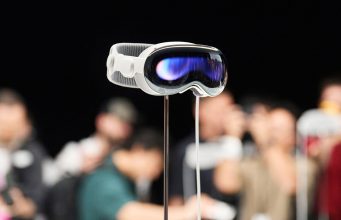
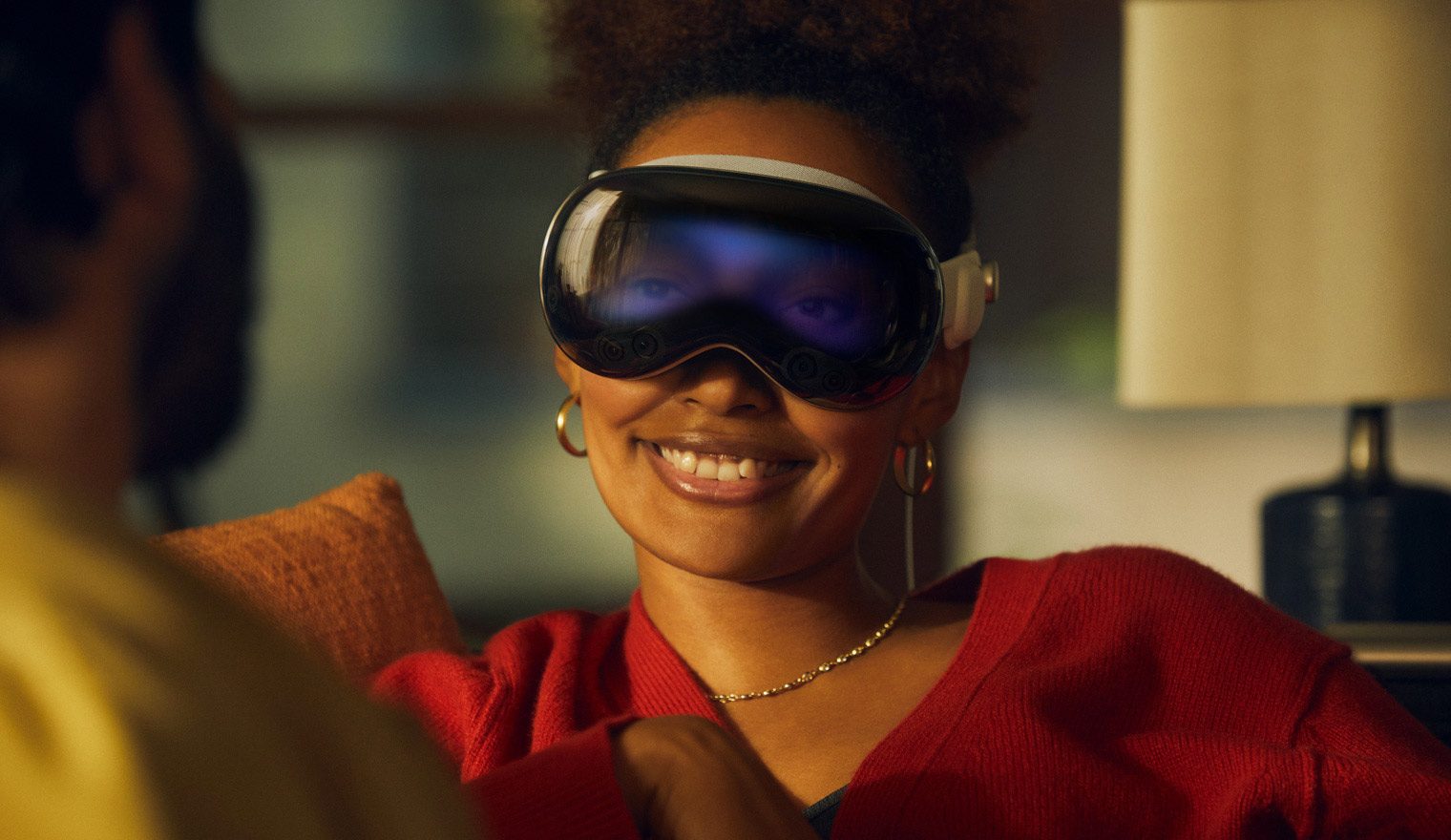
Manufacturing complications apparently hinge on Vision Pro’s micro-OLED displays and outward-facing, curved lenticular display, the latter of which allows a sort of digital passthrough view of the user’s eyes.
In our hands-on, we noted Vision Pro packed top of its class lenses and displays, something Apple says is “more than a 4K TV for each eye.”
The company is reportedly unhappy with supplier productivity. It’s said the most expensive component is its internal displays, and getting enough of those micro-OLEDs to be defect-free has purportedly been a significant hurdle. Additionally, Financial Times reports the micro-OLED displays used in the headsets demoed to press at its June launch were supplied by Sony and the chipmaker TSMC.
Meanwhile, Apple is said to be working with Samsung and LG on a second-gen version of the headset, which will be reportedly cheaper than the first, which is launching sometime in 2024 for $3,500.
Apple Vision Pro is about to set a lot of expectations in the industry of what’s ‘right’ and ‘wrong’ about mixed reality, something the fruit company prefers to call spatial computing. Oculus founder Palmer Luckey weighed in on his thoughts, and coming from one of the main figures who kicked off the VR revolution of today, it means something.
Speaking to Peter Diamandis in a nearly two hour-long podcast, Luckey delved into many areas of his work over the years, touching on the role at his defense company Anduril, his role in kickstarting the modern era of VR, and basically everything under the Sun that the tech entrepreneur is doing, or thinks about when it comes to augmented and virtual reality.
Undoubtedly the hottest of hot button issues is whether Apple is doing mixed reality ‘right’ as a newcomer to the space. Luckey is mostly positive about Vision Pro, saying it’s patently Apple.
“I think there were things that I would do differently if I were Apple,” Luckey tells Diamandis. “They did basically everything right—they didn’t do anything terrible. I mean, I think Apple is going after the exact right segment of the market that Apple should be going after.”
Luckey maintains that if Apple went after the low end of the market, it would be “a mistake,” saying the Cupertino tech giant is taking “the exact approach that I had always wanted Apple to take, and really the approach that Oculus had been taking in the early years.”
Apple is admittedly going at XR with little regard for affordability, but that’s not the sticking point you might think it would be. To him, the $3,500 headset packs the best components for the premium segment, including “the highest possible resolution, the highest quality possible displays, the best possible ergonomics.”
In fact, Apple’s first-gen device shouldn’t be about affordability at this point, Luckey says. It’s about “inspiring lust in a much larger group of people, who, as I dreamed all those years ago, see VR as something they desperately want before it becomes something they can afford.”
Image courtesy Apple
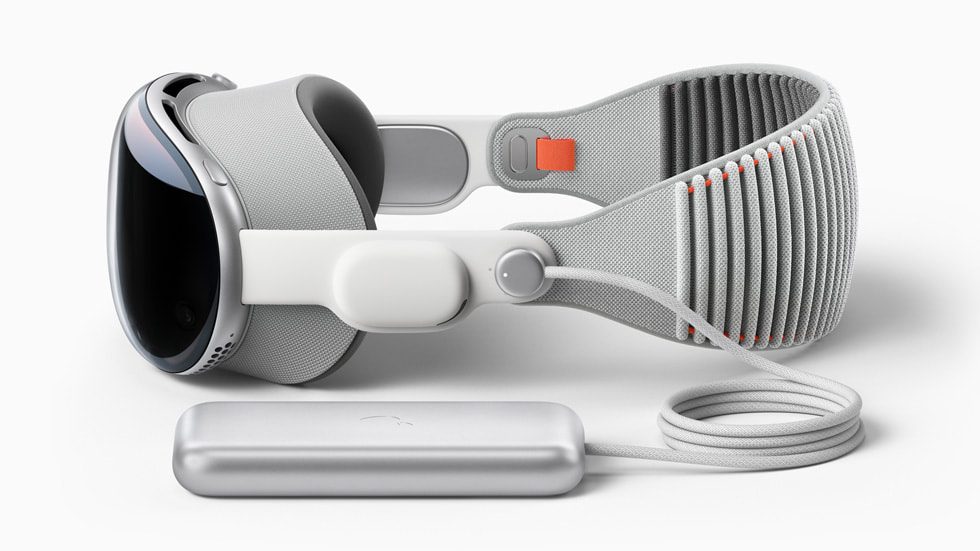
In the world of component configurations, there’s very little that catches Luckey off guard, although Vision Pro’s tethered battery ‘puck’ was choice that surprised the Oculus founder a little bit. When it comes to offloading weight from the user’s head, Luckey says shipping a battery puck was the “right way to do things.”
“I was a big advocate of [external pucks] in Oculus, but unfortunately it was a battle that I lost in my waning years, and [Oculus] went all in on putting all batteries, all the processing in actual headset itself. And not just in the headset, but in the front of the headset itself, which hugely increases the weight of the front of the device, the asymmetric torque load… it’s not a good decision.”
One direction Apple has going that Luckey isn’t a fan of: controllers, or rather, the lack thereof. Vision Pro is set to ship without any sort of VR motion controller, which means developers will need to target hand and eye-tracking as the primary input methods.
“It’s no secret that I’m a big fan of VR input, and I think that’s probably one of the things I would have done differently than Apple. On the other hand, they have a plan for VR input that goes beyond just the finger [click] inputs. They’re taking a focused marketing approach, but I think they have a broader vision for the future than everything just being eyes and fingers.”
Luckey supports the company’s decision to split the headset into a puck and head-worn device not only for Vision Pro in the near term, but also for future iterations of the device, which will likely need more batteries, processing, and antennas. Setting those expectations now of a split configuration could help Apple move lighter and thinner on head-worn components, and never even deal with the problems of balancing the girth and weight seen in the all-in-one, standalone headsets of today.
In the end, whether the average person will wear such things in the future will ultimately come down to clever marketing, Luckey maintains, as it’s entirely possible to slim down to thinner form factors, but devices may not be nearly as functional at sizes smaller than “chunky sunglasses”. To Luckey, companies like Apple have their work cut out for them when it comes to normalizing these AR/VR headsets of the near future, and Apple will most definitely be seeding their devices on the heads of “the right celebrities, the right influencers” in the meantime.
You can check out the full 15-minute clip where Luckey talks about his thoughts on Apple Vision Pro below:
Apple unveiled Vision Pro on Monday, its long-awaited standalone headset capable of both virtual and augmented reality. While the Cupertino tech giant seems to be emphasizing Vision Pro’s AR capabilities thanks to its color passthrough cameras, it’s also going to pack one of VR’s most prominent social apps, Rec Room.
Apple’s launch of Vision Pro is still a good bit away—it’s coming first to the US in early 2024 at the hefty price of $3,500. Still, what apps the Fruit Company will allow on the undoubtedly very curated Vision App Store will be telling.
As first noted by UploadVR, among them will be the hit social VR game Rec Room, which so far shares cross-compatibility with SteamVR, Meta Quest, Meta PC VR, PSVR, PlayStation 4/5, Xbox, iOS, Android, and standard monitors via Steam.
Rec Room was the only native VR app shown during the part of the keynote discussing third-part apps, which are coming to the headset via Apple’s integration of the Unity game engine.
Notably, Vision Pro doesn’t offer any sort of motion controller, instead relying on hand and eye-tracking, and voice input. In the past, Rec Room has primarily targeted motion controllers for VR input, however the apps is also set to bring both full-body avatars and new hand models to the platform, which will seemingly do away with the game’s wristless mitten-hands.
Today at Apple’s Worldwide Developers Conference (WWDC) the Cupertino tech giant unveiled its long-awaited XR headset, dubbed Vision Pro.
Similar to Meta’s Quest Pro and newly unveiled Quest 3 headset, Apple’s first mixed reality headset is capable of both virtual reality and augmented reality thanks to its color passthrough cameras, however it appears the company is focusing much more on AR tasks.
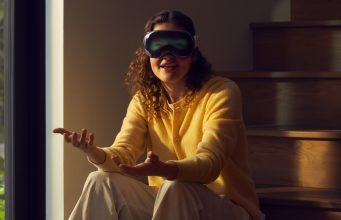
Called a “spatial computer” by Apple, the device is in large part targeting general computing tasks such as content consumption, video chatting, and productivity apps–the sort you might find on the company’s iPads and Macs, albeit available through its own device-specific App Store.
Apple Vision Pro’s input is based on optical hand tracking, eye-tracking, and voice input, and doesn’t feature controllers like headsets decidedly more dedicated to gaming.
Image courtesy Apple
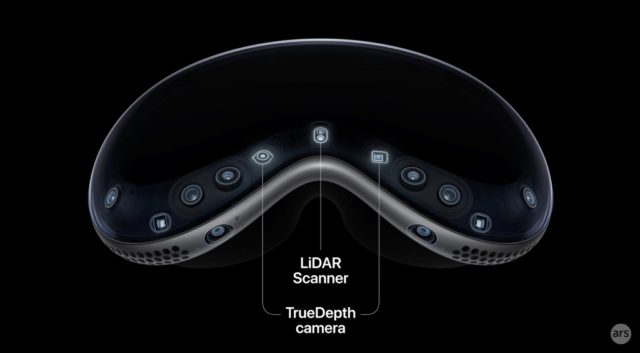
Here’s a brief breakdown of the spec shared with us today: Apple’s M2 chipset runs the standalone headset, while its new R1 chip processes input from 12 cameras, five sensors, and six microphones. R1 is said to stream new images to the displays “within 12 milliseconds — 8x faster than the blink of an eye,” the company says. That cable and pack you see in the image above is actually a battery, which the company says provides two hours of use.
Image courtesy Apple, via ArsTechnica
Vision Pro features custom micro‑OLED display system which the company says packs in 23 million pixels, or more than a 4K TV. We’re still learning about more specific hardware specs, such as field-of-view (FOV) and more concrete numbers for its displays.
The headset also features an exterior display to show a user’s eyes. A system, called EyeSight, can either obscure the digital version of your eyes to other people in the room, or show them to indicate you’re ready to talk face-to-face.
Image courtesy Apple
Vision Pro is coming to the US first in early 2024, priced starting at $3,500, putting it clearly in the “enthusiast” camp. Apple calls it its “most advanced personal electronics device ever.”
We’re at Apple’s campus for WWDC today and are going hands-on with Vision Pro today. Check back soon for our full impressions, and to find out if Apple’s first big entry into XR was worth the wait.
This story is breaking. Check back soon for more info.