virtual reality

how-ar-and-vr-technologies-help-create-phygital-experiences

How AR and VR Technologies Help Create Phygital Experiences


The widespread adoption of the so-called “phygital experiences” in consumer markets shows that they have now become the standard. By delivering highly personalized and seamless experiences, they ensure consumers’ unique needs are met and their expectations are exceeded. For brands, phygital is no longer just a trend. It’s also now integral to business sustainability and future growth.

The Increasing Demand for Phygital Experiences

One report shows that a majority of shoppers today feel more comfortable using digital technology. Currently, consumers are going back to in-store shopping post-pandemic. And they continue to look for digital options that make their buying journey more enjoyable. They have come to expect the same personalized experiences that brands offer online when they visit physical stores.

Contactless payments, curbside pickup options, and in-store ordering kiosks are some of the ways brands are delivering these phygital experiences. They offer seamless transitions between digital and physical touchpoints.

These solutions are now commonplace in airports, banks, restaurants, and many other establishments. To enhance in-store experiences, some brands leverage immersive technologies that elevate the digital experiences of consumers.

The Role of AR and VR in Creating Phygital Experiences

To create immersive experiences while ensuring smooth omnichannel journeys, AR and VR play a crucial role. Innovative AR and VR applications effectively meet the consumer demand for phygital experiences in the various channels they use.

Many of us already use these technologies at home. Farfetch, L’Oreal, Wacoal, Warby Parker, and other brands transformed online shopping with virtual try-ons.

Apps like IKEA Place use AR to enable shoppers to virtually place realistically rendered and true-to-scale furnishings into their real physical space.

Marriott International uses VR to help customers plan their events. Used with a headset, their VR app renders three-dimensional views of hotel venues with setups customized for specific social and corporate events.

Brands are bringing these at-home phygital experiences consumers have come to love into their brick-and-mortar shops. For instance, BMW makes car shopping more fun with an AR app that allows shoppers to customize the colors and styles of cars. They also offer VR headsets that let customers experience what it feels like to drive the cars.

Many Nike outlets today are equipped with AR solutions that allow shoppers to scan items to view more detailed information about them. A few years ago, Adidas also launched a unique AR experience in its Paris flagship store. Today, shoppers enjoy immersive experiences at home and in-store through the Adidas app.

Toms offers a similar VR experience that transports shoppers to Peru to see how their contributions to Toms initiatives are helping communities there. This type of immersive experience deepens the connection of consumers to a brand as they get fully immersed in the actual impact of the brand’s advocacy on society.

Other AR and VR applications also elevate shopping experiences. These include in-store navigation, immersive product catalogs, and customization tools. They make phygital experiences more captivating. They also connect consumers to brands on an immersive and more emotional level.

Immersive Technologies Are the Core of Phygital

Phygital experiences will be an inherent part of our future. People will come to expect seamless transitions between digital and physical modes in virtually every aspect of life.

Immersive technologies are fundamental to delivering these experiences. Thus, brands that haven’t done so yet must incorporate immersive solutions into their growth strategy. Aside from allowing brands to meet new consumer demands, immersive tech also enables them to deliver more value that gives them a competitive advantage.

How AR and VR Technologies Help Create Phygital Experiences Read More »
coming-product-from-valkyrie-industries-could-put-haptics-on-double-duty

Coming Product From Valkyrie Industries Could Put Haptics on Double Duty


Usually, when people talk about haptics we’re talking about making interactions more realistic or immersive. Of course, this is huge for VR. However, as VR develops as a fitness tool, haptics can take on a whole new dimension. Take a recently announced product from Valkyrie Industries as an example.

Understanding EMS

I used to write for health and wellness blogs, so entertain a little physiology rundown. The two branches of this product build on two facts about your body. First, your muscles work through electrical impulses generated by your body. Second, your muscles grow by working against resistance.

As to the first point, your muscles can be stimulated by electrical impulses not generated by your body. Electrical Muscle Stimulation (EMS) uses controlled electrical impulses applied to the muscles, typically in physical training.

As to the second point, resistance can come from an external force like gravity. This is mechanical resistance, which is the basis of most workouts. However, EMS can also provide a different kind of resistance that works out your muscles without the use of some physical source like weights or bands.

So, together, EMS doesn’t just make you feel like you’re doing something – your muscles actually get that benefit. So, what is Valkyrie Industries doing in this field?

This has two big potential benefits for VR: fitness, and general immersion. Valkyrie Industries is primarily focused on fitness, so we’ll start there.

Haptics in VR Fitness

Fitness has been a major use case of VR, primarily through cardio. To dust off my health blogger hat again, cardio is good for your heart and lungs but it doesn’t necessarily do a lot for muscle growth because it doesn’t involve a great deal of resistance. But, it’s the ideal match for VR because VR solves so many of the problems of conventional cardio.

Conventional solo cardio also tends to be boring. Switching things up requires a partner, access to specialized equipment or areas, and other obstacles. VR has largely removed these various barriers by “simming in” items, venues, and even partners. The ability to gamify these activities also makes them more attractive, particularly when paired with social features.

But it still doesn’t do much for muscle growth. Right?

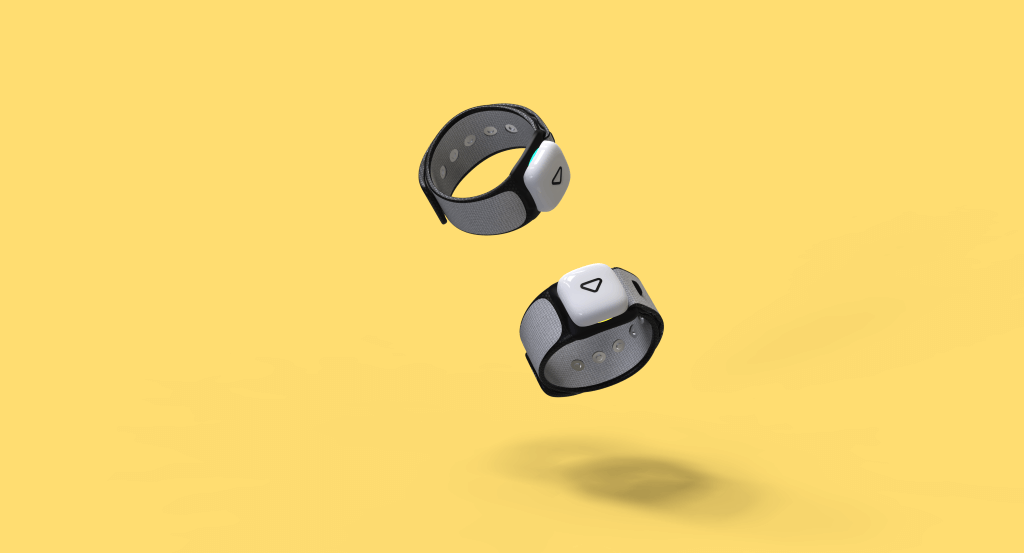
Valkyrie - haptics - EIR Armbands

Valkyrie Industries recently announced Valkyrie EIR. These are bands worn around the upper arm that provide muscle stimulation to the biceps and triceps during your cardio workout in VR. This helps to bring muscle activation into cardio without incorporating weights or bands to get in the way.

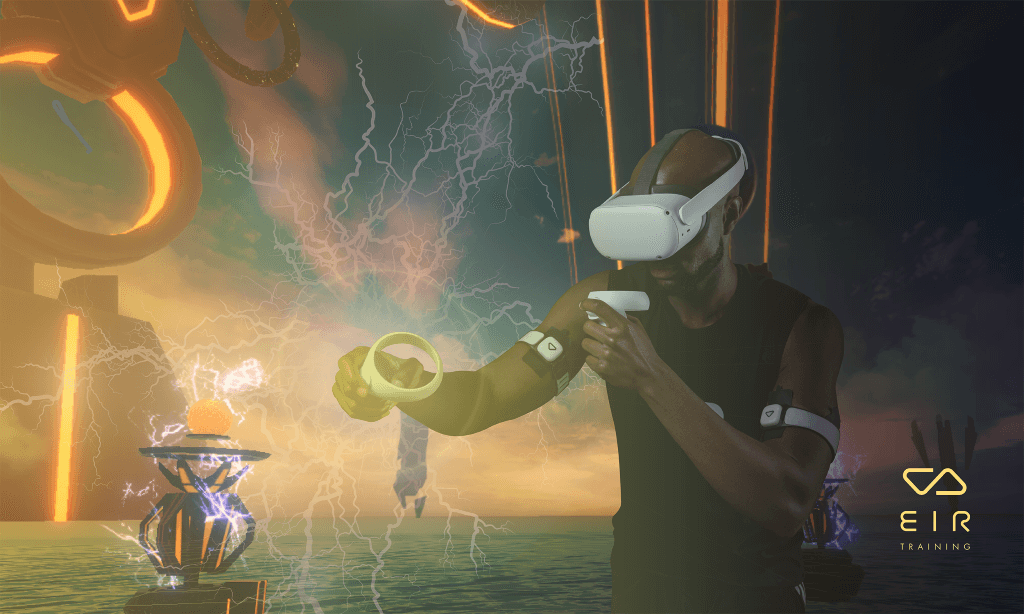
Valkyrie also announced EIR Training, VR fitness courses specifically designed for use with the Valkyrie EIR armbands.

Valkyrie - haptics - EIR Training

“The powerful feeling of resistance is integral to the best workout routines,” Valkyrie Industries co-founder and CTO, Ivan Isakov, said in a release shared with ARPost. “We wanted to push the boundaries of immersion for the millions of fitness fans that work out in VR every day. Valkyrie EIR is the next step in that journey, as we build on our expertise with haptic technologies.”

Haptics in VR Generally

Now, let’s talk about general immersion as a potential benefit of EMS. This requires a little extrapolation from the actual Valkyrie Industries releases. But, as we saw above, EMS creates the feeling of physical resistance from a virtual activity. That is here, being used to increase a workout. It could also be used to increase immersion.

In EIR Training, EMS replicates the feeling of resistance from a cable pull. It could also replicate the feeling of resistance from drawing a bowstring, reeling in a fish, climbing a mountain – whatever you like to do in VR.

Haptics as a form of feedback is one of the great pursuits of hardware developers – usually focusing on the hands and body. However, Valkyrie Industry’s armbands only cost $150 – significantly below the price of other haptic solutions.

So, why aren’t I playing Archery Dungeon with EMS right now? There are a few reasons. First, While Valkyrie EIR was announced last month, it isn’t scheduled to ship until next summer. Second, strapping on an armband doesn’t automatically make it reactive to whatever experience you’re enjoying. That would require SDKs and APIs that we haven’t seen yet. But, it’s still early.

Plus, we know that companies like Meta are working on EMG. That’s “electromyography” – tech that detects the electrical impulses in muscles. In VR, it’s a potential input method of future devices. A headset that you communicate with through EMG input and that communicates with you through EMS haptics could have incredible potential for human-computer interaction.

Both Eyes Open

Valkyrie EIR for VR fitness is exciting. The idea of Valkyrie EIR providing haptic feedback for more diverse VR applications? That’s thrilling. But that’s often the problem with emerging technologies: If we keep looking at what might come next, we forget to appreciate what we have today.

Coming Product From Valkyrie Industries Could Put Haptics on Double Duty Read More »