virtual reality

meetkai-launches-new-building-tools

MeetKai Launches New Building Tools

MeetKai has been around since 2018 but some of its first publicly enjoyable content hit the streets a few months ago. Now, the company is releasing a suite of software solutions and developer tools to help the rest of us build the metaverse.

From Innovation to Product

ARPost met MeetKai in July 2022, when the company was launching a limited engagement in Time Square. Since then, the company has been working with the Los Angeles Chargers.

“The purpose of the Time Square activation and campaign was really to test things out in the browser,” CEO and co-founder, James Kaplan, said in a video call. “With 3D spaces, there’s a question of whether the user views it as a game, or as something else.”
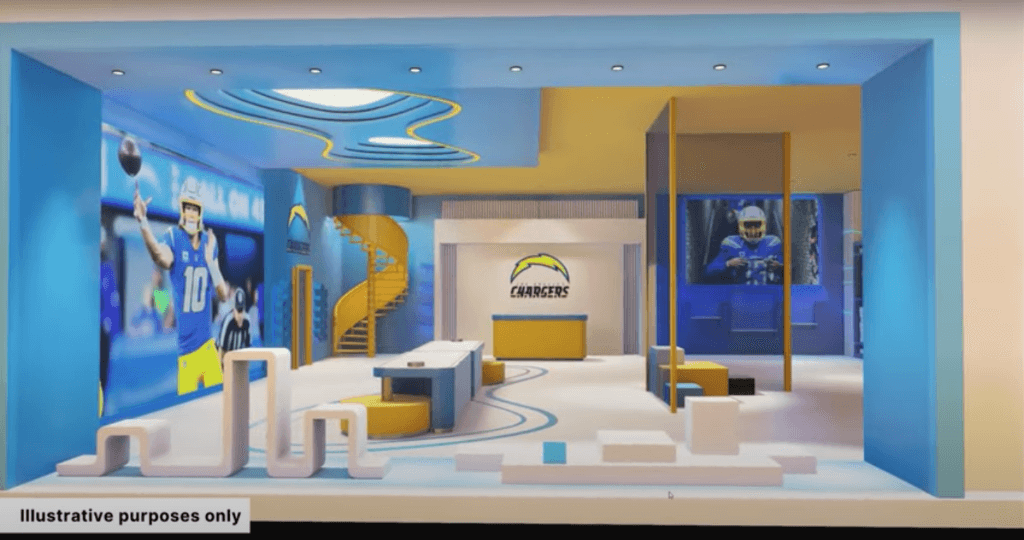
MeetKai Metaverse Editor - Los Angeles Chargers
MeetKai Metaverse Editor – Los Angeles Chargers

Those insights have informed their subsequent outward-facing work with the Chargers, but the company has also been working on some more behind-the-scenes products that were just released at CES.

“We’re moving from an innovation technology company to a product company,” co-founder and Executive Chairwoman, Weili Dai, said in the call. “Technology innovation is great, but show me the value for the end user. That’s where MeetKai is.”

Build the Metaverse With MeetKai

At CES, MeetKai announced three new product offerings: MeetKai Cloud AI, MeetKai Reality, and MeetKai Metaverse Editor. The first of those offerings is more in line with the company’s history as a conversational AI service provider. The second two offerings are tools for creating digital twins and for building and editing virtual spaces respectively.

“The biggest request that we get from people is that they want to build their own stuff, they don’t just want to see the stuff that we made,” said Kaplan. “So, we’ve been trying to say ‘how do we let people build things?’ even when they’re not engineers or artists.”

Users of the new tools can use them individually to create projects for internal or outward-facing projects. For example, a user could choose to create an exact digital twin of a physical environment with MeetKai Reality or create an entirely new virtual space with MeetKai Editor.

However, some of the most interesting projects come when the tools are used together. One example of this is an agricultural organization with early access to the products that used these two tools together to create a digital twin of real areas on their premises and then used the Editor for simulation and training use cases.

“AI as an Enabling Tool”

The formula for creating usable but robust tools was to combine conventional building tools like scanning and game engines with some help from artificial intelligence. In that way, these products look a lot less like a deviation from the company’s history and look a lot more like what the company has been doing all along.
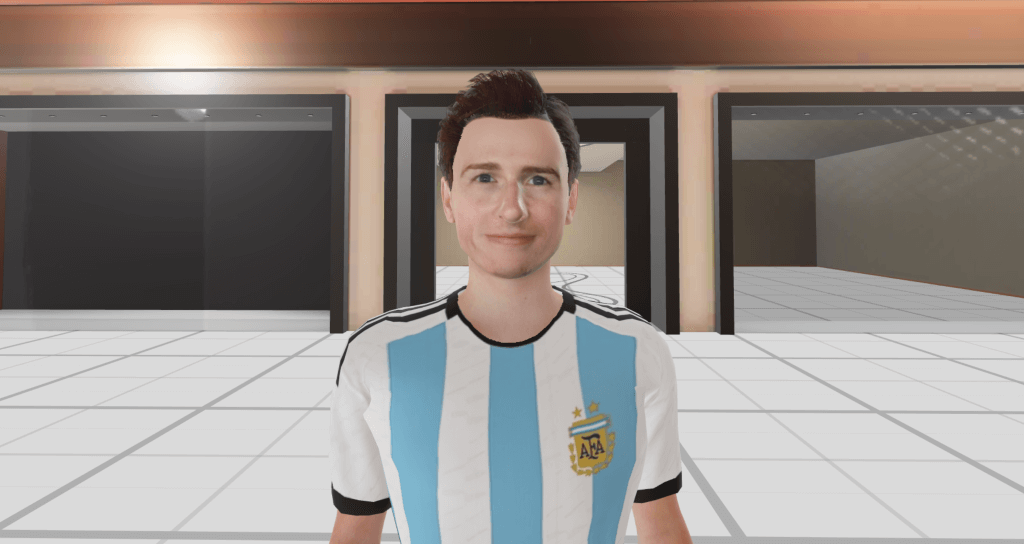
MeetKai Cloud AI - Avatar sample
MeetKai Cloud AI – Avatar sample

“We see AI as an enabling tool. That was our premise from the beginning,” said Kaplan. “If you start a project and then add AI, it’s always going to be worse than if you say, ‘What kinds of AI do we have or what kinds of AI can we build?’ and see what kind of products can follow that.”

So the first hurdle is building the tools and the second hurdle is making the tools usable. Most companies in the space either build tools which remain forever overly complex, or they make tools that work but have limited potential because they were only designed for one specific use or for use within one specific environment.

“The core technology is AI and the capability needs to be presented in the most friendly way, and that’s what we do,” said Weili. “The AI capability, the technology, the innovation has to be leading.”

The company’s approach to software isn’t the only way they stand out. They also have a somewhat conservative approach when it comes to the hardware that they build for.

“I think 2025 is going to be the year that a lot of this hardware is going to start to level up. … Once the hardware is available, you have to let people build from day one,” said Kaplan. “Right now a lot of what’s coming out, even from these big companies, looks really silly because they’re assuming that the hardware isn’t going to improve.”

A More Mature Vision of the Metaverse

This duo has a lot to say about the competition. But, fortunately for the rest of us, it isn’t all bad. As they’ve made their way around CES, they’ve made one more observation that might be a nice closing note for this article. It has to do with how companies are approaching “the M-word.”

“Last CES, we saw a lot of things about the metaverse and I think that this year we’re really excited because a lot of the really bad ideas about the metaverse have collapsed,” said Kaplan. “Now, the focus is what brings value to the user as opposed to what brings value to some opaque idea of a conceptual user.”

Kaplan sees our augmented reality future as like a mountain, but the mountain doesn’t just go straight up. We reach apparent summits only to encounter steep valleys between us and the next summit. Where most companies climb one peak at a time, Kaplan and Weili are trying to plan a road across the whole mountain chain which means designing “in parallel.”

“The moment hardware is ready, we’re going to leapfrog … we prepare MeetKai for the long run,” said Weili. “We have partners working with us. This isn’t just a technology demonstration.”

How MeetKai Climbs the Mountain

This team’s journey along that mountain road might be more apparent than we realize. After all, when we last talked to them and “metaverse” was the word on everyone’s lips, they appeared with a ready-made solution. Now as AI developer tools are the hot thing, here they come with a ready-made solution. Wherever we go next, it’s likely MeetKai will have been there first.

MeetKai Launches New Building Tools Read More »

xra-survey:-teachers-pin-hopes-on-xr-for-better-classroom-engagement

XRA Survey: Teachers Pin Hopes on XR for Better Classroom Engagement

Incorporating XR—the umbrella term for virtual, augmented, and mixed reality—in classroom education can make learning more fun. It can also motivate students to take their studies more seriously.  A recent survey by XR Association (XRA) and the International Society for Technology in Education (ISTE) presented this conclusion based on a poll of over 1,400 high school teachers across 50 US states. Let’s look at the survey results.

Optimism High for XR’s Classroom Use

Foremost of the highlights in the nationwide poll was the finding that 77% of educators believe in the power of extended reality to ignite curiosity and engagement in class. This is especially important given that student motivation and morale are reported to have dropped in the 2020-2021 school year.

As Sean Wybrant, a computer science teacher at Colorado Spring’s William J. Palmer High School, put it: “Imagine how much better a student will understand what happens in Othello if they could actually step into the play and see it. Imagine how much better we could tell historical narratives if we could put people in recreations of famous situations based on documentation of those time periods.”

Secondly, XR doesn’t only make students eager to learn. Seventy-seven percent of teachers also see its potential in spurring interaction and building empathy among classmates. XRA says in its report that creating immersive worlds allows students to exchange ideas and understand each other in new ways.

Thirdly, 67% of respondents agree with XRA’s advocacy to incorporate extended reality technology into the curricula. Educators teaching the following subjects believe that course-specific XR experiences would be beneficial for students:

  • Earth sciences (94%)
  • Physics and space science (91%)
  • Math (89%)
  • English language (86%)
  • World languages (87%)
  • History and social studies (90%)
  • Social sciences (91%)
  • Computer science (91%)
  • Visual and performing arts (91%)
  • Physical education (88%)
  • Career and technical education (91%)

“To get a good sense of XR’s potential in schools, you have to ask the teachers and staff who will be administering this technology,” said Stephanie Montgomery, the XRA Vice President of Research and Best Practices. “The survey’s results suggest that VR, AR, and MR technology is well-positioned to become an essential teaching tool in school classrooms across the country.”

At the same time, 58% of the survey respondents said that teachers should get training for XR classroom use. Moreover, 62% believe in developing XR standards before integrating the technologies into regular curricula.

XR Association CEO Elizabeth Hyman believes in the extensive ripple effect that will result from making educators XR-ready. “If teachers understand XR technology and are empowered to contribute to the way in which it is incorporated into the curriculum, everyone—students, their guardians, and the surrounding community—will be able to take advantage of its benefits,” she said.

However, despite the positive outlook, 57% of teachers recognize the costs of using AR and VR devices and admit that access to funds will determine access to such technology. Nevertheless, poll participants believe XR’s benefits will extend beyond the classroom. Seventy-seven percent of teachers said the technology helps equip students with skills they can apply in their chosen careers, especially since, according to forecasts, jobs in extended reality may reach 23 million by 2030.

Myths About XR Classroom Use Debunked

The XRA-ISTE survey dispelled several myths about extended reality’s acceptance in education. One of these misconceptions is that XR is only for gaming. The poll results and teachers’ comments reveal that they are aware of the usefulness of this technology in geography, math, history, and other subjects.

Moreover, the survey response from educators refutes the popular notion that XR technology would not be the “best fit” for the classroom. Seventy-eight percent of respondents believe in the benefits of extended reality technologies in class.

Finally, the belief that XR will distract students from learning only got a 15% vote among the survey participants. The majority support the opportunities that come with extended reality when incorporated into lessons.

Teens Excited About XR 

Earlier last year, XRA also conducted a separate survey that sought teens’ views on current use cases for XR and their expectations for this technology. The results released in May 2022 revealed that 40% of teens have used either AR or VR in school and 50% describe their experience with these technologies as positive. Thirty-eight percent would like to own a headset in the future.

Even though there are potential concerns around immersive technologies, which teens are aware of, they are still excited about using XR in education, in a responsible way. Almost 4 in 5 teens think extended reality can impact lives positively. They believe that XR can improve their lives in the areas of fun (67%), creativity (61%), and learning (48%). Moreover, 52% of respondents expressed interest in taking a college course with extended reality integrated into its curriculum.

Read the Latest Addition to the XRA Developers’ Guide

XRA is proactively advancing XR application in classroom learning. It recently launched a new chapter in its Developers Guide on designing immersive lessons for high schoolers. The fresh chapter discusses current classroom needs, successful use cases, and industry-backed best practices for promoting safe and inclusive classroom learning through extended reality that addresses parent, teacher, and student concerns.

XRA Survey: Teachers Pin Hopes on XR for Better Classroom Engagement Read More »

how-vr-and-3d-visualization-services-are-changing-construction-industry

How VR and 3D Visualization Services Are Changing Construction Industry

Sponsored content

Sponsored by OmegaRender

The construction industry is one of the industries adapting slowly to new technologies to increase productivity and deliver projects. However, the construction industry is now embracing and adapting to new technologies like virtual reality for 3D rendering services. Here, you will discover everything you need to know about how VR and 3D visualization services are changing the construction industry.

Uses of VR and 3D Visualization Services in the Construction Industry

The construction industry is extensively employing building information modeling (BIM) and computer-aided design (CAD) software for design and construction processes, and they can also work well with VR. When VR is combined with BIM and CAD for 3D architectural visualization services, it becomes possible to visualize and walk through a project as though it was completed.

Furthermore, it becomes easier to identify design errors and make changes before construction begins. This explains why clients now prefer to work with a 3D architectural rendering company to save money and time. VR is growing in relevance in the construction industry, and here are some of the ways VR and 3D visualization services are changing the industry.

Design

3D architectural rendering services produce renderings of a structure to showcase interior and exterior designs even to the finest detail. Furthermore, 3D renderings, visualizations, and animations make it possible to walk through a building as though you are physically present. Besides, it becomes easier to communicate ideas among a design team and to clients or stakeholders.

However, 3D renderings, visualizations, and animations provide little interactivity with the features of a structure because you can only see but not touch. Conversely, VR adds that touch of interactivity and fine details to 3D architectural visualization services. Thus, a viewer can carry out tasks like switching on the light and opening a door, among others.

Renovation

VR technology has made the renovation of structures easier. For instance, the technology can create a digital version of an existing building regardless of when it was built. The digital version is what a 3D architectural rendering company works on for remodeling before actual renovation work begins.

When a person that wants to renovate a building approaches an architect, the architect makes a virtual representation of the remodeled building. VR is then used to visualize and interact with the building to see if the new features meet the house owner’s requirements and fit well into the house.

Project Completion and Delivery

Construction projects need to be completed on time to avoid extra expenses. Generally, large projects take more time to complete than small projects. However, even a small project can take more time to complete than a relatively large project because of delays caused by errors or minor issues. Thus, professionals in the construction industry must adapt to situations to avoid delays on projects as much as possible.

VR technology helps to spot activities or tasks that can delay a project early. Furthermore, it can help to come up with different solutions to errors and challenges and choose the best solution. Thus, VR and 3D architectural visualization services are helping to fast-track project completion and delivery.

Safety and Training

Because of the risks and accidents associated with the construction site environment, there may be better ideas to train personnel on site. Therefore, training on safety and equipment use can be done off-site with VR and 3D architectural rendering services.

For instance, a heavy equipment operator can be put through a refresher training in the virtual world on how to operate a piece of equipment and safeguard himself and his environment while working in the real world.

Marketing

VR and 3D architectural visualization services are great for marketing because they help you create attractive marketing campaigns and materials, especially for real estate. Potential property buyers can easily interact and inspect a building through 3D walkthrough animations without stepping foot in the building.

Furthermore, photorealistic representations and walkthrough animations can be used to get clients’ feedback to improve a structure before and during construction.

Conclusion

The construction industry is increasingly adapting innovative and disruptive technologies such as VR and 3D visualization services. Furthermore, VR is becoming a standard tool that aids communication among all parties on a project.

Therefore every professional and stakeholder in the architecture, engineering, and construction (AEC) industry must partner with a 3D architectural company to help use VR and other innovative technologies to meet the demands of productivity and project delivery.

How VR and 3D Visualization Services Are Changing Construction Industry Read More »

arpost’s-22-most-read-xr-and-metaverse-articles-of-2022

ARPost’s 22 Most-Read XR and Metaverse Articles of 2022

From top XR trends and must-have skills for an AR/VR career, to XR hardware reviews, to the potential of the metaverse in various industries, to discussing why we’re not all wearing AR/VR headsets, these are the 22 stories ARPost readers clicked on the most this year.

Hands-On Review of Cupixel22

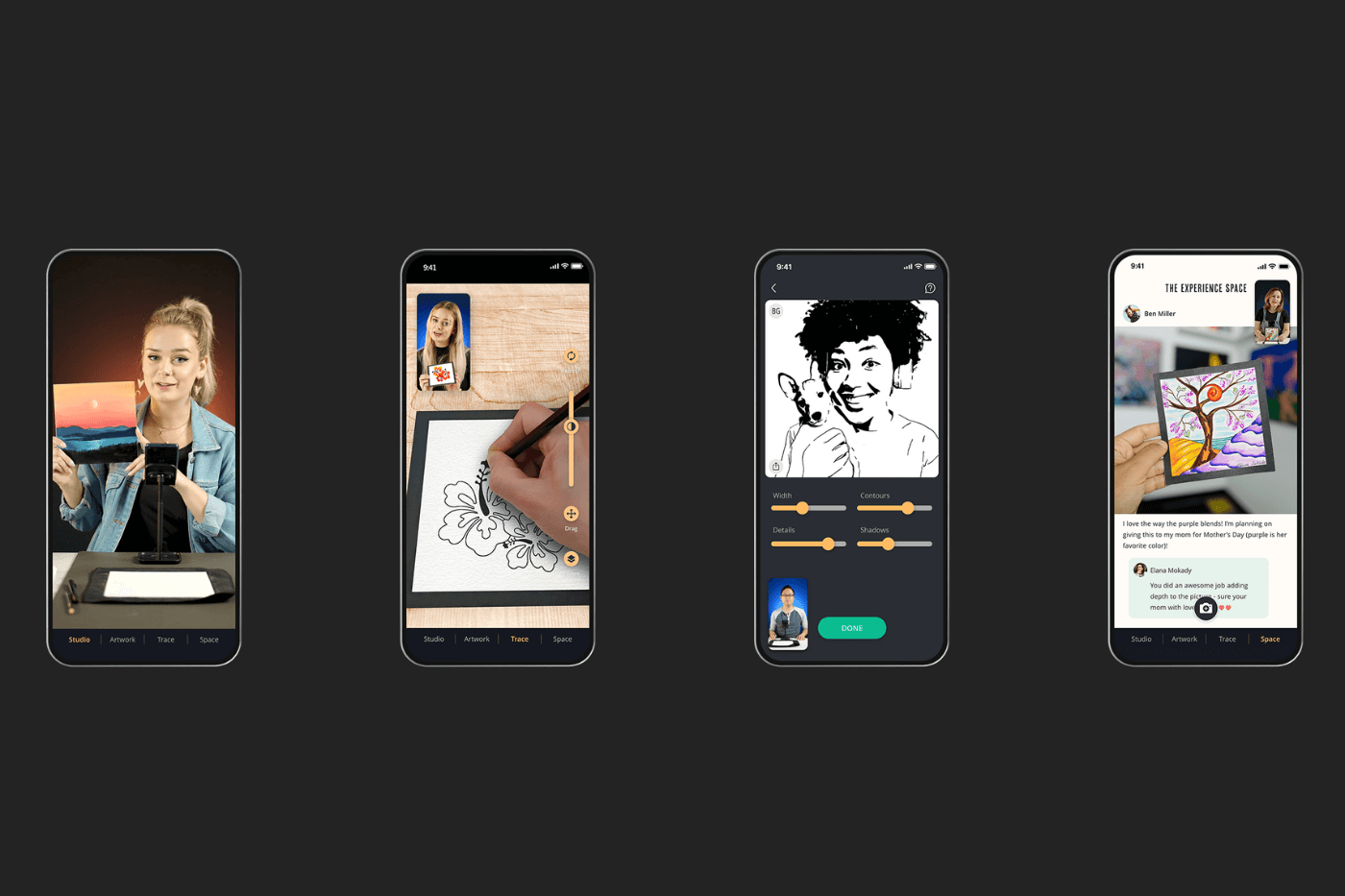
Hands-On Review: AI and AR Art Instruction App Cupixel

ARPost demoed Cupixel, a new app that uses AR and AI to help anyone realize their artistic potential. In this article, we introduce you to Cupixel, show you how it works, and share what we think about it.

VR Wave21

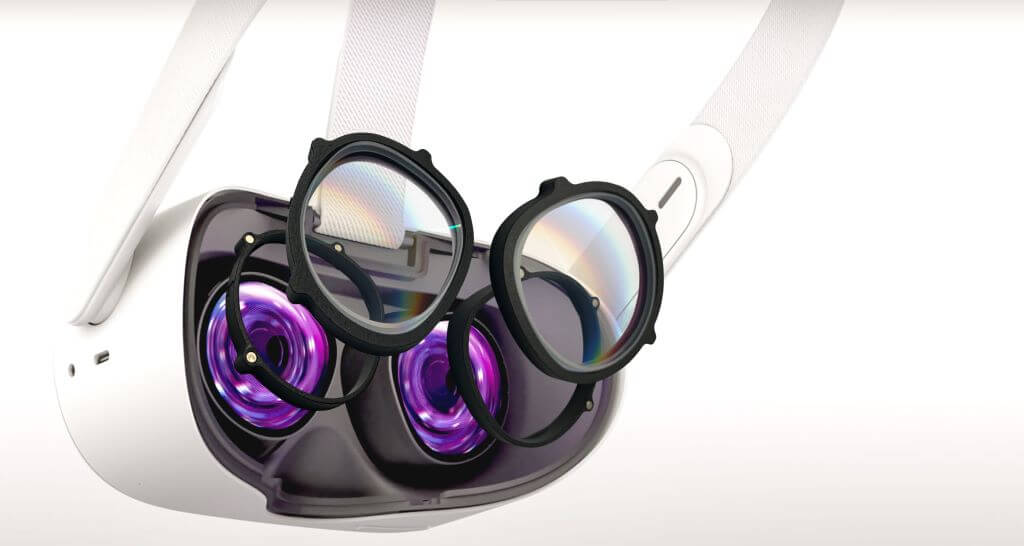
Hands-On Review of VR Wave Prescription Lenses for Quest 2

A hands-on review and a cost analysis of the VR Wave prescription lens inserts with optional blue light and glare protection for Meta Quest 2.

KKCOBVR Quest 2 Strap and Battery Pack20

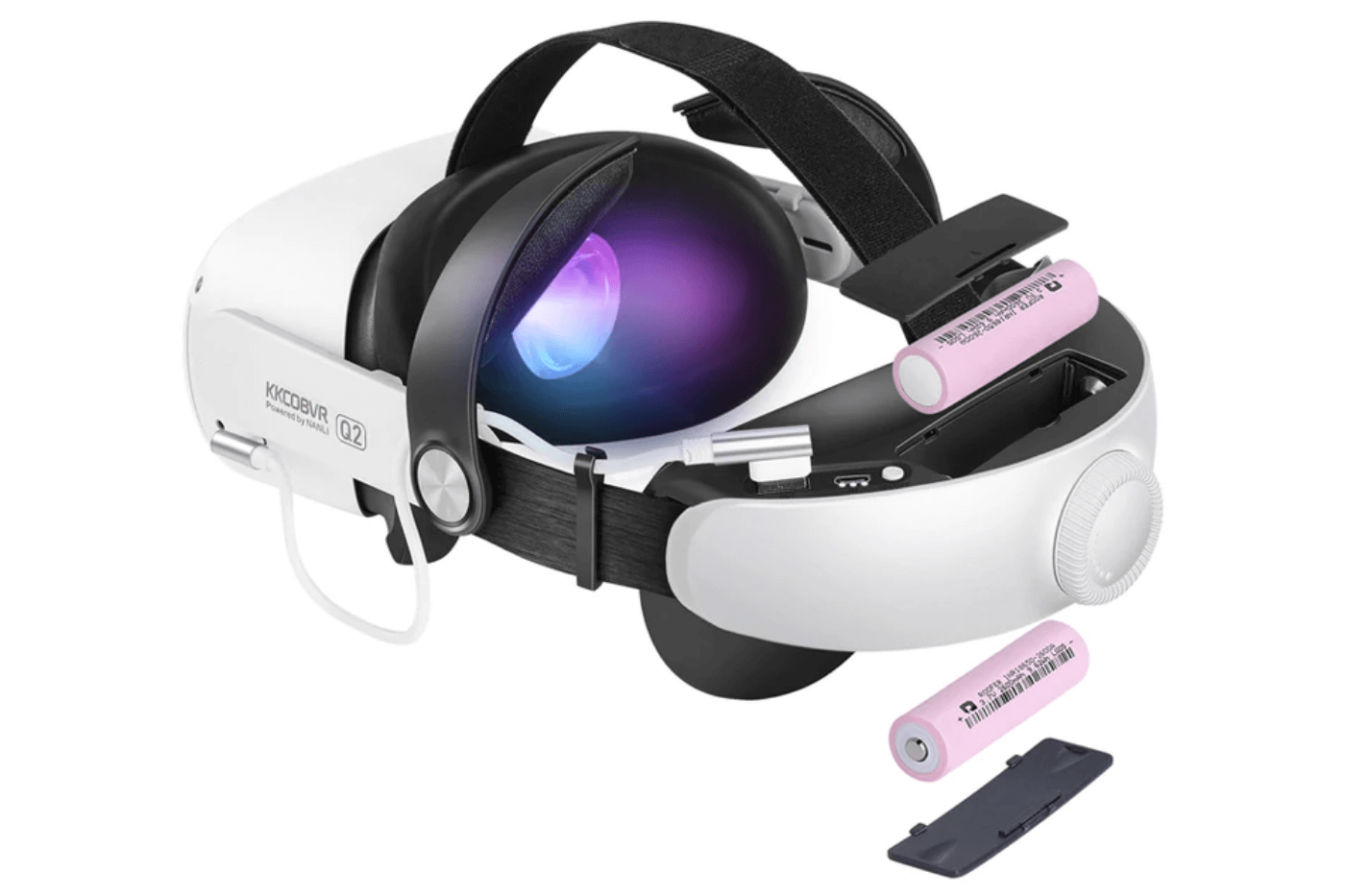
KKCOBVR Quest 2 Strap and Battery Pack: Hands-On Hardware Review

Our honest opinion about KKCOBVR Quest 2 strap and battery Pack. Spoiler alert – it’s way better than the native Quest strap.

Magic Leap 2 AR Glasses

19

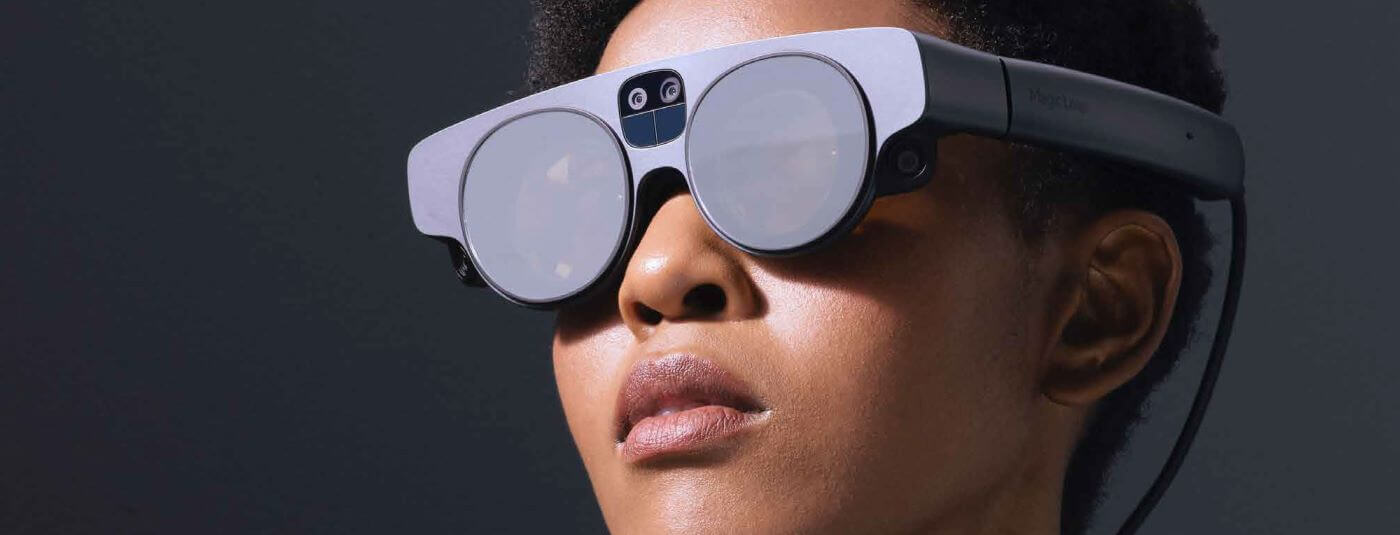
Will Magic Leap 2 AR Glasses Lead the Way to the Metaverse?

When Magic Leap released a preview of its new AR glasses, Magic Leap 2, we discussed whether the hardware will attract consumers to the metaverse.

AR SDKs for Building Augmented Reality Mobile Apps18

Top 5 AR SDKs for Building Augmented Reality Mobile Apps

An AR SDK is a key to AR app development. In this guest post, Gourav Sharma from Arka Softwares lists some popular software development tools used for AR app development.

Vuzix M400C Smart Glasses and Vuzix Ultralite17

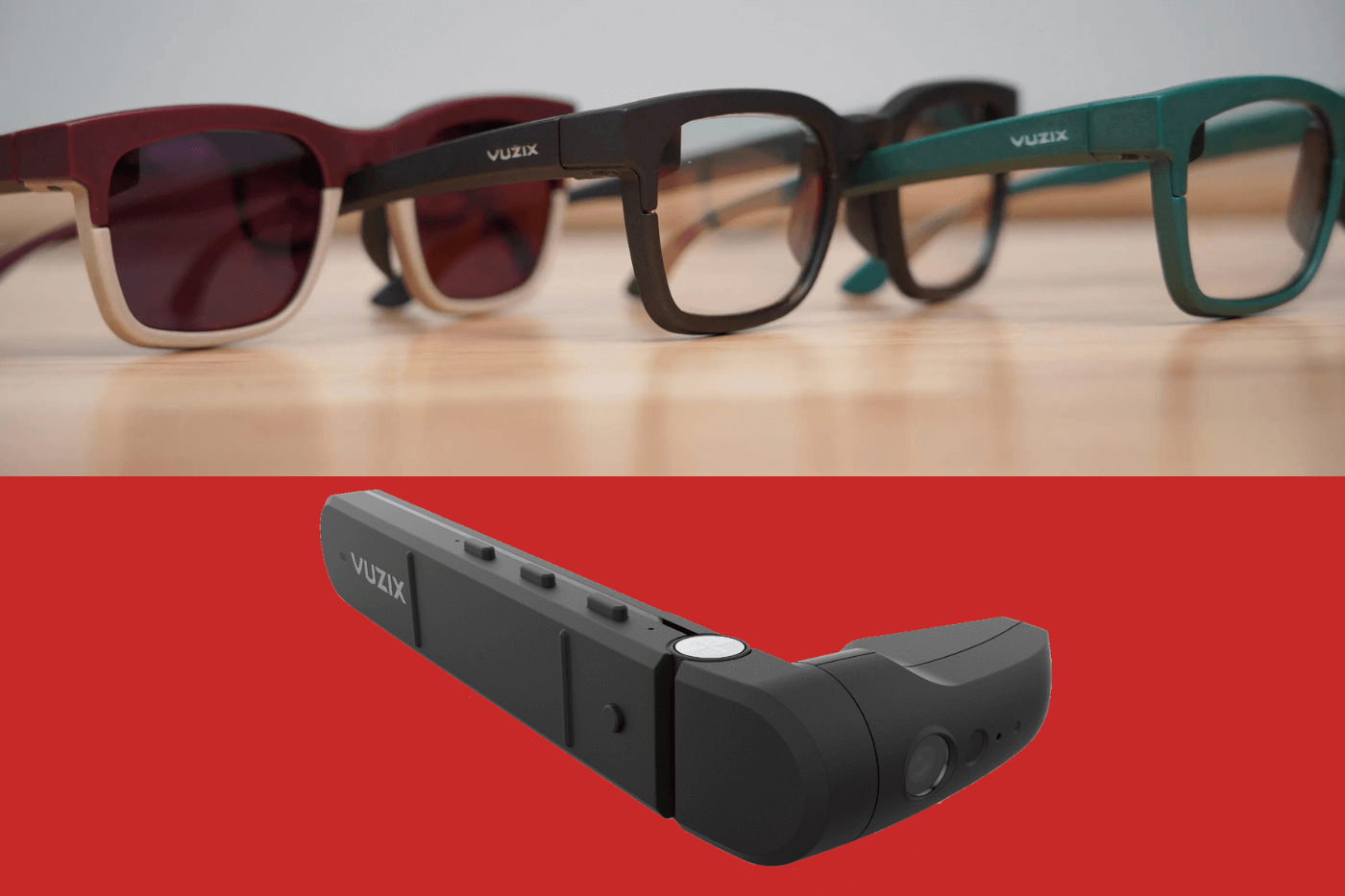
Vuzix M400C Smart Glasses Become Publicly Available, Consumer Model at CES

We share more information about the Vuzix enterprise headset,  Vuzix M400C, and the coming consumer model, Ultralite.

VR apps for socializing with friends16

The Best VR Apps for Socializing With Friends

VR apps for socializing allow friends and families to stay in touch even in the most challenging situations and feel close to each other. We give you a list of 8 VR apps you can check out.

customer experience (CX) in virtual reality, augmented reality concept15

CX and the Metaverse: The Changing Face of Customer Service in a Virtual World

Customer experience is a crucial factor that determines a brand’s success. As we begin to shift to the metaverse, more companies are working on bringing a new dimension to CX.

3D illustration abstract blue landscape bacgkround - concept of AR cloud14

Real-World Applications and Benefits of AR Cloud

AR cloud is an emerging trend in the field of AR technology that can change the way we interact with both the digital and physical world.

industrial metaverse concept13

Industrial Metaverse: The Factory of the Future

The advent of the metaverse is transforming the manufacturing industry significantly, making it immersive, more agile, and safe. Here are some of the applications of industrial metaverse.

Hyper-Realistic Metaverse Victoria VR12

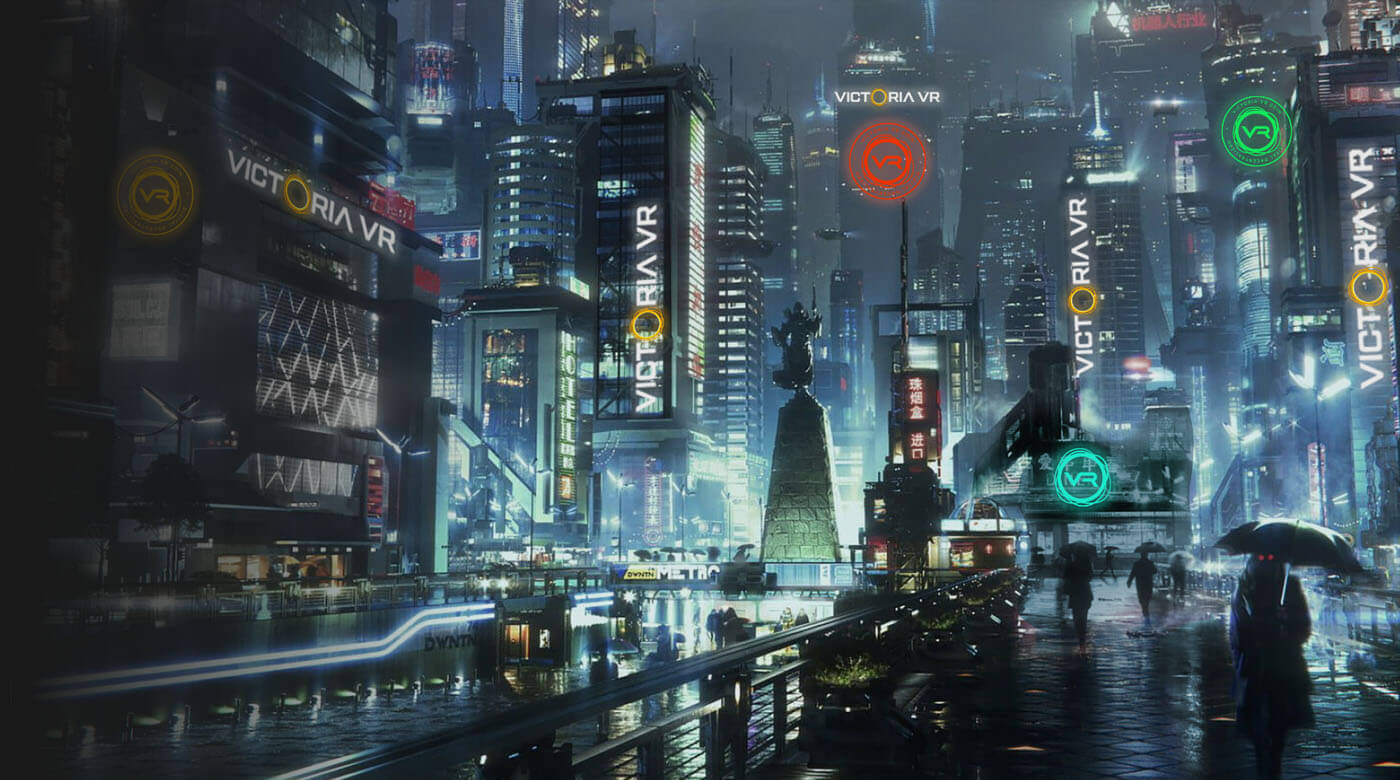
Dive Into a Hyper-Realistic Metaverse Built on Unreal Engine

In this article, we introduce you to Victoria VR, a hyper-realistic metaverse created and owned by users, and powered by Unreal Engine.

YSL and Armani virtual stores in the metaverse by ByondXR11

Luxury Brands Embrace the E-Commerce Metaverse With Virtual Stores

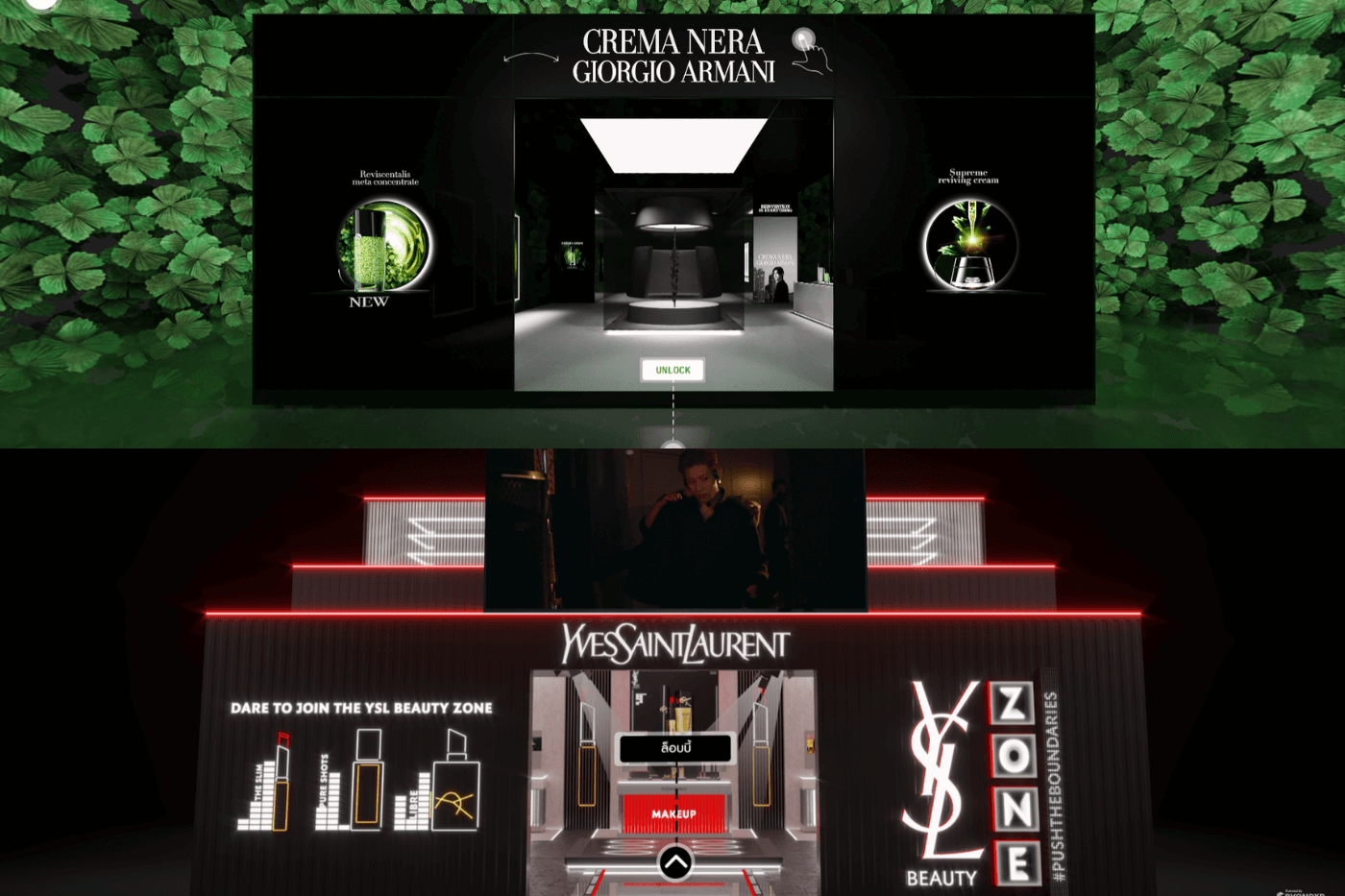
“Shopify of the Metaverse,” ByondXR, has teamed up with luxury brands L’Oreal Luxe for Armani Beauty and YSL Beauty Thailand to enhance the e-commerce experience with virtual stores.

Lowe’s Opens 3D Product Library to Metaverse Developers10

Lowe’s Opens 3D Product Library to Metaverse Developers

Metaverse developers now have free access to Lowe’s Open Builder. This grants them permission to use 3D digital assets from the product library for free in their metaverse projects.

VR in education concept09

The Future of VR in Education: Full Immersion in Learning

VR in education provides the optimal compromise between students and educators, making learning relevant, interesting, and interactive. In this article, we take a look at the future of this technology in the educational field.

louvre museum - VR museum tours08

The Best Examples of VR Museum Tours From Across the World

The COVID-19 pandemic has changed the way we experience art and culture and introduced VR museum tours as part of people’s daily lives.

Waves organic forms VR and AR headset07

The Most Innovative AR and VR Companies in 2021

This article presents some of the most innovative AR and VR companies in 2021 and the impact they had on the way the average person experiences immersive games and apps.

AR/VR trends06

Top AR/VR Trends for 2022

We cover some of the most important AR/VR trends for 2022 and their impact on the way we live, work, shop, and discover entertainment opportunities.

AR/VR Headsets05

Why We’re Not All Wearing AR/VR Headsets

Spatial computing enthusiasts said we’d all be in the metaverse by now. Why is it not so? Why aren’t we all equipped with a headset?

Artificial Intelligence and AR, VR, and MR04

How Artificial Intelligence Can Reshape AR, VR, and MR Technologies

Artificial intelligence and other emerging technologies are widely used to deliver unparalleled experiences and interactions. Find out how AI can be applied to elevate AR, MR, and VR technologies.

AWE USA 2022 Day One03

AWE 2022 Day One: An AR-Heavy Day Focusing on Presence

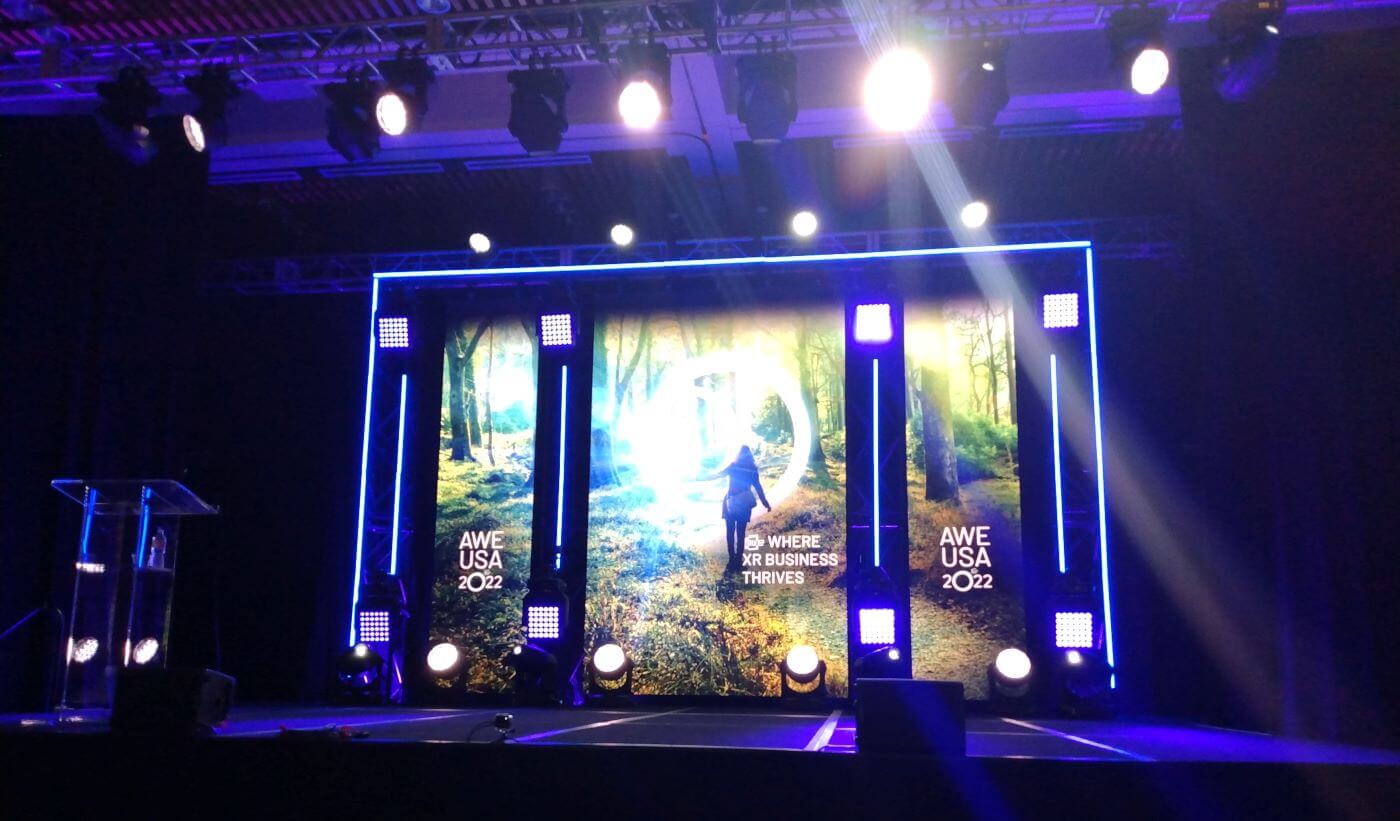
ARPost covered the AWE USA 2022 event, which took place in June. Day one saw major announcements from Qualcomm, ThinkReality, and the CyberXR Coalition, Ori Inbar’s AWE opener, and insights from Unity, Blippar, XRA, and others.

Benefits of AR and VR for People With Disability

02

7 Benefits of AR and VR for People With Disability

Immersive technology can be a game-changer for people with health conditions or impairments. Here are some of the many benefits that augmented and virtual reality provide to people with disability.

AR/VR development concept

01

7 Must-Have Skills in an AR/VR Career

This article summarizes the skills needed in the AR/VR industry, as well as tips to guide you through your skill-building.

ARPost’s 22 Most-Read XR and Metaverse Articles of 2022 Read More »

redefining-immersive-virtual-experiences-with-embodied-audio

Redefining Immersive Virtual Experiences With Embodied Audio

EDGE Sound Research is pioneering “embodied audio,” a new technology that changes the way we experience virtual reality. When we think of “virtual reality,” the focus only seems to be on engaging our sense of sight. EDGE Sound Research’s embodied audio will revolutionize how we experience audio in VR worlds through its use of audible and tactile frequencies.

One of the things that sets this technology apart is that it stems from co-founder Ethan Castro’s experience. Castro had issues with hearing and, as a result, he had to resort to sound. Moreover, Castro loved music and even became a professional audio engineer and composer. He researched how sound can be perceived by combining hearing and feeling. Eventually, he teamed up with co-founder Val Salomaki to start EDGE Sound Research.

Bringing Embodied Audio to Life

Embodied audio adds realism to sound. This groundbreaking technology combines the auditory and physical sensations of sound in an “optimized and singular embodiment.”

“This means a user can enjoy every frequency range they can hear (acoustic audio) and feel (haptic and tactile audio, also known as physical audio),” said Castro and Salomaki.

Castro and Salomaki go on to explain that they invented a new patent-pending technology for embodied audio, which they dubbed ResonX™. This new technology, which has been nominated for the CES Innovation Award, has the capability to transform any physical space or environment into an embodied audio experience that has the ability to reproduce an expansive range of physical (7-5,000+ Hz) and acoustic audio frequencies (80-17,000 Hz).

Crafting New Experiences With the ResonX™ System

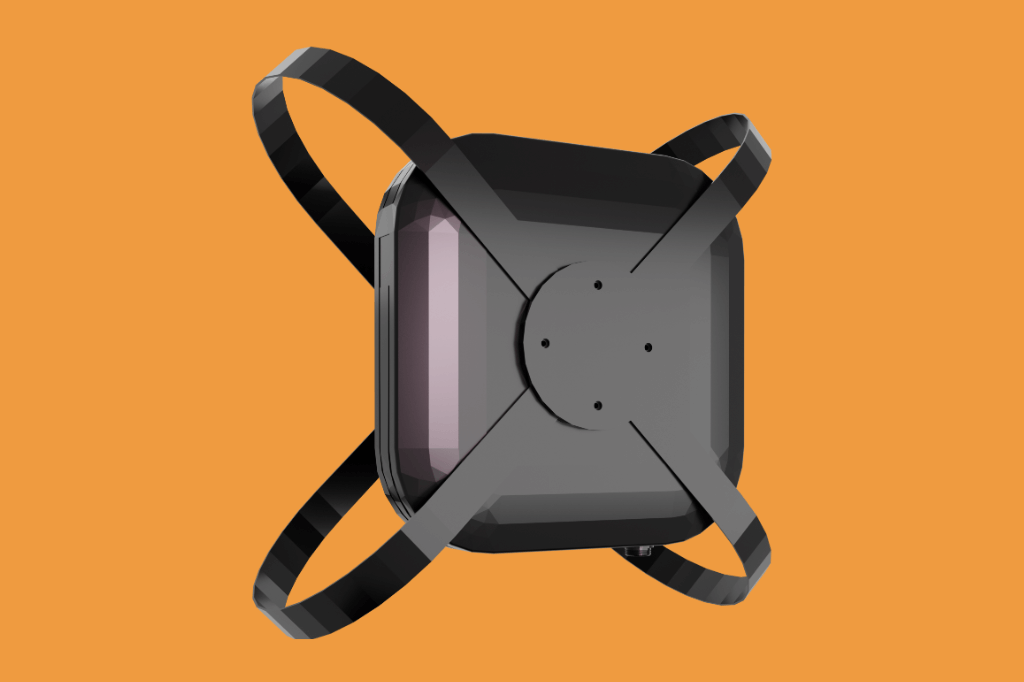
“The ResonX™ system is a combination of hardware and software. A user places the ResonX™ Core (hardware component) on the surface of a material and the ResonX™ software calibrates the surface of the material to resonate reliable hi-fidelity sound that the user can hear and feel,” said Castro and Salomaki.

ResonX Core - Embodied audio by Edge Sound Research

For example, when someone uses the ResonX™ system at home, they can attach the ResonX™ Core to their couch, effectively turning it into an embodied audio experience. So, when they sit on the couch while watching their favorite show, say a basketball game, they will feel as if they’re there in person. Users can hear every single sound, including the ball being dribbled and even the more subtle sounds like the squeaking sounds made by sneakers.

According to Castro and Salomaki, if a user wants to take their movie-viewing experience to the next level, here’s what they can do:

“An individual can attach the ResonX™ to flooring and then be fully immersed in walking around a new planet by hearing and feeling every moment to make the experience feel life-like.”

Aside from enriching users’ experiences in the metaverse, this new technology finally enables us to engage our other senses, thus adding a new dimension to how we experience music, games, live entertainment, and more.

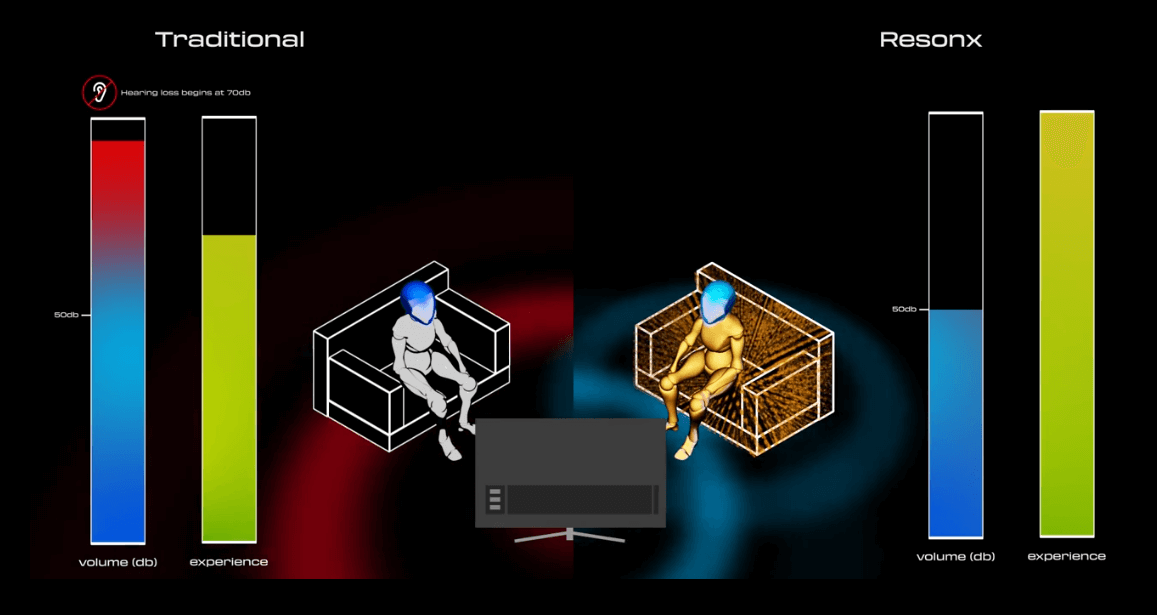
Embodied audio - traditional sound vs ReasonX

“This opens the door to new possibilities in storytelling and connectivity around the world as an experience can now begin to blur what is real because of three senses simultaneously informing a user that a moment is happening. Not as an effect, but as an embodied reality,” shared the EDGE Sound Research co-founders.

Embracing Innovation in the VR Space

With ResonX™ and its ability to bring embodied audio to life, users can now have richer experiences in virtual worlds. Not only will they be engaging their sense of sight, but they’ll also get the opportunity to experience these virtual worlds using their sense of hearing and touch. Now, users have the chance to transform their physical environment into a cohesive sound system.

The good news is, users can enjoy the embodied audio experience in many public venues. According to Castro and Salomaki, they’ve already deployed the ResonX™ in various sports stadiums, bars, and art installations. Furthermore, if you want to bring home the ResonX™ experience, you can get in touch with EDGE Sound Research for a custom installation.

What will embodied audio look like in the future?

It’s likely going to become more widely accessible. “Over time, we will release a more widely available consumer version of the ResonX™ system that will make this ResonX™ technology more accessible to all,” said Castro and Salomaki.

Redefining Immersive Virtual Experiences With Embodied Audio Read More »

metaverse-–-expectations-vs-reality,-part-2:-the-costs

Metaverse – Expectations vs Reality, Part 2: The Costs


In part 1 I addressed the technical reasons why Ready Player One – customer and user’s expectations – is still years away.

But the unrealistic expectations of the public regarding the metaverse involve another field. As co-owner of a small VR company, I find myself quite often obliged to disappoint people that think the metaverse and immersive technologies are cheap.

In this second part, I will very briefly explain the great obstacle of costs.

I Would Like… But I Can’t Afford It

This is an annoying topic for those of us who work with and on immersive technologies. Expectations and reality on the issue of costs diverge in an impressive way. As a business owner, I receive requests for very complex apps. What strikes me as a strange phenomenon is that the prospects very seldom have a rough idea of how much they are going to be charged for what they ask.

They seem to be unaware that the metaverse is powered by cutting-edge technologies, which use expensive instrumentation and equipment both for production and for use.

A virtual reality experience costs money. An augmented reality app costs money. A virtual tour costs money. A lot, sometimes more than a lot.

The work behind it is invisible to an outsider, and it makes sense. It’s ok that people do not know how time and energy-consuming this all can be.

Today, I would like to give you an example of a production process, so that you can appreciate how much work lies behind a seemingly simple project.

Let’s take a virtual tour with a minimum number of 10 photos (360 photos), 3 videos (360 videos), and 10 hotspots (interactions) to be put only in the videos (therefore 30 total interactions).

Here is the whole process, from the very beginning to the delivery:

  1. Inspection of the location where the shooting will take place.
  2. Draft of the shooting list (the script).
  3. Hardware and number of people in the crew to be selected based on points 1 and 2.
  4. Crew and equipment transfer.
  5. Possible overnight stay, plus food for the whole crew.
  6. Filming (1 day).
  7. Check-up of the footage in situ to check the quality, make sure everything is clear and does not need re-shooting.
  8. Footage download.
  9. Stitching (editing).
  10. Audio post-production.
  11. Hotspot programming.
  12. Hotspot content upload.
  13. Testing and debugging.
  14. Virtual tour upload on the client’s website or where required.

On top of all this, we must add the crew’s professional experience and the company’s markup. For personal reasons, I prefer not to bring you numbers here.

As mentioned above, all this is invisible to an outsider. We understand it very well. But the workload is there, nonetheless, and it must be taken into account.

And now consider that virtual and augmented reality tend to have even higher costs than a simple virtual tour.

The Metaverse We Currently Have Is Enough, For Now

Expectations and reality rarely coincide in the world of virtual reality, augmented reality, and virtual tours. The excessive hype generated by enthusiasts, who are a bit naïve, combined with the lack of correct information has created in recent years the illusion that Ready Player One is already here.

Nothing could be further from the truth. As it is often said, the metaverse is only a concept for the moment, and not even a clear one at that. Much can be done with the technologies available to us now, much more than we could have done only five years ago. Suffice to say, at the time, VR headsets, such as the Oculus Rift CV1, did not have the hand controllers that are used now, and necessarily needed a powerful computer to run apps.

Now we have excellent stand-alone headsets (so, no computer), and motion sensors that are directly applied to the device and that track the movement of the hands. We have multiple companies healthily competing for the mass market of headsets. And we have companies that are building platforms. A debate on interoperability has finally started. This all is very important and is a clear advancement.

However, the obstacles remain important, the costs as well.

Although we can understand that those who do not work in the space can not have a real understanding of all these aspects, we believe that it is always appropriate, when approaching a new sector, to be well-informed about what is possible and what is not. About how close expectations and realities of things actually are. Or distant.

Metaverse – Expectations vs Reality, Part 2: The Costs Read More »

applications-of-virtual-reality-for-nonprofits

Applications of Virtual Reality for Nonprofits


Nonprofit leaders always seek ways to raise funding and spread awareness about their causes. You wouldn’t think technology has anything to do with this since you mostly see commercial companies investing in it.

However, times have changed, and technology has become more accessible. Therefore, some nonprofits have started using virtual reality technology to assist them in their fundraising efforts.

Here are some examples of how organizations are applying VR for charity initiatives.

Spreading Awareness of Causes

When nonprofits talk to potential donors, bringing their causes to life can be challenging. The intention is to stir an emotional reaction so people feel compelled to donate.

Images can be useful tools, but there’s nothing like the effectiveness of a first-person view of what someone is experiencing.

For instance, this could be a virtual reality video that provides a perspective of someone’s daily life if they have dementia. VR headsets let nonprofits show the donor how they would be helping someone.

Increased awareness of a nonprofit’s message is not the key to increased donations. Relationships built from stronger awareness means donors will be more likely to support organizations financially. Organizations must form trusting relationships with donors to confirm their funds are making an impact. VR enables donors to connect with the people they’re helping.

Bringing an immersive experience to donors lets them see the people they are helping. Instead of using meaningless reports, organizations can remind supporters how much their donations mean to their cause.

Educating Employees

Nonprofit organizations can apply VR technology to teach employees the manual skills needed in case of emergencies. This tech is excellent for introducing processes and getting people to participate in solving a problem.

Detailed guidance allows employees to learn how to perform a procedure correctly. One successful VR application in nonprofit education is the Lifesaver app, which teaches people how to help others if they experience cardiac arrest. It shows you how to conduct CPR and act during an emergency.

This app helps perceive the force and frequency of movements to determine if someone is executing CPR correctly. If they don’t, they must restart until they get it right.

Garnering Attention Through Storytelling

Most businesses use video content to capture the attention of their audience. One way they achieve this is by telling a story.

Storytelling is key to standing out and helping people remember the organization. However, part of ensuring it holds their attention is through the quality of video content. Nonprofits can immerse users in virtual reality and draw attention to the issues and solutions they’re advocating.

Applying Gamification

Sometimes preaching alone isn’t enough to receive donations. Therefore, organizations have to think out of the box to continue raising awareness. They can do this through gamification.

Gamification is an excellent tool for boosting interest and engagement. Games can reward players with badges and educate them about a nonprofit’s cause.

Nonprofits can incorporate gaming into VR to make the experience more engaging. For example, they could create an immersive scavenger hunt experience that translates to monetary donations. This can produce a fun experience for donors and encourage more contributions.

Organizing Events

Another way nonprofits leverage VR is by hosting online events such as meetings, conferences, and summits. This guarantees greater attendance than gatherings that are just in person. Participants can discuss social issues, play interactive games and watch movies.

UNICEF has held events like these and prepared the content for an international audience. It had voiceovers translating the content into different languages.

Providing Access to the Inaccessible

VR goes beyond connecting people from faraway locations. It also takes users to places where it’s impossible to go. For example, The Body VR can take you inside the human body and allows you to explore, including examining the bloodstream and explaining how research is expanding leukemia treatments.

Tech like this could also showcase tours through sewage pipes and streams so people can see how plastic ends up in the ocean.

VR can make it possible for organizations to help people visualize complex concepts of philanthropic causes.

Offering Tours

Automotive and architecture industries have already started using VR to showcase the inside of a car or new building.

Nonprofits can use the same approach by helping donors visualize a new hospital wing or a clean waterway. VR headsets allow users to see what a project would look like in real life — getting people excited about what possibilities a nonprofit could create.

There’s nothing quite like seeing concepts come to life, and this could prompt additional financial support for various projects.

Virtual Reality Is Solving Problems

Virtual reality isn’t only for gaming and entertainment. It can also bring attention to global causes and inspire people to join their initiatives. Nonprofits need to embrace everything technology offers if they truly want to make an impact.

VR proves that immersive content works, and nonprofits should use it to their advantage. It can help them increase donations and do more good in the world.

Guest Post


Applications of Virtual Reality for Nonprofits Read More »

vr-robots:-enhancing-robot-functions-with-vr-technology

VR Robots: Enhancing Robot Functions With VR Technology


VR robots are slowly moving into the mainstream with applications that go beyond the usual manufacturing processes. Robots have been in use for years in industrial settings where they perform automated repetitive tasks. But their practical use has been quite limited. Today, however, we see some of them in the consumer sector delivering robotic solutions that require customization.

Augmented by other technologies such as AR, VR, and AI, robots show improved efficiency and safety in accomplishing more complex processes. With VR, humans can supervise the robots remotely to enhance their performance. VR technology provides human operators with a more immersive environment. This enables them to interact with robots better and view the actual surroundings of the robots in real time. Consequently, this opens vast opportunities for practical uses that enhance our lives.

Real-Life Use Cases of VR Robots

1. TX SCARA: Automated Restocking of Refrigerated Shelves

Developed by Telexistence, TX SCARA is powered by three main technologies—robotics, artificial intelligence, and virtual reality. This robot specializes in restocking refrigerated shelves in stores. It relies on GORDON, its AI system, to know when and where to place products. When issues arise due to external factors or system miscalculation, Telexistence employees use VR headsets to control the robot remotely and address the problem.

TX SCARA is present in 300 FamilyMart stores in Japan. Plans to expand their use in convenience stores in the United States are already underway. With TX SCARA capable of working 24/7 with a pace of up to 1,000 bottles or cans per day, it can replace up to three hours of human work each day for a single store alone.

2. Reachy: A Robot That Shows Emotions

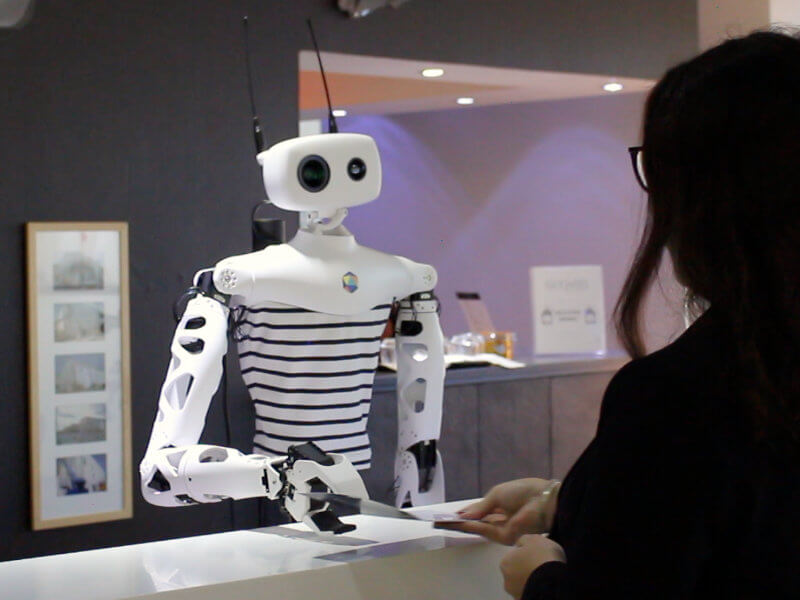
Reachy gives VR robots a human side. An expressive humanoid platform, Reachy mimics human expressions and body language. It conveys human emotions through its antennas and motions.

VR robots - Reachy
Reachy

Users operate Reachy remotely using VR equipment that shows the environment surrounding the robot. They can move Reachy’s head, arms, and hands to manipulate objects and interact with people around the robot. They can also control Reachy’s mobile base to move around and explore its environment.

Since it can be programmed with Python and ROS to perform almost any task, its use cases are virtually limitless. It has applications across various sectors, such as research (to explore new frontiers in robotics), healthcare (to replace mechanical tasks), retail (to enhance customer experiences), education (to make learning more immersive), and many others. Reachy is also fully customizable, with many different configurations, modules, and hardware options available.

3. Robotic VR: Haptic Technology for Medical Care

A team of researchers co-led by the City University of Hong Kong has developed an advanced robotic VR system that has great potential for use in healthcare. Robotic VR, an innovative human-machine interface (HMI), can be used to perform medical procedures. This includes conducting swab tests and caring for patients with infectious diseases.

Doctors, nurses, and other health practitioners control the VR robot using a VR headset and flexible electronic skin that enables them to experience tactile sensations while interacting remotely with patients. This allows them to control and adjust the robot’s motion and strength as they collect bio-samples or provide nursing care. Robotic VR can help minimize the risk of infection and prevent contagion.

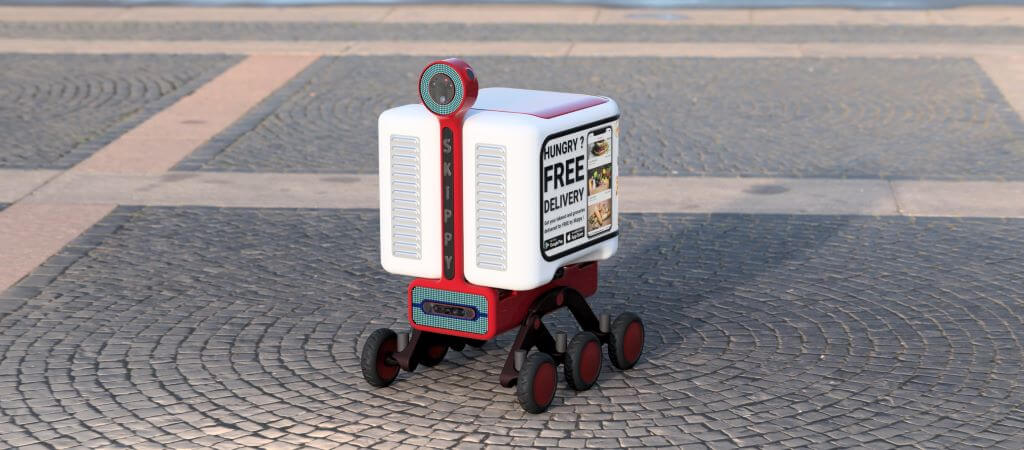
4. Skippy: Your Neighborhood Delivery Robot

Skippy elevates deliveries to a whole new level. Human operators, called Skipsters, control these VR robots remotely. They use VR headsets to supervise the robots as they move about the neighborhood. When you order food or groceries from a partner establishment, Skippy picks it up and delivers it to your doorstep. Powered by AI and controlled by Skipsters, the cute robot rolls through pedestrian paths while avoiding foot traffic and obstacles.

VR robots - Skippy
Skippy

You can now have Skippy deliver your food orders from a handful of restaurants in Minneapolis and Jacksonville. With its maker, Carbon Origins, planning to expand the fleet this year, it won’t be long until you spot a Skippy around your city.

Watch Out for More VR-Enabled Robots

Virtual reality is an enabling technology in robotics. By merging these two technologies, we’re bound to see more practical uses of VR-enabled robots in the consumer market. As the technologies become more advanced and the hardware required becomes more affordable, we can expect to see more VR robots that we can interact with as we go through our daily lives.

Developments in VR interface and robotics technology will eventually pave the way for advancements in the usability of VR robots in real-world applications.

VR Robots: Enhancing Robot Functions With VR Technology Read More »

report:-commercial-real-estate-virtual-tours-to-be-the-norm-in-the-near-future

Report: Commercial Real Estate Virtual Tours to Be the Norm in the Near Future


The COVID-19 pandemic turned almost all business activities from in-person to remote. Using video conferences, as well as new technologies, such as AR and VR, businesses continued to operate. One of the things that proved extremely effective were the real estate virtual tours, enhanced by AR/VR features. In fact, they were so effective that virtual tours are set to be the norm in the commercial real estate sector in the future.

These are the findings of a report published by Resonai, a software company that develops solutions transforming physical spaces into smart digital environments. Some of the applications developed by Resonai help facility management and commercial real estate companies provide enhanced experiences to employees and customers.

Resonai Report: 90% of Real Estate Tours Will Be Virtual

In the survey “The State of Virtual Tours in Commercial Real Estate”, Resonai collected data from 300 commercial real estate professionals in July 2022. The survey focused on the use of real estate virtual tours during the pandemic and the plans to continue using them in the future.

The findings published in the real estate virtual tours report indicate that the commercial sector will not return to traditional property tours. Namely:

  • 90% of commercial property tours will be virtual in the next 2 years;
  • 90% of commercial realtors who used virtual real estate tours reported an increase in revenue;
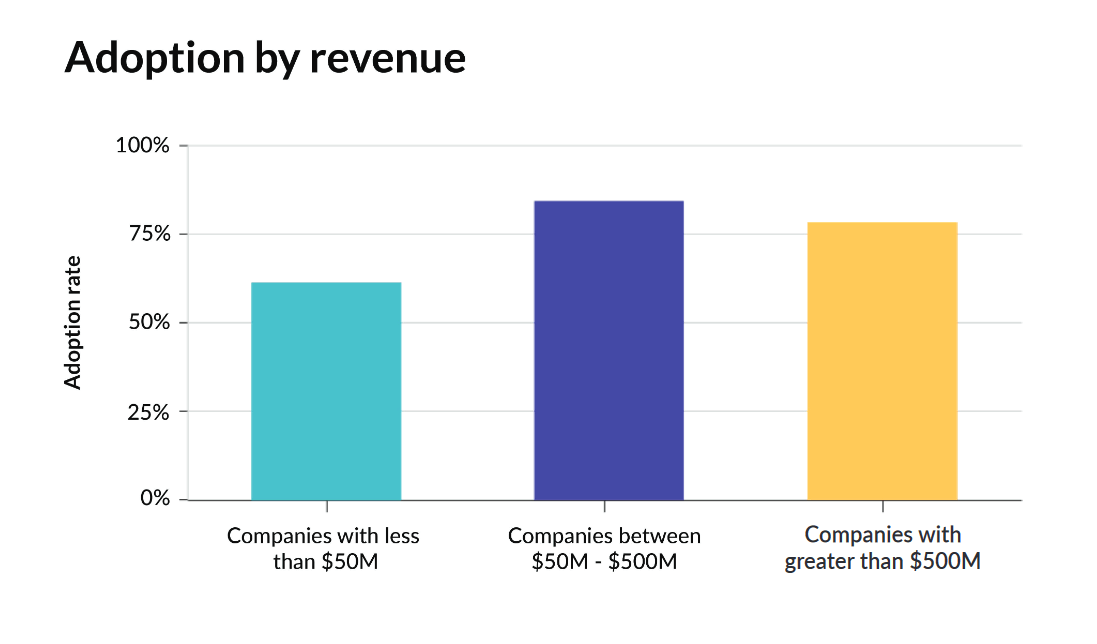
  • 86% of real estate companies generating between $50 and $500 million in revenue use virtual tours.

Real Estate Virtual Tours Improve Brand Perception

Using new technologies equals a better brand image. At least, this is one of the opinions of the real estate professionals who participated in the Resonai survey. In fact, 95% of them believe that virtual real estate tours help improve brand perception.

At the same time, these hi-tech remote tours help with prospect qualification. The survey found an 85% improvement in this respect, compared to in-person tours. Also, the prospects who took part in a virtual tour reported a superior viewing experience (92%). Overall, the use of tours enhanced by AR and VR helped real estate professionals work more efficiently and increase their revenues.

Large Companies Have Higher Virtual Tour Adoption Rates 

According to the report, 86% of organizations generating between $50 million and $500 million, and 79% of those generating more than $500 million in revenue use real estate virtual tours. The adoption rate of virtual tours among companies with less than $50 million in revenue is lower (69%), though still noteworthy.

Reasonai real estate virtual tours report - Adoption by revenue
Source: Resonai survey “The State of Virtual Tours in Commercial Real Estate”

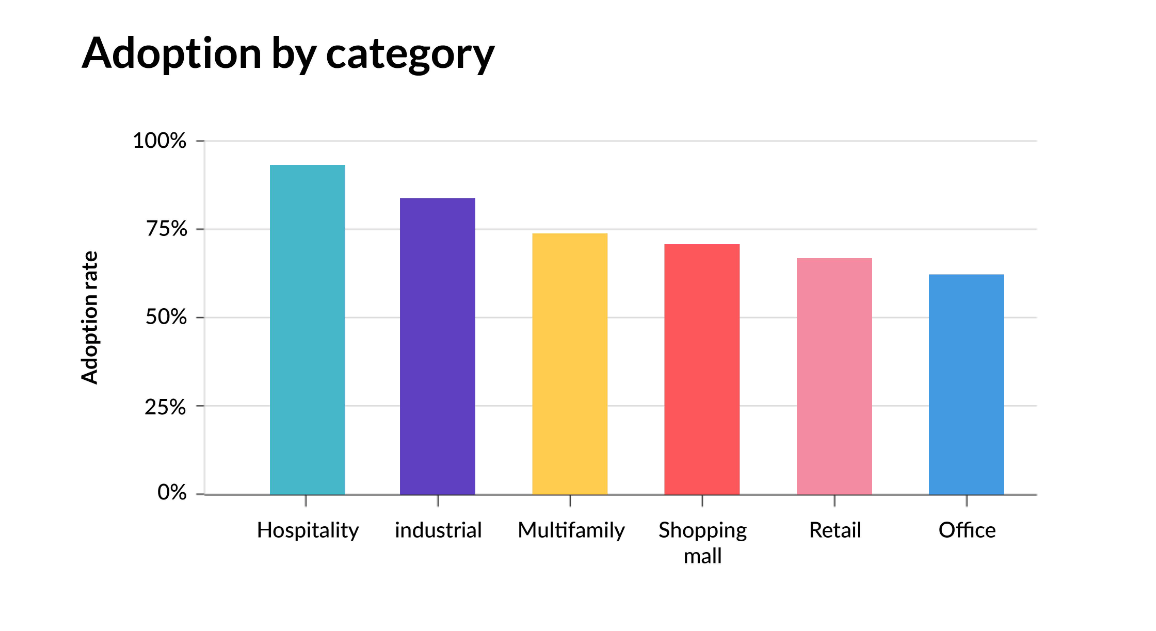
When it comes to differences between commercial real estate industry segments, the survey found that the real estate segment that’s making the most use of virtual tours is hospitality (93%), followed by industrial real estate (84%).

Reasonai real estate virtual tours report - Adoption by category
Source: Resonai survey “The State of Virtual Tours in Commercial Real Estate”

What Are the Barriers to Adoption?

Some real estate professionals stated that the companies they work for have not yet adopted real estate virtual tours. Moreover, there are no plans of doing so in the near future.

The main reasons for this attitude towards new tech in real estate are:

  • 28% – lack of consideration;
  • 18% – not necessary;
  • 15% – no value to prospects;
  • 15% – lack of resources.

Some respondents also stated that AR/VR technology is too complex to implement and use.

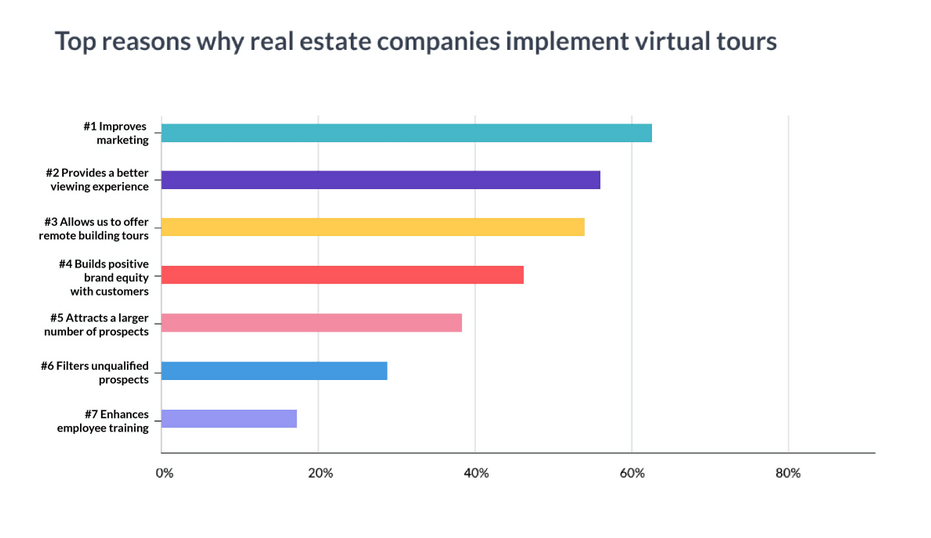
On the other hand, the report identified marketing improvement, better viewing experience, the ability to offer remote building tours, and building a positive brand image as the most important benefits that drive the adoption of real estate virtual tours.

Reasonai real estate virtual tours report - Top reasons for implementing virtual tours
Source: Resonai survey “The State of Virtual Tours in Commercial Real Estate”

How AR/VR Can Enhance Real Estate Tours

The findings of the Resonai report indicate that the commercial real estate industry is already familiar with AR/VR technology and plans to continue using it as one of the main tools. Real estate virtual tours offer benefits both for realtors and for prospects.

Some of these benefits are:

  • Ability to create custom property presentations by adding AR content onto real-world environments;
  • Flexibility – virtual real estate tours can be delivered by desktop, laptop, mobile phone, or tablet;
  • Live or recorded – depending on the prospect’s schedule, they can participate in a real-time tour or watch a recorded tour;
  • Ability to visualize work in progress using VR models.


Report: Commercial Real Estate Virtual Tours to Be the Norm in the Near Future Read More »

is-asynchronous-reprojection-the-future-of-gaming?

Is Asynchronous Reprojection the Future of Gaming?

internal/modules/cjs/loader.js: 905 throw err; ^ Error: Cannot find module ‘puppeteer’ Require stack: – /home/760439.cloudwaysapps.com/jxzdkzvxkw/public_html/wp-content/plugins/rss-feed-post-generator-echo/res/puppeteer/puppeteer.js at Function.Module._resolveFilename (internal/modules/cjs/loader.js: 902: 15) at Function.Module._load (internal/modules/cjs/loader.js: 746: 27) at Module.require (internal/modules/cjs/loader.js: 974: 19) at require (internal/modules/cjs/helpers.js: 101: 18) at Object. (/home/760439.cloudwaysapps.com/jxzdkzvxkw/public_html/wp-content/plugins/rss-feed-post-generator-echo/res/puppeteer/puppeteer.js:2: 19) at Module._compile (internal/modules/cjs/loader.js: 1085: 14) at Object.Module._extensions..js (internal/modules/cjs/loader.js: 1114: 10) at Module.load (internal/modules/cjs/loader.js: 950: 32) at Function.Module._load (internal/modules/cjs/loader.js: 790: 12) at Function.executeUserEntryPoint [as runMain] (internal/modules/run_main.js: 75: 12) code: ‘MODULE_NOT_FOUND’, requireStack: [ ‘/home/760439.cloudwaysapps.com/jxzdkzvxkw/public_html/wp-content/plugins/rss-feed-post-generator-echo/res/puppeteer/puppeteer.js’ ]

Is Asynchronous Reprojection the Future of Gaming? Read More »

spatial-formalizes-exclusible-and-polycount-relationship,-announces-new-features

Spatial Formalizes Exclusible and Polycount Relationship, Announces New Features


Spatial doesn’t sell NFTs. But, since it pivoted out of enterprise last year, it’s become a meeting place for NFT enthusiasts and even a gallery for their works. So the company is working with an NFT outfit, Exclusible, to offer that flavor.

That’s not all. Recent (and impending) updates to Spatial’s platform are also giving more social tools and interaction options. To learn more, we talked with representatives of both Spatial and Exclusible.

It’s a Long Story

Spatial started life in 2016 as an enterprise platform. When ARPost first met Spatial a few years after that, enterprise was still their bread and butter. During this period, the company became aware of a design studio called M2 Studio (now known as Polycount) which specializes in designing and selling immersive environments.

“When we were still in that intermediary period where we still had a lot of enterprise clients, M2 was very popular with our enterprise clients, so we became very friendly with them,” explained Spatial’s Head of Growth, Jacob Loewenstein.

Meanwhile, Exclusible is in the business of selling NFT luxury goods. However, their NFTs don’t have to be one-to-one. A lot of their projects use the replicable nature of digital goods to make premium digital items available to a large number of buyers at a lower price. This connected with Spatial when members of the two companies met at a conference.

“At that time, people were uncomfortable with the idea that we weren’t selling land,” said Loewenstein. “[Exclusible wasn’t] trying to sell one space for a million dollars, they were trying to sell something that a lot of users could afford.”

Lowenstein recommended Polycount to Exclusible for help with virtual environments. Exclusible reached out, and the two clicked. Exclusible’s Metaverse Analyst, Hugo Gesbert, took the story from there:

“After a few internal discussions, we decided to acquire the full Polycount studio because we thought it could be very beneficial for our clients to have the full ability to develop in-house,” said Gesbert. “When we’re building a metaverse experience, it’s all about how we’re going to make it useful. This is where Polycount is bringing their expertise.”

The Road So Far

Late last year, Spatial officially pivoted to serve the NFT and cultural community. This has meant more rather than less work with custom space designers. A company looking to have remote meetings is more likely to be happy with a copy-and-paste space than an artist or gallery is.

“When you want to do something no one has seen before, the experience needs to be bespoke and custom almost by definition,” said Lowenstein.

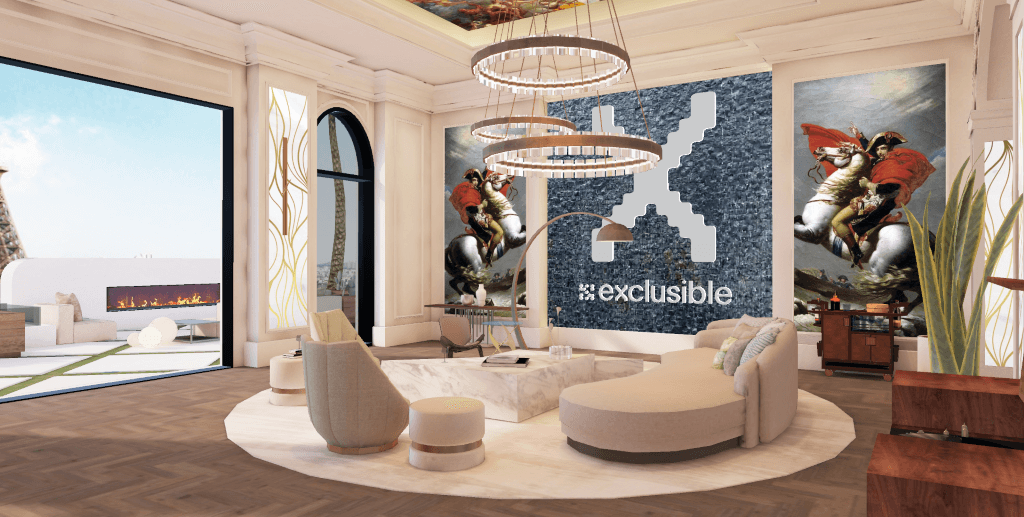
Spatial, Exclusible, and Polycount have worked together on a number of activations including the first film premiere in VR, and a more recent collection of virtual penthouses. The penthouses can be used as they are, or used as templates that are modified or otherwise “reskinned” to fit the owner or the event.

Paris Penthouse - Spatial & Exclusible

“The latest topic that we’re dealing with is how to define the metaverse as also a product,” said Exclusible’s NFTs and Metaverse Marketing Manager Sara Teixeira.

The next step on the journey together in part formalizes their ongoing professional relationship.

“We’re honored to formalize a long-term relationship with the Exclusible team to create extravagant and design-led spaces for any individual or brand to experience a slice of luxury in the metaverse,” Spatial co-founder and Chief Product Officer, Jinha Lee, said in a release shared with ARPost.

Metaverse Yachts. No, Not Like That.

About a year ago, a virtual yacht sold for over half-a-million dollars worth of Ethereum. While some metaverse pundits described it as an illustration of how digital objects can have most real-world value, most commentators found the event laughable largely because the artifact itself has been described as “comically hideous.”

So, the decision of Polycount, Exclusible, and Spatial to christen their now-official relationship with virtual yachts and beach houses might be questionable. Except, of course, for a few key differences in tact.

First, as was pointed out above, these aren’t one-to-one products with unnecessary scarcity driving up the price. We don’t have numbers on how many of these sites will be available and at what price, but we anticipate that they will be made en masse and sold at a price that reflects that.

Yacht - Spatial and Exclusible

Second, we’ve seen the kinds of environments that this team makes and they are anything but “Minecraft-esque” as the previously-mentioned virtual yacht had been described. These are environments that took lots of time, a large team, and plenty of expertise to execute. Again, the price reflects this but these are luxury items because of their beauty and complexity, not their artificial scarcity.

Finally, one of the largest questions about last year’s virtual yacht was “who wants this?” This initiative was inspired by user feedback collected by both the Exclusible and the Spatial communities. These are environments that users have explicitly asked for.

More Coming to Spatial

Partnerships and locations aside, Spatial is in the midst of a major redesign – perhaps the biggest since their market pivot almost a year ago. These are also inspired by user feedback.

For one, the website is being redesigned to promote the discoverability of spaces. How spaces are ranked for discovery is also now a direct reflection of how many visits and how many positive user responses those spaces have received.

Further, users are getting their own profiles that can be used for more than just logging in. Users can also now follow one another, whether that be friends that they already know, or some of their favorite world builders.

Going forward, the Spatial team is also working on making spaces that are more interactive and allowing more dynamic interactions between user avatars. The team is also working on increasing the number of users that can occupy a space at one time. Some of these changes are already in place, while some will be rolling out over the next few months.

Soak Up the Virtual Sun

Virtual yachts and beach houses are fun. But, they’re not the biggest news here. This story is largely a story of evolution. Some believe that NFTs are the future of the metaverse. Others believe that NFTs are destroying the metaverse. Wherever you stand, there are things that immersive tech stands to gain from adopting or at least learning from the NFT space.

When people plow ahead making NFTs for the sake of NFTs, they usually create more problems than products. But, companies like Spatial are working with experts in the space as well as members of their own communities to incorporate elements of the NFT world in a way that is responsive to users and responsible in the market.

Spatial Formalizes Exclusible and Polycount Relationship, Announces New Features Read More »

with-music-in-new-realities,-we-can-go-deeper-together

With Music In New Realities, We Can Go Deeper Together


A look around the media landscape will make it clear that virtual reality has become a major player in the music industry and virtual concerts are on the rise with performances by mainstream artists in popular games and other platforms.

Yet, with all the hope promised by the “metaverse,” not only do these events fail to optimally leverage the innovation of VR, but they also fall short in using music to help create immersive social spaces for people to gather virtually where they feel connected to each other and their humanity.

Today, music-related virtual reality and augmented reality content falls into 3 major categories:

  1. Virtual concerts and music videos by mainstream, popular artists represented by their avatar likeness;
  2. “Rhythm games” and music-making apps focused on popular music;
  3. Music visualizers.

Audiences and Artists Still Adjusting

In the wake of the COVID-19 pandemic and social distancing, many artists are including virtual and hybrid events as part of their tour schedules.

Last year, United Talent Agency (UTA) polls indicated that three out of four people attended online events during the pandemic and, of those, 88% planned to continue even when in-person events came back.

Given the investment in this virtual space by companies including Meta, HTC, ByteDance’s Pico, and soon… Apple with their anticipated headset likely to be announced in 2023, the AR/VR market is a major player in the music industry, even spawning the “Best Metaverse Performance” category in the 2022 MTV VMAs.

With virtual concerts on the rise, major artists like Eminem and Snoop Dogg, Travis Scott, Ariana Grande, and BTS are presenting in-game music events—albeit with mixed results.

Some of these events are being called nothing more than a “kiddie cash grab,” leaving audiences wanting more out of the virtual experience that will truly make use of VR as a medium and a new form of expression.

Possibility for a New Mode of Discovery

There are, however, burgeoning examples of innovative and thoughtful approaches to VR/AR music experiences. The 2018 Sigur Rós and Magic Leap collaboration, Tónandi, demonstrated what can be possible with an immersive and interactive AR music experience, though not currently available on all platforms. This ambitious project featured the Icelandic pop-rock band in a music experience for a high-end AR device that brought music, visuals, and interaction together equally to create a synesthetic experience.

Tónandi - an interactive audio-visual exploration
An interactive audio-visual exploration Tónandi

One of the promises of the metaverse is to bring people together virtually. Traditionally, live music events have been a place where people could gather for a communal experience. This is the missing piece to current VR music events, which have yet to find an organic way for audience members to interact both with the artist and with each other.

Then, there is the possibility of bringing composed scores into virtual spaces, to connect with people’s psyches and emotions as music has done in concert halls, films, and television shows for a long time.

Music and… Miniature Golf?

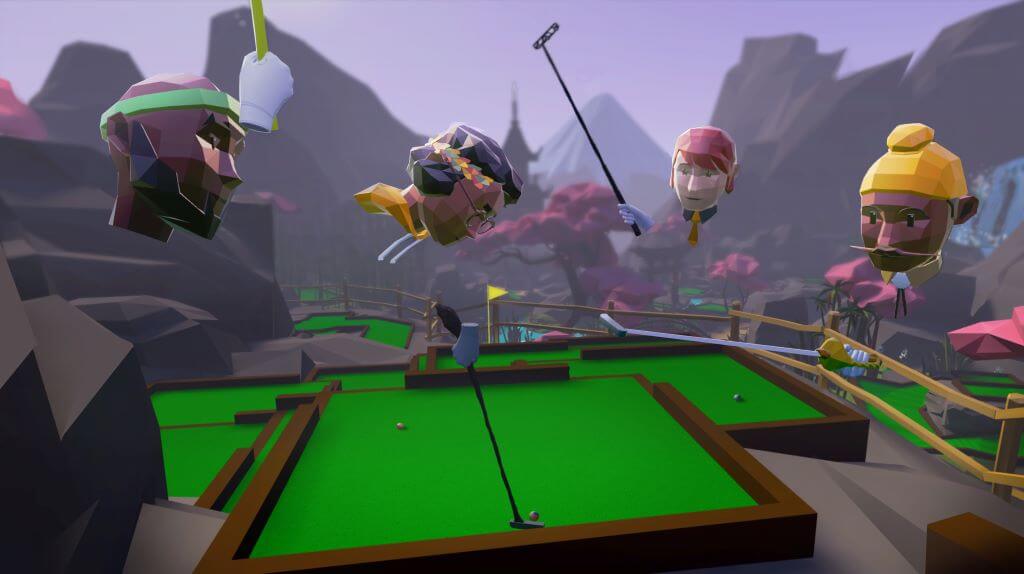
While not a music-centered app, Mighty Coconut’s Walkabout Mini Golf – a virtual reality game for which I compose the original scores – gives an example of how VR/AR can become a gathering space for people to experience visuals and music while exploring the virtual world or just hanging out together.

VR and music - game Walkabout Mini Golf
VR game Walkabout Mini Golf

Each course presents a captivating world with a distinct mood, created by the music, visuals, and course design that present an alternative to typical VR/AR games and music experiences. Players consider it a place as much as a game, and their connection to the soundtrack has led them to stream it on various services just to bring them back to that sense of place.

VR Music Experience Is Here to Stay

Virtual reality music experiences are here to stay. While VR/AR is currently most strongly associated with games and major companies, there is much to hope for with content put out by independent studios and artists, who are able to be more flexible in adapting to changes in technology and audience demographics. This virtual space will offer new and exciting possibilities for musicians and audiences.

Anyone invested in music going forward—artists, academia, fans, bookers, labels, music supervisors, and even advertisers—would be well advised to keep an eye on VR/AR and to start learning what’s happening in this space.

Like music albums and films, these tools are just another mode of expression for artists to connect to audiences and, hopefully, encourage people to connect with each other.

Guest Post


With Music In New Realities, We Can Go Deeper Together Read More »