Last time we looked at the used electric vehicle market, it was to see what the options are if you’re spending $10,000 or less. Two solid choices emerged quickly: a BMW i3 if you don’t need much range, and a Chevrolet Bolt if you do. Lots of earlier Nissan Leafs made the list, too, but these had limited range and air-cooled batteries to contend with; we also included an assortment of compliance cars and, perhaps for the very brave, a Tesla. But what happens when you grow the budget by 50 percent? What EVs make sense when there’s $15,000 burning a hole in your pocket?
As it turns out, at this price point the planet starts looking a lot more like your own personal bivalve. For starters, the cars that looked good at $10,000 look a lot better in the next bracket up, generally newer model years or with lower mileage than the cheaper alternatives. Which means you can afford the facelifted i3. For model-year 2018 and onward, BMW fitted its electric city car with a larger-capacity battery, which means up to 114 miles (183 km) of range on a full charge, or about 150 miles (241 km) if it’s the one with the two-cylinder range-extender engine. Apple CarPlay and Android Auto might also be built into these i3s, although there are aftermarket solutions now, too.
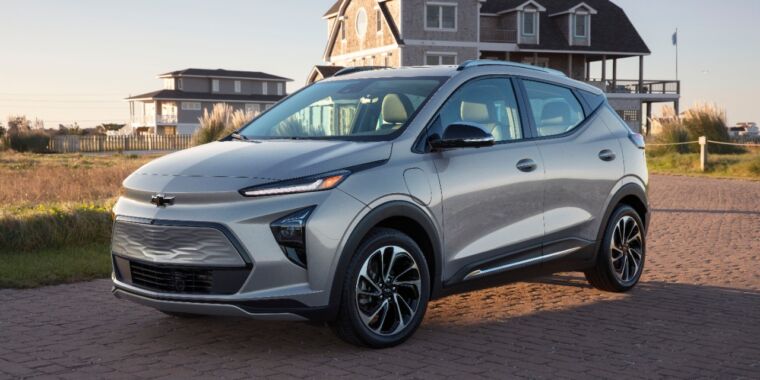
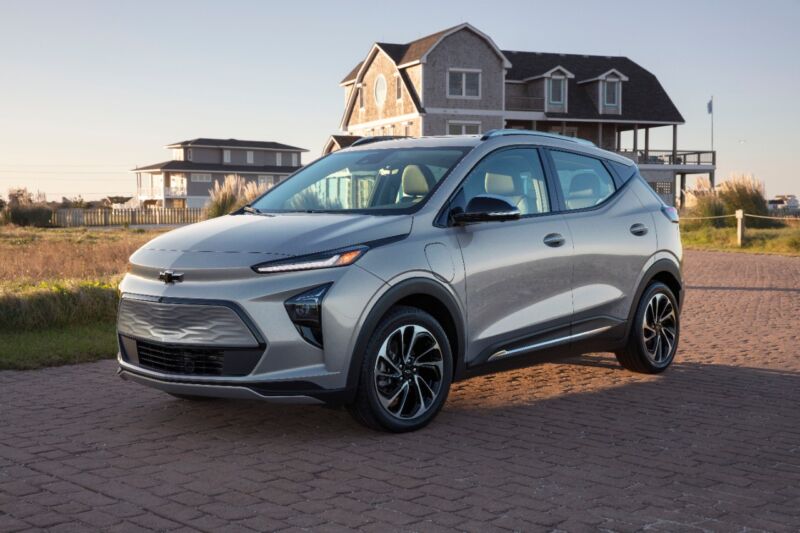
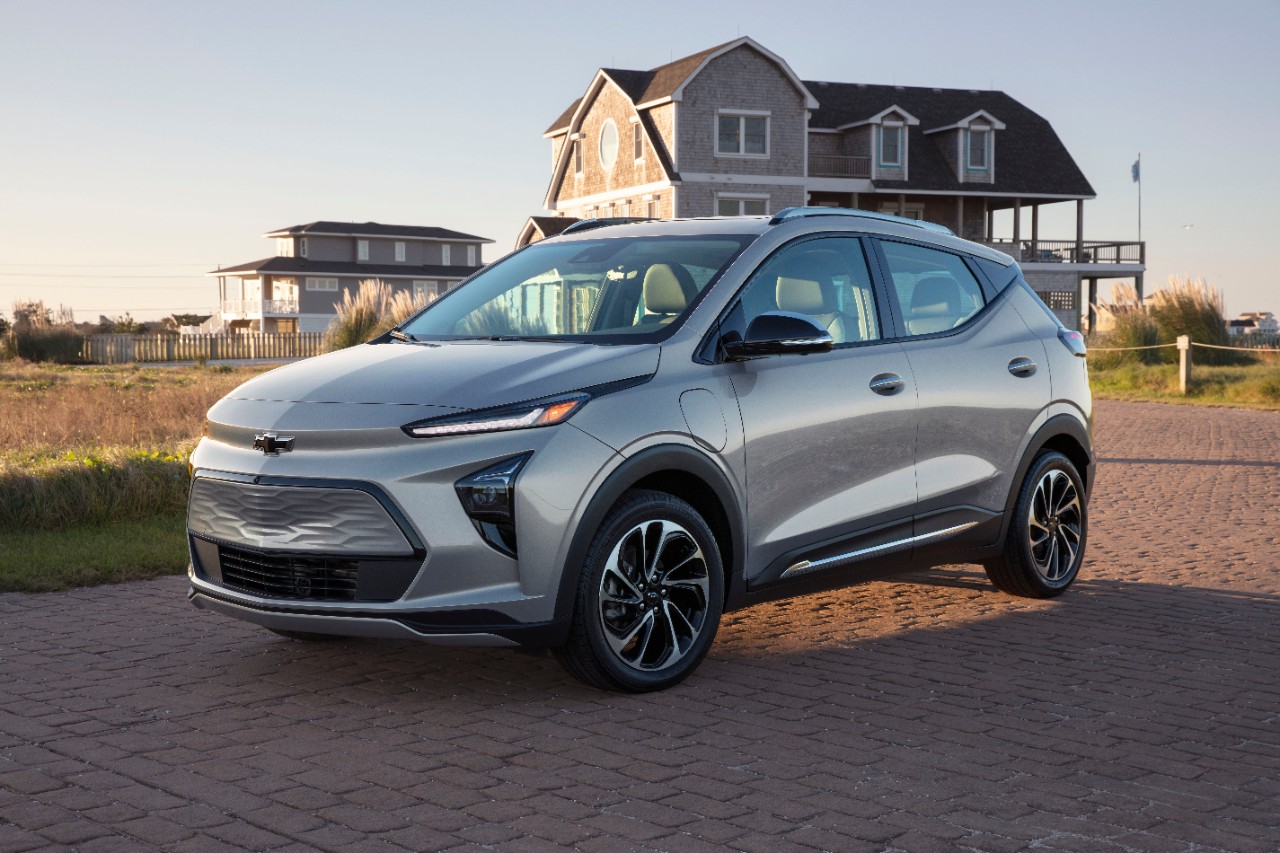
No aftermarket is required to get CarPlay or Android Auto on any of the Bolts you might buy for under $15,000, which include a mix of pre- and post-facelift (model-year 2022 and onward) cars, although few of the slightly more spacious Bolt EUVs. Like the i3s, expect lower mileage examples, plus all the usual caveats: slow DC charging and seats that can get a bit hard on long drives.
2026 is looking like a pretty good year for affordable electric vehicles. There’s a new Nissan Leaf that starts at a hair under $30,000 (as long as you ignore the destination charge). We’ll soon drive the reborn Chevrolet Bolt—with a new lithium iron phosphate battery, it also has a price tag starting with a two (again, ignoring the destination charge). And the closer you get to $40,000, the more your options expand: the Hyundai Ioniq 5, Chevy Equinox EV, Toyota bZ, Tesla Model 3, Ford Mustang Mach-E, and Subaru Solterra all fall within that price bracket, and some of those are pretty good cars.
But what if you only want to spend a fraction of that? Well, you won’t be buying anything new, but then neither do three-quarters of American car buyers, and there’s nothing wrong with that. A few weeks ago, we looked at what passes for the used EV bargain basement—ones that cost $5,000 or less. As long as you’re OK with limited range and slow charging, going electric on a shoestring is possible. But if you’re prepared to spend twice that, it turns out you’ve got plenty of options.
As before, we stress that you should have a reliable place to charge an EV if you’re going to buy one, which means at home at night or at work during the day. At this price range, you’re unlikely to find something that DC fast charges quickly, and relying on public AC charging sounds stressful. You’ll probably find a car with some battery degradation, but for the vast majority of models that use active battery cooling, this should be minimal; about 2 percent a year appears to be the average.
EVs in the US usually come with an eight-year, 100,000-mile warranty for the battery, although cars in this price range will probably be too old to take advantage of it. If you can, have the car checked out by an independent EV specialist; if not, for some models, there are apps you can use. Even a test drive would work, particularly if you can fully recharge it and see how much range the car reports.
The first-generation Nissan Leaf was the best-selling early EV, so it’s no surprise that it’s the most common EV you’ll find under our budget. The car didn’t have that much range to begin with, with a battery capacity of just 24 kWh at launch. And Nissan’s decision not to liquid-cool the battery pack means this EV battery will degrade more significantly over time than virtually any other modern EV. Essentially, the first- and second-generation Leafs are responsible for the general distrust of EV battery longevity.
Used Leafs can be had for less than $2,000, but below a certain point, they become economical to strip for spares, particularly the battery packs, which can have a second life as static storage. But what if you don’t want a Leaf?
Well, there’s the Mitsubishi i-MiEV, which will always hold a spot in my heart because it was the first car I tested for Ars Technica. I’ll always remember how quickly its skinny front tires were overwhelmed into understeer on a highway interchange. Its one-box pod-on-wheels design still looks different from almost anything else on an American road, and it’s very compact for city life. But its battery pack was just 16 kWh when new, and it’s certainly less than that now, so it helps if you live in a compact city.
Other choices lean more toward compliance cars, like the Chevrolet Spark EV or a Fiat 500e. A few Volkswagen e-Golfs and electric Ford Focuses might show up in this price range, too, and I’m seeing a couple of Kia Soul EVs and even a pair of very cheap BMW i3s just within budget. And I do like the i3.
However, something to consider is how wide to cast one’s net. Sites like Autotrader will happily let me search for cars across the entire country, but could I drive an i3 home to DC from Florida or Texas? An e-Golf from California? At this price point, charging will be level 2 at best, and stops would need to be more frequent than the “every 50 miles” we were shooting for under the Biden-era NEVI plan. While buying a bunch of very cheap EVs far away and seeing who gets closest to home would undoubtedly make for an entertaining video series, in the real world, a long-distance purchase probably needs to factor in the cost of shipping the car.
Similarly, one should take with a pinch of salt a website offering to steal Teslas from owners who are unable to find a buyer themselves.
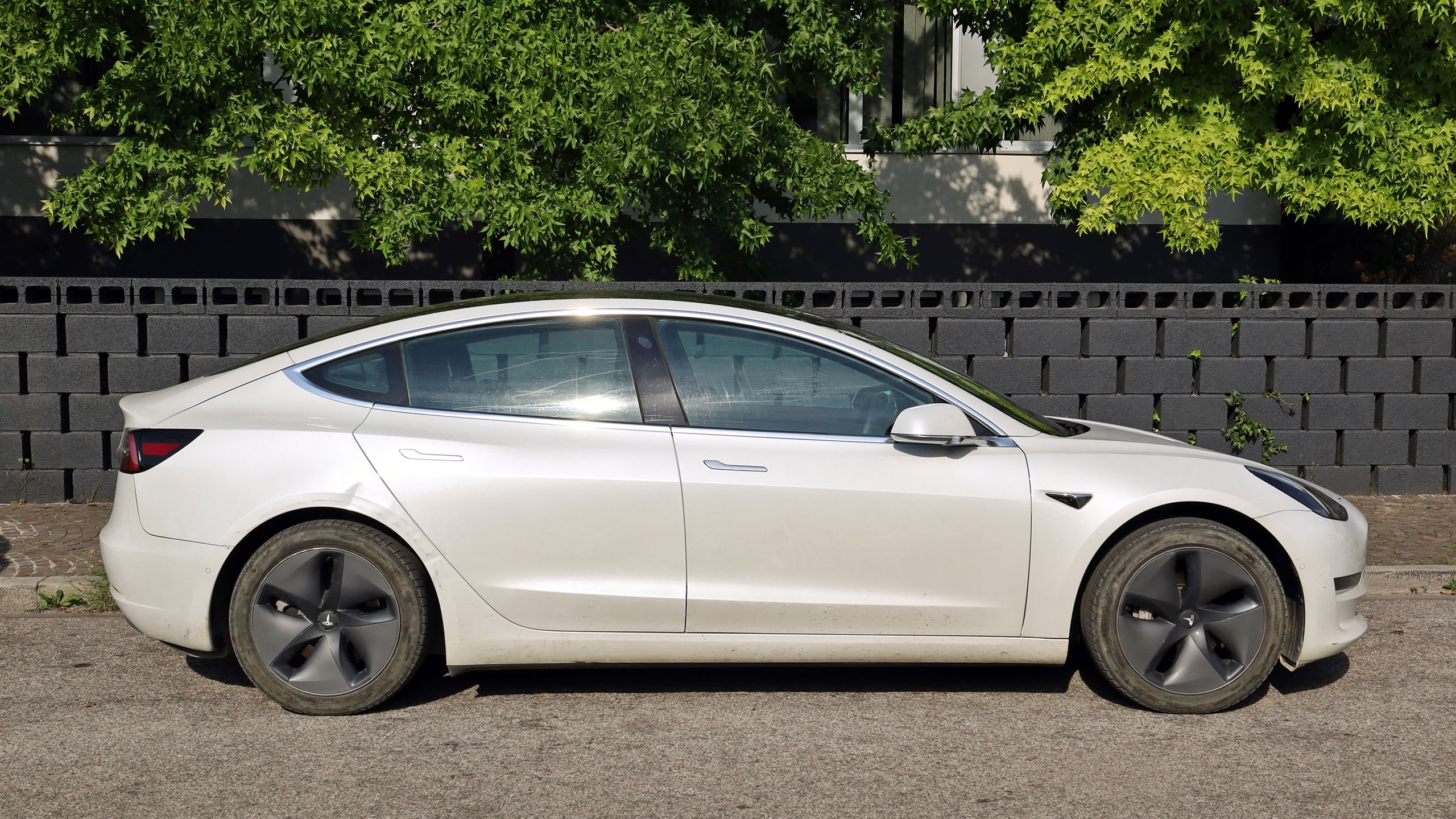
According to data from Car Gurus, used Tesla prices have fallen twice as fast (-3.7 percent) as the wider car market (-1.5 percent) over the last 90 days. Year over year, used Tesla prices are down 7.5 percent, compared to 2.8 percent for the market as a whole. And that’s on top of steep depreciation caused by a series of new car price cuts over the past few years, as well as rental car companies and other companies disposing of fleets of Teslas en masse.
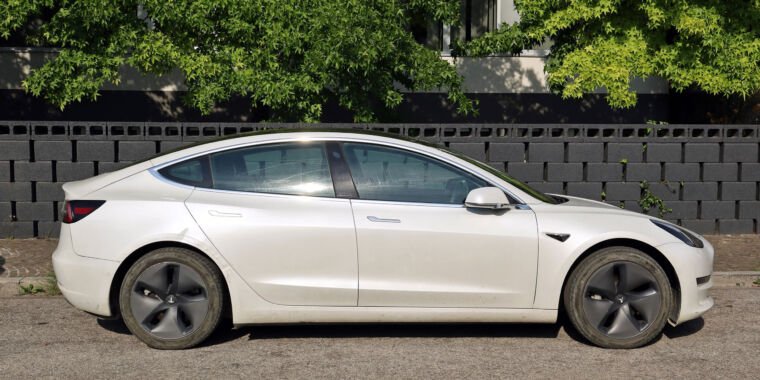
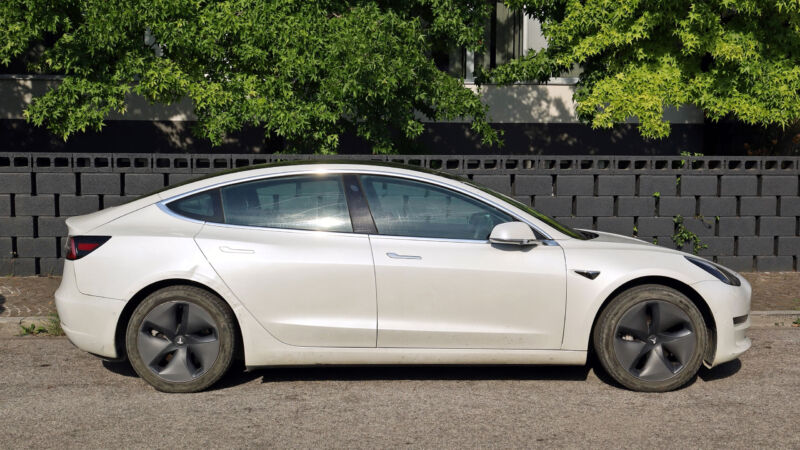
The Model 3 has been on sale longer than the Model Y, and you’d expect the older cars to have depreciated more. Indeed, the average price of a 2017 Model 3 is just under $20,000 now. But even recent model years are shedding value rapidly—a model-year 2022 Model 3 is worth just $25,000 on average.
Model Y prices have decreased by a greater degree, although the higher MSRP and younger age of the Y mean prices haven’t dropped quite as far as the 3, yet. But CarGurus has seen between 16–21 percent drops for each model year of the Model Y, year over year.
CarGurus isn’t the only one to notice this trend, either. According to its data, iSeeCars says used Teslas have dropped by 13.6 percent, year over year. The Models 3, Y, and S were all in its top four EVs for depreciation, although top place went to the Porsche Taycan (which might be starting to look like a bargain).
For its part, Tesla has been trying to boost its image with the help of President Trump. On Monday, the president took to the South Lawn of the White House to promote Tesla’s cars, apparently buying one despite having campaigned on an explicitly anti-electric vehicle platform.
In 2023, 46 percent of all franchise (i.e. not Tesla, Rivian, Vinfast, or Lucid) EV sales were leases, a trend that JD Power says it has seen through the first three quarters of 2024 as well. Once Tesla is included, about 30 percent of new EV sales this year have been leases. By contrast, fewer gasoline-powered cars are being leased each year since the start of the pandemic.
That means there will probably be a shortage of used ICE vehicles in 2025 and 2026. Used EVs might also be a little scarcer next year, JD Power says. It expects a 2 percent drop in the number of used EVs next year, but a 230 percent increase in 2026 as 215,000 cars end their leases.
JD Power also has some good news about new EV prices—they’re getting cheaper. The average price for a new electric compact SUV, once tax credits and manufacturer incentives are included, is $35,900, $12,700 less than the price in 2022 for the same class of vehicle.
Enlarge/ Used Tesla Model 3s can be had for less than $20,000 now.
Getty Images
The launch of a new electric vehicle these days is invariably met with a chorus of “this car is too expensive”—and rightfully so. But for used EVs, it’s quite another story, particularly used Teslas, thanks to a glut of former fleet and rental cars that are now ready for their second owner.
“Due to a variety of reasons, Tesla resale values have plummeted, making many Tesla models very affordable now. Plus, for some consumers, an additional $4,000 Federal tax credit on used EVs may apply, sweetening the deal even further. Buying a used Tesla can be a great deal for the savvy shopper, but there are significant things to look out for,” says Ed Kim, president and chief analyst at AutoPacific.
Indeed, a quick search on the topic easily reveals some horror stories of ex-rental Teslas, so here are some things to consider if you’re in search of a cheap Model 3 or Model Y.
“The prices are very appealing, but shoppers must keep in mind that rental cars can and do get abused, and some of these ex-rental units may have nasty surprises stemming from their hard lives. Be sure to have yours checked out thoroughly by a mechanic before buying,” Kim says.
Mismatched tires and minor dents, scrapes, and rock chips are fairly common minor issues. Many of the Teslas that Hertz is selling have been used as Ubers—you can tell it’s one of these if the odometer is approaching 100,000 miles. Battery degradation could be an issue, although most cars will not have lost more than 4–5 percent capacity, and Long Range Teslas should have a powertrain warranty for up to 120,000 miles (or eight years).
“One side effect of Tesla’s widespread and reliable DC fast charging network is that many owners end up relying on it to keep their cars charged rather than dealing with the often considerable expense of installing a home charger and associated home electrical upgrades,” Kim told Ars. As such, you should make sure to check the battery’s health (which can be done on the touchscreen or as part of the inspection) before you buy.
Rental cars can suffer from an excess of slammed doors and trunks—slamming the latter can mess up the powered strut. In the interior, you should expect high signs of wear on some touchpoints, especially the steering wheel and the rear door cards, which can bubble or flake, particularly if the Tesla was used as a ridehailing vehicle.
Other potential headaches
Teslas are very connected cars, and many of their convenience features are accessed via smartphone apps. But that requires that Tesla’s database shows you as the car’s owner, and there are plenty of reports online that transferring ownership from Hertz can take time.
Unfortunately, this also leaves the car stuck in Chill driving mode (which restricts power, acceleration, and top speed) and places some car settings outside of the new owner’s level of access. You also won’t be able to use Tesla Superchargers while the car still shows up as belonging to Hertz. Based on forum reports, contacting Tesla directly is the way to resolve this, but it can take several days to process; longer if there’s a paperwork mismatch.
Once you’ve transferred ownership to Tesla’s satisfaction, it’s time to do a software reset on the car to remove the fleet version.
Not every car will qualify for the $4,000 IRS used clean vehicle tax credit. It has to be at least two model years older than the calendar year in which it is bought used, so only MY2022 and earlier EVs are currently eligible, and it can’t be offered for sale for more than $25,000. The income caps are also half as much as the new clean vehicle tax credit, meaning a single-filing individual can’t earn more than $75,000 a year to qualify.
There are plenty of complaints among the Tesla community that Hertz wasn’t set up to deal with the tax credit, although more recent buyers have reported this has gotten a lot smoother. It’s worth planning ahead and contacting the specific sales branch you plan to buy the Tesla from to make sure they are able to process that paperwork, particularly if you are expecting the credit to be applied to the car’s price at the point of sale rather than waiting until you file your taxes next year.
Buying an ex-rental or ex-fleet Tesla from an independent dealer is also an option. Lots of used car lots have bought Teslas at auction from Hertz and elsewhere, and online anecdotes suggest this is often a more painless experience, particularly when transferring ownership and registering the new owner with Tesla. Then again, you’re more likely to encounter useless third-party warranties and the like if you go this route.
Ex-rental or fleet cars may have had a hard life, but they are also usually maintained far more regularly than most privately owned vehicles. As long as you make sure you aren’t buying a lemon, it’s a good way to get an EV for less than $20,000.
Enlarge/ Hertz currently has more than a thousand Bolt EUVs for sale as they leave its rental car fleet.
Chevrolet
Electric vehicles have many advantages over cars that still use internal combustion engines. They’re far more efficient, they’re quieter, and they usually have much more torque than their gasoline-powered equivalents. But we’re still far from achieving price parity between powertrains. In other words, EVs are expensive.
One place you can find some bargains, though, is the rental company Hertz, which currently has more than 2,100 EVs for sale, more than half of which are affordable enough to qualify for the IRS used clean vehicle tax credit.
Hertz has been adding a lot of EVs to its fleet as part of the company’s decarbonization plan. In 2021, it revealed plans to purchase 100,000 Teslas. However, the controversial car maker had delivered fewer than half of those two years later, and long repair times for customer-inflicted damage have seen the rental agency divest itself of many of those Teslas and diversify its fleet, adding plenty of Polestars, Kias, and Chevrolets.
This January, we learned that Hertz plans to sell off about 20,000 of its EVs, and there are currently 2,115 EVs up for grabs among the 31,134 cars for sale on its used car sales site.
There are 761 Teslas for sale, 63 of which are Models 3 priced at less than $25,000—the price cap for the IRS used clean vehicle tax credit. Some of them have been around the block a few times, with more than 90,000 miles on the odometer (145,000 km), but there are others with less than 50,000 miles (80,500 km) on them.
Better bargains are available if you want a Chevy Bolt—Hertz currently has 1,178 Bolt EUVs (and another eight Bolt EVs) for sale. All of these are cheap enough to qualify for the used clean vehicle tax credit, and plenty of them are low-mileage examples with less than 10,000 miles (16,000 km) on the clock.
There are a handful of other makes and models of EVs also available. You could pick from one of 126 Subaru Solterras, for example, which range from $27,027 to $33,002. And there are 42 Kia EV6s, ranging from $27,120 to $39,901. These are too expensive for the used clean vehicle tax credit, though.
Not everyone reading this will feel entirely comfortable buying an ex-rental car, given the hard lives that such vehicles often lead. But if you’re feeling brave, there are some big savings to be had versus buying new. Anecdotally, the only thing that went wrong with the ex-rental Ford Ka I used to own was a worn-out clutch—not a problem an EV will suffer from.