Trump

trump-kills-broadband-grants,-calls-digital-equity-program-“racist-and-illegal”

Trump kills broadband grants, calls digital equity program “racist and illegal”

President Donald Trump said he is killing a broadband grant program that was authorized by Congress, claiming that the Digital Equity Act of 2021 is racist and unconstitutional.

“I have spoken with my wonderful Secretary of Commerce, Howard Lutnick, and we agree that the Biden/Harris so-called ‘Digital Equity Act’ is totally UNCONSTITUTIONAL. No more woke handouts based on race! The Digital Equity Program is a RACIST and ILLEGAL $2.5 BILLION DOLLAR giveaway. I am ending this IMMEDIATELY, and saving Taxpayers BILLIONS OF DOLLARS!” Trump wrote in a Truth Social post yesterday.

The Digital Equity Act provided $2.75 billion for three grant programs. As a National Telecommunications and Information Administration webpage says, the grants “aim to ensure that all people and communities have the skills, technology, and capacity needed to reap the full benefits of our digital economy.”

The digital equity law, approved as part of the Infrastructure Investment and Jobs Act, allows for grants benefitting a wide range of Americans who lack reliable and affordable Internet access. The law covers low-income households, people who are at least 60 years old, people incarcerated in state or local prisons and jails, veterans, people with disabilities, people with language barriers, people who live in rural areas, and people who are members of a racial or ethnic minority group.

“President Trump’s move to end the Digital Equity Act is blatantly unconstitutional,” consumer advocacy group Public Knowledge said. While Trump is “labeling efforts to address racial inequity as discriminatory themselves,” his action “will also severely impact his voter base of white Americans who live in rural areas in red states, including veterans and the elderly,” the group said.

Some states already received funding last year. If Trump cancels grants that haven’t yet been distributed, it will likely result in lawsuits against the administration.

The law allows funding to be used in a variety of ways, including “to make available equipment, instrumentation, networking capability, hardware and software, or digital network technology for broadband services to covered populations at low or no cost,” and “to construct, upgrade, expend, or operate new or existing public access computing centers for covered populations through community anchor institutions.” It can also cover training programs for using technology and workforce development programs.

Trump kills broadband grants, calls digital equity program “racist and illegal” Read More »

trump-and-doj-try-to-spring-former-county-clerk-tina-peters-from-prison

Trump and DOJ try to spring former county clerk Tina Peters from prison

President Donald Trump is demanding the release of Tina Peters, a former election official who parroted Trump’s 2020 election conspiracy theories and is serving nine years in prison for compromising the security of election equipment.

In a post on Truth Social last night, Trump wrote that “Radical Left Colorado Attorney General Phil Weiser ignores Illegals committing Violent Crimes like Rape and Murder in his State and, instead, jailed Tina Peters, a 69-year-old Gold Star mother who worked to expose and document Democrat Election Fraud. Tina is an innocent Political Prisoner being horribly and unjustly punished in the form of Cruel and Unusual Punishment.”

Trump said he is “directing the Department of Justice to take all necessary action to help secure the release of this ‘hostage’ being held in a Colorado prison by the Democrats, for political reasons.”

The former Mesa County clerk was indicted in March 2022 on charges related to the leak of voting-system BIOS passwords and other confidential information. Peters was convicted in August 2024 and later sentenced in a Colorado state court.

“Your lies are well-documented and these convictions are serious,” 21st Judicial District Judge Matthew Barrett told Peters at her October 2024 sentencing. “I am convinced you would do it all over again. You are as defiant a defendant as this court has ever seen.”

DOJ reviews case for “abuse” of process

After Peters’ August 2024 conviction, Colorado Secretary of State Jena Griswold said that “Tina Peters willfully compromised her own election equipment trying to prove Trump’s big lie.”

Peters appealed her conviction in a Colorado appeals court and separately sought relief in US District Court for the District of Colorado. She asked the federal court to order her release on bond while the state court system handles her appeal and said her health has deteriorated while being incarcerated.

Trump’s Justice Department submitted a filing on Peters’ behalf in March, saying the US has concerns about “the exceptionally lengthy sentence imposed relative to the conduct at issue, the First Amendment implications of the trial court’s October 2024 assertions relating to Ms. Peters, and whether Colorado’s denial of bail pending appeal was arbitrary or unreasonable under the Eighth and Fourteenth Amendments.”

Trump and DOJ try to spring former county clerk Tina Peters from prison Read More »

editorial:-censoring-the-scientific-enterprise,-one-grant-at-a-time

Editorial: Censoring the scientific enterprise, one grant at a time


Recent grant terminations are a symptom of a widespread attack on science.

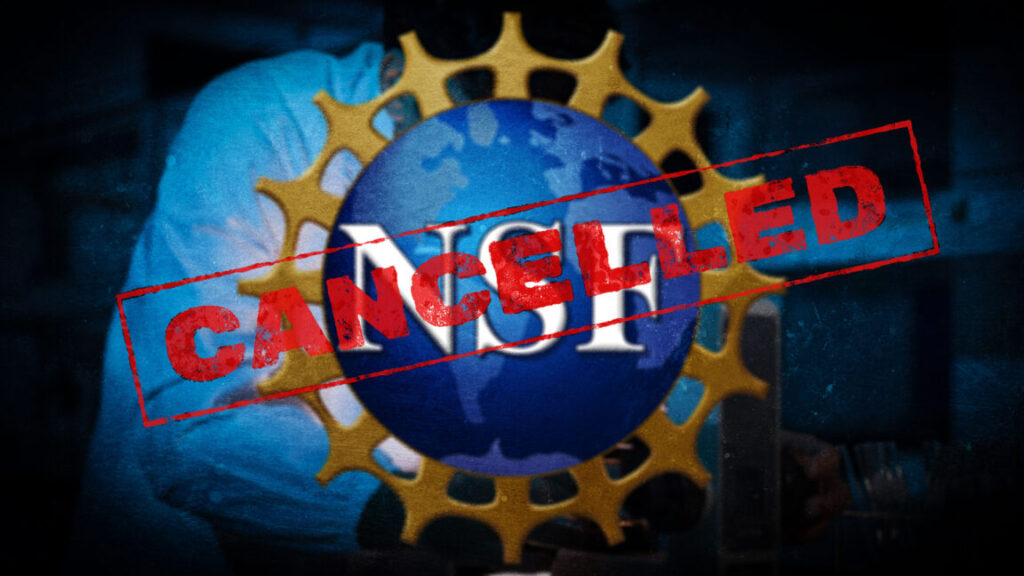
Over the last two weeks, in response to Executive Order 14035, the National Science Foundation (NSF) has discontinued funding for research on diversity, equity, and inclusion (DEI), as well as support for researchers from marginalized backgrounds. Executive Order 14168 ordered the NSF (and other federal agencies) to discontinue any research that focused on women, women in STEM, gender variation, and transsexual or transgender populations—and, oddly, transgenic mice.

Then, another round of cancellations targeted research on misinformation and disinformation, a subject (among others) that Republican Senator Ted Cruz views as advancing neo-Marxist perspectives and class warfare.

During the previous three years, I served as a program officer at the NSF Science of Science (SOS) program. We reviewed, recommended, and awarded competitive research grants on science communication, including research on science communication to the public, communication of public priorities to scientists, and citizen engagement and participation in science. Projects my team reviewed and funded on misinformation are among the many others at NSF that have now been canceled (see the growing list here).

Misinformation research is vital to advancing our understanding of how citizens understand and process evidence and scientific information and put that understanding into action. It is an increasingly important area of research given our massive, ever-changing digital information environment.

A few examples of important research that was canceled because it threatens the current administration’s political agenda:

  • A project that uses computational social sciences, computer science, sociology, and statistics to understand the fundamentals of information spread through social media, because understanding how information flows and its impact on human behavior is important for determining how to protect society from the effects of misinformation, propaganda, and “fake news.”
  • A project investigating how people and groups incentivize others to spread misinformation on social media platforms.
  • A study identifying the role of social media influencers in addressing misconceptions and inaccurate information related to vaccines, which would help us develop guidance on how to ensure accurate information reaches different audiences.

Misinformation research matters

This work is critical on its own. Results of misinformation research inform how we handle education, public service announcements, weather warnings, emergency response broadcasts, health advisories, agricultural practices, product recalls, and more. It’s how we get people to integrate data into their work, whether their work involves things like farming, manufacturing, fishing, or something else.

Understanding how speech on technical topics is perceived, drives trust, and changes behavior can help us ensure that our speech is more effective. Beyond its economic impact, research on misinformation helps create an informed public—the foundation of any democracy. Contrary to the president’s executive order, it does not “infringe on the constitutionally protected speech rights of American citizens.”

Misinformation research is only a threat to the speech of people who seek to spread misinformation.

Politics and science

Political attacks on misinformation research is censorship, driven by a dislike for the results it produces. It is also part of a larger threat to the NSF and the economic and social benefits that come from publicly funded research.

The NSF is a “pass through agency”—most of its annual budget (around $9 billion) passes through the agency and is returned to American communities in the form of science grants (80 percent of the budget) and STEM education (13 percent). The NSF manages these programs via a staff that is packed full of expert scientists in physics, psychology, chemistry, geosciences, engineering, sociology, and other fields. These scientists and the administrative staff (1,700 employees, who account for around 5 percent of its budget) organize complex peer-review panels that assess and distribute funding to cutting-edge science.

In normal times, presidents may shift the NSF’s funding priorities—this is their prerogative. This process is political. It always has been. It always will be. Elected officials (both presidents and Congress) have agendas and interests and want to bring federal dollars to their constituents. Additionally, there are national priorities—pandemic response, supercomputing needs, nanotechnology breakthroughs, space exploration goals, demands for microchip technologies, and artificial intelligence advancements.

Presidential agendas are meant to “steer the ship” by working with Congress to develop annual budgets, set appropriations and earmarks, and focus on specific regions (e.g., EPSCoR), topics, or facilities (e.g., federal labs).

While shifting priorities is normal, cancellation of previously funded research projects is NOT normal. Unilaterally banning funding for specific types of research (climate science, misinformation, research on minoritized groups) is not normal.

It’s anti-scientific, allowing politics rather than expertise to determine which research is most competitive. Canceling research grants because they threaten the current regime’s political agenda is a violation of the NSF’s duty to honor contracts and ethically manage the funds appropriated by the US Congress. This is a threat not just to individual scientists and universities, but to the trust and norms that underpin our scientific enterprise. It’s an attempt to terrorize researchers with the fear that their funding may be next and to create backlash against science and expertise (another important area of NSF-funded research that has also been canceled).

Scientific values and our responsibilities

Political interference in federal funding of scientific research will not end here. A recent announcement notes the NSF is facing a 55 percent cut to its annual budget and mass layoffs. Other agencies have been told to prepare for similar cuts. The administration’s actions will leave little funding for R&D that advances the public good. And the places where the research happens—especially universities and colleges—are also under assault. While these immediate cuts are felt first by scientists and universities, they will ultimately affect people throughout the nation—students, consumers, private companies, and residents.

The American scientific enterprise has been a world leader, and federal funding of science is a key driver of this success. For the last 100 years, students, scientists, and entrepreneurs from around the world have flocked to the US to advance science and innovation. Public investments in science have produced economic health and prosperity for all Americans and advanced our national security through innovation and soft diplomacy.

These cuts, combined with other actions taken to limit research funding and peer review at scientific agencies, make it clear that the Trump administration’s goals are to:

  • Roll back education initiatives that produce an informed public
  • Reduce evidence-based policy making
  • Slash public investment in the advancement of science

All Americans who benefit from the outcomes of publicly funded science—GPS and touch screens on your phone, Google, the Internet, weather data on an app, MRI, kidney exchanges, CRISPR, 3D printing, tiny hearing aids, bluetooth, broadband, robotics at the high school, electric cars, suspension bridges, PCR tests, AlphaFold and other AI tools, Doppler radar, barcodes, reverse auctions, and far, far more—should be alarmed and taking action.

Here are some ideas of what you can do:

  1. Demand that Congress restore previous appropriations, 5Calls
  2. Advocate through any professional associations you’re a member of
  3. Join science action groups (Science for the People, Union of Concerned Scientists, American Association for the Advancement of Science)
  4. Talk to university funders, leadership, and alumni about the value of publicly funded science
  5. Educate the public (including friends, family, and neighbors) about the value of science and the role of federally funded research
  6. Write an op-ed or public outreach materials through your employer
  7. Support federal employees
  8. If you’re a scientist, say yes to media & public engagement requests
  9. Attend local meetings: city council, library board, town halls
  10. Attend a protest
  11. Get offline and get active, in-person

There is a lot going on in the political environment right now, making it easy to get caught up in the implications cuts have on individual research projects or to be reassured by things that haven’t been targeted yet. But the threat looms large, for all US science. The US, through agencies like the NSF, has built a world-class scientific enterprise founded on the belief that taxpayer investments in basic science can and do produce valuable economic and social outcomes for all of us. Censoring research and canceling misinformation grants is a small step in what is already a larger battle to defend our world-class scientific enterprise. It is up to all of us to act now.

Mary K. Feeney is the Frank and June Sackton chair and professor in the School of Public Affairs at Arizona State University. She is a fellow of the National Academy of Public Administration and served as the program director for the Science of Science: Discovery, Communication and Impact program at the National Science Foundation (2021–2024).

Editorial: Censoring the scientific enterprise, one grant at a time Read More »

seasonal-covid-shots-may-no-longer-be-possible-under-trump-admin

Seasonal COVID shots may no longer be possible under Trump admin

Under President Trump, the Food and Drug Administration may no longer approve seasonal COVID-19 vaccines updated for the virus variants circulating that year, according to recent statements by Trump administration officials.

Since the acute phase of the pandemic, vaccine manufacturers have been subtly updating COVID-19 shots annually to precisely target the molecular signatures of the newest virus variants, which continually evolve to evade our immune responses. So far, the FDA has treated these tweaked vaccines the same way it treats seasonal flu shots, which have long been updated annually to match currently circulating strains of flu viruses.

The FDA does not consider seasonal flu shots brand-new vaccines. Rather, they’re just slightly altered versions of the approved vaccines. As such, the regulator does not require companies to conduct lengthy, expensive vaccine trials to prove that each slightly changed version is safe and effective. If they did, generating annual vaccines would be virtually impossible. Each year, from late February to early March, the FDA, the Centers for Disease Control and Prevention, and the World Health Organization direct flu shot makers on what tweaks they should make to shots for the upcoming flu season. That gives manufacturers just enough time to develop tweaks and start manufacturing massive supplies of doses in time for the start of the flu season.

So far, COVID-19 vaccines have been treated the exact same way, save for the fact that the vaccines that use mRNA technology do not need as much lead time for manufacturing. In recent years, the FDA decided on formulations for annual COVID shots around June, with doses rolled out in the fall alongside flu shots.

However, this process is now in question based on statements from Trump administration officials. The statements come amid a delay in a decision on whether to approve the COVID-19 vaccine made by Novavax, which uses a protein-based technology, not mRNA. The FDA was supposed to decide whether to grant the vaccine full approval by April 1. To this point, the vaccine has been used under an emergency use authorization by the agency.

Seasonal COVID shots may no longer be possible under Trump admin Read More »

universities-(finally)-band-together,-fight-“unprecedented-government-overreach”

Universities (finally) band together, fight “unprecedented government overreach”

We speak with one voice against the unprecedented government overreach and political interference now endangering American higher education… We must reject the coercive use of public research funding…

American institutions of higher learning have in common the essential freedom to determine, on academic grounds, whom to admit and what is taught, how, and by whom… In their pursuit of truth, faculty, students, and staff are free to exchange ideas and opinions across a full range of viewpoints without fear of retribution, censorship, or deportation.

This is fine, as far as it goes. But what are all these institutions going to do about the funding cuts, attempts to revoke their nonprofit status, threats not to hire their graduates, and student speech-based deportations? They are going to ask the Trump administration for “constructive engagement that improves our institutions and serves our republic.”

This sounds lovely, if naive, and I hope it works out well for every one of them as they seek good-faith dialogue with a vice president who has called universities the “enemy” and an administration that demanded Harvard submit to the vetting of every department for unspecified “viewpoint diversity.”

As a first step to finding common ground and speaking with a common voice, the statement is a start. But statements, like all words, can be cheap. We’ll see what steps schools actually take—and how much they can speak and act in concert—as Trump’s pressure campaign continues to ratchet.

Universities (finally) band together, fight “unprecedented government overreach” Read More »

“lab-leak”-marketing-page-replaces-federal-hub-for-covid-resources

“Lab leak” marketing page replaces federal hub for COVID resources

After obliterating the federal office on long COVID and clawing back billions in COVID funding from state health departments, the Trump administration has now entirely erased the online hub for federal COVID-19 resources. In its place now stands a site promoting the unproven idea that the pandemic virus SARS-CoV-2 was generated in and leaked from a lab in China, sparking the global health crisis.

Navigating to COVID.gov brings up a slick site with rich content that lays out arguments and allegations supporting a lab-based origin of the pandemic and subsequent cover-up by US health officials and Democrats.

Previously, the site provided unembellished quick references to COVID-19 resources, including links to information on vaccines, testing, treatments, and long COVID. It also provided a link to resources for addressing COVID-19 vaccine misconceptions and confronting misinformation. That all appears to be gone now, though some of the same information still remains on a separate COVID-19 page hosted by the Centers for Disease Control and Prevention.

While there remains no definitive answer on how the COVID-19 pandemic began, the scientific data available on the topic points to a spillover event from a live wild animal market in Wuhan, China. The scientific community largely sees this as the most likely scenario, given the data so far and knowledge of how previous outbreak viruses originated, including SARS-CoV-1. By contrast, the lab origin hypothesis largely relies on the proximity of a research lab to the first cases, conjecture, and distrust of the Chinese government, which has not been forthcoming with information on the early days of the health crisis. Overall, the question of SARS-CoV-2’s origin has become extremely politicized, as have most other aspects of the pandemic.

“Lab leak” marketing page replaces federal hub for COVID resources Read More »

us-interior-secretary-orders-offshore-wind-project-shut-down

US Interior secretary orders offshore wind project shut down

It’s notable that this hold comes despite Trump’s executive order explicitly stating, “Nothing in this withdrawal [of future leasing] affects rights under existing leases in the withdrawn areas.”

GAO undercuts the message

The order alleged there were “various alleged legal deficiencies underlying the Federal Government’s leasing and permitting of onshore and offshore wind projects, the consequences of which may lead to grave harm.” In response to those allegations, the Government Accountability Office began an evaluation of the Department of the Interior’s activities in overseeing offshore wind development. The results of that were made public on Monday.

And the report only found minor issues. Its primary recommendations are that Interior improve its consultations with leaders of tribal communities that may be impacted by wind development and boost “incorporation of Indigenous knowledge.” The GAO also thinks that Interior should improve its methods of getting input from the fishing industry. The report also acknowledges that there are uncertainties about everything from invasive species to the turbines’ effect on navigational radar but says these will vary based on a wind farm’s site, size, and other features, and we’ll only have a clearer picture once we have built more of them.

Notably, it says that wind farm development has had no effect on the local whale population, a popular Republican criticism of offshore wind.

Trump’s animosity toward wind power has a long history, so it’s unlikely that this largely positive report will do much to get the hold on leasing lifted. In reality, however, the long-term uncertainty about offshore wind in the US will probably block new developments until the end of Trump’s time in office. Offshore wind companies have budgeted based on tax incentives in the Inflation Reduction Act, and the administration has suggested they may revoke those in future budgets. And the move by Burgum means that, even if a company clears all the leasing and improvement hurdles, the government may shut down a project for seemingly arbitrary reasons.

US Interior secretary orders offshore wind project shut down Read More »

ftc-now-has-three-republicans-and-no-democrats-instead-of-the-typical-3-2-split

FTC now has three Republicans and no Democrats instead of the typical 3-2 split

After declaring the FTC to be under White House control, Trump fired both Democratic members despite a US law and Supreme Court precedent stating that the president cannot fire commissioners without good cause.

House Commerce Committee leaders said the all-Republican FTC will end the “partisan mismanagement” allegedly seen under the Biden-era FTC and then-Chair Lina Khan. “In the last administration, the FTC abandoned its rich bipartisan tradition and historical mission, in favor of a radical agenda and partisan mismanagement,” said a statement issued by Reps. Brett Guthrie (R-Ky) and Gus Bilirakis (R-Fla.). “The Commission needs to return to protecting Americans from bad actors and preserving competition in the marketplace.”

Consumer advocacy group Public Knowledge thanked Senate Democrats for voting against Meador. “In order for the FTC to be effective, it needs to have five independent commissioners doing the work,” said Sara Collins, the group’s director of government affairs. “By voting ‘no’ on this confirmation, these senators have shown that it is still important to prioritize protecting consumers and supporting a healthier marketplace over turning a blind eye to President Trump’s unlawful termination of Democratic Commissioners Slaughter and Bedoya.”

Democrats sue Trump

The two Democrats are challenging the firings in a lawsuit that said “it is bedrock, binding precedent that a President cannot remove an FTC Commissioner without cause.” Trump “purported to terminate Plaintiffs as FTC Commissioners, not because they were inefficient, neglectful of their duties, or engaged in malfeasance, but simply because their ‘continued service on the FTC is’ supposedly ‘inconsistent with [his] Administration’s priorities,'” the lawsuit said.

US law says an FTC commissioner “may be removed by the President for inefficiency, neglect of duty, or malfeasance in office.” A 1935 Supreme Court ruling said that “Congress intended to restrict the power of removal to one or more of those causes.”

Slaughter and Bedoya sued Trump in US District Court for the District of Columbia and asked the court to declare “the President’s purported termination of Plaintiffs Slaughter and Bedoya unlawful and that Plaintiffs Slaughter and Bedoya are Commissioners of the Federal Trade Commission.”

FTC now has three Republicans and no Democrats instead of the typical 3-2 split Read More »

trump-administration’s-attack-on-university-research-accelerates

Trump administration’s attack on university research accelerates

Shortly after its inauguration, the Trump administration has made no secret that it isn’t especially interested in funding research. Before January’s end, major science agencies had instituted pauses on research funding, and grant funding has not been restored to previous levels since. Many individual grants have been targeted on ideological grounds, and agencies like the National Science Foundation are expected to see significant cuts. Since then, individual universities have been targeted, starting with an ongoing fight with Columbia University over $400 million in research funding.

This week, however, it appears that the targeting of university research has entered overdrive, with multiple announcements of funding freezes targeting several universities. Should these last for any considerable amount of time, they will likely cripple research at the targeted universities.

On Wednesday, Science learned that the National Institutes of Health has frozen all of its research funding to Columbia, despite the university agreeing to steps previously demanded by the administration and the resignation of its acting president. In 2024, Columbia had received nearly $700 million in grants from the NIH, with the money largely going to the university’s prestigious medical and public health schools.

But the attack goes well beyond a single university. On Tuesday, the Trump administration announced a hold on all research funding to Northwestern University (nearly $800 million) and Cornell University ($1 billion). These involved money granted by multiple government agencies, including a significant amount from the Department of Defense in Cornell’s case. Ostensibly, all of these actions were taken because of the university administrators’ approach to protests about the conflict in Gaza, which the administration has characterized as allowing antisemitism.

Trump administration’s attack on university research accelerates Read More »

usda-cuts-could-cause-long-term-damage,-reverse-hard-won-progress

USDA cuts could cause long-term damage, reverse hard-won progress

For decades, environmental and farm groups pushed Congress, the USDA and farmers to adopt new conservation programs, but progress came in incremental steps. With each Farm Bill, some lawmakers threaten to whittle down conservation programs, but they have essentially managed to survive and even expand.

The country’s largest farm lobby, the American Farm Bureau Federation, had long denied the realities of climate change, fighting against climate action and adopting official policy positions that question the scientific consensus that climate change is human-caused. Its members—the bulk of American farmers—largely adhered to the same mindset.

But as the realities of climate change have started to hit American farmers on the ground in the form of more extreme weather, and as funding opportunities have expanded through conservation and climate-focused programs, that mindset has started to shift.

“They were concerned about what climate policy meant for their operations,” Bonnie said. “They felt judged. But we said: Let’s partner up.”

The Trump administration’s rollbacks and freezes threaten to stall or undo that progress, advocacy groups and former USDA employees say.

“We created this enormous infrastructure. We’ve solved huge problems,” Bonnie added, “and they’re undermining all of it.”

“It took so long,” Stillerman said. “The idea that climate change was happening and that farmers could be part of the solution, and could build more resilient farming and food systems against that threat—the IRA really put dollars behind that. All of that is at risk now.”

Burk says he plans to continue with conservation and carbon-storing practices on his Michigan farm, even without conservation dollars from the USDA.

But, he says, many of his neighboring farmers likely will stop conservation measures without the certainty of government support.

“So many people are struggling, just trying to figure out how to pay their bills, to get the fuel to run their tractors, to plant,” he said. “The last thing they want to be doing is sitting down with someone from NRCS who says, ‘If I do these things, maybe I’ll get paid in a year.’ That’s not going to happen.”

This story originally appeared on Inside Climate News.

USDA cuts could cause long-term damage, reverse hard-won progress Read More »

trump-annoyed-the-smithsonian-isn’t-promoting-discredited-racial-ideas

Trump annoyed the Smithsonian isn’t promoting discredited racial ideas

On Thursday, the Trump administration issued an executive order that took aim at one of the US’s foremost cultural and scientific institutions: the Smithsonian. Upset by exhibits that reference the role of racism, sexism, and more in the nation’s complicated past, the order tasks the vice president and a former insurance lawyer (?) with ensuring that the Smithsonian Institution is a “symbol of inspiration and American greatness”—a command that specifically includes the National Zoo.

But in the process of airing the administration’s grievances, the document specifically calls out a Smithsonian display for accurately describing our current scientific understanding of race. That raises the prospect that the vice president will ultimately demand that the Smithsonian display scientifically inaccurate information.

Grievance vs. science

The executive order, entitled “Restoring Truth And Sanity To American History,” is filled with what has become a standard grievance: the accusation that, by recognizing the many cases where the US has not lived up to its founding ideals, institutions are attempting to “rewrite our nation’s history.” It specifically calls out discussions of historic racism, sexism, and oppression as undercutting the US’s “unparalleled legacy of advancing liberty, individual rights, and human happiness.”

Even if you move past the obvious tension between a legacy of advancing liberty and the perpetuation of slavery in the US’s founding documents, there are other ironies here. For example, the order slams the Department of the Interior’s role in implementing changes that “inappropriately minimize the value of certain historical events or figures” at the same time that the administration’s policies have led to the removal of references to transgender individuals and minorities and women.

Trump annoyed the Smithsonian isn’t promoting discredited racial ideas Read More »

trump-administration’s-blockchain-plan-for-usaid-is-a-real-head-scratcher

Trump administration’s blockchain plan for USAID is a real head-scratcher

Giulio Coppi, a senior humanitarian officer at the nonprofit Access Now who has researched the use of blockchain in humanitarian work, says that blockchain technologies, while sometimes effective, offer no obvious advantages over other tools organizations could use, such as an existing payments system or another database tool. “There’s no proven advantage that it’s cheaper or better,” he says. “The way it’s been presented is this tech solutionist approach that has been proven over and over again to not have any substantial impact in reality.”

There have been, however, some successful instances of using blockchain technology in the humanitarian sector. In 2022, the United Nations High Commissioner for Refugees (UNHCR) ran a small pilot to give cash assistance to Ukrainians displaced by the Russia-Ukraine war in a stablecoin. Other pilots have been tested in Kenya by the Kenya Red Cross Society. The International Committee of the Red Cross, which works with the Kenya team, also helped to develop the Humanitarian Token Solution (HTS).

One representative from an NGO that uses blockchain technology, but wasn’t authorized to speak to the media with regards to issues relating to USAID, says that particularly with regards to money transfers, stablecoins can be faster and easier than other methods of reaching communities impacted by a disaster. However, “introducing new systems means you’re setting up a new burden” for the many organizations that USAID partners with, they say. “The relative cost of new systems is harder for small NGOs,” which would often include the kind of local organizations that would be at the front line of response to disasters.

The proposed adoption of blockchain technology seems related to an emphasis on exerting tight controls over aid. The memo seems, for example, to propose that funding should be contingent on outcomes, reading, “Tying payment to outcomes and results rather than inputs would ensure taxpayer dollars deliver maximum impact.” A USAID employee, who asked to remain anonymous because they were not authorized to speak to the media, says that many of USAID’s contracts already function this way, with organizations being paid after performing their work. However, that’s not possible in all situations. “Those kinds of agreements are often not flexible enough for the environments we work in,” they say, noting that in conflict or disaster zones, situations can change quickly, meaning that what an organization may be able to do or need to do can fluctuate.

Raftree says this language appears to be misleading, and bolsters claims made by Musk and the administration that USAID was corrupt. “It’s not like USAID was delivering tons of cash to people who hadn’t done things,” she says.

This story originally appeared on wired.com.

Trump administration’s blockchain plan for USAID is a real head-scratcher Read More »