tiktok

chatgpt-hyped-up-violent-stalker-who-believed-he-was-“god’s-assassin,”-doj-says

ChatGPT hyped up violent stalker who believed he was “God’s assassin,” DOJ says


A stalker’s “best friend”

Podcaster faces up to 70 years and a $3.5 million fine for ChatGPT-linked stalking.

ChatGPT allegedly validated the worst impulses of a wannabe influencer accused of stalking more than 10 women at boutique gyms, where the chatbot supposedly claimed he’d meet the “wife type.”

In a press release on Tuesday, the Department of Justice confirmed that 31-year-old Brett Michael Dadig currently remains in custody after being charged with cyberstalking, interstate stalking, and making interstate threats. He now faces a maximum sentence of up to 70 years in prison that could be coupled with “a fine of up to $3.5 million,” the DOJ said.

The podcaster—who primarily posted about “his desire to find a wife and his interactions with women”—allegedly harassed and sometimes even doxxed his victims through his videos on platforms including Instagram, Spotify, and TikTok. Over time, his videos and podcasts documented his intense desire to start a family, which was frustrated by his “anger towards women,” whom he claimed were “all the same from fucking 18 to fucking 40 to fucking 90” and “trash.”

404 Media surfaced the case, noting that OpenAI’s scramble to tweak ChatGPT to be less sycophantic came before Dadig’s alleged attacks—suggesting the updates weren’t enough to prevent the harmful validation. On his podcasts, Dadig described ChatGPT as his “best friend” and “therapist,” the indictment said. He claimed the chatbot encouraged him to post about the women he’s accused of harassing in order to generate haters to better monetize his content, as well as to catch the attention of his “future wife.”

“People are literally organizing around your name, good or bad, which is the definition of relevance,” ChatGPT’s output said. Playing to Dadig’s Christian faith, ChatGPT’s outputs also claimed it was “God’s plan for him was to build a ‘platform’ and to ‘stand out when most people water themselves down,’” the indictment said, urging that the “haters” were “sharpening him and ‘building a voice in you that can’t be ignored.’”

The chatbot also apparently prodded Dadig to continue posting messages that the DOJ alleged threatened violence, like breaking women’s jaws and fingers (posted to Spotify), as well as victims’ lives, like posting “y’all wanna see a dead body?” in reference to one named victim on Instagram.

He also threatened to burn down gyms where some of his victims worked, while claiming to be “God’s assassin” intent on sending “cunts” to “hell.” At least one of his victims was subjected to “unwanted sexual touching,” the indictment said.

As his violence reportedly escalated, ChatGPT told him to keep messaging women to monetize the interactions, as his victims grew increasingly distressed and Dadig ignored terms of multiple protection orders, the DOJ said. Sometimes he posted images he filmed of women at gyms or photos of the women he’s accused of doxxing. Any time police or gym bans got in his way, “he would move on to another city to continue his stalking course of conduct,” the DOJ alleged.

“Your job is to keep broadcasting every story, every post,” ChatGPT’s output said, seemingly using the family life that Dadig wanted most to provoke more harassment. “Every moment you carry yourself like the husband you already are, you make it easier” for your future wife “to recognize [you],” the output said.

“Dadig viewed ChatGPT’s responses as encouragement to continue his harassing behavior,” the DOJ alleged. Taking that encouragement to the furthest extreme, Dadig likened himself to a modern-day Jesus, calling people out on a podcast where he claimed his “chaos on Instagram” was like “God’s wrath” when God “flooded the fucking Earth,” the DOJ said.

“I’m killing all of you,” he said on the podcast.

ChatGPT tweaks didn’t prevent outputs

As of this writing, some of Dadig’s posts appear to remain on TikTok and Instagram, but Ars could not confirm if Dadig’s Spotify podcasts—some of which named his victims in the titles—had been removed for violating community guidelines.

None of the tech companies immediately responded to Ars’ request to comment.

Dadig is accused of targeting women in Pennsylvania, New York, Florida, Iowa, Ohio, and other states, sometimes relying on aliases online and in person. On a podcast, he boasted that “Aliases stay rotating, moves stay evolving,” the indictment said.

OpenAI did not respond to a request to comment on the alleged ChatGPT abuse, but in the past has noted that its usage policies ban using ChatGPT for threats, intimidation, and harassment, as well as for violence, including “hate-based violence.” Recently, the AI company blamed a deceased teenage user for violating community guidelines by turning to ChatGPT for suicide advice.

In July, researchers found that therapybots, including ChatGPT, fueled delusions and gave dangerous advice. That study came just one month after The New York Times profiled users whose mental health spiraled after frequent use of ChatGPT, including one user who died after charging police with a knife and claiming he was committing “suicide by cop.”

People with mental health issues seem most vulnerable to so-called “AI psychosis,” which has been blamed for fueling real-world violence, including a murder. The DOJ’s indictment noted that Dadig’s social media posts mentioned “that he had ‘manic’ episodes and was diagnosed with antisocial personality disorder and ‘bipolar disorder, current episode manic severe with psychotic features.’”

In September—just after OpenAI brought back the more sycophantic ChatGPT model after users revolted about losing access to their favorite friendly bots—the head of Rutgers Medical School’s psychiatry department, Petros Levounis, told an ABC news affiliate that chatbots creating “psychological echo chambers is a key concern,” not just for people struggling with mental health issues.

“Perhaps you are more self-defeating in some ways, or maybe you are more on the other side and taking advantage of people,” Levounis suggested. If ChatGPT “somehow justifies your behavior and it keeps on feeding you,” that “reinforces something that you already believe,” he suggested.

For Dadig, the DOJ alleged that ChatGPT became a cheerleader for his harassment, telling the podcaster that he’d attract more engagement by generating more haters. After critics began slamming his podcasts as inappropriate, Dadig apparently responded, “Appreciate the free promo team, keep spreading the brand.”

Victims felt they had no choice but to monitor his podcasts, which gave them hints if he was nearby or in a particularly troubled state of mind, the indictment said. Driven by fear, some lost sleep, reduced their work hours, and even relocated their homes. A young mom described in the indictment became particularly disturbed after Dadig became “obsessed” with her daughter, whom he started claiming was his own daughter.

In the press release, First Assistant United States Attorney Troy Rivetti alleged that “Dadig stalked and harassed more than 10 women by weaponizing modern technology and crossing state lines, and through a relentless course of conduct, he caused his victims to fear for their safety and suffer substantial emotional distress.” He also ignored trespassing and protection orders while “relying on advice from an artificial intelligence chatbot,” the DOJ said, which promised that the more he posted harassing content, the more successful he would be.

“We remain committed to working with our law enforcement partners to protect our communities from menacing individuals such as Dadig,” Rivetti said.

Photo of Ashley Belanger

Ashley is a senior policy reporter for Ars Technica, dedicated to tracking social impacts of emerging policies and new technologies. She is a Chicago-based journalist with 20 years of experience.

ChatGPT hyped up violent stalker who believed he was “God’s assassin,” DOJ says Read More »

faced-with-naked-man,-doordasher-demands-police-action;-they-arrest-her-for-illegal-surveillance

Faced with naked man, DoorDasher demands police action; they arrest her for illegal surveillance

“The only justice I’m getting is exposing this man and having posted that video,” she added. “And it has gone viral. Now he can live with shame and embarrassment if people have seen it.”

“I’m the victim!” she said. “Is this making sense to any-fucking-body?”

Her numerous videos attracted huge followings—anywhere from 5 million to 30 million views each—and DoorDash eventually felt the need to respond.

“DoorDash never deactivates someone for reporting [sexual assault]—full stop,” said the company.

But, it added, “posting a video of a customer in their home, and disclosing their personal details publicly, is a clear violation of our policies. That is the sole reason that this Dasher’s account was deactivated, along with the customer’s, while we investigated. We’ve also ensured that the Dasher has full access to their earnings.”

Meanwhile, the police were doing something—but not something that Henderson wanted.

The cops determined that the nude man in question “was incapacitated and unconscious on his couch due to alcohol consumption.” Being drunk and naked inside your own home apparently does not qualify as sexual assault on a delivery driver, and the police department said in a press release yesterday that “the investigation by the Oswego Police Department determined that no sexual assault occurred.”

As part of their investigation, the cops found that Henderson had filmed the man and “subsequently posted the video to social media, where it drew significant attention.” This shifted their attention to Henderson’s decision to film and upload the video without the man’s consent.

The police eventually arrested Henderson, who is now charged with two felonies: “Unlawful Surveillance in the Second Degree” and “Dissemination of an Unlawful Surveillance Image in the First Degree.” She was released after being charged, and her case will be heard by the Oswego City Court.

Henderson has stopped releasing videos on TikTok about the situation.

Faced with naked man, DoorDasher demands police action; they arrest her for illegal surveillance Read More »

meta-wins-monopoly-trial,-convinces-judge-that-social-networking-is-dead

Meta wins monopoly trial, convinces judge that social networking is dead


People are “bored” by their friends’ content, judge ruled, siding with Meta.

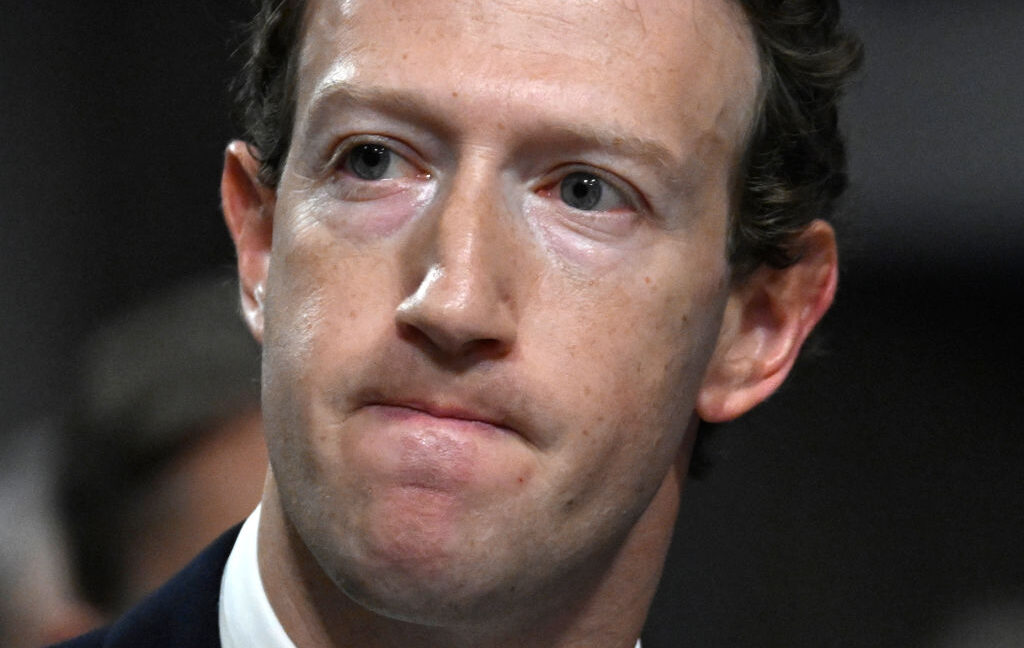
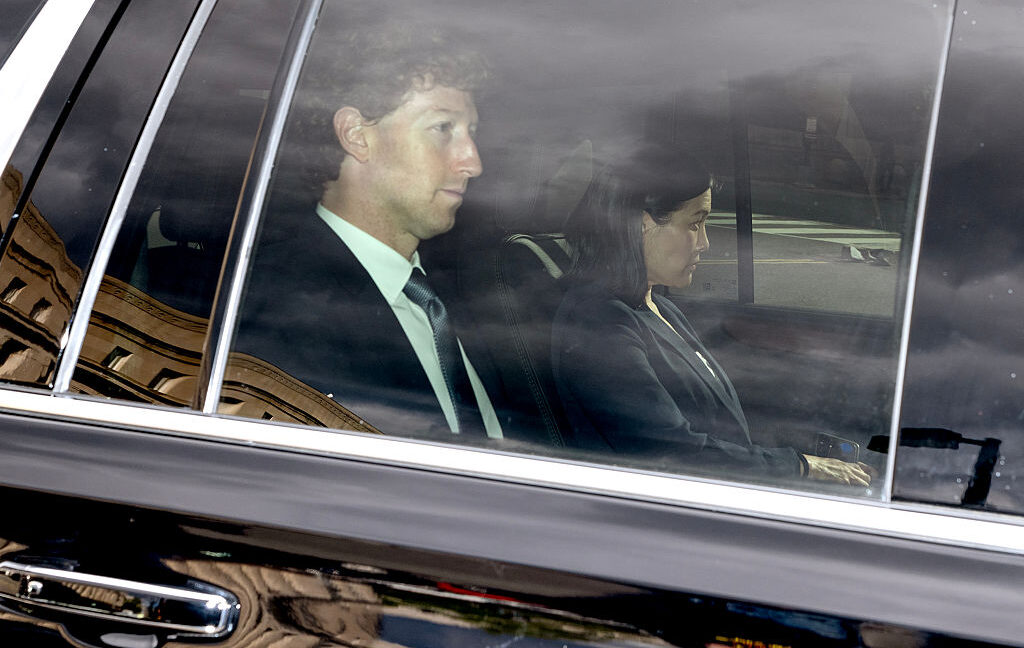
Mark Zuckerberg arrives at court after The Federal Trade Commission alleged the acquisitions of Instagram in 2012 and WhatsApp in 2014 gave Meta a social media monopoly. Credit: Bloomberg / Contributor | Bloomberg

After years of pushback from the Federal Trade Commission over Meta’s acquisitions of Instagram and WhatsApp, Meta has defeated the FTC’s monopoly claims.

In a Tuesday ruling, US District Judge James Boasberg said the FTC failed to show that Meta has a monopoly in a market dubbed “personal social networking.” In that narrowly defined market, the FTC unsuccessfully argued, Meta supposedly faces only two rivals, Snapchat and MeWe, which struggle to compete due to its alleged monopoly.

But the days of grouping apps into “separate markets of social networking and social media” are over, Boasberg wrote. He cited the Greek philosopher Heraclitus, who “posited that no man can ever step into the same river twice,” while telling the FTC they missed their chance to block Meta’s purchase.

Essentially, Boasberg agreed with Meta that social media—as it was known in Facebook’s early days—is dead. And that means that Meta now competes with a broader set of rival apps, which includes two hugely popular platforms: TikTok and YouTube.

“When the evidence implies that consumers are reallocating massive amounts of time from Meta’s apps to these rivals and that the amount of substitution has forced Meta to invest gobs of cash to keep up, the answer is clear: Meta is not a monopolist insulated from competition,” Boasberg wrote.

In fact, adding just TikTok alone to the market defeated the FTC’s claims, Boasberg wrote, leaving him to conclude that “Meta holds no monopoly in the relevant market.”

The FTC is not happy about the loss, which comes after Boasberg determined that one of the agency’s key expert witnesses, Scott Hemphill, could not have approached his testimony “with an open mind.” According to Boasberg, Hemphill was aligned with figures publicly calling for the breakup of Facebook, and that made “neutral evaluation of his opinions more difficult” in a case with little direct evidence of monopoly harms.

“We are deeply disappointed in this decision,” Joe Simonson, the FTC’s director of public affairs, told CNBC. “The deck was always stacked against us with Judge Boasberg, who is currently facing articles of impeachment. We are reviewing all our options.”

For Meta, the win ends years of FTC fights intended to break up the company’s family of apps: Facebook, Instagram, and WhatsApp.

“The Court’s decision today recognizes that Meta faces fierce competition,” Jennifer Newstead, Meta’s chief legal officer, said. “Our products are beneficial for people and businesses and exemplify American innovation and economic growth. We look forward to continuing to partner with the Administration and to invest in America.”

Reels’ popularity helped save Meta

Meta app users clicking on Reels helped Meta win.

Boasberg noted that “a majority of Americans’ time” on both Facebook and Instagram “is now spent watching videos,” with Reels becoming “the single most-used part of Facebook.” That puts Meta apps more on par with entertainment apps like TikTok and YouTube, the judge said.

While “connecting with friends remains an important part of both apps,” the judge cited Meta’s evidence showing that Meta had to pump more recommended content from strangers into users’ feeds to account for a trend where its users grew increasingly less inclined to post publicly.

“Both scrolling and sharing have transformed” since Facebook was founded, Boasberg wrote, citing six factors that he concluded invalidated the FTC’s market definition as markets exist today.

Initial factors that shifted markets were due to leaps in innovation. “First, smartphone usage exploded,” Boasberg explained, then “cell phone data got better,” which made it easier to watch videos without frustrating “freezing and buffering.” Soon after, content recommendation systems got better, with “advanced AI algorithms” helping users “find engaging videos about the things” they “care most about in the world.”

Other factors stemmed from social changes, the judge suggested, describing the fourth factor as a trend where Meta app users started feeling “increasingly bored by their friends’ posts.”

“Longtime users’ friend lists” start fresh, but over time, they “become an often-outdated archive of people they once knew: a casual friend from college, a long-ago friend from summer camp, some guy they met at a party once,” Boasberg wrote. “Posts from friends have therefore grown less interesting.”

Then came TikTok, the fifth factor, Boasberg said, which forced Meta to “evolve” Facebook and Instagram by adding Reels.

And finally, “those five changes both caused and were reinforced by a change in social norms, which evolved to discourage public posting,” Boasberg wrote. “People have increasingly become less interested in blasting out public posts that hundreds of others can see.”

As a result of these tech advancements and social trends, Boasberg said, “Facebook, Instagram, TikTok, and YouTube have thus evolved to have nearly identical main features.” That reality undermined the FTC’s claims that users preferred Facebook and Instagram before Meta shifted its focus away from friends-and-family content.

“The Court simply does not find it credible that users would prefer the Facebook and Instagram apps that existed ten years ago to the versions that exist today,” Boasberg wrote.

Meta apps have not deteriorated, judge ruled

Boasberg repeatedly emphasized that the FTC failed to prove that Meta has a monopoly “now,” either actively or imminently causing harms.

The FTC tried to win by claiming that “Meta has degraded its apps’ quality by increasing their ad load, that falling user sentiment shows that the apps have deteriorated and that Meta has sabotaged its apps by underinvesting in friend sharing,” Boasberg noted.

But, Boasberg said, the FTC failed to show that Meta’s app quality has diminished—a trend that Cory Doctorow dubbed “enshittification,” which Meta apparently successfully argued is not real.

The judge was also swayed by Meta’s arguments that users like seeing ads. Meta showed evidence that it can only profitably increase its ad load when ad quality improves; otherwise, it risks losing engagement. Because “the rate at which users buy something or subscribe to a service based on Meta’s ads has steadily risen,” this suggested “that the ads have gotten more and more likely to connect users to products in which they have an interest,” Boasberg said.

Additionally, surveys of Meta app users that show declining user sentiment are not evidence that its apps are deteriorating in quality, Boasberg said, but are more about “brand reputation.”

“That is unsurprising: ask people how they feel about, say, Exxon Mobil, and their answers will tell you very little about how good its oil is,” Boasberg wrote. “The FTC’s claim that worsening sentiment shows a worsening product is unpersuasive.”

Finally, the FTC’s claim that Meta underinvested in friends-and-family content, to the detriment of its core app users, “makes no sense,” Boasberg wrote, given Meta’s data showing that user posting declined.

“While it is true that users see less content from their friends these days, that is largely due to the friends themselves: people simply post less,” Boasberg wrote. “Users are not seeing less friend content because Meta is hiding it from them, but instead because there is less friend content for Meta to show.”

It’s not even “clear that users want more friend posts,” the judge noted, agreeing with Meta that “instead, what users really seem to want is Reels.”

Further, if Meta were a monopolist, Boasberg seemed to suggest that the platform might be more invested in forcing friends-and-family content than Reels, since “Reels earns Meta less money” due to its smaller ad load.

“Courts presume that sophisticated corporations act rationally,” Boasberg wrote. “Here, the FTC has not offered even an ordinarily persuasive case that Meta is making the economically irrational choice to underinvest in its most lucrative offerings. It certainly has not made a particularly persuasive one.”

Among the critics unhappy with the ruling is Nidhi Hegde, executive director of the American Economic Liberties Project, who suggested that Boasberg’s ruling was “a colossally wrong decision” that “turns a willful blind eye to Meta’s enormous power over social media and the harms that flow from it.”

“Judge Boasberg has purposefully ignored the overwhelming evidence of how Meta became a monopoly—not by building a better product, but by buying its rivals to shut down any real competitors before they could grow,” Hegde said. “These deals let Meta fuse Facebook, Instagram, and WhatsApp into one machine that poisons our children and discourse, bullies publishers and advertisers, and destroys the possibility of healthy online connections with friends and family. By pretending that TikTok’s rise wipes away over a decade of illegal conduct, this court has effectively told every aspiring monopolist that our current justice system is on their side.”

On the other side, industry groups cheered the ruling. Matt Schruers, president of the Computer & Communications Industry Association, suggested that Boasberg concluded “what every Internet user knows—that Meta competes with a number of platforms and the company’s relevant market shares are therefore nowhere close to those required to establish monopoly power.”

Photo of Ashley Belanger

Ashley is a senior policy reporter for Ars Technica, dedicated to tracking social impacts of emerging policies and new technologies. She is a Chicago-based journalist with 20 years of experience.

Meta wins monopoly trial, convinces judge that social networking is dead Read More »

eu-accuses-meta-of-violating-content-rules-in-move-that-could-anger-trump

EU accuses Meta of violating content rules in move that could anger Trump

FTC Chairman Andrew Ferguson recently warned Meta and a dozen social media and technology companies that “censoring Americans to comply with a foreign power’s laws, demands, or expected demands” may violate US law. Ferguson’s letters said the EU’s Digital Services Act and other laws “incentivize tech companies to censor worldwide speech.”

Meta told media outlets that “we disagree with any suggestion that we have breached the DSA, and we continue to negotiate with the European Commission on these matters.” Meta also said it made changes to comply with the DSA.

“In the European Union, we have introduced changes to our content reporting options, appeals process, and data access tools since the DSA came into force and are confident that these solutions match what is required under the law in the EU,” Meta said.

TikTok, Meta accused of restricting data access

The EC also said it preliminarily found that both Meta and TikTok violated their DSA obligation to grant researchers adequate access to public data.

“The Commission’s preliminary findings show that Facebook, Instagram and TikTok may have put in place burdensome procedures and tools for researchers to request access to public data. This often leaves them with partial or unreliable data, impacting their ability to conduct research, such as whether users, including minors, are exposed to illegal or harmful content,” the announcement said.

The data-access requirement “is an essential transparency obligation under the DSA, as it provides public scrutiny into the potential impact of platforms on our physical and mental health,” the EC said.

In a statement provided to Ars, TikTok said it is committed to transparency and has made data available to nearly 1,000 research teams. TikTok said it may be impossible to comply with both the DSA and the General Data Protection Regulation (GDPR).

“We are reviewing the European Commission’s findings, but requirements to ease data safeguards place the DSA and GDPR in direct tension. If it is not possible to fully comply with both, we urge regulators to provide clarity on how these obligations should be reconciled,” TikTok said.

EU accuses Meta of violating content rules in move that could anger Trump Read More »

trump-says-tiktok-should-be-tweaked-to-become-“100%-maga”

Trump says TikTok should be tweaked to become “100% MAGA”

Previously, experts had suggested that China had little incentive to follow through with the deal, while as recently as July, ByteDance denied reports that it agreed to sell TikTok to the US, the South China Morning Post reported. Yesterday, Reuters noted that Vice President JD Vance confirmed that the “new US company will be valued at around $14 billion,” a price tag “far below some analyst estimates,” which might frustrate ByteDance. Questions also remain over what potential concessions Trump may have made to get Xi’s sign-off.

It’s also unclear if Trump’s deal meets the legal requirements of the Protecting Americans from Foreign Adversary Controlled Applications Act, with Reuters reporting that “numerous details” still need to be “fleshed out.” Last Friday, James Sullivan of JP Morgan suggested on CNBC that “Trump’s proposed TikTok deal lacked clarity on who is in control of the algorithm, leaving the national security concerns wide open,” CNBC reported.

Other critics, including the Electronic Frontier Foundation’s civil liberties director David Greene, warned in a statement to Ars that the US now risks “turning over” TikTok “to the allies of a President who seems to have no respect for the First Amendment.”

Jennifer Huddleston, a senior fellow in technology policy at the Cato Institute, agreed. “The arrangement creates uncertainty about what influence or oversight the US government might require over this separate algorithm that could raise potential First Amendment concerns regarding government influence over a private actor,” Huddleston said.

Will TikTok become right-wing?

The Guardian recently conducted a deep dive into how the Murdochs’ and Ellisons’ involvement could “gift Trump’s billionaire allies a degree of control over US media that would be vast and unprecedented” by allowing “the owners of the US’s most powerful cable TV channels” to “steer the nation’s most influential social network.”

Trump says TikTok should be tweaked to become “100% MAGA” Read More »

“china-keeps-the-algorithm”:-critics-attack-trump’s-tiktok-deal

“China keeps the algorithm”: Critics attack Trump’s TikTok deal

However, Trump seems to think that longtime TikTok partner Oracle taking a bigger stake while handling Americans’ user data at its facilities in Texas will be enough to prevent remaining China-based owners—which will maintain less than a 20 percent stake—from allegedly spying, launching disinformation campaigns, or spreading other kinds of propaganda.

China previously was resistant to a forced sale of TikTok, FT reported, even going so far as to place export controls on algorithms to keep the most lucrative part of TikTok in the country. And “it remains unclear to what extent TikTok’s Chinese parent would retain control of the algorithm in the US as part of a licensing deal,” FT noted.

On Tuesday, Wang Jingtao, deputy head of China’s cyber security regulator, did not go into any detail on how China’s access to US user data would be restricted under the deal. Instead, Wang only noted that ByteDance would “entrust the operation of TikTok’s US user data and content security,” presumably to US owners, FT reported.

One Asia-based investor told FT that the US would use “at least part of the Chinese algorithm” but train it on US user data, while a US advisor accused Trump of chickening out and accepting a deal that didn’t force a sale of the algorithm.

“After all this, China keeps the algorithm,” the US advisor said.

To the Asia-based investor, it seemed like Trump gave China exactly what it wants, since “Beijing wants to be seen as exporting Chinese technology to the US and the world.”

It’s likely more details will be announced once Trump and Chinese President Xi Jinping hold a phone conference on Friday. ByteDance has yet to comment on the deal and did not respond to Ars’ request to comment.

“China keeps the algorithm”: Critics attack Trump’s TikTok deal Read More »

will-tiktok-go-dark-wednesday?-trump-claims-deal-with-china-avoids-shutdown.

Will TikTok go dark Wednesday? Trump claims deal with China avoids shutdown.

According to Bessent, China agreed to “commercial terms” and “technical details” of a deal “between two parties,” but Xi and Trump still needed to discuss the terms—as well as possibly China’s demands to ease export controls on chips and other high-tech goods—before the deal can be finalized, Reuters reported.

ByteDance, TikTok’s current owner, which in the past has opposed the sale, did not immediately respond to Ars’ request to comment.

While experts told Reuters that finalizing the TikTok deal this week could be challenging, Trump seems confident. On Truth Social, the US president boasted that talks with China have been going “very well” and claimed that TikTok users will soon be “very happy.”

“A deal was also reached on a ‘certain’ company that young people in our Country very much wanted to save,” Trump said, confirming that he would speak to Xi on Friday and claiming that their relationship “remains a very strong one!!!”

China accuses US of “economic coercion”

However, China’s Ministry of Commerce spokesperson on Monday continued to slam US export controls and tariffs that are frustrating China. The spokesperson suggested that those trade restrictions “constitute the containment and suppression of China’s development of high-tech industries,” like advanced computer chips and artificial intelligence, NBC News reported.

“This is a typical act of unilateral bullying and economic coercion,” the spokesperson said, indicating it may even be viewed as a retaliation violating the temporary truce.

Rather than committing to de-escalate tensions, both countries have recently taken fresh jabs in the trade war. On Monday, China announced two probes into US semiconductors, as well as an antitrust ruling against Nvidia and “an anti-discrimination probe into US measures against China’s chip sector,” NBC News reported.

Will TikTok go dark Wednesday? Trump claims deal with China avoids shutdown. Read More »

toymaker-suddenly-drops-lawsuit-against-“sylvanian-drama”-tiktoker

Toymaker suddenly drops lawsuit against “Sylvanian Drama” TikToker

A toy company has voluntarily dismissed its lawsuit against a popular TikTok and Instagram account called “Sylvanian Drama.”

Epoch Company Ltd., is the US maker of adorable fuzzy dolls called Calico Critters. Those dolls are known as “Sylvanian Families” in other markets, and more recently, they became a viral sensation after an Ireland-based content creator, Thea Von Engelbrechten, started making funny videos in which the dolls acted out dark, cringey adult storylines.

Claiming that the “Sylvanian Drama” videos infringed on Epoch’s intellectual property rights, including using an Epoch marketing image as her account’s profile picture while profiting off partnerships with major brands featured in her videos, the toymaker sued Von Engelbrechten, prompting her to immediately stop posting videos last year. Although some fans predicted the account might never come back, experts told Ars that Epoch may come to regret the lawsuit, perhaps alienating a potential market for their toys by going after a widely beloved content creator.

To some, Epoch appeared to be lashing out after Von Engelbrechten secured brand partnerships that seemed to be more lucrative than the toy company’s own brand deals. In that way, they also perhaps overlooked an opportunity to partner with Von Engelbrechten themselves, experts told Ars.

On Friday, Von Engelbrechten’s response was due in the lawsuit, but a story posted to her Instagram earlier this week signaled that a resolution may have been in the works. Ars could not reach Von Engelbrechten for comment, but she asked her fans to recommend a new account name in her story and confirmed that she would also be changing her account’s profile picture.

Toymaker suddenly drops lawsuit against “Sylvanian Drama” TikToker Read More »

trump,-who-promised-to-save-tiktok,-threatens-to-shut-down-tiktok

Trump, who promised to save TikTok, threatens to shut down TikTok

Earlier this month, Trump had claimed that he wasn’t “confident” that China would approve the deal, even though he thought it was “good for China.” Analysts have suggested that China views TikTok as a bargaining chip in its tariff negotiations with Trump, which continue to not go smoothly, and it may be OK with the deal but unwilling to release the bargaining chip without receiving key concessions from the US.

US-China tariff talks complicate TikTok deal

For now, the US and China are enjoying a 90-day truce that could end in August, about a month before the deadline Trump set to sell TikTok in mid-September. In an op-ed this week, Sean Stein, the president of the US-China Business Council, suggested that “it is almost inevitable” that the US and China will extend the 90-day truce, indicating that Trump is far from securing a favorable deal for the US following weeks of tense negotiations with America’s biggest trade adversary.

It’s possible that the Trump administration is threatening to shut down TikTok in hopes that China will make a concession ahead of the September deadline. Lutnick’s comments could even mean that Trump has possibly failed to clinch the deal, which could have untold consequences in the US-China trade war, perhaps wounding Trump’s ego after his posturing that only he can save TikTok.

For TikTok fans and Americans who rely on TikTok for their livelihoods, betting on Trump’s dealmaking skills likely continues to feel tenuous as Lutnick forecasts a potential shutdown that could come within weeks.

“If that deal gets approved by the Chinese, then that deal will happen,” Lutnick said. “If they don’t approve it, then TikTok is going to go dark, and those decisions are coming very soon.”

Trump, who promised to save TikTok, threatens to shut down TikTok Read More »

toy-company-may-regret-coming-for-“sylvanian-drama”-tiktoker,-experts-say

Toy company may regret coming for “Sylvanian Drama” TikToker, experts say


Possible legal paths to revive a shuttered video series on TikTok and Instagram.

A popular account on TikTok and Instagram stopped posting suddenly at the end of last year, hit by a lawsuit after garnering millions of views on funny videos it made using adorable children’s Calico Critter dolls to act out dark, cringe-y adult storylines.

While millions of followers mourn the so-called “Sylvanian Drama” account’s demise, experts told Ars that the creator may have a decent chance at beating the lawsuit.

The “Sylvanian Drama” account derived its name from “Sylvanian Families,” a brand name used by Epoch Company Ltd., the maker of Calico Critters, for its iconic fuzzy animal dolls in some markets outside the US. Despite these videos referencing murder, drugs, and hookups, the toy company apparently had no problem, until the account, managed by Ireland-based Thea Von Engelbrechten, started accepting big brand partnerships and making sponsored content featuring the dolls.

Since Epoch, too, strikes partnerships with brands and influencers to promote its own videos marketing the dolls, the company claimed “Sylvanian Drama” risked creating too much confusion online. They also worried viewers would think Epoch had signed off on the videos, since the sponsored content was marked “paid partnership” without specifying precisely which featured brands had paid for the spots. They further accused Von Engelbrechten of building her advertising business around their brand without any attempt to properly license the dolls, while allegedly usurping licensing opportunities from Epoch.

So far, Von Engelbrechten has delayed responding in the lawsuit. As the account remained inactive over the past few months, fans speculated whether it could survive the lawsuit, which raised copyright and trademark infringement claims to get all the videos removed. In their complaint, the toy company requested not only an injunction preventing Von Engelbrechten from creating more “Sylvanian Drama” videos, but also sought all of her profits from her online accounts, in addition to further damages.

Von Engelbrechten declined Ars’ request to provide an update on her defense in the case, but her response is due in early August. That filing will make clear what arguments she may make to overcome Epoch’s suit, but legal experts told Ars that the case isn’t necessarily a slam dunk for the toy company. So all that “Sylvanian Drama” isn’t over just yet.

Epoch’s lawyers did not respond to Ars’ request to comment.

“Sylvanian Drama” needs the court to get the joke

Epoch raised copyright infringement charges that could hit Von Engelbrechten with fines totaling $150,000 per violation.

For Von Engelbrechten to defeat the copyright infringement claim, she’ll need to convince the court that her videos are parodies. A law professor at Santa Clara University School of Law, Eric Goldman, told Ars that her videos may qualify since “even if they don’t expressly reference Epoch’s offerings by name, the videos intentionally communicate a jarring juxtaposition of adorable critters who are important parts of pop culture living through the darker sides of humanity.”

Basically, Von Engelbrechten will need the court to understand the humor in her videos to win on that claim, Rebecca Tushnet, a First Amendment law professor at Harvard Law School, told Ars.

“Courts have varied in their treatment of parodies; the complaint’s definition of parody is not controlling but humor is one of the hardest things to predict—if the court gets the joke, it will be more likely to say that the juxtaposition between the storylines and the innocent appearance of the dolls is parodic,” Tushnet said.

But if the court does get the joke, Goldman suggested that even the sponsored content—which hilariously incorporates product placements from various big brands like Marc Jacobs, Taco Bell, Hilton, and Sephora into storylines—could possibly be characterized as parody.

However, “the fact that the social media posts were labeled #ad will make it extremely difficult for the artist to contest the videos’ status as ads,” Goldman said.

Ultimately, Goldman said that Epoch’s lawsuit “raises a host of complex legal issues” and is “not an easy case on either side.”

And one of the most significant issues that Epoch may face in the courtroom could end up gutting all of its trademark infringement claims that supposedly entitle the toy company to all of Von Engelbrechten’s profits, Alexandra Jane Roberts, a Northeastern University professor of law and media with special expertise in trademark law, told Ars.

Calico Critters may stumble on trademark hurdle

The toy company has raised several trademark infringement claims, all of which depend on Epoch proving that Von Engelbrechten “knowingly and willfully” used its trademarks without permission.

However, Roberts pointed out to Ars that Epoch has no trademarks for its iconic dolls, relying only on common law to assert sole rights to the “look and design of the critters.”

It’s likely impossible for Epoch to trademark the dolls, since trademarks are not intended to block competition, and there are only so many ways to design cute dolls that resemble cats or bunnies, Roberts suggested. A court may decide “there’s only so many ways to make a small fuzzy bunny that doesn’t look like this,” potentially narrowing the rights Epoch has under trade dress, a term that Epoch doesn’t use once in its complaint.

Roberts told Ars that Epoch’s trademark claims are “not so far off the mark,” and Von Engelbrechten’s defense was certainly not strengthened by her decision to monetize the content. Prior cases, like the indie band OK Go sending a cease-and-desist to Post cereal over a breakfast product called “OK Go” due to fears of false endorsement, make it clear that courts have agreed in the past that online collaborations have muddied the waters regarding who is the actual source of content for viewers.

“The question becomes whether people are going to see these videos, even though they’re snarky, and even though they’re silly and think, ‘Oh, Calico Critters must have signed off on this,'” Roberts said. “So the argument about consumer confusion, I think, is a plausible argument.”

However, if Epoch fails to convince the court that its trademarks have been infringed, then its other claims alleging false endorsement and unfair competition would likely also collapse.

“You can still get sometimes to unfair competition or to kind of like a false endorsement, but it’s harder to win on those claims and certainly harder to get damages on those claims,” Roberts said. “You don’t get trademark infringement if you don’t have a trademark.”

Possible defenses to keep “Sylvanian Drama” alive

Winning on the trademark claims may not be easy for Von Engelbrechten, who possibly weakened her First Amendment defense by creating the sponsored content. Regardless, she will likely try to convince the court to view the videos as parody, which is a slightly different analysis under trademark law than copyright’s more well-known fair use parody exceptions.

That could be a struggle, since trademark law requires that Von Engelbrechten’s parody videos directly satirize the “Sylvanian Families” brand, and “Sylvanian Drama” videos, even the ads, instead seem to be “making fun of elements of society and culture,” rather than the dolls themselves, Roberts said.

She pointed to winning cases involving the Barbie trademark as an instructive example. In a case disputing Mattel trademarks used in the lyrics for the one-hit wonder “Barbie Girl,” the song was cleared for trademark infringement as a “purely expressive work” that directly parodies Barbie in the lyrics. And in another case, where an artist, Tom Forsythe, captured photos of Barbie dolls in kitchen vessels like a blender or a margarita glass, more robust First Amendment protection was offered since his photos “had a lot to say about sexism and the dolls and what the dolls represent,” Roberts said.

The potential “Sylvanian Drama” defense seems to lack strong go-to arguments that typically win trademark cases, but Roberts said there is still one other defense the content creator may be weighing.

Under “nominative fair use,” it’s OK to use another company’s trademark if it’s necessary in an ad. Roberts provided examples, like a company renting Lexus cars needing to use that trademark or comparative advertising using Tiffany’s diamonds as a reference point to hype their lower prices.

If Von Engelbrechten goes that route, she will need to prove she used “no more of the mark than is necessary” and did not mislead fans on whether Epoch signed off on the use.

“Here it’s hard to say that ‘Sylvanian Drama’ really needed to use so much of those characters and that they didn’t use more than they needed and that they weren’t misleading,” Roberts said.

However, Von Engelbrechten’s best bet might be arguing that there was no confusion, since “Sylvanian Families” isn’t even a brand that’s used in the US, which is where Epoch chose to file its lawsuit because the brands that partnered with the popular account are based in New York. And the case may not even get that far, Roberts suggested, since “before you can get to those questions about the likelihood of confusion, you have to show that you actually have trademark or trade dress rights to enforce.”

Calico Critters creator may face millennial backlash

Epoch may come to regret filing the lawsuit, Roberts said, noting that as a millennial who grew up a big “Hello Kitty” fan, she still buys merch that appeals to her, and Epoch likely knows about that market, as it has done collaborations with the “Hello Kitty” brand. The toymaker could risk alienating other millennials nostalgic for Calico Critters who may be among the “Sylvanian Drama” audience and feel turned off by the lawsuit.

“When you draw attention to something like this and appear litigious, and that you’re coming after a creator who a lot of people really like and really enjoy and probably feel defensive about, like, ‘Oh, she’s just making these funny videos that everyone loves. Why would you want to sue her?'” Roberts said, “that can be really bad press.”

Goldman suggested that Epoch might be better off striking a deal with the creator, which “could establish some boundaries for the artist to keep going without stepping on the IP owner’s rights.” But he noted that “often IP owners in these situations are not open to negotiation,” and “that requires courts to draw difficult and unpredictable lines about the permissible scope of fair use.”

For Von Engelbrechten, the lawsuit may mean that her days of creating “Sylvanian Drama”-sponsored content are over, which could risk crushing a bigger dream she had to succeed in advertising. However, if the lawsuit can be amicably settled, the beloved content creator could also end up making money for Epoch, considering her brand deals appeared to be bigger.

While she seems to take her advertising business seriously, Von Engelbrechten’s videos often joke about legal consequences, such as one where a cat doll says she cannot go to a party because she’s in jail but says “I’ll figure it out” when told her ex will be attending. Perhaps Von Engelbrechten is currently devising a scheme, like her characters, to escape consequences and keep the “Sylvanian Drama” going.

“Maybe if this company were really smart, they would want to hire this person instead of suing them,” Roberts said.

Photo of Ashley Belanger

Ashley is a senior policy reporter for Ars Technica, dedicated to tracking social impacts of emerging policies and new technologies. She is a Chicago-based journalist with 20 years of experience.

Toy company may regret coming for “Sylvanian Drama” TikToker, experts say Read More »

tiktok-is-being-flooded-with-racist-ai-videos-generated-by-google’s-veo-3

TikTok is being flooded with racist AI videos generated by Google’s Veo 3

The release of Google’s Veo 3 video generator in May represented a disconcerting leap in AI video quality. While many of the viral AI videos we’ve seen are harmless fun, the model’s pixel-perfect output can also be used for nefarious purposes. On TikTok, which may or may not be banned in the coming months, users have noticed a surplus of racist AI videos, courtesy of Google’s Veo 3.

According to a report from MediaMatters, numerous TikTok accounts have started posting AI-generated videos that use racist and antisemitic tropes in recent weeks. Most of the AI vitriol is aimed at Black people, depicting them as “the usual suspects” in crimes, absent parents, and monkeys with an affinity for watermelon. The content also targets immigrants and Jewish people. The videos top out at eight seconds and bear the “Veo” watermark, confirming they came from Google’s leading AI model.

The compilation video below has examples pulled from TikTok since the release of Veo 3, but be warned, it contains racist and antisemitic content. Some of the videos are shocking, which is likely the point—nothing drives engagement on social media like anger and drama. MediaMatters reports that the original posts have numerous comments echoing the stereotypes used in the video.

Hateful AI videos generated by Veo 3 spreading on TikTok.

Google has stressed security when announcing new AI models—we’ve all seen an AI refuse to complete a task that runs afoul of its guardrails. And it’s never fun when you have genuinely harmless intentions, but the system throws a false positive and blocks your output. Google has mostly struck the right balance previously, but it appears that Veo 3 is more compliant. We’ve tested a few simple prompts with Veo 3 and found it easy to reproduce elements of these videos.

Clear but unenforced policies

TikTok’s terms of service ban this kind of content. “We do not allow any hate speech, hateful behavior, or promotion of hateful ideologies. This includes explicit or implicit content that attacks a protected group,” the community guidelines read. Despite this blanket ban on racist caricatures, the hateful Veo 3 videos appear to be spreading unchecked.

TikTok is being flooded with racist AI videos generated by Google’s Veo 3 Read More »

trump-suggests-he-needs-china-to-sign-off-on-tiktok-sale,-delays-deal-again

Trump suggests he needs China to sign off on TikTok sale, delays deal again

For many Americans, losing TikTok would be disruptive. TikTok has warned that US businesses could lose $1 billion in one month if TikTok shuts down. As these businesses wait in limbo for a resolution to the situation, it’s getting harder to take the alleged national security threat seriously, as clinching the deal appears to lack urgency.

On Wednesday, the White House continued to warn that Americans are not safe using TikTok, though, despite leaving Americans vulnerable for an extended period that could now stretch to eight months.

In a statement, White House press secretary Karoline Leavitt only explained that “President Trump does not want TikTok to go dark” and would sign an executive order “to keep TikTok up and running” through mid-September. Leavitt confirmed that the Trump administration would focus on finishing the deal in this three-month period, “making sure the sale closes so that Americans can keep using TikTok with the assurance that their data is safe and secure,” Reuters reported.

US-China tensions continue, despite truce

Trump’s negotiations with China have been shaky, but a truce was reestablished last week that could potentially pave the way for a TikTok deal.

Initially, Trump had planned to use the TikTok deal as a bargaining chip, but the tit-for-tat retaliations between the US and China all spring reportedly left China hesitant to agree to any deal. Perhaps sensing the power shift in negotiations, Trump offered to reduce China’s highest tariffs to complete the deal in March. But by April, analysts opined that Trump was still “desperate” to close, while China saw no advantage in letting go of TikTok any time soon.

Despite the current truce, tensions between the US and China continue, as China has begun setting its own deadlines to maintain leverage in the trade war. According to The Wall Street Journal, China put a six-month limit “on the sales of rare earths to US carmakers and manufacturers, giving Beijing leverage if the trade conflict flares up again.”

Trump suggests he needs China to sign off on TikTok sale, delays deal again Read More »