Tech

hp-printer-app-is-installing-on-pcs-whether-they-have-hp-printers-or-not

HP printer app is installing on PCs whether they have HP printers or not

a printer problem? no way! —

Appears to be a Microsoft Store bug; MS says printers should mostly still work.
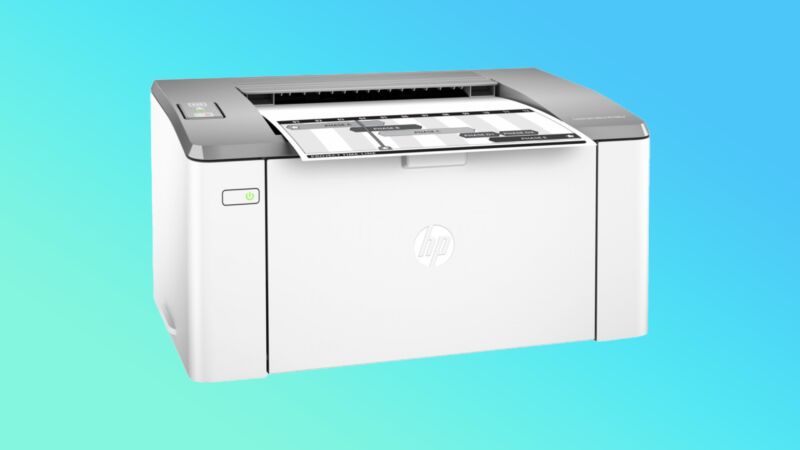
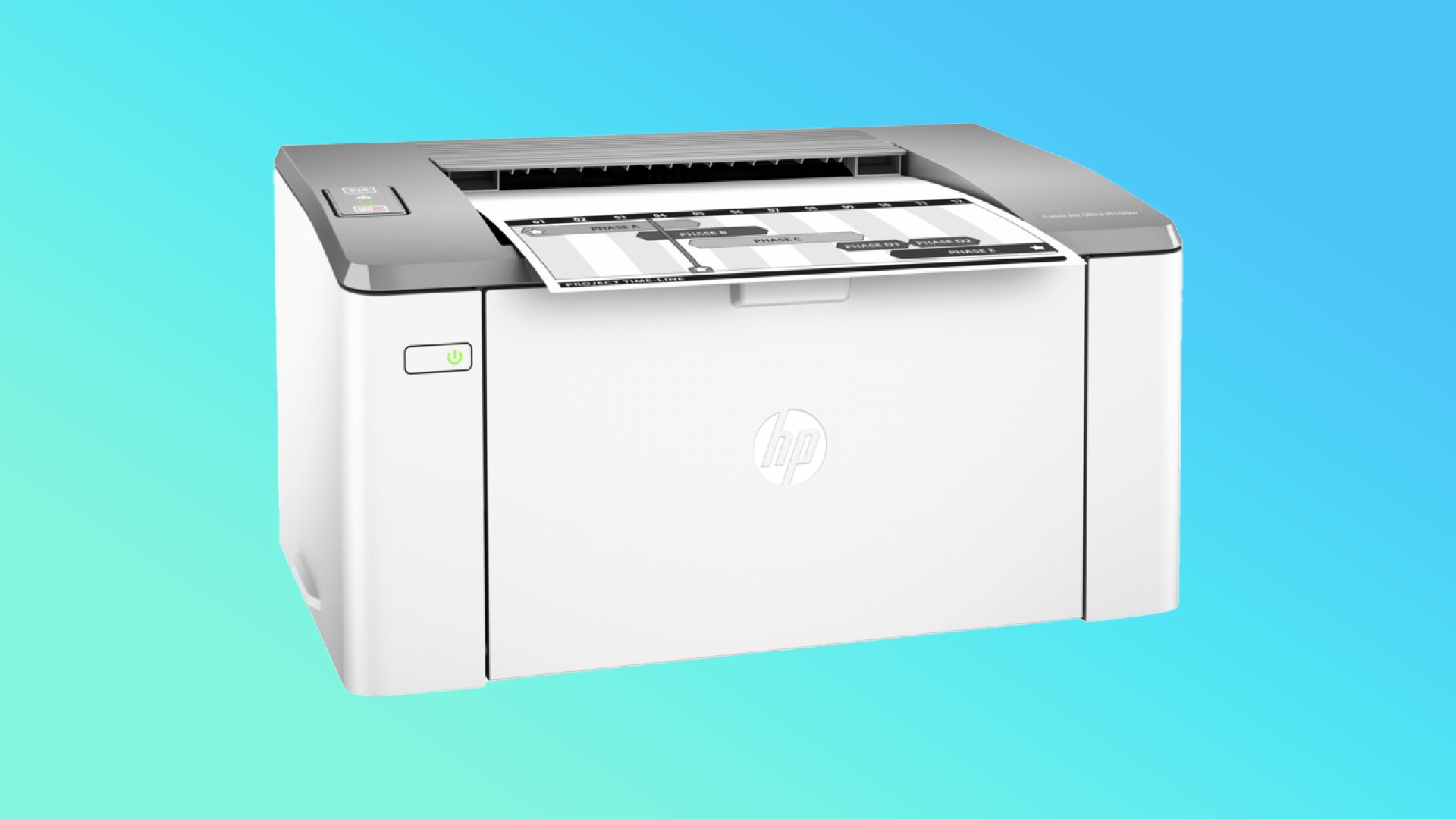
The HP LaserJet M106w is one of the printer models that is mysteriously appearing for some users in Windows 10 and 11.

Enlarge / The HP LaserJet M106w is one of the printer models that is mysteriously appearing for some users in Windows 10 and 11.

HP

Earlier this month, Microsoft posted a new entry in its list of known issues with fully up-to-date Windows 11 PCs: The HP Smart printer app was installing automatically on Windows 10 and Windows 11 PCs whether they had an HP printer installed or not, changing the names and icons of their connected printers and causing error messages.

Affected PCs will usually appear to have an HP LaserJet M101-M106 connected, so look for that model number in your list of printers (people who actually own one of those HP LaserJets presumably won’t have problems). All versions of Windows 11 are affected, plus all currently supported versions of Windows 10; Windows Server versions going back to 2012 can also be affected.

Microsoft continues to look into the issue, but in an update posted yesterday, the company stated unambiguously that HP was not to blame. The company also says that most printers should continue to work fine, and that they “will continue to use the expected drivers for printer operations.” But if your printer relies on a third-party app for additional functionality, that may be broken.

The way that print drivers work has changed a lot in the last few years, something that probably partially explains both the unwanted app installation and the fact that basic printing should mostly continue to work.

Rather than using bespoke drivers, modern printers connected to computers running modern OSes mostly use a generic driver built on top of the Internet Printing Protocol (IPP). This prevents problems caused by using old proprietary printer drivers with a modern OS and also allows operating systems that can’t install proprietary print drivers (like iOS) to use printers anyway. These generic drivers have been successful enough that Microsoft is slowly deprecating legacy print drivers entirely.

To add extra printer-specific functionality, then, printer manufacturers now need to do it in separate apps like HP Smart, which augment the core functionality provided by the generic driver. Microsoft calls these Print Support Apps. When you connect a new printer to Windows, it will usually download that app and install it automatically, the same way that Windows Update automatically tries to install drivers for new GPUs, webcams, or other accessories the first time you connect them.

It’s likely that whatever bug is causing the problem made these PCs believe they had an HP printer connected, and then Windows worked the way it’s designed to work and downloaded the HP printer app as a result. The questions are: What caused this bug? Can it also cause other problems? And can it be rolled back so that the HP app disappears and everyone’s printers go back to looking and working the way they’re supposed to? Microsoft will hopefully have answers for some or all of these soon.

HP printer app is installing on PCs whether they have HP printers or not Read More »

apple-exec-departure-leads-to-major-iphone,-apple-watch-reshuffle

Apple exec departure leads to major iPhone, Apple Watch reshuffle

Musical Chairs —

Tang Tan is leaving the company, and multiple people will shift to take his place.

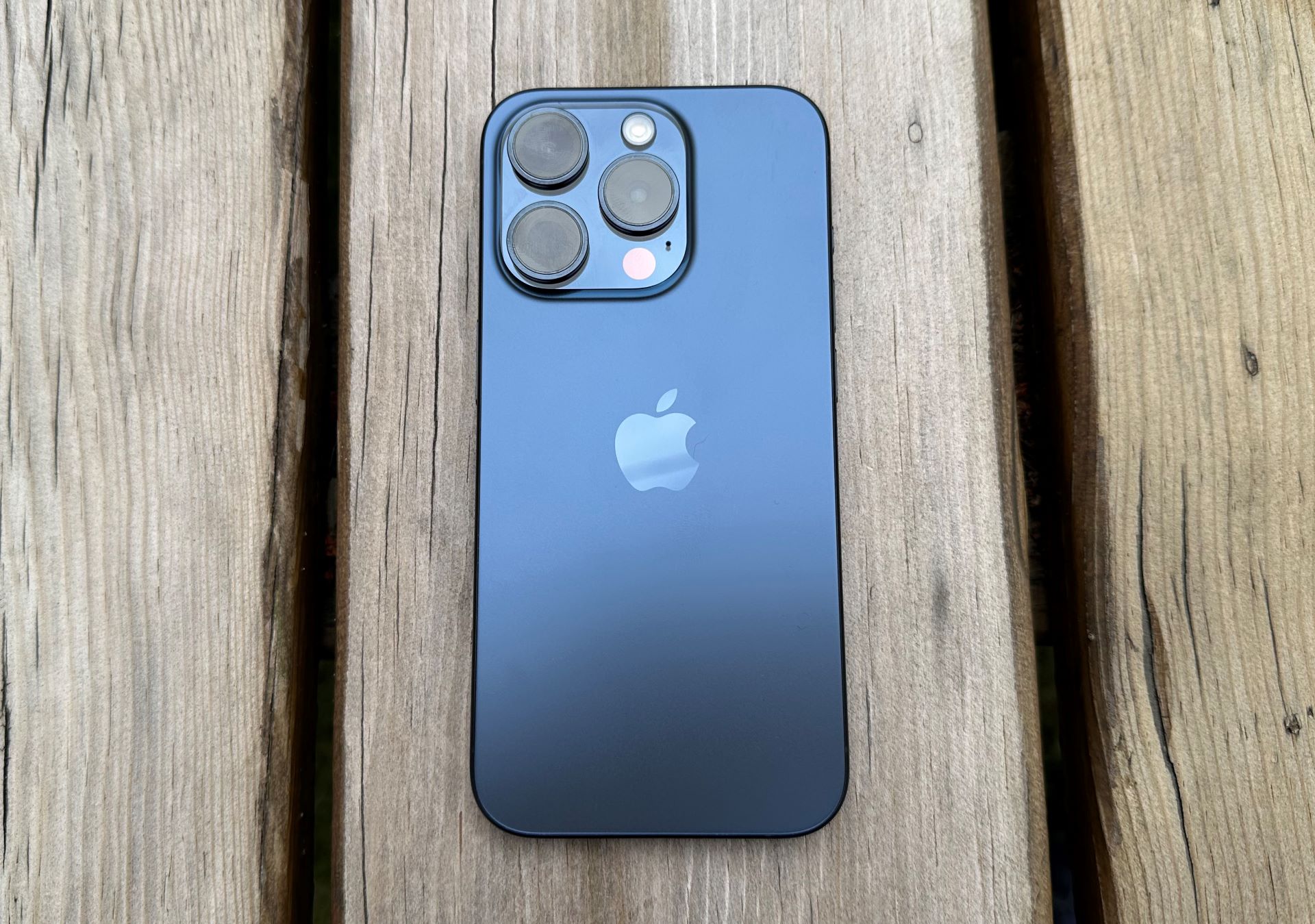
The iPhone 15 Pro.

Enlarge / The iPhone 15 Pro.

Samuel Axon

According to a report in Bloomberg, Tang Tan, vice president of Product Design, is leaving Apple, and his departure heralds a shuffle of executives heading up some of the company’s most important products.

Sometimes, you might wonder just how much a specific executive influences the grand scheme of things, but the report claims that people within Apple see Tan’s departure as “a blow,” clarifying that he “made critical decisions about Apple’s most important products.” His team reportedly had “tight control” over the look and functionality of those products.

Tan oversaw major aspects of iPhone and Apple Watch design, and he was the executive overseeing accessories and AirPods, as well. He reported to John Ternus, Apple’s senior vice president of Hardware Engineering, who is likely a more widely known name.

Richard Dinh, “Tan’s top lieutenant and head of iPhone product design,” will report directly to Ternus and take on some of Tan’s duties, while Kate Bergeron, previously involved in Mac hardware engineering, will take on the Apple Watch.

Apple has seen several executive departures from its product design and engineering groups recently, so many aspects of upcoming iPhones and other products will be designed with new eyes and perhaps new sensibilities, though what that might lead to remains to be seen.

Apple recently shifted the iPhone from the company’s proprietary Lightning port to a more standard USB-C, and it changed the materials for its Pro line of phones. Despite tweaks like that, the iPhone’s design and functionality has not changed significantly in the past five or so years.

The iPhone 16 line in 2024 is expected to shake things up a little more, at least regarding the phone’s look and feel. Rumors have suggested that the new phones may have larger screens (and bigger chassis overall) and perhaps haptic buttons instead of the current physical buttons. Other changes could be in store, and Apple’s plans are likely not yet finalized.

Apple exec departure leads to major iPhone, Apple Watch reshuffle Read More »

berlin-tech-companies-join-forces-to-plant-trees-when-you-travel-by-train

Berlin tech companies join forces to plant trees when you travel by train

German multi-modal travel unicorn Omio has teamed up with compatriot search engine Ecosia to create a tree-planting rail travel booking tool. It means users will be able to search and book train journeys through Ecosia’s website, powered by an API-integration with Omio’s travel platform. 

The booking platform will automatically pop up via a simple query search for trains, or for destinations where train travel is possible, say London to Paris. It will be available in 15 countries: the UK, Austria, Belgium, France, Germany, Italy, Nordics, North America and Canada, Portugal, Spain, Sweden, Switzerland, and Ukraine.

The intention behind the new tool being rolled out this month is two-fold. Firstly, to make sustainable rail options more visible as an alternative to air travel. Secondly, all the commission Ecosia receives from successful bookings will go directly toward the search engine’s green initiatives. 

Note that this is not a form of offsetting, meaning that it is not intended to “cancel out” any carbon emissions produced by your journey (a popular but, let’s face it, greenwashing tool employed by airlines during the booking process).  

Providers accessible through the new tool include Amtrak in the United States, LNER, GWR, Avanti in the UK, SNCF in France, OBB in Austria and Eurostar

The <3 of EU tech

The latest rumblings from the EU tech scene, a story from our wise ol’ founder Boris, and some questionable AI art. It’s free, every week, in your inbox. Sign up now!

Born from the Berlin startup scene

In the land of internet searches, where one company is so synonymous with the activity that it has become a verb, you’d be forgiven for not having heard of Ecosia. However, the platform does see 20 million users globally every month. 

Founded in 2009 by Christian Kroll, the tech company dedicates 100% of its profits to planet-friendly initiatives. These include having planted over 175 million trees all over the world, in collaboration with local communities.

The company, the first to become an accredited B Corp in Germany in 2014, has also supported regenerative agriculture projects, and invested into renewable energy. 

“Our users want choice over how they travel, and they want to travel sustainably — that’s evident in the sheer volume of searches we’re seeing each month on Ecosia,” said the company’s Chief Product Officer Michael Metcalf. 

“If a healthy proportion of the two million searches made for train journeys on Ecosia each month translate into bookings, this will allow us to invest in our other environmental initiatives pushing back against the climate emergency,” he continued.  

Fellow Berliner Omio was first introduced as GoEuro in 2013 by founder Naren Shaam. Today, the multi-modal platform issues travel tickets across 37 countries, in 21 different languages, and 26 different currencies, for 1000+ travel transportation providers. 

Following a growth of 100% up until 2019, Omio experienced a couple of incredibly tough years during the pandemic where 98% of the company’s revenue basically evaporated overnight. However, almost exactly a year ago, Omio announced a Series E funding of $80mn (approx. €72mn) to take its total funding up to $480mn (€434mn).

Berlin tech companies join forces to plant trees when you travel by train Read More »

‘break-them-open’-–-new-eu-rules-coming-for-big-tech

‘Break them open’ – new EU rules coming for Big Tech

‘Break them open’ – new EU rules coming for Big Tech

Linnea Ahlgren

Story by

Linnea Ahlgren

As dry and bureaucratic as EU legislation may seem, it can also be groundbreaking and, dare we say it, radical. The bloc has taken a global lead in tackling regulation in areas such as green taxonomy and the much-anticipated AI Act. European lawmakers are also at the forefront in trying to curb the seemingly ever-growing dominance of Big Tech. 

The Digital Markets Act (DMA) is the EU’s tool to attempt to open the digital app marketplace up for smaller competitors. It sets criteria to identify the “gatekeepers” of the market and make them comply with a certain list of do’s and don’ts. 

Among other things, the DMA will promote interoperability, forcing companies like Google, Apple, and Meta to let users link rival apps to their services. This means that Apple will need to release the tightly controlled (and heavily commissioned) grip it exerts through its app store.

In the words of Cédric O, France’s then-digital economy minister, upon the signing of the act last year, “Don’t break them up, break them open.” 

Theoretically, it also means that users of different messaging apps will be able to contact each other from, say, WhatsApp to Telegram, but it is unclear how this would actually be implemented. It will also forbid the gatekeeper companies from doing things such as track their users outside core platforms for targeted marketing without consent. 

While it entered into force on 1 November 2022, the DMA technically began applying yesterday, 2 May 2023. This means that potential gatekeeper tech companies now have until 3 July to notify their core platform services to the European Commission. 

The Commission will then have 45 working days (until 6 September) to decide whether or not they pass the gatekeeper threshold. If the Commission concludes that the company in question does indeed meet the designated criteria, the gatekeeper will then have six months (until 6 March 2024) to comply with the requirements set out in the DMA. 

In the case of non-compliance, the Commission can impose fines of up to 10% of the company’s total worldwide annual turnover. In the event of repeated infringements this can increase to 20% plus periodic penalty payments of up to 5% of the company’s total worldwide daily turnover.

Europe ‘strengthening digital sovereignty’

So who are the “gatekeepers?” According to the DMA, they are platforms in the digital markets that “have a significant impact on the internal market, serve as an important gateway for business users to reach their end users, and which enjoy, or will foreseeably enjoy, an entrenched and durable position.”

As with all legal texts, the criteria go into significant detail. Simplified, they entail that companies will be considered gatekeepers if they have a market capitalisation of more than €75 billion, and 45 million monthly active users in the EU.

There are 10 platform services listed in the DMA. These are: 

  • Online intermediation services;
  • Online search engines;
  • Online social networking services;
  • Video-sharing platform services;
  • Number-independent interpersonal communication services;
  • Operating systems;
  • Cloud computing services;
  • Advertising services;
  • Web browsers;
  • Virtual assistants.

A company may be listed as a gatekeeper for more than one service. 

Together with the Digital Services Act (DSA), the DMA forms one of the central columns of the EU’s digital strategies. They are both part of a regulatory program known as A Europe Fit For the Digital Age.

Adopted three years ago, it is part of the Commission’s ambition to make this Europe‘s ‘Digital Decade’ in which it will “strengthen its digital sovereignty and set standards, rather than following those of others – with a clear focus on data, technology, and infrastructure.”

Get the TNW newsletter

Get the most important tech news in your inbox each week.

Also tagged with


‘Break them open’ – new EU rules coming for Big Tech Read More »

europe’s-first-solar-panel-roof-covered-bike-lane-unveiled-in-germany

Europe’s first solar panel roof-covered bike lane unveiled in Germany

Europe’s first solar panel roof-covered bike lane unveiled in Germany

Linnea Ahlgren

Story by

Linnea Ahlgren

At the beginning of the year, news readers were treated to images of German police forcefully removing climate activists from the village of Lützerath to make way for an open-air coal mine. Indeed, Germany may have averted a looming energy crisis this past winter by upping its coal consumption.

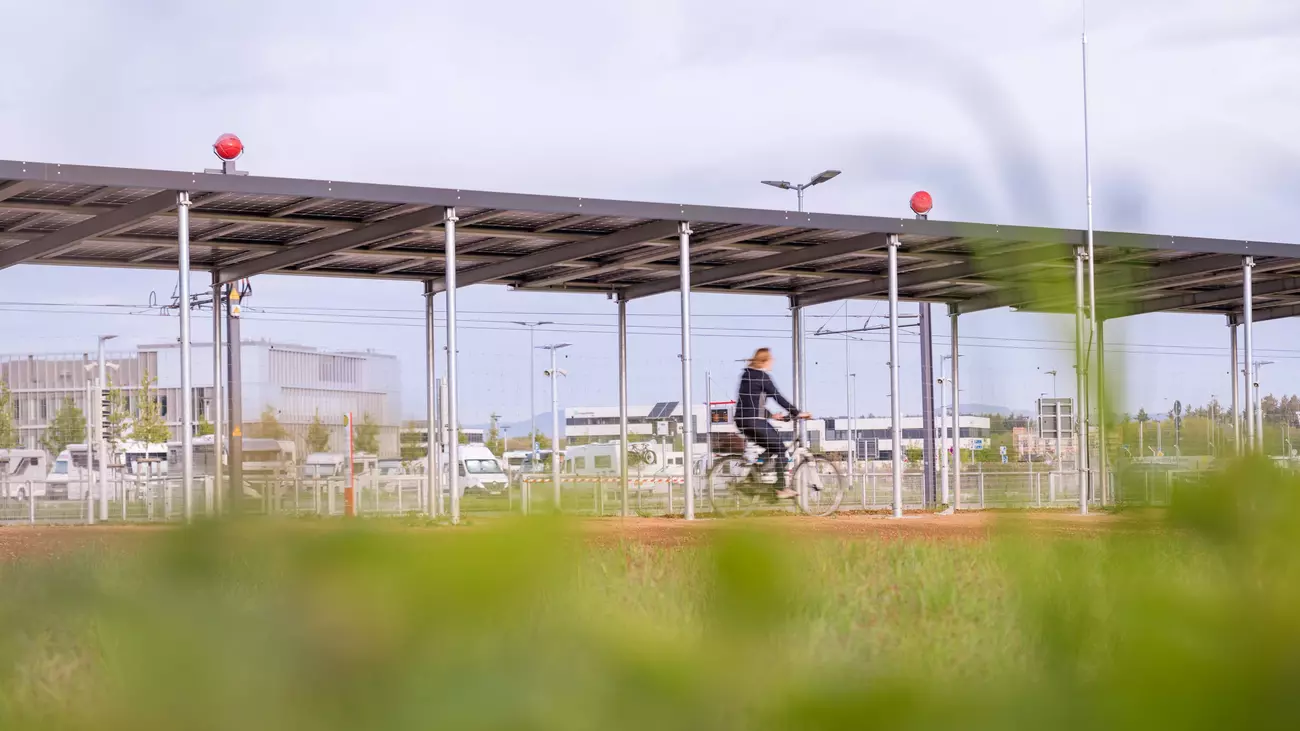
While prioritising energy independence may have caused a detour from the transition to renewables, the country’s goal is to reach climate neutrality by 2045: five years ahead of the EU target. A small step on the way but a step nonetheless is Europe’s first solar panel roof-covered cycling path which opened this week in the city of Freiburg, about a two-hour drive south of Stuttgart.  

The photovoltaic (PV) pilot project consists of a 300-metre-long installation featuring over 900 translucent glass solar panels, and will generate around 280 MWh of solar power per year. Solarwatt, the producer of the panels covering the path, says they are particularly durable as the solar cells are enclosed on the front and back by robust glass panes. 

Existing infrastructure has increasing role to play

The cleantech company now has three decades of experience creating solar panels and currently employs over 800 people across Europe. In 2022, it acquired Utrecht-based battery-storage specialist REConvert for an undisclosed amount, establishing a Dutch subsidiary. 

Solarwatt’s CEO Detlef Neuhaus believes rethinking photovoltaics will be essential for Germany’s transition to clean energy, and sees an untapped potential in already existing infrastructure. 

“Already sealed areas such as parking lots, paths and roads are playing an increasingly important role,” Neuhaus said. “We are proud that we could contribute our part to the success of this innovative pilot project.”

Woman riding bicycle under solar powered roof
Credit: Badenova AG & CO

The modules used in the bike lane project have general technical approval from the German Institute for Building Technology (DIBt). This means that they can be used without any restriction for both private and public projects, without the need for case-by-case testing. 

Solar-powered neighbour stadium

Meanwhile, the pilot bicycle lane is situated close to the SC Freiburg football stadium. The arena is already equipped with a 2.4MW solar panel roof, courtesy of around 6,000 heterojunction solar modules from Swiss manufacturer Meyer Burger.

This makes it the third-largest solar panel installation on any stadium in the world. (The largest belongs to Turkish Süper Lig football club Galatasaray’s home arena Nef Stadium, which comprises more than 10,000 panels.) 

The potential for much longer PV-roofed paths

This may be Europe’s first solar panel roof-covered bicycle path (excluding several projects where the path itself has been covered with PV panels). However, since 2014, South Korea boasts a 9 kmbicycle lane covered by a roof made of solar panels. 

This 4-metre wide lane runs in the middle of an eight-lane highway, and connects the cities of Daejeon and Sejong. Its 7,502 solar panels are capable of producing 2,200MWh per year – the equivalent of powering around 600 households, according to the country’s Ministry of Land, Infrastructure and Transport. Several other Korean cities have implemented the technology, but this remains the longest and most power-generating project to date.

Get the TNW newsletter

Get the most important tech news in your inbox each week.

Also tagged with


Europe’s first solar panel roof-covered bike lane unveiled in Germany Read More »

transatlantic-chip-wars?-uk-needs-to-up-its-policy-game,-leading-startup-says

Transatlantic chip wars? UK needs to up its policy game, leading startup says

Transatlantic chip wars? UK needs to up its policy game, leading startup says

Linnea Ahlgren

Story by

Linnea Ahlgren

While the UK is being labelled as “closed for business” and Rishi Sunak is playing Unicorn Kingdom in Silicon Valley, the British chip industry risks losing some of its strongest players due to a lack of supportive policies. 

Based in Cambridge, UK, Pragmatic Semiconductor, funded in part by the CIA’s investment branch In-Q-Tel, has created an ultra-thin, ultra-low-cost, flexible integrated circuit (FlexIC). Instead of relying on silicon, it is made from indium gallium zinc oxide at a fraction of the cost.

The application of the technology spans a wide range of sectors, including healthcare, pharmaceuticals, packaging and games. In the words of Pragmatics, it offers “digital traceability and interactivity to everyday objects.”

Scott White is the Founder and Executive Director, Strategic Initiatives, of Pragmatic. According to White, the company could end up leaving British shores if the UK government’s semiconductor strategy fails to meet expectations. 

So what would British politicians need to offer to provide adequate support to rival the allure of the US $52.7 billion CHIPS Act? White tells TNW that Pragmatic wants to see the government support innovative new companies through public procurement. 

“By creating home-grown revenue opportunities, and becoming a major customer for new semiconductor technologies addressing key national priorities such as net zero and affordable healthcare, the government can provide the reassurance and certainty that investors need to support startups and scaleups,” White said. 

Following the lead of Arm?

The current lack of ability to effectively raise funding for the business in the UK means that Pragmatic could move its operations overseas. Furthermore, it could potentially list outside of the UK in the future, following in the footsteps of Cambridge-compatriot Arm. Earlier this year, in a significant blow to London, the chip architecture giant and crown jewel in the UK tech industry chose to only list the company in New York.

What would a sufficient strategy look like in more detail? White believes that annual public sector procurement targets, commitments for public institutions to ‘buy British’, and encouraging public bodies, like NHS Trusts, to explore uses of the technology, would provide the required opportunities.

Furthermore, such a strategy would address both supply and demand, ultimately making “the UK a more attractive place from which innovative semiconductor companies can build and maintain a global base.” 

Funding from the government, the CIA and… China

After a Series C $125 million round (an oversubscription by more than 50%) late in 2022, the CIA’s investment branch In-Q-Tel, also referred to as IQT, owns part of Pragmatic. British Patient Capital, a subsidiary of the UK government’s economic development bank, also participated in the funding.

The company has now raised over $190 million to date and employs over 200 people. Puhua Capital, a Hangzhou-based VC focused on health and technology, has also invested an undisclosed amount. Although, Pragmatics has intentionally kept Chinese investment low, due the sensitive geopolitical situation. 

The geopolitics of chip-making capabilities

According to Chris Miller, the author of Chip War: The Fight for the World’s Most Critical Technology, the process of designing and manufacturing chips is the most complex technological process that humans have ever undertaken. In Miller’s words, the supply chain needed to produce an advanced chip “stretches across multiple continents, involves some of the most purified materials, and the most precise machine tools ever made.” 

In 2022, the global semiconductor market size was over $​​573 billion, and is predicted to grow to $1,380.79 billion by 2029. Meanwhile, Miller further believes that it is not only a matter of business, economics or technology, but also a question of political relevance as to which countries have these capabilities and which don’t.

As such, successful startups like Pragmatic could find themselves caught in strategic tug-of-wars, stretching well beyond the scope of applied technological excellence. 

Get the TNW newsletter

Get the most important tech news in your inbox each week.

Also tagged with


Transatlantic chip wars? UK needs to up its policy game, leading startup says Read More »

new-research-milestone-could-solve-quantum-scalability

New research milestone could solve quantum scalability

New research milestone could solve quantum scalability

Linnea Ahlgren

Story by

Linnea Ahlgren

Wherever you fall on the quantum sceptic spectrum, you cannot deny that the potential of the technology is fascinating. Don’t worry, we will admit to not understanding it fully yet either, but the founders of QuiX Quantum do. 

Together with scientists from the Leibniz University Hannover, the team has demonstrated a fully-integrated quantum light source on a chip smaller than the size of a one-euro coin. 

The study, called “Fully on-chip photonic turnkey quantum source for entangled qubit/qudit state generation,” just FYI, was published in Nature Photonics this week. Its results could reportedly prove a game-changer for technologies such as quantum computing. 

Photonics offer temperature advantages

Quantum photonics is a field of research that explores the behaviour of light and its interactions with matter at the quantum level. Quantum light sources produce photons that can be used as quantum bits, or qubits. One of the main advantages of photonics compared to superconductor approaches is that it is compatible with room temperature operating conditions. 

However, most sources are external laser systems, making them bulky and non-reproducible and thus unsuitable for out-of-lab use or production at larger scale. Integrated, or on-chip sources are becoming popular due to being more compact and stable.

A fully-integrated light source, such as the one demonstrated by QuiX and Leibniz University scientists, will allow all stages of the Quantum Information Processing (QIP) to be on a single chip, which will lead to greater stability and scalability of the technology.

Plug-and-play photonics solutions

QuiX Quantum was founded in January 2019. Since then, the company has raised over €5.5 million in funding and already become the European market leader for quantum computing hardware based on photonics. They sold their first quantum processors in 2021, and are building 8- and 64-qubit Universal Quantum Computers worth €14 million for the German Aerospace Center. 

The company says its goal is “the continued disruption of quantum computing with our high-tech, scalable, future-proof, plug-and-play integrated photonic solutions.” Its recent breakthrough could not come at a better time. The EU has just launched a €19 million project to help quantum startups transition from lab to market. 

Earlier this year, QuiX Quantum took home the prestigious Prism Award for its 20-mode Quantum Photonic Processor. This award is known as the “Oscars of Photonics,” presented during the Photonics West conference in San Francisco.

“In four years, we went from an idea to delivering award-winning, market-leading hardware for photonic quantum computing,” Stefan Hengesbach, CEO of Quix, stated. “This awarded processor is the core element of our current generation quantum computers, which has already created a huge impact in the quantum ecosystem as an excellent tool to perform fundamental quantum mechanical experiments on-chip.

Get the TNW newsletter

Get the most important tech news in your inbox each week.

Also tagged with


New research milestone could solve quantum scalability Read More »

ireland’s-neuromod-gets-e30m-to-increase-reach-of-tinnitus-treatment-tech

Ireland’s Neuromod gets €30M to increase reach of tinnitus treatment tech

Anyone who has ever experienced phantom ringing in their ears knows that it is a nuisance to say the least. Those who have tinnitus – hearing continuous ringing, buzzing, humming or even roaring sounds – often experience anxiety and depression as a result. 

The condition affects approximately 15% of the global adult population. However, treatment has remained elusive, with those afflicted left to find their own ad hoc mitigation solutions. 

Neuromod, a medtech startup from Ireland, is looking to change that. The company has just received €30 million in funding to further commercialise its tinnitus treatment device, Lenire. 

A different kind of electrotherapy 

With its patented bimodal neuromodulation technology, Lenire works by sending mild electrical signals to the tongue, while patients listen to auditory stimulation through headphones. 

Thus far, over 700 patients have participated in clinical trials with the device, which consists of three parts. A handheld, lightweight controller allows the user to control timing, intensity and synchronisation of the stimuli, while Neuromod’s proprietary Tonguetip module sits in the user’s mouth, administering electrical pulses to the top of the tongue. Simultaneously, Bluetooth headphones deliver customised sound stimuli to the auditory nerve. 

The <3 of EU tech

The latest rumblings from the EU tech scene, a story from our wise ol’ founder Boris, and some questionable AI art. It’s free, every week, in your inbox. Sign up now!