starliner

the-surprise-is-not-that-boeing-lost-commercial-crew-but-that-it-finished-at-all

The surprise is not that Boeing lost commercial crew but that it finished at all

Boeing really is going —

“The structural inefficiency was a huge deal.”
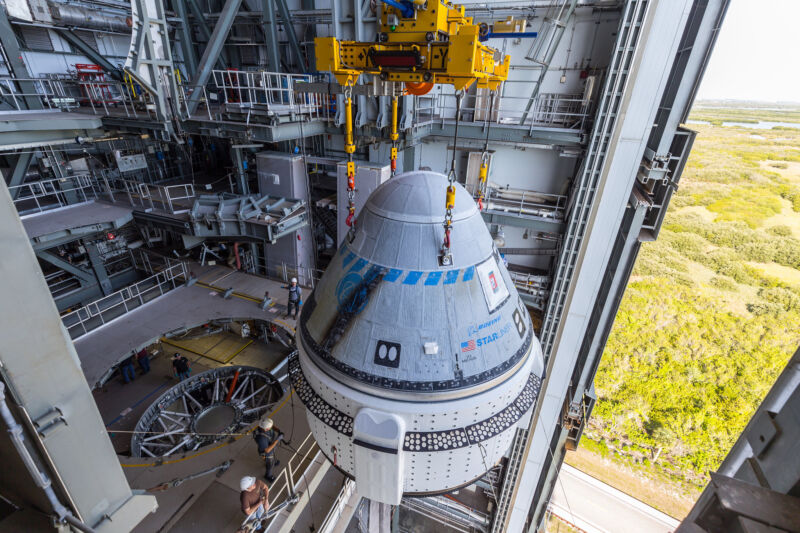
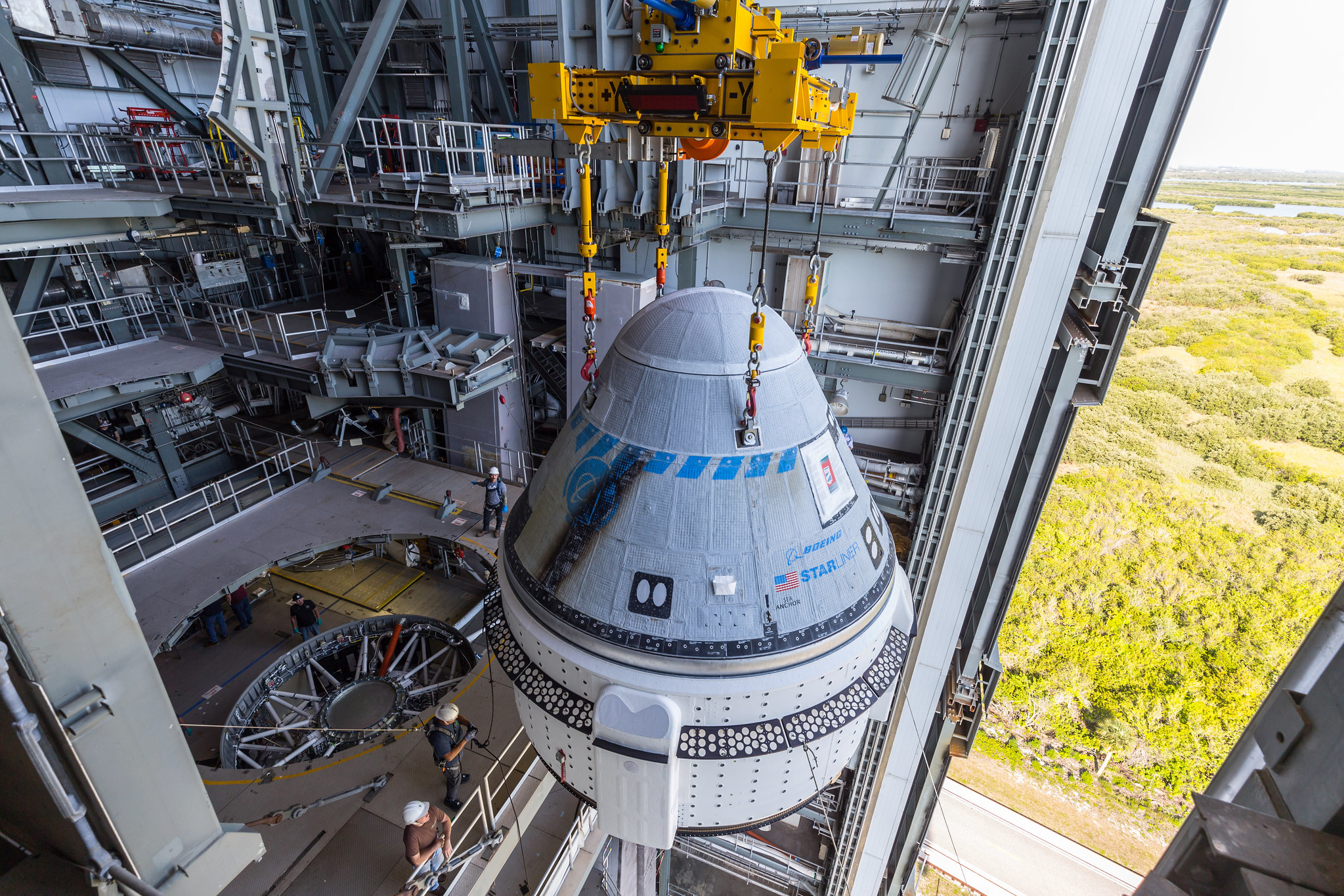
Boeing's Starliner spacecraft is lifted to be placed atop an Atlas V rocket for its first crewed launch.

Enlarge / Boeing’s Starliner spacecraft is lifted to be placed atop an Atlas V rocket for its first crewed launch.

United Launch Alliance

NASA’s senior leaders in human spaceflight gathered for a momentous meeting at the agency’s headquarters in Washington, DC, almost exactly ten years ago.

These were the people who, for decades, had developed and flown the Space Shuttle. They oversaw the construction of the International Space Station. Now, with the shuttle’s retirement, these princely figures in the human spaceflight community were tasked with selecting a replacement vehicle to send astronauts to the orbiting laboratory.

Boeing was the easy favorite. The majority of engineers and other participants in the meeting argued that Boeing alone should win a contract worth billions of dollars to develop a crew capsule. Only toward the end did a few voices speak up in favor of a second contender, SpaceX. At the meeting’s conclusion, NASA’s chief of human spaceflight at the time, William Gerstenmaier, decided to hold off on making a final decision.

A few months later, NASA publicly announced its choice. Boeing would receive $4.2 billion to develop a “commercial crew” transportation system, and SpaceX would get $2.6 billion. It was not a total victory for Boeing, which had lobbied hard to win all of the funding. But the company still walked away with nearly two-thirds of the money and the widespread presumption that it would easily beat SpaceX to the space station.

The sense of triumph would prove to be fleeting. Boeing decisively lost the commercial crew space race, and it proved to be a very costly affair.

With Boeing’s Starliner spacecraft finally due to take flight this week with astronauts on board, we know the extent of the loss, both in time and money. Dragon first carried people to the space station nearly four years ago. In that span, the Crew Dragon vehicle has flown thirteen public and private missions to orbit. Because of this success, Dragon will end up flying 14 operational missions to the station for NASA, earning a tidy fee each time, compared to just six for Starliner. Through last year, Boeing has taken $1.5 billion in charges due to delays and overruns with its spacecraft development.

So what happened? How did Boeing, the gold standard in human spaceflight for decades, fall so far behind on crew? This story, based largely on interviews with unnamed current and former employees of Boeing and contractors who worked on Starliner, attempts to provide some answers.

The early days

When the contracts were awarded, SpaceX had the benefit of working with NASA to develop a cargo variant of Dragon, which by 2014 was flying regular missions to the space station. But the company had no experience with human spaceflight. Boeing, by contrast, had decades of spaceflight experience, but it had to start from scratch with Starliner.

Each faced a deeper cultural challenge. A decade ago, SpaceX was deep into several major projects, including developing a new version of the Falcon 9 rocket, flying more frequently, experimenting with landing and reuse, and doing cargo supply missions. This new contract meant more money but a lot more work. A NASA engineer who worked closely with both SpaceX and Boeing in this time frame recalls visiting SpaceX and the atmosphere being something like a frenzied graduate school, where all of the employees were being pulled in different directions. Getting engineers to focus on Crew Dragon was difficult.

But at least SpaceX was in its natural environment. Boeing’s space division had never won a large fixed-price contract. Its leaders were used to operating in a cost-plus environment, in which Boeing could bill the government for all of its expenses and earn a fee. Cost overruns and delays were not the company’s problem—they were NASA’s. Now Boeing had to deliver a flyable spacecraft for a firm, fixed price.

Boeing struggled to adjust to this environment. When it came to complicated space projects, Boeing was used to spending other people’s money. Now, every penny spent on Starliner meant one less penny in profit (or, ultimately, greater losses). This meant that Boeing allocated fewer resources to Starliner than it needed to thrive.

“The difference between the two company’s cultures, design philosophies, and decision-making structures allowed SpaceX to excel in a fixed-price environment, where Boeing stumbled, even after receiving significantly more funding,” said Lori Garver in an interview. She was deputy administrator of NASA from 2009 to 2013 during the formative years of the commercial crew program and is the author of Escaping Gravity.

So Boeing faced financial pressure from the beginning. At the same time, it was confronting major technical challenges. Building a human spacecraft is very difficult. Some of the biggest hurdles would be flight software and propulsion.

The surprise is not that Boeing lost commercial crew but that it finished at all Read More »
rocket-report:-starliner-launch-preps;-indian-rocket-engine-human-rated

Rocket Report: Starliner launch preps; Indian rocket engine human-rated

Cape-a-palooza —

The Bahamian government and SpaceX signed an agreement for Falcon 9 booster landings.

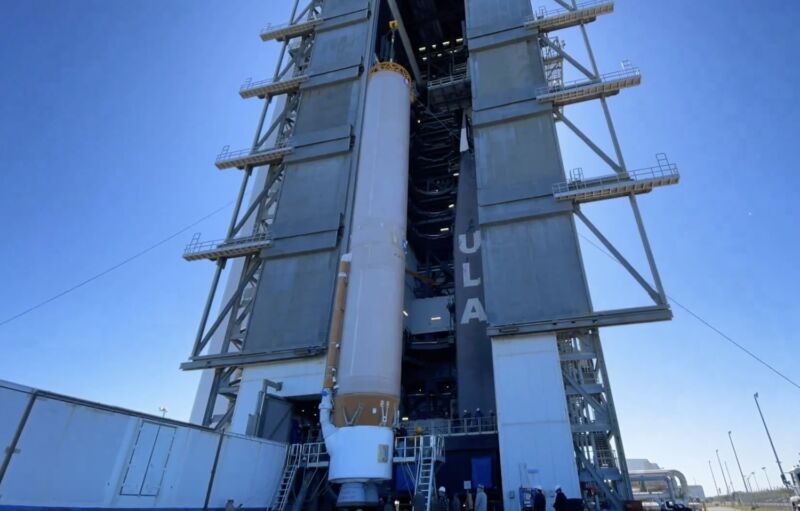
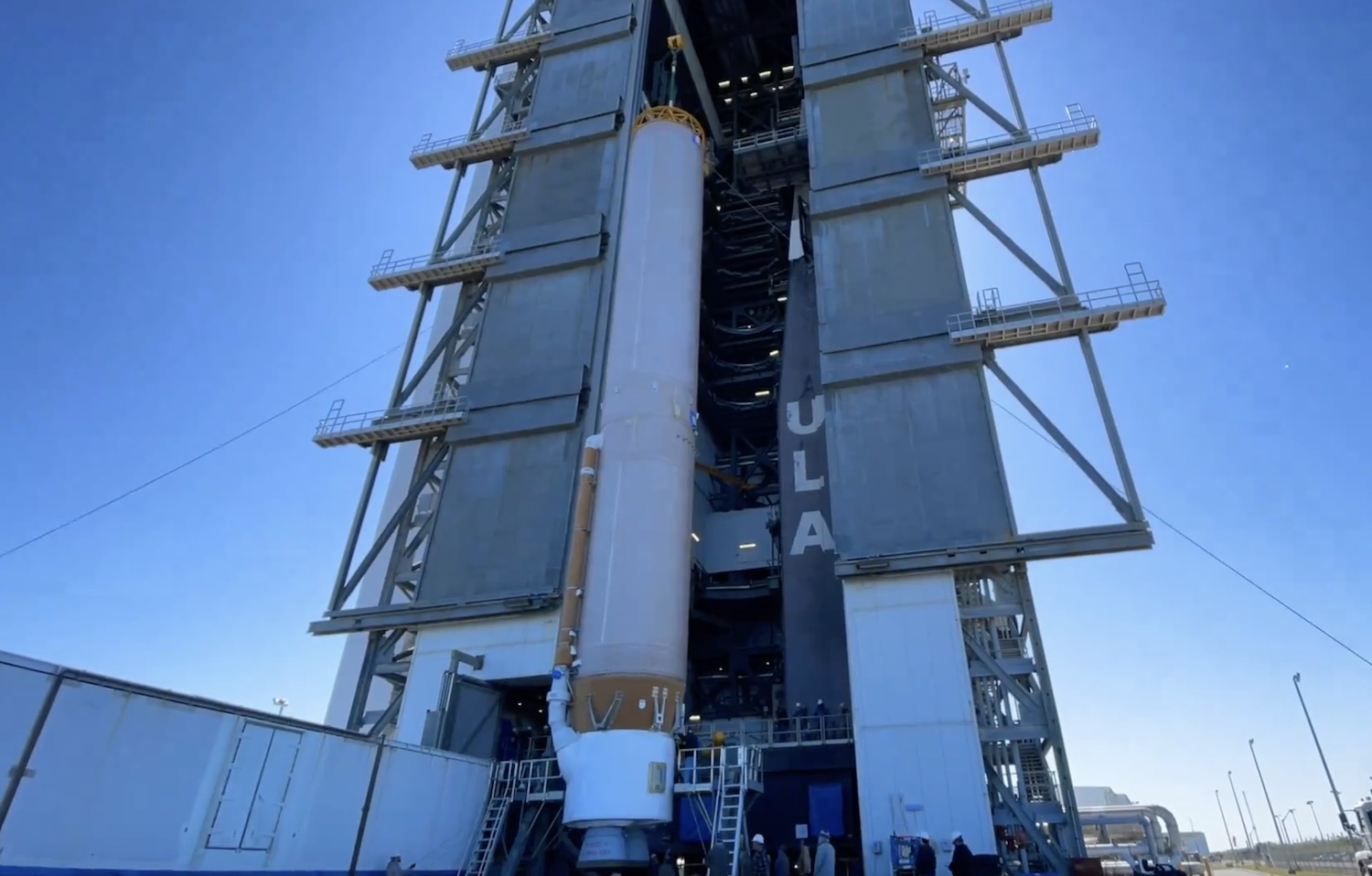
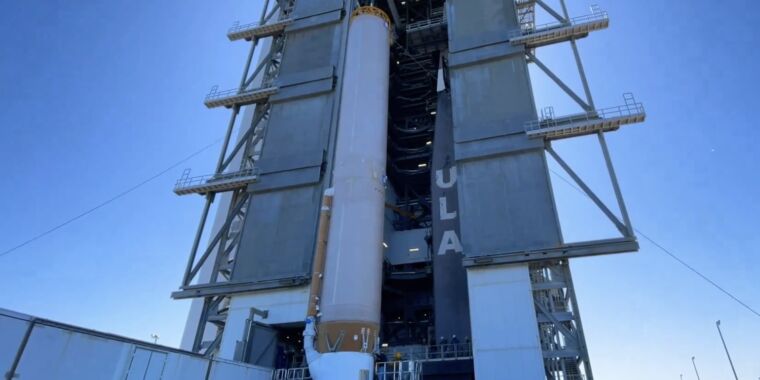
The first stage of United Launch Alliance's Atlas V rocket was lifted onto its launch platform this week in preparation for an April liftoff with two NASA astronauts on Boeing's Starliner Crew Flight Test.

Enlarge / The first stage of United Launch Alliance’s Atlas V rocket was lifted onto its launch platform this week in preparation for an April liftoff with two NASA astronauts on Boeing’s Starliner Crew Flight Test.

United Launch Alliance

Welcome to Edition 6.32 of the Rocket Report! I’m writing the report again this week as Eric Berger is in Washington, DC, to receive a well-earned honor, the 2024 Excellence in Commercial Space Journalism Award from the Commercial Spaceflight Federation. Cape Canaveral is the world’s busiest spaceport, and this week, three leading US launch companies were active there. SpaceX launched another Falcon 9 rocket, and a few miles away, Blue Origin raised a New Glenn rocket on its launch pad for long-awaited ground testing. Nearby, United Launch Alliance began assembling an Atlas V rocket for the first crew launch of Boeing’s Starliner spacecraft in April. 2024 is shaping up to be a truly exciting year for the spaceflight community.

As always, we welcome reader submissions, and if you don’t want to miss an issue, please subscribe using the box below (the form will not appear on AMP-enabled versions of the site). Each report will include information on small-, medium-, and heavy-lift rockets, as well as a quick look ahead at the next three launches on the calendar.

Astroscale inspector satellite launched by Rocket Lab. Astroscale, a well-capitalized Japanese startup, has launched a small satellite to do something that has never been done in space, Ars reports. This new spacecraft, delivered into orbit on February 18 by Rocket Lab, will approach a defunct upper stage from a Japanese H-IIA rocket that has been circling Earth for more than 15 years. Over the next few months, the satellite will try to move within arm’s reach of the rocket, taking pictures and performing complicated maneuvers to move around the bus-size H-IIA upper stage as it moves around the planet at nearly 5 miles per second (7.6 km/s).

This is a first … Astroscale’s ADRAS-J mission is the first satellite designed to approach and inspect a piece of space junk in orbit. This is a public-private partnership between Astroscale and the Japanese space agency. Of course, space agencies and commercial companies have demonstrated rendezvous operations in orbit for decades. The difference here is the H-IIA rocket is uncontrolled, likely spinning and in a slow tumble, and was never designed to accommodate any visitors. Japan left it in orbit in January 2009 following the launch of a climate monitoring satellite and didn’t look back. ADRAS-J is a technology demonstration that could pave the way for a follow-on mission to actually link up with this H-IIA rocket and remove it from orbit. Astroscale eventually wants to use these technologies for satellite servicing, refueling, and further debris removal missions. (submitted by Ken the Bin and Jay500001)

Software error blamed for Firefly launch malfunction. Firefly Aerospace released an update Tuesday on an investigation into an upper stage malfunction on the company’s Alpha rocket in December. The investigation team, consisting of membership from Firefly, the Federal Aviation Administration, the National Transportation Safety Board, Lockheed Martin, NASA, and the US Space Force, determined a software error in the rocket’s guidance, navigation, and control software algorithm ultimately caused the Alpha rocket to release its payload into a lower-than-planned orbit following a launch from California.

Upper stage woes… The software error prevented the rocket from sending the “necessary pulse commands” to control thrusters on the upper stage before its main engine was supposed to reignite. This second burn by the upper stage was supposed to circularize the rocket’s orbit, but it didn’t happen as planned. Still, the Alpha rocket safely released its commercial satellite payload for Lockheed Martin. Although the lower orbit caused the satellite to reenter the atmosphere earlier this month, Lockheed Martin said it was able to achieve many of the objectives of the technology demonstration mission, which focused on testing an electronically steered antenna. This was the fourth launch of an Alpha rocket, and two of them have suffered from upper stage malfunctions during engine restart attempts. Firefly says it is preparing the next Alpha rocket to fly “in the coming months.” (submitted by Ken the Bin)

The easiest way to keep up with Eric Berger’s space reporting is to sign up for his newsletter, we’ll collect his stories in your inbox.

A good fundraising round for Gilmour Space. Australian startup Gilmour Space Technologies has raised $55 million Australian dollars ($36 million) in a Series D funding round announced Monday, Space News reports. The funding supports the small launch vehicle startup’s campaign to manufacture, test, and begin launching rockets and satellites from the Bowen Orbital Spaceport in North Queensland. Gilmour Space, founded in 2012, is developing a three-stage rocket called Eris. The first Eris test flight is expected “in the coming months, pending launch approvals from the Australian Space Agency,” according to the Gilmour Space news release.

Launching from down under… Gilmour Space is aiming to launch the first Australian-built rocket into orbit later this year. The Eris rocket is powered by hybrid engines, and Gilmour says it is capable of delivering about 670 pounds (305 kilograms) of payload mass into a Sun-synchronous orbit. The $36 million fundraising round announced this week follows a $46 million fundraising round in 2021. According to the Australian Broadcasting Corporation, Gilmour Space is aiming for the first flight of Eris in April, and this latest fundraising should give the company enough money to mount four test flights. (submitted by Ken the Bin)

Rocket Report: Starliner launch preps; Indian rocket engine human-rated Read More »