Staff

ars-asks:-what-was-the-last-cd-or-dvd-you-burned?

Ars asks: What was the last CD or DVD you burned?

i like my alcohol at 120% —

With the demise of Apple’s SuperDrive, we reminisce on our final homemade optical discs.
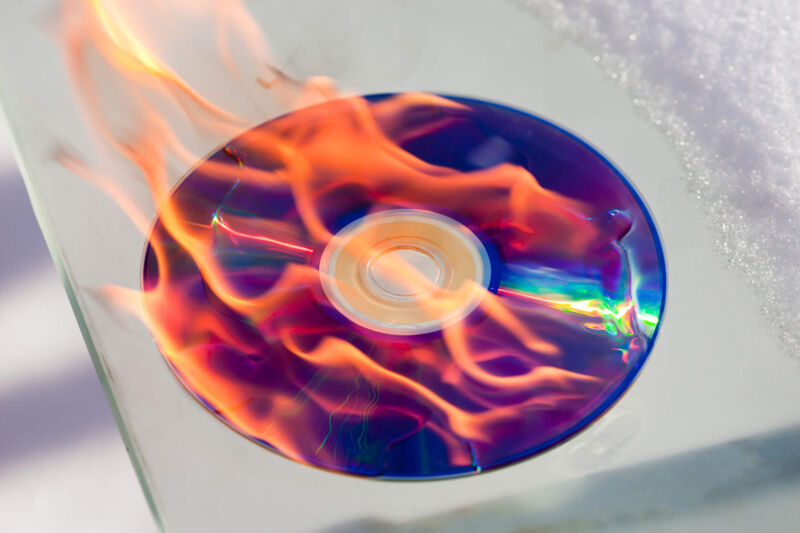
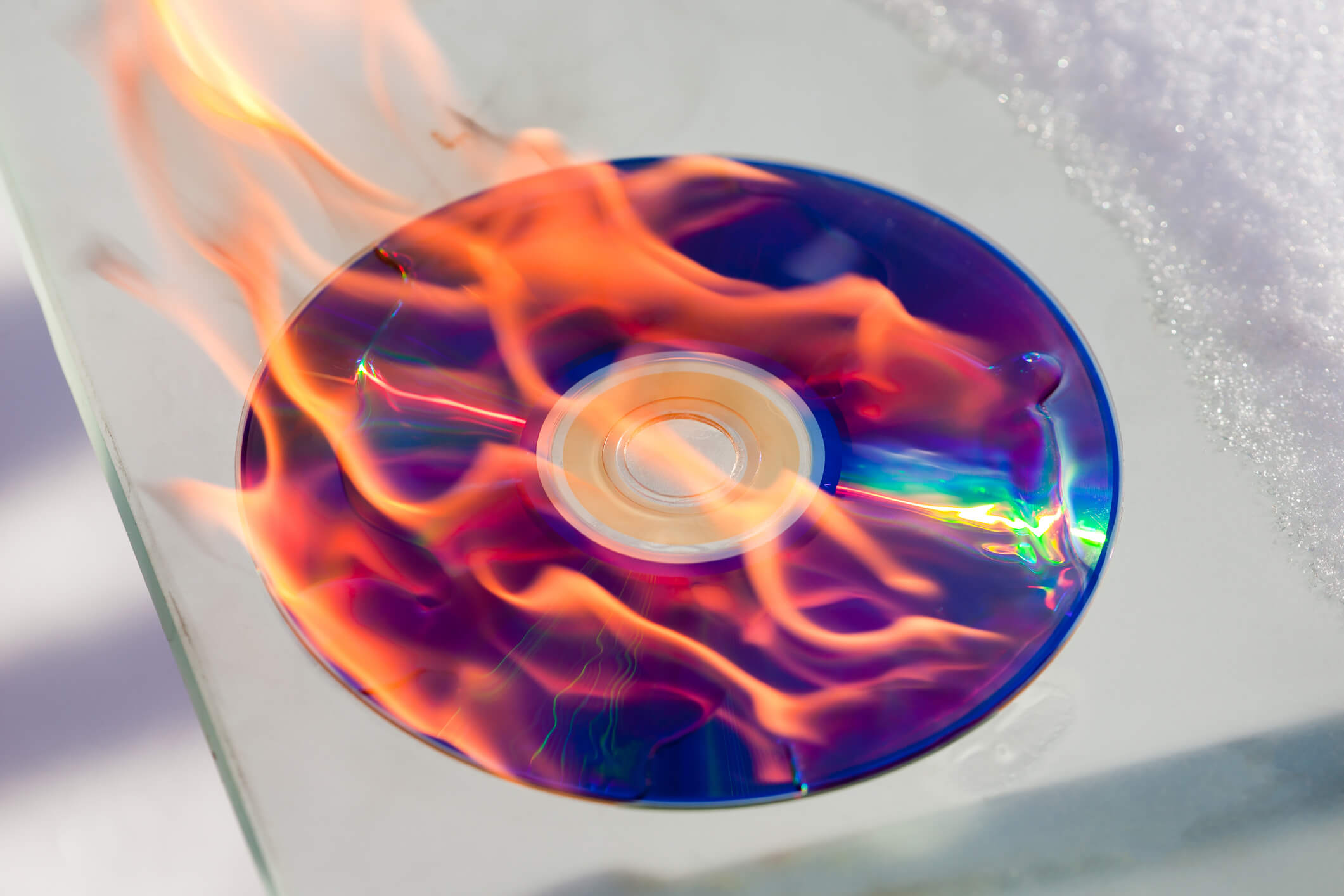
Photograph of a CD-R disc on fire

Enlarge / This is one method of burning a disc.

1001slide / Getty Images

We noted earlier this week that time seems to have run out for Apple’s venerable SuperDrive, which was the last (OEM) option available for folks who still needed to read or create optical media on modern Macs. Andrew’s write-up got me thinking: When was the last time any Ars staffers actually burned an optical disc?

Lee Hutchinson, Senior Technology Editor

It used to be one of the most common tasks I’d do with a computer. As a child of the ’90s, my college years were spent filling and then lugging around giant binders stuffed with home-burned CDs in my car to make sure I had exactly the right music on hand for any possible eventuality. The discs in these binders were all labeled with names like “METAL MIX XVIII” and “ULTRA MIX IV” and “MY MIX XIX,” and part of the fun was trying to remember which songs I’d put on which disc. (There was always a bit of danger that I’d put on “CAR RIDE JAMS XV” to set the mood for a Friday night trip to the movies with all the boys, but I should have popped on “CAR RIDE JAMS XIV” because “CAR RIDE JAMS XV” opens with Britney Spears’ “Lucky”—look, it’s a good song, and she cries in her lonely heart, OK?!—thus setting the stage for an evening of ridicule. Those were just the kinds of risks we took back in those ancient days.)

It took a while to try to figure out what the very last time I burned a disc was, but I’ve narrowed it down to two possibilities. The first (and less likely) option is that the last disc I burned was a Windows 7 install disc because I’ve had a Windows 7 install disc sitting in a paper envelope on my shelf for so long that I can’t remember how it got there. The label is in my handwriting, and it has a CD key written on it. Some quick searching shows I have the same CD key stored in 1Password with an “MSDN/Technet” label on it, which means I probably downloaded the image from good ol’ TechNet, to which I maintained an active subscription for years until MS finally killed the affordable version.

But I think the actual last disc I burned is still sitting in my car’s CD changer. It’s been in there so long that I’d completely forgotten about it, and it startled the crap out of me a few weeks back when I hopped in the car and accidentally pressed the “CD” button instead of the “USB” button. It’s an MP3 CD instead of an audio CD, with about 120 songs on it, mostly picked from my iTunes “’80s/’90s” playlist. It’s pretty eclectic, bouncing through a bunch of songs that were the backdrop of my teenage years—there’s some Nena, some Stone Temple Pilots, some Michael Jackson, some Tool, some Stabbing Westward, some Natalie Merchant, and then the entire back half of the CD is just a giant block of like 40 Cure songs, probably because I got lazy and just started lasso-selecting.

It turns out I left CDs the same way I came to them—with a giant mess of a mixtape.

Connor McInerney, Social Media Manager

Like many people, physical media for me is deeply embedded with sentimentality; half the records in my vinyl collection are hand-me-downs from my parents, and every time I put one on, their aged hiss reminds me that my folks were once my age experiencing this music in the same way. This goes doubly so for CDs as someone whose teen years ended with the advent of streaming, and the last CD I burned is perhaps the most syrupy, saccharine example of this media you can imagine—it was a mixtape for the girl I was dating during the summer of 2013, right before we both went to college.

In hindsight this mix feels particularly of its time. I burned it using my MacBook Pro (the mid-2012 model was the last to feature a CD/DVD drive) and made the artwork by physically cutting and pasting a collage together (which I made the mix’s digital artwork by scanning and adding in iTunes). I still make mixes for people I care about using Spotify—and I often make custom artwork for said playlists with the help of Photoshop—but considering the effort that used to be required, the process feels unsurprisingly unsatisfying in comparison.

As for the musical contents of the mix, imagine what an 18-year-old Pitchfork reader was listening to in 2013 (Vampire Weekend, Postal Service, Fleet Foxes, Bon Iver, and anything else you might hear playing while shopping at an Urban Outfitters) and you’ve got a pretty close approximation.

Ars asks: What was the last CD or DVD you burned? Read More »

ars-is-seeking-a-seasoned-senior-reporter-for-all-things-google

Ars is seeking a seasoned senior reporter for all things Google

get your ron on —

Got feelings about the future of AI and/or phone bezel width? Come apply!

A photograph of

Enlarge / If you get hired for this position, you’ll be provided an assistant. It’s this guy. This guy is your assistant. His name is “Googly.”

Google is a company in transformation—but “from what and “to what are not always clear. To catalog and examine Google’s moves in this new era of generative AI, Ars Technica is hiring a Senior Technology Reporter to focus on Google, AI, Android, and search. While attention to so-called “consumer products” will be important, this role will be more focused on Google’s big moves as a technology and infrastructure company, moves often made to counter perceived threats from companies like OpenAI, Microsoft, and Perplexity. Informed skepticism is the rule around here, so we’re looking for someone with the chops to bring a critical eye to some deep technical and business issues.

As this is a senior role owning an important beat, it is not an entry-level position. We’re looking for someone who can primarily self-direct when it comes to their reporting and someone who is comfortable working remotely within a similarly remote team. We’d also like someone who can bring to the table deep and intelligent analyses on broader Google topics while also hitting smaller daily news stories.

This is a full-time union job with benefits.

All candidates:

  • Must have prior professional experience in technology journalism
  • Must be living in and eligible to work in the United States
  • Should expect to travel two to three times per year for major event coverage
  • Must be comfortable with fully remote work

The full job description and official details can all be found at the listing on the Condé Careers site. If this sounds like the job for you, please apply!

Ars is seeking a seasoned senior reporter for all things Google Read More »

i-abandoned-openlitespeed-and-went-back-to-good-ol’-nginx

I abandoned OpenLiteSpeed and went back to good ol’ Nginx

Adventures in server babysitting —

One weather site’s sudden struggles, and musings on why change isn’t always good.

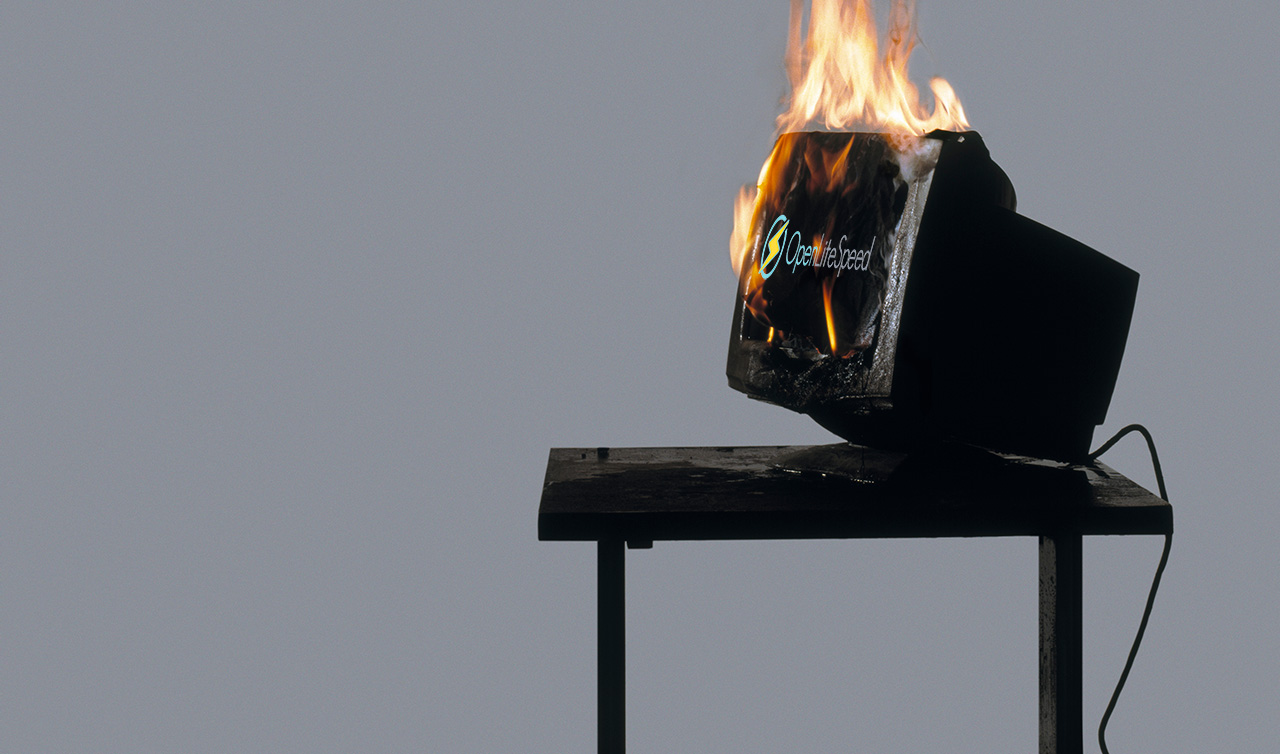
Ish is on fire, yo.

Enlarge / Ish is on fire, yo.

Since 2017, in what spare time I have (ha!), I help my colleague Eric Berger host his Houston-area weather forecasting site, Space City Weather. It’s an interesting hosting challenge—on a typical day, SCW does maybe 20,000–30,000 page views to 10,000–15,000 unique visitors, which is a relatively easy load to handle with minimal work. But when severe weather events happen—especially in the summer, when hurricanes lurk in the Gulf of Mexico—the site’s traffic can spike to more than a million page views in 12 hours. That level of traffic requires a bit more prep to handle.

Space City Weather!” data-height=”2008″ data-width=”2560″ href=”https://cdn.arstechnica.net/wp-content/uploads/2024/01/Screenshot-2024-01-24-at-9.02.05%E2%80%AFAM.jpg”>Hey, it's <a href=Space City Weather!” height=”235″ src=”https://cdn.arstechnica.net/wp-content/uploads/2024/01/Screenshot-2024-01-24-at-9.02.05%E2%80%AFAM.jpg” width=”300″>

Lee Hutchinson

For a very long time, I ran SCW on a backend stack made up of HAProxy for SSL termination, Varnish Cache for on-box caching, and Nginx for the actual web server application—all fronted by Cloudflare to absorb the majority of the load. (I wrote about this setup at length on Ars a few years ago for folks who want some more in-depth details.) This stack was fully battle-tested and ready to devour whatever traffic we threw at it, but it was also annoyingly complex, with multiple cache layers to contend with, and that complexity made troubleshooting issues more difficult than I would have liked.

So during some winter downtime two years ago, I took the opportunity to jettison some complexity and reduce the hosting stack down to a single monolithic web server application: OpenLiteSpeed.

Out with the old, in with the new

I didn’t know too much about OpenLiteSpeed (“OLS” to its friends) other than that it’s mentioned a bunch in discussions about WordPress hosting—and since SCW runs WordPress, I started to get interested. OLS seemed to get a lot of praise for its integrated caching, especially when WordPress was involved; it was purported to be quite quick compared to Nginx; and, frankly, after five-ish years of admining the same stack, I was interested in changing things up. OpenLiteSpeed it was!

check my blog. Yeah, I still have a blog. I’m old.” data-height=”1442″ data-width=”2318″ href=”https://cdn.arstechnica.net/wp-content/uploads/2024/01/Screen-Shot-2022-06-09-at-6.37.47-AM-1.jpg”>The OLS admin console, showing vhosts. This is from my personal web server rather than the Space City Weather server, but it looks the same. If you want some deeper details on the OLS config I was using, <a href=check my blog. Yeah, I still have a blog. I’m old.” height=”398″ src=”https://cdn.arstechnica.net/wp-content/uploads/2024/01/Screen-Shot-2022-06-09-at-6.37.47-AM-1.jpg” width=”640″>

Enlarge / The OLS admin console, showing vhosts. This is from my personal web server rather than the Space City Weather server, but it looks the same. If you want some deeper details on the OLS config I was using, check my blog. Yeah, I still have a blog. I’m old.

Lee Hutchinson

The first significant adjustment to deal with was that OLS is primarily configured through an actual GUI, with all the annoying potential issues that brings with it (another port to secure, another password to manage, another public point of entry into the backend, more PHP resources dedicated just to the admin interface). But the GUI was fast, and it mostly exposed the settings that needed exposing. Translating the existing Nginx WordPress configuration into OLS-speak was a good acclimation exercise, and I eventually settled on Cloudflare tunnels as an acceptable method for keeping the admin console hidden away and notionally secure.

Just a taste of the options that await within the LiteSpeed Cache WordPress plugin.

Enlarge / Just a taste of the options that await within the LiteSpeed Cache WordPress plugin.

Lee Hutchinson

The other major adjustment was the OLS LiteSpeed Cache plugin for WordPress, which is the primary tool one uses to configure how WordPress itself interacts with OLS and its built-in cache. It’s a massive plugin with pages and pages of configurable options, many of which are concerned with driving utilization of the Quic.Cloud CDN service (which is operated by LiteSpeed Technology, the company that created OpenLiteSpeed and its for-pay sibling, LiteSpeed).

Getting the most out of WordPress on OLS meant spending some time in the plugin, figuring out which of the options would help and which would hurt. (Perhaps unsurprisingly, there are plenty of ways in there to get oneself into stupid amounts of trouble by being too aggressive with caching.) Fortunately, Space City Weather provides a great testing ground for web servers, being a nicely active site with a very cache-friendly workload, and so I hammered out a starting configuration with which I was reasonably happy and, while speaking the ancient holy words of ritual, flipped the cutover switch. HAProxy, Varnish, and Nginx went silent, and OLS took up the load.

I abandoned OpenLiteSpeed and went back to good ol’ Nginx Read More »

the-20-most-read-stories-of-2023

The 20 most-read stories of 2023

The 20 most-read stories of 2023

Aurich Lawson | Getty Images

Every so often, you live through a year that you know you’re going to remember. Sometimes it’s because of a personal milestone. Other times it’s because of noteworthy events that affected all of us in one way or another. And in some years, it’s because we were all surprised by unanticipated and rapid technological advances.

2023 definitely will be a year that will be remembered. On the tech side, the biggest story was AI, due in no small part to rapid advances in large language models. We had news about space flight, hackers, operating systems, and even music players.

Read on to find out which stories resonated the most with our readers throughout the year.

20. The Ars guide to time travel in the movies

Depending on the screenwriting, time travel can be one of the best plot devices in a movie… or one of the most confusing, if done poorly. As we have come to better understand the nature of time, Hollywood has begun producing more flicks that use it as part of the story.

Our ace science reporter Jennifer Ouellette happens to be married to a physicist with his own subreddit, so we decided to turn them loose on the topic of time travel and the movies to see which films had the best combination of entertainment and scientific rigor. Read on to find out where Bill & Ted’s Excellent Adventure, 12 Monkeys, and Hot Tub Time Machine ended up.

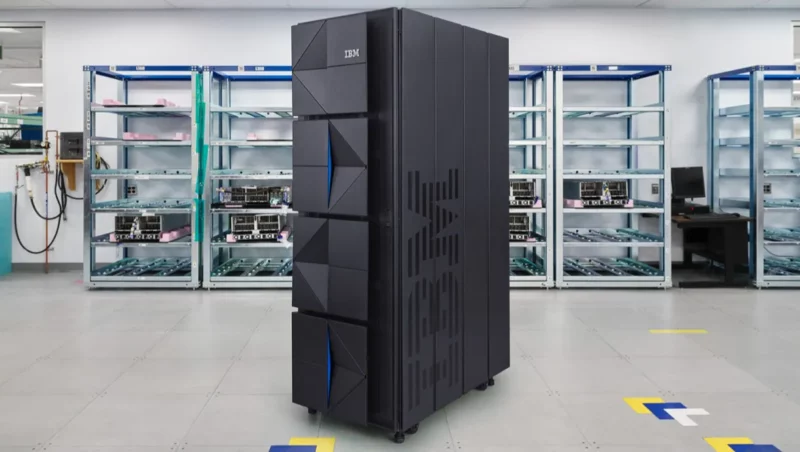
19. The IBM mainframe: How it runs and why it survives

Largely considered relics of a bygone computing era, over 10,000 mainframe computers are still used today. Used primarily by Fortune 500 companies, most of these mainframes are sold by IBM. With a lineage dating back to technological advancements of the 1950s, these computers still excel with some high-volume use cases, especially those involving banking.

There used to be a bunch of companies in the mainframe game, but Rand, GE, NEC, Honeywell, and just about everyone else either no longer exists or is no longer building mainframes. IBM is now the only mainframe manufacturer that matters, so check out the story to learn why some companies still do some of their computing on mainframes instead of in the cloud.

18. macOS 14 Sonoma: The Ars Technica review

I cannot remember a top-20 list that didn’t include a macOS review. But this may be the furthest down the list it has ever appeared, and this is actually the only OS review to appear on this year’s list.

This is due in no small part to how major OS updates come out like clockwork once a year, even when there are no major new features to excite users. These days, OS updates can be met with grumbling due to unnecessary UI changes and hardware obsolescence. Sonoma is another “low key” update, as Andrew Cunningham described it in his usual, comprehensive review. Call it “Ventura plus” or whatever you like—Sonoma is business as usual.

17. Android app from China executed 0-day exploit on millions of devices

Ah, it’s our first 0-day of the 2023 countdown. This one primarily affected users of third-party app stores and involved the Pinduoduo app, downloaded millions of times. As Dan Goodin described it:

“[T]he malicious Pinduoduo app includes functionality allowing for the app to be installed covertly with no ability to be uninstalled, falsely inflating the number of Pinduoduo daily active users and monthly active users, uninstalling competitor apps, stealing user privacy data, and evading various privacy compliance regulations.”

Yikes.

The versions of the app in Google Play and Apple’s App Store did not contain the backdoor.

The 20 most-read stories of 2023 Read More »