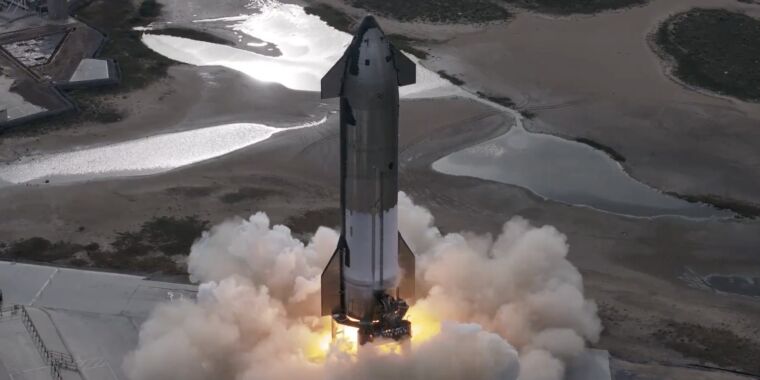
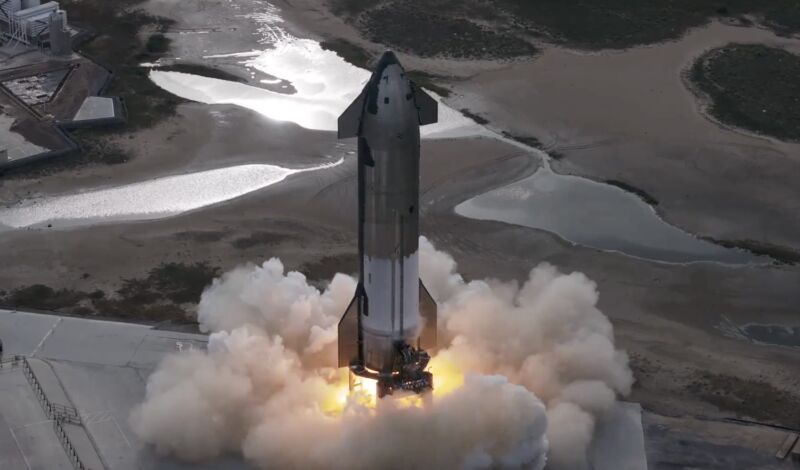
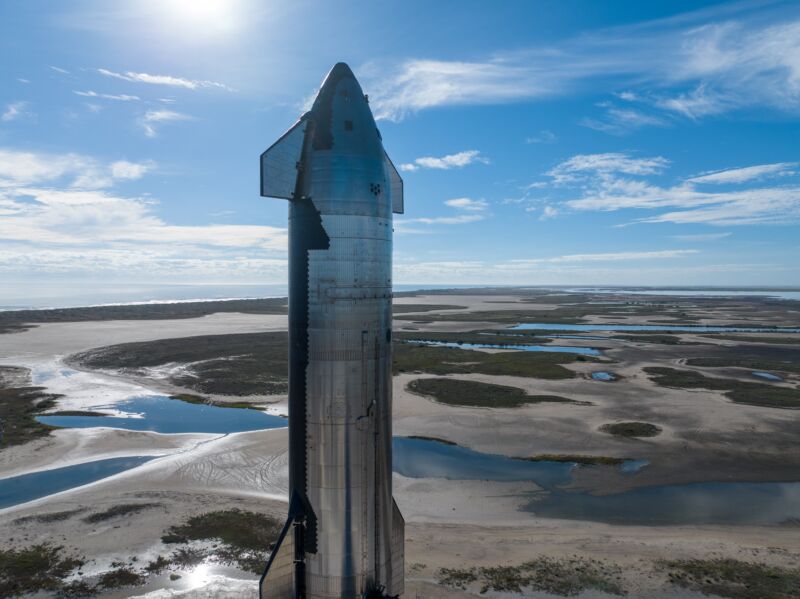
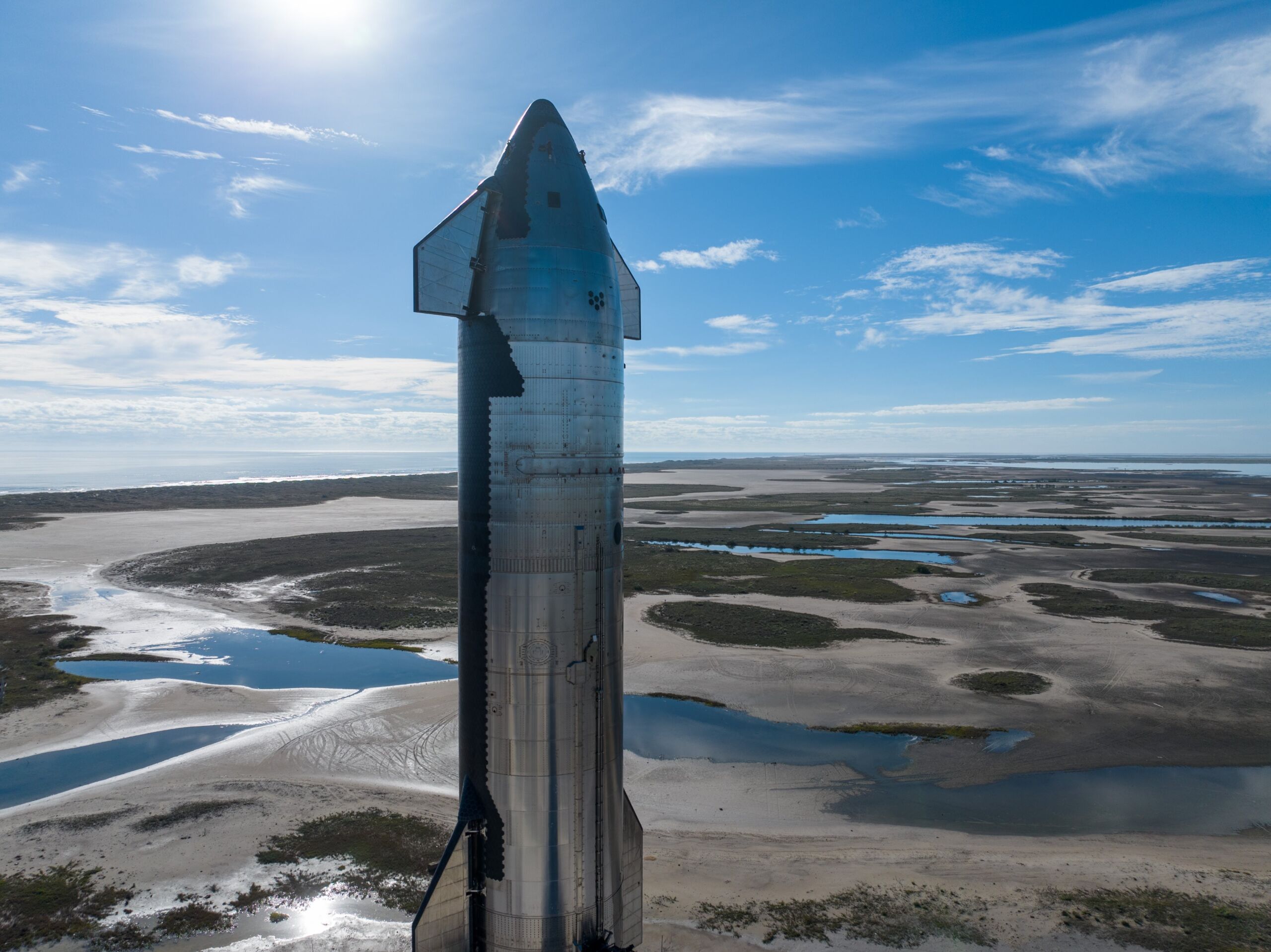
Enlarge/ Ship 28, the Starship for SpaceX’s next full-scale test flight, fires up one of its engines on December 29 in Texas.
SpaceX
It’s no secret that Elon Musk has big ambitions for SpaceX’s Starship mega-rocket. This is the vehicle that, with plenty of permutations and upgrades, Musk says will ferry cargo and people across the Solar System to build a settlement on Mars, making humanity a multi-planetary species and achieving the billionaire’s long-standing dream.
Of course, that is a long way off. SpaceX is still working on getting Starship into orbit or close to it, an achievement that appears to be possible this year. Then, the company will start launching Starlink satellites on Starship missions while testing in-space refueling technology needed to turn Starship into a human-rated Moon lander for NASA.
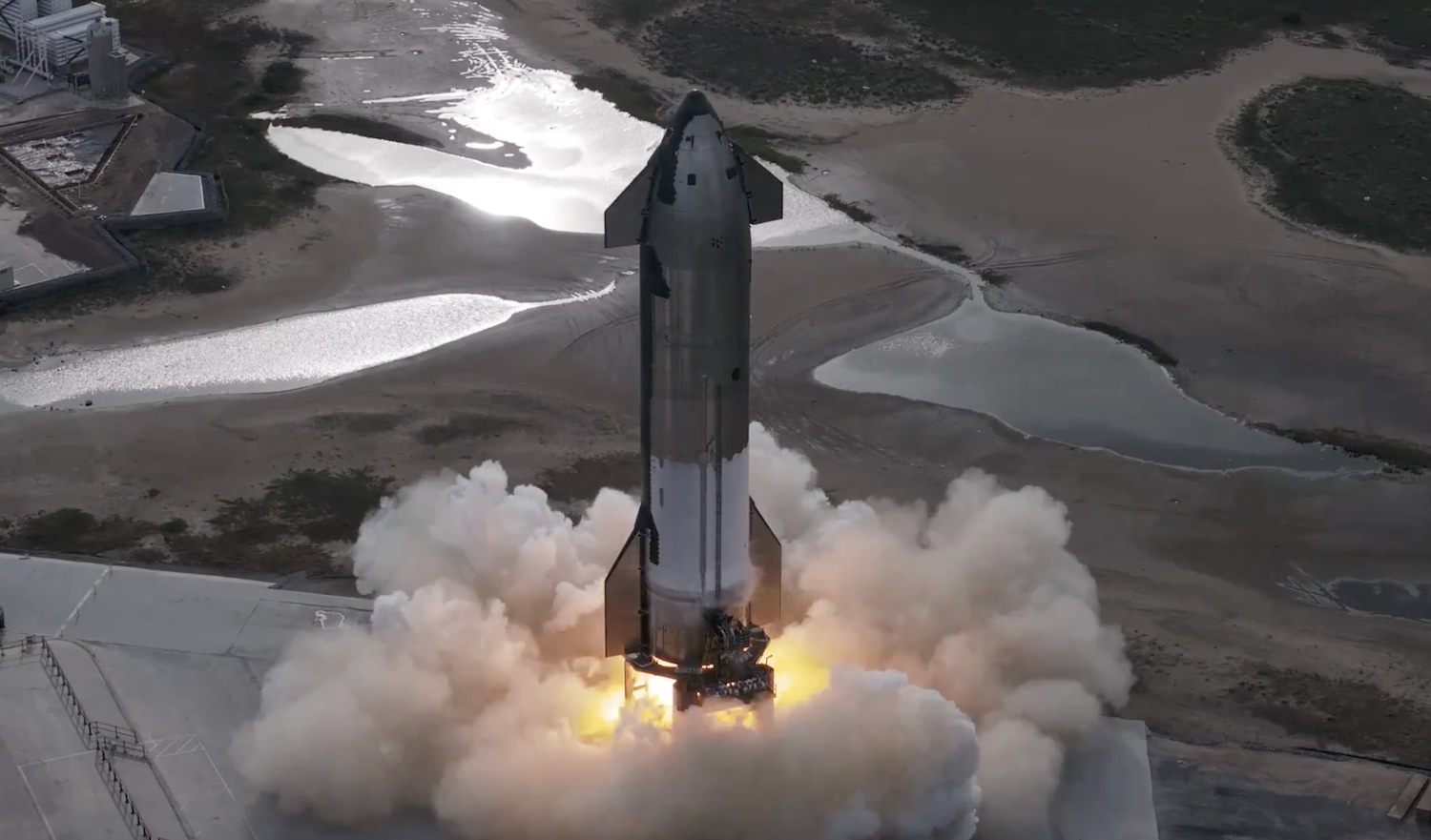
SpaceX’s South Texas team is progressing toward the third full-scale Starship test flight. On December 20, the Starship’s upper stage slated for the next test flight completed a test-firing of its Raptor engines at the Starbase launch site on the Texas Gulf Coast. Nine days later, the 33-engine Super Heavy booster fired up on the launch pad for its own static fire test. On the same day, SpaceX hot-fired the Starship upper stage once again on a test stand next to the launch pad.
With those milestones complete, ground teams rolled the booster back to its hangar for final preflight checks and reconfigurations. The ship, too, will need to be rolled back to its high bay.
SpaceX could be weeks away from having both vehicles ready to fly, but the company hasn’t released an update on lessons learned from the previous Starship test flight in November. That flight was largely successful, with apparently flawless performance from the 33 engines on the Super Heavy booster during launch. The Starship upper stage reached space before self-destructing downrange over the Gulf of Mexico. The booster exploded during a maneuver to bring itself back to Earth for a controlled splashdown at sea.
The company’s engineers will want to understand and correct whatever caused those issues. The Federal Aviation Administration then needs to approve SpaceX’s investigation into the last Starship flight before issuing a new commercial launch license. When it flies again, Starship will try to reach near orbital velocity, enough speed to travel most of the way around the world before reentering the atmosphere near Hawaii.
Verifying the performance of Starship’s heat shield tiles during reentry will be valuable learning for SpaceX, but Starship first needs to be fully successful with a launch. This is just the start for the privately funded Starship program.
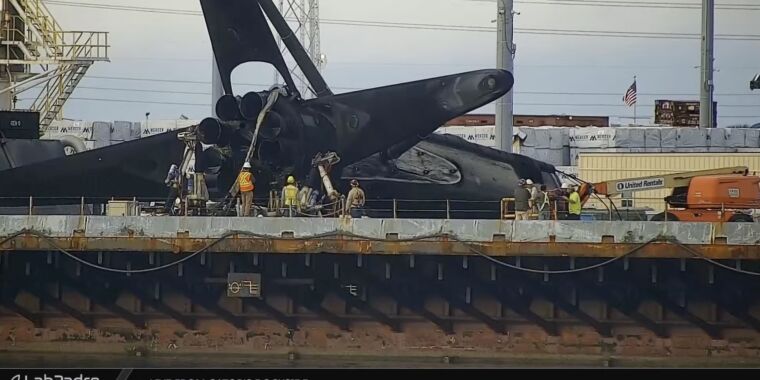
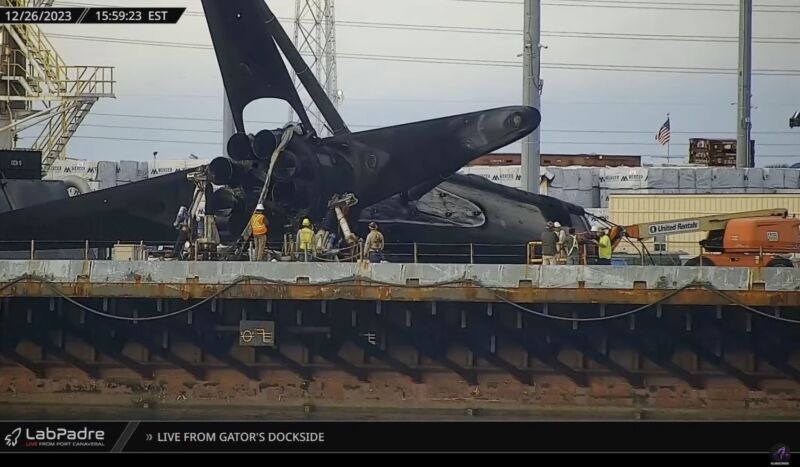
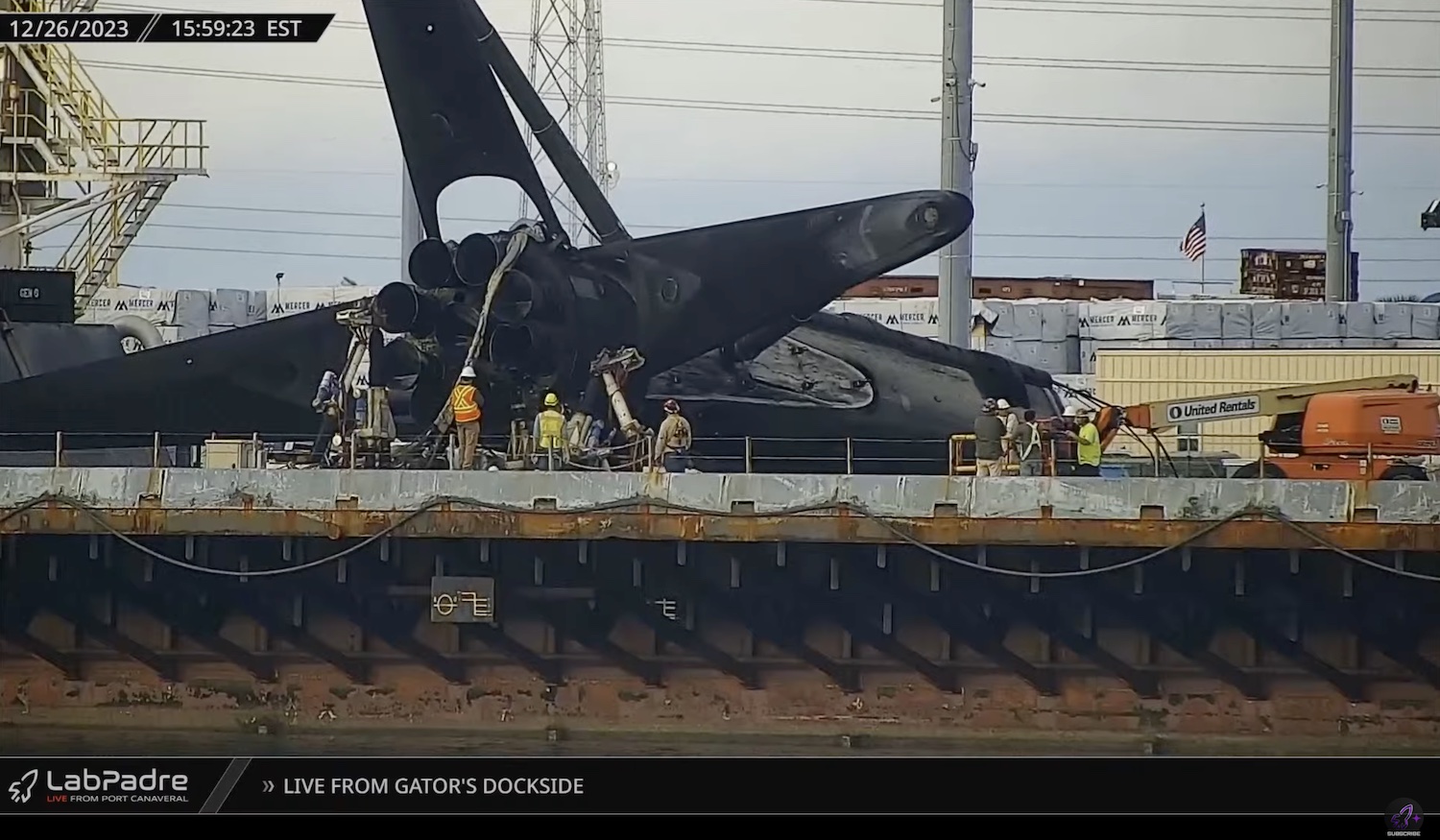
Enlarge/ One of the most historic rockets in SpaceX’s fleet toppled over Christmas Day on the return trip to Cape Canaveral, Florida, following its previous mission.
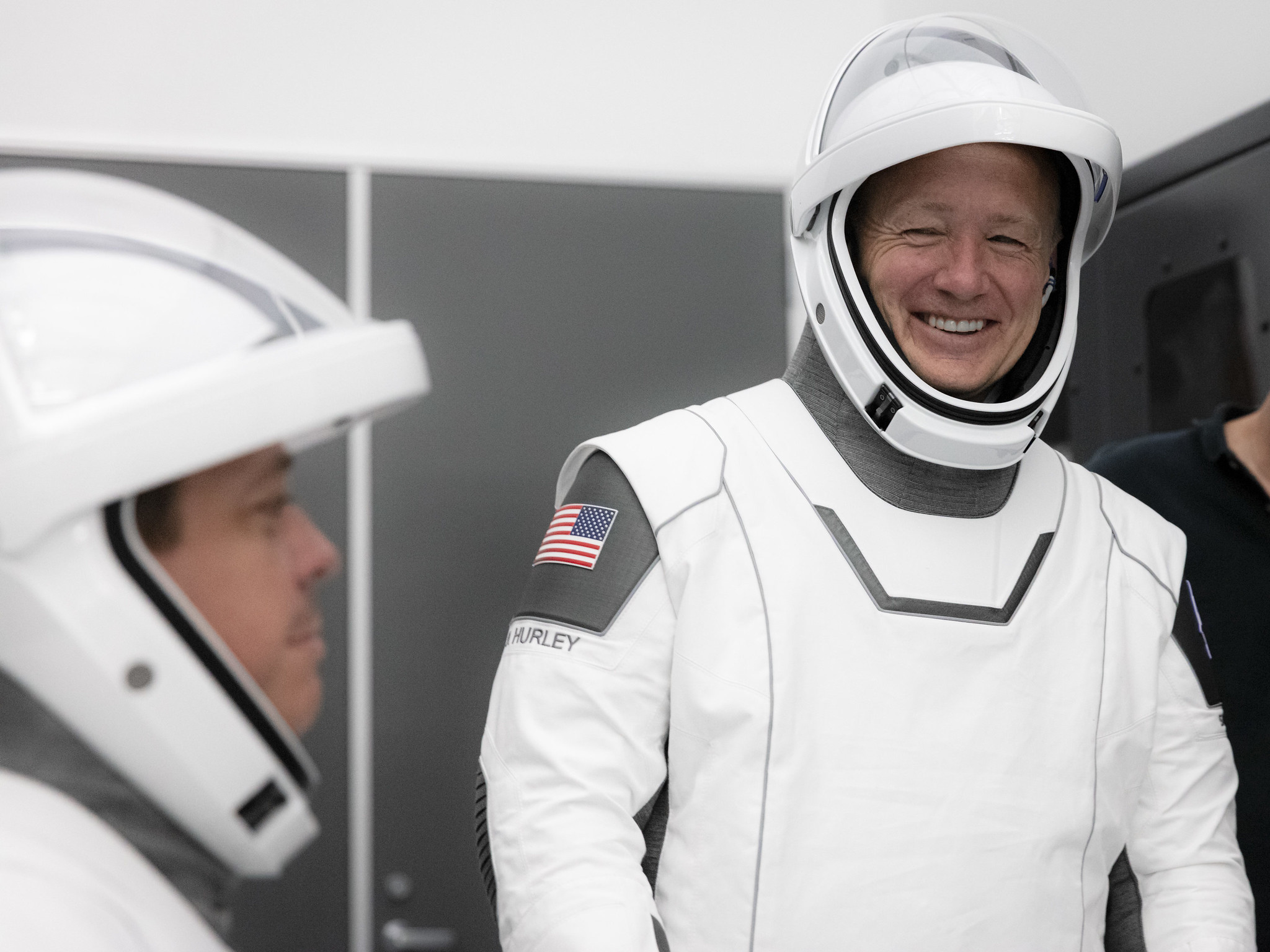
The Falcon 9 rocket that launched NASA astronauts Doug Hurley and Bob Behnken on SpaceX’s first crew mission in 2020 launched and landed for the 19th and final time just before Christmas, then tipped over on its recovery ship during the trip back to Cape Canaveral, Florida.
This particular booster, known by the tail number B1058, was special among SpaceX’s fleet of reusable rockets. It was the fleet leader, having tallied 19 missions over the course of more than three-and-a-half years. More importantly, it was the rocket that thundered into space on May 30, 2020, on a flight that made history on several counts.
It was the first time a commercial rocket and spacecraft launched people into orbit, and ended a nine-year gap in America’s ability to send astronauts into orbit from US soil, following the retirement of the space shuttle. This mission, known as Demo-2 and launched by SpaceX under contract with NASA, ended US reliance on Russian rockets to send crews to the International Space Station.
SpaceX recovered the booster on one of its offshore landing platforms after the historic launch in May 2020, while the Falcon 9’s upper stage fired into orbit with the Crew Dragon spacecraft containing Hurley and Behnken. Then, the rocket went into SpaceX’s fleet rotation to launch 18 more times, primarily on missions to deploy Starlink Internet satellites.
Hurley, who commanded the Crew Dragon spacecraft on the Demo-2 mission, kept up with the booster’s exploits well after his return to Earth. He regularly exchanged text messages with Behnken and Kiko Dontchev, SpaceX’s vice president of launch, as the rocket just kept flying.
“For Bob and I, that particular booster was always pretty special for a lot of reasons,” said Hurley, a veteran Marine Corps fighter pilot who retired from NASA’s astronaut corps in 2021. He now works at Northrop Grumman.
An inauspicious ending
Hurley told Ars he would like to see the booster’s remains displayed in a museum alongside the Crew Dragon spacecraft (named Endeavour) he and Behnken flew in 2020. “In a perfect world, I’d love to see Endeavour and at least now part of that booster in the Smithsonian or in a museum somewhere,” he said.
“It’s kind of a bummer,” Hurley told Ars. But he understands SpaceX got a lot of use out of this rocket. SpaceX also has a lot of love for Hurley and Behnken. The company named two of its recovery ships for payload fairings “Bob” and “Doug” after the astronaut duo.
“SpaceX has got a business to run,” he said. “I think, at this point, certainly Endeavour is going to fly more, but this booster isn’t, so hopefully they can find a spot to display it somewhere. Even part of it would look kind of cool somewhere. They could figure something out … People, I think, can get a lot of inspiration from seeing stuff that’s actually flown in space, and being able to get right up close to it, I think, is a big deal to a lot of people.”
Enlarge/ Doug Hurley, right, commanded the Crew Dragon spacecraft on the Demo-2 mission in 2020.
NASA
The 19th launch of this booster on December 23 was just as successful as the previous 18, with a smooth climb into space before shutting down its nine kerosene-fueled Merlin engines. The booster coasted to the highest point in its trajectory—72 miles (116 kilometers)—before Earth’s gravity pulled it back into the atmosphere.
Two engine burns slowed the rocket as it descended toward SpaceX’s drone ship positioned near the Bahamas, and then four carbon-fiber legs deployed moments before an on-target touchdown. Then, as usual, the recovery vessel started its slow journey back to Florida with the 15-story-tall booster standing vertically.
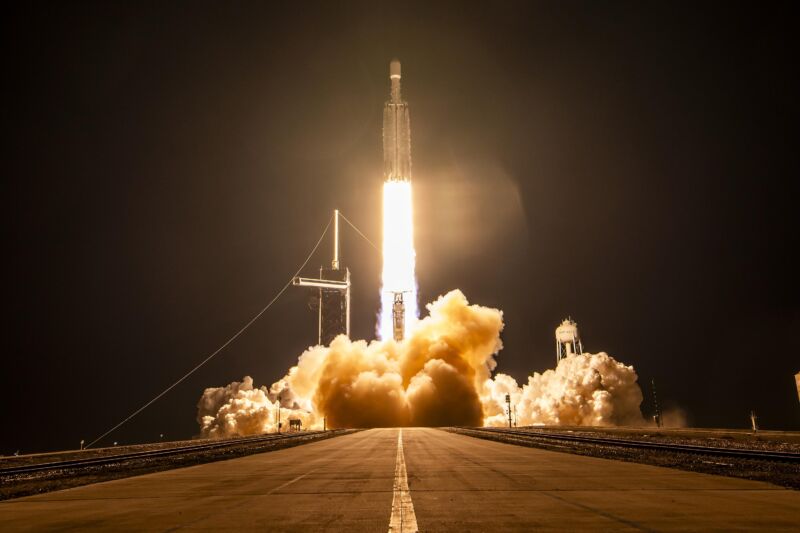
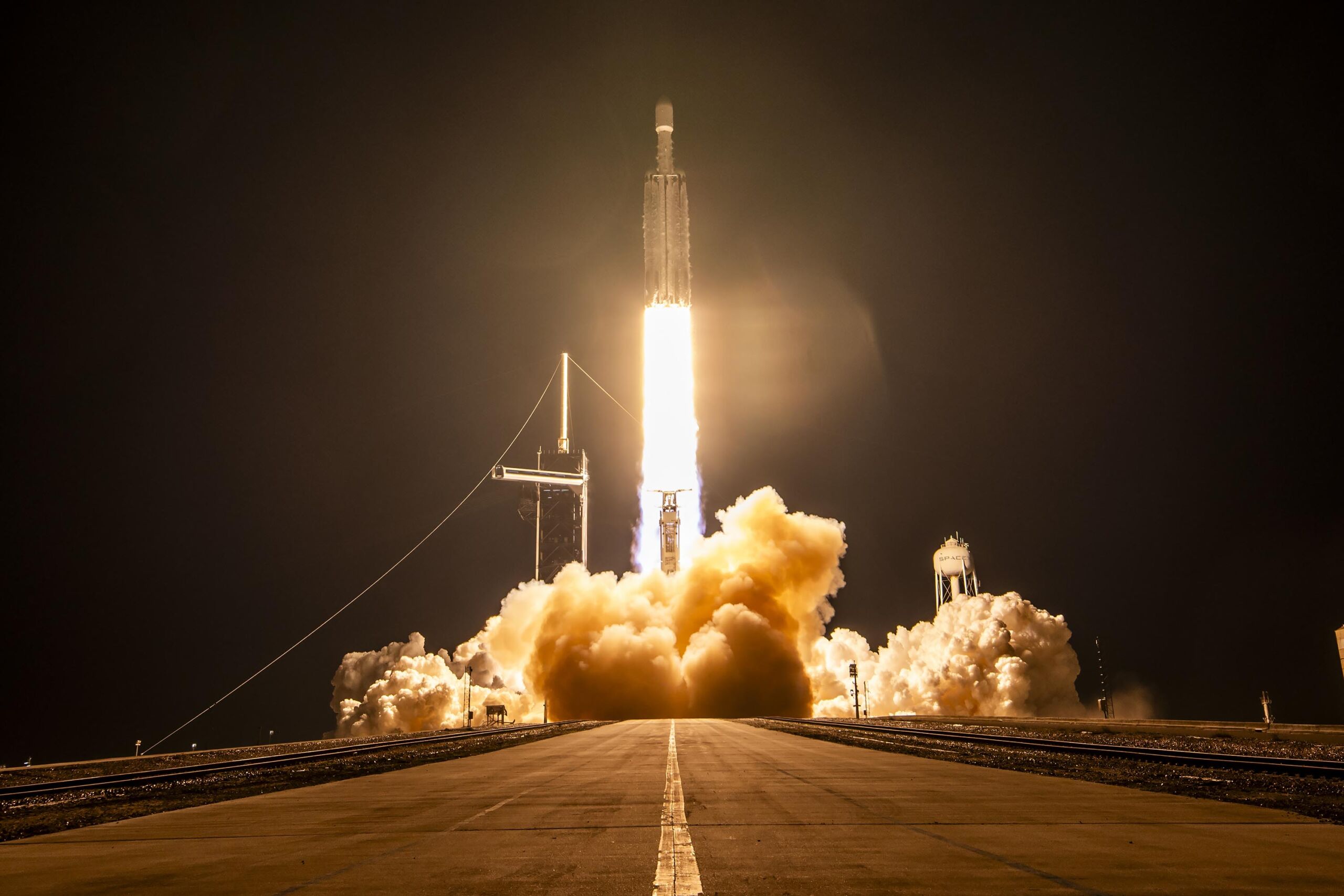
Enlarge/ SpaceX’s Falcon Heavy rocket lifted off Thursday night from NASA’s Kennedy Space Center in Florida.
It seems like SpaceX did everything this year but launch 100 times.
On Thursday night, the launch company sent two more rockets into orbit from Florida. One was a Falcon Heavy, the world’s most powerful rocket in commercial service, carrying the US military’s X-37B spaceplane from a launch pad at NASA’s Kennedy Space Center at 8: 07 pm EST (01: 07 UTC). Less than three hours later, at 11: 01 pm EST (04: 01 UTC), SpaceX’s workhorse Falcon 9 launcher took off a few miles to the south with a payload of 23 Starlink Internet satellites.
The Falcon Heavy’s two side boosters and the Falcon 9’s first stage landed back on Earth for reuse.
These were SpaceX’s final launches of 2023. SpaceX ends the year with 98 flights, including 91 Falcon 9s, five Falcon Heavy rockets, and two test launches of the giant new Super Heavy-Starship rocket. These flights were spread across four launch pads in Florida, California, and Texas.
Elon Musk, SpaceX’s founder and CEO, set a goal of 100 launches this year, up from the company’s previous record of 61 in 2022. For a while, it looked like SpaceX was on track to accomplish the feat, but a spate of bad weather and technical problems with the final Falcon Heavy launch of the year kept the company short of 100 flights.
King of ‘upmass’
“Congrats to the entire Falcon team at SpaceX on a record breaking 96 launches in 2023!” wrote Jon Edwards, vice president of Falcon launch vehicles at SpaceX, on the social media platform X. “I remember when Elon Musk first threw out a goal of 100 launches as a thought experiment, intended to unlock our thinking as to how we might accelerate Falcon across all levels of production and launch.
“Only a few years later and here we are,” Edwards wrote. “I’m so incredibly proud to work with the best team on Earth, and so excited to see what we achieve next year.”
It’s important to step back and put these numbers in context. No other family of orbit-class rockets has ever flown more than 63 times in a year. SpaceX’s Falcon rockets have now exceeded this number by roughly 50 percent. SpaceX’s competitors in the United States, such as United Launch Alliance and Rocket Lab, managed far fewer flights in 2023. ULA had three missions, and Rocket Lab launched its small Electron booster 10 times.
Nearly two-thirds of SpaceX’s missions this year were dedicated to delivering satellites to orbit for SpaceX’s Starlink broadband network, a constellation that now numbers more than 5,000 spacecraft.
SpaceX also launched five missions with the Falcon Heavy rocket, created by aggregating three Falcon 9 rocket boosters together. Highlights from SpaceX’s 2023 Falcon launch schedule included three crew missions to the International Space Station, and the launch of NASA’s Psyche mission to explore a metallic asteroid.
In all, SpaceX’s Falcon rockets hauled approximately 1,200 metric tons, or more than 2.6 million pounds, of payload mass into orbit this year. This “upmass” is equivalent to nearly three International Space Stations. Most of this was made up of mass-produced Starlink satellites.
Enlarge/ Ship 28 is seen after being moved to SpaceX’s launch site in South Texas.
SpaceX
Just one month after the second flight of its massive Starship rocket, SpaceX is making progress toward a third attempt.
On Wednesday, at 1: 37 pm local time in South Texas, the company performed a static fire test of the next Starship—which bears the serial number Ship 28. The test of the rocket’s six engines appeared to be nominal as the Raptors ignited for a handful of seconds. The rocket and ground support equipment looked undamaged after the test.
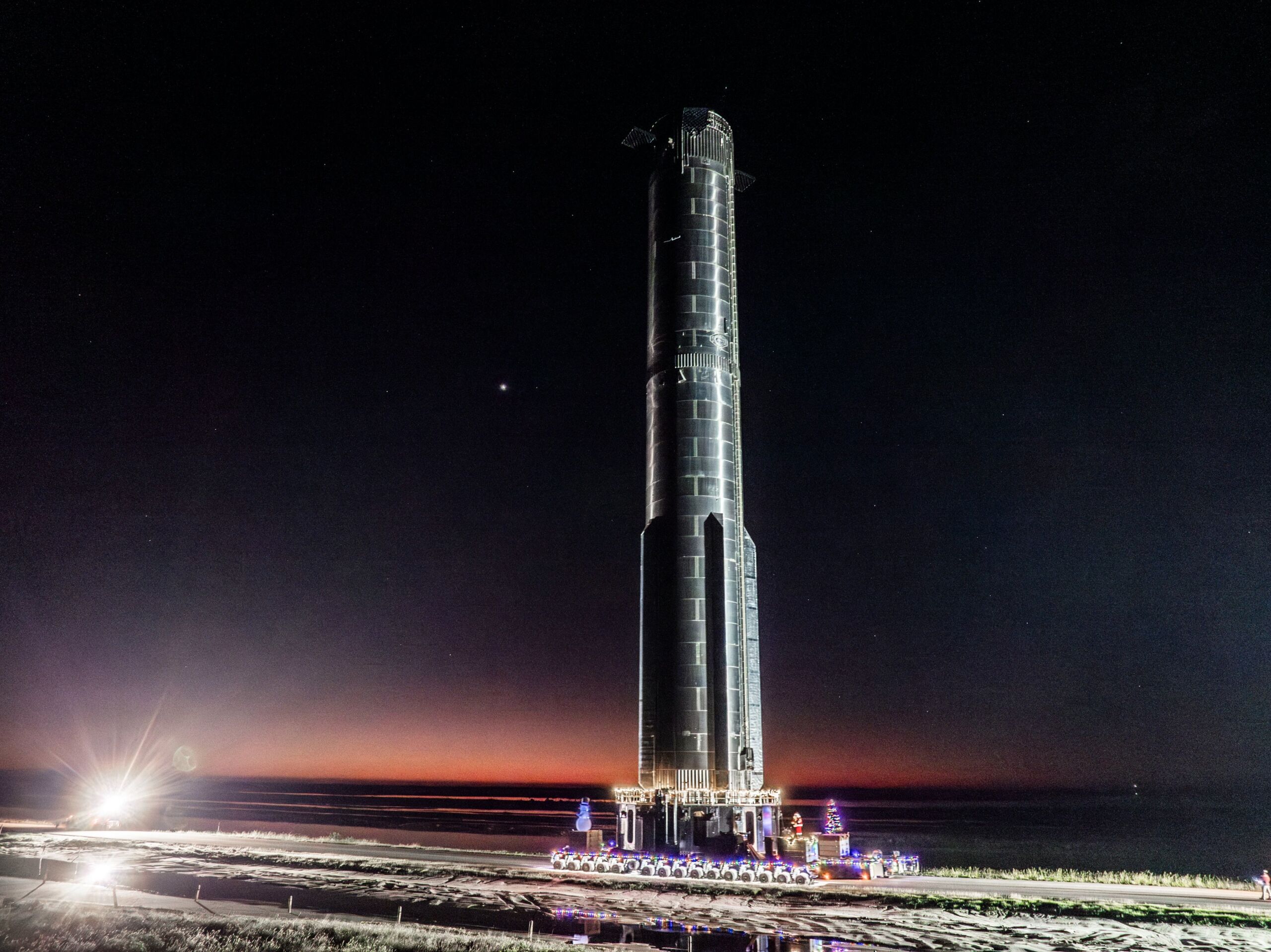
Also this week SpaceX rolled the booster to be used for the next attempt—Booster 10—to the launch site at its Starbase facility in South Texas. The vehicle has since been lifted onto the orbital launch mount. Presumably this rocket, too, will undergo a static fire test in the coming days.
After these tests are complete the Starship upper stage is likely to be stacked on top of the booster to complete the launch vehicle. At this point it seems likely that the hardware for “Integrated Flight Test 3” would be substantially ready to launch.
With this third flight, SpaceX will seek to fly further into a profile that will see Starship ultimately make a controlled landing into the ocean north of Kauai, Hawaii. SpaceX may also perform an in-space propellant transfer test, but this has not been confirmed.
Starship’s second launch attempt, on November 18, was notably more successful than the first attempt in April 2023. The second flight test demonstrated substantial improvements in engine reliability and provided valuable data about a challenging “hot staging” maneuver to separate the Super Heavy booster from the Starship upper stage.
Another test flight soon?
Recently Kathy Lueders, SpaceX’s general manager for the Starbase launch site near Brownsville, said the company will target the first quarter of next year for this third test flight. “It would be great if we were in the first quarter, definitely,” she said. “Elon [Musk] obviously would probably say the end of December, but I don’t think we’ll get there.”
Since the second test flight occurred, neither the company nor SpaceX founder Elon Musk has provided a technical update on what ultimately went wrong with the Starship upper stage, which failed a few minutes into its flight, or why the booster was ultimately lost after it separated from the Starship vehicle.
Enlarge/ Booster 10, with a few holiday decorations, is rolled to the launch site in South Texas.
SpaceX
However, far fewer modifications have been made to the rocket hardware or the launch site ahead of this third attempt, suggesting that at least some of the problems may have been flight software-related.
SpaceX has yet to receive regulatory approval for a third launch of Starship. The Federal Aviation Administration characterized the second attempt in November as a “mishap,” while acknowledging that no injuries or public property damage were reported.
After the anomaly, the agency said, via the social media site X, that “the FAA will oversee the @SpaceX-led mishap investigation to ensure SpaceX complies with its FAA-approved mishap investigation plan and other regulatory requirements.” The FAA has provided no additional information in the month since then.
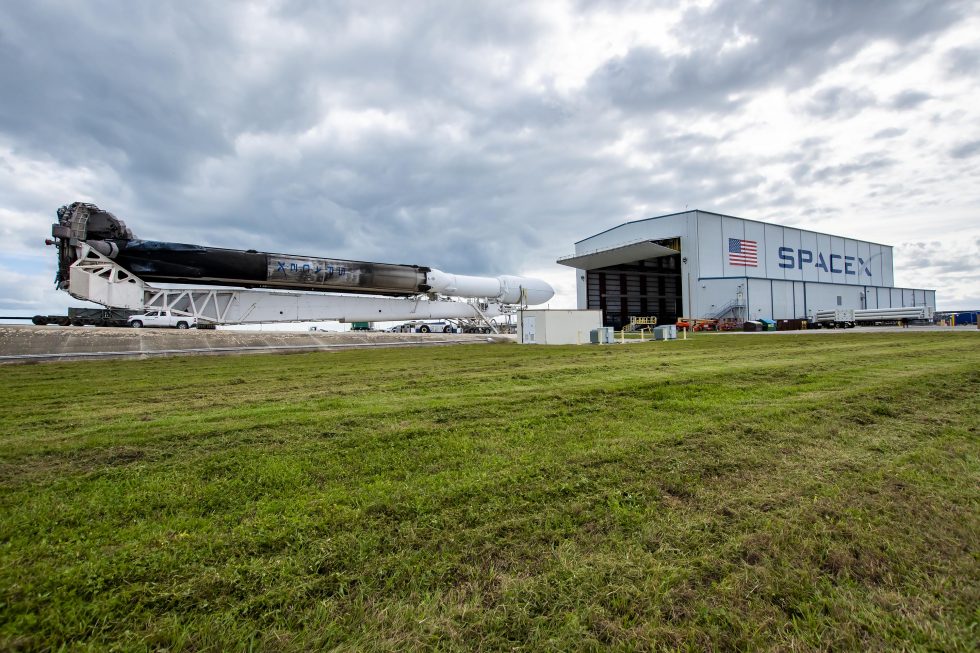
A SpaceX Falcon Heavy rocket is seen outside the company’s hangar at Kennedy Space Center, Florida.
SpaceX
SpaceX and the US Space Force thought they were ready to launch the military’s mysterious X-37B spaceplane this week, but ground teams in Florida need to roll the Falcon Heavy rocket back into its hangar for servicing.
This is expected to push back the launch until at least late December, perhaps longer. SpaceX and Space Force officials have not divulged details about the problems causing the delay.
SpaceX called off a launch attempt Monday night at NASA’s Kennedy Space Center in Florida to resolve a problem with a ground system. A senior Space Force official told Ars on Wednesday that additional issues will cause an additional delay in the launch.
“We’re working through a couple of technical glitches with our SpaceX team that just are going to take a little bit more time to work through,” said Col. James Horne, deputy director of the Space Force’s Assured Access to Space directorate. “We haven’t nailed down a specific launch date yet, but we’re going to have to roll back into the HIF (Horizontal Integration Facility) and work through some things on the rocket.”
Horne, a senior leader on the Space Force team overseeing military launches like this one, said the ground equipment problem that prevented liftoff Monday night could be fixed as soon as Wednesday. But it will take longer to resolve other issues he declined to specify. “We found some things that we need to run some analysis on, so that’s what’s driving the delay,” he said.
SpaceX was similarly vague in its explanation for the delay. In a post on the social media platform X, SpaceX said the company was standing down from the launch this week to “perform additional system checkouts.”
There’s a chance the Falcon Heavy might be back on the launch pad by the end of December or early next year. A SpaceX recovery vessel that was on station for the Falcon Heavy launch in the Atlantic Ocean is returning to shore, suggesting the launch won’t happen anytime soon.
“We’ve got to look at the schedule and balance that with all the other challenges,” Horne said. “But I hope we can get it off before the end of the year.”
Lunar launch date in jeopardy
When it’s ready to fly, the Falcon Heavy launch with the military’s X-37B spaceplane will likely get high priority on SpaceX’s launch schedule. The military’s launch ranges, like the one at Cape Canaveral, are primarily there to serve national security requirements, even though they get a lot more use from commercial space missions.
Depending on how long it’s delayed, this military launch could affect several SpaceX missions currently scheduled to fly in January. Most notably, a Falcon 9 rocket is slated to lift off from the same launch pad in January with the first commercial Moon lander from Intuitive Machines, a Houston-based company contracted to deliver scientific payloads to the lunar surface for NASA.
This robotic mission is one of the first two US-built spacecraft to attempt a Moon landing since the last Apollo landing in 1972. The Intuitive Machines mission, named IM-1, is scheduled to launch during a narrow window from January 12–16.
A few days earlier, as soon as January 8, another commercial lunar lander from Astrobotic is scheduled for liftoff from Cape Canaveral on the first test flight of United Launch Alliance’s new Vulcan rocket. The Astrobotic and Intuitive Machines missions can only launch a few days each month due to limitations imposed by orbital mechanics and lighting conditions at their landing sites. Astrobotic’s Peregrine lander was previously supposed to launch on December 24, but ULA pushed back the launch to perform more testing on the Vulcan rocket.
The landers from Astrobotic and Intuitive Machines are both at Cape Canaveral, waiting for their turn in the Florida spaceport’s busy launch manifest.
The IM-1 mission has to depart Earth from Launch Complex 39A, the same site previously used by the Saturn V rocket and space shuttle. SpaceX has outfitted the pad to top off the Intuitive Machines lander with cryogenic propellant just before launch, a capability unavailable at SpaceX’s other launch pad in Florida. Likewise, LC-39A is the only launch pad capable of supporting Falcon Heavy missions.
It usually takes a couple of weeks to reconfigure LC-39A between Falcon Heavy and Falcon 9 launches. The Falcon Heavy is significantly more powerful, with three Falcon 9 first-stage boosters connected together to haul more massive payloads into orbit.
A private astronaut mission managed by Axiom Space is also in the mix, with a launch date set for January 9. This mission, known as Ax-3, will carry four commercial astronauts aboard a Falcon 9 rocket and Dragon spacecraft on a roughly two-week flight to the International Space Station. Sarah Walker, director of Dragon mission management at SpaceX, said the company hasn’t decided which pad Ax-3 will launch from.
All of SpaceX’s crew missions to date have lifted off from LC-39A, but the company recently constructed a crew access tower and arm to enable astronaut flights to depart from nearby Space Launch Complex 40. This gives SpaceX some flexibility to alleviate launch bottlenecks at LC-39A, which is required for some of the company’s most important missions.
LC-39A will remain the primary launch pad for SpaceX’s crew missions, Walker said Wednesday, but she added: “Having the second pad available enables us to be ultra-responsive to customer needs and growing demand by moving a Dragon over to SLC-40 when the need arises.”
It’s a good problem to have so many interesting payloads vying for a launch slot with SpaceX, but the tyranny of physics and infrastructure constraints could mean one of these missions might have to wait a little longer for a ride to space.
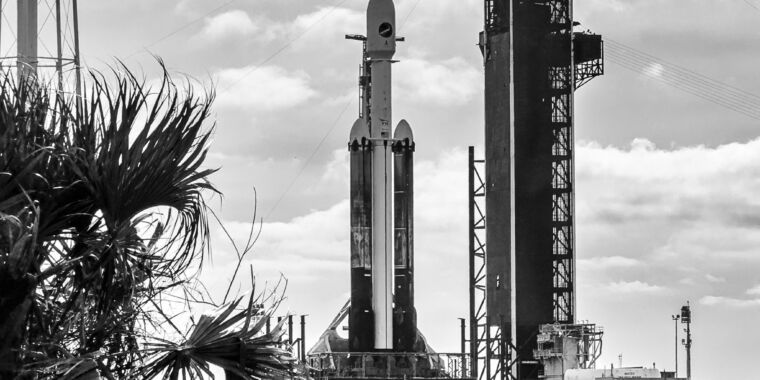
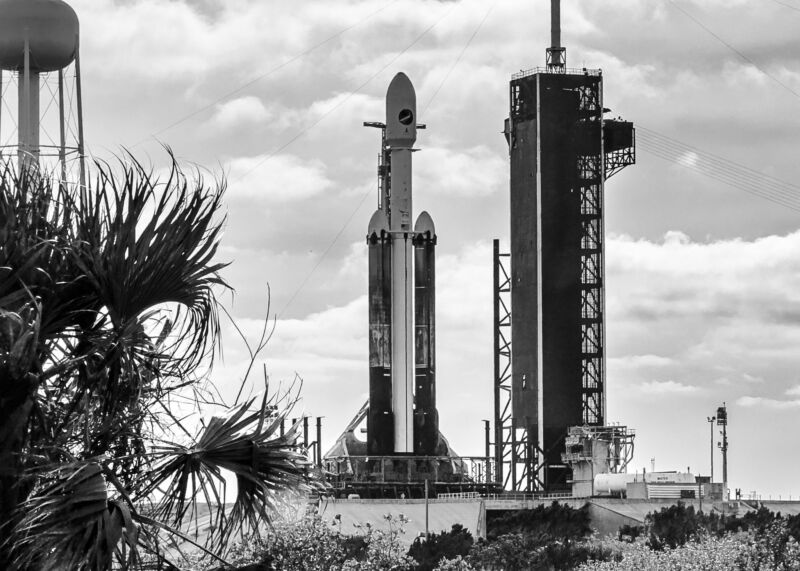
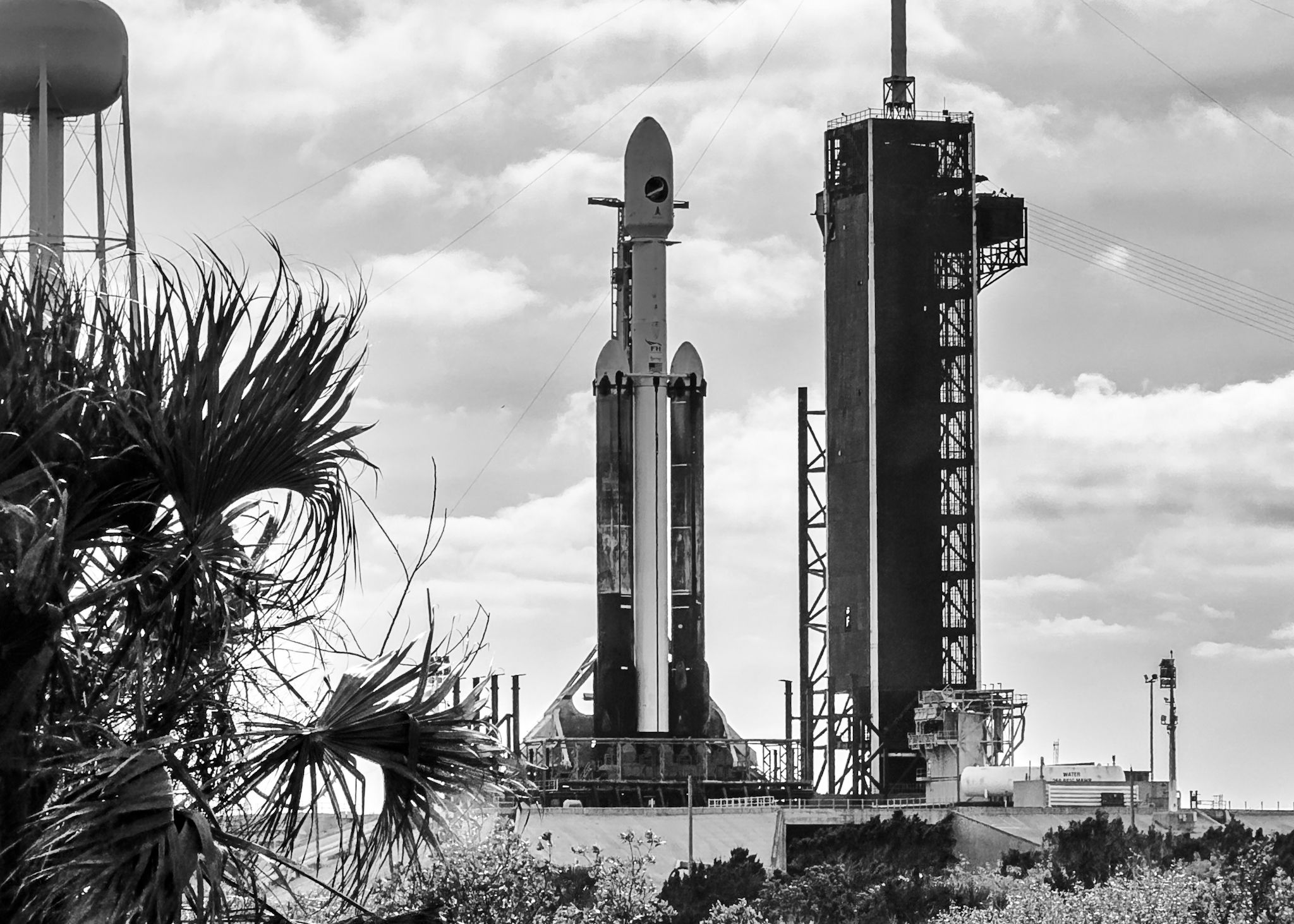
Enlarge/ SpaceX’s Falcon Heavy rocket stands on Launch Complex 39A in Florida, hours before its scheduled liftoff with the military’s X-37B spaceplane.
Trevor Mahlmann/Ars Technica
CAPE CANAVERAL, Florida—A SpaceX Falcon Heavy rocket is poised for launch as soon as Tuesday night from the Kennedy Space Center in Florida, and the US military’s mysterious X-37B spaceplane is fastened atop the heavy-lifter for a ride into orbit.
Although the Space Force is keeping details about the military spaceplane’s flight under wraps, we know it’s heading into an unusual orbit, probably significantly higher than the X-37B’s previous sojourns that stayed within a few hundred miles of Earth’s surface.
SpaceX’s launch team called off a launch attempt Monday night “due to a ground side issue” and reset for another launch opportunity as soon as Tuesday night at 8: 14pm EST (01: 14 UTC). When it lifts off, the Falcon Heavy will light 27 kerosene-fueled engines to power the rocket off its launch pad overlooking the Atlantic coastline.
The exact altitude the X-37B will be flying through is unclear, but hobbyists and amateur sleuths who use open source information to reconstruct trajectories of top-secret military spacecraft suggest the Falcon Heavy will haul the winged vehicle into an orbit that could stretch tens of thousands of miles above the planet.
What’s more, the Falcon Heavy will apparently take a flight path toward the northeast from Florida’s Space Coast, then ultimately release the X-37B on a trajectory that will take it over Earth’s polar regions. This is a significant departure from the flight profile for the military spaceplane’s six previous missions, which all flew to space on smaller rockets than the Falcon Heavy.
In a statement, the Space Force said this flight of the X-37B is focused on “a wide range of test and experimentation objectives.” Flying in “new orbital regimes” is among the test objectives, military officials said.
“It seems to me like it might be a much higher orbit that it’s going to,” said Brian Weeden, director of program planning for the Secure World Foundation, which promotes sustainable and peaceful uses of outer space. “Otherwise, I don’t know why they would use a Falcon Heavy, which is a pretty big thing.”
Covering more ground
The X-37B spaceplane has attracted a lot of attention and speculation since its first mission in 2010. Across multiple administrations, Pentagon officials have consistently walked a narrow line between acknowledging the existence of the spaceplane, and divulging limited information about its general purpose, while treating some details with the utmost secrecy. The military does not talk about where in space it flies. With a few exceptions, defense officials haven’t publicly discussed specifics of what the X-37B carries into orbit.
The military has two Boeing-built X-37B spaceplanes, or Orbital Test Vehicles, in its inventory. They are reusable and designed to launch inside the payload fairing of a conventional rocket, spend multiple years in space with the use of solar power, and then return to Earth for a landing on a three-mile-long runway, either at Vandenberg Space Force Base in California or at NASA’s Kennedy Space Center in Florida.
It resembles a miniature version of NASA’s retired space shuttle orbiter, with wings, deployable landing gear, and black thermal protection tiles to shield its belly from the scorching heat of reentry. It measures 29 feet (about 9 meters) long, roughly a quarter of the length of NASA’s space shuttle, and it doesn’t carry astronauts. The X-37B has a cargo bay inside the fuselage for payloads, with doors that open after launch and close before landing.
The Space Force made a surprise announcement on November 8 that the next flight of the X-37B, sometimes called OTV-7, would launch on a SpaceX Falcon Heavy rocket. All six of the spaceplane’s past flights launched on smaller rockets, either United Launch Alliance’s Atlas V or SpaceX’s Falcon 9.
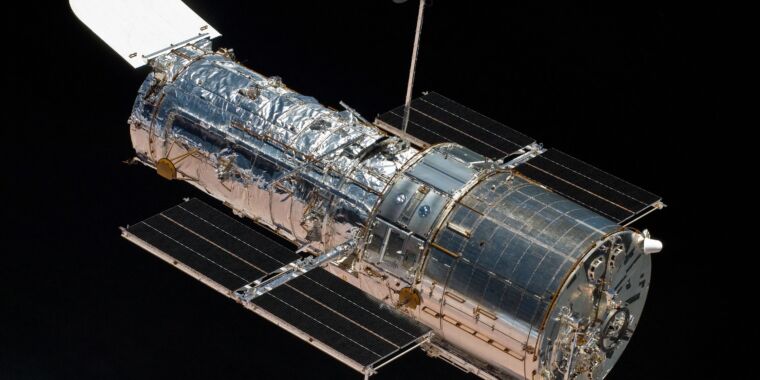
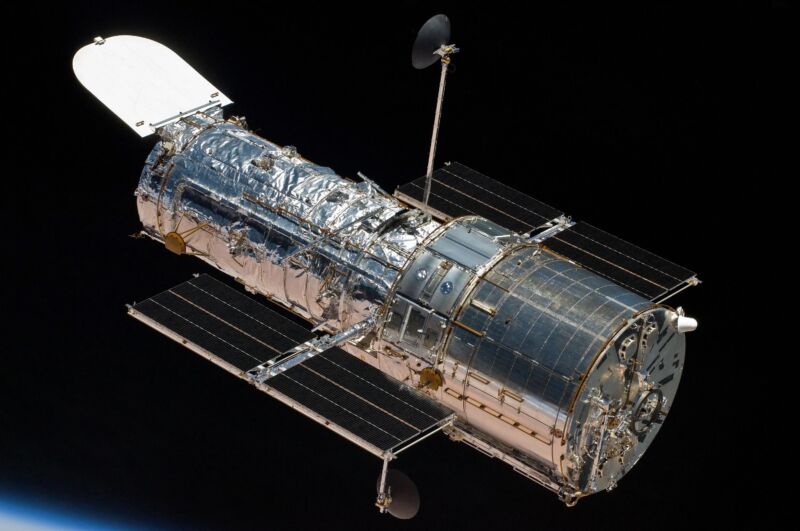
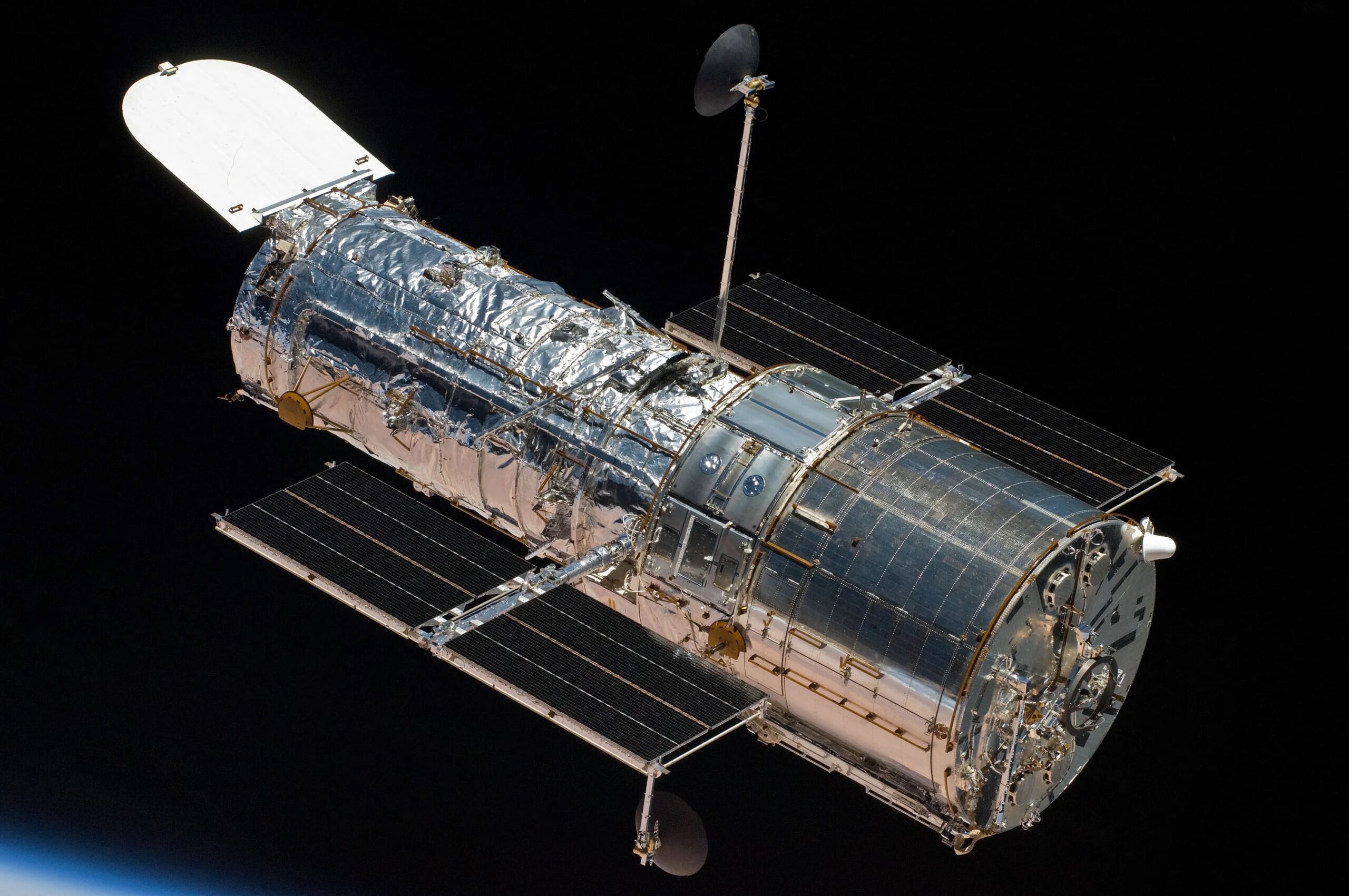
Enlarge/ The Hubble Space Telescope viewed from Space Shuttle Atlantis during a servicing mission in 2009.
NASA
The Hubble Space Telescope resumed science observations on Friday after ground teams spent most of the last three weeks assessing the performance of a finicky gyroscope, NASA said.
The troublesome gyroscope is a critical part of the observatory’s pointing system. Hubble’s gyros measure how fast the spacecraft is turning, helping the telescope aim its aperture toward distant cosmic wonders.
Hubble still provides valuable scientific data for astronomers nearly 34 years since its launch aboard NASA’s Space Shuttle Discovery in 1990. Five more shuttle servicing missions repaired Hubble, upgraded its science instruments, and replaced hardware degraded from long-term use in space. Among other tasks, astronauts on the last of the shuttle repair flights in 2009 installed six new gyroscopes on Hubble.
Moving parts sometimes break
The gyros have long been one of the parts of Hubble that require the most upkeep. A wheel inside each gyro spins at a constant rate of 19,200 revolutions per minute, and the wheel is, in turn, sealed inside a cylinder suspended in a thick fluid, according to NASA. Electronics within each gyro detect very small movements of the axis of the wheel, which supply Hubble’s central computer with information about the spacecraft’s turn rate. Hair-thin wires route signals from the gyroscopes, and these wires can degrade over time.
Three of the six gyros installed on Hubble in 2009 have failed, and three others remain operational. The three still-functioning gyros are based on a newer design for longer life, but one of these units has shown signs of wear in the last few months. This gyroscope, designated Gyro 3, has always exhibited “consistent noisy behavior,” said Pat Crouse, Hubble project manager at NASA’s Goddard Space Flight Center.
Hubble typically needs three gyros to operate normally, so ground controllers shut down Gyro 3 for roughly seven years until Hubble needed it in 2018, when another gyroscope failed, leaving only three of the devices still working.
“Back in August, we saw issues,” Crouse told Ars this week. “It would sort of sporadically output some rate information that was not consistent with the observed spacecraft body rates, but it was short-lived, and we were characterizing what that performance was like and how much we could tolerate.”
The gyro’s performance worsened in November when it fed Hubble’s control system erroneous data. The gyroscope sensed that the spacecraft was changing its orientation when it really wasn’t moving. “That, then, contributed to an error in attitude that was kind of causing a little bit of drift,” Crouse said.
Automated software on Hubble detected the errors and put the spacecraft into “safe mode” two times last month. Hubble quickly resumed science observations each time but then went into safe mode again on November 23. Hubble managers took some extra time to gather data on the gyro’s health. Engineers commanded Hubble to move back and forth, and the suspect gyro consistently seemed to work well.