software development

in-1995,-a-netscape-employee-wrote-a-hack-in-10-days-that-now-runs-the-internet

In 1995, a Netscape employee wrote a hack in 10 days that now runs the Internet

Thirty years ago today, Netscape Communications and Sun Microsystems issued a joint press release announcing JavaScript, an object scripting language designed for creating interactive web applications. The language emerged from a frantic 10-day sprint at pioneering browser company Netscape, where engineer Brendan Eich hacked together a working internal prototype during May 1995.

While the JavaScript language didn’t ship publicly until that September and didn’t reach a 1.0 release until March 1996, the descendants of Eich’s initial 10-day hack now run on approximately 98.9 percent of all websites with client-side code, making JavaScript the dominant programming language of the web. It’s wildly popular; beyond the browser, JavaScript powers server backends, mobile apps, desktop software, and even some embedded systems. According to several surveys, JavaScript consistently ranks among the most widely used programming languages in the world.

In crafting JavaScript, Netscape wanted a scripting language that could make webpages interactive, something lightweight that would appeal to web designers and non-professional programmers. Eich drew from several influences: The syntax looked like a trendy new programming language called Java to satisfy Netscape management, but its guts borrowed concepts from Scheme, a language Eich admired, and Self, which contributed JavaScript’s prototype-based object model.

A screenshot of the Netscape Navigator 2.0 interface.

A screenshot of the Netscape Navigator 2.0 interface. Credit: Benj Edwards

The JavaScript partnership secured endorsements from 28 major tech companies, but amusingly, the December 1995 announcement now reads like a tech industry epitaph. The endorsing companies included Digital Equipment Corporation (absorbed by Compaq, then HP), Silicon Graphics (bankrupt), and Netscape itself (bought by AOL, dismantled). Sun Microsystems, co-creator of JavaScript and owner of Java, was acquired by Oracle in 2010. JavaScript outlived them all.

What’s in a name?

The 10-day creation story has become programming folklore, but even with that kernel of truth we mentioned, it tends to oversimplify the timeline. Eich’s sprint produced a working demo, not a finished language, and over the next year, Netscape continued tweaking the design. The rushed development left JavaScript with quirks and inconsistencies that developers still complain about today. So many changes were coming down the pipeline, in fact, that it began to annoy one of the industry’s most prominent figures at the time.

In 1995, a Netscape employee wrote a hack in 10 days that now runs the Internet Read More »

the-mac-calculator’s-original-design-came-from-letting-steve-jobs-play-with-menus-for-ten-minutes

The Mac calculator’s original design came from letting Steve Jobs play with menus for ten minutes

Rather than continue the endless revision cycle, Espinosa took a different approach. According to Hertzfeld, Espinosa created a program that exposed every visual parameter of the calculator through pull-down menus: line thickness, button sizes, background patterns, and more. When Jobs sat down with it, he spent about ten minutes adjusting settings until he found a combination he liked.

The approach worked. When given direct control over the parameters rather than having to articulate his preferences verbally, Jobs quickly arrived at a design he was satisfied with. Hertzfeld notes that he implemented the calculator’s UI a few months later using Jobs’s parameter choices from that ten-minute session, while Donn Denman, another member of the Macintosh team, handled the mathematical functions.

That ten-minute session produced the calculator design that shipped with the Mac in 1984 and remained virtually unchanged through Mac OS 9, when Apple discontinued that OS in 2001. Apple replaced it in Mac OS X with a new design, ending the calculator’s 17-year run as the primary calculator interface for the Mac.

Why it worked

Espinosa’s Construction Set was an early example of what would later become common in software development: visual and parameterized design tools. In 1982, when most computers displayed monochrome text, the idea of letting someone fine-tune visual parameters through interactive controls without programming was fairly forward-thinking. Later, tools like HyperCard would formalize this kind of idea into a complete visual application framework.

The primitive calculator design tool also revealed something about Jobs’s management process. He knew what he wanted when he saw it, but he perhaps struggled to articulate it at times. By giving him direct manipulation ability, Espinosa did an end-run around that communication problem entirely. Later on, when he returned to Apple in the late 1990s, Jobs would famously insist on judging products by using them directly rather than through canned PowerPoint demos or lists of specifications.

The longevity of Jobs’s ten-minute design session suggests the approach worked. The calculator survived nearly two decades of Mac OS updates, outlasting many more elaborate interface elements. What started as a workaround became one of the Mac’s most simple but enduring designs.

By the way, if you want to try the original Mac OS calculator yourself, you can run various antique versions of the operating system in your browser thanks to the Infinite Mac website.

The Mac calculator’s original design came from letting Steve Jobs play with menus for ten minutes Read More »

developers-joke-about-“coding-like-cavemen”-as-ai-service-suffers-major-outage

Developers joke about “coding like cavemen” as AI service suffers major outage

Growing dependency on AI coding tools

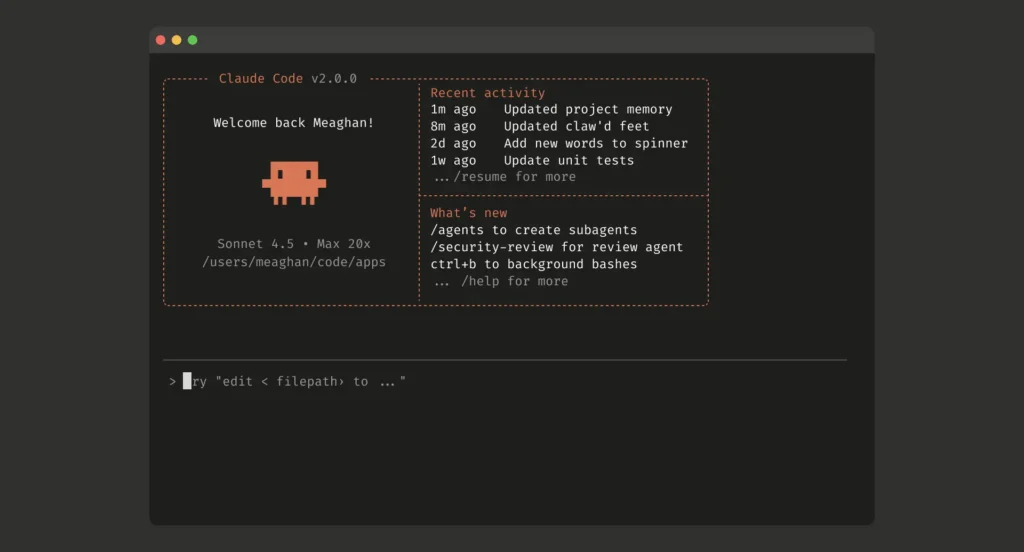
The speed at which news of the outage spread shows how deeply embedded AI coding assistants have already become in modern software development. Claude Code, announced in February and widely launched in May, is Anthropic’s terminal-based coding agent that can perform multi-step coding tasks across an existing code base.

The tool competes with OpenAI’s Codex feature, a coding agent that generates production-ready code in isolated containers, Google’s Gemini CLI, Microsoft’s GitHub Copilot, which itself can use Claude models for code, and Cursor, a popular AI-powered IDE built on VS Code that also integrates multiple AI models, including Claude.

During today’s outage, some developers turned to alternative solutions. “Z.AI works fine. Qwen works fine. Glad I switched,” posted one user on Hacker News. Others joked about reverting to older methods, with one suggesting the “pseudo-LLM experience” could be achieved with a Python package that imports code directly from Stack Overflow.

While AI coding assistants have accelerated development for some users, they’ve also caused problems for others who rely on them too heavily. The emerging practice of so-called “vibe coding“—using natural language to generate and execute code through AI models without fully understanding the underlying operations—has led to catastrophic failures.

In recent incidents, Google’s Gemini CLI destroyed user files while attempting to reorganize them, and Replit’s AI coding service deleted a production database despite explicit instructions not to modify code. These failures occurred when the AI models confabulated successful operations and built subsequent actions on false premises, highlighting the risks of depending on AI assistants that can misinterpret file structures or fabricate data to hide their errors.

Wednesday’s outage served as a reminder that as dependency on AI grows, even minor service disruptions can become major events that affect an entire profession. But perhaps that could be a good thing if it’s an excuse to take a break from a stressful workload. As one commenter joked, it might be “time to go outside and touch some grass again.”

Developers joke about “coding like cavemen” as AI service suffers major outage Read More »

in-xcode-26,-apple-shows-first-signs-of-offering-chatgpt-alternatives

In Xcode 26, Apple shows first signs of offering ChatGPT alternatives

The latest Xcode beta contains clear signs that Apple plans to bring Anthropic’s Claude and Opus large language models into the integrated development environment (IDE), expanding on features already available using Apple’s own models or OpenAI’s ChatGPT.

Apple enthusiast publication 9to5Mac “found multiple references to built-in support for Anthropic accounts,” including in the “Intelligence” menu, where users can currently log in to ChatGPT or enter an API key for higher message limits.

Apple introduced a suite of features meant to compete with GitHub Copilot in Xcode at WWDC24, but first focused on its own models and a more limited set of use cases. That expanded quite a bit at this year’s developer conference, and users can converse about codebases, discuss changes, or ask for suggestions using ChatGPT. They are initially given a limited set of messages, but this can be greatly increased by logging in to a ChatGPT account or entering an API key.

This summer, Apple said it would be possible to use Anthropic’s models with an API key, too, but made no mention of support for Anthropic accounts, which are generally more cost-effective than using the API for most users.

In Xcode 26, Apple shows first signs of offering ChatGPT alternatives Read More »

ai-isn’t-ready-to-replace-human-coders-for-debugging,-researchers-say

AI isn’t ready to replace human coders for debugging, researchers say

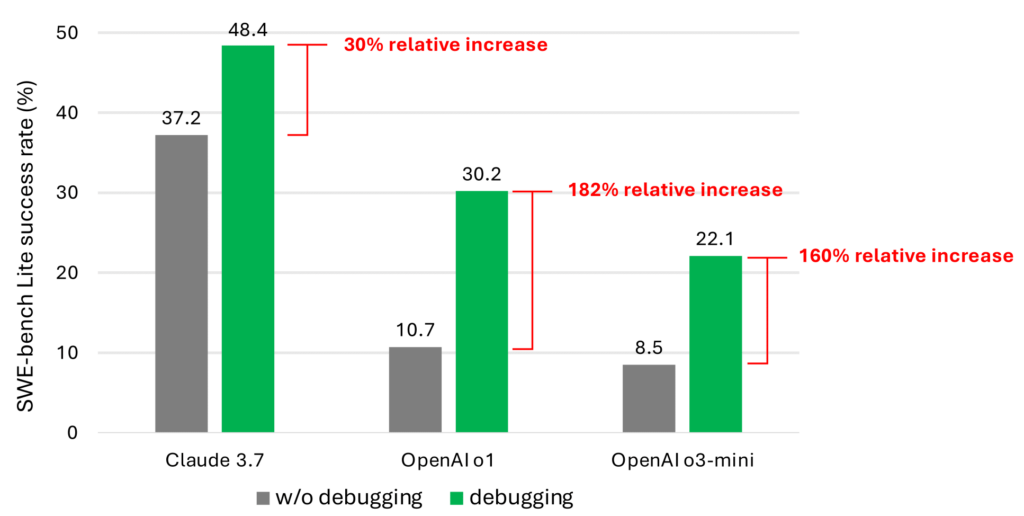
A graph showing agents with tools nearly doubling the success rates of those without, but still achieving a success score under 50 percent

Agents using debugging tools drastically outperformed those that didn’t, but their success rate still wasn’t high enough. Credit: Microsoft Research

This approach is much more successful than relying on the models as they’re usually used, but when your best case is a 48.4 percent success rate, you’re not ready for primetime. The limitations are likely because the models don’t fully understand how to best use the tools, and because their current training data is not tailored to this use case.

“We believe this is due to the scarcity of data representing sequential decision-making behavior (e.g., debugging traces) in the current LLM training corpus,” the blog post says. “However, the significant performance improvement… validates that this is a promising research direction.”

This initial report is just the start of the efforts, the post claims.  The next step is to “fine-tune an info-seeking model specialized in gathering the necessary information to resolve bugs.” If the model is large, the best move to save inference costs may be to “build a smaller info-seeking model that can provide relevant information to the larger one.”

This isn’t the first time we’ve seen outcomes that suggest some of the ambitious ideas about AI agents directly replacing developers are pretty far from reality. There have been numerous studies already showing that even though an AI tool can sometimes create an application that seems acceptable to the user for a narrow task, the models tend to produce code laden with bugs and security vulnerabilities, and they aren’t generally capable of fixing those problems.

This is an early step on the path to AI coding agents, but most researchers agree it remains likely that the best outcome is an agent that saves a human developer a substantial amount of time, not one that can do everything they can do.

AI isn’t ready to replace human coders for debugging, researchers say Read More »

amid-a-flurry-of-hype,-microsoft-reorganizes-entire-dev-team-around-ai

Amid a flurry of hype, Microsoft reorganizes entire dev team around AI

Microsoft CEO Satya Nadella has announced a dramatic restructuring of the company’s engineering organization, which is pivoting the company’s focus to developing the tools that will underpin agentic AI.

Dubbed “CoreAI – Platform and Tools,” the new division rolls the existing AI platform team and the previous developer division (responsible for everything from .NET to Visual Studio) along with some other teams into one big group.

As for what this group will be doing specifically, it’s basically everything that’s mission-critical to Microsoft in 2025, as Nadella tells it:

This new division will bring together Dev Div, AI Platform, and some key teams from the Office of the CTO (AI Supercomputer, AI Agentic Runtimes, and Engineering Thrive), with the mission to build the end-to-end Copilot & AI stack for both our first-party and third-party customers to build and run AI apps and agents. This group will also build out GitHub Copilot, thus having a tight feedback loop between the leading AI-first product and the AI platform to motivate the stack and its roadmap.

To accomplish all that, “Jay Parikh will lead this group as EVP.” Parikh was hired by Microsoft in October; he previously worked as the VP and global head of engineering at Meta.

The fact that the blog post doesn’t say anything about .NET or Visual Studio, instead emphasizing GitHub Copilot and anything and everything related to agentic AI, says a lot about how Nadella sees Microsoft’s future priorities.

So-called AI agents are applications that are given specified boundaries (action spaces) and a large memory capacity to independently do subsets of the kinds of work that human office workers do today. Some company leaders and AI commentators believe these agents will outright replace jobs, while others are more conservative, suggesting they’ll simply be powerful tools to streamline the jobs people already have.

Amid a flurry of hype, Microsoft reorganizes entire dev team around AI Read More »