sls rocket

once-unthinkable,-nasa-and-lockheed-now-consider-launching-orion-on-other-rockets

Once unthinkable, NASA and Lockheed now consider launching Orion on other rockets


“We’re trying to crawl, then walk, then run into our reuse strategy.”

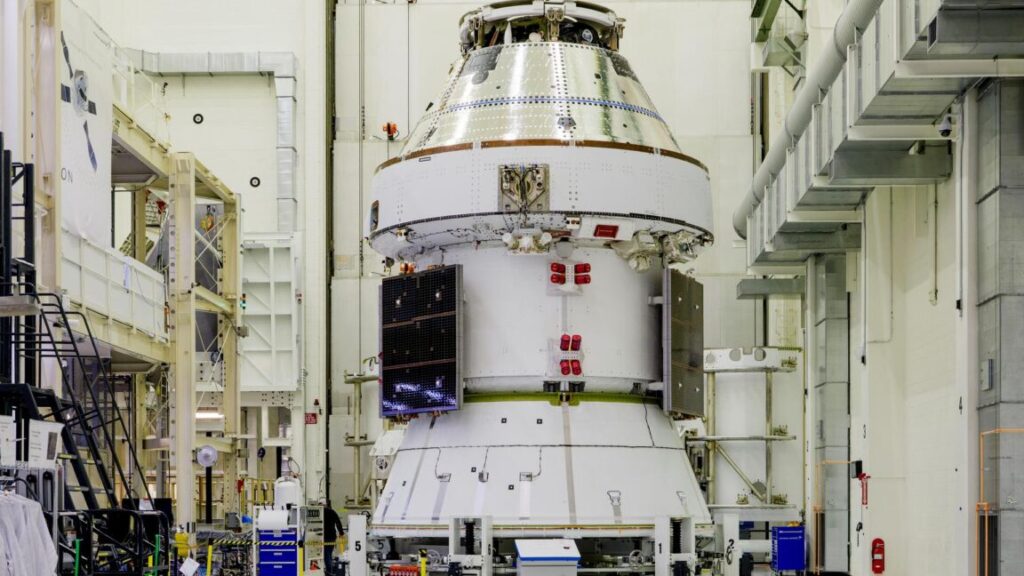
The Orion spacecraft for the Artemis II mission, seen here with its solar arrays installed for flight, just prior to their enclosure inside aerodynamic fairings to protect them during launch. Credit: NASA/Rad Sinyak

The Orion spacecraft and Space Launch System rocket have been attached at the hip for the better part of two decades. The big rocket lifts, the smaller spacecraft flies, and Congress keeps the money rolling in.

But now there are signs that the twain may, in the not too distant future, split.

This is because Lockheed Martin has begun to pivot toward a future in which the Orion spacecraft—thanks to increasing reusability, a focus on cost, and openness to flying on different rockets—fits into commercial space applications. In interviews, company officials said that if NASA wanted to buy Orion missions as a “service,” rather than owning and operating the spacecraft, they were ready to work with the space agency.

“Our message is we absolutely support it, and we’re starting that discussion now,” said Anthony Byers, director of Strategy and Business Development for Lockheed Martin, the principal contractor for Orion.

This represents a significant change. Since the US Congress called for the creation of the Space Launch System rocket a decade and a half ago, Orion and this rocket have been discussed in tandem, forming the backbone of an expendable architecture that would launch humans to the Moon and return them to Earth inside Orion. Through cost-plus contracts, NASA would pay for the rockets and spacecraft to be built, closely supervise all of this, and then operate the vehicles after delivery.

Moving to a ‘services’ model

But the landscape is shifting. In President Trump’s budget request for fiscal year 2026, the White House sought to terminate funding for Orion and the SLS rocket after the Artemis III mission, which would mean there are just two flights remaining. Congress countered by saying that NASA should continue flying the spacecraft and rocket through Artemis V.

Either way, the writing on the wall seems pretty clear.

“Given the President’s Budget Request guidance, and what we think NASA’s ultimate direction will be, they’re going to need to move to a commercial transportation option similar to commercial crew and cargo,” Byers said. “So when we talk about Orion services, we’re talking about taking Orion and flying that service-based mission, which means we provide a service, from boots on the ground on Earth, to wherever we’re going to go and dock to, and then bringing the crew home.”

By contrast, there has been little movement on an effort to commercialize the rocket.

In 2022, Boeing, the contractor for the SLS core stage, and Northrop Grumman, which manufactures the side boosters, created “Deep Space Transport LLC” to build the rockets and sell them to NASA on a more services-based approach. However, despite NASA’s stated intent to award a launch services contract to Deep Space Transport by the end of 2023, no such contract has been given out. It appears that the joint venture to commercialize the SLS rocket is defunct. Moreover, there are no plans to modify the rocket for reuse.

Wanted: a heavy lift rocket

This appears to be one reason Lockheed is exploring alternative launch vehicles for Orion. If the spacecraft is going to be competitive on price, it needs a rocket that does not cost in excess of $2 billion per launch.

Orion has a launch mass, including its abort system, of 35 metric tons. The company has looked at rockets that could launch that much mass and boost it to the Moon, as well as alternatives that might see one rocket launch Orion, and another provide a tug vehicle to push it out to the Moon. So far, the company has not advanced to performing detailed studies of vibrations, acoustics, thermal loads, and other assessments of compatibility, said Kirk Shireman, Lockheed Martin’s vice president and program manager for Orion.

“Could you create architectures to fly on other vehicles? Yes, we know we can,” Shireman said. “But when you start talking about those other environmental things, we have not done any of that work.”

So what else is being done to control Orion’s costs? Lockheed officials said incorporating reuse into Orion’s plans is “absolutely critical.” This is a philosophy that has evolved over time, especially after SpaceX began reflying its Dragon spacecraft.

NASA first contracted with Lockheed nearly two decades ago to start preliminary development work on Orion. At the outset, spacecraft reuse was not a priority. Byers, who has been involved with the Orion program at Lockheed on and off since its inception, said initially NASA asked Lockheed to assess the potential for reusing components of Orion.

“Whenever the vehicle would come back, NASA’s assumption was that we would disassemble the vehicle and harvest the components, and they would go into inventory,” Byers said. “Then they would go into a new structure for a future flight. Well, as the program progressed and we saw what others were doing, we really started to introduce the idea of reusing the crew module.”

How to reuse a spacecraft

The updated plan agreed to by NASA and Lockheed calls for a step-by-step approach.

“There’s a path forward,” said Howard Hu, NASA’s Orion program manager, in an interview. “We’re trying to crawl, then walk, then run into our reuse strategy. We want to make sure that we’re increasing our reusability, which we know is the path to sustainability and lower cost.”

The current plan is as follows:

Artemis II: A brand-new spacecraft, it will reuse 11 avionics components refurbished from the Artemis I Orion spacecraft; after landing, it will be used for testing purposes.

Artemis III: A brand-new spacecraft.

Artemis IV: A brand-new spacecraft.

Artemis V: Will reuse approximately 250 components, primarily life support and avionics equipment, from Artemis II.

Artemis VI: Will reuse primary structure (pressure vessel) and secondary structures (gussets, panels, brackets, plates) from Artemis III Orion, and approximately 3,000 components.

Lockheed plans to build a fleet of three largely reusable spacecraft, which will make their debuts on the Artemis III, IV, and V missions, respectively. Those three vehicles would then fly future missions, and if Lockheed needs to expand the fleet to meet demand, it could.
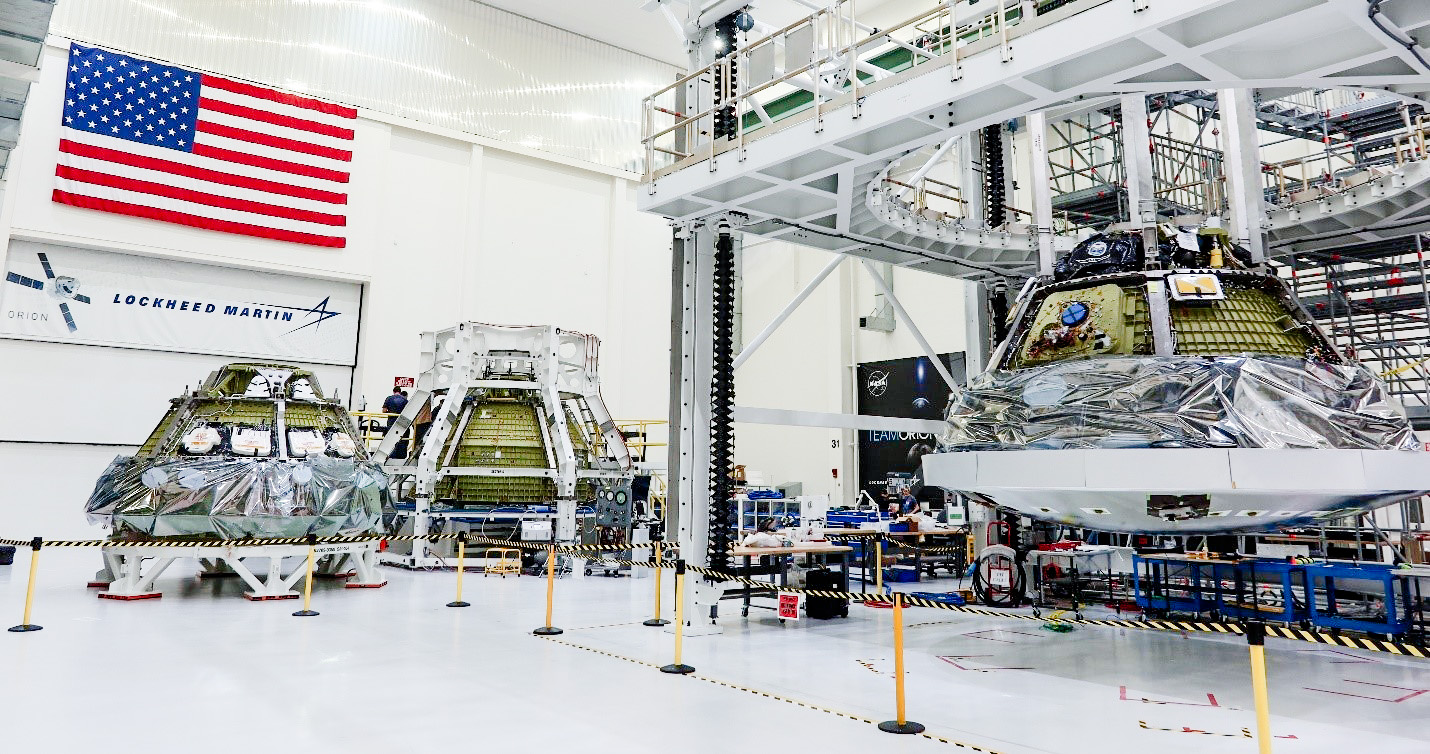
This photo, from 2023, shows the Orions for Artemis II, III, and IV all together.

Credit: Lockheed Martin

This photo, from 2023, shows the Orions for Artemis II, III, and IV all together. Credit: Lockheed Martin

Of course, Orion can never be made fully reusable. The service module, built by Europe-based Airbus and providing propulsion, separates from Orion before reentry into Earth’s atmosphere and burns up.

“We probably should call it maximum reuse, because there are some things that are consumed,” Shireman said. “For instance, the heat shield is consumed as the ablative material is ablated. But we are, ultimately, going to reuse the structure of the heat shield itself.”

Vectoring along a new path

Orion is always going to be relatively expensive. However, officials said they are on track to trim the cost of producing an Orion by 50 percent from the Artemis II to Artemis V vehicles and in follow-on missions to bring this down by 30 percent further or more. Minimizing refurbishment will be key to this.

Lockheed will never achieve “full and rapid reusability” for Orion like SpaceX is attempting with its Starship vehicle. That’s just not the way Orion was designed, nor what NASA wants. The space agency seeks a safe and reliable ride into deep space for its astronauts.

For the time being, only Orion can provide that. In the future, Starship may well provide that capability. Blue Origin and other providers may develop a deep space-capable human vehicle. But Orion is here and ready for its first astronauts in 2026. It will be years before any alternative becomes available.

It is nice to see that Lockheed recognizes this advantage won’t last forever and that it’s moving—or should we say, Vectoring—toward a more sustainable future.

Photo of Eric Berger

Eric Berger is the senior space editor at Ars Technica, covering everything from astronomy to private space to NASA policy, and author of two books: Liftoff, about the rise of SpaceX; and Reentry, on the development of the Falcon 9 rocket and Dragon. A certified meteorologist, Eric lives in Houston.

Once unthinkable, NASA and Lockheed now consider launching Orion on other rockets Read More »
nasa-targeting-early-february-for-artemis-ii-mission-to-the-moon

NASA targeting early February for Artemis II mission to the Moon

NASA is pressing ahead with preparations for the first launch of humans beyond low-Earth orbit in more than five decades, and officials said Tuesday that the Artemis II mission could take flight early next year.

Although work remains to be done, the space agency is now pushing toward a launch window that opens on February 5, 2026, officials said during a news conference on Tuesday at Johnson Space Center.

The Artemis II mission represents a major step forward for NASA and seeks to send four astronauts—Reid Wiseman, Victor Glover, Christina Koch, and Jeremy Hansen—around the Moon and back. The 10-day mission will be the first time astronauts have left low-Earth orbit since the Apollo 17 mission in December 1972.

Hardware nearing readiness

The mission’s Space Launch System rocket has been stacked and declared ready for flight. The Orion spacecraft is in the final stages of preparation and will be attached to the top of the rocket later this year.

Early next year, the combined stack will roll out to the vehicle’s launch site at Kennedy Space Center, said Charlie Blackwell-Thompson, Artemis launch director. At the pad, the rocket and spacecraft will be connected to ground systems, and after about two weeks, it will undergo a “wet dress rehearsal.”

During this fueling test, the first and second stages of the rocket will be fully loaded with liquid hydrogen and oxygen, and the countdown will be taken down to T-29 seconds. After this test, the rocket will be de-tanked and turned around for launch.

Due to the orbits of Earth and the Moon and various constraints on the mission, there are launch windows each month that last four to eight days. In February, that window opens on the fifth, and it would be an evening launch, Blackwell-Thompson said.

After launching, the Orion spacecraft will separate from the upper stage of the SLS rocket a little more than three hours after liftoff. It will spend about 24 hours in orbit around Earth, during which time the four astronauts on board will perform various checkouts to ensure the vehicle’s life support systems, thrusters, and other equipment are performing nominally.

NASA targeting early February for Artemis II mission to the Moon Read More »

former-nasa-chief-says-united-states-likely-to-lose-second-lunar-space-race

Former NASA chief says United States likely to lose second lunar space race

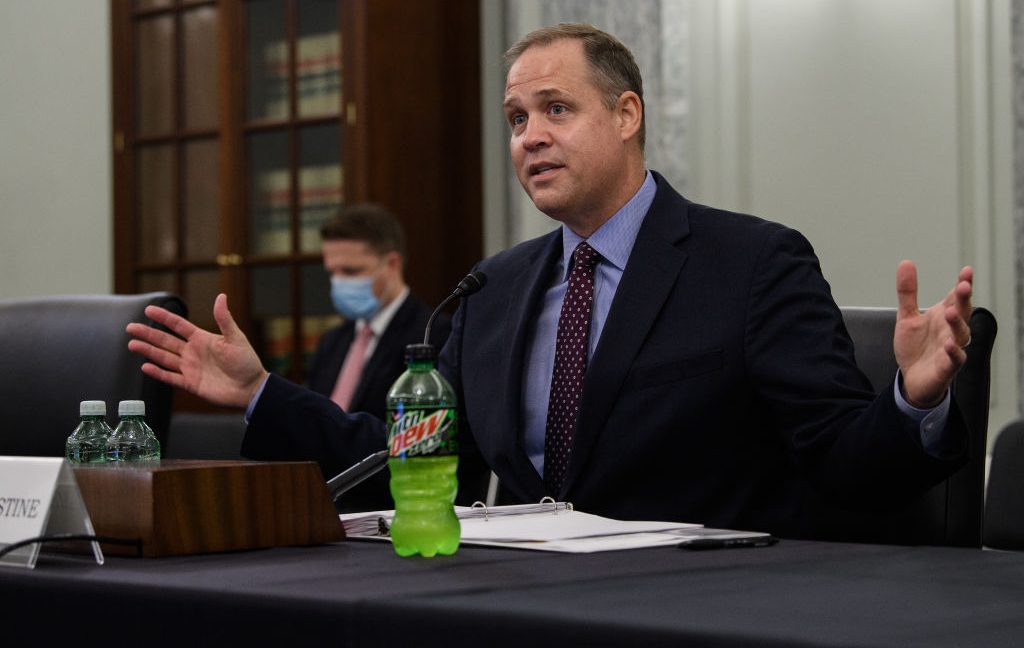
The hearing, titled “There’s a Bad Moon on the Rise: Why Congress and NASA Must Thwart China in the Space Race,” had no witnesses who disagreed with this viewpoint. They included Allen Cutler, CEO of the Coalition for Deep Space Exploration, the chief lobbying organization for SLS, Orion, and Gateway; Jim Bridenstine, former NASA Administrator who now leads government operations for United Launch Alliance; Mike Gold of Redwire, a Gateway contractor; and Lt. General John Shaw, former Space Command official.

The hearing before the committee chaired by Cruz, Commerce, Science, and Transportation, included the usual mishmash of parochial politics, lobbying for traditional space, back slapping, and fawning—at one point, Gold, a Star Trek fan, went so far as to assert that Cruz is the “Captain Kirk” of the US Senate.

Beyond this, however, there was a fair amount of teeth gnashing about the fact that the United States faces a serious threat from China, which appears to be on course to put humans on the Moon before NASA can return there with the Artemis Program. China aims to land humans at the South Pole before the year 2030.

NASA likely to lose “race”

Bridenstine, who oversaw the creation of the Artemis Program half a decade ago, put it most bluntly: “Unless something changes, it is highly unlikely the United States will beat China’s projected timeline to the Moon’s surface,” he said.

Bridenstine and others on the panel criticized the complex nature of SpaceX’s Starship-based lunar lander, which NASA selected in April 2021 as a means to get astronauts down to the lunar surface and back. The proposal relies on Starship being refueled in low-Earth orbit by multiple Starship tanker launches.

Former NASA chief says United States likely to lose second lunar space race Read More »

if-congress-actually-cancels-the-sls-rocket,-what-happens-next?

If Congress actually cancels the SLS rocket, what happens next?


Here’s what NASA’s exploration plans would actually look like if the White House got its way.

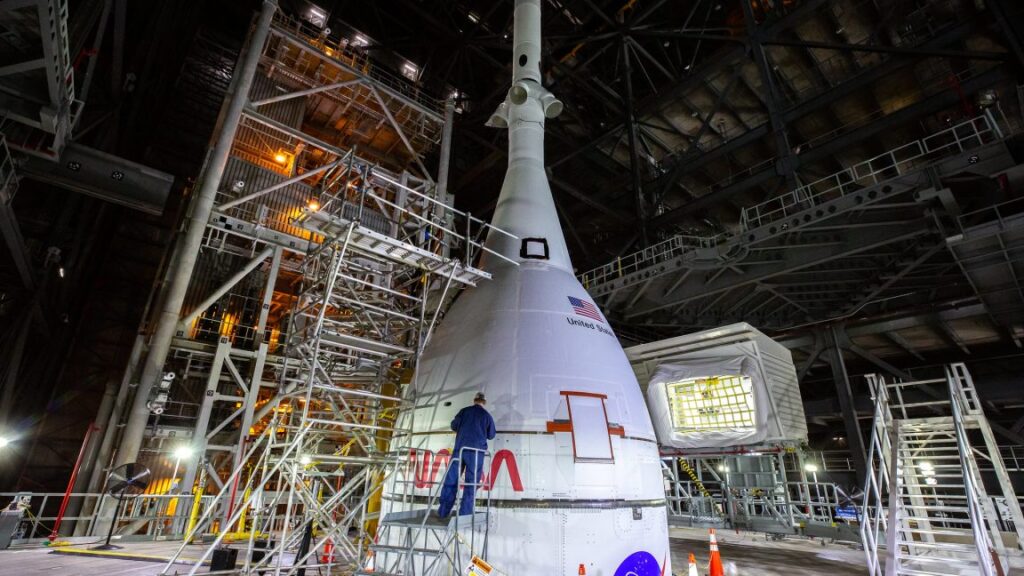
A technician works on the Orion spacecraft, atop the SLS rocket, in January 2022. Credit: NASA

The White House Office of Management and Budget dropped its “skinny” budget proposal for the federal government earlier this month, and the headline news for the US space program was the cancellation of three major programs: the Space Launch System rocket, Orion spacecraft, and Lunar Gateway.

Opinions across the space community vary widely about the utility of these programs—one friend in the industry predicted a future without them to be so dire that Artemis III would be the last US human spaceflight of our lifetimes. But there can be no question that if such changes are made they would mark the most radical remaking of NASA in two decades.

This report, based on interviews with multiple sources inside and out of the Trump administration, seeks to explain what the White House is trying to do with Moon and Mars exploration, what this means for NASA and US spaceflight, and whether it could succeed.

Will it actually happen?

The first question is whether these changes proposed by the White House will be accepted by the US Congress. Republican and Democratic lawmakers have backed Orion for two decades, the SLS rocket for 15 years, and the Gateway for 10 years. Will they finally give up programs that have been such a reliable source of good-paying jobs for so long?

In general, the answer appears to be yes. We saw the outlines of a deal during the confirmation hearing for private astronaut Jared Isaacman to become the next NASA administrator in April. He was asked repeatedly whether he intended to use the SLS rocket and Orion for Artemis II (a lunar fly around) and Artemis III (lunar landing). Isaacman said he did.

However nothing was said about using this (very costly) space hardware for Artemis IV and beyond. Congress did not ask, presumably because it knows the answer. And that answer, as we saw in the president’s skinny budget, is that the rocket and spacecraft will be killed after Artemis III. This is a pragmatic time to do it, as canceling the programs after Artemis III saves NASA billions of dollars in upgrading the rocket for a singular purpose: assembling a Lunar Gateway of questionable use.

But this will not be a normal budget process. The full budget request from the White House is unlikely to come out before June, and it will probably be bogged down in Congress. One of the few levers that Democrats in Congress presently have is the requirement of 60 Senators to pass appropriations bills. So compromise is necessary, and a final budget may not pass by the October 1 start of the next fiscal year.

Then, should Congress not acquiesce to the budget request, there is the added threat of the White House Office of Management and Budget to use “impoundment” to withhold funding and implement its budget priorities. This process would very quickly get bogged down in the courts, and no one really knows how the Supreme Court would rule.

Leadership alignment

To date, the budget process for NASA has not been led by space policy officials. Rather, the White House Office of Management and Budget, and its leader, Russell Vought, have set priorities and funding. This has led to “budget-driven” policy that has resulted in steep cuts to science that often don’t make much sense (i.e., ending funding for the completed Nancy Grace Roman Space Telescope).

However, there soon will be some important voices to implement a more sound space policy and speak for NASA’s priorities, rather than those of budget cutters.

One of these is President Trump’s nominee to lead NASA, Isaacman. He is awaiting floor time in the US Senate for a final vote. That could happen during the next week or two, allowing Isaacman to become the space agency’s administrator and begin to play an important role in decision-making.

But Isaacman will need allies in the White House itself to carry out sweeping space policy changes. To that end, the report in Politico last week—which Ars has confirmed—that there will be a National Space Council established in the coming months is important. Led by Vice President JD Vance, the space council will provide a counterweight to Vought’s budget-driven process.

Thus, by this summer, there should be key leadership in place to set space policy that advances the country’s exploration goals. But what are those goals?

What happens to Artemis

After the Artemis III mission the natural question is, what would come next if the SLS rocket and Orion spacecraft are canceled?

The most likely answer is that NASA turns to an old but successful playbook: COTS. This stands for Commercial Orbital Transportation System and was created by NASA two decades ago to develop cargo transport systems (eventually this became SpaceX’s Dragon and Northrop’s Cygnus spacecraft) for the International Space Station. Since then, NASA has adopted this same model for crew services as well as other commercial programs.

Under the COTS model, NASA provides funding and guidance to private companies to develop their own spacecraft, rockets, and services, and then buys those at a “market” rate.

The idea of a Lunar COTS program is not new. NASA employees explored the concept in a research paper a decade ago, finding that “a future (Lunar) COTS program has the great potential of enabling development of cost-effective, commercial capabilities and establishing a thriving cislunar economy which will lead the way to an economical and sustainable approach for future human missions to Mars.”

Sources indicate NASA would go to industry and seek an “end-to-end” solution for lunar missions. That is, an integrated plan to launch astronauts from Earth, land them on the Moon, and return them to Earth. One of the bidders would certainly be SpaceX, with its Starship vehicle already having been validated during the Artemis III mission. Crews could launch from Earth either in Dragon or Starship. Blue Origin is the other obvious bidder. The company might partner with Lockheed Martin to commercialize the Orion spacecraft or use the crew vehicle it is developing internally.

Other companies could also participate. The point is that NASA would seek to buy astronaut transportation to the Moon, just as it already is doing with cargo and science experiments through the Commercial Lunar Payload Services program.

The extent of an Artemis lunar surface presence would be determined by several factors, including the cost and safety of this transportation program and whether there are meaningful things for astronauts to do on the Moon.

What about Mars?

The skinny budget contained some intriguing language about Mars exploration: “By allocating over $7 billion for lunar exploration and introducing $1 billion in new investments for Mars-focused programs, the Budget ensures that America’s human space exploration efforts remain unparalleled, innovative, and efficient.”

This was, in fact, the only budget increase proposed by the Trump White House. So what does it mean?

No one is saying for sure, but this funding would probably offer a starting point for a robust Mars COTS program. This would begin with cargo missions to Mars. But eventually it would expand to include crewed missions, thus fulfilling Trump’s promise to land humans on the red planet.

Is this a gift to Elon Musk? Critics will certainly cast it as such, and that is understandable. But the plan would be open to any interested companies, and there are several. Rocket Lab, for example, has already expressed its interest in sending cargo missions to Mars. Impulse Space, too, has said it is building a spacecraft to ferry cargo to Mars and land there.

The Trump budget proposal also kills a key element of NASA’s Mars exploration plans, the robotic Mars Sample Return mission to bring rocks and soil from the red planet to Earth in the 2030s. However, this program was already frozen by the Biden administration because of delays and cost overruns.

Sources said the goal of this budget cut, rather than having a single $8 billion Mars Sample Return mission, is to create an ecosystem in which such missions are frequent. The benefit of opening a pathway to Mars with commercial companies is that it would allow for not just a single Mars Sample Return mission, but multiple efforts at a lower cost.

“The fact is we want to land large things, including crew cabins, on the Moon and Mars and bring them back to Earth,” one Republican space policy consultant said. “Instead of building a series of expensive bespoke robotic landers to do science, let’s develop cost-effective reusable landers that can, with minimal changes, support both cargo and crew missions to the Moon and Mars.”

Photo of Eric Berger

Eric Berger is the senior space editor at Ars Technica, covering everything from astronomy to private space to NASA policy, and author of two books: Liftoff, about the rise of SpaceX; and Reentry, on the development of the Falcon 9 rocket and Dragon. A certified meteorologist, Eric lives in Houston.

If Congress actually cancels the SLS rocket, what happens next? Read More »

congress-apparently-feels-a-need-for-“reaffirmation”-of-sls-rocket

Congress apparently feels a need for “reaffirmation” of SLS rocket

Stuart Smalley is here to help with daily affirmations of SLS.

Enlarge / Stuart Smalley is here to help with daily affirmations of SLS.

Aurich Lawson | SNL

There is a curious section in the new congressional reauthorization bill for NASA that concerns the agency’s large Space Launch System rocket.

The section is titled “Reaffirmation of the Space Launch System,” and in it Congress asserts its commitment to a flight rate of twice per year for the rocket. The reauthorization legislation, which cleared a House committee on Wednesday, also said NASA should identify other customers for the rocket.

“The Administrator shall assess the demand for the Space Launch System by entities other than NASA and shall break out such demand according to the relevant Federal agency or nongovernment sector,” the legislation states.

Congress directs NASA to report back, within 180 days of the legislation passing, on several topics. First, the legislators want an update on NASA’s progress toward achieving a flight rate of twice per year for the SLS rocket, and the Artemis mission by which this capability will be in place.

Additionally, Congress is asking for NASA to study demand for the SLS rocket and estimate “cost and schedule savings for reduced transit times” for deep space missions due to the “unique capabilities” of the rocket. The space agency also must identify any “barriers or challenges” that could impede use of the rocket by other entities other than NASA, and estimate the cost of overcoming those barriers.

Is someone afraid?

There is a fair bit to unpack here, but the inclusion of this section—there is no “reaffirmation” of the Orion spacecraft, for example—suggests that either the legacy space companies building the SLS rocket, local legislators, or both feel the need to protect the SLS rocket. As one source on Capitol Hill familiar with the legislation told Ars, “It’s a sign that somebody’s afraid.”

Congress created the SLS rocket 14 years ago with the NASA Authorization Act of 2010. The large rocket kept a river of contracts flowing to large aerospace companies, including Boeing and Northrop Grumman, who had been operating the Space Shuttle. Congress then lavished tens of billions of dollars on the contractors over the years for development, often authorizing more money than NASA said it needed. Congressional support was unwavering, at least in part because the SLS program boasts that it has jobs in every state.

Under the original law, the SLS rocket was supposed to achieve “full operational capability” by the end of 2016. The first launch of the SLS vehicle did not take place until late 2022, six years later. It was entirely successful. However, due to various reasons, the rocket will not fly again until September 2025 at the earliest.

Congress apparently feels a need for “reaffirmation” of SLS rocket Read More »